Great Spectacle, Romance Misstep: The Miracle Woman
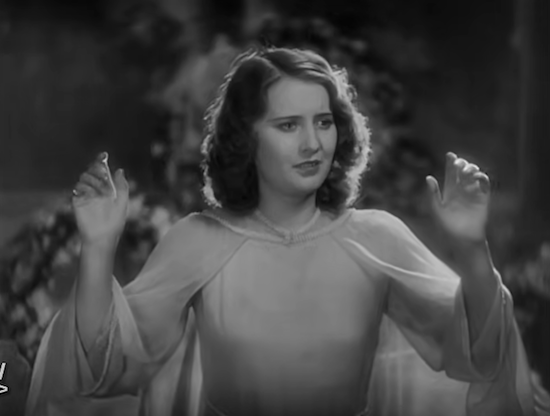
The second of Frank Capra and Barbara Stanywck’s five films, The Miracle Woman (1931) captures only a whiff of his future magic and her acting mastery. But it’s enough to make this a compelling watch. It’s fun to compare it to his later work, such as the far more sophisticated Meet John Doe, which would pair the two a decade later.
It’s a strange film. Stanwyck plays a version of Aimee Semple McPherson, the pioneering Pentecostal evangelist who “staged revivals that drew larger crowds than P. T. Barnum, Harry Houdini, or Teddy Roosevelt” according to The American Experience. Like McPherson, the character becomes a star, with a savvy for entertainment and media, from music to radio. While McPherson was controversial, Stanwyck is a flat out con artist (we think). Only through a love affair with an honest man does she regret her choice and repent.
The film has an amusing backstory. Robert Riskin, co-playwright of Bless You, Sister, on which it was based, warned the studio not to make a film of his story. It would flop, like the play he’d created with John Meehan, he told them, and he had no intention of adapting it. Jo Swerling did instead. This unusually honest prophecy proved true, as Joseph McBride points out in Frank Capra: The Catastrophe of Success. (Note: Riskin and Capra would work productively on many films together, including with Stanwyck.)
Capra’s skill with capturing personal breakdowns (It’s a Wonderful Life, Mr. Smith Goes to Washington) is evident in the first and best scene in the film. Florence Fallon (Stanwyck) shares her father’s last sermon with his congregation. She explains he’s too unwell to deliver it: he’s been crushed by their decision to fire him for a newer, shinier model.
When she ends his sermon midway through, she explains he died while writing it. She then tears the congregation apart for their cruelty in firing him, hypocrisy and un-Christian behavior. As it’s a pre-code, she doesn’t mince words.
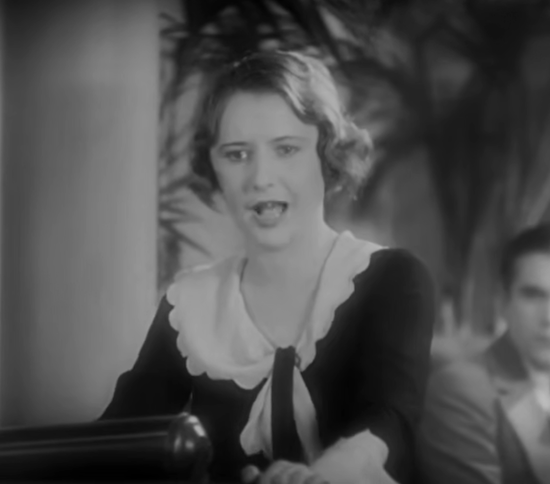
The audience flees en masse, probably to avoid being named personally when she gets into their affairs and drinking. It’s a sight to behold. Stanwyck delivers it. It’s a gem of a scene. We can see why Bob Hornsby (Sam Hardy), a conman passing through town, thinks she’d be an ideal fake faith healer. She can preach. He can promote her. Both will get rich and play jerks like those in her congregation for suckers.
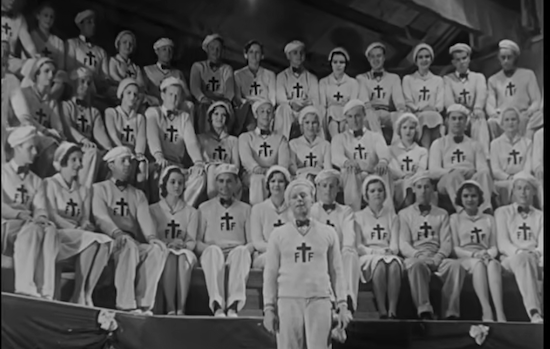
Now a good mega-church scene needs some glam. Capra didn’t have a big budget for the film. One way he accomplished style without large funds is in the costuming. For big revival scenes, Stanwyck wears simple white. Her outfit comes across as historically accurate, given some of McPherson’s real-life styles. Her choir wears a simple uniform. They have several rousing scenes to get us in the spirit of the event and to capture its scale.
According to TCM, Capra used real lions in a scene where Fallon, now Sister Fallon, preaches about Daniel in the lion’s den. Netting only separated her from the animals. Stanwyck apparently was terrified. She comes across as fearless. In Frank Capra, Sam Wasson explains how Capra earned so much trust. According to Wasson, during Ladies of Leisure, their first film, he would ask her questions about her character rather than telling her what to do. He allowed her to de-glam a bit personally, be more herself. And, of course, he fell in love with her. By their second film, the two were working together beautifully.
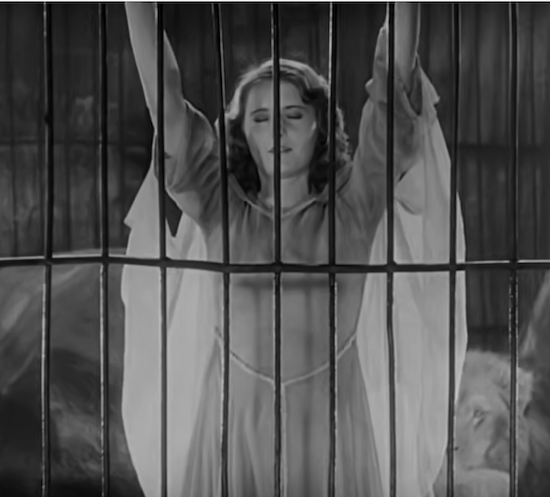
Later in the movie, Capra uses actual fire in a dramatic scene. Of course, Capra was no Busby Berkeley. His skill was in characterization, not in fancy scenes. But these shots still manage to be very convincing, in part because in some respects they were very real. And Stanwyck; with that low voice, compelling delivery of strong emotions and simple magnetism; can sell a message.
Admittedly, the faith healing scenes are a bit of a let-down after the first few minutes. I do love the humorous moments we catch the people hired to be pretend-healed nodding off on the job. But I could use a little of (the boxing film) The Set-Up’s style of audience reaction shots. More close-ups of individuals moved by her words would help us buy her influence and betrayal of this congregation. There isn’t enough movement of the camera overall.
Besides the costuming, you can see other ways Capra kept scenes simple, likely to save money. There’s a close focus on the primary actors in several scenes, with little background (note the simple beach scene, for example). Hornsby’s party is just in his rooms, making the settings inexpensive. Likewise, Fallon’s love interest, John Carson (David Manners), and she are always hanging out at his home.
Where Capra does go big (the lions, the fire, all the white), it works. The film can be mesmerizing. I also love where he, with the humor we’d see used to greater effect later in his career, mocks the whole faith healer bit. The second-best moment in The Miracle Woman is when Hornsby yells as his shills for being awful at their jobs.
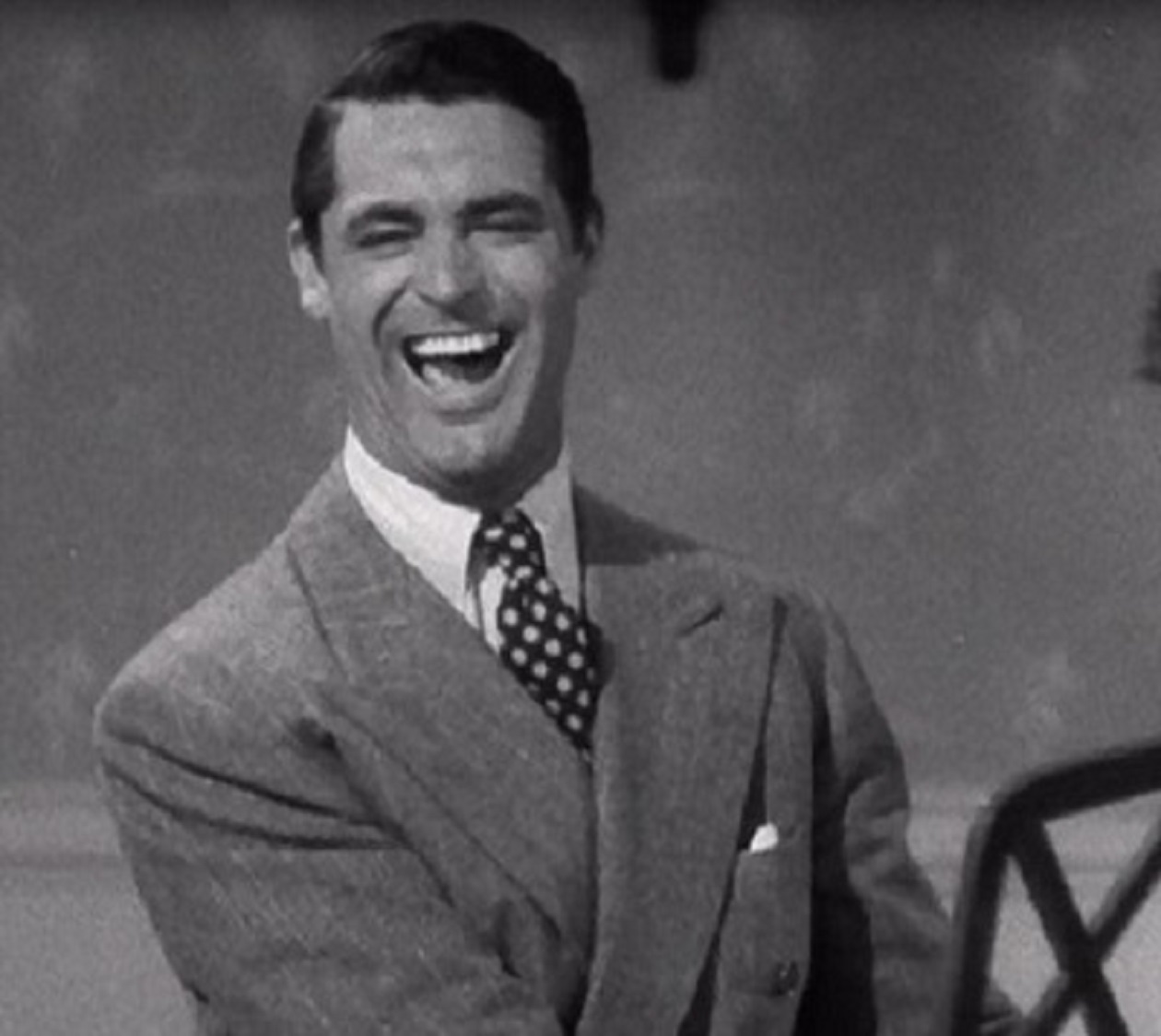
Oddly for a director so skilled with actors and character development, it’s with the romance that this film falls apart. Carson, a blind man, is moved by Fallon’s sermon on the radio. He decides not to commit suicide, as he was intending. Instead, he goes to see her preach and falls in love. As he first arrives, he is laughing at the pageantry of it all. But that is his single moment of cynicism. After that, this man is so corny. In later films, like Meet John Doe, Capra has the wisdom to either make the hero more sophisticated than he initially seems (Mr. Smith Goes to Washington, Mr. Deeds Goes to Town) or make the doltish character a sidekick. Alas, in The Miracle Woman, our hero has survived a war yet somehow remains as innocent as an eight-year-old. Case in point:
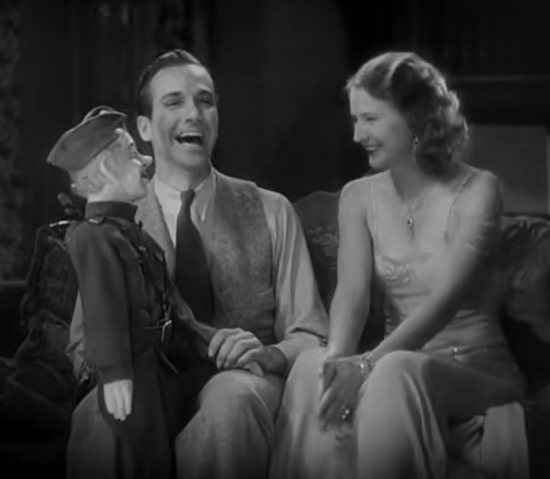
Yes, he tries to charm Fallon with ventriloquy in an excruciating scene. Stanwyck, bless her heart, sells this hobby as delightful. TCM gives her credit for performing in front of scary lions. I give this Brooklyn girl credit for managing not to roll her eyes. In real life, 99% of us would have faked an emergency phone call or hightailed it out of there. I’m sorry, but in my decades on this earth, I’ve never met a woman who could fall for a man using a Chucky to communicate.
Given that Fallon’s father was a preacher, she may have liked simple, homespun joys. Still, someone as cynical as Fallon can’t possibly think this is seductive. True, Hornsby’s always deeply intoxicated friends don’t seem like much fun either (not to a sober person certainly).
Fallon’s inconsistent characterization is part of the problem with this romance. To what extent is she in on the con? Does she know what kind of fraud Hornsby’s committing with the money collections? Capra admits he never really decided. In Ella Smith’s tribute biography, Starring Miss Barbara Stanwyck, he is quoted confessing he blew it by blaming so much of her behavior on Hornsby. Capra’s film still lost a lot of potential money thanks to being banned in Britain for irreverence, according to Smith, so why not go for it? Maybe he worried about Riskin’s prediction. Unfortunately, having a character whose guilt and knowledge about what’s going on are both fuzzy makes her ending “redemption” mysterious rather than noble. Likewise, we have to believe her awfully innocent to enjoy such childish amusements with her boyfriend, yet her interactions with the conman suggest she is wised up and in on everything. Only when his sexual harassment escalates and she learns about the murder does she seem shocked.
Despite these issues, it is fun to see Capra playing with tropes he would repeat in his greatest works: There is a true evil character. There is a redeemable person acting in an immoral way. There is a battle between sincerity, goodness, and/or integrity and duplicity, greed, and/or power-hunger. One character (at least) works to replace deeply held cynicism with hope — one of Capra’s major themes. And of course, there’s some late-stage heroism, Capra style.
Stanwyck’s character is twice as sophisticated in Meet John Doe, yet she makes the same mistakes as the woman she played a decade earlier in The Miracle Woman: going along with a con man’s game. Yet again, we have a suicidal love interest, but this time, his depression lasts more than two minutes, and Gary Cooper sells the man’s sadness and more complex characterization.
In other words, Capra’s added much more realism to his characterizations over time. That’s why we feel more invested than we ever can feel for the hero or heroine in The Miracle Woman.
I would have enjoyed a more credible Fallon, like Sugarpuss O’Shea in Ball of Fire (1941), embarrassed for loving a cheesy guy. Or Saunders (Jean Arthur), the smart woman who has to overcome her sarcastic tendencies to fall for someone as straightforward as the hero of Mr. Smith Goes to Washington. I also wish Capra had given Carson more dimension by following through on his initial joking, having him laugh a bit at Fallon for her circus-like performance. Or make her feel guilty for taking the money of the gullible.
But all critiques aside, it’s still fun to see Stanwyck in this bold early part.
I look at this film as Capra’s rough draft, a chance to play with these themes, figure out how to get them the right the next time. And realize that though he can pull off some big crowd scenes, as he does here and in Mr. Smith Goes to Washington, his real skill would always be with small, intimate moments.
He just needed to leave out the puppet.
This is part of the The CMBA Fall Blogathon: Cinema Couture | The Art of Illusion. Check out the other entries!
