Cary Grant Won't Eat You

Classic movies for phobics

  • About
  • eBooks
  • Previous Blogathons
Classic movies for phobics

The Spirit of St. Louis (1957): Enthralling & Infuriating
10/23/2015 by leah@carygrantwonteatyou.com 10 Comments

Lindberghtakeofffilm2
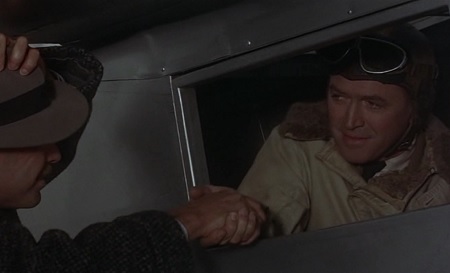
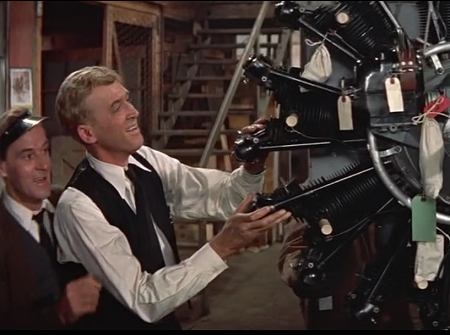
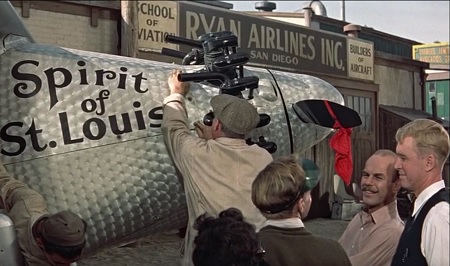
The first half of The Spirit of St. Louis, Billy Wilder’s ode to Charles Lindbergh, is engrossing. It’s even that rarest of traits in a biopic: fairly accurate. The scenes of his airmail days capture the impossible bravery of America’s early pilots and the primitive conditions under which they flew. Wilder conveys each stage of Lindbergh’s struggle beautifully: The search for funding and a plane for the epic NY-Paris flight, the near-universal doubts about his fitness for the attempt, the rush of finally finding a team to build that plane, as eager to prove themselves as he was.
RyanAirlines4
Until just after that terrifying take-off, I couldn’t believe the film hadn’t earned more praise than it had.
SpiritofStLouis6
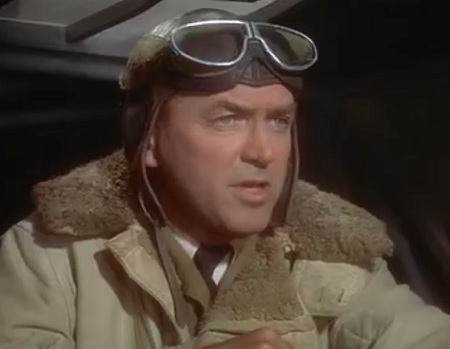
That’s why the clunky transition into the flight–Lindbergh (Jimmy Stewart) gabbing with a fly–shocked me enough to stop the film, ponder what had gone wrong.
Lindbergh-anttalkfilm2
It wasn’t the cheesiness of the fly talk; after all, Raymond Chandler had managed to make a similar conversation in The Little Sister downright poetic. It was that everything about the first twenty minutes of the famous flight confirmed my fears: Wilder would definitely fail to make 30+ hours of sleep deprivation interesting, and his attempts to do so would not only grossly misrepresent his subject’s character, but Lindbergh’s whole purpose for making the journey.

Given, Wilder had quite an obstacle: How do you convey hours of reflection without awkward voiceovers? How do you enlighten viewers about the brilliant, reserved, limelight-averse, notoriously elusive Lindy with so little narrative space? That’s why Stewart was chosen, I thought. Wilder must have hoped the actor’s folksy geniality would while away the minutes, make us forget that the star was twice Lindy’s age, and about 100 times as charming. (If you doubt this comparison, check out Bill Bryson’s hilarious depiction of Lindbergh’s social awkwardness in One Summer: America, 1927.) The autobiography on which the film was based illuminates just how much Wilder miscalculated, and just how his still very worth viewing first half could have been redeemed in the second.

The Flashbacks
SpirtofStLouisflashbacks
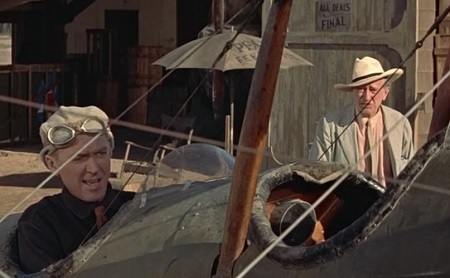
The Pulitzer Prize-winning book moves from flight to memory throughout, as the film does, but the latter’s flashbacks have a homespun, aw-shucks feel to them, with Lindbergh as a kind of lovable oaf who survives only due to luck. In one flashback, he buys a plane he can’t fly, utterly unconcerned about his lack of skill. The scene plays for comic relief, but painfully reinforces everything that Lindbergh stood against: recklessness.

Lindbergh was daring, yes, but cautious and calculating. When the flashbacks begin to appear in the book, he uses them not to illustrate character or give the reader a lovable feeling toward him. No, they explain his success. Here’s a moment of danger, and here’s the experience that prepared him for it: earlier escapes, his training as an instructor, his previous discoveries of flaws with his planes. His whole mission was to disprove that air travel was suicidal daredevilry because otherwise why pave runways? Why install lights for landings? Why allot money for research and development?

When Stewart actually pored half the canteen of water on his face—twice! —I nearly shouted at the screen. The real man was apportioning his own water in dribbles. Had anyone involved with the writing of the film read the book? “Lucky” Lindy put more thought into one move above or below the clouds than the writers did into his entire characterization. (Wendell Mayes co-wrote the screenplay with Wilder, and Charles Lederer was given adapting credit.)

Was Lindbergh lucky? Of course. But that isn’t the primary reason he succeeded. His competitors for the NY-Paris flight–those few who survived–were hundreds of miles off course, with safety features and luxuries he lacked. Lindbergh landed on his intended airfield early based on dead reckoning—no radio, no sextant, no help. How disappointing that the filmmakers would buy the “Lucky Lindy” headlines, and miss the far more interesting man.

The Moments of Danger
JimmyStewartLindberghscared
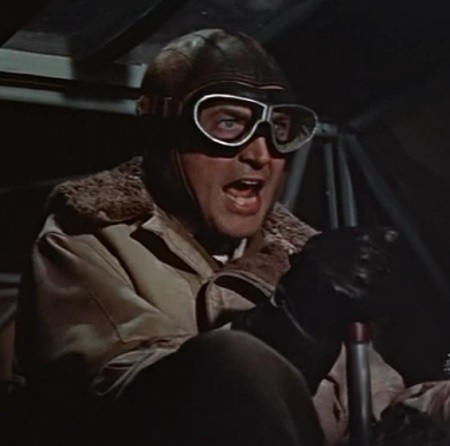
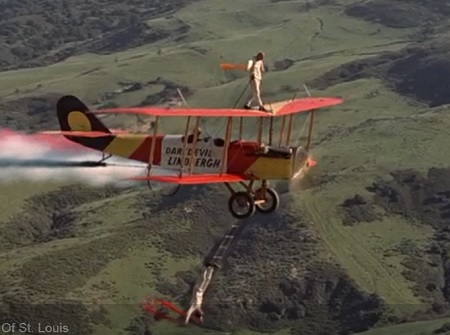
Lindbergh almost died innumerable times on that flight across the ocean, but Jimmy Stewart’s wide-eyed panic in no way captures Lindbergh’s icy calm. Interestingly, the pilot forced himself to calculate how to handle various frightening scenarios not out of panic, but to stay awake. He discovered that pleasant thoughts soothed, and thus led him to sleep. Plans to land on Arctic waters kept him alert—and alive. If Lindbergh really were as shot through with anxiety as the film implies, how could he have been a professional parachuter, as he was at the start of his career? A wing walker? (Tellingly, Lindbergh even dismisses the dangers of this part of his history, analyzing how safe both jobs could be with the right team.)
Lindberghaswingwalker

Oh, Jimmy…
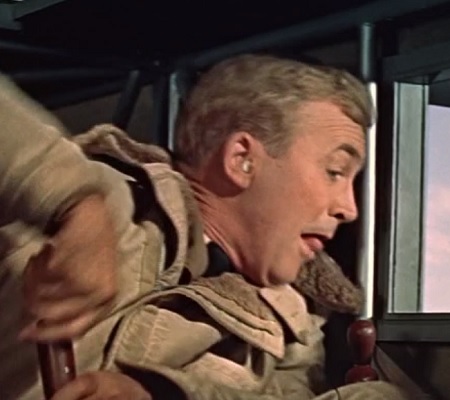
I love Jimmy Stewart. Maybe if it were just the age, or the accent, or the personality. But it was everything: The talking aloud. The boisterous shouts. There’s a deafening, tone-deaf, overacting feel to nearly every word in the second half of the film.
JimmyStewartoveractingLindbergh
Lindbergh was not Jefferson Smith or George Bailey. Effusiveness, goofiness—how widely these traits miss the quiet, introspective, highly scientific man that Lindbergh apparently was. I suspect this hamming was under protest: Stewart’s own distinguished flying record in WWII suggests he was far too acquainted with pilots to misstep this badly without directorial intervention.

Perhaps I wouldn’t have been so disappointed in the depiction of the flight, had the film not been so brilliant in the first half. But I kept thinking about what could have been: What if the film had ended at takeoff? Why try to put onscreen so much of a reflective book? Like The Great Gatsby, another notoriously hard to film text, the ideas are paramount here: Lindbergh’s meditations about God, about power, about nature and loss and risk.

Michael Powell and Emeric Pressburger could have attempted an arty take on Lindbergh’s thinking. But Wilder, the storytelling genius, should have stuck to action, and let us end with that lovely image that he conveyed so perfectly: of Lindbergh weighing the current against forecasted weather, his chance to beat the competitors versus his sleeplessness, the muddiness of the airfield versus its length, and then deciding to go, and with a few laconic words to the panicked faces around him, pushing off into the sky.

SpiritofStLouisTakeoff-film
This post is part of the Classic Movie Blog Association’s fall blogathon. Go here for fantastic entries on films highlighting planes, trains, and automobiles. You can also find an eBook version of the blogathon with many of the group’s entries, including mine, at Smashwords (for free) or Amazon for. 99. All funds for the latter go to the National Film Preservation Foundation.

Share
Posted in: 1950s films, Action & Sports Films, Blogathons, Drama (film) Tagged: Billy Wilder, Charles Lindbergh, Film, Jimmy Stewart, Ryan Airlines, Spirit of St. Louis

My Rita Hayworth Birthday Wish: Everybody Dance

10/17/2015 by leah@carygrantwonteatyou.com 4 Comments

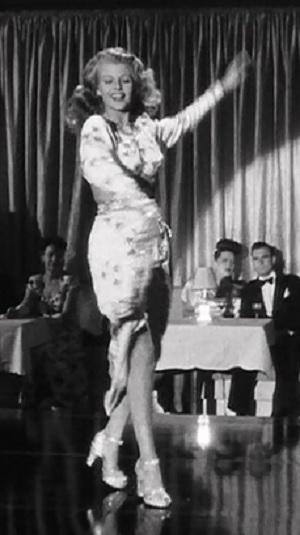
RitaHayworthdance
“Whatever you write about me, don’t make it sad.” – Rita Hayworth

In honor of the Love Goddess’s birthday, I won’t write about her tempestuous love life, her sad past/final years, or her scorching appearance onscreen. I’ll keep it simple: Rita Hayworth is one of the most expressive dancers I’ve ever witnessed, and what she conveyed, over and over again, was joy: The exhilaration of movement, the thrill of twirling and leaping and tapping and sweating. Ginger Rogers showed how lovely a body could be with every twist of her torso; Fred Astaire stretched the limits of the art form, as did Eleanor Powell and Gene Kelly. But none of them made me want to jump on stage and join them like Rita does. Talented as she is, she doesn’t wow me nearly as much as she woos me. Come on! she calls. This is so much fun.

So in honor of her birthday, take a leap, do a jig, do-si-do, tap your feet, pirouette, moonwalk. Even a bit of twerking or the Macarena will do. Don’t worry about your skill–or the lack of it. Just listen to Rita, and dance.

Share
Posted in: 1940s films, Humor, Random Tagged: dancing, Film, her birthday, Rita Hayworth

Mae West’s Dating Advice: the 3 Fs

10/11/2015 by leah@carygrantwonteatyou.com 2 Comments

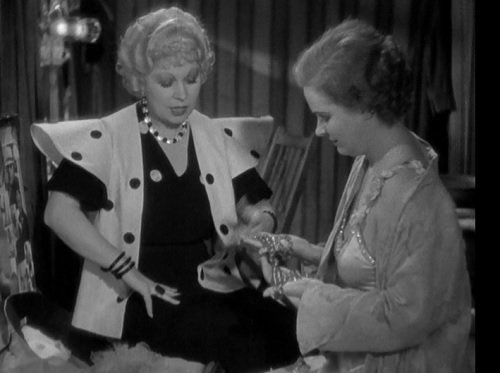
MaeWestgivesadvice
When advising friends about men, Mae West’s characters, of course, never hold back. As Tira in I’m No Angel, West keeps her suggestions pithy: “Never let one man worry your mind. Find him, fool him, and forget him.”

For more monthly Mae West favorites, click here.

Share
Posted in: 1930s films, Mae West Moments, Romantic Comedies (film) Tagged: dating advice, Mae West

Like The More the Merrier? (1943) Watch Singles (1992)

10/04/2015 by leah@carygrantwonteatyou.com 2 Comments

It’s curious what will relegate a film to “dated” status. Of the last 30 years of rom-coms, Singles (1992) would make my top five. Yet due to its grunge soundtrack and location in then-trendy Seattle, Cameron Crowe’s paean to dating has been forgotten. I wonder why The More the Merrier (1943), with a whole premise based on the WWII housing shortage in D.C., hasn’t suffered a similar fate. The two movies resemble one another in many unexpected ways, and deserve credit for being what films in their genre–despite its name–so rarely are: funny and romantic.

Both films are notable for their winning leading ladies. That trembling voice of Jean Arthur’s; equally able to capture passion, sense, and vulnerability; her perfectly timed delivery; and her gentle expressions all have so completely overcome audiences by the start of The More the Merrier that she remains the center of our attention despite considerable competition from her roommates: sexy Joel McCrea as Joe and adorable Charles Coburn as matchmaker Benjamin Dingle.

JeanArthur
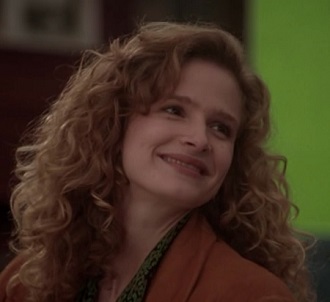
Kyra Sedgwick, the heroine of Singles, was one of those charismatic, promising starlets who gave up her career for her family (husband Kevin Bacon & kids), only to claim it back years later with The Closer. In Singles, you can see what might have been had she stuck around instead of leaving us with one-note Jennifer Aniston.

KyraSedgwickSingles
As Linda, she woos you in the first few minutes with her dismay over her broken car, reluctant acceptance of masculine help, and joy when the knight proves to not be a player. Her mobile face catches every emotion–reluctant trust, passion, joy, and ultimately, of course, despair, as she’s, of course, wrong about him, and her resolve not to let her heart be broken again sets the stage for her resistance to the film’s hero, Steve (Campbell Scott).

KyraSedgwickCampbellScott
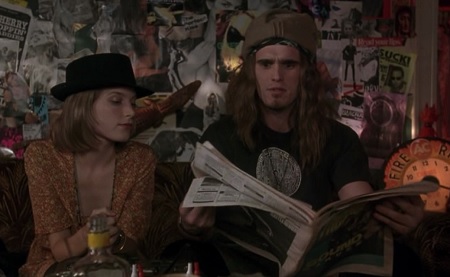
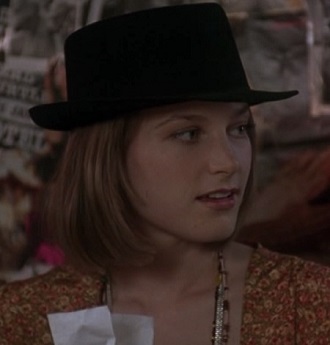
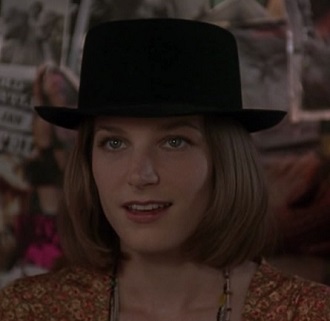
Since Singles is an ensemble film, we’re also treated to heroine Janet (Bridget Fonda), who is passionate about her hilariously untalented rocker boyfriend, Cliff (Matt Dillon). I’m not sure why Bridget Fonda never took off. She’s so endearing in this role, apparently a part written just for her. She’s funny and vulnerable and cute and tough all at once.

BridgetFonda-Singles
Her lovable fragility reminds me of Jean Arthur’s as Connie. And like Connie, Janet recognizes more about her boyfriend’s lack of commitment to her than she’s willing to admit. While he prioritizes his band over her, again and again, we watch Janet registering it, even as she supports him.

MattDillonandBridgetFonda-Singles
When the inevitable breakup comes, we’re not surprised; Janet is not as clueless as she chooses to appear at the start of the film, when she expresses faith in Cliff’s fidelity despite evidence she shouldn’t:

“Look, Janet, you know I see other people still, right? You do know that, don’t you?” says Cliff.

“You don’t fool me,” Janet answers.

“Janet, I could not be fooling you less.”

Likewise, Connie knows her fiancé’s career trumps their relationship–and her needs. She’s just so busy selling his good salary and reliability that she’s unaware just how hollow she sounds as she’s bragging. Her dismay at Dingle and Joe meeting him says it all.

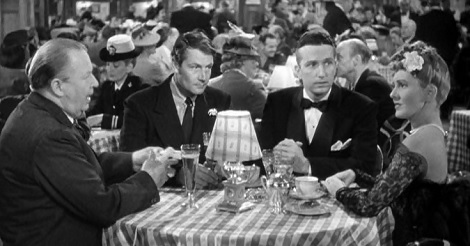
TheMoreTheMerrierensemble
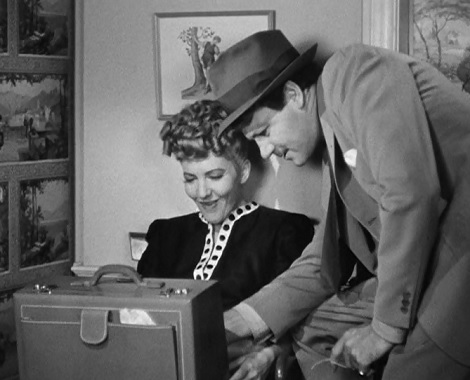
Luckily, Connie has matchmaker Benjamin Dingle (Charles Coburn) forcing her to confront her future husband’s selfishness. Dingle knows a deal helping her fiance’s career will make him dump Connie for the night, leaving the path open for the far hotter and sweeter Joe (Joel McCrea). The sign for Connie that Joe’s worth her time? He could have read her diary, and didn’t. He bought her a wedding gift–no strings attached–that displays his understanding of her: a travel bag with neat compartments, for a girl so organized she’s planned out every minute of her morning.

JeanArthurandJoelMcCrea
Singles
is all about paying attention to such signs: What should make you keep committing? What should make you give up? As writer/director Cameron Crowe obviously realized, it’s important to pay attention when single, or you’ll get your heart caught by someone who’s not worth it, making you less receptive to the lover actually worth your time.

For Steve (Campbell Scott), the sign is simple: a flick of the finger: Linda (Sedgwick) opens the car door lock for him, surely a sign that she likes him in spite of their prickly date.

Janet (Fonda) has been so beaten down by bad dates that such little gestures are all she’s now expecting of a guy, as captured in one of the film’s best scenes. She’s in the waiting room to get her breasts enlarged (her shortcut to Cliff’s loyalty).

“Tell me, from a girl’s point of view, what do you really want from a guy?” asks Steve, who has accompanied her for moral support.

“Well, when I first moved out here from Tucson,” Janet begins, warming to the theme, “I wanted a guy with looks, security, caring, someone with their own place, someone who said bless you or Gesundheit when I sneezed, you know? And umm, someone who liked the same things as me, but not exactly, and someone who loves me.”

“Tall order,” he answers.

“Yeah, I scaled it down a little,” she admits, her disappointment deflating both expression and voice.

“Well, what is it now?”

“Someone who says Gesundheit when I sneeze, although I prefer bless you, it’s nicer.”

As it turns out, the surgery doesn’t happen: Janet’s nerdy plastic surgeon (Bill Pullman) advises against it, suggesting she looks great now. Although no romance develops between them, his kind words make her realize how much she’s compromised for Cliff, just as in The More the Merrier, Dingle makes Connie recognize how little her fiancé values her. While Connie’s realization leads to endless tears, Janet is relieved. She gives Cliff one last chance, sneezing as he’s ranting about a poor review of his band.

“Hey babe?” he answers, handing her a tissue. “Don’t get me sick. I’m playing this weekend.”

Janet glances at the tissue box and then over at her boyfriend.

BridgetFonda-Singles-sneeze
Wait a minute,
she reflects in a voiceover. What am I doing? I don’t have to be here. I could just break up with him.

BridgetFonda-Singles-sneeze2
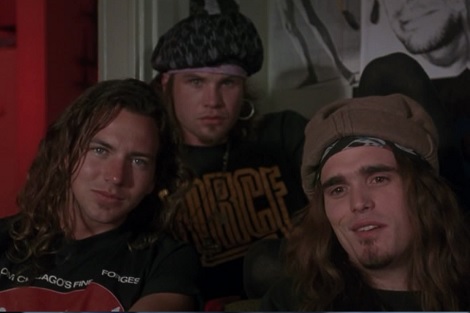
After dumping him, she dances alone, almost as beautifully as Connie does early in The More the Merrier. I won’t spoil where the story goes from there–for Janet, Linda, or the other quirky characters of Singles. Watch the film. Even if the love stories don’t get you, the funny sight of Pearl Jam members playing backup for Cliff will–one of many, many reasons even “chick flick” accusers can warm to this hilarious, charming rom-com.

MattDillonandPearlJam

Share
Posted in: 1940s films, 1990-current films, Romantic Comedies (film) Tagged: Alice in Chains, Bridget Fonda, Pearl Jam movie, review, rom-coms, Singles film, Soundgarden, The More the Merrier

Falling for Charles Coburn, Matchmaker Extraordinaire

09/27/2015 by leah@carygrantwonteatyou.com 6 Comments

Coburnadvice
Has there ever been a Cupid more charming than Charles Coburn?

He smartens up the debonair Henry Van Cleve (Don Ameche), ensuring he doesn’t lose his lovely wife, Martha (Gene Tierney) in Heaven Can Wait (1943).

CharlesCoburnwithDonAmeche
He pushes his widowed daughter-in-law (Irene Dunne) into frivolity and a new chance at love with sculptor George Corday (Charles Boyer) in Together Again (1944).


And in The More the Merrier (1943) he unites conservative Connie (Jean Arthur) and Joe (Joel McCrea), with machinations so wonderful and so amusing that they almost distract from his costars’ considerable chemistry.

McCreaCoburnArthur
There was a moment when I was watching him bustle around, trying to follow Connie’s morning schedule, that I realized I truly loved this man, was terribly envious of everyone encountering him. Connie may ultimately fall for Joe, but I think we all can see that those arrows have hit more than one target.

ArthurandCoburn
I defy anyone to spend time with someone this wise, this funny, this blunt–every time, in every film–and be able to resist him. No wonder he matches up so many couples, so many times. They fall for him first, and then even those most resistant to love begin to listen….

Share
Posted in: 1940s films, Comedies (film), Romantic Comedies (film), The Moment I Fell for Tagged: Charles Coburn, Heaven Can Wait (1943), The More the Merrier (1943), Together Again (1944)

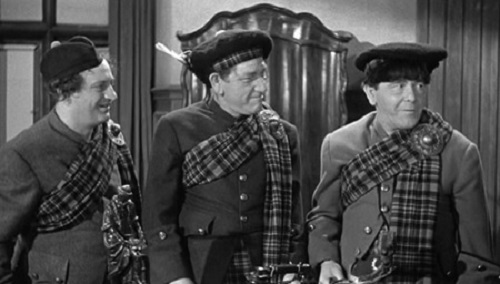
The Sexy Men of the Highlands: The Three Stooges?

09/20/2015 by leah@carygrantwonteatyou.com 2 Comments

ThreeStoogesHotScots
Having spent Saturday at the New Hampshire Highland Games & Festival, I’ve got bagpipe music still ringing in my ears, and tartan on the brain. I witnessed feats of strength that included FLIPPING an 130-pound log. Some star from Game of Thrones (aka the Mountain) even set a world record throwing a weight over a high bar, apparently a repeat performance. It looked about as effortless as the rest of us tossing a ping pong ball.

Naturally, I’ve been scanning for Scottish movies in hopes of extending my memories of men in kilts, especially since I don’t have time just now to be swept into Volume 2 of Outlander (whose Jamie, naturally, had a cardboard statue at the Fraser clan tent). Encountering an entry called “Hot Scots” on Wikipedia, I assumed some early Chippendalish, Magic Mike embarrassment was to be found, only to discover that the entry was referencing an episode of The Three Stooges.

Now I don’t think “hot” when I hear the names Moe, Larry, and Shemp. I don’t think I’m alone in that. But, like Tom Petty and the Heartbreakers after them, the three sure did excel at making fun of themselves, and that made the episode worth a look.

The plot of the episode is about as flimsy as you’d guess: the stooges decide they want a job at Scotland Yard, and have mistaken a garden cleanup employment ad for an investigative one. After fouling up that simple task, they discover a posting calling for detectives in Scotland, and equip themselves with kilts and Mcs in front of their names for the job. After hearing their accents, their new client inquires what part of Scotland Shemp is from. Moe explains that Shemp is from the south, “below the McMason-McDixon line.”

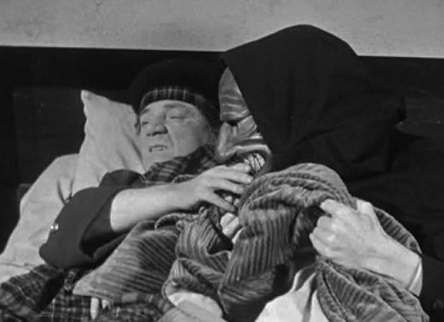
Their client wants his possessions protected as he’s off at a clan meeting, and of course, the stooges utterly fail to notice his entire staff taking everything he owns. There’s even a Scooby Doo moment when Shemp fails to notice a masked robber isn’t Larry.

ShempasScooby
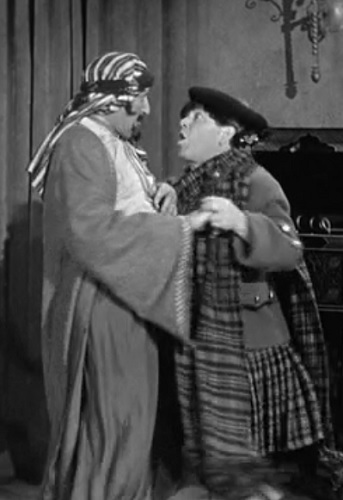
And another when Moe thinks he’s still dancing with the client’s comely assistant, and is actually doing a reel with her scary accomplice.

MoeandThief
The episode, of course, is saturated with silly sound effects and the stooges whacking each other with sticks and clubs. I’m not a huge stooges fan–their humor is a little too exclusively physical for me–but somehow, the style is so suitable for the weird way we celebrate the Scottish, and the many spills reminded me of my favorite scene from Mike Myers’ comedies: The infamous “We have a piper down!”  wedding clip from So I Married an Axe Murder.

Give “Hot Scots” a try if you want a break from work or the news this week. You can find it on Amazon Instant, The Three Stooges Collection, 1946-48, Episode 15, and of course, YouTube. I think we can all use some silliness about now…

Share
Posted in: 1940s films, Comedies (film), Humor, Random Tagged: Hot Scots, Mike Myers, Outlander, Scooby Doo moment, The Highland Games, The Mountain Game of Thrones, The Three Stooges, We have a piper down

The Moment I Fell for Claudette Colbert

09/13/2015 by leah@carygrantwonteatyou.com 12 Comments

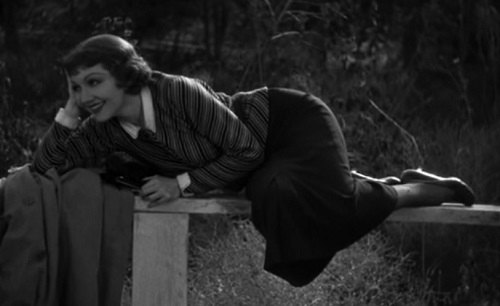
ClaudetteColbert-Ithappenedonenightlying
Today I’m reflecting on that tiny woman with the deep, sexy voice who managed to develop fully realized characters even in the smallest of roles. And in her greatest ones, set the bar so high for future comediennes that few have managed to approach, much less equal, her performances since.

Like many of us out there, I knew Claudette Colbert’s legs first, as she starred in one of the most iconic scenes in American film, proving “once and for all” that when it comes to hitchhiking, “the limb is mightier than the thumb.”

ClaudetteColbertlegs
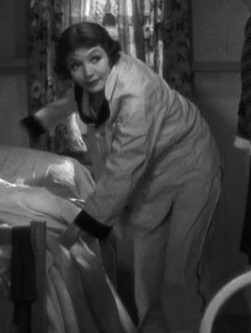
It took several years after seeing the image of her legs that I actually got around to It Happened One Night, which I’ve watched at least 30 times since. In her Academy-winning role as Ellen Andrews, she first perfects a chilly posture and refined voice as the stuck-up heiress. But slowly, Colbert reveals Ellen’s vulnerabilities and inexperience through expressions, gestures, stance, and tone. When Ellen and soon-to-be love interest Peter Warne (Clark Gable) stop at a motel en route to New York, she is ill at ease with the arrangement he makes to keep the room platonic–strapping a blanket between their beds. While she’s technically married, she has never been with a man. When she oversleeps the next morning, Peter threatens to come get her, and her clumsy, embarrassed fumbling to ensure he doesn’t makes me laugh every time I see it.

ClaudetteColbert-ItHappenedOneNight
That winning performance made me a fan. Without it, I never would have sought out The Palm Beach Story, Midnight, and so many other wonderful movies since. Although I appreciate Colbert’s dramatic abilities, her skill with romantic comedy is what wows me. Here are just a few of the megastars she managed to upstage, in spite of the camera’s deep love for them (and theirs for it): Miriam Hopkins in The Smiling Lieutenant (1931), Clark Gable in It Happened One Night (1934), John Barrymore in Midnight (1939) and John Wayne in Without Reservations (1946).

So on her birthday, I’d like to say thank you to the actress who has lightened my mood again, and again and again: the mesmerizing Claudette Colbert.

Share
Posted in: 1930s films, 1940s films, Feminism, Romantic Comedies (film), The Moment I Fell for Tagged: Claudette Colbert, Frank Capra, It Happened One Night

Mae West Schools the Teacher

09/06/2015 by leah@carygrantwonteatyou.com 4 Comments

WestandtheTeacherNightafterNight
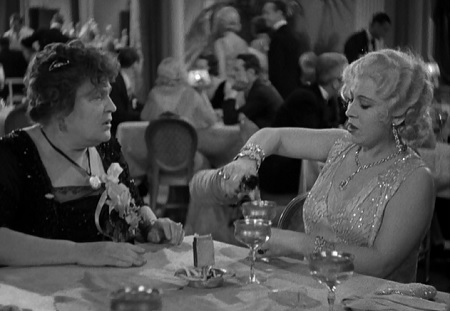
A prim school teacher & Mae West. Almost a century later, this coupling seems inspired. But in 1932, nobody knew that. West was a vaudevillian, not a movie star. Her role as Maudie, an ex of the lead, Joe Anton (George Raft), was a minor part in her first film, Night after Night. She didn’t even enter the picture until a half hour in.

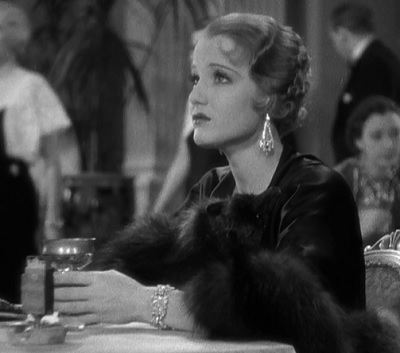
The script of the movie is bland, the story plodding. Joe, the owner of a mansion-turned-speakeasy, is fascinated by Jerry Healy (Constance Cummings), the mysterious beauty who shows up at his place every night unattended. He discovers that her family owned his mansion before the market crash.

ConstanceCummings-NightafterNight
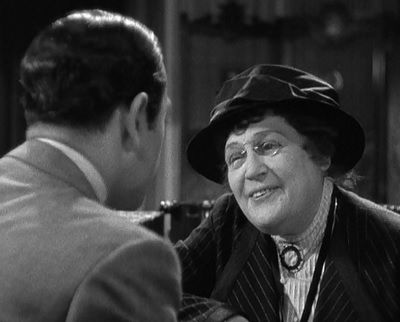
Joe has been dissatisfied lately, aspiring to a classier existence. He’s even hired a tutor, Miss Mabel Jellyman (Alison Skipworth), to improve his elocution, grammar and knowledge of current events–the type of lady who gets prissy when he uses words such as “got.”

Speakeasy owner & tutor
He thinks Jerry will lead him to a better life, but he needs the tutor’s help to win her. He invites Jerry for dinner at the speakeasy, and begs Jellyman to come along. The tutor is thrilled at the chance to hang out in a speakeasy and have some fun, but what a drag to be on such a date! Joe’s attempts at sophistication are painful, the conversation stilted. Everyone at the table is bored and uncomfortable.

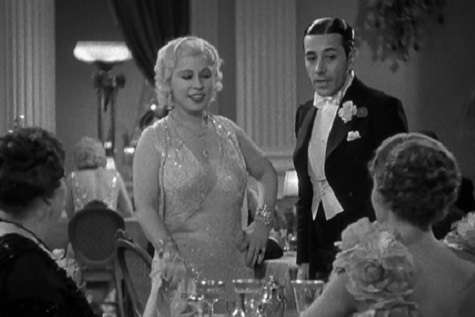
Then Maudie (West) enters the room.

MaudiesarrivalNightafterNight-WestRaft
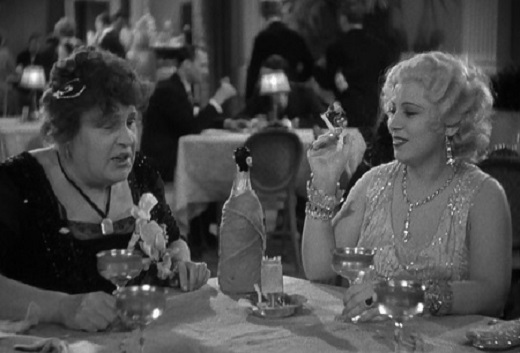
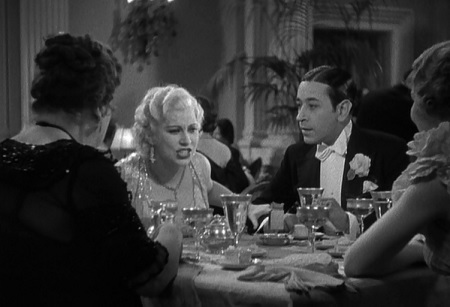
Within five minutes, she has decimated Joe’s fragile rep, having laughed about his love for the ladies, drunkenness, and a jail visit in quick succession.

WestasMaudieNightafterNight
“Oh Joe,” she concludes, “it’s just life to see you,” echoing our impressions of her arrival. She has completely redeemed his date (and the existence of the film). Finally, Jerry is enjoying herself.

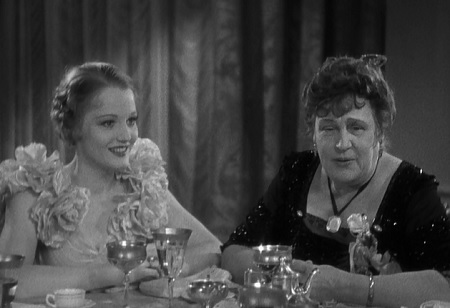
JerryandJellyman-NightafterNight
But clueless Joe urges Jerry to leave with him to tour the house. Jellyman, soon drunk thanks to Maudie’s generosity with the bottle, protests when Joe offers a cab before leaving them. “I don’t want to go home,” she complains. She turns to Maudie, “He said I didn’t have to.”

“Yeah, we’re gonna make a night of it,” Maudie agrees. “You go ahead,” she tells Joe, “we gotta talk it over.”

“Maudie and I have a great deal in common,” Jellyman explains to Joe.

“You said it, baby,” agrees the partying blonde, without a trace of irony.

Once they’re alone, Jellyman asks anxiously, “Maudie, do you believe in love at first sight?”

“I don’t know, but it saves an awful lot of time,” she quips.

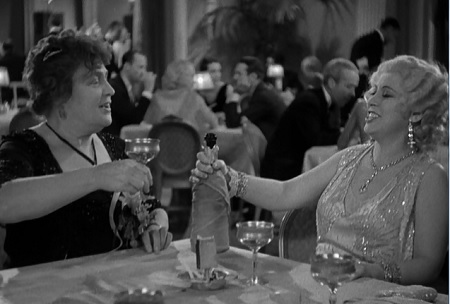
Jellyman protests when Maudie refills her class, to which our heroine responds, “Now listen, Mabel, if you’re gonna be Broadway, you gotta learn to take it, and you may as well break in the act right now.”

MaudieandJellyman-MaeWest
“I say, this night will read great in your diary,” she adds.

“You said it, baby,” Jellyman agrees, her education from Maudie having advanced dramatically in minutes.

WestenjoyingteacherNightafterNight
“Maudie, do you really think I could get rid of my inhibitions?” Jellyman asks.

“Why sure,” Maudie tells her, “I’ve got an old trunk you can put them in.”

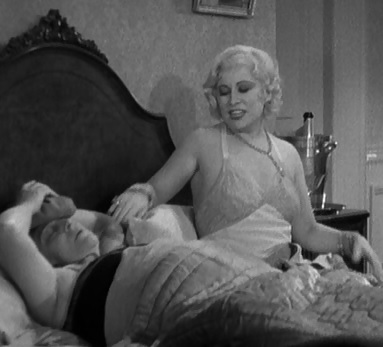
The next time we see the two of them, they’re in bed together at Joe’s after a bender. It does the heart good to witness them:

WestandSkipman
West only agreed to play the part of Maudie if she could write her own scenes. Thank goodness she did. Supposedly, Raft later claimed West “stole everything but the cameras.” What he didn’t say is that none of us would have wanted to see the film at all, had she not.

For more of my monthly West posts, click here.

Share
Posted in: 1930s films, Comedies (film), Feminism, Mae West Moments, Romantic Comedies (film) Tagged: Mae West, Night after Night

Female’s Heroine: 1933’s Amy (of Trainwreck), Samantha Jones, or Don Draper?

08/27/2015 by leah@carygrantwonteatyou.com 4 Comments

RuthChattertonFemalefilm
Given its plot synopsis, I expected Female to be shocking: a promiscuous executive casually sleeps with men until she finds the right guy. But I didn’t expect to gasp at its daring. A few of the heroine’s typical comments:

Falling in love: “To me, a woman in love is a pathetic spectacle. She’s either so miserable that she wants to die, or she’s so happy you want to die.”

Marriage: “No thanks, not me. You know a long time ago I decided to travel the same open road that men travel, so I treat men exactly the way they’ve always treated women.”

Husbands: “Of course, I know for some women, men are a household necessity. Myself, I’d rather have a canary.”

Then there’s a typical night. She…

1. Spots a handsome employee, feigns interest in his ideas, and asks him to come over to her house that night to discuss them.

2. Discourages business talk with flirtation, as when she says, “Are you naturally enthusiastic?” to a new hire, throwing a pillow onto a plush rug with a suggestive look.

RuthChattertonflirting2
3. Orders vodka from her butler, who informs the rest of the staff of the Catherine the Great custom: serving it to soldiers “to fortify their courage.”

4. Exercises with vigor the next morning, clearly energized by the tryst, and comes up with new ideas for the business.

5. Rejects the romantic overtures of her one-night stand, annoyed by his flowers, then offers him a bonus as a kiss-off. She doesn’t want to deal with the moodiness of emotional men at work. (Women, how many times have films suggested this about us?)

At first, I thought the movie would be like Trainwreck, as Alison (Ruth Chatterton) certainly displays the same level of disinterest in building a romance with her one-night stands and blows off a guy after he calls her “ethereal” and otherwise indicates their lack of sexual heat:

Annoyed by his flowery (nonsexual) language
Amy and Alison have an impressive list of conquests, and not only express disinterest in matrimony and kids for themselves, but for others, as when Alison can’t be bothered to remember her friend’s husband’s name, or how many kids she has–much like Amy’s (Amy Schumer’s) scene at her sister’s shower. Both heroines are funny and mostly likable, as when Alison worries about her chauffeur, who has taken a punch in her honor: “Now listen, Puggy, things people say about me don’t bother me,” she says with a lovely smile. “Thanks just the same.”

But in terms of power–and what they do with it–there’s no comparison. After one-night stands fueled by liquor, Amy, hungover, struggles to get through the day.

AmySchumerTrainwreck
Alison, in contrast, looks alert, pretty, and pleased with herself, and does a brilliant job at work afterward. The word “trainwreck” is about as far from Alison Drake as a term can be.

Like her more direct heir, Samantha Jones, Alison practically bristles with authority and confidence, but unlike Samantha, she has a whole auto factory full of employees.

RuthChatterton-businessFemale
One criticism of Sex & the City was that it never took the work as seriously as the characters’ personal lives, which made it less feminist than it could have been. Here, the heroine has no chance for tight friendships, but finds her work thrilling: “Oh, but I love it: the battling, the excitement; I don’t think I could do without it now.” I soon found myself as interested in the business–such as her decision to go with automatic transmission–as in the flings, not something I expected to experience with a romantic comedy.

Like Samantha, Alison wants to sleeps with her hot employees–only in Alison’s case, she does. (Samantha waits to fires hers first).

SamanthaJonesandrudeassistant
In fact, Alison has sex with so many of them that there are a flood of bonuses on the company payroll, like some kind of stud fee. Her leer at a new designer is as hilarious to witness as Samantha’s undressing looks. And as with Samantha, her vulnerabilities are evident–in her case, a fear that men are angling for her money rather than her personality or body (either would be fine).

While it’s easy to admire Alison’s moxie, she’s guilty of sexual harassment throughout the story, as when her secretary shows her too much affection after their affair, and she transfers him to Montreal. Promptly afterward, this lovesick conquest watches the latest one-night stand leave her office and calls, “I’ll see you in Montreal.” When Alison falls for Jim (George Brent), mainly because he’s hard to get, his anger at her regular nightly ploy earns our admiration; he won’t sleep with her to keep his job, he retorts.

GeorgeBrentFemale
While she initially decides to fire Jim’s secretary, assuming the two are involved, and then plans to overload her with work, she quickly reconsiders, deciding not to be petty. While she’s still in murky moral territory due to her liaisons with subordinates, she doesn’t reach full anti-villain status, since she won’t fire someone for turning her down or stealing her guy. Still, it’s hard to forget that shady transfer…and how much she reminds us of Don Draper with his secretaries on Mad Men.

I stopped the film multiple times as the end neared, fearful about whatever sexist cliché it was headed for. This character was simply too complex, and Chatterton too wonderful in the role, for me to watch some reductive conclusion.

RuthChattertoninFemale
I was right to be scared (though I feared it would be worse). Oddly, Jim, till then annoying in spite of his rebellion, demonstrated unexpected feminist leanings near the close. Too bad the screenwriters and director chickened out and tacked on totally unbelievable concluding lines.

Despite its shock value and fascinating lead, the film hasn’t reached the popularity or accessibility today it deserves. I could only locate it in DVD form on Netflix, and went for the free month trial of streaming with Warner Archive instead. Go to the effort; it’s worth it.

Share
Posted in: 1930s films, 1990-current films, Anti-Romance films, Comedies (film), Feminism, Romantic Comedies (film), TV & Pop Culture Tagged: ahead of its time, Amy Schumer, Female (1933), Mad Men sexism, promiscuous women, Ruth Chatterton, Samantha Jones, Trainwreck

Top 10 Characters in Teaching Films & Shows

08/20/2015 by leah@carygrantwonteatyou.com 2 Comments

As the school year begins, I’ll be returning again to my favorite educational films–some inspiring, some hilarious. Here are the characters and performances I consider award worthy.

THE TEACHERS: 5 BEST CHARACTERS

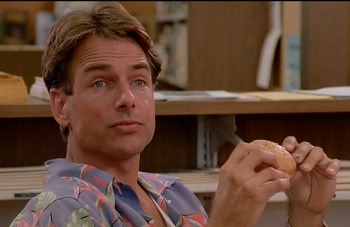
5. Mr. Shoop in Summer School (1987)

HarmonSummerSchool
Gym teacher Mr. Shoop (Mark Harmon) plans to vacation in Hawaii with his girlfriend for the summer, but when the English teacher wins the lottery and immediately quits, Shoop’s forced to teach remedial English. He is the most likable of the teachers I’ve chosen, easygoing and even tempered, good natured even when tried. Ultimately, his slacker ways convert into effort in the classroom, and because he relates to and has no illusions about his students’ disinterest, he’s able to reach them. Most importantly, he has rational expectations of them, and celebrates progress rather than any specific target, as any good teacher should (and would be able to, would the system allow it). Plus, the film is hilarious, and Harmon is so attractive in it.

4. Elizabeth Halsey in Bad Teacher (2011)

Halsey-Diaz-BadTeacher
Cameron Diaz doesn’t always reach her comic potential, but when she does, as with Elizabeth Halsey (Cameron Diaz) in Bad Teacher, she’s something to watch. The montage of her avoidance of crying students and celebrating teachers makes me laugh every time, as does her unabashedly sexy school car wash and cruel honesty in speaking with her class and grading their work. She is a terrible teacher, but her narcissism and bluntness make her a very, very funny one.

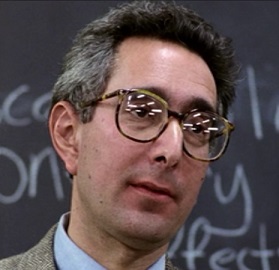
3. Teachers in Ferris Bueller’s Day Off (1986) & Peanuts

BenSteinFerrisBueller
If pressed, I’d prefer Peanuts‘ gibberish teacher to Ben Stein’s gloriously boring one, but the two are closely tied. Obviously, both types are accurate portrayals of how instructors come across to students. I love how Stein has given upon class participation, simply saying, “anyone, anyone?” then answering himself. But Peanuts’ teacher may get the edge because I have this same reaction ANY time I encounter something I don’t understand. My car is being fixed, I’m listening to explanations of the U.S. debt, and I hear that waa-waa-waa of Peanuts’ comically confusing instructor.

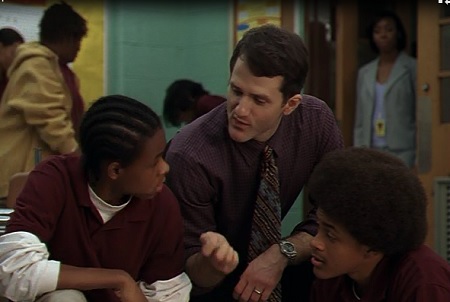
2. Prez in The Wire (2006)

PrezandStudentsTheWire
Season 4 of The Wire features the Baltimore school system, with former cop Roland Pryzbylewski, known as Prez (Jim True-Frost), teaching the students from neighborhoods he formerly policed. As a result, he knows what his students are up against, though he isn’t prepared for the challenge of teaching them. I’ve never seen a more accurate depiction of teaching in a difficult district. Prez’s use of gambling odds as an example to finally reach some of his students in the episode “Unto Others” is remarkably telling about their priorities–and squandered potential. We can only wish that those who had more influence in the system were as wise and compassionate as Prez.

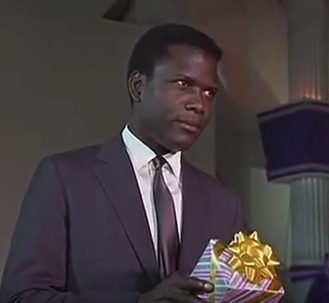
1. Sir in To Sir, with Love (1967)

SidneyPoitierToSirwithLove
Sir’s (Sidney Poitier) school district in England is characterized as very challenging, even if it looks less so to us in 2015. We see him constantly thwarted, and frequently angry. His race becomes one more thing students have against him. His decision to throw out the lesson plan and begin anew is what any good teacher would do if it were allowed–the problem, of course, is that you only want good teachers doing so.

What I love about Sir is that he’s a reluctant instructor, only there because he can’t get a job in his field, and slowly, these rebellious kids win him over. He is a very flawed character, even socially awkward, and thus very real. Poitier deserved an Oscar for the performance. The theme song makes me tear up every time. And the film has such a lovely, perfect, subtle ending. The movie is inspiring without ever losing track of reality (as most teacher-centric films do).

THE STUDENTS: TOP 5 PORTRAYALS

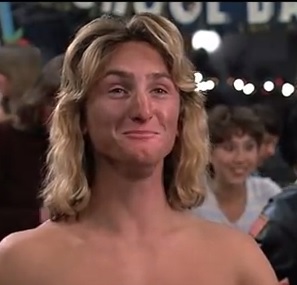
5. Spicoli in Fast Times at Ridgemont High (1982)

Spicoli
Spicoli (Sean Penn), the ultimate surfer dude. I don’t think this character requires any explanation (most would expect to see him as #1). While there is a shadow of this stoner in Amy Heckerling’s Clueless (1995), it’s in her earlier film, Fast Times, that she captured an iconic form of the type, mainly due to Cameron Crowe’s script. Spicoli’s (Sean Penn’s) battles with his teacher, Mr. Hand (who deserves an honorable mention in the list above), are perfect.

Bagel tucked in jeans, shirtless, Spicoli makes us laugh before he says a word. Penn gives him an awkward gait; a spacey expression; long, wordless pauses; and an inability to detect sarcasm. As a result, he is as lovable as he is annoying. Penn turned the surfer dude into comedy gold, and actors have been imitating him ever since.

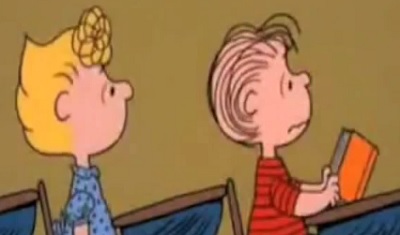
4. The Frustrated/Bored of Ferris Bueller’s Day Off & Peanuts

There’s really no need to pinpoint an individual in the mass of disinterested students who are ignoring Ben Stein’s flat delivery of “Bueller?” as he calls the roll. The Peanuts characters’ confusion at their instructors’ seeming gibberish are similarly funny, though Charlie Brown’s panic is particularly funny. What’s unavoidably true is just how typical both the boredom and confusion are in any classroom, though hopefully with occasional relief! Beautifully rendered in both cases through the facial expressions of the students as the teacher drones on.

Peanutsstudents

Buellerstudent1

Buellerstudent2

Buellerstudent3

3. The Intellectuals of Better Off Dead (1985)

BetterOffDeadClass
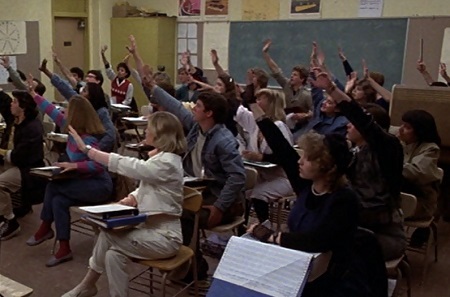
Most films portray the majority of students as inattentive and uninterested. This film subverts our expectations, with a class enthralled by comically difficult subject matter. They’re so enthusiastic that they groan when they have to leave the classroom, comforted only when their math teacher reassures them: “I’ll see you all tomorrow. Just remember to memorize pages 39 to 110 for tomorrow’s lesson.” It’s so obviously a teacher’s dream of what students would be like after watching too many inspiring education films that it always cracks me up. Lane (John Cusack), in contrast with his peers’ binders of work, takes out one sheet of paper with “Do homework” stuck together with gum. In this case, the slacker is the unpopular one. It’s a mistake not to watch the whole film, but at least catch this scene.

2. The Kids of The Wire, Season 4
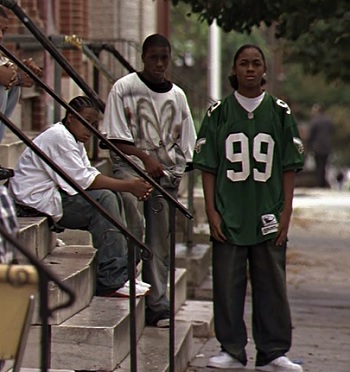
I find it hard to write about the students in this season, as they’re far too real: Dukie (Jermaine Crawford), Randy (Maestro Harrell), Namond (Julito McCullum) and Michael (Tristan Wilds) struggle with the lure of selling drugs on the corner in Baltimore, with authority figures often encouraging or passively accepting their abandonment of education.

Watching Michael's confrontation with a drug dealer.

Watching Michael’s confrontation with a drug dealer.

It’s the most vivid and compelling portrayal I’ve ever seen of the weight so many students bear with them when they enter the classroom. The Wire, unlike 90 percent of cinematic portrayals of teaching, sees that the wider culture and systemic problems of the educational system are far greater forces than one teacher with a great idea (which Prez does have) can combat. Haunting.

1. Chainsaw & Dave of Summer School

ChainsawDave-SummerSchool
All the students in Mr. Shoop’s (Harmon’s) class are distinctive. Their plan–to exchange bribes for trying in school–is diabolical and hilarious in itself. And with characters like these–the awful driver Mr. Shoop has to train, the kid who spent the summer in the bathroom, etc.–who can stop laughing? The most memorable students are obviously Dave (Gary Riley) and Chainsaw (Dean Cameron), the wannabee special-effects guys. Who comes up with such unique characters for a silly film like this one? The tension breaker of and “I don’t know anything” dream of Chainsaw’s before the big test are my favorite depictions of academic stress in any film, book, or story. (I should, though, give an honorable mention to John Travolta’s Barbarino in Welcome Back, Kotter.) Inspired by Chainsaw, I used to suggest to friends a university-wide tension breaker when I was an undergrad.

As the school year begins, I’ll be returning to these favorites to combat moments of frustration and refresh my love for teaching. I hope some of you will do the same.

Share
Posted in: 1960s films, 1980s films, 1990-current films, Comedies (film), Drama (film), TV & Pop Culture Tagged: Bad Teacher, best, Better Off Dead, Cameron Diaz, Ferris Bueller, Mark Harmon early films, Mr. Hand, Sidney Poitier, Summer School, Teaching films, The Wire, To Sir with Love
« Previous 1 2 3 4 5 … 14 15 16 17 18 19 20 21 22 … 24 25 26 27 28 Next »

Recent Posts

  • How You Know Your Friends Know You
  • National Classic Movie Day!
  • Colbert’s Midnight (1939), Rom-Com Magic
  • Say Anything Is The Sure Thing’s Lame Younger Brother
  • Wallace Got an Oscar

Subscribe to Blog via Email

Enter your email address to subscribe to this blog and receive notifications of new posts by email.

Categories

  • 1920s films
  • 1930s films
  • 1940s films
  • 1950s films
  • 1960s films
  • 1970s films
  • 1980s films
  • 1990-current films
  • 2020s films
  • Action & Sports Films
  • Anti-Romance films
  • Blogathons
  • Childfree
  • Comedies (film)
  • Drama (film)
  • Feminism
  • Femme fatales
  • Film Noir/Crime/Thriller & Mystery
  • Gloriously Silly Scenes
  • Horror
  • Humor
  • Mae West Moments
  • Musicals and dancing films
  • Oscars
  • Random
  • Romance (films)
  • Romantic Comedies (film)
  • The Moment I Fell for
  • Turn My Sister into Classic Movie Fan
  • TV & Pop Culture
  • Uncategorized
Share
Classic Movie Blog Hub Member

Recent Comments

  • leah@carygrantwonteatyou.com on How You Know Your Friends Know You
  • Silver Screenings on How You Know Your Friends Know You
  • leah@carygrantwonteatyou.com on How You Know Your Friends Know You
  • Classic Film And TV Corner on How You Know Your Friends Know You
  • leah@carygrantwonteatyou.com on National Classic Movie Day!

Archives

  • June 2026
  • May 2026
  • March 2026
  • November 2025
  • September 2025
  • May 2025
  • March 2025
  • January 2025
  • November 2024
  • August 2024
  • July 2024
  • May 2024
  • March 2024
  • February 2024
  • December 2023
  • November 2023
  • October 2023
  • September 2023
  • August 2023
  • July 2023
  • May 2023
  • April 2023
  • March 2023
  • January 2023
  • December 2022
  • November 2022
  • September 2022
  • July 2022
  • May 2022
  • April 2022
  • March 2022
  • February 2022
  • October 2021
  • September 2021
  • April 2021
  • March 2021
  • February 2021
  • December 2020
  • October 2020
  • September 2020
  • July 2020
  • May 2020
  • April 2020
  • March 2020
  • February 2020
  • December 2019
  • October 2019
  • September 2019
  • June 2019
  • May 2019
  • April 2019
  • February 2019
  • January 2019
  • November 2018
  • September 2018
  • July 2018
  • June 2018
  • May 2018
  • April 2018
  • March 2018
  • February 2018
  • January 2018
  • November 2017
  • September 2017
  • August 2017
  • July 2017
  • June 2017
  • May 2017
  • April 2017
  • March 2017
  • February 2017
  • January 2017
  • December 2016
  • November 2016
  • October 2016
  • August 2016
  • July 2016
  • June 2016
  • May 2016
  • April 2016
  • March 2016
  • February 2016
  • January 2016
  • December 2015
  • November 2015
  • October 2015
  • September 2015
  • August 2015
  • July 2015
  • June 2015
  • May 2015
  • April 2015
  • March 2015
  • February 2015
  • January 2015
  • December 2014
  • November 2014
  • October 2014
  • September 2014
  • August 2014
  • July 2014
  • June 2014
  • May 2014
  • April 2014
  • March 2014
  • February 2014
  • January 2014

Meta

  • Log in
  • Entries feed
  • Comments feed
  • WordPress.org

Copyright © 2026 Cary Grant Won't Eat You.

Church WordPress Theme by themehall.com