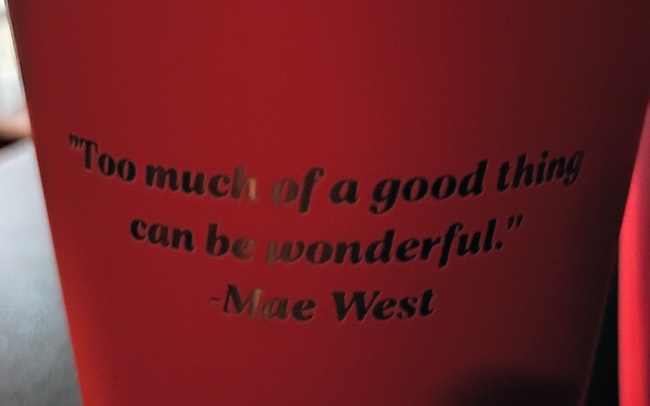
Two water bottles arrived for me today, with a movie camera on front and quotes on the back. This is one is, of course, a quote from my favorite actress, Mae West. The other water bottle quotes the “Fasten your seatbelts” line from Bette Davis in All about Eve, one of my favorite films.
Only my fellow classic movie fans will understand just how happy it will make me to carry these around.
Today is a special day for honoring classic film every year. Big props to Rick at Classic Film TV Cafe for turning this into an annual tradition. I would like to pass along some of his recommendations–introduce a friend or family member to classic film, watch a favorite, plan a host party.
As for me, I’m going to rewatch Sextette in honor of Mae West, joined by my cat, named Marlo for the film’s heroine. A character that makes no sense, but somehow is the least bonkers presence in the film.
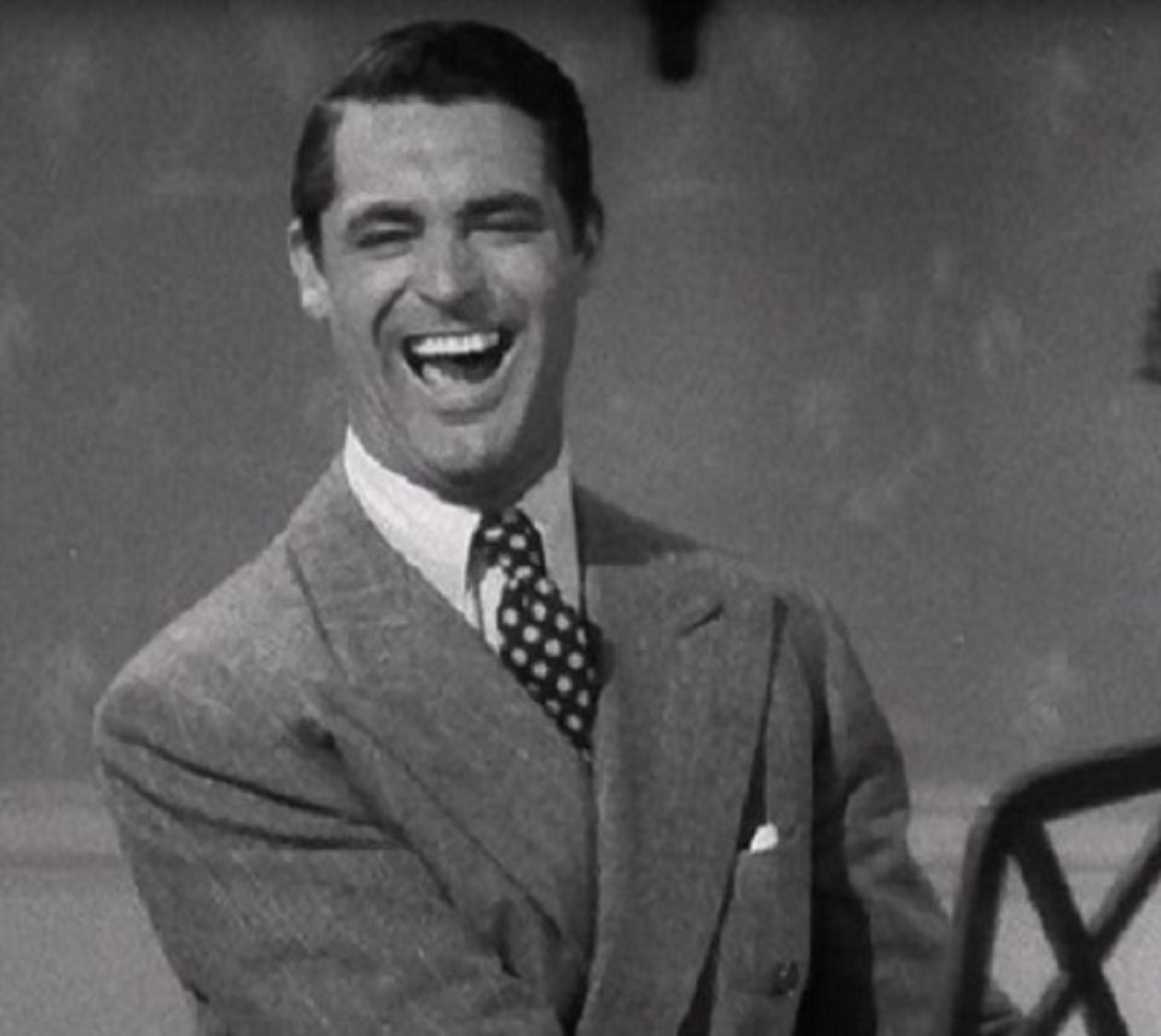
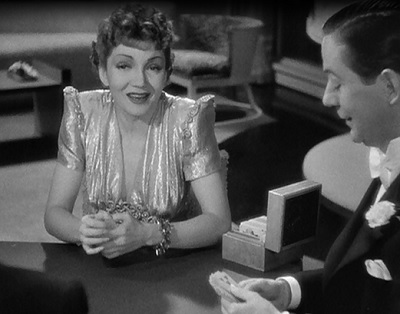
Midnight (1939) is one of those rom-coms that by all rights should make best-of lists. Written by the classic comedy duo of Charles Brackett and Billy Wilder plus Edwin Justus Mayer, who penned the satire To Be or Not to Be. Packed with stars, including Oscar winner Claudette Colbert, scene stealer John Barrymore and Mary Astor. Even charming cameos by gossip columnist Hedda Hopper and Monty Woolley.
Given its pedigree, it should be no surprise that the film is hilarious, and director Mitchell Leisen, who also helmed Easy Living and Remember the Night, gives the outstanding script its due.
Why then, did I have to stumble upon it?
It’s true that Don Ameche is no Clark Gable, but he has a blustery, rough-hewn charm of his own. Plus, he’s not the focus. This is a rom-com that leans into the comedy, and the laughs are primarily thanks to Eve Peabody; the breathtakingly confident, unscrupulous heroine (Colbert); and her game sidekick, Georges Flammarion (Barrymore).
Eve has arrived in Paris with only the evening dress on her back thanks to her poor luck at a roulette table. She’s looking for a rich future — or as she puts it, a “tub of butter” — preferably in the arms of a wealthy husband, not those of the sweet taxi driver (Ameche) who picks her up. For reasons of his own, Georges (Barrymore), a man she stumbles into while crashing a party, abets her pursuit of a wealthy, suave player, Jacques Picot (Francis Lederer). Things are looking promising since Picot appreciates the newcomer’s beauty and cool assessment of his character. Only the taxi driver and the limits of her con-artist wiles can foil her plans.
Claudette Colbert would have been at home in the Ocean’s 11 franchise. The breezy assurance with which she pulls off her various lies and schemes as Eve is a joy to behold. Ernst Lubitsch surely erred in limiting his casting of her to a mistress teaching a wife to “jazz up your lingerie” in TheSmiling Lieutenant and a put-upon mate in Bluebeard’s Eighth Wife. What a waste to not cast her as the schemer (Miriam Hopkins) in Trouble in Paradise.
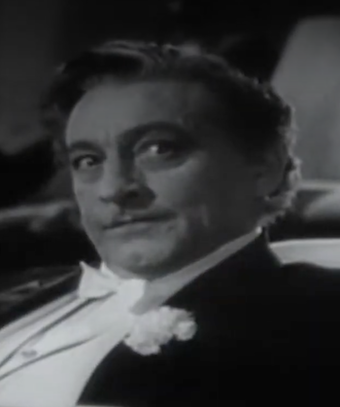
The repartee between Georges and Eve when they are collectively spinning tales makes you wonder just how many takes it took before Barrymore and Colbert could keep their faces from crumbling into laughter at these Brackett-Wilder-Mayer lines. And Barrymore as a fairy godmother? His expressions alone crack me up:
I’m not giving anything else away. Just watch it. If you’re anything like me, it won’t be the last time.
This is part of the Classic Movie Blog Association’s Make ’em Laugh blogathon. Check out my peers’ funny takes on their favorite comedies at this link.
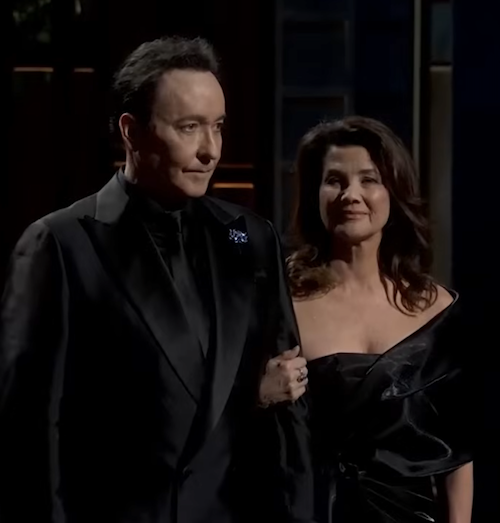
At this year’s Oscars, Daphne Zuniga and John Cusack were standing together to pay honor to Rob Reiner for his unforgettable but unappreciated second film, The Sure Thing (1985).
The main character, Gib (John Cusack), immediately became the romantic ideal of this writer as an eleven-year-old, a position he held for decades.
My sisters and I — entranced watching Gib shotgun a beer — all tried the maneuver with soda on our porch, with potentially catastrophic effects on the cement and on our esophagi. Before my ten-year high school reunion, I insisted a friend watch the film as part of our preparatory movie marathon, along with School Ties and other nostalgic faves.
“Why have I never heard of this?” she said afterward.
Exactly.
I know there could be many reasons for its lack of popularity: its distribution, a poorly chosen clip for its marketing campaign, bad timing. But for me, the culprit has always been that boom box, held aloft in the iconic scene from Say Anything four years later. If it weren’t for that image and the earworm song playing along with it, maybe the rest of you would stop talking about that lame Lloyd Dobler and instead celebrate his forerunner: Walter “Gib” Gibson.
Charming, hilarious, endearing Gib, who has a lot more going on than Lloyd, whose lapdog approach verges on pathetic.
Say Anything has always exasperated me. Part of it is my allegiance to Gib. Part of it is my conviction that Lloyd’s obsession is — at best — annoying. But perhaps the worst thing about that film is my confusion over its appeal, as if my peers had said, “Yeah, Alec Baldwin’s acting is okay in Glengarry Glen Ross, but have you seen William Baldwin in Sliver?”
For me, Say Anything would be a complete wash without Lloyd’s lovelorn best friend (Lili Taylor) and the song “In Your Eyes.” Cusack’s charm is considerable, but it’s not enough to gild that turkey of a character.
But of course, to convince you, I need to start where I did: with The Sure Thing, which thanks to Peter Gabriel, too few of you have seen. Once I take you through its many appeals, maybe you’ll take a second look at Lloyd and Gib.
Opening Scenes
Gib’s hopelessness at picking up women in high school is immediately established in The Sure Thing. Was there ever a worse pickup line than “Consider outer space?” Perhaps later, when Gib comes up with “Did you know that Nietzsche died of syphilis?”
We also quickly see that his bro-type friend, Lance (Anthony Edwards), is nothing like him. Gib may not be as sure of himself as Lance, but he’s witty. Gib feels despondent about striking out with high school girls, so Lance assures him that these girls will magically transform once they get to college. Gib, with a wry expression and shake of the head, says, “I’m gonna miss you, Lance.”
Soon Lance will leave for UCLA, while Gib will depart for a small Northeastern college. Unfortunately for Gib, his poor luck with women will continue, especially when he tries to pick up his classmate Alison, a stuffy academic type (Daphne Zuniga, pre-Melrose Place). He asks her to tutor him in English to woo her. It’s not a bad ploy. I enjoyed his dramatic depiction of his fast-food future if he doesn’t pass the class. But he soon pisses her off, making her an enemy instead. So, when Lance gives him an appealing prospect — come see me at Christmas and I’ll get you laid — Gib’s discovery that Alison will be accompanying him on the trip is not a happy moment.
So here we are, a road trip with two people who dislike one another, a rom-com standard since It Happened One Night. Hijinks are about to ensue, which will begin with the couple offering to drive them, played by Lisa Jane Persky and Tim Robbins. The couple wants to spend the cross-country hours singing showtunes. Witness Cusack’s hilariously horrified expression when this plan begins to be executed. He is every teenager everywhere. This guy is gonna be a star.
Believability
One thing I love about 80s films is that they often feature teens who are low on funds instead of focusing on the privileged. (In fact, when rich characters are included, they are often villains.) Neither the hero nor the heroine of The Sure Thing can afford airfare, so they go to the ride board (remember those?) Instead of dressing in fashionable or skimpy attire, the two are wearing unsexy (and in Gib’s case, ill-advised) outfits. Gib’s immature sleepwear looks like he’s worn it since he was fourteen. Neither can afford much to eat; we witness him snacking on pork rinds and snowballs. Alison is so worried about her parents’ rules she misses what constitutes an “emergency” that would enable her to use their credit card. These leads have always seemed like people I know, not the glamorous, unconvincing teens in so many movies I’ve seen since.
Likeability of the Characters
Both Gib and Alison are believably awkward with each other as their attraction grows. The characters’ combination of bravado and insecurity is exactly what it’s like to be that age.
Just a few years after Porky’s celebration of objectifying women, Gib’s character is sensitive in unexpected ways. Sure, he’s stereotypically masculine too. (Note when he shares his distaste for the name Elliot, the kind of guy, he says, who “eats paste,” which he compares to the name Nick, the “kind of guy who doesn’t mind if you puke in his car.”) Yet he checks on Alison after a scary encounter and is careful to respect her boundaries during their trip, making sure not to “try anything” she doesn’t want.
Alison, meanwhile, is afraid she’s not cool. She takes notes on every word the professor speaks in her English class, then can’t get past the professor’s jibe that she needs to live more adventurously. That’s why she overreacts when Gib teases her for being “repressed.” For me, a nerdy girl growing up in the 80s, Alison was pretty darn familiar. Gib was that charming combination of confident and sensitive that isn’t easy to find, especially in someone as attractive as Cusack. As a stressed-out freshman in college, I sought a (comparatively) relaxed boyfriend like Gib, so much so that I started dating the first person I met with terrible posture.
The film has also had some funny and enduring effects on my habits. Alison’s habit of nervously checking around a motel room for anything left behind has haunted me — and has resulted in extra care before departures — in every place I’ve stayed since.
The Humor of the Leads
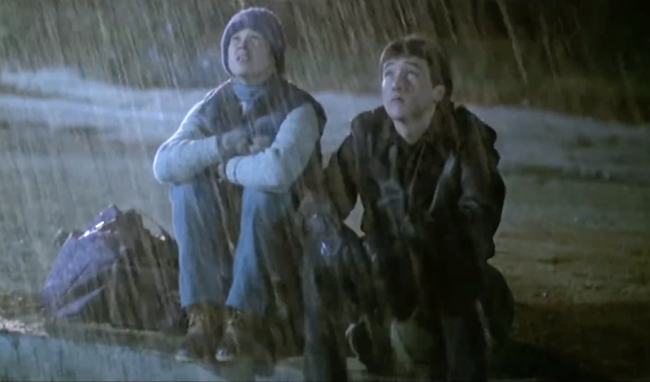
As a kid, my favorite scene was Gib’s dramatic encounter with a sketchy truck driver. He’s just having so much fun freaking the guy out.
I’ve always loved the way Cusack plays Gib’s insecurity, as when he goes to a bar to escape when Alison is talking to her boyfriend on the phone. Even better is how he tries to impress her by showing off his supposed juggling skills when he returns.
Gib has so many good lines. My favorites are his defense of the nutritional value of pork rinds and when he shares the random questions running through his head: “Does God exist? Who invented liquid soap and why?”
Alison’s failure when she tries to shotgun a beer cracks me up. I also smile at Zuniga’s goofy delivery of “I’m the kind of gal who likes to live on the edge,” which says very clearly that she is anything but.
The Joys of the Minor Characters
Like Better Off Dead, another great Cusack flick, this film is full of funny minor characters.
The singing couple is great, with impressive performances from both actors. I hadn’t heard any of these rusty, awful tunes before, and I laugh aloud when the two become fearful of these teens they’re transporting and try to bar them from returning to the car, screaming, “Lock the doors!” It gets me every time.
I love the roommate who wants his almost certainly fictional sexual encounter to be published in Playboy.
Then there’s the semi driver who helps Gib get his “sure thing” (i.e., get laid without strings) because “my whole life, I never had a sure thing.”
Every single character in the dive bar where Gib goes to avoid Alison’s talk with her boyfriend is hilarious: The deadpan bartender, who looks at Gib’s fake ID and says, “Okay, Dr. Levinson, what’ll it be?” The fed-up waitress with her Flo of Mel’s Diner hair and her disdainful glances at her clientele. The charming customers who cheer up Gib with their Christmas carols and their uncertainty of whether they are “goodlooking” men. I can’t decide which I like more: the guy asking the waitress for critiques on his self-discipline or the cowboy, who tells his companions, “I was in Paris once with my wife. Boy, am I glad she’s dead.”
For those of us who relish funny encounters, The Sure Thing has always felt aspirational as well as entertaining.
The Romance
Zuniga doesn’t have Cusack’s talent, but she was very good in this film. Alison’s uncertainty and awkwardness come through in Zuniga’s voice, posture, and expressions.
Cusack is amazing in it: by turns sarcastic, tender, playful, and wistful. Still a teen when this film was produced, he is a far better comedic actor in this, his first lead role, than actors twice his age.
He and Zuniga have great chemistry, and their growth as characters in the movie is sweet and believable. Gib grows up in Alison’s company, and she learns to relax and act more her age (i.e., not 85). What I love is that these are incremental growths: the characters still are fundamentally who they always were.
Of course, the “sure thing” (Nicolette Sheridan) isn’t much of a character, nor is Alison’s boyfriend. But we get more humorous encounters with Lance (Edwards) in the final scenes, including what he did to set up this situation for his friend.
I won’t reveal the end. If it’s a little cheesy, that sentimentality is earned, and Cusack and Zuniga sell it.
The Comparison
Before I left for my junior year in England in the mid-1990s, I discussed with a friend the horror of a partner being with you with nothing to do. He nodded; he felt the same. The image of Lloyd, sitting in Diane’s (Ione Skye’s) dorm room playing video games and practicing kickboxing, the sport “of the future,” while she tries to enjoy her fellowship was one of the reasons that my own boyfriend and I agreed that long distance was a good alternative for us.
I shivered at these lines from Say Anything, thinking of Lloyd glomming onto her:
Diane’s dad: “What are your plans for the future?”
Lloyed: “Spend as much time as possible with Diane before she leaves.”
Sure, Lloyd looks good compared to Diane’s criminal father. But that’s not a high bar. Being adrift at his age isn’t a bad sign; it’s even endearing. But she is driven and has a once-in-a- lifetime opportunity he’s about to derail. Clingy is not a good look, even on John Cusack.
And Diane, oh Diane. At points Skye’s acting is so stilted I found it difficult to watch, so it was hard to feel for her character. While Diane is attracted to Lloyd, it felt like she was just replacing her dad with another guy to lean on.
I laughed a few times during Say Anything, mainly at Lili Taylor’s funny delivery and descriptions of her ex. Compare that to The Sure Thing. The last time I saw it, it had been over a decade, and I still remembered so many scenes and lines with affection. And even though I knew everything coming, I laughed countless times.
When Rob Reiner died, I hoped there would be a reappraisal of this underappreciated comedic gem he’d directed, which was well-reviewed when it first came out. Roger Ebert had given it three and a half out of four stars and called it a “small miracle.”
Since Say Anything was not one of Reiner’s films, I thought The Sure Thing would finally get the due it had never been granted. Instead, the movie became a footnote in Reiner’s obituary, mentioned as if it were a regrettable blip between This Is Spinal Tap and Stand by Me. What a shame.
Hopefully, Zuniga and Cusack standing together to honor Reiner (still adorable together) will be a reminder to those who love it and a wake-up call to those who have never seen it.
Even if you like Say Anything, you should watch Cusack’s first starring role to witness the charisma that would turn him into a heartthrob and beloved comedy icon. There’s a dusting of that charm in Say Anything, but if you want to encounter its full wattage, spend a little time with Gib in The Sure Thing.
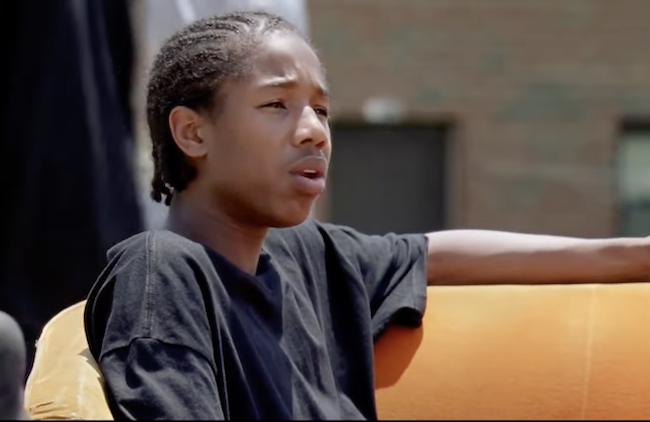
Well, some good choices, some bad in this year’s Oscars. But I’m going to focus on the fact that Michael B. Jordan got an Oscar. It wasn’t his best performance. But he’s deserved awards since Wallace.
Not a single Emmy for any of that stunning cast of The Wire. But at least this stellar performer is now an Oscar winner.
Hamnet.Can I say a performance like Jessie Buckley’s is good if it’s just one misery scene after another? I don’t know these characters enough to feel invested in them. The pacing is all wrong. I looked at my watch countless times. What were the slow-mo shots of trees and berries for? I didn’t cry. If I hadn’t known these were depictions of real people, I would have rooted for the plague. This is not the sign of a good movie.
Song Song Blue feels a bit like a Lifetime movie despite the great performances (especially Hugh Jackman’s). The timeline is very misleading. But I thought it affecting, which is more than I can say for Hamnet.
One Battle After Another. It’s an action movie. It’s a satire. It’s a comedy. And it all works. Fantastic acting, biting commentary about the current moment (not easy to pull off), an actually original car chase. the star-making turn of Teyana Taylor. It’s a movie I instantly wanted to rewatch despite its length. I don’t always like Paul Thomas Anderson. But he nailed this one.
Sinners. This is a daring movie. It’s inventive and thoughtful and metaphorical and just new. I don’t think it all works, especially the end. I might give the Oscar to Ryan Coogler anyway because this is a deeply creative film, and I believe directors who pull off something less polished but interesting deserve the accolades. The main reason I wouldn’t give this film the Oscar is my biggest surprise: I don’t think Michael B. Jordan is good in it.
This discovery has been a shock for me, someone who has loved him since his stunning performance in The Wire, who adored him even his small roles (Lie to Me). Who watched a superhero movie for him, loved Creed because of him. But here’s the thing: If you’re playing twins, I should be able to tell them apart. And I was so far from being able to do so that I nearly wrote down which person was wearing what so that I’d stop confusing the characters. Consider this: Tatiana Maslany played so many clones in Orphan Black that I couldn’t count them, and when acting as the main four clones, I could tell when one of them was pretending to be another. Jordan is nearly always good, but I found his performance dull here, even if he hadn’t muddled the storyline by not building enough distinctions between the two men. All the other performances — especially those of Wunmi Mosaku and Delroy Lindo — are memorable.
Sentimental Value. I really loved this film. Affecting, understated and simple, with characters so believable to me — especially the relationship between the two sisters — that I instantly felt invested. Stellan Skarsgård is great in it, even better than Sean Penn with his brilliant portrayal of the villain in One Battle After Another. Renate Reinsve is moving and subtle in it, but I liked the performance of Inga Ibsdotter Lilleaas even better. She plays the more grounded sister who is trying to keep the family together. She’s lovely in it.
Marty Supreme. I don’t know how to feel about this film. Timothée Chalamet is mesmerizing in the role, but as a movie, I don’t know. It gets boring in the middle, and I’m not sure what we come to in the end. The very end is terribly cliché. There’s sadly little ping pong. All the character’s hustles flow together and aren’t really hustles at all. The real person the film is based on seems far more interesting than the character drawn here. I enjoyed most of it, but I’m not sure I can call this a good film.
Blue Moon. I enjoyed this little character study. It’s more of a play than a film, but Ethan Hawke — who has never been my favorite star — is quite good in the role. As far as character studies, this is far more interesting than Marty Supreme.
If I Had Legs I’d Kick You. I’m a big fan of this little fever dream of a film, and Rose Byrne’s was the most stunning performance of all of those I saw this year. More nuanced than Buckley’s and Reinsve’s. Better than any of the men’s performances. By turns funny and heartbreaking and deadpan, Byrne’s acting is something to watch. She won’t win. But she should.
So there you have it: my views on the nominees I’ve seen so far. I’d love to hear others’ thoughts!
A friend and I both have this habit of picking up other people’s stray books, starting to read, and then forgetting where we are. One day, that friend picked up mine, Don DeLillo’s White Noise. I waited for her reaction, wondering if she’d be as overcome by it as I had been. After a pause in reading, she looked up at me and said, “This is literature.”
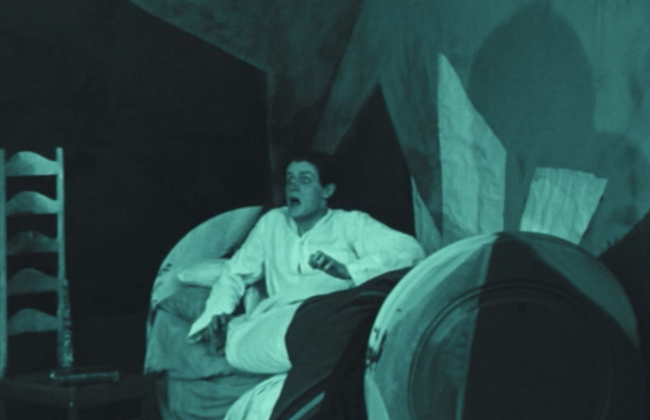
I always think of that moment when I’m reading or watching something and am stunned by its brilliance. That stirring of excitement is what I felt just a few minutes into The Cabinet of Dr. Caligari (1920).
I wasn’t even sure beforehand I’d like the movie. Horror is not my usual. I’d heard of the film and was curious. But I will admit to some fear that whatever special effects it managed in 1920s terms would be too silly for the story to frighten a 2020s audience.
What I didn’t count on, of course, were the joys of German Expressionism. I didn’t even know the intriguing Nosferatu was part of the same movement. The exaggerated, fanciful staging, set design, lighting, camera angles, use of shadows and makeup of The Cabinet of Dr. Caligari take the film into the world of fairy tale. Because there is no attempt to make anything look “real,” the film quickly joins the terrain of nightmare. (One hundred years don’t really make a difference when it comes to nightmares.) Most say the film is either influenced by or a direct commentary on WWI, which explains much of the plot and the traumatized state of its leads.
I’ll share just the basics so that I don’t spoil its considerable suspense. (Side note: What is that AMAZING font on the title cards throughout? I want to use it for everything!!)
The acting begins with an older man sharing his ghostly encounters with a young man, Franzis (Friedrich Feher), who says he and his fiancée (Jane Olsen). have their own terrifying tale to tell. She walks by trancelike in white, like she’s straight of casting for Ophelia.
Franzis then brings up a mysterious “him” from his past, who appears in his own little shot, looking extremely creepy (with his hair dyed black and white on top, skunk style). This “him” navigates a gorgeous setting of crooked street drawings. Him, of course, is Dr. Caligari (Werner Krauss).
The frame quickly dissolves into a scene of a new character, whom we’ll soon learn is Alan (Hans Heinrich von Twardowski), overjoyed about his town’s fair. He goes to Franzis’s place to convince him to join. Franzis is clearly a pre-traumatized, lighter, and happier version of the man we met in the opening scene. Meanwhile, Dr. Caligari is trying to get a permit for the same event.
We soon discover Dr. Caligari’s act will involve a somnambulist named Cesare (Conrad Veidt). As Act II begins, we learn there’s been a murder in the town. I won’t share any more of the plot.
The film is beautiful. Whether the story is using a painted set or a constructed one — and this film uses both — each set is a haunting piece of artwork. The framing of every shot is striking. (I wouldn’t recommend anyone experiencing vertigo watch this film. The oddly angled everything can make you feel a bit off even on the most balanced of days.) Surely, every haunted house created in every town since owes a debt to this film.
Dr. Caligari makes you wonder what you’re seeing and not, explores the nature of sanity and authority and otherwise makes you feel ill at ease and worried for its characters. It also keeps you reflecting on its messaging and incredible artistry long afterward. I enjoyed the acting, especially Veidt’s as Cesare and, of course, Krauss, who just owns this role. But EVERYTHING is good about this film. Never with any other scary movie have I wanted to freeze every frame, just to examine how each touch builds toward this symphony of mood building.
If you haven’t seen it yet, I envy your first encounter.
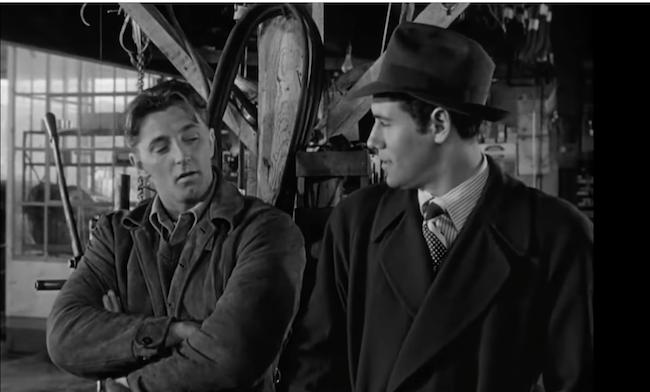
Oh Jeff, I get why you fell for Kathie (Jane Greer). That sexy voice, her air of mystery, those all-white get-ups, vacation drinks, and her nonchalant response to your chase. You really had no hope, did you? Especially once she started toweling you off from the rain.
Yeah, you were a goner, my friend. That was a given.
But I give you credit. You saw her shoot your former partner and realized too much siren for me. You viewed her clearly after that. When your new, sweeter lady love defended her by saying, “She can’t be all bad. No one is,” you (justifiably) answered, “She comes the closest.”
You are right that you were a chump, falling for a homicidal moll’s lies, but honey, in the world of noir suckers, you are Albert Einstein. You learned. You improved your life and your dating judgment (a lot of us don’t make it that far).
Problem is, my friend, you need to work on your shadiness. The detective career is not one in which fisticuffs save you from a bent former partner. You don’t have to kill, but you must learn some trickery and bluffing. To be honest, I’m not sure how you’ve remained above ground this long. I might not approve of Kathie’s answer, but I understand why she thought your self-defense inadequate.
You said it yourself when Ann’s wannabe boyfriend threatened, “I was going to kill you.” You quipped, “Who isn’t?” In those two words, you captured the gumshoe life, in which craftiness and sketchiness are survival requisites.
Luckily, you do have a key asset, Jeff. You are a planner. I need you to remember that neither Whit, nor Kathie, nor any of the henchmen involved have this basic quality. They live on spur-of-the-moment, unerringly bad decision making.
Let’s take your nemesis, Whit. He hired you, a ridiculously attractive man with sleepy eyes and a sultry voice, to retrieve his already traitorous girlfriend. (As my sister says, “That’s like sending Cindy Crawford to get your boyfriend.”)
You soon discovered she was a viper, didn’t you? Whit did too. She’d already nearly killed him. So what did he do when he discovered all the additional murderous shenanigans she’d been up to? He forced this woman into a corner, thinking what? She’d say, “Okay, honey. Off to jail I go”?
I know he looked like he was intelligent, Jeff. But he really wasn’t. And his surviving buddies are even dumber. They just outnumbered you with this tax killing plot. They didn’t — in any way — outsmart you.
Why then, Jeff, after some unlucky moves and bad timing, have you let the fatalism get to you? When Kathie said, “Let’s get out of here” after killing Whit, what did you mean by asking, “There’s someplace left to go?”
Of course there is, Jeff! You surely can double-cross a sociopath with no impulse control. This is no Phyllis Dietrichson, my friend. She’s not going to out-connive you. And do you honestly have a problem setting her up for the three killings she is either solely or jointly responsible for? Is calling the police so that you and she will die in a shootout a more ethical plan? Do you think any of the henchmen left care enough about Whit’s honor or have brains enough between them to hunt you down?
I know you think you can’t escape your past — that once you get into bed (in your case, literally) with evil, you don’t have a shot unless you go full-scale monstrous yourself and outsmart them all, Red Harvest (or its imitator, Miller’s Crossing)-style. And you’re too good of a person to go that route.
But do you need to? Most of your enemies are dead. Your fate is not as determined as you think. Your odds are far better than Kathie’s were in her gambling efforts in Acapulco. Her fingerprints are all over that home, and angel face or not, she is a gun-loving gangster’s moll (in a terribly sexist age), which doesn’t make for the best defense.
I know this is the noir way, Jeff: You must play the man defeated. You must see killing her (even indirectly) as the only escape from her wiles and the only protection for the woman and friend you love. I get it, Jeff. It makes for a good movie.
But you said it yourself, Jeff: “There’s a way to lose more slowly.”
And in this case, you actually had a chance to win.
Back Street (1932), directed by John Stahl, announces itself early on as belonging in the wronged illicit woman tearjerker canon. Charming Ray (Irene Dunne) enjoys befriending traveling salesmen at a beer hall in Cincinnati before the turn of the twentieth century, but all they do in return is try to bed her. Ray laughs at their efforts, expecting little else, but never giving in.
Spoilers ahead.
That is, until she meets Walter (John Boles), a flirt who steals her heart despite neon red flags, including:
Dispensing cheesy pickup lines during their meet-cute.
Suggesting she meet him at 10 pm on a random street for a date.
Announcing he’s a mama’s boy.
Admitting he’s engaged.
Ray sleeps with this worthless banker anyway, making the audience wonder just how little game those traveling salesmen had. Walter suggests she meet his mommy at the park one day. He’s hoping that said mommy will agree he should drop his fiancée if exposed to Ray’s considerable charm. (Apparently, he can’t break up without mama’s say-so.)
Unfortunately, Ray gets waylaid because her lovesick half-sister needs her help (because of course she does). Ray then wonders for the rest of her days what would have happened had she had made it to the park on time.
Walter’s response to her no-show is a red flag of its own: angry petulance. Instead of considering herself well rid of him, Ray is again smitten when she runs into him five years later in New York. She’s now a success at her firm, and he’s married to that fiancée and a father. He’s still obsessed with Ray, so they begin an affair. Without her permission, he gets her an apartment for their rendezvous.
As a kept woman, our bar-hopping extrovert resigns herself to solitaire and phone watching. We witness Ray helping her worthless lover with speeches and bank matters. Since he doesn’t want her considerable intelligence occupied with anything but him, she’s unemployed. He also doesn’t want her going out with friends; then she’d be unavailable for his stop-bys. In return, he misses their engagements and forgets to call her, mail her, or put any money in her bank for weeks on end.
We see Ray bemoaning her life to a neighbor in similar straits. Still, back she keeps going to this selfish jerk whose most discernible quality is neediness. She even turns down a chance to marry a sweet, successful former neighbor who loves her. What Ray needs, of course, is a good therapist. Too bad that isn’t really an option for her in this time.
Instead, we see her decades later, still lovely (it’s Irene Dunne, after all), still a mistress. She’s still beloved by Walter, but scorned by his adult children. When he has a stroke, she can only hear his voice on the phone. She can’t be by his side. When the stroke ends in death, his chastened son, finally realizing her true love for his father, offers to financially care for her.
Irene Dunne, who is amazing in this role, can make you weepy despite the unworthiness of her lover. We feel for her pain, even if we are mystified by its source. She looks at Walter’s photo at the end of the film, tells him she’s on her way, and dies. In her last moments, she wonders again if she would have had a better life if she’d shown up at the park.
Which leads me to wonder this: Would being the cheated-on wife (with kids) of this dolt be better? I mean, sure, it was a grim time for kept women. At least she wouldn’t be destitute or outcast if wedded to him. She’d also have the children she wanted.
Still, she’d be married to Walter, which means much more of her time with Walter. Why that doesn’t sound like a penance, I have no idea. Also, why wasn’t Ray regretting turning down her kindly neighbor in her last moments?
There are several curious things about this film. It’s pre-code, so it’s more sympathetic about her choices than the remakes (and there are several) probably are. There are moments (as at the end) the director, John Stahl, seems to give in to the soapy, romantic Romeo and Juliet of it all. But the director also gets the true tragedy: not only did Ray sacrifice a much happier fate to live in the “back streets” of a wealthy man’s life, but she did so for a singularly uninspiring man-boy played by John Boles.
If you’re gonna sacrifice everything, honey, at least let your lover be sexy. Who’d have guessed that Adolphe Menjou (in unacknowledged remake Forbidden) would come out the more attractive of the two leading men?
This is how Ray feels about her life:
Oh, Ray. Imagine if you’d never slept with Walter. Maybe you’d have still turned down your neighbor. Maybe you’d have never married. Still, you’d be hanging out in the beer hall with salesmen, which means you’d at least have had some fun. If there’s a moral lesson in here, it seems to be not to avoid premarital sex, but to avoid letting your first lover be a Walter. That’s the kind of judgment-clouding decision that can topple the worthiest women.
Interestingly, the novelist who wrote the story (and Imitation of Life), Fannie Hurst, had her own illicit thing going: a secret marriage, with she and her spouse living in separate homes, and she too (seemingly) mourned him desperately after his death.
Let’s hope he was more worth it than the character she created.
Tonight I am not mad after the Oscars. I do not feel compelled to read movie reviews that share my negative view of the winner. I do not feel the need to read anything. I feel at peace. Tonight after the first Oscars in some time, I can actually sleep.
I liked Anora. I loved Flow. While I didn’t agree with all the choices, nothing (from my knowledge of the films I did see) was an out-an-out horrible choice.
Thank you, Academy, for not pissing me off this year. I really need the sleep.