Cary Grant Won't Eat You

Classic movies for phobics

  • About
  • eBooks
  • Previous Blogathons
Classic movies for phobics

Which Will Rogers Clip Should Poli Sci Fans See?

03/12/2016 by leah@carygrantwonteatyou.com 2 Comments

Will Rogers-pres
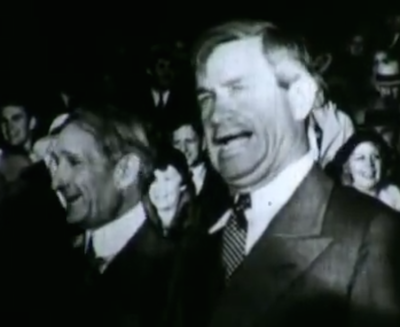
I keep thinking of one of Will Rogers’ famous lines as I observe the loopholes the GOP leadership is exploring to oust Trump: “If stupidity got us into this mess, why can’t it get us out?” (Don’t you think Lindsey Graham, with his recent political zingers, and clear future as a humorist, is likely studying the old cowboy right now?)

I have never seen one of Rogers’ films/full sketches, and yet I love understatement, Rogers’ specialty. So for today’s post, in honor of DC’s caucus, and whatever might happen there, I’m putting out a request to all of you classic comedy buffs out there. Which Rogers film/clip do I have to see?

Share
Posted in: Comedies (film) Tagged: Donald Trump, Film, Lindsey Graham, political humor, political satire, stupidity got us into this mess, Will Rogers

Mae West’s Klondike Rebellion

03/06/2016 by leah@carygrantwonteatyou.com Leave a Comment

MaeWest-KlondikeAnnie
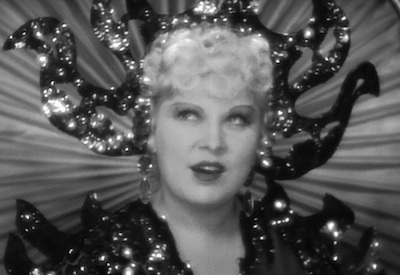
There’s something terribly wrong and terribly right about Klondike Annie’s (1936) odd musical tribute to Asian sensuality. It’s one of the few moments of the film when Mae West seems somewhat genuine. Elsewhere, she can’t sell the censored treatment of her material, so she doesn’t try. She adopts an expression that looks more like indigestion than anything else, and makes us wonder what’s going on inside that canny mind of hers.

In the film, Rose (West) dislikes and fears her sugar daddy, Chan Lo (Harold Huber). She’s tired of his dangerous possessiveness and plans to escape, but before she does, she entertains her lover’s nightclub customers. She’s not in charge of her fate in the film–imagine that condition for West! (Of course, sex with an Asian man MUST be torture in those racist times. Sigh.)

Another actress would have teared up while singing this lusty song, trying to capture her character’s likely emotional state. West? She’s finally enjoying herself, expressing her love for romance, which they won’t let her do throughout the rest of the movie. (After all, a mistress is supposed to regret and hate sex, according to the Production Code.) In this strange musical interlude, however, West refuses to play Rose at all. Her expressions as she sings make no sense in terms of the character’s dilemma, but then, neither does the plot.

I wish I could know what West was really thinking while crooning, “I’m an Occidental Woman, in an Oriental mood for love.” Instead, I’ll take a few guesses:

“I could get used to an Asian lover, MmmmmHmmmm. But not this guy they stuck me with. Harold?”

“I’m slamming this headpiece on Breen’s head, first chance I get.”

“So this made it past the censors, and the knife scene didn’t? They’ve got a thing or two to learn about the power of suggestion.”

“That extra over there looks yummy. Look at those muscles on him. Better see what he’s doing after.”

“Movies now are for suckers. Next show I write: Gal makes it to Santa Fe. Starts a brothel. Has 50 men a day. Now, what’s my first line…”

This is part of my monthly tribute to West. Click here for more posts on this hilarious pioneer.

Share
Posted in: 1930s films, Comedies (film), Feminism, Mae West Moments Tagged: Klondike Annie, Mae West

SHOCKER: The Oscar Ceremony Was Good

02/29/2016 by leah@carygrantwonteatyou.com Leave a Comment

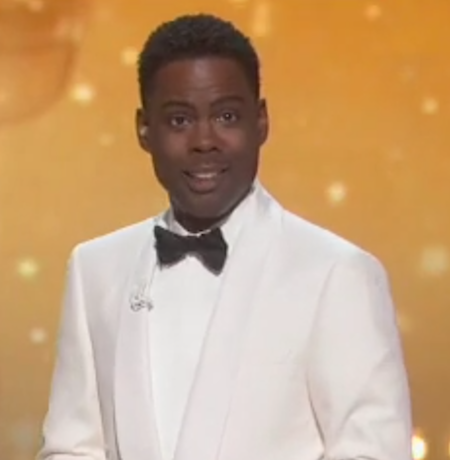
For the first time in at least a decade, I actually thought the Oscars were entertaining and even well planned. That there were some smart tweaks–the order change (with more exciting awards earlier), the ticker-tape names at the bottom so that the speeches were less listy and long winded. And of course, the main reason the Academy nailed it this year is this guy:

ChrisRock
How did he do it? He took the controversy over the Oscars being too white, and not only did a hilarious commentary on just how true that concern was, but managed to slam the self-serving among the protesters (i.e., Jada), and–in a moment of brilliance–helped explain why people are able to think their acts aren’t racist, when they are:

“…is Hollywood racist? Is it ‘burning cross racist’? No. Is it ‘fetch me some lemonade racist’? No….Hollywood is ‘sorority racist.’ It’s like, we like you Rhonda, but you’re not a Kappa.”

He didn’t let up throughout, his interview of Compton moviegoers was perfection, and Tracy Morgan’s Danish girl is something I’ll re-watch again and again. And that Girl Scout cookie joke was a nice riff on Ellen’s pizza trick.

And then there’s the fact that Spotlight won, when we all feared The Revenant would. DiCaprio’s long-deserved win (“About time!” screamed someone behind me). And, of course, his predictably classy speech. The tribute to Star Wars composer John Williams, and Jacob Tremblay’s adorable response to it.

There was the moving Lady Gaga performance with other rape survivors backing her up, and the Biden reminder that our culture is part of the problem.

Socially relevant, entertaining, and–for the Oscars–fast paced. My own proof? This is my third year watching it in a theater with others. The first year, I left early. The second, I was one of the few holdouts (of an initially crowded theater) by the snoozing end. This year? All but a few of the crowded theater were still there, clapping and smiling and having a blast. That’s how it should be.

Share
Posted in: Oscars Tagged: Chris Rock, Oscars

5 Ways for the Oscars Not to Suck

02/27/2016 by leah@carygrantwonteatyou.com 9 Comments

While I have my favorites among this year’s nominees, my most fervent wish is for the ceremony itself. I don’t expect anything so lavish as entertainment. I just really, really hope that for once the ceremony doesn’t vie with a tractor pull for most boring event of the year. I can’t have a repeat of 2011, when my main source of joy (and a critic’s too) was the Kraft mac & cheese commercial.

So here, in no particular order, are my wishes:

  1. Chris Rock Has a Blast with Trump Jokes. There’s some precedent here. When he last hosted, Rock roasted President George W. Bush by comparing nonexistent WMDs to a toxic tank tops war between the Gap and Banana Republic. This outspoken comic has it in him to alleviate the Oscars’  tedium. Do it, Rock. I beg of you. (His advance jabs at the whiteness of the show give me hope.)
  2.  Nominated Songs’ Performances Are Cut. We don’t watch the whole movies, right? And this ain’t the Grammys, people. Medleys are sufficient. For every bright spot, like last year’s “Glory,” we have years of suffering through songs so lacking in rhythm they may as well be coming from a dying jack-in-the-box.
  3. The In Memoriam Isn’t Insulting. Should a tribute be seen as an opportunity to snub those you consider unworthy? Are we watching Mean Girls? If not, refrain from the snobbery, Academy. Go for more faces. They’re only on the screen a second anyway. Oh, and give those classic stars more love!
  4. Everyone Lays Off the Wrinkles and the Botox. Your demographic ain’t the millennials, Academy. We middle aged and elderly folks love the stars who’ve gotten past their pimples. The classic fans among us even want to see those few luminaries left to us. Kirk Douglas is still alive. So is Kim Novak. Who cares if your ageism has turned them plastic, if they don’t stun like they did in 1978? Neither do the rest of us.
  5. The Academy Learns to Trim. I realize this is the vainest among my hopes, as Hollywood, despite those awards to be presented Sunday, has lost the art of the edit. But let’s review why some cutting makes sense, Academy:
    1. Very few actors can riff. Do you still not get this after all your hosting blunders? They can’t. Ask poor Neil Patrick Harris. Ask Anne Hathaway. Let’s give actors fewer opportunities to do so.
    2. Song-and-dance numbers aren’t your expertise. Leave those to the Tony Awards, I beg of you.
    3. We need our sleep. Since you are still reaching parents with young kids, and the retired. Since you are broadcasting to those of us stressed about Monday morning meetings. A little thoughtfulness about our energy levels would be appreciated.
    4. We don’t need to wooed into loving film. Montages, clips, and performances about appreciating movies aren’t for us, remember? We’re the fools still watching!! In spite of your bloating of movie times. In spite of the lack of diversity of race or gender in front of and behind the camera. We’re even watching this wretched monstrosity of a show, out of masochism and nostalgia and an entirely unjustified hope you will change. We still love you, Hollywood. That’s how damn much we love film. So nix the reminders, and let the show go on.
Share
Posted in: Oscars, Random Tagged: Chris Rock, mistakes, Oscar ceremony, Oscar night, tips for improving

To Kill a Mockingbird–the Film that Spread the Word

02/20/2016 by leah@carygrantwonteatyou.com Leave a Comment

“In surveys asking what one book every civilized person should read, Mockingbird routinely finishes second to the Bible, and in one (if I may go a bit Maycomb on you here) it up and finished first.”  —Charles Leerhsen, Smithsonian

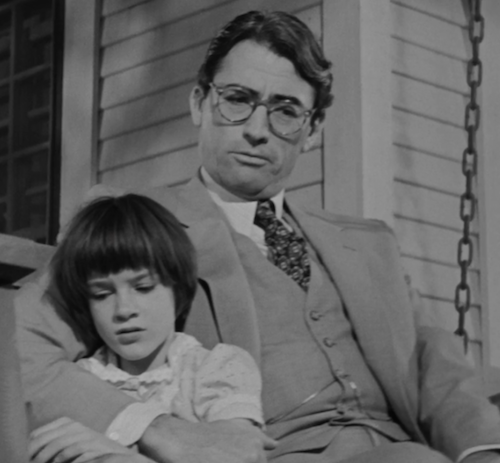
ToKillaMockingbird-Peck
I don’t know how to put into words how thankful I feel to Harper Lee, the day after learning of her death. I doubt many of us can. But I want to express my quieter gratitude for the film. When I first saw it, I was disappointed it didn’t capture as much of the novel as I’d hoped. But I’ve grown increasingly impressed with it in time; not just because it is, indeed, a very good movie; but because it popularized a novel most of us agree “every civilized person should read.” Three Oscars, a mostly faithful rendering of the moving story and a beautifully understated turn by Gregory Peck can do that.

I recognize that the price for the book’s popularity (in part due to that film) was the shy Harper Lee’s withering under our gaze (I once read she compared herself to Boo, rather than Scout). And it’s hard to believe, given the timing of her newest novel’s emergence, right after her sister-protector’s death, that she wanted what was an early draft printed–or the subsequent attention it aroused.

No, Lee wasn’t ready for the degree of our attention, 54 years ago, or today. But she approved the movie anyway, helping so many more of us learn of and then be haunted and changed by her novel. Lee was delighted with Peck’s performance, according to his biographer, even made sure he met her father. So in the beginning of expressing my gratitude to Lee, let me just thank her for approving the film, for putting us all before her own needs, and helping make possible the saving of many other mockingbirds, just as fragile, but likely far less brave than she.

Share
Posted in: 1960s films, Drama (film) Tagged: Boo Radley, Gregory Peck, Harper Lee, Scout, To Kill a Mockingbird

Big Fish: A Kettle of Oscar Snubs

02/13/2016 by leah@carygrantwonteatyou.com 4 Comments

EdwardandgiantBigFish
Director Tim Burton’s beautiful Big Fish was shut out of all Oscar nominations in 2004 but for original score (which it didn’t win). The director’s work is often dismissed as creative, but too weird, or lovely, but lacking in feeling. The same critiques, by the way, the Coen brothers and Wes Anderson hear often. Yet in Big Fish, Burton vividly renders the elusive, big-hearted whimsy of Daniel Wallace’s book, telling a father-son story that is sad, wise, and funny all at once.

Let’s discuss the many nominations it should have received, starting with the most egregious omission:

Best Actor in a Supporting Role
AlbertFinneyBigFish
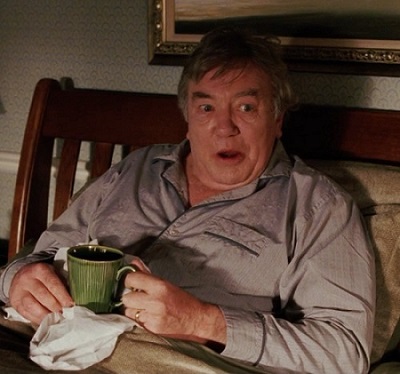
Billy Crudup, not Albert Finney, is the star of the film. Will (Crudup) resents his father, Edward (Finney), for always traveling away from home while he was a kid, even suspects he had a second family. The yarn-telling skills that endear others to Edward annoy his son, who considers his father a liar. “You’re like Santa Claus and the Easter bunny combined,” Will says, “just as charming and just as fake.” The two haven’t spoken in several years, until Edward’s final illness draws his son home to resolve their issues. Edward prickles at his son’s anger: “I’ve been nothing but myself since the day I was born, and if you can’t see that, it’s your failing, not mine.”

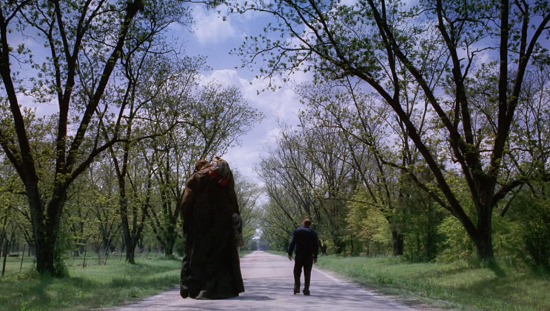
Finney’s performance is magical. There’s no other word for it. How much personality and spirit he’s able to convey, even though he spends most of the film in bed! And Ewan McGregor exudes his usual charm, as he captures Edward as a youth, full of outsized ambition and enthusiasm. Burton lets us see Edward’s young adulthood not through the actual events, but through the imaginative way he recounts them: the boy spits out of his mother’s body like a cannonball when born, he sees his death in a witch’s eye, saves his town from a giant. When Edward leaves home and travels down a forsaken road, he spots a sign: Warning: Jumping Spiders. Edward’s description of this obstacle illustrates both the amusing cadence of his language, and his indomitable spirit: “Now there comes a point when a reasonable man will swallow his pride and admit that he’s made a terrible mistake,” narrates McGregor. “The truth is, I was never a reasonable man.”

In 2004’s Academy Awards, the supporting actors were Benicio Del Toro (21 Grams), Alec Baldwin (The Cooler), Djimon Hounsou (In America), Ken Watanabe (The Last Samurai), and Tim Robbins (Mystic River). I admire all of these actors, and have seen all but 21 Grams. I’d put Finney over them all, and Ewan McGregor (also supporting) over most. Baldwin was very good, but it’s not his most nuanced performance. Hounsou played a very one-dimensional role (as he typically does despite his skills), and I barely recall either Ken Watanabe’s or Tim Robbins’ performances.

But Finney’s? I’ve never been able to get it out of my head. As Edward, he is haunting and lovable, resentful and stubborn and inexpressibly sweet.

Had he been mistakenly chosen for a Best Actor nomination, Finney still should have been in the list, which included Sean Penn (Mystic River), Jude Law (Cold Mountain), Ben Kingsley (House of Sand and Fog), Bill Murray (Lost in Translation), and Johnny Depp (Pirates of the Caribbean). I would have been torn between him and Murray as deserving of the win.

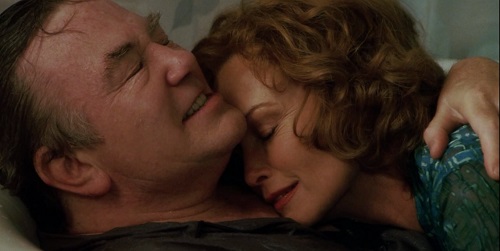
By the way, Jessica Lange plays Edward’s wife. She wasn’t in the film enough to earn a nomination, I suspect, but what an impact she makes in her few lovely moments, capturing the endurance of the love affair that is at the root of 90 percent of his stories. (No wonder she doesn’t share her son’s anger.) Here are the sweethearts in a tub together, fully clothed:
LangeandFinney

Best Director, Best Picture
Nominees, Best Picture: The Lord of the Rings: The Return of the King (winner), Lost in Translation, Master and Commander: The Far Side of the World, Mystic River, and Seabiscuit.

Nominees, Best Director: Winner Peter Jackson (The Lord of the Rings: The Return of the King), Fernando Meirelles (City of God), Sofia Coppola (Lost in Translation), Peter Weir (Master and Commander), and Clint Eastwood (Mystic River)

Jackson and his film probably deserved the win among those nominees, as the weight of translating Tolkien to film was so daunting that the man deserved a medal simply for attempting it, much less succeeding. And Meirelles created one of the most riveting and best edited films I’ve ever seen. It must be the foreign language that knocked it out of best-pic contention, to the Academy’s shame (as it definitely deserved the win).

But I do quibble with the other best picture and director nominees. Lost in Translation was a creative film, but without Bill Murray at the helm, would have been forgettable. The unspeakably dull Master and Commander proved to me once and for all that male voters dominate the Academy. If “chick flicks” can’t be nominated, why do I have to put up with something that’s one step up from a video game? Seabiscuit was a winning story, but a bit too saccharine, and Mystic River, like everything Eastwood does, was overwrought and completely lacking in subtlety.

It’s hard to imagine many of the voters bothered to watch Big Fish, as surely it outranks Seabiscuit in sentiment, and manages to say something meaningful about the power of story, its capacity to help us not only overcome obstacles, but survive loss. Surely storytellers—i.e., those involved in film—would have gravitated to such a theme?

Best Writing, Adapted Screenplay
Nominees: The Lord of the Rings: The Return of the King (Fran Walsh, Philippa Boyens, Peter Jackson, winners), American Splendor (Shari Springer Berman, Robert Pulcini), City of God (Bráulio Mantovani), Mystic River (Brian Helgeland), and Seabiscuit (Gary Ross)

This category was tough in 2004, but it’s clear that few voters read the novel, understood the challenge of translating it to film. Unlike Seabiscuit, for example, this was not a traditional narrative. It’s a recursive, poetic recounting of moments. It’s even divided into fragments rather than chapters. The book intentionally circles, the author explaining in interviews that myth does as well. And in truth, so do our lives: so many moments in our existence recall others. Our bodies may decline in a chronological fashion, but our minds, our experiences, don’t work that way at all. As the film’s script explains, “Fate has a way of circling back on a man, and taking him by surprise.”

The scene of Edward’s death, for example, is repeated multiple times throughout the book, each version telling readers something different. John August distilled the story, threaded enough of the moments together to form a comprehensible narrative, and yet retained the recursive, fanciful spirit of the original. His achievement, quite simply, is a triumph. And though I would leave those first three films on the list, I think Mystic River or Seabiscuit should have been bumped to include August’s work.

Best Art Direction-Set Decoration; Best Cinematography
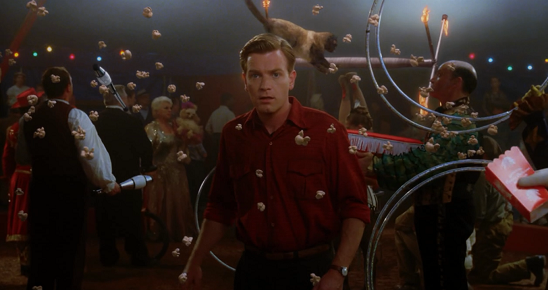
I’ll confess that I feel in deepest water when I discuss the visuals of a film. I don’t think, however, that many would dispute that the enchantment of Big Fish is largely a result of its execution of Burton’s vision; it’s rare that I am so enthralled by what I see that I long to take a snapshot of every moment. I’m curious why this film wasn’t considered worthy of awards based on artistic merit, if nothing else for the images’ perfect cohesiveness with the storytelling. Edward complains that his son doesn’t tell stories well, that he gives “all of the facts, none of the flavor.” That certainly cannot be said of the art direction of this film. In parting, I’ll just leave you with a few of my favorite visuals:

JennycrushBigFish

Timestandingstill-BigFish

carintreeBigFish

daffodilsBigFish
This post is part of The 31 Days of Oscar blogathon, hosted by Aurora of Once Upon a Screen (@CitizenScreen), Kellee (@IrishJayHawk66) of Outspoken & Freckled, and Paula (@Paula_Guthat) of Paula’s Cinema Club. Visit their sites for all of the wonderful entries. Kellee is hosting the snubs.
Share
Posted in: 1990-current films, Blogathons, Comedies (film), Drama (film), Humor, Oscars, Romance (films), Romantic Comedies (film) Tagged: Albert Finney, Big Fish, Daniel Wallace, Ewan McGregor, John August, Oscar snubs, Tim Burton

Canada Lee: Blacklisted Actor, Civil Rights Activist, Benefactor

02/06/2016 by leah@carygrantwonteatyou.com

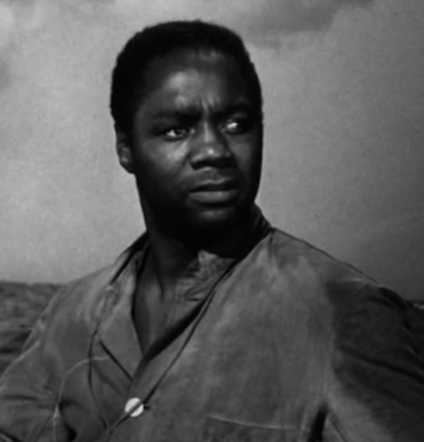
CanadaLee-Lifeboat
In 1940, a white kid shows up at actor Canada Lee’s door in Harlem. Lee knows him, met the lonely teenager backstage while starring in Broadway’s Native Son.

The kid asks to stay; Lee says yes, lets him remain a year. Introduces the kid to the lights of the Harlem Renaissance, loans him money for college. Later, the kid becomes a Civil Rights activist, goes on to found Physicians for Human Rights, creates the first US community health center, eventually leading to 1000 in America alone.

It’s the kind of story that baffles comprehension, but then, so does Lee’s whole life: jockey, boxer, musician, Broadway producer and star, groundbreaking film & radio actor, Civil Rights leader. He played Banquo as part of an all-black cast in Orson Welles’ famous production of Macbeth. Helped his generation empathize with black men’s plight in a racist culture through his smash performance of Bigger Thomas onstage. Even played whiteface.

His most famous film role, that of Joe in Lifeboat, is a complex one. The moral center of the story, Joe fails to succumb to mob violence, as the white passengers do. And though his companions have racist moments (the names they use, their shock at his having a wife), they respect him. It would be easy to just credit the characterization to Alfred Hitchcock. But much of the credit goes to Lee himself. He convinced Hitchcock into changing a belittling part into a fascinating one.

Lee’s insistence on dignified roles, paired with his blacklisting, may have given us too few of his films to appreciate (his early death is often attributed to the ban). But what performances they are. The viewers of Body and Soul, Lost Boundaries, Lifeboat, and Cry, the Beloved Country can thank him for selecting and affecting the development of roles that not only revealed the force of his talent, but his integrity in the face of unspeakable odds.

And despite his unjustly forgotten contributions to film, Lee’s influence is still felt in our communities today. Just ask those who’ve benefited from former runaway Jack Geiger’s medical and human rights work. All 17 million of them.

***

For more on Lee’s life, check out this well-written Wikipedia entry, a This American Life tribute to his kindness, the biography (Becoming Something: The Story of Canada Lee) by Mona Z. Smith and the following reviews of her text: Blue
, Howard. Rev. of Becoming Something: The Story Of Canada Lee, by Mona Smith. The Black Scholar 35.2 (2005): 65. Print; Gautier
, Amina. Rev. of Becoming Something: The Story Of Canada Lee, by Mona Smith. African American Review 40.2 (2006): 387-389. Print; and McGilligan, Patrick. Rev. of Becoming Something: The Story Of Canada Lee, by Mona Smith. Cinéaste 30.4 (2005): 73-74. Print. Geiger just posted about the situation in Flint.

Share
Posted in: 1940s films, 1950s films, Drama (film), Uncategorized Tagged: Canada Lee, forgotten black actors, groundbreaking black actors, Hollywood Blacklist, inspiring stories, Jack Geiger, Lifeboat, Trumbo film

Mae West Quote of the Week: Religion vs. Jewels

01/30/2016 by leah@carygrantwonteatyou.com Leave a Comment

She Done Him Wrong
“You know it was a toss-up whether I go in for diamonds or sing in the choir. The choir lost.”

The line would be funny regardless, but West does so much with it: She pauses in between the sentences for emphasis. She follows up the words with an arch look at her love interest of the hour (Cary Grant) and then smokes. She struts up and down the room an unnecessary amount of times in their short conversation. She makes a number of references to position and anatomy before and after the gems (which are clearly a stand-in for her sexual escapades).

Thought for the day: Ever wondered whether any woman in this world could be as suggestive in an hour as She Done Him Wrong‘s Lou (West) in five minutes?

This quote is part of my monthly tribute to West.

Share
Posted in: 1930s films, Comedies (film), Mae West Moments, Romantic Comedies (film) Tagged: Cary Grant, great quotes, innuendo, Mae West, She Done Him Wrong

Joel McCrea: Stalling Director Preston Sturges

01/23/2016 by leah@carygrantwonteatyou.com 16 Comments

McCreaPalmBeachStory
This essay is part of Cinema Maven’s Symbiotic Collaborations blogathon, featuring wonderful director/star pairings. Click here for all the great entries.

When I was a kid, my sisters and I used to play with the record player. We loved to speed it up to make it sound like Mickey Mouse. I mention it because when I watch Preston Sturges’ films, I feel like the record player has become stuck on Mickey Mouse mode: everyone is running, shouting, falling, frantic. There are actors whose characteristics are uniquely suited to Sturges’ pace: Eddie Bracken’s exaggerated physicality, for example. Barbara Stanywck’s rapid speech.

Much of the humor of writer/director Sturges’ worlds is when someone slower enters the stage, and can’t keep up. Henry Fonda in The Lady Eve is so out of place that Sturges felt the need to underline it by having him reach the ship full of con artists and gold diggers in a small boat that’s been “up the Amazon.”

But certain actors do more than act as foils to Sturges’ frantic pace. They change the terms, slow things down, act as resistors to his electric current. They are part of the Sturges world, and wise about their companions, not naive, like Fonda’s Charles. We don’t laugh at them, but with them as they, like older siblings, view The Miracle of Morgan’s Creek-type mania around them, and urge everyone to settle down. Joel McCrea was the perfect Sturges resistor.

McCrea
In The Palm Beach Story, he arrives in Florida to discover his wife Gerry (Claudette Colbert) flirting with J.D. Hackensacker III (Rudy Valee), scheming to apply the millionaire’s funds to her husband’s projects. As he tries to reason with her, Tom (McCrea) finds the dizzy chatterbox The Princess Centimillia (Mary Astor) flitting about his handsome form, and his own competition so woefully naive that he serenades Gerry. On McCrea’s face you can see as well as hear the sigh, the “Now this,” the years of putting up with his wife’s silliness, and now these idiots, and you can’t help but laugh.

McCreaPalmBeachStory-scene
Without grandstanding, without chewing the scenery, McCrea has stolen our attention from the mesmerizing Colbert with a few perfect expressions and the solidity of his presence. Suddenly, we’re rooting for him, for them, not for her success. Given the amount of his screen time, it’s a remarkable achievement, and makes you realize why Sturges would nab him for three of his films.

McCrea was even more essential, of course, to Sullivan’s Travels, which came out the year before. Consider the challenge: The lead must act as a stand-in for Sturges, pronouncing the need for comedy in times of trouble. Sullivan (McCrea) is, like Sturges, a director, who thinks he should experience poverty so that he can direct meaningful dramas instead of his usual farces. If the star of Sullivan’s Travels preaches the final lines or overplays his insights (in the theater with the convicts) about the value of comedy, the film becomes hokey. If the character comes across as stupid in not realizing humor’s importance earlier, the ending will feel forced. The actor must, in short, act naive/be deluded at the start of the film, but not be naive. An intelligent, understated performance is essential to delivering Sturges’ message, which is really an endorsement of his entire career (and thus not something he could have taken lightly). And so Sturges chose McCrea.

McCreaSullivansTravels
When we talk about comic timing, we often think of rapidity. But McCrea’s calming presence is part of what makes him so funny. While others around him continue their frantic scrambling, he walks and talks fairly slowly, his deliberation in sharp contrast to their quicker motions and thoughts. He underscores their rush, and makes us laugh. As Sullivan, he is very observant, as a comedic director should be, and gives us just enough of a pause to witness, to understand as he does. As in The More the Merrier, a brilliant comedy Sturges didn’t direct, McCrea gives us the space to recognize the layers of his personality, with Sturges’ regular troop (in this case, following their director in a motor home) left to be the screwball types who summon the simpler laughs.

Although I think most would call Sullivan’s Travels the perfect Sturges-McCrea pairing, I wish fewer people would dismiss The Great Moment. Because it’s not a comedy, of course, it flopped. (A drama? From Sturges?) But it’s truly a remarkable biopic. A dentist, Dr. W. T. Morgan (McCrea), publicly demonstrated the use of ether in an operation in 1846, and therefore helped make all of our surgeries since less painful. But it seems Morgan displayed less admirable behavior afterward, was more intent on getting credit than in the useful application of his discovery. Sturges highlights something beautiful about the man’s life by beginning after his death (after a short scene celebrating his biggest success), and ending the movie with Morgan’s decision to expose his discovery in this public demonstration (thus making unlikely his success in patenting).

The movie isn’t about the main character at all, but instead about an idea: Does an “incandescent” moment, a moment of self-sacrifice for others, make up for the pettiness of one’s life? It’s this rising above the history of events that I so rarely see in biopics, this understanding that recording events isn’t enough; you have to be saying something about them. McCrea’s measured timing lends a kind of gravity and dignity to the role, lets us see the heaviness and pain of Morgan’s decision to sacrifice for others.

McCreaTheGreatMoment
And because McCrea is so likeable, we’re able to acknowledge the character’s usual selfishness (at least as Sturges saw it), and understand it too. I can’t say it’s my favorite film of Sturges’, but it has stuck with me; I find it haunting, which is surprising given Sturges’ light touch. I wish more aspiring directors would learn from it.

Joel McCrea was in three of Preston Sturges’ films, two of his most famous. I know I should be grateful to have that many, but oh! How I wish there were more.

Don’t forget to check out the other entries in the blogathon!

Share
Posted in: 1940s films, Blogathons, Comedies (film), Drama (film), Romantic Comedies (film) Tagged: biopics, Cinema Maven, Joel McCrea, Preston Sturges, Sullivan's Travels, The Great Moment, The Palm Beach Story

A Classic Christmas Romance for Any Day

01/19/2016 by leah@carygrantwonteatyou.com 21 Comments

RemembertheNight
How do you create a Christmas film that is sentimental, without dripping it in eggnog? Especially when you’ve agreed to make it a romance between a shoplifter and her prosecutor, and set it in *gulp* Indiana, which is  peppered with cornpone clichés in every cinematic portrayal? Miraculously, Remember the Night (1940) not only steers through these dangers, but manages to be fresh, original, funny, even moving, thanks to four very wise decisions:

1. Trusting Screenwriter Preston Sturges

Tone is a tricky thing, and Sturges was a master at it. He knew how long he could get away with sentiment, when to cut it with humor.

In trouble for trespassing

Caught trespassing

He developed complex leads. John, the hero (Fred MacMurray), is introduced to us as a wised-up NYC DA. He comes across as jaded and unfeeling in his treatment of the repeat shoplifter (Barbara Stanwyck). Yet we can’t help but laugh at his humorous take on the defense attorney’s silly ruses to win the trial, and admire his own tricks to postpone it. His decision to later assist Lee reveals a soft side Sturges further develops when the character is home with his relatives.

The shoplifter, Lee, is played by Stanwyck. I know I don’t really need to say anything else (see below), but during the trial, expressions–hope, disillusionment, amusement, anger–move quickly over her face, revealing that her hard life hasn’t completely hardened her. When John, feeling guilty about her jail time over the holidays, springs her until the second trial, she (thanks to the dirty mind of his bondsman) ends up at his apartment. At first, she assumes the worst. But when she discovers the mistake, she starts to enjoy John’s company, and the two end up traveling home to Indiana for Christmas–he, to see his beloved family; she, to visit the mother she hasn’t seen since she ran away.

In other hands, the plot wouldn’t have worked; I wouldn’t have even watched it had someone else written it. I am tired of portrayals of my home state, which is typically drawn as either the embodiment of (a) homespun happiness or (b) hickville. But Sturges avoids the trap by giving us a variety of Hoosiers. Stanwyck and MacMurray are both streetwise, smart, and sophisticated. While John’s mother and aunt initially appear to be simple souls, neither is a stereotype. Sturges gives each insight, making the scenes with them far more complex than they initially appear, and allowing us to enjoy the sentimentality of a homey xmas when it comes. Similarly, the scene with Lee’s cold mother, which could have played as far too maudlin, is beautifully understated and short.

True, Sturges does have some missteps. He makes the servant/helper Willie a rube (Sterling Holloway). He’s even an aspiring yodeler. Seriously? I decided that Willie was OK because he canceled out John’s simpleminded African American butler in New York, Rufus (Fred Toones, one of Sturges’ stock players). (I’ll take cinematic classism over racism any day.)

As the director, Mitchell Leisen doesn’t get enough credit for the film’s quality (nor did he get enough credit for Easy Living or Midnight). I’m particularly impressed with his choices of which look to linger upon, which face to highlight, in which moment. But more importantly, the story’s pacing–one of its chief charms–is due to Leisen choosing to cut some of Sturges’ script, according to Ella Smith. Given that there’s a breeziness to many of Leisen’s comedies, it’s hard to argue pacing is all to his writers’ credit. Surely, too, it should be seen as an asset when a director trusts his writers, as Leisen surely did. According to Smith, he even agreed to keep the title, despite having no idea what it meant.

2. Selecting Talented Actresses as the Resident Hoosiers

BondiPatterson-1
Character actresses Beulah Bondi (John’s mom) and Elizabeth Patterson (his aunt) would win acclaim for The Waltons and I Love Lucy, respectively, later in their careers; it’s not hard to understand why. The two, familiar faces in a number of 30s and 40s hits, mesh so beautifully it’s hard to believe they aren’t really sisters. Watch Patterson’s reaction when she shares a dress from her past with Lee, or Bondi’s worry as she watches her son’s increasing attraction to the shoplifter he’s prosecuting.

3. Casting an Understated Actor as the Hero

MacMurrayRemembertheNight
MacMurray is good in everything. He and Stanwyck would, of course, pair up again for the landmark noir, Double Indemnity. But this is the performance that won me over. Watch the scene when he meets Lee’s mom, how gracefully, subtly he handles it. The brevity and tone of the scene, of course, help, but another actor would surely have overplayed his reactions. Instead, MacMurray’s smooth, simple words, with just a twinge of emphasis, say just what needs to be said: this mother is a monster, and Lee’s criminality is no longer mysterious. (Spielberg would have launched a huge, weepy score; thank you, Leisen, for not doing so.)

4. Choosing Stanwyck as the Star

StanwyckRemembertheNight
The soul of the story is Stanwyck’s. She has to sell the moral quandary: Will she give in to romance with John, knowing it will kill his career? We have to care about her, about her struggle. We have to root both for the couple’s happiness AND for morality winning the day. We have to sympathize as John’s occasional denseness hurts her feelings, and laugh at her quick bursts of anger when it does. We have to even let some realism in (how’s that for a rom-com shock?): acknowledge that love does not, in fact, conquer all; in fact, sometimes it’s very much in the way (at least temporarily). It’s quite a balancing act Stanwyck must play; if she gives him up, the movie could become soapy very easily. If she doesn’t, how could her performance come across as real; how could we continue to root for her? Other actresses might have missed the target, but not this one. Sentiment, comedy–the woman did it all, beautifully, and as naturally as any performer I’ve ever seen. Because of her, you will love the film, December 25th or July 2nd.

At the Golden Globes the other night, Tom Hanks mentioned Stanwyck’s name in his fantastic presentation of the Cecil B. DeMille Award. He explained that the winner, Denzel Washington, was one of an elite group of great actors who “demand” our attention, who can’t be duplicated. “The history of film,” he said, “includes a record of actors who accrue a grand status through a body of work where every role, every choice is worthy of our study. You cannot copy them. You can, at best, sort of emulate them….Now it’s odd how many of these immortals of the silver screen, of the firmament, need only one name to conjure the gestalt of their great artistry. In women, it’s names like Garbo, Hepburn, Stanwyck, Loren.”

The speech, of course, justified watching the rest of the show. I’m not always a fan of Hanks’ work (he’s far better in comedy than drama), but his wisdom is evident. So was Sturges’; in his third turn as a writer-director, his first with a female lead, he would cast Stanwyck as his Eve and make movie history. The Lady Eve so impressed us all that this quieter, earlier effort has been forgotten. It shouldn’t be.

This post is part of the Barbara Stanwyck blogathon, hosted by Crystal at In the Good Old Days of Classic Hollywood. Check out the fabulous entries on my favorite star at her site.

Share
Posted in: 1940s films, Humor, Romantic Comedies (film) Tagged: Barbara Stanwyck, classic Christmas movie, Fred MacMurray, Preston Sturges, Remember the Night, underrated films
« Previous 1 2 3 4 5 … 11 12 13 14 15 16 17 18 19 … 23 24 25 26 27 Next »

Recent Posts

  • 100 Years Later, Still Scary: Dr. Caligari
  • Escaping Out of the Past (1947)
  • A Weeper for Those Who Love Jerks
  • Thank You, Academy, for Not Infuriating Me
  • Challengers (2024) Is a Bad Movie

Subscribe to Blog via Email

Enter your email address to subscribe to this blog and receive notifications of new posts by email.

Categories

  • 1920s films
  • 1930s films
  • 1940s films
  • 1950s films
  • 1960s films
  • 1970s films
  • 1980s films
  • 1990-current films
  • 2020s films
  • Action & Sports Films
  • Anti-Romance films
  • Blogathons
  • Childfree
  • Comedies (film)
  • Drama (film)
  • Feminism
  • Femme fatales
  • Film Noir/Crime/Thriller & Mystery
  • Gloriously Silly Scenes
  • Horror
  • Humor
  • Mae West Moments
  • Musicals and dancing films
  • Oscars
  • Random
  • Romance (films)
  • Romantic Comedies (film)
  • The Moment I Fell for
  • Turn My Sister into Classic Movie Fan
  • TV & Pop Culture
  • Uncategorized
Share
Classic Movie Blog Hub Member

Recent Comments

  • leah@carygrantwonteatyou.com on Meg Ryan’s Fate Foretold in Joe Versus the Volcano
  • Ryan on Meg Ryan’s Fate Foretold in Joe Versus the Volcano
  • leah@carygrantwonteatyou.com on 100 Years Later, Still Scary: Dr. Caligari
  • The Classic Movie Muse on 100 Years Later, Still Scary: Dr. Caligari
  • leah@carygrantwonteatyou.com on 100 Years Later, Still Scary: Dr. Caligari

Archives

  • November 2025
  • September 2025
  • May 2025
  • March 2025
  • January 2025
  • November 2024
  • August 2024
  • July 2024
  • May 2024
  • March 2024
  • February 2024
  • December 2023
  • November 2023
  • October 2023
  • September 2023
  • August 2023
  • July 2023
  • May 2023
  • April 2023
  • March 2023
  • January 2023
  • December 2022
  • November 2022
  • September 2022
  • July 2022
  • May 2022
  • April 2022
  • March 2022
  • February 2022
  • October 2021
  • September 2021
  • April 2021
  • March 2021
  • February 2021
  • December 2020
  • October 2020
  • September 2020
  • July 2020
  • May 2020
  • April 2020
  • March 2020
  • February 2020
  • December 2019
  • October 2019
  • September 2019
  • June 2019
  • May 2019
  • April 2019
  • February 2019
  • January 2019
  • November 2018
  • September 2018
  • July 2018
  • June 2018
  • May 2018
  • April 2018
  • March 2018
  • February 2018
  • January 2018
  • November 2017
  • September 2017
  • August 2017
  • July 2017
  • June 2017
  • May 2017
  • April 2017
  • March 2017
  • February 2017
  • January 2017
  • December 2016
  • November 2016
  • October 2016
  • August 2016
  • July 2016
  • June 2016
  • May 2016
  • April 2016
  • March 2016
  • February 2016
  • January 2016
  • December 2015
  • November 2015
  • October 2015
  • September 2015
  • August 2015
  • July 2015
  • June 2015
  • May 2015
  • April 2015
  • March 2015
  • February 2015
  • January 2015
  • December 2014
  • November 2014
  • October 2014
  • September 2014
  • August 2014
  • July 2014
  • June 2014
  • May 2014
  • April 2014
  • March 2014
  • February 2014
  • January 2014

Meta

  • Log in
  • Entries feed
  • Comments feed
  • WordPress.org

Copyright © 2025 Cary Grant Won't Eat You.

Church WordPress Theme by themehall.com