Cary Grant Won't Eat You

Classic movies for phobics

  • About
  • eBooks
  • Previous Blogathons
Classic movies for phobics

1950s films

Oscar Rant, Part 3: Flower Moon’s Many Missteps

03/04/2024 by leah@carygrantwonteatyou.com 4 Comments

Spoilers–but not as many as Scorsese’s
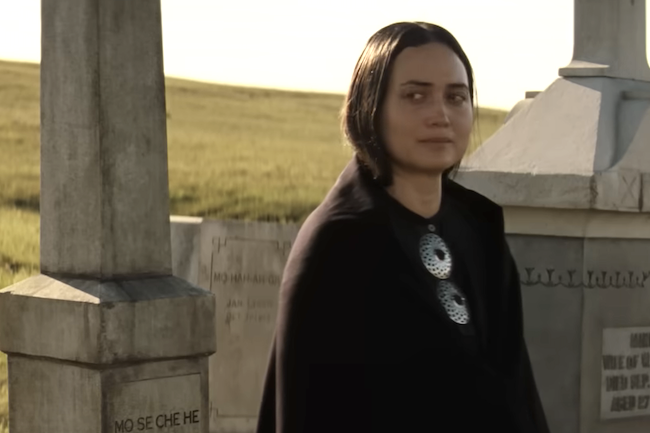

I knew I would struggle to warm to Martin Scorsese’s interpretation of a well-loved book. Killers of the Flower Moon is a heartbreaking, fascinating page turner. And it is a history book. I stayed up till 4 am to finish it. What I didn’t expect to do in watching Scorsese’s film of the same name was flinch. In trying to stay authentic and true to the Osage people, Scorsese walked into one of the oldest stereotypes. And the Academy is about to give his starring actress an Oscar for it.

The dignified, long-suffering man or woman of color is one of those stereotypes Hollywood has struggled to shake. There’s also a smug, self-satisfied attempt to award such films and performances with honors (Green Book, Driving Miss Daisy, The Help). When it comes to a group of people our country systematically oppressed, robbed, and killed–like the Osage and so many other American Indian tribes–granting the characters dignity can feel like a kind of reparation, minor as it may be. But it’s also dehumanizing to reduce a person to such a narrow set of traits.

I understand that Scorsese’s task was not easy. The American historical record is simply more complete when it comes to white men than for anyone else. Author/historian David Grann likely made FBI agent Thomas Bruce White Sr. his central character in part because he had so much information on him. Grann even includes a fascinating later history of his mercy toward prisoners who injured him in a prison break, which helps us understand the kind of man who would risk his life for others. And White was, indeed, a hero, and a fascinating one at that.

I get Scorsese’s attempt to avoid the white savior story he risked writing if White were his lead. But he had a dilemma: What do we know about Mollie Burkhart (Lily Gladstone)? We know she was rich. We know she lost many relatives to murder. That she believed in her husband, Ernest Burkhart (Leonard DiCaprio), far longer than she should have. We know that she was very sick. That’s not enough detail, if she’s your central figure. It was up to Scorsese to breathe life and complexity into her characterization, to make her wholly human in the way our 1920s racist, sexist historical record would not grant her–or lean on the descendants or family members who could tell him more.

Alas, Scorsese’s never been very good at female characters. This is no exception. Besides brief glimpses of a more complex woman during the courtship, he has her either sitting or in a sickbed looking resigned, sad, and stoic for 90% of the film. We don’t even feel the menace or experience her fear as she’s poisoned, as we would for a Alfred Hitchcock heroine, because we have little sense of her inner life.

We don’t get to see a sense of humor or any unique, humanizing quirks–we only know that she suffered. And with Eric Roth as his cowriter, whose credits include Forrest Gump (another film with underdeveloped female characters), what hope did he have of getting it right? Why, oh why, can’t this brilliant man recognize his limitations? There’s nothing wrong with specializing in dark white men as a genre. But this was not the subject matter for that focus. Why not let someone else write the screenplay? An Osage female writer would have been amazing; at the least, Scorsese could have chosen a woman.

Mollie’s is not the only half-baked characterization of the Osage in the film. The subtitles only occasionally translate the Osage language, which is used extensively. Instead, the subtitles spell out something like “speaking in Osage,” which was 1. evident 2. useless 3. distancing. Why not help us know the characters better by having them speak in English if you’re not going to bother to translate? (I kept hoping this was an issue with my streaming service, but I doubt it.) The occasional group scenes with Osage leaders stating the obvious didn’t help.

There was a fascinating real-life federal agent, John Wren (Tatanka Means), the only Native American who’d worked for the bureau by then. He assisted with the investigation and appears briefly in the film, and I kept thinking that Scorsese should have focused the narrative on him. What a fascinating angle that would have been! He was still an outsider to the Osage, but had more of an insider’s angle than the rest of the agents.

Instead, Scorsese doubles down on Leonardo DiCaprio’s Ernest, even minimizing the degree of his crimes by not covering his whole plan (or at least, tacit acceptance of the plan) to include his son and wife in the blow-up-the-house plot. Did he love Mollie? He seemed to in the book–and in how he handled the trial. But many dangerously abusive men have loved the women they attempt to murder. I’m not really interested in getting inside of their heads. Are you?

Also, where’s the excitement? We believe Ernest is pretty innocent for a long while in the book. We don’t know his uncle is a monster. The reveal is breathtaking in the book. Leaving out the suspense is a baffling choice.

It’s a shame to see all the wasted potential here: Robert De Niro is good in it and DiCaprio great (even if they are miscast; De Niro is no cowboy and both are at least two decades too old for their parts). Gladstone is very good with what she had to work with, and captures what we know of Mollie well. I enjoyed her subtlety.

There are so many beautifully shot scenes. That moment right before the bomb was especially powerful, as was the federal agents’ gathering scene. Scorsese shares the history and legal status of the Osage’s rights (or rather, lack of rights) without bogging down the narrative–not an easy thing to do. I thought the best part of the film was the start of the investigation by the private eyes: Whenever Scorsese feels comfortable, he does such great work. I loved how the movie helped me keep the characters straight, something I struggled with in an overpopulated book.

A lesser-known director might not have gotten this important story made into a film; I wanted so much to like it. Scorsese’s earnest attempt in that ending to finally give Mollie her due made me sad; I don’t think he succeeded. But maybe he’ll draw people back to the book, which does. I guess I’ll have to take some satisfaction in that.

Share
Posted in: 1930s films, 1940s films, 1950s films, 1990-current films, Drama (film), Oscars, Uncategorized Tagged: Alfred Hitchcock, Killers of the Flower Moon, movies not as good as books, Oscar nomination, overrated

Vertigo’s Beast: Jimmy Stewart (1958)

11/06/2023 by leah@carygrantwonteatyou.com 17 Comments

Spoilers abound.

I love a good casting against type. That’s why Scottie in Vertigo is so disarming: It’s creepy to find America’s aw-shucks sweetheart, Jimmy Stewart, playing a villain.

Of course, not all of Stewart’s parts are sugary; he was a murderer in The Thin Man series. He was a professor with disturbing philosophical beliefs in Rope. But Stewart plays innocence beautifully and so memorably—as in his iconic performance in Mr. Smith Goes to Washington, or in his role opposite an imagined rabbit in Harvey. It’s in these parts—and as the lovely George Bailey in It’s a Wonderful Life—that Stewart makes the most enduring impression on viewers.

That’s why when Scottie begins to act unhinged in Vertigo, the audience gives him the benefit of the doubt, and can understand why his loves do too.

He’s just in grief, we think. It must be awful to blame yourself for your coworker’s death.

He’s just experiencing PTSD.

I know he must be a good guy…He’s George Bailey!

Scottie seems to be a good guy at first. He’s a charming, funny friend to Midge (Barbara Bel Geddes), who secretly loves him. He’s willing to help desperate college friend, Gavin (Tom Helmore). Gavin claims his wife, Madeleine, is possessed by a sad ghost and employs Scottie to trail and protect her from self-harm.

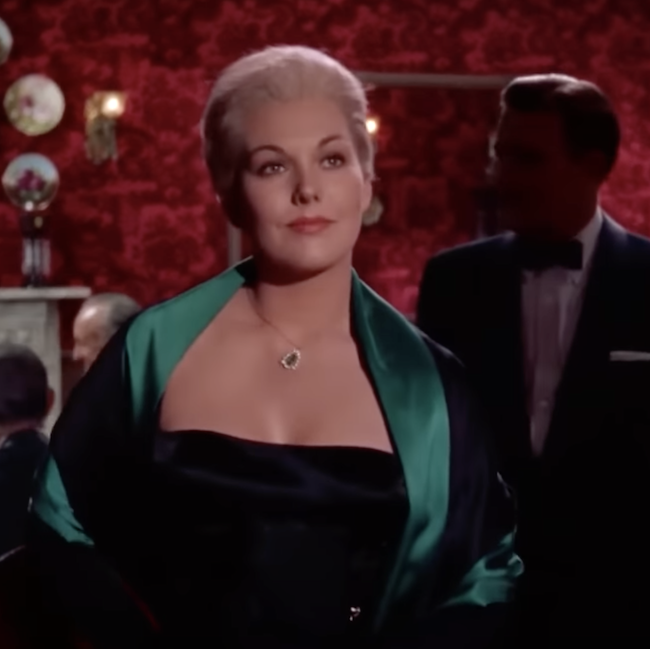
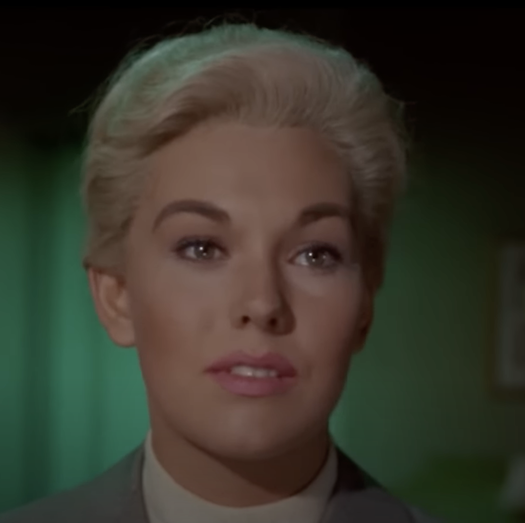
But right away, Scottie’s actions are suspect. He falls for Gavin’s wife. I mean, it’s hard to blame him. Look at her entrance:

Kim Novak's entrance in Vertigo

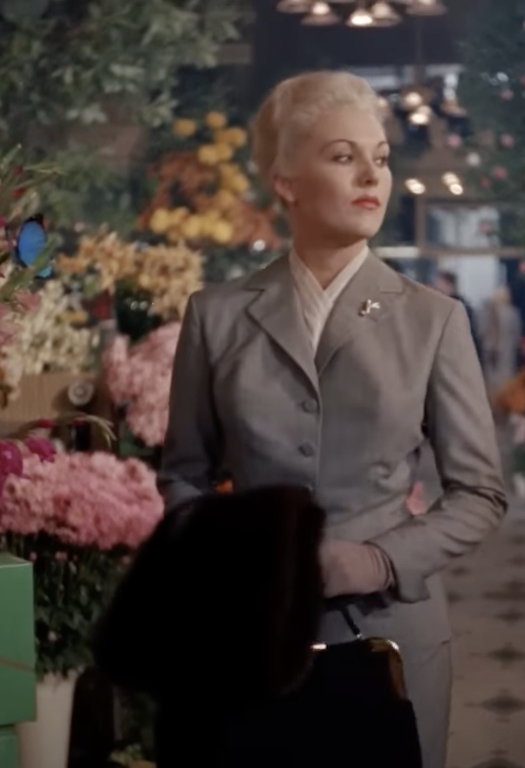
She somehow looks even better in a rather drab grey suit:

Still, Scottie didn’t have to act on his attraction. He breaches friendship and professional ethics by hitting on Madeleine. Knowing—as we viewers do by the end—that Gavin planned it that way doesn’t change anything.

For a brief moment, Scottie and Madeleine seem to enjoy each other’s company, but the happiness is short lived.

Soon, things go terribly wrong for Scottie. Madeleine leads Scottie to a tower. His vertigo prevents him from following her, and he thinks he sees her leap to her death. What he really sees is the real Madeleine (whom he never met) thrown from a tower, while fake Madeleine, whom he’s been trailing (Novak), hides until he leaves.

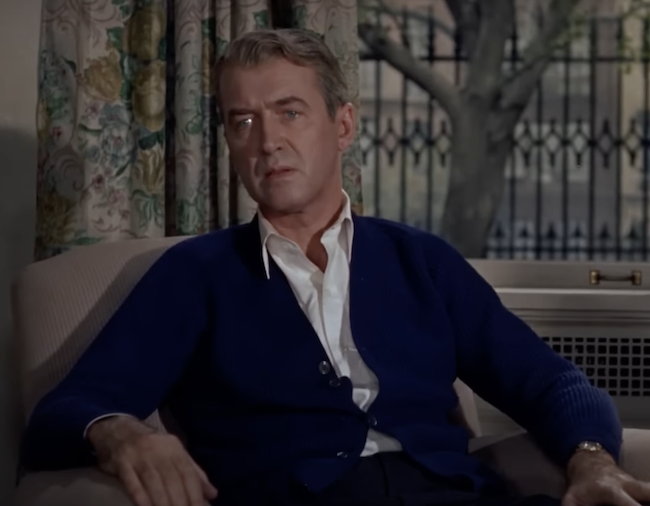
Once Scottie loses fake-Madeleine to supposed suicide, we’ve forgiven him for any bad behavior. After all, look at his despair!

Scottie's (Jimmy Stewart's) despair after Madeleine's death in Vertigo.

It’s what he does with that despair that makes Scottie a villain.

First, he follows a strange woman, Judy, to her apartment door.

Let’s start there. Stalking a woman because she looks like your lost love is deranged. Her hostile response to his knock is valid—even if she weren’t the fake Madeleine we know her to be.

Of course, Judy is hardly innocent. She was involved in a murder plot that ruined Scottie’s life. Despite her complicity, we feel for her. She’s so remorseful and almost as self-destructive as pretend Madeleine: who after such a perfect crime falls for her own mark? (Gavin would have killed her had he thought her capable of it.)

And Scottie? Had Scottie believed Judy guilty, his cruel behavior toward her would be somewhat justified. But Scottie believes her innocent. He’s an emotionally abusive boyfriend who feels ZERO guilt for expecting irrational sacrifices from his lover.

His next disturbing act post-stalking is to force Judy to wear the same grey suit as his dead love. When Judy realizes what he’s doing, she protests.

His justification for distressing her is jaw-droppingly awful: “Judy, Judy, it can’t make that much difference to you…. Judy, do this for me.”

I admit. I laughed aloud when I heard these words this time around. Can’t make any difference to YOU, what you wear? Yeah, nothing personal there.

“I don’t like it,” she says of the suit he offers her.

“We’ll take it,” he responds to the saleswoman.

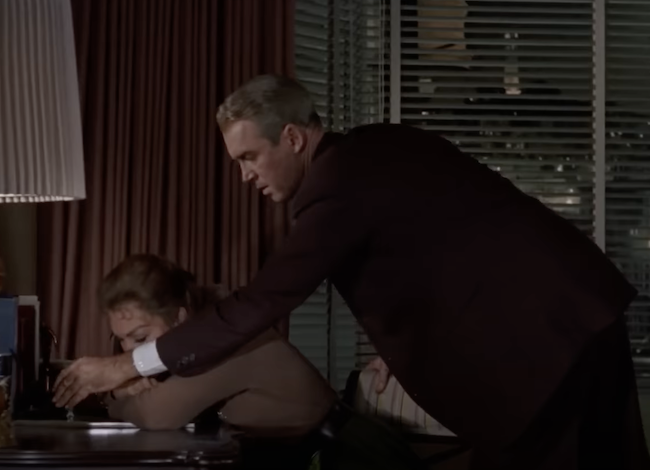
Judy responds by laying her head on a desk in misery. Scottie’s answer? Ply her with liquor.

She asks why he’s terrorizing her and threatens to leave but fears he wouldn’t let her. Sadly, she wouldn’t leave anyway: she wants to remain with her abuser.

This is when we wish Judy’s friends from an earlier scene would return.

RUN, HONEY. RUN!!!!!!

Scottie then says his last few days with her (and yes, he starts on this nonsense just DAYS after they get together) are the first happy ones in a year.

She says that’s only because she reminds him of his dead love. What, besides that, does he like about her?

He replies, “It’s you too. There’s something in you that…” He starts to touch her, then WALKS AWAY without finishing the thought. Because she’s right: he only likes her for her resemblance to Madeleine.

“You don’t even want to touch me,” she says.

“Yes, yes I do.”

Let it be said that there’s no evidence to back his words.

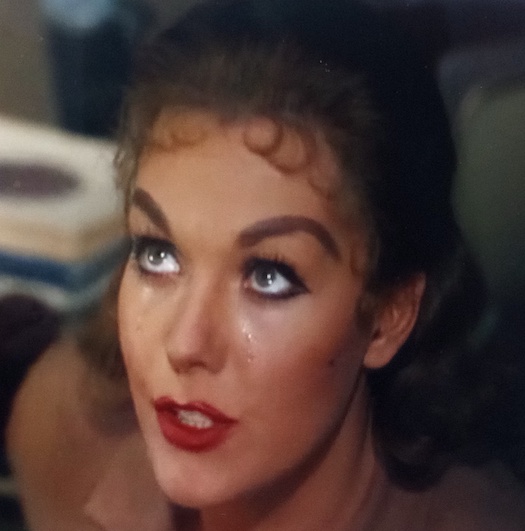
“Couldn’t you like me, just me, the way I am?” Judy cries.

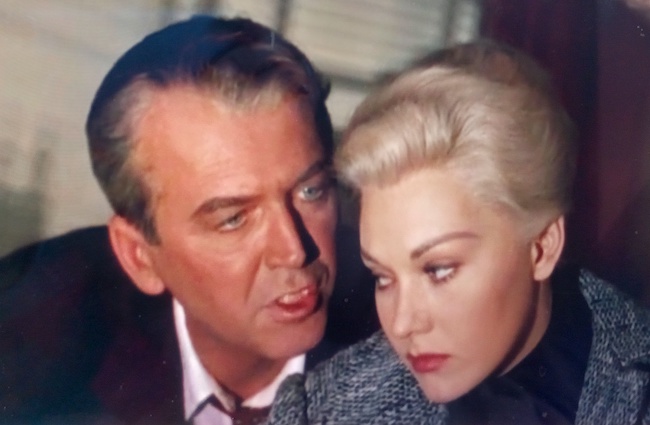
Judy (Kim Novak) begs Scottie (Jimmy Stewart) to love her in Vertigo.

Now this is some heartbreaking stuff. But it gets worse:

“When we first started out,” Judy says, “it was so good, w-we had fun. And then you started in on the clothes, well, I’ll wear the darn clothes, if you want me too, if, if you’ll just, just like me.”

What is his response to this pathetic concession?

“The color of your hair.”

Because of course, he wants to change her brown hair into Madeleine’s blonde locks too.

“Oh no!” she says and walks away.

“Judy, please, it can’t matter to you.”

Again, as a woman, I must say, the color of one’s hair is QUITE PERSONAL.

But Judy is now ignoring red flags as tall as the sequoias she visited with him (while acting as Madeleine): “If…If I let you change me, will that do it? If I do what you tell me, will you love me?”

“Yes, yes,” he says.

“Then I’ll do it. I don’t care anymore about me.”

Her sad words don’t worry him, or even make him feel remorse. Because she caved to his senseless demands, he is finally affectionate, nuzzling her, “Here, go on, let’s sit by the fire,” and he takes out a cushion for her.

And so Judy makes the full transformation into his lost love for him.

We hear the elevator after the full makeover, watch her move toward him. She enters the room without a word, hesitant. She’s afraid. She puts her purse down.

“Well?” she says, turning toward him.

It’s clear that Judy is expressing one tiny rebellion, one last trace of self-respect. She comes back with her hair down, not up, like Madeleine’s. In every other way, she’s the dead woman’s twin.

“It should be back from your face and pinned at the neck,” says Scottie, “I told her [the beautician] that, I told you that.”

Wow.

“We tried it. It just didn’t seem to suit me,” she says, combing her hair nervously.

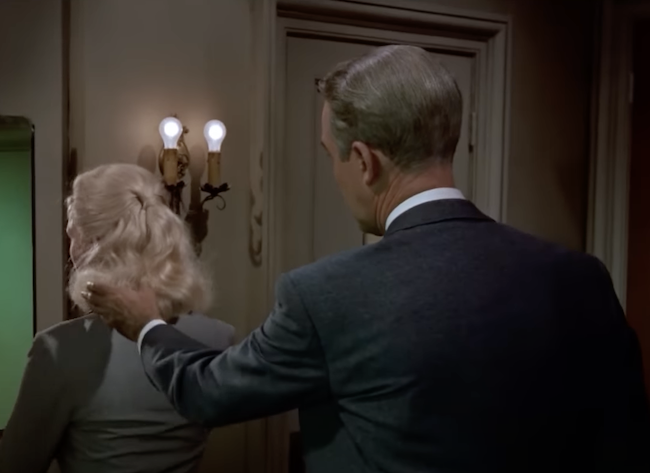
He grabs her hair.

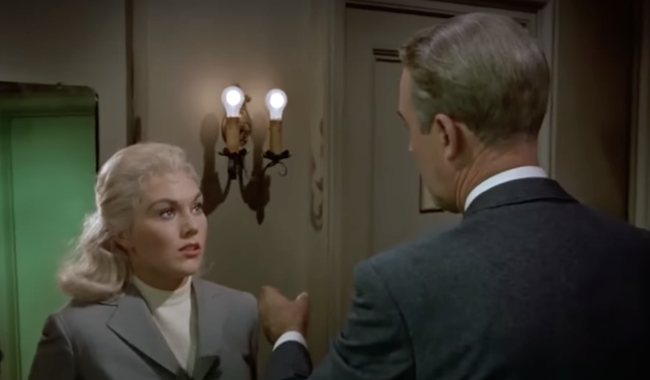
She turns to face him.

Making Judy change her hair in Vertigo.

“Please, Judy,” he begs.

She walks in other room, fixes it for him.

He sees her in fog as she somnolently walks toward him. She half-smiles, then smiles fully as she sees his tears.

Being the toxic man he is, he gives her a REAL kiss. After all, she’s now actually BECOME his dead love for him. Because that’s healthy.

In the next scene, we see them playful and flirty with each other—an echo of the earlier conversation with Midge, but with heat.

“Hello, my love. Like me?” She smiles and then spins for him in a pretty dress, her air and voice confident, easygoing—the tone of a well-loved woman. This is the first genuine smile we’ve seen from Kim Novak in the film. (Scary, right?)

“Mmmm,” he responds.

“Is that the best you can do?”

“Come here.”

“Oh no, you’ll muss me.”

“Well, that’s what I had in mind. Now come here.”

He then spots Madeleine’s necklace on her neck and knows Judy’s guilt. He says cryptically, “One final thing I have to do, and then I’ll be free of the past.”

Scottie drives Judy to Madeleine’s supposed suicide tower. He forces her up the stairs and through the trap door.

Then he attacks and half-strangles her, saying, “He [Gavin] made you over, didn’t he? He made you over just like I made you over, only better. Not only the clothes and the hair, but the looks and the manner and the words and those beautiful, phony trances….Did he train you, did he rehearse you, did he tell you exactly what to do, what to say? You were a very apt pupil too, weren’t you?”

It’s easy to read these words on multiple levels. Yes, he’s angry she deceived him and furious she’s taken advantage of his affliction. But he’s also angry that she’s had a former lover, Gavin. And he’s angry that Gavin was a better Geppetto than he was.

Scottie’s physical actions are brutal now that he knows what Judy’s done, but those actions are just an escalation of earlier ones.

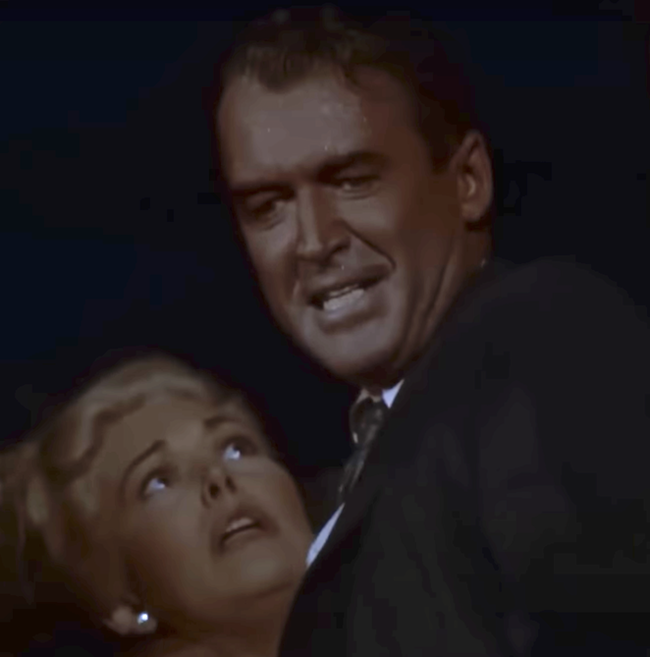
Scottie and Madeleine/Judy in Vertigo ending

Note how many times he pins Judy’s arms throughout this story, how many times he forces her from behind—whether it is to wear the clothes he wants, or to go up to a tower where her death awaits. Observe how many times she looks fearful, hesitant, unsure of herself. She is a victim of his cruelty, just as he has been a victim of the murderous plot.

Jimmy Stewart’s Scottie is the definition of a boyfriend who should make a woman run. If he doesn’t give you the heebie-jeebies in Vertigo, you’re just not paying attention.

This post is part of the beast blogathon from the Classic Movie Blog Association. See great entries here!

Share
Posted in: 1950s films, Blogathons, Drama (film), Femme fatales, Film Noir/Crime/Thriller & Mystery Tagged: Hitchcock films, Jimmy Stewart, Kim Novak, Vertigo (1958)

The File on Thelma Jordan

10/06/2023 by leah@carygrantwonteatyou.com 2 Comments


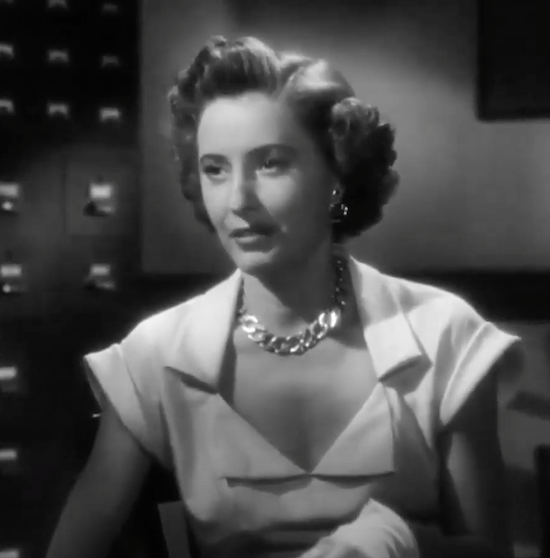
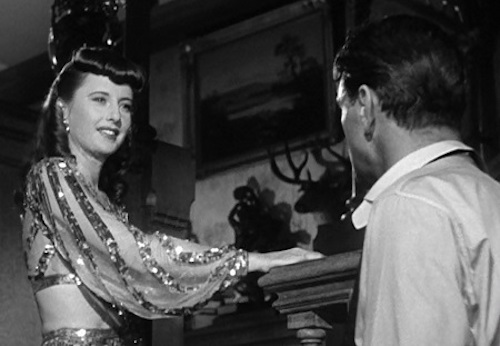
The File on Thelma Jordan isn’t a noir of the same caliber as Barbara Stanwyck’s more famous films. It’s not Double Indemnity, or Sorry, Wrong Number or even The Strange Love of Martha Ivers. But with Stanwyck as a femme fatale, you know you’re going to enjoy yourself.

***Slight spoilers, but far fewer than in the trailer.

Of the 1,00000000 things I love about Stanwyck, one is how adult she always is. She doesn’t play twee or girly–even on the rare occasions she uses baby talk to get her way. She’s sensual and knowing, fiercely intelligent and wry. You can never discount her. And you know–even if you don’t admit it to yourself–that she has the upper hand–or will soon.

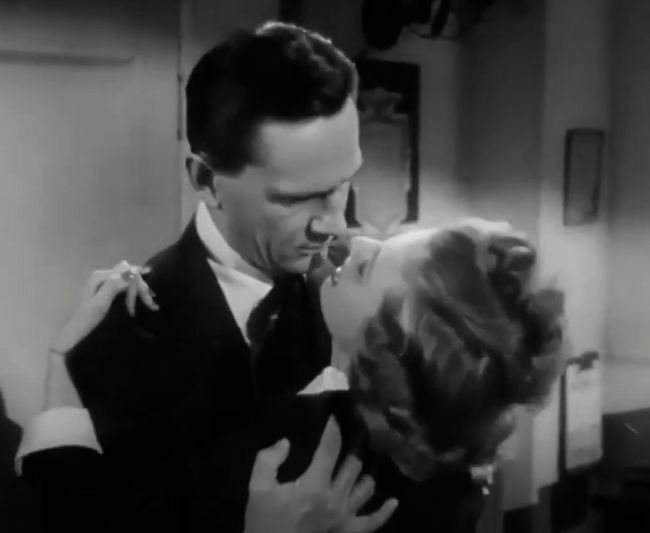
In The File on Thelma Jordan, she finds herself an easy fall guy, Assistant District Attorney Cleve (Wendell Corey). Cleve has a lot going for him: a loving family, a beautiful wife. But his wife is a daddy’s girl, and he doesn’t like that daddy. It doesn’t help that his father-in-law has all the wealth and power Cleve doesn’t–or that Cleve owes him.

That’s why Cleve drinks and feels sorry for himself, and he’s doing just that when Thelma (Stanwyck) happens upon him in his office while seeking his boss. She wants to report attempted burglaries to her wealthy Aunt Vera’s home, but instead agrees to get a drink with Cleve. She’s game, agreeing to be his buddy during his troubles. Of course, a sexy, sympathetic buddy is what every Cleve desires.


You can guess what happens: a secret affair, the aunt’s house being broken into, a murder. With Thelma, there’s no question of innocence. The question is HOW guilty is she? Did she commit the murder, did her shady ex, or did some third involved party? Whoever did it, poor Cleve is complicit, and ends up having to prosecute Thelma in a not-so-effective, likely-career-killing kind of way.

I don’t find Wendell Corey that appealing in the role, but there’s a sincerity to him; you believe this is a good, usually bright guy doing dumb things. Cleve is a smarter version of Henry Fonda in The Lady Eve. He’s not all that wary, but he’s intelligent enough to know he’s been had.

But of course, who cares about Corey, or anyone else in this film noir? This is Stanwyck’s show. And though the storytelling never rises to her abilities, every minute with her on the screen is a joy. Whether she’s acting as Cleve’s relaxed buddy, his maybe-smitten love, a wary defendant, or a hardbitten woman of the world, Thelma is riveting. Don’t miss her in action.

Share
Posted in: 1950s films, Femme fatales, Film Noir/Crime/Thriller & Mystery Tagged: Barbara Stanwyck, femme fatales, film noir, The File on Thelma Jordan, Wendell Corey

Bergman’s Weird Wife in Stromboli

08/28/2023 by leah@carygrantwonteatyou.com 14 Comments


I’ve always been curious about the film that united director Roberto Rossellini and actress Ingrid Bergman in their illicit romance. How red-hot would an affair have to be to lead to a public censure in the US Senate and a six-year ostracism from Hollywood?

I was prepared for something akin to Mr. and Mrs. Smith (2005), where the chemistry of actors (and new lovers) Angelina Jolie and Brad Pitt inflamed the screen.

Of course, I neglected to consider a few things before viewing: 1) the absence of the director as an actor in the film, 2) the film’s very un-Hollywood use of everyday people as actors–in this case, fishermen in Stromboli, a small island off of Sicily, 3) the plot.

The Keystone Cops would have been just as likely to show up as a red-hot romance.

But in one way, I was still on the right track about Stromboli (1950): you can’t keep your eyes off of Bergman, and she IS unbelievably sexy in the film.


The nature of that sexiness is curious because this is a very, very odd movie. I found myself siding with early American critics, who called it dull. I agreed; it was dull. But it was also haunting, with a grim take on marriage quite unusual for its time.

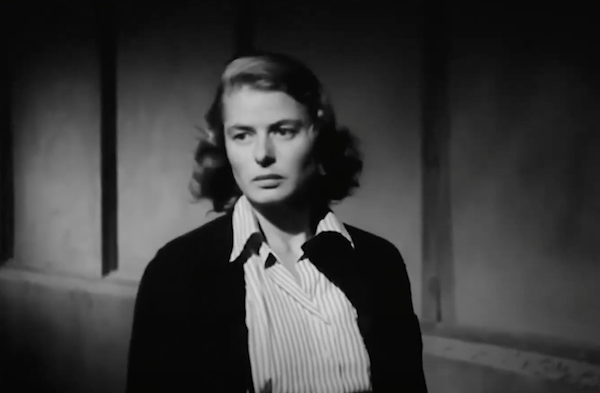
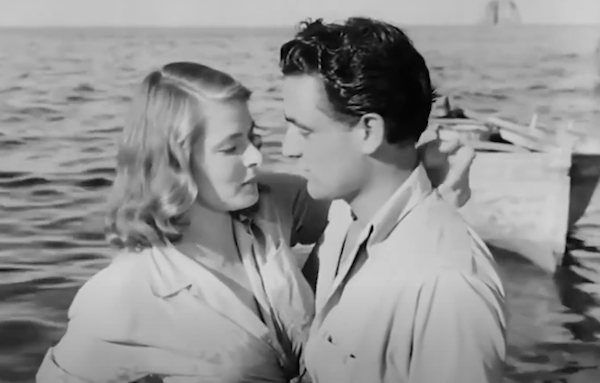
Bergman’s character, Karen, is fascinating because she is one of the least sympathetic, most selfish brides I’ve ever witnessed onscreen. She marries a poor but handsome ex-POW, Antonio (Mario Vitale), to get out of a displaced persons camp.


When he brings her home to his fishing village, she doesn’t even try to be civil–to anyone. She attacks her new groom for taking her there. She tells him this place is terrible, that she’s too refined for it and can’t stay. Kind of harsh right after his release from a camp, huh?

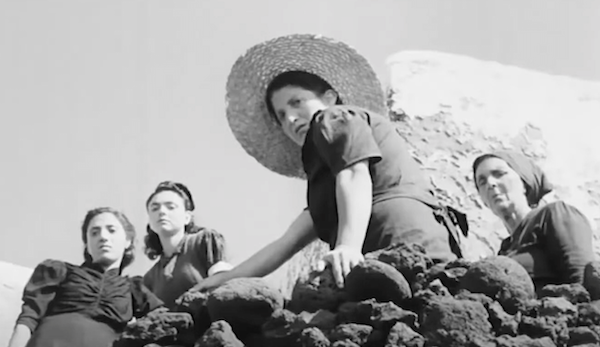
In fairness, the village does suck, at least for Karen. There’s an active volcano that can erupt at any moment. Their house is a shack. There’s little to do or see. The townspeople are super judgy and foreigner-averse, which doesn’t make Karen, a Lithuanian, feel very welcome.


But it’s hard not to pity (at first) the poor husband who just takes Karen’s verbal abuse and hostile glances–especially when he quietly accepts an underpaid fishing job to buy her a better life.


She starts filling the home with the worst decor I’ve ever seen–and hides away her husband’s family photos and religious icons, which she despises. Apparently, this process gives her some pleasure. She’s appalled when he doesn’t love what’s she done, including the weird flowers she’s painted on the walls, kindergartener style. (I told you this film was bizarre, right?) She decides to use a sewing machine in the home of an apparent madam, despite warnings. Then she’s mad at others for thinking she’s loose.

But just when I’m ready to care only about him, her husband proves he’s brutish, like she’s claimed: he beats her for making him look like a cuckold. Now, we audience members don’t have anyone to like in the film.

As for Karen, it’s not long after the house decorating that she begins to plot her escape. Her method is to throw herself at every man who might get her out of there, including–wait for it–the village priest. And the seduction act Bergman pulls is something to witness. I’m not sure how anyone resists it, transparent as her motives are, because this is Ingrid Bergman throwing herself at you, men!! And she has moves. (Narratively, it would have made sense to choose a less attractive actress, but I fully enjoyed full-seduction Bergman. It’s easy to understand how Rossellini fell for her while filming.)

But it’s not just her sensuality that has the audience enthralled by Karen. Her breathless confidence in herself in the face of hostility and discomfort and abuse and foreignness is something to witness. You can’t help but root for her even as you question her decisions. Bergman displays confidence not just through her voice and expressions, but through a kind of ease with her body typical of athletes and dancers. In another world and in another time, you think, what couldn’t this single-minded woman do!? No wonder she’s so angry about her lot!

Unfortunately, Karen soon proves that her poor judgment is not limited to her words and decor. On a lark, she stops by her husband’s job while he’s fishing for tuna with his crew in a ploy to earn his affection. WHO DOES THIS???

This choice is one of the plot devices that seems to be an excuse for Rossellini to include a beautiful neo-realistic scene. It’s easy to understand Rossellini’s reputation as a director when it comes to cinematography. It was fascinating to watch the brutal and dangerous process of catching these huge, gorgeous fish and killing them as the refined wife looks on, horrified.

Later gorgeous scenes include when the volcano erupts, and the town flees for the sea. The escape is fascinating and frightening to watch, and beautifully rendered. (In typical fashion, Karen is only concerned about her own rescue when she sees motorboats.)

**Spoilers coming**

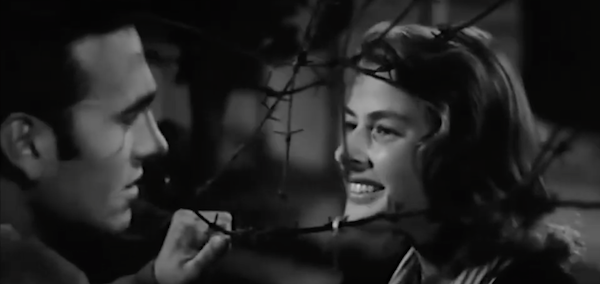
Stromboli is most famous for its ending. Fresh from volcano PTSD, Karen takes off, despite being pregnant. She heads over the still-active volcano alone to get to the side of the island where she plans her escape. She dumps her suitcase in exhaustion after breathing in copious amounts of smoke. She passes out after admitting defeat.


But when she wakes, she calls aloud to God, asking for strength, proclaiming that her experience has been too awful to endure and that she must depart. Whether she really means awful for her or for her unborn child (or for both) is unclear despite her words. Hollywood later added a voiceover suggesting she returned to her husband, a disturbing “happily ever after,” given his violence and decision to forbid her exit by nailing the front door shut while she was inside.

But I don’t buy Hollywood’s interpretation. Karen seems more intent on the birds above her, on the flight still possible with God’s help. The end is ambiguous, it’s true–I can’t be sure I’m right. What ISN’T ambiguous is how miserable Rossellini makes marriage look–which is interesting as he’s breaking up Bergman’s and his own.

Regardless of what anyone makes of the film, Bergman’s performance is unforgettable, and not to be missed by her fans. The extended final scene of her climb and pleas is breathtaking: her resignation, her desperation, her anguish, her hope. This woman deserved all of her three Oscars and then some, and it’s a pleasure to watch her commanding the screen in this stunning finish. If nothing else, watch that.
This post is part of The Wonderful World of Cinema‘s 6th Wonderful Ingrid Bergman Blogathon. Check out the other celebrations of Bergman here!

Share
Posted in: 1950s films, Action & Sports Films, Anti-Romance films, Blogathons, Drama (film), Feminism Tagged: Ingrid Bergman, Ingrid Bergman's best performances, neo-realism, Roberto Rossellini, Stromboli (1950)

The Prowler (1951): a Jealous Husband Film Noir

07/25/2023 by leah@carygrantwonteatyou.com 10 Comments


Most film noirs are cautionary as well as bad luck tales. But there’s a particular type that seems to be created by untrusting husbands and wives, the “you’ll be sorry if you cheat” noir. The most memorable for many of us are Fatal Attraction (1987) for the disloyal husband, Unfaithful (2002) for the straying wife. But the genre has a long history. The Prowler (1951) stands out in this list because it stars Van Heflin, whose charisma highlights just how easy the tumble into marital infidelity can be.

Van Heflin isn’t a name that stands out to any but classic movie fans despite his 1942 Oscar win, but his films do, particularly 3:10 to Yuma (1957) and Shane (1953), in which he plays steady husbands who can’t compete with the glamour of flashy gunslingers. In these films you feel the stamped-down passion of a man who has been worn down by hard work and harder luck. I prefer the roles in which Van Heflin plays lighter characters, like the gambler of The Strange Love of Martha Ivers (1946), the adventurer in Green Dolphin Street (1947), or Althos in The Three Musketeers (1948). These roles capture the sexy quicksilver nature and physicality of a man who once left acting to be a sailor.

***some early spoilers ahead***

It’s that impulsiveness that makes Van Heflin so alluring as a cop in The Prowler. He might return to check on the lonely wife (Evelyn Keyes) who calls to report a peeping Tom, or he might not. He might call her back or pretend he doesn’t get her calls. He sets her at ease by sharing the Indiana roots he holds in common with her. But it’s his carefree manner of walking through her house that makes her prefer him to her older, stodgier husband, who–coded as the reference may be in a 50s film–seems to be impotent.

Unfortunately, the wife doesn’t notice the cop checking out her husband’s will in between visits to her bed. And so she doesn’t know for sure when he pretends to be the prowler in order to kill her husband whether it was an accidental killing (as the inquest claims), or not. When she marries the cop, she takes it for granted he’ll be pleased with her too-far-along pregnancy instead of seeing it as the danger it is. But as noir-aware audiences, we wonder, what happens when that bump gets bigger? I had eerie Fargo flashbacks as I watched the cop go about his plans. Will bystanders suffer the fate of those poor drivers in that Coen brother masterpiece? What about this new wife, who is now a liability? Suddenly, the unpredictability that attracted the now-widow looks less like sexiness, and more like the danger warned in the Coens’ own infidelity noir, Blood Simple (1984).

The Prowler plays its potential endings close to the vest, and the movie is bare and streamlined, as a good noir should be. It seems, in fact, like the film could have been written yesterday with a few tweaks. We audiences don’t know what the cop will do, but we are reminded that cheating is a risky game, especially for a woman before her biological clock runs out. So beware of the sexy Van Heflins of the world, men with quick smiles and chips on their shoulder. Beware of the man who acts casual as he rifles through paperwork in your home. Beware–the jealous spouses of the world warn we viewers–and keep him safely outside of your door.

Share
Posted in: 1950s films, Drama (film), Film Noir/Crime/Thriller & Mystery, Uncategorized Tagged: Evelyn Keyes, film noir, unfaithful spouses, Van Heflin

Ray Milland & the Columbo Surge

05/15/2023 by leah@carygrantwonteatyou.com 12 Comments

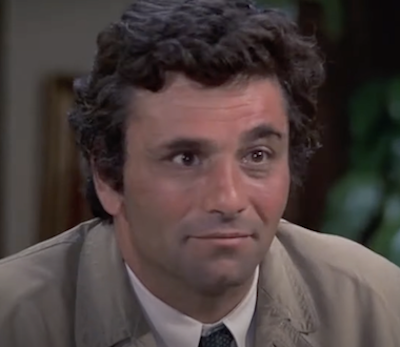
I adore that Columbo is experiencing a renaissance with younger audiences. Gabrielle Sanchez attributes it to youth’s “clamor for more murder mysteries that skewer the rich.” Not hard to believe given the dominance of The White Lotus and Succession.

Columbo’s viewership had already been climbing steadily during quarantine, thanks to its soothing appeal. Then Rian Johnson embraced his own Columbo fandom with the Natasha-Lyonne helmed tribute series, Poker Face, this year, guaranteeing that his many young Knives Out fans would follow his wake back to the short man in the long raincoat the rest of us have been loving for decades. (I knew anyone who created Brick would be a classics fan.)

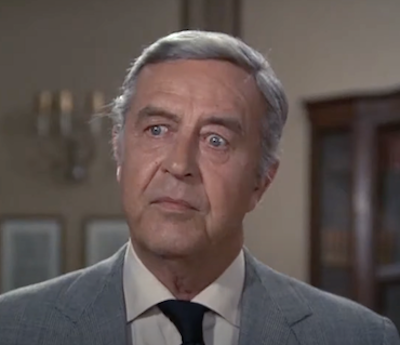
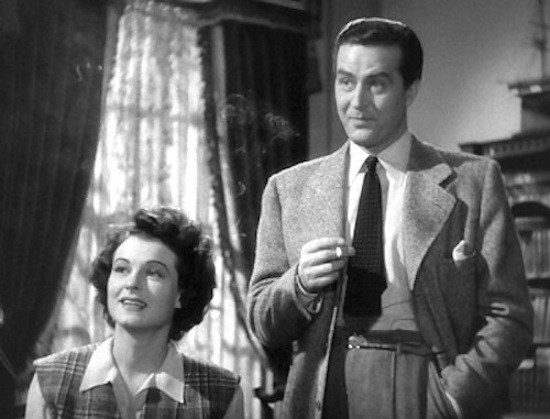
All of this fervor in turn brings new audiences to the classic movie stars we bloggers love, from Janet Leigh to Faye Dunaway to Myrna Loy to Celeste Holm. Even Don frickin Ameche (I’m a big fan of 1939’s Midnight). And of course, this fervor brings us to the suave, compelling Ray Milland, who appeared in two Columbo episodes—both early in the show’s run, when it was at its best.

I’ve often been curious about Milland. “The poor man’s Cary Grant” I read once in reference to him (though it might have been Melvyn Douglas). The dig was especially unfair since Milland was sometimes preferred to Grant: in the casting of Bringing Up Baby, for example. He was chosen over Grant for Dial M for Murder, due to salary or villain-casting worries. But the dig is fair in one sense: Grant was an icon everyone knows still today, and Milland?

“Who is that?” said my mother (echoing every other person I asked).

And yet, even those who don’t know Milland will catch a whiff of Grant. Close your eyes when watching a Ray Milland film, and for a minute, you’ll mistake the Welsh actor’s Mid-Atlantic accent for my favorite Bristol-born actor’s. Watch, for a moment, Milland move, and his easy grace and debonair expressions will trick your eyes too—as will his sharp wit and self-amusement.

And his slim build, height, dark hair, and air of confidence and wealth will throw you. As a Matinee and Mustache tumblr poster brilliantly put it, “Ray Milland looks like if Cary Grant and Jimmy Stewart had a son together after the Philadelphia Story.”

No wonder when The Awful Truth was remade as a musical in 1953, Milland was chosen to play Grant’s role.

But the Oscar-winning star of The Lost Weekend deserves to be remembered for more than just a Grant resemblance. I’ve never thought he ought to be appreciated as much for the good, but miserable-to-watch film that won him his greatest honor as for the comedies and dramas to which he leant such a light comic touch or thrilling suspense. I loved him in The Major and the Minor (1942) with Ginger Rogers, despite the issues with that subject matter. I loved him in The Uninvited, where he’s a charming, funny companion to sister Pamela (Ruth Hussey), grounding a gothic tale that otherwise would have gone too far off the rails.

And of course, I love him as the coldblooded plotter in Dial M for Murder. In fact, that film is one of my least favorite Hitchcocks but for his performance. The superiority and cool assurance he displays in that story make him an especially riveting villain. I particularly admire his character’s appraisal of the hitman’s situation, and how coolly he explains to the poor man that he simply has no choice but to kill his wife.

So it fits then, that in his Columbo appearances, Milland tries his hand at two different kinds of roles: in the second episode of season 1, he plays the beloved husband of the victim, displaying the charm and intelligence that made him such a draw to women in his movies.

And in the second episode of season 2, “The Greenhouse Jungle,” he’s a version of his scheming Dial M for Murder villain, killing his nephew after an audacious kidnapping plot.

These episodes are such fun to watch. The first, “Death Lends a Hand,” features Robert Culp as the blackmailing private detective who accidentally kills the cheating wife of an influential newspaper owner, Arthur Kennicutt (Milland), after she refuses to give into his schemes. Columbo is a DELIGHT in this episode, playing his usual, I’m-harmless game in some of my favorite scenes. In an early moment, he not only walks into a closet instead of out a front door, but pretends to be a big believer in palmistry with a straight face. Wonderful. We get hints of Columbo’s rapscallion past. And throughout, Milland plays the grieving widower with a dignity that makes us feel for his loss. His growing appreciation for Columbo is subtly shown. The quick, almost impressionistic shots of the killing and cleanup are cleverly done. And Culp is at his irascible best.

“The Greenhouse Jungle” is a bit lengthy for me, with too many shots of cars driving, but the plot is fun to watch and the humor intense throughout thanks to an ambitious young police officer who thinks he’s outsmarting Columbo. In a wonderful scene, the young officer shows off expensive tech equipment he’s bought himself, and our favorite lieutenant quips that he must be a bachelor. I also enjoyed Columbo’s hilarious ploy of disarming Milland, an orchid aficionado, by asking that he repair his wife’s 90-percent-dead African violet. Milland has a blast playing a supercilious, judgmental, superior snob who thinks he’s come up with a genius plot. He is not as clever as the Dial M for Murder schemer, but thinks he is. Milland approaches, but doesn’t quite veer into, hamminess in the role, which makes him riveting. But my favorite aspect of both episodes is–not shockingly–Columbo’s insight and empathy.

In “Death Lends a Hand,” he shows such understanding for the man who had an affair with Kennicutt’s wife. He is surprisingly blunt with him, admitting his suspicions about the relationship right away, but also assuring him he’s not a suspect (and this time, he means it). The golf pro seems like such a nice guy, and it warms us to see Columbo treat him with so much understanding. The lieutenant is also adorably kind to the villain’s minion, right after fooling him to expose his boss.

In “The Greenhouse Jungle,” the wife of the victim is in an open relationship–which makes Milland’s character despise her and his nephew. But Columbo says he admires her for her honesty about who she is, and we believe him. It’s this lack of judgment and lack of the kind of he-man attitude toward women so familiar in other cop shows (then and now) that make Columbo always feel so modern and fresh and lovable.

And how lovely it is to see Ray Milland, an underrated actor in this day (if not in his), playing on a show that is all about the dangers of underestimating others.

This post is part of the Classic Movie Blog Association (CMBA)’s blogathon, Big Stars on the Small Screen: In Support of National Classic Movie Day! Definitely check out the other entries!

For fantastic Columbo episode breakdowns, go to Columbophile!

Share
Posted in: 1940s films, 1950s films, Blogathons, Comedies (film), Film Noir/Crime/Thriller & Mystery, TV & Pop Culture, Uncategorized Tagged: Columbo. Ray Milland, Peter Falk, Poker Face

The Dude Versus Hitchcock

02/13/2021 by leah@carygrantwonteatyou.com 4 Comments

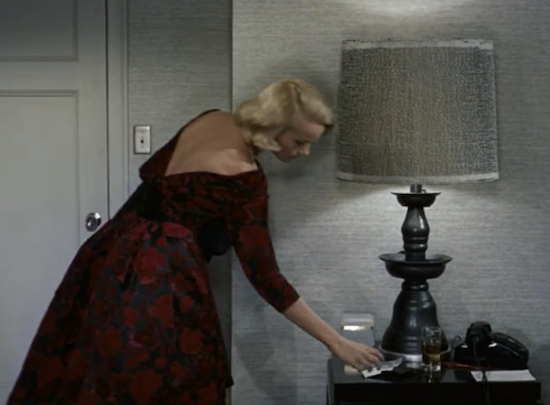
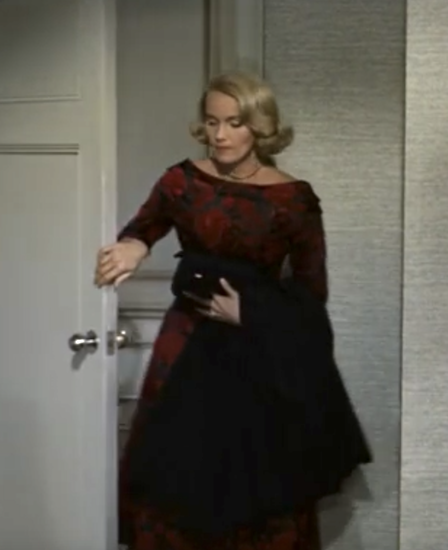
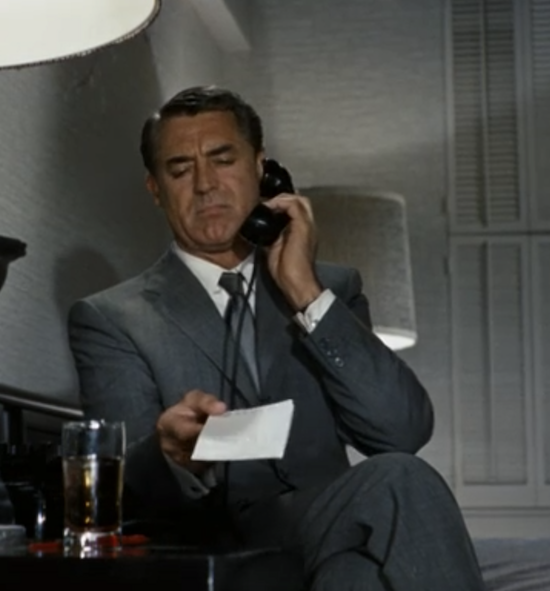
So the devious, sexy spy of North by Northwest, Eve Kendall (Eva Marie Saint), is trying to elude dupe Roger Thornhill (Cary Grant). She gets a secret call from her evil lover, Phillip Vandamm (James Mason), while she and Roger are together and writes down an address for their rendezvous.

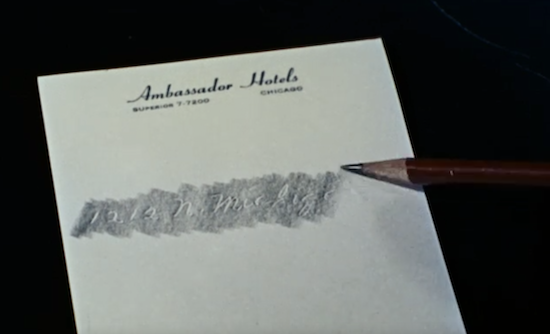
She carefully tears off the paper with the address, places it in her purse, and then—ready for this?—walks away without the notepad.

There’s that notepad, just a pencil trick away from exposing that address. Will she remember to bring it with her? Roger is watching!

Alas. She walks away.

Will she remember before she sneaks away? Of course, right? It was just a momentary oversight, her wits clouded by the sexiness of her target, Roger.

We see her pick up several other things.

(Oh, that sly Hitchcock.)

Then she leaves the room, SANS NOTEPAD.

Roger, having watched five minutes of television/film in his life, of course knows the pencil trick. He holds the paper this way and that….(Why? What does he think he’ll see?)

Cary Grant holds notepad with clue, North by Northwest

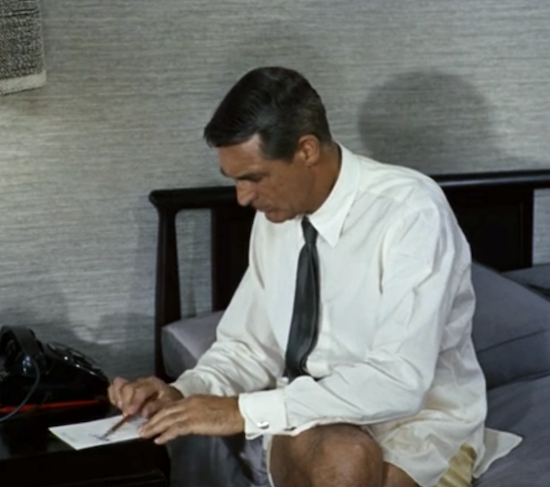
He takes out his pencil. He does the trick pant-less (in a kind gesture of Hitchcock’s, who knows his female fans).

Cary Grant does the pencil trick with his clue.

There the address is. The super-secret address Eve was so anxious to hide.

Invisible address exposed thanks to pencil.

How long have you known this trick?  Were you six? Maybe seven? I’m pretty sure Encyclopedia Brown taught me. It’s the kind of spy craft a child can understand and appears in every detective/noir/suspense film or TV episode that assumes its audience is young/dumb/abysmally ignorant of pop culture. Frankly, I would have thought such a plot device beneath Hitchcock. But he never did like giving his heroines much credit, so of course, this spy who has supposedly fooled JAMES MASON must be outsmarted by a different man. Who has a background in….advertising. And lives with his mother.

Yes, our sexy spy was outfoxed by a trick that Micky Mouse might have taught me in the 80s, back when Disney was hawking his image on magic trick books, and I thought that a wand that lifted a playing card with a hidden piece of string was really something.

True, the pencil maneuver wasn’t QUITE as old of a trick when Hitchcock used it, but it wasn’t exactly fresh in 1959. (Though, as my friend points out, today it might become new again, with so few people using pencils.)

I used to roll my eyes when I saw this pencil-and-notepad trick, annoyed by the lazy writing. But now I laugh. Because the Coens offered a send-up of this trite scenario in their—appropriately enough—satire of/tribute to The Big Sleep, The Big Lebowski. The Dude tries to outsmart a villain using the pencil trick. His excitement is intense at his own cleverness. But alas for the Dude, the “secret” isn’t what he expected. If you are of delicate sensibility, I wouldn’t advise it, but if you don’t mind some crude humor, enjoy this film clip and Jeff Bridges’ brilliance in it. (Watch that loopy run of his! And his “just acting natural” look at the end!)

There are many, many jokes about detectives in The Big Lebowksi. One of the most evident is that unlike those brilliant sleuths who with scant clues manage to figure out everything, the Dude can’t figure out anything—the mystery, which people are manipulating him, where his rug is. And unlike the driven fictional detectives who will sacrifice anything for the job, the Dude is pathologically lazy, sharing with them only some loose sense of ethics, questionable associates, and a love for alcohol (but with the Dude, of course, it’s not a hardboiled choice like whisky, but instead White Russians).

Yes, the Dude is not a good detective, and would be an even worse spy. But guess what, Hitchcock?

Even the Dude knows the pencil trick.

Share
Posted in: 1950s films, 1990-current films, Drama (film), Femme fatales, Film Noir/Crime/Thriller & Mystery, Humor, TV & Pop Culture, Uncategorized Tagged: Hitchcock, noir, North by Northwest, pencil trick, The BIg Lebowski, The Dude

Beyond Melanie: Olivia de Havilland

07/27/2020 by leah@carygrantwonteatyou.com 6 Comments
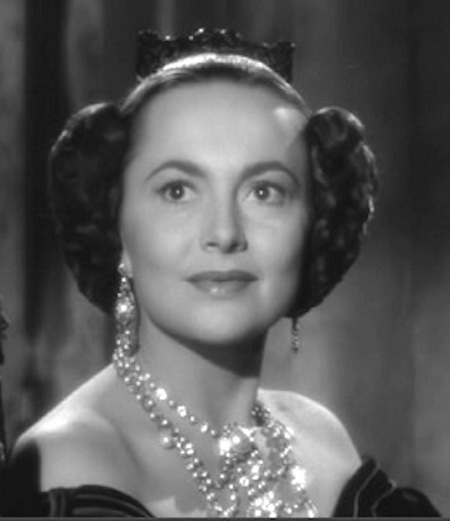
Olivia de Havilland in My Cousin Rachel

It’s always bothered me that Olivia de Havilland; the passionate, strong-minded, long-lived Hollywood star; is best known for a meek maternal role.

Did she perform it well? Oh yes. She imbued Melanie with incredible strength, empathy, and grit. But to be best known for Gone with the Wind in your obituary isn’t exactly a selling point in 2020. The mawkishness of the role has always annoyed me, especially because Olivia de Havilland is most riveting when she’s hard boiled. (She would have been great in noir.)

This was, after all, not a meek woman, convincingly as she nailed that famous steel magnolia part. This is the actress who sued her studio for extending her contract—and won. (A stupefying victory, given the long list of actresses whose studio fights got them nowhere and killed their careers.) And so I’d like to highlight a few of my favorite roles, which bear no resemblance to Melanie.

The Heiress (1949). I’m not alone here. This film won her an Oscar, an award she richly deserved. She plays a shy, undervalued, vulnerable “spinster” wooed by a handsome man (Montgomery Clift) who is likely after her wealth. Her growing strength as she begins to suspect him and question her father is something to see. Wow.

My Cousin Rachel (1952). A sexually and socially confident, cosmopolitan widow (de Havilland) meets the naïve young cousin/heir (Richard Burton) of her dead husband. At first, he suspects her of murdering her husband, then he falls for her, and then he suspects her again. Did she, or didn’t she? The book version leaves the answer open, the movies less so. The 1952 film itself is a mixed bag, but when it comes to embodying a fascinating heroine, de Havilland knows what she’s doing. (You know I think so when I say Rachel Weisz, whom I love in everything, couldn’t hold a candle to her in the remake.)

Hush … Hush, Sweet Charlotte (1964). I love some bonkers Bette Davis-de Havilland banter. Is it as fun as Whatever Happened to Baby Jane? No, what could be? But it’s still a blast to watch, thanks in large part to de Havilland’s scheming character.

The Adventures of Robinhood (1938). OK, this is a bit of a sentimental choice, but de Havilland doesn’t play a weakling version of Maid Marian. She’s got some serious spirit, especially for the time this film was made. de Havilland’s stunning beauty in it explains the string of hearts she left in her Hollywood wake. And Errol Flynn’s and her dazzling chemistry, not to mention their ridiculously good looks, reveal why they were paired together so frequently. Plus, the film is just a hoot, with the cast clearly having Ocean’s 11-level fun on the set.

There’s much more to say about de Havilland. This list alone shows her incredible range as an actress. I don’t have the expertise to discuss her recent lawsuit, sister feud, or any of the myriad other topics that make her a compelling subject. I strongly recommend you check out some of my peers’ posts on The Classic Movie Blog Association’s blog roll (see right column). de Havilland has never been one of the stars I follow. Frankly, I find her a bit scary. Intimidating. Hard to know. (About as far from Melanie as it’s possible to be.) But you can’t ever discount her. And when she’s on the screen, you don’t want to watch anyone else.

Share
Posted in: 1930s films, 1940s films, 1950s films, 1960s films, Drama (film), Feminism, Romance (films), Romantic Comedies (film) Tagged: Olivia de Havilland, roles beyond Melanie, strong female roles, The Heiress, tribute

Silly Feel-Good Classic Films

05/19/2020 by leah@carygrantwonteatyou.com 16 Comments
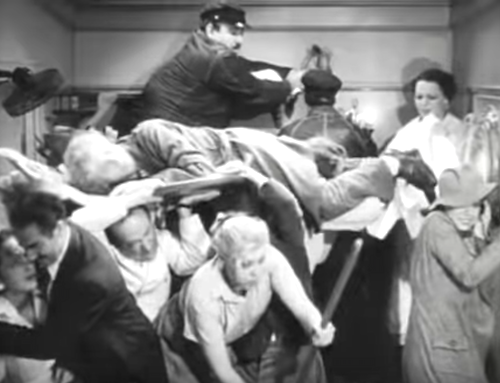
A NIght at the Opera stateroom scene

As the pandemic length has grown and your patience has seeped away, what spells a “comfort” movie to you may have changed. If you’re single and alone, the rom-com, usually a fallback, may make you cringe about the horror of dating dangers post-opening (as if dating usually weren’t bad enough!) If you’re huddled inside with TOO MANY PEOPLE, you may find yourself enjoying dull footage of peaceful lakes.

But for all of us in times of stress, the truly, deeply silly movie remains a staple, and so in the long-delayed follow-up to my earlier post, “Classic Feel-Good Movies for Shut-Ins,” I’m going full-on silly with my next set of suggestions. I’m joining my peers at the Classic Movie Blog Association, who are sponsoring a great blogathon event on comfy favorites. So here are five comfy classic films, chosen for silliness and enjoyment–and listed in no particular order. (You will note that I’ve rated the silliness level, so not all here are full madcap in style. BUT I’m thinking that a list of films with silliness at level eleven, and eleven only, may be my next project.)

5. The Miracle of Morgan’s Creek (1943/4). Silliness Quotient–11 out of 10.

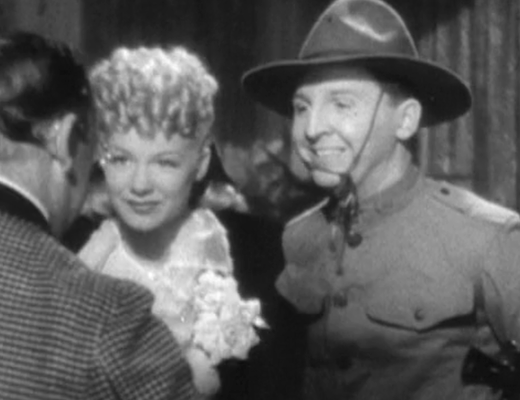
The Miracle of Morgan's Creek wedding

I could have easily chosen ANY Preston Sturges flick obviously, but I recently discovered this on my library’s Kanopy streaming service, and just seeing the listing made me grin. For those of you who DON’T know writer/director Sturges, he was a big Coen brothers influence, thus the name of their film, O Brother, Where Art Thou?, a reference to Sturges’ classic, Sullivan’s Travels. (In fact, the Coens’ film title ONLY makes sense if you have see the Sturges flick.) This early writer/director’s delirious combination of madcap physical comedy, witty banter, and sheer improbability in his plotting make Sturges a favorite of any Coen brothers’ diehards (which I definitely am).

The Miracle of Morgan’s Creek actually thrives on denying information to its audience, who know that a scandal/miracle is about to erupt in Morgan’s Creek, and many stratagems are in play to contain it. Betty Hutton is adorable as the center of the scandal, and Eddie Bracken plays her lovesick friend/maybe-more (think Ducky in Pretty in Pink). Basically, it all begins when Hutton has too good of a night with liquor and a bunch of soldiers and sleeps with one of them. The thing is, she can’t remember his name. Yes, you read that right. It gets much more complicated as it goes. Bracken has the silliest role, and he captures his character’s constant befuddlement to the hilt—and just escapes going too far. Since the writing is in Sturges’ hands, it’s brilliant, of course (I have a set of his scripts on my bookshelf, trying to see how he does it).

4. Auntie Mame (1958). Silliness Quotient–7 /10.

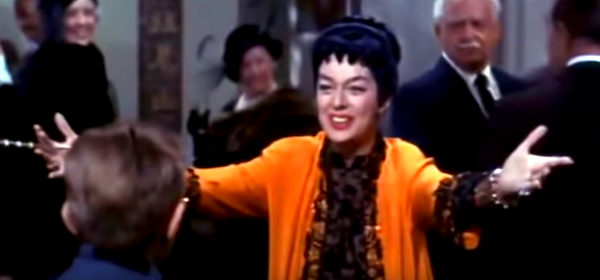
Auntie Mame (Rosalind Russell)

I haven’t yet done a full post on Auntie Mame, but that’s because I love it too much, not too little. An unconventional, fun-loving aunt in the city (Rosalind Russell) takes in her dead brother’s prim child, and many hilarious scenes ensue. If you don’t end the film wishing Auntie Mame were your aunt, I don’t know what’s wrong with you. Rosalind Russell’s acerbic edge keeps the film from ever treading into maudlin territory, and she so fully embodies Mame’s significant lust for life that it’s very confusing to find Russell cowed and sad in other films (Picnic, for example).

A favorite scene in the film is when Mame takes a sales job after the market crash. She only knows how to do COD (cash on delivery), and therefore is urging everyone to pay that way. Her dismay when they don’t is ALL OF US in every job when we’re out of our depth. COD isn’t really a thing you hear much anymore, but any time I do hear it, I think, “Oh, Mame.”

3. The Man Who Came to Dinner (1942). Silliness Quotient–7/10.

Monty Woolley as Sheridan Whiteside

“Guests, like fish,” penned Ben Franklin, “begin to smell after three days.” No movie has ever captured that sentiment better than The Man Who Came to Dinner, and no actor has ever improved on Monty Woolley’s commanding performance of entitlement personified. He’s playing radio star/personality Sheridan Whiteside on a lecture tour, and the unlucky family once so proud of his appearance at their dinner table learns to rue the day they agreed to it. A little accident on their stoop, and they’re stuck waiting hand and foot on Whiteside’s prodigious ego.

George S. Kaufman and Moss Hart created the witty script, and Billie Burke plays the unwilling hostess to Whiteside. (Bette Davis may have helped the film get made, but her role here is one of her most flavorless. You know it’s not a Davis vehicle when Ann Sheridan outshines her.) Watch the film for the script and for brilliant Woolley, who must have been something to see on the stage (where he originated the role). Unfortunately, I have delayed writing about this film because it seems to be always unavailable for streaming on Amazon, but the DVD is available. If you know a good source for streaming it, please mention that in the comments!

2. Ball of Fire (1941). Silliness Quotient–7/10.

Barbara Stanwyck and Gary Cooper in Ball of Fire

No list of silly movies would be complete without my favorite classic comedy, with Barbara Stanywck as the moll and Gary Cooper as the hapless encyclopedia writer who falls for her. And then there are the “dwarves”–the older encyclopedia writers who ALSO fall for her. I see that the film’s available on the Criterion Channel, which I’m shocked I don’t belong to yet. (No worries for me–I own two DVDs of this movie–the 2nd for when mine inevitably breaks from overviewing.)

With the dizzyingly talented combination of Howard Hawks as director and Charles Brackett and Billy Wilder as writers, this film’s dialogue can be almost as breathtaking as His Girl Friday‘s (also Hawks), but the writing/directing team leaves room for endearingly slow sequences as well. You actually watch Cooper’s character studying how to box in a book before his big fight scene, showing how goofy this story is. And for extra fun, you get favorites Dana Andrews, Dan Duryea, and S.Z. Sakall simultaneously embracing and mocking their typical roles.

1. A Night at the Opera (1935). Silliness Quotient–11/10.

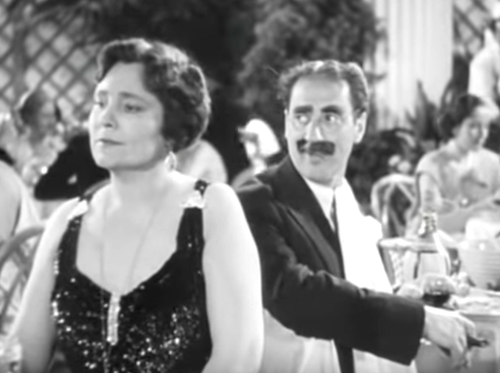
A Night at the Opera-Otis (Groucho) is introduced.

Did you honestly think you’d get through this list without a Marx brothers appearance? I didn’t think so. (As with The Man Who Came to Dinner, the screenplay is co-written by Pulitzer-Prize-winning Kaufman.)

Here are just a few quick early bites: We get Otis B. Driftwood (Groucho) yelling at his driver for not traveling slowly enough to miss the whole opera they’ve driven to see. We have Fiorello (Chico) and Otis tearing apart the bits of a contract they don’t understand (i.e., all of it). We have Tomasso (Harpo) interrupting a typical movie romance trope (one lover onshore, the other on the ship, crooning about her love) by attack-kissing strangers for no reason. That’s just a small sampling of the joys you get before the glorious comedy of the ocean voyage, which includes such a monstrously over-the-top buffet that I wondered just how old the joke about gaining weight on cruises was….

During a strange but enchanting musical sequence starring Chico and Harpo, the two entertain a crowd of children with a deft combo of lunacy and calm, making me think, “Doesn’t every parent stuck at home with children for weeks want these two as babysitters right now?”

So there you have it–five wonderful, comforting films to get you through this trying time. NOTE: You may notice that neither Mae West nor Cary Grant has appeared on this list. That’s because 1. I already discussed Mae in my previous comfort list, and 2. I figured you’d already thought of Cary–and if you haven’t, why not?

Bonus: Kedi (2016).

I know–it’s not a classic film. It’s a recent documentary about the cats of Istanbul. But I have literally recommended it to every cat lover I know, and when I found it streaming on my library’s Kanopy service, played it on repeat for a day. The film focuses on several stray cats, telling their stories (the hunter, the crazy one, the player, etc.). The cats are certainly endearing, but surprisingly, the shopkeepers, artists, and others who love and care for them are just as likeable. And the cinematography of Istanbul is often gasp worthy, especially when you see those cats on some tall balconies and rooftops! My friend described the film as human catnip. How right she is. Next time you experience one of those anger/grief/anxiety spirals that all of us are prone to during this pandemic, play Kedi. Trust me. It’s healing.

This post is part of the Classic Movie Blog Association’s Classics for Comfort blogathon, so you can find many more suggestions on feel-good films there if mine don’t meet your needs—or, which is even more likely, you need more. Enjoy!

Share
Posted in: 1930s films, 1940s films, 1950s films, 1990-current films, Blogathons, Comedies (film), Humor Tagged: A Night at the Opera, Auntie Mame, Ball of Fire, Brackett-Wilder, feel-good films, The Man Who Came to Dinner, The Miracle of Morgan's Creek

Film on Inspiring Feminist Hedy Lamarr

05/06/2020 by leah@carygrantwonteatyou.com 4 Comments

Bombshell: The Hedy Lamarr Story (2017) is that rare documentary that is somehow uplifting–even when its tale is not. The fact that Bombshell is a story of triumph amidst adversity makes it a perfect film for our time.

I knew the bare outlines of Lamarr’s story: the scandalous film that began her rise to fame, her fraught history with her husband and his Nazi buddies in Austria, her tenure as a beauty in Hollywood, and her frequency hopping invention that eventually led to my sharing this post with you right now, on WiFi. Those details would be enough to make a decent film, I figured, even if it turned out to be–as many actress documentaries are–cookie cutter in style.

But the documentary is so much better than I thought it would be. It seeks to make sense of the elusive personality behind the thousands of lives the actress/inventor lived. The story is greatly enriched by interview tapes of Lamarr, letting viewers hear her story as she wanted to tell it.

It’s hard to picture Lamarr’s life, that brilliant woman who co-created an invention to save soldiers’ lives after long days on the set of (mostly) inane films…and then was patted on the back for her little invention by the military and sent off to sell war bonds with that pretty face instead….which she did.

Crazy as the outlines of the life I knew were, there was so much more, as this inventor was equally bold in other roles she took on–in movie production, in entrepreneurship, in everything really. In the film, she says she helped boyfriend Howard Hughes with airplane design; she even managed to squeeze a big initial salary out of Louis B. Mayer with no English. What an amazing feminist she was, not letting societal conventions for women dictate her moves, but plowing ahead, doing whatever she believed she could do.

Director/writer Alexandra Dean has chosen her sources well, particularly the young animator wowed by Lamarr’s accomplishments. A Mel Brooks cameo, with reference to his Blazing Saddles tribute to the actress through the character Hedley Lamarr, is an unexpected treat.
Lamarr’s personal life was largely tragic: bad marriages, the public’s focus on her looks instead of her mind, the cruelty as those looks faded, financial woes, and the failure of others to value or credit her patriotism since she was an immigrant. The film gives Lamar her proper place in history, but it’s clear to all the subjects in the documentary that they’re trying to reclaim for Lamarr a tribute (besides some very late awards) she never received herself.

But what’s more tragic than her treatment is that had Lamarr been taken seriously earlier, her invention might have saved American lives in WW II, which was her goal all along. The bigotry, greed, bureaucracy, and sexism that made her life so challenging and her invention so tardily applied aren’t exactly difficult to trace in our society or government today. That such obstacles can actually PREVENT heroism like hers is a sobering thought, and a dismayingly timely one.

But the film remains inspiring because we witness Lamar’s refusal to let poor treatment override her determination to act with courage and integrity. What you mainly feel in watching are awe and a profound wish to cheer, Rocky style. Lamarr was a complicated person, and not without flaws, but she was an AMAZING person, and your time with her is truly something to savor.

You can find the film on Netflix (while it’s still there!) or rent it on Amazon. Why are you waiting?

Share
Posted in: 1930s films, 1940s films, 1950s films, Drama (film), Feminism Tagged: Bombshell: The Hedy Lamarr Story (2017), female inventors, Feminist Icons, Hedy Lamarr, screen sirens
1 2 3 4 Next »

Recent Posts

  • 100 Years Later, Still Scary: Dr. Caligari
  • Escaping Out of the Past (1947)
  • A Weeper for Those Who Love Jerks
  • Thank You, Academy, for Not Infuriating Me
  • Challengers (2024) Is a Bad Movie

Subscribe to Blog via Email

Enter your email address to subscribe to this blog and receive notifications of new posts by email.

Categories

  • 1920s films
  • 1930s films
  • 1940s films
  • 1950s films
  • 1960s films
  • 1970s films
  • 1980s films
  • 1990-current films
  • 2020s films
  • Action & Sports Films
  • Anti-Romance films
  • Blogathons
  • Childfree
  • Comedies (film)
  • Drama (film)
  • Feminism
  • Femme fatales
  • Film Noir/Crime/Thriller & Mystery
  • Gloriously Silly Scenes
  • Horror
  • Humor
  • Mae West Moments
  • Musicals and dancing films
  • Oscars
  • Random
  • Romance (films)
  • Romantic Comedies (film)
  • The Moment I Fell for
  • Turn My Sister into Classic Movie Fan
  • TV & Pop Culture
  • Uncategorized
Share
Classic Movie Blog Hub Member

Recent Comments

  • leah@carygrantwonteatyou.com on Meg Ryan’s Fate Foretold in Joe Versus the Volcano
  • Ryan on Meg Ryan’s Fate Foretold in Joe Versus the Volcano
  • leah@carygrantwonteatyou.com on 100 Years Later, Still Scary: Dr. Caligari
  • The Classic Movie Muse on 100 Years Later, Still Scary: Dr. Caligari
  • leah@carygrantwonteatyou.com on 100 Years Later, Still Scary: Dr. Caligari

Archives

  • November 2025
  • September 2025
  • May 2025
  • March 2025
  • January 2025
  • November 2024
  • August 2024
  • July 2024
  • May 2024
  • March 2024
  • February 2024
  • December 2023
  • November 2023
  • October 2023
  • September 2023
  • August 2023
  • July 2023
  • May 2023
  • April 2023
  • March 2023
  • January 2023
  • December 2022
  • November 2022
  • September 2022
  • July 2022
  • May 2022
  • April 2022
  • March 2022
  • February 2022
  • October 2021
  • September 2021
  • April 2021
  • March 2021
  • February 2021
  • December 2020
  • October 2020
  • September 2020
  • July 2020
  • May 2020
  • April 2020
  • March 2020
  • February 2020
  • December 2019
  • October 2019
  • September 2019
  • June 2019
  • May 2019
  • April 2019
  • February 2019
  • January 2019
  • November 2018
  • September 2018
  • July 2018
  • June 2018
  • May 2018
  • April 2018
  • March 2018
  • February 2018
  • January 2018
  • November 2017
  • September 2017
  • August 2017
  • July 2017
  • June 2017
  • May 2017
  • April 2017
  • March 2017
  • February 2017
  • January 2017
  • December 2016
  • November 2016
  • October 2016
  • August 2016
  • July 2016
  • June 2016
  • May 2016
  • April 2016
  • March 2016
  • February 2016
  • January 2016
  • December 2015
  • November 2015
  • October 2015
  • September 2015
  • August 2015
  • July 2015
  • June 2015
  • May 2015
  • April 2015
  • March 2015
  • February 2015
  • January 2015
  • December 2014
  • November 2014
  • October 2014
  • September 2014
  • August 2014
  • July 2014
  • June 2014
  • May 2014
  • April 2014
  • March 2014
  • February 2014
  • January 2014

Meta

  • Log in
  • Entries feed
  • Comments feed
  • WordPress.org

Copyright © 2025 Cary Grant Won't Eat You.

Church WordPress Theme by themehall.com