Cary Grant Won't Eat You

Classic movies for phobics

  • About
  • eBooks
  • Previous Blogathons
Classic movies for phobics

Rebecca Got a Bad Rep

06/29/2019 by leah@carygrantwonteatyou.com 8 Comments

**Spoilers abound**

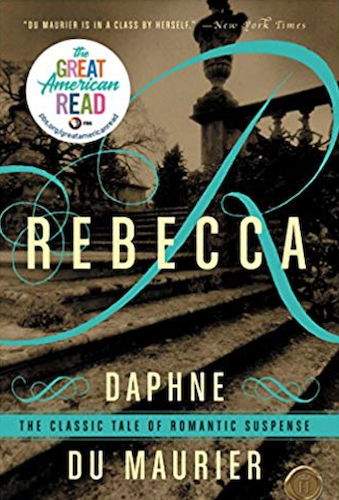
Of all the femme fatales on film and in print, Rebecca may top them all. The woman isn’t even alive at the start of the book or the Hitchcock film that resulted from it, yet the narrator of the story is so haunted by her husband’s previous wife (and Du Maurier is so skilled at freaking readers out) that Rebecca’s reputation as the evil femme fatale endures.

But when we look at Rebecca’s life a little closer, it’s hard to ignore just how much of our impressions of this woman are based on her former husband’s hatred and his second wife’s jealousy. Although I was totally with the narrator in fearing and loathing Rebecca on my first reading of Daphne Du Maurier’s classic gothic novel/thriller/mystery, my opinion of Rebecca has radically shifted in time, and the blame moved from her to the much more questionable Max de Winter.

Since the film sanitizes the hero due to the Production Code, I’m sticking with the book as I ask all of you Du Maurier lovers this question: Who is worse, Rebecca or her husband Max?

Let’s count it down trait by trait, shall we?

Behavior toward Friends & Acquaintances. Rebecca. Tries to suit others’ moods and appeal to their interests—this according to her detractor, Max. Everyone loves her, Maxim admits, including all of her employees. He claims she is fake, a backstabber. It’s easy to discount the tales of her insincerity altogether, given those blunt admissions to Max at the start of their marriage and his own dubious motives in smearing her. But we do hear Ben describing her cruelty toward him, a serious count against her.

Max: Rude to and arrogant toward: his sister, his brother-in-law, attorneys, party guests, servants, Mrs. Van Hopper, his second wife. He does seem to usually treat Frank well, and perhaps the dog. He expects to be thought above the law despite his suspicious actions and has no compunction about the boat maker’s profit losses thanks to his lies. Why? Presumably his class and status.

Personality Points: Rebecca 1; Max 0
Villain Points: Max 1; Rebecca 1

Social Skills. Max is the very definition of prim, spending his days abstaining from most people and food (while strangely expecting an untouched feast on a daily basis). And, there’s that slight issue with his temper and moods. Good company? I think not.

Rebecca’s style intimidates the narrator; she has garnered Manderley fame with her exquisite taste and the elegance, creativity, and humor she exhibits as a hostess. Even the “R” of her name is written with panache.

Personality Points: Rebecca: 1; Max: 0

Treatment of Spouse. Let’s admit from the start that these two are hardly an altruistic pair. A tight race!
Max: Wife 1. Marries Rebecca without loving her but planning to be faithful. Keeps the secret of her affairs, but for his own pride. Does tolerate her behavior within limits. (It was a different age.) Seemingly polite to her in public but based on his general actions (see above), I’m guessing she needed to find affection elsewhere. Wife 2. Marries the narrator because she’s chaste and has no relatives (Mrs. Van Hopper isn’t far wrong there). Shows little passion for her, most of that passion being extended to his house. Treats her like a daughter/servant/enemy, depending on the day. Marries her knowing that his limelight-averse spouse will be destroyed if his crime is revealed and the scandal rags come a-knocking while her protector is in jail. Exposes her to Mrs. Danvers, the suicide pusher.

Rebecca: Marries Max for his money and status, planning to cheat on him from the start and admitting as much. Seemingly has multiple affairs. Apparently enjoys some “unspeakable” behavior (though given prim Max’s ways, I’m guessing we’re not talking Roman orgies). May, if the love of Mrs. Danvers is any indication, indulge in affairs with women as well as men, which in this time period would have harmed her husband’s reputation. Shaming her husband with alcohol and drug consumption? Perhaps in private. Meanwhile, spends her days being delightful to all and making his treasured house the talk of the country.

I’m going to leave out Max’s crime for this one, as it deserves its own category. But in terms of behavior up to their final night together, Rebecca’s is worse since Max’s biggest fear is public shame, and she doesn’t seem to care much that he’s a bore and has no fidelity impulses/regard for his pride whatsoever. However, his behavior to his second wife is appalling.

Villain Points: Rebecca 1; Max 1

The Murder. Max shot his wife because she suggested she might be pregnant with another man’s baby. Max demonizes her, calling her not even “human,” to (a) justify his action, (b) keep his wife’s love, and (c) be considered a civilized member of society. The narrator, so pleased he didn’t ever love Rebecca, actually goes along with his version of events, even though he’s not exactly trustworthy because he’s a killer who murdered his last wife, idiot. RUN!!!!

Rebecca. Enjoys her husband’s distress at her infidelity and taunts him. He now says she wanted him to kill her (given her health). Kinda convenient, right?

Personality Points: Rebecca, 1—some considerable moxie revealed in this last fight; Max, 0. Villain Points: Max, a gazillion; Rebecca, 0.

And the Verdict Is….
Personality Points: Rebecca 3; Max 0
Villain Points: Max, a gazillion and 2; Rebecca, 1.

Like I said, Rebecca might not be an angel, but a femme fatale? Not so much. And is Max, the cold-blooded murderer and awful husband a homme fatale? You better believe it.

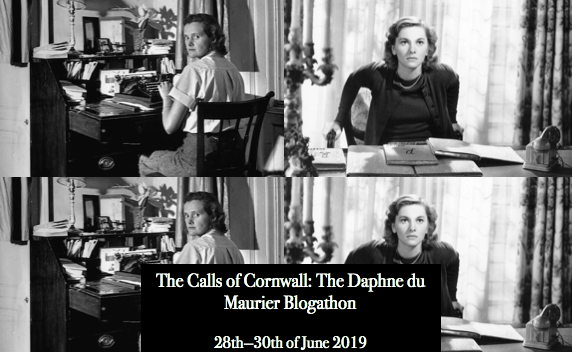
This post is part of the Calls of Cornwall blogathon by Pale Writer on Du Maurier’s work. Check out the other entries!

Share
Posted in: 1940s films, Blogathons, Feminism, Femme fatales, Film Noir/Crime/Thriller & Mystery, Humor, Romance (films), Uncategorized Tagged: Daphne du Maurier, femme fatales, Max de Winter, Rebecca, romances, thrillers, unfair reputation, unnamed narrator

Getting Nosy about Mae & Cary

06/06/2019 by leah@carygrantwonteatyou.com Leave a Comment

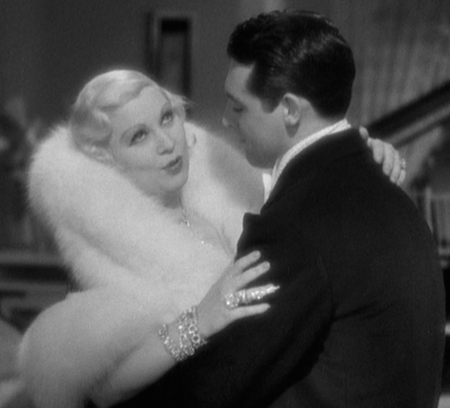
Grace Collins of True Stories of Tinseltown and I chat about two stars who created the personas that made them stars, and never let those personas slip. We’re not nosy about ALL Hollywood stars’ lives, but that kind of inventive commitment is worth talking about! As usual, the two of us had a lot of fun, and Grace is a great host. (I might get a bit too enthusiastic, but in my defense, I was then reading Goodness Had Nothing to Do with It.)

Check out the podcast here or here or here.

Enjoy Grace’s other wonderful posts and podcasts on her sites or check out her Facebook page for more.

Share
Posted in: 1930s films, 1940s films, 1950s films, 1960s films, 1970s films, Mae West Moments, Uncategorized Tagged: bios, Cary Grant, fan tributes, life stories, Mae West

Doris Day and the Reaction Shot

05/13/2019 by leah@carygrantwonteatyou.com 4 Comments

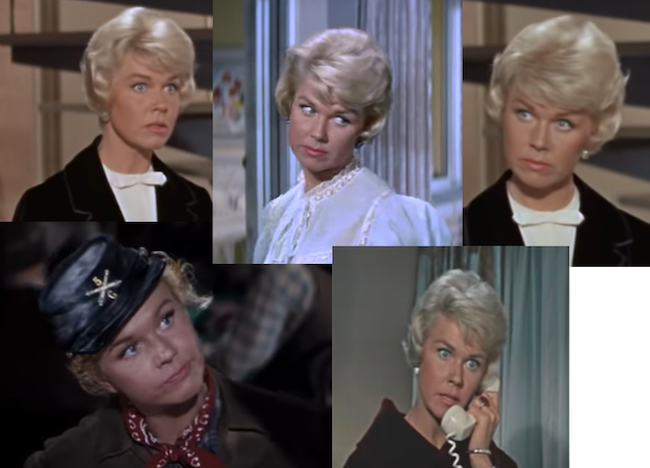
Today a man I know well surprised me, and I could tell I had one of those hilariously odd expressions on my face in response. When I heard a couple hours later that Doris Day had died, it seemed to me that I’d inadvertently paid tribute to that marvelous, strong, very funny woman. There will never be anyone who has a more entertaining or endearing response to male oddities than Doris Day. So today I want to say how lucky we are–among many, many gifts she gave us–for the hilarious reaction shots only she could deliver. Whether disdainful, amused, outraged–or best of all, all three–Day’s expression just nailed a sentiment….And so today, Doris, this feminist sends her heartfelt thank you. I couldn’t have said it better.

Share
Posted in: 1950s films, Comedies (film), Feminism, Humor, Musicals and dancing films, Uncategorized Tagged: death, Doris Day, tribute

The Femme Fatale Who Wasn’t: In a Lonely Place

04/16/2019 by leah@carygrantwonteatyou.com 25 Comments

spoilers ahead.

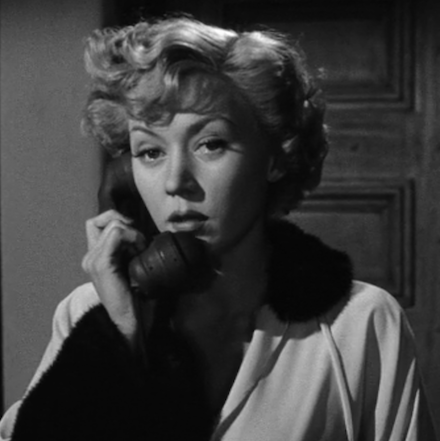
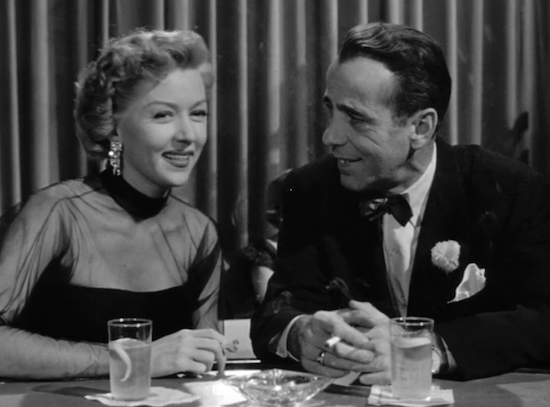
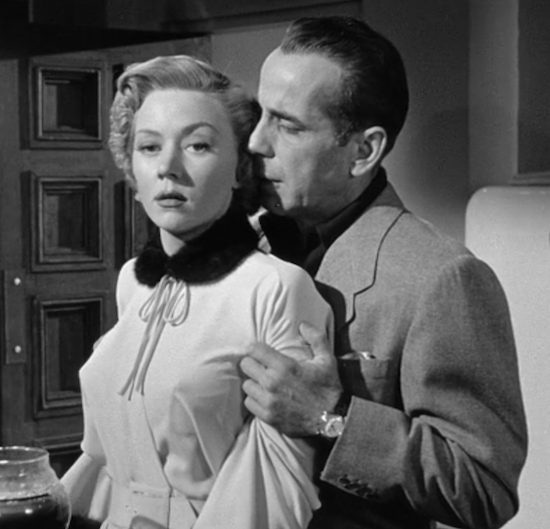
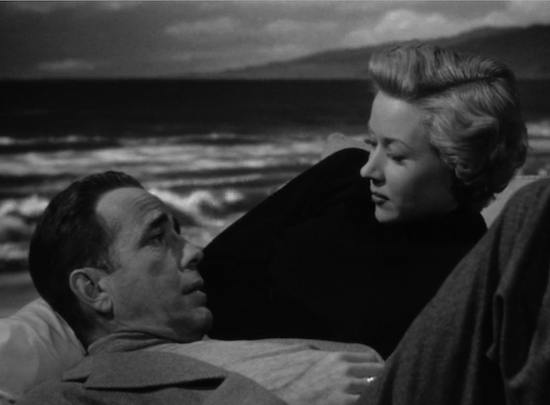
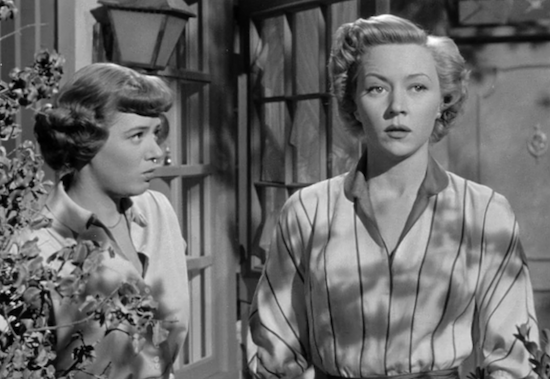
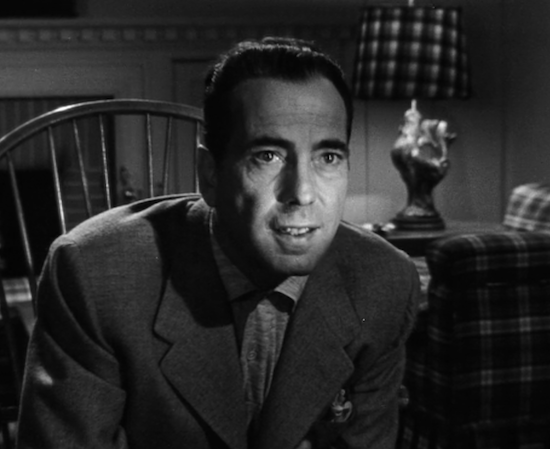
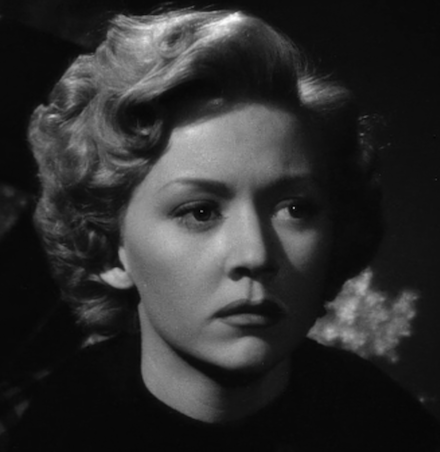
I was wowed by Nicholas Ray’s In a Lonely Place. The film, it seemed to me, was ahead of its time in its powerful portrayal of domestic abuse. On the surface, the film explores whether the hero, Dix (Humphrey Bogart), murdered an innocent woman. His girlfriend, Laurel (Gloria Grahame), begins their relationship in romantic euphoria.

But, as in Suspicion, Laurel begins to suspect he might have done it.

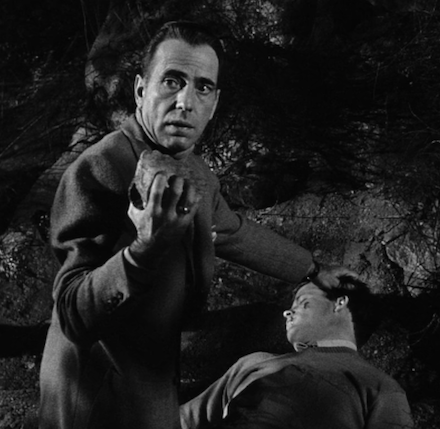
The did-he, didn’t-he soon becomes a “Don’t worry which, Lady. Run.” After all, Dix likes to act out murder scenarios and then mimics the same movements when smoking with Laurel. He won’t allow her to receive a phone call or prescription he doesn’t monitor. He keeps her economically dependent on him. He justifies beating people up and actually considers bashing heads in with rocks.

And just in case she has any doubts about how this is all going to end for her, his former girlfriend reported Dix for breaking her bones.

The story is cast from Laurel’s (Gloria Grahame’s) point of view, and haunts the viewer because Dix can be charming, can be loving, can be apologetic. He does come back with “armloads of gifts” after his scary behavior, not just for her, but for victims of his violence. He is sweet to an alcoholic ex-actor, shows more compassion for him than anyone else. The film sympathizes rather than judges Laurel for staying, reminding audiences that an abuser can be contrite and thus leave the woman who loves him off-balance, uncertain whether to trust he’s changed. And though Laurel’s friend cautions her against him, his friends urge her to stay, to understand, to give him a chance. Meanwhile, we get glimpses of his mind: he can only see unquestioning faith in him–which would be difficult, given his actions–as acceptable. After a near-homicide, he coins a line for a screenplay describing his love for Laurel: “I was born when she kissed me, I died when she left me, I lived a few weeks while she loved me.”

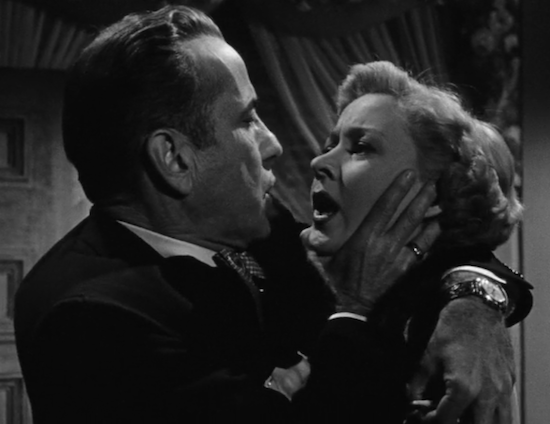
Personally, I found this line chilling. Yet the director, Nicholas Ray–who was experiencing stresses in his marriage to Grahame at the time–gives a romantic packaging to not just that line, but to the final scenes of the film. He seems to imply–even after Dix strangles Laurel and nearly kills her–that this all would have turned out well had there not been that whole did-he-murder-the-woman doubts. And more disturbing yet, both current and contemporary reviewers frequently characterize this toxic relationship movie as a “tragic love story,” and certainly many scenes in the movie would seem to back up that assumption.

I turned to the source material to understand the confusion in tone, and was in for a shocker. Dorothy Hughes wrote In a Lonely Place as a kind of The Killer Inside Me of its time; we know from day 1 that Dix hates women, that he kills them regularly, that he thinks he’s justified because after he came back from the war, women saw through his hustling ways; they didn’t fall all over him, as they had when he was in uniform. His former Air Force friend is now a cop and has married a woman, Sylvia (Jeff Donnell), whom Dix distrusts and (we soon learn) underestimates.

She quickly sees through Dix’s veneer of humanity.

Dix hates her for it in the novel, and plots her death. Think of Dana Andrews in The Best Years of Our Lives, if on encountering his wife’s disappointment in him, he decided to go on a murderous vendetta against anyone who shared her gender.

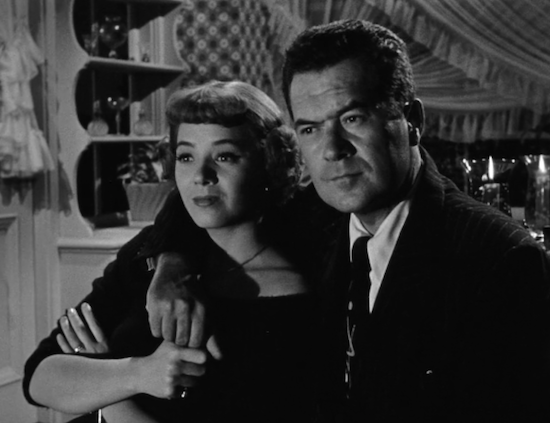
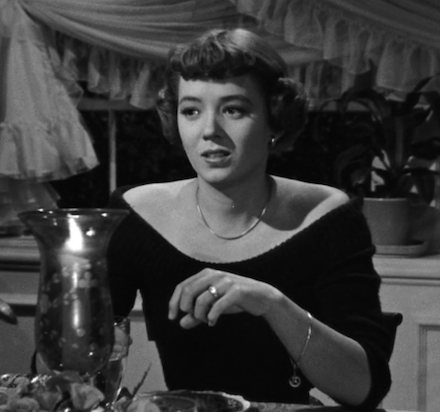
The best scenes in Ray’s film are moments that capture the stark feminism in the book, in which only the women see Dix for who he is, and only they can succeed in stopping him. In a sharply rendered scene in the film, Laurel and Sylvia are honest with one another: Laurel in her doubts about Dix’s character, Sylvia, in confirming (reluctantly) that Laurel should have them.

In the book, Dix’s demeaning treatment of women–especially Laurel–is accompanied by a conviction that Laurel is taunting him, trying to make him jealous, when she’s simply putting the brakes on a relationship that he’s taken too seriously, too quickly. As writer Megan Abbott so brilliantly put it: “After reading In a Lonely Place, you find yourself looking, with a newly gimlet eye, at every purported femme fatale, every claim of female malignancy and the burning need of noir heroes to snuff that malignancy out.”

In Dix’s eyes in the book and film, Laurel is a femme fatale. She gave her love, then she took it away–all because she didn’t trust him enough. But in our eyes, she’s just fallen for the wrong guy; calling a man you love a “madman” doesn’t usually suggest a relationship is headed for sunshine and rainbows. Whether Dix killed a woman or not, Laurel isn’t wrong to ask, “There is something strange about Dix, isn’t there?” after he bloodies a fellow driver to a pulp or “What can I say to him–I love you but I’m afraid of you?” when he looks at her in the scary fashion Bogart had mastered since The Petrified Forest.

At some point you gotta ask, Is any guy you’re relieved and surprised didn’t kill someone worth sticking around for?

I admire both the book and film because they make me look back at so many of the noir novels and movies I’ve admired, and ask that question Abbott challenges me to consider: Was this woman a femme fatale? Or was she just an independent woman who didn’t say yes?

This is part of the Classic Movie Blog Association’s Femme/Homme Fatales of Film Noir blogathon. Check out so many great entries here.


Share
Posted in: 1950s films, Anti-Romance films, Blogathons, Feminism, Femme fatales, Film Noir/Crime/Thriller & Mystery, Uncategorized Tagged: #meToo classic films, femme fatale, Gloria Grahame, homme fatale, Humphrey Bogart, In a Lonely Place

The Director of Kingpin Just Won Best Pic

02/25/2019 by leah@carygrantwonteatyou.com 2 Comments

Let’s review:
Best film Oscar for the director of Kingpin and Dumb and Dumber? 1
Best film Oscar for the director of Do the Right Thing: 0
1990: Do the Right Thing: No Oscar; Driving Miss Daisy: Oscar.
2019: We have two strong films up for best picture by black directors about what it means to be black, Black Panther and BlacKkKlansman–one director a promising newcomer who even made a deep-into-the-Rocky-franchise film memorable, the other one of the most original and gifted directors of our time. And who beats them? A white Farrelly brother, who once directed Kingpin (a film so stupefyingly gross even a dumb-humor fan like me was appalled). And what was this winning film about? Being black in America, a film starring, of course, a white man.

Yeah, I’m going to bed now.

Share
Posted in: 1990-current films, Oscars, Uncategorized Tagged: worst Oscar decisions

ILL, How Do I Love Thee?: A Classic Movie Fan’s Tribute

02/23/2019 by leah@carygrantwonteatyou.com 4 Comments

For years I’ve been grumbling, waiting for streaming access to classics I hear about from other blogs: Letter from an Unknown Woman, The Great Lie, A Foreign Affair. Without a Netflix DVD cache or TCM, the classic movie fan is left with few options, and my brief affair with the Warner Archive had given me little love. Then it occurred to me, like a (clichéd) beacon of light in the night: YOU HAVE ACCESS TO INTERLIBRARY LOAN.

How do I love thee, ILL? Let me count the ways.

  1. You don’t tarry. Within a week, all three films were at my library’s front desk. The student helping me didn’t notice my bated breath or strong desire to do the worm in celebration. Used to her fellow students’ desperate and grumpy research requests, she was unaware of the yummy chocolate cake she was handing over to me. Her loss.
  2. You have so much to offer. Greedy after receiving all three films, I thought I’d dare for my elusive, longed-for white whale of a book. I’d just emailed Grace Collins of True Stories of Tinseltown about our upcoming podcast chat on Mae West and Cary Grant when my long-stamped-out desire resurfaced: Goodness Had Nothing to Do with It. I needed it–obviously–for research. Amazon was charging boatloads of cash for Mae’s autobiography, but was it possible I could get my hands on it for free? YES!!!
  3. You give me so MANY moments to savor. Here is one of hundreds of funny interchanges from Mae’s bio: She’s just put on opening night for her first play in New London, CT in 1926. The house manager is grumbling about the ticket purchases: “The title’s scaring them away. Nobody in this town will buy tickets for a show with the title SEX….We don’t talk about sex hereabouts, and we don’t put it on signs.” Only 85 people show for the first performance, and Mae is feeling blue that the first play she wrote and starred in looks like a bomb. But at the next day’s matinee, she sees lines of men from the naval base “two and three deep,” and the manager is scrambling for extra seats for his theater. “And you said it was a bad title,” observes Mae. And he replies, “I forgot about the sailors.”
  4. You let me savor each moment. On Monday morning, I’d been reading my usual dose of terrifying headlines on CNN. I was feeling blue, and knew I had to banish that mood if I had any chance of cheering my 9 am students, who had been staring at me for days with a peculiar type of hostility they’d developed from years of New England winters—the “how-dare-you-deny-me-another-snow-day, woman” look I knew so well. Naturally, I looked to Mae for mood elevation, and found her defense against the newspaper baron, William Randolph Hearst, who–in the midst of delivering his own era’s brand of terrifying headlines–had written this, “Is it not time Congress did something about Mae West?” Thanks to my generous love, ILL, I got to read Mae’s response: “All I have ever wanted to do is entertain people, make them laugh so hard they forget they’d like to cry.” Such an important reminder to me about the need for humor, dear Mae; you bolstered me the rest of the week. And by Friday? I was enjoying Jean Arthur’s and Marlene Dietrich’s charismatic performances in The Foreign Affair. Oh ILL, how I love thee…..

Share
Posted in: 1930s films, 1940s films, Comedies (film), Drama (film), Humor, Mae West Moments Tagged: A Foreign Affair, classic film, Goodness Had Nothing to Do with It, ILL, Letter from an Unknown Woman, libraries, Mae West, The Great Lie

Give the Oscar to Glenn Close Already!

02/18/2019 by leah@carygrantwonteatyou.com 6 Comments

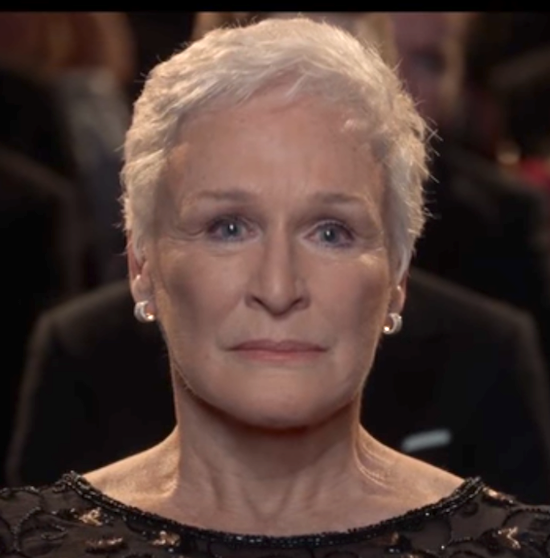
So it’s time again, time to clench my teeth, hoping you don’t screw up, Academy. Don’t blow it, like you did with Thelma Ritter. Don’t blow it, like you did with Barbara Stanwyck. Don’t blow it, like you did with Cary FRICKIN Grant, the only classic movie star so many non-black-and-white film buffs even know. Don’t make her the Academy’s biggest loser, and add to that inexcusable 7 noms and 0 current wins record. GIVE GLENN CLOSE HER OSCAR ALREADY!

Would it be a consolation prize? No. She’s stunning in The Wife, mesmerizing in a deeply human performance of repression and silence and pent-up rage. This role depends on subtlety. Not many actresses of any age, of any time period, could make such a seemingly resigned, still woman look riveting. But Glenn Close? Let’s think about that for a moment…..

Did she fascinate you with her evil machinations in Dangerous Liaisons? Scare the hell out of you in Fatal Attraction? Did you love her in the criminally underrated The Paper? Were you touched by her sweetness in The Natural and The Big Chill? Did you fear for her in The Jagged Edge? Did you enjoy her bitter, yet resigned take-down of her former lover in Le Divorce? (And yes, even in a bit part, you can’t take your eyes off of her.)

I like Olivia Colman, but her weird, histrionic role in The Favourite is not the kind of part that deserves your Oscar. I adore Lady Gaga. But this was a good freshman performance, not an award-winning one. Melissa McCarthy should be your number two, with her deeply funny, deeply sad performance of a woman at the end of her resources. (I admit I have yet to see Yalitza Aparicio’s performance, but I know she’s not one of your frontrunners). But the only living actress besides Close who can show the full range of human experience with a few expressions, gestures, and lines–Meryl Streep–has been showered with THREE of your Oscars. Close? Not a one.

Here’s the thing: The Wife wasn’t watched by nearly as many people as some of the other films whose actresses are up there on the list. And yet, still nominated. WHY?

Because she’s GLENN CLOSE, Academy! The badass actress who OWNS every role she takes, who can make you watch (and yes, just try to resist it) seasons of a show you barely like just to catch her expressions, who can convince you into viewing a movie about dalmatians—dalmatians!–just to catch her take on Cruella de Ville.

Academy, don’t shame yourself, as you did with Close’s partner in non-winning Oscar noms, the wonderful Thelma Ritter (she, like Deborah Kerr, of the 6-0 record). You’ve got a chance not to wait till that lifetime oops-we-screwed-up prize. It’s an easy choice, Academy.

Just give Close the Oscar already.

Share
Posted in: 1990-current films, Oscars Tagged: Deserve, Gaga, Glenn Close, Oscar, The Wife

The Long Goodbye Film: It’s All about the Cat

01/20/2019 by leah@carygrantwonteatyou.com 2 Comments

**spoilers***

I was afraid to watch The Long Goodbye. It’s a favorite book, so much so that I starting drinking gimlets for a couple years, even though I hate gin*. It was an odd affectation. Even I knew drinking a grandpa concoction wouldn’t impress anyone, and would only mystify bartenders. But it gave me some secret romantic joy to drink one, even on non-memorable nights (and many nights in my late 20s were just that). With its appreciation for short-lived and missed connections, Raymond Chandler’s masterpiece is great stuff for those in transition, those who are watching peers’ lives move on without them. And what could the film do, but ruin my book? Who could make sense of such a meandering, mood-based affair, with more characters and tangents than any two-hour film could master? And The Long Goodbye (1973) wasn’t exactly produced in my favorite film era.

But I’d heard there was a cool cat scene in the opening of the film, and since Chandler loved cats (which of course, I knew), I thought there might be something there. And with Leigh Brackett listed as a screenwriter, I had hope. For the first half hour, I was grinning. Any cat owner has to love Marlowe’s (Elliott Gould’s) demanding animal, and any cat owner will sympathize with the the way Marlowe tries to fake the cat out with a different brand of cat food than he/she expects with a can switch.

Marlowe’s scene with the cops when he’s refusing to give his friend Terry up is so funny (those fingerprint ink antics!), and the way the story is updated for current viewers wowed me. Something about the dreamy landscape and shots, the way Marlowe doesn’t fit in with the crooks and the hippies (including his gratuitously topless neighbors) around him really captures the loneliness of Chandler’s famous character and the “mean streets” he inhabits. His loyalty to his cat captures his sweetness, his romanticism, and his befuddlement with the world around him. That’s why at first I bought into the film’s characterization, as Marlowe mutters to himself and treats most people around him well in spite of poor treatment. There’s always something sad and noble about him. As Chandler wrote, his PI “must be the best man in his world and a good enough man for any world.”

In terms of acting, Gould is lovable in this movie. He doesn’t embody Marlowe’s pain, as Humphrey Bogart did. But unlike Dick Powell’s annoyingly slick Marlowe in Murder, My Sweet, he’s believable and much more compelling than I expected (even if his toughness in the face of violence isn’t quite convincing).

But my mood toward the movie began to change about a third of the way in. Part of seeing the world through Marlowe’s eyes is finding something redeemable in those others have dismissed–Wade’s honesty, Eileen’s idealism, Mendy’s loyalty, Terry’s quaint good manners. Yet none of these characters are anything but one-notes in the film; none of them are even remotely redeemable. Altman’s violent take on The Big Heat‘s (1955) girlfriend treatment felt like a rip-off rather than a homage, and Marlowe’s lack of sympathy for her was baffling. I understood dispensing with the Linda character, but why not that sweet, yet hopeless tribute to Terry in the bar? Marlowe could have just had a conversation with the bartender. It would have SET UP that ending. Just knowing he was friends with Terry for a long time (a change from the book) wasn’t enough.

As for the plot, well, Chandler was famous for admitting to the convoluted nature of his plotting (though as anyone who reads The Big Sleep knows, censorship is a far greater reason for the plot’s confusing nature in the film.) Perhaps Chandler’s alleged plot aversion is what attracted Altman. As far as I was concerned, Altman could play with the plot all he wanted if he made it interesting. But he didn’t. And turning Mendy into such a loathsome bad guy made the story feel derivative in a boring way.

The ending was undoubtedly shocking and clever, and I liked that the cat became a symbol of Marlowe’s treatment and expectations, but look, if you want Marlowe this resentful about others’ treatment of him, you’re going to have to do more to foreshadow it. Marlowe is pretty much ALWAYS treated poorly in Chandler’s books–by nearly everyone. That isn’t enough to make him crack. And Gould doesn’t seem resentful as Marlowe; he seems naïve and stupid instead.

For Marlowe to betray his knight errant traits (what makes him admirable), and instead focus only on his own resentments, to have him flat out MURDER a former friend, you have to do more to make that betrayal convincing. What’s so lovable about him in the book is that he knows Terry’s pretty worthless, but cares about and defends him anyway, just as the crooks do. Terry’s war record (completely absent here) also makes him more sympathetic. Marlowe is not–as in the movie–shocked to discover Terry’s even more worthless as a friend than he thought–even if he’s not (in the book) a murderer. Marlowe is RESIGNED, expects little of others. In the film, Marlowe is anything but.

There is, of course, something fascinating in Altman essentially killing off the former PI character Chandler (and his peers) made famous. To take away his ethics is truly to murder the man. But I’m not going to believe (as Altman argues in this film) that such a character is unrealistic in today’s world without a better cinematic argument than the character floundering around (as Marlowe always did for a bit). The same year as this film came out, Robert Parker introduced Spenser to the world, a clear homage to Marlowe (so much so that Parker would later complete Chandler’s unfinished novel). And the 80s TV show of the Spenser character was still a decade after Altman’s film. Parker made a Marlowe type a modern man quite successfully (though Spenser was a significantly happier character than his predecessors).

Is it worth it to watch the film? Yes. But how I wish Altman had used that cat like he should have. The cat’s addition was, after all, brilliant. What if Marlowe had shown more love for the cat throughout? Shouldn’t the cat have come up more than a couple times after the beginning, given how crucial Marlowe’s devotion becomes at the end? I felt like Billy Madison as I watched Marlowe in the film. (In that dopey movie, Adam Sandler is outraged that a dog owner would wait for a lost dog’s return rather than making even a cursory effort to find it.)

What if the cat had starved while Marlowe was in jail for Terry, and the detective found out? Then that ending would be not about himself, but about the cat, the only connection he really had—just as Marlowe (in the book) is so lonely that Terry’s chance connection with him means more than anyone understands. Throughout the book and movie, Marlowe insists that Terry could have murdered his wife, but not as brutally as she’d been killed. Like him, I contend that Marlowe wasn’t the type to kill someone over his own hurts. But over his cat’s? Maybe.

*Gimlets symbolize Marlowe’s relationship with Terry.

Share
Posted in: 1970s films, Anti-Romance films, Drama (film), Film Noir/Crime/Thriller & Mystery, Uncategorized Tagged: cats in film, Elliott Gould, Marlowe, Raymond Chandler, Robert Altman, Robert Parker, The Long Goodbye

New Year’s Aspirations, Inspired by Classic Stars

01/08/2019 by leah@carygrantwonteatyou.com 6 Comments

This year, I want to dance with even half the joy of Rita Hayworth…

act a hundredth as boldly as Mae West on her weakest day…

enjoy foolishness as much as William Powell…

and live with the intensity of Barbara Stanwyck.

What a fabulous year it will be if I do.

Share
Posted in: 1930s films, 1940s films, Humor, Mae West Moments Tagged: Classic Movie Stars, New Year's Resolutions

Men Who Love Too Much in Classic Film

11/18/2018 by leah@carygrantwonteatyou.com Leave a Comment

Continuing our theme on characters who love too much, Grace Collins of True Stories of Tinseltown and I turned our attention from women to men, especially Edward G. Robinson’s sad sap Chris in Scarlet Street, Claude Rains’s hoodwinked Alexander in Notorious and bad con artist Johnny of Suspicion (whose love runs to money rather than females). Of course, we took some detours too, commenting on the newest A Star Is Born and how much we’d suck as spies.

Check out the podcast here, here, or here.

And definitely enjoy Grace’s other wonderful posts and other podcasts:

www.facebook.com/truestoriesoftinseltown/?ref=br_rs
www.inyourfacewithdonnieandgrace.com/news
www.truestoriesoftinseltown

Share
Posted in: 1940s films, Film Noir/Crime/Thriller & Mystery, Humor Tagged: Cary Grant, Claude Rains, Edward G. Robinson, film review, Grace Collins, men who love too much in film, Notorious, Scarlett Street, Suspicion, True Stories of Tinseltown podcast
« Previous 1 2 3 4 5 6 7 8 9 10 11 12 … 23 24 25 26 27 Next »

Recent Posts

  • 100 Years Later, Still Scary: Dr. Caligari
  • Escaping Out of the Past (1947)
  • A Weeper for Those Who Love Jerks
  • Thank You, Academy, for Not Infuriating Me
  • Challengers (2024) Is a Bad Movie

Subscribe to Blog via Email

Enter your email address to subscribe to this blog and receive notifications of new posts by email.

Categories

  • 1920s films
  • 1930s films
  • 1940s films
  • 1950s films
  • 1960s films
  • 1970s films
  • 1980s films
  • 1990-current films
  • 2020s films
  • Action & Sports Films
  • Anti-Romance films
  • Blogathons
  • Childfree
  • Comedies (film)
  • Drama (film)
  • Feminism
  • Femme fatales
  • Film Noir/Crime/Thriller & Mystery
  • Gloriously Silly Scenes
  • Horror
  • Humor
  • Mae West Moments
  • Musicals and dancing films
  • Oscars
  • Random
  • Romance (films)
  • Romantic Comedies (film)
  • The Moment I Fell for
  • Turn My Sister into Classic Movie Fan
  • TV & Pop Culture
  • Uncategorized
Share
Classic Movie Blog Hub Member

Recent Comments

  • leah@carygrantwonteatyou.com on Meg Ryan’s Fate Foretold in Joe Versus the Volcano
  • Ryan on Meg Ryan’s Fate Foretold in Joe Versus the Volcano
  • leah@carygrantwonteatyou.com on 100 Years Later, Still Scary: Dr. Caligari
  • The Classic Movie Muse on 100 Years Later, Still Scary: Dr. Caligari
  • leah@carygrantwonteatyou.com on 100 Years Later, Still Scary: Dr. Caligari

Archives

  • November 2025
  • September 2025
  • May 2025
  • March 2025
  • January 2025
  • November 2024
  • August 2024
  • July 2024
  • May 2024
  • March 2024
  • February 2024
  • December 2023
  • November 2023
  • October 2023
  • September 2023
  • August 2023
  • July 2023
  • May 2023
  • April 2023
  • March 2023
  • January 2023
  • December 2022
  • November 2022
  • September 2022
  • July 2022
  • May 2022
  • April 2022
  • March 2022
  • February 2022
  • October 2021
  • September 2021
  • April 2021
  • March 2021
  • February 2021
  • December 2020
  • October 2020
  • September 2020
  • July 2020
  • May 2020
  • April 2020
  • March 2020
  • February 2020
  • December 2019
  • October 2019
  • September 2019
  • June 2019
  • May 2019
  • April 2019
  • February 2019
  • January 2019
  • November 2018
  • September 2018
  • July 2018
  • June 2018
  • May 2018
  • April 2018
  • March 2018
  • February 2018
  • January 2018
  • November 2017
  • September 2017
  • August 2017
  • July 2017
  • June 2017
  • May 2017
  • April 2017
  • March 2017
  • February 2017
  • January 2017
  • December 2016
  • November 2016
  • October 2016
  • August 2016
  • July 2016
  • June 2016
  • May 2016
  • April 2016
  • March 2016
  • February 2016
  • January 2016
  • December 2015
  • November 2015
  • October 2015
  • September 2015
  • August 2015
  • July 2015
  • June 2015
  • May 2015
  • April 2015
  • March 2015
  • February 2015
  • January 2015
  • December 2014
  • November 2014
  • October 2014
  • September 2014
  • August 2014
  • July 2014
  • June 2014
  • May 2014
  • April 2014
  • March 2014
  • February 2014
  • January 2014

Meta

  • Log in
  • Entries feed
  • Comments feed
  • WordPress.org

Copyright © 2025 Cary Grant Won't Eat You.

Church WordPress Theme by themehall.com