Cary Grant Won't Eat You

Classic movies for phobics

  • About
  • eBooks
  • Previous Blogathons
Classic movies for phobics

Humor

The Gatsbys of Wes Anderson Films: Climbing above Archie Leach

04/10/2014 by leah@carygrantwonteatyou.com Leave a Comment

M. Gustave (Ralph Fiennes); the impeccable, refined, and deeply sketchy hero of The Grand Budapest Hotel; is the kind of character who made me fall for Wes Anderson films: men with a flair for self-creation so extreme that I can’t help rooting for them because my own imagination, by comparison, seems embryonic.

In my favorite of Anderson’s films, Bottle Rocket, the hero is Dignan (Owen Wilson), whose first steps in a 50-year plan of becoming a criminal mastermind involve stealing from friends’ houses for practice, moving on to a bookstore heist wearing nose tape, and then promptly going on the lam. No unimportant detail escapes Dignan’s dedication to this persona: note the binoculars he uses when springing his friend Anthony (Luke Wilson) from a voluntary stay at a mental health facility.
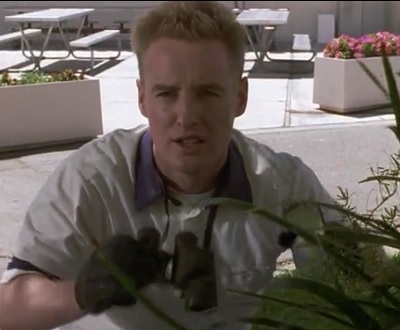
Owen Wilson

“Look how excited he is,” says Anthony when his doctor protests the sheets hanging from the window. “I gotta do it this way…I have to climb out. It’s so important to him.” Dignan’s enthusiasm is so contagious that Anthony continues to go along with his buddy’s increasingly ill-conceived plans just because he can’t bear to deflate him. And when you hear Dignan’s prattle and see that grin, you can’t blame him. (Admittedly, I think Owen Wilson, who co-wrote the film, largely responsible for the success of this character; his considerable charm made even the overrated Midnight in Paris palatable.)

And, of course, there’s Max Fischer (Jason Schwartzman) in Rushmore, who puts more energy into his school activities than the rest of the student body combined. As Anthony Lane put it, “To say [Max] attends Rushmore is like saying the Holy Father hangs out at the Vatican: Rushmore could exist without Max, but there would be no point to the place.”

Rushmore

In the newest Anderson installment, M. Gustave’s considers the care of his establishment, guests, and the new bell boy of paramount importance. He is the platonic version of a hotel concierge, a fussy perfectionist so accommodating he knows guests’ wishes in advance, and he’ll go to absurd (and disturbing) lengths to satisfy them. But unlike with most of Anderson’s heroes, M. Gustave’s refined veneer slips regularly in The Grand Budapest Hotel. In difficult situations, coarse language breaks through the stylized version of himself he’s created, and these curious, funny instances cause viewers to wonder just who this guy is.
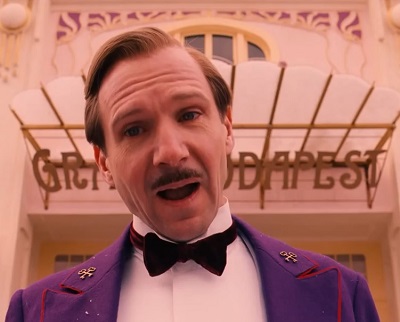
Fiennes

That’s probably why the film reminded me of Cary Grant’s classic comment about the style and sophistication that became synonymous with his name: “Everyone wants to be Cary Grant. Even I want to be Cary Grant.” Because of course, he wasn’t. Born Archibald Leach in Bristol, England, Cary Grant was poor, largely abandoned by his family, and making a living as a juggler/acrobat by his early teens. Not exactly the pedigree we all might expect given his dashing presence on the screen.

I think what I love so much about Anderson’s heroes—his Gustaves, Maxes, and Dignans—is also what I admire most about Grant: not only do these heroes envision an impossibly large, glorious version of themselves, but they also manage, despite the many obstacles Anderson—and life—stacks up against them, to pull it off.

Share
Posted in: Comedies (film), Humor Tagged: Cary Grant, Gatsby, Owen Wilson, The Grand Budapest Hotel, Wes Anderson

How to Crash a Party, Claudette Colbert Style

04/03/2014 by leah@carygrantwonteatyou.com 4 Comments

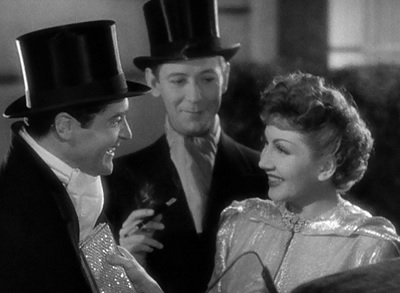
Want to crash a party, but not sure how? Mimic Eve Peabody (Claudette Colbert) in Midnight.

Enter with Attitude
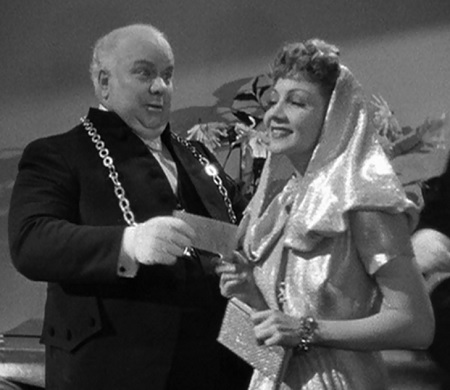
You don’t have an invite? So what. A pawn ticket will do. Who looks at a piece of paper when a woman is sufficiently glamorous?

ClaudetteColbertcrashing
Draw Attention to Yourself
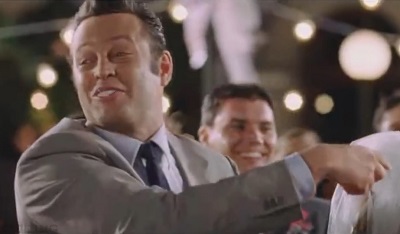
You might think you’d be safer slipping into the background, but who will question your presence if you’re as much fun as this guy?

VaughnWeddingCrashers
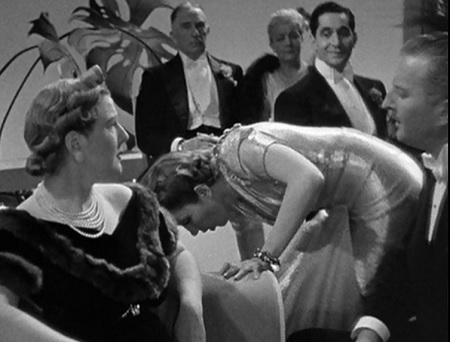
And who will kick you out if, Jennifer Lawrence-style, you make not one, but two ungraceful attempts to find seating, ensuring that other guests will not be the sole klutzes and/or drunken fools of the evening?

trippingClaudetteColbert
Relax
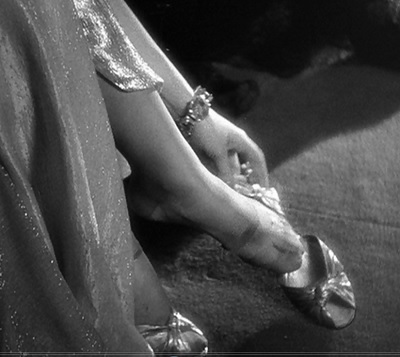
You’re in the door, so let the nerves go. After all, what’s to fear? Being caught could be amusing. Settle into some cushions, smile, kick off those high-heeled shoes.

shoes
Be a Generous Guest
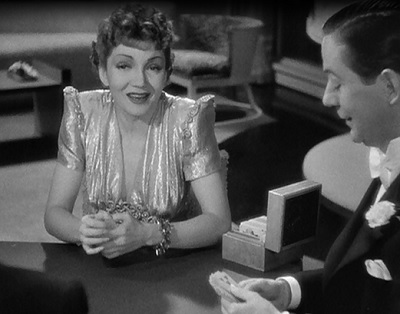
Make sure you’re the kind of guest the host/hostess wants back. Buy gifts for the couples whose receptions you crash, like a guy from my high school did. Lead the chicken dance, cut the cake, make balloon animals. (In other words, channel Vince Vaughn in Wedding Crashers.) Join the bridge game when a mysterious man asks you, especially if he has a good line, as he does when meeting Eve: “You look charming, you look bored, you look as though you wouldn’t trump your partner’s ace.”

cardsClaudette
Play it right, and you could end the night like this:

Colbertcharming

Share
Posted in: 1930s films, Humor, Romantic Comedies (film) Tagged: Claudette Colbert, how to, party crashing, Vince Vaughn

The Death of the Marital Rom-Com: Where Have All the Toppers Gone?

03/10/2014 by leah@carygrantwonteatyou.com 6 Comments

When is the last time you watched a rom-com about a married couple? Aside from the occasional indie and rare mainstream flick, Hollywood seems to have retired this subject matter, despite the success of TV shows such as Mad about You, Everybody Loves Raymond, and The King of Queens.

Yet I came up with this list of famous 30s and 40s rom-coms about married couples in just two minutes:

Married: Topper, Mr. Blandings Builds His Dream House, My Favorite Wife, and I Was a Male War Bride
Separated/Divorced: The Awful Truth, The Philadelphia Story, and His Girl Friday.

Those familiar with these titles might notice that these are just some of the marital rom-coms starring Cary Grant. In comparison, I came up with three mainstream marital rom-coms in the past three decades altogether—with help.

Even if married couples in 2014 are more likely to attend animated flicks with their kids, as my husband theorized, that doesn’t explain what Hollywood is producing for those without kids. And I’m not buying that we’re all boring enough to only like films about ourselves. We don’t all cook meth in our basements or fight to the death in dystopian universes. We don’t watch The Walking Dead or Game of Thrones because they remind us of barbeques with our buddies. I discovered most of my favorite marital rom-coms when single. Is it possible that Hollywood thinks singles’ imaginations fertile enough to envision shooting webs out of their wrists or being born in Middle Earth, but not to conceive of being married?

Whatever the reasoning for the endangerment of the marital rom-com, the result is unfortunate: there’s a sameness to romantic comedies now that simply didn’t exist in the 30s or 40s. While there are only so many ways we can meet and fall in love, there is an infinite variety of methods for teasing, imitating, and torturing those we know well.

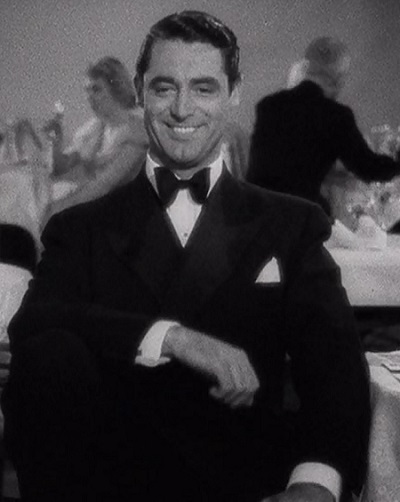
One of Cary Grant’s best marital rom-coms is The Awful Truth (1937), a film my friend Tonya introduced me to many years ago that I’ve been recommending ever since.  Grant’s and costar Irene Dunne’s impeccable timing and believable performances make this one of the funniest screwball comedies I’ve ever seen.

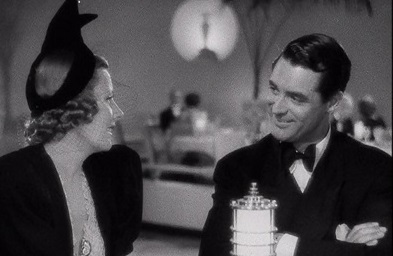
Dunne and Grant dazzling in The Awful Truth

Dunne and Grant dazzling in The Awful Truth

In the film, Jerry (Grant) and Lucy (Dunne) suspect one another of infidelity. Lucy decides to trust Jerry, anticipating Elvis’s famous song about suspicion in explaining her reasoning. Jerry, however, can’t trust her, and the two divorce. But since they’re both still in love, they can’t help sabotaging one another’s new relationships.

I have so many favorite moments from this film. One is when Jerry plays a song for his dog (during his custodial pet visit) to annoy Lucy as she’s meeting her new fiancé’s mom. In another Jerry pays the orchestra conductor to re-play a song just to watch his wife trip as her fiancé tries to lead her in a rambunctious dance.

Jerry appreciating the dance moves of Lucy's fiancé

Jerry appreciating the dance moves of Lucy’s fiancé

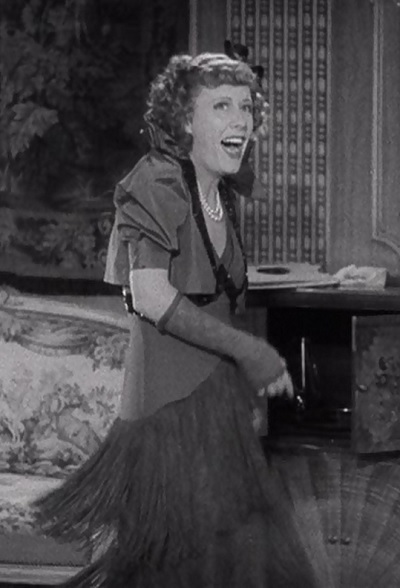
And there’s the scene when Lucy, aware of Jerry’s pride, shows up at his fiancée’s house pretending to be his wasted sister.

Lucy humiliating Jerry

Lucy humiliating Jerry

She begins the visit by demanding a drink and ends by performing a Marilyn Monroe-over-grate move for Jerry’s soon-to-be in-laws (years before that famous siren’s).

But perhaps the scene I enjoy most is when Jerry gushes about how much his hard-partying wife will appreciate Oklahoma, where her fiancé lives:

“Lucy, you lucky girl,” Jerry says. “No more running around the night spots. No more prowling around in New York shops. I shall think of you every time a new show opens and say to myself, she’s well out of it….”

“I know I’ll enjoy Oklahoma City,” Lucy replies stiffly.

“But of course,” he answers, “and if it should get dull, you can always go over to Tulsa for the weekend.”

Contrast these scenes with those in 1997 rom-com My Best Friend’s Wedding, technically a film of the single-gal variety, but adopting some situations from the marital rom-com. Yes, Rupert Everett is glorious in it, and Cameron Diaz and Julia Roberts are effective rivals.

Diaz confronting Roberts in My Best Friend's Wedding

Diaz confronting Roberts in My Best Friend’s Wedding

But the message is appalling: you’ll lose the guy if you’re dedicated to your profession and unwilling to ditch your education/career for his. No matter, therefore, how funny some of Roberts’ antics seem, I can’t laugh at the antiquated, offensive cliché of the desperate single woman, as the film asks me to do. But I do laugh at the partners in The Awful Truth, both so anxious to get each other back that they’re willing to forgo pride to do so. Due to his unreasonable suspicions, Jerry looks like more of a buffoon than Lucy, but neither comes out of the experience unscathed. (Of course, since Lucy trusts Jerry, we don’t know whether he just likes his space, or has cheated and the filmmakers have given him a pass for sexist reasons.)

The Awful Truth is just one of many delightful 30s marital rom-coms. There are so many more. Until current Hollywood producers come to their senses and resuscitate the subgenre, you’ll be stuck with the half-attempts at marital rom-coms like My Best Friend’s Wedding, in which the humor is only at the woman’s expense. (Forget viewing films about long-term relationships between unmarried couples–an even rarer subgenre.) So give some classic marital comedies a try. You’ll be glad you did.

Incidentally, next Sunday and Monday (March 16 and 17th), I’ll be participating in a classic detective blogathon hosted by Movies Silently. Please check out my entry in this Sleuthathon at my blog next week. I’ll be reviewing The Mad Miss Manton (1938), featuring Barbara Stanwyck as a Sherlock Holmes-Paris Hilton hybrid. And be sure to view the entries of my much more knowledgeable blogging peers!

detective-blogathon-thin-man-small

Share
Posted in: 1930s films, 1990-current films, Comedies (film), Humor, Romantic Comedies (film) Tagged: Cary Grant, Irene Dunne, Julia Roberts, My Best Friend's Wedding

Three Hypocritical Oscar Moments

03/05/2014 by leah@carygrantwonteatyou.com Leave a Comment

1. Ellen Insulting Her Wife’s Arrested Development Costar
I don’t know about you, but if my wife had been flayed in the press for her plastic surgery, I would avoid digs like the one Ellen gave Liza Minnelli at Sunday’s Oscars.

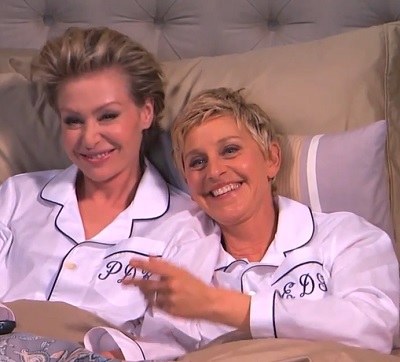
Perhaps pre-spat?

Kimmel’s Spoof Oscars Night: Perhaps Pre-Spat?

While Portia de Rossi didn’t seem offended, it’s hard to believe a woman who has written a book about the suffering she endured to look perfect would approve. I would have expected this kind of behavior from Seth MacFarlane, not from the usually affable Ellen. Talk about marital insensitivity.

2. Oscar Commentators Praising “Not Looking Old” and “Growing Old Gracefully” Simultaneously
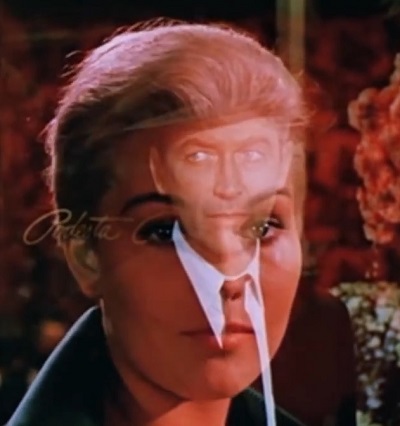
The online attacks on Vertigo (1958) star and Oscar presenter Kim Novak for her looks were appalling, especially since this is a woman who left Hollywood at the peak of her fame and lived privately for decades because she couldn’t take the objectification she experienced as a bombshell in Tinseltown. She’s been lured back into the limelight in her eighties, and look how she’s treated. Because for what would we judge a woman who starred in the film now ranked best of all time but her looks?

Vertigo

Vertigo

Chicago columnist Mike Royko wrote that 1976 Oscar viewers were outraged about seeing silent film star Mary Pickford (who had “grown old gracefully”) on their screens because they wanted to remember her cute and pretty, like this:

Mary Pickford (right)

Mary Pickford (right)

Royko didn’t understand why people preferred “facial skin stretched out like a drumhead.” “They cheer the illusion of Zsa Zsa,” he wrote, “but they flinch at the reality of Mary Pickford.” In 2014 an elderly woman can’t get away with natural aging or plastic surgery unless her surgeon is some kind of Houdini. Novak had the right idea originally—just get out.

3. Bestowing Honor by Awarding on the DL
Do you feel honored for a lifetime of achievement if the Academy deems the moment you’re given the statue not exciting enough for the big night? I was reminded of host Chris Rock’s reaction in 2005 when the technical awards were given in the aisle and sometimes en masse instead of individually onstage: “Next they’re gonna give the Oscars in the parking lot. It’ll be like a drive-through Oscar lane. You get an Oscar and a McFlurry and keep on moving.”

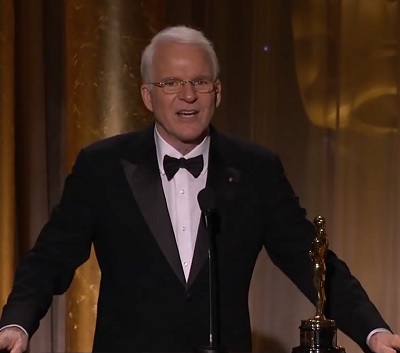
I found the choice to separate the honorary and competitive awards especially disturbing given that the former are so often given to those the Academy considers unworthy of notice for years and belatedly realizes they unjustifiably snubbed; such as one of this year’s honorees, Steve Martin, and Cary Grant (yes, the only classic film star many people can name).

Steve Martin, honored at separate event

Steve Martin, honored at separate event

Unsurprisingly, honorary Oscars are frequently awarded to those who mainly appear in/write/direct comedies, so I thought Jim Carrey’s jokes and Bill Murray’s shout-out to Harold Ramis were timely reminders that comedians receive no credit unless they appear in dramas—and usually not then—until the Academy’s honoree-may-be-near-death-oops awards, honors that now aren’t even bestowed on the night itself. Classy.

What bothered you most about this year’s Oscars?

Share
Posted in: 1990-current films, Humor, Oscars, Uncategorized Tagged: Ellen, Honorary Oscars, Kim Novak, Liza Minnelli, Mike Royko, Oscars, Portia de Rossi, Steve Martin, Vertigo

No Oscar Love for Harold Ramis: The Academy, as Humorless as Ever

02/27/2014 by leah@carygrantwonteatyou.com 6 Comments

Harold Ramis, whom President Obama labeled “one of America’s greatest satirists,” died this week shortly before this Sunday’s Oscars. His list of co-writing credits is astonishing: Animal House, Stripes, Caddyshack, Ghostbusters, Groundhog Day. He also directed the latter, Caddyshack, and Vacation. I’m sure the Academy will clap enthusiastically this weekend when his face appears in the “In Memoriam” tribute, but they won’t express what they should: regret. Ramis never won an Oscar; in fact, he was never even nominated.

Harold Ramis: won A BAFTA, but no Oscar

Harold Ramis: won A BAFTA, but no Oscar

In the years the Academy snubbed Ramis, comedies did make appearances in the original screenplay category, including Private Benjamin, Splash, Beverly Hills Cop, Sleepless in Seattle, and Dave.  But many of the nominations were of grim films you didn’t know then, much less now. The following were the original screenplay winners the years Ramis could have been nominated:

Coming Home (Animal House), Melvin and Howard (Caddyshack), Places in the Heart (Ghostbusters), and The Piano (Groundhog Day).

Most Oscar nominees for original screenplay are not bad movies; the Academy saves their embarrassing choices for the best film category (Crash, anyone?) But have these screenplay winners stood the test of time? Have they influenced you—or anyone you know—in any way?

Here’s a test for you:

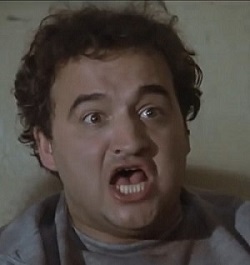
  • Can you quote from it?

Belushitoga

  • Do you adopt cultural affectations from it (perhaps Roman)?
  • Have you sung along with it?
  • Does it give you more understanding for the weak kid or the outsider, perhaps make you feel more comfortable challenging authority? (See this great Ramis bio.)

Stripes

  • Does it bring back childhood memories that make you grin, maybe your best Halloween costume ever?

Ghostbusters

  • Have you lost count of how many times you’ve seen it?
  • Do you (be honest) feel tempted to dance with a certain character’s nemesis during the closing scene?

gopherCaddyshack

Of course, the Academy—and critics in general—have long shown more appreciation for drama than comedy, failing to see in it the far subtler, and often more trenchant and artful cultural critique it can provide. In 1941, Preston Sturges, a writer/director who, like Ramis, was fond of what’s often dismissed as “adolescent” humor, wrote an entire film addressing the greater appreciation given to drama, Sullivan’s Travels. But unlike with the usual Oscar winners, this time, the case for comedies is much more persuasive.

It begins with a scene between a director (Sullivan, played by Joel McCrea) and his bosses (Mr. LeBrand and Mr. Hadrian). Sullivan has decided to write a serious film, which his bosses fear will be less profitable than his usual comedies. Why not do a sequel to your Ants in Your Plants of 1939 instead? they ask him. His movies are inspiring, they tell him. They don’t, as Hadrian puts it, “stink with messages.”

Sullivan (Joel McCrea in the middle) with his bosses

Mr. LeBland, Sullivan (Joel McCrea) and Mr. Hadrian

Sullivan tries to argue them into supporting his new effort, showing them a scene from his O Brother, Where Art Thou? (yes, Coen fans, that’s where they got it)

Sullivan: “You see the symbolism of it?….It teaches a lesson, a moral lesson, it has social significance.”

Hadrian: “Who wants to see that kind of stuff? It gives me the creeps.”

….

Sullivan:  “I want this picture to be a commentary on modern conditions, stark realism, the problems that confront the average man.”

LeBrand: “But with a little sex.”

….

Hadrian: “How about a nice musical?”

Sullivan: “How can you talk about musicals in a time like this, with the world committing suicide, with corpses piling up in the streets?…..”

Hadrian: “Maybe they’d like to forget that.”

After Hadrian convinces Sullivan he’s too inexperienced with suffering to direct movies about it, the latter decides to go on a quest to learn about poverty firsthand. A despondent LeBrand barks at his assistant, “Get me a copy of that O Brother, Where Art Thou? I guess I’ll have to read it now. Make that two copies.  Why should I suffer alone?”

By the end of the movie, Sullivan agrees with his bosses that he should keep directing comedies. He discovers that his movies, silly as they may be, have something to offer that dramas never will: “There’s a lot to be said for making people laugh. Did you know that’s all some people have?”

In fact, Sturges begins the movie with a dedication that could have been written for Ramis: “To the memory of those who made us laugh….in all times and in all nations, whose efforts have lightened our burden a little….” Not a bad epitaph, from one comedic genius to another.

Incidentally, Sullivan’s Travels (1941) ranked on the AFI’s top 100. But you guessed it: Not a single Oscar nomination.

Share
Posted in: 1980s films, 1990-current films, Comedies (film), Humor, Oscars, Romantic Comedies (film), TV & Pop Culture Tagged: Academy Awards, Animal House, Bill Murray, Caddyshack, Ghostbusters, Groundhog Day, Harold Ramis, Preston Sturges, Sullivan's Travels, The Oscars

3 Classic Anti-Valentine’s Films for Sex and the City Fans

02/13/2014 by leah@carygrantwonteatyou.com 6 Comments

Single or attached, I’ve always loathed Valentine’s Day. When single, I’ve wondered why our couples-obsessed culture needs a day devoted to twosomes. When attached, I’ve pondered why I should celebrate en masse what’s supposed to be intimate. Therefore, my three recs today are for those who share my distaste for the day:

Female Bonding: Stage Door
For those who’d rather split a few bottles of wine with pals than brave pink-and-red-bedecked nightclubs this Friday, I recommend Stage Door, a film centered on women who live in an all-female boarding house as they try to make their big breaks on the stage.

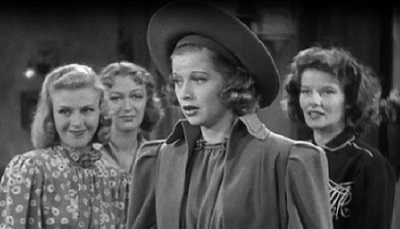
The heroines’ choice to remain single (and have casual boyfriends only) is celebrated rather than reviled by the film. If anything, the film mocks marriage. But don’t just view Stage Door (1937) for its politics; watch it to see the phenomenal cast interact: Ginger Rogers, Katharine Hepburn, Lucille Ball, Eve Arden. (The latter you may recognize as the principal in Grease; in her youth, she was always the smart-talking sidekick.)

Rogers, Arden, Ball, and Hepburn

Rogers, Arden, Ball, and Hepburn

The dialogue is so slick and cynical and quick that you’ll have a hard time keeping up with the one-liners, as when wealthy Terry’s (Katharine Hepburn’s) haughty tone annoys her impoverished fellow residents. Jean (Ginger Rogers) is not one to let an insult slide. When Terry snootily states, “Unfortunately, I learned to speak English correctly,” Jean fires back, “That won’t be of much use to you here. We all talk pig Latin.”

While the more famous classic movie about female friendships, The Women (1939), favors marriage with unfaithful partners over relationships with backbiting friends, this feminist flick celebrates the humor and loyalty between single women. In fact, I would argue that Stage Door’s women are in some ways more liberated than those in Sex and the City. Watch and see if you agree.

More of a feminist: Jean Maitland or Carrie Bradshaw? (Ginger Rogers & Sarah Jessica Parker)

More of a feminist: Jean or Carrie?


Revenge as Art:  Gilda
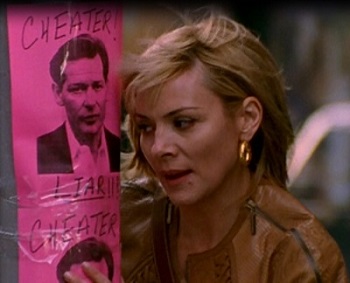
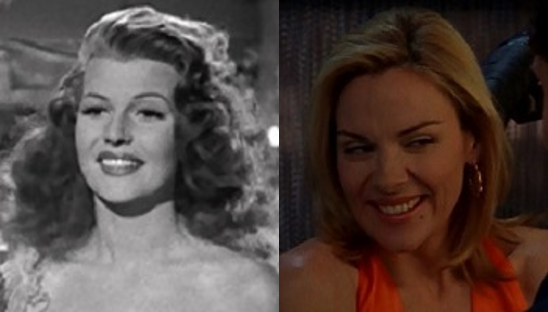
I enjoyed Samantha Jones’s (Kim Cattrall’s) revenge on boyfriend Richard Wright for his infidelity in Sex and the City: the dirty martini in his face, the papering of the city with posters describing his behavior.

Samantha in revenge mode

Samantha in revenge mode

But this kind of takedown is kitten play compared to the work of Rita Hayworth in Gilda.

Gilda, who calls herself the "Bar Nothing," and her spiritual descendant, Samantha Jones

Gilda, the “Bar Nothing,” and her spiritual descendant, Sam

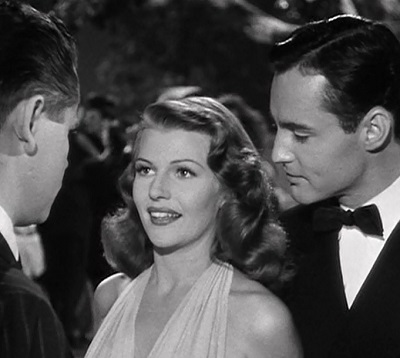
Like Samantha, Gilda (Hayworth) is in full command of her sexuality; it’s not difficult to discover why this WW II pinup was dubbed “The Love Goddess.” But her treatment of her ex, Johnny, is far more ruthless than her modern counterpart’s. First, she marries Johnny’s boss; then, she flaunts her affairs with other men to torment him further.

Gilda (Hayworth) torturing her ex

Gilda (Hayworth) torturing her ex

Gilda is so skillful a manipulator that you root for her to get what she wants, even if the ex she desires is no prize (and no mean manipulator himself).

Here’s an anti-Valentine’s Day conversation if ever there were one:

Gilda: “Would it interest you to know how much I hate you, Johnny?”
Johnny: “Very much.”
Gilda: “I hate you so much I would destroy myself to take you down with me.”

I think Samantha would be impressed.

Exploiting Men: Baby Face
In an early episode of Sex and the City, “The Power of Female Sex,” Carrie’s fling has left a tip on her bedside table and she’s feeling ill at ease with the implications. The four friends discuss whether it’s ever acceptable to use your sexuality to get ahead. Barbara Stanwyck’s character in Baby Face (1933) has no such qualms: She leaves her hometown for NYC with the aim of doing just that.

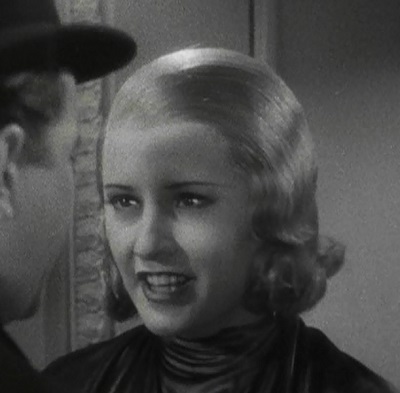
The shocks accumulate quickly as you watch Baby Face: Lily’s (Stanwyck’s) father has been prostituting her since she was fourteen. A grandfatherly figure in her dad’s speakeasy recommends she leave home to sexually exploit men for personal gain, quoting Nietzsche to back his case.  Once in New York, Lily takes quick steps to follow his advice, seducing the HR assistant in a bank to get a job, and then sleeping her way floor by floor to the top. (The camera helpfully pans up to highlight each floor as she ascends.)

Lily (Stanwyck) on the make

Lily (Stanwyck) on the make

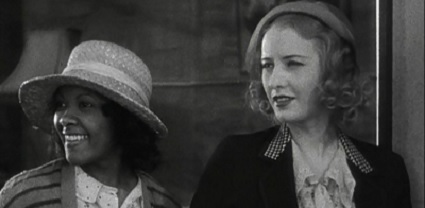
You might expect the movie to make the heroine suffer for her behavior, given the date of this film, but she is unmoved by the heartbreak and eventual tragedy she leaves in her wake (among her victims is a smitten John Wayne). Men have used her all her life. Lily figures it’s her turn, and the film clearly sympathizes with her reasoning. She calmly goes about her business of seducing men, accumulating jewels and bonds, and sharing her successes with her best friend, Chico (Theresa Harris).

Chico and Lily admiring another woman’s wealth before Lily starts to advance

Chico and Lily scheming

Here’s a typical exchange with a discarded lover who stops by Lily’s apartment:

Ex-Lover: “It’s been brutal not seeing you.”
Lily: “Yeah, well you better get used to it.”

When he returns and offers marriage, Lily answers, “So you want to marry me, huh? Isn’t that beautiful. Get out of here….”

Lily's reaction to a marriage proposal from a discarded lover

Lily’s reaction to a marriage proposal from a discarded lover

This is a strange film with a number of flaws, but you won’t care; it’s too much fun to watch this predator in action. (Be sure to watch the pre-release version; it’s much better.)

What are your favorite anti-Valentine’s films?

Share
Posted in: 1930s films, 1940s films, Anti-Romance films, Comedies (film), Drama (film), Feminism, Film Noir/Crime/Thriller & Mystery, Humor, TV & Pop Culture Tagged: Carrie Bradshaw, Gilda, Samantha Jones, Sarah Jessica Parker, Sex and the City, Stage Door

Slacker Detectives: Psych and The Thin Man

01/30/2014 by leah@carygrantwonteatyou.com 1 Comment

Years ago, I tried without success to get my sisters into the TV show Psych.

“The mysteries are stupid,” they said.

“The mysteries aren’t the point,” I replied.

“You can’t ignore them!” they claimed.

But I have, and I do, and so did the viewers of The Thin Man series starring William Powell and Myrna Loy, in which the detective always has to be forced onto a case because he’d rather be partying or vegging out. Sound familiar, Psych fans?

The witty repartee between the starring couple, Nick and Nora Charles, is what so many writers have tried to imitate since—not the mysteries’ quality, or the sometimes painfully melodramatic performances of the minor characters. Likewise, the interaction between the detective pair on Psych is so much the focus that commercials give no hint about the actual content of the episodes, as in the characters’ classic Hall & Oates  spoof.

Compare:

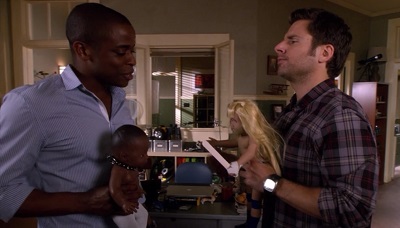
Psych episode (“Let’s Get Hairy,” Season 4, Episode 8): Partners Shawn and Gus are dressing dolls up as their favorite 1980s WWF wrestlers before a match rather than drumming up detecting business.

Gus and Shawn (Dulé Hill and James Roday) playing before the rumble.

Gus and Shawn (Dulé Hill and James Roday) playing before the rumble

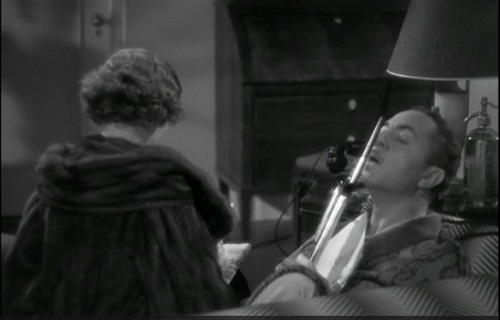
The first Thin Man:  Nora is trying to convince Nick into taking a case as he shoots balloons (and eventually a window) with a play gun she gave him for Christmas.

“Aw Nicky, take the case,” she says.

“You take it,” he answers. “I’m too busy.”

Nick and Nora (Powell and Loy) bantering in The Thin Man

Nick and Nora (Powell and Loy) bantering in The Thin Man

Pleasure before business? Check.
Adults acting like kids? Check.
Clever references? Check.
Perfect repartee? Check.

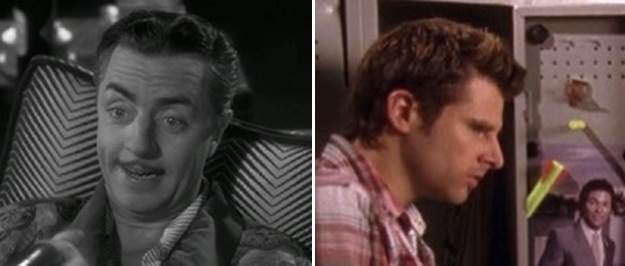
Nick proud of a bull’s eye; Shawn feeling suave thanks to his Miami Vice poster.

Nick proud of a bull’s eye; Shawn feeling suave thanks to his Miami Vice poster

I know some classic movie fans will find my comparison insulting to the more sophisticated films and the brilliant book that inspired them.  But such critics should give more credit to Psych’s dialogue, such as this exchange, which captures the show’s attitude toward the mysteries:

Shawn: “We came to investigate, catch bad guys and eat pie.”

Gus: “Not necessarily in that order.”

Shawn: “And it hasn’t been.”

Gus: “No.”

Shawn: “We started with the pie.”

Gus: “Always.” (Season 5, Episode 12, “Dual Spires”)

Even if you dislike Psych, don’t miss out on Nick and Nora.  Eighty years of fans. Five sequels (the last over a decade after the first). Scores of imitators. Observe the publication date on this NPR story discussing upcoming novellas of The Thin Man sequels. Sequels, mind you, which most of us try to forget, not commemorate decades later.

What are your thoughts on Psych and The Thin Man? Would you rather party with Nick and Nora, or Shawn and Gus? Did you like the first Thin Man best, or did the scene with Nick and the snoozers in the second make it your favorite? What other Nick and Shawn similarities have you noticed?


Share
Posted in: 1930s films, 1940s films, Comedies (film), Film Noir/Crime/Thriller & Mystery, Humor, TV & Pop Culture Tagged: Burton Guster, Nick & Nora Charles, Psych, Shawn and Gus, Shawn Spencer
« Previous 1 2 3 4 5 6 7 8

Recent Posts

  • 100 Years Later, Still Scary: Dr. Caligari
  • Escaping Out of the Past (1947)
  • A Weeper for Those Who Love Jerks
  • Thank You, Academy, for Not Infuriating Me
  • Challengers (2024) Is a Bad Movie

Subscribe to Blog via Email

Enter your email address to subscribe to this blog and receive notifications of new posts by email.

Categories

  • 1920s films
  • 1930s films
  • 1940s films
  • 1950s films
  • 1960s films
  • 1970s films
  • 1980s films
  • 1990-current films
  • 2020s films
  • Action & Sports Films
  • Anti-Romance films
  • Blogathons
  • Childfree
  • Comedies (film)
  • Drama (film)
  • Feminism
  • Femme fatales
  • Film Noir/Crime/Thriller & Mystery
  • Gloriously Silly Scenes
  • Horror
  • Humor
  • Mae West Moments
  • Musicals and dancing films
  • Oscars
  • Random
  • Romance (films)
  • Romantic Comedies (film)
  • The Moment I Fell for
  • Turn My Sister into Classic Movie Fan
  • TV & Pop Culture
  • Uncategorized
Share
Classic Movie Blog Hub Member

Recent Comments

  • leah@carygrantwonteatyou.com on Meg Ryan’s Fate Foretold in Joe Versus the Volcano
  • Ryan on Meg Ryan’s Fate Foretold in Joe Versus the Volcano
  • leah@carygrantwonteatyou.com on 100 Years Later, Still Scary: Dr. Caligari
  • The Classic Movie Muse on 100 Years Later, Still Scary: Dr. Caligari
  • leah@carygrantwonteatyou.com on 100 Years Later, Still Scary: Dr. Caligari

Archives

  • November 2025
  • September 2025
  • May 2025
  • March 2025
  • January 2025
  • November 2024
  • August 2024
  • July 2024
  • May 2024
  • March 2024
  • February 2024
  • December 2023
  • November 2023
  • October 2023
  • September 2023
  • August 2023
  • July 2023
  • May 2023
  • April 2023
  • March 2023
  • January 2023
  • December 2022
  • November 2022
  • September 2022
  • July 2022
  • May 2022
  • April 2022
  • March 2022
  • February 2022
  • October 2021
  • September 2021
  • April 2021
  • March 2021
  • February 2021
  • December 2020
  • October 2020
  • September 2020
  • July 2020
  • May 2020
  • April 2020
  • March 2020
  • February 2020
  • December 2019
  • October 2019
  • September 2019
  • June 2019
  • May 2019
  • April 2019
  • February 2019
  • January 2019
  • November 2018
  • September 2018
  • July 2018
  • June 2018
  • May 2018
  • April 2018
  • March 2018
  • February 2018
  • January 2018
  • November 2017
  • September 2017
  • August 2017
  • July 2017
  • June 2017
  • May 2017
  • April 2017
  • March 2017
  • February 2017
  • January 2017
  • December 2016
  • November 2016
  • October 2016
  • August 2016
  • July 2016
  • June 2016
  • May 2016
  • April 2016
  • March 2016
  • February 2016
  • January 2016
  • December 2015
  • November 2015
  • October 2015
  • September 2015
  • August 2015
  • July 2015
  • June 2015
  • May 2015
  • April 2015
  • March 2015
  • February 2015
  • January 2015
  • December 2014
  • November 2014
  • October 2014
  • September 2014
  • August 2014
  • July 2014
  • June 2014
  • May 2014
  • April 2014
  • March 2014
  • February 2014
  • January 2014

Meta

  • Log in
  • Entries feed
  • Comments feed
  • WordPress.org

Copyright © 2025 Cary Grant Won't Eat You.

Church WordPress Theme by themehall.com