Today I felt a pang on hearing about Gilbert Gottfried’s death. Of course I found him annoying, but I also loved him. He–and Rhonda Shear–gave me USA Up All Night just when I needed it, a show that taught me valuable lessons that have stayed with me ever since. Here’s what I learned from that weekend stalwart, which, for the uninitiated, basically consisted of terrible, terrible movies playing from 11 pm /12 am till the wee hours on Fridays and Saturdays, with interludes of jokes, skits, and commentaries from the hosts.
You Can Find Amusement in So Many Things. Camp was always appreciated in my family: my Uncle Ed’s running commentary on Slugs was a family reunion highlight. But in between those beloved family visits, I had Gottfried and Rhonda, poking fun of absurdly terrible B movies that no other channel would even play. Even Rhonda’s ridiculously perky enunciation of UP could make me laugh. To this day, I find enjoyment in so much pop culture that others don’t, and that’s partly thanks to USA Up All Night.
Don’t Take Your Job Too Seriously. True, it’s hard to not laugh about your job when you’re commenting on Cheerleaders Beach Party. But Gottfried’s constant amusement (you could definitely see “This is my job?” in his expression) reminded me that every job doesn’t have to be a forever-career or vocation. Sometimes, you pay the bills doing something silly, and that’s OK. (And most of us do have absurd tasks even in the most serious of jobs.)
Binging Movies Is Fun. Oh, you poor souls who didn’t learn this fact until Netflix. Gottfried and Rhonda (and the earlier host I never watched, Caroline Schlitt) taught us Gen Xers this back in the early 90s. Think of all the years of joy you missed!
Embrace Your Awkward Self. Gottfried and Rhonda were never cool. They were goofy and absurd and nerdy and silly. But because they clearly didn’t care WHAT they were, they reminded me, an awkward teenage girl, that I didn’t have to be cool to have fun.
Make Solitary Friday Nights an Occasion. In my twenties and early thirties, I moved states several times, each time alone. I was always either single or dating someone long distance, so Friday nights were rough on me. I hated the time it took to be moved from new friends’ weekday to their weekend rituals. To stave off the loneliness, I’d splurge on Fridays: wine, chocolate, good bread, and cheese. Maybe even takeout. I’d grab that remote and begin my movies, and all was right with the world. Sometimes, my preparations led to unhelpful comments by store clerks. (“Oooh-hoooh, honey, you’re having a romantic night tonight, huh?”) But in time, these Fridays became so peaceful and cathartic that I missed them when I had plans. (A bit of a foretaste of middle age, huh?) Would I have known to make an occasion of movie binging each Friday, without Gottfried and Rhonda’s example?
You Never Know What Your Impact Will Be. I don’t think Gottfried could have anticipated that he’d be celebrated by a writer for USA Up All Night when he died thirty years later, do you? You just never know.
Sex and the City had this odd way of pretending its heroines were parentless. Sure, there was a reference or two, and that lovely episode about Miranda dealing with her mother’s death. But overall, the show just pretended the women had no moms or dads. For six seasons and two movies, the lack of parents enabled the show to stick with sunnier, lighter fare, favoring romance over family drama.
And then the reboot came, presenting the show’s writers with a conundrum: how do you talk about women in their fifties—especially childfree ones—without dealing with aging parents?
Unfortunately, the writers’ solution was to conflate the fifties and eighties, giving the ladies hip replacements and their husbands hearing issues and farmers’-market-forgetfulness. Even the elderly parents of the new characters are pressuring their kids to get married or use their time differently—in other words, things parents of 30-year-olds do.
And how grim these writers make aging seem! Look how much more measured—and funny—Grace and Frankie is in tackling the same ground—and for much older women.
What Carrie, Miranda, and Charlotte would really be doing if they were in their fifties is worrying about their parents’ minds, limbs, and ailments. And for those of us who have been living with the slow-burn terror that our parents will catch COVID—or grieving the loss of those who died of it—the fear of parental aging is what’s keeping us up (not partying neighbors or mysterious dinging sounds). That’s why the erasure of our worry from the experience of 50-year-old women is infuriating in a franchise that used to get us.
What important things this show could have covered about what single, childfree women face in their fifties! What if Carrie’s married siblings with children had expected her to move home to take care of their sick mother or father? How would she have dealt with that as a single woman whom they assumed had time they didn’t?
The parentless state of our heroines also killed so many avenues for humor, like mothers’ attempts to comfort their daughters’ PMS worsening with age by saying, “Don’t worry. You don’t have long to worry about that.” (Just my mom? OK, the cheese stands alone.) Or dads bluffly cheering daughters after bad Bumble dates by saying, “Aren’t you about ready for Our Time? That’s much better.”
Of course, those weren’t the only humorous avenues And Just Like That neglected. Exactly how much did your frugal friend invest in wrinkle cream once she spotted Zoom’s skill for highlighting neck skin sagging? What collection of ring lights has your single buddy amassed to ensure she looks young for those selfies of her breasts for Hinge dates?
And the thing is, your friends in their 50s will confess these acts openly to strangers. That’s one of the beauties of aging: you don’t care what others think. We are ALL Samantha now. I remember the joy of canceling plans for the first time because I didn’t feel like taking a shower. Or the admission that yes, I was watching Lifetime reruns on a Saturday night, or organizing my earrings instead of going to a party. How much I would have loved Carrie dropping by Miranda’s because the latter couldn’t tear herself away from a marathon binging of Tiger King! (An update on the rabbit episode. LOL.) Remember when Carrie struggled to get her friends together? Now THAT’s a struggle for your 50s.
A podcast for Carrie never made much sense to me either—not for a woman who loves being seen (especially not a 90s-era radio show masquerading as a podcast). What does our former sex columnist think of Love Is Blind? Or 90-Day Fiancé? What if she hosted some cheesy reality dating show, like Love Island? That could have been so funny, unlike Che’s humorless standup.
And what silly notions about being woke these AJLT writers have! Is this an after-school special from 1985? What women in their fifties are suddenly realizing they have no non-white friends? I know these characters aren’t as reflective as they could be, but I do believe they have eyes.
What would these women be facing? Well, these characters might be worrying about terminology they use when it comes to race, ethnicity, and gender. Miranda would not have blundered as much as she did in class. But I could see her using a term from five years ago. Or Charlotte, Carrie, or Miranda could be chided by BIPOC friends for a clueless privilege moment. If AJLT wanted to address race in a more organic way, why not have Lily recovering from the trauma of the racism she dealt with during COVID, or Charlotte appalled by other parents fighting critical race theory?
(About midway through the series, I began to wonder whether Michael Patrick King was paying us all back for calling Carrie an unlikeable narcissist by making Charlotte and Miranda so much worse. Why else reinvent history, and make Carrie suddenly the most tolerant and understanding of the bunch? You think Miranda should have been the star? he might have said. I’ll show you…..)
I was, of course, happy to see Miranda, who is played by a public-school advocate, re-inventing her life to do something she found meaningful. That’s what women in their 50s do: Try to find new purpose in their lives. But AJLT had her dump that idealism to play fangirl to a bad comic (how like Carrie that decision was). Che was a missed opportunity, of course. I would have liked Carrie recognizing in Che’s struggles some similarities between what she had dealt with in feeling isolated as a single woman. Their experiences would never be quite the same. But empathy is born of comparison. Carrie didn’t have to fully get it. But she could have begun….
I didn’t expect much of the reboot, I admit, despite my love for Sex and the City. The movies, after all, had already done damage. Samantha’s absence, I knew, would do more. Still, I didn’t expect to be this disappointed. I’m younger than these women, but they always echoed some measure of my experience—and some measure of my future.
Until now.
Parents couldn’t have saved And Just Like That entirely. But it would have been a start.
Join my friends’ and my new podcast! Tomorrow we feature the gum-chewing, sunglass-wearing Roddy Piper as he breaks through all the conventions of conspiracy films we’ve discussed so far. Don’t miss it.
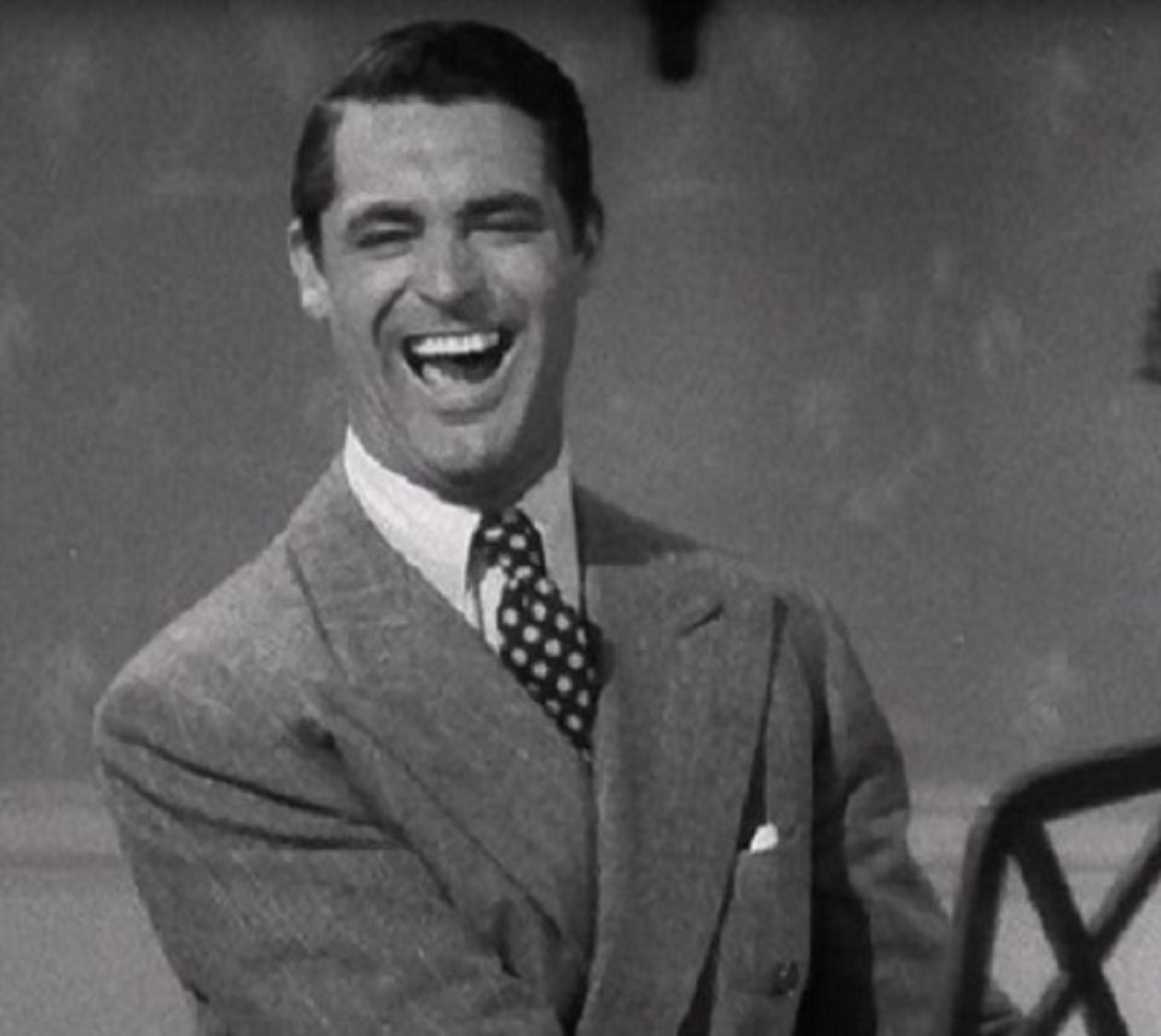
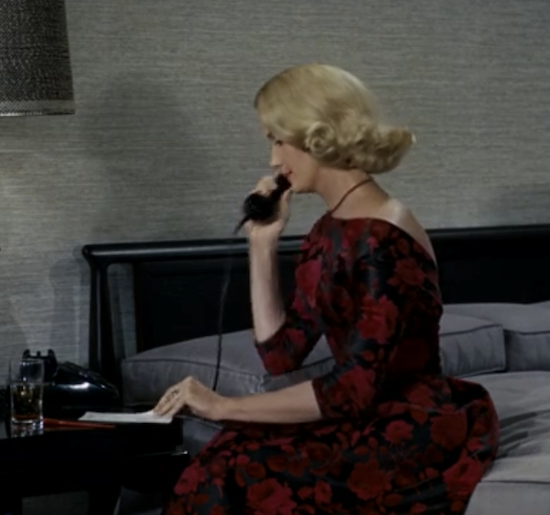
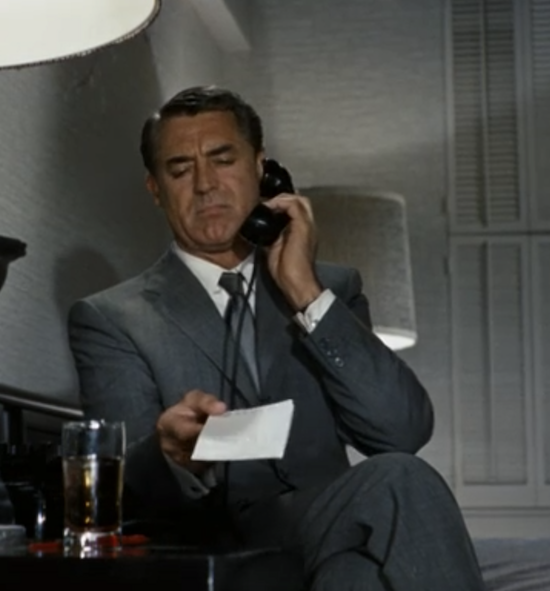
So the devious, sexy spy of North by Northwest, Eve Kendall (Eva Marie Saint), is trying to elude dupe Roger Thornhill (Cary Grant). She gets a secret call from her evil lover, Phillip Vandamm (James Mason), while she and Roger are together and writes down an address for their rendezvous.
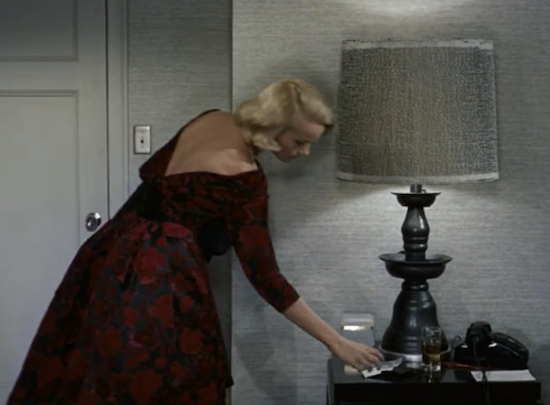
She carefully tears off the paper with the address, places it in her purse, and then—ready for this?—walks away without the notepad.
There’s that notepad, just a pencil trick away from exposing that address. Will she remember to bring it with her? Roger is watching!
Alas. She walks away.
Will she remember before she sneaks away? Of course, right? It was just a momentary oversight, her wits clouded by the sexiness of her target, Roger.
We see her pick up several other things.
(Oh, that sly Hitchcock.)
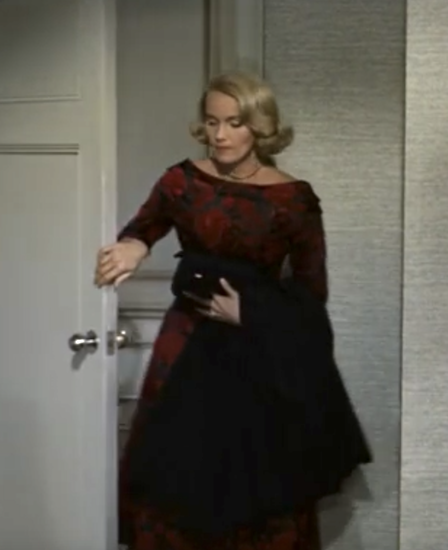
Then she leaves the room, SANS NOTEPAD.
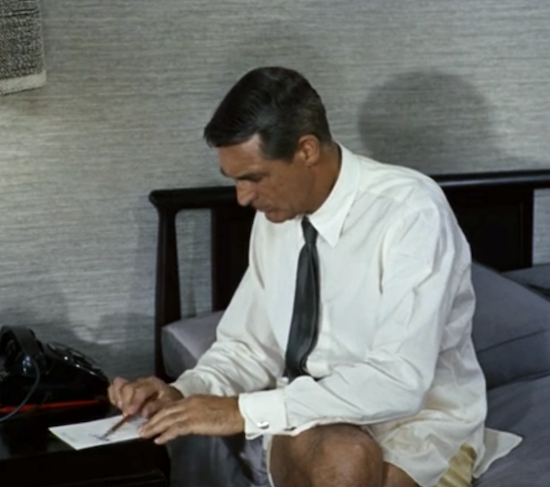
Roger, having watched five minutes of television/film in his life, of course knows the pencil trick. He holds the paper this way and that….(Why? What does he think he’ll see?)
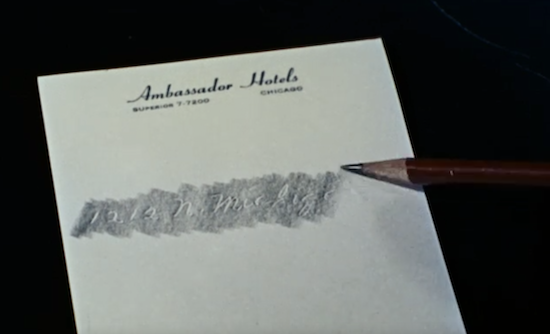
He takes out his pencil. He does the trick pant-less (in a kind gesture of Hitchcock’s, who knows his female fans).
There the address is. The super-secret address Eve was so anxious to hide.
How long have you known this trick? Were you six? Maybe seven? I’m pretty sure Encyclopedia Brown taught me. It’s the kind of spy craft a child can understand and appears in every detective/noir/suspense film or TV episode that assumes its audience is young/dumb/abysmally ignorant of pop culture. Frankly, I would have thought such a plot device beneath Hitchcock. But he never did like giving his heroines much credit, so of course, this spy who has supposedly fooled JAMES MASON must be outsmarted by a different man. Who has a background in….advertising. And lives with his mother.
Yes, our sexy spy was outfoxed by a trick that Micky Mouse might have taught me in the 80s, back when Disney was hawking his image on magic trick books, and I thought that a wand that lifted a playing card with a hidden piece of string was really something.
True, the pencil maneuver wasn’t QUITE as old of a trick when Hitchcock used it, but it wasn’t exactly fresh in 1959. (Though, as my friend points out, today it might become new again, with so few people using pencils.)
I used to roll my eyes when I saw this pencil-and-notepad trick, annoyed by the lazy writing. But now I laugh. Because the Coens offered a send-up of this trite scenario in their—appropriately enough—satire of/tribute to TheBig Sleep, The Big Lebowski. The Dude tries to outsmart a villain using the pencil trick. His excitement is intense at his own cleverness. But alas for the Dude, the “secret” isn’t what he expected. If you are of delicate sensibility, I wouldn’t advise it, but if you don’t mind some crude humor, enjoy this film clip and Jeff Bridges’ brilliance in it. (Watch that loopy run of his! And his “just acting natural” look at the end!)
There are many, many jokes about detectives in The Big Lebowksi. One of the most evident is that unlike those brilliant sleuths who with scant clues manage to figure out everything, the Dude can’t figure out anything—the mystery, which people are manipulating him, where his rug is. And unlike the driven fictional detectives who will sacrifice anything for the job, the Dude is pathologically lazy, sharing with them only some loose sense of ethics, questionable associates, and a love for alcohol (but with the Dude, of course, it’s not a hardboiled choice like whisky, but instead White Russians).
Yes, the Dude is not a good detective, and would be an even worse spy. But guess what, Hitchcock?
I think it was about five minutes into Psych‘s new movie that I realized just how much I was smiling.
How to explain the effects of Psych? It’s my emotional yoga. When I can’t sleep, I lie on the couch and play episodes till I do. It’s my white noise when I’m doing mindless busy work. And when I really need a pick-me-up (and who doesn’t right now?), I can put on an episode–even my least favorite–and laugh so much. (This despite the fact that I’m surely close to having the whole show memorized by now.) It doesn’t matter if I’m sad, worried, stressed; Psych‘s hilarious dialogue and antics always makes me smile. And the movies are no exception.
Lassie Come Home is both a typical episode and a tribute to Timothy Omundson (Lassie), whose stroke prevented his full participation in Psych: The Movie. But sweet as the tribute to Lassie is, it’s the Shawn and Gus team-up that’s the highlight, as always. I could listen to them banter all day long. This is still the best bromance I’ve seen on TV.
A favorite moment is when Shawn and Gus are trying to get a man to admit he’s faking an illness by tickling him. Shawn (James Roday Rodriguez) begins the badgering of the man like this: “Tough guy from the old neighborhood. Probably didn’t even cry when Liz Berkley got addicted to speed in Saved by the Bell.“
Now that’s a pop culture reference!
As usual, there were some funny cameos, with Sarah Chalke, Scrubs alum, directly referencing her scrubs, and Kadeem Harison from A Different World showing up, reminding fans that Dwayne Wayne was Gus’s (Dulé Hill) early hero (see that bizarre werewolf episode, “Let’s Get Hairy”–Season 4, Episode 8). Chalke was an inspired addition–she fits right in. My other favorite new character was Morrissey, Chief Vick’s (Kirsten Nelson) dog. And current fan or not, you will love a wonderful breaking the third wall moment, when Shawn refers to Psych fans (Psychos), and Gus rips him in response.
Way back when I started this blog, I recommended The Thin Man to Psych fans. But that recommendation goes both ways. Are you a fan of delicious flavor–i.e., funny dialogue? Do you love pop culture references? Do you prefer the relationship between detectives (and their loved ones) to the mystery itself? Do you enjoy some childishness in your leads, as long as it’s funny? (If you’ve forgotten how immature Nick Charles is, watch his classic performance at his in-law’s house in After the Thin Man.)
If you share my preferences, why are you waiting to watch the series, much less Lassie Come Home? I envy you the eight seasons and three films (if you include the musical) you have yet to watch! And if you’re already a Psych fan, you’ll be so happy to have Shawn and Gus back–even for a little while.
PBS produced a new documentary on my favorite movie wordsmith and feminist rebel, Mae West. Dirty Blonde is coming. Check out the preview to see the subjects talking about her (some welcome surprises), and to hear some of your favorite Mae West quips.
It’s not unusual to find a film with a strikingly ridiculous plot. I spent many Friday nights as a teen watching USA Up All Night (hosted by Gilbert Godfrey). How I loved taking in gloriously dumb films, hour after hour.
But to find movies with such plots that are genuinely good? That’s a whole other level of enjoyment. Now add 80 years or so, and the film is STILL GOOD, STILL FUNNY? That’s a comedic masterpiece.
Last Tuesday I wrote a post on feel-good silly films, and rated them according to their degree of silliness. (In a homage to Spinal Tap, I let the ratings go to eleven rather than ten.) So today, I’m going to list five films with plots so absurd they deserve that 11 silliness quotient fully. And not coincidentally, these films are a blast to watch. In no particular order:
The Palm Beach Story (1942)
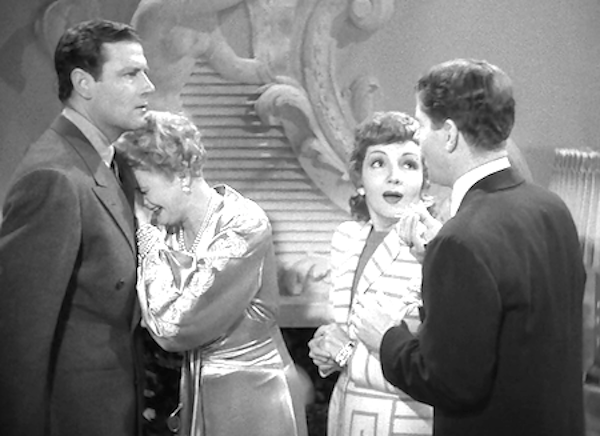
A woman (Claudette Colbert) leaves her broke husband (Joel McCrea) so that she can marry a millionaire and use his money to fund her original husband’s brilliant project. She heads to Palm Beach to find such a millionaire, aided by a “wiener king ” and trigger-happy hunters. The writer/director is Preston Sturges, so you know you’re in for a treat.
Easy Living (1937)
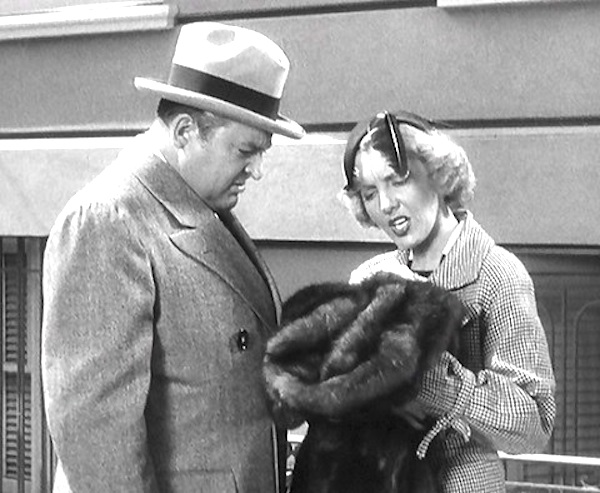
A banker (Edward Arnold) in a fight with his extravagant wife (Mary Nash) throws her fur coat off the roof of their home. The coat hits the hat of a bus passenger (Jean Arthur). The banker’s attempts to compensate the passenger destroy her reputation, but do aid her income. If you need a teaser to be convinced, check out the banker’s and passenger’s hilarious fight about loan interest.
Arsenic and Old Lace (1944)
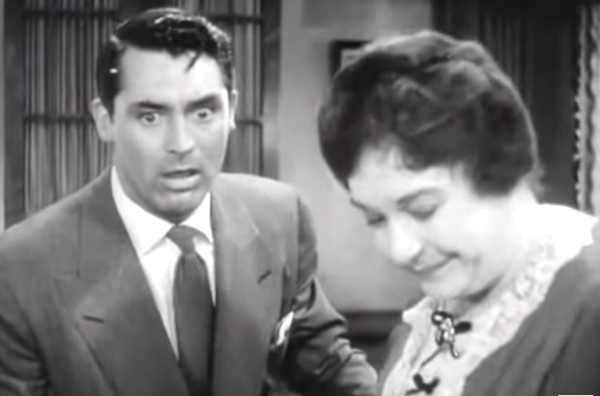
Mortimer (Cary Grant) has always known his cousin (John Alexander) is a bit off. After all, his cousin thinks and acts like Teddy Roosevelt, building his canal. But in visiting his beloved aunts (Josephine Hull and Jean Adair), Mortimer discovers they have some issues as well: they’re serial killers murdering lonely old men. “Teddy” assumes the dead bodies are yellow fever victims and takes them in stride. But Mortimer begins to fear for his DNA. A screwball classic.
I’m No Angel (1933)
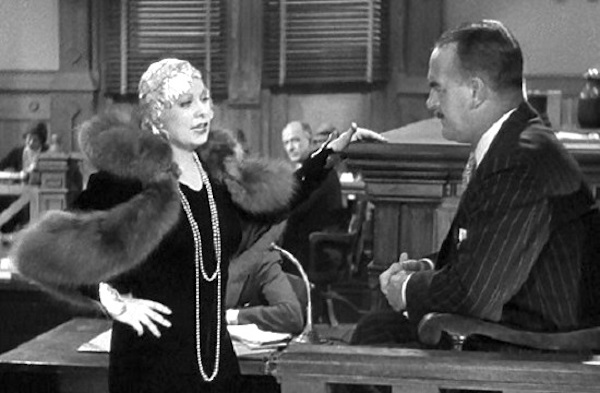
A lion tamer (Mae West) becomes the talk of high society, even winning a classy lover who plans to marry her (Cary Grant). The circus fears losing her income, so they convince the lover that their star is cheating on him. When her lover leaves her, the tamer sues him for breach of promise. She acts as her own lawyer, spending 90 percent of the trial strutting and seducing the jury in what may be the funniest courtroom scene ever.
I Love You Again (1940)
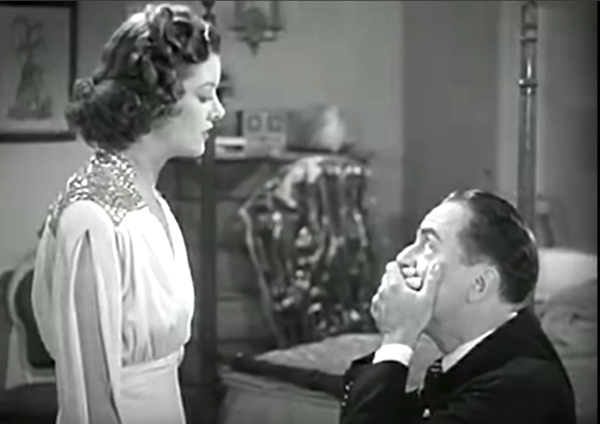
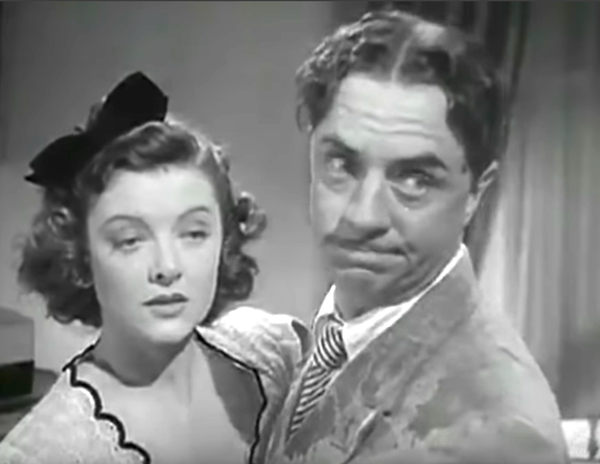
A man (William Powell) gets hit on the head and becomes an old self he’s forgotten, a swindler, instead of the upright prude he now is. He decides to live the prude’s life as he looks for a score and becomes intrigued by the uptight man’s wife (Myrna Loy), whom the swindler version of himself never met. She, sick of his stodgy ways and unaware of his change, wants to divorce him. The question is, will the man’s wife fall in love with his older self? I feel dizzy just explaining this amnesia plot, but it’s The Thin Man’s Loy and Powell team, so what’s not to love?
There you have it. Five ridiculous plots. Five ridiculously fun movies. And I haven’t even scratched the surface of this topic! Anyone who wants to share their favorite silly plot, please do so in the comments!
As the pandemic length has grown and your patience has seeped away, what spells a “comfort” movie to you may have changed. If you’re single and alone, the rom-com, usually a fallback, may make you cringe about the horror of dating dangers post-opening (as if dating usually weren’t bad enough!) If you’re huddled inside with TOO MANY PEOPLE, you may find yourself enjoying dull footage of peaceful lakes.
But for all of us in times of stress, the truly, deeply silly movie remains a staple, and so in the long-delayed follow-up to my earlier post, “Classic Feel-Good Movies for Shut-Ins,” I’m going full-on silly with my next set of suggestions. I’m joining my peers at the Classic Movie Blog Association, who are sponsoring a great blogathon event on comfy favorites. So here are five comfy classic films, chosen for silliness and enjoyment–and listed in no particular order. (You will note that I’ve rated the silliness level, so not all here are full madcap in style. BUT I’m thinking that a list of films with silliness at level eleven, and eleven only, may be my next project.)
5. TheMiracle of Morgan’s Creek(1943/4). Silliness Quotient–11 out of 10.
I could have easily chosen ANY Preston Sturges flick obviously, but I recently discovered this on my library’s Kanopy streaming service, and just seeing the listing made me grin. For those of you who DON’T know writer/director Sturges, he was a big Coen brothers influence, thus the name of their film, O Brother, Where Art Thou?, a reference to Sturges’ classic, Sullivan’s Travels. (In fact, the Coens’ film title ONLY makes sense if you have see the Sturges flick.) This early writer/director’s delirious combination of madcap physical comedy, witty banter, and sheer improbability in his plotting make Sturges a favorite of any Coen brothers’ diehards (which I definitely am).
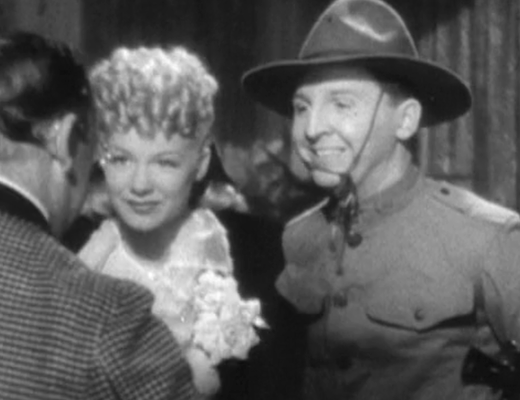
The Miracle of Morgan’s Creek actually thrives on denying information to its audience, who know that a scandal/miracle is about to erupt in Morgan’s Creek, and many stratagems are in play to contain it. Betty Hutton is adorable as the center of the scandal, and Eddie Bracken plays her lovesick friend/maybe-more (think Ducky in Pretty in Pink). Basically, it all begins when Hutton has too good of a night with liquor and a bunch of soldiers and sleeps with one of them. The thing is, she can’t remember his name. Yes, you read that right. It gets much more complicated as it goes. Bracken has the silliest role, and he captures his character’s constant befuddlement to the hilt—and just escapes going too far. Since the writing is in Sturges’ hands, it’s brilliant, of course (I have a set of his scripts on my bookshelf, trying to see how he does it).
4. Auntie Mame(1958).Silliness Quotient–7 /10.
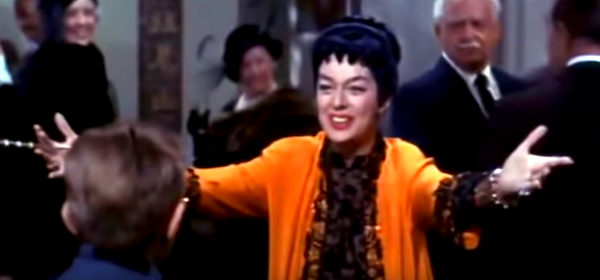
I haven’t yet done a full post on Auntie Mame, but that’s because I love it too much, not too little. An unconventional, fun-loving aunt in the city (Rosalind Russell) takes in her dead brother’s prim child, and many hilarious scenes ensue. If you don’t end the film wishing Auntie Mame were your aunt, I don’t know what’s wrong with you. Rosalind Russell’s acerbic edge keeps the film from ever treading into maudlin territory, and she so fully embodies Mame’s significant lust for life that it’s very confusing to find Russell cowed and sad in other films (Picnic, for example).
A favorite scene in the film is when Mame takes a sales job after the market crash. She only knows how to do COD (cash on delivery), and therefore is urging everyone to pay that way. Her dismay when they don’t is ALL OF US in every job when we’re out of our depth. COD isn’t really a thing you hear much anymore, but any time I do hear it, I think, “Oh, Mame.”
3. The Man Who Came to Dinner (1942).Silliness Quotient–7/10.
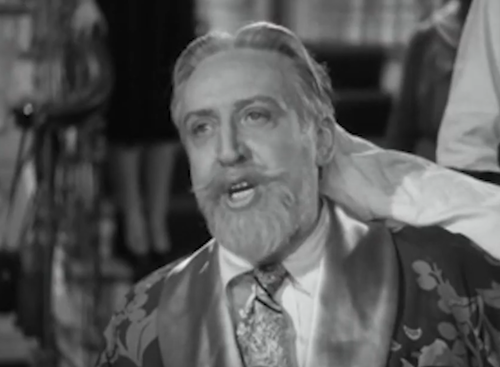
“Guests, like fish,” penned Ben Franklin, “begin to smell after three days.” No movie has ever captured that sentiment better than The Man Who Came to Dinner, and no actor has ever improved on Monty Woolley’s commanding performance of entitlement personified. He’s playing radio star/personality Sheridan Whiteside on a lecture tour, and the unlucky family once so proud of his appearance at their dinner table learns to rue the day they agreed to it. A little accident on their stoop, and they’re stuck waiting hand and foot on Whiteside’s prodigious ego.
George S. Kaufman and Moss Hart created the witty script, and Billie Burke plays the unwilling hostess to Whiteside. (Bette Davis may have helped the film get made, but her role here is one of her most flavorless. You know it’s not a Davis vehicle when Ann Sheridan outshines her.) Watch the film for the script and for brilliant Woolley, who must have been something to see on the stage (where he originated the role). Unfortunately, I have delayed writing about this film because it seems to be always unavailable for streaming on Amazon, but the DVD is available. If you know a good source for streaming it, please mention that in the comments!
2. Ball of Fire (1941).Silliness Quotient–7/10.
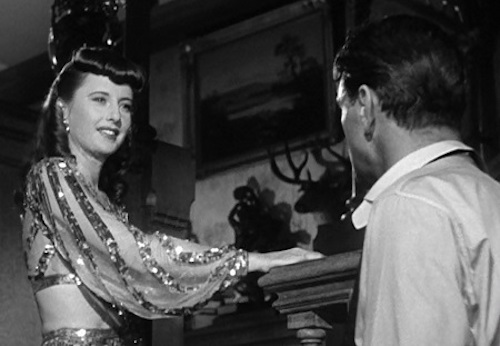
No list of silly movies would be complete without my favorite classic comedy, with Barbara Stanywck as the moll and Gary Cooper as the hapless encyclopedia writer who falls for her. And then there are the “dwarves”–the older encyclopedia writers who ALSO fall for her. I see that the film’s available on the Criterion Channel, which I’m shocked I don’t belong to yet. (No worries for me–I own two DVDs of this movie–the 2nd for when mine inevitably breaks from overviewing.)
With the dizzyingly talented combination of Howard Hawks as director and Charles Brackett and Billy Wilder as writers, this film’s dialogue can be almost as breathtaking as His Girl Friday‘s (also Hawks), but the writing/directing team leaves room for endearingly slow sequences as well. You actually watch Cooper’s character studying how to box in a book before his big fight scene, showing how goofy this story is. And for extra fun, you get favorites Dana Andrews, Dan Duryea, and S.Z. Sakall simultaneously embracing and mocking their typical roles.
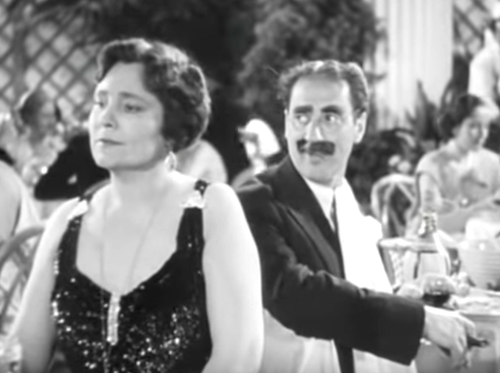
1. A Night at the Opera (1935).Silliness Quotient–11/10.
Did you honestly think you’d get through this list without a Marx brothers appearance? I didn’t think so. (As with The Man Who Came to Dinner, the screenplay is co-written by Pulitzer-Prize-winning Kaufman.)
Here are just a few quick early bites: We get Otis B. Driftwood (Groucho) yelling at his driver for not traveling slowly enough to miss the whole opera they’ve driven to see. We have Fiorello (Chico) and Otis tearing apart the bits of a contract they don’t understand (i.e., all of it). We have Tomasso (Harpo) interrupting a typical movie romance trope (one lover onshore, the other on the ship, crooning about her love) by attack-kissing strangers for no reason. That’s just a small sampling of the joys you get before the glorious comedy of the ocean voyage, which includes such a monstrously over-the-top buffet that I wondered just how old the joke about gaining weight on cruises was….
During a strange but enchanting musical sequence starring Chico and Harpo, the two entertain a crowd of children with a deft combo of lunacy and calm, making me think, “Doesn’t every parent stuck at home with children for weeks want these two as babysitters right now?”
So there you have it–five wonderful, comforting films to get you through this trying time. NOTE: You may notice that neither Mae West nor Cary Grant has appeared on this list. That’s because 1. I already discussed Mae in my previous comfort list, and 2. I figured you’d already thought of Cary–and if you haven’t, why not?
Bonus: Kedi (2016).
I know–it’s not a classic film. It’s a recent documentary about the cats of Istanbul. But I have literally recommended it to every cat lover I know, and when I found it streaming on my library’s Kanopy service, played it on repeat for a day. The film focuses on several stray cats, telling their stories (the hunter, the crazy one, the player, etc.). The cats are certainly endearing, but surprisingly, the shopkeepers, artists, and others who love and care for them are just as likeable. And the cinematography of Istanbul is often gasp worthy, especially when you see those cats on some tall balconies and rooftops! My friend described the film as human catnip. How right she is. Next time you experience one of those anger/grief/anxiety spirals that all of us are prone to during this pandemic, play Kedi. Trust me. It’s healing.
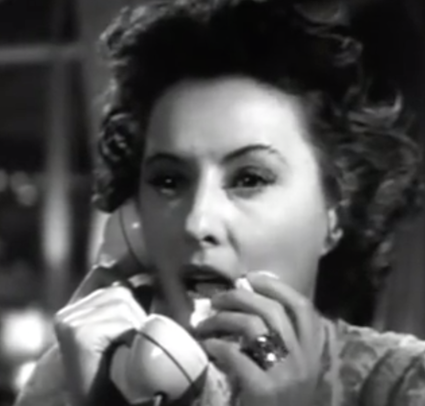
My friend Grace Collins of True Stories of Tinseltown and I chat about women in peril in classic films, including the riveting thriller Gaslight; the Barbara Stanwyck showcase Sorry, Wrong Number; and the tonally inconsistent, oddball Nazi-hunter film, The Stranger. And of course, the weeper, Waterloo Bridge. We had so much fun talking about heroines who are having no fun at all–especially Mary (Loretta Young in The Stranger), whose affection for her mate is truly baffling.
Enjoy Grace’s other wonderful posts and podcasts on her sites or check out her Facebook page for more. Her summer series on famous blondes in film is fabulous, especially the one on Mae West.
I’ve been thinking about how hard it is to grieve the loss of a funny person. The grim process of American funerals—the still church/mortuary, the solemn rituals, and the steady tears—can feel inappropriate when mourning the loss of someone who enjoyed breaking conventions, who made you bend over laughing when you were supposed to be acting with decorum.
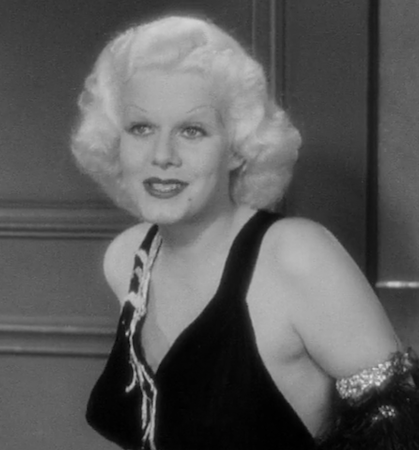
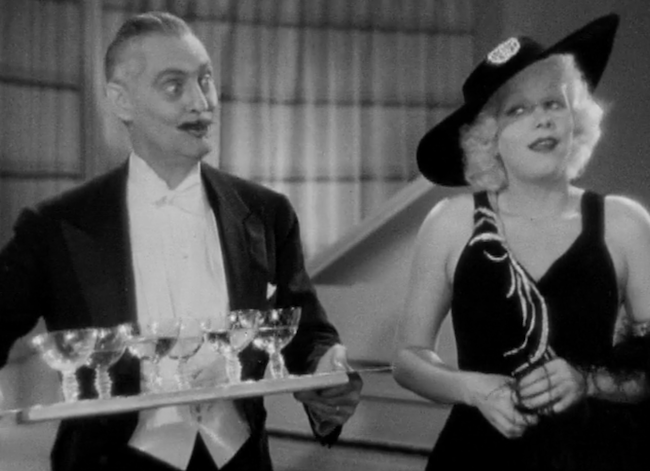
I attended two parties recently to celebrate the lives of such funny individuals, complete with amusing anecdotes and the shared company of those who’d loved them. These memorials felt so fitting, so much better than typical funerals for such amusing personalities, that I returned to my home thinking of other lost comedians and comediennes, especially those whose lives are so often described with the “funny but died tragically” designation. And it struck me that Jean Harlow was someone who deserved the kind of festive send-off I’d just attended, a woman who relished breaking the rules of others on and off screen (especially prim others) in such a breathtakingly funny way. So I watched The Girl from Missouri (1934), the lesser known of two entertaining gold digger tributes originally penned by Anita Loos, to celebrate her.
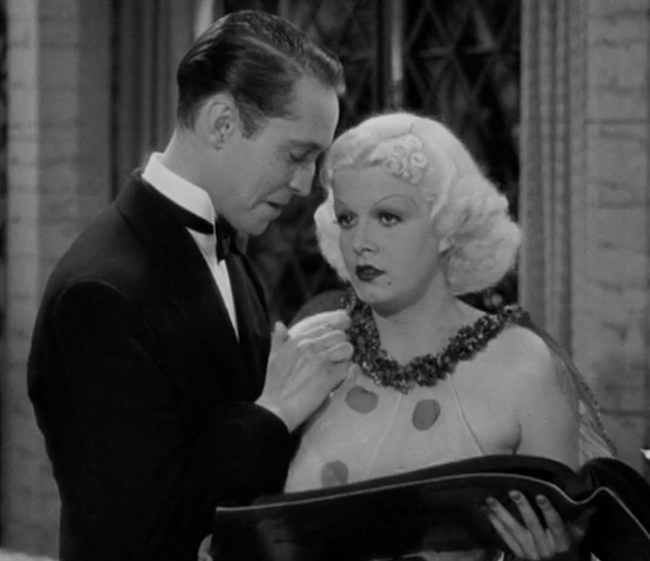
Harlow stars as Edith Chapman, a young woman eager to escape the clutches of the family entertainment/bar business, which is full of men trying to keep her from staying “straight.” Marriage to a millionaire in New York is her plan, and she won’t have sex until she gets her goal, which she brazenly sets about doing. Her very transparent efforts first amuse, then mildly annoy the wealthy self-made businessman, Thomas Paige (Lionel Barrymore)—that is, until her attention turns to his son, Thomas Paige, Jr. (Franchot Tone). Paige Sr. wants Junior to be courted by the upper-crust society he aspires to join, not for his progeny to be dismissed as the target of a silly gold digger. Predictably, Papa Paige is soon plotting against Edith. But she, like the actress who brought her to life, doesn’t take that kind of treatment passively….
Like many of Harlow’s characters, Edith is goofy and blatant and oblivious to any kind of etiquette or class mores. But there’s something about Harlow…you just can’t dismiss her characters. (And you can’t pay attention to anyone else—a Barrymore, Clark Gable, Spencer Tracy, even a Powell/Loy combo—when she’s onscreen.) Her characters usually dress in frilly, showy clothes, and their words and actions are designed for punch lines at their expense. Yet the deep humanity, sincerity, daring, and lovability of Harlow’s heroines make you adore them all the same, root for them even when they don’t deserve it (i.e., Red-Headed Woman).
And Edith deserves fair treatment and compassion. She even manages to make a Franchot Tone playboy character palatable to me. Edith begs Paige, Jr. not to toy with her, confesses that he could make her sacrifice the virtue she’s worked so hard to protect, but pleads that he let her go instead.
Paige, Jr.’s reversal of expression, his contrite response to her words is really all of us: Don’t take this awesome woman for granted. We won’t have her for very long.
I didn’t expect to catch my breath and feel for a Harlow character’s pain, but The Girl from Missouri caught me offguard, and that made me smile. Wow, Harlow can get to me. I did expect to laugh often as I watched, and of course I did. There are some cute turns by others–Paige Sr.’s teasing, Edith’s sex-obsessed sidekick’s (Patsy Kelly’s) flirtations. But why pay attention to anyone else? Harlow is MARVELOUS—with every preening smile, with every stomp/bustle, with every huff (and huffs there are a-plenty with Harlow), you can’t stop smiling. And you can’t stop thinking, What a joy it is to be in her company. I’ll take every second Icanget.
And so I laughed. And expressed a silent thank you for the gifts she’d given me. And that, to me, was the perfect send-off.