Cary Grant Won't Eat You

Classic movies for phobics

  • About
  • eBooks
  • Previous Blogathons
Classic movies for phobics

Humor

Rebecca Got a Bad Rep

06/29/2019 by leah@carygrantwonteatyou.com 8 Comments

**Spoilers abound**

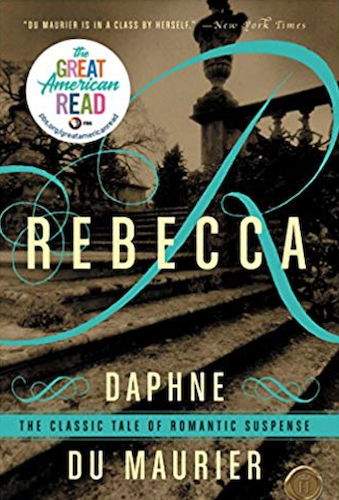
Of all the femme fatales on film and in print, Rebecca may top them all. The woman isn’t even alive at the start of the book or the Hitchcock film that resulted from it, yet the narrator of the story is so haunted by her husband’s previous wife (and Du Maurier is so skilled at freaking readers out) that Rebecca’s reputation as the evil femme fatale endures.

But when we look at Rebecca’s life a little closer, it’s hard to ignore just how much of our impressions of this woman are based on her former husband’s hatred and his second wife’s jealousy. Although I was totally with the narrator in fearing and loathing Rebecca on my first reading of Daphne Du Maurier’s classic gothic novel/thriller/mystery, my opinion of Rebecca has radically shifted in time, and the blame moved from her to the much more questionable Max de Winter.

Since the film sanitizes the hero due to the Production Code, I’m sticking with the book as I ask all of you Du Maurier lovers this question: Who is worse, Rebecca or her husband Max?

Let’s count it down trait by trait, shall we?

Behavior toward Friends & Acquaintances. Rebecca. Tries to suit others’ moods and appeal to their interests—this according to her detractor, Max. Everyone loves her, Maxim admits, including all of her employees. He claims she is fake, a backstabber. It’s easy to discount the tales of her insincerity altogether, given those blunt admissions to Max at the start of their marriage and his own dubious motives in smearing her. But we do hear Ben describing her cruelty toward him, a serious count against her.

Max: Rude to and arrogant toward: his sister, his brother-in-law, attorneys, party guests, servants, Mrs. Van Hopper, his second wife. He does seem to usually treat Frank well, and perhaps the dog. He expects to be thought above the law despite his suspicious actions and has no compunction about the boat maker’s profit losses thanks to his lies. Why? Presumably his class and status.

Personality Points: Rebecca 1; Max 0
Villain Points: Max 1; Rebecca 1

Social Skills. Max is the very definition of prim, spending his days abstaining from most people and food (while strangely expecting an untouched feast on a daily basis). And, there’s that slight issue with his temper and moods. Good company? I think not.

Rebecca’s style intimidates the narrator; she has garnered Manderley fame with her exquisite taste and the elegance, creativity, and humor she exhibits as a hostess. Even the “R” of her name is written with panache.

Personality Points: Rebecca: 1; Max: 0

Treatment of Spouse. Let’s admit from the start that these two are hardly an altruistic pair. A tight race!
Max: Wife 1. Marries Rebecca without loving her but planning to be faithful. Keeps the secret of her affairs, but for his own pride. Does tolerate her behavior within limits. (It was a different age.) Seemingly polite to her in public but based on his general actions (see above), I’m guessing she needed to find affection elsewhere. Wife 2. Marries the narrator because she’s chaste and has no relatives (Mrs. Van Hopper isn’t far wrong there). Shows little passion for her, most of that passion being extended to his house. Treats her like a daughter/servant/enemy, depending on the day. Marries her knowing that his limelight-averse spouse will be destroyed if his crime is revealed and the scandal rags come a-knocking while her protector is in jail. Exposes her to Mrs. Danvers, the suicide pusher.

Rebecca: Marries Max for his money and status, planning to cheat on him from the start and admitting as much. Seemingly has multiple affairs. Apparently enjoys some “unspeakable” behavior (though given prim Max’s ways, I’m guessing we’re not talking Roman orgies). May, if the love of Mrs. Danvers is any indication, indulge in affairs with women as well as men, which in this time period would have harmed her husband’s reputation. Shaming her husband with alcohol and drug consumption? Perhaps in private. Meanwhile, spends her days being delightful to all and making his treasured house the talk of the country.

I’m going to leave out Max’s crime for this one, as it deserves its own category. But in terms of behavior up to their final night together, Rebecca’s is worse since Max’s biggest fear is public shame, and she doesn’t seem to care much that he’s a bore and has no fidelity impulses/regard for his pride whatsoever. However, his behavior to his second wife is appalling.

Villain Points: Rebecca 1; Max 1

The Murder. Max shot his wife because she suggested she might be pregnant with another man’s baby. Max demonizes her, calling her not even “human,” to (a) justify his action, (b) keep his wife’s love, and (c) be considered a civilized member of society. The narrator, so pleased he didn’t ever love Rebecca, actually goes along with his version of events, even though he’s not exactly trustworthy because he’s a killer who murdered his last wife, idiot. RUN!!!!

Rebecca. Enjoys her husband’s distress at her infidelity and taunts him. He now says she wanted him to kill her (given her health). Kinda convenient, right?

Personality Points: Rebecca, 1—some considerable moxie revealed in this last fight; Max, 0. Villain Points: Max, a gazillion; Rebecca, 0.

And the Verdict Is….
Personality Points: Rebecca 3; Max 0
Villain Points: Max, a gazillion and 2; Rebecca, 1.

Like I said, Rebecca might not be an angel, but a femme fatale? Not so much. And is Max, the cold-blooded murderer and awful husband a homme fatale? You better believe it.

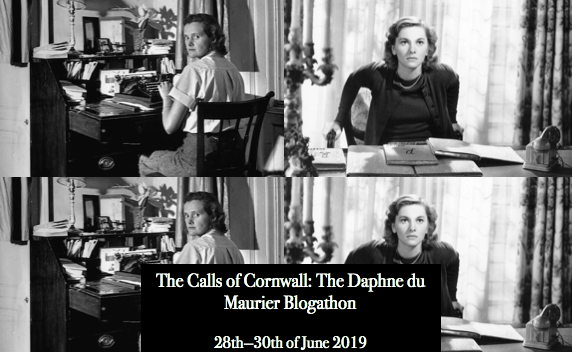
This post is part of the Calls of Cornwall blogathon by Pale Writer on Du Maurier’s work. Check out the other entries!
Share
Posted in: 1940s films, Blogathons, Feminism, Femme fatales, Film Noir/Crime/Thriller & Mystery, Humor, Romance (films), Uncategorized Tagged: Daphne du Maurier, femme fatales, Max de Winter, Rebecca, romances, thrillers, unfair reputation, unnamed narrator

Doris Day and the Reaction Shot

05/13/2019 by leah@carygrantwonteatyou.com 4 Comments

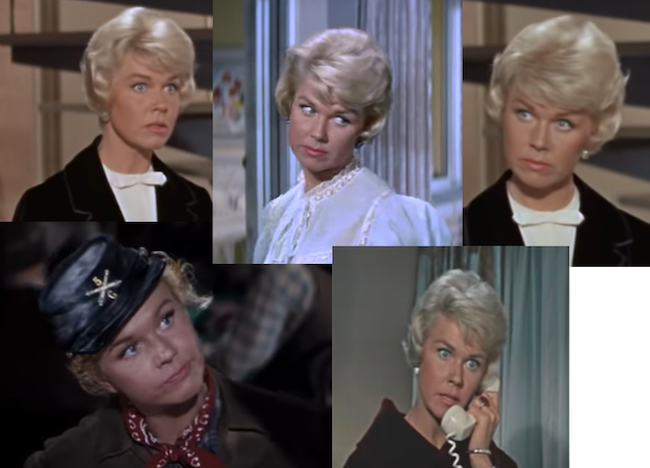
Today a man I know well surprised me, and I could tell I had one of those hilariously odd expressions on my face in response. When I heard a couple hours later that Doris Day had died, it seemed to me that I’d inadvertently paid tribute to that marvelous, strong, very funny woman. There will never be anyone who has a more entertaining or endearing response to male oddities than Doris Day. So today I want to say how lucky we are–among many, many gifts she gave us–for the hilarious reaction shots only she could deliver. Whether disdainful, amused, outraged–or best of all, all three–Day’s expression just nailed a sentiment….And so today, Doris, this feminist sends her heartfelt thank you. I couldn’t have said it better.

Share
Posted in: 1950s films, Comedies (film), Feminism, Humor, Musicals and dancing films, Uncategorized Tagged: death, Doris Day, tribute

ILL, How Do I Love Thee?: A Classic Movie Fan’s Tribute

02/23/2019 by leah@carygrantwonteatyou.com 4 Comments

For years I’ve been grumbling, waiting for streaming access to classics I hear about from other blogs: Letter from an Unknown Woman, The Great Lie, A Foreign Affair. Without a Netflix DVD cache or TCM, the classic movie fan is left with few options, and my brief affair with the Warner Archive had given me little love. Then it occurred to me, like a (clichéd) beacon of light in the night: YOU HAVE ACCESS TO INTERLIBRARY LOAN.

How do I love thee, ILL? Let me count the ways.

  1. You don’t tarry. Within a week, all three films were at my library’s front desk. The student helping me didn’t notice my bated breath or strong desire to do the worm in celebration. Used to her fellow students’ desperate and grumpy research requests, she was unaware of the yummy chocolate cake she was handing over to me. Her loss.
  2. You have so much to offer. Greedy after receiving all three films, I thought I’d dare for my elusive, longed-for white whale of a book. I’d just emailed Grace Collins of True Stories of Tinseltown about our upcoming podcast chat on Mae West and Cary Grant when my long-stamped-out desire resurfaced: Goodness Had Nothing to Do with It. I needed it–obviously–for research. Amazon was charging boatloads of cash for Mae’s autobiography, but was it possible I could get my hands on it for free? YES!!!
  3. You give me so MANY moments to savor. Here is one of hundreds of funny interchanges from Mae’s bio: She’s just put on opening night for her first play in New London, CT in 1926. The house manager is grumbling about the ticket purchases: “The title’s scaring them away. Nobody in this town will buy tickets for a show with the title SEX….We don’t talk about sex hereabouts, and we don’t put it on signs.” Only 85 people show for the first performance, and Mae is feeling blue that the first play she wrote and starred in looks like a bomb. But at the next day’s matinee, she sees lines of men from the naval base “two and three deep,” and the manager is scrambling for extra seats for his theater. “And you said it was a bad title,” observes Mae. And he replies, “I forgot about the sailors.”
  4. You let me savor each moment. On Monday morning, I’d been reading my usual dose of terrifying headlines on CNN. I was feeling blue, and knew I had to banish that mood if I had any chance of cheering my 9 am students, who had been staring at me for days with a peculiar type of hostility they’d developed from years of New England winters—the “how-dare-you-deny-me-another-snow-day, woman” look I knew so well. Naturally, I looked to Mae for mood elevation, and found her defense against the newspaper baron, William Randolph Hearst, who–in the midst of delivering his own era’s brand of terrifying headlines–had written this, “Is it not time Congress did something about Mae West?” Thanks to my generous love, ILL, I got to read Mae’s response: “All I have ever wanted to do is entertain people, make them laugh so hard they forget they’d like to cry.” Such an important reminder to me about the need for humor, dear Mae; you bolstered me the rest of the week. And by Friday? I was enjoying Jean Arthur’s and Marlene Dietrich’s charismatic performances in The Foreign Affair. Oh ILL, how I love thee…..

Share
Posted in: 1930s films, 1940s films, Comedies (film), Drama (film), Humor, Mae West Moments Tagged: A Foreign Affair, classic film, Goodness Had Nothing to Do with It, ILL, Letter from an Unknown Woman, libraries, Mae West, The Great Lie

New Year’s Aspirations, Inspired by Classic Stars

01/08/2019 by leah@carygrantwonteatyou.com 6 Comments

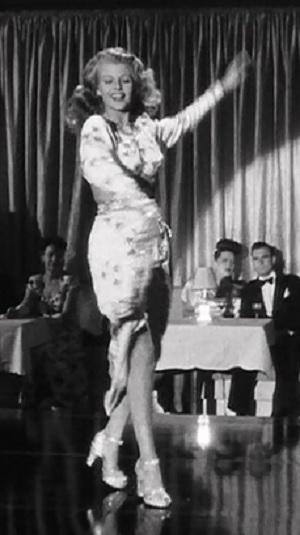
This year, I want to dance with even half the joy of Rita Hayworth…

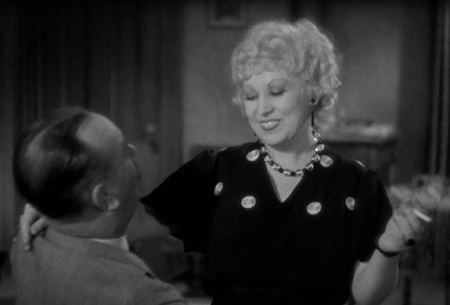
act a hundredth as boldly as Mae West on her weakest day…

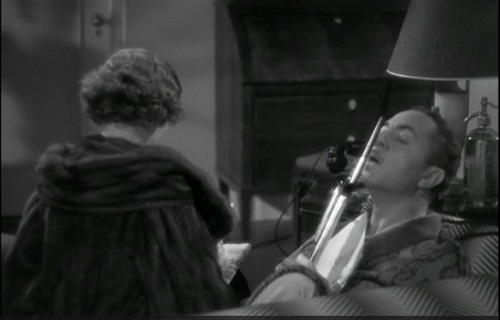
enjoy foolishness as much as William Powell…

and live with the intensity of Barbara Stanwyck.

What a fabulous year it will be if I do.

Share
Posted in: 1930s films, 1940s films, Humor, Mae West Moments Tagged: Classic Movie Stars, New Year's Resolutions

Men Who Love Too Much in Classic Film

11/18/2018 by leah@carygrantwonteatyou.com Leave a Comment

Continuing our theme on characters who love too much, Grace Collins of True Stories of Tinseltown and I turned our attention from women to men, especially Edward G. Robinson’s sad sap Chris in Scarlet Street, Claude Rains’s hoodwinked Alexander in Notorious and bad con artist Johnny of Suspicion (whose love runs to money rather than females). Of course, we took some detours too, commenting on the newest A Star Is Born and how much we’d suck as spies.

Check out the podcast here, here, or here.

And definitely enjoy Grace’s other wonderful posts and other podcasts:

www.facebook.com/truestoriesoftinseltown/?ref=br_rs
www.inyourfacewithdonnieandgrace.com/news
www.truestoriesoftinseltown

Share
Posted in: 1940s films, Film Noir/Crime/Thriller & Mystery, Humor Tagged: Cary Grant, Claude Rains, Edward G. Robinson, film review, Grace Collins, men who love too much in film, Notorious, Scarlett Street, Suspicion, True Stories of Tinseltown podcast

Comic Relief: A Simple Favor & Can You Ever Forgive Me?

09/29/2018 by leah@carygrantwonteatyou.com Leave a Comment

Need comic respite? I’m happy to report that two new dramedies featuring strong women are even better than you’ve heard.

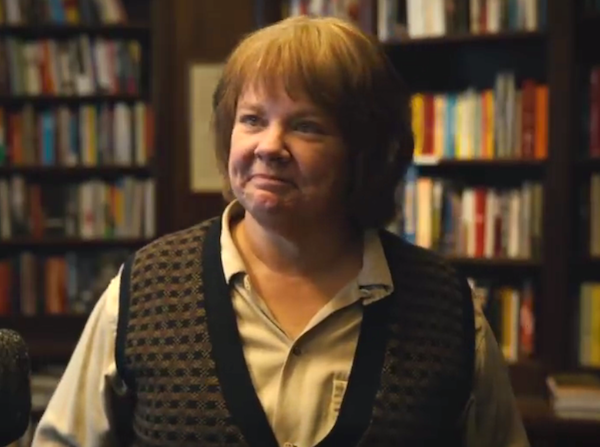
Can You Ever Forgive Me?, starring national treasure Melissa McCarthy, is based on the memoir of real-life writer Lee Israel, who became a con artist to pay the vet bills (out in wide release on Oct. 19th). Unable to get anyone to care about the subject of her new biography, Fanny Brice, much less her dwindling finances, Israel turns to stealing letters of famous movie stars and writers, and soon begins penning fake ones herself. Classic movie lovers and bibliophiles will sympathize with her alienation from those who don’t spend their days reading Noël Coward and Dorothy Parker. (And you’ll enjoy a line about Louise Brooks, a nod to classic movie fans.)


Appreciators of one-liners will ask themselves why they haven’t bought Israel’s memoir yet: this woman could WRITE. There’s a reason she was successful at mimicking Parker and Coward. Brought to caustic life by Melissa McCarthy, Israel is sympathetic even at her darkest and lowest. Despite the depth of her despair and loneliness, she is relentlessly funny in the film. Israel and her similarly lost companion (and later conspirator), Jack Hock (Richard Grant), engage in so much snarky, on-point banter that you wish the two could have had an Algonquin Round Table of their own.


These two boozy companions are simply joyful company for anyone who doesn’t mind a bit of darkness in their humor. And McCarthy deserves the awards buzz she’s getting for a riveting performance.

McCarthy’s frequent director Paul Feig has a film of his own out this month. Feig, who has a George Cukor flair for creating great vehicles for female stars, is at it again. The only question is whether Blake Lively or Anna Kendrick gets a meatier, more complex part in A Simple Favor, a story that is tonally closer to the light cynicism of Young Adult (2011) or the campiness of Serial Mom (1994) than to the darkness of Gillian Flynn’s Gone Girl (2014), to which it’s being compared. I’m hearing references to Double Indemnity from classic movie fans due to the film’s humor. Beat the Devil (1953) is more like it. Though A Simple Favor is a bit more controlled than that messy Truman Capote delight, there’s a bit of Mrs. Gwendolen Chelm (Jennifer Jones) in both of these heroines.

Feig; the director of Bridesmaids, The Heat, Spy, and Ghostbusters (the reboot); is so open about preferring female leads and so appreciative of their comedic skills that it’s unsurprising to see both stars so funny and magnetic in his film. Their profane banter is hilarious, and the casual cruelty, self-interest, and denial of these particular frenemies are a blast to watch. I won’t spoil the surprise of what becomes of Emily (Lively), whose disappearance spurs mommy blogger Stephanie (Kendrick) into amateur detective/life-stalker mode.
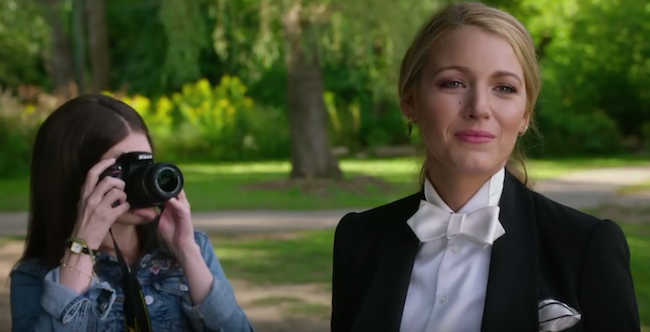
There are some seriously batty plot developments that seem more like old-school soap operas than big screen fare (again, like Beat the Devil). But anyone paying attention knows plausibility is not the point. Just sit back and enjoy this dark comedy fun. (And don’t miss the recent titles and commentary on Stephanie’s bizarrely eclectic blog.) Those of us who have been following Feig since his brilliant creation, Freaks and Geeks, will be glad to see his first female lead, Linda Cardellini, in a scene-chewing, funny bit part. Let’s hope the films to follow these two this fall are half as fun.

Share
Posted in: 1940s films, 1950s films, 1990-current films, Anti-Romance films, Drama (film), Film Noir/Crime/Thriller & Mystery, Humor Tagged: A Simple Favor, Anna Kendrick, Blake Lively, Can You Ever Forgive Me?, film review, for Beat the Devil fans, George Cukor, Louise Brooks, Melissa McCarthy, noir, Paul Feig, strong female leads

Two Critics Pan Hitchcock’s Torn Curtain

07/06/2018 by leah@carygrantwonteatyou.com 16 Comments


Friends and fellow film buffs: Brian Wilkins and Mike Gutierrez have written wonderful guest posts here at Cary Grant Won’t Eat You—Brian, on fighting in Sword and Sandals films, and Mike, on his ideal casting for Hitchcock remakes. Today they’re joining the second annual Alfred Hitchcock blogathon to consider what the famous director could have been thinking with Torn Curtain (1966).

B: This all started because I had a memory of a movie where a drunken Paul Newman, at the Nobel Ceremony in Stockholm, chats up beautiful blondes and a physicist who may or may not be trying to defect to East Germany. So when Torn Curtain was still available, I texted Mike and said we should grab it.

There’s only one problem.

Torn Curtain is a Paul Newman and Julie Andrews vehicle, about a conference in Copenhagen that ends in a physicist possibly defecting to East Germany. And it’s not the movie I remembered. That movie is The Prize directed by Mark Robson. This was Torn Curtain, and as Mike put it…

M: Torn Curtain is a deeply stupid movie.

And it shouldn’t be.

It’s 1966.  Newman and Andrews are two of the biggest stars in the world. It’s true that Hitchcock was winding down by then, but he’d only done The Birds three years earlier. The three of them coming together for some Cold War intrigue sounds like a sure-fire hit, or at least a fun two hours. But that’s not what happened. And, frankly, I’m not sure what happened during the film.

Newman is “defecting,” but no one believes that for a minute. Andrews is his doting girlfriend who follows him to East Germany and decides to stay with him–betraying her country for a guy who has been lying to her. The East German secret police announce themselves as the “secret police,” which doesn’t seem like something the secret police should do. It’s not clear if Newman is working with the US government or is going completely rogue, but somehow he has ties to the resistance even though he’s just a scientist.

I could keep going–the plot is inane, the characters inconsistent, and Newman and Andrews seemed to have lost their charms on the flight to Berlin–but you get the point. So, Brian, what do you see as the reason this movie went off the rails?

B: They squeezed all the fun out of the movie. In every single case where you could find a joke or a bit of dash, they threw a lead blanket on it. I’m mostly blaming the writer.

But here’s the thing: I didn’t think it was humanly possible to have zero chemistry with Paul Newman. I’m pretty sure even inanimate objects have chemistry with Paul Newman. Even his crutch in Cat on a Hot Tin Roof looks into being leaned on. Julie Andrews looks like he started every take by mansplaining parliamentary procedure.

M: Do you think they took out the fun or had no intention of making a fun movie? I’m thinking the writer considered this his grand epic about a deadly serious topic and wanted to make a bold statement about love and patriotism and the threat of the Soviets; that he believed it was high art, Oscar-bait.

And tonally, it keeps shifting from a romance to faux-intrigue to, well, we should probably talk about how Paul Newman and some farmer’s wife re-imagined Sylvia Plath’s death on the Stasi officer. That scene manages the incredible trick of being both disturbing and boring.

B: Let me do some research <looks at Wikipedia for 2 minutes>…oh, shit, this was a hot mess. Hitchcock shopped the idea to Nabokov, who turned it down (genius) then gave the script to Brian Moore (shortlisted 3 three times for the Booker prize) who really should have known better. Moore complained Hitch had no sense of characters. Hitchcock complained Moore wasn’t funny. So Hitchcock thought he was making North by Northwest and Moore thought he was writing…a boring version of The Spy Who Came in From the Cold?

But to the murder. Listen, I hate to get all professional about this, but there are a million things to murder someone with in a kitchen other than a gas stove. It’s almost like the house frau in question was like, “Do you know how hard it is to get Stasi brains out of a cast iron pan? I just seasoned it!”

M: I just spent five minutes re-imagining this film as if Nabokov wrote it. Then I started imagining if he’d written The Sound of Music. “No, you cannot sing the Nazi’s away, Julie Andrews. No.” I digress.

B: Rolling pin. Cleaning chemicals. Towel garrote. Meat hammer. Fork.

M: Ice pick?

B: Only if he’s a real Communist (yes, that’s a Trotsky joke, David Ives fans).

M: This was one of the big set pieces, the one that shows us that Newman isn’t just a dainty scientist but a badass with a Ph.D. Now, you’re married to a scientist–who I’m certain would have used a paring knife—

B: Correct. Or poison.

M: …and you’ve met scores of scientists in your life: is there anything about Newman’s character that seems the least bit authentic? Or, a better question, what do you think Newman thought he was supposed to be? He’s never been so charmless. He has that great, knowing smirk in everything he does. What movie did he think he was in?

B:  I think Newman read the character as a boring CIA agent the whole time. His character “starts in Washington” and ends with a “teaching position.” He’s just a physicist who couldn’t actually cut it, but as a bureaucrat briefing real spies on what to steal, he’s sort of useful. And I think Paul Newman would hate that man intensely. I’m guessing he needed to fund some sort of charity for kids with horrific cancer. Seriously, that man is a sexy, sexy saint.

M: I’m not sure the first Mrs. Paul Newman would agree. There is a voodoo doll of Joanne Woodward out there floating in the aether.

B: I started wondering if Joanne Woodward would be better casting than Julie Andrews, but, honestly, I don’t think anyone could have chewing gum and twined a performance from this script. Is there any trace of Hitchcock at all with the escape scene?

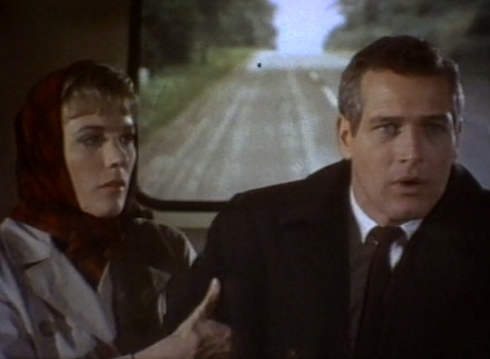
M: Sure. It’s an elaborate set piece–a bus chase before sneaking onto a ship–that’s supposed to be Hitchcock’s version of how he’d escape past the Berlin Wall. But it feels like a knock-off version of a Hitchcock climax, sort of like how 2 Days in the Valley ripped off Tarantino. The problem is that Andrews and Newman are passive characters in the escape. They’re sitting on a bus driven by someone else, and then shuffled onto a boat where they are shoved into baskets to sit in their own filth for days (weeks?) while someone else pilots the ship. Passive. It’s like Hitchcock forgot what made for great Hitchcock.

B: I never even thought of how this would be Hitchcock’s personal fantasy of how to get away: “Well, I’m certainly not going to run. And riding a motorcycle sounds sweaty. Perhaps I could just drift peacefully into freedom?”

M: Here’s the thing: Cary Grant kills a dude and saves the girl in North by Northwest.

Paul Newman sits in the back of the bus and hopes no one hurts him.

B: I think this film needs more dynamite, there, Butch. I tried to think of something I liked about this film but I’m coming up as empty as a housefrau looking for a murder weapon in a gun closet.

M: Yeah, I’ve got nothing. In the end, I found myself rooting for the Stasi.

B: Well, thank you for your patience, kind readers. I hope you’ve enjoyed being warned off what has to be in my top 5 worst movies of all time. See The Prize instead for all your Paul Newman Cold War-related hijinks. And …oh! Bear Island with Julie Andrews. It’s got the UN, it’s set off the coast of Norway, and there’s a possibly gold-filled U-Boat.

M: That sounds awesome. I’ve never seen it. Let me do some research <looks at Wikipedia for 2 minutes>…. You did it again: You got Julie Andrews confused with Vanessa Redgrave.

B: That’s more telling about my fantasy life than I would like. MEA CULPA!

Check out the other posts in Maddy Loves Her Classic Film‘s The Second Annual Alfred Hitchcock Blogathon, including her post on Rebecca!

Share
Posted in: 1960s films, Drama (film), Film Noir/Crime/Thriller & Mystery, Humor Tagged: Alfred Hitchcock, Paul Newman and Julie Andrews, Torn Curtain, What was he thinking films, worst films by good directors

One Liberal’s 2018 Distraction Guide

01/04/2018 by leah@carygrantwonteatyou.com 6 Comments


I assume those of you horrified by 2017 headlines have been fighting back with the help of political action sites. But sometimes what you need is to reset your equilibrium just so that you can get through the day, and if that’s what you’re looking for, here are my current (admittedly often silly) survival routines. (Note: I don’t expect my suggestions to be yours, but maybe your disagreement about mine will lead to suggestions of your own, which I’d love to hear.) Here are mine:

Enjoy a Little Snark
Tom and Lorenzo are this fashion police duo who are hilariously harsh. As someone who hasn’t been knowledgeable about fashion since middle school, and never any good at it, I’m not sure why I find fashion critiques so funny. My shoes alone would give them years of fodder. But I love them anyway, and their TV reviews, which originally brought me to their site (Mad Men and Downton Abbey tributes/slams in particular), are always on point.

When I can’t find the sarcasm I need, I head over to someecards or bad reviews on Metacritic. Go to the most negative reviews, and try not to laugh, such as those giving 0% ratings for Collateral Beauty. How about this from the usually affable Peter Travers?: “The unholy mess that director David Frankel and screenwriter Allan Loeb have unleashed for the holidays strands an all-star cast…on a sinking ship that churns the waters from absurd to zombified with frequent stops at pretentious.”

Ask Friends/Family for a Cute Photo of the Day—Over Email
On terrible news days, I now demand, “Cute photos needed!” of my sister with young toddlers, and presto! They arrive. Seriously, what parents will say no to sharing how adorable their children are? On Facebook or Instagram, you need to wade through other things you should avoid, so stick with Old School, my friends: Email. If you’re not a fan of children, you will find friends and family equally willing to share cute pet snapshots. Get to it.

Celebrate a Pal for No Reason
My friend Kerry once stopped by my door with a package and a smile, and announced, “It’s Leah Appreciation Day!” I burst out laughing, as she knew I would. I can remember few times I was so amused and touched, and I made a mental note at the time: This is a fabulous idea. I can’t say I do it enough, or with the aplomb Kerry—a master of silly joy—has mastered, but it’s surprisingly recuperative on a day you’ve watched too much news to buy a dumb card or film for a pal, and announce how much you appreciate him/her with over-the-top fanfare. Birthdays you may feel pressure to get it right. Random days? It’s just fun.

Break Out Some Silly TV
I thought the Psych movie was a remarkably timely gift, but now Amazon has put all the episodes on Prime! Score!

Other light favorites (given Netflix’s recent trends of show ditching, these are only true as of Jan 2018):

Netflix:

  • Arrested Development
  • Schitt’s Creek
  • The Good Place
  • Master of None
  • The IT Crowd
  • Sirens
  • The Office (British & American)

Hulu:

  • 30 Rock
  • Parks and Recreation
  • Party Down

Amazon Prime:

  • Leverage (Prime, Season 1)
  • Head Case (with Alexandra Wentworth; pay only)
  • Psych, of course! (Prime)

Invest in Some Cinematic Feminism
It’s easy to just cry at the #MeToo movement; instead, seek inspiration. Check out some awesome blogathons to discover feminist icons of film. Check out the The Anti-Damsel Blogathon from 2015, as just one example. Commit to discovering the work of female filmmakers, as did Girls Do Film two years ago for her New Year’s resolution.

And if you haven’t yet encountered some of the fantastic feminist TV series out there, do so now. Here are a few from Netflix (The Handmaid’s Tale is obviously next for me):

  • Jessica Jones (a superhero who survived rape and combats her rapist and those he’s harming)
  • Miss Fisher’s Murder Mysteries (a woman in her 40s in 1920s Australia who is portrayed as both sexy and empowered)
  • Alias Grace (an intriguing fictionalization of a true-life 1840s murder, and the male treatment that may have contributed to it)
  • Crazy Ex-Girlfriend (a musical comedy that breaks boundaries in its portrayal of romance, feminism, and mental illness)

Tune out Everything But Your Pets
Guess who doesn’t know what’s going on out there? Guess who isn’t too blame? Too often I am watching TV or my computer while petting my cat, but when I give my high-spirited feline my full attention, there’s no low-grade stress accompanying my actions, and he’s more likely to cuddle and comfort. Also, he’s less angry.

View Silly YouTube Clips
My favorite clips are Key and Peele’s, and if you’ve experienced the brilliance of Get Out! or found yourself falling for Obama’s Anger Translator, Luther, during that White House Correspondents Dinner, you’ll know why I love this amazing comic duo. My personal favorite is the substitute teacher episode, but there are so many.

If you’re a fan of Issa Rae and her HBO hit, Insecure, you’ll love her earlier webisodes, The Misadventures of Awkward Black Girl. “The Hallway” (fewer than 6 minutes) may be my favorite illustration of social awkwardness ever. If all else fails, you’ve got cat videos.

Dust off Those Stamps
Lately, I’ve been getting cards and books in the mail, with thoughtful notes from friends and family. Maybe we’re just so Internet and texting crazy that we forget how wonderful it is to see something that’s NOT a bill or junk in that mailbox. For a while, I’ll forget this need, and stop sending anything, and when I do again, I remember, I love mail. So does everyone else. I believe this need is one of the unspoken reasons for the rise of Amazon. Too lazy for cards? Grumpy Cat postcards. 5 minutes.

Reread Favorite Books and Discover New Comic Ones
Jane Austen is restorative for me; in fact, she knows I’m stressed before I do. Usually, she’s my canary in a coal mine; when I have a strong desire to read her, I know I need to consider some serious downtime or therapy or re-examination of my existence. Lately, she’s just a news recovery mechanism, as have been my favorite mysteries. Walter Mosley’s insightful detective, Easy Rawlins, is on my bedside table now, right next to some new (not depressing) memoirs I can’t wait to read: Lindy West’s, Adrian Shirk’s, and Amy Tan’s.

Put that Phone Down at Night
You know you shouldn’t read news before you go to sleep. Put that phone far enough from your hands that you can’t access it if you’re sleepless. You can read the headlines and delve into those depressing articles in the morning, when work will soon take you away. Not at night, when you’ll dwell and toss and turn. There are even studies on how that glare keeps you up. Move the phone.

Go to a Ridiculous Festival/Museum/Parade
There’s a museum down the street from me that is just full of things hoarders have offloaded. Last time I visited, there was a room full of dolls. It was vaguely horrifying, with old Troll dolls and Cabbage Patches. Yeah, I was freaked out, but it was also magic. See a poutine or bacon festival in your area? Sure, it’s about as healthy as mainlining Crisco, but it’s one day: Go.

Set a New Friend/Family Ritual—and Keep to It
A weekly karaoke night? A Stranger Things viewing party? A regular football watching ritual at the bar? It doesn’t matter. We need company right now. Make sure you have it.

Listen to Awesome Podcasts
If you’re a classic movie fan and haven’t been listening to Karina Longworth’s You Must Remember This (Podcast), what are you waiting for? Her series on the blacklist alone is enough to enthrall, and there’s so much more. The Atlantic includes a long list of awesome podcasts for those with any and all interests.

Watch Depression-Era Comedies
This is a movie blog after all, and I’ve found both eerily prescient warnings and relief from stress in classic favorites. I know some of you classic movie doubters think we’ve evolved so much that there’s no way those almost a 100 years ago were like you. But during the Depression, people were watching some decadently clothed folks doing silly things, just like you are now. Fred Astaire and Ginger Rogers were wowing with their fancy footwork and quick barbs, and then easing their fans into a little romance. Mae West, pioneering screenwriter and star, was sashaying her way across the stage and then the screen, seducing men almost half her age with lines so funny we’re quoting them now. I highly recommend these two options as regular fare, and you can search through this site for much more, but if you’re smart, you’ll find the work of my peers at the Classic Movie Blog Association and discover new favorite film recs from those much more knowledgeable than I. It’s no accident that film comedies from the 30s are among the best ever made: They were needed.

Share
What strategies are helping you get through the news? Post here, or share with others. Let’s get by, as the Beatles have told us in my least favorite of their songs (but a wise one nonetheless), with a little help from one another.

Share
Posted in: 1920s films, 1930s films, Comedies (film), Humor, Random, TV & Pop Culture Tagged: #MeToo, distractions from politics, feminist films, liberal distraction guide, lightening your mood, silly classic films

Center Stage: Acting Misfire, Dancing Fun

08/05/2017 by leah@carygrantwonteatyou.com 3 Comments


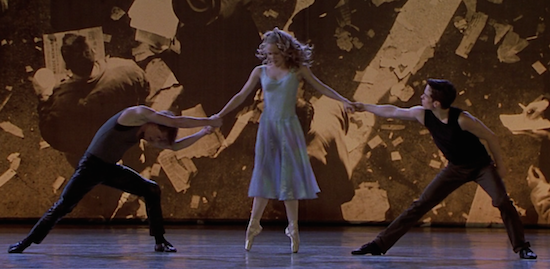
Center Stage is a blast: great dancing from real ballerinas, including a final performance I watch on repeat. A love triangle. And Donna Murphy and Peter Gallagher convincingly running the ballet company. We are rooting for heroine Jody (Amanda Schull), whose technique, feet, and turnout don’t measure up to those of her classmates,’ who have also won scholarships from the American Ballet Academy. But she’s an expressive dancer, and so dedicated. Will she make it, get kicked out, or get no show time in the final workshop, killing her chances for a ballet career? The actress who plays Jody was apparently handpicked from the San Francisco Ballet since she had the exact issues that she’s corrected for in the story, and while at best a decent actress, she convincingly plays up the vulnerability that makes you stay on her side.


The film is a fun watch. But make no mistake: I’m not saying this movie is good, not at all. The dialogue and some of the side plots are comically trite. You have to tune all that out, and focus on:

The Dancing
As Jody is trying to find her way in the academy, sweet fellow dancer Charlie (Sascha Radetsky) flirts with her, but she is drawn to the star of the company, aspiring choreographer Cooper (Ethan Stiefel). Cooper and she have a brief affair, which means something to her and nothing to him. Although it’s hard to imagine anyone mistaking Cooper’s shady selfish soul for anything like boyfriend material, she’s so clearly inexperienced you feel for her.

Luckily, this plot is just a set-up for the mesmerizing dance that ends the film, and Charlie and Cooper; played by American Ballet Theater’s soon-to-be-soloist Sascha Radetsky and then principal dancer, Ethan Stiefel, respectively; are beautiful in motion, even when their acting is stiff (Radetsky) or laughable (Stiefel). And given its progeny (choreographed by slimy Cooper), the narrative of the final dance is remarkably feminist as well: a woman torn by two overly grasping men discards both to fight for her own space.


You can see even from these scenes why I try to forget the….

Acting Dilemma
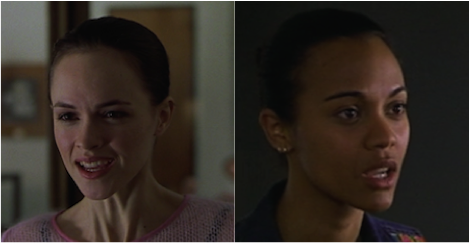
It’s the question of every dancing film, of course: cast actors, or cast dancers? With the former, you’ll need stand-ins for the harder dance moves; with the latter, you risk weak acting destroying the movie. That’s why Center Stage is such a curious film: there’s a mixture of dancers and actors, but inexpert as the dancer-actors are, the full-time actors are worse at acting than the dancers. Much worse. Zoë Saldana and Susan May Pratt were the “real” actors chosen to play Jody’s fellow dancers and friends/frenemies at the academy, and both excel at histrionics. As with Flashdance before it, Center Stage gives an unexpected answer to the actor/dancer dilemma: Why not choose someone who can’t do either?


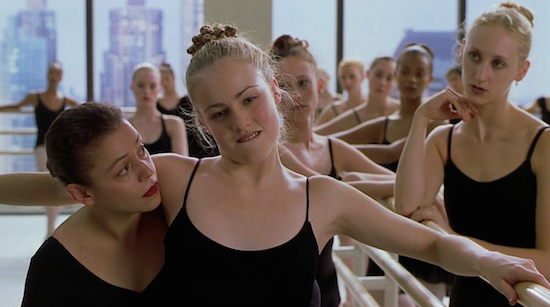
While Saldana can at least move, Pratt displays a level of physical awkwardness that makes her casting baffling. Take this screen shot of the actress, who was presumably cast to lure in fans of 10 Things I Hate about You. Her character, Maureen, is supposed to have the best technique of anyone in the academy. Having spent seven years of my life in ballet studios, I remember what grace looks like, and believe me, it never looks like this:


In fact, this pose is remarkably reminiscent of my own awkward 19-year-own self, who was put into dancing as a kid to overcome a lack of coordination. Not exactly future prima ballerina material, my friends.

Saldana is at least fun to watch, even when she overplays her lines, but oh Pratt. Every scene is painful, and I tend to just fast forward through her parts (though the script is largely at fault too, her delivery is abominable). Luckily, the acting in the film is comic rather than annoying overall, and occasionally decent. And really, who cares? This is a dancing film, with great final performances, convincing practices, and a wonderful dance class at the Broadway Dance Studio in between. When Schull’s dancing, she’s a different actress than the passable one she is in the rest of film–lovely, riveting, fun. And given the choice between even good acting from poor dancers and some weak performances from people who can move? Give me the good dancers, every time.


This post is part of the En Pointe: The Ballet Blogathon, hosted by two marvelous sites: Christina Wehner‘s and Michaela’s of Love Letters to Old Hollywood. (As a sidenote to fellow Hoosier Michaela, Schull studied ballet at Indiana University.) Check out the other blogathon entries here!

Share
Posted in: 1990-current films, Comedies (film), Drama (film), Humor, Musicals and dancing films, Romance (films), Romantic Comedies (film) Tagged: Amanda Schull, ballet films, Center Stage, lovable camp dance films

What’s in a Name?: Together Again (1944)

05/17/2017 by leah@carygrantwonteatyou.com 20 Comments


I have a sophisticated theory about why the Irene Dunne vehicle Together Again (1944) is never on any best-of, favorites, or romantic comedy lists despite the many joys of viewing it: the title sucks.

And when I say it sucks, I mean it’s the WORST TITLE I CAN IMAGINE. It’s so forgettable that every time I think of it, I have to look up Dunne’s IMDB site to find it. I cannot for the life of me remember it at all. And I’m a fan of the film! What does that say?

The title isn’t mysterious, as in The Natural, an aptly named, but box-office-ignorant choice. It’s not annoying, as in Mr. Deeds Goes to Town. It’s just so impossibly blah and vague. Together Again. As in a remarriage? As in partners who re-team? As in peanut butter and jelly? WHAT does it mean? I’ve seen the film and any possible answer to that question is not a good one.

Of course, if I’d had my druthers, I would have named it this way: Charles Coburn, Matchmaker. Because any classic movie fan familiar with his work would run to see it then. But as I don’t have naming rights, I can just tell you this: Ignore the title; watch the film.

Why? I’ve posted a longwinded tribute to it, with comparisons to Veep, should you have time to kill. But here, I’ll give you the brief but essential rundown of why so many of you will love it:

  1. It’s Such a Feminist Flick. A female mayor, people. Who rips on men who belittle her. Who makes fun of romance, and yet (despite herself) is itching for it after her husband’s death. Her father-in-law (Coburn) keeps trying to sway her to take things easier, to find a new man and stop worshipping his son. Hooked yet?
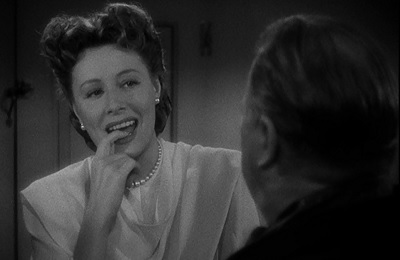
  2. Irene Dunne. Oh she’s great. That odd, fluttery voice dishes out sarcasm with verve. Her on-point timing and ease of movement make her mesmerizing to hear and watch.
  3. The Romance. I’m not a big fan of Charles Boyer’s, but the two actors have chemistry together. And I’ve always been a fan of the straightlaced gal and bohemian/relaxed guy meet-cute, probably because I was such a nerd as a kid.Unnecessary Aside and Spoiler of Other Films: I prefer Boyer’s & Dunne’s Love Affair (1939) to the more beloved An Affair to Remember (1957) remake, partially because Boyer & Dunne are more in sync and believable as a couple than Kerr and Grant, despite the latter’s extreme charm in his film. But mainly because Deborah Kerr seems such an inert actress to me, making the tragedy that befalls her less moving than that of the highly energetic Dunne. I mean, ask yourself: Which actress can you imagine in a gym? I rest my case. (The fact that I’m more like Kerr, gym-devotion wise, doesn’t alter my point narratively speaking.)
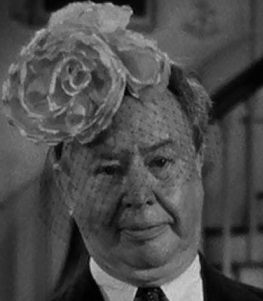
  4. Coburn-Dunne Magic. I love these two together. You could ditch the romance and just enjoy Dunne & Coburn sparring, and never miss a thing. These two are so witty, have such a great rhythm together. And his expression when he rips on her for a frivolous hat purchase is so good I’m going to have to post it again (I believe this is post 3):


Alas, the only reason I discovered this film at all is because it was paired with the more famous Theodora Goes Wild in a Netflix two-set; to my surprise, I was disappointed with the comparatively famous madcap film, and fell hard for Together Again. If only the smart folks who’d named the former had taken a crack at the latter.

This post is part of the Classic Movie Blog Association’s blogathon on Underseen and Underrated films. If you haven’t checked out the other entries yet, go see them now!


Share
Posted in: 1940s films, Comedies (film), Feminism, Humor, Romantic Comedies (film) Tagged: Charles Boyer, Charles Coburn, Irene Dunne, matchmaker films, underrated rom-coms
« Previous 1 2 3 4 5 6 7 8 Next »

Recent Posts

  • How You Know Your Friends Know You
  • National Classic Movie Day!
  • Colbert’s Midnight (1939), Rom-Com Magic
  • Say Anything Is The Sure Thing’s Lame Younger Brother
  • Wallace Got an Oscar

Subscribe to Blog via Email

Enter your email address to subscribe to this blog and receive notifications of new posts by email.

Categories

  • 1920s films
  • 1930s films
  • 1940s films
  • 1950s films
  • 1960s films
  • 1970s films
  • 1980s films
  • 1990-current films
  • 2020s films
  • Action & Sports Films
  • Anti-Romance films
  • Blogathons
  • Childfree
  • Comedies (film)
  • Drama (film)
  • Feminism
  • Femme fatales
  • Film Noir/Crime/Thriller & Mystery
  • Gloriously Silly Scenes
  • Horror
  • Humor
  • Mae West Moments
  • Musicals and dancing films
  • Oscars
  • Random
  • Romance (films)
  • Romantic Comedies (film)
  • The Moment I Fell for
  • Turn My Sister into Classic Movie Fan
  • TV & Pop Culture
  • Uncategorized
Share
Classic Movie Blog Hub Member

Recent Comments

  • leah@carygrantwonteatyou.com on How You Know Your Friends Know You
  • Silver Screenings on How You Know Your Friends Know You
  • leah@carygrantwonteatyou.com on How You Know Your Friends Know You
  • Classic Film And TV Corner on How You Know Your Friends Know You
  • leah@carygrantwonteatyou.com on National Classic Movie Day!

Archives

  • June 2026
  • May 2026
  • March 2026
  • November 2025
  • September 2025
  • May 2025
  • March 2025
  • January 2025
  • November 2024
  • August 2024
  • July 2024
  • May 2024
  • March 2024
  • February 2024
  • December 2023
  • November 2023
  • October 2023
  • September 2023
  • August 2023
  • July 2023
  • May 2023
  • April 2023
  • March 2023
  • January 2023
  • December 2022
  • November 2022
  • September 2022
  • July 2022
  • May 2022
  • April 2022
  • March 2022
  • February 2022
  • October 2021
  • September 2021
  • April 2021
  • March 2021
  • February 2021
  • December 2020
  • October 2020
  • September 2020
  • July 2020
  • May 2020
  • April 2020
  • March 2020
  • February 2020
  • December 2019
  • October 2019
  • September 2019
  • June 2019
  • May 2019
  • April 2019
  • February 2019
  • January 2019
  • November 2018
  • September 2018
  • July 2018
  • June 2018
  • May 2018
  • April 2018
  • March 2018
  • February 2018
  • January 2018
  • November 2017
  • September 2017
  • August 2017
  • July 2017
  • June 2017
  • May 2017
  • April 2017
  • March 2017
  • February 2017
  • January 2017
  • December 2016
  • November 2016
  • October 2016
  • August 2016
  • July 2016
  • June 2016
  • May 2016
  • April 2016
  • March 2016
  • February 2016
  • January 2016
  • December 2015
  • November 2015
  • October 2015
  • September 2015
  • August 2015
  • July 2015
  • June 2015
  • May 2015
  • April 2015
  • March 2015
  • February 2015
  • January 2015
  • December 2014
  • November 2014
  • October 2014
  • September 2014
  • August 2014
  • July 2014
  • June 2014
  • May 2014
  • April 2014
  • March 2014
  • February 2014
  • January 2014

Meta

  • Log in
  • Entries feed
  • Comments feed
  • WordPress.org

Copyright © 2026 Cary Grant Won't Eat You.

Church WordPress Theme by themehall.com