Cary Grant Won't Eat You

Classic movies for phobics

  • About
  • eBooks
  • Previous Blogathons
Classic movies for phobics

Humor

Please Keep the Hair: Keri Russell, Rita Hayworth, and Veronica Lake

12/07/2014 by leah@carygrantwonteatyou.com 4 Comments

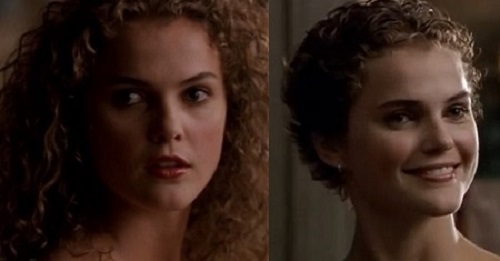
All the wig-switching in the KGB thriller The Americans has me thinking about hair. Of course, my musings must be rooted in the show’s star, Keri Russell, she of the infamous haircut that made Felicity stars everywhere wish her beautician Sweeney Todd.

FelicityShortandLongHair
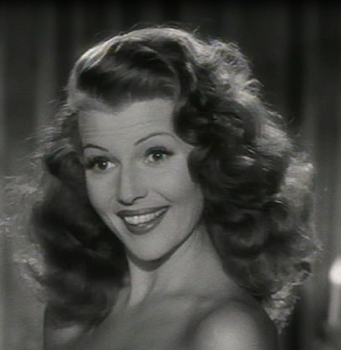
But Russell was not the only star blamed for tanking a production with her shorn tresses. I’m thinking, of course, of The Love Goddess herself, Rita Hayworth, who made not one, but two hairy decisions in that barber chair. After all, her fans had fallen for her after this famous hair-flip in Gilda (1946), later celebrated in The Shawshank Redemption (1994):

RitaHayworthHairFlip
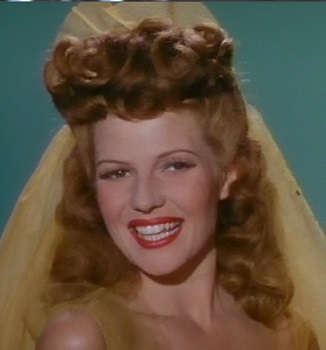
Audiences liked their WWII pinup just the way she was. But given that Hayworth’s former experiments at a stylist’s hands—a hairline move and a red dye job—had led to her fame to begin with, it’s not surprising she was willing to make a change to help her soon-to-be-ex Orson Welles with his noir, The Lady from Shanghai (1947). She changed the hue of her beloved hair, as seen in its usual glory in Cover Girl (1944):

RitaHayworthCoverGirl
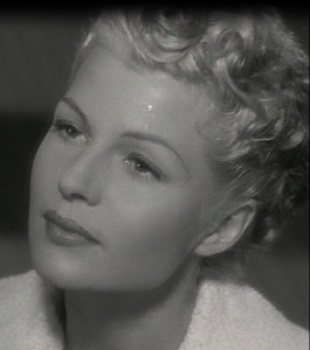
And she also, like Russell after her, chopped it off. The bizarre results: a platinum dye job was blamed for low ticket sales. (Brunettes everywhere, take note: it did happen once.)

RitaHayworthBlonde
It’s true that Hayworth looks better as a redhead, but the film still features one of her sexiest performances. Admittedly, this woman could probably have pulled off a mullet.

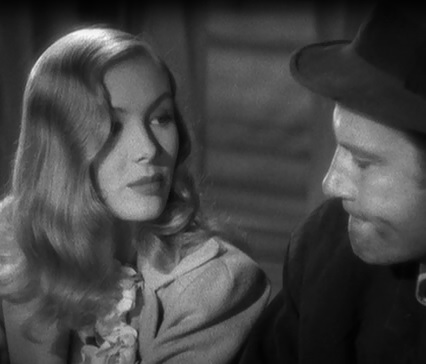
Of course, of all the hair-disaster stories, my favorite is Veronica Lake’s. She was known for that peek-a-boo, hair-in-front-of-eye sexy look models have been attempting since.

VeronicaLakeSullivan'sTravels
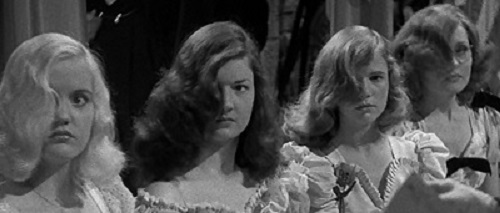
This hairstyle was so popular that it even reached spoof status. One of my favorite moments in The Major and the Minor (1942) is when a cadet mocks the girls at a nearby school: “May as well warn you, there’s an epidemic at Mrs. Shackleford’s school…[T]hey all think they’re Veronica Lake.” The film’s heroine (Ginger Rogers) tries to repress her smile when she sees what he means:

VeronicaLakeLookalikes
In a bizarre twist of fate, Lake undid the do in the interest of national public safety during WWII—all of those fool imitators getting their hair stuck in factories’ machinery. (Check out this staged photo warning her wannabes.). And—not surprisingly—Lake lost her star status soon after the change (though there were other, perhaps more likely reasons for her decline, as there were for the poor box office receipts of Hayworth’s film and lower ratings of Russell’s show).

I know more rational folks would claim that these outcries over hair are outrageous and silly, but having suffered the pains of fine, limp hair all my life, I do get a bit annoyed when a woman with a thick, luscious mane doesn’t appreciate what she has. Sure, if it’s too much for your delicate face, à la Audrey Hepburn, hack away. But if not, don’t pain all of us with wilted mops by throwing your riches away. Have a little pity. At least let us envy from afar.

Share
Posted in: 1940s films, Comedies (film), Drama (film), Film Noir/Crime/Thriller & Mystery, Humor, TV & Pop Culture Tagged: bad haircuts, Felicity, Keri Russell, Rita Hayworth, The Americans, The Lady from Shanghai, Veronica Lake hairdo

Actors Too Pretty for Their Parts

11/21/2014 by leah@carygrantwonteatyou.com 4 Comments

I would like to say that an actor’s performance always trumps any preconceptions of mine about a character from a book I’ve read, that I can set aside my firm conviction that a character was blonde or tall or curvy. But the truth is, sometimes my assumptions ruin a performance for me, no matter how adept and nuanced the acting, no matter how much that performer captured, even enhanced the essence of a character. And for some reason, I am most frustrated when an average-looking book character suddenly becomes a knockout in the movie.

Sometimes, I know this reaction is foolish. But in other cases, the character’s looks were essential to the character/story. Hollywood often mistakes delicacy for sex appeal, or assumes we’re all afraid to see someone onscreen who isn’t dazzling. Here’s my list of the most annoying casting choices in terms of beauty, from least to most irritating:

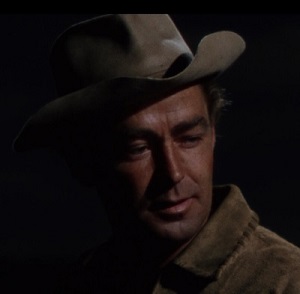
Fourth Runner Up: Alan Ladd as Shane (1953)

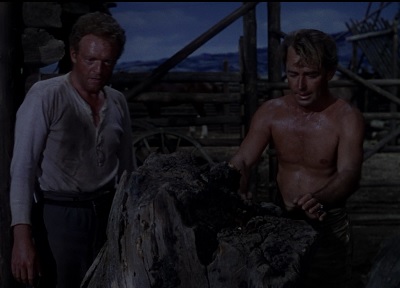
LaddCowboy-Shane
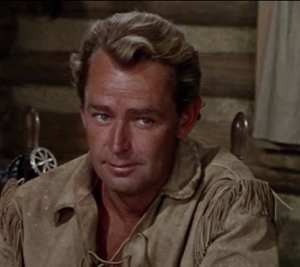
Shane is meant to be dark and mysterious. Alan Ladd could be a disturbing, haunted character, and he nails the cowboy’s reticence, humility, reserve. But I couldn’t see in him the forbidding man who managed to overcome my eighth-grade reluctance to read a western. When the teacher showed the film in class, I remember my fury: Come on. We’re not casting for New Kids on the Block here! (i.e., One Direction for you youngsters). Admittedly, the hairstyle and clothing designers didn’t help:

LaddasShane
In the battle between him and the bad guy, played by Jack Palance, I am so distracted by that pretty face that I’m sure the gunman would be too.

This casting decision also tainted the almost-romance between him and Marian (Jean Arthur). In the book, she is so drawn by his strength of character that she can’t help developing feelings for him. But in this film, it was hard not to believe Marian just found him hotter than her husband, Joe (Van Heflin).

HeflinandLadd-Shane

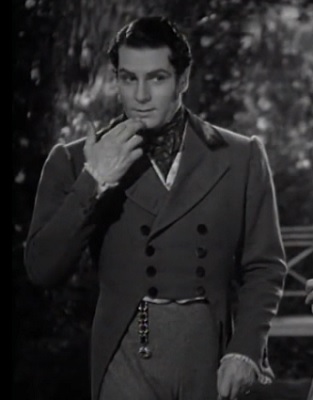
Third Runner Up: Lawrence Olivier as Darcy in Pride and Prejudice (1940)

OlivierasDarcy
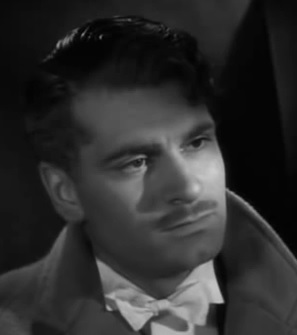
Lawrence Olivier is a good Maxim de Winter in Rebecca. The character is described as aristocratic and cold, like a painting of a fourteenth-century nobleman: “His face was arresting, sensitive, medieval in some strange explicable way….Could one but rob him of his English tweeds, and put him in black, with lace at his throat and wrists, he would stare down at us in our new world from a long distant past…” Olivier fits this description perfectly; in fact, he always seems most at home in period dramas.

OlivierRebecca
But when it comes to bringing to life the imposing Fitzwilliam Darcy, this short Englishman looks too much like a toy soldier to me. I don’t see him as gathering all eyes due to his “fine, tall person, handsome features, noble mien.” There needs to be some rugged in Darcy’s handsome, and delicate Olivier doesn’t cut it. I see this actor as the snob cutting down a girl for wearing thrift store clothes, not a man whose very presence could intimidate a woman as sassy as Elizabeth Bennett.

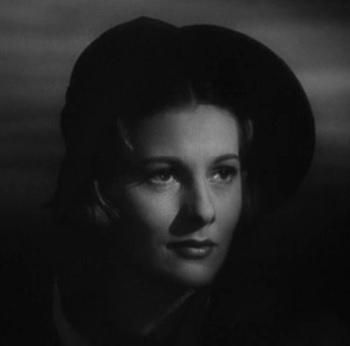
 Second and First Runners Up: Joan Fontaine as Mrs. de Winter in Rebecca (1940) and Jane Eyre (1943)
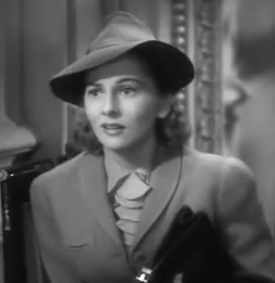
Given, the narrator in Rebecca is a very humble sort, unlikely to recognize her own charms. And Fontaine’s looks are less sexy than those of the striking Anjelica Huston type I always imagined Rebecca to be. But she certainly doesn’t appear to be the mousy, flat-haired woman she’s described as in the book:

FontaineinRebecca
A girl this lovely surely would have gotten more attention from Mrs. Van Hopper’s friends. For the story to work, she needs to have been belittled and underestimated throughout her life, and I’m just not buying it. Does Fontaine capture the hesitancy and insecurity of the wife? Absolutely. Did the filmmakers try to tone down her considerable looks through makeup and hair style? Yes. Did I ever forget those looks enough to believe her as Mrs. de Winter? Not at all.

While the choice of Fontaine for Rebecca was a poor one, the decision to make her Jane Eyre was far worse. There’s no way a woman this ravishing would ever utter these famous lines to her love (bolding mine): “Do you think, because I am poor, obscure, plain and little, I am soulless and heartless? You think wrong! – I have as much soul as you, – and full as much heart! And if God had gifted me with some beauty and much wealth, I should have made it as hard for you to leave me, as it is now for me to leave you!”

Yeah, this woman looks plain:

FontaineJaneEyre
All of us less-than-beautiful little readers out there were thrilled to discover in Jane a heroine who wasn’t gorgeous but was strong-willed, proud, passionate. Too bad Hollywood doesn’t get that ordinary girls like their heroines to look like they do…..

Winner: Lana Turner as Marianne in Green Dolphin Street
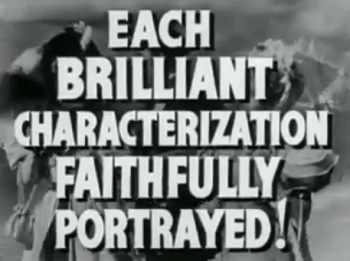
Of all the silly selections I’ve listed, the most ludicrous by far is this one, especially since the film’s preview made a bold claim that it had not altered the source material:

TitleSlideGreenDolphin
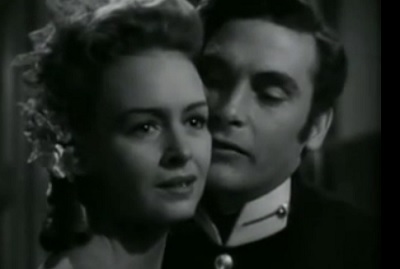
Let’s see if you agree with MGM’s statement. In the novel, two sisters, Marianne and Marguerite, fall for the same guy, William (Richard Hart). He adores Marguerite, the sweet, gentle beauty (Donna Reed).

DonnaReedandRichardHart
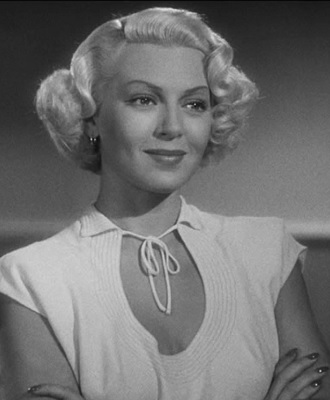
After moving to New Zealand, he sends for the sister he wants for his bride, but instead of writing the name of his girlfriend, Marguerite, in his proposal letter, he writes Marianne instead because he’s drunk and kind of an idiot. To his shock and dismay, he’s stuck with marrying his love’s prickly, smart, unattractive sibling, portrayed by this actress:

LanaTurnerinPostman2
’Cause when I’m trying to come up with the gal all the boys choose girls-next-door over, Lana Turner is first on my list. Of course, the movie changed the plot a bit to make this casting choice look a bit less ridiculous. But since the reader likes Marianne in part because she’s so much more than she seems to outsiders, this va-va-voom choice doesn’t exactly convey novelist Elizabeth Goudge’s meaning.

And there you have it. My choices for actors and actresses far too pretty for their roles. What are yours?

Share
Posted in: 1940s films, 1950s films, Drama (film), Humor Tagged: Alan Ladd, Green Dolphin Street, Jane Eyre, Joan Fontaine, Lana Turner, Lawrence Olivier, Rebecca, Shane

My Favorite Canadian: Michael J. Fox

10/09/2014 by leah@carygrantwonteatyou.com 16 Comments

This post is part of the O Canada Blogathon hosted by Ruth of Silver Screenings and Kristina of Speakeasy.

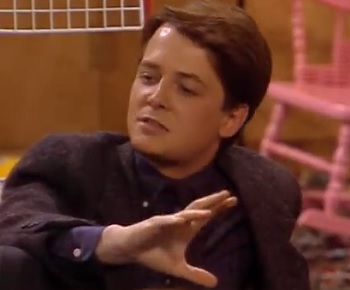
I remember being vaguely horrified when I discovered Michael J. Fox was Canadian. He was OURS. How could he possibly be anything other than American? His role as Alex P. Keaton was so iconic: the conservative, hippie-parent-horrifying, greed-is-good believing teen who embodied and parodied Reagan-era culture.  Although I’d rather hang out with his sister Mallory (Justine Bateman), I knew Family Ties revolved around Fox’s pitch-perfect, Emmy-winning performance as Alex.

Keaton (Fox) explaining the horror of taxes to preschoolers

Alex P. (Fox) explaining the horror of taxes to preschoolers

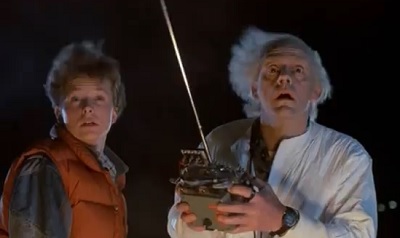
I was such a huge fan of Family Ties that when Fox followed the show with big-screen stardom in Back to the Future, what I felt was pride.

BacktotheFuture
No wonder then that in those years before I’d ever been out of my own country or met any Canadians, I felt so disappointed to lose any hold on him. I mean, I’d gone to see Doc Hollywood–in the theater. I’d suffered through The Secret of My Success for him. It wasn’t really a crush with me.  (Even if I ever had one, I think those suspenders in Back to the Future would have ruined it.)  I just admired him so much.  His gestures, expressions, movements–always so true, so uniquely his, and so damn funny. And oh, the lines. No one can deliver a line more effectively than Michael J. Fox. I could listen to him ask, “Are you telling me that you built a time machine… out of a DeLorean?” on repeat. No wonder the guy can’t seem to walk in front of a camera without being nominated for an award.

When Parkinson’s forced Fox to leave Spin City, his costars couldn’t stop crying long enough to finish his final episode. They didn’t know yet that he’d find a second career in his illness as a guest star, even as the headliner of his own show. And most of all, as the representative for the disease that had claimed him. They didn’t know he’d write a memoir. Call it Lucky Man. Tell other actors on Inside the Actor’s Studio suffering from the same afflictions that he had it easy, with his advantages, that they were those who had courage and guts; they were the ones he admired. That he’d remain tireless and fearless in his pursuit of a cure, and keep on wowing his countless fans.

It took a while, but I finally lost my dismay at Fox’s being Canadian. Instead, I now feel gratitude toward his homeland: for sharing this fine of an actor, this caliber of a human being with the rest of us. And now if you’ll excuse me, I need to re-watch Alex P. recommending amoral business principles to children.

Be sure to check out the other entries in the blogathon! And I promise to return to classic film next week. I just couldn’t resist celebrating Fox.

Share
Posted in: 1980s films, Blogathons, Humor, TV & Pop Culture Tagged: Alex P. Keaton, Back to the Future, Canadian, Family Ties, Michael J. Fox, Spin City

Being a Princess Would Suck: Roman Holiday

09/18/2014 by leah@carygrantwonteatyou.com 6 Comments

Like most girls, I was born wanting to be a princess, though I preferred Belinda from The Practical Princess to helpless Cinderella. Unlike for many of my peers, this desire ended quite early for me. The wedding of Princess Di lasted far too long for my attention span, and what was up with that poofy dress and that decidedly not Barbie-like haircut?

Even had Diana worn the kind of clothes I preferred at six, I knew her kind of life wasn’t for me. For a shy kid who dodged from view, that much limelight looked terrifying and—even worse—dull.

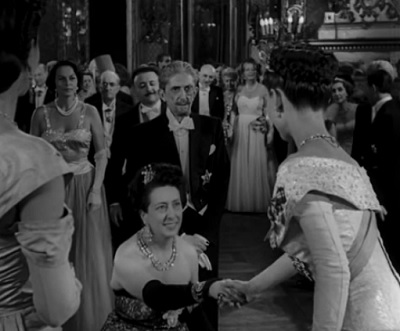
linesAudrey
It’s hard to ignore the tedium of official duties when you’re the daughter of a principal. “Are we going to be last AGAIN?” I used to whisper to my sisters at the high school concert’s or play’s conclusion as I shuttled between the mothers talking kids and fathers spinning funny stories and finally glared at that last soul who hadn’t noticed that my family and he had been the only ones there for the past hour.

Perhaps that’s why whenever Kate Middleton is shot in another gorgeous dress or chic hat, I always look past it to the caption, to see what tiresome event she wore it for. I like viewing the pretty dresses in princess films still today, but I’m far more interested in the conflicts the heroine has to endure.

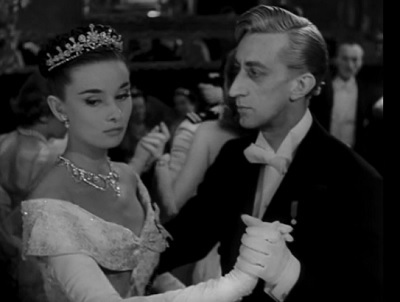
Audreydancing
In The Prince and Me, when Paige, Julia Stiles’s character, balks at the many rules of royalty, the queen claims jewels are compensations, and the camera rests on a feast of diamond and emerald. “Yeah,” I remember thinking when I saw it, “maybe for the first twenty minutes.” Because after enduring the 200th ribbon-cutting ceremony in honor of something I’d never heard of; choking through fussy, elaborate dinners while wearing Spanx; watching yet another stream of dull important people approaching me I’d have to pretend were interesting, like some sick replay of my worst date; I’d be handing that tiara to the gal next to me and high-tailing it to Vegas.

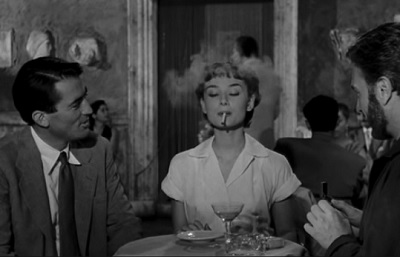
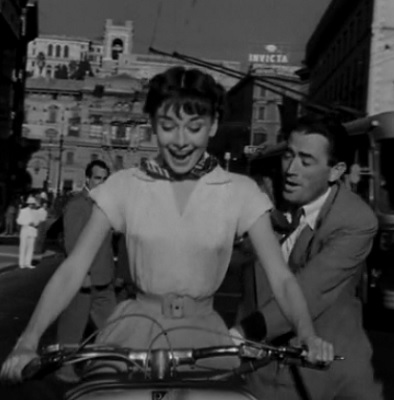
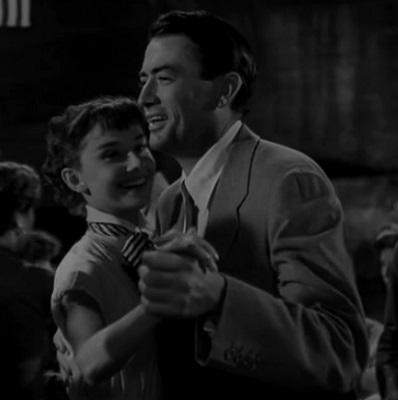
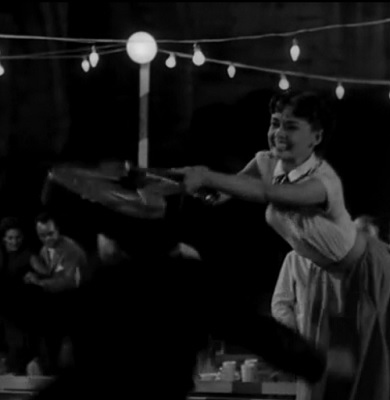
Perhaps that’s why Roman Holiday is my favorite of all princess films, a story about the glamour of everyday joys rather than balls, the excitement of the release from royalty. The film begins with Princess Ann (Audrey Hepburn) trying not to yawn through yet another official ceremony on her goodwill tour, and scandalously kicking off her tight heel, which her retinue quickly finds a way to conceal.

In response to her schedule for the next day, Ann rehearses her answers, her boredom coming through in every line: “Thank you, no thank you.” And which speech she’ll have to give, such as one of her regulars, “Youth and Progress.” Her frustration with all the routine soon leads to a nervous attack, a sedative, and her escape to play hooky in Rome, sans her identity or attendants. She meets handsome reporter Joe Bradley (Gregory Peck) as she wanders. He soon discovers her identity and plans for a scoop on the princess’s “holiday.” Oblivious to his discovery, she simply enjoys herself, and he, of course (this is Audrey Hepburn, after all) does too.

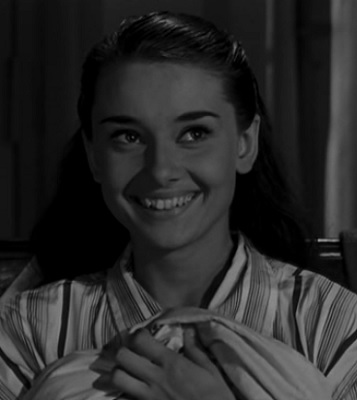
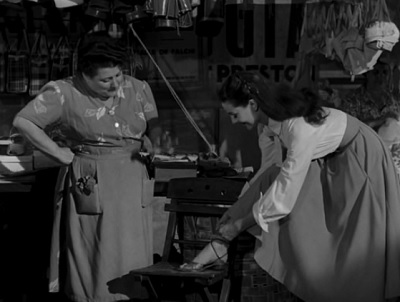
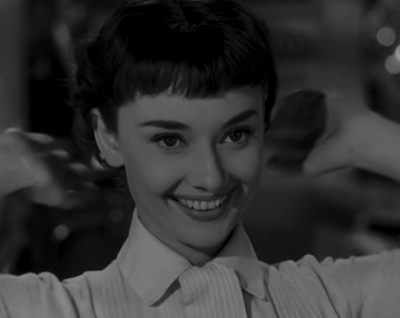
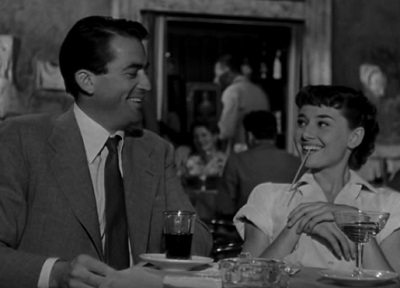
Everyday joys soon elevate the princess’s spirits from frustration to exuberance. Just look at that smile as she goes about the city…

Meeting a guy in nonofficial capacity...in PJs

Meeting a guy while in PJs

Shopping for sandals

Shopping for sandals

Getting a haircut

Getting a haircut

Drinking champaign for breakfast (Hepburn with Peck)

Drinking champaign for breakfast (Hepburn with Peck)

Trying what's forbidden... (with Peck and Eddie Albert as the adorable photographer)

Trying what’s forbidden (with Peck and Eddie Albert as the photographer)

Driving around....

Driving around….

Falling for a regular guy (if you can call Peck that)

Falling for a regular guy (if you can call Peck that)

Causing a ruckus

Causing a ruckus

Compared to such pleasures, what are designer gowns and crown jewels?

Share
Posted in: 1950s films, 1990-current films, Humor, Romantic Comedies (film), TV & Pop Culture Tagged: Audrey Hepburn, Gregory Peck, Kate Middleton, princess films, Roman Holiday, The Prince and Me

The Moment I Fell for Robin Williams

08/20/2014 by leah@carygrantwonteatyou.com 4 Comments

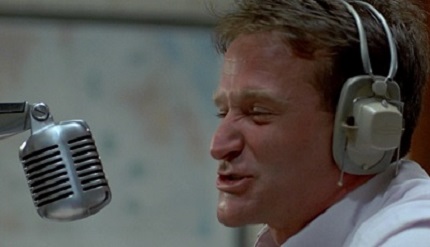
Last week, while I was seeking Lauren Bacall tributes online, I avoided my TV because I didn’t want to see any Robin Williams ones. The loss was simply too raw, too big for me to watch some summary of a man who slipped through any easy definitions. After all, it was this breathtaking versatility; best demonstrated in Good Morning, Vietnam; that I couldn’t face losing.

GoodMorningVietnam-RobinWilliams
While I’m usually quick to attack the Academy for their humorlessness, I agreed with them that dramas displayed Williams’s most remarkable work. Who else could be so manic in humor, and then so quiet in pathos? So riveting in his energy, and even more so (perhaps because of it) in his stillness?

The actor’s sad scenes were the more so because you could feel the good humor bubbling beneath, the fact that this man was capable of very great joy. The first word that comes to mind with Williams is not funny, but empathetic. This man understood human nature like no comic I’ve ever witnessed, and any humor writer will tell you that truth is at the root of all good comedy.

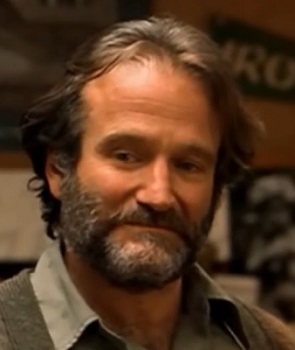
RobinWilliams-GoodWillHunting
The surprise of finally seeing the actor win an Oscar for Good Will Hunting was not at the Academy having snored through Good Morning, Vietnam (how else to explain Michael Douglas winning instead for his one-dimensional performance in Wall Street?). The shock was in recognizing that this guy should have been playing therapists all along.

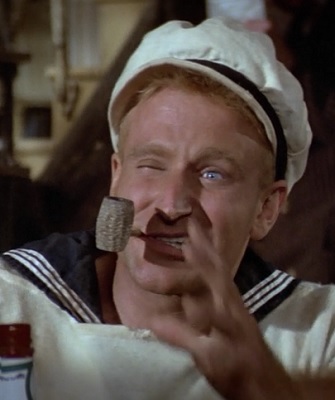
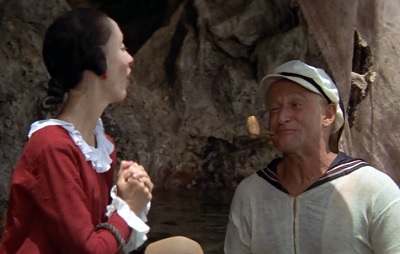
My favorite Williams performance was probably in Awakenings. But I fell for him much, much earlier. It wasn’t in Mork & Mindy, in which his fevered  acting was exhausting to watch, even for a little kid. I couldn’t take the show very often, even though I always did laugh. No. I fell for Williams in Popeye, the first film he starred in.

Popeye-Williams
Now hear me out. I am not going to argue that this flop is a good film, that it’s under-appreciated or even tolerable. Oh no. It’s so much worse than you remember.

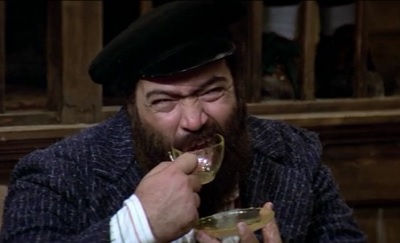
Paul L. Smith as villain Bluto

Paul L. Smith as villain Bluto

Williams is not very good in it either. But I fell hard for him for agreeing to take the role at all, and for having so much fun with it once he did. This spinach-eating cartoon character was always my favorite, and though I’ll admit to a vague horror on first hearing a human would be playing it, and in a musical, I was impressed with how completely Williams embraced the role. Such an unsuccessful campy movie I could easily dismiss, but for Williams as Popeye, even in a shaky performance, I felt a kind of awe.

Olive Oyl (Shelley Duvall) with Popeye

Olive Oyl (Shelley Duvall) with Popeye

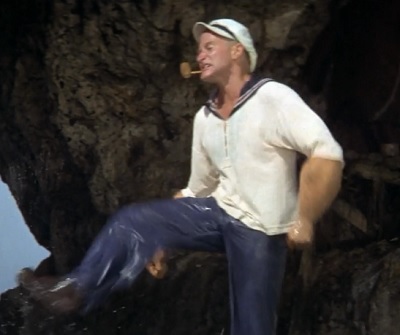
One could argue that the actor was just beginning, that this was a role he could get. But that wouldn’t explain all of Williams’s baffling choices over the years, that sense that he sometimes took parts simply to avoid taking his career, or himself, too seriously. How else can anyone explain Hook? And as I mourn Williams, I don’t want to see his best work; it’s too easy to imagine in his depiction of every emotion the darkness that would take him from us. So instead, I’m gonna stick with his silliness for a while. I’ll rewatch The World according to Garp, perhaps The Birdcage, maybe even the batshit-crazy Shakes the Clown. And yes, I’m going to spend some time with the ever-mumbling, ever-smiling, greens-loving sailor man.

Popeye-kicking-RobinWilliams

Share
Posted in: 1980s films, Comedies (film), Drama (film), Humor, The Moment I Fell for Tagged: Popeye, Robin Williams

Help Me Turn My Sister into a Classic Film Fan

07/23/2014 by leah@carygrantwonteatyou.com 12 Comments

I’ve been trying to get my sisters into classic movies for a couple decades now. I have failed utterly. Their objections are:

  • The acting is stagey.
  • Who can get over the black and white?
  • Just as technology has improved, so have the films using it.

I have to give some share of the blame to my mother, who has a weakness for Hayley Mills Disney flicks and insisted the three of us view them as kids; Pollyanna, That Darn Cat! and The Parent Trap may have done irreparable damage. Mom tried to make up for these deplorable choices with some Shirley Temple movies and The Song of Bernadette, but though these films represented a qualitative improvement, they still didn’t demonstrate any perceptiveness about her children’s likely preferences.*

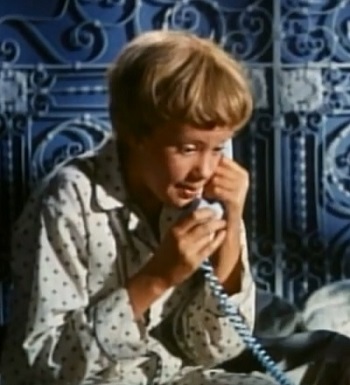
Hayley is calling for help, as am I.

Hayley is calling for help, as am I.

Some of the blame for my sisters’ hostility toward classic film must go to my father too, as he shares his daughters’ innate sarcasm and should have known to discourage the viewing of such sugary slosh, which would shade their opinion of all classic movies thereafter. (Had I not caught a five-minute clip of Ball of Fire as a teen and been lured into AMC addiction, I might possess my sisters’ baffling convictions myself.)

Luckily, my sister Rachel wants me to watch Breaking Bad so much that she has accepted a trade: I watch the show; she watches 10 classic films.

In terms of time, of course, this is not a fair exchange, as Rachel knows me well enough to predict I’ll be sucked into all five seasons. However, I am desperate enough to go along.

I’m sure you can see what’s at stake here: this is my best chance, possibly my only one in the (hopefully) decades left until I croak. Would anyone who either knows my sister or these films weigh in with advice on or alternatives to my tentative list?

My choices are based on my sister’s love for sports films; interest in the media, crime, and politics; sense of humor; and previous film favorites. Since she hates stagey acting, I’m a little hesitant about melodramas not of the dark variety—Sweet Smell of Success, perhaps; Grand Hotel, not so much. I’m thinking of James Garfield, Barbara Stanwyck, and their ilk for acting style—the more natural, the better. Rachel lists the following as among her favorite movies: The Big Lebowski, Absence of Malice, …And Justice for All, Good Will Hunting, Shawshank Redemption, Office Space, Ordinary People, Il Postino, Some Kind of Wonderful, and The Legend of Billy Jean.

One note: I’m better at predicting her taste in dramas than comedies, as she tends to be annoyed by my love for broad humor. She’s appreciated my Coen brothers and Arrested Development recs, but is disturbed by my appreciation for Judd Apatow.

Here’s my first try, with options (in no particular order):

  1. Scarface (1932) (since a remake, she might be interested)
  2. Ace in the Hole (since she liked The Paper)
  3. Notorious/Shadow of a Doubt (both reminded me of My Cousin Rachel, a Daphne du Maurier book she liked—I don’t think she’d appreciate the du Maurier adaptations)
  4. 3:10 to Yuma (for the Glenn Ford-Van Heflin interchange)
  5. Mr. Smith Goes to Washington (since she’s into politics)
  6. His Girl Friday (she’s seen Switching Channels and likes good dialogue)
  7. It Happened One Night/The Awful Truth/Libeled Lady/The Lady Eve (Which one???)
  8. On the Waterfront (as she likes some of Brando’s admirers)
  9. Hud/Out of the Past (since she likes Paul Newman, and might appreciate the style & looks of Robert Mitchum)
  10. The Third Man (perhaps iffy–I can’t come up with plot objections, but she really hated Citizen Kane and might therefore dislike Orson Welles.)

Films I haven’t seen yet she might like: Body and Soul, M, or possibly a noir such as Kiss Me Deadly or They Live by Night. I worry about any films with bad acting, as that will confirm her prejudice against old films. She couldn’t get past the mysteries’ quality in Psych, so I have no hopes for her with The Thin Man.

Any help you can give me?

*I should admit that Mom may have some odd favorites, but she is willing to read about all of mine; she has been my most loyal blog reader.

Share
Posted in: Humor, Turn My Sister into Classic Movie Fan Tagged: List advice, Reluctant classic film viewers, Sisters

The Delightful Raunchiness of Mae West

06/05/2014 by leah@carygrantwonteatyou.com Leave a Comment

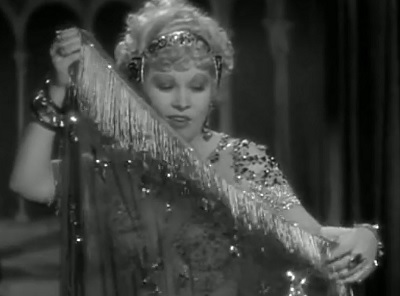
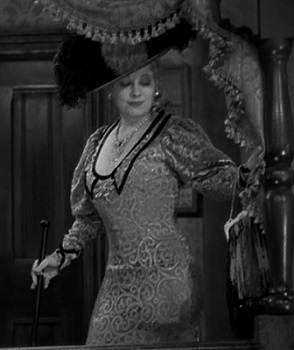
MaeWestwveil
I knew from Complicated Women, TCM’s documentary on films before the production code, that early movies challenged men’s ownership of women’s bodies, minds, and souls. Many of these pre-code movies (1929-34) were so shockingly liberal in content that they make today’s look prudish by comparison (nudity in a Tarzan movie, anyone?) After the code, of course, sexuality and feminist portrayals of women were both toned down to please potential censors. But Mae West, who wrote and starred in her films, managed to sidestep this “sanitation” to an extent because she was so gifted at double entendres.

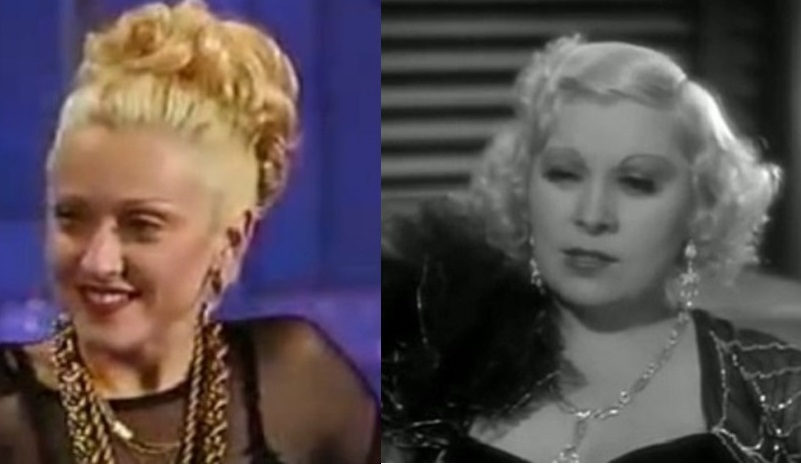
I’d heard of West, of course, knew a couple famous sayings, thought of her vaguely as ahead of her time. But to know of West and to watch her? Not the same. Mae West’s pre- and post-code films were in their own plane, and not only because of her undeniable sensuality and eagerness to express it. And “ahead of her time” is a gross understatement in West’s case. The play she wrote that got her thrown in jail on morals charges in 1927? Titled Sex. Madonna would be attacked for giving a book that title almost seventy years later.

Pioneers Madonna (in ‘92) and Mae West

Pioneers Madonna (in ‘92) and Mae West

And West’s next play? Drag (as in queen), which the vice folks managed to squash entirely. Luckily, we can still watch West on screen. Here are just four reasons why you will embrace this voluptuous rebel:

1. Half of the suggestive one liners you know originated with her.

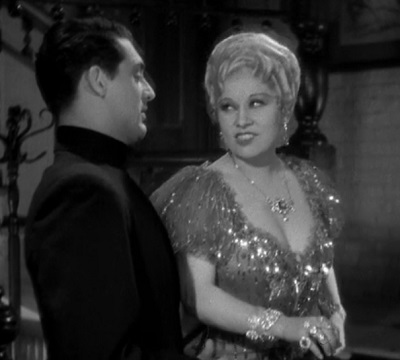
Her famous “Why don’t you come up sometime, see me?” seduction. (Note how overwhelmed Grant looks!)

Her famous “Why don’t you come up sometime, see me?” seduction. (Note how overwhelmed Cary Grant looks!)

This is just a small sampling of lines written and delivered by West (mostly from her films):

  • “When I’m good, I’m very good, but when I’m bad, I’m better.”
  • “It takes two to get one in trouble.”
  • “Is that a pistol in your pocket, or are you just happy to see me?”
  • “A hard man is good to find.”
  • “When I’m caught between two evils, I generally like to take the one I never tried.”
  • “When women go wrong, men go right after them.”

It’s not just the cleverness of West’s expressions that make her movies so entertaining; it’s the sheer number of them she manages to squeeze in. She Done Him Wrong (1933), which is just over an hour,has more funny lines in a few minutes than most current rom-coms in their bloated two-hour running times.

2. You need to see a woman born in the 1890s shimmying like West does.

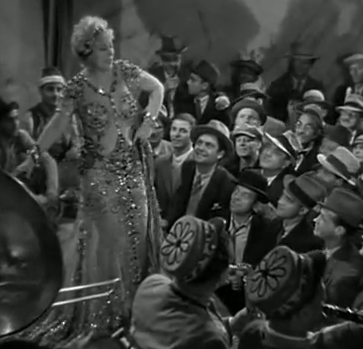
West in I'm No Angel

West in I’m No Angel

She’s dancing, she’s walking—it doesn’t matter. You have never seen a woman strut like this one.

3. 1930s Hollywood actually portrayed young men smitten—in droves—by a 40ish woman

Mae West’s films are irrefutable proof that everything does not improve with time, including Hollywood’s treatment of women past the age of 30. Today we are delighted to see the occasional rom-com with a 40-year-old woman; that’s when West got started. And being who she was, West was never content with just one man in her thrall.

Men who've caught sight of Lou (West) in She Done Him Wrong

Men who’ve caught sight of Lou (West) in She Done Him Wrong

3Lou (West) eyeing a conquest, whom she refers to as “And you, Mr. Mmhmmm?”

Lou (West) eyeing a conquest, whom she refers to as “And you, Mr. Mmhmmm?”

4. Her films are wonderfully ludicrous.
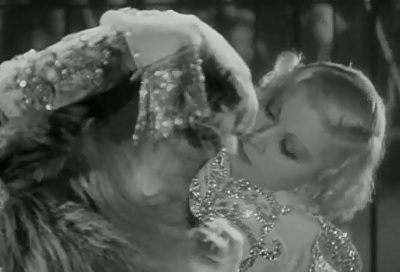
My favorite plot: A woman makes a living as a lion tamer, which men find so attractive they start sending her diamonds (I’m No Angel). The court scene near the close of the film is even more breathtaking. West annihilates the lawyers and slays the judge and jury with her smarts and that amazing walk. Is this whole film absurd? Absolutely. Is it hilarious? Oh yes.

The lion’s-mouth seduction

The lion’s-mouth seduction

Luckily, you can find a plot almost as ridiculous (and funny) in She Done Him Wrong, which is on Netflix streaming right now. What are you waiting for?

Share
Posted in: Feminism, Humor, Mae West Moments, Romantic Comedies (film) Tagged: Cary Grant, Madonna, Mae West, Pre-code films, sexuality

Face It: We’d All Be Lousy Detectives

05/21/2014 by leah@carygrantwonteatyou.com Leave a Comment

When I was a kid, I thought the word “amateur” meant talented. Nancy Drew was an “amateur detective,” and she outsmarted everyone around her, so what else could the word mean? Shows like Murder, She Wrote confirmed this impression: the everyday woman could outwit private detectives, criminals, the police. To be a hero like Nancy, I just needed observation skills. And a little knowledge picked up from mysteries. Then my latent brilliance would appear, dazzling all in my orbit.

Pamela Sue Martin as Nancy Drew

Pamela Sue Martin as Nancy Drew

I read every one of Carolyn Keene’s books until I had four Nancy Drews left, then picked one of the last up, tried to read it, and couldn’t. A few novels shy of my completion goal, I had finally realized that my favorite detective was, well, not terribly gifted. All the bad guys in the stories were mean, all the innocent characters nice. Of course Nancy could solve the mysteries. So could an eleven-year-old girl who didn’t know the meaning of amateur.

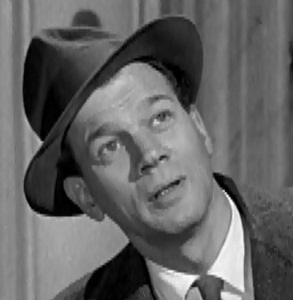
And yet these types of stories persist in Hollywood: the novice saves the day, while the jaded/stupid authorities look the wrong direction. It’s an alluring premise that allows us to imagine ourselves in the novice’s place, an undiscovered genius beating professionals. Yet reason would tell us that we newbies would be about as useless at being detectives as we are in our first days at any job—that what an amateur sleuth would likely do is exactly what those supposedly wrong-headed authorities predict: bungle everything up and possibly get him/herself and/or others killed. Perhaps that’s why The Third Man is so unexpected and so appealing: it features one of the worst amateur detectives ever to appear on film, Holly Martins (Joseph Cotten).

Martins (Cotten) after arriving in Vienna

Martins (Cotten)

Martins travels to post-war Vienna because he’s been promised a job by his buddy, Harry Lime (Orson Welles). He’s soon told that Lime has been killed in a car accident, but the details sound fishy, and Martins, like the cowboys he writes about, decides to find the truth. Others have written about Martins’ role as an ugly American, and it’s true that his behavior toward those around him reveals an appalling sense of cultural superiority. But what strikes me most about Martins’ whole campaign for justice is just how dangerous a naïve sleuth can be. Martins knows nothing about the country he’s in, how desperate its citizens are just to survive. To them, Lime’s death is one of so very many, and if solving the mystery will endanger them, well, they’ll just get back to their black market schemes and leave the foolish interloper to his own devices, thank you very much.

Martins (far right) and Lime's lover and friend

Martins (far right) and Lime’s friends

I always begin the film by siding with Martins against the supposedly sinister locals. I am amused by the hero’s blunt ways in a terrain that’s murky in every sense of the word. The city shots, the architecture, the crazy camera angles, and the shifty looks of the neighbors all suggest that Martins should be suspicious, and far more frightened than he is.

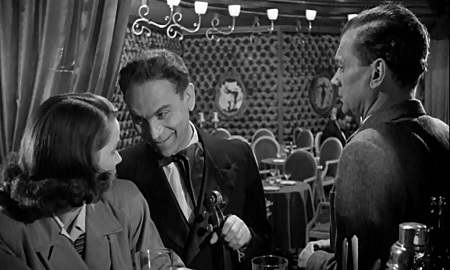
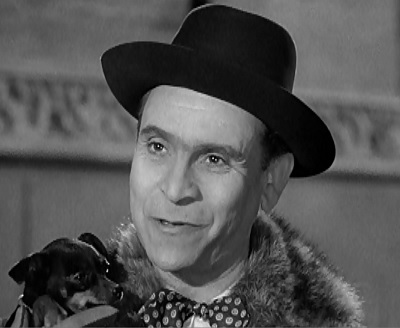
Ernst Deutsch as Lime’s shady friend, Kurtz

Ernst Deutsch as Lime’s shady associate

But as this hero continues to march into the bee farm, slamming his bat against the hives, I begin to think, Uh, Martins? Maybe you should step a bit more gingerly, huh? And if you must blunder about, perhaps let everyone else get inside first? There’s a reason why this movie always makes best-of thrillers lists: Picture Nancy Drew in the midst of The Usual Suspects, frustrated not to find Keyser Söze wearing a Hello My Name Is sticker and casually asking everyone in sight to identify him. Forget Lime’s possible murderers: the people of Vienna need to watch out with Martins on the loose.

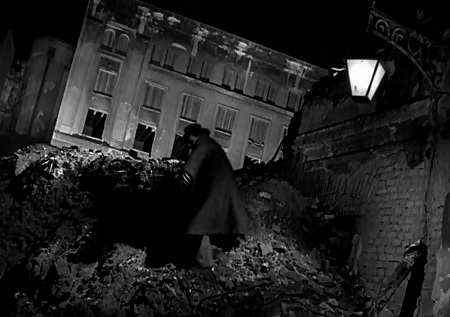
Martins on the run

Martins, the public’s enemy, on the run

I can’t describe much more without revealing some of the mystery—and it’s too good for me to do that. So just watch The Third Man. It’s menacing mood, its striking soundtrack, its lack of moral foundations all would make it fascinating even if it didn’t revolve around an intriguing mystery. And the next time you imagine yourself solving crimes, you’ll remember Holly Martins. And you’ll know just why such dreams are best left to eleven-year-olds.

Share
Posted in: 1940s films, Film Noir/Crime/Thriller & Mystery, Humor Tagged: Bad detectives, Joseph Cotten, Keyser Söze, Nancy Drew, Orson Welles, The Third Man

5 Reasons Why English Majors Will Love Ball of Fire

05/01/2014 by leah@carygrantwonteatyou.com 27 Comments

This entry is part of the Romantic Comedy blogathon cohosted by Backlots and Carole and Co.

In trying to get friends to give old movies a chance, I often start with Ball of Fire, mainly because I know many English majors/graduate students, few of whom predict what delights are waiting for them in this 1941 classic. Here are just five of the reasons why everyone who waxes poetic about Shakespeare or Austen needs to spend a little time with Gary Cooper and Barbara Stanwyck:

1. The Plot: A Mobster/Moll Romantic Comedy about Language

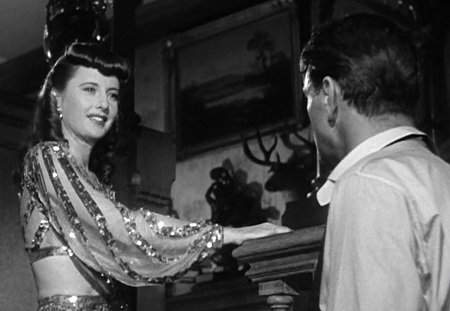
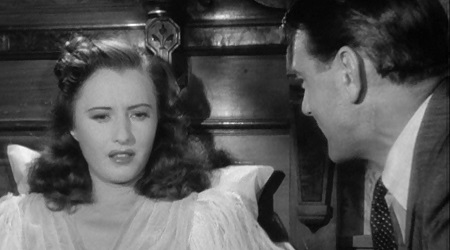
Professor Bertram Potts (Cooper), on the hunt for colorful subjects to aid him with his encyclopedia entry on slang, enlists a sexy torch singer, Sugarpuss O’Shea (Stanwyck).
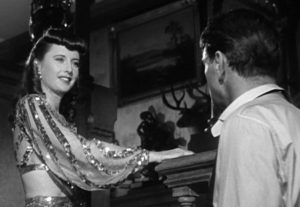
O'Shea (Stanwyck) flirting with the professors

O’Shea (Stanwyck) flirting with Potts

Sound ridiculous? It is, wonderfully so.

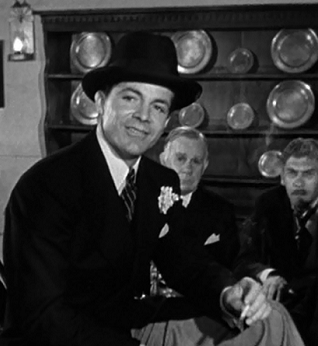
In the “meet cute” moment, O’Shea has just learned that her mobster boyfriend (Dana Andrews) is in trouble with the law. Fearing the knock on her dressing room door is the DA with a subpoena, she’s hostile to Potts, and when she discovers his mission to study her, dismisses him:

O’Shea: “Shove in your clutch.”

Potts: “Exactly the kind of thing I want”….

O’Shea: “OK, scrow, scram, scraw.”

Potts: “A complete conjugation!”

The opening sequence of Potts’ investigation, in which we learn the sources of such terms as “slap happy” and discover just how old the term “jerk” must be, is equally amusing to those of us who delight in wordplay, as is the nerdy professor’s ignorance of such words as “boogie.”

And that’s just the first half hour.

2. A Clever Take on Snow White and the Seven Dwarves

Fables, folk tales, fairy tales. We English majors love to read them, interpret them, reinvent them. (Angela Carter’s dark The Bloody Chamber traumatized me in an introductory lit course.) Famed writing team Charles Brackett and Billy Wilder turn the tale on its head, making Snow White a seductress and the dwarves a team of innocent professors (six bachelors and a widower) who are writing an encyclopedia together, with Prince Potts acting as the eighth member.

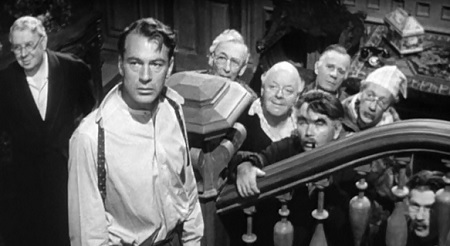
O’Shea seeks shelter from the police at their house, claiming she needs to stay to help with Potts’ research. The proper Potts doesn’t understand why she needs a sleepover, but his elderly companions, used to only the “singularly uninspiring underpinnings” of their housekeeper, outweigh his objections. They have fallen for O’Shea, and their charming antics to gain her attention—wearing new outfits, making sure their pants get ironed, having her teach them the conga—make you wonder just how unfair it is that the prince is the one who wins Snow White’s affection.
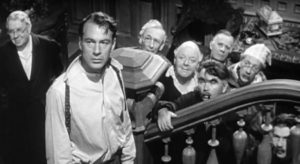
Potts (Cooper) and the dwarves reacting to O'Shea's flirtation

Potts (Cooper) and the dwarves reacting to O’Shea

O’Shea has no plans to seduce Potts, but when things get “hotter” for her boyfriend and she’s told “to stay in the icebox like a good little salad,” she gives the impressionable Potts a kiss. And, as in the fairy tale, things escalate from there.

3. The Witty Dialogue/One Liners

What English major isn’t a sucker for good dialogue? With Wilder & Brackett as writers and Howard Hawks as the director, witty banter and frequent double entendres are a matter of course.

Early in the film, Miss Bragg, the housekeeper, badgers Professor Oddly for gobbling up the strawberry jam after writing an encyclopedia entry on strawberries. She then expresses horror at Professor Magenbruch’s studies.

“I’m just starting my article on sex, Miss Bragg,” he answers. “Any objections?”

“No,” she concedes. “I trust you have more control of yourself than Professor Oddly.”

And the one liners! Some favorites:

O’Shea: “Say, who decorated this place, the mug that shot Lincoln?”

Potts: “Make no mistake, I shall regret the absence of your keen mind; unfortunately, it is inseparable from an extremely disturbing body.”

O’Shea (describing her throat): “It’s as red as The Daily Worker and just as sore.”

Miss Bragg (speaking of O’Shea): “That is the kind of woman that makes whole civilizations topple!”

I always wonder why so many Gilmore Girls and Aaron Sorkin fans won’t give 30s and 40s comedies a try. Ball of Fire not only employs the banter they love so well, but avoids the trap of making EVERY character eloquent (a Sorkin flaw). The contrast between O’Shea’s wisecracking and Potts’ slow earnestness is one of the delights of the film, and given that Cooper typically played a Clint Eastwood type, his professorial wordiness is particularly amusing. As the Self-Styled Siren put it, “Who besides Billy Wilder would look at Gary Cooper, the most laconic speaker in Hollywood, and think, ‘Linguistics!’”

4. Wonderful Characters (and Performances)

With eight professors, a nightclub singer, a mobster and his minions, the DA and his team, and Potts’ other research subjects, a viewer would be unreasonable to expect much character development in any but the main players. Romantic comedies rarely get beyond stereotypes anyway. But most of the characters in Ball of Fire are unique and memorable, from the prim widower with the sexless interpretation of romance, to the genial Professor Magenbruch, who can’t stop thinking about his need to research for the sex entry. Even Joe Lilac’s two minions are funny in their villainy. And at the center of the film, we have Sugarpuss O’Shea, played by Stanwyck in an Oscar-nominated performance.

Stanwyck’s job as Snow White is to charm, and she takes to it naturally. She’s laid back and confident, and as cool as her companions are geeky. (I kept thinking of an Elizabeth Bennett landing in the middle of The Big Bang Theory.) Most of all, O’Shea’s a great deal of fun, whether leading her band in a quiet version of “Boogie” at the start of the story, or teaching the professors to conga. She doesn’t want to harm any of the professors with her deception, but she is so used to looking out for herself that their brand of vulnerability is foreign to her.

O’Shea too is soon smitten, so unfamiliar with sincerity that it floors her even as her comfort with her sexuality undoes her companions. Her guilt at duping such lovable men is palpable.
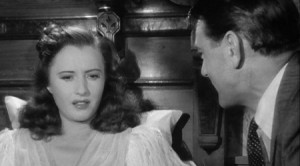
O'Shea, discovering Potts' love for her

O’Shea, discovering Potts’ love for her

Stanwyck lost the Oscar to Joan Fontaine in Suspicion that year. Fontaine’s was a strong performance, but I think Stanwyck’s dazzling turn should have guaranteed her win. Though some of the credit for her fully rounded performance definitely goes to the writers, Stanwyck is so believable in the midst of this crazy plot that she grounds the film. A once reluctant watcher of black and white flicks, I became a classic movie enthusiast and lifelong Stanwyck fan after watching this movie. I suspect I’m not the only one.

5. The Grammarian Winning the Girl?

English majors—especially males—don’t get a lot of cred in the romantic lead department, especially when up against mobsters like Joe Lilac.
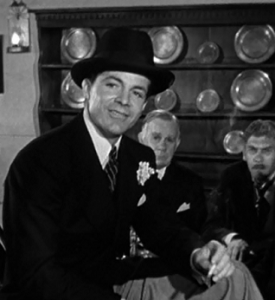
Dana Andrews playing the suave Joe Lilac

Suave Lilac (Dana Andrews), Potts’ rival

At least women can get the “sexy librarian” rep. Occasionally, poets can win some attention in film (and I know such gifts helped my friends on Valentine’s Day). But grammarians? Teachers of the comma splice? Among an unglamorous profession, grammar professors are the nadir when it comes to sexy reps, right down there with nuclear physicists.
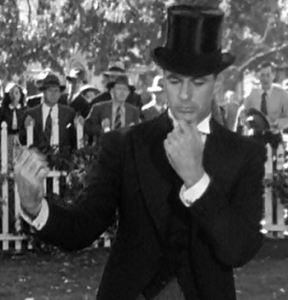
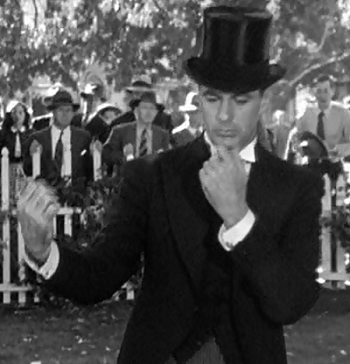
Potts, trying to box based on a book's lessons

Potts, trying to box based on a book’s lessons

“You see, this is the first time anybody moved in on my brain,” says O’Shea after entering Potts’ home, and you know when she later glows at the possibility of becoming “Mrs. Lilac” just how unlikely the brain is to triumph.

But slowly, Potts makes inroads. O’Shea even reads a grammar book in her spare time, and there’s a whole discussion about the repetitiveness of her phrase “on account of because” in the midst of a romantic interlude. Only Wilder and Brackett could not only make this scene romantic, but convincing. Due to the caliber of their writing and Stanwyck’s performance, we trust that this cynical nightclub singer really does get so flushed in company with “corny” Potts that she needs to take the movie’s equivalent of a cold shower (a towel to the neck).

And this triumph, my English major friends, is a rare treat to witness. Good luck finding a modern film so generous in its treatment of grammarians. When you find one, be sure to let me know. In the meantime, I’ll take another serving of Ball of Fire.

Check out the other romantic comedy entries in the blogathon!
Share
Posted in: 1940s films, Blogathons, Humor, Romantic Comedies (film) Tagged: Ball of Fire, Barbara Stanwyck, Dana Andrews, English majors, Gary Cooper

Nazis and Humor: The Shock of Lubitsch’s To Be or Not to Be (1942)

04/17/2014 by leah@carygrantwonteatyou.com 2 Comments

ToBeorNot2
Wrap your head around this fact: Two decades before Quentin Tarantino was born, Ernst Lubitsch directed a comedy about Nazis. Unlike Tarantino, whose own Nazi film was typically bloodthirsty, Lubitsch was best known for light fare, especially sophisticated sex farces so insightful and lacking in prudery that they remain startlingly modern and funny still today. Not surprisingly, Wes Anderson recently cited To Be or Not to Be, Lubitsch’s anti-Nazi comedy, as influential. Lubitsch and Anderson share a joy in puncturing human vanity and hypocrisy, a gift for efficiency in their visual symbolism, and an appreciation for moments of pathos within otherwise humorous films. They also are in love with silliness, and this film is full of it.

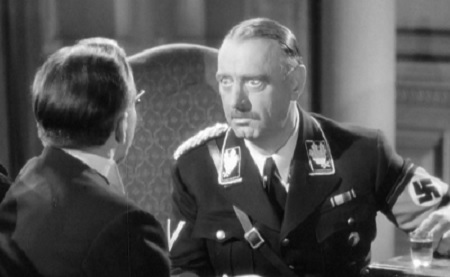
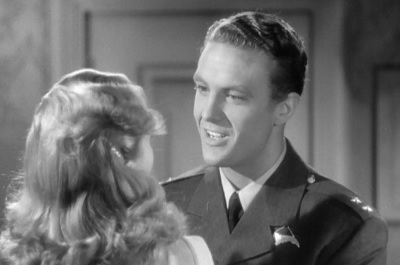
To Be or Not to Be is almost as frantic in pace as Anderson’s The Grand Budapest Hotel, so I’ll just explain the basics: An acting troupe in Warsaw pretends to be Nazis to undermine a plot against the Resistance. The troupe is led by Joseph Tura (Jack Benny), a man arrogant about his acting but insecure about his wife Maria’s (Carole Lombard’s) fidelity—and rightly so: She invites an aviator (a very young Robert Stack of Unsolved Mysteries fame) to her dressing room every time her husband begins the famous speech in Hamlet that gives the movie its name. (Joseph’s not initially aware of her flirtation, though he becomes obsessed with the flier’s rudeness in leaving during his soliloquy.)

Who knew Robert Stack could be funny?

Who knew Robert Stack could be funny?

Like Joseph, the Nazis in the film are obsessed with the reactions of others to their words. When they joke about their leader’s vegetarianism or reputation, they fear their peers’ reprisals, and quickly state “Heil Hitler” to appear patriotic. The implication throughout the film is that the Nazis are much like the actors imitating them: full of insecurity and quick to express pronouncements they utter rather than feel.

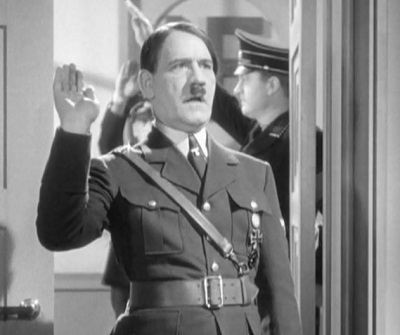
The movie begins with an actor from the troupe who is playing Hitler in a play that’s about to fold. He’s anxious to prove his plausibility in the role due to a blistering attack by his director. “I don’t know. It’s not convincing,” the director says, looking at the clothes and makeup meant to imitate the Führer. “To me, he’s just a man with a little mustache.”

“But so is Hitler,” the actor responds defensively.

An actor (Tom Dugan) saying "Heil myself" as Hitler in a doomed production.

An actor (Tom Dugan) saying “Heil myself” as Hitler in a doomed production.

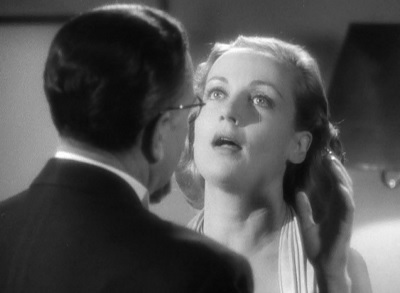
As in most of Lubitsch’s films, the marital sexual farce is highly entertaining. In a typical moment, Maria’s assistant quips, “What a husband doesn’t know won’t hurt his wife.” But this farce goes beyond the main couple. The Nazis are not only fooled by these actors’ poor performances as Gestapo, but are also easily convinced that the beautiful Maria will be captivated by their power. They repeat “Heil Hitler” not only as a defense or conversation filler, but as a pickup line. Clearly, Lubitsch feels these Nazis are using their lethal reputation as a substitute for manhood. “And before the evening is over,” a Nazi spy says suggestively to Maria, “I’m sure you’ll say ‘Heil, Hitler.’” (I gasped when I heard this—Did I just hear a racy use of Hitler?) Sure enough, after he kisses her, Maria replies, “Heil Hitler” in a loaded, sexy tone in imitation of the man she’s duping.

Maria (Lombard) feigning attraction to a Nazi spy.

Maria (Lombard) feigning attraction to a Nazi spy.

Maria’s faux seduction mimics her earlier comforting of her needy spouse, though this time it’s for a worthier cause. But just as with Joseph, Maria’s cooing words mean little. She proves that it’s a man of action, not the Nazis or her narcissistic husband, who will likely win her bed in the end. When the RAF flier (Stack) gushes about the thrill of meeting an actress, Maria breathily replies, “Lieutenant, this is the first time I’ve ever met a man who could drop three tons of dynamite in two minutes.”

As for the Nazis, the actors do occasionally falter against them, mainly due to their inability to get over their egos. But there’s something gallant about these blundering Warsaw patriots, and one in particular, just as with M. Gustave of The Grand Budapest Hotel. This troupe of actors is goofy and flawed and outrageously vain. But as Lubitsch implies in the film, what act isn’t noble, against such enemies as these?

Share
Posted in: 1940s films, Comedies (film), Humor Tagged: Carole Lombard, Lubitsch, Nazis, satire, Wes Anderson
« Previous 1 2 3 4 5 6 7 8 Next »

Recent Posts

  • 100 Years Later, Still Scary: Dr. Caligari
  • Escaping Out of the Past (1947)
  • A Weeper for Those Who Love Jerks
  • Thank You, Academy, for Not Infuriating Me
  • Challengers (2024) Is a Bad Movie

Subscribe to Blog via Email

Enter your email address to subscribe to this blog and receive notifications of new posts by email.

Categories

  • 1920s films
  • 1930s films
  • 1940s films
  • 1950s films
  • 1960s films
  • 1970s films
  • 1980s films
  • 1990-current films
  • 2020s films
  • Action & Sports Films
  • Anti-Romance films
  • Blogathons
  • Childfree
  • Comedies (film)
  • Drama (film)
  • Feminism
  • Femme fatales
  • Film Noir/Crime/Thriller & Mystery
  • Gloriously Silly Scenes
  • Horror
  • Humor
  • Mae West Moments
  • Musicals and dancing films
  • Oscars
  • Random
  • Romance (films)
  • Romantic Comedies (film)
  • The Moment I Fell for
  • Turn My Sister into Classic Movie Fan
  • TV & Pop Culture
  • Uncategorized
Share
Classic Movie Blog Hub Member

Recent Comments

  • leah@carygrantwonteatyou.com on Meg Ryan’s Fate Foretold in Joe Versus the Volcano
  • Ryan on Meg Ryan’s Fate Foretold in Joe Versus the Volcano
  • leah@carygrantwonteatyou.com on 100 Years Later, Still Scary: Dr. Caligari
  • The Classic Movie Muse on 100 Years Later, Still Scary: Dr. Caligari
  • leah@carygrantwonteatyou.com on 100 Years Later, Still Scary: Dr. Caligari

Archives

  • November 2025
  • September 2025
  • May 2025
  • March 2025
  • January 2025
  • November 2024
  • August 2024
  • July 2024
  • May 2024
  • March 2024
  • February 2024
  • December 2023
  • November 2023
  • October 2023
  • September 2023
  • August 2023
  • July 2023
  • May 2023
  • April 2023
  • March 2023
  • January 2023
  • December 2022
  • November 2022
  • September 2022
  • July 2022
  • May 2022
  • April 2022
  • March 2022
  • February 2022
  • October 2021
  • September 2021
  • April 2021
  • March 2021
  • February 2021
  • December 2020
  • October 2020
  • September 2020
  • July 2020
  • May 2020
  • April 2020
  • March 2020
  • February 2020
  • December 2019
  • October 2019
  • September 2019
  • June 2019
  • May 2019
  • April 2019
  • February 2019
  • January 2019
  • November 2018
  • September 2018
  • July 2018
  • June 2018
  • May 2018
  • April 2018
  • March 2018
  • February 2018
  • January 2018
  • November 2017
  • September 2017
  • August 2017
  • July 2017
  • June 2017
  • May 2017
  • April 2017
  • March 2017
  • February 2017
  • January 2017
  • December 2016
  • November 2016
  • October 2016
  • August 2016
  • July 2016
  • June 2016
  • May 2016
  • April 2016
  • March 2016
  • February 2016
  • January 2016
  • December 2015
  • November 2015
  • October 2015
  • September 2015
  • August 2015
  • July 2015
  • June 2015
  • May 2015
  • April 2015
  • March 2015
  • February 2015
  • January 2015
  • December 2014
  • November 2014
  • October 2014
  • September 2014
  • August 2014
  • July 2014
  • June 2014
  • May 2014
  • April 2014
  • March 2014
  • February 2014
  • January 2014

Meta

  • Log in
  • Entries feed
  • Comments feed
  • WordPress.org

Copyright © 2025 Cary Grant Won't Eat You.

Church WordPress Theme by themehall.com