Cary Grant Won't Eat You

Classic movies for phobics

  • About
  • eBooks
  • Previous Blogathons
Classic movies for phobics

Humor

The Nicholas Cage Syndrome: Is Taste More Crucial than Talent?

04/24/2015 by leah@carygrantwonteatyou.com 6 Comments

KeiraKnightleyADangerous
I was outraged by the choice of Keira Knightley to play Elizabeth Bennett in Pride and Prejudice. “That woman,” I complained to my sister Rachel, “is known for her toned midriff, not her acting talent.” Although Knightley did a passable job in a decent film adaptation, I considered her subsequent Oscar nod an affront.

Rachel agreed with my assessment of the actress’s mediocrity, even if I couldn’t follow through with my plan to avoid her films. The problem was, Knightley kept selecting intriguing feminist roles, not the cheesy romantic leads her looks surely could have garnered her. The groundbreaking historical women she brought to life on the screen in The Duchess and A Dangerous Method led me to hours of fascinating research.

And then this year, an Oscar nod again, this time for an interesting biopic, The Imitation Game. When I grumbled about her second nomination, my sister disagreed. “I’ve changed my mind about her. Watch Begin Again. Two great films in one year. She has such good taste.”

And there it was, the trait so often ignored when we talk about acting: taste. Sometimes; as with Meryl Streep, Philip Seymour Hoffman, and Cary Grant; we get both: good films and incredible talent. But so often, we can’t select a movie based on the cast and assume we’ll enjoy it. Why? Because so many skilled performers have Nicholas Cage judgment.

Cage Syndrome: Good actor who stars only in trash

The Cage Syndrome: A good actor who repeatedly stars in trash.

Recall Halle Berry, still gilded from her Oscar win, choosing a bad Bond flick and Catwoman to cement her legacy. Or the previously reliable Morgan Freeman. His films since The Shawshank Redemption make me feel like a comet has crashed into my brain.

Is it possible that taste is more important than talent? I’m not saying that judgment trumps skill if the acting is bad enough to spoil the film. (I’m looking at you, Andie MacDowell.) But if the actor or actress is decent, might good taste matter more?

Let’s take another example: an actress even less versatile and skilled than Keira Knightley (who is admittedly rising in my estimation). Katie Holmes is better known for being the ex of Tom Cruise than for her acting. Her performances are largely forgettable, but her films are not. Even during her Dawson’s Creek years, Holmes displayed remarkable discrimination in her choices. The following are my favorites of her credits (the first and fifth I rewatch often):

  • Thank You for Smoking
  • Batman Begins
  • Pieces of April
  • The Gift
  • Wonder Boys
  • Go

KatieHolmes-ThankYouSmoking
By rarely starring and choosing movies that feature fine performers, Holmes has ensured I don’t need to rely on her skill to enjoy her films. Her mere presence in Woman in Gold is making me reconsider it despite lukewarm reviews. I trust her taste to impress as much as I trust Cage’s to disappoint. (I vowed during Snake Eyes never to watch his films again. Alas, I caved, remembering Raising Arizona, and even let my husband bring home Drive Angry, which did, in fact, make me angry.)

Of course, it’s hard to place the same kind of trust in the taste of classic film performers. Since studios held such tight reign over their stars, performers’ ability to select was limited. But now and then, you can, as in the interesting case of Norma Shearer.

NormaShearerDivorcee1
She (conveniently) married the production head of MGM, therefore ensuring her pick of roles (to the envy of Joan Crawford, who must have enjoyed taking her husband away in The Women).

I’m not a big fan of Shearer’s acting, which I usually find too theatrical. That said, I always enjoy her films, even staid period dramas such as Marie Antoinette and antifeminist flicks such as The Women. But it’s her fight to play liberated women in the pre-Code era that makes me trust her judgment. A woman who would go to a photographer for sexy shots just so she’d be considered for parts like that of Jerry in The Divorcee? That’s an actress I can trust. And in pre-Code films, she relaxes the affectations and easy tears that occasionally mar her pictures. Shearer is never on my list of favorite film actresses, but just writing these words has made me long to see The Divorcee again.

Are there stars whose films you go to see in spite of the mediocrity of their acting? Which talented stars’ movies do you avoid due to the Cage syndrome? And what is up with Sandra Bullock’s love for Razzie-caliber roles?

Share
Posted in: 1980s films, 1990-current films, Comedies (film), Drama (film), Feminism, Humor, TV & Pop Culture Tagged: bad acting, good taste, Katie Holmes, Keira Knightley, Nicholas Cage, Norma Shearer, Sandra Bullock, syndrome

Parenting Advice from Heaven Can Wait (1943)

03/26/2015 by leah@carygrantwonteatyou.com 2 Comments

Ernst Lubitsch was known for his sexual farces. Heaven Can Wait is just one of his many movies spoofing marriage, and in the process illustrating a number of truths about what it means to say “I do.” But I was primarily engaged by the supporting characters in this film. Perhaps that’s why the parenting lessons Lubitsch liberally supplied struck me so much more this time than his marital wisdom. Here are a few lessons from the cynical director:

Expose Your Child to the Opposite Sex Early
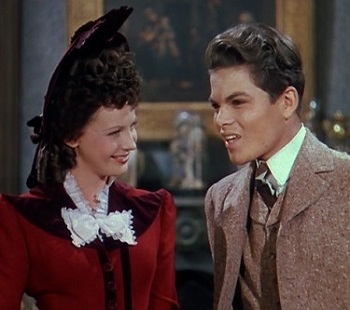
A boy who falls for the ladies in his pre-teens will learn ambition early. He’ll discover, according to Lubitsch and screenwriter Samson Raphaelson, that gifts earn him affection, and the greater the number of gifts, the greater the love. This early training will motivate him to make a name for himself—and, of course, earn the big bucks.

BeetlesHeavenCanWait
You can build on this valuable training by hiring a comely French tutor to teach him more than one new language when he reaches his teens.

frenchtutorHeavenCanWait
This hire will solidify his conviction that life is but a long seduction.

Spoil Your Child
You might fear giving your kid endless funds and no responsibilities. You might assume that he will become a hopeless waster, lying around and expecting others to cater to him. But if you’ve given him ambition via the ladies, you don’t need to fear. Indulge away.

DonAmeche-spoiled
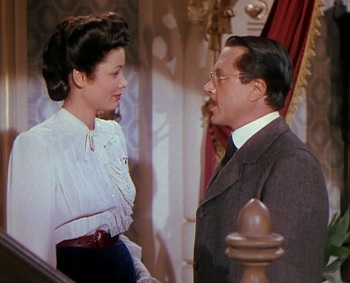
If you instead raise him with rules and standards, he’ll grow up to become such a prudish dullard that he’ll actually compare himself to a suit, admitting, as cousin Albert does, that he’s not “flashy” or of a “stylish cut” but “sewed together carefully.” In Ernst Lubitsch’s world, a man like Albert (Allyn Joslyn), who brags that his “lining is good,” is never going to win the affections of a woman as vivacious and beautiful as Martha (Gene Tierney). He’ll get this bored response to his heartfelt wooing instead:

SuitDescription-HeavenCanWait
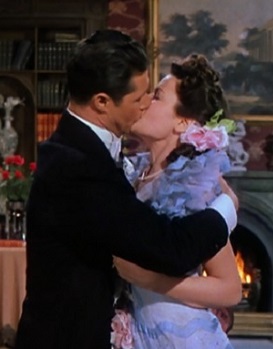
And the wooing by his spoiled cousin? Yeah, that’s a bit more successful:

TierneyandAmeche
Do Not Outcast Your Kid—Unless You Like Your Spouse
In her day, Martha’s elopement may have led to quite a scandal, innocent as it may appear now. But her parents’ decision to boot her out for life means they spend their days fighting over who gets the comics first. You know your life has reached a sad pitch when you can become this inflamed over the plight of the Katzenjammer Kids:

PalletteandMain
Spare yourself the misery of too much alone time with your spouse. Forgive your kid.

Keep Your Own Dad Around; He’ll Be Needed
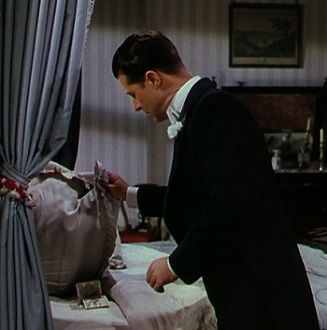
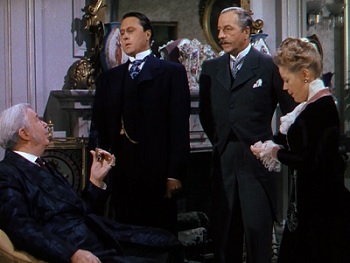
If you were raised in a more structured household, you may be a little innocent about the facts of life, such as what your son has been up to with the French tutor you hired. At 43, you may need your father to enlighten you that your son is both drunk and debauched.

Coburnandfamily-HeavenCanWait
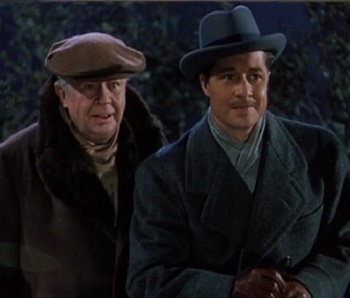
And when that son makes a wreck of his life after one too many dalliances, you may not be able to save his marriage for him (if you’re still around). But his wiser grandpa might just pull it off, especially if he’s hilarious and savvy and anything like Charles Coburn (who supplies at least 50 percent of the film’s best lines).

CharlesCoburnwithDonAmeche
And there you have it. Valuable advice for the worldly parent, courtesy of Lubitsch. I hope you were reading carefully. You may need it one day.

Share
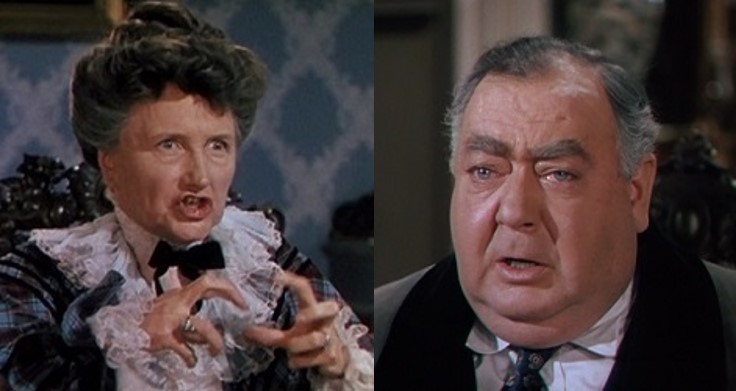
Posted in: 1940s films, Humor, Romantic Comedies (film) Tagged: Charles Coburn, Don Ameche, Ernst Lubitsch, Eugene Pallette, Gene Tierney, Heaven Can Wait, Marjorie Main

Edward G. Robinson and My Cat

03/19/2015 by leah@carygrantwonteatyou.com Leave a Comment

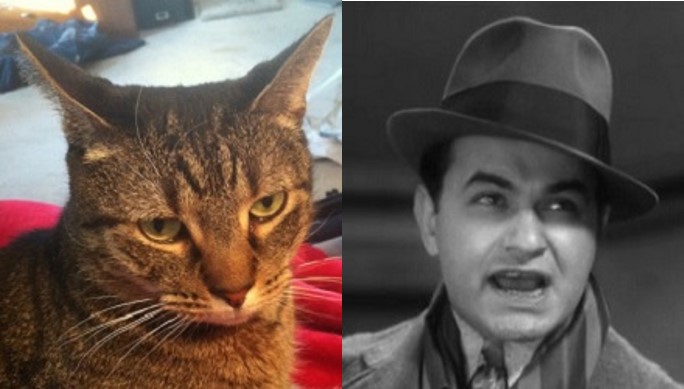
RicoandEdwardGRobinson
“Suave,” the receptionist at my vet’s office said the other day, reacting to my cat’s name. “Sorry,” she added quickly. “I couldn’t resist.” I laughed, having forgotten that Gerardo’s infamous 1990 song is the first association most people have with the name Rico. My cat does share some traits with the character described by that one-hit wonder, but “suave?” Not so much.

My husband and I had seen Little Caesar a few months before adopting our cat. We’d wavered over a name, and then started noticing some familiar traits. Like our cat’s ego, which seemed to be vastly disproportionate to his size.

A head so big they'd need a "special sized noose" for him.

Cops say they’ll need a “special noose” to fit his “swelled head.”

We discovered that our newcomer wasn’t exactly sane, and that he felt entitled to what wasn’t his. He wanted our food as well as his own, and jumped up on the counter to paw some while we were eating it. That’s when we realized his actions reminded us of something, and that something was Edward G. Robinson’s breakout role.

CoolCaesar-EdwardGRobinson
Increasing acquaintance with my cat’s past and behavior has proven that those traits are just the beginning of his resemblance to Edward G. Robinson’s antihero. He was returned once to the shelter because he couldn’t handle associating with other dominant male cats. Sound familiar, Edward G. Robinson fans?
LittleCaesarangry
And then there’s his survival instinct. My cat is scrappy. He was discovered outside a dumpster in a New England winter he somehow survived. As if to prove his history, he has knocked over the trash can so many times seeking leftovers that we’re considering the metal tamper-proof kind others purchase to keep out collies and labs. And if a jalapeno potato chip, a piece of broccoli is dropped, he devours it before we can retrieve it. Rico never takes anything for granted, assumes he has to fight for everything he gets. Just like Little Caesar.

And like Robinson’s character, my cat is always voracious (despite a now hefty belly). Little Caesar hungered to be part of the “big time.” He begins the film envying Diamond Pete Montana, a successful gangster, not a nobody like himself, ripping off gas stations. “Money’s alright,” he says to his partner, who admits he’d quit crime if he had enough, “but it ain’t everything. Yeah, be somebody. Look hard at a bunch of guys and know that they’ll do anything you tell them.” He even expresses his longing with a butter knife.

LittleCaesar
As Little Caesar begins to rise, he can’t help eying others’ pins, diamond rings…

Of course when you think of Robinson, you can’t forget that voice, and how much he liked to use it. My cat too has a great desire for self-expression, and sees no reason to ever cease meowing. Maybe that’s why my husband and I started referring to him as “the Rico,” recalling Robinson’s famous line when he talks of himself in third person: “Is this the end of Rico?”

I think one of the reasons Robinson’s role made his career is because in spite of all of his criminal acts in the film, in spite of his arrogance, there’s something haunting and sympathetic about Little Caesar’s need to prove himself, to be envied.

RobinsoninmirrorLittleCaesar
He is in so many ways the embodiment of the American Dream filtered through a shaky understanding. He’s hardly the first—in fiction or real life—to be destroyed by his belief in it. Because he’s played by Edward G. Robinson, we are enthralled by Rico even as we condemn his actions. And in spite of everything, his loyalty to his best pal is always there, even when he most wants to lose it.

Perhaps Little Caesar’s real tragedy is that he was born into the wrong species. In feline form, the ambition, ego, hunger would all be endearing. We’d smile, hug, and pet him for those characteristics, and acknowledge his superiority without any need for proof. After all, it was the thirst for that recognition that inspired Little Caesar’s crimes. Poor man. He should have been a cat.

RecliningRico

Share
Posted in: 1930s films, 1940s films, Drama (film), Film Noir/Crime/Thriller & Mystery, Humor, Uncategorized Tagged: cat, Edward G. Robinson, Little Caesar, movies, Rico

3 Characters I’d Like to Celebrate St. Patrick’s with

03/12/2015 by leah@carygrantwonteatyou.com 2 Comments

The Hero of The Adventures of Robin Hood (1938)

ErrolFlynn-RobinHood
While watching Errol Flynn play Robin Hood, you get the feeling he knows how ridiculous he looks in those green tights. But instead of embarrassing, his outfit energizes him. You can almost hear him thinking, “Well, the manliness contest is lost. Let’s party!” The whole cast seems to share his giddiness, making this one of the most entertaining movies I’ve seen in some time. Who wouldn’t want to spend the green holiday with someone this easygoing and gorgeous?
(It’s easy to trace the film’s influence on an early favorite of mine, The Princess Bride, not to mention the parody Robin Hood: Men in Tights. Neither movie captures Flynn’s delirious enthusiasm, but that same sly humor is on full display in both, with Cary Elwes a worthy heir to his predecessor’s effortless style.)

The Heroine of Sadie Thompson (1928)

SadieThompson-Swansongroup
Sadie (Gloria Swanson) likes to pull pranks, tell dirty jokes, sing, dance, and most of all, laugh. The rarity of female attention partially explains the marines’ enthusiasm for her company in the story, but that’s not the only reason she attracts them. This woman is just so much fun. Like many supposedly “fallen women” in film, she has an easy camaraderie with others, is just as good a pal as a lover. And her confidence (until it’s shaken by the film’s villain) is breathtaking.

Nick & Nora Charles

NickandNoraCharles-Partying
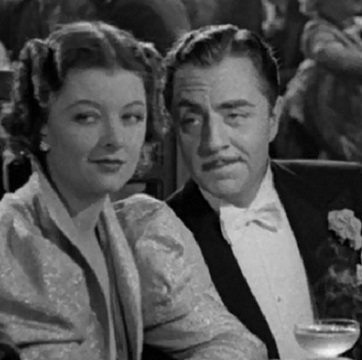
Nick Charles (William Powell) of The Thin Man series is the life of the party, without making any effort to be so.  He is cool, debonair, sarcastic, with just the right smidgen of childish to never take anything seriously but his partying. His wife Nora (Myrna Loy) is the perfect hostess. Obnoxious visitors entertain rather than annoy her. Party crashers are welcome. She calls room service to deliver “a flock of sandwiches” for her intoxicated guests, hands newcomers a drink before they’ve even gotten into the room. When asked if Nick is working a case, Nora responds, “Yes…A case of scotch. Pitch in and help him.”  Could any line sound more like St. Paddy’s Day than that?

Share
Posted in: 1920s films, 1930s films, 1940s films, Comedies (film), Drama (film), Humor, TV & Pop Culture Tagged: Carl Elwes, Errol Flynn, Nora Charles, Robin Hood, Sadie Thompson, St. Patrick's Day movies

4 Movies Downton Abbey’s Lady Mary Would Watch

03/01/2015 by leah@carygrantwonteatyou.com Leave a Comment

LadyMaryandCharlesBlake
It’s 1924 at Downton Abbey. We’ve just seen Lady Mary (Michelle Dockery) canoodling with one guy in a London theater (Charles Blake) to ward off another (Lord Gillingham) who had mistaken intimacy for love. Mary barely protested when forced to leave Beau Brummel early to disenchant Gillingham. But here are four films out that year that might have distracted the vixen from her flirtations, at least temporarily…

The Marriage Circle

The MarriageCircle
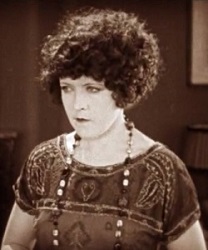
Mizzi (Marie Prevost), a dissatisfied wife, plots to seduce her friend’s husband. And that’s just the beginning of the marital and extramarital scheming in Ernst Lubitsch’s classic comedy of manners. Mizzi could give Lady Mary tips on undermining her frenemy Mabel Lane Fox’s attractions. (The daring Lubitsch would obviously become Mary’s favorite director; two of my four are his films.)

Her Night of Romance

HerNightofRomance
Dorothy (Constance Talmadge) winds up with a guy she barely knows (Ronald Colman) in her bedroom, and goes to extreme measures to protect her reputation. Sound familiar, Lady Mary?

Monsieur Beaucaire
Mary likes the pretty boys, and she couldn’t have missed heartthrob Rudolph Valentino starring in The Sheik three years before.

RudolphValentino-TheSheik
With Valentino featured AND a character named Lady Mary, Monsieur Beaucaire would lure the Downton heroine to the theater, even though her namesake in the film has too much pride to hold onto the guy (I have no illusions Mary would recognize the similarities).

Forbidden Paradise
Lady Mary has been subjected to Russian refugees she doesn’t care to meet, but a powerful czarina in full control of her posse of lovers? That could give Mary some interest in international politics.

Pola Negri, in her best Lady Mary pose

Pola Negri, in a Lady Mary pose

Maybe the film would even grant Mary some insight into her grandma’s (the Dowager Countess’s) almost-fling. Here’s hoping.

There you have it. Four films with enough skin, calculation, and female triumph to please the headstrong Lady Mary, maybe even give her some ideas for next season…

Share
Posted in: 1920s films, Drama (film), Feminism, Humor, Romance (films), Romantic Comedies (film), TV & Pop Culture Tagged: 1924 films, Charles Blake kiss, Downton Abbey, Downton Season 6, Film, finale, Kemal Pamuk, Lady Mary

Unexpectedly Romantic: The Mistress Giving the Wife Advice in The Smiling Lieutenant

02/12/2015 by leah@carygrantwonteatyou.com 4 Comments

ColbertHopkins-SmilingLieutenant
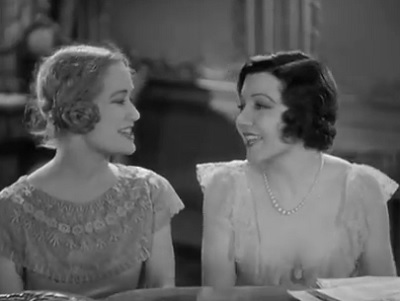
There’s something both charming and shocking about the song between Franzi (Claudette Colbert) and Princess Anna (Miriam Hopkins) in The Smiling Lieutenant. The two are unexpected friends in this moment, after all; the film begins with Franzi’s passionate love affair with Niki (Maurice Chevalier), which is interrupted by Anna’s royal prerogative in choosing spouses. Once married to Anna against his will, Niki continues to see Franzi, but when they’re discovered, the latter makes the surprising decision to help Anna win his regard.

An alliance between a mistress and a wife usually involves plots against the erring husband. The Other Woman with Cameron Diaz is simply the latest example. Since Niki was there first, and no marriage would have taken place had Anna been less public in her regal affection, we feel for both women, and appreciate Franzi’s sacrifice for the happiness of these two who are now bound together. (And honestly, why fight for the guy? I’ve never found Chevalier bearable. The man mugged from his twenties to his Gigi days.)

A wonderful union forms between the two women when Franzi goes through Anna’s music (including “Cloister Bells” and “Maiden’s Prayer”). Franzi’s disdain in evident as she pronounces each song’s name, and her next comment illustrates the indecent train of her thought: “Let me see your underwear.”

ColbertandHopkins-underwearrequest
Meekly, Anna complies:

HopkinsunderwearSmilingLieutenant
“Cloister bells,” responds Franzi; she then shows her own:

ColbertunderwearSmilingLieutenant
And says, “That’s the kind of music you should play.”

Franzi goes to the piano and begins to sing her advice, with words that could have come from the front page of Cosmo. Wanna win your man? Franzi has the answer: “Jazz Up Your Lingerie.” In fact, I checked. Sure enough, Cosmo’s Valentine’s-inspired photo gallery last spring: “Sexy Lingerie Your Guy Will Love.”

Thankfully, this is a pre-Code Ernst Lubitsch film, and we know that, funny as this start may be, we have much more suggestion in store. First, we see Anna in her formal everyday clothing and stance.

StraightlacedAnna-SmilingLieutenant
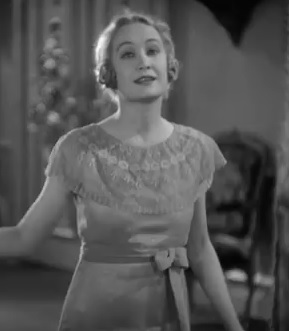
Then we see her loosening up.

MiriamHopkins-hairtwirling
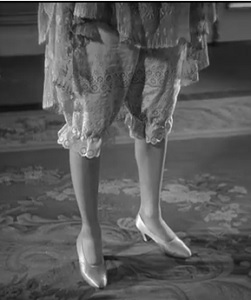
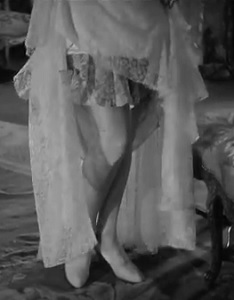
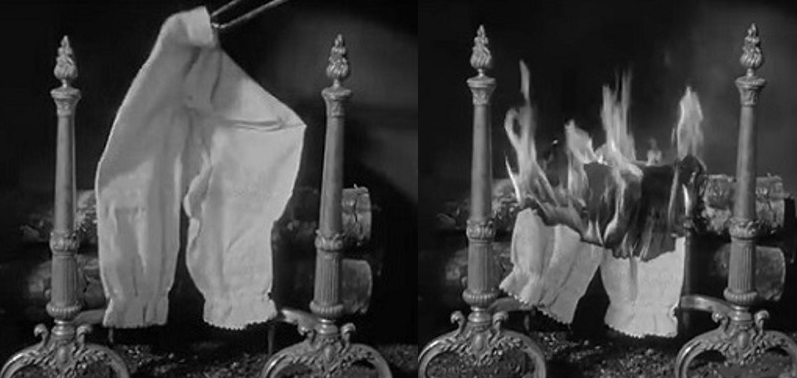
Bits of her old-fashioned hair pile up in a basket just before we’re treated to this wonderful depiction of what’s become of her prudish underwear:

LingerieFireMiriamHopkinsSL
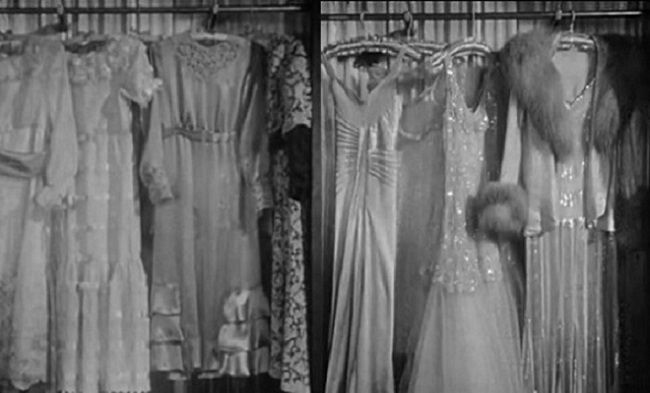
Her frumpy nightgown then dissolves into barely-there lingerie, her ugly shoes into fetching heels. And just look at the change in her wardrobe!

Closet-SmilingLieutenantGowns
I don’t think I have to tell you what happens next. Where else can Anna’s love life go but up, with sexy Franzi as her guide? Honestly, with the kind of chemistry these two women have together, it’s a shame they don’t hook up and leave annoying Niki behind. But improving her ex’s love life—and bringing happiness to his wife—are what this mistress does instead. Kind of romantic, isn’t it?  (You can see the whole clip here.)

Share
Posted in: 1930s films, Feminism, Humor, Romantic Comedies (film) Tagged: Claudette Colbert, Lubitsch, Miriam Hopkins, Musical, Pre-Code, Romance, sexy lingerie, Valentine's

Worth Watching Before the Oscars or Not? Quick Reviews of Six Nominees

02/04/2015 by leah@carygrantwonteatyou.com 14 Comments

With little more than two weeks left before the Oscars, is it worth it to view all eight? Even for those of us who think this was a great year for movies, eight by Feb. 22nd may be pushing it. To help you decide, I’m including short reviews for the nominees I’ve seen so far (two left to go).

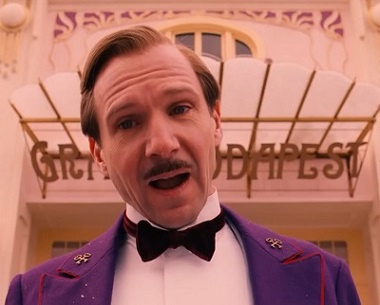
The Grand Budapest Hotel

Ralph FiennesGBudapest
Review:
Loved it. Funny, charming, even moving. Wes Anderson draws you into his impeccably created world. My vote for the Oscar of those I’ve viewed.

Pros: Originality, great acting, artistry, entertainment

Cons: Can be too quirky for some; everyone won’t find it funny.

Boyhood

Boyhood
Review:
Hated it. Watched it during a blizzard and preferred scraping off my car.

Pros: Ambition; you have to hand it to Richard Linklater for trying on something of this scale.

Cons: Gimmicky choices, mediocre acting, dull script. Very long, with supposedly subtle insights that are generic rather than thought provoking. I’m Dazed and Confused about why most of the scenes were worth depicting, and why the film is garnering so much praise given its lack of character development.

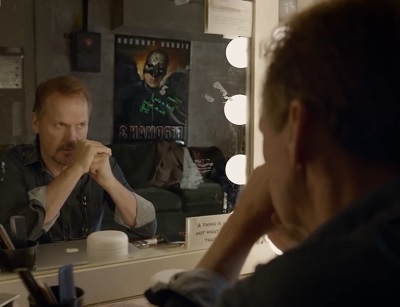
Birdman or (The Unexpected Virtue of Ignorance)

Birdman
Review:
Clever, whimsical, with impressive editing. I was engaged the whole time, and never knew what would happen next.

Pros: Strong acting, convincing portrayal of theater life, originality, wonderful transitions

Cons: The touches of magical realism can be off-putting to some. May require an interest in theater, especially backstage drama.

Whiplash

SimmonsTeller-Whiplash
Review:
Riveting. Intense. Captures the high stakes of a competitive music program and asks interesting questions about how far a teacher can push a talented kid. (Obviously, few to none would support how far this teacher goes, but the question is still an intriguing and relevant one.)

Pros: Acting: J.K. Simmons is brilliant, and newcomer Miles Teller gives an effective, understated performance. A beautifully paced, streamlined film.

Cons: Stressful to watch. Possibly limited in terms of whom it reaches; may require an interest in the arts, teaching.

American Sniper

AmericanSniper
Review:
Intense, with an impressive performance by Bradley Cooper. I have some issues with the film’s accuracy and politics. I typically dislike Clint Eastwood films, but thought this a fitting choice for him (close to a Western in its values, characterization). Overall, I thought it a good film despite all of my reservations about its message.

Pros: Much stronger than most biopics, with poignant, subtle depictions of Chris Kyle’s suffering—and by extension, that of other veterans. Draws viewers into the conflict zones, causing us to experience fear, stress, and moral confusion.

Cons: Some repetitiveness in the portrayal of his tours. A lack of nuance in many respects: Some demonization of the Iraqis (carefully chosen bad guys—even a long-term sniper rival). A one-note development of his family. Careful avoidance of the rationale for American presence there. Not a single portrayal of a wrong target hit (unbelievable with all of those kills). Glorification of a controversial figure. Why didn’t Eastwood, given the issue with Kyle’s fabrications in the memoir this film is based on, not to mention the director’s own inventions, just loosely base the movie on Kyle’s story? The tribute to veterans is heartfelt and moving, but the glamorization of this particular Navy Seal and lack of doubt about the justice of our involvement are concerning. War is never as clear-cut as Eastwood would like it to be.

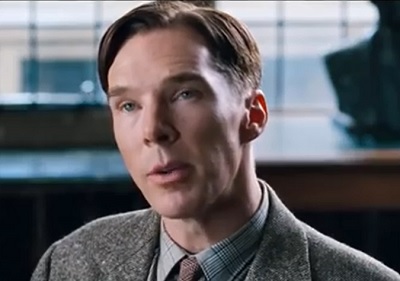
The Imitation Game

ImitationGameCumberbatch
Review:
Fascinating story. Surprisingly quick paced given the subject matter. Poignant portrayal of the loneliness of a genius (Alan Turing) in a time period in which his homosexuality and socially awkward nature were poorly understood. The kind of biopic that makes you Internet research as soon as you get home.

Pros: Fine acting from Benedict Cumberbatch—so far, I’d give the Oscar to him or Cooper. Just a good movie altogether. The one I would recommend to the broadest audience; I can imagine few who would dislike it. There have been some objections to the film’s biographical accuracy, but unlike in American Sniper, the complexity of the portrayal makes it clear that Turing was not easily pinned down, that all of this story has not been told.

Cons: The story of Turing stuck to me afterward, but the movie hasn’t as much as I thought it would. I would have changed the proportions a bit, as Turing’s suffering due to his sexuality is given emphasis but not fully developed until near the end of the film.

There you have it! My highly opinionated reviews….Feel free to disagree with me.

Share
Posted in: 1990-current films, Drama (film), Humor, Oscars Tagged: American Sniper, Birdman, Boyhood, deserves Oscar, The Grand Budapest Hotel, The Imitation Game, Whiplash

Fabulous Fights: Ginger Rogers & Gail Patrick in Stage Door (1937)

01/31/2015 by leah@carygrantwonteatyou.com 19 Comments

PatrickRogers-shove
This post is part of Backlots’ 4th Annual Dueling Divas Blogathon. Check out the other entries!

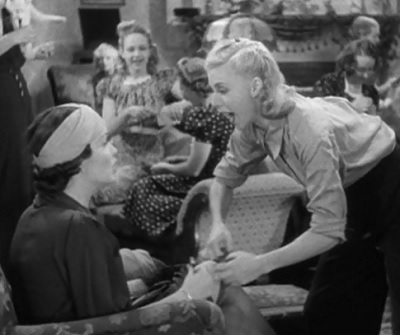
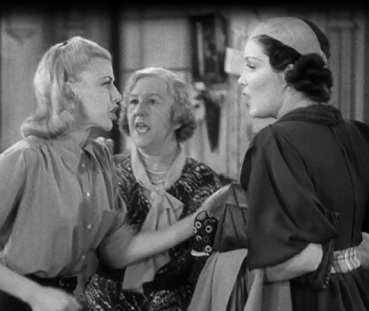
If you haven’t seen Jean (Ginger Rogers) squabble with Linda (Gail Patrick) in Stage Door, I envy you. It’s just such a pleasure. Three minutes into the movie, they are already at it: Jean thinks Linda has stolen her stockings—again—and she’ll forcibly remove them if she has to.

PatrickRogers-stockings-2
The two are roommates in the Footlights Club, a residence for aspiring stage performers, and their uncomfortably close quarters obviously are doing nothing for either’s temper. Linda denies the theft, calling Jean a “hoyden” and “guttersnipe.” Jean, sensitive to cracks about her class, says she’ll “slap [Linda’s] ears flat against the back of her head.” It takes the manager to prevent blows.

It’s the end of their relationship as roommates, but just the beginning of our enjoyment of their rivalry.

GingersRogersyellingupstairs
Jean particularly enjoys mocking Linda about her age and her lover, Anthony Powell (Adolphe Menjou).

“If you were a little more considerate of your elders,” Linda smirks to Jean, “maybe Mr. Powell would send his car for you someday….Course he would probably take one look at you and send you right back again. But then you’d have to expect that.”

“Oh, is that so?” Jean answers, imitating Linda’s superior tone.

“Do you know I think I could fix you up with Mr. Powell’s chauffeur?” Linda adds. “The chauffeur has a very nice car too.”

“Yes, but I understand that Mr. Powell’s chauffeur doesn’t go as far in his car as Mr. Powell does.”

“Even a chauffeur has to have an incentive,” says Linda.

“Well, you should know,” Jean snaps.

StageDoor-PatrickandRogers
Although she judges Linda for sleeping with Powell, Jean still envies her for the rich food and garb her actions afford her. “Say, I think it’s very unselfish for those little animals to give up their lives to keep other animals warm,” she says, admiring Linda’s furs.

GingerRogersGailPatrickcoat
“You know they’re very smart little animals,” Linda answers. “They never give up their lives for the wrong people.”

“Well,” says Jean, “you understand the rodent family much better than I do.”

Unfortunately for Linda, Mr. Powell takes a liking to Jean, and hires her for a gig at his nightclub. Sitting next to her boyfriend, Linda realizes just whom he’s hired…

LindaSeesJean-GailPatrick
And Jean isn’t much happier to see her former roommate…

JeanseesLinda-GingerRogers
A few minutes later, Jean jabs at Linda with her cane, and the latter calls her “riffraff.”

Powell is curious about—but not put off by—Jean’s disinterest in him. “You don’t like me, do you?” he asks her.

“Oh, how could I help but like a man who takes his mother out to a nightclub,” coos Jean. “That was your mother you were sitting with?”

Jean decides to date him, even though he initially made her want to “run home and put on a tin overcoat.” How could she resist such revenge while getting a taste of the finer things in life?

AdviceGailPatrickGingerRogers
Linda tries to be philosophical about her lover’s betrayal, warning Jean it just better be temporary. “It’s one thing to borrow a friend’s friend,” she explains. “It’s another thing to hold him….”

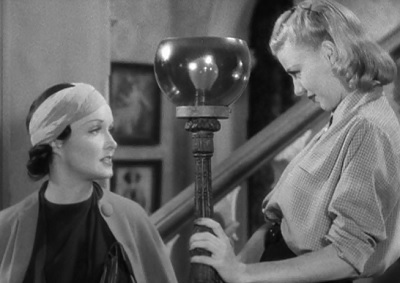
Linda even gives her former roommate some advice, which, of course, is intended to poison their first date. “May I come in?” she begins, entering her room.

“Oh sure, I guess you’ll be safe,” Jean says, “the exterminators won’t be here till tomorrow.”

“How did they miss you on their last visit?” Linda quips.

StageDoor-GailPatrickGingerRogers
“Must be galling to you older women to lose your meal ticket to younger riffraff,” gloats Jean.

“Just a leave of absence, dearie,” explains Linda, “and in the meantime, I have my lovely sable coat and my star sapphire to keep me company.”

“It’s lovely, but I’m afraid you paid too much for it.”

The dialogue gives you a taste of these two together, but I can’t capture the chemistry, or the sparkling delivery—Ginger Rogers, with her snappy sarcasm, at her tough-gal best. Gail Patrick, with the flawless cool customer routine she perfected the year before in My Man Godfrey. The two together are magnetic.

The best part? There’s another rivalry in the film too—between Rogers and Katharine Hepburn, which is almost as fun.

For more dueling divas, check out the other entries in the blogathon!

Share
Posted in: 1930s films, Blogathons, Comedies (film), Feminism, Humor Tagged: Divas, fights, Gail Patrick, Ginger Rogers, Stage Door, women

Five Surprising Lessons I’ve Learned from Blogging

01/27/2015 by leah@carygrantwonteatyou.com 13 Comments

Sixty posts after my first, I’d like to reflect on the unexpected—and sometimes bizarre—lessons I’ve learned in my first year blogging:

1. Quality/Effort/Originality Does Not Equal a Popular Post; the Word ‘Sex’ in the Title Does

Harlowandhersap
Of course, in theory I knew that words such as “sex” would get a lot of hits, but it’s different to think that and see it in my stats. Interestingly, the other big hit in terms of search terms for my blog is “sadistic spouse,” a post about a movie villain that apparently hit a nerve with unhappy couples.

2. You Can Write When You’re Near-Hallucination Tired

boxeralone-TheSetUp
I have used many excuses for not writing over the years, the need for energy and full concentration being at the top of my list. It’s not true. Yes, it takes longer to write when I’m a second away from spotting unicorns in my living room, but something does appear under my fingers. Even stranger, the posts I have written when in this state have been more popular than some of (what I considered) my best. Go figure.

3. Ready to Quit? Strangers Will Revive You

Driving around....
My non-blogging family and friends have supported my efforts, especially at the beginning. But when the novelty faded, most were too busy to read a blog that didn’t correspond with their interests very often. Who could blame them? I’d do the same. But when I kept posting entries and seeing so few views for my efforts, it was easy to wonder why I should bother continuing.

That’s when complete strangers started appearing in the comments section of my blog, and even more shockingly, followed it or posted a link to it on theirs or elsewhere. I can’t possibly express the gratitude I feel for the jolt of energy I always experience in return. Thank you, all of you who have kept reading who don’t know me from Bugs Bunny! I wouldn’t still be online without you.

4. Three-Day Sprints Can Be Fun—As Long as They’re in the Form of a Blogathon
I quit running in my mid-teens once I realized I was using stop signs as an excuse for breaks. Clearly, I lacked the requisite discipline. But even then, I wasn’t a sprinter. I preferred to see where I was going, and had neither the speed nor the energy for the 100-, 200-, or 400-meter races.

Blogathons are fast and dizzying; the number of ideas and amount of subject matter flying at me from fellow bloggers should exhaust me.

OperatorGingerRogers
And in moments, it does, particularly after the first day. Then the adrenaline hits and I sign up for another blogathon before I know what I’m doing. Probably because after all of these years of having so few people to talk to about the movies I love, it never stops thrilling me to discover so many gifted writers who know so much more about them than I do.

5. People Search for Weird Stuff on the Web; It’s Good Not to Know Who They Are

Lime's friend Kurtz
I imagined it would be useful to know as much as possible about my audience, and thought those who happened upon my blog due to random, unrelated searches might want to stay. I even tried to anticipate their interests with my tags and headers: what words might reach those who wouldn’t automatically come?

But the search terms I see in my WordPress stats mainly confirm for me that people are very strange, and while I value strangeness, I don’t think courting it does much for my blog. I have read The Bloggess for years, who regularly posts the disturbing search terms that lead to her site. I thought for a topic like classic film, I wouldn’t get any such oddness. Not true. People have peculiar questions about Cary Grant, and not the kinds of questions that will keep them on my site. I’m glad for their sake—and mine—that these searches are anonymous.

Of course, I’ve learned much more than these five things, particularly about classic film, but I’m working on a new post for Saturday’s Dueling Divas blogathon, and have to go do some stretches….

Share
Posted in: Humor, Uncategorized Tagged: blogging, how to, lessons, motivation, The Bloggess, writing

A Film Celebrating Bad Cooks: Christmas in Connecticut

12/13/2014 by leah@carygrantwonteatyou.com 2 Comments

Stanwyckcooking
I come from a long line of bad cooks. My mother was way ahead of her peers with the natural foods craze, but, like a new vegan, she never learned to substitute anything for the bacon grease she’d been raised with; everything she made was bland. When we visited my maternal grandmother’s, all of our cousins would drop by with food. I remember the day I discovered why, when I witnessed Grandmother putting mayonnaise in macaroni and cheese. My fraternal grandmother supposedly was a good baker before her illness set in, but the only real meal I remember from the Williams family recipes was courtesy of an in-law.

For some women, this deficiency would be a source of shame, but it wasn’t for my grandmother, who bragged about her recipes as she put ketchup in her ratatouille, knowing no one was bold enough to contradict her. As for my mom, she took Greek salad to every holiday potluck, shrugged at all the better fare, and returned to her studies afterward. Who cared about culinary proficiency, when she could be mastering Aristotle? I’ve followed my family’s example, neither worrying about my lack of ability, nor feeling an impulse to remedy it.

With these tendencies and antecedents, it’s perhaps unsurprising that one of the few domestic comedies I find relatable is Christmas in Connecticut (1945), starring Barbara Stanwyck as Elizabeth Lane, a food writer who can’t cook. The publisher of her magazine (Sydney Greenstreet) wants to please a hero who craves good eating and satisfy his own stomach in the bargain. He invites the sailor—and himself—to Christmas dinner at the columnist’s country home, forcing her to quickly accede to a friend’s proposal and thus be able to pretend owning the home—and baby—she’s been writing about for years instead of the actual tiny New York apartment she lives in as she spins stories about rocking chairs and fireplaces and pet cows.

A view Lane pretends to be “the broad front lawns of our farm, like a lovely picture postcard of wintry New England”

A view Lane pretends to be “the…front lawns of our farm”

The premise is absurd, of course, but with Stanywck as the faux-Martha Stewart, Greenstreet as the busybody, and S.Z. Sakall as Felix (the enterprising buddy whose recipes she’s been using for her articles), this film is a lot of fun. When Lane falls for the sailor (Dennis Morgan), she plots to avoid the promised marriage to her stuffy friend, John Sloan (Reginald Gardiner). She boldly flirts with the handsome hero, Jefferson Jones (Morgan), freed by his engagement and her own supposed marriage.

LaneFlirtingxmasConnect
Even more entertaining than their flirtation is the treatment of Lane’s poor cooking as she pretends to be Mrs. Sloan. When he hears Felix will be handling dinner, the publisher complains, “…I won’t feel quite the same as if you’d cooked it, Mrs. Sloan.”

“Believe me,” quips Felix, “you will feel much better.”

In a famous scene, Felix teaches Lane to flip a flapjack, which she’s described in great detail in her writing. Repeatedly, she screws up, hitting the ceiling with the batter.

Lane, viewing the pan like it’s a tarantula

Lane, viewing the pan like it’s a tarantula

While she dodges having to display her bad aim at first, she’s finally put on the spot, and her shocked face when she succeeds—by a sheer fluke—is priceless.

ElizabethLaneSuccess
**spoilers below, for anyone who still thinks it’s possible to spoil a predictable romantic comedy***

She may be a poor pancake maker, but Lane’s courage and quick wit are worth witnessing when she finally confronts her bullying publisher, who tries to convince her and her faux-husband Sloan that they should reproduce again for the good of the magazine’s circulation. Once he discovers the deception, the publisher urges her to marry the “bore” (Sloan) and proceed quickly to child bearing. Even though she’ll likely lose her job and a promised raise, Lane still decides to have her say: “Listen to me. I’m tired of being pushed around, tired of being told what to do, tired of writing your galldarned articles, tired of dancing to everybody else’s tune, tired of being told whom to marry. In short, I’m tired.”

StanwyckandGreenstreet
Of course, this exchange sets Lane up for becoming the housewife she’s been pretending to be, but in feminist fashion, it’s a choice, not a default—and quitting is in her case an act of liberation. I like to think of her using that big imagination to write the next great American novel while Jones, who already likes washing babies, tends to the children. (She knows what she’s doing, falling for this sensitive type.)

Surprisingly, the film is no more judgmental about her culinary failures than I would be. “Well, young man, I spose you know what you’re doing,” the publisher says to Jones once it’s clear the two are altar bound. “But I warn you, she can’t cook.”

Jones asks her if it’s true. “No, I can’t cook,” Lane admits, without a trace of embarrassment.

“She can’t cook,” Felix repeats. Then he adds for all of us who’ve fallen for her during the film, “But what a wife!”

Sakall

Share
Posted in: 1940s films, Feminism, Humor, Romantic Comedies (film), Uncategorized Tagged: bad cooking movies, Barbara Stanwyck, Christmas in Connecticut, Christmas movies, S.Z. Sakall, Sydney Greenstreet
« Previous 1 2 3 4 5 6 7 8 Next »

Recent Posts

  • 100 Years Later, Still Scary: Dr. Caligari
  • Escaping Out of the Past (1947)
  • A Weeper for Those Who Love Jerks
  • Thank You, Academy, for Not Infuriating Me
  • Challengers (2024) Is a Bad Movie

Subscribe to Blog via Email

Enter your email address to subscribe to this blog and receive notifications of new posts by email.

Categories

  • 1920s films
  • 1930s films
  • 1940s films
  • 1950s films
  • 1960s films
  • 1970s films
  • 1980s films
  • 1990-current films
  • 2020s films
  • Action & Sports Films
  • Anti-Romance films
  • Blogathons
  • Childfree
  • Comedies (film)
  • Drama (film)
  • Feminism
  • Femme fatales
  • Film Noir/Crime/Thriller & Mystery
  • Gloriously Silly Scenes
  • Horror
  • Humor
  • Mae West Moments
  • Musicals and dancing films
  • Oscars
  • Random
  • Romance (films)
  • Romantic Comedies (film)
  • The Moment I Fell for
  • Turn My Sister into Classic Movie Fan
  • TV & Pop Culture
  • Uncategorized
Share
Classic Movie Blog Hub Member

Recent Comments

  • leah@carygrantwonteatyou.com on Meg Ryan’s Fate Foretold in Joe Versus the Volcano
  • Ryan on Meg Ryan’s Fate Foretold in Joe Versus the Volcano
  • leah@carygrantwonteatyou.com on 100 Years Later, Still Scary: Dr. Caligari
  • The Classic Movie Muse on 100 Years Later, Still Scary: Dr. Caligari
  • leah@carygrantwonteatyou.com on 100 Years Later, Still Scary: Dr. Caligari

Archives

  • November 2025
  • September 2025
  • May 2025
  • March 2025
  • January 2025
  • November 2024
  • August 2024
  • July 2024
  • May 2024
  • March 2024
  • February 2024
  • December 2023
  • November 2023
  • October 2023
  • September 2023
  • August 2023
  • July 2023
  • May 2023
  • April 2023
  • March 2023
  • January 2023
  • December 2022
  • November 2022
  • September 2022
  • July 2022
  • May 2022
  • April 2022
  • March 2022
  • February 2022
  • October 2021
  • September 2021
  • April 2021
  • March 2021
  • February 2021
  • December 2020
  • October 2020
  • September 2020
  • July 2020
  • May 2020
  • April 2020
  • March 2020
  • February 2020
  • December 2019
  • October 2019
  • September 2019
  • June 2019
  • May 2019
  • April 2019
  • February 2019
  • January 2019
  • November 2018
  • September 2018
  • July 2018
  • June 2018
  • May 2018
  • April 2018
  • March 2018
  • February 2018
  • January 2018
  • November 2017
  • September 2017
  • August 2017
  • July 2017
  • June 2017
  • May 2017
  • April 2017
  • March 2017
  • February 2017
  • January 2017
  • December 2016
  • November 2016
  • October 2016
  • August 2016
  • July 2016
  • June 2016
  • May 2016
  • April 2016
  • March 2016
  • February 2016
  • January 2016
  • December 2015
  • November 2015
  • October 2015
  • September 2015
  • August 2015
  • July 2015
  • June 2015
  • May 2015
  • April 2015
  • March 2015
  • February 2015
  • January 2015
  • December 2014
  • November 2014
  • October 2014
  • September 2014
  • August 2014
  • July 2014
  • June 2014
  • May 2014
  • April 2014
  • March 2014
  • February 2014
  • January 2014

Meta

  • Log in
  • Entries feed
  • Comments feed
  • WordPress.org

Copyright © 2025 Cary Grant Won't Eat You.

Church WordPress Theme by themehall.com