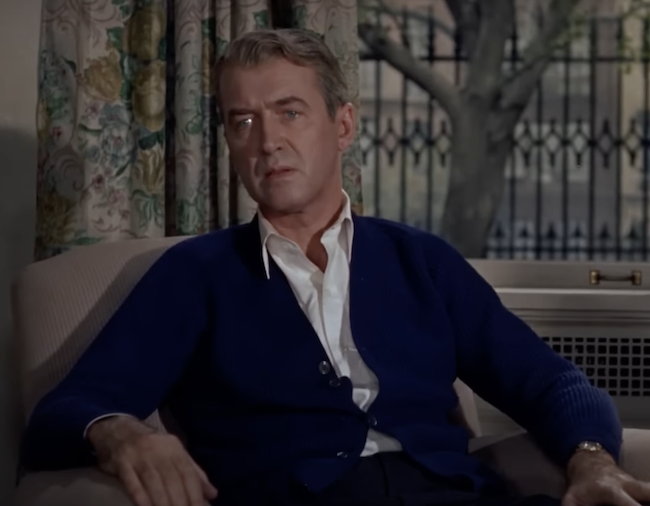
Last month, I wrote about Jimmy Stewart playing a monster in Vertigo. It seems only fair that I cover one of his gentlest roles next, that of lovelorn salesman Alfred Kralik in holiday favorite The Shop Around the Corner (1940). For those unfamiliar with the film, it was later remade as the horrible You’ve Got Mail (1998), which I despised only slightly less than the man behind me in the theater, who complained, “You’ve got to be kidding me” to his girlfriend after it ended.
The Shop Around the Corner is superior to its remake for many reasons. Since this is a Ernst Lubitsch film, there’s a sophisticated touch to the little dramedy throughout; the plot is nuanced, funny, heartwarming, and occasionally heartbreaking.
The hardworking salespeople of the little Hungarian gift store are likable and driven and funny and loyal to one another.
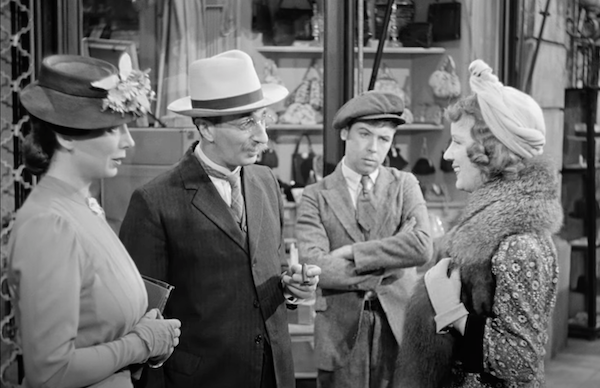
They’re also struggling to get by, as in the moment when Alfred asks his colleague Pirovitch (Felix Bressart) if he’s ever gotten a bonus and gets a wistful “…once…” in response. The film often reminds me of workplace comedies, especially Brooklyn 99 and The Office, because the little family of coworkers commit to their work and vie for status with their boss. Shop experiences take up far more time than the romance.
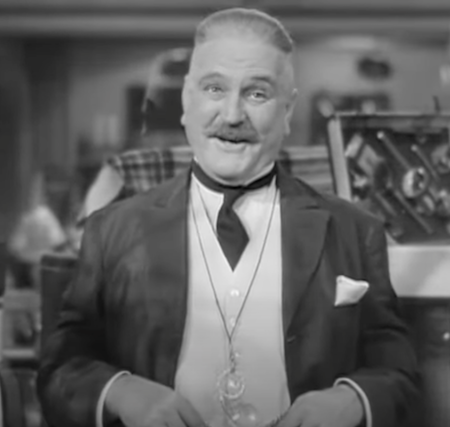
The irascible, sensitive owner, Hugo Matuschek (Frank Morgan), is entertaining.
One of my favorite moments is watching Pirovitch dart out of sight when Hugo, trying to explain a specialty cigarette box, says to Felix’s colleagues, “All I want is your honest opinion.” We soon find out just how unwise it is to express your feelings to this particular boss.
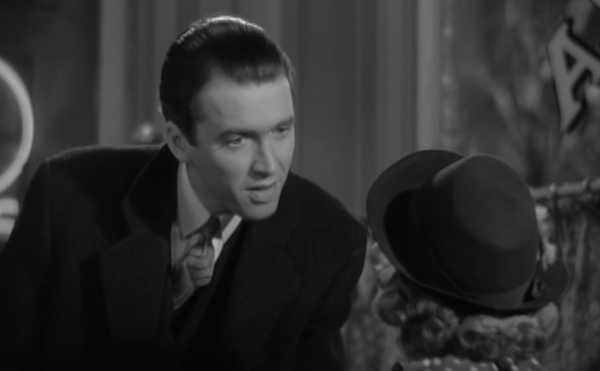
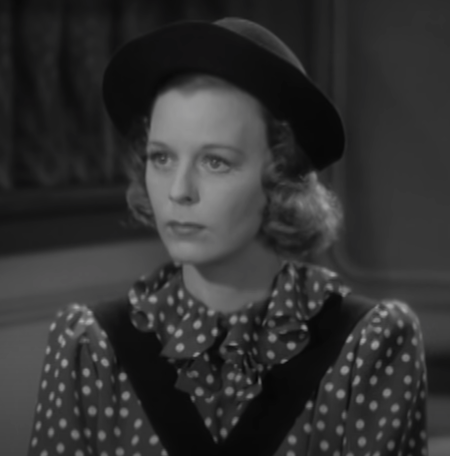
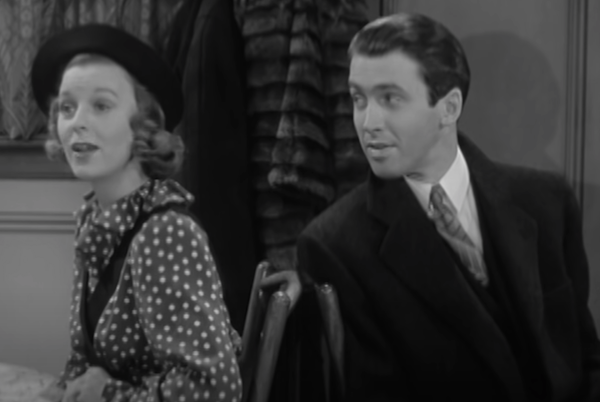
Meanwhile, Alfred, the hero (Stewart), is writing love letters to an unknown respondent, who happens to be Klara (Margaret Sullavan), the prickly salesgirl the shop just hired.
She, unaware he’s her pen pal, treats Alfred with disdain. Her attitude is partially the result of misunderstandings, but also because she’s a snob who sneers at him for his job. Even though she can be conniving and even cruel, there’s something so sad about the little airs she puts on, and about how fragile her thin veneer of confidence is.
And what a savvy salesgirl! She actually convinces a customer the cigarette box the owner loves, with its terrible music, is actually a candy box that is intentionally annoying so that it prevents overindulgence. Brilliant. I can’t help but root for her even if I think Alfred is too good for her. And their dialogue is so funny, clever, and entertaining.
What a doll Alfred is. He’s so tender toward Klara once he knows who she is and is sympathetic toward the owner, who wrongs him. He bears with both of their treatment with a warmth and understanding that reveal he’s made of much finer stuff than either of them. He’s also so modest despite being the most admired worker in the shop. I love the moment he fears his pen pal will be beautiful. “Well not too beautiful, no . . . what chance does a fellow like me..?….just a lovely average girl, that’s all I want.”
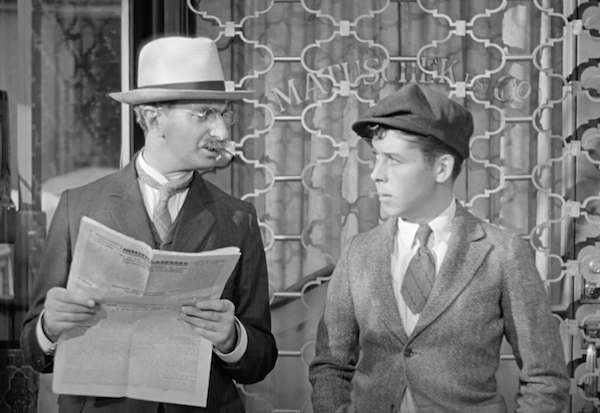
Comic relief Pepi Katona (William Tracy), the confident delivery boy, doesn’t appear much until the second half, but what a joy he is every time he shows up. I particularly enjoy him teasing a doctor and the new delivery boy. He and Pirovitch are both by turns funny and warm–an unusual combination for a comedy:
You’ve Got Mail, in contrast, dials up the time spent on the romance, eliminates any humor, makes the modest hero (Tom Hanks) a big box store magnate and forces the heroine (Meg Ryan) to be bop-her-head cutesy and snarky at the same time. I’d tell you more, but I’ve blocked the rest from my memory.
Do yourself a favor, and watch The Shop Around the Corner instead.
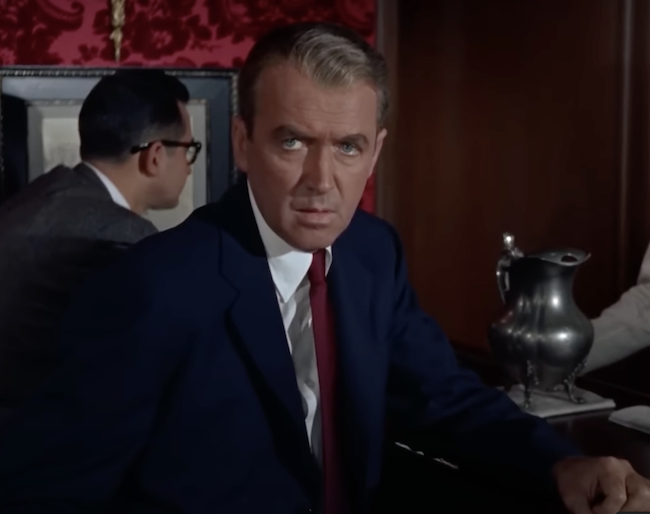
I love a good casting against type. That’s why Scottie in Vertigo is so disarming: It’s creepy to find America’s aw-shucks sweetheart, Jimmy Stewart, playing a villain.
Of course, not all of Stewart’s parts are sugary; he was a murderer in The Thin Man series. He was a professor with disturbing philosophical beliefs in Rope. But Stewart plays innocence beautifully and so memorably—as in his iconic performance in Mr. Smith Goes to Washington, or in his role opposite an imagined rabbit in Harvey. It’s in these parts—and as the lovely George Bailey in It’s a Wonderful Life—that Stewart makes the most enduring impression on viewers.
That’s why when Scottie begins to act unhinged in Vertigo, the audience gives him the benefit of the doubt, and can understand why his loves do too.
He’s just in grief, we think. It must be awful to blame yourself for your coworker’s death.
He’s just experiencing PTSD.
I know he must be a good guy…He’s George Bailey!
Scottie seems to be a good guy at first. He’s a charming, funny friend to Midge (Barbara Bel Geddes), who secretly loves him. He’s willing to help desperate college friend, Gavin (Tom Helmore). Gavin claims his wife, Madeleine, is possessed by a sad ghost and employs Scottie to trail and protect her from self-harm.
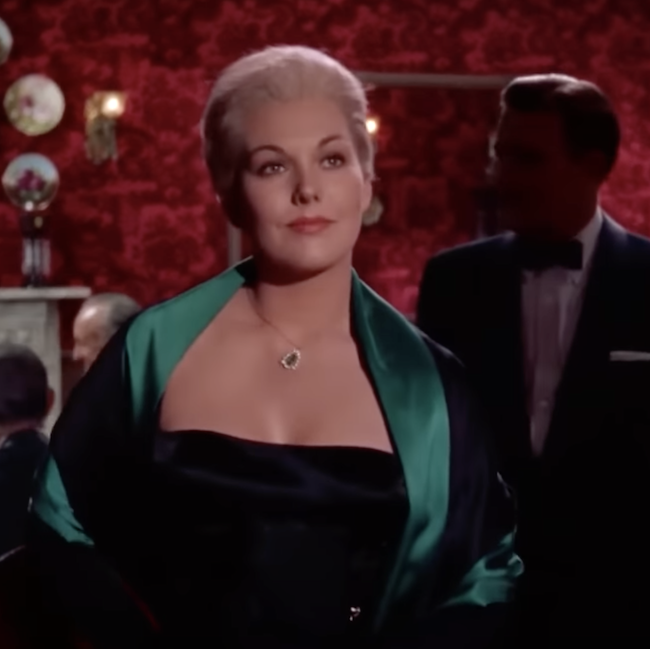
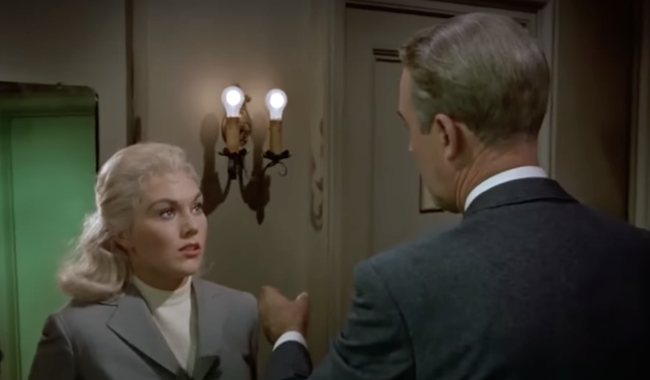
But right away, Scottie’s actions are suspect. He falls for Gavin’s wife. I mean, it’s hard to blame him. Look at her entrance:
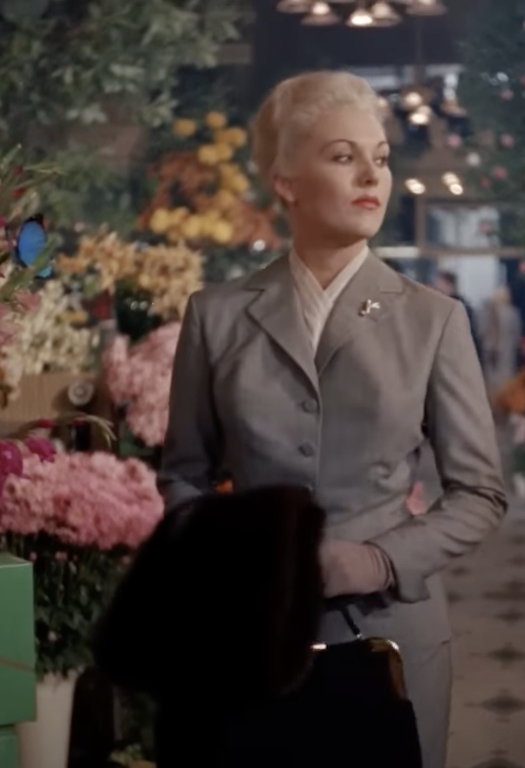
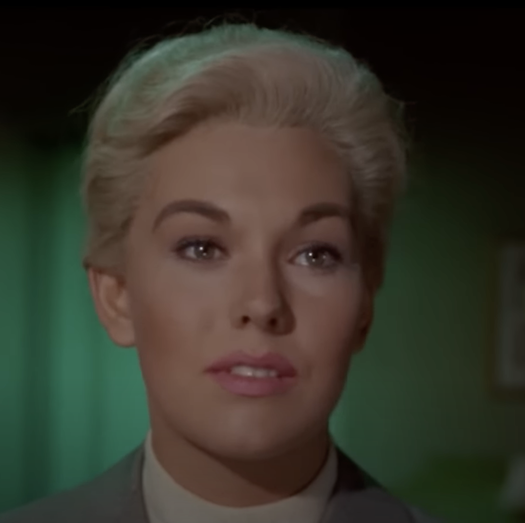
She somehow looks even better in a rather drab grey suit:
Still, Scottie didn’t have to act on his attraction. He breaches friendship and professional ethics by hitting on Madeleine. Knowing—as we viewers do by the end—that Gavin planned it that way doesn’t change anything.
For a brief moment, Scottie and Madeleine seem to enjoy each other’s company, but the happiness is short lived.
Soon, things go terribly wrong for Scottie. Madeleine leads Scottie to a tower. His vertigo prevents him from following her, and he thinks he sees her leap to her death. What he really sees is the real Madeleine (whom he never met) thrown from a tower, while fake Madeleine, whom he’s been trailing (Novak), hides until he leaves.
Once Scottie loses fake-Madeleine to supposed suicide, we’ve forgiven him for any bad behavior. After all, look at his despair!
It’s what he does with that despair that makes Scottie a villain.
First, he follows a strange woman, Judy, to her apartment door.
Let’s start there. Stalking a woman because she looks like your lost love is deranged. Her hostile response to his knock is valid—even if she weren’t the fake Madeleine we know her to be.
Of course, Judy is hardly innocent. She was involved in a murder plot that ruined Scottie’s life. Despite her complicity, we feel for her. She’s so remorseful and almost as self-destructive as pretend Madeleine: who after such a perfect crime falls for her own mark? (Gavin would have killed her had he thought her capable of it.)
And Scottie? Had Scottie believed Judy guilty, his cruel behavior toward her would be somewhat justified. But Scottie believes her innocent. He’s an emotionally abusive boyfriend who feels ZERO guilt for expecting irrational sacrifices from his lover.
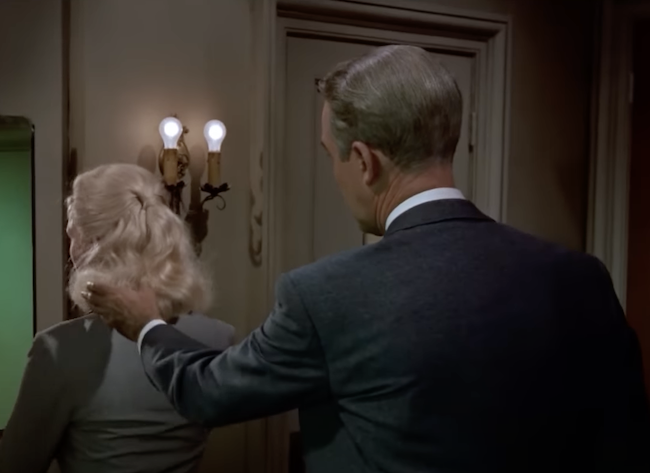
His next disturbing act post-stalking is to force Judy to wear the same grey suit as his dead love. When Judy realizes what he’s doing, she protests.
His justification for distressing her is jaw-droppingly awful: “Judy, Judy, it can’t make that much difference to you…. Judy, do this for me.”
I admit. I laughed aloud when I heard these words this time around. Can’t make any difference to YOU, what you wear? Yeah, nothing personal there.
“I don’t like it,” she says of the suit he offers her.
“We’ll take it,” he responds to the saleswoman.
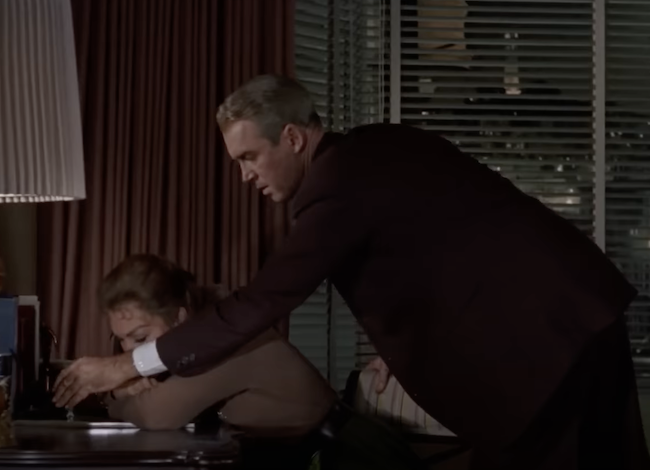
Judy responds by laying her head on a desk in misery. Scottie’s answer? Ply her with liquor.
She asks why he’s terrorizing her and threatens to leave but fears he wouldn’t let her. Sadly, she wouldn’t leave anyway: she wants to remain with her abuser.
This is when we wish Judy’s friends from an earlier scene would return.
RUN, HONEY. RUN!!!!!!
Scottie then says his last few days with her (and yes, he starts on this nonsense just DAYS after they get together) are the first happy ones in a year.
She says that’s only because she reminds him of his dead love. What, besides that, does he like about her?
He replies, “It’s you too. There’s something in you that…” He starts to touch her, then WALKS AWAY without finishing the thought. Because she’s right: he only likes her for her resemblance to Madeleine.
“You don’t even want to touch me,” she says.
“Yes, yes I do.”
Let it be said that there’s no evidence to back his words.
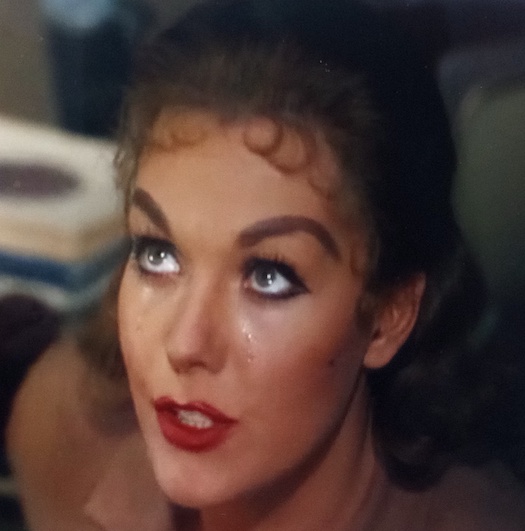
“Couldn’t you like me, just me, the way I am?” Judy cries.
Now this is some heartbreaking stuff. But it gets worse:
“When we first started out,” Judy says, “it was so good, w-we had fun. And then you started in on the clothes, well, I’ll wear the darn clothes, if you want me too, if, if you’ll just, just like me.”
What is his response to this pathetic concession?
“The color of your hair.”
Because of course, he wants to change her brown hair into Madeleine’s blonde locks too.
“Oh no!” she says and walks away.
“Judy, please, it can’t matter to you.”
Again, as a woman, I must say, the color of one’s hair is QUITE PERSONAL.
But Judy is now ignoring red flags as tall as the sequoias she visited with him (while acting as Madeleine): “If…If I let you change me, will that do it? If I do what you tell me, will you love me?”
“Yes, yes,” he says.
“Then I’ll do it. I don’t care anymore about me.”
Her sad words don’t worry him, or even make him feel remorse. Because she caved to his senseless demands, he is finally affectionate, nuzzling her, “Here, go on, let’s sit by the fire,” and he takes out a cushion for her.
And so Judy makes the full transformation into his lost love for him.
We hear the elevator after the full makeover, watch her move toward him. She enters the room without a word, hesitant. She’s afraid. She puts her purse down.
“Well?” she says, turning toward him.
It’s clear that Judy is expressing one tiny rebellion, one last trace of self-respect. She comes back with her hair down, not up, like Madeleine’s. In every other way, she’s the dead woman’s twin.
“It should be back from your face and pinned at the neck,” says Scottie, “I told her [the beautician] that, I told you that.”
Wow.
“We tried it. It just didn’t seem to suit me,” she says, combing her hair nervously.
He grabs her hair.
She turns to face him.
“Please, Judy,” he begs.
She walks in other room, fixes it for him.
He sees her in fog as she somnolently walks toward him. She half-smiles, then smiles fully as she sees his tears.
Being the toxic man he is, he gives her a REAL kiss. After all, she’s now actually BECOME his dead love for him. Because that’s healthy.
In the next scene, we see them playful and flirty with each other—an echo of the earlier conversation with Midge, but with heat.
“Hello, my love. Like me?” She smiles and then spins for him in a pretty dress, her air and voice confident, easygoing—the tone of a well-loved woman. This is the first genuine smile we’ve seen from Kim Novak in the film. (Scary, right?)
“Mmmm,” he responds.
“Is that the best you can do?”
“Come here.”
“Oh no, you’ll muss me.”
“Well, that’s what I had in mind. Now come here.”
He then spots Madeleine’s necklace on her neck and knows Judy’s guilt. He says cryptically, “One final thing I have to do, and then I’ll be free of the past.”
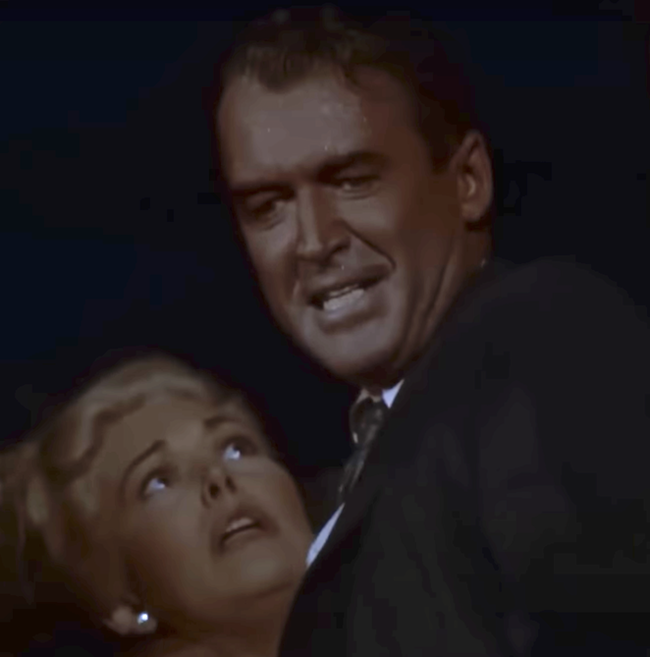
Scottie drives Judy to Madeleine’s supposed suicide tower. He forces her up the stairs and through the trap door.
Then he attacks and half-strangles her, saying, “He [Gavin] made you over, didn’t he? He made you over just like I made you over, only better. Not only the clothes and the hair, but the looks and the manner and the words and those beautiful, phony trances….Did he train you, did he rehearse you, did he tell you exactly what to do, what to say? You were a very apt pupil too, weren’t you?”
It’s easy to read these words on multiple levels. Yes, he’s angry she deceived him and furious she’s taken advantage of his affliction. But he’s also angry that she’s had a former lover, Gavin. And he’s angry that Gavin was a better Geppetto than he was.
Scottie’s physical actions are brutal now that he knows what Judy’s done, but those actions are just an escalation of earlier ones.
Note how many times he pins Judy’s arms throughout this story, how many times he forces her from behind—whether it is to wear the clothes he wants, or to go up to a tower where her death awaits. Observe how many times she looks fearful, hesitant, unsure of herself. She is a victim of his cruelty, just as he has been a victim of the murderous plot.
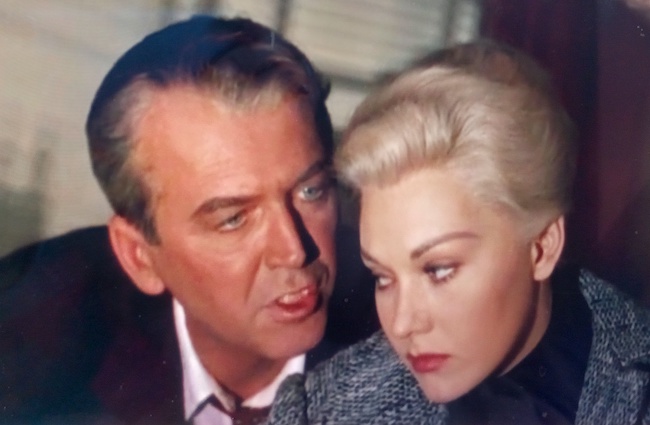
Jimmy Stewart’s Scottie is the definition of a boyfriend who should make a woman run. If he doesn’t give you the heebie-jeebies in Vertigo, you’re just not paying attention.
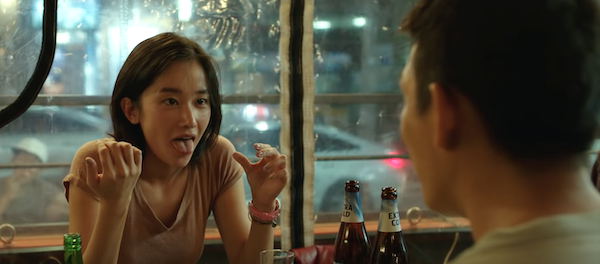
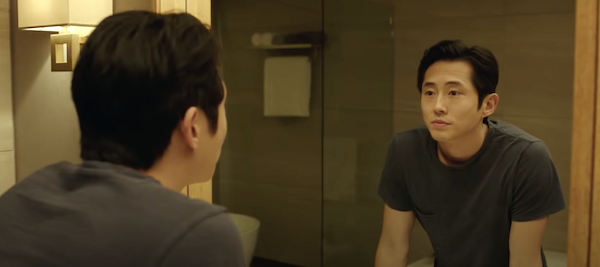
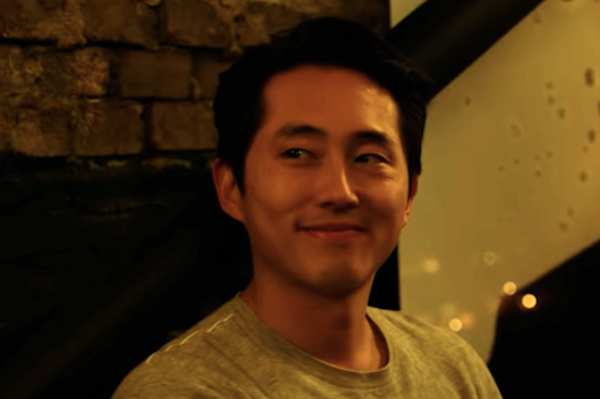
Burning (2018) is the kind of film that rides on a great premise: Guy meets and falls for elusive girl. He loses elusive girl to rich guy. Elusive girl disappears. Is she just following her elusive nature, or did rich guy do her in?
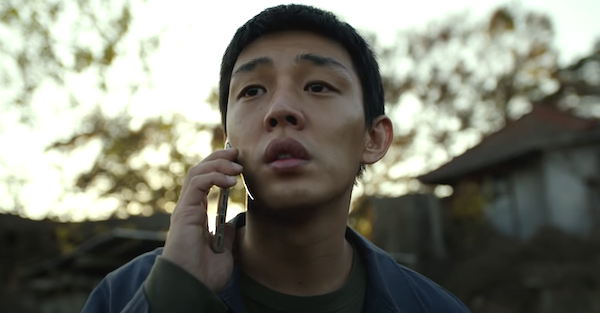
None of the characters but the rich guy–Ben (Steven Yeun)–are compelling. The elusive girl, Hae-mi (Jeon Jong-seo), is annoying and so fragile. Her allure to hero Jong-su (Yoo Ah-in) is more about his own desperate unhappiness than any charm.
But it’s that very lack of charm that makes Ben’s attraction to her suspect. We see him yawning during one of her sad attempts to gain attention. WHY is he with her? He is too suave, too handsome, too lucky, too cool, too mysterious to be be seduced by her.
Also, his self-confessed hobby is arson, which is not exactly innocent. But is Ben really an arsonist, is he fabricating felonies to mess with Jong-su, or is he disguising his murders in metaphors?
Jong-su is that rare hero in noir who does NOT make possible killer Ben feel the need to murder him in self-defense. There are no flamboyant public or even private accusations. Jong-su shores up clues about Hae-mi’s disappearance and Ben’s potential involvement. But he says little and deflects when Ben tries to discover what he’s up to. Jong-su is, in fact, a pretty good amateur detective.
The film does a beautiful job putting you in this detective’s place: What would you do if you suspected foul play, but couldn’t prove it? What if everyone in a missing woman’s life dismissed her (and thus would not be filling out a missing person report)? Would you keep trying? The uncertainty haunts you as you watch Jong-su’s growing desperation.
At first, it seems Burning is a bit of a misnomer. Maybe “Slow Burn” would suit it more. The film creeps up on you. In fact, it teeters on the edge of boring until Ben enters the picture. It then becomes relentlessly disquieting. While the triangle is supposedly between the woman and two men, it’s Ben and Jong-su who play a fascinating dance with one another, with Ben seemingly befriending Jong-su, far more interested in him than he ever seemed in Hae-mi–or in the woman he may be targeting next.
The question is about the nature of Ben’s interest. Is killer Ben trying to discover what Jong-su knows? Is he innocent and just curious why a man of Jong-su’s intelligence is so fascinated by this girl who intrigued him for mere minutes? Or is this all about class, Ben wondering what makes a poor man tick? (All Jong-su has are a mother who abandoned him, a father going to jail, and one cow he needs to sell.) Ben might be seeking what drives Jong-su, what story he wants to tell or live.
But Ben’s interest in Jong-su could be more sinister: a combination of all of these possibilities. Perhaps he DID kill Hae-mi, and is genuinely curious why Jong-su would care that this poor, lackluster girl would be snuffed out.
I would have liked the movie more had the time before Ben been shortened, and the time with him lengthened. I could have used a whole movie devoted to this potential villain. It doesn’t hurt that Steven Yeun owns the role. He performs so well on that edge: not quite creepy, not quite innocent, darting from judgments. Ben has all the luck–and personality–on his side the whole time, so Jong-su’s increasing frustration at his impermeability makes so much sense. This is not an equals fighting one another situation; Ben holds every card.
The film is worth the watch. After spending the whole movie wondering about the title, I walked away knowing how suitable it was. Some conclusions are reached at the movie’s end, but so much more is still tantalizingly out of reach.
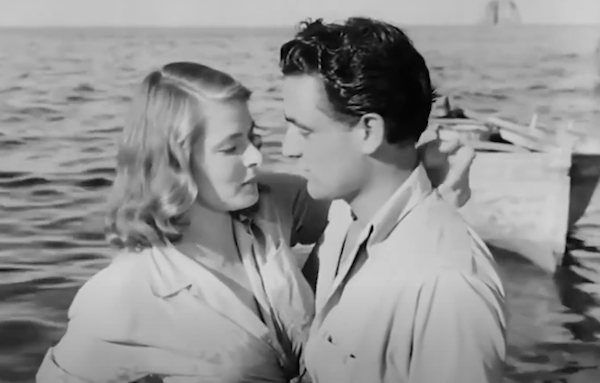
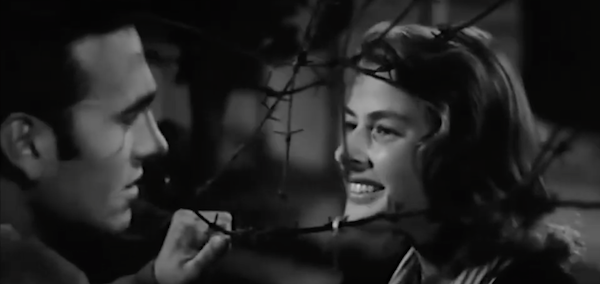
I’ve always been curious about the film that united director Roberto Rossellini and actress Ingrid Bergman in their illicit romance. How red-hot would an affair have to be to lead to a public censure in the US Senate and a six-year ostracism from Hollywood?
I was prepared for something akin to Mr. and Mrs. Smith (2005), where the chemistry of actors (and new lovers) Angelina Jolie and Brad Pitt inflamed the screen.
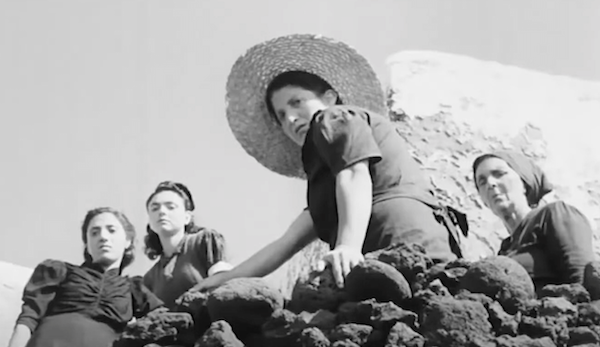
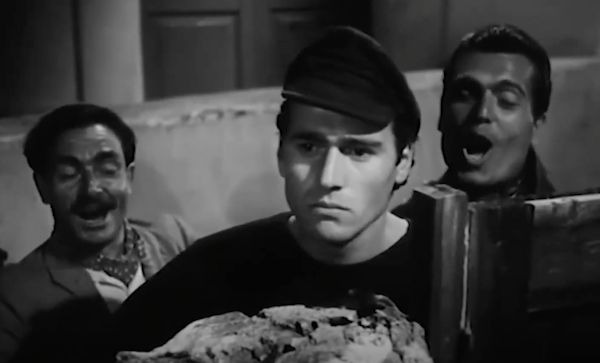
Of course, I neglected to consider a few things before viewing: 1) the absence of the director as an actor in the film, 2) the film’s very un-Hollywood use of everyday people as actors–in this case, fishermen in Stromboli, a small island off of Sicily, 3) the plot.
The Keystone Cops would have been just as likely to show up as a red-hot romance.
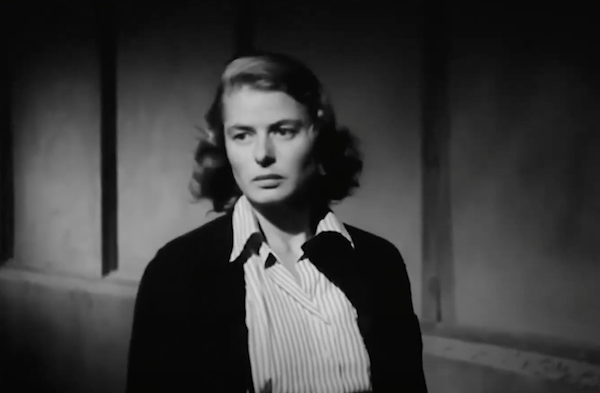
But in one way, I was still on the right track about Stromboli (1950): you can’t keep your eyes off of Bergman, and she IS unbelievably sexy in the film.
The nature of that sexiness is curious because this is a very, very odd movie. I found myself siding with early American critics, who called it dull. I agreed; it was dull. But it was also haunting, with a grim take on marriage quite unusual for its time.
Bergman’s character, Karen, is fascinating because she is one of the least sympathetic, most selfish brides I’ve ever witnessed onscreen. She marries a poor but handsome ex-POW, Antonio (Mario Vitale), to get out of a displaced persons camp.
When he brings her home to his fishing village, she doesn’t even try to be civil–to anyone. She attacks her new groom for taking her there. She tells him this place is terrible, that she’s too refined for it and can’t stay. Kind of harsh right after his release from a camp, huh?
In fairness, the village does suck, at least for Karen. There’s an active volcano that can erupt at any moment. Their house is a shack. There’s little to do or see. The townspeople are super judgy and foreigner-averse, which doesn’t make Karen, a Lithuanian, feel very welcome.
But it’s hard not to pity (at first) the poor husband who just takes Karen’s verbal abuse and hostile glances–especially when he quietly accepts an underpaid fishing job to buy her a better life.
She starts filling the home with the worst decor I’ve ever seen–and hides away her husband’s family photos and religious icons, which she despises. Apparently, this process gives her some pleasure. She’s appalled when he doesn’t love what’s she done, including the weird flowers she’s painted on the walls, kindergartener style. (I told you this film was bizarre, right?) She decides to use a sewing machine in the home of an apparent madam, despite warnings. Then she’s mad at others for thinking she’s loose.
But just when I’m ready to care only about him, her husband proves he’s brutish, like she’s claimed: he beats her for making him look like a cuckold. Now, we audience members don’t have anyone to like in the film.
As for Karen, it’s not long after the house decorating that she begins to plot her escape. Her method is to throw herself at every man who might get her out of there, including–wait for it–the village priest. And the seduction act Bergman pulls is something to witness. I’m not sure how anyone resists it, transparent as her motives are, because this is Ingrid Bergman throwing herself at you, men!! And she has moves. (Narratively, it would have made sense to choose a less attractive actress, but I fully enjoyed full-seduction Bergman. It’s easy to understand how Rossellini fell for her while filming.)
But it’s not just her sensuality that has the audience enthralled by Karen. Her breathless confidence in herself in the face of hostility and discomfort and abuse and foreignness is something to witness. You can’t help but root for her even as you question her decisions. Bergman displays confidence not just through her voice and expressions, but through a kind of ease with her body typical of athletes and dancers. In another world and in another time, you think, what couldn’t this single-minded woman do!? No wonder she’s so angry about her lot!
Unfortunately, Karen soon proves that her poor judgment is not limited to her words and decor. On a lark, she stops by her husband’s job while he’s fishing for tuna with his crew in a ploy to earn his affection. WHO DOES THIS???
This choice is one of the plot devices that seems to be an excuse for Rossellini to include a beautiful neo-realistic scene. It’s easy to understand Rossellini’s reputation as a director when it comes to cinematography. It was fascinating to watch the brutal and dangerous process of catching these huge, gorgeous fish and killing them as the refined wife looks on, horrified.
Later gorgeous scenes include when the volcano erupts, and the town flees for the sea. The escape is fascinating and frightening to watch, and beautifully rendered. (In typical fashion, Karen is only concerned about her own rescue when she sees motorboats.)
**Spoilers coming**
Stromboli is most famous for its ending. Fresh from volcano PTSD, Karen takes off, despite being pregnant. She heads over the still-active volcano alone to get to the side of the island where she plans her escape. She dumps her suitcase in exhaustion after breathing in copious amounts of smoke. She passes out after admitting defeat.
But when she wakes, she calls aloud to God, asking for strength, proclaiming that her experience has been too awful to endure and that she must depart. Whether she really means awful for her or for her unborn child (or for both) is unclear despite her words. Hollywood later added a voiceover suggesting she returned to her husband, a disturbing “happily ever after,” given his violence and decision to forbid her exit by nailing the front door shut while she was inside.
But I don’t buy Hollywood’s interpretation. Karen seems more intent on the birds above her, on the flight still possible with God’s help. The end is ambiguous, it’s true–I can’t be sure I’m right. What ISN’T ambiguous is how miserable Rossellini makes marriage look–which is interesting as he’s breaking up Bergman’s and his own.
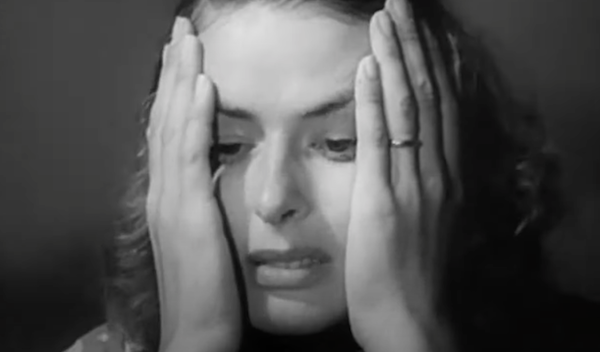
Regardless of what anyone makes of the film, Bergman’s performance is unforgettable, and not to be missed by her fans. The extended final scene of her climb and pleas is breathtaking: her resignation, her desperation, her anguish, her hope. This woman deserved all of her three Oscars and then some, and it’s a pleasure to watch her commanding the screen in this stunning finish. If nothing else, watch that.
This post is part of The Wonderful World of Cinema‘s 6th Wonderful Ingrid Bergman Blogathon. Check out the other celebrations of Bergman here!
Most film noirs are cautionary as well as bad luck tales. But there’s a particular type that seems to be created by untrusting husbands and wives, the “you’ll be sorry if you cheat” noir. The most memorable for many of us are Fatal Attraction (1987) for the disloyal husband, Unfaithful (2002) for the straying wife. But the genre has a long history. The Prowler (1951) stands out in this list because it stars Van Heflin, whose charisma highlights just how easy the tumble into marital infidelity can be.
Van Heflin isn’t a name that stands out to any but classic movie fans despite his 1942 Oscar win, but his films do, particularly 3:10 to Yuma (1957) and Shane (1953), in which he plays steady husbands who can’t compete with the glamour of flashy gunslingers. In these films you feel the stamped-down passion of a man who has been worn down by hard work and harder luck. I prefer the roles in which Van Heflin plays lighter characters, like the gambler of The Strange Love of Martha Ivers (1946), the adventurer in Green Dolphin Street (1947), or Althos in The Three Musketeers (1948). These roles capture the sexy quicksilver nature and physicality of a man who once left acting to be a sailor.
***some early spoilers ahead***
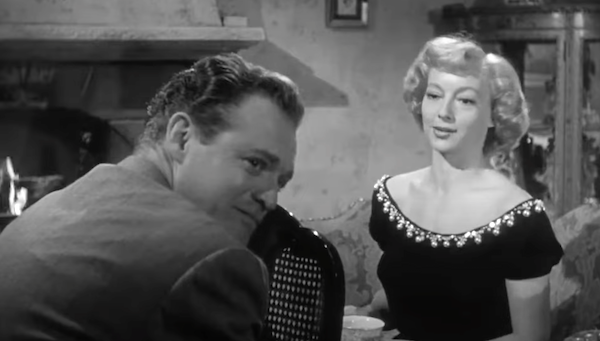
It’s that impulsiveness that makes Van Heflin so alluring as a cop in The Prowler. He might return to check on the lonely wife (Evelyn Keyes) who calls to report a peeping Tom, or he might not. He might call her back or pretend he doesn’t get her calls. He sets her at ease by sharing the Indiana roots he holds in common with her. But it’s his carefree manner of walking through her house that makes her prefer him to her older, stodgier husband, who–coded as the reference may be in a 50s film–seems to be impotent.
Unfortunately, the wife doesn’t notice the cop checking out her husband’s will in between visits to her bed. And so she doesn’t know for sure when he pretends to be the prowler in order to kill her husband whether it was an accidental killing (as the inquest claims), or not. When she marries the cop, she takes it for granted he’ll be pleased with her too-far-along pregnancy instead of seeing it as the danger it is. But as noir-aware audiences, we wonder, what happens when that bump gets bigger? I had eerie Fargo flashbacks as I watched the cop go about his plans. Will bystanders suffer the fate of those poor drivers in that Coen brother masterpiece? What about this new wife, who is now a liability? Suddenly, the unpredictability that attracted the now-widow looks less like sexiness, and more like the danger warned in the Coens’ own infidelity noir, Blood Simple (1984).
The Prowler plays its potential endings close to the vest, and the movie is bare and streamlined, as a good noir should be. It seems, in fact, like the film could have been written yesterday with a few tweaks. We audiences don’t know what the cop will do, but we are remindedthat cheating is a risky game, especially for a woman before her biological clock runs out. So beware of the sexy Van Heflins of the world, men with quick smiles and chips on their shoulder. Beware of the man who acts casual as he rifles through paperwork in your home. Beware–the jealous spouses of the world warn we viewers–and keep him safely outside of your door.
Aftersun deserved best picture & directing Oscars this year, but it had no shot. The Academy doesn’t like to award intimate little stories about relationships. They like loud message films, and loud action films, and stories about men being men. And when they (rarely) pivot their patterns (Moonlight), it’s never for a woman helmer: It’s no accident that the only females who’ve won directing Oscars did so for stories about war, community job loss, and cowboys.
Academy voters like to throw a screenplay bone at the original, lovely intimate stories–though they occasionally alter that with acting (as with Aftersun) or song nominations/wins (as with Once). Even when a quiet, intimate little film like Il Postino is nominated for best picture, it wins for something else (in its case, score). That’s why when I’m searching for good films I don’t know from past Oscars, I go straight to the screenplay category. There I can find films that weren’t about the Academy trying to prove something, or the fact that many of them are too lazy to view all but blockbusters and movies with their friends in them.
What strikes me most about Academy voters is their fear. They’re afraid of being seen as racist, as they should be (#OscarsSoWhite), but they actually prove they are with nominations for movies like The Blind Side and Crash and Green Book. The pernicious roots of racism don’t lie in big headlines or loud messages or overt acts, but in the everyday moment, and the everyday moment is where all of us make mistakes of every kind. We are vulnerable there. Academy voters don’t like that space.
To nominate Aftersun for best picture or its writer-director Charlotte Wells would take guts. It’s not Oscar bait, and at first appears far less skillfully managed than it is. It fools you, posing as a student film, or just a kid’s camcorder records of her vacation with her dad. It’s slow. If you’re inattentive, you might find it boring. You don’t know at first the reasons for pauses; for impressionist shots; for quick flashes. You must be patient. But if you let the film in, you are caught up in the relationship between a charming young girl, Sophie (Frankie Corio), and her sweet dad, Calum (Paul Mescal). You soon sense, as when reading a book by Marilynne Robinson, that every little choice by the writer-director counts, that each choice has layers of meaning that build upon one another, and that the very everyday nature of the story is the point of the film. That’s what our relationships are about, our love, our pain, our loss, our joy. It’s missing the details of moments that haunt us later if the relationship is lost or even if it alters over time.
Aftersun is poignant because it’s about that, but more. About looking back and examining what you were too young or focused on understanding your own growing-up moments to understand, to see your father as human, with needs, pain, and insecurities. And Paul Mescal’s understated performance is much of what makes the film unforgettable.
This movie will stay with me a long time, will remind me to cherish the loved ones in my life, to try to be a more understanding person. I wonder how many people could say that about Avatar: The Way of Water.
Good Luck to You, Leo Grande. An enjoyable, meaningful film about a woman dealing with sex and her self-worth in middle age. A nuanced story, with a sympathetic portrait of sex workers. It gets nada from the Academy. A subtle, star-making turn by Daryl McCormack–ignored. And Emma Thompson not only snubbed, but not even listed as an Oscar snub. People couldn’t shut up about JLO not getting a nomination for Hustlers, but we’re going to forget that two-time-Oscar winner Emma Thompson was overlooked for one of her finest performances?
Viola Davis and Danielle Deadwyler Get No Nominations, and Ana de Armas Does for Razzie-Nominated Blonde. I read the book Blonde by Joyce Carol Oates, even liked it. I am not sure the director did. That film? Oh no. No. No. No. Was de Armas good in it? For what she had to work with, which was not much. That’s not an Oscar nomination. Look, I’m a Marilyn fan. That woman had some serious chops as a comedienne. But that tired trope of fragile waif Marilyn again, with some gross additions thrown into the mix? That film deserves NOTHING. I am sick.
Tár. It seemsTodd Haynes makes a movie every decade, and with the best of materials and actresses, manages to turn wonderful storylines and potential into snores.
Triangle of Sadness. A fight over a check that should have taken five minutes being stretched to such ludicrous proportions that I forgot what the movie was about. A diarrhea-puke-&-other gross bodily-function scene that takes excruciating amounts of time for NO REASON (and doesn’t make me laugh once). And, of course, the earth-shattering message that power and money corrupt? This is some shit, people. Literal and figurative. NO FEMALE DIRECTORS were chosen so that this gem could make it into the best-directing category.
Top Gun Maverick. I admit it: I didn’t see the thing. I couldn’t bear it after I found out Kelly McGillis wasn’t invited back. I’ll watch this, that Avatar sequel (please), and other action extravaganzas nominated for Oscars once a female blockbuster gets a berth on the list. In the meantime, please everyone, stop bellyaching that crowd pleasers never make it, while nominating male-only fare like Master and Commander and Gladiator. Why is everyone so forgetful? Crowd pleasers OFTEN make it, and even win. What the hell was Braveheart? A subtle indie film? What about Jaws? The Greatest Show on Earth (1952)? I mean, NO ONE saw those, right?
And I’m just getting started. Rant, Part I over. Stay tuned for Part II….
I watched a tragedy the other day. It got under my skin. Its characters wouldn’t let me be. But I was also a bit sorry I’d seen it. A friend used a perfect word for it: grim.
The film, The Banshees of Inisherin, is being called a black comedy, and some strange critics are calling it hilarious.
Hilarious?????
I love black comedies. I will howl at Shaun of the Dead and Serial Mom and Dr. Strangelove. But what Martin McDonagh’s new film makes me want to do is weep.
Have we forgotten Yorick in Hamlet? Or the dying Mercutio’s quip in Romeo and Juliet, “Ask for me tomorrow, and you shall find me a grave man”? Moments of humor do not make a tragedy a comedy. They highlight and accentuate the tragedy, make us feel for those who’ve suffered and make our sense of their losses heavier, more acute.
If you want to tell a story about a friend dying in the hospital, you don’t ONLY show that friend in the hospital. You show her lively and funny and nimble—help us see the distance between her then and now. Otherwise, all we audience members feel is a kind of generic sadness. We don’t think of your friend as an individual. We don’t understand the extent of the loss of this one amazing human being.
The Banshees of Inisherin is—on the surface–about the demise of a friendship for trivial reasons. But what it shows is how little it takes for one simple, everyday man’s life to spiral, for his days to go from easygoing to heartbreaking. And how that change brings out the worst in him. (The story is also a rather obvious metaphor about pointless warfare.)
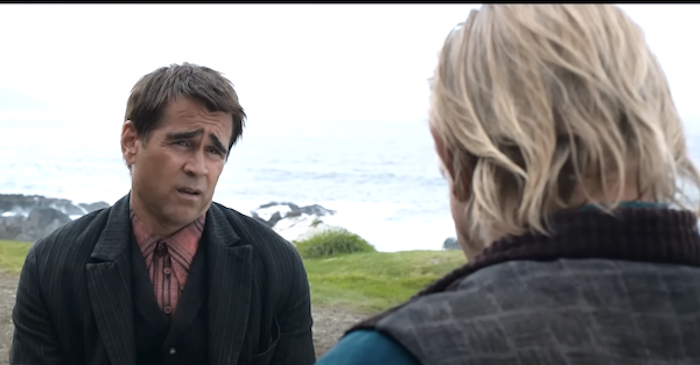
I find Martin McDonagh’s work fascinating. I agree that many of his films are black comedies. But not this film. It’s not ridiculous and theatrical or over the top in the way Seven Psychopaths or In Bruges or even Three Billboards and other black comedies are. The story is too simple, and the pain of Padraic’s (Colin Farrell’s) now broken life is far too minutely and intimately told for the humor to do anything but make us feel for his losses. (And yes, his friend’s actions are over the top, but so are Romeo’s.)
If you want to see just how talented Farrell is, watch the movie. If you’re in the mood for a sad tale about the destructiveness of poor decisions, watch.
But don’t view this film on one of your vacation days, like I did. And stop listening to those critics who think a few jokes make something a comedy.
The common line on Detour (1945) is that it features one of the nastiest of femme fatales—a fascinating, feral creature. It’s true that Ann Savage as Vera is a powerhouse, and I can’t stop watching her. But is she really all that bad?
**Some plot reveals.***
So many reviewers skim over the incident that made Vera so raw in the first place. Yet to me, her reaction to that incident is what makes this B film worth watching. Can anyone honestly say they root for the sad-sack, self-pitying musician, Al Roberts (Tom Neal)?
What a dud this hero is. The movie is nothing until Vera enters the screen, and it’s nothing after she’s gone.
As far as her dangerousness, let’s review, shall we? Vera is a hitchhiker picked up by Charles Haskell Jr (Edmund MacDonald). We learn about her secondhand from Charles, who is complaining to his current passenger, Al, about the deep scratches on his hand. Charles says an “animal” inflicted the wounds on his body. “You know there ought to be a law against dames with claws,” he complains.
The reason for their disagreement is soon clear: “Give a lift to a tomato, you expect her to be nice, don’t you?….After all, what kind of dames thumb rides, Sunday school teachers?”
In other words, he thought she should be forced into sex with him because she must be that kind of girl. This dude felt entitled to rape her because she’s a hitchhiker. He assumes all men will agree with him (as Al does) that she’s nasty because she hurt him defending herself.
What’s intriguing—and unusual—about Detour for its time is that it gives voice to this assaulted woman. As soon as we meet Vera, we know she’s suffering from PTSD and doesn’t know how to manage her pain. Even Al, hardly an empath, says, “Man, she looked as if she’d just been thrown off the crummiest freight train in the world.”
Her angry words soon reveal that Charles is hardly the first man who has felt entitled to mistreat her: “I’ve been around,” she tells Al, looking at him intently, “and I know a wrong guy when I see one.”
That she lashes out at Al might be because of what she thinks he’s done—but it’s not the only reason.
Now Al is not the smartest dude, as Vera quickly realizes: “…You don’t have any brains.” He picks up a stranger right after he accidentally killed Charles and exchanged identities with him. If he were a smooth-talking liar, you could see him getting away with this move. If he were quick, you could see it too. But Al is not smooth. He is not quick. He is not smart. And he lies with all the skill of a toddler. He’s also unlucky because whom should he invite for a ride, but the only one who knows his identity is false? While many of his grievances are self imposed, it’s hard to argue with him that when it comes to encounters like his with Vera, fate was putting “out a foot to trip you.”
Vera’s instantly brutal to Al, whom she thinks killed her attacker. But she feels kinship with him too. She’s aiming for connection, an us-against-the-rich plan. She’s Bonnie and this idiot won’t be her Clyde. It pisses her off.
She wants him to recognize that they’re both presumed bad, that they don’t have a chance, so why not go for a con? Why not enjoy the advantages they have before everything goes to hell, as it certainly will, for people the deck is stacked against, like themselves? And when he won’t give in, she tries blackmail.
Her plan is not nice. She’s not nice. But I don’t find her nasty—even if some of her actions (and plans) are cruel. I find her tragic. She believes Charles’s wealth is part of what made him feel entitled to rape a poor girl, like her. She’s met a lot of men who act that way. Unfortunately, she didn’t find a man who could empathize with her suffering, or even enjoy a drink with her. She looked for something approximating an ally, and all she got was Al.
Oh Al. What a worthless character. He is a homme fatale BY ACCIDENT. He falls to pieces when a woman yells at him. He breaks into hives when he tries to sell a stolen car. Some theorize that he’s an unreliable narrator, deluding himself that he didn’t kill. Personally, I think he’s just deluded himself that his girlfriend wants him back. I don’t find Al’s psychology complex enough for any more sophisticated delusions.
But Vera? We lose her far too soon. If this film were the revenge fantasy this character deserves, she’d be living it up in Charles’s family mansion, smiling archly at the family as they bemoaned the loss of their heir.
“Oh yes,” she’d say, holding up champagne and affecting a snooty tone, “Wasn’t it a shame for Charles, all those women who did him wrong?”
This post is part of the Movies are Murder! blogathon hosted by the Classic Movie Blog Association (CMBA). Go check out all of thegreat entries.
Romeo & Juliet. This guy was in love with another gal last week. This is not a romance for the ages; this is a guy who can’t handle being without a girlfriend. Juliet, why didn’t you hold out for something better?
The Teens of Say Anything. Diane (Ione Skye), I’m sure you’re going to have a great time on your British adventure while your boyfriend, Lloyd Dobler (John Cusack), is hanging out in your apartment watching kickboxing videos all day. I know your daddy, the embezzler, set the bar for men low, but come on.
The Cheaters of Something Borrowed. Hollywood has such a low opinion of us really. We’re asked to get behind Rachel (Ginnifer Goodwin), who had sex with her best friend’s fiancé, Dex (Colin Egglesfield). We’re supposed to root for the cheaters’ love to prevail because the betrayed friend, Darcy (Kate Hudson), is vain, and Dex used to like Rachel. Ummm, what??
Heathcliff & Catherine of Wuthering Heights. Ahhh, the sociopath and the narcissist. Now that’s a coupling that we all want to see, right?
TheUnnamed Heroine & Maxim de Winter of Rebecca. So, when you find out your husband killed his ex in a rage, the proper reaction is NOT to feel better (because now you know he didn’t love her). That makes you almost as creepy as he is. I’ve never rooted so hard for a (dead) villain of a story.
Those are five of the least ideal couples that novels, plays, and movies would have us celebrate. I can come up with ten more without trying. Which couples do you find the most laughably awful?