Cary Grant Won't Eat You

Classic movies for phobics

  • About
  • eBooks
  • Previous Blogathons
Classic movies for phobics

1930s films

The Death of the Marital Rom-Com: Where Have All the Toppers Gone?

03/10/2014 by leah@carygrantwonteatyou.com 6 Comments

When is the last time you watched a rom-com about a married couple? Aside from the occasional indie and rare mainstream flick, Hollywood seems to have retired this subject matter, despite the success of TV shows such as Mad about You, Everybody Loves Raymond, and The King of Queens.

Yet I came up with this list of famous 30s and 40s rom-coms about married couples in just two minutes:

Married: Topper, Mr. Blandings Builds His Dream House, My Favorite Wife, and I Was a Male War Bride
Separated/Divorced: The Awful Truth, The Philadelphia Story, and His Girl Friday.

Those familiar with these titles might notice that these are just some of the marital rom-coms starring Cary Grant. In comparison, I came up with three mainstream marital rom-coms in the past three decades altogether—with help.

Even if married couples in 2014 are more likely to attend animated flicks with their kids, as my husband theorized, that doesn’t explain what Hollywood is producing for those without kids. And I’m not buying that we’re all boring enough to only like films about ourselves. We don’t all cook meth in our basements or fight to the death in dystopian universes. We don’t watch The Walking Dead or Game of Thrones because they remind us of barbeques with our buddies. I discovered most of my favorite marital rom-coms when single. Is it possible that Hollywood thinks singles’ imaginations fertile enough to envision shooting webs out of their wrists or being born in Middle Earth, but not to conceive of being married?

Whatever the reasoning for the endangerment of the marital rom-com, the result is unfortunate: there’s a sameness to romantic comedies now that simply didn’t exist in the 30s or 40s. While there are only so many ways we can meet and fall in love, there is an infinite variety of methods for teasing, imitating, and torturing those we know well.

One of Cary Grant’s best marital rom-coms is The Awful Truth (1937), a film my friend Tonya introduced me to many years ago that I’ve been recommending ever since.  Grant’s and costar Irene Dunne’s impeccable timing and believable performances make this one of the funniest screwball comedies I’ve ever seen.
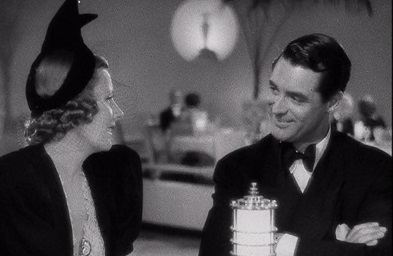
Dunne and Grant dazzling in The Awful Truth

Dunne and Grant dazzling in The Awful Truth

In the film, Jerry (Grant) and Lucy (Dunne) suspect one another of infidelity. Lucy decides to trust Jerry, anticipating Elvis’s famous song about suspicion in explaining her reasoning. Jerry, however, can’t trust her, and the two divorce. But since they’re both still in love, they can’t help sabotaging one another’s new relationships.

I have so many favorite moments from this film. One is when Jerry plays a song for his dog (during his custodial pet visit) to annoy Lucy as she’s meeting her new fiancé’s mom. In another Jerry pays the orchestra conductor to re-play a song just to watch his wife trip as her fiancé tries to lead her in a rambunctious dance.
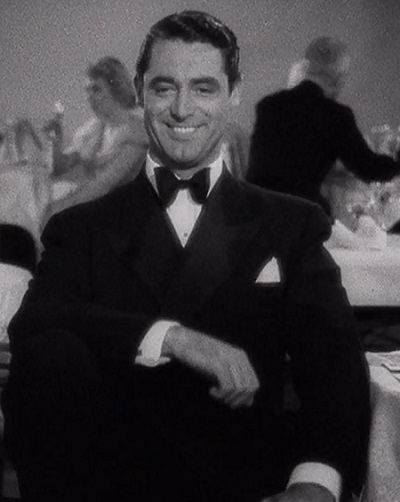
Jerry appreciating the dance moves of Lucy's fiancé

Jerry appreciating the dance moves of Lucy’s fiancé

And there’s the scene when Lucy, aware of Jerry’s pride, shows up at his fiancée’s house pretending to be his wasted sister.
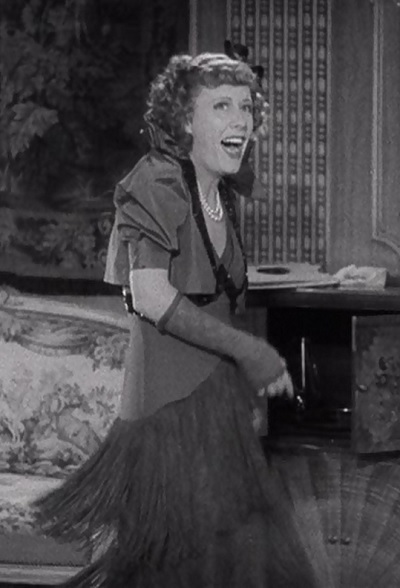
Lucy humiliating Jerry

Lucy humiliating Jerry

She begins the visit by demanding a drink and ends by performing a Marilyn Monroe-over-grate move for Jerry’s soon-to-be in-laws (years before that famous siren’s).

But perhaps the scene I enjoy most is when Jerry gushes about how much his hard-partying wife will appreciate Oklahoma, where her fiancé lives:

“Lucy, you lucky girl,” Jerry says. “No more running around the night spots. No more prowling around in New York shops. I shall think of you every time a new show opens and say to myself, she’s well out of it….”

“I know I’ll enjoy Oklahoma City,” Lucy replies stiffly.

“But of course,” he answers, “and if it should get dull, you can always go over to Tulsa for the weekend.”

Contrast these scenes with those in 1997 rom-com My Best Friend’s Wedding, technically a film of the single-gal variety, but adopting some situations from the marital rom-com. Yes, Rupert Everett is glorious in it, and Cameron Diaz and Julia Roberts are effective rivals.

Diaz confronting Roberts in My Best Friend's Wedding

Diaz confronting Roberts in My Best Friend’s Wedding

But the message is appalling: you’ll lose the guy if you’re dedicated to your profession and unwilling to ditch your education/career for his. No matter, therefore, how funny some of Roberts’ antics seem, I can’t laugh at the antiquated, offensive cliché of the desperate single woman, as the film asks me to do. But I do laugh at the partners in The Awful Truth, both so anxious to get each other back that they’re willing to forgo pride to do so. Due to his unreasonable suspicions, Jerry looks like more of a buffoon than Lucy, but neither comes out of the experience unscathed. (Of course, since Lucy trusts Jerry, we don’t know whether he just likes his space, or has cheated and the filmmakers have given him a pass for sexist reasons.)

The Awful Truth is just one of many delightful 30s marital rom-coms. There are so many more. Until current Hollywood producers come to their senses and resuscitate the subgenre, you’ll be stuck with the half-attempts at marital rom-coms like My Best Friend’s Wedding, in which the humor is only at the woman’s expense. (Forget viewing films about long-term relationships between unmarried couples–an even rarer subgenre.) So give some classic marital comedies a try. You’ll be glad you did.

Incidentally, next Sunday and Monday (March 16 and 17th), I’ll be participating in a classic detective blogathon hosted by Movies Silently. Please check out my entry in this Sleuthathon at my blog next week. I’ll be reviewing The Mad Miss Manton (1938), featuring Barbara Stanwyck as a Sherlock Holmes-Paris Hilton hybrid. And be sure to view the entries of my much more knowledgeable blogging peers!

detective-blogathon-thin-man-small

Share
Posted in: 1930s films, 1990-current films, Comedies (film), Humor, Romantic Comedies (film) Tagged: Cary Grant, Irene Dunne, Julia Roberts, My Best Friend's Wedding

The Anti-House of Cards: Mr. Smith Goes to Washington

02/20/2014 by leah@carygrantwonteatyou.com 1 Comment

I had been looking forward to the return of House of Cards for months. Frank Underwood’s (Kevin Spacey’s) skewering of his opponents is almost as fascinating to watch as his wife Claire’s (Robin Wright’s) icy machinations.

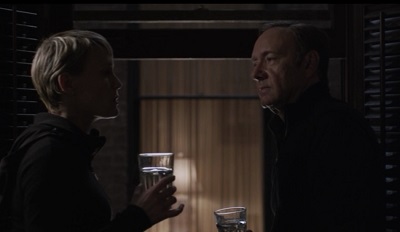
Frank and Claire Underwood, the creepy power couple

The Underwoods, DC’s creepiest power couple

But something about the nonstop snow, ice, and wind this winter has made me too blue to compound my already too cynical view of Congress. In months like these, I need to let some spring-tasting idealism in the room. In other words, I’m craving some Capra.

Many have seen It’s a Wonderful Life, and if so, they already have a feel for director Frank Capra’s conviction that the little guy/gal can make a difference. Capra clearly relished films that breathed hope, like those optimists who would follow him, Ron Howard and Steven Spielberg.

When I stared at a pile of snow two feet high today and knew my shovel was buried somewhere within it, a dose of hope was required, and few films can refresh mine as thoroughly as Capra’s brilliant Mr. Smith Goes to Washington (1939).

Smith (Stewart) inspired by the Lincoln Memorial

Smith inspired by the Lincoln Memorial

The beauty of the movie is that it lets us see the world—and its hero—through the eyes of world-weary Saunders (Jean Arthur). Tasked to assist Jefferson Smith (Jimmy Stewart), she can’t decide if he’s full of it or dim-witted. This guy insists on going to see the Lincoln Memorial when he arrives for his senatorial post, for crying out loud. He claims his primary goal is creating a boys’ camp for his state. Could anything be more suspicious to a DC insider?

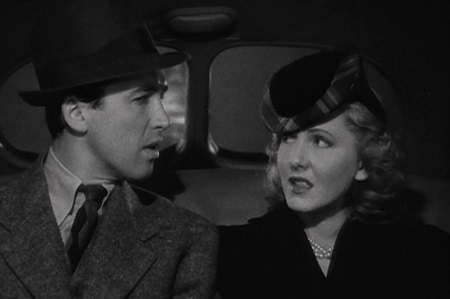
Saunders' reaction to Smith's tourist plans.

Saunders’ reaction to Smith’s tourist plans.

Saunders begins by undermining him, inviting a bunch of photographers to capture him at his most foolish.

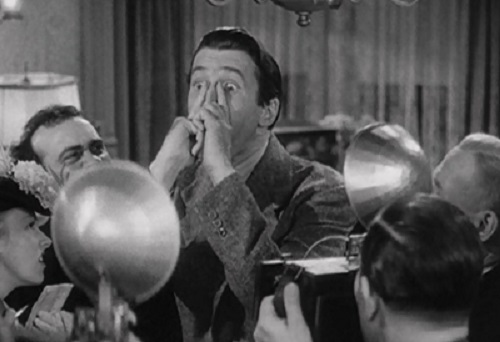
Smith inadvisedly demonstrating a bird call

Smith inadvisedly demonstrating a bird call for the press

But as she slowly begins to reassess him, we find ourselves losing our cynicism about his dogged honesty and downhome goodness along with her. Of course, poor Smith encounters his share of Frank Underwoods, especially crafty Jim Taylor (Edward Arnold), who calls him a “drooling infant.” Interactions with Taylor and his cronies will lead Smith to lose a lot of his innocence but help him develop some much-needed spunk.

Underwood (Spacey) and Taylor (Arnold)

Underwood (Spacey) and Taylor (Arnold)

The powerful filibuster scene at the center of the movie is so moving that reporters still reference it today as justification for allowing that congressional maneuver. The film came up as recently as the Affordable Care Act battle last September, when writers claimed Ted Cruz’s was a “faux filibuster,” and last summer, when Wendy Davis pulled the famous Jimmy Stewart move at the Texas state house for eleven hours straight.

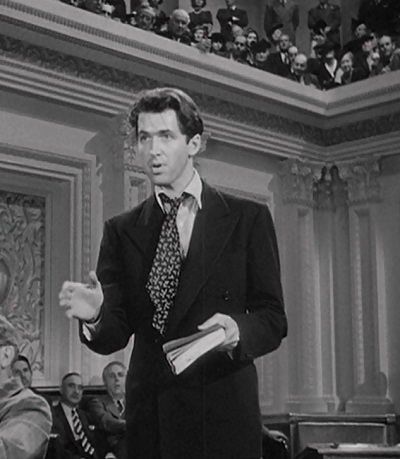
Smith (Stewart) in the midst of his filibuster

Smith (Stewart) in the midst of his filibuster

Most days, the news convinces me that idealists like Smith will always be crushed by the powerful jaws of the Frank Underwoods among us. But somehow, I don’t feel that way today: I’ve been watching Capra.

Share
Posted in: 1930s films, Drama (film), TV & Pop Culture Tagged: filibuster, Frank Underwood, House of Cards, Jean Arthur, Jimmy Stewart, Mr. Smith Goes to Washington

3 Classic Anti-Valentine’s Films for Sex and the City Fans

02/13/2014 by leah@carygrantwonteatyou.com 6 Comments

Single or attached, I’ve always loathed Valentine’s Day. When single, I’ve wondered why our couples-obsessed culture needs a day devoted to twosomes. When attached, I’ve pondered why I should celebrate en masse what’s supposed to be intimate. Therefore, my three recs today are for those who share my distaste for the day:

Female Bonding: Stage Door
For those who’d rather split a few bottles of wine with pals than brave pink-and-red-bedecked nightclubs this Friday, I recommend Stage Door, a film centered on women who live in an all-female boarding house as they try to make their big breaks on the stage.

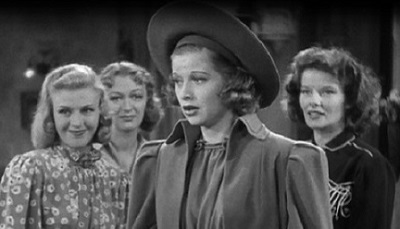
The heroines’ choice to remain single (and have casual boyfriends only) is celebrated rather than reviled by the film. If anything, the film mocks marriage. But don’t just view Stage Door (1937) for its politics; watch it to see the phenomenal cast interact: Ginger Rogers, Katharine Hepburn, Lucille Ball, Eve Arden. (The latter you may recognize as the principal in Grease; in her youth, she was always the smart-talking sidekick.)

Rogers, Arden, Ball, and Hepburn

Rogers, Arden, Ball, and Hepburn

The dialogue is so slick and cynical and quick that you’ll have a hard time keeping up with the one-liners, as when wealthy Terry’s (Katharine Hepburn’s) haughty tone annoys her impoverished fellow residents. Jean (Ginger Rogers) is not one to let an insult slide. When Terry snootily states, “Unfortunately, I learned to speak English correctly,” Jean fires back, “That won’t be of much use to you here. We all talk pig Latin.”

While the more famous classic movie about female friendships, The Women (1939), favors marriage with unfaithful partners over relationships with backbiting friends, this feminist flick celebrates the humor and loyalty between single women. In fact, I would argue that Stage Door’s women are in some ways more liberated than those in Sex and the City. Watch and see if you agree.

More of a feminist: Jean Maitland or Carrie Bradshaw? (Ginger Rogers & Sarah Jessica Parker)

More of a feminist: Jean or Carrie?


Revenge as Art:  Gilda
I enjoyed Samantha Jones’s (Kim Cattrall’s) revenge on boyfriend Richard Wright for his infidelity in Sex and the City: the dirty martini in his face, the papering of the city with posters describing his behavior.

Samantha in revenge mode

Samantha in revenge mode

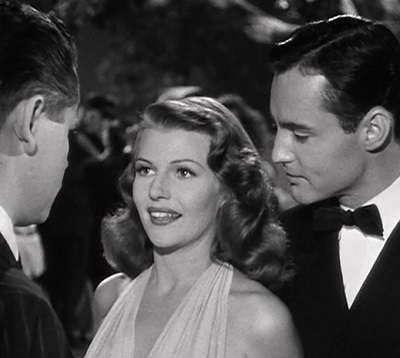
But this kind of takedown is kitten play compared to the work of Rita Hayworth in Gilda.

Gilda, who calls herself the "Bar Nothing," and her spiritual descendant, Samantha Jones

Gilda, the “Bar Nothing,” and her spiritual descendant, Sam

Like Samantha, Gilda (Hayworth) is in full command of her sexuality; it’s not difficult to discover why this WW II pinup was dubbed “The Love Goddess.” But her treatment of her ex, Johnny, is far more ruthless than her modern counterpart’s. First, she marries Johnny’s boss; then, she flaunts her affairs with other men to torment him further.

Gilda (Hayworth) torturing her ex

Gilda (Hayworth) torturing her ex

Gilda is so skillful a manipulator that you root for her to get what she wants, even if the ex she desires is no prize (and no mean manipulator himself).

Here’s an anti-Valentine’s Day conversation if ever there were one:

Gilda: “Would it interest you to know how much I hate you, Johnny?”
Johnny: “Very much.”
Gilda: “I hate you so much I would destroy myself to take you down with me.”

I think Samantha would be impressed.

Exploiting Men: Baby Face
In an early episode of Sex and the City, “The Power of Female Sex,” Carrie’s fling has left a tip on her bedside table and she’s feeling ill at ease with the implications. The four friends discuss whether it’s ever acceptable to use your sexuality to get ahead. Barbara Stanwyck’s character in Baby Face (1933) has no such qualms: She leaves her hometown for NYC with the aim of doing just that.

The shocks accumulate quickly as you watch Baby Face: Lily’s (Stanwyck’s) father has been prostituting her since she was fourteen. A grandfatherly figure in her dad’s speakeasy recommends she leave home to sexually exploit men for personal gain, quoting Nietzsche to back his case.  Once in New York, Lily takes quick steps to follow his advice, seducing the HR assistant in a bank to get a job, and then sleeping her way floor by floor to the top. (The camera helpfully pans up to highlight each floor as she ascends.)

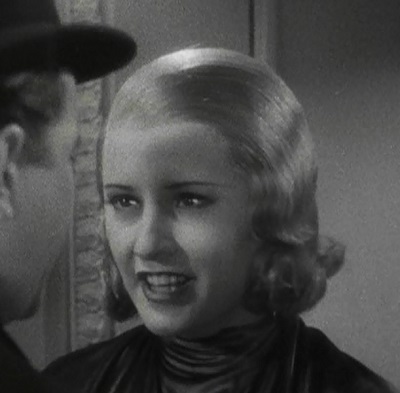
Lily (Stanwyck) on the make

Lily (Stanwyck) on the make

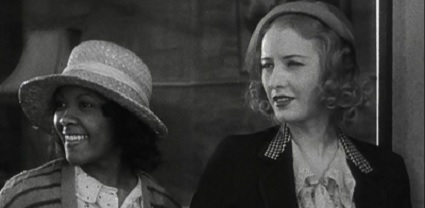
You might expect the movie to make the heroine suffer for her behavior, given the date of this film, but she is unmoved by the heartbreak and eventual tragedy she leaves in her wake (among her victims is a smitten John Wayne). Men have used her all her life. Lily figures it’s her turn, and the film clearly sympathizes with her reasoning. She calmly goes about her business of seducing men, accumulating jewels and bonds, and sharing her successes with her best friend, Chico (Theresa Harris).

Chico and Lily admiring another woman’s wealth before Lily starts to advance

Chico and Lily scheming

Here’s a typical exchange with a discarded lover who stops by Lily’s apartment:

Ex-Lover: “It’s been brutal not seeing you.”
Lily: “Yeah, well you better get used to it.”

When he returns and offers marriage, Lily answers, “So you want to marry me, huh? Isn’t that beautiful. Get out of here….”

Lily's reaction to a marriage proposal from a discarded lover

Lily’s reaction to a marriage proposal from a discarded lover

This is a strange film with a number of flaws, but you won’t care; it’s too much fun to watch this predator in action. (Be sure to watch the pre-release version; it’s much better.)

What are your favorite anti-Valentine’s films?

Share
Posted in: 1930s films, 1940s films, Anti-Romance films, Comedies (film), Drama (film), Feminism, Film Noir/Crime/Thriller & Mystery, Humor, TV & Pop Culture Tagged: Carrie Bradshaw, Gilda, Samantha Jones, Sarah Jessica Parker, Sex and the City, Stage Door

Slacker Detectives: Psych and The Thin Man

01/30/2014 by leah@carygrantwonteatyou.com 1 Comment

Years ago, I tried without success to get my sisters into the TV show Psych.

“The mysteries are stupid,” they said.

“The mysteries aren’t the point,” I replied.

“You can’t ignore them!” they claimed.

But I have, and I do, and so did the viewers of The Thin Man series starring William Powell and Myrna Loy, in which the detective always has to be forced onto a case because he’d rather be partying or vegging out. Sound familiar, Psych fans?

The witty repartee between the starring couple, Nick and Nora Charles, is what so many writers have tried to imitate since—not the mysteries’ quality, or the sometimes painfully melodramatic performances of the minor characters. Likewise, the interaction between the detective pair on Psych is so much the focus that commercials give no hint about the actual content of the episodes, as in the characters’ classic Hall & Oates  spoof.

Compare:

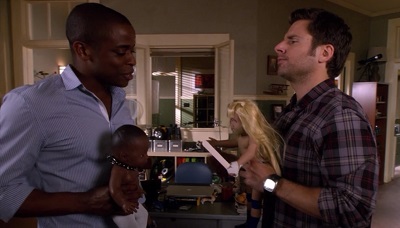
Psych episode (“Let’s Get Hairy,” Season 4, Episode 8): Partners Shawn and Gus are dressing dolls up as their favorite 1980s WWF wrestlers before a match rather than drumming up detecting business.

Gus and Shawn (Dulé Hill and James Roday) playing before the rumble.

Gus and Shawn (Dulé Hill and James Roday) playing before the rumble

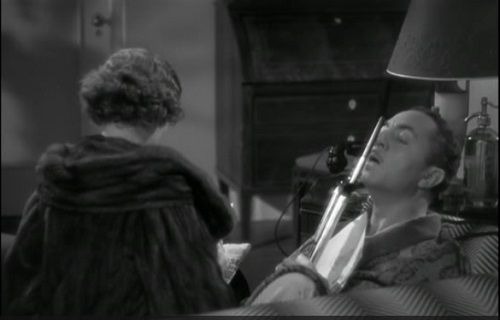
The first Thin Man:  Nora is trying to convince Nick into taking a case as he shoots balloons (and eventually a window) with a play gun she gave him for Christmas.

“Aw Nicky, take the case,” she says.

“You take it,” he answers. “I’m too busy.”

Nick and Nora (Powell and Loy) bantering in The Thin Man

Nick and Nora (Powell and Loy) bantering in The Thin Man

Pleasure before business? Check.
Adults acting like kids? Check.
Clever references? Check.
Perfect repartee? Check.

Nick proud of a bull’s eye; Shawn feeling suave thanks to his Miami Vice poster.

Nick proud of a bull’s eye; Shawn feeling suave thanks to his Miami Vice poster

I know some classic movie fans will find my comparison insulting to the more sophisticated films and the brilliant book that inspired them.  But such critics should give more credit to Psych’s dialogue, such as this exchange, which captures the show’s attitude toward the mysteries:

Shawn: “We came to investigate, catch bad guys and eat pie.”

Gus: “Not necessarily in that order.”

Shawn: “And it hasn’t been.”

Gus: “No.”

Shawn: “We started with the pie.”

Gus: “Always.” (Season 5, Episode 12, “Dual Spires”)

Even if you dislike Psych, don’t miss out on Nick and Nora.  Eighty years of fans. Five sequels (the last over a decade after the first). Scores of imitators. Observe the publication date on this NPR story discussing upcoming novellas of The Thin Man sequels. Sequels, mind you, which most of us try to forget, not commemorate decades later.

What are your thoughts on Psych and The Thin Man? Would you rather party with Nick and Nora, or Shawn and Gus? Did you like the first Thin Man best, or did the scene with Nick and the snoozers in the second make it your favorite? What other Nick and Shawn similarities have you noticed?


Share
Posted in: 1930s films, 1940s films, Comedies (film), Film Noir/Crime/Thriller & Mystery, Humor, TV & Pop Culture Tagged: Burton Guster, Nick & Nora Charles, Psych, Shawn and Gus, Shawn Spencer

Like The Cutting Edge? Watch It Happened One Night.

01/17/2014 by leah@carygrantwonteatyou.com 5 Comments
Kelly & Sweeney in The Cutting Edge.

Kelly & Sweeney in The Cutting Edge.

D.B. Sweeney, Moira Kelly, toe picks? If you haven’t seen this film, and you love romantic comedies from the 90s, hit your head against the wall for letting others jeer you out of it. A hunky (yes, I said it) hockey player, a snotty ice skating star, a try for the Olympics, and unbeatable chemistry.

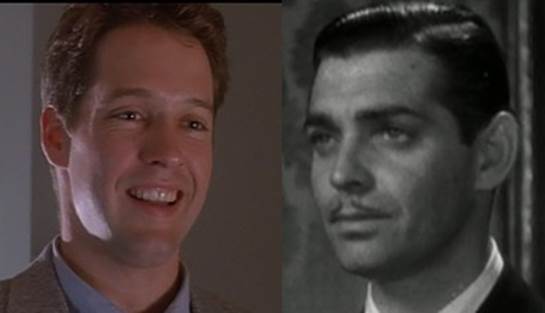
More recent attempts at this genre of cutting-down-the-ice-cold girl have raised my feminist hackles. See: Sarah Jessica Parker post Sex and the City or Katherine Heigl and Jennifer Aniston in nearly anything. But if done well, these romantic comedies are about both characters coming to terms with their egos, and no one is more fun to watch wrestling with his own than Clark Gable, who was hunky himself in those pre-Gone with the Wind days.

Sweeney & Gable

Sweeney & Gable

Compare:

The Cutting Edge: D.B. Sweeney finally gains his mojo around Kelly, showing off his hockey skills. Remember? And she slams him in the face with a puck for it.

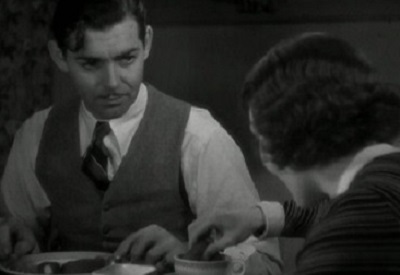
It Happened One Night: Gable’s destitute reporter tries to gain pride around Claudette Colbert‘s heiress, even showing her how to dunk her donut properly in coffee.

Gable’s dunking lesson in It Happened One Night

Gable’s dunking lesson in It Happened One Night

The most famous scene is when Gable gives her an enthusiastic demonstration of how to hitch a ride, with no results. “Do you mind if I try?” she asks, and lazily walks over, raises her skirt, and flags a car with one lovely leg. Watch Gable’s expression afterward, the mingled shame, annoyance, and desire for Colbert explaining for you why a million women swooned for him. And guess what? That’s not the best scene. Not by a long shot.

Share
Posted in: 1930s films, 1990-current films, Action & Sports Films, Romantic Comedies (film), TV & Pop Culture Tagged: Clark Gable, Claudette Colbert, D.B. Sweeney, It Happened One Night, Moira Kelly, The Cutting Edge
« Previous 1 2 3 4 5 6 7 8 9

Recent Posts

  • Great Spectacle, Romance Misstep: The Miracle Woman
  • Bite-Sized Film Reviews
  • How You Know Your Friends Know You
  • National Classic Movie Day!
  • Colbert’s Midnight (1939), Rom-Com Magic

Subscribe to Blog via Email

Enter your email address to subscribe to this blog and receive notifications of new posts by email.

Categories

  • 1920s films
  • 1930s films
  • 1940s films
  • 1950s films
  • 1960s films
  • 1970s films
  • 1980s films
  • 1990-current films
  • 2020s films
  • Action & Sports Films
  • Anti-Romance films
  • Blogathons
  • Childfree
  • Comedies (film)
  • Drama (film)
  • Feminism
  • Femme fatales
  • Film Noir/Crime/Thriller & Mystery
  • Gloriously Silly Scenes
  • Horror
  • Humor
  • Mae West Moments
  • Musicals and dancing films
  • Oscars
  • Random
  • Romance (films)
  • Romantic Comedies (film)
  • The Moment I Fell for
  • Turn My Sister into Classic Movie Fan
  • TV & Pop Culture
  • Uncategorized
Share
Classic Movie Blog Hub Member

Recent Comments

  • Dominique Revue on Great Spectacle, Romance Misstep: The Miracle Woman
  • leah@carygrantwonteatyou.com on Great Spectacle, Romance Misstep: The Miracle Woman
  • Dominique Revue on Great Spectacle, Romance Misstep: The Miracle Woman
  • leah@carygrantwonteatyou.com on Great Spectacle, Romance Misstep: The Miracle Woman
  • Waleed on Great Spectacle, Romance Misstep: The Miracle Woman

Archives

  • November 2026
  • June 2026
  • May 2026
  • March 2026
  • November 2025
  • September 2025
  • May 2025
  • March 2025
  • January 2025
  • November 2024
  • August 2024
  • July 2024
  • May 2024
  • March 2024
  • February 2024
  • December 2023
  • November 2023
  • October 2023
  • September 2023
  • August 2023
  • July 2023
  • May 2023
  • April 2023
  • March 2023
  • January 2023
  • December 2022
  • November 2022
  • September 2022
  • July 2022
  • May 2022
  • April 2022
  • March 2022
  • February 2022
  • October 2021
  • September 2021
  • April 2021
  • March 2021
  • February 2021
  • December 2020
  • October 2020
  • September 2020
  • July 2020
  • May 2020
  • April 2020
  • March 2020
  • February 2020
  • December 2019
  • October 2019
  • September 2019
  • June 2019
  • May 2019
  • April 2019
  • February 2019
  • January 2019
  • November 2018
  • September 2018
  • July 2018
  • June 2018
  • May 2018
  • April 2018
  • March 2018
  • February 2018
  • January 2018
  • November 2017
  • September 2017
  • August 2017
  • July 2017
  • June 2017
  • May 2017
  • April 2017
  • March 2017
  • February 2017
  • January 2017
  • December 2016
  • November 2016
  • October 2016
  • August 2016
  • July 2016
  • June 2016
  • May 2016
  • April 2016
  • March 2016
  • February 2016
  • January 2016
  • December 2015
  • November 2015
  • October 2015
  • September 2015
  • August 2015
  • July 2015
  • June 2015
  • May 2015
  • April 2015
  • March 2015
  • February 2015
  • January 2015
  • December 2014
  • November 2014
  • October 2014
  • September 2014
  • August 2014
  • July 2014
  • June 2014
  • May 2014
  • April 2014
  • March 2014
  • February 2014
  • January 2014

Meta

  • Log in
  • Entries feed
  • Comments feed
  • WordPress.org

Copyright © 2026 Cary Grant Won't Eat You.

Church WordPress Theme by themehall.com