Cary Grant Won't Eat You

Classic movies for phobics

  • About
  • eBooks
  • Previous Blogathons
Classic movies for phobics

1930s films

Say Anything Fan? Holiday (1938) Is the Classic Film for You

09/06/2014 by leah@carygrantwonteatyou.com 2 Comments

A hero who reveals his vulnerability, yet retains his pride; the kind of man devoted enough to lift a jukebox above his head blaring Peter Gabriel’s “In Your Eyes” to woo the girl who dumped him, yet still grounded enough to enjoy relaxing with his friends; a boy with few prospects who is seeking a “dare-to-be-great” situation.

Lloyd-Cusack
There’s a reason Say Anything (1989) and its hero, Lloyd Dobler (John Cusack), were nearly universally worshipped by every middle and high school girl I knew. Cusack quickly became the heartthrob of my generation, just as Cary Grant was to his. In Holiday, Grant played a role much like Cusack’s in Say Anything. That’s why if you’re a diehard lover of Lloyd Dobler, I think you should check out this 1938 film and see for yourself the many similarities:

Lightheartedness
Those accustomed to seeing Grant’s suave persona on display in clips and photos might not realize how fun it is to witness him being the opposite—silly, playful, with that same uneasily expressed, coltish confidence in himself that makes Lloyd Dobler so appealing. In Holiday, Johnny (Grant) likes to do flips to cheer himself out of tough times or worries, just as Lloyd chides his sister for not being able to pull out of hers.
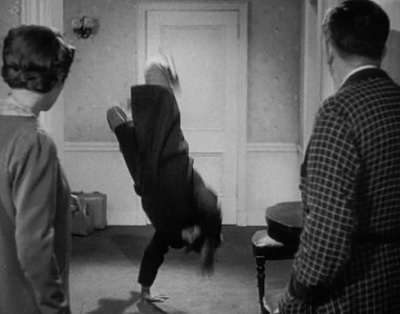
SolutiontoWorry-CaryGrant
Romancing the Daddy’s Girl—and Daddy Ain’t So Great
Both films feature heroines who are too close to fathers who don’t deserve such adulation. In Say Anything, Diane’s dad (John Mahoney) winds up being a crook; in Holiday, Julia’s (Henry Kolker) is so obsessed with money and status that he verges on caricature.
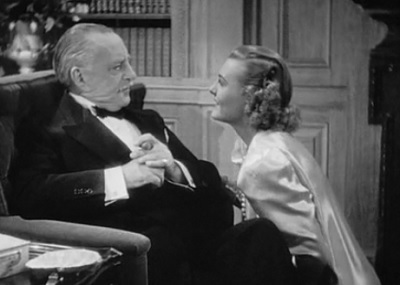
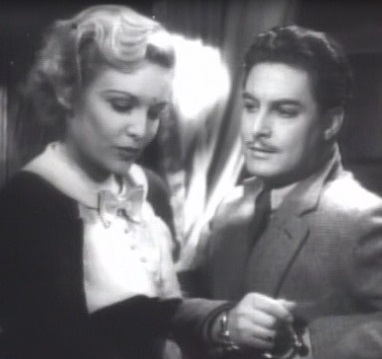
Johnny's fiancée and her father

Johnny’s fiancée and her father

Much of Holiday focuses on Johnny’s discovery that Julia (Doris Nolan) is much closer to her father’s character than he realized, just as Say Anything shows Diane (Ione Skye) slowly recognizing that her father is not the moral center of her universe. Luckily, we have both of Julia’s siblings, Linda (Katharine Hepburn) and Ned (Lew Ayres), mocking their dad the whole time in Holiday, which is way funnier than the whole Diane-Dad snooze fest.

Unconventional Ambitions
Both heroes have unpopular dreams. Lloyd’s is beautifully expressed when Diane’s dad opens the door and he tries to sell himself as a trustworthy date: “I’m an athlete, so I rarely drink. You heard of kickboxing, sport of the future?”*
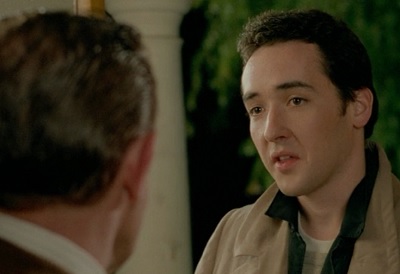
DoblerSportoftheFuture
Lloyd responds to a question about his career plans with “Spend as much time as possible with Diane before she leaves” and proceeds to give an amusing description of his hopes: “Considering what’s waiting out there for me, I don’t want to sell anything, buy anything, or process anything as a career….So what I’ve been doing lately is kickboxing….”

Grant’s plan, captured in the film’s title, is to take a vacation from employment. He’s worked since the age of ten, and isn’t sure what he’s doing it for: “I want to know how I stand, where I fit in the picture, what it’s all gonna mean to me. I can’t find that out sitting behind some desk in an office, so as soon as I get enough money together, I’m going to knock off for a while….I want to save part of my life for myself….You know, retire young, work old, come back and work when I know what I’m working for, does that make sense to you?”

Johnny, like Lloyd, makes fun of the idea of needing familial or professional connections: “When I find myself in a position like this, I ask myself what would General Motors do? And then I do the opposite.”

And like Lloyd, Johnny thinks his love should be enough for Julia’s father: After offering a character reference, he adds, “I’m quite decent and fairly civilized. I love your daughter very much, which isn’t a bit hard. She seems to like me a lot too. And uh, well, that’s about all that can be said for me, except that I think we have a grand chance of being awfully happy.”

A Marvelous Support Network
Both men are backed by funny friends who provide much of the comic relief of their films. Edward Everett Horton plays a professor and Jean Dixon his wife, Susan; they are friends of Johnny’s who gravitate toward Linda rather than Johnny’s fiancée. When they arrive at the fussy engagement party for the couple, Susan says, “Don’t tell anyone, but I’ve got a run in my stocking.” “Good heavens, we’re ruined,” answers her husband. “Not a word of this to a soul,” he warns the butler.
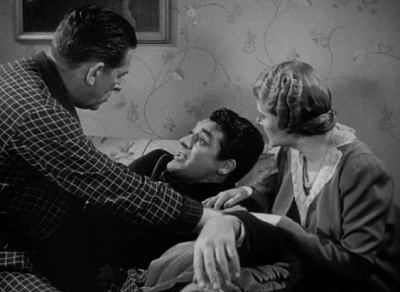
GrantandHorton
Among Lloyd’s many entertaining friends, Corey (Lili Taylor) is the obvious standout, with her 63 songs about her ex and classic line in response to Lloyd’s “…I’m a guy. I have pride”: “You’re not a guy…The world is full of guys. Be a man.”

LiliTaylor
In Johnny’s case, Julia proves to be remarkably dull, and soon is outshone by her supportive sister, Linda (Hepburn). Linda can be quite amusing, though at times she’s a bit melodramatic about the family woes.
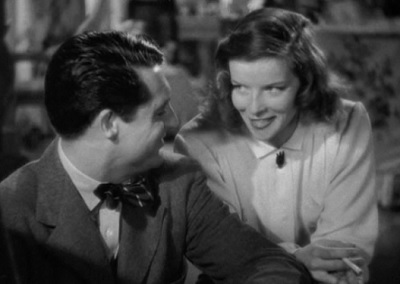
GrantandHepburn-Holiday
In Say Anything, we’re stuck with Ione Skye as the romantic interest the whole film, with that terrible acting doing nothing for any of us. When Diane dumps Cusack, all the viewers may protest, but it was a relief not to hear Skye talk for a bit and listen to Lloyd’s friends instead.

Rising Above…
Both Johnny and Lloyd display a remarkable level of emotional maturity—Lloyd, in his continued efforts to unite Diane and her father once they become estranged in spite of the latter’s hostility toward him.
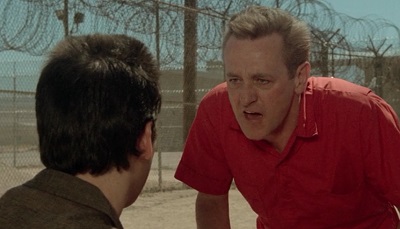
CusackandMahoney
And Johnny, in his attention to his fiancée’s needs and sensitivity to her family despite her father’s rudeness toward him.
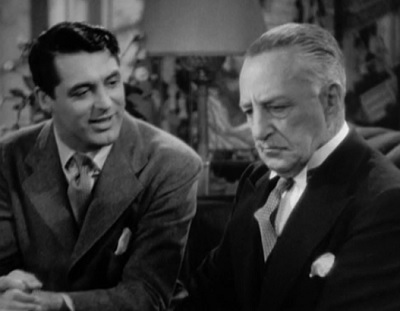
GrantandKolker
After asking many not-so-subtle questions about Johnny’s connections, Julia’s father expresses zero interest in her suitor’s obvious resourcefulness, the loss of his mother, and his pride in who he is. Johnny freely discusses his background: his dad’s grocery ownership and debts, an alcoholic uncle, and his own work as a steel mill worker, garbage truck driver, and laundry worker while earning his degree at Harvard. While he isn’t exactly trying to provoke the father’s snobbery, he clearly is amused by it.

“Admirable,” the father says after hearing Johnny’s answers about his life, with no sincerity whatsoever.

“Anything else, sir?” Johnny finally asks.

“I beg your pardon?” the father replies.

“I should think you would,” snaps Linda.

Luckily, fun-loving Linda is the one Johnny will eventually be falling for. If my description doesn’t win you, hopefully this image of the former acrobat (Grant) in action will.
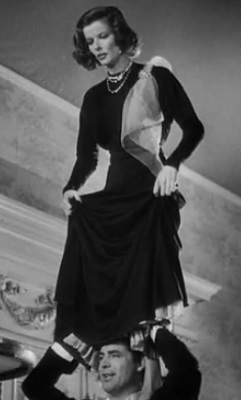
acrobatCaryGrantKatharineHepburn
*When I mentioned this quote on kickboxing, my husband pointed out that Lloyd was one prescient guy given the success of UFC….

Share
Posted in: 1930s films, 1980s films, Comedies (film), Romantic Comedies (film), TV & Pop Culture Tagged: Cary Grant, Holiday, John Cusack, Lloyd Dobler, Say Anything

M: A Serial Killer’s Story about Us

08/27/2014 by leah@carygrantwonteatyou.com 2 Comments

PeterLorre-M
I’ve always been puzzled by The Silence of the Lambs becoming more successful than Manhunter. The latter’s subtlety, especially Brian Cox’s portrayal of Hannibal Lecter, was far more alarming to me than the campy style of Anthony Hopkins. The former I could mistake for a normal human being, making his monstrosity all the more terrifying. Yes, I might jump out of my seat during The Silence of the Lambs, but Manhunter is the stuff of lasting nightmares.

The story is better too, as the deeper fear is not of the serial killer, but of being like him. Mann (and novelist Thomas Harris) question whether investigator Will Graham’s (William Petersen’s) uncanny understanding of psychopaths’ minds means that he has the same dark passions. And of course, that leads to us: Does it make us somehow sick to be interested in a killer’s psychology or his/her capture, to read the stories and watch the films? And if that doesn’t mean we share his/her pursuits, what form does our sickness take?

Perhaps that’s why I think Michael Mann fans would be drawn to M, the 1931 film that begins with a frightening depiction of a child killer, but ends by questioning the wider society that is hunting him. Like Mann, director Fritz Lang did not employ every bell and whistle at his disposal, did not play melodramatic music in the background or make us witness gore or the frightened faces or cries of children. Instead, this director in his first talkie displayed a restrained artistry: an image here, a sound there—just enough, and never more. The result is a haunting film that lingers long after its conclusion.

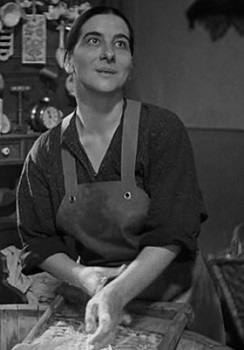
M begins simply, with a disturbing children’s game about a murderer. A woman tries to shush the kids because what’s going on in Berlin is too similar to their words: a child killer is at large in the city. The camera then narrows in on mother Frau Beckmann (Ellen Widmann), who displays her love for her child, Elsie, through her loving arrangements for the child’s return from school: washing the clothes, preparing a meal with care, peering up at the time with a smile.

Mother-M
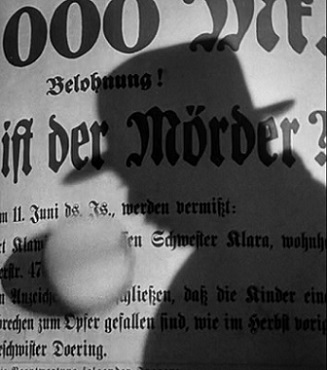
The film cuts to Elsie (Inge Landgut), the only sound her ball hitting the pavement. The almost complete silence of these scenes is paralytic to the viewer. We don’t see the killer, just a posting about children’s disappearances obscured by the girl’s ball and a man’s shadow. The man praises the ball; he asks Elsie her name.

SignMurdererM
As the time passes when Elsie should have arrived, Frau Beckmann looks at the clock. She asks returning kids whether Elsie was with them. They say no.

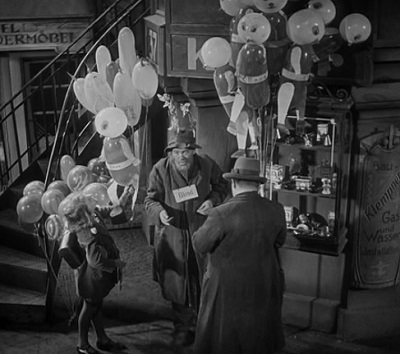
We see the murderer buy Elsie a balloon from a blind man (Georg John). We hear very little but Elsie’s thanks as the killer whistles Edvard Grieg’s “In the Hall of the Mountain King,” which will later have us jumping, like we did in hearing the arrival of Jaws.

BalloonPurchase-M
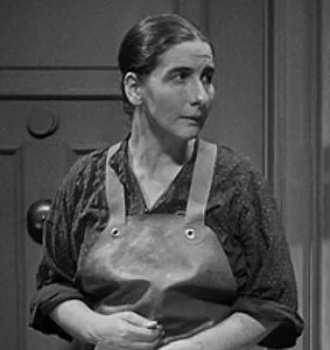
Meanwhile, the mother smiles when a salesmen stops by her door, thinking him Elsie, and can barely attend to his words before she questions him about her daughter. She calls down the stairs to her.

LookingDownStairs-M
Now overcome with worry, she opens the window.

Motherworrying-M
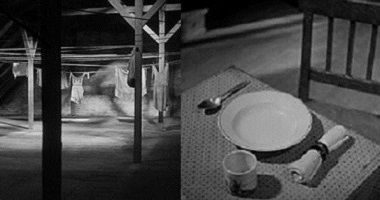
As she calls, “Elsie!!” the first of several silent shots tells viewers that Elsie will not be coming home.

The quiet street; the untouched place setting for Elsie

The quiet street; Elsie’s place setting

Elsie’s ball coming to rest; her balloon stuck in the wires

Elsie’s ball; her balloon caught in the wires

The images are harrowing; the viewer feels horror: at the child’s death, and the mother’s loss. The ethics are simple: the killer is evil, the mom and child good. The spare use of sound and imagery contribute to this clear-cut moral universe, which Lang is about to disrupt, for this film, we soon discover, is not about the murderer: it’s about the citizens, criminals, and police who pursue him.

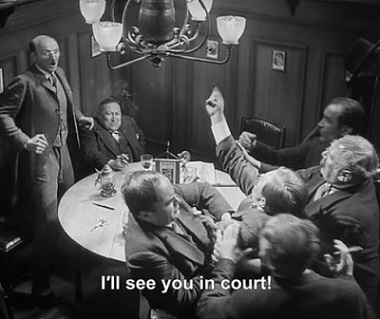
Next, we hear a newspaper hawker talking about the crimes, as the murderer (Hans Beckert, played by Peter Lorre) whistles his tune and writes a letter to the paper explaining that his spree is not finished. As friends around a table discuss the murders, they are soon viewing each other with suspicion, one even accusing another of being the man in question.

fighting-M
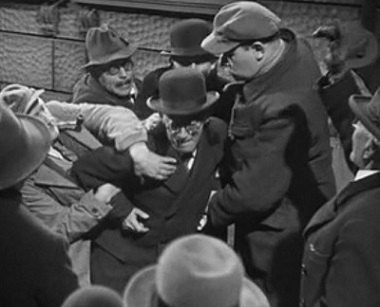
A mob mistakes an innocent elderly man for the predator, simply because he answered a young girl’s question.

MobInnocent-M
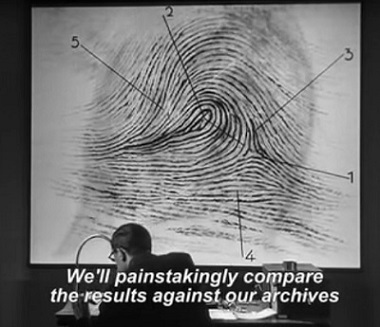
The shouts of the crowd are then cut short, as the words of the murderer’s letter appear on the screen in absolute silence. When the commissioner begins to discuss his investigation on the phone, we see the police in action: tracing the fingerprints on that letter, investigating the handwriting, scanning the crime scene, interviewing confectioners due to a wrapper that’s been found.

fingerprint-M
As the killer’s pathology is explained, we see him closely for the first time; he makes faces in the mirror, as if trying to see himself as others do. The film’s writers, Lang and spouse Thea von Harbou, achieve a high level of verisimilitude that makes the film resemble today’s police procedurals. (Some say, despite Lang’s denials, that this was due to their attention to the extensive media coverage of serial killer Peter Kürten.)

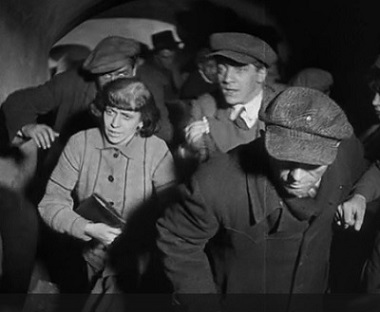
But all of the police’s efforts prove fruitless. Desperate, they soon resort to frequent raids to catch the child murderer. Lang covers these raids beautifully, beginning with a silent scene of a prostitute soliciting, and segueing into the police marching down the streets en route to the bars to demand papers. The sound finally returns in the form of a whistle to warn customers the police are arriving, after which we hear the uproar of the crowd’s dismay as they try to escape.

Raid-M
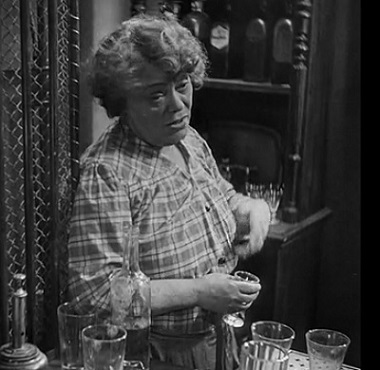
A bar owner explains that this treatment of customers is unfair to them and to her, and unlikely to result in an arrest.

BarOwner
“I know a lot of toughs who get all teary-eyed just seein’ the little ones at play,” she explains to a police sergeant, warning, “If they ever get their hands on that monster, they’ll make toothpicks out of him.”

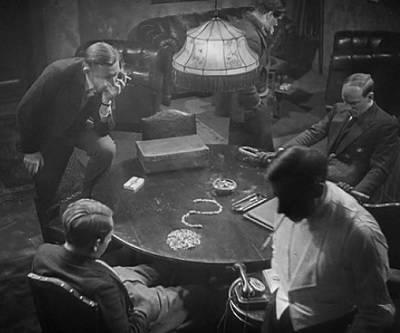
This Cassandra leads us to the next scene: Upset with the disruption to their business, the criminal underworld, led by Safecracker (Gustaf Gründgens), decides they’ve had enough. They’ll find the killer themselves. These mob leaders have a conference to plan their strategy, much like in The Godfather.

criminalsconference-M
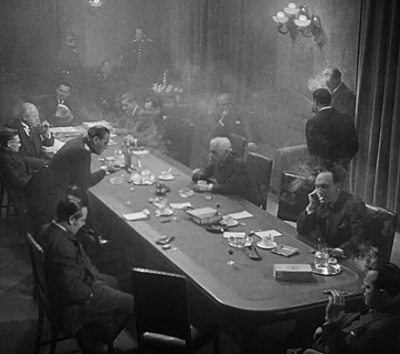
Lang cuts back and forth between this conference and a similar one the police are holding about the case, causing the viewer to confuse the two, and then start to wonder whether there is any difference between them.

policeconference-M
The police decide that they’ll go the mental health route, finding patients who’ve been dismissed as harmless but have suspicious tendencies. The criminals decide they’ll organize a league of beggars, who, as unnoticed observers of their surroundings, can spot the predator without scaring him. Both groups succeed in narrowing in on Hans Beckert through these means, even as the latter follows a new girl, his silent contemplation of her soon erupting into his signature whistle.

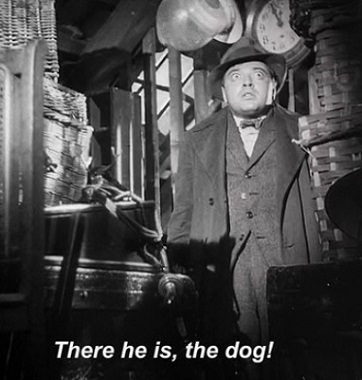
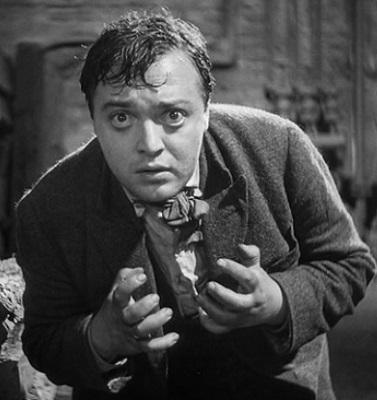
Among the beggars is the blind balloon seller, who, upon recognizing the whistle, sets the alarm, leading to the killer being chased into an office building, a chalked M mark from a beggar having pegged him as the one to follow. The longer the hunt continues, the more the viewers’ allegiance shifts. We don’t want Beckert to go free, but there’s something sadistic about this manhunt, perfectly captured in the large eyes of the predator who has suddenly become prey.

M-terrified
We know now that these criminals are no longer just out to save their business; something more primitive is at play. What happens next is too fascinating for me to give away. But I will say that the film’s treatment of the child killer is surprising; he’s even given a chance to explain his affliction: “Can I do anything about it? Don’t I have this cursed thing inside me? This fire, this voice, this agony?”

Nazi leader Joseph Goebbels, who later offered Lang a job, obviously interpreted the film as less complex in its sympathies than I have. Certainly, there is room for dispute about what Lang was trying to say. But with the Third Reich imminent, Lang (who had Jewish heritage) was about to skip town, job offers notwithstanding. It’s hard not to see in the film’s conflation of police and criminal, citizen and predator, an indictment of the authoritarian regime, especially since Lang’s next film more explicitly attacked it (though, interestingly, facts apparently don’t bear out Lang’s account of his own precipitous escape).

Regardless of his initial motives, by giving the murderer voice at all, Lang questions whether this man might be more than the “rapid dog” he is accused of being, might be in need of a doctor’s care, not a hangman’s noose, as a reluctant defender in the film claims. And since we know the killer is not the subject of this story, we viewers soon turn to the crowd condemning him. Just as there is within this man, Lang seems to imply, there’s a sickness within society. After all, normal German citizens will come to support the Nazi party, including his wife and cowriter. Who is to say any culture isn’t vulnerable to the same manipulation, the same results, given the right fears to make them operate? Whether or not that sickness and those who’ve let it spread are capable of redemption or not, he leaves it to his audience to determine.

Mexplains-PeterLorre

Share
Posted in: 1930s films, Drama (film), Film Noir/Crime/Thriller & Mystery Tagged: Fritz Lang, Hannibal Lecter, M, Manhunter, Michael Mann, Nazis, Peter Lorre, serial killer, The Silence of the Lambs

The Public Enemy*: the Crime Flick with No Glamour?

07/31/2014 by leah@carygrantwonteatyou.com 4 Comments

Having attacked James Cagney in a previous post, but seen few of his films, I thought I owed it to him to watch one of his hits. I found The Public Enemy on a streaming site and rec list (thanks, John!) and was instantly sucked into this understated gem.

PublicEnemy-full
The hyperbolic title of the film suggests it will glamorize crime, much like films of my generation. (It’s disturbing when I scan through the films produced not long before my birth–Bonnie and Clyde, the Godfather series—and those popular during my childhood and early adulthood— Pulp Fiction, Goodfellas, Natural Born Killers—and find it hard to remember many that didn’t glamorize crime.) The Public Enemy does not glorify crime, despite some contemporary detractors’ claims. Neither, in spite of the PSA-style opening and closing of the film, does it truly condemn it. Instead, in The Wire-like fashion, the film simply shows you the life the main character leads, and lets you decide for yourself whether that life is worth emulating.

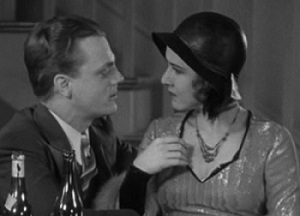
James Cagney as Tom

James Cagney as Tom

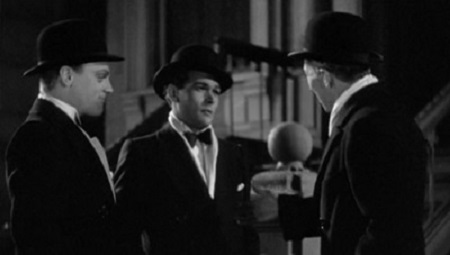
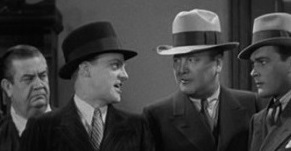
Tom Powers (James Cagney), the film’s antihero, is a small-time thug, not the leader of the underworld. Even in the glamorous gangster films of today, the small-timers don’t fare well. Tom may be a public enemy, but he’s hardly deserving of a “the.” It’s rare and satisfying to see a film highlight such a character, to show his humble beginnings without a big rise. The plot gives us enough of Depression-era Chicago to explain why crime might have attracted Tom and his buddy Matt (Edward Woods), who move from watch thefts to beer heists. The naturalistic tone of the film is likely due to its Oscar-nominated screenwriters, Kubec Glasmon and John Bright, whose story was supposedly based on real criminals’ accounts.

Unsavory alies

Tom’s unsavory allies

Of course, I must admit that the laughter the movie’s famous misogynistic scene produced (spoiler here) and Cagney’s star status as a result of it might have undercut the serious tone of the film, and explain some audience’s admiration for a character as pathetic as Tom. This is, after all, a guy who takes pride in intimidating others as a small-time mobster, and extends that bullying to his romantic relationships with Kitty (Mae Clark) and Gwen (Jean Harlow in an uncharacteristically tone-deaf performance).

A disturbing fling (with Clark)

An unromantic fling (with Clark)

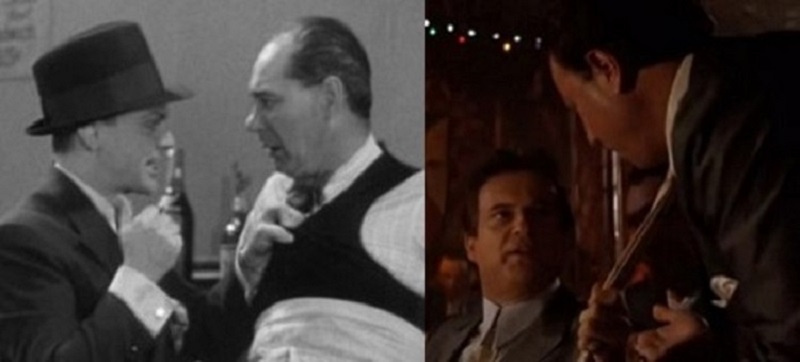
But Cagney is such a compelling presence that you can’t help but admire Tom just a little. His fiercely controlled energy and easygoing, natural style in spite of (or because of) his outsized personality make Cagney riveting to watch, much like Goodfellas standout Joe Pesci. Tom’s a terrible person, but thanks to Cagney, he’s an entertaining terrible person.

Cagney and Pesci: unkind to necks

Cagney and Pesci: unkind to necks

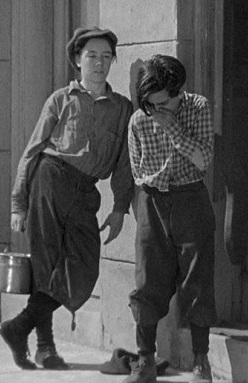
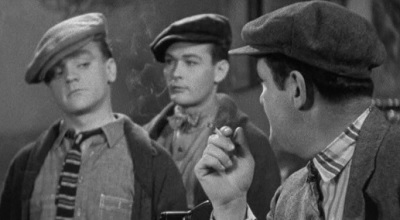
Even before Cagney shows up on the screen, the kids playing the young versions of him (Frank Coghlan Jr.) and his friend Matt (Frankie Darro) hooked me with their toughness and swagger, bravado that is hopelessly poignant in clothes like these:

Tom and Matt

Tom and Matt

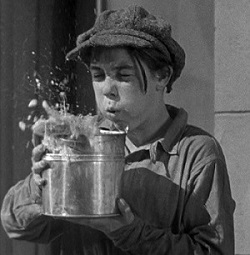
Tom sneaking from the family beer bucket

Tom sneaking from the family beer bucket

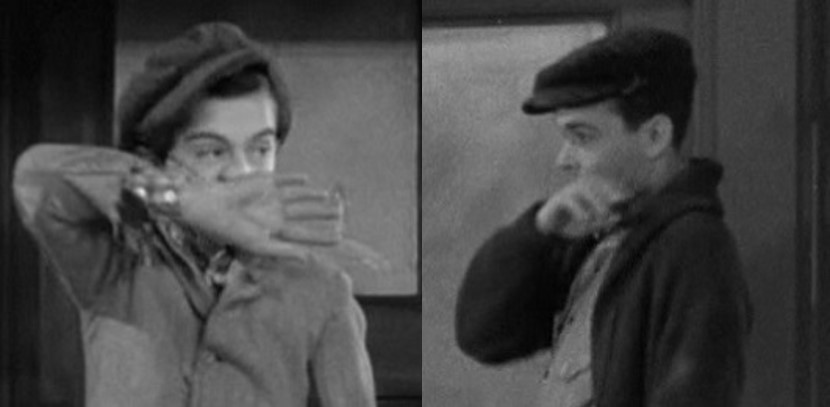
Young Matt has a rather exaggerated way of swiping his arm across his nose, which Woods (as adult Matt) adopts to show viewers that the men we’re seeing in 1915, six years after the film’s start, are the same people we’ve been watching.

Arm-PublicEnemy
This simple transition is followed by a silent scene in which the adult hoodlums affirm with a guy at the bar that the boss is available through small movements.

It's all about the gestures: Pacino & Deniro anyone?

It’s all about the gestures: Pacino & De Niro anyone?

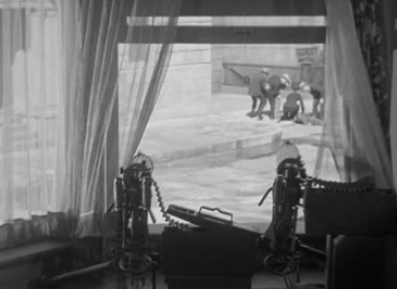
The plot is fairly simple too—about friendship and betrayal, allies and enemies, as most mob stories are. But because the narrative is so minimalistic, the revenge is more difficult to watch, and more personal when it comes. We know the characters who end well—and those who don’t. Tom’s coldness is difficult to witness, especially when Matt, who is comparatively softhearted, can’t bring himself to stop his friend’s violence. I won’t spoil what happens, instead hoping you’ll give the film a try. If my review hasn’t convinced you, perhaps the framing of this shot will:

PublicEnemy-framing
*Not to be confused with the Johnny Depp vehicle, which was generous with glamour but frugal with character development.

Share
Posted in: 1930s films, Drama (film), Film Noir/Crime/Thriller & Mystery Tagged: glamour, James Cagney, Joe Pesci, Robert De Niro, The Public Enemy, violence

The Moment I Fell for Jean Harlow

07/16/2014 by leah@carygrantwonteatyou.com 8 Comments

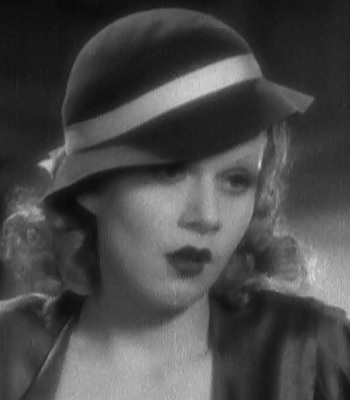
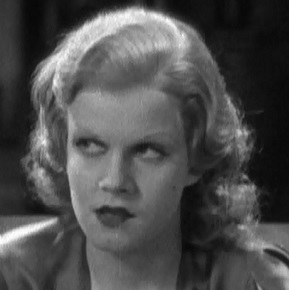
Jean Harlow
I’ll admit that I didn’t get the appeal of Jean Harlow initially. I originally saw her in a portion of the film Bombshell, and thought it dull and her annoying. I couldn’t understand why she was a sex symbol, the Marilyn Monroe of the 30s.  It took a lackluster movie in which she was riveting to change my mind.

Red-Headed Woman (1932) is one of those pre-code films in which a loose woman doesn’t pay the penalty for her behavior. Harlow is Lil (also known as Red), a secretary who seduces her married boss, Bill Legendre Jr. (Chester Morris), to make her way up in the world. His wife, Irene (Leila Hyams), is given the tired you-should-have-forgiven-him-instead-of-leaving-him-the-prey-of-that-hussy argument when she divorces him. Usually, this argument infuriates me, but in this case, I had some sympathy for it: Bill is such a sucker that it’s hard not to pity him. How could he succeed in business when he falls so easily for a woman’s wiles? (In today’s corporate world, he’d be bankrupt in a week.)

After the divorce, Lil (Harlow) marries Bill and then trades him in for a richer model, just as she dropped her bootlegger boyfriend at the start of the film to pursue Bill. It’s this single-minded self-interest that makes Lil such a wonderful anti-heroine, and Harlow so good at playing her. The actress is just so hilarious when conveying a conniving mind in action.

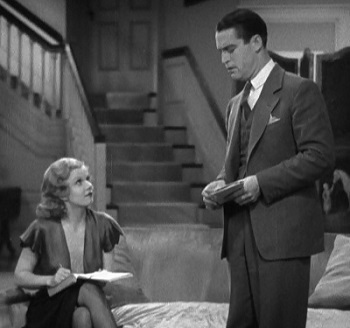
The story begins with Lil’s bold plan to go over to Bill’s house in a revealing outfit while his wife is away. She’s pretending to help with his dictation, but obviously planning on sex.

First, she gussies herself up in readiness for her scheme.

Harlowgettingready
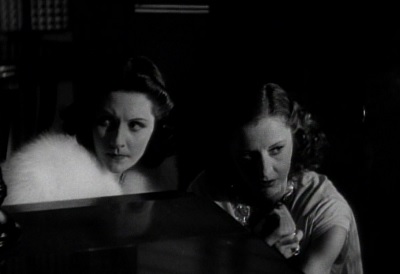
Her pal, Sally (Una Merkel), is so convinced the plot will fail that she says she’ll wait outside Bill’s door for Lil; the first sign that Lil’s plans have succeeded is when we see Sally still outside in the dark, uncomfortably rising from her seat.

Lil has many seduction methods at her disposal, all of which she needs, since her boss is in love with his wife. Something about the transparency of her attempts, and lack of any hesitation, cracked me up so much that Harlow had won me just a minute into this routine, long before her Lil got to Bill.

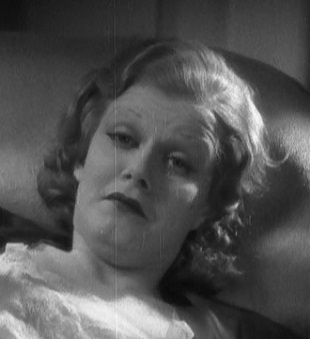
Lil tries some pouting…

Harlowpouting
Shows a little leg….
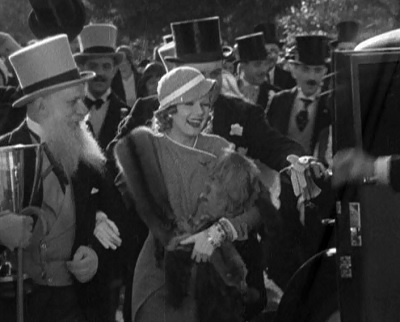
harlowshowingleg
Sobs a bit…

Harlowfakesobs
Pretends she will take his initial rebuffs in stride…

Harlowandhersap
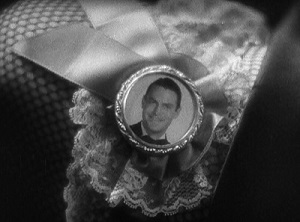
Feigns a longstanding affection for him, even going so far as to pin a photo of him to her garter (Her words when she was planning this ruse: “Well, it’ll get me more there than it will hanging on the wall”).
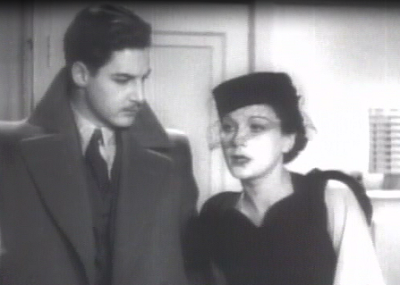
Harlowleg
Reveals her scheming ways when he’s not looking…

Harlowscheming
And finally, in just going for the direct approach, gets what she wants:

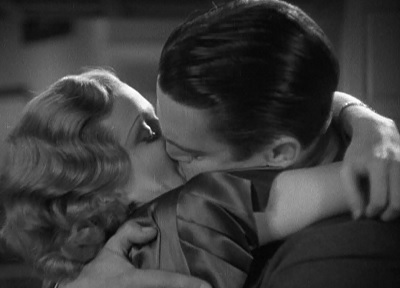
Harlowsuccess
Throughout the film, Harlow repeats a cycle of the techniques in Lil’s repertoire: baby talk, tears, denials, lies, threats, kisses. The character’s faux sweet veneer is so easily discarded for her brassy, true self; as in other Harlow roles; and it’s so much fun to watch the transition. Who wouldn’t want to see this shift again, and again, and again, especially in much finer films, with better-written parts? (My favorite may be the put-upon fiancée in Libeled Lady—I could watch Harlow marching toward jilter Spencer Tracy in that wedding dress all day long.)

As for the sex symbol status I didn’t understand? Ummm, I don’t know what to say for myself there. It’s about as hard to miss Harlow’s blazing sensuality as this predecessor’s. All you have to do is watch her posing, walking, or smiling for a few minutes, and you understand. There’s a reason Lil is confident she’ll win Bill and every other man she encounters. She just never seems to understand why her irresistibility doesn’t translate into success at the country club, a naiveté Harlow would repeat in other film roles as well–as if other wives would want her anywhere near their husbands.

As for Lil, once she decides Bill, the country club, and the town are too small for her, she moves on to richer grounds, ultimately hooking an old French sugar daddy.

Harolwclosefilm
She’s won a trophy for her thoroughbred, is flooded by admirers, and is still holding onto her young lover in full view of her meal ticket at the movie’s close. Of course. How else could this film possibly end?

This is the third in a monthly series of The Moment I Fell for posts…Hope you’ll share some of your favorites!

Share
Posted in: 1930s films, Feminism, Femme fatales, Romantic Comedies (film), The Moment I Fell for Tagged: Jean Harlow

The 39 Steps (1935): The Charming Film You’ve Already Seen

06/19/2014 by leah@carygrantwonteatyou.com Leave a Comment
Hannay (Robert Donat) and the spy

Hannay (Robert Donat) and the spy

Like most of us, I’m not fond of clichés, of dark and stormy nights and ladies in distress, of hearts described as broken, or stomachs filled with butterflies. But when watching classic films, I sometimes find that what was then original has today become commonplace. The 39 Steps includes many of the types of plots and characters I’ve read/viewed too many times before: the mysterious spy, the man on the run from the authorities, state secrets, even a villain with a missing digit (six-fingered man, any of you Princess Bride fans?) By all logic, the sheer thought of the film should start me napping. But this is Hitchcock, and as always, he manages to lure me in. Just how does he do it?

Deflation of the Cliché
The general rule of cliché use is confession: if you must use it, at least admit to it instead of pretending you came up with “happy as a clam” on your own. The hero of the film, Richard Hannay (Robert Donat), dismisses the warnings of a lovely secret agent as just one of those spy novel clichés—much as we do. And then, even better, he offers this melodramatic oddball who has asked him for shelter some haddock. (Could there be a less glamorous response to a tale of secret agents?) When the agent is suddenly killed and Hannay is forced to flee to avoid being framed and to save England from a terrible plot, the passengers on the train where he hides talk about the murder, but cannot long be waylaid from their lingerie sales pitches. How brilliant is this? To use the cliché, and simultaneously make fun of it?

Vivid Characters
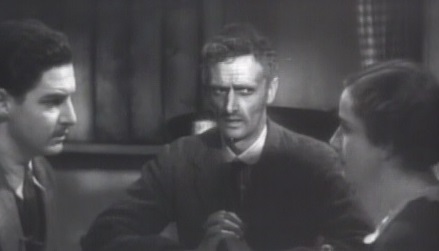
I can tolerate stock situations and phrases much more than generic personalities—the clown, the ditz, etc. Hitchcock and his writers infuse more life into minor characters than many filmmakers do their main players. Take just one brief interaction with a couple during Hannay’s flight. Early in the movie, the hero has escaped to a crofter’s (John Laurie’s) house. There, he charms the man’s wife (Peggy Ashcroft) with his cultured ways and solicits her help when she discovers his identify. Although the crofter is rough and stern, speaking of sin with an eye toward his wife, it’s hard not to pity as well as judge him: What kind of hope does this guy have of retaining his much younger spouse’s affections, with this charmer in his home? Or even when the handsome interloper departs?

Donatandcrofter
We flinch when the crofter slaps his wife for giving the fugitive his coat. But we know that while his action was unjustified, his anger was earned. We know that she would have done far more than that for and with Hannay, given the chance.

Suspense
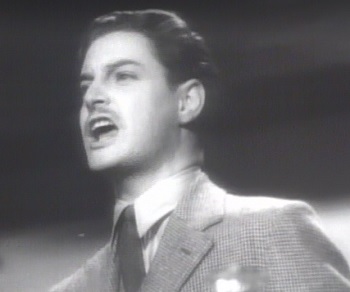
The dark lighting, the creepy villain, and the barren Scottish setting all contribute to our fright at Hannay’s situation. But there’s more to it. Mary Stewart once wrote that the “chief and terrible miracle” of the novel the film is based upon is “the unceasing and intelligence vigilance of every member of the population.” And it’s true. Everyone seems to be aware there’s a killer on the loose, and everyone seems eager to assist the police in capturing him. Therefore, we viewers doubt Hannay’s ability to escape. One very brief respite from the threat of strangers is when he is mistaken for a speaker at a political rally and (as in Fletch) gives a rousing talk. His subject is the “idle rich.” The eyes watching him, his recognition that he’s going to have to make something up, his forgetfulness about the handcuffs he’s wearing—all of it is terribly funny.

Donatspeech2
Here, as elsewhere, we’re with the crofter’s wife. This hero is just so compelling. How could everyone not trust him?

There’s so much more to enjoy: an adult version of Encyclopedia Brown, a strategic use of a train whistle, sheep blocking Hannay’s captor’s car, the creepy uncovering of a villain, and an attractive stranger (Madeleine Carroll) bent on delivering Hannay to the police, with whom he shares an amusing night in handcuffs.

DonatandCarroll
And above all, there’s Hannay’s significant moxie in dealing with the obstacles in his way.

Have we seen this film before? Yes. Have we witnessed heroes like this one? Oh yes. (Richard Kimble, John McClane, Nick Charles—this list goes on.) Will these factors stop anyone from enjoying the film?

Not a bit.

Share
Posted in: 1930s films, Film Noir/Crime/Thriller & Mystery, Romance (films) Tagged: 39 Steps, Hitchcock, Robert Donat

How to Crash a Party, Claudette Colbert Style

04/03/2014 by leah@carygrantwonteatyou.com 4 Comments

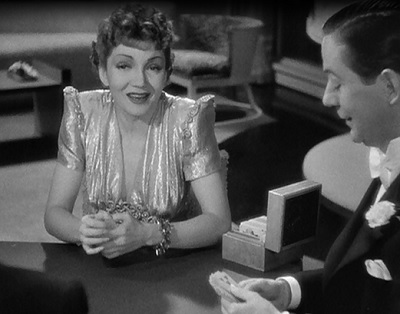
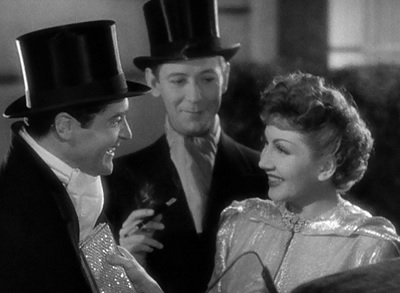
Want to crash a party, but not sure how? Mimic Eve Peabody (Claudette Colbert) in Midnight.

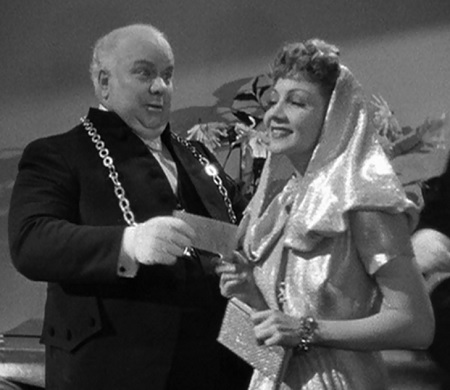
Enter with Attitude
You don’t have an invite? So what. A pawn ticket will do. Who looks at a piece of paper when a woman is sufficiently glamorous?

ClaudetteColbertcrashing
Draw Attention to Yourself
You might think you’d be safer slipping into the background, but who will question your presence if you’re as much fun as this guy?

VaughnWeddingCrashers
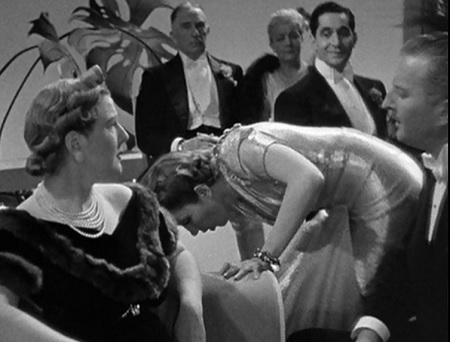
And who will kick you out if, Jennifer Lawrence-style, you make not one, but two ungraceful attempts to find seating, ensuring that other guests will not be the sole klutzes and/or drunken fools of the evening?

trippingClaudetteColbert
Relax
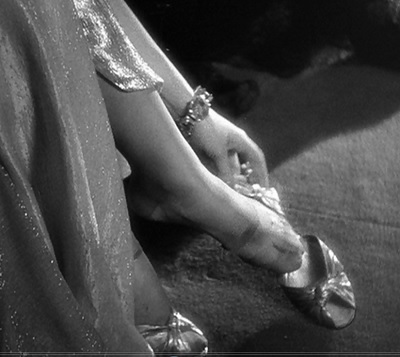
You’re in the door, so let the nerves go. After all, what’s to fear? Being caught could be amusing. Settle into some cushions, smile, kick off those high-heeled shoes.

shoes
Be a Generous Guest
Make sure you’re the kind of guest the host/hostess wants back. Buy gifts for the couples whose receptions you crash, like a guy from my high school did. Lead the chicken dance, cut the cake, make balloon animals. (In other words, channel Vince Vaughn in Wedding Crashers.) Join the bridge game when a mysterious man asks you, especially if he has a good line, as he does when meeting Eve: “You look charming, you look bored, you look as though you wouldn’t trump your partner’s ace.”

cardsClaudette
Play it right, and you could end the night like this:

Colbertcharming

Share
Posted in: 1930s films, Humor, Romantic Comedies (film) Tagged: Claudette Colbert, how to, party crashing, Vince Vaughn

Sherlock Holmes Meets Paris Hilton: The Mad Miss Manton (1938)

03/16/2014 by leah@carygrantwonteatyou.com 12 Comments

This post is part of Movies Silently’s Sleuthathon. Check out other entries on her site!

Imagine pitching this story idea: a Paris Hilton type with a pack of tiny dogs solves a crime New York cops can’t. It sounds like a Beyond Balderdash card, doesn’t it? That couldn’t possibly be a real movie plot. Luckily for us, it is. The Mad Miss Manton stars Henry Fonda and Barbara Stanwyck, but as you might guess, it’s not of the same caliber as their later pairing.  The mystery is ridiculous, the plot convoluted, and the character development all over the place. But who cares? Just let the film be what it wants to be: crazy fun.

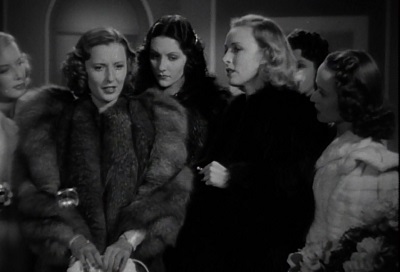
The Mad Miss Manton

The Mad Miss Manton

Melsa Manton is a society girl known for “pranks” she claims are in the name of charity. She and her bevy of like-minded friends are suspected of constant mischief, and when Manton finds a body that disappears before help arrives, the police and newspaper editor Peter Ames (Henry Fonda) cry foul. Manton sets out to solve the crime to redeem the reputation of her crew, and along the way, Ames falls in love with her. As you might expect, this loopy story leads to some sticky problems for the filmmakers, but never fear: Philip Epstein is the primary writer, so some of those problems end up being hysterical to watch, including….

The Heroine with the Vanishing Trait—and Pets
Barbara Stanwyck is my favorite actress. She can portray a character who is terrified (Sorry, Wrong Number), sinister (The Strange Love of Martha Ivers), funny (Ball of Fire), or heartbroken (Stella Dallas). But there’s one thing this tough Brooklyn-born actress could not do, and that’s act like a flake. The problem is, without that trait, the beginning of the film is incomprehensible, even in screwball land. You simply can’t buy this woman with a bunch of precious dogs, prancing around the city on pranks or building mansions for her pooches, as Paris Hilton did.

To make the “madness” of Manton plausible, you would need an actress who could play naïve, who could be as trusting as Carole Lombard’s character in My Man Godfrey or Goldie Hawn’s in Seems Like Old Times. Only an actress like that could have pulled off a heroine who is not lacking in intelligence, but is lacking in cynicism. At first, therefore, I thought Stanwyck miscast.

Clearly, I underestimated the audacity of Epstein and his uncredited cowriters as they developed Wilson Collison’s story. Fewer than 10 minutes into the film, Epstein conveniently erases the airhead tendencies that he created in the opening scenes. Now, it seems, Manton is simply misunderstood (forget the film’s title). From the moment she’s on the case, Stanwyck is in familiar territory, fast-acting and thinking, with the assurance she’ll bring to her reporters in Meet John Doe and Christmas in Connecticut.  To illustrate this change in Manton’s character, the screenwriters eliminate all of her dogs. Poof! No Fifis in her apartment. No Fidos tracking her along her crime-solving path.

The dogs in one of their last appearances

The dogs in one of their last appearances

I think I fell for this movie when they vanished. It reminded me of the kind of bravado later soap opera writers would emulate in developing their narratives, with conveniently erased back stories and children growing up at Chia Pet speed.

A Bewildering Plot
The Mad Miss Manton is only 80 minutes long, yet I could have sworn it ended twice before it actually did. I felt a little like I used to reading Agatha Christie novels, when she conveniently left out information I needed to solve the crime myself. Who are all these suspects? Why do some of them appear on the screen for a few minutes, then reappear twenty minutes later, without my understanding anything new about them? There are multiple crime scenes, attempts on Manton’s life, ranting scenes by the police lieutenant, a hospital visit, an effort to lure in the killer, and much clue following. And, of course, multiple clips of the suspects that are meant to be illuminating/mysterious. But every time the chaos begins to overwhelm viewers, Manton’s friends rush in and save the film, which brings me to….

An Amazing Crew
I love the “Park Avenue pranksters,” the group of women whose help Manton enlists to solve the crime. My favorite is Pat (Whitney Bourne), who keeps stopping to snack at the crime scenes, à la Shawn Spencer.

Who can beat a troop of friends, armed with flashlights and ermine, creeping through the window of a house the cops have inconveniently locked?

“I found a blood stain,” says one woman, perching on the floor.

“Oh, how can it be blood? It’s blue,” replies Manton.

“Maybe they shot Mrs. Astor,” retorts her friend.

Manton and her "pranksters"

Manton and her “pranksters”

Most of these accomplices are clever, and all are fun and fabulous company. They seem to live an endless string of parties and sleepovers. Unlike Blair Waldorf’s Gossip Girl minions, however, these women are sweet-natured without sacrificing their blistering wit, as when they mock their ringleader for starting to like Ames:

“You know psychiatrists say hate’s just a step away from love,” says one.

“Yeah, but it’s the lull in between that drives you crazy,” replies another.

The film suffers every time the crew leaves the screen.

Distracting Minor Characters
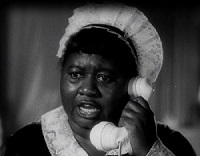
I did not feel the same delight in encountering Manton’s maid, Hilda (Hattie McDaniel). While her sassy replies to her employer are sometimes amusing, it’s difficult to view McDaniel in a maid costume without picturing Mammy from Gone with the Wind, the part she’d win an Oscar for a year later. While this is not the type of servile performance the actress would later be asked to defend, the role is not as progressive (and therefore her part less funny) than we might have hoped.

Hilda (Hattie McDaniel)

Hilda (Hattie McDaniel)

The police lieutenant (Sam Levene) sometimes distracts from the story as well. Like one of the suspects (Penny Singleton), Levene is stolen straight from After the Thin Man (which tells you how seriously the director, Leigh Jason, and his writers take the crime itself).

Unfortunately, Levene can’t turn off the beleaguered, badgering tone he used in the earlier film. While his attitude toward Manton initially adds to the humor, his grumbling soon becomes tiresome. Nick Charles could be just as withholding with clues as Manton, but never was treated with such disrespect. Wouldn’t the lieutenant’s opinion of her alter when he discovered her sleuthing skills, even with their class and gender differences?

The lieutenant (Levene) dismissing Manton

The lieutenant (Levene) dismissing Manton

Henry Fonda in Screwball Mode
The only actor who surprised me in this film was Henry Fonda. I’ll admit that I’ve never been a fan; I’d usually rather see someone else in his place: John Garfield in The Grapes of Wrath, Joel McCrea in The Lady Eve.  But Fonda is exuberant in The Mad Miss Manton, so at home with the one liners and silly antics that I kept checking the credits to make sure it was the same man. (Interestingly, Fonda himself disliked the part.) He’s surprisingly confident and attractive as Peter Ames, the editor in love with Manton, and it’s hilarious to watch him trying to romance her, while admitting that he’s enough of a pragmatist to appreciate that she’s rolling in it.

Manton (Stanwyck) and Ames (Fonda)

Ames (Fonda) and Manton (Stanwyck)

The relationship begins in hostility. He’s written an editorial dismissing Manton’s supposedly nonexistent body discovery as one of her group’s “escapades.” She slaps him with her hand and a libel suit on their first meeting. Of course, they start to fall in love from there.

The two take turns outwitting one another in His Girl Friday style (though at a less frantic pace). After Manton agrees to pretend they’re engaged to dupe a suspect, Ames comes to her apartment with champagne to celebrate. “Well, if I want to marry a fortune hunter,” she answers, “I can go to Europe and marry a professional one.”

“I’m determined to make you happy if I have to drag your name through the breach-of-promise courts to do it,” he answers.

It’s startling how suggestive the film is. The two are in her bedroom as she smokes in her nightgown and he gets flustered. She ties him up regularly, and once she even takes off his pants. The love/hate battle between them is exhilarating, and while much of the credit goes to Stanwyck, for once she has an equal sparring partner in Fonda.

As you can tell from my review, this is a far from perfect film. But I would encourage you to embrace it just the same: the disappearing dogs, the ever-changing heroine, the unlikely romance, the bizarre crew, even the occasional joke about communism.  It’s a bit “mad,” but it’s a lot of fun.

Share
Posted in: 1930s films, Blogathons, Film Noir/Crime/Thriller & Mystery, Romantic Comedies (film) Tagged: Barbara Stanwyck, blogathon, Henry Fonda, Paris Hilton, screwball comedy, The Madd Miss Manton

The Death of the Marital Rom-Com: Where Have All the Toppers Gone?

03/10/2014 by leah@carygrantwonteatyou.com 6 Comments

When is the last time you watched a rom-com about a married couple? Aside from the occasional indie and rare mainstream flick, Hollywood seems to have retired this subject matter, despite the success of TV shows such as Mad about You, Everybody Loves Raymond, and The King of Queens.

Yet I came up with this list of famous 30s and 40s rom-coms about married couples in just two minutes:

Married: Topper, Mr. Blandings Builds His Dream House, My Favorite Wife, and I Was a Male War Bride
Separated/Divorced: The Awful Truth, The Philadelphia Story, and His Girl Friday.

Those familiar with these titles might notice that these are just some of the marital rom-coms starring Cary Grant. In comparison, I came up with three mainstream marital rom-coms in the past three decades altogether—with help.

Even if married couples in 2014 are more likely to attend animated flicks with their kids, as my husband theorized, that doesn’t explain what Hollywood is producing for those without kids. And I’m not buying that we’re all boring enough to only like films about ourselves. We don’t all cook meth in our basements or fight to the death in dystopian universes. We don’t watch The Walking Dead or Game of Thrones because they remind us of barbeques with our buddies. I discovered most of my favorite marital rom-coms when single. Is it possible that Hollywood thinks singles’ imaginations fertile enough to envision shooting webs out of their wrists or being born in Middle Earth, but not to conceive of being married?

Whatever the reasoning for the endangerment of the marital rom-com, the result is unfortunate: there’s a sameness to romantic comedies now that simply didn’t exist in the 30s or 40s. While there are only so many ways we can meet and fall in love, there is an infinite variety of methods for teasing, imitating, and torturing those we know well.

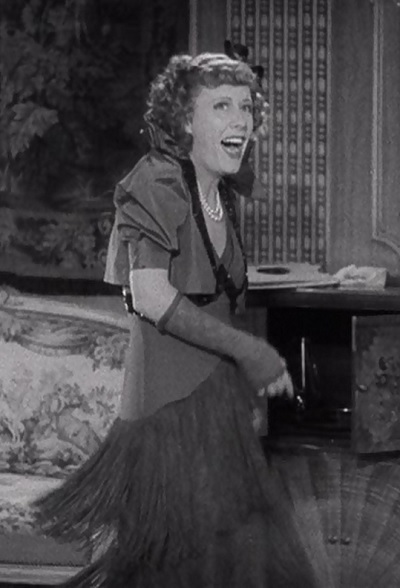
One of Cary Grant’s best marital rom-coms is The Awful Truth (1937), a film my friend Tonya introduced me to many years ago that I’ve been recommending ever since.  Grant’s and costar Irene Dunne’s impeccable timing and believable performances make this one of the funniest screwball comedies I’ve ever seen.

Dunne and Grant dazzling in The Awful Truth

Dunne and Grant dazzling in The Awful Truth

In the film, Jerry (Grant) and Lucy (Dunne) suspect one another of infidelity. Lucy decides to trust Jerry, anticipating Elvis’s famous song about suspicion in explaining her reasoning. Jerry, however, can’t trust her, and the two divorce. But since they’re both still in love, they can’t help sabotaging one another’s new relationships.

I have so many favorite moments from this film. One is when Jerry plays a song for his dog (during his custodial pet visit) to annoy Lucy as she’s meeting her new fiancé’s mom. In another Jerry pays the orchestra conductor to re-play a song just to watch his wife trip as her fiancé tries to lead her in a rambunctious dance.

Jerry appreciating the dance moves of Lucy's fiancé

Jerry appreciating the dance moves of Lucy’s fiancé

And there’s the scene when Lucy, aware of Jerry’s pride, shows up at his fiancée’s house pretending to be his wasted sister.

Lucy humiliating Jerry

Lucy humiliating Jerry

She begins the visit by demanding a drink and ends by performing a Marilyn Monroe-over-grate move for Jerry’s soon-to-be in-laws (years before that famous siren’s).

But perhaps the scene I enjoy most is when Jerry gushes about how much his hard-partying wife will appreciate Oklahoma, where her fiancé lives:

“Lucy, you lucky girl,” Jerry says. “No more running around the night spots. No more prowling around in New York shops. I shall think of you every time a new show opens and say to myself, she’s well out of it….”

“I know I’ll enjoy Oklahoma City,” Lucy replies stiffly.

“But of course,” he answers, “and if it should get dull, you can always go over to Tulsa for the weekend.”

Contrast these scenes with those in 1997 rom-com My Best Friend’s Wedding, technically a film of the single-gal variety, but adopting some situations from the marital rom-com. Yes, Rupert Everett is glorious in it, and Cameron Diaz and Julia Roberts are effective rivals.

Diaz confronting Roberts in My Best Friend's Wedding

Diaz confronting Roberts in My Best Friend’s Wedding

But the message is appalling: you’ll lose the guy if you’re dedicated to your profession and unwilling to ditch your education/career for his. No matter, therefore, how funny some of Roberts’ antics seem, I can’t laugh at the antiquated, offensive cliché of the desperate single woman, as the film asks me to do. But I do laugh at the partners in The Awful Truth, both so anxious to get each other back that they’re willing to forgo pride to do so. Due to his unreasonable suspicions, Jerry looks like more of a buffoon than Lucy, but neither comes out of the experience unscathed. (Of course, since Lucy trusts Jerry, we don’t know whether he just likes his space, or has cheated and the filmmakers have given him a pass for sexist reasons.)

The Awful Truth is just one of many delightful 30s marital rom-coms. There are so many more. Until current Hollywood producers come to their senses and resuscitate the subgenre, you’ll be stuck with the half-attempts at marital rom-coms like My Best Friend’s Wedding, in which the humor is only at the woman’s expense. (Forget viewing films about long-term relationships between unmarried couples–an even rarer subgenre.) So give some classic marital comedies a try. You’ll be glad you did.

Incidentally, next Sunday and Monday (March 16 and 17th), I’ll be participating in a classic detective blogathon hosted by Movies Silently. Please check out my entry in this Sleuthathon at my blog next week. I’ll be reviewing The Mad Miss Manton (1938), featuring Barbara Stanwyck as a Sherlock Holmes-Paris Hilton hybrid. And be sure to view the entries of my much more knowledgeable blogging peers!

detective-blogathon-thin-man-small

Share
Posted in: 1930s films, 1990-current films, Comedies (film), Humor, Romantic Comedies (film) Tagged: Cary Grant, Irene Dunne, Julia Roberts, My Best Friend's Wedding

The Anti-House of Cards: Mr. Smith Goes to Washington

02/20/2014 by leah@carygrantwonteatyou.com 1 Comment

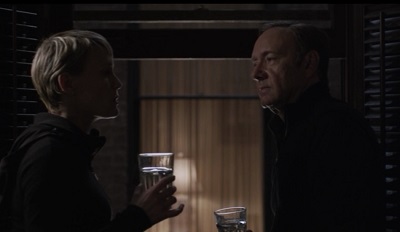
I had been looking forward to the return of House of Cards for months. Frank Underwood’s (Kevin Spacey’s) skewering of his opponents is almost as fascinating to watch as his wife Claire’s (Robin Wright’s) icy machinations.

Frank and Claire Underwood, the creepy power couple

The Underwoods, DC’s creepiest power couple

But something about the nonstop snow, ice, and wind this winter has made me too blue to compound my already too cynical view of Congress. In months like these, I need to let some spring-tasting idealism in the room. In other words, I’m craving some Capra.

Many have seen It’s a Wonderful Life, and if so, they already have a feel for director Frank Capra’s conviction that the little guy/gal can make a difference. Capra clearly relished films that breathed hope, like those optimists who would follow him, Ron Howard and Steven Spielberg.

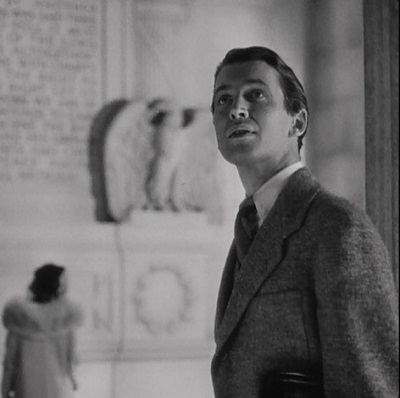
When I stared at a pile of snow two feet high today and knew my shovel was buried somewhere within it, a dose of hope was required, and few films can refresh mine as thoroughly as Capra’s brilliant Mr. Smith Goes to Washington (1939).

Smith (Stewart) inspired by the Lincoln Memorial

Smith inspired by the Lincoln Memorial

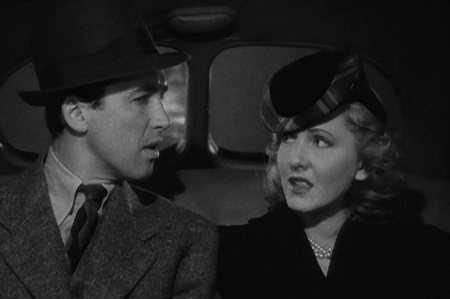
The beauty of the movie is that it lets us see the world—and its hero—through the eyes of world-weary Saunders (Jean Arthur). Tasked to assist Jefferson Smith (Jimmy Stewart), she can’t decide if he’s full of it or dim-witted. This guy insists on going to see the Lincoln Memorial when he arrives for his senatorial post, for crying out loud. He claims his primary goal is creating a boys’ camp for his state. Could anything be more suspicious to a DC insider?

Saunders' reaction to Smith's tourist plans.

Saunders’ reaction to Smith’s tourist plans.

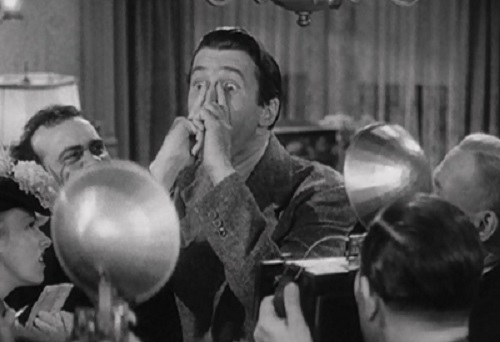
Saunders begins by undermining him, inviting a bunch of photographers to capture him at his most foolish.

Smith inadvisedly demonstrating a bird call

Smith inadvisedly demonstrating a bird call for the press

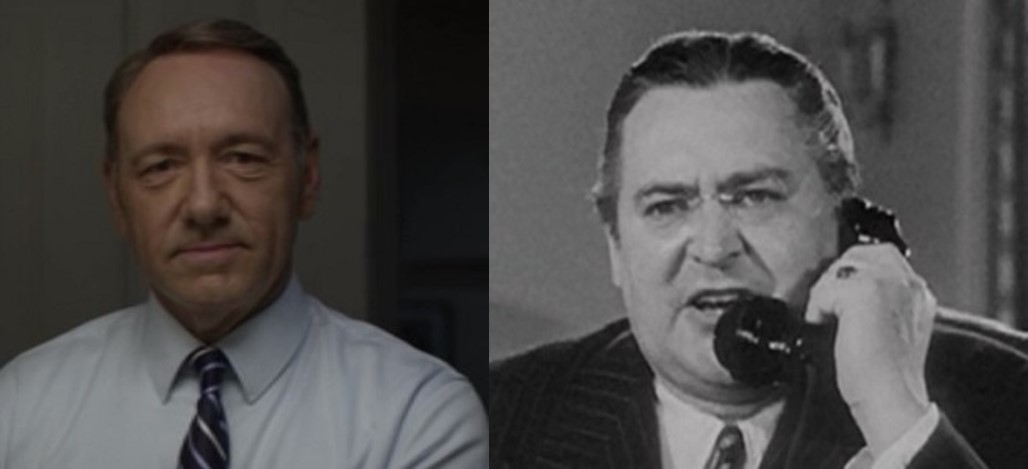
But as she slowly begins to reassess him, we find ourselves losing our cynicism about his dogged honesty and downhome goodness along with her. Of course, poor Smith encounters his share of Frank Underwoods, especially crafty Jim Taylor (Edward Arnold), who calls him a “drooling infant.” Interactions with Taylor and his cronies will lead Smith to lose a lot of his innocence but help him develop some much-needed spunk.

Underwood (Spacey) and Taylor (Arnold)

Underwood (Spacey) and Taylor (Arnold)

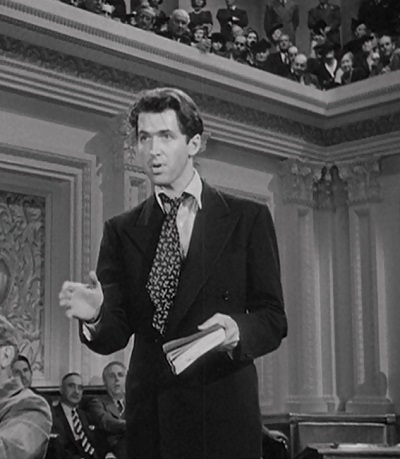
The powerful filibuster scene at the center of the movie is so moving that reporters still reference it today as justification for allowing that congressional maneuver. The film came up as recently as the Affordable Care Act battle last September, when writers claimed Ted Cruz’s was a “faux filibuster,” and last summer, when Wendy Davis pulled the famous Jimmy Stewart move at the Texas state house for eleven hours straight.

Smith (Stewart) in the midst of his filibuster

Smith (Stewart) in the midst of his filibuster

Most days, the news convinces me that idealists like Smith will always be crushed by the powerful jaws of the Frank Underwoods among us. But somehow, I don’t feel that way today: I’ve been watching Capra.

Share
Posted in: 1930s films, Drama (film), TV & Pop Culture Tagged: filibuster, Frank Underwood, House of Cards, Jean Arthur, Jimmy Stewart, Mr. Smith Goes to Washington

3 Classic Anti-Valentine’s Films for Sex and the City Fans

02/13/2014 by leah@carygrantwonteatyou.com 6 Comments

Single or attached, I’ve always loathed Valentine’s Day. When single, I’ve wondered why our couples-obsessed culture needs a day devoted to twosomes. When attached, I’ve pondered why I should celebrate en masse what’s supposed to be intimate. Therefore, my three recs today are for those who share my distaste for the day:

Female Bonding: Stage Door
For those who’d rather split a few bottles of wine with pals than brave pink-and-red-bedecked nightclubs this Friday, I recommend Stage Door, a film centered on women who live in an all-female boarding house as they try to make their big breaks on the stage.

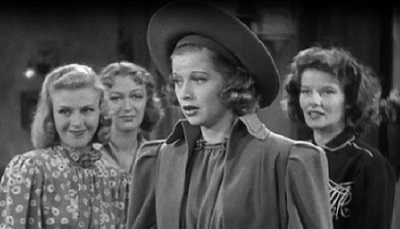
The heroines’ choice to remain single (and have casual boyfriends only) is celebrated rather than reviled by the film. If anything, the film mocks marriage. But don’t just view Stage Door (1937) for its politics; watch it to see the phenomenal cast interact: Ginger Rogers, Katharine Hepburn, Lucille Ball, Eve Arden. (The latter you may recognize as the principal in Grease; in her youth, she was always the smart-talking sidekick.)

Rogers, Arden, Ball, and Hepburn

Rogers, Arden, Ball, and Hepburn

The dialogue is so slick and cynical and quick that you’ll have a hard time keeping up with the one-liners, as when wealthy Terry’s (Katharine Hepburn’s) haughty tone annoys her impoverished fellow residents. Jean (Ginger Rogers) is not one to let an insult slide. When Terry snootily states, “Unfortunately, I learned to speak English correctly,” Jean fires back, “That won’t be of much use to you here. We all talk pig Latin.”

While the more famous classic movie about female friendships, The Women (1939), favors marriage with unfaithful partners over relationships with backbiting friends, this feminist flick celebrates the humor and loyalty between single women. In fact, I would argue that Stage Door’s women are in some ways more liberated than those in Sex and the City. Watch and see if you agree.

More of a feminist: Jean Maitland or Carrie Bradshaw? (Ginger Rogers & Sarah Jessica Parker)

More of a feminist: Jean or Carrie?


Revenge as Art:  Gilda
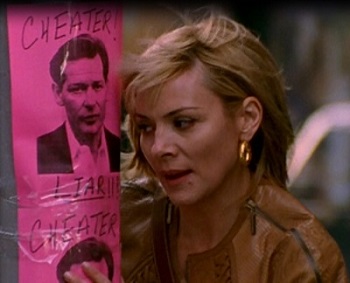
I enjoyed Samantha Jones’s (Kim Cattrall’s) revenge on boyfriend Richard Wright for his infidelity in Sex and the City: the dirty martini in his face, the papering of the city with posters describing his behavior.

Samantha in revenge mode

Samantha in revenge mode

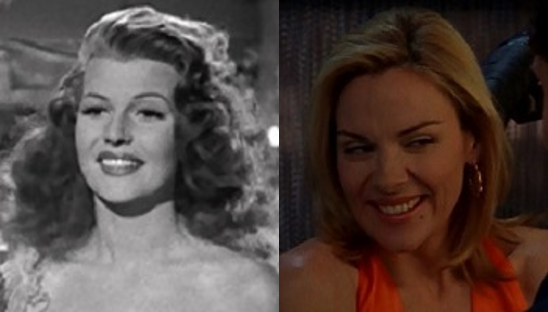
But this kind of takedown is kitten play compared to the work of Rita Hayworth in Gilda.

Gilda, who calls herself the "Bar Nothing," and her spiritual descendant, Samantha Jones

Gilda, the “Bar Nothing,” and her spiritual descendant, Sam

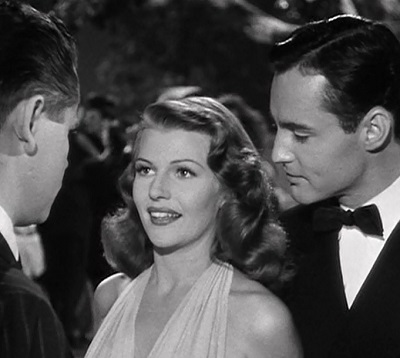
Like Samantha, Gilda (Hayworth) is in full command of her sexuality; it’s not difficult to discover why this WW II pinup was dubbed “The Love Goddess.” But her treatment of her ex, Johnny, is far more ruthless than her modern counterpart’s. First, she marries Johnny’s boss; then, she flaunts her affairs with other men to torment him further.

Gilda (Hayworth) torturing her ex

Gilda (Hayworth) torturing her ex

Gilda is so skillful a manipulator that you root for her to get what she wants, even if the ex she desires is no prize (and no mean manipulator himself).

Here’s an anti-Valentine’s Day conversation if ever there were one:

Gilda: “Would it interest you to know how much I hate you, Johnny?”
Johnny: “Very much.”
Gilda: “I hate you so much I would destroy myself to take you down with me.”

I think Samantha would be impressed.

Exploiting Men: Baby Face
In an early episode of Sex and the City, “The Power of Female Sex,” Carrie’s fling has left a tip on her bedside table and she’s feeling ill at ease with the implications. The four friends discuss whether it’s ever acceptable to use your sexuality to get ahead. Barbara Stanwyck’s character in Baby Face (1933) has no such qualms: She leaves her hometown for NYC with the aim of doing just that.

The shocks accumulate quickly as you watch Baby Face: Lily’s (Stanwyck’s) father has been prostituting her since she was fourteen. A grandfatherly figure in her dad’s speakeasy recommends she leave home to sexually exploit men for personal gain, quoting Nietzsche to back his case.  Once in New York, Lily takes quick steps to follow his advice, seducing the HR assistant in a bank to get a job, and then sleeping her way floor by floor to the top. (The camera helpfully pans up to highlight each floor as she ascends.)

Lily (Stanwyck) on the make

Lily (Stanwyck) on the make

You might expect the movie to make the heroine suffer for her behavior, given the date of this film, but she is unmoved by the heartbreak and eventual tragedy she leaves in her wake (among her victims is a smitten John Wayne). Men have used her all her life. Lily figures it’s her turn, and the film clearly sympathizes with her reasoning. She calmly goes about her business of seducing men, accumulating jewels and bonds, and sharing her successes with her best friend, Chico (Theresa Harris).

Chico and Lily admiring another woman’s wealth before Lily starts to advance

Chico and Lily scheming

Here’s a typical exchange with a discarded lover who stops by Lily’s apartment:

Ex-Lover: “It’s been brutal not seeing you.”
Lily: “Yeah, well you better get used to it.”

When he returns and offers marriage, Lily answers, “So you want to marry me, huh? Isn’t that beautiful. Get out of here….”

Lily's reaction to a marriage proposal from a discarded lover

Lily’s reaction to a marriage proposal from a discarded lover

This is a strange film with a number of flaws, but you won’t care; it’s too much fun to watch this predator in action. (Be sure to watch the pre-release version; it’s much better.)

What are your favorite anti-Valentine’s films?

Share
Posted in: 1930s films, 1940s films, Anti-Romance films, Comedies (film), Drama (film), Feminism, Film Noir/Crime/Thriller & Mystery, Humor, TV & Pop Culture Tagged: Carrie Bradshaw, Gilda, Samantha Jones, Sarah Jessica Parker, Sex and the City, Stage Door
« Previous 1 2 3 4 5 6 7 8 9 Next »

Recent Posts

  • 100 Years Later, Still Scary: Dr. Caligari
  • Escaping Out of the Past (1947)
  • A Weeper for Those Who Love Jerks
  • Thank You, Academy, for Not Infuriating Me
  • Challengers (2024) Is a Bad Movie

Subscribe to Blog via Email

Enter your email address to subscribe to this blog and receive notifications of new posts by email.

Categories

  • 1920s films
  • 1930s films
  • 1940s films
  • 1950s films
  • 1960s films
  • 1970s films
  • 1980s films
  • 1990-current films
  • 2020s films
  • Action & Sports Films
  • Anti-Romance films
  • Blogathons
  • Childfree
  • Comedies (film)
  • Drama (film)
  • Feminism
  • Femme fatales
  • Film Noir/Crime/Thriller & Mystery
  • Gloriously Silly Scenes
  • Horror
  • Humor
  • Mae West Moments
  • Musicals and dancing films
  • Oscars
  • Random
  • Romance (films)
  • Romantic Comedies (film)
  • The Moment I Fell for
  • Turn My Sister into Classic Movie Fan
  • TV & Pop Culture
  • Uncategorized
Share
Classic Movie Blog Hub Member

Recent Comments

  • leah@carygrantwonteatyou.com on Meg Ryan’s Fate Foretold in Joe Versus the Volcano
  • Ryan on Meg Ryan’s Fate Foretold in Joe Versus the Volcano
  • leah@carygrantwonteatyou.com on 100 Years Later, Still Scary: Dr. Caligari
  • The Classic Movie Muse on 100 Years Later, Still Scary: Dr. Caligari
  • leah@carygrantwonteatyou.com on 100 Years Later, Still Scary: Dr. Caligari

Archives

  • November 2025
  • September 2025
  • May 2025
  • March 2025
  • January 2025
  • November 2024
  • August 2024
  • July 2024
  • May 2024
  • March 2024
  • February 2024
  • December 2023
  • November 2023
  • October 2023
  • September 2023
  • August 2023
  • July 2023
  • May 2023
  • April 2023
  • March 2023
  • January 2023
  • December 2022
  • November 2022
  • September 2022
  • July 2022
  • May 2022
  • April 2022
  • March 2022
  • February 2022
  • October 2021
  • September 2021
  • April 2021
  • March 2021
  • February 2021
  • December 2020
  • October 2020
  • September 2020
  • July 2020
  • May 2020
  • April 2020
  • March 2020
  • February 2020
  • December 2019
  • October 2019
  • September 2019
  • June 2019
  • May 2019
  • April 2019
  • February 2019
  • January 2019
  • November 2018
  • September 2018
  • July 2018
  • June 2018
  • May 2018
  • April 2018
  • March 2018
  • February 2018
  • January 2018
  • November 2017
  • September 2017
  • August 2017
  • July 2017
  • June 2017
  • May 2017
  • April 2017
  • March 2017
  • February 2017
  • January 2017
  • December 2016
  • November 2016
  • October 2016
  • August 2016
  • July 2016
  • June 2016
  • May 2016
  • April 2016
  • March 2016
  • February 2016
  • January 2016
  • December 2015
  • November 2015
  • October 2015
  • September 2015
  • August 2015
  • July 2015
  • June 2015
  • May 2015
  • April 2015
  • March 2015
  • February 2015
  • January 2015
  • December 2014
  • November 2014
  • October 2014
  • September 2014
  • August 2014
  • July 2014
  • June 2014
  • May 2014
  • April 2014
  • March 2014
  • February 2014
  • January 2014

Meta

  • Log in
  • Entries feed
  • Comments feed
  • WordPress.org

Copyright © 2025 Cary Grant Won't Eat You.

Church WordPress Theme by themehall.com