Cary Grant Won't Eat You

Classic movies for phobics

  • About
  • eBooks
  • Previous Blogathons
Classic movies for phobics

1930s films

Go West Young Man: Mae West’s Censorship Satire

04/30/2015 by leah@carygrantwonteatyou.com 10 Comments

This post is part of The Fabulous Films of the 30s blogathon hosted by the Classic Movie Blog Association. Click here to see the many wonderful entries! For an eBook collection of blogathon entries, click eBook on the menu above.
MaeWestandRandolphScott-GoWest
It’s easy to dismiss Go West Young Man (1936) as an inferior Mae West film. It doesn’t contain her best double entendres, and features much less screen time with her than in earlier pictures. The actress didn’t even originate the story; she adapted it from Lawrence Riley’s hit play, Personal Appearance. How could the film measure up to its hilarious predecessors, which West developed to highlight her own sexuality?

It doesn’t, but that’s part of the point—and the fun. The panning of Hollywood in the play must have appealed to West. But I think she saw something else in the story too: by converting the play to film, she could mock the Production Code itself. After all, West’s raunchy scripts and uninhibited performances from the early 30s have been cited as reasons for the Code’s enforcement. She must have laughed to discover the following opportunities to satirize her nemesis:

The Opening
We begin the story at a premiere of actress Mavis Arden’s (West’s) film, Drifting Lady. The camera darts back and forth between the screen and the crowd in the theater viewing it. All of the men in Drifting Lady are pining for Mavis’s character, a nightclub singer with multiple lovers.

Mavis plays the role in a comfortable, bawdy style, and then abruptly regrets her cheating ways and loses her man. An artificial chill settles over Drifting Lady when she does. This would never happen in a pre-Code West film, we viewers remind ourselves. West is supposed to get all of the guys, and celebrate every sexual conquest with a one liner.

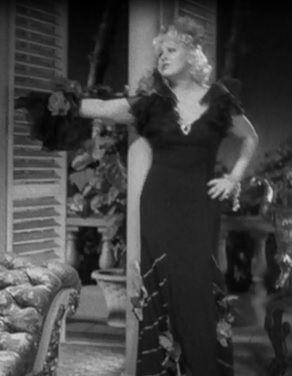
Mavis’s acting has been natural (or at least, natural for West) up to this point. But when her lover is about to depart, the star holds out her arm in a stagey gesture and sputters sentimental bilge about April and blue skies and fond memories.
MaeWest-DriftingLadyGoWest
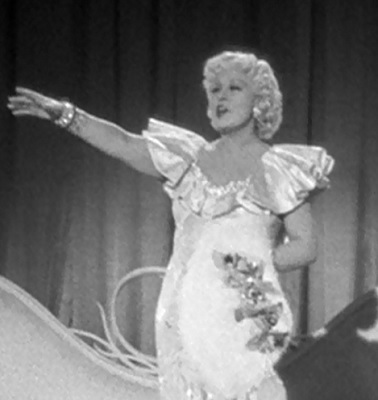
The actress adopts the same stagey line and tone when she talks to the crowd after her film.
MaeWest-UnnaturalSpeechGoWest
She claims to be an “unaffected girl,” not the siren she plays in film. She then proceeds to share peculiar details about her life. Even if we hadn’t noticed Mavis’s fake tone, her press agent, Morgan (Warren William), rolling his eyes in the background would confirm our suspicions: she’s exactly like the character in the film. The studio might try to make her seem pristine, but we know she’s far from it. Don’t blame me, West’s deliberate hamming reminds us. This censorship nonsense isn’t my call.

Blaming the Studio
After Mavis leaves the stage, Morgan selects a few token men to greet her, all of them homely. When a spectator challenges the lack of handsome men, we learn that Mavis isn’t allowed to marry for five years, with Morgan acting as her watchdog. “Why make the job tough for her?” he adds.

We suddenly understand that strange speech after the film, when Mavis not only felt the need to pronounce her purity, but kept repeating her producer’s and studio’s names, AK of Superfine Pictures, Incorporated. She wasn’t sharing her everyday life with her audience; she was spelling out the terms of her contract. Clearly, this scene ridicules the studios’ tight control over stars’ personal lives. But it does much more: It satirizes limitations on believable behavior onscreen thanks to the Production Code. West, who had attracted censors from the start of her film career, must have relished each “incorporated” she uttered.

Marriage as a Substitute for Sex
West could no longer pen scenes of women seducing men without repercussions. In Go West Yong Man, she resolves this problem by referencing marriage when she means sex. By following the letter, but not the spirit of the Code, West emphasizes the ludicrous nature of censorship.
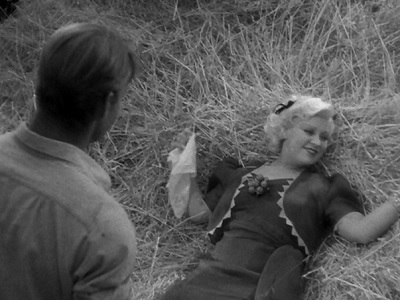
MaeWest-Rollinhay
The plot of the film is fairly simple. Morgan foils any romance Mavis attempts. (My favorite brush off: “We handle Ms. Arden’s admirers alphabetically; I’m just now getting into the Bs.”) She’s planning to join a former lover, a politician, after her film premiere. Morgan invites the press to her date, causing the lover to panic and giving Mavis the chance to express her true nature.

“Have you any particular platform?” the press asks her.

“The one I ain’t done,” she quips.

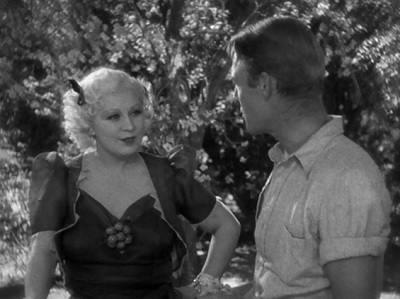
She soon departs, with the two planning to meet again in Harrisburg. En route, her car breaks down, and Mavis is stuck in a rural boardinghouse with her assistant and Morgan until it’s repaired. The delay annoys her until she spots a handsome young mechanic (Randolph Scott). Her suggestive look at his body and enthusiasm about his “sinewy muscles” say it all: We’re not talking about marriage, folks.

The Supporting Players
William is brilliant as Morgan. A New York Times reviewer described him as “the only player who has ever come close to stealing a picture from Mae West.” But he’s not alone. The boardinghouse proprietor is played by Alice Brady, and while the actress’s comedic chops aren’t fully exploited, the talents of those who play her employee Gladys (Isabel Jewell) and Aunt Kate (Elizabeth Patterson) are. The latter is an aging single woman, who makes knowing remarks about Mavis’s sexual attraction (i.e., “It”), her public relations, and her shade of hair, a color that did not appear in daylight in Aunt Kate’s youth.
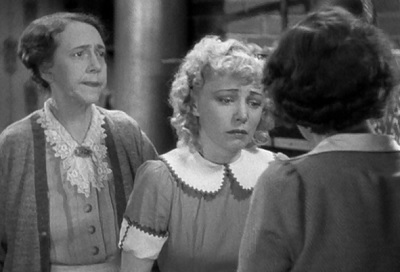
Patterson, Jewell, and Brady

Patterson, Jewell, and Brady

Gladys, an aspiring actress, attempts to impress Morgan by mimicking Marlene Dietrich. Morgan’s dismayed reactions are hilarious.
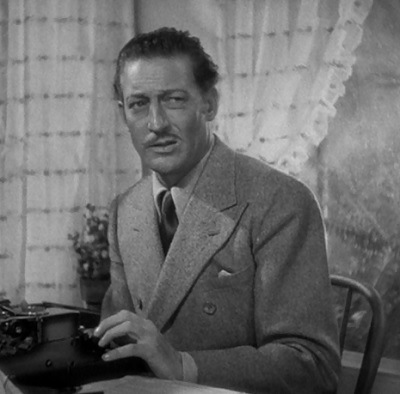
WarrenWilliamReaction-GoWest
While her Dietrich attempt flops, Gladys’s imitation of Mae West’s walk is something to behold. As the innocent in the film, Gladys illustrates the futility of censoring West’s words when that body does so much of the talking.

Unfortunately, the one black character in the film is a fool, or appears to be at first. Halfway through the movie, I became convinced he had just been smoking a lot of weed. It may be wishful thinking on my part, but could it be another snide jab at the censors, who would be unlikely to examine such a minor role closely?

Scenes with Mr. Oblivious
The funniest moments in the Go West Young Man are when Mavis tries to seduce the handsome mechanic, who completely misreads her blatant moves on him.
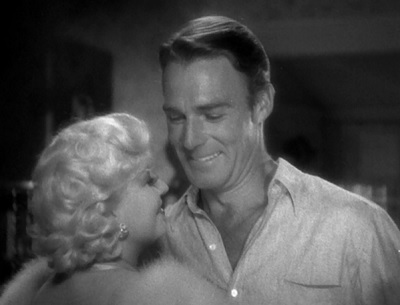
RandolphScott-MaeWest
Busy displaying his invention, he misses the meaning of such subtle lines as these:

  • “Modesty never gets you anything, I know.”
  • “I’d just love to see your model.”
  • “I can’t tell you the number of men I’ve helped to realize themselves.”

It’s amusing to see West’s attractions fail, given how many times we’ve seen the opposite. But what’s even funnier is to witness the man’s obtuseness. Clearly, he’s a surrogate for the censors, who must be fooling themselves (or be quite naïve) to misunderstand the meaning of West’s every look, every line.

Go West Young Man undermines the notion that sex can be discouraged by rules. The film may not have been one of West’s triumphs in terms of box office or critical acclaim, but it is a riveting look at a writer’s reactions to early Hollywood’s rule-bound universe.

Of course, the title makes little sense, referring to a famous historical line the film doesn’t address. I like to think of it as a reference to the star herself, with just one preposition (and comma) missing: “Go for West, young stud. You won’t regret it.”

Share
Posted in: 1930s films, Mae West Moments, Uncategorized Tagged: after pre-Code, censorship, satire

Bette Davis & Sibling Bonds: The Sisters (1938)

04/09/2015 by leah@carygrantwonteatyou.com 4 Comments

TheSisters-1938
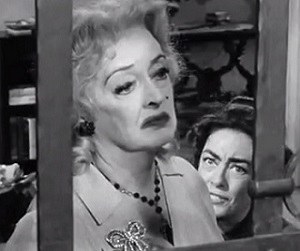
April 10th is National Siblings Day. If the holiday makes you cranky about being an only child, watch Whatever Happened to Baby Jane? That should cure you of longing for a sister.

WhateverHappenedtoBabyJane
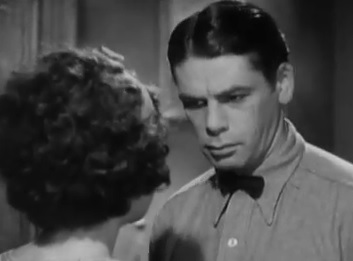
Or spend some time with the creepy antihero of Scarface (1932). You’ll never want a brother again.

Scarface
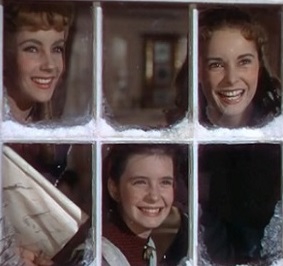
But if you insist on the delight of being a sibling, there’s always the classic sisterly bonding tale, Little Women. The March sisters will satisfy all your sentimental cravings.

LittleWomen
And if you want a more adult version of sisterly unity, check out The Sisters, a period drama set in 1904 in Silver Bow, Montana. Grace, Helen, and Louise Elliott all marry and experience varying degrees of unhappiness as a result. But the bond between them holds firm even when sorrow, tragedy, and distance separate them.

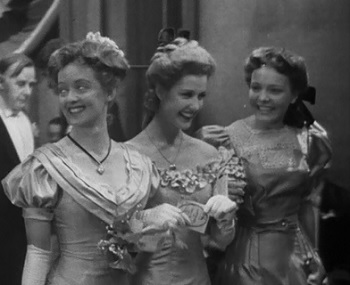
The story begins at a ball celebrating Teddy Roosevelt’s inauguration, where the three girls are in high demand.

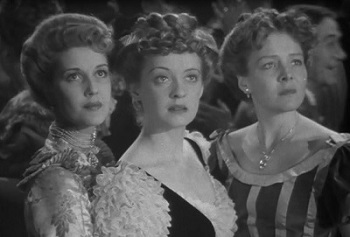
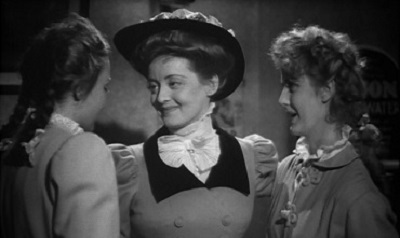
Louise, Helen, and Grace

Louise, Helen, and Grace

Helen (Anita Louise) is the loveliest, Grace (Jane Bryan) the steadiest, and Louise (Bette Davis) the most confident. Louise is on the verge of engagement to a banker’s son, Tom (Dick Foran), until she encounters Frank (Errol Flynn), a flashy visiting newspaper reporter.

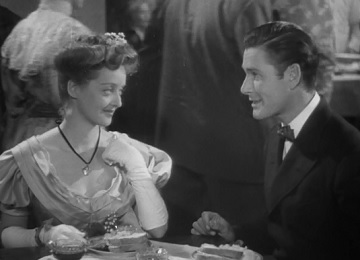
BetteDavisandErrolFlynn
He has few prospects, and her parents don’t like him. He talks too much about freedom and drinking. But she’s in love, so she elopes with him to San Francisco. Her sisters, who seem to have a sixth sense about one another’s movements, anticipate her actions, and say goodbye before she can sneak away.

While Louise is busy grasping at contentment in San Francisco with her increasingly worthless husband, Grace marries Louise’s ex, Tom, and has a son. Meanwhile, Helen cozies up to her long-time admirer, Sam (Alan Hale), who is twice her age but can give her a life of glamour away from Silver Bow. At first, only Louise’s life is turning sour, with her mother adding the word “poor” to her name whenever she says it. Frank, a heavy drinker, avoids home and complains about his lack of freedom and talent, which makes him a general joy to be around. Finally, Louise gets a job so that they can pay the bills, giving him yet another reason to feel sorry for himself. Just before the famous 1906 earthquake, he flirts with the idea of leaving her.

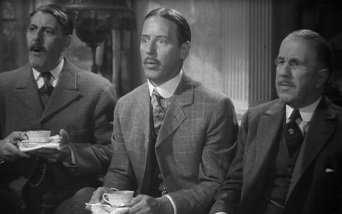
Helen, predictably, is faithless to her husband, whose health proves precarious. And when Grace discovers her husband isn’t as loyal as she thought, her sisters rush home to help her, scaring a group of philandering husbands into aiding their cause: outcasting the woman who seduced him.

MenConfrontedbySiblings
I won’t reveal what happens to each of their marriages, or the ending that promises happiness the audience has no reason to trust. I will say the movie is engrossing throughout, with comic relief from their parents (character actors Henry Travers and Beulah Bondi), convincing chemistry between Flynn and Davis, and lovely dresses by Orry George Kelly.

But what most intrigued me about the film occurred in the final minutes. Grace and Helen both sense that Louise is in need during the final inaugural ball of the film (this time for Taft), and each leaves her man to seek her. Together, the three sisters hold one another in a final, empowering image, their expressions declaring that whatever others will do—or won’t—these three will fiercely protect one another. And that is an image that will be on my mind on National Siblings Day.

BetteDavisandTheSisters

Share
Posted in: 1930s films, Drama (film), Romance (films), Uncategorized Tagged: Bette Davis, Errol Flynn, movies, National Siblings Day, sibling movies, Sisters

Pre-Code Fun: The Jewel Robbery (1932)

04/03/2015 by leah@carygrantwonteatyou.com 19 Comments

JewelRobbery-OpeningShot
This post is part of the Pre-Code blogathon hosted by Pre-Code and Shadows and Satin. Click here to see the other entries!

Jewel Robbery has much to recommend it: a debonair thief; a bored, beautiful housewife; marijuana cigarettes adding comic relief; and of course, a host of diamonds. Along the way, we witness a faux kidnapping, a baked police chief, and a rooftop escape. And, of course, we get to hear some killer lines.

This is a pre-Code film—in other words, the kind of film you didn’t think your grandmother watched, but then, you didn’t know her all that well, did you? In the few years before censorship, there was a lot of scandalous footage on the screen, and much rooting for those engaged in immoral behavior. In this film, we are, of course, meant to root for the affair between the wife and thief, but I confess that this time I felt for the wronged husband, probably because the poor guy had so much stacked against him. First of all, Baron Franz (Henry Kolker) is not a looker:

Henry Kolker
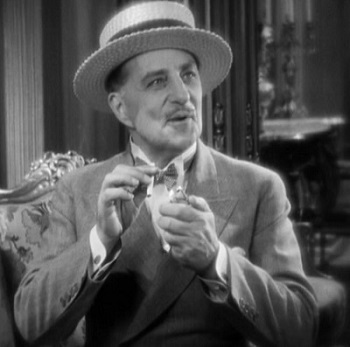
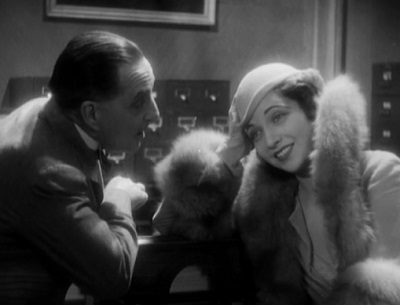
He already has a friend, Paul, making assignations with his wife, Baroness Teri (Kay Francis), and then calling her a “coquette” when she doesn’t keep them. Luckily, most of his fellow politicians are too intimidated by Franz’s position to seduce her, but clearly, an undersecretary or two will slip through the cracks when a wife is as tired of her pampered, quiet life as Teri is. And then, of all weapons aimed against him, it just had to be with one:

WilliamPowellthief
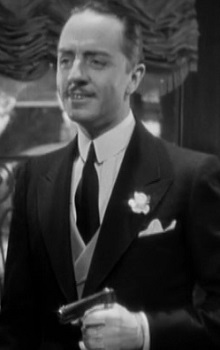
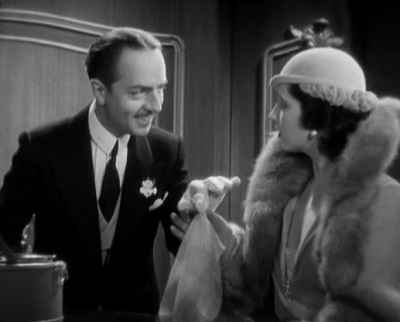
I think you’ll agree that the gun is not the threat here. This is not any thief. This is a robber played by William Powell with the grace, sophistication, and wit that would immortalize him two years later in The Thin Man. Describing his stealing method as a “drawing room style,” the robber plays music and converses with Teri as he and his henchmen snatch every trinket in the store she’s visiting after hours with her husband. He even explains his methods in great detail, including positioning a “very alluring blonde on each corner” to distract policemen.

flirtationPowellandFrancis
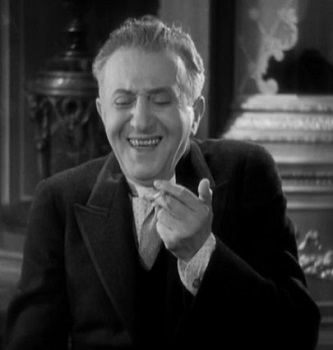
To keep the atmosphere light (and prevent retaliation), the thief compliments the shop owner’s taste and hands him a marijuana cigarette, which keeps him laughing through the trauma.

marijuanaprecode-JewelRobbery
After such a thrilling experience, the fickle wife is quickly in love, refusing to be locked up in the safe with either her husband or Paul, as she’d rather continue to be charmed by the thief. With such a man in her sights, what hope does a bureaucrat have to keep her interested?

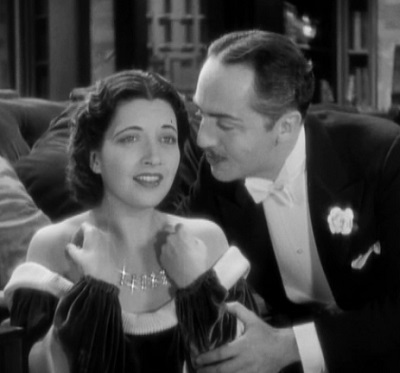
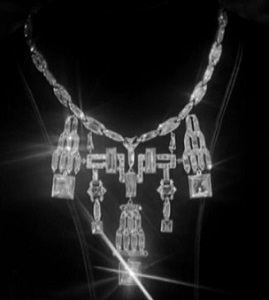
The one weapon Franz has in his arsenal is Teri’s love for sparkling beauties like this one:

Diamondnecklace
The couple is in the shop to purchase a 28-carat whopper, the Excelsior diamond, a ring Teri literally worships.

KayFrancis-Ring
“What wouldn’t a woman do for such a treasure?” she says when she sees it.

“Anything. I’d deceive my husband, with pleasure,” her sidekick Marianne (Helen Vinson) answers.

“A woman would do much more than that,” Terry explains. “She would tolerate her husband.”

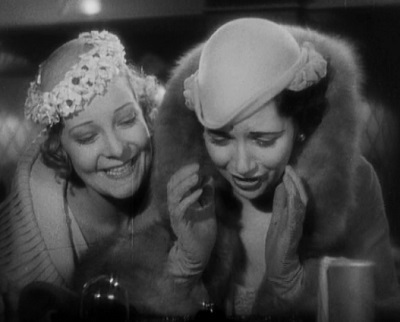
But all such motivation is gone when the handsome distraction in question steals jewels for a living, can give her far more than even her multimillionaire spouse can. Franz tries to convince his “incurably romantic” wife out of her lust, but her expression really says it all:

dreamingKayFrancis
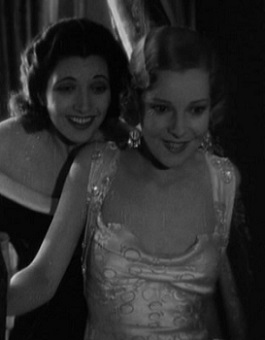
The thief’s attraction dims a bit once he catches sight of—and steals—her new treasure. But he returns it to her house while her husband is out. Teri’s friend Marianne is initially thrilled by the prospect of the robber on the premises.

VinsonandFrancis
But when Teri declares her intention to keep the ring in spite of its risks to her (given that she reported it stolen), Marianne is so spooked she announces her intention to leave to avoid being implicated in a scandal, declaring, “This is one night I shall be very glad to be with my husband.”

**Spoilers ahead**

Of course, this departure gives the besotted thief a chance to ask Teri to flee with him to Nice. He begins his seduction by taking her to his place. When she claims he should be more forceful (to match her romantic images of this moment), he carries her to the bed. She doesn’t deny him, only asking that they not hurry, with “so many pleasant intervening steps” before they get there.

BedKayFrancis
The thief reveals just how well he’s gotten to know her next. Could any foreplay work better on a woman who claims a diamond’s purity made her rethink her frivolous life than this display of riches?

foreplayPowellandFrancis
In spite of her feelings for him, Teri waffles on whether to leave the comforts of her position for a dangerous future. Unfortunately, she has no time for indecision, as the police have arrived. The robber ties her up to save her reputation, employing his usual panache in his daring exit across the roofs and into a waiting cop car his buddy has stolen.

WilliamPowellgbye
Teri tells her husband she needs to take a long rest in Nice to recover from the trauma of the kidnapping. She approaches the camera with one final gesture to ensure we are in no doubt about her intent:

KayFrancisforcamera
If this plot doesn’t convince you to watch the film, there are other gems: Helen Vinson is hilarious throughout the film, there’s a subplot about a guard who is both comically gullible and quickly becoming a fan of marijuana, and some nice rooftop action. Give it a try! And while you’re at it, read about many other funny, scandalous, fascinating pre-Code films.

Share
Posted in: 1930s films, Blogathons, Romantic Comedies (film), Uncategorized Tagged: Kay Francis, Pre-Code, robber, Romance, William Powell

Edward G. Robinson and My Cat

03/19/2015 by leah@carygrantwonteatyou.com Leave a Comment

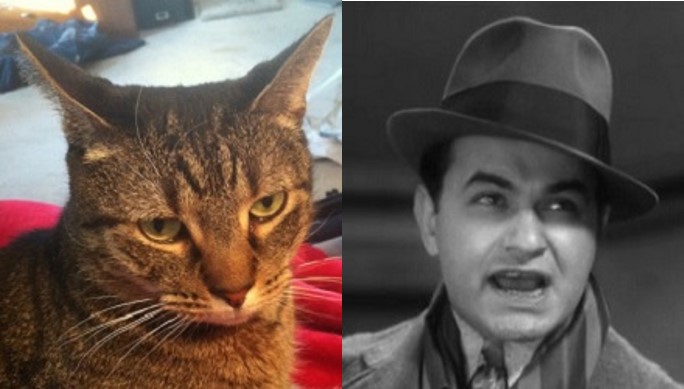
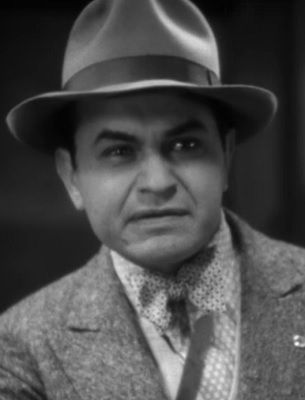
RicoandEdwardGRobinson
“Suave,” the receptionist at my vet’s office said the other day, reacting to my cat’s name. “Sorry,” she added quickly. “I couldn’t resist.” I laughed, having forgotten that Gerardo’s infamous 1990 song is the first association most people have with the name Rico. My cat does share some traits with the character described by that one-hit wonder, but “suave?” Not so much.

My husband and I had seen Little Caesar a few months before adopting our cat. We’d wavered over a name, and then started noticing some familiar traits. Like our cat’s ego, which seemed to be vastly disproportionate to his size.

A head so big they'd need a "special sized noose" for him.

Cops say they’ll need a “special noose” to fit his “swelled head.”

We discovered that our newcomer wasn’t exactly sane, and that he felt entitled to what wasn’t his. He wanted our food as well as his own, and jumped up on the counter to paw some while we were eating it. That’s when we realized his actions reminded us of something, and that something was Edward G. Robinson’s breakout role.

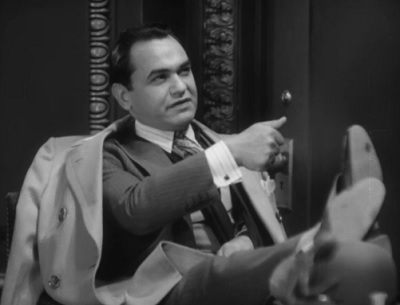
CoolCaesar-EdwardGRobinson
Increasing acquaintance with my cat’s past and behavior has proven that those traits are just the beginning of his resemblance to Edward G. Robinson’s antihero. He was returned once to the shelter because he couldn’t handle associating with other dominant male cats. Sound familiar, Edward G. Robinson fans?

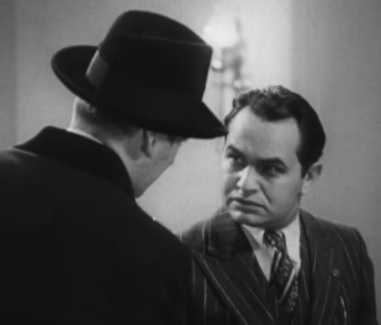
LittleCaesarangry
And then there’s his survival instinct. My cat is scrappy. He was discovered outside a dumpster in a New England winter he somehow survived. As if to prove his history, he has knocked over the trash can so many times seeking leftovers that we’re considering the metal tamper-proof kind others purchase to keep out collies and labs. And if a jalapeno potato chip, a piece of broccoli is dropped, he devours it before we can retrieve it. Rico never takes anything for granted, assumes he has to fight for everything he gets. Just like Little Caesar.

And like Robinson’s character, my cat is always voracious (despite a now hefty belly). Little Caesar hungered to be part of the “big time.” He begins the film envying Diamond Pete Montana, a successful gangster, not a nobody like himself, ripping off gas stations. “Money’s alright,” he says to his partner, who admits he’d quit crime if he had enough, “but it ain’t everything. Yeah, be somebody. Look hard at a bunch of guys and know that they’ll do anything you tell them.” He even expresses his longing with a butter knife.

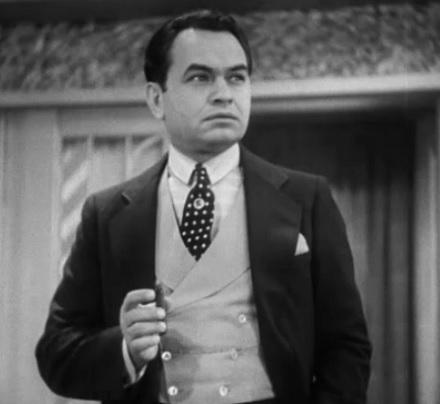
LittleCaesar
As Little Caesar begins to rise, he can’t help eying others’ pins, diamond rings…

Of course when you think of Robinson, you can’t forget that voice, and how much he liked to use it. My cat too has a great desire for self-expression, and sees no reason to ever cease meowing. Maybe that’s why my husband and I started referring to him as “the Rico,” recalling Robinson’s famous line when he talks of himself in third person: “Is this the end of Rico?”

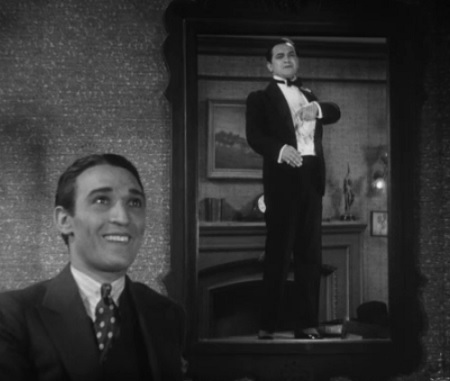
I think one of the reasons Robinson’s role made his career is because in spite of all of his criminal acts in the film, in spite of his arrogance, there’s something haunting and sympathetic about Little Caesar’s need to prove himself, to be envied.

RobinsoninmirrorLittleCaesar
He is in so many ways the embodiment of the American Dream filtered through a shaky understanding. He’s hardly the first—in fiction or real life—to be destroyed by his belief in it. Because he’s played by Edward G. Robinson, we are enthralled by Rico even as we condemn his actions. And in spite of everything, his loyalty to his best pal is always there, even when he most wants to lose it.

Perhaps Little Caesar’s real tragedy is that he was born into the wrong species. In feline form, the ambition, ego, hunger would all be endearing. We’d smile, hug, and pet him for those characteristics, and acknowledge his superiority without any need for proof. After all, it was the thirst for that recognition that inspired Little Caesar’s crimes. Poor man. He should have been a cat.

RecliningRico

Share
Posted in: 1930s films, 1940s films, Drama (film), Film Noir/Crime/Thriller & Mystery, Humor, Uncategorized Tagged: cat, Edward G. Robinson, Little Caesar, movies, Rico

3 Characters I’d Like to Celebrate St. Patrick’s with

03/12/2015 by leah@carygrantwonteatyou.com 2 Comments

The Hero of The Adventures of Robin Hood (1938)

ErrolFlynn-RobinHood
While watching Errol Flynn play Robin Hood, you get the feeling he knows how ridiculous he looks in those green tights. But instead of embarrassing, his outfit energizes him. You can almost hear him thinking, “Well, the manliness contest is lost. Let’s party!” The whole cast seems to share his giddiness, making this one of the most entertaining movies I’ve seen in some time. Who wouldn’t want to spend the green holiday with someone this easygoing and gorgeous?

(It’s easy to trace the film’s influence on an early favorite of mine, The Princess Bride, not to mention the parody Robin Hood: Men in Tights. Neither movie captures Flynn’s delirious enthusiasm, but that same sly humor is on full display in both, with Cary Elwes a worthy heir to his predecessor’s effortless style.)

The Heroine of Sadie Thompson (1928)

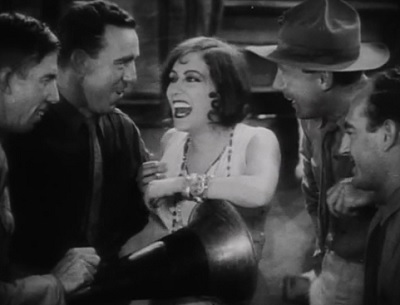
SadieThompson-Swansongroup
Sadie (Gloria Swanson) likes to pull pranks, tell dirty jokes, sing, dance, and most of all, laugh. The rarity of female attention partially explains the marines’ enthusiasm for her company in the story, but that’s not the only reason she attracts them. This woman is just so much fun. Like many supposedly “fallen women” in film, she has an easy camaraderie with others, is just as good a pal as a lover. And her confidence (until it’s shaken by the film’s villain) is breathtaking.

Nick & Nora Charles

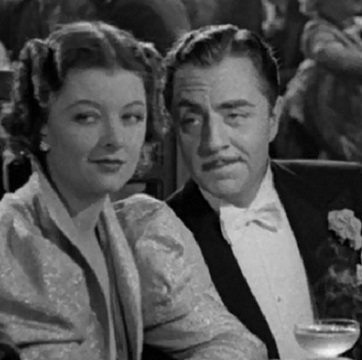
NickandNoraCharles-Partying
Nick Charles (William Powell) of The Thin Man series is the life of the party, without making any effort to be so.  He is cool, debonair, sarcastic, with just the right smidgen of childish to never take anything seriously but his partying. His wife Nora (Myrna Loy) is the perfect hostess. Obnoxious visitors entertain rather than annoy her. Party crashers are welcome. She calls room service to deliver “a flock of sandwiches” for her intoxicated guests, hands newcomers a drink before they’ve even gotten into the room. When asked if Nick is working a case, Nora responds, “Yes…A case of scotch. Pitch in and help him.”  Could any line sound more like St. Paddy’s Day than that?

Share
Posted in: 1920s films, 1930s films, 1940s films, Comedies (film), Drama (film), Humor, TV & Pop Culture Tagged: Carl Elwes, Errol Flynn, Nora Charles, Robin Hood, Sadie Thompson, St. Patrick's Day movies

The Debt Actresses Owe William Somerset Maugham: from Gloria Swanson to Annette Bening

02/19/2015 by leah@carygrantwonteatyou.com 8 Comments

SomersetMaughamActresses
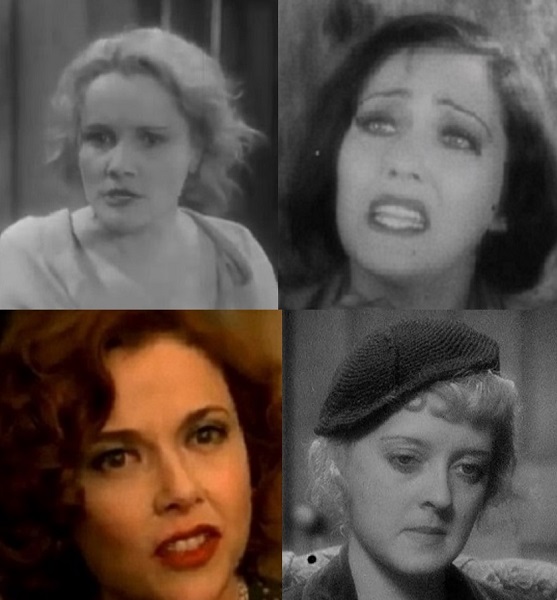
I’ve read many glowing tributes to the stars of The Letter, Being Julia, Of Human Bondage, and Sadie Thompson over the years. While I’ve never questioned the talents of these actresses, I have always credited much of their brilliance in these parts to William Somerset Maugham. Their strengths are on display largely because of the characters he created in his stories, plays, and novels: women so complex, morally conflicted, modern, and real that 130 years after his birth, Annette Bening was Oscar nominated for playing one of them.

And she’s not alone. Before I get into the reasons, let’s start with the data. Here’s a list of Oscar nods to women in his films; if I’ve missed any, please let me know. It’s quite possible. The number of his film credits, and of stars listed in those movies, is astonishing. Here we go:

Academy Award Nominations for Actress in a Leading Role:

  • Gloria Swanson: Sadie Thompson (1928), based on the short story, “Rain”
  • Jeanne Eagels (first posthumous nomination), The Letter (1929), based on the short story and play. (She also made her name in the play version of “Rain.”)
  • Bette Davis, two nods: Of Human Bondage (1934; by write-in vote), based on the novel, and The Letter (1940)
  • Annette Bening, Being Julia (2004), based on the novel Theatre.

Other notable female roles include Gene Tierney’s in the Oscar-nominated The Razor’s Edge (a novel), Greta Garbo’s and Naomi Watts’s in The Painted Veil (a novel), and Madeleine Carroll’s in Alfred Hitchcock’s Secret Agent, based on Ashenden, a collection of stories.

Even fine actresses need a vehicle, and in the last fifteen years, one of the few amazing leading roles I’ve seen for a woman over the age of 30—Bening’s—was written by Maugham in 1937. I wasn’t surprised. He specialized in complex characters making immoral decisions: They cheat on and leave spouses and children, prostitute themselves, admit to irreligious or cruel behavior without guilt, contribute to or directly cause the death of others. Since Maugham resists moral judgments, his women are free to react to the traumas they’ve created rather than simply being punished for them. No wonder they’re so fascinating to watch on the screen.

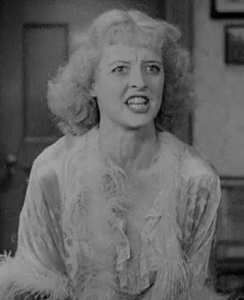
In fact, Maugham is as likely to admire as condemn. As his (seemingly autobiographical) narrator in The Razor’s Edge explains, “My dear, I’m a very immoral person….When I’m really fond of anyone, though I deplore his wrongdoing it doesn’t make me less fond of him.” Thus the attention given to selfish characters such as Mildred in Of Human Bondage. Certainly, her character would have been less nuanced—giving Davis less to work with—had Maugham not empathized with Mildred and therefore made her traits and actions so interesting and believable.

DavisOfHumanBondage
Davis is Davis, but it took a number of roles before she reached this breakout one.

Maugham frequently explored the contrasts between how men and women seek to appear and who they are. While he may be gentle on others’ immoral actions, he can be scathing about their hypocritical ones. Sadie Thompson is a prostitute, but it’s the reformer trying to condemn her, unwilling to admit his own sexual appetite, whom we are led to despise. Sadie, gradually moved by the reformer, ultimately learns to appreciate her own values over his—an unexpected ending for the type of character who is usually just a one-note in a film. Swanson, not surprisingly, captures the flair, passion, and contradictions of this woman.

SwansonSadieThomson
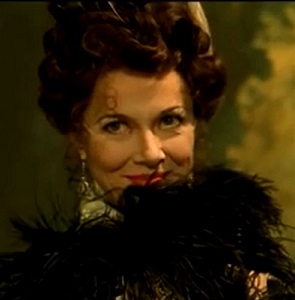
In Being Julia, we root for the heroine in spite of (or even because of) her extramarital affair with a younger man because we enjoy her confidence. Despite her vanity and delusions, she owns and even enjoys most of her flaws. The surprises in her behavior are quite funny, and Bening takes full advantage of the humor.

Bening-BeingJulia
How wonderful is it, how gloriously human, that in the midst of her midlife crisis, Julia is obsessed with breaking her diet? How much do we love that she wants to savor her victory over a younger wannabe actress in solitude, since it’s a private triumph? What a feminist scene it is when she does, and how interesting that a man created it so very long ago. Curious to see how much the film differed from the source material, I reread Theatre, only to find it was even closer to the movie than I’d remembered: the dialogue, the focus, the character, the morality, even the final scene—all the same.

And Leslie in The Letter? Most authors would have focused on the murder and the passion leading up to it. It would have been a fairly typical noir, with an unremarkable femme fatale. But Maugham again proved to have a deeper interest in human nature than his peers, wondering not just about the crime itself, but Leslie’s efforts to conceal it, to retain that image she wants to present to the world. She is an interesting character because of her willingness to reside in her own lies, a trait that Maugham, with his typical regard for truth, seems to find more blameworthy than the murder. Thanks to his interest in motives, Davis and Eagels were granted a woman of enormous complexity to work with, which contributed to each’s stunning performance.

Eagels-TheLetter

Davis-TheLetter
Of his roles that have yet to win actresses Oscar nods, I find Kitty in The Painted Veil the most intriguing. Kitty’s husband Walter catches her cheating, and forces her to travel with him to a cholera-infested region of China as punishment. He offers her an out if her lover will marry her, knowing it won’t happen. Rejected by the man she loves and facing a death sentence from the one she doesn’t, Kitty spends much of her time alone, reflecting on her actions as Walter heals patients—quite a departure from her youth as a superficial beauty. She learns to admire Walter’s generosity, even as she pities the love for her that has turned to hatred. She wants to forgive him, and for him to do the same for her, but she can’t bring herself to love him.

Watts-PaintedVeil
What did Hollywood do with this story (Garbo’s and Watts’s versions)? Turned it into a love story. We’re meant to root for a reconciliation between the two, whether they both survive cholera or not. I don’t know about you, but once a guy tried to kill me via a deadly epidemic, I can’t imagine thinking, “Yeah, but I cheated on him; we’re cool now.” These plot alterations might have helped with commercial viability, but the result was to diminish realism and a powerful female part.

Kitty’s disappointment in herself for continuing to desire her vain, worthless lover is an essential part of the story. In the book we see enough of her life beyond the epidemic to discover that her enhanced self-awareness doesn’t lead to moral behavior. The self-deprecation and compassion she develops as a result of her failures are intriguing to witness. While Watts captured Kitty’s vulnerability beautifully, I suspect had the screenwriter more faithfully rendered the character’s complexity, he would have netted Watts the Oscar nomination, as with so many women in Maugham’s roles before her.

Maugham’s skill with character development is often attributed to his history: he stuttered in his childhood and struggled with his homosexuality. Did feeling like an outsider and being morally out of favor in his time contribute to his empathy for others? Probably. He gives another possibility, crediting his early medical training for giving him access to “life in the raw,” saying the work enabled him to see “pretty well every emotion of which man is capable.” While I suspect both of these reasons are relevant, I’ve always preferred to take as autobiographical his narrator’s confession in The Moon and Sixpence: “the fear of not being able to carry it through effectively has always made me shy of assuming the moral attitude.” Ultimately, perhaps in spite of himself, Maugham is amused by human behavior, in all of its foolish and ugly iterations, and therefore captivated by it. No wonder, with an author who claims he is “more likely to shrug his shoulders than to condemn,” that four of the women in his films have been nominated for Oscars, one twice. Let’s hope other gifted actresses take note, and give his excellent stories another run.

Share
Posted in: 1920s films, 1930s films, 1940s films, 1990-current films, Comedies (film), Drama (film), Feminism, Oscars Tagged: Being Julia, Bette Davis, great roles for women, Oscar nods, Sadie Thompson, The Letter, The Painted Veil, William Somerset Maugham

Unexpectedly Romantic: The Mistress Giving the Wife Advice in The Smiling Lieutenant

02/12/2015 by leah@carygrantwonteatyou.com 4 Comments

ColbertHopkins-SmilingLieutenant
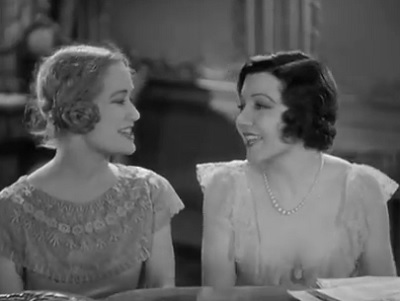
There’s something both charming and shocking about the song between Franzi (Claudette Colbert) and Princess Anna (Miriam Hopkins) in The Smiling Lieutenant. The two are unexpected friends in this moment, after all; the film begins with Franzi’s passionate love affair with Niki (Maurice Chevalier), which is interrupted by Anna’s royal prerogative in choosing spouses. Once married to Anna against his will, Niki continues to see Franzi, but when they’re discovered, the latter makes the surprising decision to help Anna win his regard.

An alliance between a mistress and a wife usually involves plots against the erring husband. The Other Woman with Cameron Diaz is simply the latest example. Since Niki was there first, and no marriage would have taken place had Anna been less public in her regal affection, we feel for both women, and appreciate Franzi’s sacrifice for the happiness of these two who are now bound together. (And honestly, why fight for the guy? I’ve never found Chevalier bearable. The man mugged from his twenties to his Gigi days.)

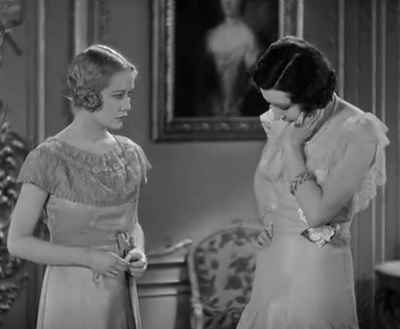
A wonderful union forms between the two women when Franzi goes through Anna’s music (including “Cloister Bells” and “Maiden’s Prayer”). Franzi’s disdain in evident as she pronounces each song’s name, and her next comment illustrates the indecent train of her thought: “Let me see your underwear.”

ColbertandHopkins-underwearrequest
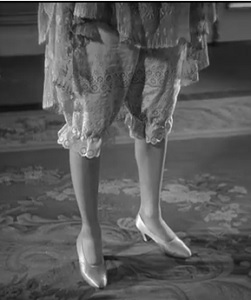
Meekly, Anna complies:

HopkinsunderwearSmilingLieutenant
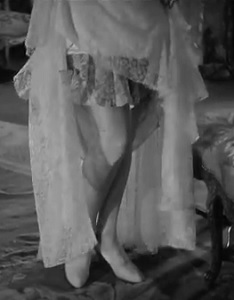
“Cloister bells,” responds Franzi; she then shows her own:

ColbertunderwearSmilingLieutenant
And says, “That’s the kind of music you should play.”

Franzi goes to the piano and begins to sing her advice, with words that could have come from the front page of Cosmo. Wanna win your man? Franzi has the answer: “Jazz Up Your Lingerie.” In fact, I checked. Sure enough, Cosmo’s Valentine’s-inspired photo gallery last spring: “Sexy Lingerie Your Guy Will Love.”

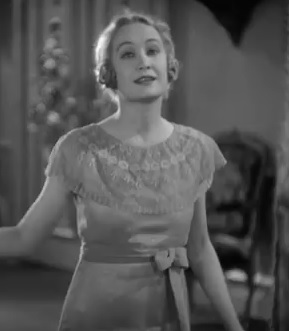
Thankfully, this is a pre-Code Ernst Lubitsch film, and we know that, funny as this start may be, we have much more suggestion in store. First, we see Anna in her formal everyday clothing and stance.

StraightlacedAnna-SmilingLieutenant
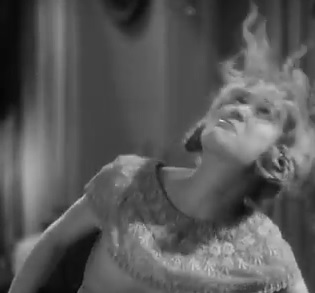
Then we see her loosening up.

MiriamHopkins-hairtwirling
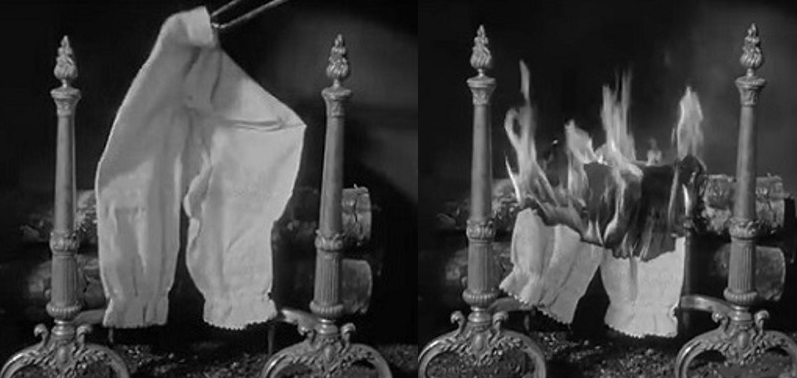
Bits of her old-fashioned hair pile up in a basket just before we’re treated to this wonderful depiction of what’s become of her prudish underwear:

LingerieFireMiriamHopkinsSL
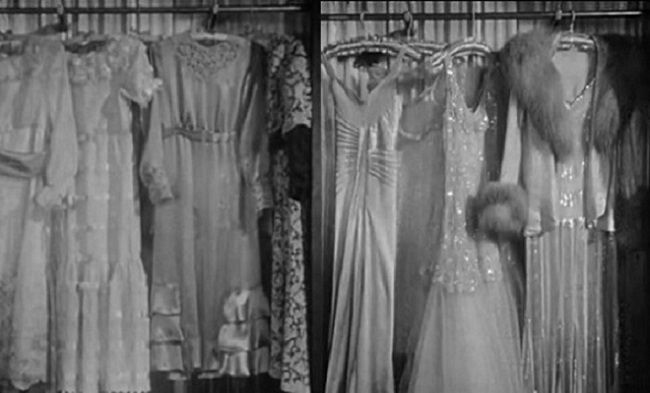
Her frumpy nightgown then dissolves into barely-there lingerie, her ugly shoes into fetching heels. And just look at the change in her wardrobe!

Closet-SmilingLieutenantGowns
I don’t think I have to tell you what happens next. Where else can Anna’s love life go but up, with sexy Franzi as her guide? Honestly, with the kind of chemistry these two women have together, it’s a shame they don’t hook up and leave annoying Niki behind. But improving her ex’s love life—and bringing happiness to his wife—are what this mistress does instead. Kind of romantic, isn’t it?  (You can see the whole clip here.)

Share
Posted in: 1930s films, Feminism, Humor, Romantic Comedies (film) Tagged: Claudette Colbert, Lubitsch, Miriam Hopkins, Musical, Pre-Code, Romance, sexy lingerie, Valentine's

Fabulous Fights: Ginger Rogers & Gail Patrick in Stage Door (1937)

01/31/2015 by leah@carygrantwonteatyou.com 19 Comments

PatrickRogers-shove
This post is part of Backlots’ 4th Annual Dueling Divas Blogathon. Check out the other entries!

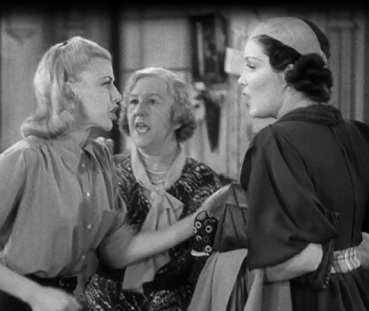
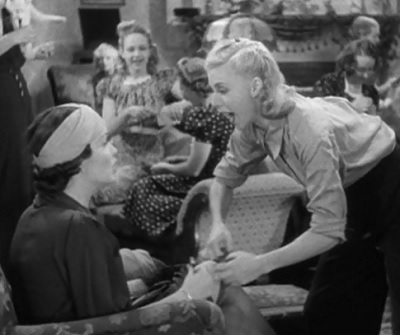
If you haven’t seen Jean (Ginger Rogers) squabble with Linda (Gail Patrick) in Stage Door, I envy you. It’s just such a pleasure. Three minutes into the movie, they are already at it: Jean thinks Linda has stolen her stockings—again—and she’ll forcibly remove them if she has to.

PatrickRogers-stockings-2
The two are roommates in the Footlights Club, a residence for aspiring stage performers, and their uncomfortably close quarters obviously are doing nothing for either’s temper. Linda denies the theft, calling Jean a “hoyden” and “guttersnipe.” Jean, sensitive to cracks about her class, says she’ll “slap [Linda’s] ears flat against the back of her head.” It takes the manager to prevent blows.

It’s the end of their relationship as roommates, but just the beginning of our enjoyment of their rivalry.

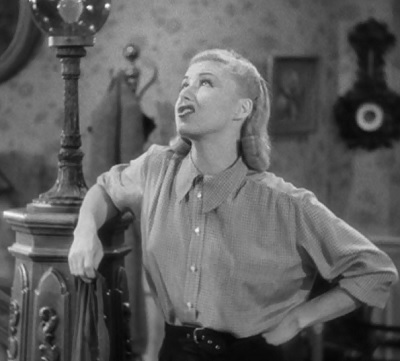
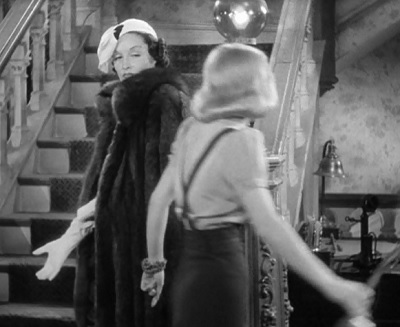
GingersRogersyellingupstairs
Jean particularly enjoys mocking Linda about her age and her lover, Anthony Powell (Adolphe Menjou).

“If you were a little more considerate of your elders,” Linda smirks to Jean, “maybe Mr. Powell would send his car for you someday….Course he would probably take one look at you and send you right back again. But then you’d have to expect that.”

“Oh, is that so?” Jean answers, imitating Linda’s superior tone.

“Do you know I think I could fix you up with Mr. Powell’s chauffeur?” Linda adds. “The chauffeur has a very nice car too.”

“Yes, but I understand that Mr. Powell’s chauffeur doesn’t go as far in his car as Mr. Powell does.”

“Even a chauffeur has to have an incentive,” says Linda.

“Well, you should know,” Jean snaps.

StageDoor-PatrickandRogers
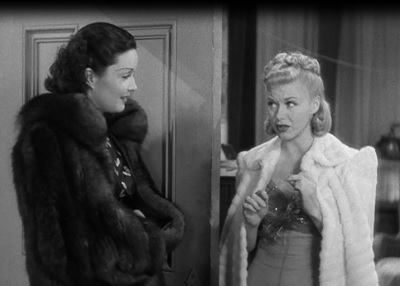
Although she judges Linda for sleeping with Powell, Jean still envies her for the rich food and garb her actions afford her. “Say, I think it’s very unselfish for those little animals to give up their lives to keep other animals warm,” she says, admiring Linda’s furs.

GingerRogersGailPatrickcoat
“You know they’re very smart little animals,” Linda answers. “They never give up their lives for the wrong people.”

“Well,” says Jean, “you understand the rodent family much better than I do.”

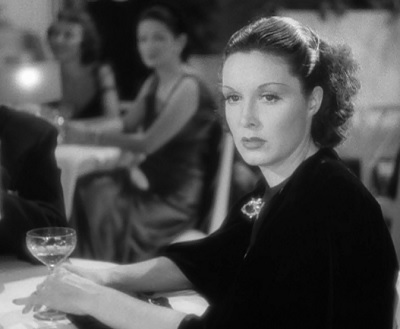
Unfortunately for Linda, Mr. Powell takes a liking to Jean, and hires her for a gig at his nightclub. Sitting next to her boyfriend, Linda realizes just whom he’s hired…

LindaSeesJean-GailPatrick
And Jean isn’t much happier to see her former roommate…

JeanseesLinda-GingerRogers
A few minutes later, Jean jabs at Linda with her cane, and the latter calls her “riffraff.”

Powell is curious about—but not put off by—Jean’s disinterest in him. “You don’t like me, do you?” he asks her.

“Oh, how could I help but like a man who takes his mother out to a nightclub,” coos Jean. “That was your mother you were sitting with?”

Jean decides to date him, even though he initially made her want to “run home and put on a tin overcoat.” How could she resist such revenge while getting a taste of the finer things in life?

AdviceGailPatrickGingerRogers
Linda tries to be philosophical about her lover’s betrayal, warning Jean it just better be temporary. “It’s one thing to borrow a friend’s friend,” she explains. “It’s another thing to hold him….”

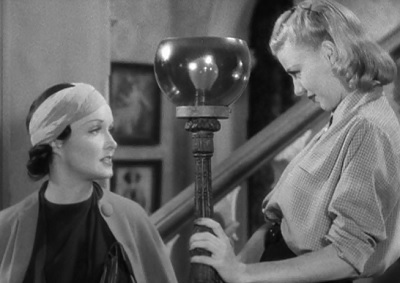
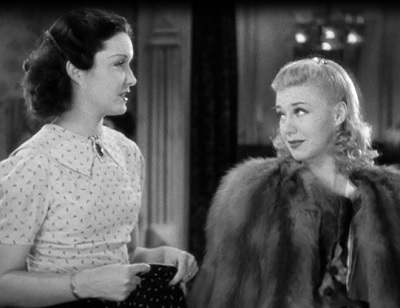
Linda even gives her former roommate some advice, which, of course, is intended to poison their first date. “May I come in?” she begins, entering her room.

“Oh sure, I guess you’ll be safe,” Jean says, “the exterminators won’t be here till tomorrow.”

“How did they miss you on their last visit?” Linda quips.

StageDoor-GailPatrickGingerRogers
“Must be galling to you older women to lose your meal ticket to younger riffraff,” gloats Jean.

“Just a leave of absence, dearie,” explains Linda, “and in the meantime, I have my lovely sable coat and my star sapphire to keep me company.”

“It’s lovely, but I’m afraid you paid too much for it.”
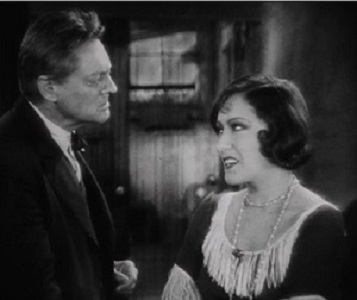
The dialogue gives you a taste of these two together, but I can’t capture the chemistry, or the sparkling delivery—Ginger Rogers, with her snappy sarcasm, at her tough-gal best. Gail Patrick, with the flawless cool customer routine she perfected the year before in My Man Godfrey. The two together are magnetic.

The best part? There’s another rivalry in the film too—between Rogers and Katharine Hepburn, which is almost as fun.

For more dueling divas, check out the other entries in the blogathon!

Share
Posted in: 1930s films, Blogathons, Comedies (film), Feminism, Humor Tagged: Divas, fights, Gail Patrick, Ginger Rogers, Stage Door, women

The Depression Satire, Gold Diggers of 1933

01/11/2015 by leah@carygrantwonteatyou.com 6 Comments

GoldDiggersof1933
What does the term gold digger really mean, in the context of the Depression? Today we think of Kanye’s gold digger; buying gold and liposuction, maybe holding a lap dog and wearing furs; not a showgirl escaping destitution. For a musical, Gold Diggers of 1933 is surprisingly earnest, managing to both entertain and make us empathize with the plight of its subjects—and by extension, its audience. As a producer in the movie assures his performers, “I’ll make ’em laugh at you starving to death….”
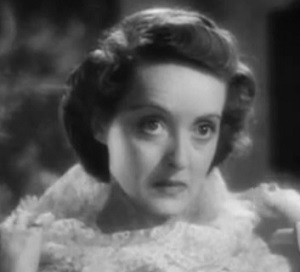
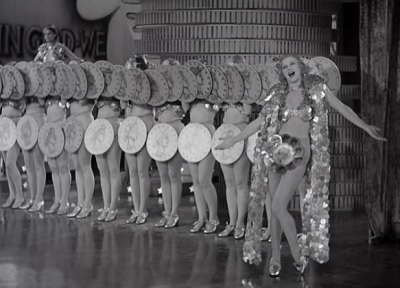
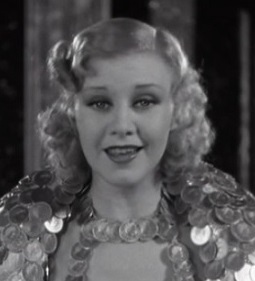
The film begins with showgirls performing in gold-coin bedecked, barely-there costumes. They’re singing the famous, “We’re in the Money,” led by Fay (Ginger Rogers).

WereintheMoney
We suspect there’s irony at play; after all, Fay sings a verse of it in Pig Latin.

Rogers's language play

Rogers’s language play

And of course, we’re right to be skeptical about those claims: before the song ends, the creditors bust in, close the show, and guarantee not a soul singing will be anything but broke.

Clearly, this isn’t the slight film the title, or its greatly inferior sequel, might lead a modern viewer to expect. I was just reading about Girls, wondering if I could handle another season of Lena Dunham’s show about over-privileged, under-motivated friends in the city. I kept thinking of that show when the camera panned from the closed show to a small posting illustrating these singers’ (dissimilar) lack of options:

TheaterSign-GoldDiggers
The camera then turned to a letter beneath the flat door of three of the performers, a rent demand from their landlady.

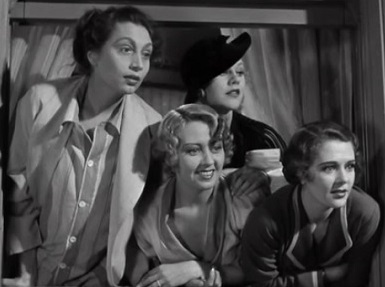
All three are sharing a bed. They wake up late, with nowhere to go. “Come on, let’s get up and look for work. I hate starving in bed,” gripes Polly (Ruby Keeler).

“Name me a better place to starve,” replies Trixie (Aline MacMahon). The famished roommates steal milk from the neighbors. Trixie reassures the others it’s okay because the milk company “stole it from a cow.”

I know that there’s a place for anyone’s woes; that life (and the films and shows depicting it) is not a comparison game. But the scene reminded me of why Girls so often, despite its cleverness, has left me flat. I’m just not very engaged by women without ambition or integrity. But women who can manage wit when they’re living on bread and snatched milk? Yes, please. Give me more.

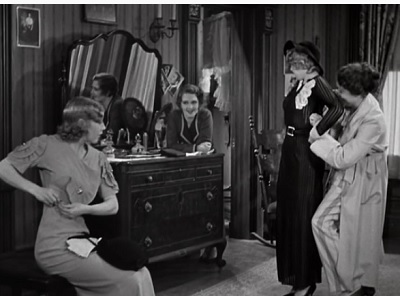
When Fay arrives to announce a new show, the women band together to give one of them—Carol (Joan Blondell)—a complete outfit to impress the producer. They’ve hocked too many stockings and dresses to do anything else.

DressingCarol-GoldDiggers
A tearful Carol calls to tell them it’s true that there’s work and that the producer, Barney (Ned Sparks), is on his way; however, he soon confesses he has no funds to start the musical. As eloquent as Carol’s response is to his trickery, her expression is even more so:

JoanBlondell-GoldDiggers
Luckily, the women’s singer-and-composer neighbor, Brad (Dick Powell) is available. He impresses Barney with his music, especially the tune which best fits the producer’s Depression theme. More importantly, Brad offers the money to put on the show.

(Just an early spoiler) Brad is secretly a member of a wealthy family, and his proud brother, Lawrence, is not pleased to see his sibling in a musical, and even less pleased the boy is in love with Polly (Keeler). Lawrence’s (Warren William’s) banker, Faneuil H. Peabody (Guy Kibbee), convinces his client all showgirls are gold diggers, and Lawrence therefore rushes to quash the romance.

The two men go to the girls’ apartment to pay off Polly, but mistake Carol for her. Enraged by their condescension, Trixie and Carol decide to pretend Carol is Polly and take the two haughty men for all they’re worth to teach them better manners (and teach us that the title of this film is as ironic as its opening song).

MacMahon as Trixie can occasionally grate, but Guy Kibbee is wonderful as the elderly, lascivious lawyer, the man whom Trixie feels is “the kind of man I’ve been looking for. Lots of money and no resistance.”

BankerandTrixie-Aline MacMahon
Trixie plans to marry the banker in spite of her lack of attraction for him (“You’re as light as a heifer,” she says when she dances with him). She just needs to fend off Kay (Rogers), who wants a meal ticket too.

Carol has no such plans. She’s just angry. The film wants us to understand that Kay and Trixie are just desperate—but understandable—exceptions to the rule. Most of the showgirls, far from being the “parasites” Lawrence assumes, are as ethical and proud as Carol and Polly are. Slowly, though, Carol, in spite of herself, begins to fall for the handsome snob.

The women’s antics are entertaining, especially when they fool the men into buying them pricey hats. But the men’s conviction they’re hanging out with these lovelies just to do Brad good is even funnier. Since this is a pre-Code film, there’s no dearth of skimpy clothing and sexual references. Lawrence soon passes out drunk after confessing love for Carol, and she and Trixie move him to their bed, knowing he’ll assume he’s had sex with faux-Polly and will be too compromised to object to Brad marrying the real one.

Sexual innuendo is evident throughout the musical numbers in the show, especially since this is a Busby Berkeley film. One of my favorite acts is about couples “Pettin’ in the Park.” When it rains, the women retreat to change, returning to their men in metal dresses.

Berkeleynumber-parkdressing
The men are frustrated and outraged they can’t access their partners’ bodies.

PowellandKeeler-PettinginthePark
Luckily for them, a peeping toddler (yes, you read that right) gives the star (Powell) a tool to break through his love’s (Keeler’s) metal, which he’ll presumably pass to the others.

But Berkeley doesn’t keep with this light tone for all of his numbers. The film ends with the Depression tune that Barney promised, with Carol singing, “Remember My Forgotten Man.”

Alone on a street in seductive attire, she first talks, then sings, “Remember my forgotten man?/You put a rifle in his hand./You sent him far away./ You shouted, ‘Hip hooray,’ but look at him today.”

Showing the cop the homeless man a veteran

Carol defending a forgotten man

The song moves from one woman, to another, then builds into an anthem of men and women attacking the government for not doing more to help the veterans and farmers who’ve worked hard for their country, only to end homeless in breadlines, unable to support the women who love them.

ForgottenMan-GoldDiggers1933
Their women are left not only witnessing their men’s suffering, but with children to support as well as themselves–alone. Carol’s provocative attire and presence on the street are no accident, of course. There is one type of work she can get without her man.

The song is heartbreaking. How rare to find a movie, a musical, that captures the national plight like this, especially after such light fare. But of course, the song is also a reminder that there was nothing truly light about the whole film. Is Trixie a greedy gold digger for wanting a rich husband rather than starving as she waits for a show not to be canceled? The oldest and least attractive of the bunch, she knows she must beat Fay to the lawyer’s libido, or she’s probably headed for the streets. The relatively happy unions of these women don’t blind the audience to the fact that there are a lot of girls in that show, a lot of women without secretly-rich neighbor-lovers, without pliable elderly bankers, but with landlady’s notes waiting for them under the door.

Share
Posted in: 1930s films, Comedies (film), Romantic Comedies (film), TV & Pop Culture, Uncategorized Tagged: Busby Berkeley musical, Depression, Dick Powell, Ginger Rogers, Girls, Gold Diggers of 1933, Joan Blondell, Lena Dunham

The Moment I Fell For: Alice Brady

10/31/2014 by leah@carygrantwonteatyou.com 14 Comments

This is part of the Classic Movie Blog Association’s Forgotten Stars blogathon. Check out the other entries!

AliceBrady-top
When you type Alice Brady into a Google search, a flood of entries appear—but not for the talented actress who won over My Man Godfrey audiences in her role as the flighty head of the Bullock clan. Instead, the character of Alice (Ann B. Davis) from the Brady Bunch pops up. I enjoy my 70s kitsch as much as the next gal, but I find it troubling that the lasting fame of Brady, an actress who already was granted too few years (she died at 46), should be shortchanged as a result of everyone’s favorite cheesy housekeeper. Here are a few reasons why Alice Brady needs to be remembered:

She Could Outdazzle Ginger Rogers
In The Gay Divorcee Aunt Hortense (Alice Brady) hires her former fiancé Egbert (Edward Everett Horton) to help her niece (Ginger Rogers) attain a divorce. While I am amused by Mimi’s (Rogers’s) attempts to divorce her husband and her suitor’s (Fred Astaire) confusion over the hijinks that ensue, their romance is completely outdone by the duo of Horton and Brady, who vie each other for who can be the most foolish. Hortense interprets any of Egbert’s idiotic actions—agreeing with her that geometrists are synonymous with geologists, wearing a finger puppet while conducting business—as signs of his continued love for her. When leaving his office, Hortense becomes weepy, saying, “You know, divorces make me so sentimental. Don’t you wish it was ours?”

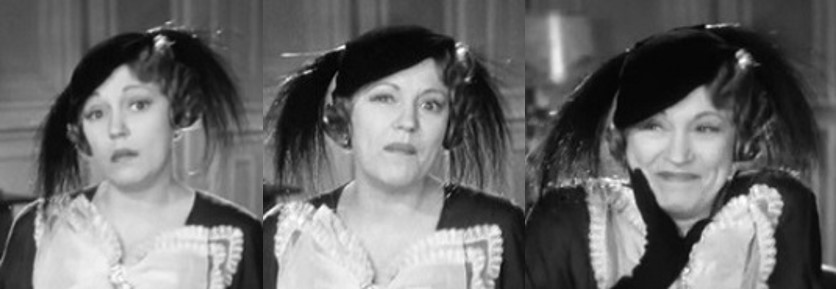
This exchange would have been funny with almost any actress. But this is Alice Brady. A few images should give you the idea of just how fun this moment—and their whole romance—is, and just why from that moment forward, I sought out Brady films. Just check out how expressive she can be in one short scene, and this without the delightfully funny trill of her amazing voice:

AliceBradyGayDivorceecom
As a fervent Astaire-Rogers fan, I’m usually annoyed by the subplots that take away from dance number time. But in this case, I was eager to see Hortense again, even becoming impatient with the dancing. Who wouldn’t smile to see the amazing Horton and Brady together?

Egbert andhortense-BradyandHorton
She Could Do Everything—Drama, Comedy; Film, Stage
Despite her producer dad’s strong objections, Brady, born in 1892, followed the family business by becoming a Broadway actress, and spent her youth alternating between screen and stage, mainly in dramatic roles, including as Lavinia in the first performance of Mourning Becomes Electra.

While I’ve only tracked down one of her many silents, Betsy Ross (1917), its absurd, overdramatic plot is worth viewing if only for this great line: “Thee is too spicy for a Quakeress, Betsy! I fear for thee.” Does any word suit this wonderful actress more?

Brady as Ross

Brady as Ross

Brady left the screen for a decade, focusing on the stage as Hollywood revolutionized its production. She returned in the sound era with perfect comic timing and delivery, no doubt honed in Broadway roles in such comedies as The Pirates of Penzance.

AliceBradyIndignant
In typical Oscar fashion, the Academy nominated her for the romantic comedy My Man Godfrey, but only granted her the award when she starred in a drama. She played an Irish mother (Molly O’Leary, owner of the famous arsonist cow) beset by her children’s squabbles in In Old Chicago. What’s fascinating about the film is how understated her performance is, even for the stereotypical tough Irish mom she’s playing. For a woman who verged toward the theatrical in her comic roles, it’s interesting to find her often going for a quiet harrumph rather than a shout.

She Could Spar with William Powell
She’s good in the O’Leary role, but it pales in comparison to her comic gems. I’m not even a fan of My Man Godfrey, which feels a bit preachy to me and relies on too many sets of Carole Lombard hysterics. But I could watch her hangover scene with William Powell all day long.

PowellandBrady
Her near-comatose presence is so funny given her later zaniness, as is her conviction that pixies are haunting her. When her new butler (Powell) tells her the tomato juice he’s serving is pixie remover, her flat delivery is priceless:

“Oh, then you see them too,” she drones.

“They’re old friends,” he responds.

“Yes, but you mustn’t step on them,” she explains calmly. “I don’t like them. But I don’t like to see them stepped on.”

She may not be remembered as much as she should be, but we classic film buffs would be the poorer without this “spicy” actress.

AliceBradyGoldDiggers
Random Facts:
A man claimed her Oscar at the Academy Awards when she was too sick to be present; apparently, no one ever had a clue who he was, including Brady.

Brady tried to get massages as a deduction on her income tax, claiming looks essential to her role as an actress, but, as her New York Times obituary writer wryly noted, “The government remained unmoved.”

Share
Posted in: 1930s films, Blogathons, Comedies (film), The Moment I Fell for Tagged: Alice Brady, Classic Film Blog Association, In Old Chicago, My Man Godfrey, The Gay Divorcee
« Previous 1 2 3 4 5 6 7 8 9 Next »

Recent Posts

  • 100 Years Later, Still Scary: Dr. Caligari
  • Escaping Out of the Past (1947)
  • A Weeper for Those Who Love Jerks
  • Thank You, Academy, for Not Infuriating Me
  • Challengers (2024) Is a Bad Movie

Subscribe to Blog via Email

Enter your email address to subscribe to this blog and receive notifications of new posts by email.

Categories

  • 1920s films
  • 1930s films
  • 1940s films
  • 1950s films
  • 1960s films
  • 1970s films
  • 1980s films
  • 1990-current films
  • 2020s films
  • Action & Sports Films
  • Anti-Romance films
  • Blogathons
  • Childfree
  • Comedies (film)
  • Drama (film)
  • Feminism
  • Femme fatales
  • Film Noir/Crime/Thriller & Mystery
  • Gloriously Silly Scenes
  • Horror
  • Humor
  • Mae West Moments
  • Musicals and dancing films
  • Oscars
  • Random
  • Romance (films)
  • Romantic Comedies (film)
  • The Moment I Fell for
  • Turn My Sister into Classic Movie Fan
  • TV & Pop Culture
  • Uncategorized
Share
Classic Movie Blog Hub Member

Recent Comments

  • leah@carygrantwonteatyou.com on Meg Ryan’s Fate Foretold in Joe Versus the Volcano
  • Ryan on Meg Ryan’s Fate Foretold in Joe Versus the Volcano
  • leah@carygrantwonteatyou.com on 100 Years Later, Still Scary: Dr. Caligari
  • The Classic Movie Muse on 100 Years Later, Still Scary: Dr. Caligari
  • leah@carygrantwonteatyou.com on 100 Years Later, Still Scary: Dr. Caligari

Archives

  • November 2025
  • September 2025
  • May 2025
  • March 2025
  • January 2025
  • November 2024
  • August 2024
  • July 2024
  • May 2024
  • March 2024
  • February 2024
  • December 2023
  • November 2023
  • October 2023
  • September 2023
  • August 2023
  • July 2023
  • May 2023
  • April 2023
  • March 2023
  • January 2023
  • December 2022
  • November 2022
  • September 2022
  • July 2022
  • May 2022
  • April 2022
  • March 2022
  • February 2022
  • October 2021
  • September 2021
  • April 2021
  • March 2021
  • February 2021
  • December 2020
  • October 2020
  • September 2020
  • July 2020
  • May 2020
  • April 2020
  • March 2020
  • February 2020
  • December 2019
  • October 2019
  • September 2019
  • June 2019
  • May 2019
  • April 2019
  • February 2019
  • January 2019
  • November 2018
  • September 2018
  • July 2018
  • June 2018
  • May 2018
  • April 2018
  • March 2018
  • February 2018
  • January 2018
  • November 2017
  • September 2017
  • August 2017
  • July 2017
  • June 2017
  • May 2017
  • April 2017
  • March 2017
  • February 2017
  • January 2017
  • December 2016
  • November 2016
  • October 2016
  • August 2016
  • July 2016
  • June 2016
  • May 2016
  • April 2016
  • March 2016
  • February 2016
  • January 2016
  • December 2015
  • November 2015
  • October 2015
  • September 2015
  • August 2015
  • July 2015
  • June 2015
  • May 2015
  • April 2015
  • March 2015
  • February 2015
  • January 2015
  • December 2014
  • November 2014
  • October 2014
  • September 2014
  • August 2014
  • July 2014
  • June 2014
  • May 2014
  • April 2014
  • March 2014
  • February 2014
  • January 2014

Meta

  • Log in
  • Entries feed
  • Comments feed
  • WordPress.org

Copyright © 2025 Cary Grant Won't Eat You.

Church WordPress Theme by themehall.com