It’s not unusual to find a film with a strikingly ridiculous plot. I spent many Friday nights as a teen watching USA Up All Night (hosted by Gilbert Godfrey). How I loved taking in gloriously dumb films, hour after hour.
But to find movies with such plots that are genuinely good? That’s a whole other level of enjoyment. Now add 80 years or so, and the film is STILL GOOD, STILL FUNNY? That’s a comedic masterpiece.
Last Tuesday I wrote a post on feel-good silly films, and rated them according to their degree of silliness. (In a homage to Spinal Tap, I let the ratings go to eleven rather than ten.) So today, I’m going to list five films with plots so absurd they deserve that 11 silliness quotient fully. And not coincidentally, these films are a blast to watch. In no particular order:
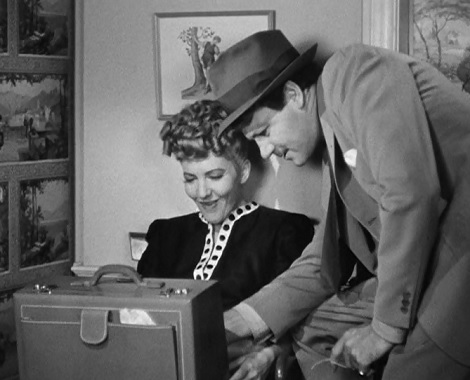
The Palm Beach Story (1942)
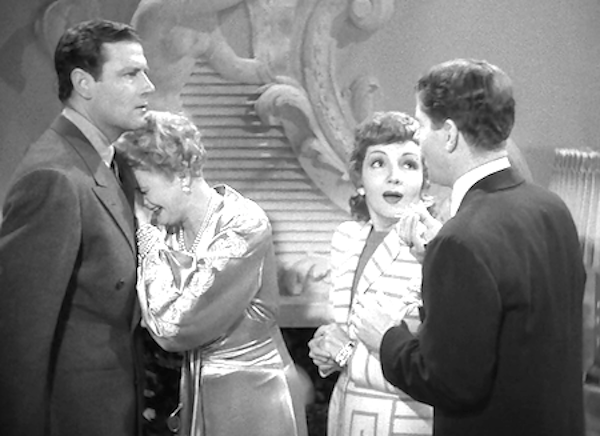
A woman (Claudette Colbert) leaves her broke husband (Joel McCrea) so that she can marry a millionaire and use his money to fund her original husband’s brilliant project. She heads to Palm Beach to find such a millionaire, aided by a “wiener king ” and trigger-happy hunters. The writer/director is Preston Sturges, so you know you’re in for a treat.
Easy Living (1937)
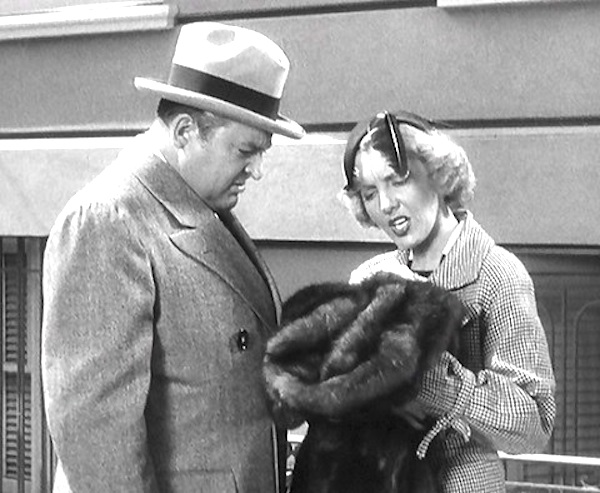
A banker (Edward Arnold) in a fight with his extravagant wife (Mary Nash) throws her fur coat off the roof of their home. The coat hits the hat of a bus passenger (Jean Arthur). The banker’s attempts to compensate the passenger destroy her reputation, but do aid her income. If you need a teaser to be convinced, check out the banker’s and passenger’s hilarious fight about loan interest.
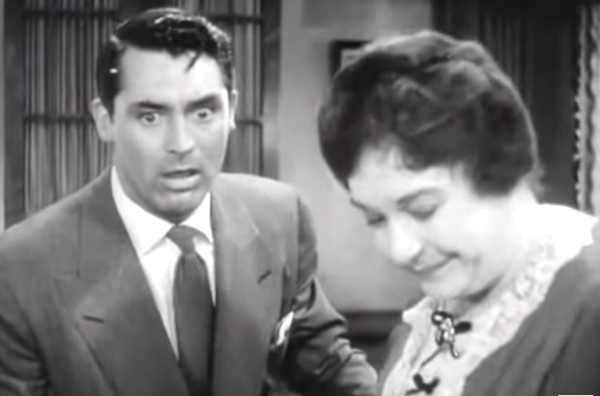
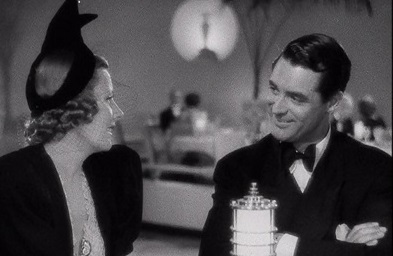
Arsenic and Old Lace (1944)
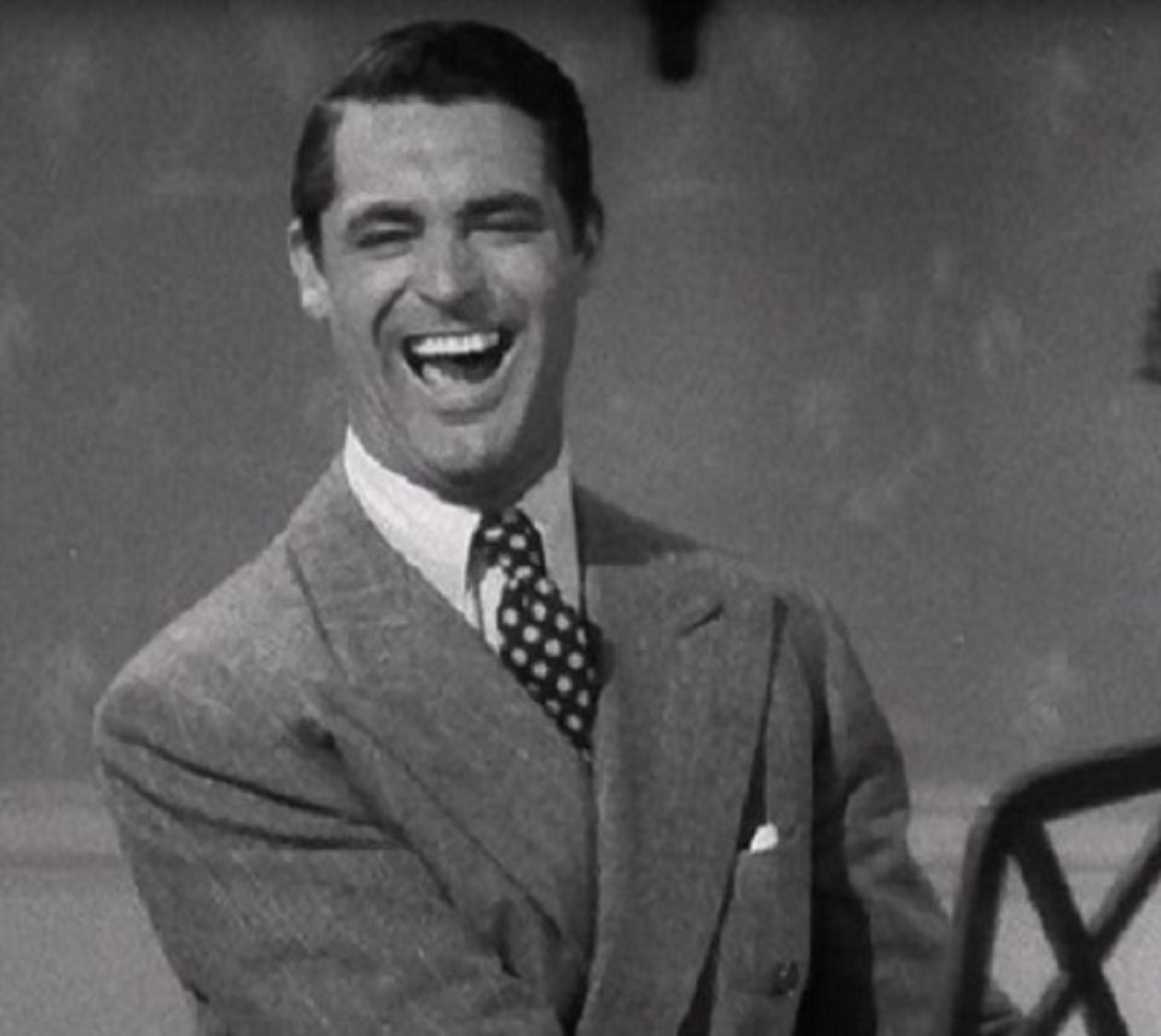
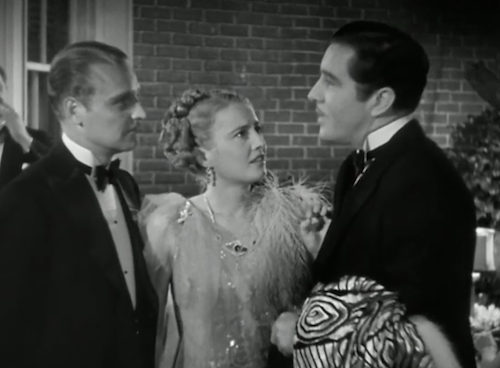
Mortimer (Cary Grant) has always known his cousin (John Alexander) is a bit off. After all, his cousin thinks and acts like Teddy Roosevelt, building his canal. But in visiting his beloved aunts (Josephine Hull and Jean Adair), Mortimer discovers they have some issues as well: they’re serial killers murdering lonely old men. “Teddy” assumes the dead bodies are yellow fever victims and takes them in stride. But Mortimer begins to fear for his DNA. A screwball classic.
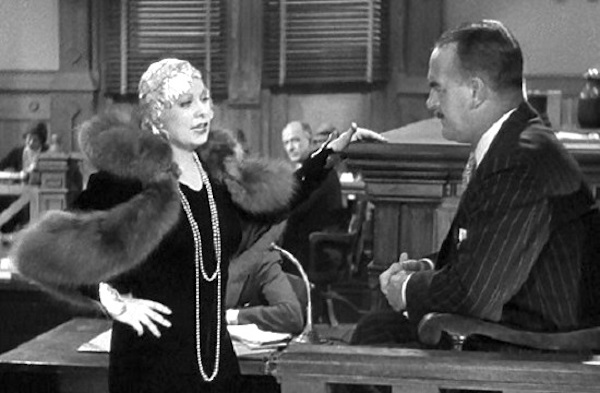
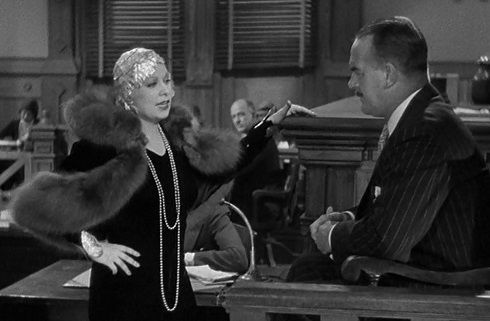
I’m No Angel (1933)
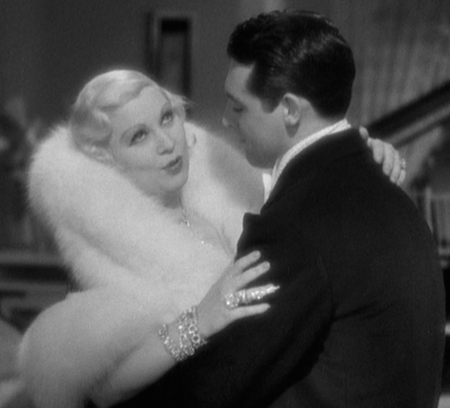
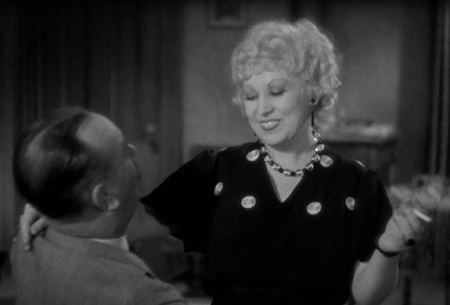
A lion tamer (Mae West) becomes the talk of high society, even winning a classy lover who plans to marry her (Cary Grant). The circus fears losing her income, so they convince the lover that their star is cheating on him. When her lover leaves her, the tamer sues him for breach of promise. She acts as her own lawyer, spending 90 percent of the trial strutting and seducing the jury in what may be the funniest courtroom scene ever.
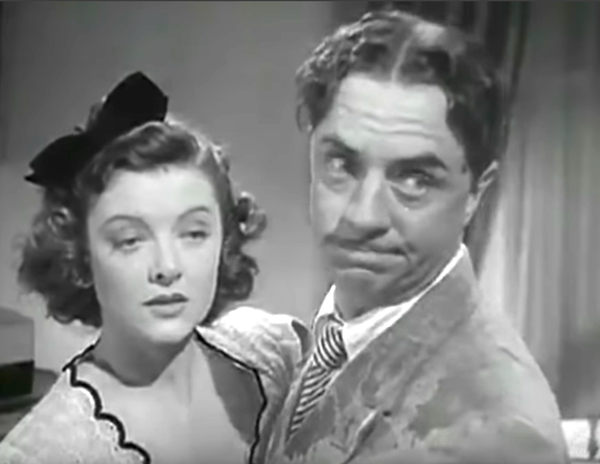
I Love You Again (1940)
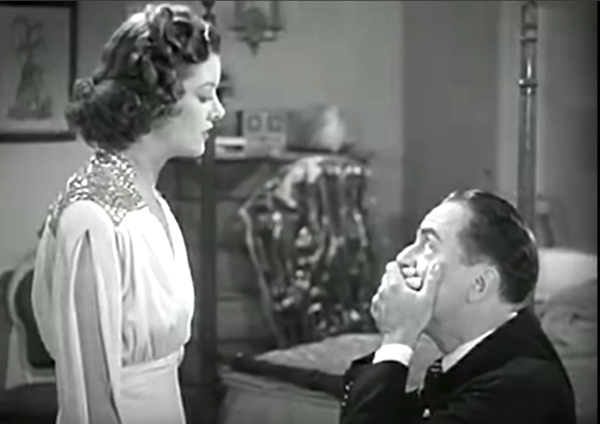
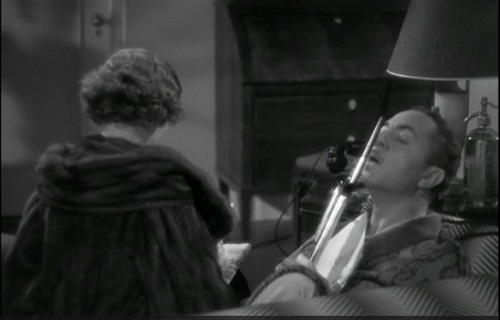
A man (William Powell) gets hit on the head and becomes an old self he’s forgotten, a swindler, instead of the upright prude he now is. He decides to live the prude’s life as he looks for a score and becomes intrigued by the uptight man’s wife (Myrna Loy), whom the swindler version of himself never met. She, sick of his stodgy ways and unaware of his change, wants to divorce him. The question is, will the man’s wife fall in love with his older self? I feel dizzy just explaining this amnesia plot, but it’s The Thin Man’s Loy and Powell team, so what’s not to love?
There you have it. Five ridiculous plots. Five ridiculously fun movies. And I haven’t even scratched the surface of this topic! Anyone who wants to share their favorite silly plot, please do so in the comments!
As the pandemic length has grown and your patience has seeped away, what spells a “comfort” movie to you may have changed. If you’re single and alone, the rom-com, usually a fallback, may make you cringe about the horror of dating dangers post-opening (as if dating usually weren’t bad enough!) If you’re huddled inside with TOO MANY PEOPLE, you may find yourself enjoying dull footage of peaceful lakes.
But for all of us in times of stress, the truly, deeply silly movie remains a staple, and so in the long-delayed follow-up to my earlier post, “Classic Feel-Good Movies for Shut-Ins,” I’m going full-on silly with my next set of suggestions. I’m joining my peers at the Classic Movie Blog Association, who are sponsoring a great blogathon event on comfy favorites. So here are five comfy classic films, chosen for silliness and enjoyment–and listed in no particular order. (You will note that I’ve rated the silliness level, so not all here are full madcap in style. BUT I’m thinking that a list of films with silliness at level eleven, and eleven only, may be my next project.)
5. TheMiracle of Morgan’s Creek(1943/4). Silliness Quotient–11 out of 10.
I could have easily chosen ANY Preston Sturges flick obviously, but I recently discovered this on my library’s Kanopy streaming service, and just seeing the listing made me grin. For those of you who DON’T know writer/director Sturges, he was a big Coen brothers influence, thus the name of their film, O Brother, Where Art Thou?, a reference to Sturges’ classic, Sullivan’s Travels. (In fact, the Coens’ film title ONLY makes sense if you have see the Sturges flick.) This early writer/director’s delirious combination of madcap physical comedy, witty banter, and sheer improbability in his plotting make Sturges a favorite of any Coen brothers’ diehards (which I definitely am).
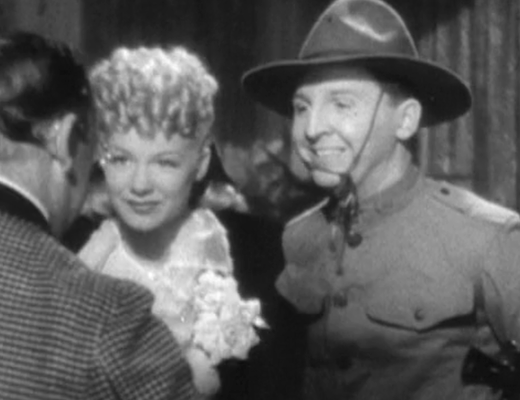
The Miracle of Morgan’s Creek actually thrives on denying information to its audience, who know that a scandal/miracle is about to erupt in Morgan’s Creek, and many stratagems are in play to contain it. Betty Hutton is adorable as the center of the scandal, and Eddie Bracken plays her lovesick friend/maybe-more (think Ducky in Pretty in Pink). Basically, it all begins when Hutton has too good of a night with liquor and a bunch of soldiers and sleeps with one of them. The thing is, she can’t remember his name. Yes, you read that right. It gets much more complicated as it goes. Bracken has the silliest role, and he captures his character’s constant befuddlement to the hilt—and just escapes going too far. Since the writing is in Sturges’ hands, it’s brilliant, of course (I have a set of his scripts on my bookshelf, trying to see how he does it).
4. Auntie Mame(1958).Silliness Quotient–7 /10.
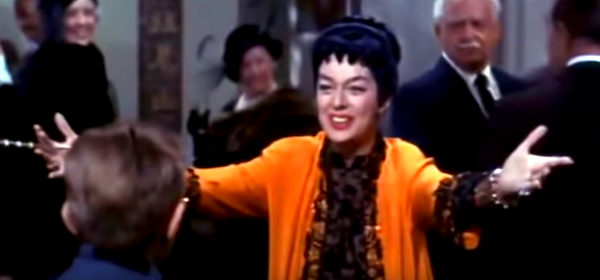
I haven’t yet done a full post on Auntie Mame, but that’s because I love it too much, not too little. An unconventional, fun-loving aunt in the city (Rosalind Russell) takes in her dead brother’s prim child, and many hilarious scenes ensue. If you don’t end the film wishing Auntie Mame were your aunt, I don’t know what’s wrong with you. Rosalind Russell’s acerbic edge keeps the film from ever treading into maudlin territory, and she so fully embodies Mame’s significant lust for life that it’s very confusing to find Russell cowed and sad in other films (Picnic, for example).
A favorite scene in the film is when Mame takes a sales job after the market crash. She only knows how to do COD (cash on delivery), and therefore is urging everyone to pay that way. Her dismay when they don’t is ALL OF US in every job when we’re out of our depth. COD isn’t really a thing you hear much anymore, but any time I do hear it, I think, “Oh, Mame.”
3. The Man Who Came to Dinner (1942).Silliness Quotient–7/10.
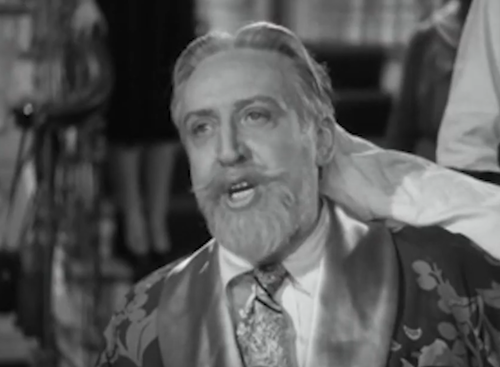
“Guests, like fish,” penned Ben Franklin, “begin to smell after three days.” No movie has ever captured that sentiment better than The Man Who Came to Dinner, and no actor has ever improved on Monty Woolley’s commanding performance of entitlement personified. He’s playing radio star/personality Sheridan Whiteside on a lecture tour, and the unlucky family once so proud of his appearance at their dinner table learns to rue the day they agreed to it. A little accident on their stoop, and they’re stuck waiting hand and foot on Whiteside’s prodigious ego.
George S. Kaufman and Moss Hart created the witty script, and Billie Burke plays the unwilling hostess to Whiteside. (Bette Davis may have helped the film get made, but her role here is one of her most flavorless. You know it’s not a Davis vehicle when Ann Sheridan outshines her.) Watch the film for the script and for brilliant Woolley, who must have been something to see on the stage (where he originated the role). Unfortunately, I have delayed writing about this film because it seems to be always unavailable for streaming on Amazon, but the DVD is available. If you know a good source for streaming it, please mention that in the comments!
2. Ball of Fire (1941).Silliness Quotient–7/10.
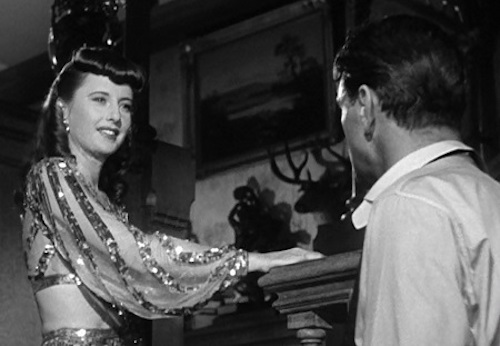
No list of silly movies would be complete without my favorite classic comedy, with Barbara Stanywck as the moll and Gary Cooper as the hapless encyclopedia writer who falls for her. And then there are the “dwarves”–the older encyclopedia writers who ALSO fall for her. I see that the film’s available on the Criterion Channel, which I’m shocked I don’t belong to yet. (No worries for me–I own two DVDs of this movie–the 2nd for when mine inevitably breaks from overviewing.)
With the dizzyingly talented combination of Howard Hawks as director and Charles Brackett and Billy Wilder as writers, this film’s dialogue can be almost as breathtaking as His Girl Friday‘s (also Hawks), but the writing/directing team leaves room for endearingly slow sequences as well. You actually watch Cooper’s character studying how to box in a book before his big fight scene, showing how goofy this story is. And for extra fun, you get favorites Dana Andrews, Dan Duryea, and S.Z. Sakall simultaneously embracing and mocking their typical roles.
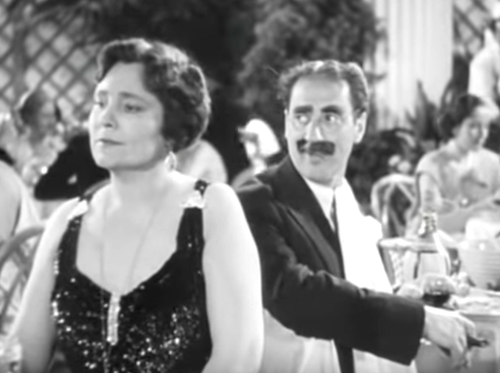
1. A Night at the Opera (1935).Silliness Quotient–11/10.
Did you honestly think you’d get through this list without a Marx brothers appearance? I didn’t think so. (As with The Man Who Came to Dinner, the screenplay is co-written by Pulitzer-Prize-winning Kaufman.)
Here are just a few quick early bites: We get Otis B. Driftwood (Groucho) yelling at his driver for not traveling slowly enough to miss the whole opera they’ve driven to see. We have Fiorello (Chico) and Otis tearing apart the bits of a contract they don’t understand (i.e., all of it). We have Tomasso (Harpo) interrupting a typical movie romance trope (one lover onshore, the other on the ship, crooning about her love) by attack-kissing strangers for no reason. That’s just a small sampling of the joys you get before the glorious comedy of the ocean voyage, which includes such a monstrously over-the-top buffet that I wondered just how old the joke about gaining weight on cruises was….
During a strange but enchanting musical sequence starring Chico and Harpo, the two entertain a crowd of children with a deft combo of lunacy and calm, making me think, “Doesn’t every parent stuck at home with children for weeks want these two as babysitters right now?”
So there you have it–five wonderful, comforting films to get you through this trying time. NOTE: You may notice that neither Mae West nor Cary Grant has appeared on this list. That’s because 1. I already discussed Mae in my previous comfort list, and 2. I figured you’d already thought of Cary–and if you haven’t, why not?
Bonus: Kedi (2016).
I know–it’s not a classic film. It’s a recent documentary about the cats of Istanbul. But I have literally recommended it to every cat lover I know, and when I found it streaming on my library’s Kanopy service, played it on repeat for a day. The film focuses on several stray cats, telling their stories (the hunter, the crazy one, the player, etc.). The cats are certainly endearing, but surprisingly, the shopkeepers, artists, and others who love and care for them are just as likeable. And the cinematography of Istanbul is often gasp worthy, especially when you see those cats on some tall balconies and rooftops! My friend described the film as human catnip. How right she is. Next time you experience one of those anger/grief/anxiety spirals that all of us are prone to during this pandemic, play Kedi. Trust me. It’s healing.
Bombshell: The Hedy Lamarr Story (2017) is that rare documentary that is somehow uplifting–even when its tale is not. The fact that Bombshell is a story of triumph amidst adversity makes it a perfect film for our time.
I knew the bare outlines of Lamarr’s story: the scandalous film that began her rise to fame, her fraught history with her husband and his Nazi buddies in Austria, her tenure as a beauty in Hollywood, and her frequency hopping invention that eventually led to my sharing this post with you right now, on WiFi. Those details would be enough to make a decent film, I figured, even if it turned out to be–as many actress documentaries are–cookie cutter in style.
But the documentary is so much better than I thought it would be. It seeks to make sense of the elusive personality behind the thousands of lives the actress/inventor lived. The story is greatly enriched by interview tapes of Lamarr, letting viewers hear her story as she wanted to tell it.
It’s hard to picture Lamarr’s life, that brilliant woman who co-created an invention to save soldiers’ lives after long days on the set of (mostly) inane films…and then was patted on the back for her little invention by the military and sent off to sell war bonds with that pretty face instead….which she did.
Crazy as the outlines of the life I knew were, there was so much more, as this inventor was equally bold in other roles she took on–in movie production, in entrepreneurship, in everything really. In the film, she says she helped boyfriend Howard Hughes with airplane design; she even managed to squeeze a big initial salary out of Louis B. Mayer with no English. What an amazing feminist she was, not letting societal conventions for women dictate her moves, but plowing ahead, doing whatever she believed she could do.
Director/writer Alexandra Dean has chosen her sources well, particularly the young animator wowed by Lamarr’s accomplishments. A Mel Brooks cameo, with reference to his Blazing Saddles tribute to the actress through the character Hedley Lamarr, is an unexpected treat.
Lamarr’s personal life was largely tragic: bad marriages, the public’s focus on her looks instead of her mind, the cruelty as those looks faded, financial woes, and the failure of others to value or credit her patriotism since she was an immigrant. The film gives Lamar her proper place in history, but it’s clear to all the subjects in the documentary that they’re trying to reclaim for Lamarr a tribute (besides some very late awards) she never received herself.
But what’s more tragic than her treatment is that had Lamarr been taken seriously earlier, her invention might have saved American lives in WW II, which was her goal all along. The bigotry, greed, bureaucracy, and sexism that made her life so challenging and her invention so tardily applied aren’t exactly difficult to trace in our society or government today. That such obstacles can actually PREVENT heroism like hers is a sobering thought, and a dismayingly timely one.
But the film remains inspiring because we witness Lamar’s refusal to let poor treatment override her determination to act with courage and integrity. What you mainly feel in watching are awe and a profound wish to cheer, Rocky style. Lamarr was a complicated person, and not without flaws, but she was an AMAZING person, and your time with her is truly something to savor.
You can find the film on Netflix (while it’s still there!) or rent it on Amazon. Why are you waiting?
So you’re shut in and feeling glum. Watching the news isn’t good for your blood pressure. So put away those updates for few hours, cut off that cable news, and melt into these classics. They’ll make you smile.
The More the Merrier. You know what’s interesting to watch when you’re feeling isolated? A film about a city being overcrowded. Makes you appreciate the (comparative) quiet and helps you see what enterprising (OK, a bit pushy!) folks do when they’re in a tough spot. More importantly, this is THE most romantic film ever, and so funny. If Jean Arthur and Joel McCrea’s chemistry doesn’t get to you, nothing will. Bonus: Charles Coburn, in his best cupid role (of many).
The Awful Truth. The title of my blog may clue you in that I’m a fan of Cary Grant’s. This film shows why. His perfect comic timing is matched in this outing by Irene Dunne’s. They’re marvelous together.
They’ve mastered that banter you want to hear in every rom-com. They play two smart, sophisticated adults who just need to wake up to what’s good for them. And it costars Skippy, the most gifted dog actor of all time (you may recognize him as Asta).
Mae West Films. Do I really need to specify a movie? I’m No Angel is my favorite. Her earliest hits are pure gold, with more good lines in 20 minutes than you’ll find in modern films in 200. And how she delivers them! Before the censors got to her, she was on fire.
But even afterward, her ingenuity in sliding in those double entendres makes up for the less witty later scripts. And in case you’re not yet a Mae West lover, don’t forget that she also wrote these scripts and had the moxie to demand—and get—a higher salary than a studio head.
Indiscreet. A friend recently recommended this treasure. A reteaming of good friends Cary Grant and Ingrid Bergman (after the toxic romance/suspense masterpiece, Notorious).
It’s totally Bergman’s show: Just watch her commanding performance once her character gets mad and turns conniving! And there’s a classic dance sequence with Grant’s moves on full display—fantastic. As a special bonus for readers, here’s a heartwarming post about their friendship that will made you sniffle (with joy) from Sister Celluloid.
Jean Harlow Films. It doesn’t matter if everyone around her is acting out shrill caricatures (Bombshell), she still rises so far above her material that you don’t care about the rest of them at all. I watched The Girl from Missouri recently, which is a delight. I can’t stomach Red Dust (too offensive). But skip the rest of the movie and watch her—or catch clips on YouTube. View her at her conniving best in Red-Headed Woman.
Watch her outshine the star-studded cast in Libeled Lady as an outraged bride to be. Harlow’s funny and lovable and you just want to spend your life watching her in a huff.
I’ll be back with updated recs. Hang in there, everyone.
Stay safe. Spread the joy you can.
The Guardian‘s statistic about the lack of awards for female cinematographers was particularly illuminating.
In addition to showing what female-driven films could have been honored but weren’t over the years, Relatively Entertaining covers the diversity of voices in film, how we’ve regressed since a high point in the 40s in honoring women’s stories–even if told by men. The post also highlights how seldom black actresses are repeatedly honored for their work: “For that matter, it’s a strange quirk of Oscar that of the 35 times a black woman has received acting Oscar nomination, only three (Whoopi Goldberg, Viola Davis and Octavia Spencer) have been nominated more than once, and only Spencer has been nominated after winning her award.”
I wonder how long Academy voters could sustain the fiction that women’s films just haven’t been good enough yet to get awards after viewing the articles’ startling graphics. I wonder if the lack of repeat nominations for women (and women of color in particular) will finally bring home just how much has to change.
My friend Grace Collins of True Stories of Tinseltown and I chat about women in peril in classic films, including the riveting thriller Gaslight; the Barbara Stanwyck showcase Sorry, Wrong Number; and the tonally inconsistent, oddball Nazi-hunter film, The Stranger. And of course, the weeper, Waterloo Bridge. We had so much fun talking about heroines who are having no fun at all–especially Mary (Loretta Young in The Stranger), whose affection for her mate is truly baffling.
Enjoy Grace’s other wonderful posts and podcasts on her sites or check out her Facebook page for more. Her summer series on famous blondes in film is fabulous, especially the one on Mae West.
I’ve been thinking about how hard it is to grieve the loss of a funny person. The grim process of American funerals—the still church/mortuary, the solemn rituals, and the steady tears—can feel inappropriate when mourning the loss of someone who enjoyed breaking conventions, who made you bend over laughing when you were supposed to be acting with decorum.
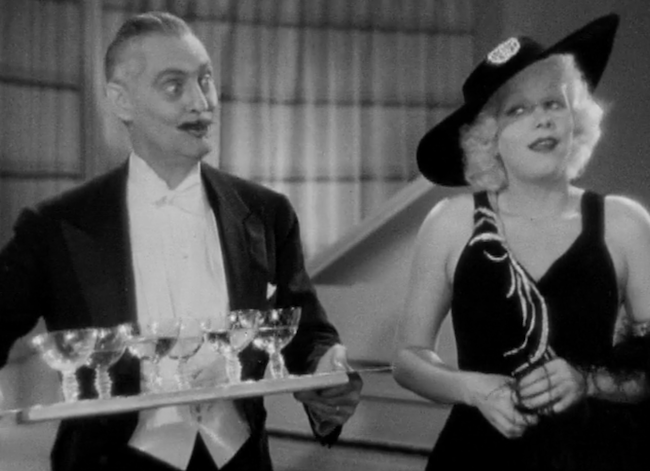
I attended two parties recently to celebrate the lives of such funny individuals, complete with amusing anecdotes and the shared company of those who’d loved them. These memorials felt so fitting, so much better than typical funerals for such amusing personalities, that I returned to my home thinking of other lost comedians and comediennes, especially those whose lives are so often described with the “funny but died tragically” designation. And it struck me that Jean Harlow was someone who deserved the kind of festive send-off I’d just attended, a woman who relished breaking the rules of others on and off screen (especially prim others) in such a breathtakingly funny way. So I watched The Girl from Missouri (1934), the lesser known of two entertaining gold digger tributes originally penned by Anita Loos, to celebrate her.
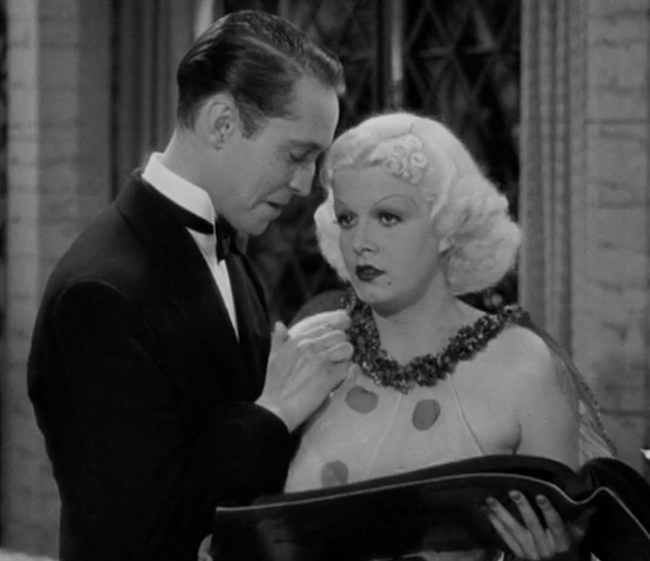
Harlow stars as Edith Chapman, a young woman eager to escape the clutches of the family entertainment/bar business, which is full of men trying to keep her from staying “straight.” Marriage to a millionaire in New York is her plan, and she won’t have sex until she gets her goal, which she brazenly sets about doing. Her very transparent efforts first amuse, then mildly annoy the wealthy self-made businessman, Thomas Paige (Lionel Barrymore)—that is, until her attention turns to his son, Thomas Paige, Jr. (Franchot Tone). Paige Sr. wants Junior to be courted by the upper-crust society he aspires to join, not for his progeny to be dismissed as the target of a silly gold digger. Predictably, Papa Paige is soon plotting against Edith. But she, like the actress who brought her to life, doesn’t take that kind of treatment passively….
Like many of Harlow’s characters, Edith is goofy and blatant and oblivious to any kind of etiquette or class mores. But there’s something about Harlow…you just can’t dismiss her characters. (And you can’t pay attention to anyone else—a Barrymore, Clark Gable, Spencer Tracy, even a Powell/Loy combo—when she’s onscreen.) Her characters usually dress in frilly, showy clothes, and their words and actions are designed for punch lines at their expense. Yet the deep humanity, sincerity, daring, and lovability of Harlow’s heroines make you adore them all the same, root for them even when they don’t deserve it (i.e., Red-Headed Woman).
And Edith deserves fair treatment and compassion. She even manages to make a Franchot Tone playboy character palatable to me. Edith begs Paige, Jr. not to toy with her, confesses that he could make her sacrifice the virtue she’s worked so hard to protect, but pleads that he let her go instead.
Paige, Jr.’s reversal of expression, his contrite response to her words is really all of us: Don’t take this awesome woman for granted. We won’t have her for very long.
I didn’t expect to catch my breath and feel for a Harlow character’s pain, but The Girl from Missouri caught me offguard, and that made me smile. Wow, Harlow can get to me. I did expect to laugh often as I watched, and of course I did. There are some cute turns by others–Paige Sr.’s teasing, Edith’s sex-obsessed sidekick’s (Patsy Kelly’s) flirtations. But why pay attention to anyone else? Harlow is MARVELOUS—with every preening smile, with every stomp/bustle, with every huff (and huffs there are a-plenty with Harlow), you can’t stop smiling. And you can’t stop thinking, What a joy it is to be in her company. I’ll take every second Icanget.
And so I laughed. And expressed a silent thank you for the gifts she’d given me. And that, to me, was the perfect send-off.
Grace Collins of True Stories of Tinseltown and I chat about two stars who created the personas that made them stars, and never let those personas slip. We’re not nosy about ALL Hollywood stars’ lives, but that kind of inventive commitment is worth talking about! As usual, the two of us had a lot of fun, and Grace is a great host. (I might get a bit too enthusiastic, but in my defense, I was then reading Goodness Had Nothing to Do with It.)
For years I’ve been grumbling, waiting for streaming access to classics I hear about from other blogs: Letter from an Unknown Woman,The Great Lie,A Foreign Affair. Without a Netflix DVD cache or TCM, the classic movie fan is left with few options, and my brief affair with the Warner Archive had given me little love. Then it occurred to me, like a (clichéd) beacon of light in the night: YOU HAVE ACCESS TO INTERLIBRARY LOAN.
How do I love thee, ILL? Let me count the ways.
You don’t tarry. Within a week, all three films were at my library’s front desk. The student helping me didn’t notice my bated breath or strong desire to do the worm in celebration. Used to her fellow students’ desperate and grumpy research requests, she was unaware of the yummy chocolate cake she was handing over to me. Her loss.
You have so much to offer. Greedy after receiving all three films, I thought I’d dare for my elusive, longed-for white whale of a book. I’d just emailed Grace Collins of True Stories of Tinseltown about our upcoming podcast chat on Mae West and Cary Grant when my long-stamped-out desire resurfaced: Goodness Had Nothing to Do with It. I needed it–obviously–for research. Amazon was charging boatloads of cash for Mae’s autobiography, but was it possible I could get my hands on it for free? YES!!!
You give me so MANY moments to savor. Here is one of hundreds of funny interchanges from Mae’s bio: She’s just put on opening night for her first play in New London, CT in 1926. The house manager is grumbling about the ticket purchases: “The title’s scaring them away. Nobody in this town will buy tickets for a show with the title SEX….We don’t talk about sex hereabouts, and we don’t put it on signs.” Only 85 people show for the first performance, and Mae is feeling blue that the first play she wrote and starred in looks like a bomb. But at the next day’s matinee, she sees lines of men from the naval base “two and three deep,” and the manager is scrambling for extra seats for his theater. “And you said it was a bad title,” observes Mae. And he replies, “I forgot about the sailors.”
You let me savor each moment. On Monday morning, I’d been reading my usual dose of terrifying headlines on CNN. I was feeling blue, and knew I had to banish that mood if I had any chance of cheering my 9 am students, who had been staring at me for days with a peculiar type of hostility they’d developed from years of New England winters—the “how-dare-you-deny-me-another-snow-day, woman” look I knew so well. Naturally, I looked to Mae for mood elevation, and found her defense against the newspaper baron, William Randolph Hearst, who–in the midst of delivering his own era’s brand of terrifying headlines–had written this, “Is it not time Congress did something about Mae West?” Thanks to my generous love, ILL, I got to read Mae’s response: “All I have ever wanted to do is entertain people, make them laugh so hard they forget they’d like to cry.” Such an important reminder to me about the need for humor, dear Mae; you bolstered me the rest of the week. And by Friday? I was enjoying Jean Arthur’s and Marlene Dietrich’s charismatic performances in The Foreign Affair. Oh ILL, how I love thee…..