Cary Grant Won't Eat You

Classic movies for phobics

  • About
  • eBooks
  • Previous Blogathons
Classic movies for phobics

Van Heflin

Van Heflin’s Surprising First Role
05/19/2024 by leah@carygrantwonteatyou.com 12 Comments


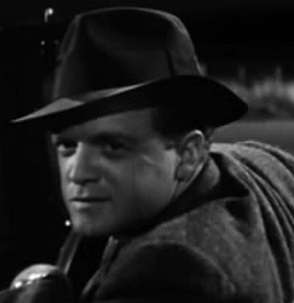
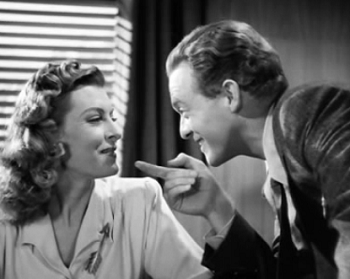
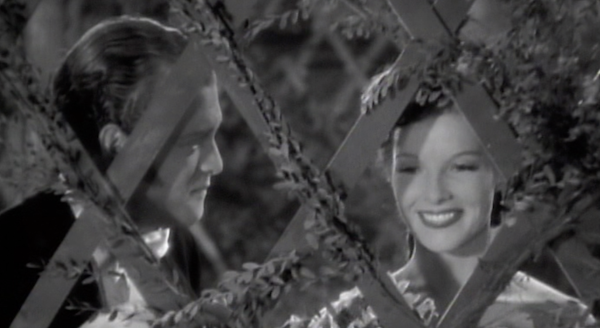
The first time you see Van Heflin (Lord Gerald Waring Gaythorne) in A Woman Rebels (1936), his debut role, you do a double take.
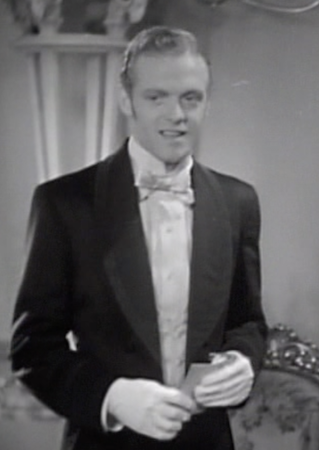

I had to look closer, to make sure it was indeed Van Heflin and not Leslie Howard. A word I never thought I’d apply to him is slight. He’s quite slender in it, but it’s not so much his form as his lack of presence–such a strange first impression of a gravely-voiced, burly sailor-turned actor who is riveting as a farmer in Shane, a suffering family man in 3:10 to Yuma, a powerful adventurer in Green Dolphin Street and hero in The Three Musketeers. The actor who would later fairly sing with physicality and gravitas seems so forgettable in his first moments onscreen, even timid. Luckily, he has a promising second act late in the film.

The story begins with Heflin playing the rake who tempts a Victorian heroine, Pamela Thistlewaite (Katharine Hepburn). We don’t see the charm and sex appeal that are so seductive and sinister in The Prowler and charming in The Strange Love of Martha Ivers. (It seemed fitting that the repeat scene of his seductions is literally Madame Tussauds wax museum.) Later love interest Thomas Lane (Herbert Marshall) comes across as more attractive than Heflin. Read that sentence again. Yeah, that bad.

But late in the film, Lord Gaythorne returns as a bitter middle-aged man who despises his wife (who is not Pamela). And suddenly, in a lounging jacket of all things, you see it: THERE HE IS.
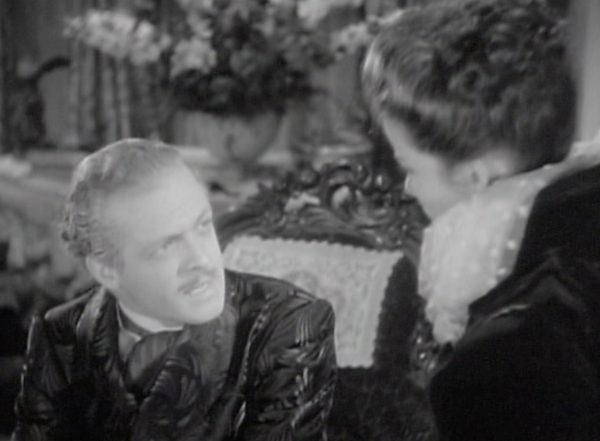

The slow confidence of Heflin’s stroll. HIs measured way of speaking. His intensity as he describes his hatred of his spouse. There is the compelling actor I fell hard for in The Strange Love of Martha Ivers. The always naturalistic performer whose moments onscreen are so believable, visceral and real. The man who isn’t conventionally attractive, yet is so sensual because he’s so confident and alive. The kind of actor he will be is not fully on the screen yet, but you see his promise.

The film itself is not great but ahead of its time, based on a 1930 novel by brave feminist Netta Syrett, who also had feminist artist sisters–or, as they were called then, “new women.” And while everyone around her is lackluster, Katharine Hepburn nails the role.

Pamela has a child out of wedlock, passes it for her sister’s, and then has a stunning career as an outspoken writer/editor speaking out for women’s rights and other issues. In between, she has a funny meet-cute scene with Thomas.

The film and many of the characters (I won’t reveal which) refuse to shame Pamela for her actions, even when her secret threatens her and her daughter’s happiness. The movie falls in the same camp as Hepburn’s other intriguing feminist roles from the 30s, such as Christopher Strong.

The story is unevenly told with some weird plot holes, and you have to suffer through some weak female performances and the aforementioned drags-down-everything Marshall. He doesn’t have quite as sleep-inducing of an effect as George Brent, but close. Sadly, this may be his most charming performance, and yet–look at this expression and tell me you don’t feel like you took a sedative.
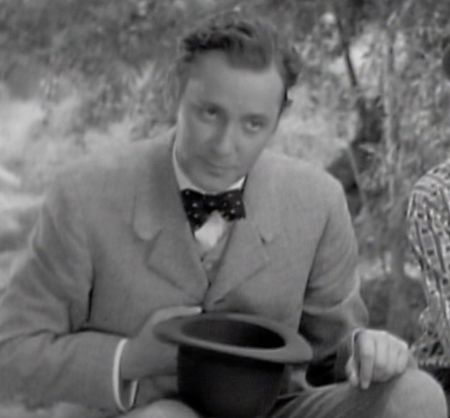

You have to wonder with some smoother plotting and better acting around her whether the film could have really been something, as fascinating and unconventional as it was, instead of yet another bomb that got her in box-office-poison trouble. It doesn’t help that Hepburn has zero chemistry with either of her love interests.

Luckily, there’s enough in Hepburn’s performance and the surprises of the story to keep you watching. And to see that beginning of Heflin’s allure is quite fun. You have to love Hepburn recommending Heflin’s casting after seeing him in a play. (And how much would you have liked to have seen them perform on stage together with his version of the Jimmy Stewart character in The Philadelphia Story?) She knew even in the mid-30s what he had in him. Yet another of the thousand reasons to adore the great Kate.

Check out other striking debuts and final acting performances in the Classic Movie Blog Association’s Screen Debuts and Last Hurrahs blogathon this week!

Share
Posted in: 1930s films, Drama (film), Feminism, Romance (films), Romantic Comedies (film) Tagged: feminist films, Katharine Hepburn early roles, Van Heflin

The Prowler (1951): a Jealous Husband Film Noir

07/25/2023 by leah@carygrantwonteatyou.com 10 Comments


Most film noirs are cautionary as well as bad luck tales. But there’s a particular type that seems to be created by untrusting husbands and wives, the “you’ll be sorry if you cheat” noir. The most memorable for many of us are Fatal Attraction (1987) for the disloyal husband, Unfaithful (2002) for the straying wife. But the genre has a long history. The Prowler (1951) stands out in this list because it stars Van Heflin, whose charisma highlights just how easy the tumble into marital infidelity can be.

Van Heflin isn’t a name that stands out to any but classic movie fans despite his 1942 Oscar win, but his films do, particularly 3:10 to Yuma (1957) and Shane (1953), in which he plays steady husbands who can’t compete with the glamour of flashy gunslingers. In these films you feel the stamped-down passion of a man who has been worn down by hard work and harder luck. I prefer the roles in which Van Heflin plays lighter characters, like the gambler of The Strange Love of Martha Ivers (1946), the adventurer in Green Dolphin Street (1947), or Althos in The Three Musketeers (1948). These roles capture the sexy quicksilver nature and physicality of a man who once left acting to be a sailor.

***some early spoilers ahead***

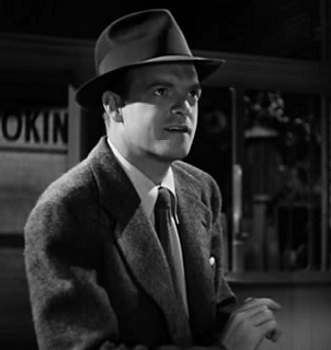
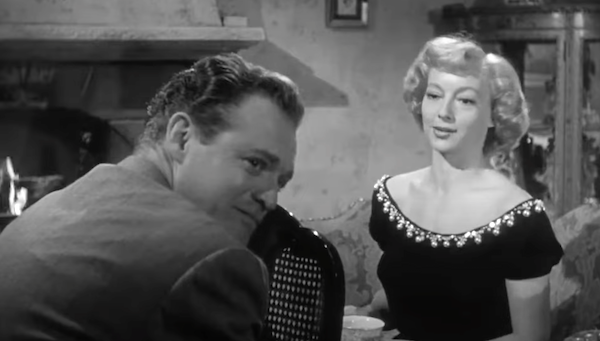
It’s that impulsiveness that makes Van Heflin so alluring as a cop in The Prowler. He might return to check on the lonely wife (Evelyn Keyes) who calls to report a peeping Tom, or he might not. He might call her back or pretend he doesn’t get her calls. He sets her at ease by sharing the Indiana roots he holds in common with her. But it’s his carefree manner of walking through her house that makes her prefer him to her older, stodgier husband, who–coded as the reference may be in a 50s film–seems to be impotent.

Unfortunately, the wife doesn’t notice the cop checking out her husband’s will in between visits to her bed. And so she doesn’t know for sure when he pretends to be the prowler in order to kill her husband whether it was an accidental killing (as the inquest claims), or not. When she marries the cop, she takes it for granted he’ll be pleased with her too-far-along pregnancy instead of seeing it as the danger it is. But as noir-aware audiences, we wonder, what happens when that bump gets bigger? I had eerie Fargo flashbacks as I watched the cop go about his plans. Will bystanders suffer the fate of those poor drivers in that Coen brother masterpiece? What about this new wife, who is now a liability? Suddenly, the unpredictability that attracted the now-widow looks less like sexiness, and more like the danger warned in the Coens’ own infidelity noir, Blood Simple (1984).

The Prowler plays its potential endings close to the vest, and the movie is bare and streamlined, as a good noir should be. It seems, in fact, like the film could have been written yesterday with a few tweaks. We audiences don’t know what the cop will do, but we are reminded that cheating is a risky game, especially for a woman before her biological clock runs out. So beware of the sexy Van Heflins of the world, men with quick smiles and chips on their shoulder. Beware of the man who acts casual as he rifles through paperwork in your home. Beware–the jealous spouses of the world warn we viewers–and keep him safely outside of your door.

Share
Posted in: 1950s films, Drama (film), Film Noir/Crime/Thriller & Mystery, Uncategorized Tagged: Evelyn Keyes, film noir, unfaithful spouses, Van Heflin

Five Favorite Classic Movie Stars

05/16/2017 by leah@carygrantwonteatyou.com 26 Comments

To celebrate National Classic Movie Day, I’m joining Rick’s Five Stars blogathon by sharing some of my favorite classic movie stars. And though I can’t quite say they’re my favorites ALL of the time (of course, that shifts), they are always on my list. Since my favorite character actors deserve their own post, I’m focusing on those who frequently star in their vehicles. Here we go. In no particular order:

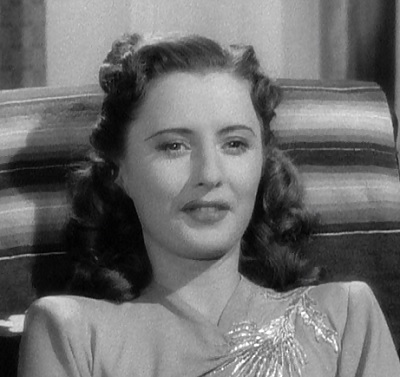
1: Barbara Stanwyck


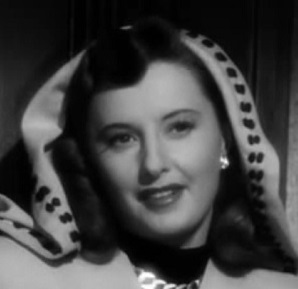
Because her acting was superlative and ageless. Because she got her scenes in one take, her emotions so visceral you always feel immersed in her characters’ lives. Because her crews loved her. Because she could be funny,  dramatic, or both at once. She was marvelous.

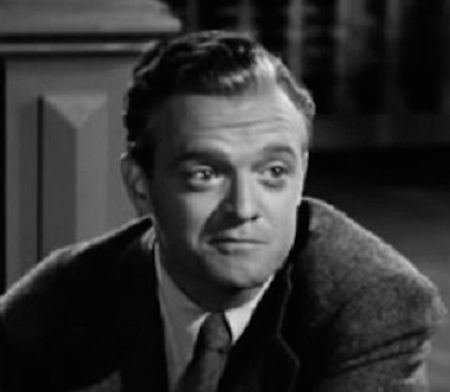
2: Van Heflin


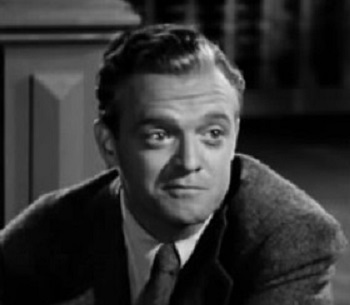
Because his acting was so natural. Because he didn’t demand attention or the starring role, but the authenticity of his acting and his easy confidence made him riveting anyway. Because he singlehandedly changed my mind about westerns with his understated performance in 3:10 to Yuma. Because he never got the credit he deserved, which somehow makes me love him more.

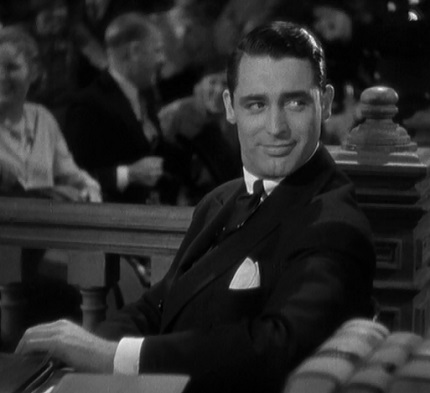
3: Cary Grant


Because he had the all-time best smirk. Because he could be sexy or goofy, usually both at once. Because his acrobatics were truly impressive. Because in spite of his unfailing glamour, his characters were always real. Because he knew how to share the screen with a canine. Because he was adept at self-creation. Because he gave me a name for my blog.

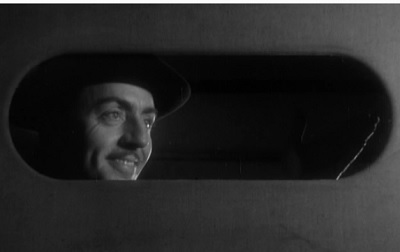
4: William Powell


Because I wouldn’t typically consider his looks attractive, but his personality onscreen was so assured and wonderful and silly that I find him sexy just the same. Because I want to befriend most of his characters, and am sad I can’t. Because I could listen to that voice all day. Because I’ll watch anything he’s in, just to fall for him again.

5: Mae West


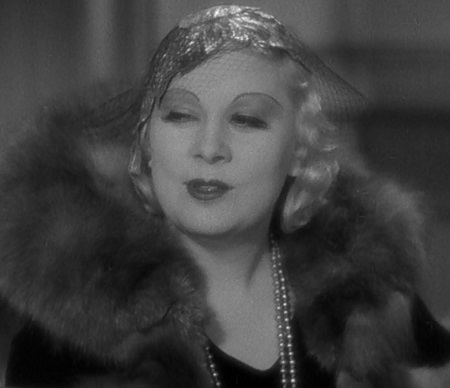
Because she wrote her own lines and dictated her own role–onscreen and off. Because those lines were so well written that people know them almost 100 years later, without knowing where they’re from or who she was. Because she was combustible onscreen, and always hilarious. Because she was a feminist, whether she admitted it or not. Because she had impeccable timing. Because of that walk. Because her movies are utter joy. Because there will never be another like her.

Check out other bloggers’ favorites at Five Stars blogathon!

Share
Posted in: 1930s films, 1940s films, Blogathons, Drama (film), Feminism, Mae West Moments Tagged: Barbara Stanwyck, Cary Grant, favorite classic movie stars, lists, Mae West, Van Heflin, William Powell

The Moment I Fell for Van Heflin

09/23/2014 by leah@carygrantwonteatyou.com 13 Comments

Heflincurious
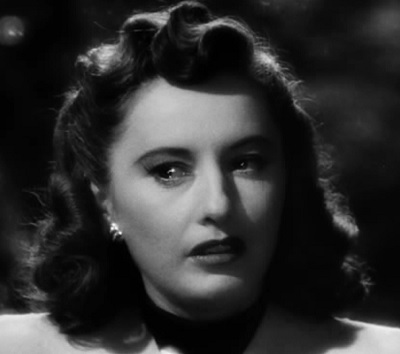
I didn’t know a thing about Van Heflin when I saw The Strange Love of Martha Ivers (1946). I picked the movie because of my love for Barbara Stanwyck, whom I assumed from the title would be the star of the film; I didn’t realize she wouldn’t appear until half an hour into it.

Stanwyck, the versatile actress

Stanwyck in The Strange Love of Martha Ivers

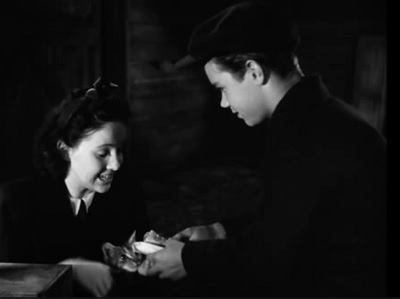
The story begins in 1928. Young Sam Masterson (Darryl Hickman) is trying to convince his crush, Martha Ivers (Janis Wilson), to run off to the circus with him. Sam is always evading the police thanks to Martha’s aunt (Judith Anderson), Mrs. Ivers, the wealthy woman who owns the town. Only if they run away can they be together. Unfortunately, their initial efforts are foiled by tattletale Walter, who likes Martha too.

YoungSamandMartha
Sam does run away, but just before Martha flees to join him, Mrs. Ivers beats her beloved cat to death, and Martha retaliates by striking her aunt with the same cane. We see Sam riding a train just as his crush is concealing the murder with the aid of her greedy tutor and Walter, his son.

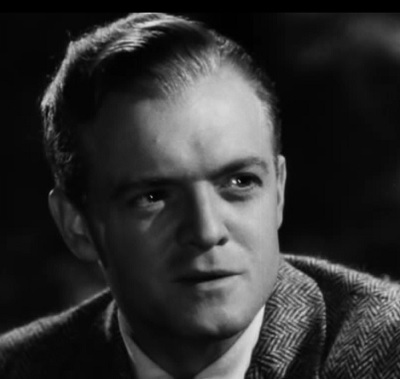
The film jumps to 1946. Sam has grown up to become an easygoing professional gambler (Van Heflin). In his car with a hitchhiking sailor, Sam catches sight of a “Welcome to Iverstown” sign.

“Well, whaddya know?” he says. “….Leave a place when you’re a kid, maybe seventeen, eighteen years ago, and you forget all about it, and all of a sudden you’re driving along and smacko, your own hometown up and hits you right in the face.”

He’s so surprised that he turns around to see the sign again and crashes his car.

Heflin-driving
Laughing at himself, he explains to his befuddled companion, “The road curved, but I didn’t.”

“Welcome to Iverstown,” he says to himself as he heads there for repairs. “Well, maybe this time, they mean it.”

I had expected to be disappointed by Stanwyck’s costar, as I usually am. Even actors good in other films come across as flat or artificial next to an actress this natural, and as downright stilted if unskilled to begin with (i.e., Herbert Marshall).

Captivated by the self-deprecation of Heflin’s character and his unexpectedly casual responses to conflicts, I soon forgot Stanwyck was even in the movie. I think I’d fallen for Van Heflin before he got out of the car.

Discovering that “scared little boy” Walter is now a DA

Discovering that “scared little boy,” Walter, is now a DA

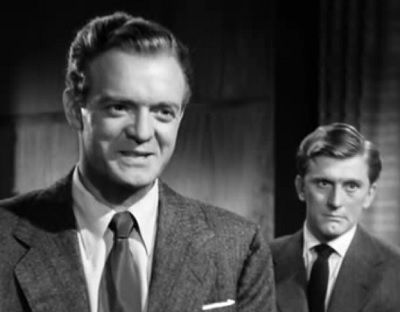
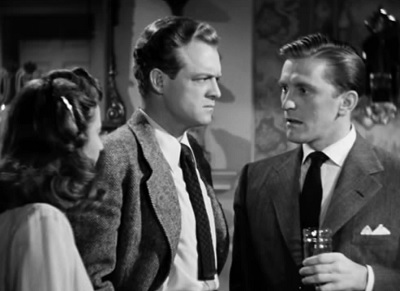
Heflin is an excellent foil for the scheming adult Martha (Stanwyck) and her alcoholic, tortured husband, Walter (Kirk Douglas). Sam’s relaxed, freewheeling persona acts as a kind of tonic to his tightly wound former love and a poison to her jealous and fearful husband, who assumes this childhood friend is back to blackmail them. Like Mrs. Ivers before him, Walter tries to drive Sam away. But Sam is no longer as powerless as he once was.

Heflin is every bit as comfortable in his role as Stanwyck is in hers, and the naturalness I would soon discover to be a hallmark of his acting works perfectly here, contrasting with the duplicitous couple’s double dealing. What makes Heflin so attractive as an actor is that same ease of movement Stanwyck possesses; it wasn’t surprising to discover this man spent much of his life as a sailor. Clearly, he finds his sea legs in every part quickly, and that comfort in his skin and in his environment is seductive to watch. By the time he meets Martha again, even the usually compelling Kirk Douglas is hopeless against him (Douglas plays an atypical part here, and is wonderful in it).

Seeing Martha again

Seeing Martha again

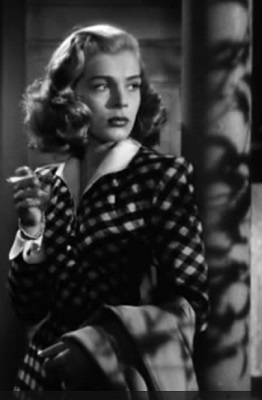
Heflin was not a traditionally attractive man, and famously remarked that “Louis B. Mayer once looked at me and said, ‘You will never get the girl at the end.’ So I worked on my acting.” Whatever he did worked: He’s so riveting to watch that I never questioned any woman Heflin won, even one as jaw-droppingly sexy as parolee Tony (Lizabeth Scott), who falls for Sam as he’s wandering around Iverstown.

Gorgeous Scott as Tony

Gorgeous Scott as Tony

Flirting with Walter's secretary to get an appointment

Flirting with Walter’s secretary

In fact, I’m more likely to question when Heflin doesn’t get the girl, as when Jean Arthur starts to fall for pretty-boy Alan Ladd in Shane over her tough husband (Heflin), or when Lana Turner prefers boring Richard Hart in Green Dolphin Street (to be fair, the character’s choices were just as baffling in the book). Even when Heflin plays a less courageous part than he usually does, as in 3:10 to Yuma, he’s always got some kind of hard, immovable core of strength to him. In The Strange Love of Martha Ivers, where I saw it first, this mental and physical strength appears when Walter starts to mess with him—and worse, with Tony.

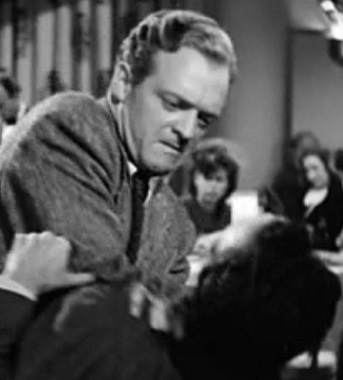
Fighting the detectives who stooge for Walter

Fighting Walter’s detectives

Yet Heflin is just as adept at playing kindness as brawn, as when Tony (Scott) betrays Sam out of weakness and then asks him to hit her because of it. Of course, he refuses to hurt her, but he does more than that: he shows compassion for her behavior. “The only thing you got coming, kid, is a break,” Sam says, the simplicity of his delivery conveying his conviction.

And it is a joy to see Heflin in scenes with Stanwyck. Sam suspects he’s in love with Martha, and even though the audience knows he should steer clear, it’s hard not to root for them, since it means more scenes with these two brilliant actors, and fewer with the less talented Scott.

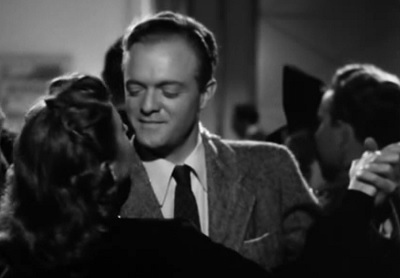
HeflinandStanwyckdance
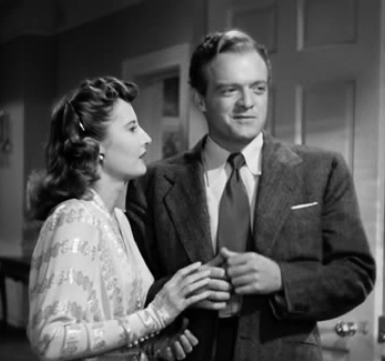
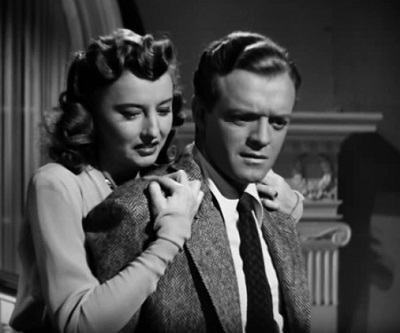
The chemistry between the two is strong. It’s wonderful to witness Stanwyck unable to dominate an actor, to see in him an equal.

HeflinandStanwycktogether
Aware that she can’t manipulate Sam, Martha panics after she reveals her secret to him. Of course, Stanwyck conveys that fear in one look, as only she can:

MarthascaredStanwyck
And Heflin’s understated response portrays his excitement about her honesty, his understanding of her distress, and his disgust at what’s happened:

Heflin-discovery
Before long, of course, Sam must confront Walter about his feelings for Martha:

Three-HeflinDouglasStanwyck
And Martha must stop characterizing herself as a victim, instead seducing Sam with money, power, and lust:

HeflinandStanwyck
The role of Sam Masterson requires that Van Heflin have a great deal of range—that he express assurance, wonder, sympathy, violence, love, anger, fear, revulsion. Heflin’s performance carries the film, and he plays each emotion so perfectly that you feel like you know this man, and wish him far away from his destructive former playmates. I won’t spoil what happens, as the movie is well worth viewing, with excellent acting, an intriguing story, and a great script. But be warned: Heflin’ll get to you, just as he did to me.

This is the fourth in a monthly series of The Moment I Fell for posts…Hope you’ll share some of the moments that drew you to your favorite actors and actresses….

Share
Posted in: 1940s films, Drama (film), Femme fatales, Film Noir/Crime/Thriller & Mystery, The Moment I Fell for Tagged: Barbara Stanwyck, The Strange Love of Martha Ivers, Van Heflin

Recent Posts

  • 100 Years Later, Still Scary: Dr. Caligari
  • Escaping Out of the Past (1947)
  • A Weeper for Those Who Love Jerks
  • Thank You, Academy, for Not Infuriating Me
  • Challengers (2024) Is a Bad Movie

Subscribe to Blog via Email

Enter your email address to subscribe to this blog and receive notifications of new posts by email.

Categories

  • 1920s films
  • 1930s films
  • 1940s films
  • 1950s films
  • 1960s films
  • 1970s films
  • 1980s films
  • 1990-current films
  • 2020s films
  • Action & Sports Films
  • Anti-Romance films
  • Blogathons
  • Childfree
  • Comedies (film)
  • Drama (film)
  • Feminism
  • Femme fatales
  • Film Noir/Crime/Thriller & Mystery
  • Gloriously Silly Scenes
  • Horror
  • Humor
  • Mae West Moments
  • Musicals and dancing films
  • Oscars
  • Random
  • Romance (films)
  • Romantic Comedies (film)
  • The Moment I Fell for
  • Turn My Sister into Classic Movie Fan
  • TV & Pop Culture
  • Uncategorized
Share
Classic Movie Blog Hub Member

Recent Comments

  • leah@carygrantwonteatyou.com on Meg Ryan’s Fate Foretold in Joe Versus the Volcano
  • Ryan on Meg Ryan’s Fate Foretold in Joe Versus the Volcano
  • leah@carygrantwonteatyou.com on 100 Years Later, Still Scary: Dr. Caligari
  • The Classic Movie Muse on 100 Years Later, Still Scary: Dr. Caligari
  • leah@carygrantwonteatyou.com on 100 Years Later, Still Scary: Dr. Caligari

Archives

  • November 2025
  • September 2025
  • May 2025
  • March 2025
  • January 2025
  • November 2024
  • August 2024
  • July 2024
  • May 2024
  • March 2024
  • February 2024
  • December 2023
  • November 2023
  • October 2023
  • September 2023
  • August 2023
  • July 2023
  • May 2023
  • April 2023
  • March 2023
  • January 2023
  • December 2022
  • November 2022
  • September 2022
  • July 2022
  • May 2022
  • April 2022
  • March 2022
  • February 2022
  • October 2021
  • September 2021
  • April 2021
  • March 2021
  • February 2021
  • December 2020
  • October 2020
  • September 2020
  • July 2020
  • May 2020
  • April 2020
  • March 2020
  • February 2020
  • December 2019
  • October 2019
  • September 2019
  • June 2019
  • May 2019
  • April 2019
  • February 2019
  • January 2019
  • November 2018
  • September 2018
  • July 2018
  • June 2018
  • May 2018
  • April 2018
  • March 2018
  • February 2018
  • January 2018
  • November 2017
  • September 2017
  • August 2017
  • July 2017
  • June 2017
  • May 2017
  • April 2017
  • March 2017
  • February 2017
  • January 2017
  • December 2016
  • November 2016
  • October 2016
  • August 2016
  • July 2016
  • June 2016
  • May 2016
  • April 2016
  • March 2016
  • February 2016
  • January 2016
  • December 2015
  • November 2015
  • October 2015
  • September 2015
  • August 2015
  • July 2015
  • June 2015
  • May 2015
  • April 2015
  • March 2015
  • February 2015
  • January 2015
  • December 2014
  • November 2014
  • October 2014
  • September 2014
  • August 2014
  • July 2014
  • June 2014
  • May 2014
  • April 2014
  • March 2014
  • February 2014
  • January 2014

Meta

  • Log in
  • Entries feed
  • Comments feed
  • WordPress.org

Copyright © 2025 Cary Grant Won't Eat You.

Church WordPress Theme by themehall.com