Cary Grant Won't Eat You

Classic movies for phobics

  • About
  • eBooks
  • Previous Blogathons
Classic movies for phobics

Gene Tierney

Laura (1944): Haunted by Dopes

11/11/2024 by leah@carygrantwonteatyou.com 18 Comments

**Spoilers coming**

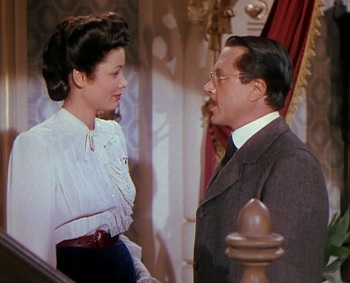
Clifton Webb and Gene Tierney in Laura (1944).


Laura is a curious film. I always think of it as the male gaze on steroids, as we know so little of the heroine apart from the versions we get from the men who surround her: the portrait artist, the boyfriend, the best friend and the cop. All are obsessed with her, and all want their version of the murdered heroine to supersede the others.’
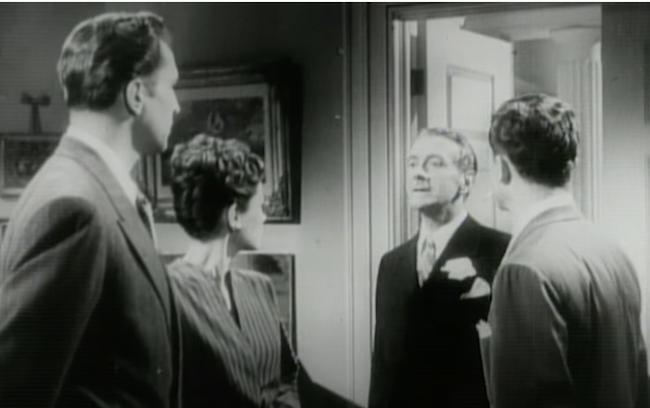
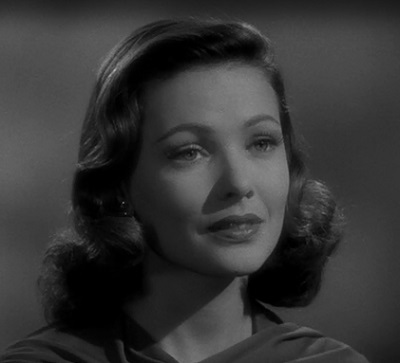
Laura's (Gene Tierney's) admirers, played by Vincent Price, Clifton Webb and Dana Andrews.


That’s why I chose the film for A Haunting Blogathon: In the Afterlife, hosted by the Classic Movie Blog Association. Crime writer James Ellroy once said something about Laura being the ultimate film for cops, and I think he’s right: the victim you only learn of from diaries, from photos, from others’ words. You never quite know who she was.

Surely, it would be easy for those driven to solve a homicide (especially one that remains out of reach) to become possessive about what they know and haunted by what they don’t. (Ellroy, whose mother was murdered, explores his own haunting in My Dark Places, a fascinating read, as is the book that inspired him: Joseph Wambaugh’s true-crime masterpiece, The Onion Field.)

It’s not hard to imagine becoming enamored with and fascinated by a victim who looks like Gene Tierney. In this particular story, however, the hauntings turn from reasonable to pathological.

What I love about the film is that the versions of Laura these men (and one woman) tell don’t quite add up. Her housekeeper, Bessie (Dorothy Adams), describes Laura as the sweetest lady on earth, and certainly Gene Tierney’s perfect face and that sentimental theme song seem to confirm those impressions.

But would such an angel be best friends with Waldo Lydecker, enjoying his poisonous remarks about her admirer and fellow party guests, as we see her do (in his version of her story, of course)?

Is she really a woman who, as fiancé Shelby Carpenter (Vincent Price) claims, will indulge any visitor, day or night? He has treated his bride-to-be like a doormat. Since he wants to continue to do so, this tenderhearted version of Laura is convenient for him. But Laura does, in fact, dump him, and despite occasional remarks seems little affected by the poor woman (cheater or not) who got killed in her doorway. Not exactly the heart-on-her-sleeve, always-forgiving softie he takes her for.

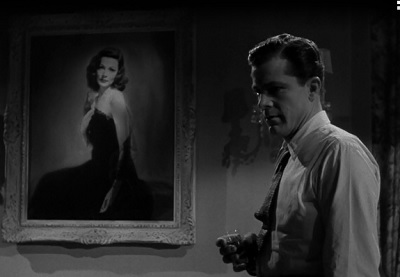
Of course, Lydecker isn’t wrong in accusing Det. Lt. Mark McPherson (Dana Andrews), Laura’s most recent admirer, of being a creep. McPherson wants to buy a portrait of her when she’s dead and becomes instantly possessive of her after she returns to life.

Who instantly hits on a stranger (worse than that, assumes she’s already his) while she’s still in shock?
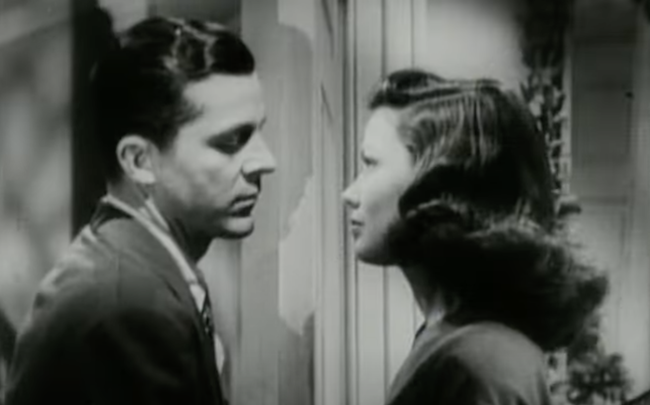
Dana Andrews and Gene Tierney in Laura

Even if she is vulnerable enough to think she’s in love too, it would be wise and kind to wait–I dunno–48 hours? He also chooses for the moment of his wooing a party during which the following things are happening to his new love:

  • Her fiancé has basically just said to her, “Yeah, I know you killed my lover, and that’s cool,” after inviting said lover into Laura’s home and into her clothes during the latter’s wedding week.
  • Someone has just been murdered in Laura’s home, and this cop/admirer has invited people over to it for a gathering before she’d had time to sage it, obsessively clean it, or call a real estate agent to put it on the market.
  • Her aunt, Ann Treadwell (Judith Anderson), has confessed–casually, I might add–that she’s toyed with murdering Laura herself.
  • And oh yeah, our heroine is still in grave danger from the best friend who tried to off her.

Our infatuated cop follows up this uproariously fun party by pretending he’s arresting her, ruining her reputation in front of her friends, because he can’t control his feelings without taking her into the police station. Ummm, what?

McPherson is right that Laura has surrounded herself by “dopes”–if by dopes he means a heartless group of friends and lovers, with some sociopathy in the mix. He’s just wrong not to include himself in the description. Andrews is quite handsome and feigns calm (with his trusty toy), so it’s easy to think of this detective as the hero in the beginning, but that impression soon wanes.

Right after returning home and shocking Bessie, Laura says gently, “I’m not a ghost, really,” and then jokes, “Have you ever heard a ghost ask for eggs?” But her claims ring hollow. Though she’s physically in the room, I would argue Laura still is a ghost through no fault of her own. Real/imagined impressions of her haunt her admirers and herself.

Actual men are also looming in her life, refusing to let her be who she wants to be, love whom she wants to love, or take five minutes to recover from life-altering trauma. And then there’s the method her best friend chose to kill her with: buckshot (interesting that Waldo doesn’t even reconsider that method during his second attempt). It’s not bad enough he wants to kill her. He wants to obliterate her.

If I were Laura’s true friend (or her therapist), I’d say, “Hey, honey. It time to hightail it out of town. A transfer overseas would be ideal. Also, you may want to keep that phone number unlisted.”

For more on the haunters and haunted, visit my peers’ excellent posts by going here: A Haunting Blogathon: In the Afterlife.

Share
Posted in: 1940s films, Anti-Romance films, Blogathons, Drama (film), Femme fatales, Film Noir/Crime/Thriller & Mystery, Romance (films) Tagged: Clifton Webb, femme fatales, film noir, Gene Tierney, hauntings, Laura, obsession, Vincent Price

Chatting about Leave Her to Heaven

07/11/2024 by leah@carygrantwonteatyou.com Leave a Comment

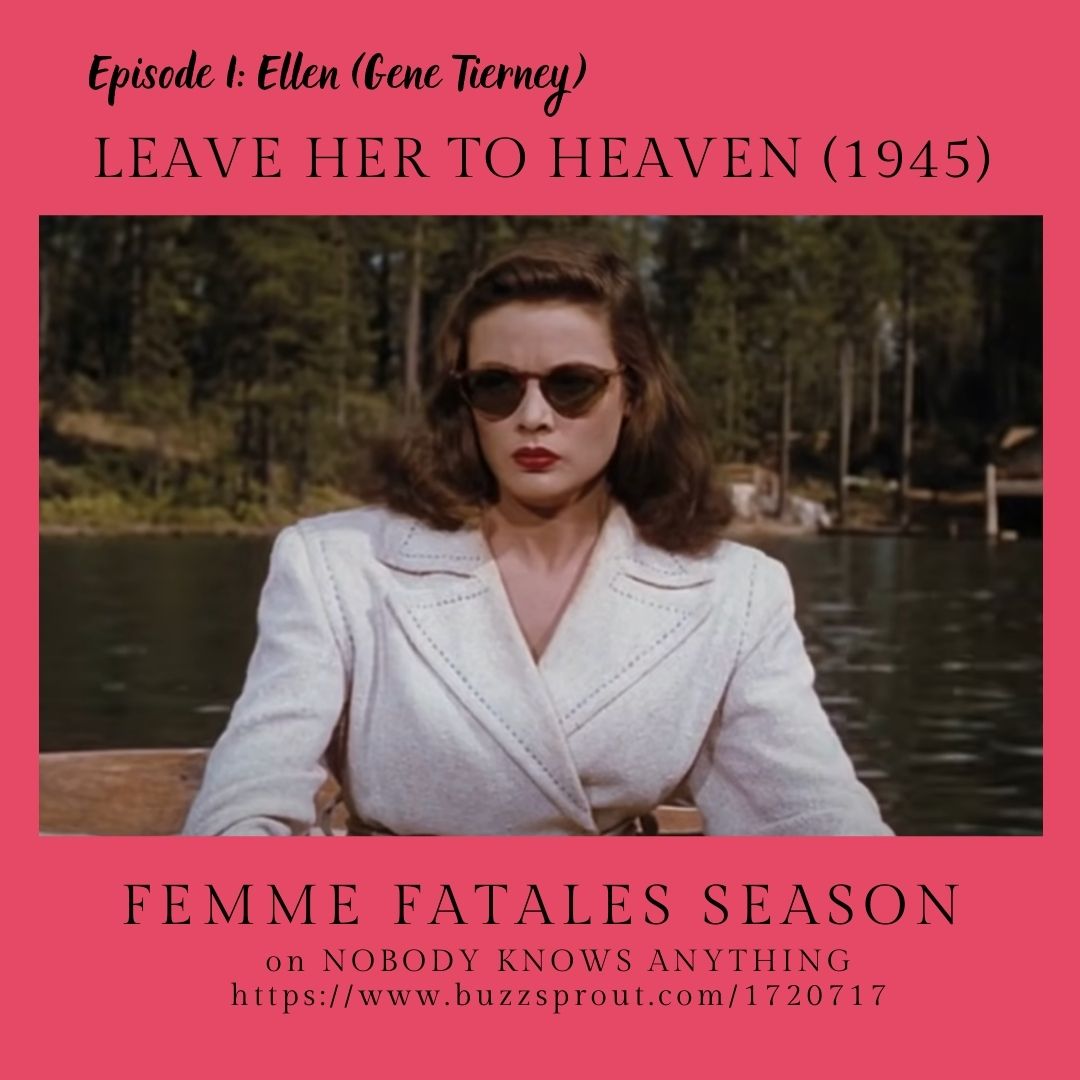
My new podcast season on femme fatales with Brian Wilkins and Michael Gutierrez releases today, and we begin with one of my favorite films, Leave Her to Heaven.

We chat about the strange canoe launch that begins the film, Tierney’s impossible beauty, the unfathomable hero–who wanted to marry this brilliant, fascinating beauty but never share her bed–and her troubling response to that marital issue. Join us here!

Share
Posted in: 1940s films, Feminism, Femme fatales, Film Noir/Crime/Thriller & Mystery Tagged: ahead-of-their-time films, feminism, femme fatales, Gene Tierney, Leave Her to Heaven, podcast

Femme Fatales Podcast Series….

07/01/2024 by leah@carygrantwonteatyou.com Leave a Comment

Nobody Knows Anything, returning soon!

Share
Posted in: Uncategorized Tagged: Dangerous Liaisons, femme fatales, Gene Tierney, Glenn Close, Gone Girl, Leave Her to Heaven, Nobody Knows Anything, podcast, Rosamund Pike

Women Who Love Too Much in Film

09/09/2018 by leah@carygrantwonteatyou.com 2 Comments

I had another fun talk with Grace Collins of True Stories of Tinseltown! We chatted about women who love too much–from Tierney’s character in Leave Her to Heaven to Irene Dunne’s in Back Street (1932 version). Grace is a wonderful host and we had so much to say, especially about the dreadful narcissists John Boles liked to play, and how Bette Davis could really be a post of her own on this topic.

Clearly, this is a subject that needs much, much more discussion! Check it out here:

And definitely check out Grace’s other posts and other podcasts. She’s so witty and so knowledgeable about so many things!

https://www.inyourfacewithdonnieandgrace.com/news

http://www.truestoriesoftinseltown.com/

Share
Posted in: 1930s films, Anti-Romance films, Comedies (film), Drama (film), Romance (films) Tagged: Back Street (1932), bad romances in film, Bette Davis, Gene Tierney, Gilda, Grace, Irene Dunne, John Boles, Leave Her to Heaven, Mildred Pierce, Now Voyager, Rita Hayworth, rom-coms, The Women, True Stories of Tinseltown podcast

1946’s The Razor’s Edge: The Good, the Bad, and the Ugly

04/13/2016 by leah@carygrantwonteatyou.com 12 Comments

RazorsEdge
This is my contribution to the Classic Movie Blog Association‘s Words! Words! Words! blogathon. Some of the entries have been collected into an eBook, which is free on Smashwords or .99 on Amazon, with all proceeds going to the National Film Preservation Fund. I hope you’ll get the book or go here to read the words of my talented peers.

When I learned that CMBA’s spring blogathon would be devoted to writing and film, I decided to tackle one of my oldest literary phobias (of twenty years duration): watching The Razor’s Edge, an adaptation of one of my favorite novels. W. Somerset Maugham’s cynicism and lack of judgment about human behavior have always won me, and his Larry is a fascinating hero: elusive and religious, known for his evasions, gentle but of strong will, a scholar without pretension.

I’ve always loved how the story is told. The narrator, an unveiled W. Somerset Maugham, simply ties together a series of Larry encounters (both his own and others’), trying to explain why someone he barely knew had such an impact. Many believe Larry was someone the author actually knew, and have speculated on his identity.

Larry is an unusual character.

Larry-RazorsEdge
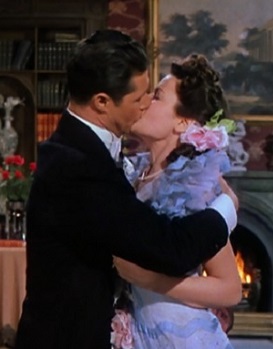
He is disillusioned after his time in WWI, looking for something to believe in, and wanders around Paris, through Europe, and eventually to India to find it, a quest he calls “loafing,” which actually means intense intellectual pursuits. He decides to let go of his love, Isabel, when she won’t join in his journey, and she never gets over him. While he finds what he needs (faith), Isabel pines for him even after her marriage to a millionaire (Gray Maturin). I shuddered at what Hollywood would do with such a religious quest–probably turn it into a romance.

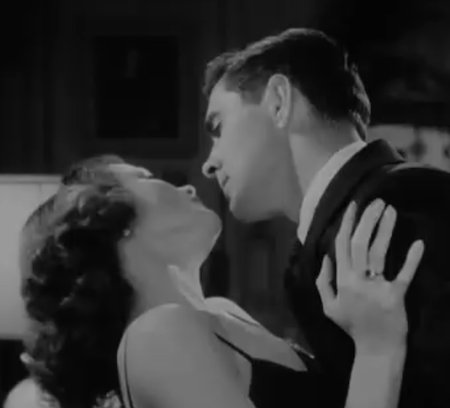
PowerandTierneyromance-RazorsEdge
Alternatively, the movie could focus on Isabel’s uncle, Elliott, and his high society ambitions–a better option, given how delightful that character is, but still not the story I knew.

I wanted to give the screenwriter some slack, since creating a good movie from such a story was a pretty tough aim. Lamar Trotti managed better than I would have thought, and has moments of real mastery. But alas, much of the film tips toward tedium. I’ll start with what works, and lead into the atrocious.

The Good.

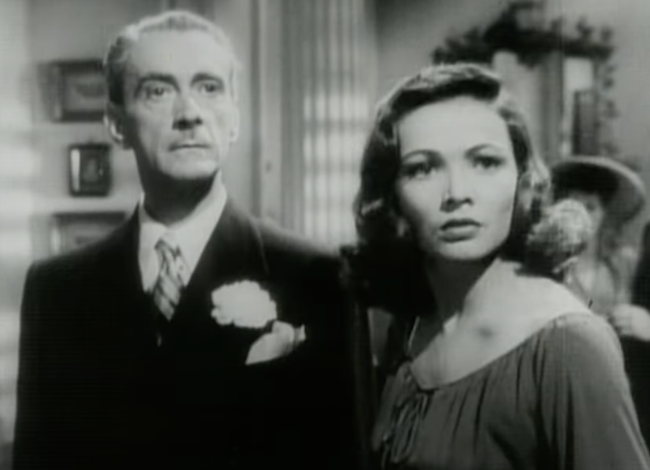
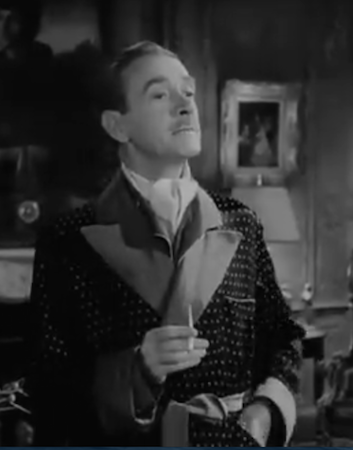
Elliott (Clifton Webb).

CliftonWebb-RazorsEdge
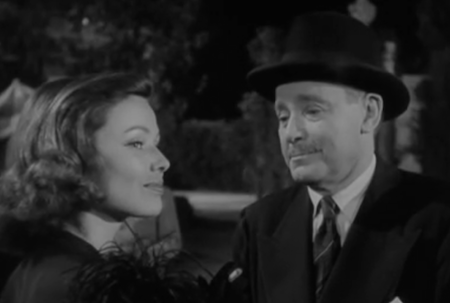
A lot of the credit for the characterization of literature’s most endearing snob goes to the actor. (After all, he excelled at this role in Laura and Titanic.) But much goes to Trotti too: he retains great lines from the novel, which capture the snobbery and yet the sweetness of the man. I like how occasionally Trotti uses him as a stand-in for the narrator, as when Isabel (Gene Tierney) thinks of luring Larry (Tyrone Power) to bed to trap him with a pregnancy, and her uncle rips on her for it.

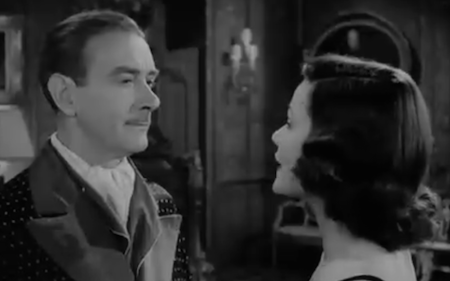
WebbandTierney-RazorsEdge
This moment was much livelier than the narrator’s conversation with her in the novel. Maugham and Elliott share a sardonic humor and lack of pretense about human behavior; it’s not at all surprising that they’re friends (in Elliott’s case, of course, he is quite blind about his own). This switch works much better than (oh horror!) when the writer exchanges the narrator and Larry later (see “The Ugly.”)

Isabel’s Selfishness. I was afraid the writer would take the cruelty out of Isabel, soften her up to earn sympathy. High marks to Lamar Trotti for letting her be who she is; her self-centered behavior is one of the highlights of the novel and the film.

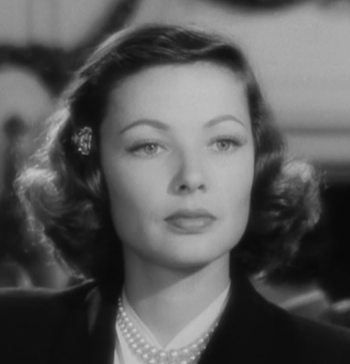
GeneTierney-RazorsEdge
She comes across as real, like Maugham’s other fascinating heroines: charming and fun, but judgmental, conniving, and occasionally ruthless. As the narrator says of her, “You only lack one thing to make you completely enchanting…tenderness.”

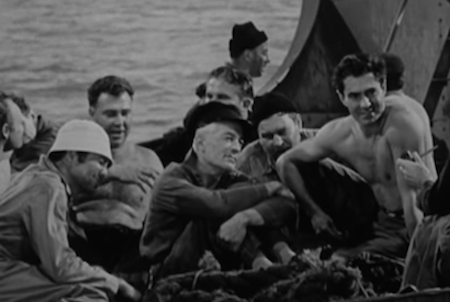
Montages of Larry’s Actions. What a stroke of brilliance to pair Elliott’s guesses about Larry’s likely debauchery and high-class life in Paris with scenes of his real actions (hanging out on a steamer with a bunch of guys rather than the glamorous voyage Elliott would have booked, reading books rather than finding a mistress).

Powermontage-RazorsEdge
The juxtaposition made me laugh aloud. Beautifully done.

The Narrator. While his absence in much of the first half makes little sense, when he appears, Maugham is quite similar to his character in the book, though (thanks to the casting of Herbert Marshall) less animated.

MarshallandTierney-RazorsEdge

The Bad

The Strange Opening about Larry. The writer falters with his introduction. Instead of trusting his scenes to show Larry’s originality and holiness, he preaches it to us by lifting a whole passage from the book. Since we don’t see the many encounters between Larry and the narrator or the narrator and Isabel that appear in the novel, this knowledge of and admiration for Larry are puzzling, as is Maugham’s later intimacy with the Maturin family.

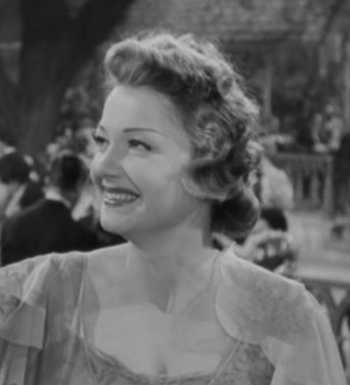
Sophie (Anne Baxter).

Baxter-RazorsEdge
True, the girl had her romantic side, but what happened to the dry cynic we saw in those early scenes in the book? The cool-headed observer of her peers? She was passionate about her husband, yes, but theirs was a kind of exclusive love; they weren’t exactly the social butterflies we get in the film. Nor was she ever a fan of Isabel’s. She was an outsider from the start, which made her tragedy all the more acute. Baxter does a good job (though her Oscar was a stretch), but she’s given a far less interesting character to work with than in the novel; the character’s lack of boldness in the film also took away the dark humor of her reactions to Isabel’s superficiality.

The Absence of Suzanne Rouvier. What this film really needs is some comic relief, and the sensual artist offered a trove of it in the novel. A one-time lover of Larry, she is an unapologetic, sensual woman who made a career of being an artist’s model/mistress. Her frankness about her life is hilarious, and her insights about Larry’s kindness (he only took her in because she was sick and destitute) fascinating. True, the majority of her words and actions wouldn’t make it through the censors. But surely a toned-down version could have been attempted?

The Ugly

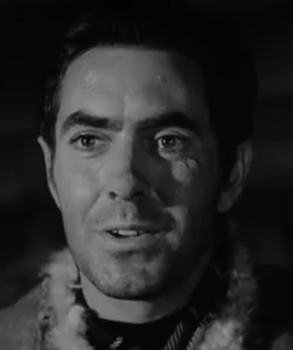
When Larry Talks about His Faith. Those ponderous religious speeches!

TyronePower-faithRazorsEdge
So much more could have been accomplished with wit, with expressions, and with Larry’s dodges when asked direct questions (which we see frequently in the book). In fact, his mystery was one of Larry’s biggest appeals, and is utterly absent from this characterization. He also took himself far less seriously than we see here, and only rarely talked about his beliefs.

Instead, the camera freezes on Power’s intense expressions; we hear his words about doubts and faith. The melodramatic music and shots of clouds don’t help, but I doubt those are the fault of the screenwriter. I know some will blame the boredom of these speeches on Power, but honestly, he does seem like the joyful Larry when in motion. Just when he’s still do I roll my eyes and try to avoid drifting off to sleep.

Larry’s Sanctimony. What happened to his “aloof” quality, which is mentioned in the movie? His lack of judgment? His desire not to have a hold on others–or to let them have a hold on him? Now he’s lecturing Isabel about Sophie? What? By taking the narrator’s scenes and putting Larry in his place, the writer has turned Larry into a stuffy character I’ve no interest in knowing. And this is one of my favorite characters in literature.

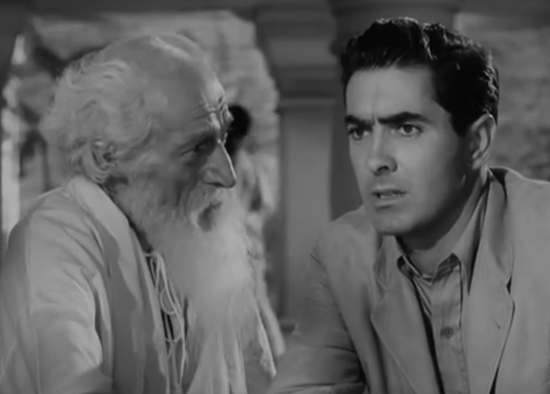
The Holy Man. Until this man said, “We Indians,” I wasn’t sure if this was the Benedictine monk from earlier in the book, or the Hindu who helps Larry find his faith. After all, the latter was described in the book as someone who “didn’t talk very much” and mainly meditated.

PowerandYogi-RazorsEdge
This strange bearded guy is the chattiest of yogis ever seen on film and perhaps the most European looking. He also is guilty of some serious close talking. Come on. I know this wasn’t exactly a racially/ethnically enlightened time in American film, but surely some understanding of the faith being displayed was required? In a film about faith?

I can’t decide if I’m happy I saw the film or not. It certainly didn’t ruin the book for me, and I enjoyed the scenes with Isabel when Larry wasn’t present, and Elliott with everyone. I’m curious what others think who haven’t read the novel. Did you just fast forward through Larry’s religious scenes to get to the juicy ones, as I wished I had?  Now that I’ve gotten over my phobia, maybe I can give Bill Murray’s version a chance; he’s a softer presence than Power, and supposedly really fought for the role. Maybe it’s a bit closer to the novel, and at the very least, it’s more time with Murray….

Share
Posted in: 1940s films, Blogathons, Drama (film), Romance (films) Tagged: Clifton Webb, Gene Tierney, religion and film, screenwriter, The Razor's Edge, Tyrone Power, W. Somerset Maugham

Parenting Advice from Heaven Can Wait (1943)

03/26/2015 by leah@carygrantwonteatyou.com 2 Comments

Ernst Lubitsch was known for his sexual farces. Heaven Can Wait is just one of his many movies spoofing marriage, and in the process illustrating a number of truths about what it means to say “I do.” But I was primarily engaged by the supporting characters in this film. Perhaps that’s why the parenting lessons Lubitsch liberally supplied struck me so much more this time than his marital wisdom. Here are a few lessons from the cynical director:

Expose Your Child to the Opposite Sex Early
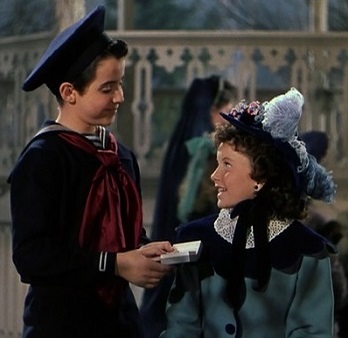
A boy who falls for the ladies in his pre-teens will learn ambition early. He’ll discover, according to Lubitsch and screenwriter Samson Raphaelson, that gifts earn him affection, and the greater the number of gifts, the greater the love. This early training will motivate him to make a name for himself—and, of course, earn the big bucks.

BeetlesHeavenCanWait
You can build on this valuable training by hiring a comely French tutor to teach him more than one new language when he reaches his teens.

frenchtutorHeavenCanWait
This hire will solidify his conviction that life is but a long seduction.

Spoil Your Child
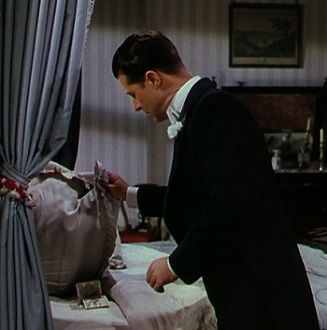
You might fear giving your kid endless funds and no responsibilities. You might assume that he will become a hopeless waster, lying around and expecting others to cater to him. But if you’ve given him ambition via the ladies, you don’t need to fear. Indulge away.

DonAmeche-spoiled
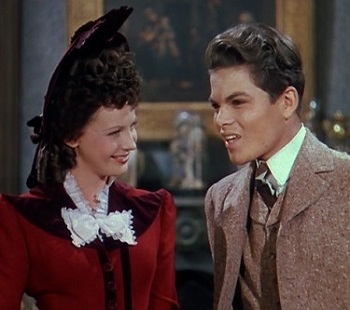
If you instead raise him with rules and standards, he’ll grow up to become such a prudish dullard that he’ll actually compare himself to a suit, admitting, as cousin Albert does, that he’s not “flashy” or of a “stylish cut” but “sewed together carefully.” In Ernst Lubitsch’s world, a man like Albert (Allyn Joslyn), who brags that his “lining is good,” is never going to win the affections of a woman as vivacious and beautiful as Martha (Gene Tierney). He’ll get this bored response to his heartfelt wooing instead:

SuitDescription-HeavenCanWait
And the wooing by his spoiled cousin? Yeah, that’s a bit more successful:

TierneyandAmeche
Do Not Outcast Your Kid—Unless You Like Your Spouse
In her day, Martha’s elopement may have led to quite a scandal, innocent as it may appear now. But her parents’ decision to boot her out for life means they spend their days fighting over who gets the comics first. You know your life has reached a sad pitch when you can become this inflamed over the plight of the Katzenjammer Kids:

PalletteandMain
Spare yourself the misery of too much alone time with your spouse. Forgive your kid.

Keep Your Own Dad Around; He’ll Be Needed
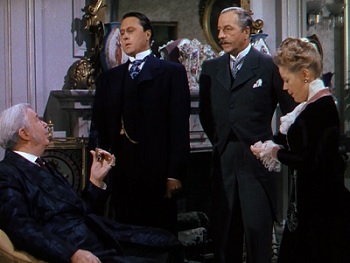
If you were raised in a more structured household, you may be a little innocent about the facts of life, such as what your son has been up to with the French tutor you hired. At 43, you may need your father to enlighten you that your son is both drunk and debauched.

Coburnandfamily-HeavenCanWait
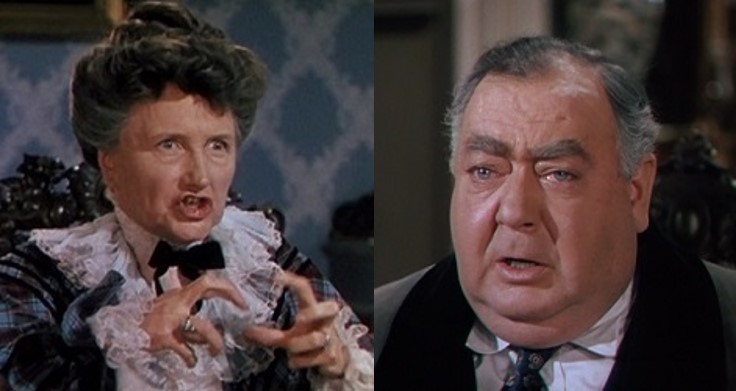
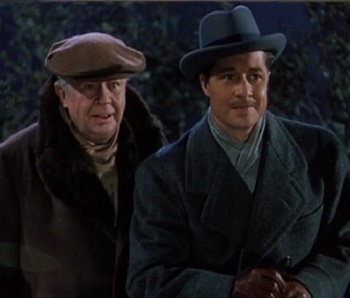
And when that son makes a wreck of his life after one too many dalliances, you may not be able to save his marriage for him (if you’re still around). But his wiser grandpa might just pull it off, especially if he’s hilarious and savvy and anything like Charles Coburn (who supplies at least 50 percent of the film’s best lines).

CharlesCoburnwithDonAmeche
And there you have it. Valuable advice for the worldly parent, courtesy of Lubitsch. I hope you were reading carefully. You may need it one day.

Share
Posted in: 1940s films, Humor, Romantic Comedies (film) Tagged: Charles Coburn, Don Ameche, Ernst Lubitsch, Eugene Pallette, Gene Tierney, Heaven Can Wait, Marjorie Main

Unhealthy Obsessions: Laura and Her

02/06/2014 by leah@carygrantwonteatyou.com 6 Comments

Her (2013) starts with an unoriginal premise: guy falls for an inappropriate thing, his society doesn’t judge him for it, and the audience is left to (a) reconsider their understanding of relationships and/or (b) fear a future in which falling for an operating system is acceptable.  (Substitute an android or doll for the operating system and you’ll find you’ve seen this film before.)

Her asks that you support this odd love, but the only time that has worked for me is with Laura (1944), in which detective Mark McPherson (Dana Andrews) becomes so enamored by others’ descriptions of and a portrait of a murder victim that he can barely function. The trick of the film is that it seduces the audience so completely that we cease to find this love creepy at all, something that never happened to me in the 126 minutes of Her.

Both Her and Laura benefit from the wise casting of their heroines. Scarlett Johansson’s voice is so sexy and Gene Tierney’s face so perfect that the audience’s first reaction is Of course! Who wouldn’t fall for her?

LauraTierney

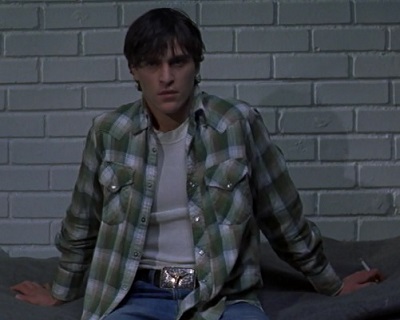
It’s in the development of the hero that Laura succeeds and Her stumbles. There’s nothing wrong with Joaquin Phoenix’s open, touching performance. But the level of Theodore’s (Phoenix’s) romanticism is so extreme (he actually FEELS every word of the cheesy cards he writes for a living) and his enjoyment of his world so intense that you can’t help thinking this guy would fall for a Milk Dud.  We might like Theodore, but how could we possibly relate to him?

McPherson, on the other hand, is guarded in Laura, a much more common condition for those who’ve been burned by past relationships, as Her’s Theodore has been. When asked whether he’s ever been in love, McPherson quips, “A doll in Washington Heights once got a fox fur outta me.” As his passion for the murder victim, Laura (Tierney), increases, McPherson resists and denies it, trying to keep his professionalism intact. The audience can therefore empathize with his struggle, especially since some types of police work can demand obsession (mystery writer James Ellroy once claimed Laura was a favorite film of cops he knew).

DanaAndrews

Almost as problematic as the characterization of Her’s Theodore are the impressionistic scenes critics are applauding. Are they beautiful? Yes. But their lengthiness gave me too much time to think: Why would someone so outgoing primarily socialize with video games? Am I meant to believe people like those awful cards he writes? WHO SMILES THIS MUCH? Laura, at 88 minutes total, fits in the detective’s love AND the solution to the whodunit. It speeds along with such rapidity that the audience forgets that McPherson’s love is just as, if not more, disturbing than the affections of Laura’s former admirers.

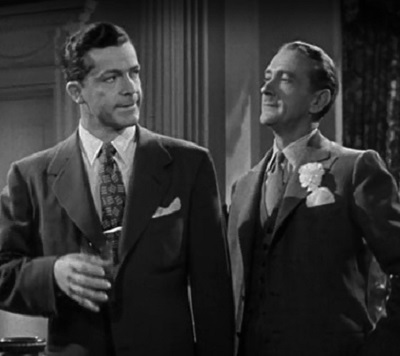
It’s in depicting these former admirers/suspects that Laura really excels, especially with cynical Waldo Lydecker (Clifton Webb), whose one-liners keep the audience alternately laughing and cringing, often at the hero’s expense: “You’d better watch out, McPherson, or you’ll end up in a psychiatric ward. I don’t think they’ve ever had a patient who fell in love with a corpse.” Jonze’s film desperately needs a Lydecker, as its cloying mood soon becomes monotonous, and Amy Adams does nothing but bolster her friend’s feelings for the operating system. (Does Spike Jonze require screenwriter Charles Kaufman to avoid taking himself too seriously? Where is the light touch of Being John Malkovich?)

AndrewsandWebb

As it drifts along in its dreamy way, Her demands that you continue to contemplate its hero’s unhealthy love. Laura simply expects you to accept its. As a result, I felt drained by Her and intrigued by Laura. Unless you want sugar shock, I suggest you stick with the older film too.

Random thoughts:

The high-waisted pants on men have pained me in Laura and other 40s films. Could future fashion designers be so cruel as to bring back such an unflattering style and combine it with melon shades, as we see in Her? And if not, why did Jonze make me suffer through it? It takes a lot to make this man look unattractive:

JoaquinPhoenixJ

But Jonze certainly succeeded.

Vincent Price (the murder victim’s former fiancé) is such a wimp in Laura that it’s shocking to realize he scared whole generations of moviegoers and Michael Jackson fans.

VincentPrice

Apparently, fans of Philip Seymour Hoffman, Phoenix’s costar in The Master, also noticed Her’s dire need for sarcasm and did a fake promo for the film with Hoffman’s voice instead of Johansson’s. Listening to it was one of the few joys possible after hearing about Hoffman’s death (not PG rated, for you parents out there).

What are your thoughts on Laura and Her? (Please avoid bringing up anything in the second half of Laura, as I’d like to avoid spoilers.)

Share
Posted in: 1940s films, Drama (film), Femme fatales, Film Noir/Crime/Thriller & Mystery, Romance (films) Tagged: Gene Tierney, Her, Joaquin Phoenix, Laura, Vincent Price, Waldo Lydecker

Recent Posts

  • 100 Years Later, Still Scary: Dr. Caligari
  • Escaping Out of the Past (1947)
  • A Weeper for Those Who Love Jerks
  • Thank You, Academy, for Not Infuriating Me
  • Challengers (2024) Is a Bad Movie

Subscribe to Blog via Email

Enter your email address to subscribe to this blog and receive notifications of new posts by email.

Categories

  • 1920s films
  • 1930s films
  • 1940s films
  • 1950s films
  • 1960s films
  • 1970s films
  • 1980s films
  • 1990-current films
  • 2020s films
  • Action & Sports Films
  • Anti-Romance films
  • Blogathons
  • Childfree
  • Comedies (film)
  • Drama (film)
  • Feminism
  • Femme fatales
  • Film Noir/Crime/Thriller & Mystery
  • Gloriously Silly Scenes
  • Horror
  • Humor
  • Mae West Moments
  • Musicals and dancing films
  • Oscars
  • Random
  • Romance (films)
  • Romantic Comedies (film)
  • The Moment I Fell for
  • Turn My Sister into Classic Movie Fan
  • TV & Pop Culture
  • Uncategorized
Share
Classic Movie Blog Hub Member

Recent Comments

  • leah@carygrantwonteatyou.com on Meg Ryan’s Fate Foretold in Joe Versus the Volcano
  • Ryan on Meg Ryan’s Fate Foretold in Joe Versus the Volcano
  • leah@carygrantwonteatyou.com on 100 Years Later, Still Scary: Dr. Caligari
  • The Classic Movie Muse on 100 Years Later, Still Scary: Dr. Caligari
  • leah@carygrantwonteatyou.com on 100 Years Later, Still Scary: Dr. Caligari

Archives

  • November 2025
  • September 2025
  • May 2025
  • March 2025
  • January 2025
  • November 2024
  • August 2024
  • July 2024
  • May 2024
  • March 2024
  • February 2024
  • December 2023
  • November 2023
  • October 2023
  • September 2023
  • August 2023
  • July 2023
  • May 2023
  • April 2023
  • March 2023
  • January 2023
  • December 2022
  • November 2022
  • September 2022
  • July 2022
  • May 2022
  • April 2022
  • March 2022
  • February 2022
  • October 2021
  • September 2021
  • April 2021
  • March 2021
  • February 2021
  • December 2020
  • October 2020
  • September 2020
  • July 2020
  • May 2020
  • April 2020
  • March 2020
  • February 2020
  • December 2019
  • October 2019
  • September 2019
  • June 2019
  • May 2019
  • April 2019
  • February 2019
  • January 2019
  • November 2018
  • September 2018
  • July 2018
  • June 2018
  • May 2018
  • April 2018
  • March 2018
  • February 2018
  • January 2018
  • November 2017
  • September 2017
  • August 2017
  • July 2017
  • June 2017
  • May 2017
  • April 2017
  • March 2017
  • February 2017
  • January 2017
  • December 2016
  • November 2016
  • October 2016
  • August 2016
  • July 2016
  • June 2016
  • May 2016
  • April 2016
  • March 2016
  • February 2016
  • January 2016
  • December 2015
  • November 2015
  • October 2015
  • September 2015
  • August 2015
  • July 2015
  • June 2015
  • May 2015
  • April 2015
  • March 2015
  • February 2015
  • January 2015
  • December 2014
  • November 2014
  • October 2014
  • September 2014
  • August 2014
  • July 2014
  • June 2014
  • May 2014
  • April 2014
  • March 2014
  • February 2014
  • January 2014

Meta

  • Log in
  • Entries feed
  • Comments feed
  • WordPress.org

Copyright © 2025 Cary Grant Won't Eat You.

Church WordPress Theme by themehall.com