It’s not unusual to find a film with a strikingly ridiculous plot. I spent many Friday nights as a teen watching USA Up All Night (hosted by Gilbert Godfrey). How I loved taking in gloriously dumb films, hour after hour.
But to find movies with such plots that are genuinely good? That’s a whole other level of enjoyment. Now add 80 years or so, and the film is STILL GOOD, STILL FUNNY? That’s a comedic masterpiece.
Last Tuesday I wrote a post on feel-good silly films, and rated them according to their degree of silliness. (In a homage to Spinal Tap, I let the ratings go to eleven rather than ten.) So today, I’m going to list five films with plots so absurd they deserve that 11 silliness quotient fully. And not coincidentally, these films are a blast to watch. In no particular order:
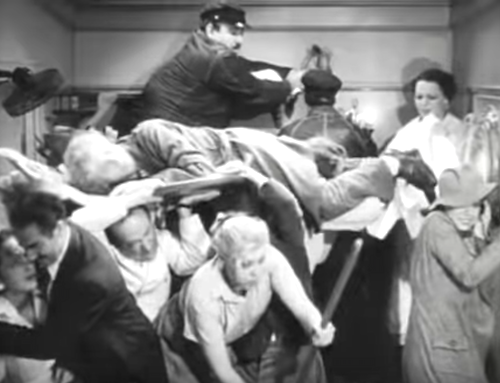
The Palm Beach Story (1942)
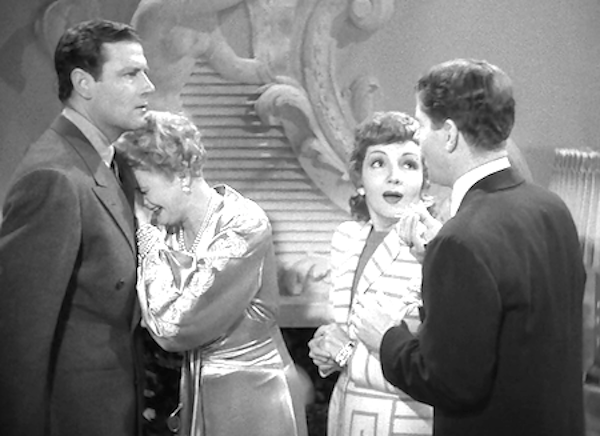
A woman (Claudette Colbert) leaves her broke husband (Joel McCrea) so that she can marry a millionaire and use his money to fund her original husband’s brilliant project. She heads to Palm Beach to find such a millionaire, aided by a “wiener king ” and trigger-happy hunters. The writer/director is Preston Sturges, so you know you’re in for a treat.
Easy Living (1937)
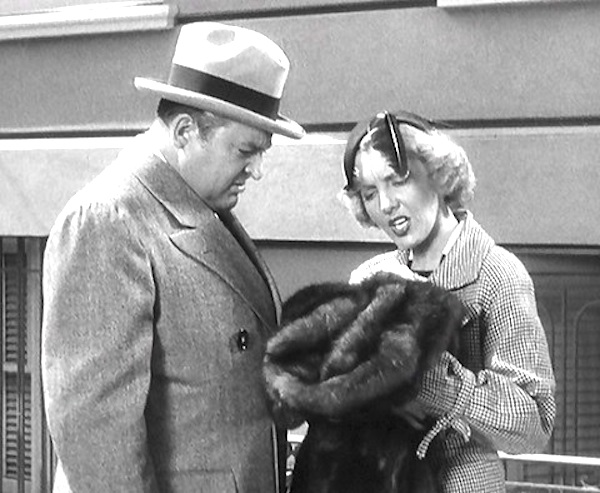
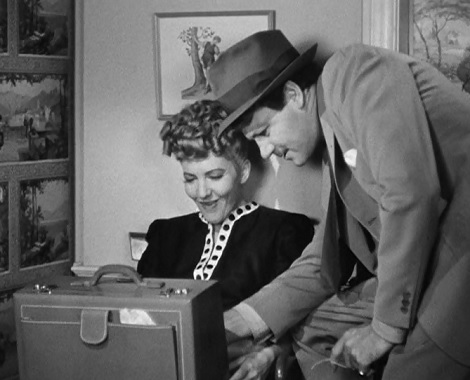
A banker (Edward Arnold) in a fight with his extravagant wife (Mary Nash) throws her fur coat off the roof of their home. The coat hits the hat of a bus passenger (Jean Arthur). The banker’s attempts to compensate the passenger destroy her reputation, but do aid her income. If you need a teaser to be convinced, check out the banker’s and passenger’s hilarious fight about loan interest.
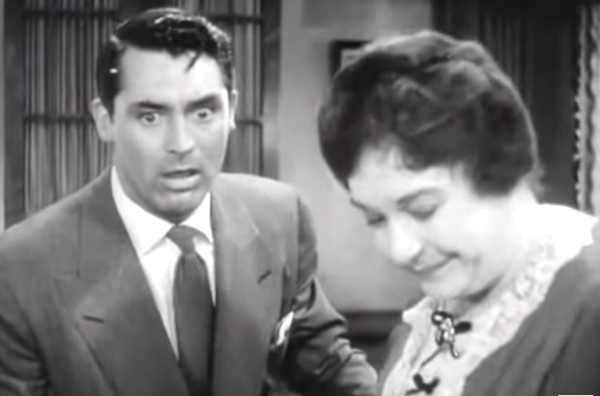
Arsenic and Old Lace (1944)
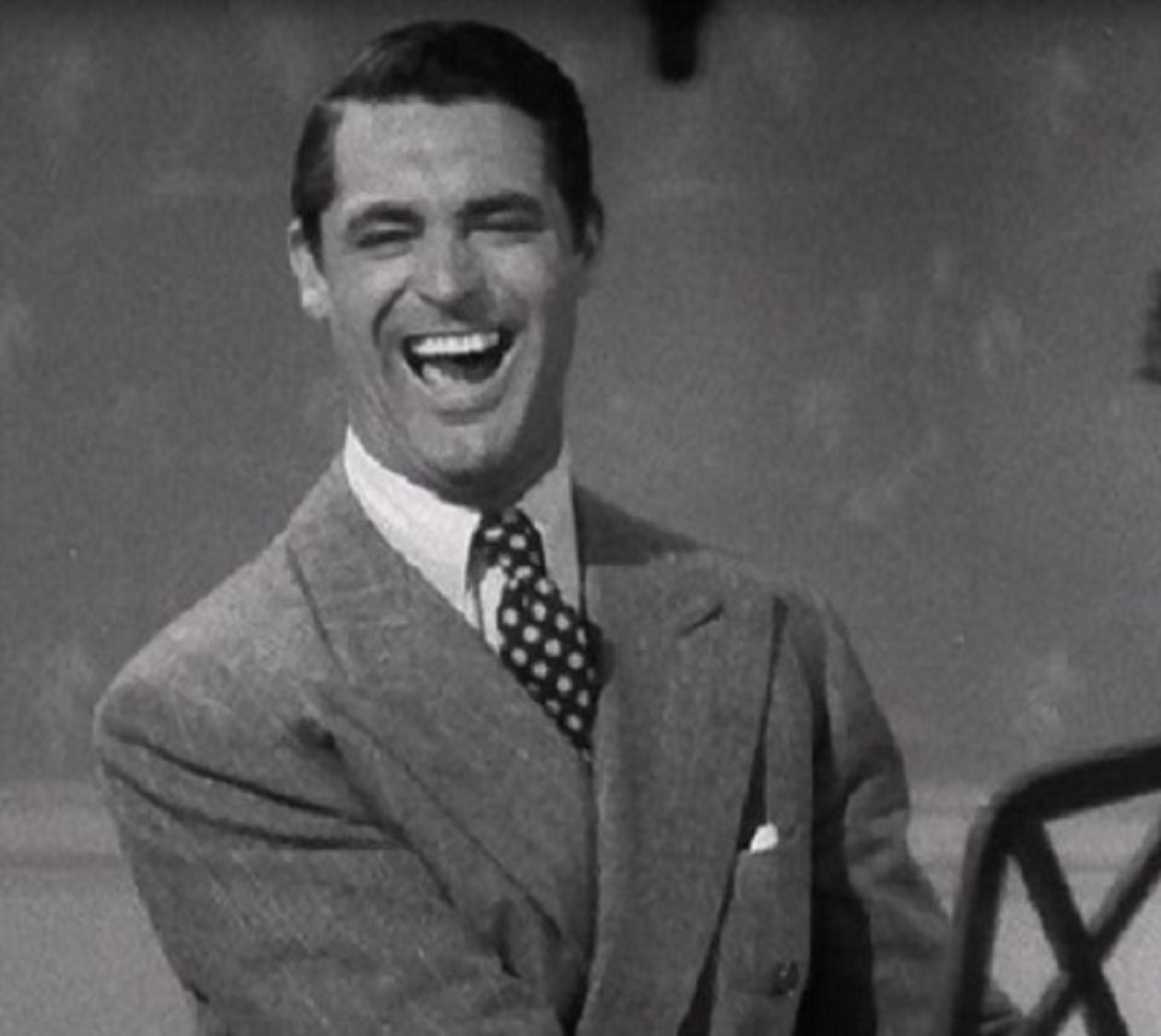
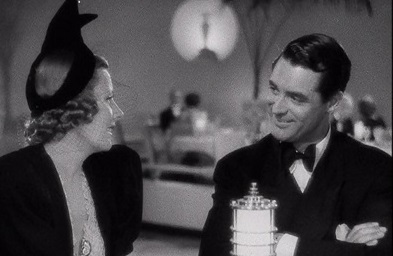
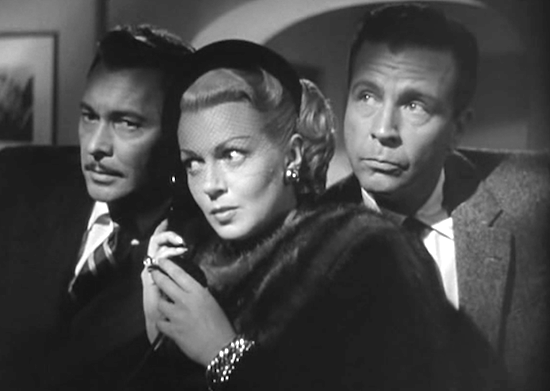
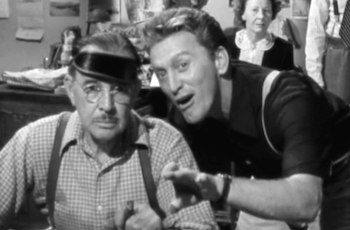
Mortimer (Cary Grant) has always known his cousin (John Alexander) is a bit off. After all, his cousin thinks and acts like Teddy Roosevelt, building his canal. But in visiting his beloved aunts (Josephine Hull and Jean Adair), Mortimer discovers they have some issues as well: they’re serial killers murdering lonely old men. “Teddy” assumes the dead bodies are yellow fever victims and takes them in stride. But Mortimer begins to fear for his DNA. A screwball classic.
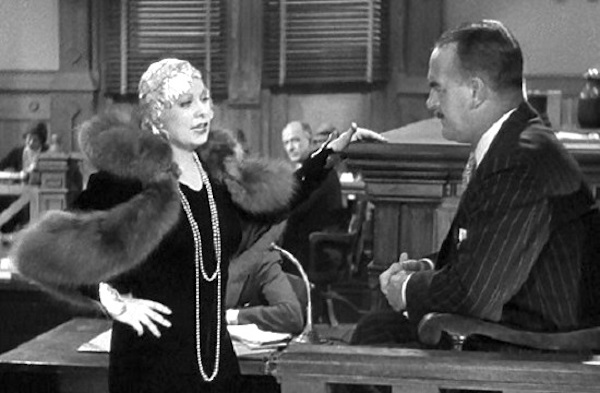
I’m No Angel (1933)
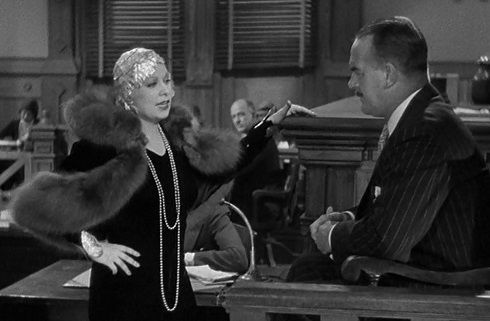
A lion tamer (Mae West) becomes the talk of high society, even winning a classy lover who plans to marry her (Cary Grant). The circus fears losing her income, so they convince the lover that their star is cheating on him. When her lover leaves her, the tamer sues him for breach of promise. She acts as her own lawyer, spending 90 percent of the trial strutting and seducing the jury in what may be the funniest courtroom scene ever.
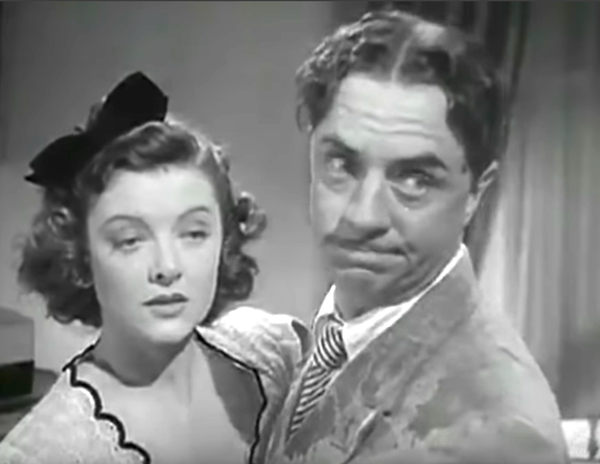
I Love You Again (1940)
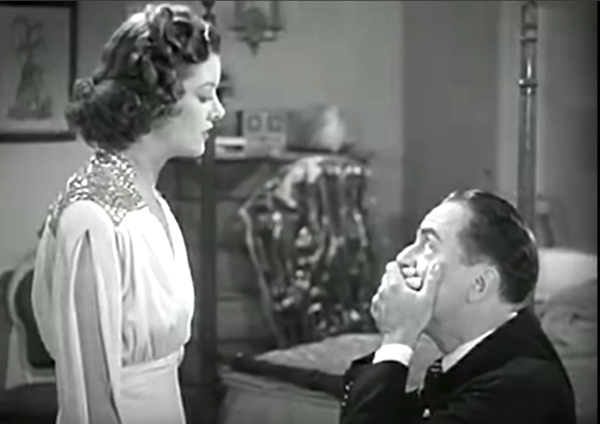
A man (William Powell) gets hit on the head and becomes an old self he’s forgotten, a swindler, instead of the upright prude he now is. He decides to live the prude’s life as he looks for a score and becomes intrigued by the uptight man’s wife (Myrna Loy), whom the swindler version of himself never met. She, sick of his stodgy ways and unaware of his change, wants to divorce him. The question is, will the man’s wife fall in love with his older self? I feel dizzy just explaining this amnesia plot, but it’s The Thin Man’s Loy and Powell team, so what’s not to love?
There you have it. Five ridiculous plots. Five ridiculously fun movies. And I haven’t even scratched the surface of this topic! Anyone who wants to share their favorite silly plot, please do so in the comments!
As the pandemic length has grown and your patience has seeped away, what spells a “comfort” movie to you may have changed. If you’re single and alone, the rom-com, usually a fallback, may make you cringe about the horror of dating dangers post-opening (as if dating usually weren’t bad enough!) If you’re huddled inside with TOO MANY PEOPLE, you may find yourself enjoying dull footage of peaceful lakes.
But for all of us in times of stress, the truly, deeply silly movie remains a staple, and so in the long-delayed follow-up to my earlier post, “Classic Feel-Good Movies for Shut-Ins,” I’m going full-on silly with my next set of suggestions. I’m joining my peers at the Classic Movie Blog Association, who are sponsoring a great blogathon event on comfy favorites. So here are five comfy classic films, chosen for silliness and enjoyment–and listed in no particular order. (You will note that I’ve rated the silliness level, so not all here are full madcap in style. BUT I’m thinking that a list of films with silliness at level eleven, and eleven only, may be my next project.)
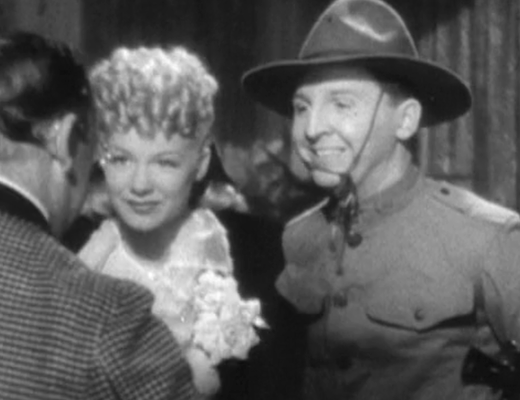
5. TheMiracle of Morgan’s Creek(1943/4). Silliness Quotient–11 out of 10.
I could have easily chosen ANY Preston Sturges flick obviously, but I recently discovered this on my library’s Kanopy streaming service, and just seeing the listing made me grin. For those of you who DON’T know writer/director Sturges, he was a big Coen brothers influence, thus the name of their film, O Brother, Where Art Thou?, a reference to Sturges’ classic, Sullivan’s Travels. (In fact, the Coens’ film title ONLY makes sense if you have see the Sturges flick.) This early writer/director’s delirious combination of madcap physical comedy, witty banter, and sheer improbability in his plotting make Sturges a favorite of any Coen brothers’ diehards (which I definitely am).
The Miracle of Morgan’s Creek actually thrives on denying information to its audience, who know that a scandal/miracle is about to erupt in Morgan’s Creek, and many stratagems are in play to contain it. Betty Hutton is adorable as the center of the scandal, and Eddie Bracken plays her lovesick friend/maybe-more (think Ducky in Pretty in Pink). Basically, it all begins when Hutton has too good of a night with liquor and a bunch of soldiers and sleeps with one of them. The thing is, she can’t remember his name. Yes, you read that right. It gets much more complicated as it goes. Bracken has the silliest role, and he captures his character’s constant befuddlement to the hilt—and just escapes going too far. Since the writing is in Sturges’ hands, it’s brilliant, of course (I have a set of his scripts on my bookshelf, trying to see how he does it).
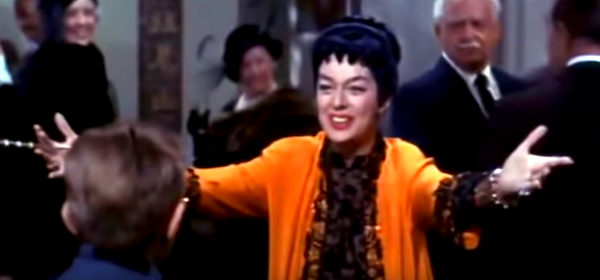
4. Auntie Mame(1958).Silliness Quotient–7 /10.
I haven’t yet done a full post on Auntie Mame, but that’s because I love it too much, not too little. An unconventional, fun-loving aunt in the city (Rosalind Russell) takes in her dead brother’s prim child, and many hilarious scenes ensue. If you don’t end the film wishing Auntie Mame were your aunt, I don’t know what’s wrong with you. Rosalind Russell’s acerbic edge keeps the film from ever treading into maudlin territory, and she so fully embodies Mame’s significant lust for life that it’s very confusing to find Russell cowed and sad in other films (Picnic, for example).
A favorite scene in the film is when Mame takes a sales job after the market crash. She only knows how to do COD (cash on delivery), and therefore is urging everyone to pay that way. Her dismay when they don’t is ALL OF US in every job when we’re out of our depth. COD isn’t really a thing you hear much anymore, but any time I do hear it, I think, “Oh, Mame.”
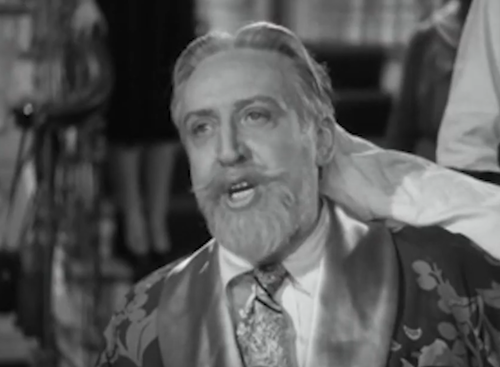
3. The Man Who Came to Dinner (1942).Silliness Quotient–7/10.
“Guests, like fish,” penned Ben Franklin, “begin to smell after three days.” No movie has ever captured that sentiment better than The Man Who Came to Dinner, and no actor has ever improved on Monty Woolley’s commanding performance of entitlement personified. He’s playing radio star/personality Sheridan Whiteside on a lecture tour, and the unlucky family once so proud of his appearance at their dinner table learns to rue the day they agreed to it. A little accident on their stoop, and they’re stuck waiting hand and foot on Whiteside’s prodigious ego.
George S. Kaufman and Moss Hart created the witty script, and Billie Burke plays the unwilling hostess to Whiteside. (Bette Davis may have helped the film get made, but her role here is one of her most flavorless. You know it’s not a Davis vehicle when Ann Sheridan outshines her.) Watch the film for the script and for brilliant Woolley, who must have been something to see on the stage (where he originated the role). Unfortunately, I have delayed writing about this film because it seems to be always unavailable for streaming on Amazon, but the DVD is available. If you know a good source for streaming it, please mention that in the comments!
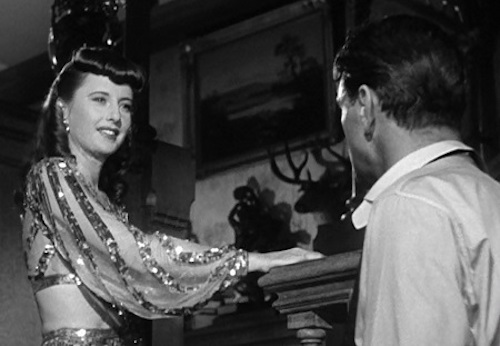
2. Ball of Fire (1941).Silliness Quotient–7/10.
No list of silly movies would be complete without my favorite classic comedy, with Barbara Stanywck as the moll and Gary Cooper as the hapless encyclopedia writer who falls for her. And then there are the “dwarves”–the older encyclopedia writers who ALSO fall for her. I see that the film’s available on the Criterion Channel, which I’m shocked I don’t belong to yet. (No worries for me–I own two DVDs of this movie–the 2nd for when mine inevitably breaks from overviewing.)
With the dizzyingly talented combination of Howard Hawks as director and Charles Brackett and Billy Wilder as writers, this film’s dialogue can be almost as breathtaking as His Girl Friday‘s (also Hawks), but the writing/directing team leaves room for endearingly slow sequences as well. You actually watch Cooper’s character studying how to box in a book before his big fight scene, showing how goofy this story is. And for extra fun, you get favorites Dana Andrews, Dan Duryea, and S.Z. Sakall simultaneously embracing and mocking their typical roles.
1. A Night at the Opera (1935).Silliness Quotient–11/10.
Did you honestly think you’d get through this list without a Marx brothers appearance? I didn’t think so. (As with The Man Who Came to Dinner, the screenplay is co-written by Pulitzer-Prize-winning Kaufman.)
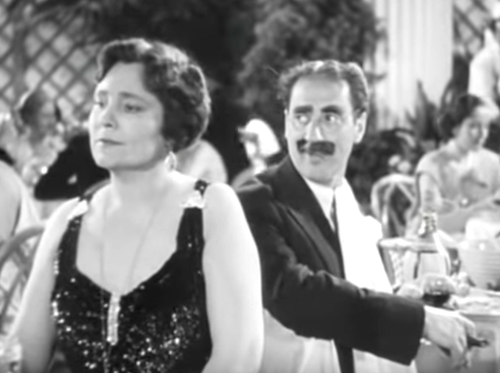
Here are just a few quick early bites: We get Otis B. Driftwood (Groucho) yelling at his driver for not traveling slowly enough to miss the whole opera they’ve driven to see. We have Fiorello (Chico) and Otis tearing apart the bits of a contract they don’t understand (i.e., all of it). We have Tomasso (Harpo) interrupting a typical movie romance trope (one lover onshore, the other on the ship, crooning about her love) by attack-kissing strangers for no reason. That’s just a small sampling of the joys you get before the glorious comedy of the ocean voyage, which includes such a monstrously over-the-top buffet that I wondered just how old the joke about gaining weight on cruises was….
During a strange but enchanting musical sequence starring Chico and Harpo, the two entertain a crowd of children with a deft combo of lunacy and calm, making me think, “Doesn’t every parent stuck at home with children for weeks want these two as babysitters right now?”
So there you have it–five wonderful, comforting films to get you through this trying time. NOTE: You may notice that neither Mae West nor Cary Grant has appeared on this list. That’s because 1. I already discussed Mae in my previous comfort list, and 2. I figured you’d already thought of Cary–and if you haven’t, why not?
Bonus: Kedi (2016).
I know–it’s not a classic film. It’s a recent documentary about the cats of Istanbul. But I have literally recommended it to every cat lover I know, and when I found it streaming on my library’s Kanopy service, played it on repeat for a day. The film focuses on several stray cats, telling their stories (the hunter, the crazy one, the player, etc.). The cats are certainly endearing, but surprisingly, the shopkeepers, artists, and others who love and care for them are just as likeable. And the cinematography of Istanbul is often gasp worthy, especially when you see those cats on some tall balconies and rooftops! My friend described the film as human catnip. How right she is. Next time you experience one of those anger/grief/anxiety spirals that all of us are prone to during this pandemic, play Kedi. Trust me. It’s healing.
Its not surprising that the actress who made her mark as a partially nude Ziegfeld Follies girl would star in one of the most seductive films of the 20s.
That the great German director G. W. Pabst would find it worthwhile to draw this star from American isn’t surprising either. The heroine of his 1929 Pandora’s Box had to be sexy enough to lure everyone around her, and heedless enough to rebel against the powerful without considering consequences….and that was kind of Louise Brooks’s forte.
The Kansas-born actress would make a point of ticking people off, refusing to conform to Hollywood expectations of her—or follow the directions of her bosses. In terms of roles, she didn’t really make a big splash, with few starring roles and many bit ones. But that didn’t stop her from demanding her rights. She expected more of her parts. She asked for promotions. She wasn’t much for punctuality. Most damagingly, she refused to do retakes of The Canary Murder Case (1929) to convert it from a silent to a talkie. She DID enjoy Hollywood social life–she was a regular at William Randolph Hearst’s and Marion Davies’s San Simeon, even romancing the latter’s niece, Pepi Lederer.
Her independent spirit ensured Louise Brooks didn’t make it far in Hollywood, but it’s also why we know her name still today. We like that she was who she was, and she didn’t apologize. Louise Brooks’s authenticity comes through in everything she did, especially in her acting. Her naturalistic performances might not have impressed all viewers back in 1929, but today they make her acting accessible to modern viewers–much more so than her contemporaries who followed the day’s more stylized acting trend.
And don’t we all love her rebellious soul? That flapper haircut, the partying all night after days on the set, the love affairs with men and some women that cut short her success. (Who turns down The Public Enemy to be with a guy?) And without that rebellion, we wouldn’t have her tripping off to Germany to make Pandora’s Box or Diary of a Lost Girl with a man who turned out to be one of the most impressive German directors of his time, whose films are still powerful enough to survive on best-of lists while those silents that had far higher box office draw are forgotten.
Of course, her legacy might still have disappeared, but Louise Brooks, as it happened, wasn’t just a good actress; she was talented at telling her own stories as well. The witty book of her movie reviews/Hollywood history in later life, Lulu in Hollywood, gave her a second burst of fame–and ensured that fame would endure. For many of us, she and Clara Bow are the face of the flapper.
I found myself instantly mesmerized by her in Pandora’s Box. Not since Angelina Jolie in Mr. and Mrs. Smith and Marilyn Monroe in Niagara have I seen an actress in such full command of her sexuality.
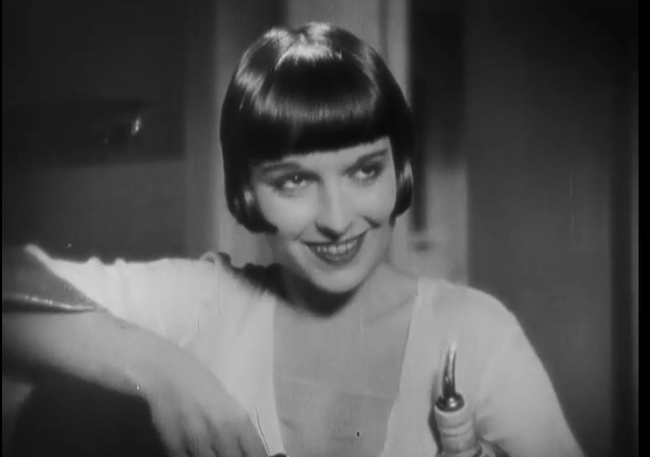
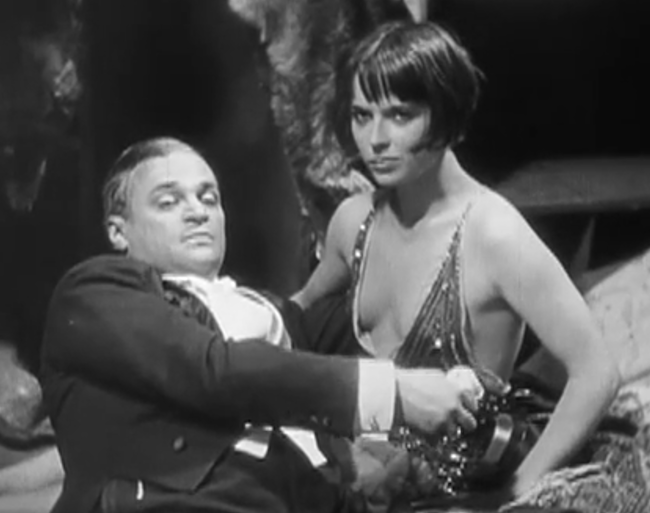
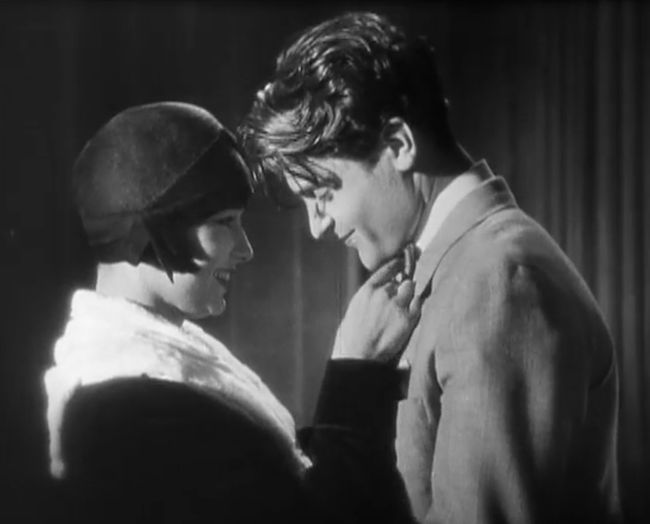
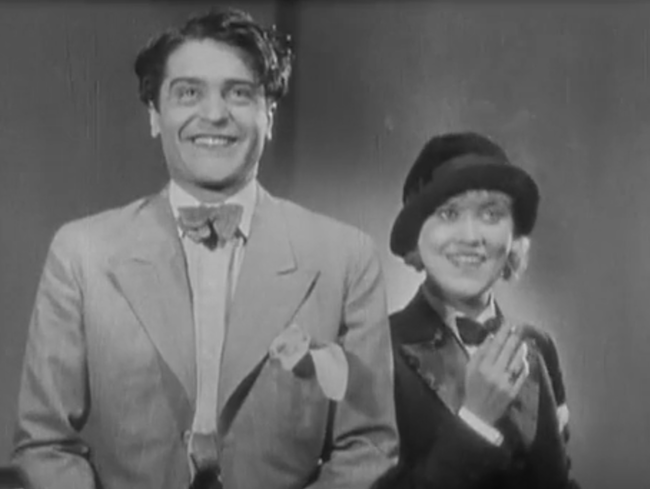
The way Brooks moves from archness to innocence, from manipulation to fun as the character Lulu is a thrill to view. She seduces EVERYONE in Pandora’s Box. I mean, is this how you act with your lover’s son?
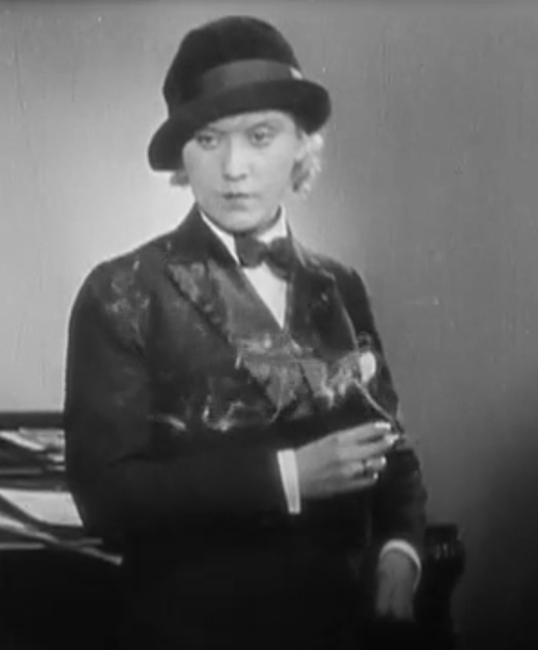
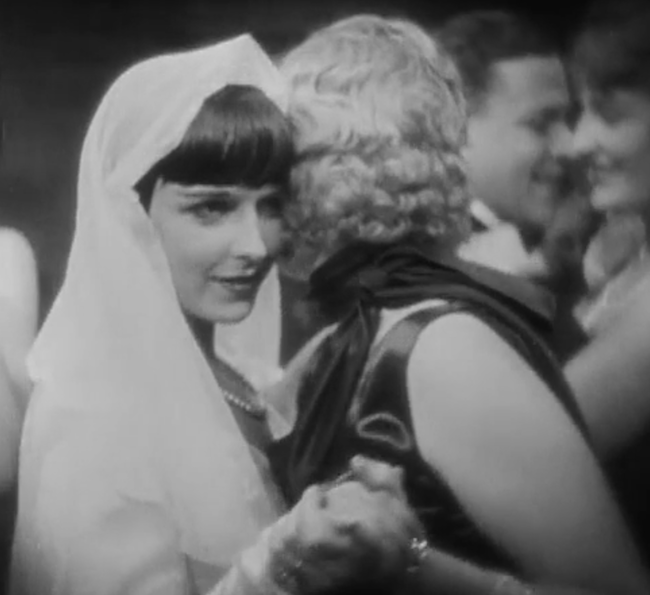
But the son, Alwa (Franz Lederer), is not alone. Every delivery person, businessman, and lawyer gets Lulu’s seductive treatment—most thrillingly, given the time period, Countess Anna Geschwitz (Alice Roberts), a rich lesbian friend, gets Lulu’s full-press sexy attack. Watch as Anna stares at Lulu with stark hunger….
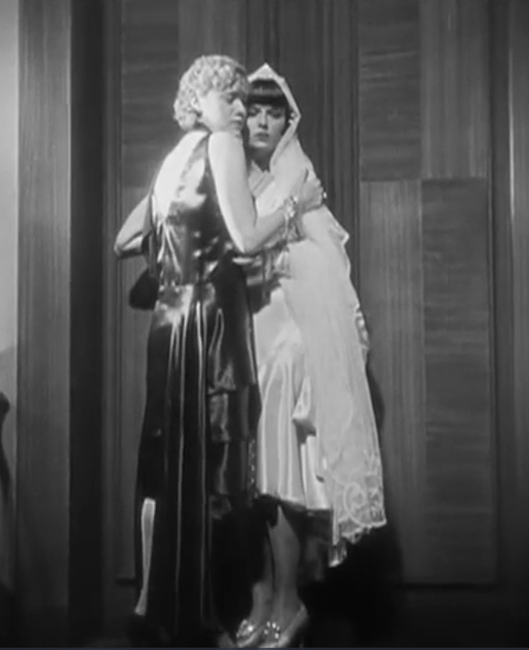
….and dances with her in a sensual sequence….
and expresses her longing to do more at Lulu’s bedroom door….
Wow! I kept checking the date. Was this film really made in 1929? (Of course, the censors butchered it after its initial release, erasing this maybe-maybe-not consummated love affair entirely.)
I’m avoiding all but minor & very vague spoilers, so the plot summary that follows will not be precise, especially after the first acts.
The untampered-with version of the film begins with Lulu hanging out at the apartment where her lover, Dr. Ludwig Schön (Fritz Kortner), is putting her up. She’s flirting and drinking with a deliveryman/mailman when a friend arrives. Lulu calls the new arrival, Schigolch (Carl Goetz), her “patron,” but it will be unclear from later events whether he is her first john, pimp, or father. Whatever he is to her, Schigolch is clearly an unsavory type, so Lulu hides him on her balcony when Ludgwig comes home unexpectedly. Ludwig has bad news for Lulu: he has to marry a respectable girl, not her. Lulu comforts her despondent lover on her bed.
Of course, Ludwig discovers Schön on the balcony and takes off, but Lulu doesn’t seem concerned for long. Nevermind that her lover/income source has now disappeared. Schigolch has another offer for her, a chance to return to the stage. And after all, this woman will have NO issues getting a new lover. Just look at these typical reactions to a Lulu encounter:
Whether Lulu’s flirty nature is mainly a result of calculation, high spirits, or just innocent fun is always unclear. What IS clear is that she always must have everyone in her thrall. Her supposed nonchalance at Ludwig’s loss doesn’t keep her from getting him back when she gets the chance (and what a great scene it is when she does).
After she reunites with her lover, things will go horribly wrong for everyone in the story, justifying one prognosticator’s claim that Lulu is Pandora, the mythical character who unleashed society’s ills into the world. Of course, this pronouncement about her Pandora nature annoys a modern woman to no end, as it’s clear that the man who says so assumes the jealousy Lulu inspires and whatever results from it are all her fault. Forget that the men who surround her are (a) weak, (b) dark/controlling/abusive, (c) silly alcoholics, and/or (d) con men. Forget too that any man who spends five minutes with her knows that fidelity probably isn’t Lulu’s strong suit.
Of course, Lulu isn’t exactly an innocent. The way she repeatedly uses and betrays her lesbian friend is disturbing, and it doesn’t seem the result of any bigotry–just desperation and selfishness. Lulu’s lack of compassion about others’ suffering as she casually checks out magazine fashions is chilling. I like that we’re not merely asked to condemn her actions, but what we ARE to make of her isn’t entirely clear.
The production itself is sophisticated and effective, way ahead of its time. Her clothes are a joy to view. But the script is…odd. The first five acts are memorable, well-written, funny, and exciting, with clear plot development. But after the first five acts, I thought, “this is probably where the film ends.” And then another act would follow and I’d assume it was ending again, and another, and another. The story soon feels like a series of set pieces/vignettes pulled together rather than a coherent story, which is particularly evident in the last act. I guess I would have been OK with this if the story had been framed as a series of Lulu adventures, but there’s a morality play bent to it that just doesn’t work—because you can’t help but enjoy rather than judge Lulu thanks to her considerable charisma, and because you can’t really find a morality play effective without a clearer narrative arc/characterization.
For example, I think we’re meant to pity Ludgwig’s man-boy son, Alwa, for his hopeless passion for Lulu, but his actions throughout the narrative are weak, disloyal, and despicable, so I’m not sure why I’m meant to root for him. I mean, sure, he’s obsessed with Lulu, and Lulu, though she calls him her best friend, isn’t exactly empathetic toward him. But then again, she cheerfully puts up with his dour, leech-like company, and clearly could find a more congenial and ambitious companion. There has to be some strain of kindness and loyalty in Lulu to make her tolerance for him possible. (Think about the suitor she chooses over him/to help him late in the film, and you will see just how bad of company she considers Alwa.)
I also find it hard to understand why this woman, with such a magnetic personality and such great beauty, couldn’t find another well-heeled protector who would conceal her shady past AND help her support her two hangers-on. Her poverty late in the film–given her earlier adeptness with reinvention—isn’t well explained.
This film is often called a masterpiece, and in its first few acts, I think it is. After that, I’d argue that the film falls apart, though I know MANY would disagree with me.
But here’s the thing: It doesn’t matter. The first few acts have already seared into your memory. Your impression of Louise Brooks is already powerful given her electric performance and unforgettable beauty. And your admiration for Pabst’s technical proficiency and daring have already been won. What does it matter if the logic and narrative thread and even Lulu’s character are all a bit of a mystery to you in the end?
This film can be hard to track down at times, but luckily, it’s streaming on Kanopy, which is available for free to most library patrons. (Even if you don’t have a card, some temporary ones are being given during this pandemic.) You may not end up watching the whole thing, but don’t miss Acts 1-5! The court scene alone is worth the viewing.
Bombshell: The Hedy Lamarr Story (2017) is that rare documentary that is somehow uplifting–even when its tale is not. The fact that Bombshell is a story of triumph amidst adversity makes it a perfect film for our time.
I knew the bare outlines of Lamarr’s story: the scandalous film that began her rise to fame, her fraught history with her husband and his Nazi buddies in Austria, her tenure as a beauty in Hollywood, and her frequency hopping invention that eventually led to my sharing this post with you right now, on WiFi. Those details would be enough to make a decent film, I figured, even if it turned out to be–as many actress documentaries are–cookie cutter in style.
But the documentary is so much better than I thought it would be. It seeks to make sense of the elusive personality behind the thousands of lives the actress/inventor lived. The story is greatly enriched by interview tapes of Lamarr, letting viewers hear her story as she wanted to tell it.
It’s hard to picture Lamarr’s life, that brilliant woman who co-created an invention to save soldiers’ lives after long days on the set of (mostly) inane films…and then was patted on the back for her little invention by the military and sent off to sell war bonds with that pretty face instead….which she did.
Crazy as the outlines of the life I knew were, there was so much more, as this inventor was equally bold in other roles she took on–in movie production, in entrepreneurship, in everything really. In the film, she says she helped boyfriend Howard Hughes with airplane design; she even managed to squeeze a big initial salary out of Louis B. Mayer with no English. What an amazing feminist she was, not letting societal conventions for women dictate her moves, but plowing ahead, doing whatever she believed she could do.
Director/writer Alexandra Dean has chosen her sources well, particularly the young animator wowed by Lamarr’s accomplishments. A Mel Brooks cameo, with reference to his Blazing Saddles tribute to the actress through the character Hedley Lamarr, is an unexpected treat.
Lamarr’s personal life was largely tragic: bad marriages, the public’s focus on her looks instead of her mind, the cruelty as those looks faded, financial woes, and the failure of others to value or credit her patriotism since she was an immigrant. The film gives Lamar her proper place in history, but it’s clear to all the subjects in the documentary that they’re trying to reclaim for Lamarr a tribute (besides some very late awards) she never received herself.
But what’s more tragic than her treatment is that had Lamarr been taken seriously earlier, her invention might have saved American lives in WW II, which was her goal all along. The bigotry, greed, bureaucracy, and sexism that made her life so challenging and her invention so tardily applied aren’t exactly difficult to trace in our society or government today. That such obstacles can actually PREVENT heroism like hers is a sobering thought, and a dismayingly timely one.
But the film remains inspiring because we witness Lamar’s refusal to let poor treatment override her determination to act with courage and integrity. What you mainly feel in watching are awe and a profound wish to cheer, Rocky style. Lamarr was a complicated person, and not without flaws, but she was an AMAZING person, and your time with her is truly something to savor.
You can find the film on Netflix (while it’s still there!) or rent it on Amazon. Why are you waiting?
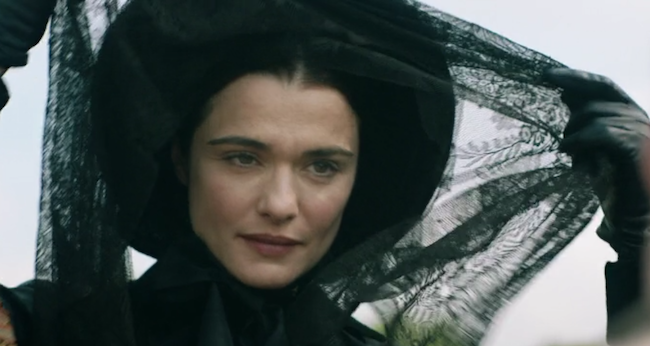
I had hopes for My Cousin Rachel (2017). I don’t know why. I’d already discovered–despite my enjoyment of the 50s version–that the book wouldn’t translate well to film without a big overhaul. I guess I hoped a director smart enough to cast Rachel Weisz in the key role would know to make such changes. (She had added complexity to Definitely, Maybe for crying out loud. Who better to take on the mysterious, unreadable Rachel?) But within minutes, it was evident this director of slight rom-coms lacked the imagination to even equal the previous film’s quality. The 2017 take is incomprehensible, just short of laughably bad. I had flashbacks of Season 3 of Bloodline. What the ksljfkjslkfj! is even going on?
***Mild spoilers–I won’t give away the end. Here’s the plot: a sheltered young man, Philip, is taught to hate women by his cousin/foster father Ambrose. He discovers his cousin has fallen in love with and married a woman while abroad in Italy. Philip’s jealous, angry, anxious. Then he receives strange letters indicating Ambrose is afraid of his wife and quite ill. On arriving in Italy to save his beloved cousin, Philip discovers him dead, with shady characters delivering the news.
Back home in England, he vows revenge on the widow, just on time for her arrival for a visit. The story takes off from there, as Philip falls for the widow and acts completely besotted right away.
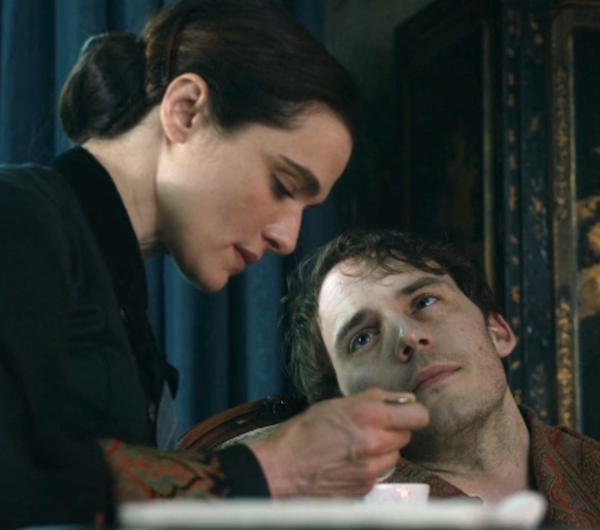
Unfortunately, he can’t determine whether Ambrose died of a brain tumor (making his suspicions delusions) or by his wife’s hand. Is the widow just mercenary in this visit, trying to get her late husband’s estate by wooing Philip? Or is she an independent woman who means well but is reluctant to yoke herself to a silly boy who can’t distinguish between sex and marriage? And regardless of which she is, is that dreaded tea she’s making poisonous? And when he’s ill, will she help Philip get well, or attempt to slowly kill him off?
The lure of the book is the constant back and forth of the reader’s (and Philip’s) suspicions about whether she’s a killer. The did-she, didn’t she is brilliantly developed by Du Maurier. Philip, the narrator, is, by any definition, a dupe. Suspecting Rachel as he does, offering her all of his worldly possessions because she smiles at him isn’t exactly a bright move. What redeems the narrator for the reader is that he’s telling this story AFTER THE FACT, and we understand he’s not quite so foolhardy now. We also get inside his head, understanding why he trusts when he does. We also know more of the sheltered background that explains (as it turns out) his dangerous lack of experience with women. How else could we understand his dogged pursuit of a woman who is not attracted to him?
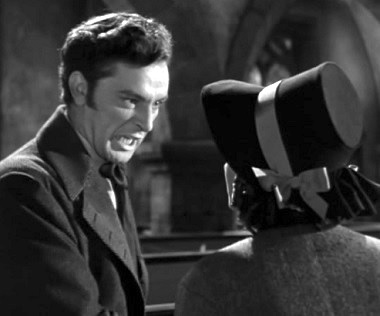
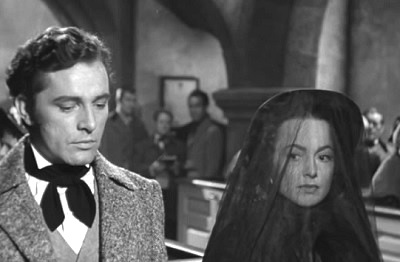
Without this context, the narrator comes across on film as not only unlikable, but unhinged. In the 1952 version, he acts like a dangerous stalker after Rachel stops allowing his seductions.
Luckily, the role is played with such relish by Richard Burton that you enjoy it even as you know the book’s intent has been completely overthrown. (Philip HAS to be the enemy, with behavior like this.) In the 2017 version, far less ably played by Sam Claflin, Philip is so pathological in his pursuit of Rachel that you see her possible poisoning of him as an act of self-defense. How else can she ensure he won’t kill her, he’s so obsessed? That attack on her throat is just the beginning!
With this upending of villain roles, the did-she, didn’t-she becomes, “Who cares what you did, lady. RUN!!” I don’t have a problem with changing a book’s focus, but as it turns out, that uncertainty about Rachel was also the narrative’s greatest appeal. Without it, we’re stuck watching an unlikable dupe turn into a psycho, which isn’t interesting viewing. I also don’t think voiceover from Philip would have worked; the story needs more nuance and he’s not intelligent enough to provide it.
As I see it, the only way of salvaging the story on film was to change the lead. What about his godfather’s daughter, who likes Philip for some unaccountable reason? We’d see Rachel’s behavior more clearly from her eyes; she may be biased, but she’s perceptive. Again, no need for voiceover, but she’d notice different details, like Rachel’s manipulative ways. (Though let’s stop the anachronisms, please, 2017 version; I can’t see this young lady frankly talking about homosexuality with Philip.) Or what about the godfather as the lead? He’s protective and smart.
Or you could go full-tilt into unreliable narrator mode, and make Rachel–the most interesting character–the lead. She could be like the riveting James Cain narrator in The Cocktail Waitress. With Rachel, I wouldn’t even mind a bit of voiceover.
It’s funny that the 2017 version completely dropped the notion that Rachel was foreign in her ways—and yet that foreignness helps explain her greater independence, her unknowability to Philip, and her tenuous status in the community (who, like Philip, are a bit entrenched in their xenophobia and rigid biases).
And it also helps show her confusion. She’s lived a cosmopolitan life in Italy, and Philip’s (and his community’s) rigid morals about sexuality don’t make sense to her. With more of her character unfiltered through Philip’s perspective, we viewers might come to understand her better.
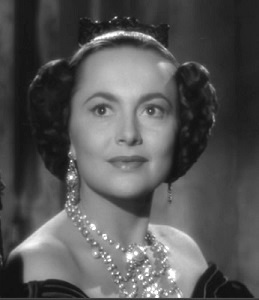
As it is, the 1952 version is entertaining at least. The 2017 version, alas, is not, with Claflin making even histrionics dull to watch. Only some pretty cinematography redeems it at all. The 2017 version adds a dumb ending and strips away much of the questioning of Rachel’s motives. Rachel seems delicate rather than arch at all times and her character is so terribly underdeveloped that Weisz–for once–is tedious to watch. View the 1952 version for Burton’s high drama and Olivia de Havilland’s riveting confidence as Rachel. But if you love the book, be prepared for disappointment: your beloved psychological thriller is now a crush-gone-bad procedural.
So you’re shut in and feeling glum. Watching the news isn’t good for your blood pressure. So put away those updates for few hours, cut off that cable news, and melt into these classics. They’ll make you smile.
The More the Merrier. You know what’s interesting to watch when you’re feeling isolated? A film about a city being overcrowded. Makes you appreciate the (comparative) quiet and helps you see what enterprising (OK, a bit pushy!) folks do when they’re in a tough spot. More importantly, this is THE most romantic film ever, and so funny. If Jean Arthur and Joel McCrea’s chemistry doesn’t get to you, nothing will. Bonus: Charles Coburn, in his best cupid role (of many).
The Awful Truth. The title of my blog may clue you in that I’m a fan of Cary Grant’s. This film shows why. His perfect comic timing is matched in this outing by Irene Dunne’s. They’re marvelous together.
They’ve mastered that banter you want to hear in every rom-com. They play two smart, sophisticated adults who just need to wake up to what’s good for them. And it costars Skippy, the most gifted dog actor of all time (you may recognize him as Asta).
Mae West Films. Do I really need to specify a movie? I’m No Angel is my favorite. Her earliest hits are pure gold, with more good lines in 20 minutes than you’ll find in modern films in 200. And how she delivers them! Before the censors got to her, she was on fire.
But even afterward, her ingenuity in sliding in those double entendres makes up for the less witty later scripts. And in case you’re not yet a Mae West lover, don’t forget that she also wrote these scripts and had the moxie to demand—and get—a higher salary than a studio head.
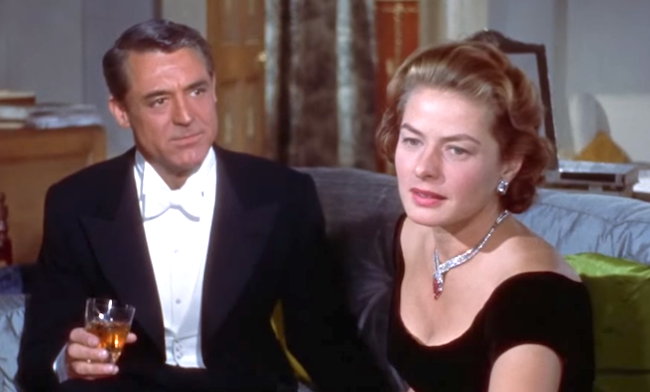
Indiscreet. A friend recently recommended this treasure. A reteaming of good friends Cary Grant and Ingrid Bergman (after the toxic romance/suspense masterpiece, Notorious).
It’s totally Bergman’s show: Just watch her commanding performance once her character gets mad and turns conniving! And there’s a classic dance sequence with Grant’s moves on full display—fantastic. As a special bonus for readers, here’s a heartwarming post about their friendship that will made you sniffle (with joy) from Sister Celluloid.
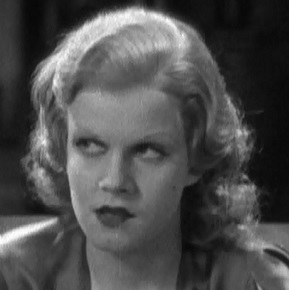
Jean Harlow Films. It doesn’t matter if everyone around her is acting out shrill caricatures (Bombshell), she still rises so far above her material that you don’t care about the rest of them at all. I watched The Girl from Missouri recently, which is a delight. I can’t stomach Red Dust (too offensive). But skip the rest of the movie and watch her—or catch clips on YouTube. View her at her conniving best in Red-Headed Woman.
Watch her outshine the star-studded cast in Libeled Lady as an outraged bride to be. Harlow’s funny and lovable and you just want to spend your life watching her in a huff.
I’ll be back with updated recs. Hang in there, everyone.
Stay safe. Spread the joy you can.
Do I watch this film in front of others? No. Do I recommend it to others? No. Do I praise it anywhere public? No. Have I watched it many times? Oh yes.
There’s something to be said for that first love story that gets you as a kid. I was quite young when I first saw Somewhere in Time on TV–I have a faint memory of my mother recommending it, but whether I watched it with her, I don’t know. What I do know is that at whatever single-digit age I was when I first viewed this film, it became the MOST ROMANTIC STORY EVER for me.
A man traveling through time for a woman? A woman giving up big stardom for a man? Both of them finding their longer lives without each other worthless in comparison with the time they had together? I mean, what kid wouldn’t swoon? But now, as an adult far more comfortable expressing sarcasm than sentiment, I have to confess: I like it still.
I feel reluctant to share the plot, as anyone reading this probably already knows it, but here it goes: An elderly woman approaches playwright Richard Collier (Christopher Reeve) after a party celebrating his first college production. She gives him a pocket watch, saying, “Come back to me,” goes back home, and smiling, dies. In the meantime, Collier moves to Chicago to work on his plays. Eight years later, experiencing writer’s block, he books a room in the Grand Hotel on Mackinac Island for a night away. The island is near his former college, and its rules forbidding cars give the place an otherworldly quality.
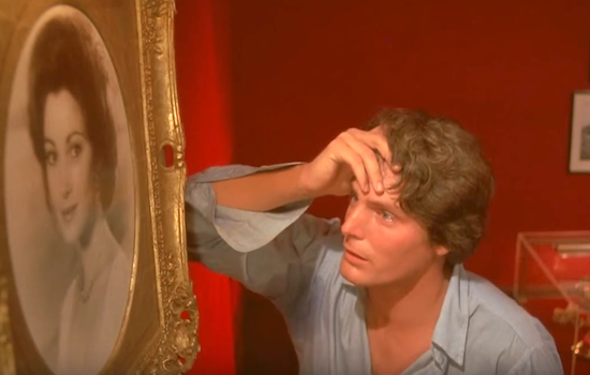
Waiting for the hotel’s restaurant to open, he wanders into one of those little museum nooks in the hotel, documenting the history of the hotel. On the wall is a photo of a breathtaking woman.
Collier, intrigued and quickly becoming obsessed, asks Arthur (Bill Erwin), an elderly hotel employee who spent his youth at the hotel, about her. Collier learns that she was Elise McKenna, a stage star who put on a play in 1912 at the hotel theater. Collier goes to the library to discover more about McKenna and learns she became the old lady who gave him the pocket watch at his play. Through a visit to McKenna’s old caregiver (played by Teresa Wright!!), Collier discovers that the stage actress pored over a book about time travel written by his professor in college. Naturally, Collier hunts him down and discovers the professor once tried self-hypnosis into another time. The professor believes if you have no modern trappings around you, it’s possible to go back, however briefly. Collier, with an early 1900s suit and old coins, begins his attempt. Eventually, he’ll succeed, woo his love, be chased away by her oppressive manager, William Fawcett Robinson (Christopher Plummer), and finally get to be with her in time for her to take the photo that inspired his journey. What happens next, I won’t spoil, but trust me, it doesn’t get any less sentimental.
I found Christopher Reeve’s Richard Collier (what a name!) adorably awkward and smitten. I particularly enjoyed his affectionate treatment of the young version of hotel employee Arthur (Sean Hayden), and his refusal to be embarrassed even though he’s wearing a suit that (in McKenna’s day) is completely out of fashion. He also doesn’t seem to mind that he keeps sleeping in and dirtying up this suit, which must be disgusting by the time he unites with McKenna. But it’s that oblivious, single-minded attention to his lover that is so attractive in the film (though in real life, it would be alarming).
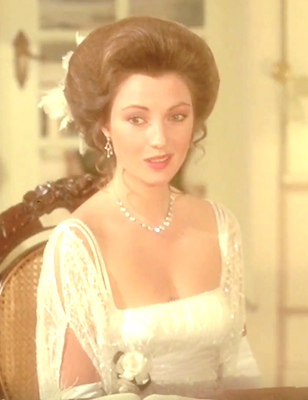
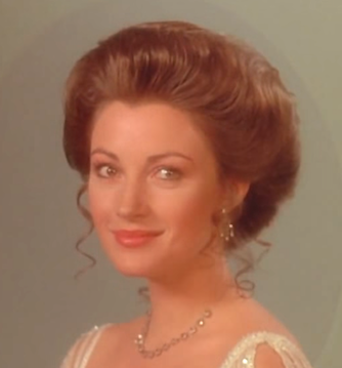
Jane Seymour’s Elise McKenna is stunning. The woman Seymour played was the person I wanted to be as a kid: an artist, accomplished, passionate. I wanted her hair, her clothes, her allure. For years afterward, Jane Seymour was my vision of unattainable beauty, and while my other 80s standards faded with time and/or growing sense and taste, that one didn’t. Because seriously? How ridiculously beautiful is that woman now, much less then?
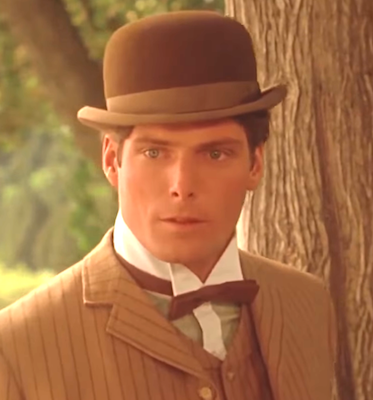
And Christopher Reeve was so handsome, two years after Superman fame. Just check him out in his period duds:
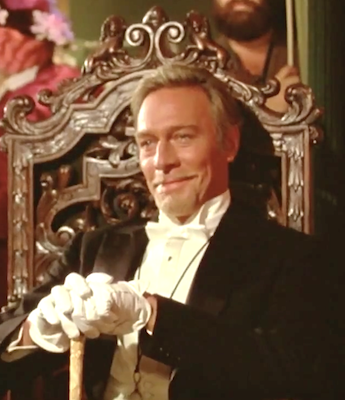
If fact, it took this most recent viewing of the film for me to even note Christopher Plummer’s shockingly good looks, so distracted was I by the others.
Of course, the best parts of the film are the perfect music choices, just lovely enough to elevate the film: John Barry’s haunting score, and the The 18th variation of Sergei Rachmaninoff’s Rhapsody on a Theme of Paganini.
I became intrigued about the novel on which the film was based, and learned the early stage actress Maude Adams and her manager/producer, Charles Frohman, were the loose inspiration for McKenna and her manager. Best known now for putting Peter Pan (with Adams in the lead) on the stage, the pair were tremendously successful. She never married. Frohman’s personality is captured sympathetically by Dustin Hoffman in Finding Neverland. The producer comes across as charming, friendly, and well loved in true accounts as well, not as the lonely, bitter figure Plummer portrays in the film; clearly, the cruel figure fit the film’s plot better (though I found myself sympathetic to his annoyance–if not his responses to–Collier’s puppyish behavior this time). I found the real producer’s final brave hours and words on the doomed Lusitania moving.
In more lighthearted research, I learned that the hotel in the film STILL has Somewhere in Timecelebration weekends, that its fan club has a playful quiz on the film. For someone abashed about loving such a sentimental film, I admire this group’s openness. My embarrassment at liking it, however, does make sense too: there’s too much use of slow-mo, some stilted dialogue, and a disturbing approval of the lengths the couple goes to for love at the end of the film.
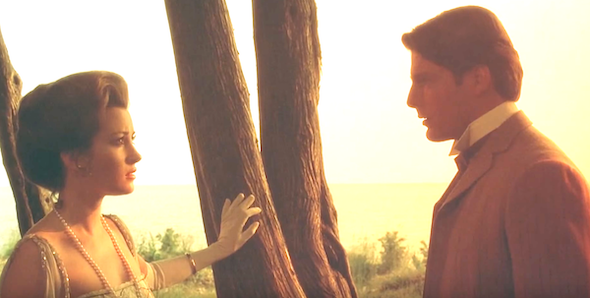
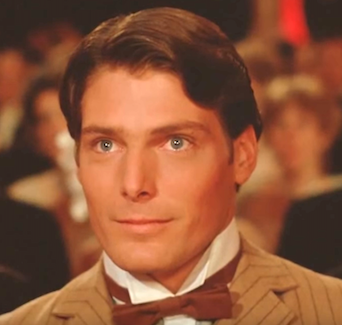
But Seymour’s sincerity in the role and Reeve’s earnestness and good humor made me love the movie again, despite my reservations. I decided, as before, to dispense with judgment and just live in this world a while. (As with Crouching Tiger, Hidden Dragon, when I just accepted the flying as a given.) There is some wistful magic to the couple’s commitment to one another; there is charm in the ease of Collier’s time travel, suggesting their love was destined. The narrative seems to borrow heavily from the film Laura (also with captivatingly sweet music, also with a picture of the heroine that haunts a man) and from Portrait of Jennie, which likewise gets longing right. The actors’ chemistry is perfect; they truly seem in love. Just check out these expressions as they look at one another.
It’s not surprising that the two remained lifelong friends.
And you know, this kind of nostalgic story is never going to lose its appeal. Witness the book and TV series Outlander, winning new audiences into enchantment at the idea of time-crossed lovers as I write.
This blog post is part of The Leap Day blogathon, hosted by Taking Up Room. I love this idea of celebrating February 29th by reflecting on time-confused/unexpected films. Check out the other entries here!
Kirk Douglas lived a very long life, but it’s still shocking to learn of his death. He was so incredibly alive onscreen. There are few performers in Hollywood history as charismatic as Douglas. Since his effect on his viewers was physical in its impact, I want to focus on the three performances that shocked me with their force.
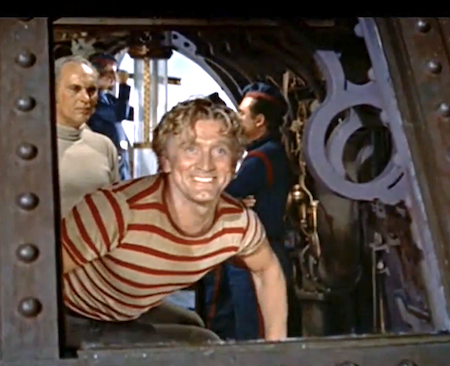
3. 20,000 Leagues Under the Sea. For some reason, I watched this in class as an adolescent. (What exactly was the purpose of that unit?) I wasn’t into classic films then, and was skeptical about the movie’s cheesy premise. But in the center of this silly, over-dramatic film leapt Kirk Douglas. Who IS this guy? I thought, shocked by the actor’s joyous energy, cockiness, and sheer confidence. It’s probably also the first time I realized a classic film star could be very sexy. It obviously wasn’t the last.
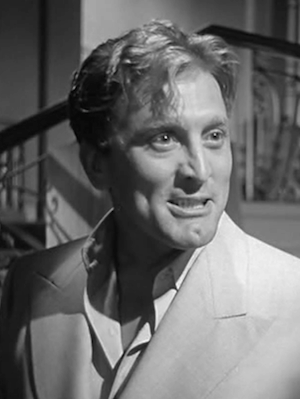
2. The Bad and the Beautiful. What a perfect casting decision, to have Douglas play the sadistic, yet gifted producer who lures others to bad fates because he cares more about his art than treating his cast humanely.
Observe the way his three victims lean in to hear his new film idea, despite his previous treatment of them.
Of course they would, with Douglas’s talent and magnetism at full wattage in the role. Even the nicest characters Douglas ever played had an edge, but in this part, Douglas revealed his skill in capturing the cruelty of a ruthless man.
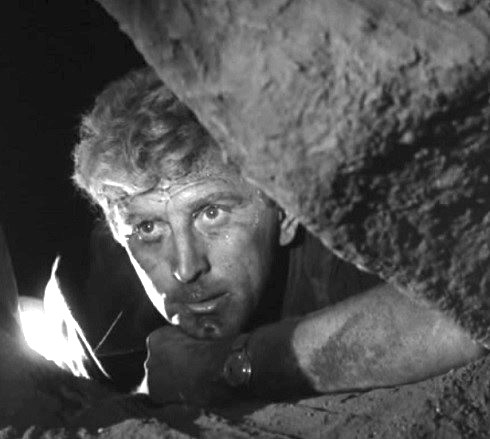
1. Ace in the Hole. What a brilliant performance as the reporter who risks a man’s life to get a big story! After watching Douglas in action, it was hard to get behind any other actor playing an ambitious reporter. Who else could show that flashing excitement about a story, that single-minded intent? And what other actor could be convincing enough to make audiences believe that one unscrupulous man could persuade a community of sensible people to make such a dangerous mistake?
Douglas owns this film. Thanks to his perfect performance, he gives Billy Wilder’s dark satire the resonance it deserved. The film is one of the greatest of its era, and is so eerily prescient it can be difficult to watch. It wouldn’t have had nearly the power it does with a different actor.
I know others would argue for Spartacus, another of his momentous roles, and certainly one that showcased Douglas’s impressive physicality. But these three were the roles that fixed me to the screen, unable to turn away.
I know there’s much more to say about the actor, particularly his part in ending the blacklist. But today I just want to say how grateful I am for his powerhouse presence onscreen. I always felt if I would just reach forward, he’d jump out to join me in my living room, that sexiest and most riveting of classic actors. No wonder it’s so hard to let him go.
The Guardian‘s statistic about the lack of awards for female cinematographers was particularly illuminating.
In addition to showing what female-driven films could have been honored but weren’t over the years, Relatively Entertaining covers the diversity of voices in film, how we’ve regressed since a high point in the 40s in honoring women’s stories–even if told by men. The post also highlights how seldom black actresses are repeatedly honored for their work: “For that matter, it’s a strange quirk of Oscar that of the 35 times a black woman has received acting Oscar nomination, only three (Whoopi Goldberg, Viola Davis and Octavia Spencer) have been nominated more than once, and only Spencer has been nominated after winning her award.”
I wonder how long Academy voters could sustain the fiction that women’s films just haven’t been good enough yet to get awards after viewing the articles’ startling graphics. I wonder if the lack of repeat nominations for women (and women of color in particular) will finally bring home just how much has to change.
I watched Marriage Story with excitement. I’ve been
following Noah Baumbach’s career since Kicking and Screaming (1995), a
hilarious movie about East Coast college men’s arrested development and how
their romantic immaturity interferes with their happiness.
The déjà vu happened immediately: This new, supposedly innovative film was about a New Yorker’s arrested development and how his romantic immaturity interferes with his happiness.
Sigh.
Had I seen growth in the treatment of this subject matter, I wouldn’t have been so troubled, but the earlier film, though rough around the edges, was twice as entertaining and unique as Marriage Story, which felt like a weak combination of Baumbach’s old themes and Kramer versus Kramer. Yet the Academy awarded Baumbach for this water treading with a Best Picture nod. They then gave a Supporting Actress nom to Laura Dern for the worst caricature of a woman I’ve seen outside of an action flick in years, a Rush Limbaugh characterization of a female divorce lawyer if ever I saw one. That nod alone says a lot about Academy voters.
This worrying backward movement extended to The Irishman as well. Academy voters rewarded Martin Scorsese for returning to mob territory, even though he made no attempt to switch the perspective away from the mobsters, or to include one female character whose personality existed outside of men’s treatment of her. True, there are some changes—he replaced the flashy narrator of Goodfellas with a quiet, suffering cog, who supposedly played a pivotal role in Hoffa’s death in real life as well as in the film. Only he didn’t: his involvement in Hoffa’s death was a fabrication, which was the most interesting thing about him. What would cause a man to lie about such a thing, knowing his family would condemn him for it? THAT’s a topic for a movie! Instead the film presents his lie as true; the plot focuses on how the hero has gotten himself caught up in this miserable mob life, which is a story line expressed in a much more interesting way in Goodfellas.
Now let’s turn to Quentin Tarantino. His material is always imaginative, violent, unique. His films are exciting to watch, but typically, he treats his characters as paper dolls rather than humans. In Jackie Brown, he turned down his jets and humanized his middle-aged hero and heroine. He gave them regrets and nostalgia, which imbued that film with insight as well as style. For the adolescent Tarantino, that’s some serious growth. So why is anyone impressed with his depiction of Sharon Tate as a wide-eyed viewer of her own movies, a woman who loves nothing more than sexy dancing at the Playboy Mansion, who throws her hair flowing behind her before riding in an open-topped car?* Why, in a film about opportunity cut short, pretend that Tate’s real opportunity loss was that of continuing to be a schoolboy’s fantasy, and not a mature mother? Do we honestly find it good storytelling to continue to pretend that the sexual playground of the 60s was so very fun for the women who didn’t have the biological option of being so carefree?
I don’t know how we can expect male directors (let alone female, who have so few opportunities) to be innovative, to embrace perspectives beyond their own, when they’re rewarded with nominations for circling and re-circling the same tired subject matter and stereotyped characterizations while their finer, fresher films go unnoticed.
This year Clint Eastwood was the director with a real breakthrough. His career was founded on celebrating renegade men with authority. To have him suddenly turn the tables on that legacy in Richard Jewell was groundbreaking. What happens, he asks in the film, if the man who grew up revering lawmen as heroes is suddenly victimized by them? In other words, Jewell could have been, probably was, a fan of Dirty Harry—and that very love destroyed his life. For all this talk of the Oscars and male rage, the real-life Richard Jewell EARNED his rage, and yet his film, the most interesting exploration of white male anger this year, was left out of the running.
Usually, I dislike Eastwood’s films, finding his sexist heroes annoying and his overwrought storytelling verging on silly. But in Richard Jewell, Eastwood even toned down his considerable love for melodrama and sky-high messaging. The result is a brilliant, affecting, subtle film. (One scene—Kathy Bates sadly rubbing her Tupperware after a police warrant destroys it—is more affecting than almost every moment in the Oscar-nominated films; the diner scene beats them all.) This is what great filmmakers do: they surprise us with what they have to say about life, with technical and storytelling techniques that have some kind of direction or point beyond divorce sucks or mobsters’ lives are bad.
I enjoyed all of the Oscar-nominated films I’ve seen, but I’ve
been disappointed in most of them as well. With this kind of talent, why play
it so safe? Why not fully humanize Tate, as Tarantino did the fictional Jackie
Brown? Greta Gerwig didn’t play it safe; she tampered with a beloved story and
came up with something truer to Louisa May Alcott’s vision and intent than any
previous cinematic version of Little Women. (If you don’t think that’s
risky, you haven’t met any fans of classic novels.)
What if Scorsese had called into question his own legacy of
celebrating violent men, as Eastwood did with lawmen? What a brilliant film The
Irishmancould have been!
Unfortunately, there’s an answer to why these directors didn’t make their films more innovative, nuanced, surprising—especially Scorsese. He knew his Academy too well. He anticipated what would happen to Gerwig, to Eastwood. (Only directors the Academy doesn’t know are allowed to take those types of chances.) So he put his head down and gave the voters what they wanted of him, same-old, same-old. And he got his nomination.
*I think we all know from Bridget Jones how well that turns out, but not in Tarantino’s world, where all sexy women can throw their hair back without any falling into their eyes.