They Live: Best Conspiracy Film?
Join my friends’ and my new podcast! Tomorrow we feature the gum-chewing, sunglass-wearing Roddy Piper as he breaks through all the conventions of conspiracy films we’ve discussed so far. Don’t miss it.

Join my friends’ and my new podcast! Tomorrow we feature the gum-chewing, sunglass-wearing Roddy Piper as he breaks through all the conventions of conspiracy films we’ve discussed so far. Don’t miss it.
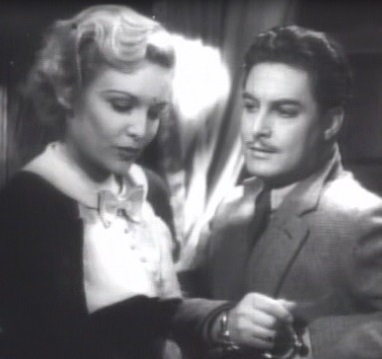
Join my friends and me as we talk about conspiracy films in this conspiracy-laden moment in history! It’s such fun talking film with my witty partners, Michael Keenan Gutierrez and Brian Wilkins. And I think you’ll enjoy our strange journey–from an early Hitchcock to the present moment. The 39 Steps and Dr. Strangelove start us off. Check out our podcast, Nobody Knows Anything, or go directly to Spotify or Apple Podcasts to find us. We’ll be posting more in the coming days on our Twitter and Instagram accounts. We begin by thinking about the important things, like how attractive you have to be in order to seduce an international spy with haddock. (Answer: Robert-Donat-with-a-mustache attractive.) For excerpts from our conversation, click below!
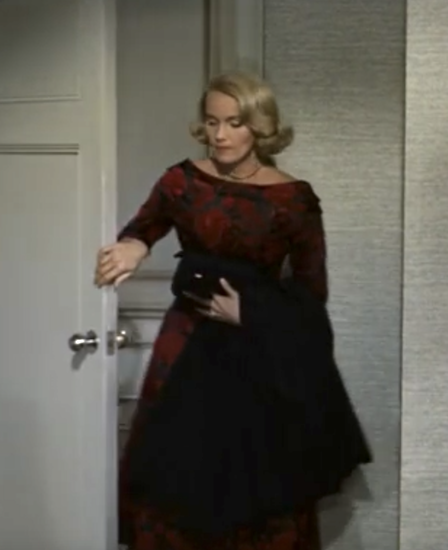
So the devious, sexy spy of North by Northwest, Eve Kendall (Eva Marie Saint), is trying to elude dupe Roger Thornhill (Cary Grant). She gets a secret call from her evil lover, Phillip Vandamm (James Mason), while she and Roger are together and writes down an address for their rendezvous.
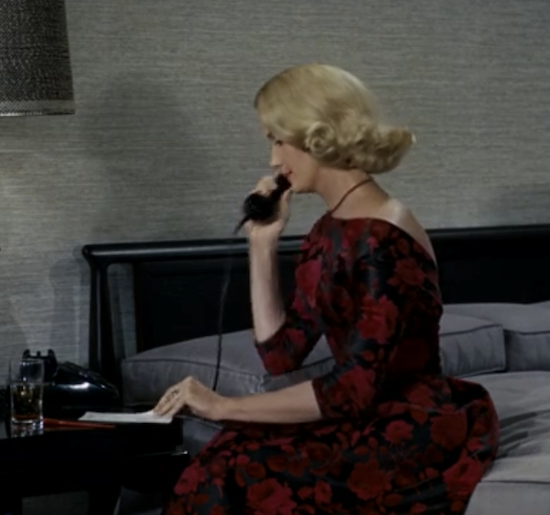
She carefully tears off the paper with the address, places it in her purse, and then—ready for this?—walks away without the notepad.
There’s that notepad, just a pencil trick away from exposing that address. Will she remember to bring it with her? Roger is watching!
Alas. She walks away.
Will she remember before she sneaks away? Of course, right? It was just a momentary oversight, her wits clouded by the sexiness of her target, Roger.
We see her pick up several other things.
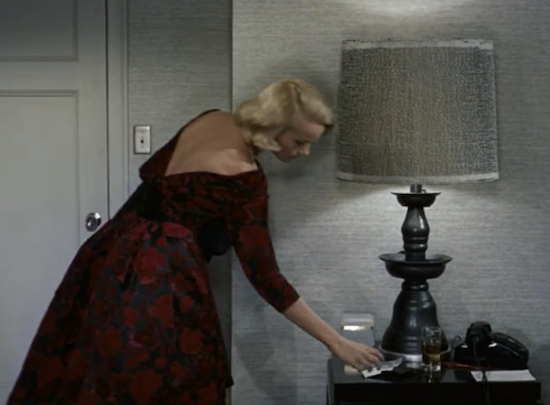
(Oh, that sly Hitchcock.)
Then she leaves the room, SANS NOTEPAD.
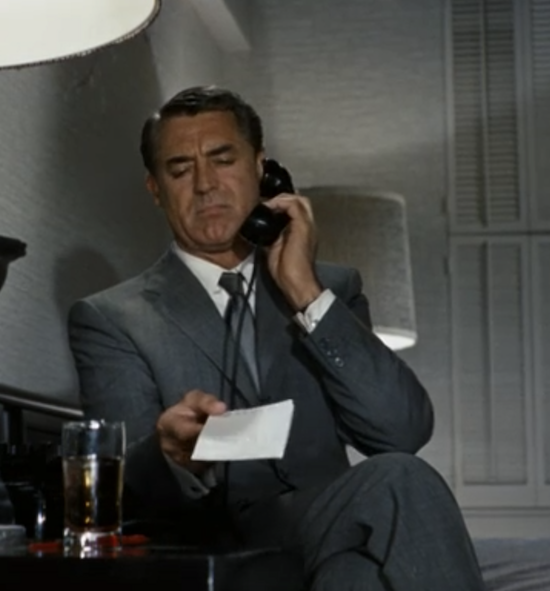
Roger, having watched five minutes of television/film in his life, of course knows the pencil trick. He holds the paper this way and that….(Why? What does he think he’ll see?)
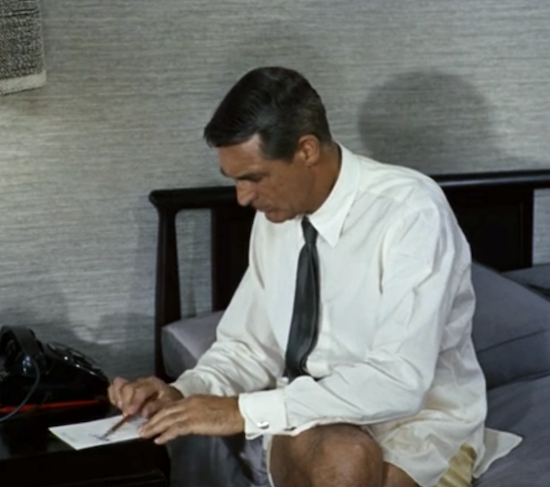
He takes out his pencil. He does the trick pant-less (in a kind gesture of Hitchcock’s, who knows his female fans).
There the address is. The super-secret address Eve was so anxious to hide.
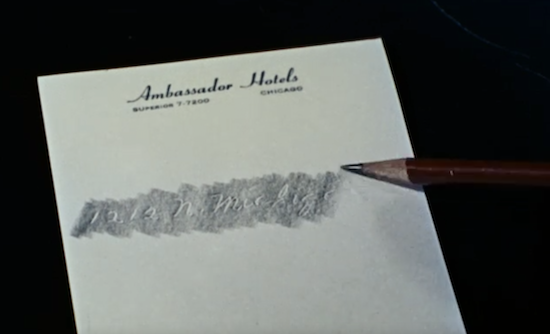
How long have you known this trick? Were you six? Maybe seven? I’m pretty sure Encyclopedia Brown taught me. It’s the kind of spy craft a child can understand and appears in every detective/noir/suspense film or TV episode that assumes its audience is young/dumb/abysmally ignorant of pop culture. Frankly, I would have thought such a plot device beneath Hitchcock. But he never did like giving his heroines much credit, so of course, this spy who has supposedly fooled JAMES MASON must be outsmarted by a different man. Who has a background in….advertising. And lives with his mother.
Yes, our sexy spy was outfoxed by a trick that Micky Mouse might have taught me in the 80s, back when Disney was hawking his image on magic trick books, and I thought that a wand that lifted a playing card with a hidden piece of string was really something.
True, the pencil maneuver wasn’t QUITE as old of a trick when Hitchcock used it, but it wasn’t exactly fresh in 1959. (Though, as my friend points out, today it might become new again, with so few people using pencils.)
I used to roll my eyes when I saw this pencil-and-notepad trick, annoyed by the lazy writing. But now I laugh. Because the Coens offered a send-up of this trite scenario in their—appropriately enough—satire of/tribute to The Big Sleep, The Big Lebowski. The Dude tries to outsmart a villain using the pencil trick. His excitement is intense at his own cleverness. But alas for the Dude, the “secret” isn’t what he expected. If you are of delicate sensibility, I wouldn’t advise it, but if you don’t mind some crude humor, enjoy this film clip and Jeff Bridges’ brilliance in it. (Watch that loopy run of his! And his “just acting natural” look at the end!)
There are many, many jokes about detectives in The Big Lebowksi. One of the most evident is that unlike those brilliant sleuths who with scant clues manage to figure out everything, the Dude can’t figure out anything—the mystery, which people are manipulating him, where his rug is. And unlike the driven fictional detectives who will sacrifice anything for the job, the Dude is pathologically lazy, sharing with them only some loose sense of ethics, questionable associates, and a love for alcohol (but with the Dude, of course, it’s not a hardboiled choice like whisky, but instead White Russians).
Yes, the Dude is not a good detective, and would be an even worse spy. But guess what, Hitchcock?
Even the Dude knows the pencil trick.
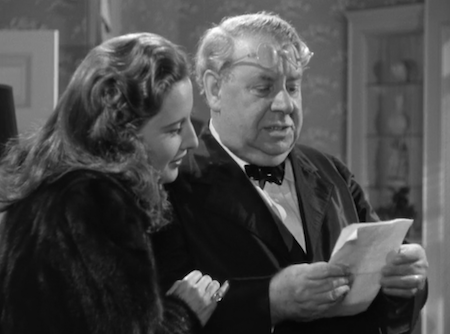
I can’t be bothered to root for a romance between anyone and Dennis Morgan, the heartthrob of Christmas in Connecticut. He always strikes me as smug, and his acting is pretty basic. His character in this famous xmas film doesn’t help: As Jefferson Jones, he’s entitled, dishonest, and smarmy—from promising an engagement to get steak, to seducing a married woman.
Not that Elizabeth Lane (Barbara Stanwyck) is a pinnacle of honesty. And she’s tempting Jefferson every step of the way. But were it for the romance, I would have ignored this perennial Christmas choice in favor of other films, especially for the far sweeter relationship between Stanwyck and Fred MacMurray in Remember the Night.
But this film gets serious props for all of its non-romantic elements, and that’s what keeps me coming back to it, year after year. In order of increasing importance, here’s why I love this film:
Reason 5: Elizabeth Lane’s (Barbara Stanwyck’s) hilarious ignorance about and disinterest in children. From not being able to remember the gender of her baby (calling the baby “it”), to her surprise that swallowing a big watch could be fatal, this woman takes on the men’s typical role when it comes to baby knowledge in romcoms—and it’s rare to see that even today.
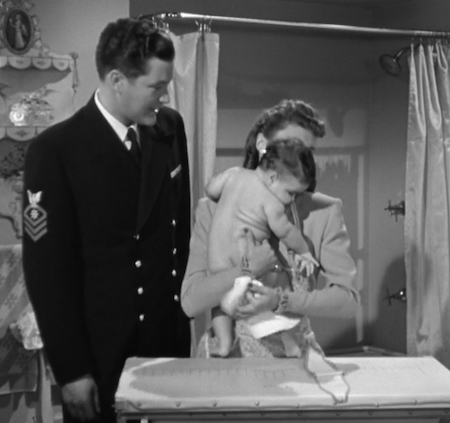
I particularly love when she just throws the diaper after she puts it on wrong.
Reason 4: Watching Barbara Stanwyck flipping pancakes. The scene when Uncle Felix (S. Z. Sakall) is trying to teach Elizabeth to prepare pancakes is hilarious.
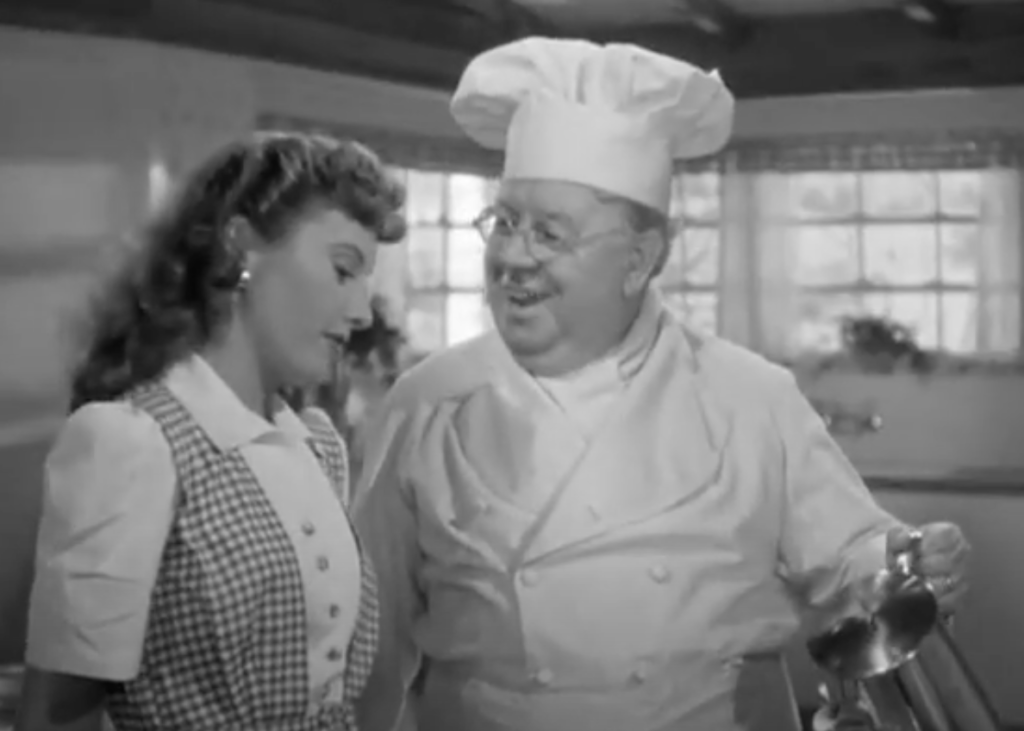
That pleased look when she unexpectedly succeeds at flipping her flapjack later on is so beloved that you’ll see it in almost any Stanwyck documentary.
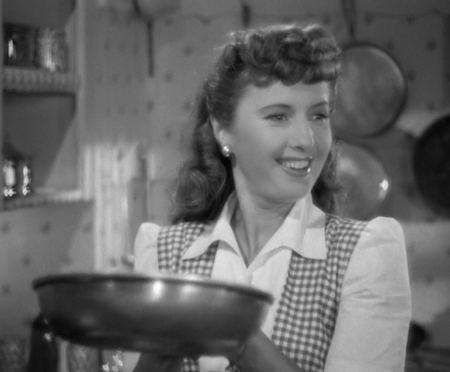
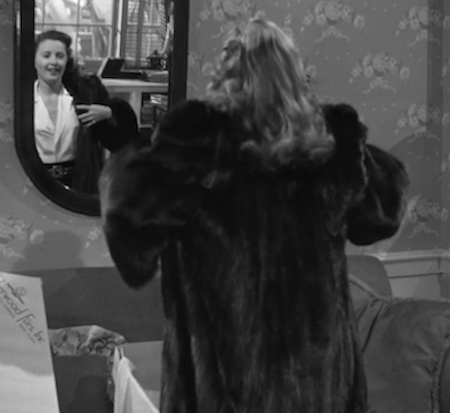
Reason 3: Elizabeth buying a fur coat for herself. Sure, I wish it weren’t fur, but her decision to buy a luxurious present for herself and not wait for a man to do so is the top reason this movie is well loved by my aunt, and I can see her point. Elizabeth is an accomplished writer and has earned the right to show off her successes, without waiting for anyone else to give her her due.
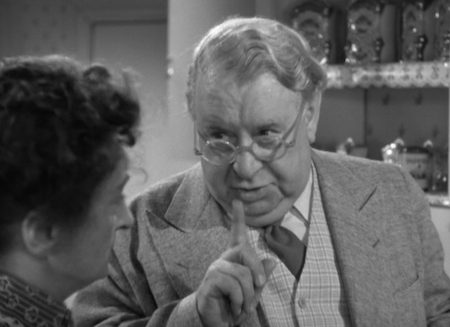
Reason 2: Uncle Felix, as played by Sakall (better known as Cuddles). I could listen to him say “catastrophe” all day long. What a joy this man is to watch, in every film. (I just wish I could track down his autobiography–still trying to get ahold of it!)
Reason 1: Barbara Stanwyck. Classic movie fans are obsessed with Stanwyck, but she’s often forgotten in the wider community–with the exception of this film. Since I think she was among the, if not the, most gifted film actresses ever, I’m so glad that at least one performance keeps her on people’s radar—even if they never realize her comic timing, charm, and talent are what make them want to keep watching this film again and again and again.
I hope you’ll watch this great film this Christmas—or for the first time if you haven’t yet. Just forget about the “rom” of the rom-com, and you’ll love it.
This is part of the Happy Holidays Blogathon! Check out the great entries here.
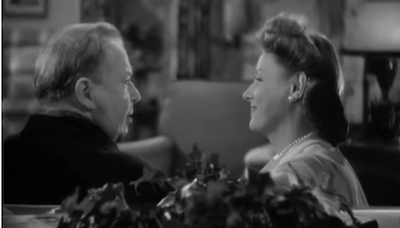
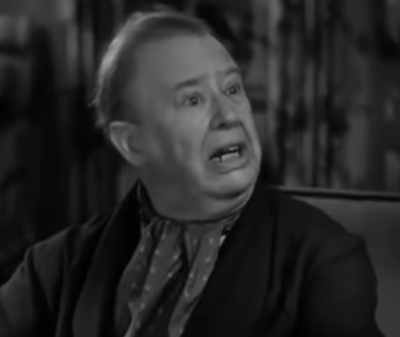
Together Again (1944) is one of those curious rom-coms that’s so entertaining it’s hard to understand why it isn’t well known. It pits a wised-up, small-town, widowed mayor (Irene Dunne) against her crafty father-in-law (Charles Coburn). She is devoted to her town and to commemorating her beloved husband. He thinks she should ditch the politics and get some romance, and in typical bulldozing Coburn fashion (i.e., The More, the Merrier) will do anything to make that happen. The verbal fireworks between them owe much to screenplay writers Virginia Van Upp and F. Hugh Herbert. But they might owe even more to the magical combination of Coburn and Dunne.
Yes, this is a rom-com, and Charles Boyer, who plays the mayor’s romantic interest, has great chemistry with Dunne as well. (Witness Love Affair, the far superior predecessor to the anemic An Affair to Remember).
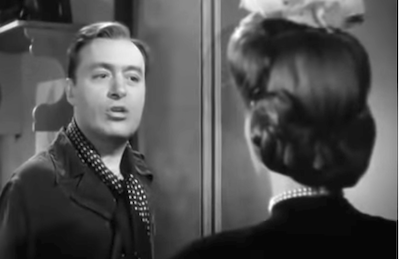
But sizzling as their reunion is (thus the otherwise baffling title of the film), you feel like shooing it away for more airtime with Dunne and Coburn and for more scenes between Mayor Crandall (Dunne) and her constituents.
I’ve chosen to write about Together Again as part of the Classic Movie Blog Association’s awesome political blogathon. Politics might not be the heart of this film, but Crandall’s job leads to some interesting feminist moments. Here are some of the ways the film was of—and ahead of—its time.
Of Its Time
The Message that Romance Is Always More Important than A Woman’s Job
Coburn’s character assumes that his daughter-in-law is just working because she can’t get over her husband’s death. That’s pretty insulting. The assumption that she can’t possibly be truly happy without a man in spite of a meaningful job? That’s even worse.
The Suggestion that Instantly Quitting a Job and Leaving Your Town in the Clutches of Your Jerky, Manipulative Opponent Is Just Fine…If You’re a Woman.
Yeah, that’s messed up.
Ahead of Its Time
A Female Mayor
There wouldn’t be an ACTUAL Vermont mayor without a Y chromosome for almost 40 years after this film’s premiere.
A Woman Who Wins Sparring Matches with Everyone
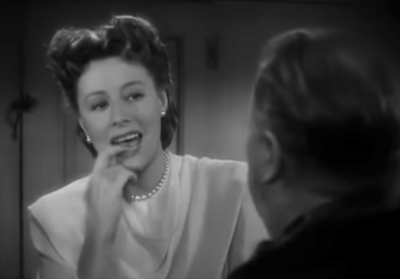
Crandall might ditch it all for love in the end, but she’s the wittiest, smartest character in the film—and outmatches every man in it. It takes her own need for romance (and doubts about the town) to make her change course.
A Female Who Succeeds In Spite of the Whiff of Scandal
Mayor Crandall wins the election even though there’s a rumor she’s involved in a sex scandal. True, the townspeople don’t think it’s even possible she could have been at a sexy nightclub—which in a way, is a kind of insult. But for a sex rumor to not end a woman’s political career? More than we might expect in a 1944 film. (And sometimes in real life today….)
A Leader Who Stands Up to Difficult Male Constituents
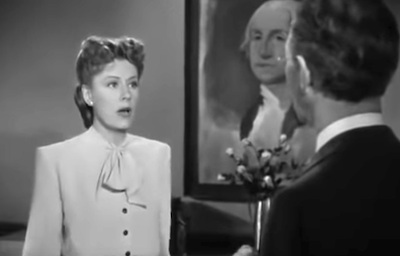
Crandall doesn’t take her townspeople’s complaints lying down. Here’s one of my favorite scenes (my long-time readers must forgive me for repeating this from a previous post): Mr. Witherspoon, who is in charge of the town’s sanitation, keeps leaving the south side blanketed in “a lot of old potato peelings” and is full of excuses for his neglect:
Witherspoon: “It’s the manpower, your honor.”
Crandall: “Manpower, my eye. Use womanpower then.”
Witherspoon: “Women? To collect garbage?”
Crandall: “Why not? Women see more garbage in their lives than men do, don’t they? They might as well get paid for it.”
As for the romantic plot between Crandall and George Corday (Boyer), it’s silly but fun, hinging on a statue, a hat, and some lightning.
Even if the mayor aspect of the film doesn’t interest you—even if you don’t like Boyer or Dunne—ask yourself a simple question: In this dispiriting time, don’t you think a healthy dose of Charles Coburn may be just what the pandemic ordered?
Is there anything scarier than Bette Davis playing nice?
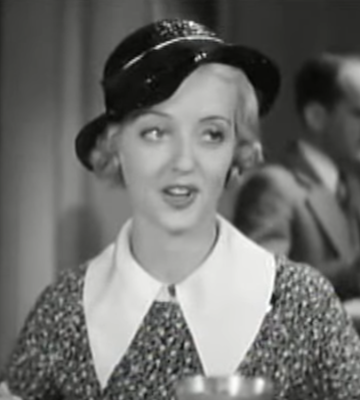
I see that sunny face, that sugary smile, and I’m just waiting for the other sledgehammer to drop. It’s unnerving in films like Three on a Match (1932) that she acts like a sweetheart throughout. It’s a terrible waste, of course. But early Hollywood didn’t know what they had in Bette. (Kind of like Amy Sherman-Palladino, who had Melissa McCarthy in her Gilmore Girls cast playing an annoying, bubbly local instead of, I dunno, someone funny. But I digress.)
Three on a Match is a peculiar, truly half-baked film in many ways. But it’s also a riveting one, and chock-full of stars. And its pace is breathless (it barely passes the hour mark). I’m not going to spoil the big plot developments near the end–too interesting–but I will spoil some of the earlier developments, so be warned.
First of all, when you have Edward Arnold and young Humphrey Bogart playing scary gangsters, you know you’re in for a good time.
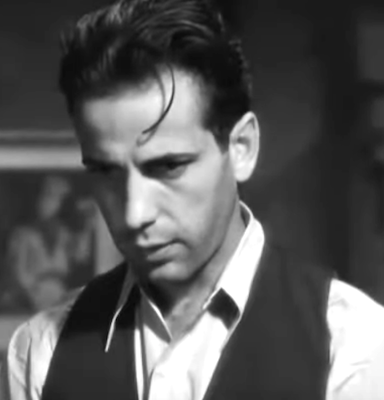
(Not that their danger combined holds a candle to the terror that is sweet Bette, but….)
You have Joan Blondell, playing to type (which is always marvelous).
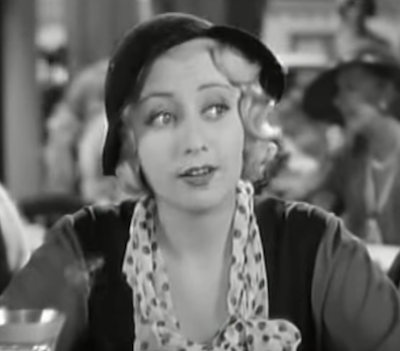
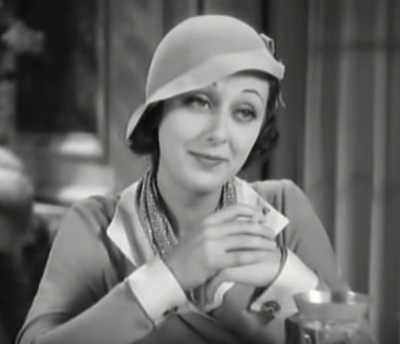
Warren William plays an unexpectedly bland part. And then there’s Ann Dvorak in a performance that should have secured her career, especially after her breakout in Scarface the same year.
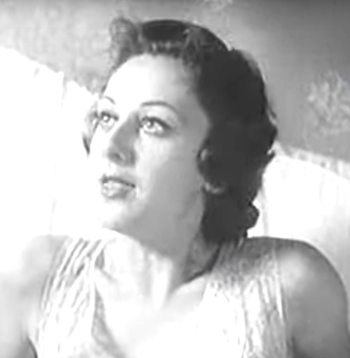
The premise of the film is fascinating; it’s from an old WWI superstition about the danger of lighting three people’s cigarettes from the same match, an act said to doom one.
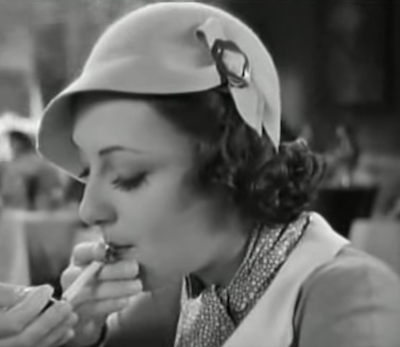
Three former schoolmates–played by Blondell, Dvorak, and Davis–get together to catch up on their lives and light that match, and soon one’s fate will rise, the other’s will fall, and the third’s (Davis) will be largely irrelevant, her presence simply for the sake of the film’s title.
The doomed character emerges early on because lovely Vivian (Dvorak) is unhappy despite a seemingly perfect husband, house, and kid, and while we modern viewers quickly identify her as depressed, no such word is uttered in the film. What’s fascinating is that though Vivian ditches her husband, starts sleeping with a gangster, neglects her child, and becomes a drug addict, the movie still extends sympathy for her, just as The Hours would do years later for women dissatisfied with their roles. “Pre-Code,” you remind yourself. “Pre-Code.” Vivian’s lust for the gangster is startlingly evident, as is her later addiction.
But where the film excels in a nuanced portrayal of a complicated woman, it stumbles with the supposed bond between the three schoolmates. When Vivian hooks up with the gangster, she hides from her husband, who is desperate to find her and their son. Mary (Blondell) gives her away. We understand that betrayal, given the squalor the son is living in. But then Mary takes Vivian’s place at her husband’s side. This is a pretty shady act, calling her motives into question. Yet we’re not asked to see it that way. It’s like the film is saying, “Well, Vivian wasn’t taking advantage of this wealthy dad, so someone should.” Vivian’s lack of anger for Mary could have been very interesting–if the film had suggested that there should have been any. And as for the third schoolmate, Ruth (Davis), why is she in the film at all? All Ruth does is read while babysitting Vivian’s child. And smile. And smile some more. It’s unnerving and unnecessary, and if you were as terrified as I was by What Ever Happened to Baby Jane? and The Little Foxes, you’ll find it downright creepy.
Just when you’re thinking this bizarre relationship between the women isn’t really working for you, the film turns sinister and you can’t turn away. Bogart gets his chance to shine in a truly evil role.
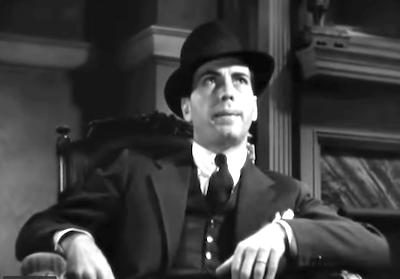
Vivian gets boxed into a hopeless situation, and you fear for her, wondering what she can do to retain some smidgen of the woman she was before addiction took hold.
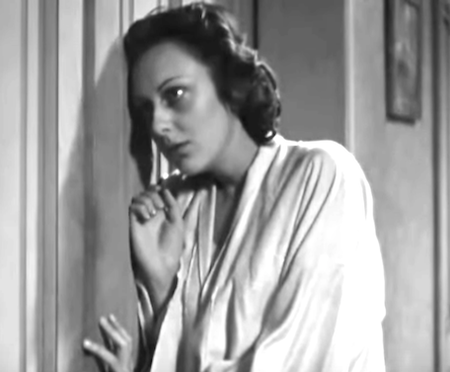
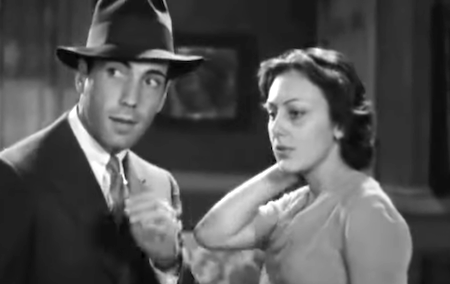
Dvorak holds her own against Bogart in powerful scenes that make you wonder why you know so little of her.
Alas, it’s a familiar story: Dvorak ticked off the bosses. It turns out she objected to the studio’s choice to pay her the same amount as her (very forgettable) son in Three on a Match, but she did enjoy the year-long honeymoon she took with her husband instead of putting out films for them.
I like to imagine Dvorak taking off on that honeymoon, leaving behind the sexists who would soon censor sympathetic characterizations of complex women, like Vivian. It might not have been a long-lasting victory, but it makes me smile just the same. And if you watch her heartbreaking, memorable performance in Three on a Match, you’ll feel the same.
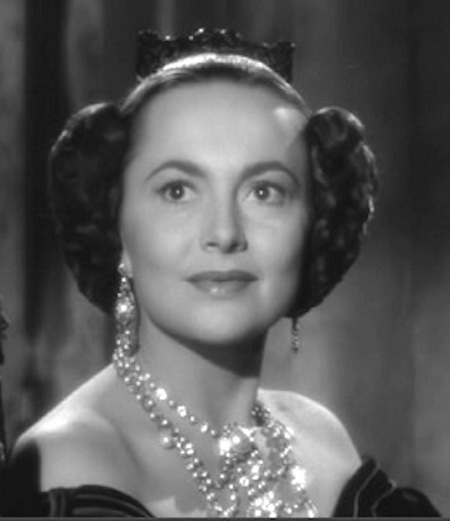
It’s always bothered me that Olivia de Havilland; the passionate, strong-minded, long-lived Hollywood star; is best known for a meek maternal role.
Did she perform it well? Oh yes. She imbued Melanie with incredible strength, empathy, and grit. But to be best known for Gone with the Wind in your obituary isn’t exactly a selling point in 2020. The mawkishness of the role has always annoyed me, especially because Olivia de Havilland is most riveting when she’s hard boiled. (She would have been great in noir.)
This was, after all, not a meek woman, convincingly as she nailed that famous steel magnolia part. This is the actress who sued her studio for extending her contract—and won. (A stupefying victory, given the long list of actresses whose studio fights got them nowhere and killed their careers.) And so I’d like to highlight a few of my favorite roles, which bear no resemblance to Melanie.
The Heiress (1949). I’m not alone here. This film won her an Oscar, an award she richly deserved. She plays a shy, undervalued, vulnerable “spinster” wooed by a handsome man (Montgomery Clift) who is likely after her wealth. Her growing strength as she begins to suspect him and question her father is something to see. Wow.
My Cousin Rachel (1952). A sexually and socially confident, cosmopolitan widow (de Havilland) meets the naïve young cousin/heir (Richard Burton) of her dead husband. At first, he suspects her of murdering her husband, then he falls for her, and then he suspects her again. Did she, or didn’t she? The book version leaves the answer open, the movies less so. The 1952 film itself is a mixed bag, but when it comes to embodying a fascinating heroine, de Havilland knows what she’s doing. (You know I think so when I say Rachel Weisz, whom I love in everything, couldn’t hold a candle to her in the remake.)
Hush … Hush, Sweet Charlotte (1964). I love some bonkers Bette Davis-de Havilland banter. Is it as fun as Whatever Happened to Baby Jane? No, what could be? But it’s still a blast to watch, thanks in large part to de Havilland’s scheming character.
The Adventures of Robinhood (1938). OK, this is a bit of a sentimental choice, but de Havilland doesn’t play a weakling version of Maid Marian. She’s got some serious spirit, especially for the time this film was made. de Havilland’s stunning beauty in it explains the string of hearts she left in her Hollywood wake. And Errol Flynn’s and her dazzling chemistry, not to mention their ridiculously good looks, reveal why they were paired together so frequently. Plus, the film is just a hoot, with the cast clearly having Ocean’s 11-level fun on the set.
There’s much more to say about de Havilland. This list alone shows her incredible range as an actress. I don’t have the expertise to discuss her recent lawsuit, sister feud, or any of the myriad other topics that make her a compelling subject. I strongly recommend you check out some of my peers’ posts on The Classic Movie Blog Association’s blog roll (see right column). de Havilland has never been one of the stars I follow. Frankly, I find her a bit scary. Intimidating. Hard to know. (About as far from Melanie as it’s possible to be.) But you can’t ever discount her. And when she’s on the screen, you don’t want to watch anyone else.

I think it was about five minutes into Psych‘s new movie that I realized just how much I was smiling.
How to explain the effects of Psych? It’s my emotional yoga. When I can’t sleep, I lie on the couch and play episodes till I do. It’s my white noise when I’m doing mindless busy work. And when I really need a pick-me-up (and who doesn’t right now?), I can put on an episode–even my least favorite–and laugh so much. (This despite the fact that I’m surely close to having the whole show memorized by now.) It doesn’t matter if I’m sad, worried, stressed; Psych‘s hilarious dialogue and antics always makes me smile. And the movies are no exception.
Lassie Come Home is both a typical episode and a tribute to Timothy Omundson (Lassie), whose stroke prevented his full participation in Psych: The Movie. But sweet as the tribute to Lassie is, it’s the Shawn and Gus team-up that’s the highlight, as always. I could listen to them banter all day long. This is still the best bromance I’ve seen on TV.
A favorite moment is when Shawn and Gus are trying to get a man to admit he’s faking an illness by tickling him. Shawn (James Roday Rodriguez) begins the badgering of the man like this: “Tough guy from the old neighborhood. Probably didn’t even cry when Liz Berkley got addicted to speed in Saved by the Bell.“
Now that’s a pop culture reference!
As usual, there were some funny cameos, with Sarah Chalke, Scrubs alum, directly referencing her scrubs, and Kadeem Harison from A Different World showing up, reminding fans that Dwayne Wayne was Gus’s (Dulé Hill) early hero (see that bizarre werewolf episode, “Let’s Get Hairy”–Season 4, Episode 8). Chalke was an inspired addition–she fits right in. My other favorite new character was Morrissey, Chief Vick’s (Kirsten Nelson) dog. And current fan or not, you will love a wonderful breaking the third wall moment, when Shawn refers to Psych fans (Psychos), and Gus rips him in response.
Way back when I started this blog, I recommended The Thin Man to Psych fans. But that recommendation goes both ways. Are you a fan of delicious flavor–i.e., funny dialogue? Do you love pop culture references? Do you prefer the relationship between detectives (and their loved ones) to the mystery itself? Do you enjoy some childishness in your leads, as long as it’s funny? (If you’ve forgotten how immature Nick Charles is, watch his classic performance at his in-law’s house in After the Thin Man.)
If you share my preferences, why are you waiting to watch the series, much less Lassie Come Home? I envy you the eight seasons and three films (if you include the musical) you have yet to watch! And if you’re already a Psych fan, you’ll be so happy to have Shawn and Gus back–even for a little while.

I’m sorry, my readers, for being so tardy with my posts. I’m still recovering from an overloaded June. But while I was buried in projects, something very nice happened! Thank you, Brittaney of The Story Enthusiast, for honoring me with the Sunshine Blogger Award! It’s an award for those who inspire positivity and creativity in the blogging community, and I’m so grateful to her for considering me worthy of it.
Check out her creative, clever blog. Her answers to the questions she was asked alone show just why she deserved the Sunshine Blogger Award herself. I particularly like her unusual take on Carole Lombard in a recent post, which makes me want to check out some of that star’s dramatic films!
Those nominated for the Sunshine Blogger Award thank their nominator and link to his/her/their blog, answer the 11 questions their nominator asked, nominate up to 11 new blogs to receive the award and write them 11 new questions, notify nominees via comments on one of their posts, and list these rules and display the Sunshine Blogger Award logo in their post and/or on their blogs.
First of all, Brittaney of The Story Enthusiast, here are my answers to your great questions!
1. What British or International film would you recommend to a friend who has never seen one? The Red Shoes. It’s beautiful, haunting, and very weird. Can’t take your eyes off of it.
2. Which classic film director do you prefer and what is your favorite of their films? Preston Sturges, especially Lady Eve.
3. Which character actor or actress do you think would have made a great lead? Jack Carson. Charming, funny, handsome. Steals every scene he’s in.
4. What child actor do you believe should have had success as an adult but didn’t? Peggy Ann Garner. I adored the book A Tree Grows in Brooklyn, and she managed to make me love the film too—quite a feat.
5. What film do you love, but dislike the ending? Wait Until Dark. It’s about to end well, then that submissive moment. Doesn’t fit. Doesn’t work. Makes me angry.
6. Whose onscreen wardrobe do you covet and would like to claim for your own? In theory, Shanghai Lily (Marlene Dietrich) of Shanghai Express. Because I want the style and moxie to pull off feathers and sequins during the daytime, and on the most trivial of occasions. (I would have liked to see her Zoom sessions in quarantine.) In real life, I’m more of a jeans woman, but that wardrobe looks FUN.
7. Which original film do you think could be improved as a remake and who would you cast? The Mad Miss Manton. So much wasted opportunity there. A young woman and her socialite pals solving crimes? That could be so much funnier than the original. Find some comedic actresses who have some versality as writers/directors/producers/musicians so that they they can ad lib–say Issa Rae, Awkwafina, Abbi Jacobson. Add in Melissa McCarthy, Bette Midler, and Christine Baranski as their wiser elders. Rachel Bloom writes and directs, with bonkers feminist musical numbers. And as for the Henry Fonda character? Not sure he’s needed.
8. Which classic film actor or actress do you think would be successful in today’s film industry? William Powell. He’s an amazing smartass on film, and everyone would love following him on Twitter/Instagram.
9. What film trope do you never tire of seeing? The witty female sidekick. Especially if it’s Eve Arden.
10. If you could adapt a piece of classic literature that has not yet been made into a film, what book would you choose and who would you cast in the main roles? Evelina would be fabulous onscreen. Given Elle Fanning’s performance in The Great, I’d cast her, and maybe Nicolas Hault as Sir Clement because he’d have enough humor to make those speeches (which would be abridged) funny as well as annoying. Carol Kane would make a great Madame Duvall. Lord Orville? Maybe James Marsden, who could be adorably perfect.
11. Which of today’s modern actors or actresses do you think would have been successful in classic films and why? Christina Applegate would have rocked classic screwball comedies. She has the presence, the timing, the zaniness, and the dry humor. She even has the look.
For this award, I am nominating film (or sometimes-film) bloggers I admire who are fairly new to me/whom I haven’t given tributes to yet. Thank you for your great work! (If any of you nominees don’t have the time to complete this Sunshine Blogger Award post on your own blog, just know that I am a fan and wanted to give you a shout-out.)
Hollywood Genes
Dubsism
The Classic Movie Muse
Classic Film Observations & Obsessions
Old Hollywood Films
Make Mine Film Noir
Silver Screen Modes
That William Powell Site
A Small Press Life
Musings of a Classic Film Addict
Down These Mean Streets
Here are my questions for you:
Thanks again, Brittaney of The Story Enthusiast!
PBS produced a new documentary on my favorite movie wordsmith and feminist rebel, Mae West. Dirty Blonde is coming. Check out the preview to see the subjects talking about her (some welcome surprises), and to hear some of your favorite Mae West quips.
I can’t wait! Check it out on June 16 at 8/7c on PBS and on their site.
