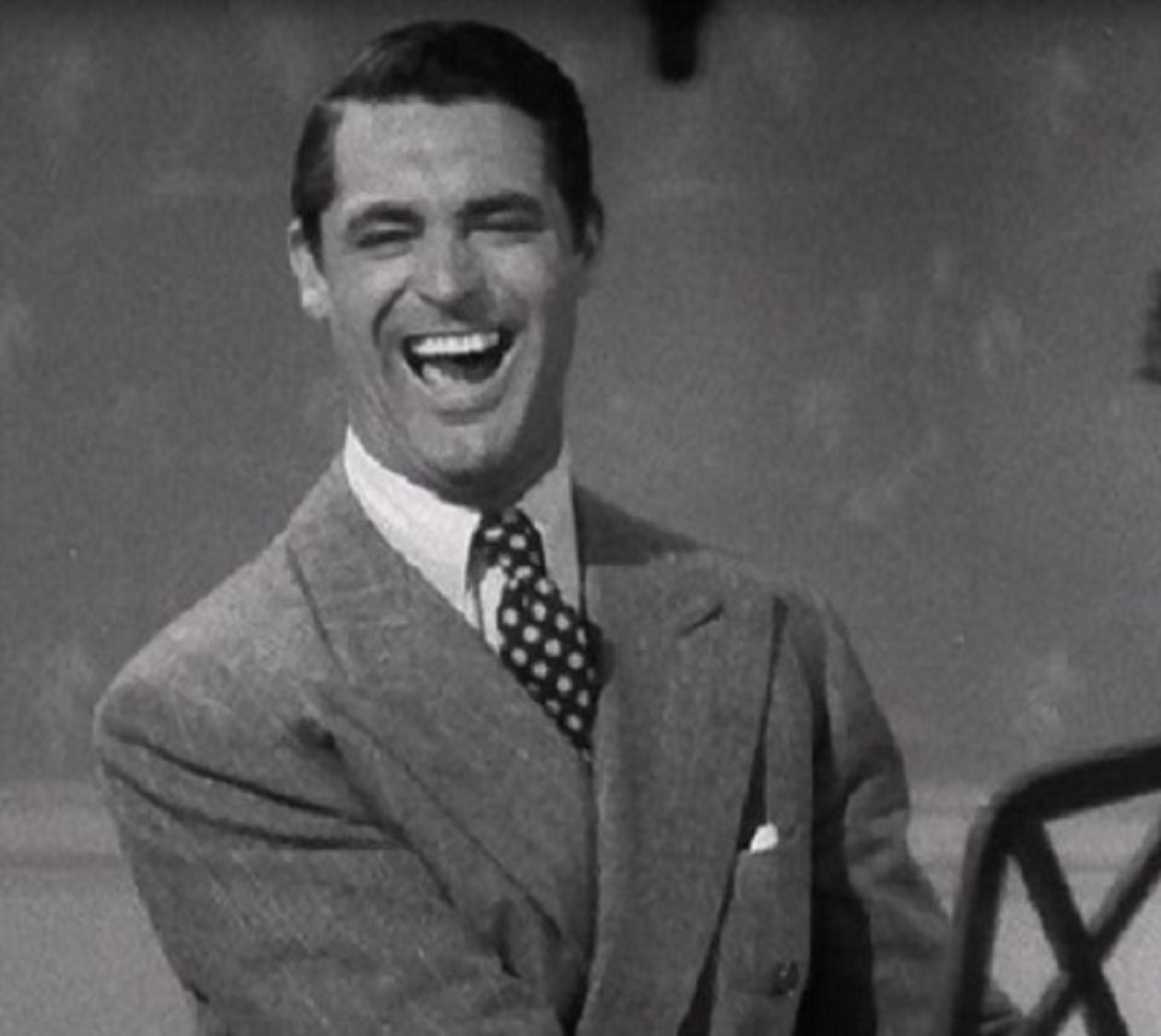
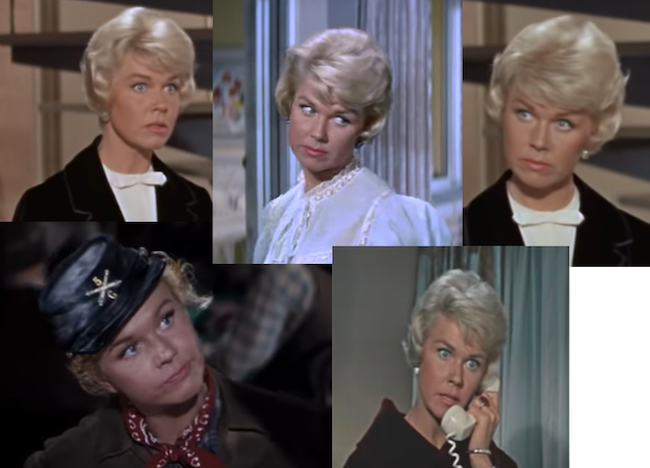
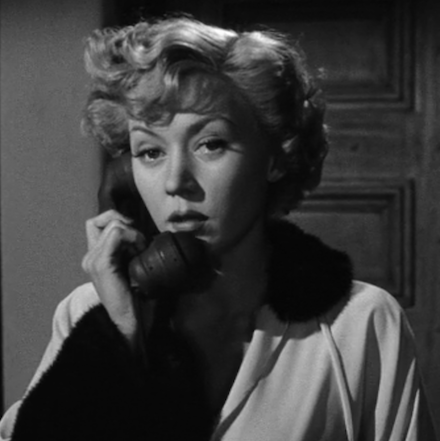
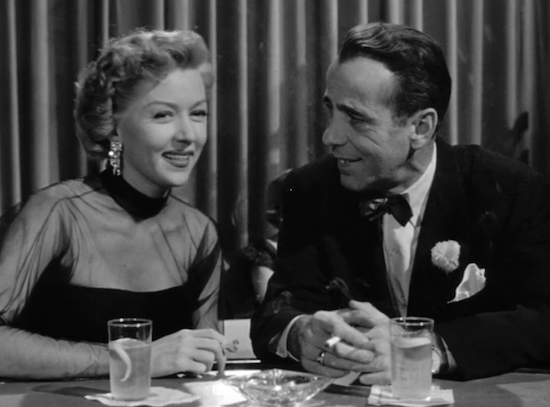
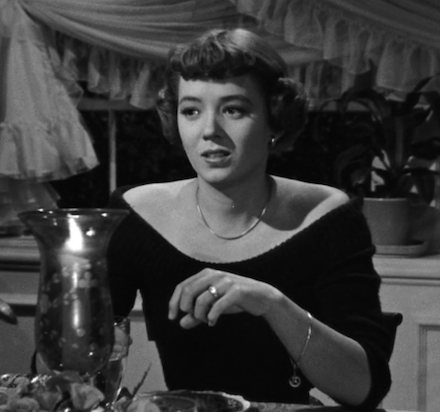
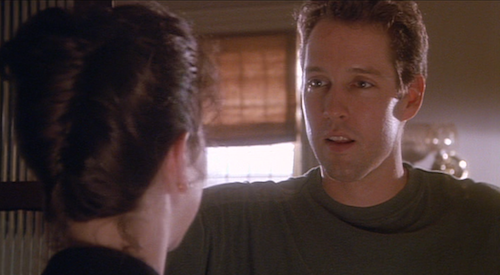
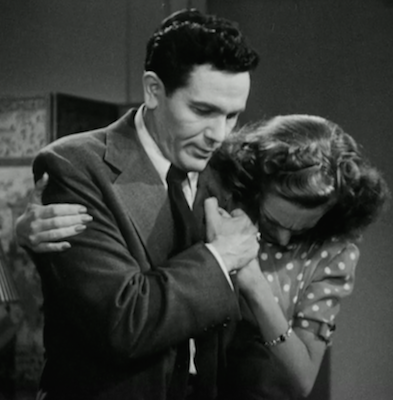
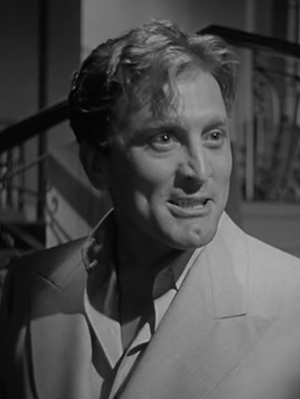
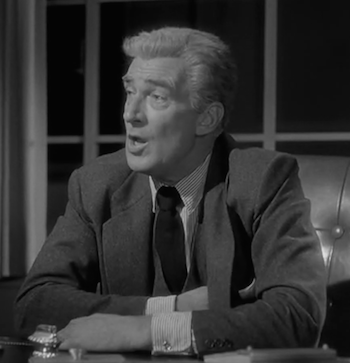
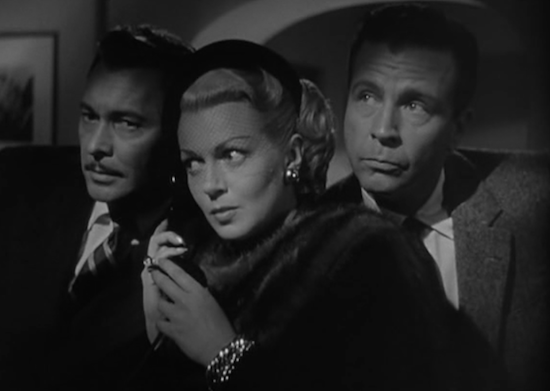
Today a man I know well surprised me, and I could tell I had one of those hilariously odd expressions on my face in response. When I heard a couple hours later that Doris Day had died, it seemed to me that I’d inadvertently paid tribute to that marvelous, strong, very funny woman. There will never be anyone who has a more entertaining or endearing response to male oddities than Doris Day. So today I want to say how lucky we are–among many, many gifts she gave us–for the hilarious reaction shots only she could deliver. Whether disdainful, amused, outraged–or best of all, all three–Day’s expression just nailed a sentiment….And so today, Doris, this feminist sends her heartfelt thank you. I couldn’t have said it better.
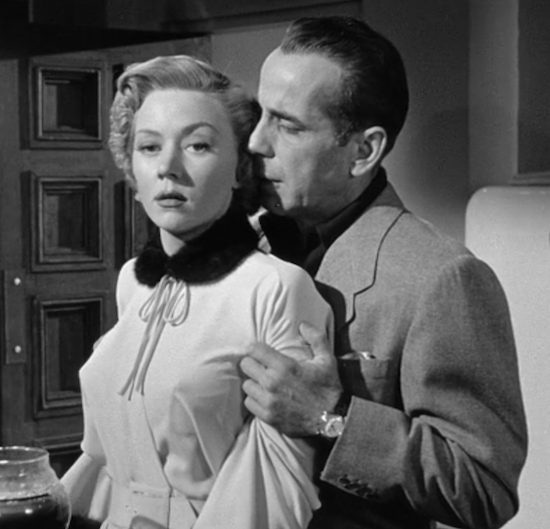
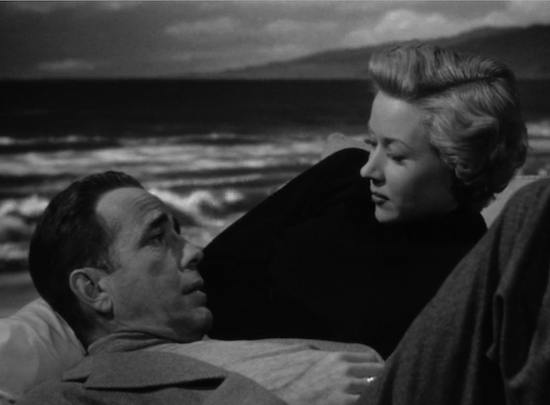
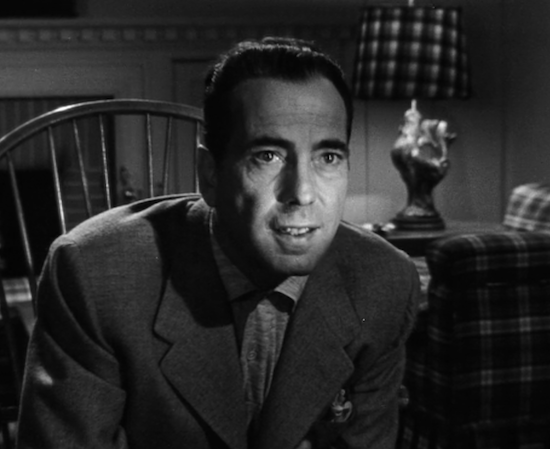
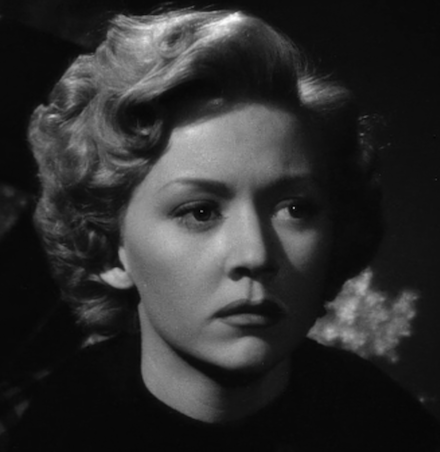
I was wowed by Nicholas Ray’s In a Lonely Place. The film, it seemed to me, was ahead of its time in its powerful portrayal of domestic abuse. On the surface, the film explores whether the hero, Dix (Humphrey Bogart), murdered an innocent woman. His girlfriend, Laurel (Gloria Grahame), begins their relationship in romantic euphoria.
But, as in Suspicion, Laurel begins to suspect he might have done it.
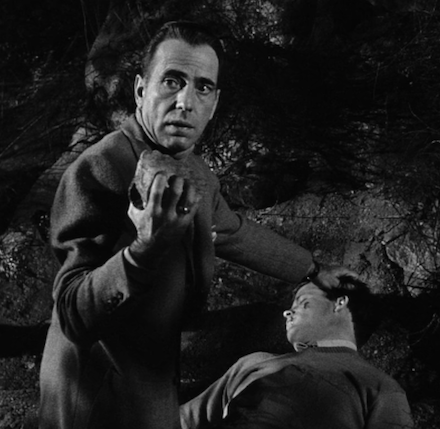
The did-he, didn’t-he soon becomes a “Don’t worry which, Lady. Run.” After all, Dix likes to act out murder scenarios and then mimics the same movements when smoking with Laurel. He won’t allow her to receive a phone call or prescription he doesn’t monitor. He keeps her economically dependent on him. He justifies beating people up and actually considers bashing heads in with rocks.
And just in case she has any doubts about how this is all going to end for her, his former girlfriend reported Dix for breaking her bones.
The story is cast from Laurel’s (Gloria Grahame’s) point of view, and haunts the viewer because Dix can be charming, can be loving, can be apologetic. He does come back with “armloads of gifts” after his scary behavior, not just for her, but for victims of his violence. He is sweet to an alcoholic ex-actor, shows more compassion for him than anyone else. The film sympathizes rather than judges Laurel for staying, reminding audiences that an abuser can be contrite and thus leave the woman who loves him off-balance, uncertain whether to trust he’s changed. And though Laurel’s friend cautions her against him, his friends urge her to stay, to understand, to give him a chance. Meanwhile, we get glimpses of his mind: he can only see unquestioning faith in him–which would be difficult, given his actions–as acceptable. After a near-homicide, he coins a line for a screenplay describing his love for Laurel: “I was born when she kissed me, I died when she left me, I lived a few weeks while she loved me.”
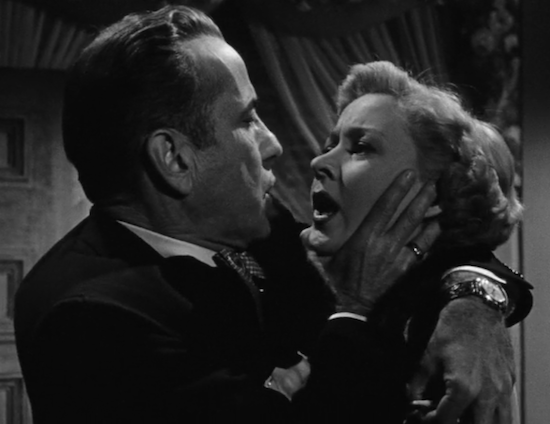
Personally, I found this line chilling. Yet the director, Nicholas Ray–who was experiencing stresses in his marriage to Grahame at the time–gives a romantic packaging to not just that line, but to the final scenes of the film. He seems to imply–even after Dix strangles Laurel and nearly kills her–that this all would have turned out well had there not been that whole did-he-murder-the-woman doubts. And more disturbing yet, both current and contemporary reviewers frequently characterize this toxic relationship movie as a “tragic love story,” and certainly many scenes in the movie would seem to back up that assumption.
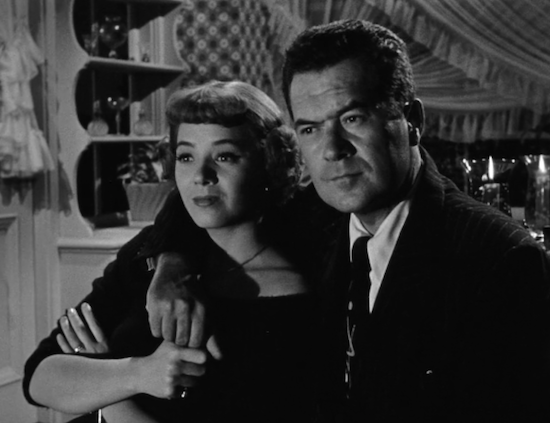
I turned to the source material to understand the confusion in tone, and was in for a shocker. Dorothy Hughes wrote In a Lonely Place as a kind of The Killer Inside Me of its time; we know from day 1 that Dix hates women, that he kills them regularly, that he thinks he’s justified because after he came back from the war, women saw through his hustling ways; they didn’t fall all over him, as they had when he was in uniform. His former Air Force friend is now a cop and has married a woman, Sylvia (Jeff Donnell), whom Dix distrusts and (we soon learn) underestimates.
She quickly sees through Dix’s veneer of humanity.
Dix hates her for it in the novel, and plots her death. Think of Dana Andrews in The Best Years of Our Lives, if on encountering his wife’s disappointment in him, he decided to go on a murderous vendetta against anyone who shared her gender.
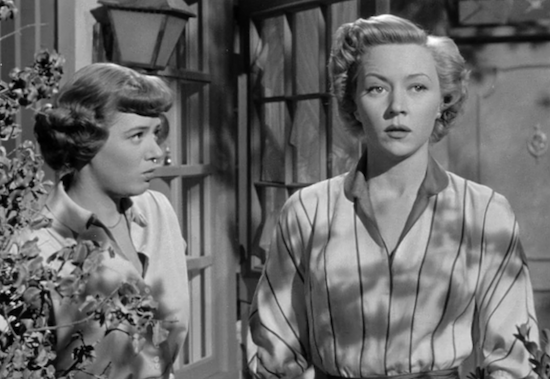
The best scenes in Ray’s film are moments that capture the stark feminism in the book, in which only the women see Dix for who he is, and only they can succeed in stopping him. In a sharply rendered scene in the film, Laurel and Sylvia are honest with one another: Laurel in her doubts about Dix’s character, Sylvia, in confirming (reluctantly) that Laurel should have them.
In the book, Dix’s demeaning treatment of women–especially Laurel–is accompanied by a conviction that Laurel is taunting him, trying to make him jealous, when she’s simply putting the brakes on a relationship that he’s taken too seriously, too quickly. As writer Megan Abbott so brilliantly put it: “After reading In a Lonely Place, you find yourself looking, with a newly gimlet eye, at every purported femme fatale, every claim of female malignancy and the burning need of noir heroes to snuff that malignancy out.”
In Dix’s eyes in the book and film, Laurel is a femme fatale. She gave her love, then she took it away–all because she didn’t trust him enough. But in our eyes, she’s just fallen for the wrong guy; calling a man you love a “madman” doesn’t usually suggest a relationship is headed for sunshine and rainbows. Whether Dix killed a woman or not, Laurel isn’t wrong to ask, “There is something strange about Dix, isn’t there?” after he bloodies a fellow driver to a pulp or “What can I say to him–I love you but I’m afraid of you?” when he looks at her in the scary fashion Bogart had mastered since The Petrified Forest.
At some point you gotta ask, Is any guy you’re relieved and surprised didn’t kill someone worth sticking around for?
I admire both the book and film because they make me look back at so many of the noir novels and movies I’ve admired, and ask that question Abbott challenges me to consider: Was this woman a femme fatale? Or was she just an independent woman who didn’t say yes?
This is part of the Classic Movie Blog Association’s Femme/Homme Fatales of Film Noir blogathon. Check out so many great entries here.
Let’s review: Best film Oscar for the director of Kingpin and Dumb and Dumber? 1 Best film Oscar for the director of Do the Right Thing: 0 1990: Do the Right Thing: No Oscar; Driving Miss Daisy: Oscar. 2019: We have two strong films up for best picture by black directors about what it means to be black, Black Panther and BlacKkKlansman–one director a promising newcomer who even made a deep-into-the-Rocky-franchise film memorable, the other one of the most original and gifted directors of our time. And who beats them? A white Farrelly brother, who once directed Kingpin (a film so stupefyingly gross even a dumb-humor fan like me was appalled). And what was this winning film about? Being black in America, a film starring, of course, a white man.
I was afraid to watch The Long Goodbye. It’s a favorite book, so much so that I starting drinking gimlets for a couple years, even though I hate gin*. It was an odd affectation. Even I knew drinking a grandpa concoction wouldn’t impress anyone, and would only mystify bartenders. But it gave me some secret romantic joy to drink one, even on non-memorable nights (and many nights in my late 20s were just that). With its appreciation for short-lived and missed connections, Raymond Chandler’s masterpiece is great stuff for those in transition, those who are watching peers’ lives move on without them. And what could the film do, but ruin my book? Who could make sense of such a meandering, mood-based affair, with more characters and tangents than any two-hour film could master? And The Long Goodbye (1973) wasn’t exactly produced in my favorite film era.
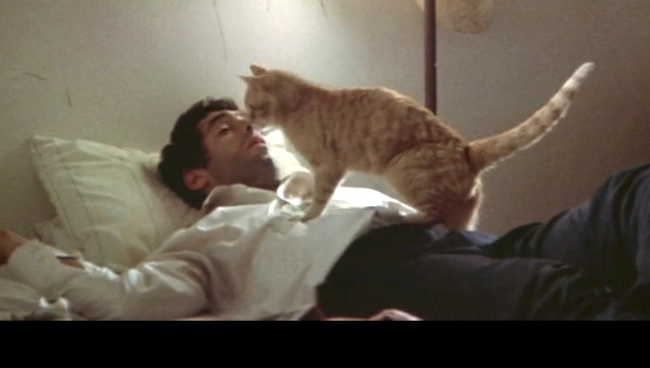
But I’d heard there was a cool cat scene in the opening of the film, and since Chandler loved cats (which of course, I knew), I thought there might be something there. And with Leigh Brackett listed as a screenwriter, I had hope. For the first half hour, I was grinning. Any cat owner has to love Marlowe’s (Elliott Gould’s) demanding animal, and any cat owner will sympathize with the the way Marlowe tries to fake the cat out with a different brand of cat food than he/she expects with a can switch.
Marlowe’s scene with the cops when he’s refusing to give his friend Terry up is so funny (those fingerprint ink antics!), and the way the story is updated for current viewers wowed me. Something about the dreamy landscape and shots, the way Marlowe doesn’t fit in with the crooks and the hippies (including his gratuitously topless neighbors) around him really captures the loneliness of Chandler’s famous character and the “mean streets” he inhabits. His loyalty to his cat captures his sweetness, his romanticism, and his befuddlement with the world around him. That’s why at first I bought into the film’s characterization, as Marlowe mutters to himself and treats most people around him well in spite of poor treatment. There’s always something sad and noble about him. As Chandler wrote, his PI “must be the best man in his world and a good enough man for any world.”
In terms of acting, Gould is lovable in this movie. He doesn’t embody Marlowe’s pain, as Humphrey Bogart did. But unlike Dick Powell’s annoyingly slick Marlowe in Murder, My Sweet, he’s believable and much more compelling than I expected (even if his toughness in the face of violence isn’t quite convincing).
But my mood toward the movie began to change about a third of the way in. Part of seeing the world through Marlowe’s eyes is finding something redeemable in those others have dismissed–Wade’s honesty, Eileen’s idealism, Mendy’s loyalty, Terry’s quaint good manners. Yet none of these characters are anything but one-notes in the film; none of them are even remotely redeemable. Altman’s violent take on The Big Heat‘s (1955) girlfriend treatment felt like a rip-off rather than a homage, and Marlowe’s lack of sympathy for her was baffling. I understood dispensing with the Linda character, but why not that sweet, yet hopeless tribute to Terry in the bar? Marlowe could have just had a conversation with the bartender. It would have SET UP that ending. Just knowing he was friends with Terry for a long time (a change from the book) wasn’t enough.
As for the plot, well, Chandler was famous for admitting to the convoluted nature of his plotting (though as anyone who reads The Big Sleep knows, censorship is a far greater reason for the plot’s confusing nature in the film.) Perhaps Chandler’s alleged plot aversion is what attracted Altman. As far as I was concerned, Altman could play with the plot all he wanted if he made it interesting. But he didn’t. And turning Mendy into such a loathsome bad guy made the story feel derivative in a boring way.
The ending was undoubtedly shocking and clever, and I liked that the cat became a symbol of Marlowe’s treatment and expectations, but look, if you want Marlowe this resentful about others’ treatment of him, you’re going to have to do more to foreshadow it. Marlowe is pretty much ALWAYS treated poorly in Chandler’s books–by nearly everyone. That isn’t enough to make him crack. And Gould doesn’t seem resentful as Marlowe; he seems naïve and stupid instead.
For Marlowe to betray his knight errant traits (what makes him admirable), and instead focus only on his own resentments, to have him flat out MURDER a former friend, you have to do more to make that betrayal convincing. What’s so lovable about him in the book is that he knows Terry’s pretty worthless, but cares about and defends him anyway, just as the crooks do. Terry’s war record (completely absent here) also makes him more sympathetic. Marlowe is not–as in the movie–shocked to discover Terry’s even more worthless as a friend than he thought–even if he’s not (in the book) a murderer. Marlowe is RESIGNED, expects little of others. In the film, Marlowe is anything but.
There is, of course, something fascinating in Altman essentially killing off the former PI character Chandler (and his peers) made famous. To take away his ethics is truly to murder the man. But I’m not going to believe (as Altman argues in this film) that such a character is unrealistic in today’s world without a better cinematic argument than the character floundering around (as Marlowe always did for a bit). The same year as this film came out, Robert Parker introduced Spenser to the world, a clear homage to Marlowe (so much so that Parker would later complete Chandler’s unfinished novel). And the 80s TV show of the Spenser character was still a decade after Altman’s film. Parker made a Marlowe type a modern man quite successfully (though Spenser was a significantly happier character than his predecessors).
Is it worth it to watch the film? Yes. But how I wish Altman had used that cat like he should have. The cat’s addition was, after all, brilliant. What if Marlowe had shown more love for the cat throughout? Shouldn’t the cat have come up more than a couple times after the beginning, given how crucial Marlowe’s devotion becomes at the end? I felt like Billy Madison as I watched Marlowe in the film. (In that dopey movie, Adam Sandler is outraged that a dog owner would wait for a lost dog’s return rather than making even a cursory effort to find it.)
What if the cat had starved while Marlowe was in jail for Terry, and the detective found out? Then that ending would be not about himself, but about the cat, the only connection he really had—just as Marlowe (in the book) is so lonely that Terry’s chance connection with him means more than anyone understands. Throughout the book and movie, Marlowe insists that Terry could have murdered his wife, but not as brutally as she’d been killed. Like him, I contend that Marlowe wasn’t the type to kill someone over his own hurts. But over his cat’s? Maybe.
*Gimlets symbolize Marlowe’s relationship with Terry.
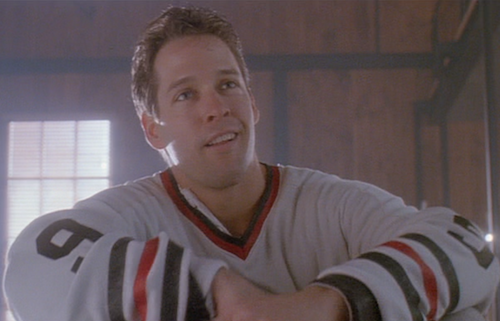
There’s a certain generation of women who still laugh when they hear “toe pick.” Then they begin dreaming about a certain swoon-worthy character in the memorable scene when that line was first employed, and wonder why aren’t romantic leads like that now? Why can’t they all be like D.B. Sweeney’s Doug Dorsey: athletic, virile, funny, easygoing, ambitious, and more emotionally open than those traits might suggest?
The Cutting Edge (1992) never received the credit it deserved, but I hear the occasional reference to it in films and TV episodes, echoing the devoted following it obtained then and still now for its engaging sports narrative, its funny tone, and the sizzling chemistry between Sweeney and Moira Kelly.
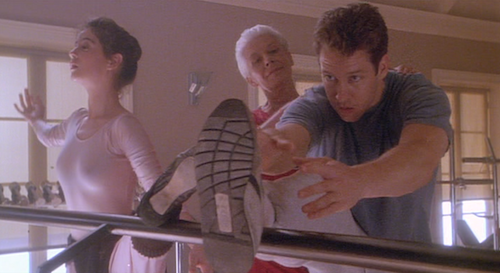
In the story, Doug’s dreams of hockey stardom have been destroyed by an injury to his eye at the Olympics. Kate Moseley’s (Kelly’s) Olympic dreams have been dashed by a particularly ugly drop by her figure skating partner. The next Olympics is coming up, and no one wants to partner with the notoriously chilly Kate. Meanwhile, Doug has lost his scholarship and any chance at even a minor league hockey career. Then one day, Kate’s coach approaches Doug with some figure skates, and despite his (and her) hilariously expressed doubts, an unlikely professional pairing begins to form. Before long, Doug starts to realize he has feelings for her, and she, in spite of her engagement to another, begins to realize she is attracted to him too.
There are many differences between the two characters: he’s a stereotypical guy in many ways, and she’s a reserved, uptight, very wealthy and very feminine woman.
But you see the attraction too, especially their hyper-competitiveness and dedication. What I love so much about their union is that BOTH of them grow due to the influence of the other. It’s not just the punishment of the type A personality woman we so often see (though Kate is definitely–and deservedly–taken down a peg or two). (Actually, their dynamic is so similar to the one in It Happened One Night that I wrote about it in one of my earliest blog posts.)
My own love for Doug Dorsey was quite fervent. He was EVERYTHING I wanted in a partner in my late teens: Smart, relaxed, charismatic with an incredibly sexy smile. Confident but open, willing to admit mistakes. Promiscuous when he wasn’t in love, but when he was, not willing to go for Kate if she was still engaged or had too much to drink. Proud but mature enough to leave the pride behind when he had to. Ultimately willing to prioritize her even above his dreams. And, of course, there was his tolerance of her heinous (but enthusiastic) dance skills, which bore a strong resemblance to mine. His ability to throw a paper wad into a trashcan and make it. His skill with the cutting line, and reluctance to read Great Expectations (close to my least favorite book at the time).
My love for Doug Dorsey led me to seek D.B. Sweeney’s other work over the years, and believe me, it hasn’t been easy: Eight Men Out, a Leverage episode. Why his fully embodied, sensual, funny performance didn’t lead to stardom, I don’t know. But although he and I have aged, my opinion of Sweeney’s character hasn’t. What I realize now is that he was also what a teen’s heartthrob character so rarely is: an adult (with, admittedly, some rough edges). That’s why I can still enjoy the film now, when other teen loves have lost their allure. And besides all that? The Cutting Edge is such a fun sports film (another favorite genre of mine), and it’s full of comedy, especially when Doug confesses he’s become a figure skater to his working class, uber-masculine brother (and hometown).
When I heard Font and Frock & Silver Screenings were hosting a Reel Infatuation blogathon celebrating character crushes, I thought of others: obviously Nick of The Thin Man, Cary Grant’s hilarious The Awful Truth husband. But suddenly, D. B. Sweeney popped in my head, reminding me of Doug and the long-ago, but never-dead crush, and I figured some of the rest of you hadn’t had the joy of encountering him yet, and others would love the reminder. Hope if you haven’t seen the film yet, you’ll soon enjoy toe picks as much as I do.
For others’ wonderful posts on their film crushes, click here.
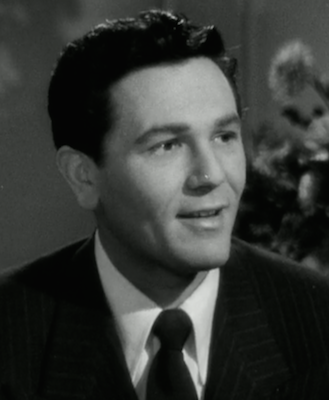
Even my classic-movie-hating sister, who is seldom willing to admit ANYTHING positive about my beloved black and whites, had to admit, there’s just something about John Garfield. Some sensuality, magnetism that escalates him far beyond his seemingly average looks. I mean, if the guy were standing still, I’d maybe compare him to Matt Damon: ordinary enough to slip from notice (as a man playing a superspy should be). But Garfield rarely stays still. And once he moves, his look intensifies, his fluid athleticism kicks into gear, and all that ordinariness is gone: this guy is crazy hot.
I realize his looks are far from the best thing about Garfield. This superb actor is among my favorites, can make me root even for the often disreputable characters he so thoroughly inhabits and humanizes. But it’s undeniable that if a guy plays a con man who can get any woman, he needs to either have Cary Grant’s looks, or be a guy like John Garfield, whose intensity and confidence make you ignore every other man, woman, dog, cat, and chair in the room.
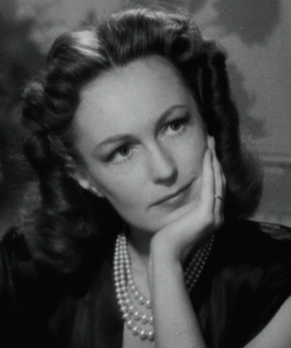
Take Nobody Lives Forever (1946). When Nick approaches his mark, Gladys (Geraldine Fitzgerald), you feel a kind of pity, even though Nick is the hero: she doesn’t stand a chance. We know from the script she’s a lonely and bored widow. Her financial manager is giving her an unutterably boring description of his golf game. Here’s her expression before Nick arrives:
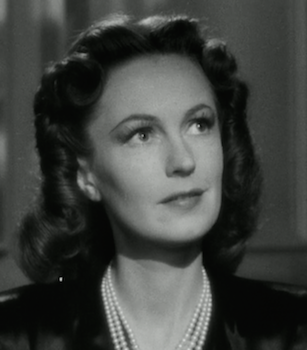
Nick approaches, and the effort not to swoon–how does she manage it? Notice the intensity of this expression:
And here’s how she looks after five minutes with him:
He walks away, and the formerly abstaining Gladys orders a brandy.
**some spoilers–but not how it all ends**
In most films, it’s hard not to despise the mark. Even if he/she is sweet, the level of stupidity is so pronounced you root for the con artist, as the screenwriter wants you to do. The fact that you’d never feel that way in real life is irrelevant: for the space of an hour or two, you’re all for cleverness over heart. Nobody Lives Forever is that rare film that makes you respect both con artist and mark because there’s a kind of maturity and world-weariness to Gladys, despite her blindness to Nick’s motives; clearly, her former husband’s long illness has taken away some of her illusions.
Nick’s recent war experience makes his change of heart believable, and her desire for him, even when she discovers his true character, seems not the reaction of a sap but of a woman who has had enough experience not to expect perfection in her man. Part of that is the role; part of that is Fitzgerald’s convincing performance. But most of it is Garfield. I mean, how the hell do you say goodbye to that man? Clearly, Gladys is not ready to; just check out that grip:
Since this is noir, of course, we don’t know how it’s all going to end. Nick has two frightening foes in his ex and a shaky co-conspirator. The ending is suspenseful, and involves large doses of Nick’s friend, Pop (the wonderful Walter Brennan), so I obviously won’t spoil it for you.
I will say as a huge fan of con artist movies that any cleverness is utterly absent. Nick makes up a career that would be so easy to disprove, with little effort to give it substance. There’s no satisfaction for my Ocean 11’s-, The Sting-loving gene, no big reveal or sleight of hand. But there is some of that sweetness I’ve come to love in Leverage, and like that highly satisfying TV show, the film gives us the toll such a life takes on its players (especially since these grifters aren’t the do-gooders of that small-screen team). Overall, I had a mixed reaction to the film as a story. But as a vehicle for Garfield, it’s wonderful. He’s so believable in the role, so intense and mesmerizing. And as always, so sexy.
The Bad and the Beautiful (1952) presents that classic question: what are you willing to put up with, to be under the direction of a genius? Whiplash (2014) did the same just a couple years ago, conductor Fletcher (J.K. Simmons) compelling his protégé drummer to dangerous extremes for his art. The question has obviously lost none of its potency in the last 60 years. But this classic Hollywood version begins with the victims of brilliant producer Jonathan Shields’ (Kirk Douglas’). You see the damage first, and it colors how you view the rest of the film.
And yet….It’s the start of the film, and while you’re soon treated to flashbacks of what treatment led Shields to get such cold shoulders from former pals, you can’t help wondering how they’ll answer the question—and how you would too.
Shields, it appears, is destitute in Paris. But he has an idea for a film, and three victims of his ruthless ambition would be perfect for it: Georgia (Lana Turner), the actress he romanced to improve her performance, then dumped; Fred Amiel (Barry Sullivan), the director/best friend whose work he stole; and screenwriter James Lee Bartlow (Dick Powell), whose life he destroyed. Shields sends proxy Harry Pebbel (Walter Pidgeon) to lure them. And Pebbel, who has forgiven Shields for his own wrongs, gathers them together, hoping they’ll stick around long enough for Shields’ call about the film. And so the flashbacks of each betrayal begin, ranging from egregious to abominable.
Douglas is predictably mesmerizing in the role, which was supposedly loosely based on producer and studio exec David O. Selznick, best known now for Gone with the Wind. In fact, Douglas is so good in such roles that I found myself actually expecting worse behavior from Shields, bad as it was (Ace in the Hole being the last film of his I viewed).
What I found fascinating about the film this time around is the horrifying cruelty of Pebbel.
He actually pooh-poohs the three victims over their healthy desire to avoid the psychological damage Shields excels at inflicting, as if their heartbreaks are merely scraped knees. Pebbel’s argument—that human losses are inconsequential in comparison to accolades—is terrifying, and his calmness in expressing these views chilling. Shields may have a monstrous side, but he’s nothing compared to his Machiavellian helper.
But it is a question, whether for some the pursuit of greatness is worth human costs (though it would be hard to argue James’ was). Certainly, many artists we celebrate today have said yes to such a question. Many do now. The kindhearted instincts within you may urge such artists, “Leave!! Leave!” But the part of you who cherishes excellence secretly whispers, “Stay….”
The call from Shields comes, of course. And of course, they all refuse to remain. But then Georgia picks up the phone connection in another room, and the others lean in to hear, and we see them listening, lured back.
Will they, won’t they?
This post is part of the Hollywood on Hollywood fall blogathon hosted by the Classic Movie Blog Association. Check out the wonderful entries here.
I’ve been flirting with dumping Netflix for some time: That terrible customer service debacle a few years back. The fact that despite their extensive classic movie DVD library, their classic movie streaming choices are tired, and frequently movie-of-the-week bad. The prices I have to pay to watch two of my favorite current shows–Veep and The Americans–elsewhere.
But Netflix retains me with the television fare they DO have. Many of my beloved comedies still play there, including Psych (yes, I embrace my juvenile side) and It’s Always Sunny (which I would argue had the best satires on both gun control arguments and our treatment of the mentally ill in recent seasons). And then there are its foreign TV shows, which are fascinating and frequently feminist, as with Miss Fisher’s Murder Mysteries.
So do I stay, or do I go?
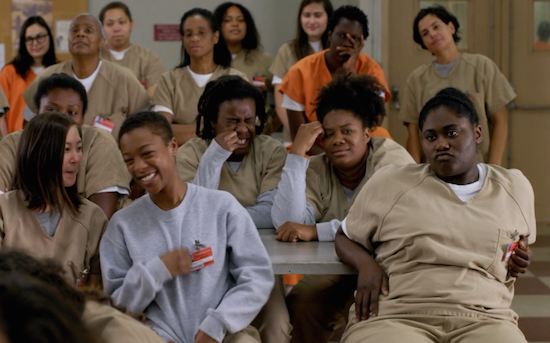
My flirtation ended last night. My loyalty is secured. Orange Is the New Black‘s season 4 finale was not only brilliant, but important. The final images from that and the penultimate show are lingering, as riveting stories do, helping me recognize nuances I missed on the first pass. I’m not sure whether Netflix execs are enlightened, or its creators masters of spin, but either way, I don’t care: Marvel’s Jessica Jones and OITNB had more to say about rape culture and racism, respectively, than almost anything else I’ve read or watched in the last few years.
Marvel’s Jessica Jones
Let’s start with Jessica. The weird thing is that I watched the show at all. I have never bought a comic book. My 80s nostalgia for the Hulk and Wonder Woman notwithstanding, I have little interest in comics, graphic novels, anime, video games, or superhero stories.
I’d never heard of Jessica Jones, and wasn’t impressed by her dull name (this from a Williams, but I digress). The ads and reviews, however, kept saying noir, catnip to the classic movie fan, so yes, I gave it a try.
How to explain it? More eloquent voices have already chimed in on its influence, so I’ll just say that its portrayal of the aftermath of rape was devastating. The show captures the heroine (and victim’s) trauma and the insidious reactions of others around her to it: The lack of belief in what happened to her. The ignorant assumptions that a domestic violence victim can easily leave his/her abuser. The belief of the monstrous villain that she could love him. The wider society’s privileging of his viewpoint over hers. The terrifying use of smiling, and all it implies about how women are treated.
The intensity and darkness of the show are lightened by Jessica’s (Krysten Ritter’s) snarky sarcasm and wit. She is, indeed, like the noir private investigators before her.
Fascinatingly, the show uses enough of its superhero trappings (and is so suspenseful) that you don’t realize how thoroughly it’s portraying its message until you mull on it afterward. And how moving that message is: that the victim who fights for others like her is as superheroic as they come.
Orange Is the New Black, Season 4
The diverse cast alone is reason to watch: when else will you see women of so many shapes, sizes, colors, ethnicities in starring roles? Forget the main character, Piper. She’s just there as an introduction, and functions only to remind us that white privilege doesn’t die behind prison doors. By focusing on a minimum security prison, with inmates often there for foolish, momentary (and sadly frequently, bad romantic) choices, the show enables us to put ourselves in the women’s place. And once there, we are hooked on their stories, soon relating even to those who have committed grave crimes.
Previous seasons focus on other villains, but this season firmly placed the private prison system in its crosshairs, to devastating effect. People argue whether this show is a comedy or drama (when it’s of course both), but the drama definitely trumps this season, the comedy only there to relieve it. Jenji Kohan, the show’s creator, clearly wanted to indict the immorality of this privatization, and how it furthers the prejudice already inherent in the prison system. At first I thought the primary focus was on our criminalization of mental illness, and indeed, that is one of the saddest arcs of the season. But ultimately, the focus is on race: how it affects the corrections officers’ actions, how even well-meaning white prisoners (and by extension, the wider society) miss the significance of Black Lives Matter. I don’t think you can miss that significance after watching Season 4. Of course, you can’t fully feel the season’s impact if you haven’t fallen for the show and its characters over Seasons 1-3. But that just means you have more good material in front of you….
Are either of the shows perfect? No. But the flaws don’t take away from what they’re accomplishing in terms of messages and storytelling.
Of course, it’s possible Netflix will later lose its way. But while these are its choices for original programming, they’ve got me.
**Note: the Justice Dept. just said they’d end the use of private prisons.
In 1940, a white kid shows up at actor Canada Lee’s door in Harlem. Lee knows him, met the lonely teenager backstage while starring in Broadway’s Native Son.
The kid asks to stay; Lee says yes, lets him remain a year. Introduces the kid to the lights of the Harlem Renaissance, loans him money for college. Later, the kid becomes a Civil Rights activist, goes on to found Physicians for Human Rights, creates the first US community health center, eventually leading to 1000 in America alone.
It’s the kind of story that baffles comprehension, but then, so does Lee’s whole life: jockey, boxer, musician, Broadway producer and star, groundbreaking film & radio actor, Civil Rights leader. He played Banquo as part of an all-black cast in Orson Welles’ famous production of Macbeth. Helped his generation empathize with black men’s plight in a racist culture through his smash performance of Bigger Thomas onstage. Even played whiteface.
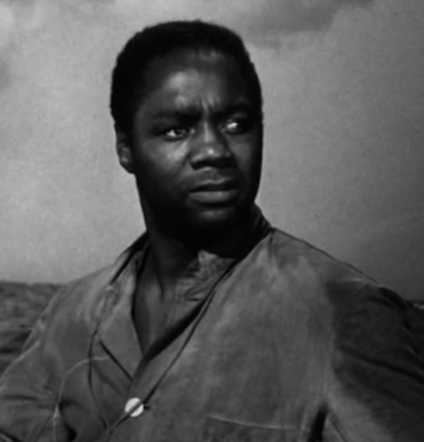
His most famous film role, that of Joe in Lifeboat, is a complex one. The moral center of the story, Joe fails to succumb to mob violence, as the white passengers do. And though his companions have racist moments (the names they use, their shock at his having a wife), they respect him. It would be easy to just credit the characterization to Alfred Hitchcock. But much of the credit goes to Lee himself. He convinced Hitchcock into changing a belittling part into a fascinating one.
Lee’s insistence on dignified roles, paired with his blacklisting, may have given us too few of his films to appreciate (his early death is often attributed to the ban). But what performances they are. The viewers of Body and Soul, Lost Boundaries, Lifeboat, and Cry, the Beloved Country can thank him for selecting and affecting the development of roles that not only revealed the force of his talent, but his integrity in the face of unspeakable odds.
And despite his unjustly forgotten contributions to film, Lee’s influence is still felt in our communities today. Just ask those who’ve benefited from former runaway Jack Geiger’s medical and human rights work. All 17 million of them.
***
For more on Lee’s life, check out this well-written Wikipedia entry, a This American Life tribute to his kindness, the biography (Becoming Something: The Story of Canada Lee) by Mona Z. Smith and the following reviews of her text: Blue , Howard. Rev. of Becoming Something: The Story Of Canada Lee, by Mona Smith. The Black Scholar 35.2 (2005): 65. Print; Gautier , Amina. Rev. of Becoming Something: The Story Of Canada Lee, by Mona Smith. African American Review 40.2 (2006): 387-389. Print; and McGilligan, Patrick. Rev. of Becoming Something: The Story Of Canada Lee, by Mona Smith. Cinéaste 30.4 (2005): 73-74. Print. Geiger just posted about the situation in Flint.
This post is part of the The “…And Scene!” Blogathon. Check out the other entries here.
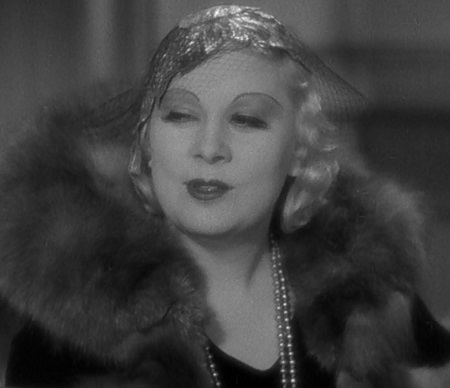
There are very few scenes in film as funny as when Mae West is talking about the number of men in her life, or, as she famously put it after the courtroom scene in I’m No Angel, the much more important amount of “life in your men.”
I’m a sucker for courtroom scenes in general, but most are thrilling, dramatic. I admit that a few are funny–From the Hip, Seems Like Old Times–but there’s nothing like Mae West on a roll, and every second of the courtroom scene of this glorious pre-Code wonder is the actress (and writer) at her best.
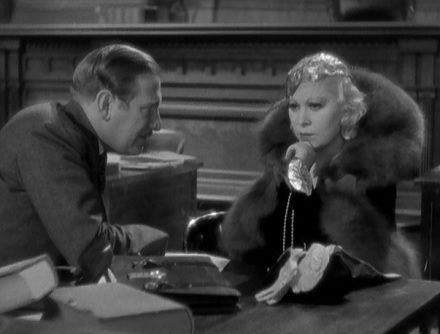
Tira, a circus performer, is suing her wealthy fiancé (Cary Grant) for breach of promise. He broke off their wedding because he saw another man in her place while she was out, not knowing it was a set-up by her boss, who didn’t want to lose her successful act to matrimony.
Unsurprisingly, the defense attorney immediately tries to besmirch Tira’s reputation, suggesting she gets around, that she has a “colorful past.”
In another movie, we might expect shame, embarrassment, hostility at such an attack. But this isn’t just any movie.
“Well, I gotta admit, I’ve been the love interest in more than one guy’s life,” Tira agrees. “I don’t see what my past has got to do with my present.”
“We shall show that to the satisfaction of the court, I believe,” the attorney primly responds. “Nevertheless, the fact remains that you’ve been on friendly terms with several men.”
“Alright, I’m the sweetheart of Sigma Psi. So what?”
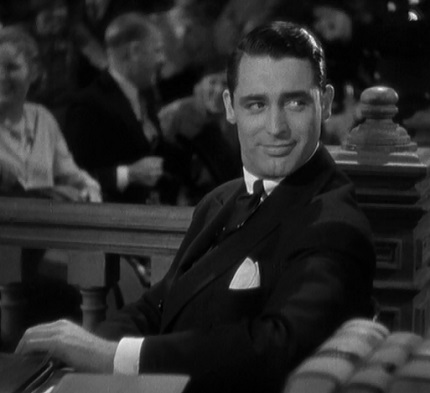
The audience in the courtroom aren’t the only ones laughing at her quip. Even the defendant can’t resist.
When she’s scolded by the judge for not answering the question, she coos at him in response. (He will later take her on a date.)
The attorney presses on, undeterred, referencing a bunch of (obviously married) men by name, asking if she knows them.
“I do recall their faces,” she answers, “but them ain’t the names they gave me.”
Appalled, her own lawyer asks for a recess and chides her for admitting to such an active dating life.
Tira is unrepentant: “Why shouldn’t I know guys? I’ve been around. I travel from coast to coast. A dame like me can’t make trips like that without meeting some of the male population.”
He explains that she can’t win the case. She considers her options.
And then asks if she can question witnesses herself.
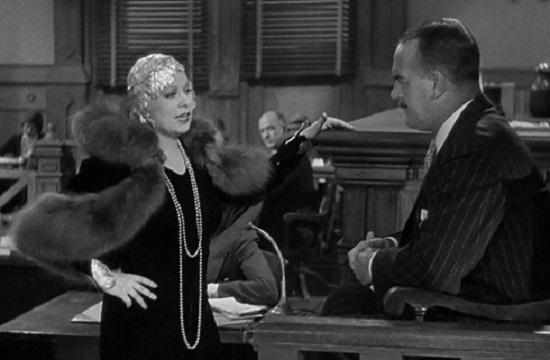
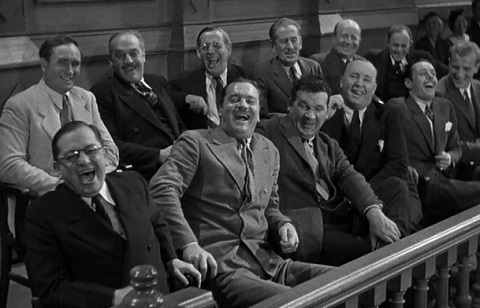
It’s at this point that West really hits her stride–literally. Because she gets to walk up and down past the jury box, practicing her famous strut repeatedly, flirting with everyone in the courtroom.
She treats her accusers with disdain, slamming their efforts to make her look bad, and saying, “OK, I’m through with you,” after she completes her questioning. Between witnesses, she asks the jury, “How ‘m I doin, hmmmmnnnn?”
For once, jury duty has proven to be a blessing. Just look at their reactions to her performance:
As Tira concludes, her lover (Cary Grant) can’t handle it anymore and admits defeat. He’s fallen more in love with her than ever, as we have. Who cares if she’s the sweetheart of Sigma Psi? She’s Mae West, idiot. Catch her while you can. Case closed.