Cary Grant Won't Eat You

Classic movies for phobics

  • About
  • eBooks
  • Previous Blogathons
Classic movies for phobics

Romance (films)

Guilty Pleasure: Somewhere in Time
02/29/2020 by leah@carygrantwonteatyou.com 21 Comments

Do I watch this film in front of others? No.
Do I recommend it to others? No.
Do I praise it anywhere public? No.
Have I watched it many times? Oh yes.

There’s something to be said for that first love story that gets you as a kid. I was quite young when I first saw Somewhere in Time on TV–I have a faint memory of my mother recommending it, but whether I watched it with her, I don’t know. What I do know is that at whatever single-digit age I was when I first viewed this film, it became the MOST ROMANTIC STORY EVER for me.

A man traveling through time for a woman? A woman giving up big stardom for a man? Both of them finding their longer lives without each other worthless in comparison with the time they had together? I mean, what kid wouldn’t swoon? But now, as an adult far more comfortable expressing sarcasm than sentiment, I have to confess: I like it still.

I feel reluctant to share the plot, as anyone reading this probably already knows it, but here it goes: An elderly woman approaches playwright Richard Collier (Christopher Reeve) after a party celebrating his first college production. She gives him a pocket watch, saying, “Come back to me,” goes back home, and smiling, dies. In the meantime, Collier moves to Chicago to work on his plays. Eight years later, experiencing writer’s block, he books a room in the Grand Hotel on Mackinac Island for a night away. The island is near his former college, and its rules forbidding cars give the place an otherworldly quality.

Waiting for the hotel’s restaurant to open, he wanders into one of those little museum nooks in the hotel, documenting the history of the hotel. On the wall is a photo of a breathtaking woman.
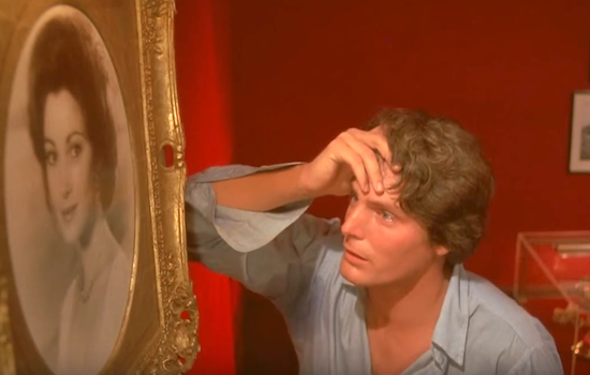
Collier, intrigued and quickly becoming obsessed, asks Arthur (Bill Erwin), an elderly hotel employee who spent his youth at the hotel, about her. Collier learns that she was Elise McKenna, a stage star who put on a play in 1912 at the hotel theater. Collier goes to the library to discover more about McKenna and learns she became the old lady who gave him the pocket watch at his play. Through a visit to McKenna’s old caregiver (played by Teresa Wright!!), Collier discovers that the stage actress pored over a book about time travel written by his professor in college. Naturally, Collier hunts him down and discovers the professor once tried self-hypnosis into another time. The professor believes if you have no modern trappings around you, it’s possible to go back, however briefly. Collier, with an early 1900s suit and old coins, begins his attempt. Eventually, he’ll succeed, woo his love, be chased away by her oppressive manager, William Fawcett Robinson (Christopher Plummer), and finally get to be with her in time for her to take the photo that inspired his journey. What happens next, I won’t spoil, but trust me, it doesn’t get any less sentimental.

I found Christopher Reeve’s Richard Collier (what a name!) adorably awkward and smitten. I particularly enjoyed his affectionate treatment of the young version of hotel employee Arthur (Sean Hayden), and his refusal to be embarrassed even though he’s wearing a suit that (in McKenna’s day) is completely out of fashion. He also doesn’t seem to mind that he keeps sleeping in and dirtying up this suit, which must be disgusting by the time he unites with McKenna. But it’s that oblivious, single-minded attention to his lover that is so attractive in the film (though in real life, it would be alarming).

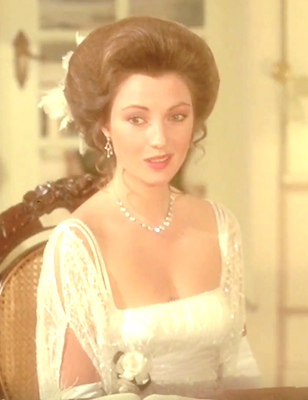
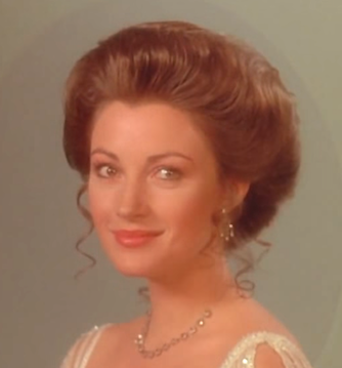
Jane Seymour’s Elise McKenna is stunning. The woman Seymour played was the person I wanted to be as a kid: an artist, accomplished, passionate. I wanted her hair, her clothes, her allure. For years afterward, Jane Seymour was my vision of unattainable beauty, and while my other 80s standards faded with time and/or growing sense and taste, that one didn’t. Because seriously? How ridiculously beautiful is that woman now, much less then?
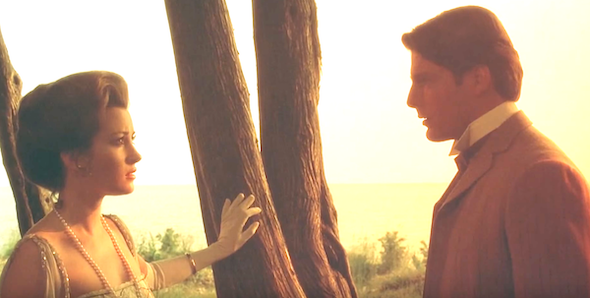
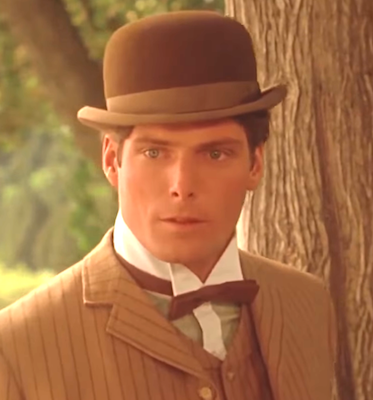
And Christopher Reeve was so handsome, two years after Superman fame. Just check him out in his period duds:
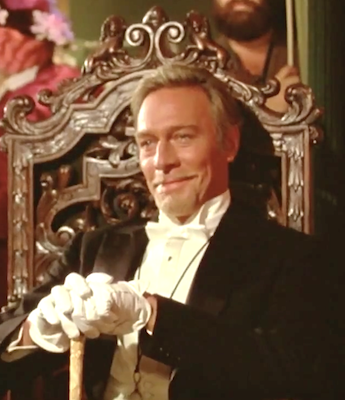
If fact, it took this most recent viewing of the film for me to even note Christopher Plummer’s shockingly good looks, so distracted was I by the others.
Of course, the best parts of the film are the perfect music choices, just lovely enough to elevate the film: John Barry’s haunting score, and the The 18th variation of Sergei Rachmaninoff’s Rhapsody on a Theme of Paganini.

I became intrigued about the novel on which the film was based, and learned the early stage actress Maude Adams and her manager/producer, Charles Frohman, were the loose inspiration for McKenna and her manager. Best known now for putting Peter Pan (with Adams in the lead) on the stage, the pair were tremendously successful. She never married. Frohman’s personality is captured sympathetically by Dustin Hoffman in Finding Neverland. The producer comes across as charming, friendly, and well loved in true accounts as well, not as the lonely, bitter figure Plummer portrays in the film; clearly, the cruel figure fit the film’s plot better (though I found myself sympathetic to his annoyance–if not his responses to–Collier’s puppyish behavior this time). I found the real producer’s final brave hours and words on the doomed Lusitania moving.

In more lighthearted research, I learned that the hotel in the film STILL has Somewhere in Time celebration weekends, that its fan club has a playful quiz on the film. For someone abashed about loving such a sentimental film, I admire this group’s openness. My embarrassment at liking it, however, does make sense too: there’s too much use of slow-mo, some stilted dialogue, and a disturbing approval of the lengths the couple goes to for love at the end of the film.

But Seymour’s sincerity in the role and Reeve’s earnestness and good humor made me love the movie again, despite my reservations. I decided, as before, to dispense with judgment and just live in this world a while. (As with Crouching Tiger, Hidden Dragon, when I just accepted the flying as a given.) There is some wistful magic to the couple’s commitment to one another; there is charm in the ease of Collier’s time travel, suggesting their love was destined. The narrative seems to borrow heavily from the film Laura (also with captivatingly sweet music, also with a picture of the heroine that haunts a man) and from Portrait of Jennie, which likewise gets longing right. The actors’ chemistry is perfect; they truly seem in love. Just check out these expressions as they look at one another.
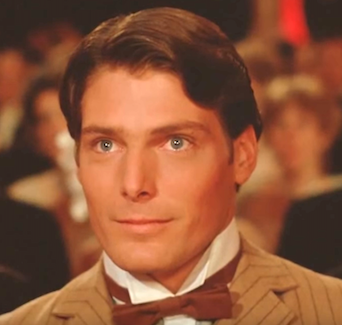
It’s not surprising that the two remained lifelong friends.

And you know, this kind of nostalgic story is never going to lose its appeal. Witness the book and TV series Outlander, winning new audiences into enchantment at the idea of time-crossed lovers as I write.

This blog post is part of The Leap Day blogathon, hosted by Taking Up Room. I love this idea of celebrating February 29th by reflecting on time-confused/unexpected films. Check out the other entries here!

Share
Posted in: 1980s films, Romance (films) Tagged: guilty pleasure movies, Jane Seymour, Somewhere in Time

Rebecca Got a Bad Rep

06/29/2019 by leah@carygrantwonteatyou.com 8 Comments

**Spoilers abound**

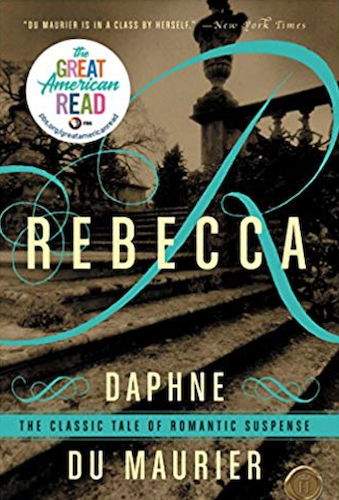
Of all the femme fatales on film and in print, Rebecca may top them all. The woman isn’t even alive at the start of the book or the Hitchcock film that resulted from it, yet the narrator of the story is so haunted by her husband’s previous wife (and Du Maurier is so skilled at freaking readers out) that Rebecca’s reputation as the evil femme fatale endures.

But when we look at Rebecca’s life a little closer, it’s hard to ignore just how much of our impressions of this woman are based on her former husband’s hatred and his second wife’s jealousy. Although I was totally with the narrator in fearing and loathing Rebecca on my first reading of Daphne Du Maurier’s classic gothic novel/thriller/mystery, my opinion of Rebecca has radically shifted in time, and the blame moved from her to the much more questionable Max de Winter.

Since the film sanitizes the hero due to the Production Code, I’m sticking with the book as I ask all of you Du Maurier lovers this question: Who is worse, Rebecca or her husband Max?

Let’s count it down trait by trait, shall we?

Behavior toward Friends & Acquaintances. Rebecca. Tries to suit others’ moods and appeal to their interests—this according to her detractor, Max. Everyone loves her, Maxim admits, including all of her employees. He claims she is fake, a backstabber. It’s easy to discount the tales of her insincerity altogether, given those blunt admissions to Max at the start of their marriage and his own dubious motives in smearing her. But we do hear Ben describing her cruelty toward him, a serious count against her.

Max: Rude to and arrogant toward: his sister, his brother-in-law, attorneys, party guests, servants, Mrs. Van Hopper, his second wife. He does seem to usually treat Frank well, and perhaps the dog. He expects to be thought above the law despite his suspicious actions and has no compunction about the boat maker’s profit losses thanks to his lies. Why? Presumably his class and status.

Personality Points: Rebecca 1; Max 0
Villain Points: Max 1; Rebecca 1

Social Skills. Max is the very definition of prim, spending his days abstaining from most people and food (while strangely expecting an untouched feast on a daily basis). And, there’s that slight issue with his temper and moods. Good company? I think not.

Rebecca’s style intimidates the narrator; she has garnered Manderley fame with her exquisite taste and the elegance, creativity, and humor she exhibits as a hostess. Even the “R” of her name is written with panache.

Personality Points: Rebecca: 1; Max: 0

Treatment of Spouse. Let’s admit from the start that these two are hardly an altruistic pair. A tight race!
Max: Wife 1. Marries Rebecca without loving her but planning to be faithful. Keeps the secret of her affairs, but for his own pride. Does tolerate her behavior within limits. (It was a different age.) Seemingly polite to her in public but based on his general actions (see above), I’m guessing she needed to find affection elsewhere. Wife 2. Marries the narrator because she’s chaste and has no relatives (Mrs. Van Hopper isn’t far wrong there). Shows little passion for her, most of that passion being extended to his house. Treats her like a daughter/servant/enemy, depending on the day. Marries her knowing that his limelight-averse spouse will be destroyed if his crime is revealed and the scandal rags come a-knocking while her protector is in jail. Exposes her to Mrs. Danvers, the suicide pusher.

Rebecca: Marries Max for his money and status, planning to cheat on him from the start and admitting as much. Seemingly has multiple affairs. Apparently enjoys some “unspeakable” behavior (though given prim Max’s ways, I’m guessing we’re not talking Roman orgies). May, if the love of Mrs. Danvers is any indication, indulge in affairs with women as well as men, which in this time period would have harmed her husband’s reputation. Shaming her husband with alcohol and drug consumption? Perhaps in private. Meanwhile, spends her days being delightful to all and making his treasured house the talk of the country.

I’m going to leave out Max’s crime for this one, as it deserves its own category. But in terms of behavior up to their final night together, Rebecca’s is worse since Max’s biggest fear is public shame, and she doesn’t seem to care much that he’s a bore and has no fidelity impulses/regard for his pride whatsoever. However, his behavior to his second wife is appalling.

Villain Points: Rebecca 1; Max 1

The Murder. Max shot his wife because she suggested she might be pregnant with another man’s baby. Max demonizes her, calling her not even “human,” to (a) justify his action, (b) keep his wife’s love, and (c) be considered a civilized member of society. The narrator, so pleased he didn’t ever love Rebecca, actually goes along with his version of events, even though he’s not exactly trustworthy because he’s a killer who murdered his last wife, idiot. RUN!!!!

Rebecca. Enjoys her husband’s distress at her infidelity and taunts him. He now says she wanted him to kill her (given her health). Kinda convenient, right?

Personality Points: Rebecca, 1—some considerable moxie revealed in this last fight; Max, 0. Villain Points: Max, a gazillion; Rebecca, 0.

And the Verdict Is….
Personality Points: Rebecca 3; Max 0
Villain Points: Max, a gazillion and 2; Rebecca, 1.

Like I said, Rebecca might not be an angel, but a femme fatale? Not so much. And is Max, the cold-blooded murderer and awful husband a homme fatale? You better believe it.

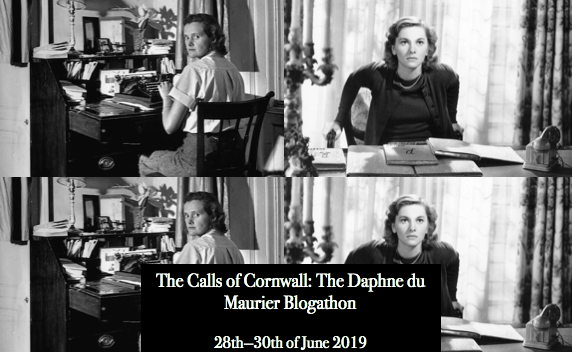
This post is part of the Calls of Cornwall blogathon by Pale Writer on Du Maurier’s work. Check out the other entries!

Share
Posted in: 1940s films, Blogathons, Feminism, Femme fatales, Film Noir/Crime/Thriller & Mystery, Humor, Romance (films), Uncategorized Tagged: Daphne du Maurier, femme fatales, Max de Winter, Rebecca, romances, thrillers, unfair reputation, unnamed narrator

Women Who Love Too Much in Film

09/09/2018 by leah@carygrantwonteatyou.com 2 Comments

I had another fun talk with Grace Collins of True Stories of Tinseltown! We chatted about women who love too much–from Tierney’s character in Leave Her to Heaven to Irene Dunne’s in Back Street (1932 version). Grace is a wonderful host and we had so much to say, especially about the dreadful narcissists John Boles liked to play, and how Bette Davis could really be a post of her own on this topic.

Clearly, this is a subject that needs much, much more discussion! Check it out here:

And definitely check out Grace’s other posts and other podcasts. She’s so witty and so knowledgeable about so many things!

https://www.inyourfacewithdonnieandgrace.com/news

http://www.truestoriesoftinseltown.com/

Share
Posted in: 1930s films, Anti-Romance films, Comedies (film), Drama (film), Romance (films) Tagged: Back Street (1932), bad romances in film, Bette Davis, Gene Tierney, Gilda, Grace, Irene Dunne, John Boles, Leave Her to Heaven, Mildred Pierce, Now Voyager, Rita Hayworth, rom-coms, The Women, True Stories of Tinseltown podcast

Dancing Lady: A Film that Subsists on Chemistry Alone

05/27/2018 by leah@carygrantwonteatyou.com 4 Comments


Let’s consider the reasons Joan Crawford is a terrible choice to star in Dancing Lady (1933), one of those films about an aspiring hoofer, Janie, who is willing to do anything but trade sexual favors to get on the stage, and who is so talented she actually makes it.

1. So talented at dancing? Look, I know about Crawford’s Charleston wins and what they did for her career. But Janie (Crawford) is supposed to be talented enough to impress a stage manager, Patch (Clark Gable), whose job is working with dancers. Any woman FRED ASTAIRE can’t make look talented ain’t anything special in the footwork department, my friends. Astaire looks flat-out bored in this film, and it’s not just because those wannabe Busby Berkeley numbers are unwatchable.

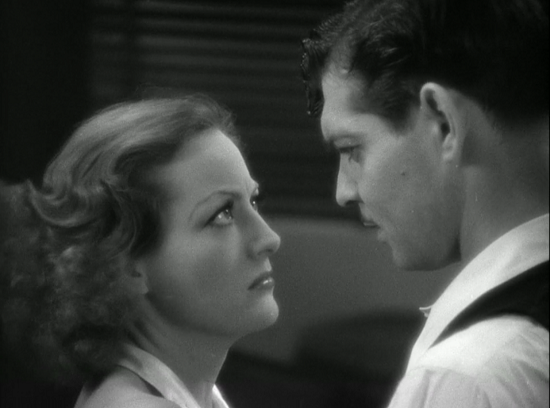
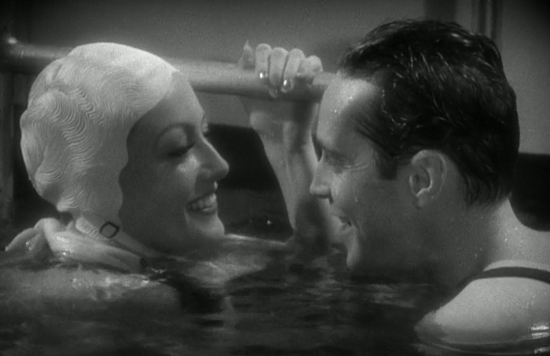
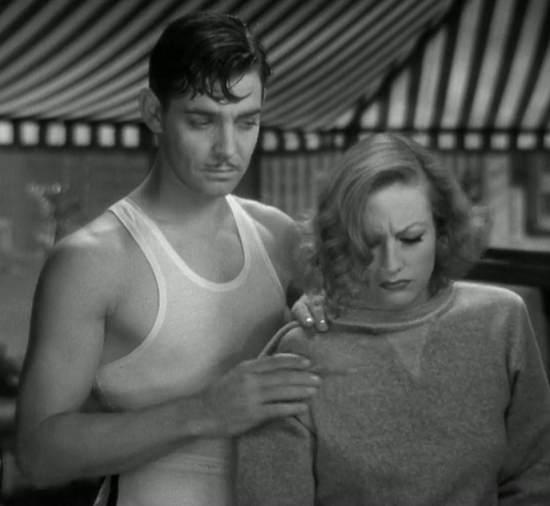
2. Torn between a man and her career? The film’s plot is pretty basic: Tod, a playboy (Franchot Tone), gives Janie an in with a show put on by Patch in hopes she’ll grant him sexual favors. Janie denies him because she wants to be a star. Check out those sexy glances when Crawford flirts with her future husband (Tone), and ask yourself: Wouldn’t this woman just go ahead and take both?


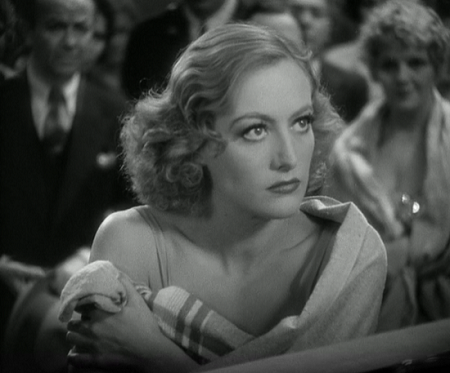
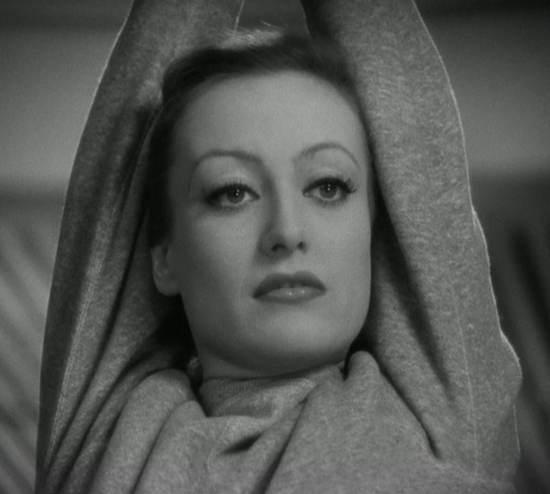
Aurora of Once Upon a Screen had it right when she wrote about a different dancing film, “Crawford had heat with most everybody it seems in the early 1930s. She seems to flirt with the typewriter in this movie….” Admittedly, with those looks, Crawford appears sexy all the time, especially when she’s angry. Check out her eyes when a judge demeans her ambitions:


Luckily, Crawford wasn’t cast as Janie because her role–or for that matter, the plot–makes sense. She was cast to make eyes at her frequent real-life lover, Clark Gable, the stage manager pining for her. MGM had already witnessed their chemistry in their three films together before this one (not to mention had to deal with their off-screen behavior), and knew the money was in exploiting it.

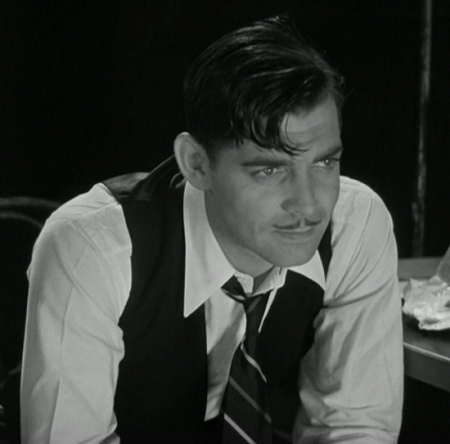
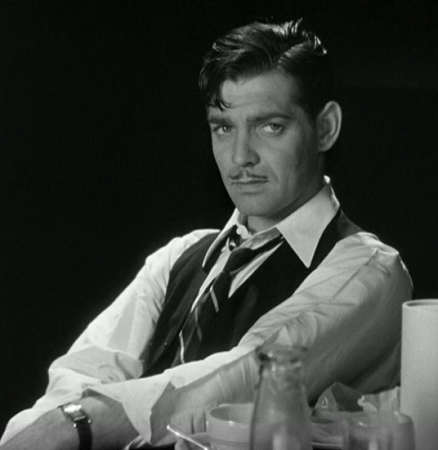
Because Patch (Gable) thinks Janie’s gonna take up the playboy’s offer, we get many scenes of him brooding. And seriously, who is a more sensual brooder than Clark Gable?


And like his co-star, Gable looks–if possible–even sexier when he’s angry.


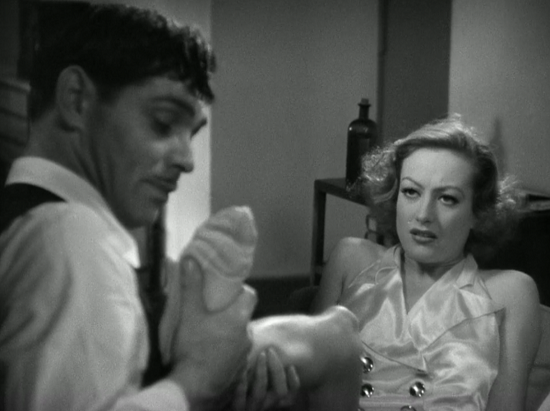
After fewer than 5 minutes of dancing practice, Janie usually has a cramp, twists her ankle, etc. Of course this kind of injury-prone behavior would make her too big of a risk to helm a musical, but the screenwriters know where their bread is buttered: not with logic, that’s for sure. Instead, with scenes of Gable massaging Crawford’s muscles.


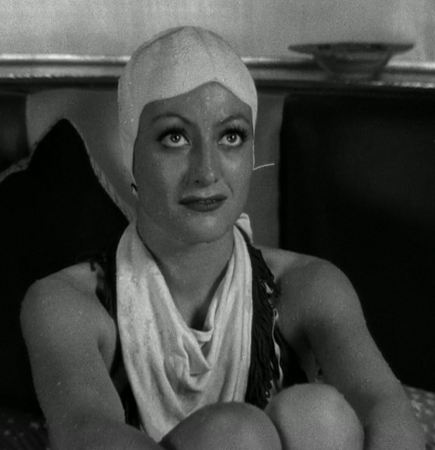
And then you get these stares of Crawford’s at Gable, and you realize those swimming scenes with Tone are kid stuff compared to the smoke she’s emitting at Gable. Makes you wonder why Tone even bothered to show up for the film.


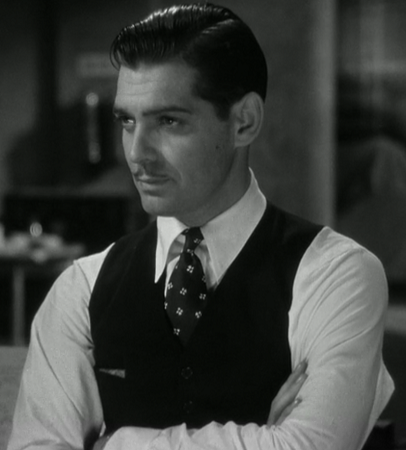
If you’re looking for a good dancing movie, do yourself a favor and look elsewhere, or do what I do: walk away during the numbers. But if you want to see two ridiculously hot actors burning the screen into cinders, enjoy. And just for your viewing enjoyment, I’m going to give you a final shot of Gable brooding.


You’re welcome.

Share
Posted in: 1930s films, Musicals and dancing films, Romance (films) Tagged: best onscreen chemistry, Clark Gable, dancing films, early Fred Astaire films, Franchot Tone, Gable and Crawford films, Joan Crawford, onscreen chemistry

Can Barbara Stanwyck Make Up for George Brent?

01/12/2018 by leah@carygrantwonteatyou.com 8 Comments


I find myself reserving certain films for future viewings when I love a star. Sometimes–as with Barbara Stanwyck–I try to watch her lesser films, putting off a great one so at least one is still waiting in reserve for me, like some wonderful present under the tree.

So I didn’t go into My Reputation (1946) with any illusions that it would be a masterpiece, but I thought I could enjoy a little Stanwyck magic. Alas, I neglected to look up her costar: George Brent, who somehow manages to be even duller and less charismatic onscreen than Herbert Marshall. Was his lethargy enough to destroy her energy? The answer: Yes. And no.

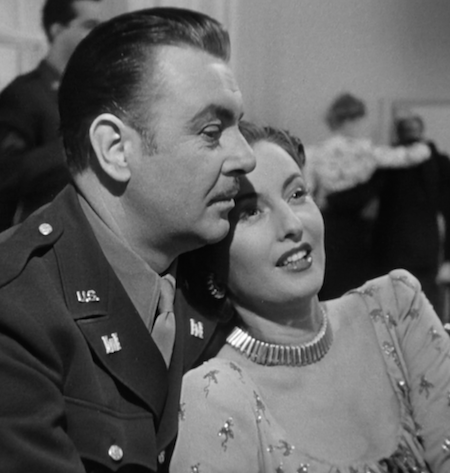
The premise is a simple one: Jessica Drummond (Stanwyck) has lost her husband after a long illness, and an attraction to army major Scott Landis (Brent) revives her spirit, but harms her reputation as a chaste, loyal widow.

You see the problem already, don’t you? Some serious miscasting is going on here. I can buy Brent as a restful, chill companion after say, a bad marriage to a philandering playboy. But Brent AS a playboy? Who REVIVES her? Ummmm. Exactly how old was her husband?

I don’t think I’m alone in finding Brent a sleep aid, and his looks don’t even provide eye candy that can dispel that impression. After a while, I simply stopped the film in boredom. Had anyone said, “That guy? Maybe you need some Vivarin, lady,” I would have been fine with Jessica’s choice of Landis, but it seems everyone in the film (even Eve Arden!) thinks he’s the dapper, fun lady’s man Brent may have been in real life, but sure wasn’t onscreen.

So….In his scenes with her? I’m falling asleep. And unlike in Baby Face (in which he’s slightly more tolerable), he’s on the screen a lot. Only when Jessica first enters his apartment; her every gesture displaying her discomfort, reserve, fearfulness, and lingering prudery; does Stanwyck command the screen enough to blot Brent’s presence out.

BUT when Brent’s not around, there’s interesting stuff going on, and Stanwyck nails it. Jessica’s boys’ anger at her replacing their dad is visceral.


The whole time you’ve been sympathizing with Jessica for wanting to get her groove on, as gossips and prudes (including her mother) tsk tsk at her. But then you realize that she’s told these boys nothing, has just invited Landis over for Christmas Eve, gone to fights with him, taken off on trips that last till the wee hours with him (apparently leaving the kids with the housekeeper), without so much as an “I’ll always love your dad” talk. True, it’s a different era, but a wee bit of explanation was required here, and never given. Jessica’s slow-burn realization of her screw-up is almost as riveting to watch as her takedown of a gossip queen earlier.

Most of the strong scenes, unfortunately, don’t even show up till about 30 minutes are left in the film. Way too much time is spent establishing Jessica’s already obvious infatuation, and giving her love the bedroom eyes. I’d suggest skipping around, enjoying some striking Stanwyck outfits, beautifully rendered lines, and wonderful chemistry with everyone but her leading man.

Share
Posted in: 1940s films, Drama (film), Romance (films) Tagged: Barbara Stanwyck, dull leading men, George Brent, My Reputation

Center Stage: Acting Misfire, Dancing Fun

08/05/2017 by leah@carygrantwonteatyou.com 3 Comments


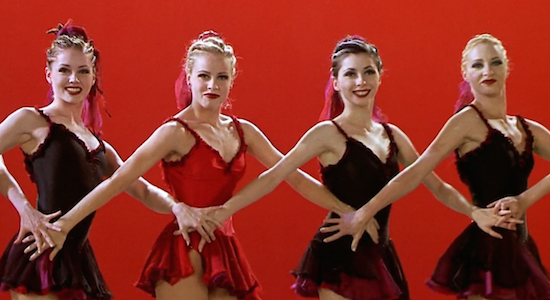
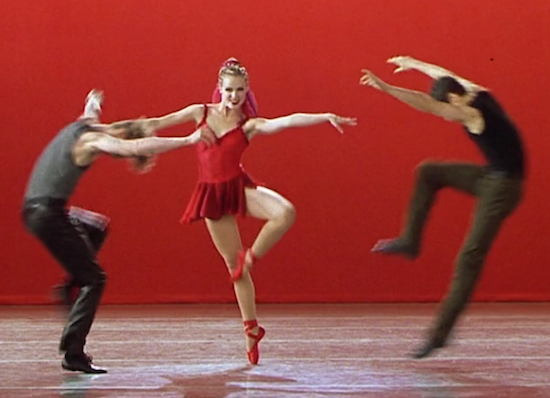
Center Stage is a blast: great dancing from real ballerinas, including a final performance I watch on repeat. A love triangle. And Donna Murphy and Peter Gallagher convincingly running the ballet company. We are rooting for heroine Jody (Amanda Schull), whose technique, feet, and turnout don’t measure up to those of her classmates,’ who have also won scholarships from the American Ballet Academy. But she’s an expressive dancer, and so dedicated. Will she make it, get kicked out, or get no show time in the final workshop, killing her chances for a ballet career? The actress who plays Jody was apparently handpicked from the San Francisco Ballet since she had the exact issues that she’s corrected for in the story, and while at best a decent actress, she convincingly plays up the vulnerability that makes you stay on her side.


The film is a fun watch. But make no mistake: I’m not saying this movie is good, not at all. The dialogue and some of the side plots are comically trite. You have to tune all that out, and focus on:

The Dancing
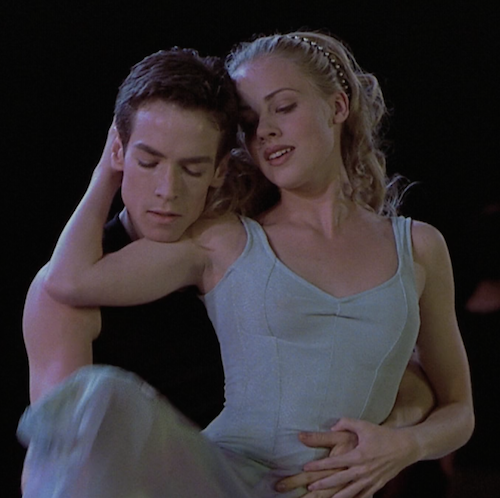
As Jody is trying to find her way in the academy, sweet fellow dancer Charlie (Sascha Radetsky) flirts with her, but she is drawn to the star of the company, aspiring choreographer Cooper (Ethan Stiefel). Cooper and she have a brief affair, which means something to her and nothing to him. Although it’s hard to imagine anyone mistaking Cooper’s shady selfish soul for anything like boyfriend material, she’s so clearly inexperienced you feel for her.

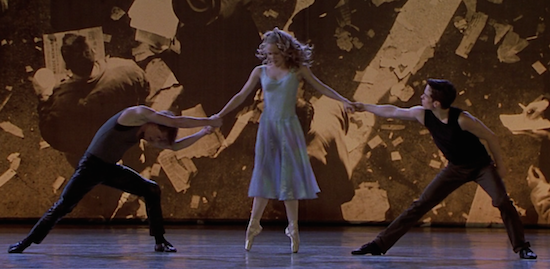
Luckily, this plot is just a set-up for the mesmerizing dance that ends the film, and Charlie and Cooper; played by American Ballet Theater’s soon-to-be-soloist Sascha Radetsky and then principal dancer, Ethan Stiefel, respectively; are beautiful in motion, even when their acting is stiff (Radetsky) or laughable (Stiefel). And given its progeny (choreographed by slimy Cooper), the narrative of the final dance is remarkably feminist as well: a woman torn by two overly grasping men discards both to fight for her own space.


You can see even from these scenes why I try to forget the….

Acting Dilemma
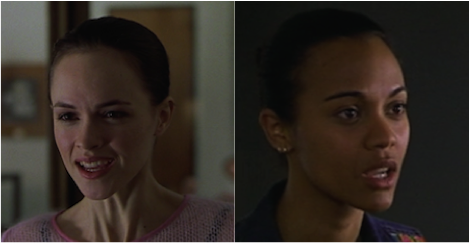
It’s the question of every dancing film, of course: cast actors, or cast dancers? With the former, you’ll need stand-ins for the harder dance moves; with the latter, you risk weak acting destroying the movie. That’s why Center Stage is such a curious film: there’s a mixture of dancers and actors, but inexpert as the dancer-actors are, the full-time actors are worse at acting than the dancers. Much worse. Zoë Saldana and Susan May Pratt were the “real” actors chosen to play Jody’s fellow dancers and friends/frenemies at the academy, and both excel at histrionics. As with Flashdance before it, Center Stage gives an unexpected answer to the actor/dancer dilemma: Why not choose someone who can’t do either?


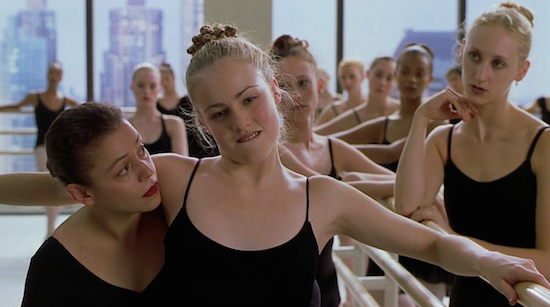
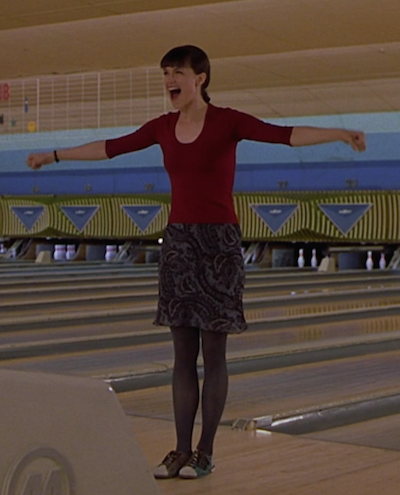
While Saldana can at least move, Pratt displays a level of physical awkwardness that makes her casting baffling. Take this screen shot of the actress, who was presumably cast to lure in fans of 10 Things I Hate about You. Her character, Maureen, is supposed to have the best technique of anyone in the academy. Having spent seven years of my life in ballet studios, I remember what grace looks like, and believe me, it never looks like this:


In fact, this pose is remarkably reminiscent of my own awkward 19-year-own self, who was put into dancing as a kid to overcome a lack of coordination. Not exactly future prima ballerina material, my friends.

Saldana is at least fun to watch, even when she overplays her lines, but oh Pratt. Every scene is painful, and I tend to just fast forward through her parts (though the script is largely at fault too, her delivery is abominable). Luckily, the acting in the film is comic rather than annoying overall, and occasionally decent. And really, who cares? This is a dancing film, with great final performances, convincing practices, and a wonderful dance class at the Broadway Dance Studio in between. When Schull’s dancing, she’s a different actress than the passable one she is in the rest of film–lovely, riveting, fun. And given the choice between even good acting from poor dancers and some weak performances from people who can move? Give me the good dancers, every time.


This post is part of the En Pointe: The Ballet Blogathon, hosted by two marvelous sites: Christina Wehner‘s and Michaela’s of Love Letters to Old Hollywood. (As a sidenote to fellow Hoosier Michaela, Schull studied ballet at Indiana University.) Check out the other blogathon entries here!
Share
Posted in: 1990-current films, Comedies (film), Drama (film), Humor, Musicals and dancing films, Romance (films), Romantic Comedies (film) Tagged: Amanda Schull, ballet films, Center Stage, lovable camp dance films

The Klutziest Bonnie & Clyde Ever: Gun Crazy (1950)

06/06/2016 by leah@carygrantwonteatyou.com Leave a Comment

GunCrazy
**Only very minor, preliminary spoilers here**

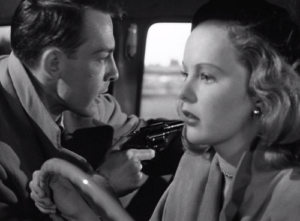
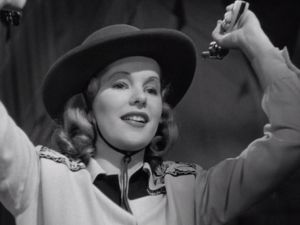
Gun Crazy begins with a boy getting caught for stealing a gun because he trips. The kid, Barton Tare, has a mysterious attraction to guns he can neither explain nor control. Others try to defend him, given that he has no desire to harm and isn’t a good thief. But he’s sent to reform school anyway, and after that and a bout in the army, the young man returns home and falls for a carnival sharpshooter, Annie Laurie Starr (Peggy Cummins). The two are both skilled in their expertise with weaponry and in their seduction of one another (clearly what brings them together), but their limbs just go haywire in all other contexts. When they turn to crime to satisfy Laurie’s lust for excitement and cash, the two can’t stop themselves from tripping, falling, and dropping the payroll.

The chief delight of this famous noir is Laurie’s ruthlessness; she’s one of the most fascinating femme fatales; the whole movie, you’re just waiting to see if her attraction to her now-husband, Bart (John Dall), will trump her self-interest.

LaurieGunCrazy
Bart’s a little screwy (as when he brings a gun to school as a kid and refuses to give it to teacher or superintendent). But there’s an aw-shucks, Jimmy-Stewartist innocence to his love for his wife, making her single-mindedness and easy manipulation of him both sinister and completely believable. When the going gets tough, you know Bart will save Laurie. What you don’t know is whether Laurie will lose a nail to save him.

Their gun skills, of course, make them a dangerous pair when they start to rob. But in peak moments, the pair keep FALLING, making you wonder how many capers they could have actually pulled off. Call me cynical, but I think some grace might help in a getaway. This lack of finesse might dissatisfy viewers looking for slick criminals in action, but being anything but nimble myself, I found their lack of coordination endearing–an unexpected trait that made me worry for their chances, and realize that I’ve seen this trait in cinematic bank robbers too seldom. Far too many action stars have amazing reflexes without Jason Bourne’s training; more of us stumble in real life, as the Darwin Awards and local news so often prove. I know I’m not alone in loving the pratfallers, even in a noir. (Usually, only minor characters make such silly mistakes.)

Of course, there’s a lot more to recommend the movie: its stylishness, the costumes of Cummins (clearly an inspiration for Faye Dunaway’s in Bonnie and Clyde), the many artfully composed shots. But its lack of predictability (thanks to screenwriters, blacklisted Dalton Trumbo and MacKinlay Kantor) is what kept me watching and wondering. I expected some hairy getaways, but not the twists I got. I expected a dastardly female, but couldn’t predict her moves. And I certainly didn’t expect–but loved–all the great moments like this, Bart’s first tripping incident, which led to all the rest:

Bartsfirstfall-GunCrazy

Share
Posted in: 1950s films, Anti-Romance films, Drama (film), Femme fatales, Film Noir/Crime/Thriller & Mystery, Romance (films) Tagged: best femme fatales, Claire Underwood, Dalton Trumbo blacklisted, film noir, films glorifying crime, Gun Crazy, John Dall, Peggy Cummins

1946’s The Razor’s Edge: The Good, the Bad, and the Ugly

04/13/2016 by leah@carygrantwonteatyou.com 12 Comments

RazorsEdge
This is my contribution to the Classic Movie Blog Association‘s Words! Words! Words! blogathon. Some of the entries have been collected into an eBook, which is free on Smashwords or .99 on Amazon, with all proceeds going to the National Film Preservation Fund. I hope you’ll get the book or go here to read the words of my talented peers.
When I learned that CMBA’s spring blogathon would be devoted to writing and film, I decided to tackle one of my oldest literary phobias (of twenty years duration): watching The Razor’s Edge, an adaptation of one of my favorite novels. W. Somerset Maugham’s cynicism and lack of judgment about human behavior have always won me, and his Larry is a fascinating hero: elusive and religious, known for his evasions, gentle but of strong will, a scholar without pretension.

I’ve always loved how the story is told. The narrator, an unveiled W. Somerset Maugham, simply ties together a series of Larry encounters (both his own and others’), trying to explain why someone he barely knew had such an impact. Many believe Larry was someone the author actually knew, and have speculated on his identity.

Larry is an unusual character.

Larry-RazorsEdge
He is disillusioned after his time in WWI, looking for something to believe in, and wanders around Paris, through Europe, and eventually to India to find it, a quest he calls “loafing,” which actually means intense intellectual pursuits. He decides to let go of his love, Isabel, when she won’t join in his journey, and she never gets over him. While he finds what he needs (faith), Isabel pines for him even after her marriage to a millionaire (Gray Maturin). I shuddered at what Hollywood would do with such a religious quest–probably turn it into a romance.

PowerandTierneyromance-RazorsEdge
Alternatively, the movie could focus on Isabel’s uncle, Elliott, and his high society ambitions–a better option, given how delightful that character is, but still not the story I knew.

I wanted to give the screenwriter some slack, since creating a good movie from such a story was a pretty tough aim. Lamar Trotti managed better than I would have thought, and has moments of real mastery. But alas, much of the film tips toward tedium. I’ll start with what works, and lead into the atrocious.

The Good.

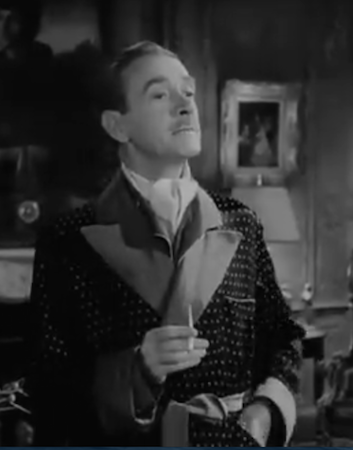
Elliott (Clifton Webb).

CliftonWebb-RazorsEdge
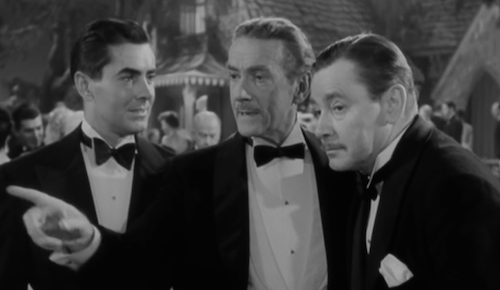
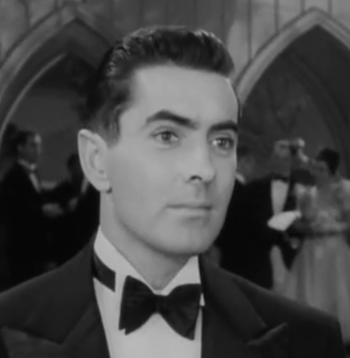
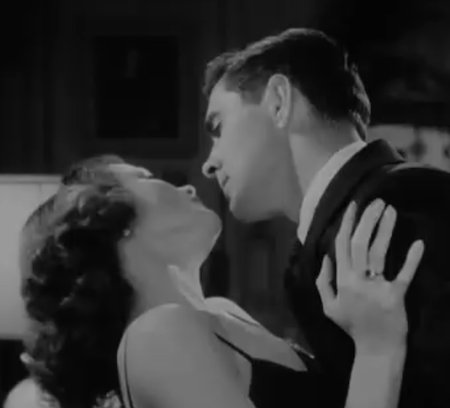
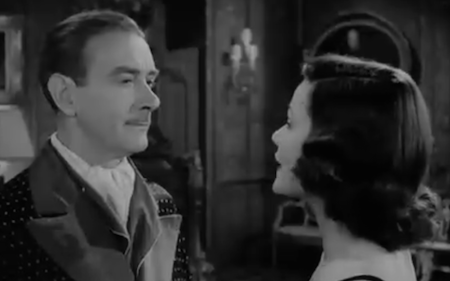
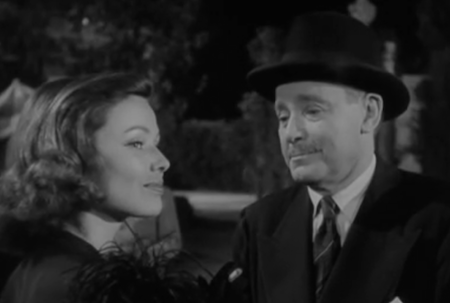
A lot of the credit for the characterization of literature’s most endearing snob goes to the actor. (After all, he excelled at this role in Laura and Titanic.) But much goes to Trotti too: he retains great lines from the novel, which capture the snobbery and yet the sweetness of the man. I like how occasionally Trotti uses him as a stand-in for the narrator, as when Isabel (Gene Tierney) thinks of luring Larry (Tyrone Power) to bed to trap him with a pregnancy, and her uncle rips on her for it.

WebbandTierney-RazorsEdge
This moment was much livelier than the narrator’s conversation with her in the novel. Maugham and Elliott share a sardonic humor and lack of pretense about human behavior; it’s not at all surprising that they’re friends (in Elliott’s case, of course, he is quite blind about his own). This switch works much better than (oh horror!) when the writer exchanges the narrator and Larry later (see “The Ugly.”)

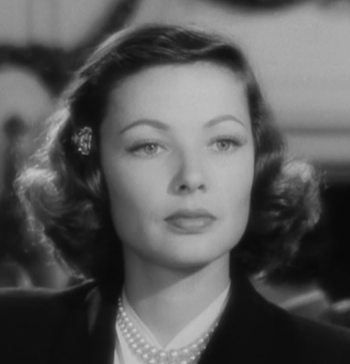
Isabel’s Selfishness. I was afraid the writer would take the cruelty out of Isabel, soften her up to earn sympathy. High marks to Lamar Trotti for letting her be who she is; her self-centered behavior is one of the highlights of the novel and the film.

GeneTierney-RazorsEdge
She comes across as real, like Maugham’s other fascinating heroines: charming and fun, but judgmental, conniving, and occasionally ruthless. As the narrator says of her, “You only lack one thing to make you completely enchanting…tenderness.”

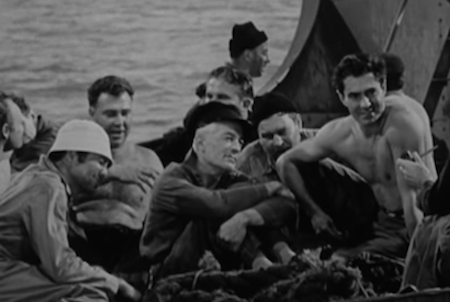
Montages of Larry’s Actions. What a stroke of brilliance to pair Elliott’s guesses about Larry’s likely debauchery and high-class life in Paris with scenes of his real actions (hanging out on a steamer with a bunch of guys rather than the glamorous voyage Elliott would have booked, reading books rather than finding a mistress).

Powermontage-RazorsEdge
The juxtaposition made me laugh aloud. Beautifully done.

The Narrator. While his absence in much of the first half makes little sense, when he appears, Maugham is quite similar to his character in the book, though (thanks to the casting of Herbert Marshall) less animated.

MarshallandTierney-RazorsEdge

The Bad

The Strange Opening about Larry. The writer falters with his introduction. Instead of trusting his scenes to show Larry’s originality and holiness, he preaches it to us by lifting a whole passage from the book. Since we don’t see the many encounters between Larry and the narrator or the narrator and Isabel that appear in the novel, this knowledge of and admiration for Larry are puzzling, as is Maugham’s later intimacy with the Maturin family.

Sophie (Anne Baxter).

Baxter-RazorsEdge
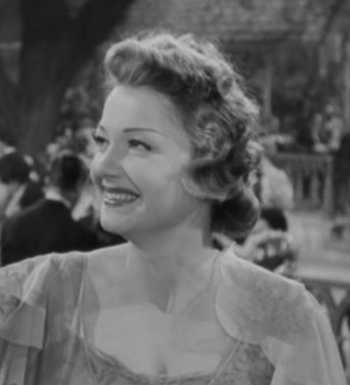
True, the girl had her romantic side, but what happened to the dry cynic we saw in those early scenes in the book? The cool-headed observer of her peers? She was passionate about her husband, yes, but theirs was a kind of exclusive love; they weren’t exactly the social butterflies we get in the film. Nor was she ever a fan of Isabel’s. She was an outsider from the start, which made her tragedy all the more acute. Baxter does a good job (though her Oscar was a stretch), but she’s given a far less interesting character to work with than in the novel; the character’s lack of boldness in the film also took away the dark humor of her reactions to Isabel’s superficiality.

The Absence of Suzanne Rouvier. What this film really needs is some comic relief, and the sensual artist offered a trove of it in the novel. A one-time lover of Larry, she is an unapologetic, sensual woman who made a career of being an artist’s model/mistress. Her frankness about her life is hilarious, and her insights about Larry’s kindness (he only took her in because she was sick and destitute) fascinating. True, the majority of her words and actions wouldn’t make it through the censors. But surely a toned-down version could have been attempted?

The Ugly

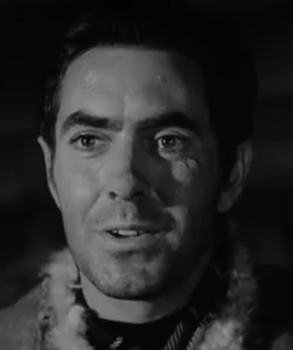
When Larry Talks about His Faith. Those ponderous religious speeches!

TyronePower-faithRazorsEdge
So much more could have been accomplished with wit, with expressions, and with Larry’s dodges when asked direct questions (which we see frequently in the book). In fact, his mystery was one of Larry’s biggest appeals, and is utterly absent from this characterization. He also took himself far less seriously than we see here, and only rarely talked about his beliefs.

Instead, the camera freezes on Power’s intense expressions; we hear his words about doubts and faith. The melodramatic music and shots of clouds don’t help, but I doubt those are the fault of the screenwriter. I know some will blame the boredom of these speeches on Power, but honestly, he does seem like the joyful Larry when in motion. Just when he’s still do I roll my eyes and try to avoid drifting off to sleep.

Larry’s Sanctimony. What happened to his “aloof” quality, which is mentioned in the movie? His lack of judgment? His desire not to have a hold on others–or to let them have a hold on him? Now he’s lecturing Isabel about Sophie? What? By taking the narrator’s scenes and putting Larry in his place, the writer has turned Larry into a stuffy character I’ve no interest in knowing. And this is one of my favorite characters in literature.

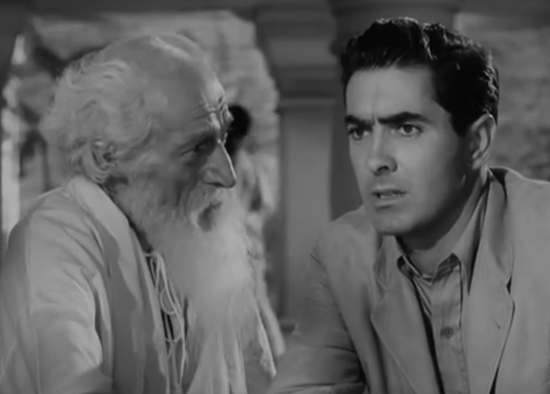
The Holy Man. Until this man said, “We Indians,” I wasn’t sure if this was the Benedictine monk from earlier in the book, or the Hindu who helps Larry find his faith. After all, the latter was described in the book as someone who “didn’t talk very much” and mainly meditated.

PowerandYogi-RazorsEdge
This strange bearded guy is the chattiest of yogis ever seen on film and perhaps the most European looking. He also is guilty of some serious close talking. Come on. I know this wasn’t exactly a racially/ethnically enlightened time in American film, but surely some understanding of the faith being displayed was required? In a film about faith?

I can’t decide if I’m happy I saw the film or not. It certainly didn’t ruin the book for me, and I enjoyed the scenes with Isabel when Larry wasn’t present, and Elliott with everyone. I’m curious what others think who haven’t read the novel. Did you just fast forward through Larry’s religious scenes to get to the juicy ones, as I wished I had?  Now that I’ve gotten over my phobia, maybe I can give Bill Murray’s version a chance; he’s a softer presence than Power, and supposedly really fought for the role. Maybe it’s a bit closer to the novel, and at the very least, it’s more time with Murray….

Share
Posted in: 1940s films, Blogathons, Drama (film), Romance (films) Tagged: Clifton Webb, Gene Tierney, religion and film, screenwriter, The Razor's Edge, Tyrone Power, W. Somerset Maugham

Big Fish: A Kettle of Oscar Snubs

02/13/2016 by leah@carygrantwonteatyou.com 4 Comments

EdwardandgiantBigFish
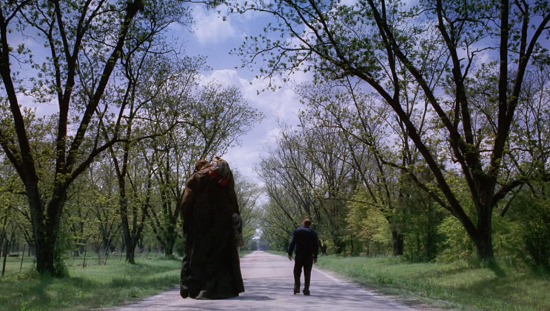
Director Tim Burton’s beautiful Big Fish was shut out of all Oscar nominations in 2004 but for original score (which it didn’t win). The director’s work is often dismissed as creative, but too weird, or lovely, but lacking in feeling. The same critiques, by the way, the Coen brothers and Wes Anderson hear often. Yet in Big Fish, Burton vividly renders the elusive, big-hearted whimsy of Daniel Wallace’s book, telling a father-son story that is sad, wise, and funny all at once.

Let’s discuss the many nominations it should have received, starting with the most egregious omission:

Best Actor in a Supporting Role

AlbertFinneyBigFish
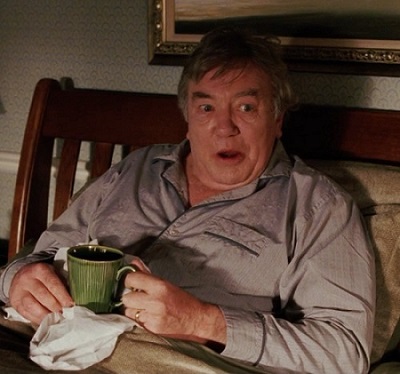
Billy Crudup, not Albert Finney, is the star of the film. Will (Crudup) resents his father, Edward (Finney), for always traveling away from home while he was a kid, even suspects he had a second family. The yarn-telling skills that endear others to Edward annoy his son, who considers his father a liar. “You’re like Santa Claus and the Easter bunny combined,” Will says, “just as charming and just as fake.” The two haven’t spoken in several years, until Edward’s final illness draws his son home to resolve their issues. Edward prickles at his son’s anger: “I’ve been nothing but myself since the day I was born, and if you can’t see that, it’s your failing, not mine.”

Finney’s performance is magical. There’s no other word for it. How much personality and spirit he’s able to convey, even though he spends most of the film in bed! And Ewan McGregor exudes his usual charm, as he captures Edward as a youth, full of outsized ambition and enthusiasm. Burton lets us see Edward’s young adulthood not through the actual events, but through the imaginative way he recounts them: the boy spits out of his mother’s body like a cannonball when born, he sees his death in a witch’s eye, saves his town from a giant. When Edward leaves home and travels down a forsaken road, he spots a sign: Warning: Jumping Spiders. Edward’s description of this obstacle illustrates both the amusing cadence of his language, and his indomitable spirit: “Now there comes a point when a reasonable man will swallow his pride and admit that he’s made a terrible mistake,” narrates McGregor. “The truth is, I was never a reasonable man.”

In 2004’s Academy Awards, the supporting actors were Benicio Del Toro (21 Grams), Alec Baldwin (The Cooler), Djimon Hounsou (In America), Ken Watanabe (The Last Samurai), and Tim Robbins (Mystic River). I admire all of these actors, and have seen all but 21 Grams. I’d put Finney over them all, and Ewan McGregor (also supporting) over most. Baldwin was very good, but it’s not his most nuanced performance. Hounsou played a very one-dimensional role (as he typically does despite his skills), and I barely recall either Ken Watanabe’s or Tim Robbins’ performances.

But Finney’s? I’ve never been able to get it out of my head. As Edward, he is haunting and lovable, resentful and stubborn and inexpressibly sweet.

Had he been mistakenly chosen for a Best Actor nomination, Finney still should have been in the list, which included Sean Penn (Mystic River), Jude Law (Cold Mountain), Ben Kingsley (House of Sand and Fog), Bill Murray (Lost in Translation), and Johnny Depp (Pirates of the Caribbean). I would have been torn between him and Murray as deserving of the win.

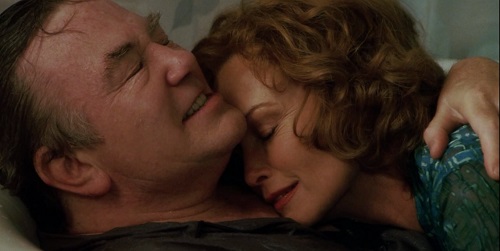
By the way, Jessica Lange plays Edward’s wife. She wasn’t in the film enough to earn a nomination, I suspect, but what an impact she makes in her few lovely moments, capturing the endurance of the love affair that is at the root of 90 percent of his stories. (No wonder she doesn’t share her son’s anger.) Here are the sweethearts in a tub together, fully clothed:

LangeandFinney

Best Director, Best Picture
Nominees, Best Picture: The Lord of the Rings: The Return of the King (winner), Lost in Translation, Master and Commander: The Far Side of the World, Mystic River, and Seabiscuit.

Nominees, Best Director: Winner Peter Jackson (The Lord of the Rings: The Return of the King), Fernando Meirelles (City of God), Sofia Coppola (Lost in Translation), Peter Weir (Master and Commander), and Clint Eastwood (Mystic River)

Jackson and his film probably deserved the win among those nominees, as the weight of translating Tolkien to film was so daunting that the man deserved a medal simply for attempting it, much less succeeding. And Meirelles created one of the most riveting and best edited films I’ve ever seen. It must be the foreign language that knocked it out of best-pic contention, to the Academy’s shame (as it definitely deserved the win).

But I do quibble with the other best picture and director nominees. Lost in Translation was a creative film, but without Bill Murray at the helm, would have been forgettable. The unspeakably dull Master and Commander proved to me once and for all that male voters dominate the Academy. If “chick flicks” can’t be nominated, why do I have to put up with something that’s one step up from a video game? Seabiscuit was a winning story, but a bit too saccharine, and Mystic River, like everything Eastwood does, was overwrought and completely lacking in subtlety.

It’s hard to imagine many of the voters bothered to watch Big Fish, as surely it outranks Seabiscuit in sentiment, and manages to say something meaningful about the power of story, its capacity to help us not only overcome obstacles, but survive loss. Surely storytellers—i.e., those involved in film—would have gravitated to such a theme?

Best Writing, Adapted Screenplay
Nominees: The Lord of the Rings: The Return of the King (Fran Walsh, Philippa Boyens, Peter Jackson, winners), American Splendor (Shari Springer Berman, Robert Pulcini), City of God (Bráulio Mantovani), Mystic River (Brian Helgeland), and Seabiscuit (Gary Ross)

This category was tough in 2004, but it’s clear that few voters read the novel, understood the challenge of translating it to film. Unlike Seabiscuit, for example, this was not a traditional narrative. It’s a recursive, poetic recounting of moments. It’s even divided into fragments rather than chapters. The book intentionally circles, the author explaining in interviews that myth does as well. And in truth, so do our lives: so many moments in our existence recall others. Our bodies may decline in a chronological fashion, but our minds, our experiences, don’t work that way at all. As the film’s script explains, “Fate has a way of circling back on a man, and taking him by surprise.”

The scene of Edward’s death, for example, is repeated multiple times throughout the book, each version telling readers something different. John August distilled the story, threaded enough of the moments together to form a comprehensible narrative, and yet retained the recursive, fanciful spirit of the original. His achievement, quite simply, is a triumph. And though I would leave those first three films on the list, I think Mystic River or Seabiscuit should have been bumped to include August’s work.

Best Art Direction-Set Decoration; Best Cinematography
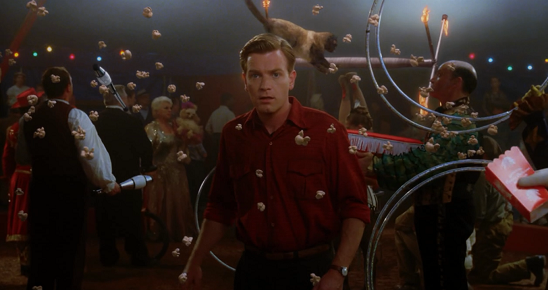
I’ll confess that I feel in deepest water when I discuss the visuals of a film. I don’t think, however, that many would dispute that the enchantment of Big Fish is largely a result of its execution of Burton’s vision; it’s rare that I am so enthralled by what I see that I long to take a snapshot of every moment. I’m curious why this film wasn’t considered worthy of awards based on artistic merit, if nothing else for the images’ perfect cohesiveness with the storytelling. Edward complains that his son doesn’t tell stories well, that he gives “all of the facts, none of the flavor.” That certainly cannot be said of the art direction of this film. In parting, I’ll just leave you with a few of my favorite visuals:

JennycrushBigFish

Timestandingstill-BigFish

carintreeBigFish

daffodilsBigFish
This post is part of The 31 Days of Oscar blogathon, hosted by Aurora of Once Upon a Screen (@CitizenScreen), Kellee (@IrishJayHawk66) of Outspoken & Freckled, and Paula (@Paula_Guthat) of Paula’s Cinema Club. Visit their sites for all of the wonderful entries. Kellee is hosting the snubs.

Share
Posted in: 1990-current films, Blogathons, Comedies (film), Drama (film), Humor, Oscars, Romance (films), Romantic Comedies (film) Tagged: Albert Finney, Big Fish, Daniel Wallace, Ewan McGregor, John August, Oscar snubs, Tim Burton

An Unabashedly Romantic Pirate Tale: Frenchman’s Creek (1944)

11/07/2015 by leah@carygrantwonteatyou.com 16 Comments

FrenchmansCreek-top

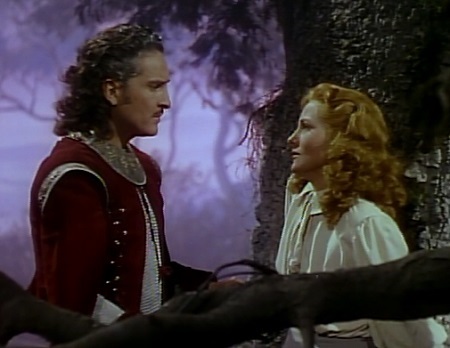
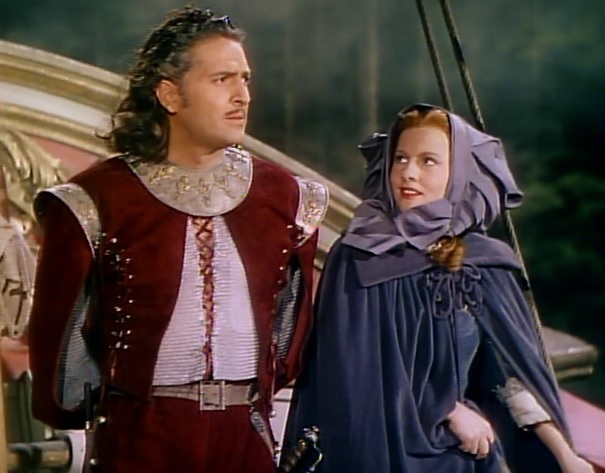
Daphne Du Maurier’s Frenchman’s Creek was my favorite romance as a kid, and when I found a copy of it in a bookstore in my twenties, became enthralled with it all over again. Du Maurier excelled at atmospheric suspense, and what girl wouldn’t love a period drama featuring a heroine running away from London society (and her dumb husband) with her kids to luxuriate in freedom and nature in Cornwall, and falling for a pirate as independent and daring as she? I hoped the movie would capture much, if not all, of the book’s magic–and it really does.

FrenchmansCreek-Arturo de CórdovaJoanFontaine
I know the story sounds like the clichést of clichés, an overimaginative girl’s fantasy. And of course, it is.

FrenchmansCreekFontaineinlove
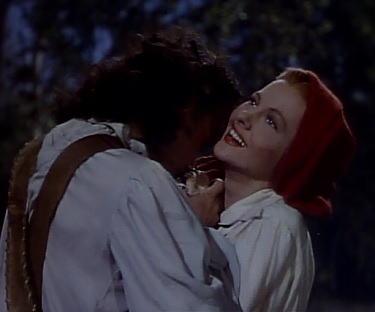
But it’s more than that. A biographer claimed the story was based on the novelist’s own romance, and I always believed there was truth to it. There’s something authentic in the chemistry between the two characters, in their vulnerability with and to each other, and in both their passion for each other and acknowledgement that theirs shouldn’t be anything but a temporary affair. I feared the movie would follow the outlines but miss that authenticity, but it didn’t, largely because large portions of the dialogue are lifted straight from the book. The actors have some chemistry, too, which helps sell the romance.

Even the beginning of the story is absorbing: The heroine’s flight from London, her discovery of a pirate’s ship as she ventures in the woods near her manor…

Frenchman's Creekboatspotted
The story picks up speed and romance with her awkward midnight feast with the pirate, her joining into his theft of a countryman’s ship, her husband’s arrival, and her efforts to foil the hanging plot against her now-lover by attempting to flirt with her guests just long enough for the ship to escape.

FrenchmansCreek-flirting
Some of the suggestive lines do make it into the film, as when Jean, the pirate, notices the spread at dinner, but looks straight at his beautiful hostess as he says, “Is it wise of you to place all this temptation before a pirate?”

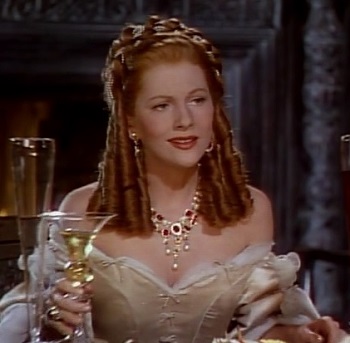
Joan Fontaine captures Dona; the spirited, smart heroine; even managing her voice.

FrenchmansCreek-JoanFontaine
All she really gets wrong is a tendency to pose now and then, and a lack of attention to Dona’s wit; Fontaine can be arch, but she misses the irritability with Cornish high society that was one of the character’s greatest charms. Fontaine plays Dona as a little too sweet, a little too filtered. The heroine is less interesting without her shocking double entendres, or the comic timing Fontaine never attempts (of course, this absence is partially the censors’ fault). But this is a book lover’s quibble; I doubt a viewer unacquainted with the novel would find fault with her character, as she’s still brash, proud, romantic, adventurous, intelligent–all the qualities we would hope for in a pirate-loving gal.

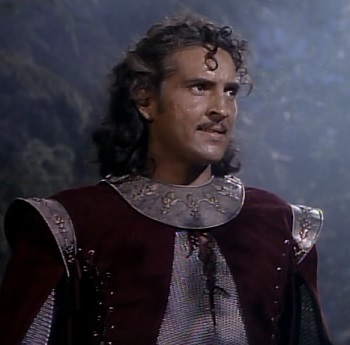
Arturo de Córdova’s ethnicity might make him a peculiar choice in a strictly French-versus-the-English tale. (Don’t you love that about Hollywood? Need a French dude? Any guy with an accent will do.)

FrenchmansCreekArturo de Córdova
Overall, de Córdova manages the role with only slight piratey exaggeration. He catches the hero’s sense of humor, and an independence so extreme he hesitates to make any decisions for his love–probably a quality unique in pirate characterizations, but one that has always made him seem real to me. If not a pirate, surely this man would have been an obsessive in some political movement or another, unwilling to compromise his ideals.

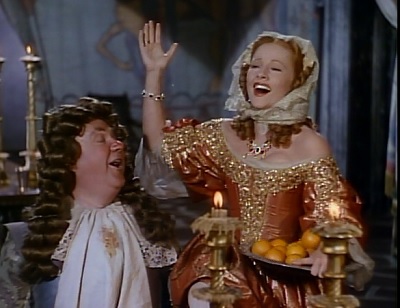
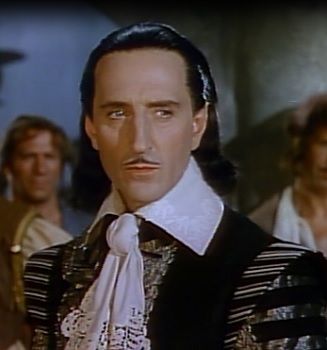
Cecil Kellaway as William, the matchmaking servant, is delightful, and Basil Rathbone as Lord Rockingham, Dona’s nemesis, is perfection.

FrenchmansCreekBasilRathbone
Any fan of Du Maurier’s work will enjoy time in her world again; lovers of romance will root for these two. Swordplay aficionados might crave more fencing time, but they’ll enjoy the devilry of Jean, his resemblance to their Errol Flynn favorites. Women can relish a strong-minded heroine who weighs her obligations against her passions, her annoyance with society, against her safety within it. (The lighting of the film accentuates her power of choice: he is shadowed, and she lit.)

Frenchman's Creekdilemna
Costume drama fans can drool over Fontaine’s lovely gowns. And any fans of a good yarn will wonder just how they missed this one before.

This post is part of Movies Silently’s wonderful Swashaton. Click here for more pirating adventures!

Share
Posted in: 1940s films, Action & Sports Films, Drama (film), Feminism, Romance (films) Tagged: classic, Daphne du Maurier, Frenchman's Creek, Joan Fontaine, pirate movies, Pirates of the Caribbean
« Previous 1 2 3 4 Next »

Recent Posts

  • 100 Years Later, Still Scary: Dr. Caligari
  • Escaping Out of the Past (1947)
  • A Weeper for Those Who Love Jerks
  • Thank You, Academy, for Not Infuriating Me
  • Challengers (2024) Is a Bad Movie

Subscribe to Blog via Email

Enter your email address to subscribe to this blog and receive notifications of new posts by email.

Categories

  • 1920s films
  • 1930s films
  • 1940s films
  • 1950s films
  • 1960s films
  • 1970s films
  • 1980s films
  • 1990-current films
  • 2020s films
  • Action & Sports Films
  • Anti-Romance films
  • Blogathons
  • Childfree
  • Comedies (film)
  • Drama (film)
  • Feminism
  • Femme fatales
  • Film Noir/Crime/Thriller & Mystery
  • Gloriously Silly Scenes
  • Horror
  • Humor
  • Mae West Moments
  • Musicals and dancing films
  • Oscars
  • Random
  • Romance (films)
  • Romantic Comedies (film)
  • The Moment I Fell for
  • Turn My Sister into Classic Movie Fan
  • TV & Pop Culture
  • Uncategorized
Share
Classic Movie Blog Hub Member

Recent Comments

  • leah@carygrantwonteatyou.com on Meg Ryan’s Fate Foretold in Joe Versus the Volcano
  • Ryan on Meg Ryan’s Fate Foretold in Joe Versus the Volcano
  • leah@carygrantwonteatyou.com on 100 Years Later, Still Scary: Dr. Caligari
  • The Classic Movie Muse on 100 Years Later, Still Scary: Dr. Caligari
  • leah@carygrantwonteatyou.com on 100 Years Later, Still Scary: Dr. Caligari

Archives

  • November 2025
  • September 2025
  • May 2025
  • March 2025
  • January 2025
  • November 2024
  • August 2024
  • July 2024
  • May 2024
  • March 2024
  • February 2024
  • December 2023
  • November 2023
  • October 2023
  • September 2023
  • August 2023
  • July 2023
  • May 2023
  • April 2023
  • March 2023
  • January 2023
  • December 2022
  • November 2022
  • September 2022
  • July 2022
  • May 2022
  • April 2022
  • March 2022
  • February 2022
  • October 2021
  • September 2021
  • April 2021
  • March 2021
  • February 2021
  • December 2020
  • October 2020
  • September 2020
  • July 2020
  • May 2020
  • April 2020
  • March 2020
  • February 2020
  • December 2019
  • October 2019
  • September 2019
  • June 2019
  • May 2019
  • April 2019
  • February 2019
  • January 2019
  • November 2018
  • September 2018
  • July 2018
  • June 2018
  • May 2018
  • April 2018
  • March 2018
  • February 2018
  • January 2018
  • November 2017
  • September 2017
  • August 2017
  • July 2017
  • June 2017
  • May 2017
  • April 2017
  • March 2017
  • February 2017
  • January 2017
  • December 2016
  • November 2016
  • October 2016
  • August 2016
  • July 2016
  • June 2016
  • May 2016
  • April 2016
  • March 2016
  • February 2016
  • January 2016
  • December 2015
  • November 2015
  • October 2015
  • September 2015
  • August 2015
  • July 2015
  • June 2015
  • May 2015
  • April 2015
  • March 2015
  • February 2015
  • January 2015
  • December 2014
  • November 2014
  • October 2014
  • September 2014
  • August 2014
  • July 2014
  • June 2014
  • May 2014
  • April 2014
  • March 2014
  • February 2014
  • January 2014

Meta

  • Log in
  • Entries feed
  • Comments feed
  • WordPress.org

Copyright © 2025 Cary Grant Won't Eat You.

Church WordPress Theme by themehall.com