Cary Grant Won't Eat You

Classic movies for phobics

  • About
  • eBooks
  • Previous Blogathons
Classic movies for phobics

Feminism

The Nicholas Cage Syndrome: Is Taste More Crucial than Talent?
04/24/2015 by leah@carygrantwonteatyou.com 6 Comments

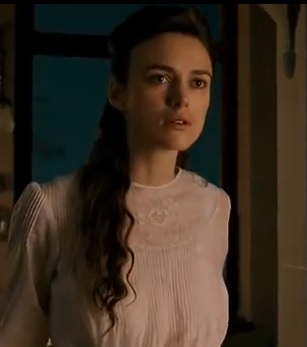
KeiraKnightleyADangerous
I was outraged by the choice of Keira Knightley to play Elizabeth Bennett in Pride and Prejudice. “That woman,” I complained to my sister Rachel, “is known for her toned midriff, not her acting talent.” Although Knightley did a passable job in a decent film adaptation, I considered her subsequent Oscar nod an affront.

Rachel agreed with my assessment of the actress’s mediocrity, even if I couldn’t follow through with my plan to avoid her films. The problem was, Knightley kept selecting intriguing feminist roles, not the cheesy romantic leads her looks surely could have garnered her. The groundbreaking historical women she brought to life on the screen in The Duchess and A Dangerous Method led me to hours of fascinating research.

And then this year, an Oscar nod again, this time for an interesting biopic, The Imitation Game. When I grumbled about her second nomination, my sister disagreed. “I’ve changed my mind about her. Watch Begin Again. Two great films in one year. She has such good taste.”

And there it was, the trait so often ignored when we talk about acting: taste. Sometimes; as with Meryl Streep, Philip Seymour Hoffman, and Cary Grant; we get both: good films and incredible talent. But so often, we can’t select a movie based on the cast and assume we’ll enjoy it. Why? Because so many skilled performers have Nicholas Cage judgment.

Cage Syndrome: Good actor who stars only in trash

The Cage Syndrome: A good actor who repeatedly stars in trash.

Recall Halle Berry, still gilded from her Oscar win, choosing a bad Bond flick and Catwoman to cement her legacy. Or the previously reliable Morgan Freeman. His films since The Shawshank Redemption make me feel like a comet has crashed into my brain.

Is it possible that taste is more important than talent? I’m not saying that judgment trumps skill if the acting is bad enough to spoil the film. (I’m looking at you, Andie MacDowell.) But if the actor or actress is decent, might good taste matter more?

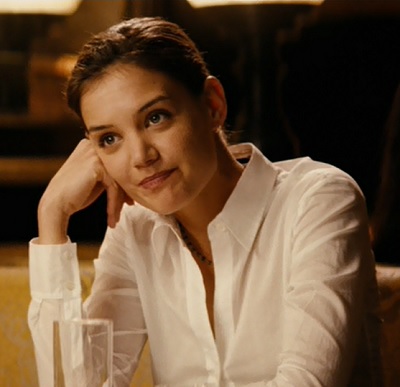
Let’s take another example: an actress even less versatile and skilled than Keira Knightley (who is admittedly rising in my estimation). Katie Holmes is better known for being the ex of Tom Cruise than for her acting. Her performances are largely forgettable, but her films are not. Even during her Dawson’s Creek years, Holmes displayed remarkable discrimination in her choices. The following are my favorites of her credits (the first and fifth I rewatch often):

  • Thank You for Smoking
  • Batman Begins
  • Pieces of April
  • The Gift
  • Wonder Boys
  • Go

KatieHolmes-ThankYouSmoking
By rarely starring and choosing movies that feature fine performers, Holmes has ensured I don’t need to rely on her skill to enjoy her films. Her mere presence in Woman in Gold is making me reconsider it despite lukewarm reviews. I trust her taste to impress as much as I trust Cage’s to disappoint. (I vowed during Snake Eyes never to watch his films again. Alas, I caved, remembering Raising Arizona, and even let my husband bring home Drive Angry, which did, in fact, make me angry.)

Of course, it’s hard to place the same kind of trust in the taste of classic film performers. Since studios held such tight reign over their stars, performers’ ability to select was limited. But now and then, you can, as in the interesting case of Norma Shearer.
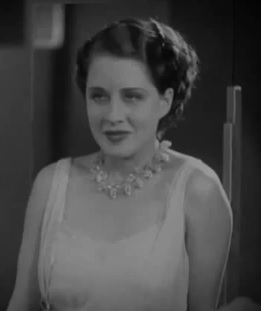
NormaShearerDivorcee1
She (conveniently) married the production head of MGM, therefore ensuring her pick of roles (to the envy of Joan Crawford, who must have enjoyed taking her husband away in The Women).

I’m not a big fan of Shearer’s acting, which I usually find too theatrical. That said, I always enjoy her films, even staid period dramas such as Marie Antoinette and antifeminist flicks such as The Women. But it’s her fight to play liberated women in the pre-Code era that makes me trust her judgment. A woman who would go to a photographer for sexy shots just so she’d be considered for parts like that of Jerry in The Divorcee? That’s an actress I can trust. And in pre-Code films, she relaxes the affectations and easy tears that occasionally mar her pictures. Shearer is never on my list of favorite film actresses, but just writing these words has made me long to see The Divorcee again.

Are there stars whose films you go to see in spite of the mediocrity of their acting? Which talented stars’ movies do you avoid due to the Cage syndrome? And what is up with Sandra Bullock’s love for Razzie-caliber roles?

Share
Posted in: 1980s films, 1990-current films, Comedies (film), Drama (film), Feminism, Humor, TV & Pop Culture Tagged: bad acting, good taste, Katie Holmes, Keira Knightley, Nicholas Cage, Norma Shearer, Sandra Bullock, syndrome

4 Movies Downton Abbey’s Lady Mary Would Watch

03/01/2015 by leah@carygrantwonteatyou.com Leave a Comment

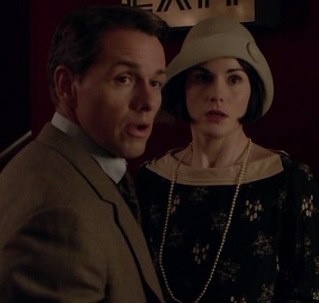
LadyMaryandCharlesBlake
It’s 1924 at Downton Abbey. We’ve just seen Lady Mary (Michelle Dockery) canoodling with one guy in a London theater (Charles Blake) to ward off another (Lord Gillingham) who had mistaken intimacy for love. Mary barely protested when forced to leave Beau Brummel early to disenchant Gillingham. But here are four films out that year that might have distracted the vixen from her flirtations, at least temporarily…

The Marriage Circle

The MarriageCircle
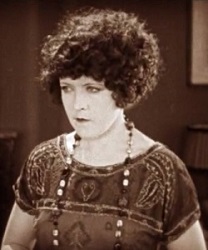
Mizzi (Marie Prevost), a dissatisfied wife, plots to seduce her friend’s husband. And that’s just the beginning of the marital and extramarital scheming in Ernst Lubitsch’s classic comedy of manners. Mizzi could give Lady Mary tips on undermining her frenemy Mabel Lane Fox’s attractions. (The daring Lubitsch would obviously become Mary’s favorite director; two of my four are his films.)

Her Night of Romance

HerNightofRomance
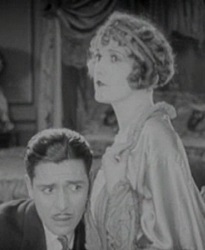
Dorothy (Constance Talmadge) winds up with a guy she barely knows (Ronald Colman) in her bedroom, and goes to extreme measures to protect her reputation. Sound familiar, Lady Mary?

Monsieur Beaucaire
Mary likes the pretty boys, and she couldn’t have missed heartthrob Rudolph Valentino starring in The Sheik three years before.

RudolphValentino-TheSheik
With Valentino featured AND a character named Lady Mary, Monsieur Beaucaire would lure the Downton heroine to the theater, even though her namesake in the film has too much pride to hold onto the guy (I have no illusions Mary would recognize the similarities).

Forbidden Paradise
Lady Mary has been subjected to Russian refugees she doesn’t care to meet, but a powerful czarina in full control of her posse of lovers? That could give Mary some interest in international politics.

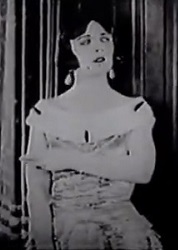
Pola Negri, in her best Lady Mary pose

Pola Negri, in a Lady Mary pose

Maybe the film would even grant Mary some insight into her grandma’s (the Dowager Countess’s) almost-fling. Here’s hoping.

There you have it. Four films with enough skin, calculation, and female triumph to please the headstrong Lady Mary, maybe even give her some ideas for next season…

Share
Posted in: 1920s films, Drama (film), Feminism, Humor, Romance (films), Romantic Comedies (film), TV & Pop Culture Tagged: 1924 films, Charles Blake kiss, Downton Abbey, Downton Season 6, Film, finale, Kemal Pamuk, Lady Mary

The Debt Actresses Owe William Somerset Maugham: from Gloria Swanson to Annette Bening

02/19/2015 by leah@carygrantwonteatyou.com 8 Comments

SomersetMaughamActresses
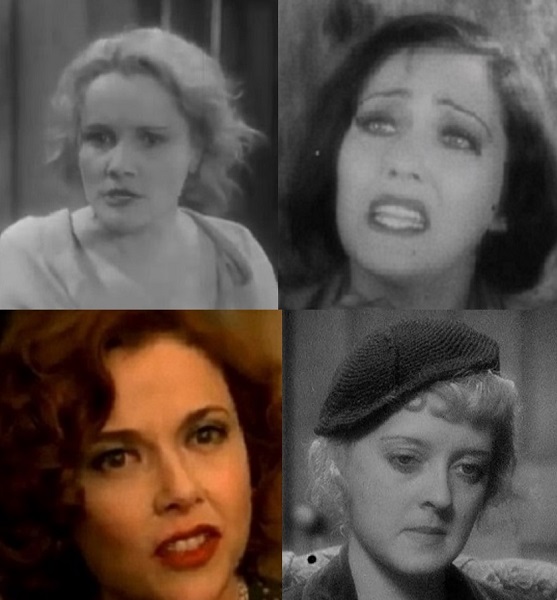
I’ve read many glowing tributes to the stars of The Letter, Being Julia, Of Human Bondage, and Sadie Thompson over the years. While I’ve never questioned the talents of these actresses, I have always credited much of their brilliance in these parts to William Somerset Maugham. Their strengths are on display largely because of the characters he created in his stories, plays, and novels: women so complex, morally conflicted, modern, and real that 130 years after his birth, Annette Bening was Oscar nominated for playing one of them.

And she’s not alone. Before I get into the reasons, let’s start with the data. Here’s a list of Oscar nods to women in his films; if I’ve missed any, please let me know. It’s quite possible. The number of his film credits, and of stars listed in those movies, is astonishing. Here we go:

Academy Award Nominations for Actress in a Leading Role:

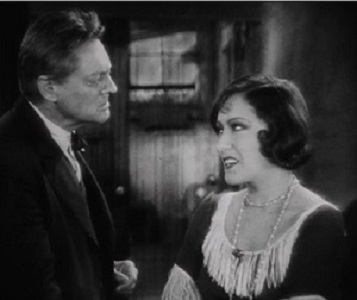
  • Gloria Swanson: Sadie Thompson (1928), based on the short story, “Rain”
  • Jeanne Eagels (first posthumous nomination), The Letter (1929), based on the short story and play. (She also made her name in the play version of “Rain.”)
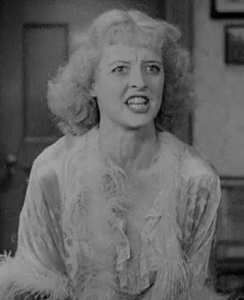
  • Bette Davis, two nods: Of Human Bondage (1934; by write-in vote), based on the novel, and The Letter (1940)
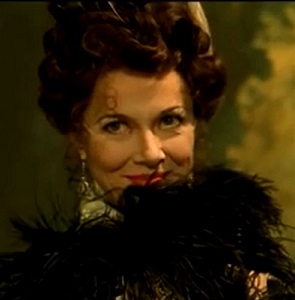
  • Annette Bening, Being Julia (2004), based on the novel Theatre.

Other notable female roles include Gene Tierney’s in the Oscar-nominated The Razor’s Edge (a novel), Greta Garbo’s and Naomi Watts’s in The Painted Veil (a novel), and Madeleine Carroll’s in Alfred Hitchcock’s Secret Agent, based on Ashenden, a collection of stories.

Even fine actresses need a vehicle, and in the last fifteen years, one of the few amazing leading roles I’ve seen for a woman over the age of 30—Bening’s—was written by Maugham in 1937. I wasn’t surprised. He specialized in complex characters making immoral decisions: They cheat on and leave spouses and children, prostitute themselves, admit to irreligious or cruel behavior without guilt, contribute to or directly cause the death of others. Since Maugham resists moral judgments, his women are free to react to the traumas they’ve created rather than simply being punished for them. No wonder they’re so fascinating to watch on the screen.

In fact, Maugham is as likely to admire as condemn. As his (seemingly autobiographical) narrator in The Razor’s Edge explains, “My dear, I’m a very immoral person….When I’m really fond of anyone, though I deplore his wrongdoing it doesn’t make me less fond of him.” Thus the attention given to selfish characters such as Mildred in Of Human Bondage. Certainly, her character would have been less nuanced—giving Davis less to work with—had Maugham not empathized with Mildred and therefore made her traits and actions so interesting and believable.

DavisOfHumanBondage
Davis is Davis, but it took a number of roles before she reached this breakout one.

Maugham frequently explored the contrasts between how men and women seek to appear and who they are. While he may be gentle on others’ immoral actions, he can be scathing about their hypocritical ones. Sadie Thompson is a prostitute, but it’s the reformer trying to condemn her, unwilling to admit his own sexual appetite, whom we are led to despise. Sadie, gradually moved by the reformer, ultimately learns to appreciate her own values over his—an unexpected ending for the type of character who is usually just a one-note in a film. Swanson, not surprisingly, captures the flair, passion, and contradictions of this woman.

SwansonSadieThomson
In Being Julia, we root for the heroine in spite of (or even because of) her extramarital affair with a younger man because we enjoy her confidence. Despite her vanity and delusions, she owns and even enjoys most of her flaws. The surprises in her behavior are quite funny, and Bening takes full advantage of the humor.

Bening-BeingJulia
How wonderful is it, how gloriously human, that in the midst of her midlife crisis, Julia is obsessed with breaking her diet? How much do we love that she wants to savor her victory over a younger wannabe actress in solitude, since it’s a private triumph? What a feminist scene it is when she does, and how interesting that a man created it so very long ago. Curious to see how much the film differed from the source material, I reread Theatre, only to find it was even closer to the movie than I’d remembered: the dialogue, the focus, the character, the morality, even the final scene—all the same.

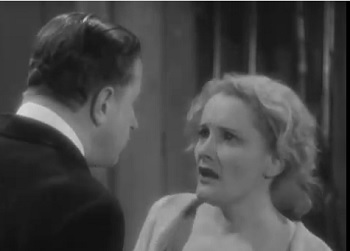
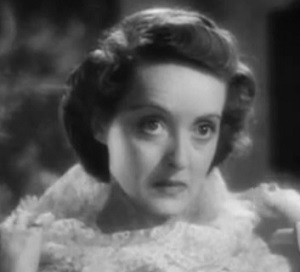
And Leslie in The Letter? Most authors would have focused on the murder and the passion leading up to it. It would have been a fairly typical noir, with an unremarkable femme fatale. But Maugham again proved to have a deeper interest in human nature than his peers, wondering not just about the crime itself, but Leslie’s efforts to conceal it, to retain that image she wants to present to the world. She is an interesting character because of her willingness to reside in her own lies, a trait that Maugham, with his typical regard for truth, seems to find more blameworthy than the murder. Thanks to his interest in motives, Davis and Eagels were granted a woman of enormous complexity to work with, which contributed to each’s stunning performance.

Eagels-TheLetter

Davis-TheLetter
Of his roles that have yet to win actresses Oscar nods, I find Kitty in The Painted Veil the most intriguing. Kitty’s husband Walter catches her cheating, and forces her to travel with him to a cholera-infested region of China as punishment. He offers her an out if her lover will marry her, knowing it won’t happen. Rejected by the man she loves and facing a death sentence from the one she doesn’t, Kitty spends much of her time alone, reflecting on her actions as Walter heals patients—quite a departure from her youth as a superficial beauty. She learns to admire Walter’s generosity, even as she pities the love for her that has turned to hatred. She wants to forgive him, and for him to do the same for her, but she can’t bring herself to love him.

Watts-PaintedVeil
What did Hollywood do with this story (Garbo’s and Watts’s versions)? Turned it into a love story. We’re meant to root for a reconciliation between the two, whether they both survive cholera or not. I don’t know about you, but once a guy tried to kill me via a deadly epidemic, I can’t imagine thinking, “Yeah, but I cheated on him; we’re cool now.” These plot alterations might have helped with commercial viability, but the result was to diminish realism and a powerful female part.

Kitty’s disappointment in herself for continuing to desire her vain, worthless lover is an essential part of the story. In the book we see enough of her life beyond the epidemic to discover that her enhanced self-awareness doesn’t lead to moral behavior. The self-deprecation and compassion she develops as a result of her failures are intriguing to witness. While Watts captured Kitty’s vulnerability beautifully, I suspect had the screenwriter more faithfully rendered the character’s complexity, he would have netted Watts the Oscar nomination, as with so many women in Maugham’s roles before her.

Maugham’s skill with character development is often attributed to his history: he stuttered in his childhood and struggled with his homosexuality. Did feeling like an outsider and being morally out of favor in his time contribute to his empathy for others? Probably. He gives another possibility, crediting his early medical training for giving him access to “life in the raw,” saying the work enabled him to see “pretty well every emotion of which man is capable.” While I suspect both of these reasons are relevant, I’ve always preferred to take as autobiographical his narrator’s confession in The Moon and Sixpence: “the fear of not being able to carry it through effectively has always made me shy of assuming the moral attitude.” Ultimately, perhaps in spite of himself, Maugham is amused by human behavior, in all of its foolish and ugly iterations, and therefore captivated by it. No wonder, with an author who claims he is “more likely to shrug his shoulders than to condemn,” that four of the women in his films have been nominated for Oscars, one twice. Let’s hope other gifted actresses take note, and give his excellent stories another run.

Share
Posted in: 1920s films, 1930s films, 1940s films, 1990-current films, Comedies (film), Drama (film), Feminism, Oscars Tagged: Being Julia, Bette Davis, great roles for women, Oscar nods, Sadie Thompson, The Letter, The Painted Veil, William Somerset Maugham

Unexpectedly Romantic: The Mistress Giving the Wife Advice in The Smiling Lieutenant

02/12/2015 by leah@carygrantwonteatyou.com 4 Comments

ColbertHopkins-SmilingLieutenant
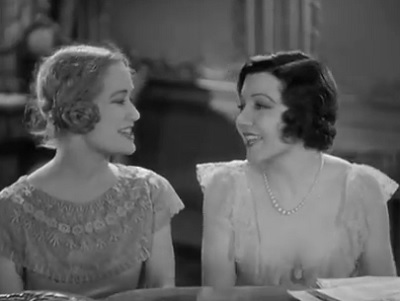
There’s something both charming and shocking about the song between Franzi (Claudette Colbert) and Princess Anna (Miriam Hopkins) in The Smiling Lieutenant. The two are unexpected friends in this moment, after all; the film begins with Franzi’s passionate love affair with Niki (Maurice Chevalier), which is interrupted by Anna’s royal prerogative in choosing spouses. Once married to Anna against his will, Niki continues to see Franzi, but when they’re discovered, the latter makes the surprising decision to help Anna win his regard.

An alliance between a mistress and a wife usually involves plots against the erring husband. The Other Woman with Cameron Diaz is simply the latest example. Since Niki was there first, and no marriage would have taken place had Anna been less public in her regal affection, we feel for both women, and appreciate Franzi’s sacrifice for the happiness of these two who are now bound together. (And honestly, why fight for the guy? I’ve never found Chevalier bearable. The man mugged from his twenties to his Gigi days.)

A wonderful union forms between the two women when Franzi goes through Anna’s music (including “Cloister Bells” and “Maiden’s Prayer”). Franzi’s disdain in evident as she pronounces each song’s name, and her next comment illustrates the indecent train of her thought: “Let me see your underwear.”

ColbertandHopkins-underwearrequest
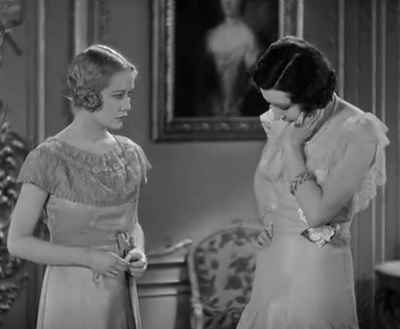
Meekly, Anna complies:

HopkinsunderwearSmilingLieutenant
“Cloister bells,” responds Franzi; she then shows her own:

ColbertunderwearSmilingLieutenant
And says, “That’s the kind of music you should play.”

Franzi goes to the piano and begins to sing her advice, with words that could have come from the front page of Cosmo. Wanna win your man? Franzi has the answer: “Jazz Up Your Lingerie.” In fact, I checked. Sure enough, Cosmo’s Valentine’s-inspired photo gallery last spring: “Sexy Lingerie Your Guy Will Love.”

Thankfully, this is a pre-Code Ernst Lubitsch film, and we know that, funny as this start may be, we have much more suggestion in store. First, we see Anna in her formal everyday clothing and stance.

StraightlacedAnna-SmilingLieutenant
Then we see her loosening up.

MiriamHopkins-hairtwirling
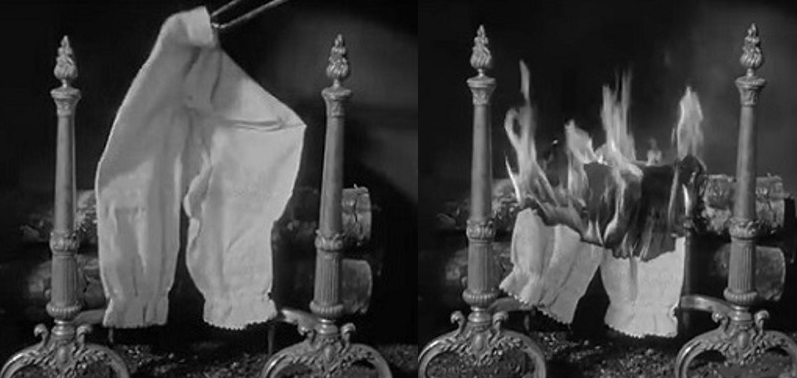
Bits of her old-fashioned hair pile up in a basket just before we’re treated to this wonderful depiction of what’s become of her prudish underwear:

LingerieFireMiriamHopkinsSL
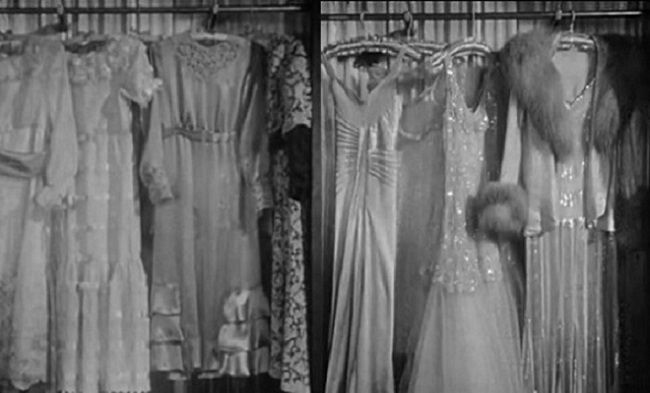
Her frumpy nightgown then dissolves into barely-there lingerie, her ugly shoes into fetching heels. And just look at the change in her wardrobe!

Closet-SmilingLieutenantGowns
I don’t think I have to tell you what happens next. Where else can Anna’s love life go but up, with sexy Franzi as her guide? Honestly, with the kind of chemistry these two women have together, it’s a shame they don’t hook up and leave annoying Niki behind. But improving her ex’s love life—and bringing happiness to his wife—are what this mistress does instead. Kind of romantic, isn’t it?  (You can see the whole clip here.)

Share
Posted in: 1930s films, Feminism, Humor, Romantic Comedies (film) Tagged: Claudette Colbert, Lubitsch, Miriam Hopkins, Musical, Pre-Code, Romance, sexy lingerie, Valentine's

Fabulous Fights: Ginger Rogers & Gail Patrick in Stage Door (1937)

01/31/2015 by leah@carygrantwonteatyou.com 19 Comments

PatrickRogers-shove
This post is part of Backlots’ 4th Annual Dueling Divas Blogathon. Check out the other entries!

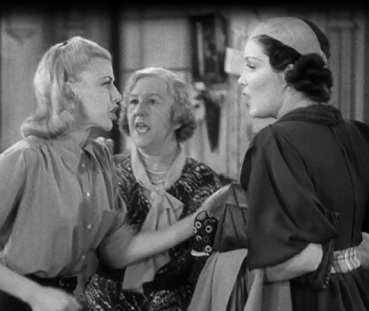
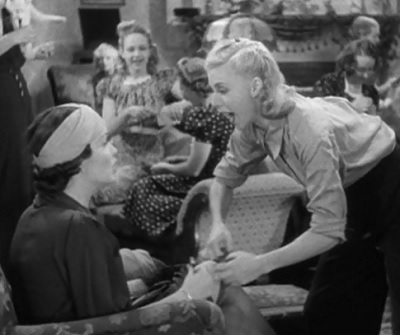
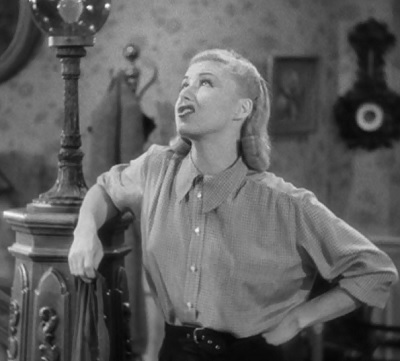
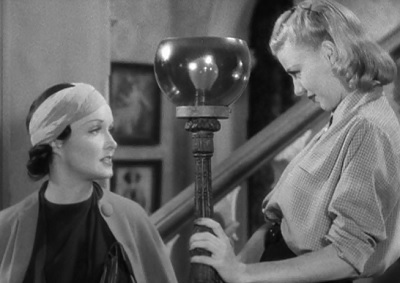
If you haven’t seen Jean (Ginger Rogers) squabble with Linda (Gail Patrick) in Stage Door, I envy you. It’s just such a pleasure. Three minutes into the movie, they are already at it: Jean thinks Linda has stolen her stockings—again—and she’ll forcibly remove them if she has to.

PatrickRogers-stockings-2
The two are roommates in the Footlights Club, a residence for aspiring stage performers, and their uncomfortably close quarters obviously are doing nothing for either’s temper. Linda denies the theft, calling Jean a “hoyden” and “guttersnipe.” Jean, sensitive to cracks about her class, says she’ll “slap [Linda’s] ears flat against the back of her head.” It takes the manager to prevent blows.

It’s the end of their relationship as roommates, but just the beginning of our enjoyment of their rivalry.

GingersRogersyellingupstairs
Jean particularly enjoys mocking Linda about her age and her lover, Anthony Powell (Adolphe Menjou).

“If you were a little more considerate of your elders,” Linda smirks to Jean, “maybe Mr. Powell would send his car for you someday….Course he would probably take one look at you and send you right back again. But then you’d have to expect that.”

“Oh, is that so?” Jean answers, imitating Linda’s superior tone.

“Do you know I think I could fix you up with Mr. Powell’s chauffeur?” Linda adds. “The chauffeur has a very nice car too.”

“Yes, but I understand that Mr. Powell’s chauffeur doesn’t go as far in his car as Mr. Powell does.”

“Even a chauffeur has to have an incentive,” says Linda.

“Well, you should know,” Jean snaps.

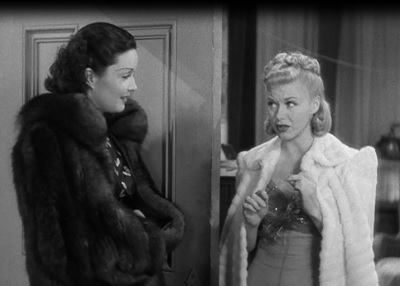
StageDoor-PatrickandRogers
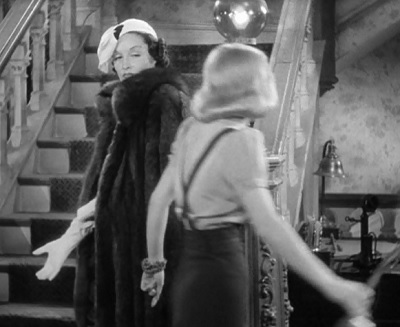
Although she judges Linda for sleeping with Powell, Jean still envies her for the rich food and garb her actions afford her. “Say, I think it’s very unselfish for those little animals to give up their lives to keep other animals warm,” she says, admiring Linda’s furs.

GingerRogersGailPatrickcoat
“You know they’re very smart little animals,” Linda answers. “They never give up their lives for the wrong people.”

“Well,” says Jean, “you understand the rodent family much better than I do.”

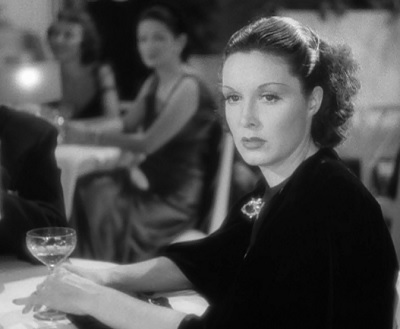
Unfortunately for Linda, Mr. Powell takes a liking to Jean, and hires her for a gig at his nightclub. Sitting next to her boyfriend, Linda realizes just whom he’s hired…

LindaSeesJean-GailPatrick
And Jean isn’t much happier to see her former roommate…

JeanseesLinda-GingerRogers
A few minutes later, Jean jabs at Linda with her cane, and the latter calls her “riffraff.”

Powell is curious about—but not put off by—Jean’s disinterest in him. “You don’t like me, do you?” he asks her.

“Oh, how could I help but like a man who takes his mother out to a nightclub,” coos Jean. “That was your mother you were sitting with?”

Jean decides to date him, even though he initially made her want to “run home and put on a tin overcoat.” How could she resist such revenge while getting a taste of the finer things in life?

AdviceGailPatrickGingerRogers
Linda tries to be philosophical about her lover’s betrayal, warning Jean it just better be temporary. “It’s one thing to borrow a friend’s friend,” she explains. “It’s another thing to hold him….”

Linda even gives her former roommate some advice, which, of course, is intended to poison their first date. “May I come in?” she begins, entering her room.

“Oh sure, I guess you’ll be safe,” Jean says, “the exterminators won’t be here till tomorrow.”

“How did they miss you on their last visit?” Linda quips.

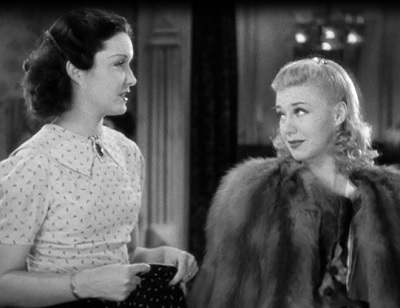
StageDoor-GailPatrickGingerRogers
“Must be galling to you older women to lose your meal ticket to younger riffraff,” gloats Jean.

“Just a leave of absence, dearie,” explains Linda, “and in the meantime, I have my lovely sable coat and my star sapphire to keep me company.”

“It’s lovely, but I’m afraid you paid too much for it.”

The dialogue gives you a taste of these two together, but I can’t capture the chemistry, or the sparkling delivery—Ginger Rogers, with her snappy sarcasm, at her tough-gal best. Gail Patrick, with the flawless cool customer routine she perfected the year before in My Man Godfrey. The two together are magnetic.

The best part? There’s another rivalry in the film too—between Rogers and Katharine Hepburn, which is almost as fun.

For more dueling divas, check out the other entries in the blogathon!

Share
Posted in: 1930s films, Blogathons, Comedies (film), Feminism, Humor Tagged: Divas, fights, Gail Patrick, Ginger Rogers, Stage Door, women

Some Like It Hot: Only for Men?

01/18/2015 by leah@carygrantwonteatyou.com 19 Comments

I know that the field of comedy has always been dominated by men. It’s no surprise that when humorous films are ranked, those most amusing to men lead the pack. But I still find it disturbing that the film the AFI considers the funniest of all time is one that gives me just a few laughs in its two hours of running time.

I’m willing to admit that I might be missing something in Some Like It Hot; after all, many women whose judgment I respect are fans of it, and I am an enthusiastic viewer of most of Billy Wilder’s work. But for what it’s worth, I’d like to vent a bit about why (for mainly gender-related reasons) I find this film that sounds so promising—two male musicians acting like women in order to travel with an all-female band—so annoying.

Daphne/Jerry (Jack Lemmon’s character): By Turns Annoying & Creepy
The script doesn’t help, but Lemmon is largely to blame for a very unfunny portrayal of a man turned on by his fellow female band members. His suggestive comments range from grating to disturbing, and his hyena laugh is Jim Carrey-annoying.

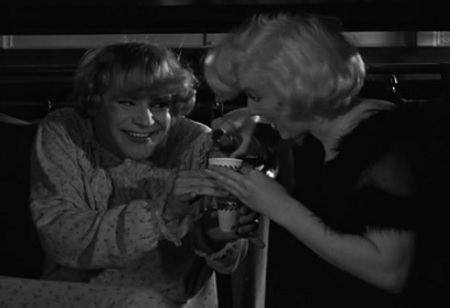
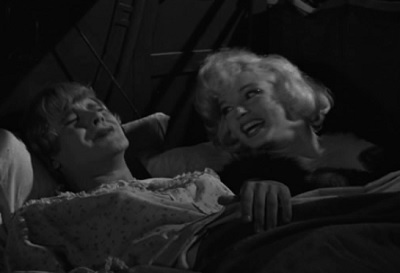
Take this scene: Jerry is in bed in his cross-dressing gear (i.e., as Daphne), when Sugar Kane (Marilyn Monroe) visits his train berth to thank him for a favor.

After the two get some drinks, Jerry says, “This may even turn out to be a surprise party.”
“What’s a surprise?” she answers.
“Not yet.”
“When?”
“Better have a drink first.”
“That’ll put hair on your chest.”
“No fair guessing.”

He then protests other women crashing his party, as it’ll ruin his surprise. I tried not to examine the logic of this scene too closely, but unfortunately, Lemmon’s delivery added to my initial reaction. Does this face look like seduction to you?

LemmonandMonroe-trainberth
If there were any hint of self-deprecation here, any understatement, the scene might have played as lighthearted, with a hint of, I don’t know, possible participation from Monroe. But with Lemmon’s high-pitched, broad delivery and leer, I felt uncomfortable, not amused. Look, this isn’t It’s Always Sunny in Philadelphia, in which the humor is based on the immorality of its leads. We’re supposed to empathize with this man, not wish to warn Sugar Kane there’s a pervert on the loose.

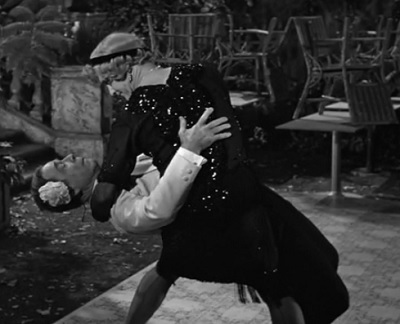
Once Lemmon is being courted by a man and his energy dissipates into snarly comments and stiff movements, he’s quite amusing. I particularly enjoyed when he starts to really get into his gender ambiguity as he dances.

LemmontangoingSomeLikeItHot
I just wish we could have had more of that and less of his flirtatious mood with Sugar and the other band members.

Joe/Josephine (Tony Curtis) a Bore—Until He Becomes a Pseudo-Millionaire
I’m not a fan of Tony Curtis’s. With the exception of Sweet Smell of Success, I tend to dislike his films, finding him too smugly pleased with himself, too much the “Matthew McConaughey of his generation,” as my sister puts it. While his low-key portrayal in Some Like It Hot is a welcome break from Lemmon’s energy, he takes his lethargy too far. It seems watching Lemmon’s hypercaffeinated performance caused Curtis to nap his way through the script.

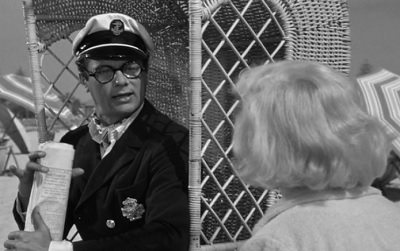
But once Curtis (as Joe) ditches the dress and takes on a different costume, he is quite amusing. He has dressed himself in what he deems sophisticated clothing, complete with a cap and metal buttons. He wants to convince Sugar he’s from old money.

CurtisandMonroe
When he speaks, it’s with Cary Grant’s accent. I like the layers of jokes here, even if they’re anachronistic given the movie’s 1929 timeline: Joe is so unfamiliar with well-born men that he mimics a movie star’s imitation of one. (Admittedly, this wasn’t a bad choice: Grant was so convincing in his own portrayal of a blue blood that he probably convinced 90 percent of us.)

As the Shell millionaire he’s aping, Joe can be quite funny. I like when he mistakes a stuffed swordfish for a member of the “herring family.” Curtis is far more animated in these scenes, and the script so much stronger than in the rest of the movie. Joe’s description of his love’s death is funny, and his details about his family’s attempts at a cure for his heartache—a French maid, a troupe of Balinese dancers—are hilarious.

Male Fantasy Scenes Played as Realistic
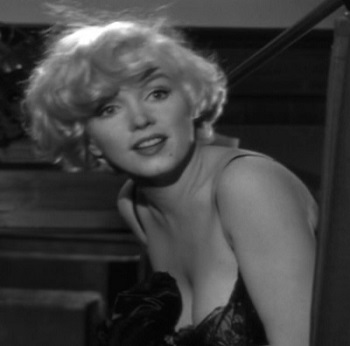
I don’t know about you, but when I’m traveling with a bunch of female friends, I tend to relax in lingerie like this:

Marilynlingerie
I prefer to cuddle up to my companions, especially ones I’ve just met, to get as much skin-on-skin contact as possible.

MarilyncuddlingwithLemmon
And on the beach, I like to spend my time tossing a ball to my pals in a provocative fashion.

If this kind of scenario is played as fantasy, I find it funny. But when I’m supposed to take it as a given, with the humor to be found elsewhere, I’m so busy rolling my eyes that I miss the action. Look, I understand that Hollywood wants to show some skin, especially in a film featuring Marilyn Monroe. And I’ll admit I’m jaded from one too many sorority house/girls’ locker room scenes of a similar nature. Admittedly, I have seen much worse in other movies; at least all of the women in the band aren’t dressed like this (just the most attractive ones, as they always eschew comfort for sexiness, right?)

If they’re played as campy, how funny scenes like these can be! But if they aren’t, I tend to look up the screenwriters and confirm my suspicion—yep, written by men, probably ones who’ve spent too much time on adult-only channels/sites. Am I the only one who thinks humor works best when it’s based on actual human behavior, not teen boys’ daydreams?

Missed Opportunities in the Script
Cross dressing is almost always funny in film, and Curtis and Lemmon are so unattractive as women, and so obviously male, that it makes the gullibility of those around them funny in itself. Initially, their disgust at the casual chauvinism of the other hotel guests is entertaining too, as when Daphne gets pinched and Josephine is propositioned by the bellboy. Pity that there’s no accompanying recognition of their own chauvinism, as without it, we’re left mainly with tired gags about breasts, high heels, etc. While occasionally both of the men (and the script) give a fun twist to their adoption of female clothing and mannerisms, in most scenes, I didn’t see anything new.

Of course, I know that this territory is much better canvassed today than in 1959, when it would have been far more scandalous. Still, the stars’ parents would have found the film tame; it’s impossible to be shocked by men in tights and Marilyn’s walk when earlier (pre-Code) movies portrayed women sleeping to the top and cheating on their husbands to get even—without judgment. Let’s not forget that Mae West had drag queens in her 1927 play, and planned to feature them in her next before the censors stepped in.

I know there are times when repetition of references, as we often see in Some Like It Hot, is funny. I still laugh every time I hear the name Mr. Bigglesworth. But those references only continue to be amusing if they were particularly funny—and ideally fresh—to begin with. I was disappointed to find that a writer/director who in an earlier film (with Charles Brackett) defined craziness as giving an engagement gift of a “roller skate…covered with Thousand Island dressing” would (with I.A.L. Diamond) resort to lines as flat as these: “I’ve got a funny sensation in my toes, like someone was barbequing them over a slow flame.”/ “Let’s throw another log on the fire.”

One Reason to Watch: Sugar Kane
Monroe is mesmerizing as Sugar Kane. She is, of course, unbelievably attractive in the movie.

Marilynsinging
And she manages to turn what could have been a brainless blonde stereotype into something believable, even touching. I particularly enjoyed her effort to convince Joe-as-Shell-millionaire that she has a sophisticated background. While he comes across as conniving and silly in his con, her performance is moving and honest and funny in spite of her lies. While she fabricates a Bryn Mawr education, she conceals nothing else, and her openness makes her deceptions so obvious they might as well not be deceptions at all.

It might seem that I hated this movie. I didn’t. In fact, I enjoyed the first 25 minutes or so, after which I just kept hoping it would improve in the interludes between Monroe’s perfect delivery of her lines. But the film’s undeserved reputation infuriates me. I can’t help wondering if I were a woman new to classic comedies and started with this one, would I have kept watching?

This post is part of the Contrary to Popular Opinion Blogathon, where we set the consensus on its head by defending a maligned film, performer or director or toppling a beloved one! Check out the other entries.

contrary-blogathon-7

Share
Posted in: 1950s films, Blogathons, Comedies (film), Feminism Tagged: Billy Wilder, It's Always Sunny, Mae West, Marilyn Monroe, Matthew McConaughey, Mr. Bigglesworth, Some Like It Hot, Tony Curtis

The Moment I Fell for Eve Arden

12/18/2014 by leah@carygrantwonteatyou.com 4 Comments

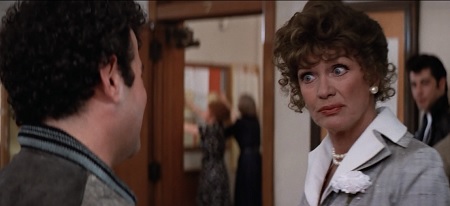
McGee Announcements Grease
In the early eighties, all the girls I knew pined for large hoop earrings, curly hair, and tight pants just like the changed Sandy in Grease. We piped “You’re the One that I Want,” with its requisite “oooh, oooh, ooohs,” imagining we could lure Danny into the sky with us.

Grease
Grease had a staying power thanks to the number of times it was replayed on TV. Although my attention was drawn to all of the figures who rocked leather, one of the administrators made an impression too. Something about those ringing tones of Principal McGee’s (Eve Arden’s) reached me. Her combination of idealism, exasperation, and cynicism echoed adults I knew as she alternately disciplined and inspired Rydell High’s seniors. In a throwaway part, this actress had developed a fully realized character, one for whom I could imagine a history of victories and frustrations with students. She made an impact even on the beauty-enthralled kid that I was.

I didn’t make the connection years later when I listened to Eve Arden’s verbal wizardry in Mildred Pierce (1945). But I looked her up on IMDB, hoping to find her elsewhere, and knew then why Principal McGee had affected me. This was Eve Arden, people, the master of the one liner, the woman who could annihilate a victim with one breath of her scathing tongue. Of course she could match wits with teenagers. Of course they couldn’t fool her and thus convert her into another of the anonymous adults in teen flicks. She was humoring them. She was holding back. She was—dare I say it—so much cooler than they were.

Take the scene when Sonny (Michael Tucci) decides he’s going to stand up to her when he inevitably lands back in her office. “This year she’s gonna wish she’s never seen me,” he tells his buddy. “I just ain’t gonna take any of her crap, that’s all, I don’t take no crap from nobody.”

“Sonny?” she interrupts.

“Hello, ma’am,” he says, all bluster gone.

“Aren’t you supposed to be in homeroom right now?”

“I was just going for a walk.”

“You were just dawdling, weren’t you?”

“Yes, ma’am.”

EveArden-PrincipalMcGee
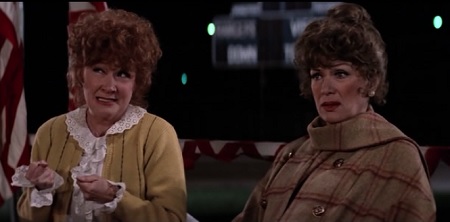
Even funnier are her remarks and reactions to her incompetent and slightly insane assistant, Blanche (Dody Goodman). Her resignation when Blanche overreacts to the coach’s pre-game enthusiasm is just one example of her understated genius.

BlancheandMcGee
Like any good comedian, Arden knows just how to give words emphasis, just how to raise that eyebrow, just how to make what could have been a passing moment snap. Oh, how I love the woman.

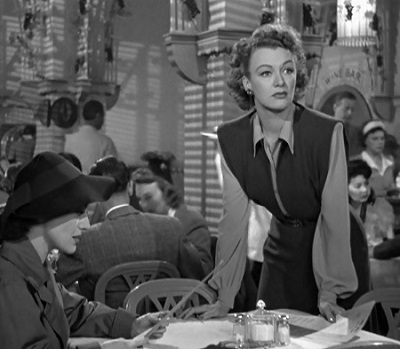
I think I fell for her from the start of Mildred Pierce, but I didn’t realize I had until near the end of the film.

IdaMeetsMildred
She plays Ida, the business manager for the restaurant owner (Joan Crawford) who repeatedly sacrifices all of her money, time, and hope for her spawn-of-Satan daughter, Veda (Ann Blyth).

Ida’s humor is evident from the start, as when she agrees to give Mildred a job as a waitress just after she separates from her husband. “Kind of a nervous gal, aren’t you?” Ida observes. “Well, you wanna watch that, it’s tough on dishes.”

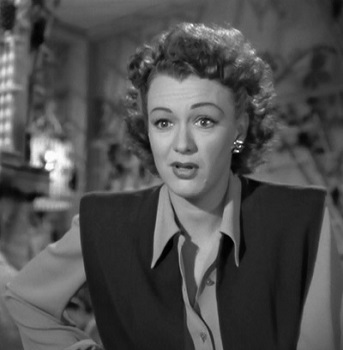
Ida is the ultimate sarcastic sidekick; her dry delivery is a great foil to Crawford’s sentimental, feminine performance. “When men get around me, they get allergic to wedding rings,” Ida explains when asked about her single status. “You know, big sister type. Good old Ida, you can talk it over with her man to man.”

EveArdenMildredPierce
“I hate all women,” Mildred’s business partner, Wally (Jack Carson), says to Ida after Mildred rejects his romantic overtures. “Thank goodness you’re not one of them.”

Ida smirks. “Laughing boy seems slightly burned at the edges,” she observes to Mildred. “What’s eating him?” In fact, every scene between Carson and Arden makes me wish for more, as when Ida gives Wally orchids to put away, saying, “Here, muscle.”

Ida’s critiques of Mildred’s boyfriend, Monty, are always amusing too, even though the man (and actor) is no match for her. When the aristocratic Monty says, “Oh, I wish I could get that interested in work,” Ida drawls, “You were probably frightened by a callus at an early age.” Later, after he’s been milking Mildred and expresses surprise that she might have business problems, Ida retorts, “Don’t look now, but you’ve got canary feathers all over your face.”

MontyIdaVeda
But she reserves her greatest slam for Mildred’s parasitic daughter. “Why don’t you forget about her?” she asks Mildred after watching the abusive pattern between the two for years.

IdaMildred-EveArden
Mildred babbles about what a daughter means to a mother, leading Ida to this classic response: “Personally, Veda’s convinced me that alligators have the right idea. They eat their young.”

I’m not sure why it took me that long, but that’s when I knew for sure I’d found an actress I’d never tire of watching—and more importantly, hearing. I think we can all be thankful Arden was never a huge star, as it meant she would wring everything she could from each line, each expression, and never stop making us laugh.

Arden and Ball wow in Stage Door

Lucille Ball and Arden hilarious in Stage Door

Share
Posted in: 1940s films, 1970s films, Comedies (film), Drama (film), Feminism, The Moment I Fell for Tagged: comedic sidekicks, Eve Arden, Grease, Ida, Mildred Pierce, Principal McGee

A Film Celebrating Bad Cooks: Christmas in Connecticut

12/13/2014 by leah@carygrantwonteatyou.com 2 Comments

Stanwyckcooking
I come from a long line of bad cooks. My mother was way ahead of her peers with the natural foods craze, but, like a new vegan, she never learned to substitute anything for the bacon grease she’d been raised with; everything she made was bland. When we visited my maternal grandmother’s, all of our cousins would drop by with food. I remember the day I discovered why, when I witnessed Grandmother putting mayonnaise in macaroni and cheese. My fraternal grandmother supposedly was a good baker before her illness set in, but the only real meal I remember from the Williams family recipes was courtesy of an in-law.

For some women, this deficiency would be a source of shame, but it wasn’t for my grandmother, who bragged about her recipes as she put ketchup in her ratatouille, knowing no one was bold enough to contradict her. As for my mom, she took Greek salad to every holiday potluck, shrugged at all the better fare, and returned to her studies afterward. Who cared about culinary proficiency, when she could be mastering Aristotle? I’ve followed my family’s example, neither worrying about my lack of ability, nor feeling an impulse to remedy it.

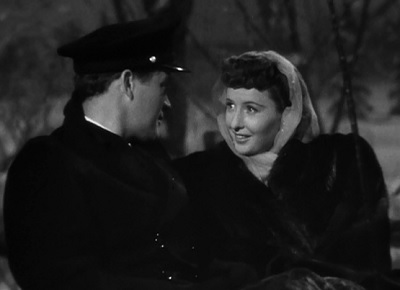
With these tendencies and antecedents, it’s perhaps unsurprising that one of the few domestic comedies I find relatable is Christmas in Connecticut (1945), starring Barbara Stanwyck as Elizabeth Lane, a food writer who can’t cook. The publisher of her magazine (Sydney Greenstreet) wants to please a hero who craves good eating and satisfy his own stomach in the bargain. He invites the sailor—and himself—to Christmas dinner at the columnist’s country home, forcing her to quickly accede to a friend’s proposal and thus be able to pretend owning the home—and baby—she’s been writing about for years instead of the actual tiny New York apartment she lives in as she spins stories about rocking chairs and fireplaces and pet cows.

A view Lane pretends to be “the broad front lawns of our farm, like a lovely picture postcard of wintry New England”

A view Lane pretends to be “the…front lawns of our farm”

The premise is absurd, of course, but with Stanywck as the faux-Martha Stewart, Greenstreet as the busybody, and S.Z. Sakall as Felix (the enterprising buddy whose recipes she’s been using for her articles), this film is a lot of fun. When Lane falls for the sailor (Dennis Morgan), she plots to avoid the promised marriage to her stuffy friend, John Sloan (Reginald Gardiner). She boldly flirts with the handsome hero, Jefferson Jones (Morgan), freed by his engagement and her own supposed marriage.

LaneFlirtingxmasConnect
Even more entertaining than their flirtation is the treatment of Lane’s poor cooking as she pretends to be Mrs. Sloan. When he hears Felix will be handling dinner, the publisher complains, “…I won’t feel quite the same as if you’d cooked it, Mrs. Sloan.”

“Believe me,” quips Felix, “you will feel much better.”

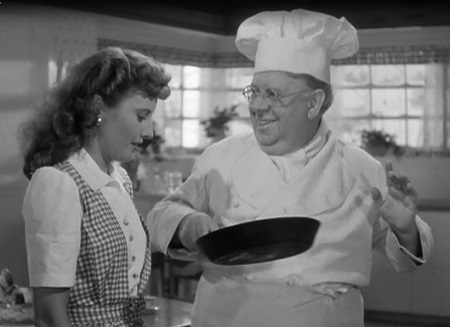
In a famous scene, Felix teaches Lane to flip a flapjack, which she’s described in great detail in her writing. Repeatedly, she screws up, hitting the ceiling with the batter.

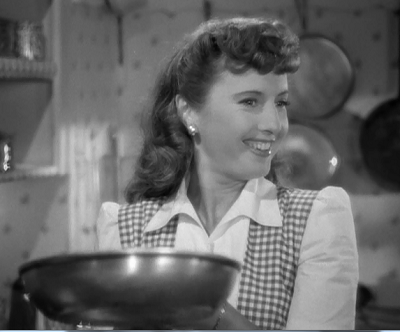
Lane, viewing the pan like it’s a tarantula

Lane, viewing the pan like it’s a tarantula

While she dodges having to display her bad aim at first, she’s finally put on the spot, and her shocked face when she succeeds—by a sheer fluke—is priceless.

ElizabethLaneSuccess
**spoilers below, for anyone who still thinks it’s possible to spoil a predictable romantic comedy***

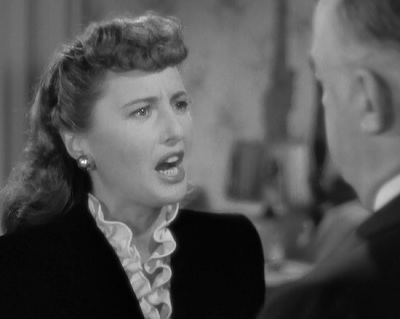
She may be a poor pancake maker, but Lane’s courage and quick wit are worth witnessing when she finally confronts her bullying publisher, who tries to convince her and her faux-husband Sloan that they should reproduce again for the good of the magazine’s circulation. Once he discovers the deception, the publisher urges her to marry the “bore” (Sloan) and proceed quickly to child bearing. Even though she’ll likely lose her job and a promised raise, Lane still decides to have her say: “Listen to me. I’m tired of being pushed around, tired of being told what to do, tired of writing your galldarned articles, tired of dancing to everybody else’s tune, tired of being told whom to marry. In short, I’m tired.”

StanwyckandGreenstreet
Of course, this exchange sets Lane up for becoming the housewife she’s been pretending to be, but in feminist fashion, it’s a choice, not a default—and quitting is in her case an act of liberation. I like to think of her using that big imagination to write the next great American novel while Jones, who already likes washing babies, tends to the children. (She knows what she’s doing, falling for this sensitive type.)

Surprisingly, the film is no more judgmental about her culinary failures than I would be. “Well, young man, I spose you know what you’re doing,” the publisher says to Jones once it’s clear the two are altar bound. “But I warn you, she can’t cook.”

Jones asks her if it’s true. “No, I can’t cook,” Lane admits, without a trace of embarrassment.

“She can’t cook,” Felix repeats. Then he adds for all of us who’ve fallen for her during the film, “But what a wife!”

Sakall

Share
Posted in: 1940s films, Feminism, Humor, Romantic Comedies (film), Uncategorized Tagged: bad cooking movies, Barbara Stanwyck, Christmas in Connecticut, Christmas movies, S.Z. Sakall, Sydney Greenstreet

The Moment I Fell for Jean Harlow

07/16/2014 by leah@carygrantwonteatyou.com 8 Comments

Jean Harlow
I’ll admit that I didn’t get the appeal of Jean Harlow initially. I originally saw her in a portion of the film Bombshell, and thought it dull and her annoying. I couldn’t understand why she was a sex symbol, the Marilyn Monroe of the 30s.  It took a lackluster movie in which she was riveting to change my mind.

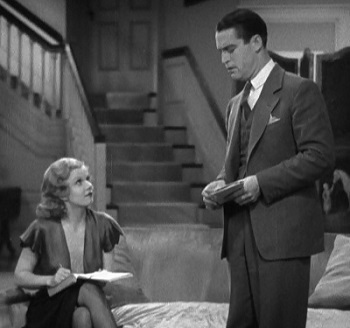
Red-Headed Woman (1932) is one of those pre-code films in which a loose woman doesn’t pay the penalty for her behavior. Harlow is Lil (also known as Red), a secretary who seduces her married boss, Bill Legendre Jr. (Chester Morris), to make her way up in the world. His wife, Irene (Leila Hyams), is given the tired you-should-have-forgiven-him-instead-of-leaving-him-the-prey-of-that-hussy argument when she divorces him. Usually, this argument infuriates me, but in this case, I had some sympathy for it: Bill is such a sucker that it’s hard not to pity him. How could he succeed in business when he falls so easily for a woman’s wiles? (In today’s corporate world, he’d be bankrupt in a week.)
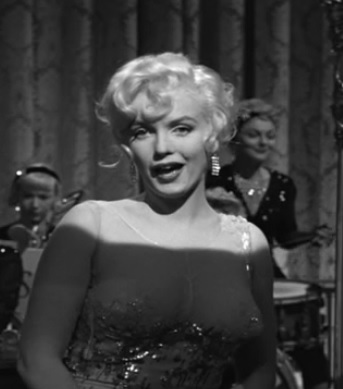
After the divorce, Lil (Harlow) marries Bill and then trades him in for a richer model, just as she dropped her bootlegger boyfriend at the start of the film to pursue Bill. It’s this single-minded self-interest that makes Lil such a wonderful anti-heroine, and Harlow so good at playing her. The actress is just so hilarious when conveying a conniving mind in action.

The story begins with Lil’s bold plan to go over to Bill’s house in a revealing outfit while his wife is away. She’s pretending to help with his dictation, but obviously planning on sex.

First, she gussies herself up in readiness for her scheme.

Harlowgettingready
Her pal, Sally (Una Merkel), is so convinced the plot will fail that she says she’ll wait outside Bill’s door for Lil; the first sign that Lil’s plans have succeeded is when we see Sally still outside in the dark, uncomfortably rising from her seat.

Lil has many seduction methods at her disposal, all of which she needs, since her boss is in love with his wife. Something about the transparency of her attempts, and lack of any hesitation, cracked me up so much that Harlow had won me just a minute into this routine, long before her Lil got to Bill.

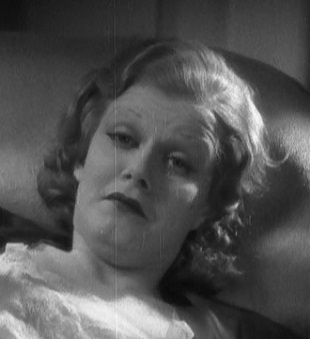
Lil tries some pouting…

Harlowpouting
Shows a little leg….

harlowshowingleg
Sobs a bit…

Harlowfakesobs
Pretends she will take his initial rebuffs in stride…

Harlowandhersap
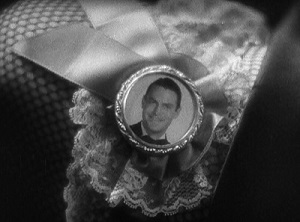
Feigns a longstanding affection for him, even going so far as to pin a photo of him to her garter (Her words when she was planning this ruse: “Well, it’ll get me more there than it will hanging on the wall”).

Harlowleg
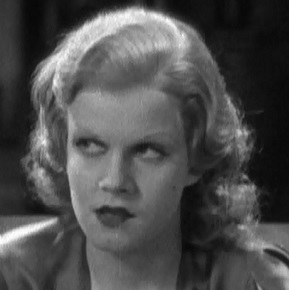
Reveals her scheming ways when he’s not looking…

Harlowscheming
And finally, in just going for the direct approach, gets what she wants:

Harlowsuccess
Throughout the film, Harlow repeats a cycle of the techniques in Lil’s repertoire: baby talk, tears, denials, lies, threats, kisses. The character’s faux sweet veneer is so easily discarded for her brassy, true self; as in other Harlow roles; and it’s so much fun to watch the transition. Who wouldn’t want to see this shift again, and again, and again, especially in much finer films, with better-written parts? (My favorite may be the put-upon fiancée in Libeled Lady—I could watch Harlow marching toward jilter Spencer Tracy in that wedding dress all day long.)
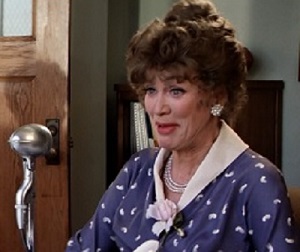
As for the sex symbol status I didn’t understand? Ummm, I don’t know what to say for myself there. It’s about as hard to miss Harlow’s blazing sensuality as this predecessor’s. All you have to do is watch her posing, walking, or smiling for a few minutes, and you understand. There’s a reason Lil is confident she’ll win Bill and every other man she encounters. She just never seems to understand why her irresistibility doesn’t translate into success at the country club, a naiveté Harlow would repeat in other film roles as well–as if other wives would want her anywhere near their husbands.

As for Lil, once she decides Bill, the country club, and the town are too small for her, she moves on to richer grounds, ultimately hooking an old French sugar daddy.

Harolwclosefilm
She’s won a trophy for her thoroughbred, is flooded by admirers, and is still holding onto her young lover in full view of her meal ticket at the movie’s close. Of course. How else could this film possibly end?

This is the third in a monthly series of The Moment I Fell for posts…Hope you’ll share some of your favorites!

Share
Posted in: 1930s films, Feminism, Femme fatales, Romantic Comedies (film), The Moment I Fell for Tagged: Jean Harlow

The Delightful Raunchiness of Mae West

06/05/2014 by leah@carygrantwonteatyou.com Leave a Comment

MaeWestwveil
I knew from Complicated Women, TCM’s documentary on films before the production code, that early movies challenged men’s ownership of women’s bodies, minds, and souls. Many of these pre-code movies (1929-34) were so shockingly liberal in content that they make today’s look prudish by comparison (nudity in a Tarzan movie, anyone?) After the code, of course, sexuality and feminist portrayals of women were both toned down to please potential censors. But Mae West, who wrote and starred in her films, managed to sidestep this “sanitation” to an extent because she was so gifted at double entendres.

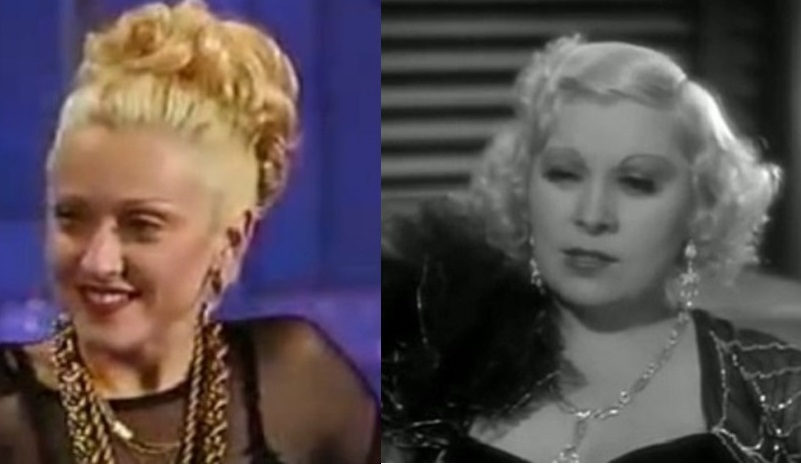
I’d heard of West, of course, knew a couple famous sayings, thought of her vaguely as ahead of her time. But to know of West and to watch her? Not the same. Mae West’s pre- and post-code films were in their own plane, and not only because of her undeniable sensuality and eagerness to express it. And “ahead of her time” is a gross understatement in West’s case. The play she wrote that got her thrown in jail on morals charges in 1927? Titled Sex. Madonna would be attacked for giving a book that title almost seventy years later.

Pioneers Madonna (in ‘92) and Mae West

Pioneers Madonna (in ‘92) and Mae West

And West’s next play? Drag (as in queen), which the vice folks managed to squash entirely. Luckily, we can still watch West on screen. Here are just four reasons why you will embrace this voluptuous rebel:

1. Half of the suggestive one liners you know originated with her.

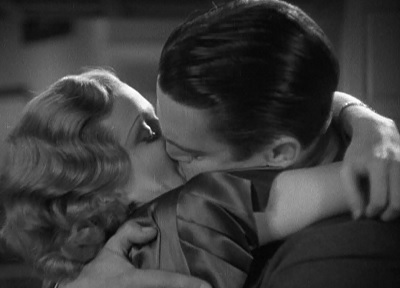
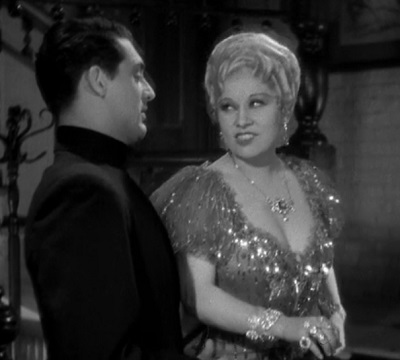
Her famous “Why don’t you come up sometime, see me?” seduction. (Note how overwhelmed Grant looks!)

Her famous “Why don’t you come up sometime, see me?” seduction. (Note how overwhelmed Cary Grant looks!)

This is just a small sampling of lines written and delivered by West (mostly from her films):

  • “When I’m good, I’m very good, but when I’m bad, I’m better.”
  • “It takes two to get one in trouble.”
  • “Is that a pistol in your pocket, or are you just happy to see me?”
  • “A hard man is good to find.”
  • “When I’m caught between two evils, I generally like to take the one I never tried.”
  • “When women go wrong, men go right after them.”

It’s not just the cleverness of West’s expressions that make her movies so entertaining; it’s the sheer number of them she manages to squeeze in. She Done Him Wrong (1933), which is just over an hour,has more funny lines in a few minutes than most current rom-coms in their bloated two-hour running times.

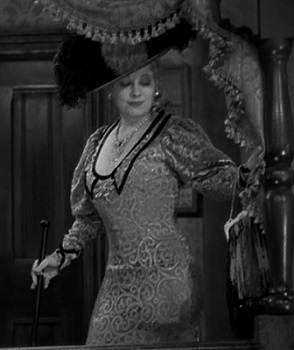
2. You need to see a woman born in the 1890s shimmying like West does.

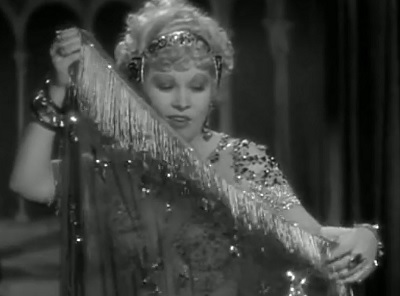
West in I'm No Angel

West in I’m No Angel

She’s dancing, she’s walking—it doesn’t matter. You have never seen a woman strut like this one.

3. 1930s Hollywood actually portrayed young men smitten—in droves—by a 40ish woman

Mae West’s films are irrefutable proof that everything does not improve with time, including Hollywood’s treatment of women past the age of 30. Today we are delighted to see the occasional rom-com with a 40-year-old woman; that’s when West got started. And being who she was, West was never content with just one man in her thrall.

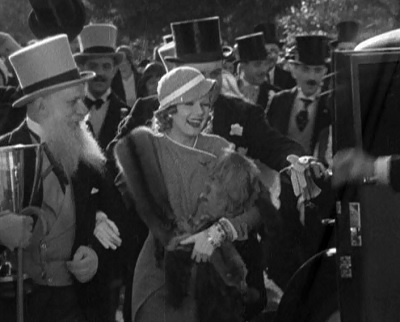
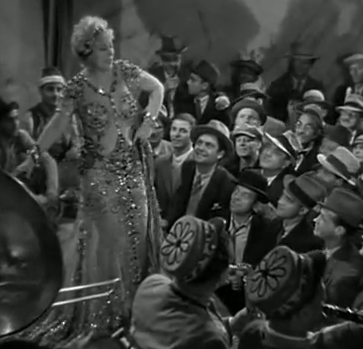
Men who've caught sight of Lou (West) in She Done Him Wrong

Men who’ve caught sight of Lou (West) in She Done Him Wrong

3Lou (West) eyeing a conquest, whom she refers to as “And you, Mr. Mmhmmm?”

Lou (West) eyeing a conquest, whom she refers to as “And you, Mr. Mmhmmm?”

4. Her films are wonderfully ludicrous.
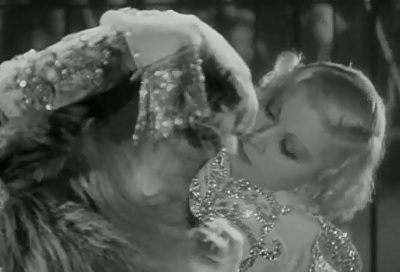
My favorite plot: A woman makes a living as a lion tamer, which men find so attractive they start sending her diamonds (I’m No Angel). The court scene near the close of the film is even more breathtaking. West annihilates the lawyers and slays the judge and jury with her smarts and that amazing walk. Is this whole film absurd? Absolutely. Is it hilarious? Oh yes.

The lion’s-mouth seduction

The lion’s-mouth seduction

Luckily, you can find a plot almost as ridiculous (and funny) in She Done Him Wrong, which is on Netflix streaming right now. What are you waiting for?

Share
Posted in: Feminism, Humor, Mae West Moments, Romantic Comedies (film) Tagged: Cary Grant, Madonna, Mae West, Pre-code films, sexuality
« Previous 1 2 3 4 5 6 7 Next »

Recent Posts

  • 100 Years Later, Still Scary: Dr. Caligari
  • Escaping Out of the Past (1947)
  • A Weeper for Those Who Love Jerks
  • Thank You, Academy, for Not Infuriating Me
  • Challengers (2024) Is a Bad Movie

Subscribe to Blog via Email

Enter your email address to subscribe to this blog and receive notifications of new posts by email.

Categories

  • 1920s films
  • 1930s films
  • 1940s films
  • 1950s films
  • 1960s films
  • 1970s films
  • 1980s films
  • 1990-current films
  • 2020s films
  • Action & Sports Films
  • Anti-Romance films
  • Blogathons
  • Childfree
  • Comedies (film)
  • Drama (film)
  • Feminism
  • Femme fatales
  • Film Noir/Crime/Thriller & Mystery
  • Gloriously Silly Scenes
  • Horror
  • Humor
  • Mae West Moments
  • Musicals and dancing films
  • Oscars
  • Random
  • Romance (films)
  • Romantic Comedies (film)
  • The Moment I Fell for
  • Turn My Sister into Classic Movie Fan
  • TV & Pop Culture
  • Uncategorized
Share
Classic Movie Blog Hub Member

Recent Comments

  • leah@carygrantwonteatyou.com on Meg Ryan’s Fate Foretold in Joe Versus the Volcano
  • Ryan on Meg Ryan’s Fate Foretold in Joe Versus the Volcano
  • leah@carygrantwonteatyou.com on 100 Years Later, Still Scary: Dr. Caligari
  • The Classic Movie Muse on 100 Years Later, Still Scary: Dr. Caligari
  • leah@carygrantwonteatyou.com on 100 Years Later, Still Scary: Dr. Caligari

Archives

  • November 2025
  • September 2025
  • May 2025
  • March 2025
  • January 2025
  • November 2024
  • August 2024
  • July 2024
  • May 2024
  • March 2024
  • February 2024
  • December 2023
  • November 2023
  • October 2023
  • September 2023
  • August 2023
  • July 2023
  • May 2023
  • April 2023
  • March 2023
  • January 2023
  • December 2022
  • November 2022
  • September 2022
  • July 2022
  • May 2022
  • April 2022
  • March 2022
  • February 2022
  • October 2021
  • September 2021
  • April 2021
  • March 2021
  • February 2021
  • December 2020
  • October 2020
  • September 2020
  • July 2020
  • May 2020
  • April 2020
  • March 2020
  • February 2020
  • December 2019
  • October 2019
  • September 2019
  • June 2019
  • May 2019
  • April 2019
  • February 2019
  • January 2019
  • November 2018
  • September 2018
  • July 2018
  • June 2018
  • May 2018
  • April 2018
  • March 2018
  • February 2018
  • January 2018
  • November 2017
  • September 2017
  • August 2017
  • July 2017
  • June 2017
  • May 2017
  • April 2017
  • March 2017
  • February 2017
  • January 2017
  • December 2016
  • November 2016
  • October 2016
  • August 2016
  • July 2016
  • June 2016
  • May 2016
  • April 2016
  • March 2016
  • February 2016
  • January 2016
  • December 2015
  • November 2015
  • October 2015
  • September 2015
  • August 2015
  • July 2015
  • June 2015
  • May 2015
  • April 2015
  • March 2015
  • February 2015
  • January 2015
  • December 2014
  • November 2014
  • October 2014
  • September 2014
  • August 2014
  • July 2014
  • June 2014
  • May 2014
  • April 2014
  • March 2014
  • February 2014
  • January 2014

Meta

  • Log in
  • Entries feed
  • Comments feed
  • WordPress.org

Copyright © 2025 Cary Grant Won't Eat You.

Church WordPress Theme by themehall.com