Aftersun deserved best picture & directing Oscars this year, but it had no shot. The Academy doesn’t like to award intimate little stories about relationships. They like loud message films, and loud action films, and stories about men being men. And when they (rarely) pivot their patterns (Moonlight), it’s never for a woman helmer: It’s no accident that the only females who’ve won directing Oscars did so for stories about war, community job loss, and cowboys.
Academy voters like to throw a screenplay bone at the original, lovely intimate stories–though they occasionally alter that with acting (as with Aftersun) or song nominations/wins (as with Once). Even when a quiet, intimate little film like Il Postino is nominated for best picture, it wins for something else (in its case, score). That’s why when I’m searching for good films I don’t know from past Oscars, I go straight to the screenplay category. There I can find films that weren’t about the Academy trying to prove something, or the fact that many of them are too lazy to view all but blockbusters and movies with their friends in them.
What strikes me most about Academy voters is their fear. They’re afraid of being seen as racist, as they should be (#OscarsSoWhite), but they actually prove they are with nominations for movies like The Blind Side and Crash and Green Book. The pernicious roots of racism don’t lie in big headlines or loud messages or overt acts, but in the everyday moment, and the everyday moment is where all of us make mistakes of every kind. We are vulnerable there. Academy voters don’t like that space.
To nominate Aftersun for best picture or its writer-director Charlotte Wells would take guts. It’s not Oscar bait, and at first appears far less skillfully managed than it is. It fools you, posing as a student film, or just a kid’s camcorder records of her vacation with her dad. It’s slow. If you’re inattentive, you might find it boring. You don’t know at first the reasons for pauses; for impressionist shots; for quick flashes. You must be patient. But if you let the film in, you are caught up in the relationship between a charming young girl, Sophie (Frankie Corio), and her sweet dad, Calum (Paul Mescal). You soon sense, as when reading a book by Marilynne Robinson, that every little choice by the writer-director counts, that each choice has layers of meaning that build upon one another, and that the very everyday nature of the story is the point of the film. That’s what our relationships are about, our love, our pain, our loss, our joy. It’s missing the details of moments that haunt us later if the relationship is lost or even if it alters over time.
Aftersun is poignant because it’s about that, but more. About looking back and examining what you were too young or focused on understanding your own growing-up moments to understand, to see your father as human, with needs, pain, and insecurities. And Paul Mescal’s understated performance is much of what makes the film unforgettable.
This movie will stay with me a long time, will remind me to cherish the loved ones in my life, to try to be a more understanding person. I wonder how many people could say that about Avatar: The Way of Water.
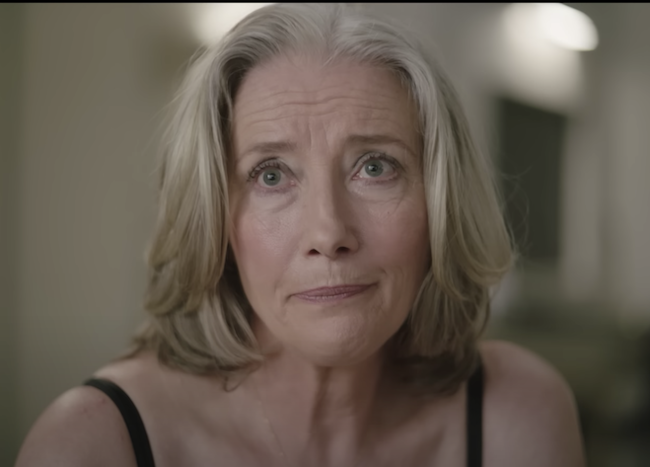
Good Luck to You, Leo Grande. An enjoyable, meaningful film about a woman dealing with sex and her self-worth in middle age. A nuanced story, with a sympathetic portrait of sex workers. It gets nada from the Academy. A subtle, star-making turn by Daryl McCormack–ignored. And Emma Thompson not only snubbed, but not even listed as an Oscar snub. People couldn’t shut up about JLO not getting a nomination for Hustlers, but we’re going to forget that two-time-Oscar winner Emma Thompson was overlooked for one of her finest performances?
Viola Davis and Danielle Deadwyler Get No Nominations, and Ana de Armas Does for Razzie-Nominated Blonde. I read the book Blonde by Joyce Carol Oates, even liked it. I am not sure the director did. That film? Oh no. No. No. No. Was de Armas good in it? For what she had to work with, which was not much. That’s not an Oscar nomination. Look, I’m a Marilyn fan. That woman had some serious chops as a comedienne. But that tired trope of fragile waif Marilyn again, with some gross additions thrown into the mix? That film deserves NOTHING. I am sick.
Tár. It seemsTodd Haynes makes a movie every decade, and with the best of materials and actresses, manages to turn wonderful storylines and potential into snores.
Triangle of Sadness. A fight over a check that should have taken five minutes being stretched to such ludicrous proportions that I forgot what the movie was about. A diarrhea-puke-&-other gross bodily-function scene that takes excruciating amounts of time for NO REASON (and doesn’t make me laugh once). And, of course, the earth-shattering message that power and money corrupt? This is some shit, people. Literal and figurative. NO FEMALE DIRECTORS were chosen so that this gem could make it into the best-directing category.
Top Gun Maverick. I admit it: I didn’t see the thing. I couldn’t bear it after I found out Kelly McGillis wasn’t invited back. I’ll watch this, that Avatar sequel (please), and other action extravaganzas nominated for Oscars once a female blockbuster gets a berth on the list. In the meantime, please everyone, stop bellyaching that crowd pleasers never make it, while nominating male-only fare like Master and Commander and Gladiator. Why is everyone so forgetful? Crowd pleasers OFTEN make it, and even win. What the hell was Braveheart? A subtle indie film? What about Jaws? The Greatest Show on Earth (1952)? I mean, NO ONE saw those, right?
And I’m just getting started. Rant, Part I over. Stay tuned for Part II….
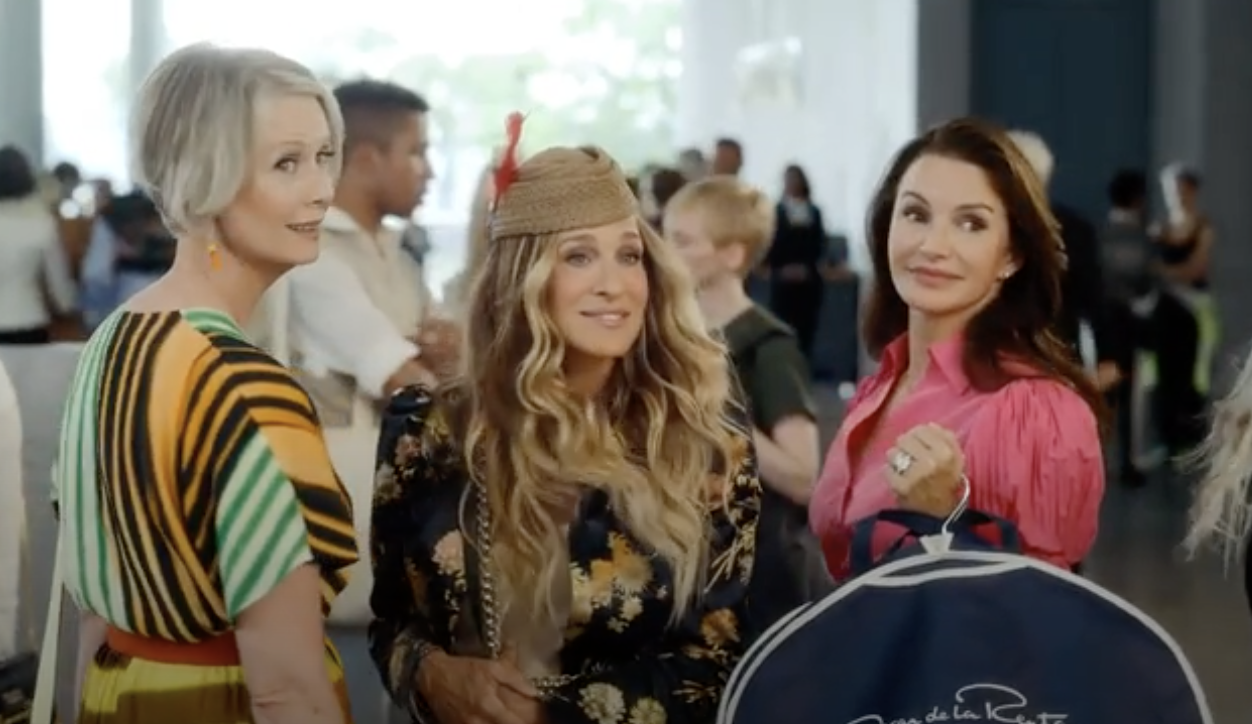
Sex and the City had this odd way of pretending its heroines were parentless. Sure, there was a reference or two, and that lovely episode about Miranda dealing with her mother’s death. But overall, the show just pretended the women had no moms or dads. For six seasons and two movies, the lack of parents enabled the show to stick with sunnier, lighter fare, favoring romance over family drama.
And then the reboot came, presenting the show’s writers with a conundrum: how do you talk about women in their fifties—especially childfree ones—without dealing with aging parents?
Unfortunately, the writers’ solution was to conflate the fifties and eighties, giving the ladies hip replacements and their husbands hearing issues and farmers’-market-forgetfulness. Even the elderly parents of the new characters are pressuring their kids to get married or use their time differently—in other words, things parents of 30-year-olds do.
And how grim these writers make aging seem! Look how much more measured—and funny—Grace and Frankie is in tackling the same ground—and for much older women.
What Carrie, Miranda, and Charlotte would really be doing if they were in their fifties is worrying about their parents’ minds, limbs, and ailments. And for those of us who have been living with the slow-burn terror that our parents will catch COVID—or grieving the loss of those who died of it—the fear of parental aging is what’s keeping us up (not partying neighbors or mysterious dinging sounds). That’s why the erasure of our worry from the experience of 50-year-old women is infuriating in a franchise that used to get us.
What important things this show could have covered about what single, childfree women face in their fifties! What if Carrie’s married siblings with children had expected her to move home to take care of their sick mother or father? How would she have dealt with that as a single woman whom they assumed had time they didn’t?
The parentless state of our heroines also killed so many avenues for humor, like mothers’ attempts to comfort their daughters’ PMS worsening with age by saying, “Don’t worry. You don’t have long to worry about that.” (Just my mom? OK, the cheese stands alone.) Or dads bluffly cheering daughters after bad Bumble dates by saying, “Aren’t you about ready for Our Time? That’s much better.”
Of course, those weren’t the only humorous avenues And Just Like That neglected. Exactly how much did your frugal friend invest in wrinkle cream once she spotted Zoom’s skill for highlighting neck skin sagging? What collection of ring lights has your single buddy amassed to ensure she looks young for those selfies of her breasts for Hinge dates?
And the thing is, your friends in their 50s will confess these acts openly to strangers. That’s one of the beauties of aging: you don’t care what others think. We are ALL Samantha now. I remember the joy of canceling plans for the first time because I didn’t feel like taking a shower. Or the admission that yes, I was watching Lifetime reruns on a Saturday night, or organizing my earrings instead of going to a party. How much I would have loved Carrie dropping by Miranda’s because the latter couldn’t tear herself away from a marathon binging of Tiger King! (An update on the rabbit episode. LOL.) Remember when Carrie struggled to get her friends together? Now THAT’s a struggle for your 50s.
A podcast for Carrie never made much sense to me either—not for a woman who loves being seen (especially not a 90s-era radio show masquerading as a podcast). What does our former sex columnist think of Love Is Blind? Or 90-Day Fiancé? What if she hosted some cheesy reality dating show, like Love Island? That could have been so funny, unlike Che’s humorless standup.
And what silly notions about being woke these AJLT writers have! Is this an after-school special from 1985? What women in their fifties are suddenly realizing they have no non-white friends? I know these characters aren’t as reflective as they could be, but I do believe they have eyes.
What would these women be facing? Well, these characters might be worrying about terminology they use when it comes to race, ethnicity, and gender. Miranda would not have blundered as much as she did in class. But I could see her using a term from five years ago. Or Charlotte, Carrie, or Miranda could be chided by BIPOC friends for a clueless privilege moment. If AJLT wanted to address race in a more organic way, why not have Lily recovering from the trauma of the racism she dealt with during COVID, or Charlotte appalled by other parents fighting critical race theory?
(About midway through the series, I began to wonder whether Michael Patrick King was paying us all back for calling Carrie an unlikeable narcissist by making Charlotte and Miranda so much worse. Why else reinvent history, and make Carrie suddenly the most tolerant and understanding of the bunch? You think Miranda should have been the star? he might have said. I’ll show you…..)
I was, of course, happy to see Miranda, who is played by a public-school advocate, re-inventing her life to do something she found meaningful. That’s what women in their 50s do: Try to find new purpose in their lives. But AJLT had her dump that idealism to play fangirl to a bad comic (how like Carrie that decision was). Che was a missed opportunity, of course. I would have liked Carrie recognizing in Che’s struggles some similarities between what she had dealt with in feeling isolated as a single woman. Their experiences would never be quite the same. But empathy is born of comparison. Carrie didn’t have to fully get it. But she could have begun….
I didn’t expect much of the reboot, I admit, despite my love for Sex and the City. The movies, after all, had already done damage. Samantha’s absence, I knew, would do more. Still, I didn’t expect to be this disappointed. I’m younger than these women, but they always echoed some measure of my experience—and some measure of my future.
Until now.
Parents couldn’t have saved And Just Like That entirely. But it would have been a start.
I read Of Human Bondage as a preteen/teen and was moved by the story of a would-be artist who eventually discovered that a simpler life of helping others was his route to happiness. As a wannabe artist myself, Philip’s journey was meaningful, even enlightening. His time practicing medicine for a poor community won the respect of his patients and his gruff superior—even crushed the snootiness that had marred the rest of his life. While Philip’s extreme sensitivity (related to his club foot) was what drew me as an angsty young girl, it wasn’t his only trait. He was funny, self-aware, compassionate—a fully rounded character.
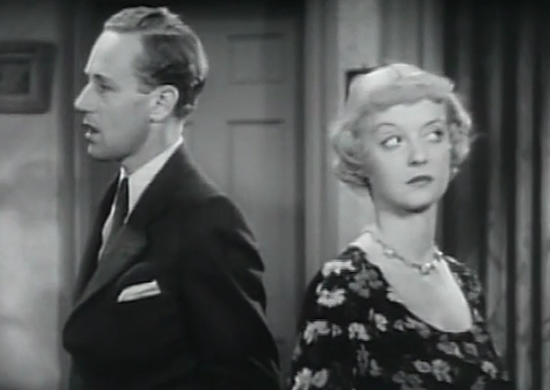
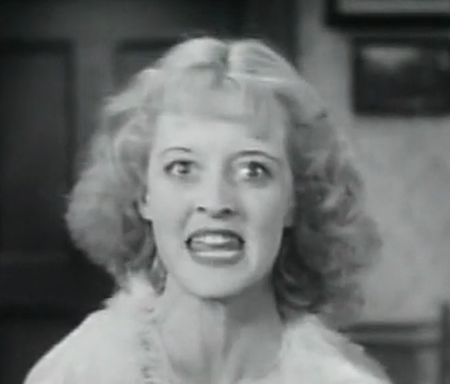
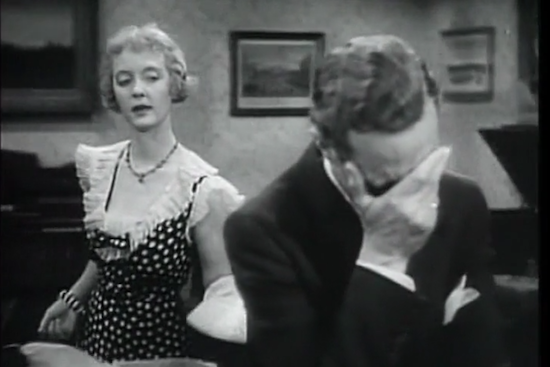
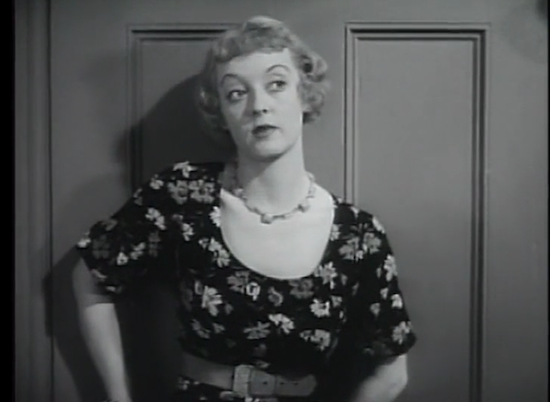
What Hollywood would do to William Somerset Maugham’s reflective character I had a right to fear, especially since the 1934 version was known as Bette Davis’s breakout role. She played the extremely unlikable Mildred, a mean-spirited waitress who detours Philip on his journey. Mildred traps him in his lust for her, but never pretends to like or be faithful to him. She sucks away his time, energy, and money, and he’s too weak to resist.
She is, in short, one of Maugham’s complex female characters: fascinating, headstrong, real—the kind of role actresses are craving now, almost a hundred years later. And with an ambitious young Davis at the helm, sick of her milksop roles and ready for something meaty, what chance did Leslie Howard have for any attention (his starring role notwithstanding)?
No one can stand up to Davis in full chewing-the-scenery mode.
She doesn’t nail the accent, but Davis does fully personify this selfish woman, particularly her flirtatious nature and prickly pride. She shows how Mildred’s self-interest–her primary trait–can’t stand up to her destructive passions. Except for her trademark burning magnetism, Davis is nearly unrecognizable in the role: she BECOMES Mildred.
She famously only got a write-in nomination that year, but won the Oscar the next, most say in compensation for the MIldred loss. Bette’s (Cockney?) accent is regrettable, but everything else about her characterization is perfect.
I’m not sure if writer Lester Cohen decided the movie would be the Philip-Mildred show, given that part of the book’s high drama, or if director John Cromwell saw what he had in Davis and switched it accordingly. But poor Philip’s spiritual journey is reduced to a few scenes, with conversations with Mildred and his later love Sally (Frances Dee) meant to explain his transformation.
Basically, fans of the book can enjoy the fine sensitivity of Philip on screen, which Howard carries off. But Philip’s growing devotion to his career is off the screen. Somerset Maugham was a genius at empathy, and his semi-autobiographical masterpiece shows how Philip’s extreme sensitivity, such a burden as a child, led to his success and happiness as a humble doctor (just as Maugham’s sensitivity to his stutter may have made him a great writer). That theme is totally lost in the don’t-date-women-like-Mildred messaging of the film.
So as far as capturing the book, this film fails. But the movie does nail William Somerset Maugham’s trend of giving female characters their due. I’ve written before about how frequently actresses in his stories are nominated for (and often win) Oscars once his films are screened—including Annette Bening, who should have won for Being Julia.
Look at Davis: wins her Oscar for Dangerous because of her performance as Mildred, then gets nominated for The Letter, another of Maugham’s most famous stories, just six years later.
If that isn’t an advertisement for the continual reading of William Somerset Maugham’s body of work, I don’t know what is. And that–in my eyes–is what makes for a successful film adaptation.
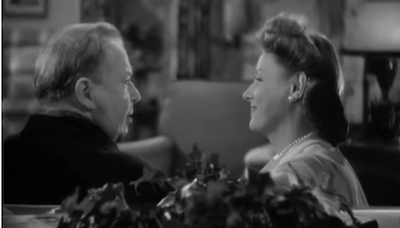
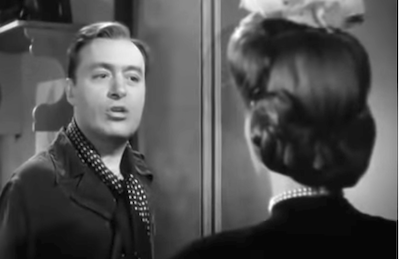
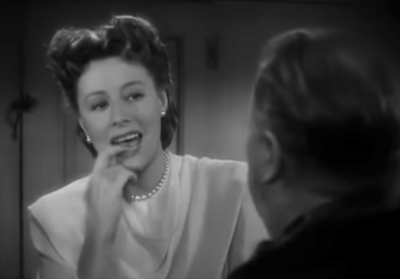
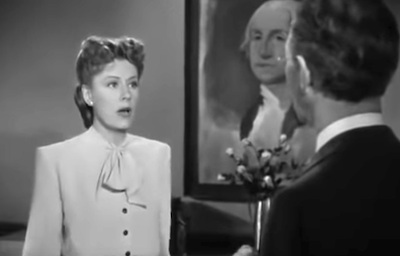
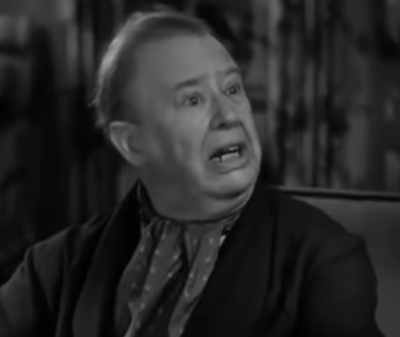
Together Again (1944) is one of those curious rom-coms that’s so entertaining it’s hard to understand why it isn’t well known. It pits a wised-up, small-town, widowed mayor (Irene Dunne) against her crafty father-in-law (Charles Coburn). She is devoted to her town and to commemorating her beloved husband. He thinks she should ditch the politics and get some romance, and in typical bulldozing Coburn fashion (i.e., The More, the Merrier) will do anything to make that happen. The verbal fireworks between them owe much to screenplay writers Virginia Van Upp and F. Hugh Herbert. But they might owe even more to the magical combination of Coburn and Dunne.
Yes, this is a rom-com, and Charles Boyer, who plays the mayor’s romantic interest, has great chemistry with Dunne as well. (Witness Love Affair, the far superior predecessor to the anemic An Affair to Remember).
But sizzling as their reunion is (thus the otherwise baffling title of the film), you feel like shooing it away for more airtime with Dunne and Coburn and for more scenes between Mayor Crandall (Dunne) and her constituents.
I’ve chosen to write about Together Again as part of the Classic Movie Blog Association’s awesome political blogathon. Politics might not be the heart of this film, but Crandall’s job leads to some interesting feminist moments. Here are some of the ways the film was of—and ahead of—its time.
Of Its Time The Message that Romance Is Always More Important than A Woman’s Job Coburn’s character assumes that his daughter-in-law is just working because she can’t get over her husband’s death. That’s pretty insulting. The assumption that she can’t possibly be truly happy without a man in spite of a meaningful job? That’s even worse.
The Suggestion that Instantly Quitting a Job and Leaving Your Town in the Clutches of Your Jerky, Manipulative Opponent Is Just Fine…If You’re a Woman. Yeah, that’s messed up.
Ahead of Its Time A Female Mayor There wouldn’t be an ACTUAL Vermont mayor without a Y chromosome for almost 40 years after this film’s premiere.
A Woman Who Wins Sparring Matches with Everyone
Crandall might ditch it all for love in the end, but she’s the wittiest, smartest character in the film—and outmatches every man in it. It takes her own need for romance (and doubts about the town) to make her change course.
A Female Who Succeeds In Spite of the Whiff of Scandal Mayor Crandall wins the election even though there’s a rumor she’s involved in a sex scandal. True, the townspeople don’t think it’s even possible she could have been at a sexy nightclub—which in a way, is a kind of insult. But for a sex rumor to not end a woman’s political career? More than we might expect in a 1944 film. (And sometimes in real life today….)
A Leader Who Stands Up to Difficult Male Constituents
Crandall doesn’t take her townspeople’s complaints lying down. Here’s one of my favorite scenes (my long-time readers must forgive me for repeating this from a previous post): Mr. Witherspoon, who is in charge of the town’s sanitation, keeps leaving the south side blanketed in “a lot of old potato peelings” and is full of excuses for his neglect:
Witherspoon: “It’s the manpower, your honor.”
Crandall: “Manpower, my eye. Use womanpower then.”
Witherspoon: “Women? To collect garbage?”
Crandall: “Why not? Women see more garbage in their lives than men do, don’t they? They might as well get paid for it.”
As for the romantic plot between Crandall and George Corday (Boyer), it’s silly but fun, hinging on a statue, a hat, and some lightning.
Even if the mayor aspect of the film doesn’t interest you—even if you don’t like Boyer or Dunne—ask yourself a simple question: In this dispiriting time, don’t you think a healthy dose of Charles Coburn may be just what the pandemic ordered?
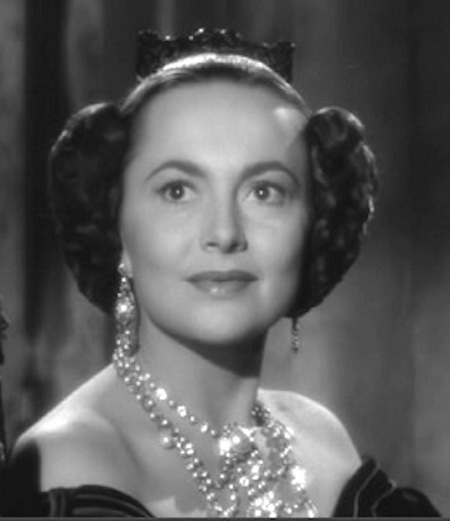
It’s always bothered me that Olivia de Havilland; the passionate, strong-minded, long-lived Hollywood star; is best known for a meek maternal role.
Did she perform it well? Oh yes. She imbued Melanie with incredible strength, empathy, and grit. But to be best known for Gone with the Wind in your obituary isn’t exactly a selling point in 2020. The mawkishness of the role has always annoyed me, especially because Olivia de Havilland is most riveting when she’s hard boiled. (She would have been great in noir.)
This was, after all, not a meek woman, convincingly as she nailed that famous steel magnolia part. This is the actress who sued her studio for extending her contract—and won. (A stupefying victory, given the long list of actresses whose studio fights got them nowhere and killed their careers.) And so I’d like to highlight a few of my favorite roles, which bear no resemblance to Melanie.
The Heiress (1949). I’m not alone here. This film won her an Oscar, an award she richly deserved. She plays a shy, undervalued, vulnerable “spinster” wooed by a handsome man (Montgomery Clift) who is likely after her wealth. Her growing strength as she begins to suspect him and question her father is something to see. Wow.
My Cousin Rachel (1952). A sexually and socially confident, cosmopolitan widow (de Havilland) meets the naïve young cousin/heir (Richard Burton) of her dead husband. At first, he suspects her of murdering her husband, then he falls for her, and then he suspects her again. Did she, or didn’t she? The book version leaves the answer open, the movies less so. The 1952 film itself is a mixed bag, but when it comes to embodying a fascinating heroine, de Havilland knows what she’s doing. (You know I think so when I say Rachel Weisz, whom I love in everything, couldn’t hold a candle to her in the remake.)
Hush … Hush, Sweet Charlotte (1964). I love some bonkers Bette Davis-de Havilland banter. Is it as fun as Whatever Happened to Baby Jane? No, what could be? But it’s still a blast to watch, thanks in large part to de Havilland’s scheming character.
The Adventures of Robinhood (1938). OK, this is a bit of a sentimental choice, but de Havilland doesn’t play a weakling version of Maid Marian. She’s got some serious spirit, especially for the time this film was made. de Havilland’s stunning beauty in it explains the string of hearts she left in her Hollywood wake. And Errol Flynn’s and her dazzling chemistry, not to mention their ridiculously good looks, reveal why they were paired together so frequently. Plus, the film is just a hoot, with the cast clearly having Ocean’s 11-level fun on the set.
There’s much more to say about de Havilland. This list alone shows her incredible range as an actress. I don’t have the expertise to discuss her recent lawsuit, sister feud, or any of the myriad other topics that make her a compelling subject. I strongly recommend you check out some of my peers’ posts on The Classic Movie Blog Association’s blog roll (see right column). de Havilland has never been one of the stars I follow. Frankly, I find her a bit scary. Intimidating. Hard to know. (About as far from Melanie as it’s possible to be.) But you can’t ever discount her. And when she’s on the screen, you don’t want to watch anyone else.
PBS produced a new documentary on my favorite movie wordsmith and feminist rebel, Mae West. Dirty Blonde is coming. Check out the preview to see the subjects talking about her (some welcome surprises), and to hear some of your favorite Mae West quips.
Its not surprising that the actress who made her mark as a partially nude Ziegfeld Follies girl would star in one of the most seductive films of the 20s.
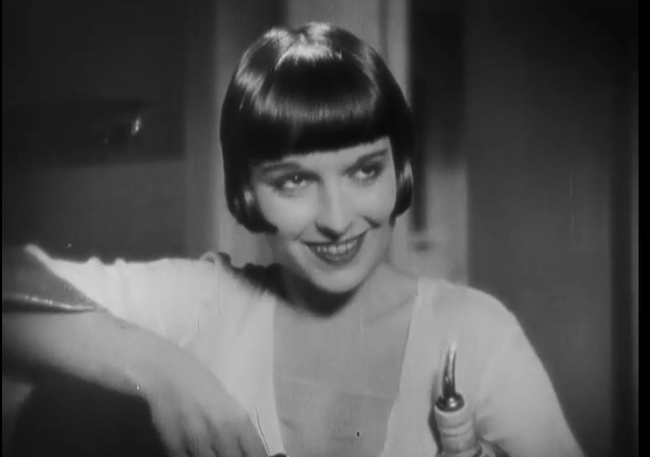
That the great German director G. W. Pabst would find it worthwhile to draw this star from American isn’t surprising either. The heroine of his 1929 Pandora’s Box had to be sexy enough to lure everyone around her, and heedless enough to rebel against the powerful without considering consequences….and that was kind of Louise Brooks’s forte.
The Kansas-born actress would make a point of ticking people off, refusing to conform to Hollywood expectations of her—or follow the directions of her bosses. In terms of roles, she didn’t really make a big splash, with few starring roles and many bit ones. But that didn’t stop her from demanding her rights. She expected more of her parts. She asked for promotions. She wasn’t much for punctuality. Most damagingly, she refused to do retakes of The Canary Murder Case (1929) to convert it from a silent to a talkie. She DID enjoy Hollywood social life–she was a regular at William Randolph Hearst’s and Marion Davies’s San Simeon, even romancing the latter’s niece, Pepi Lederer.
Her independent spirit ensured Louise Brooks didn’t make it far in Hollywood, but it’s also why we know her name still today. We like that she was who she was, and she didn’t apologize. Louise Brooks’s authenticity comes through in everything she did, especially in her acting. Her naturalistic performances might not have impressed all viewers back in 1929, but today they make her acting accessible to modern viewers–much more so than her contemporaries who followed the day’s more stylized acting trend.
And don’t we all love her rebellious soul? That flapper haircut, the partying all night after days on the set, the love affairs with men and some women that cut short her success. (Who turns down The Public Enemy to be with a guy?) And without that rebellion, we wouldn’t have her tripping off to Germany to make Pandora’s Box or Diary of a Lost Girl with a man who turned out to be one of the most impressive German directors of his time, whose films are still powerful enough to survive on best-of lists while those silents that had far higher box office draw are forgotten.
Of course, her legacy might still have disappeared, but Louise Brooks, as it happened, wasn’t just a good actress; she was talented at telling her own stories as well. The witty book of her movie reviews/Hollywood history in later life, Lulu in Hollywood, gave her a second burst of fame–and ensured that fame would endure. For many of us, she and Clara Bow are the face of the flapper.
I found myself instantly mesmerized by her in Pandora’s Box. Not since Angelina Jolie in Mr. and Mrs. Smith and Marilyn Monroe in Niagara have I seen an actress in such full command of her sexuality.
The way Brooks moves from archness to innocence, from manipulation to fun as the character Lulu is a thrill to view. She seduces EVERYONE in Pandora’s Box. I mean, is this how you act with your lover’s son?
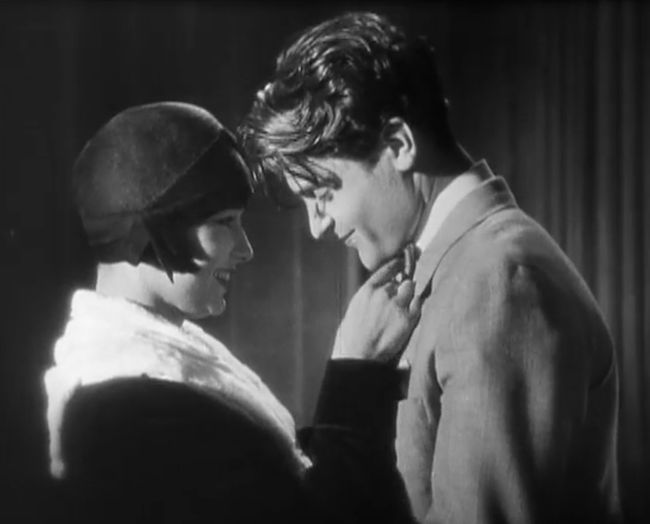
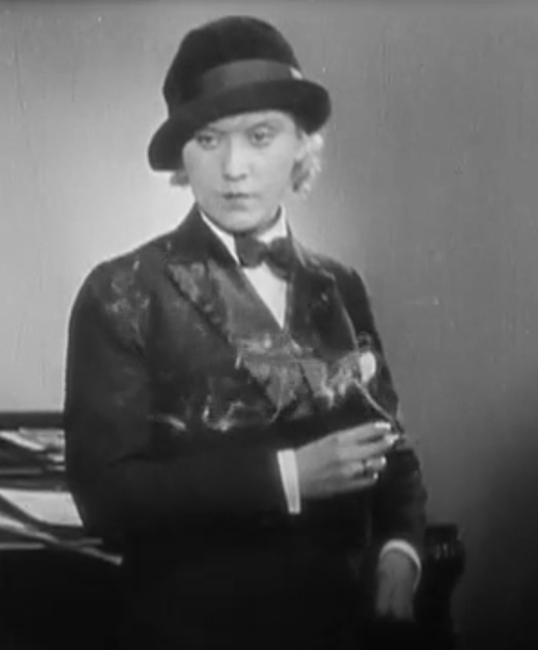
But the son, Alwa (Franz Lederer), is not alone. Every delivery person, businessman, and lawyer gets Lulu’s seductive treatment—most thrillingly, given the time period, Countess Anna Geschwitz (Alice Roberts), a rich lesbian friend, gets Lulu’s full-press sexy attack. Watch as Anna stares at Lulu with stark hunger….
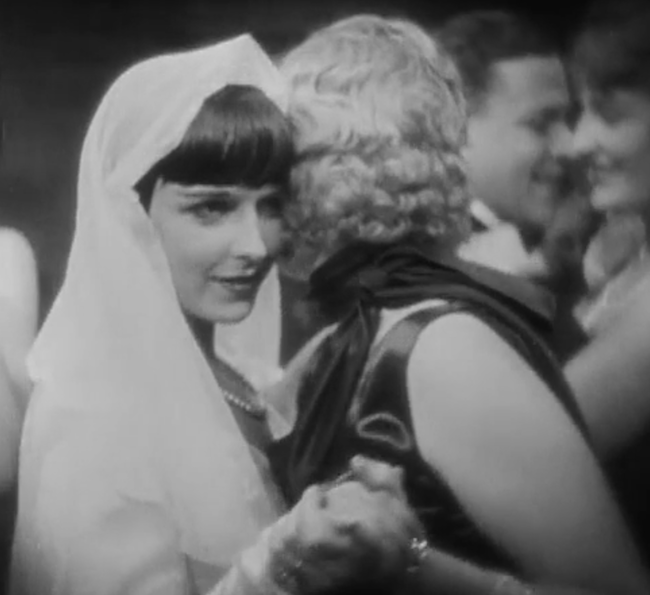
….and dances with her in a sensual sequence….
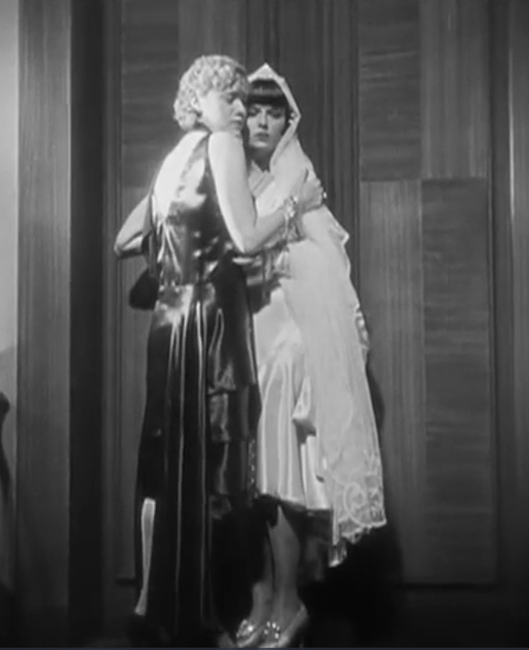
and expresses her longing to do more at Lulu’s bedroom door….
Wow! I kept checking the date. Was this film really made in 1929? (Of course, the censors butchered it after its initial release, erasing this maybe-maybe-not consummated love affair entirely.)
I’m avoiding all but minor & very vague spoilers, so the plot summary that follows will not be precise, especially after the first acts.
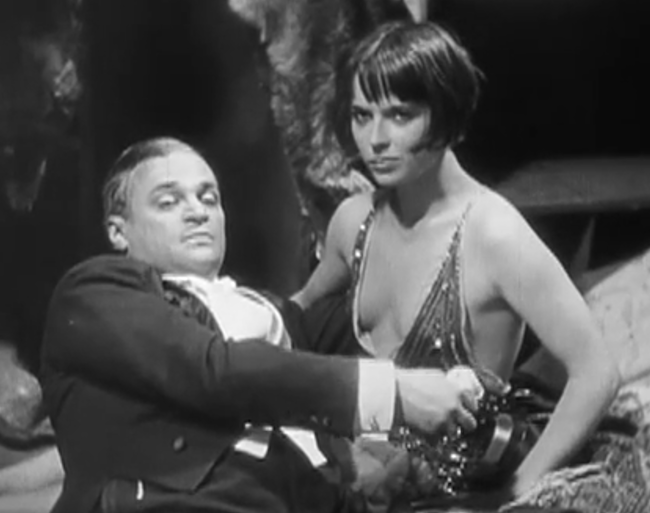
The untampered-with version of the film begins with Lulu hanging out at the apartment where her lover, Dr. Ludwig Schön (Fritz Kortner), is putting her up. She’s flirting and drinking with a deliveryman/mailman when a friend arrives. Lulu calls the new arrival, Schigolch (Carl Goetz), her “patron,” but it will be unclear from later events whether he is her first john, pimp, or father. Whatever he is to her, Schigolch is clearly an unsavory type, so Lulu hides him on her balcony when Ludgwig comes home unexpectedly. Ludwig has bad news for Lulu: he has to marry a respectable girl, not her. Lulu comforts her despondent lover on her bed.
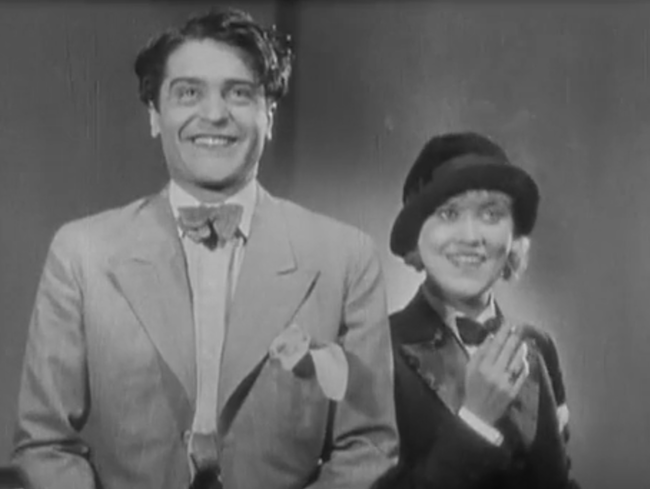
Of course, Ludwig discovers Schön on the balcony and takes off, but Lulu doesn’t seem concerned for long. Nevermind that her lover/income source has now disappeared. Schigolch has another offer for her, a chance to return to the stage. And after all, this woman will have NO issues getting a new lover. Just look at these typical reactions to a Lulu encounter:
Whether Lulu’s flirty nature is mainly a result of calculation, high spirits, or just innocent fun is always unclear. What IS clear is that she always must have everyone in her thrall. Her supposed nonchalance at Ludwig’s loss doesn’t keep her from getting him back when she gets the chance (and what a great scene it is when she does).
After she reunites with her lover, things will go horribly wrong for everyone in the story, justifying one prognosticator’s claim that Lulu is Pandora, the mythical character who unleashed society’s ills into the world. Of course, this pronouncement about her Pandora nature annoys a modern woman to no end, as it’s clear that the man who says so assumes the jealousy Lulu inspires and whatever results from it are all her fault. Forget that the men who surround her are (a) weak, (b) dark/controlling/abusive, (c) silly alcoholics, and/or (d) con men. Forget too that any man who spends five minutes with her knows that fidelity probably isn’t Lulu’s strong suit.
Of course, Lulu isn’t exactly an innocent. The way she repeatedly uses and betrays her lesbian friend is disturbing, and it doesn’t seem the result of any bigotry–just desperation and selfishness. Lulu’s lack of compassion about others’ suffering as she casually checks out magazine fashions is chilling. I like that we’re not merely asked to condemn her actions, but what we ARE to make of her isn’t entirely clear.
The production itself is sophisticated and effective, way ahead of its time. Her clothes are a joy to view. But the script is…odd. The first five acts are memorable, well-written, funny, and exciting, with clear plot development. But after the first five acts, I thought, “this is probably where the film ends.” And then another act would follow and I’d assume it was ending again, and another, and another. The story soon feels like a series of set pieces/vignettes pulled together rather than a coherent story, which is particularly evident in the last act. I guess I would have been OK with this if the story had been framed as a series of Lulu adventures, but there’s a morality play bent to it that just doesn’t work—because you can’t help but enjoy rather than judge Lulu thanks to her considerable charisma, and because you can’t really find a morality play effective without a clearer narrative arc/characterization.
For example, I think we’re meant to pity Ludgwig’s man-boy son, Alwa, for his hopeless passion for Lulu, but his actions throughout the narrative are weak, disloyal, and despicable, so I’m not sure why I’m meant to root for him. I mean, sure, he’s obsessed with Lulu, and Lulu, though she calls him her best friend, isn’t exactly empathetic toward him. But then again, she cheerfully puts up with his dour, leech-like company, and clearly could find a more congenial and ambitious companion. There has to be some strain of kindness and loyalty in Lulu to make her tolerance for him possible. (Think about the suitor she chooses over him/to help him late in the film, and you will see just how bad of company she considers Alwa.)
I also find it hard to understand why this woman, with such a magnetic personality and such great beauty, couldn’t find another well-heeled protector who would conceal her shady past AND help her support her two hangers-on. Her poverty late in the film–given her earlier adeptness with reinvention—isn’t well explained.
This film is often called a masterpiece, and in its first few acts, I think it is. After that, I’d argue that the film falls apart, though I know MANY would disagree with me.
But here’s the thing: It doesn’t matter. The first few acts have already seared into your memory. Your impression of Louise Brooks is already powerful given her electric performance and unforgettable beauty. And your admiration for Pabst’s technical proficiency and daring have already been won. What does it matter if the logic and narrative thread and even Lulu’s character are all a bit of a mystery to you in the end?
This film can be hard to track down at times, but luckily, it’s streaming on Kanopy, which is available for free to most library patrons. (Even if you don’t have a card, some temporary ones are being given during this pandemic.) You may not end up watching the whole thing, but don’t miss Acts 1-5! The court scene alone is worth the viewing.
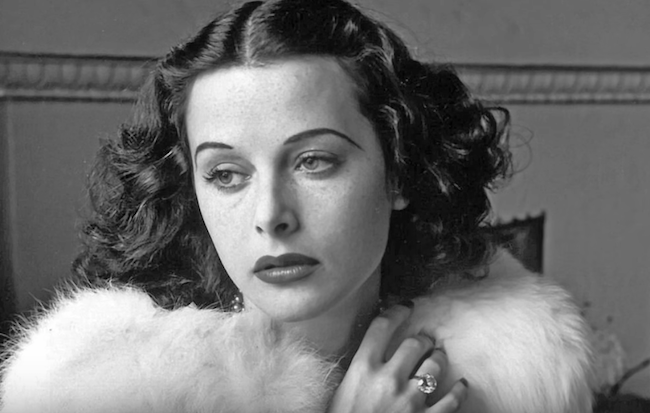
Bombshell: The Hedy Lamarr Story (2017) is that rare documentary that is somehow uplifting–even when its tale is not. The fact that Bombshell is a story of triumph amidst adversity makes it a perfect film for our time.
I knew the bare outlines of Lamarr’s story: the scandalous film that began her rise to fame, her fraught history with her husband and his Nazi buddies in Austria, her tenure as a beauty in Hollywood, and her frequency hopping invention that eventually led to my sharing this post with you right now, on WiFi. Those details would be enough to make a decent film, I figured, even if it turned out to be–as many actress documentaries are–cookie cutter in style.
But the documentary is so much better than I thought it would be. It seeks to make sense of the elusive personality behind the thousands of lives the actress/inventor lived. The story is greatly enriched by interview tapes of Lamarr, letting viewers hear her story as she wanted to tell it.
It’s hard to picture Lamarr’s life, that brilliant woman who co-created an invention to save soldiers’ lives after long days on the set of (mostly) inane films…and then was patted on the back for her little invention by the military and sent off to sell war bonds with that pretty face instead….which she did.
Crazy as the outlines of the life I knew were, there was so much more, as this inventor was equally bold in other roles she took on–in movie production, in entrepreneurship, in everything really. In the film, she says she helped boyfriend Howard Hughes with airplane design; she even managed to squeeze a big initial salary out of Louis B. Mayer with no English. What an amazing feminist she was, not letting societal conventions for women dictate her moves, but plowing ahead, doing whatever she believed she could do.
Director/writer Alexandra Dean has chosen her sources well, particularly the young animator wowed by Lamarr’s accomplishments. A Mel Brooks cameo, with reference to his Blazing Saddles tribute to the actress through the character Hedley Lamarr, is an unexpected treat.
Lamarr’s personal life was largely tragic: bad marriages, the public’s focus on her looks instead of her mind, the cruelty as those looks faded, financial woes, and the failure of others to value or credit her patriotism since she was an immigrant. The film gives Lamar her proper place in history, but it’s clear to all the subjects in the documentary that they’re trying to reclaim for Lamarr a tribute (besides some very late awards) she never received herself.
But what’s more tragic than her treatment is that had Lamarr been taken seriously earlier, her invention might have saved American lives in WW II, which was her goal all along. The bigotry, greed, bureaucracy, and sexism that made her life so challenging and her invention so tardily applied aren’t exactly difficult to trace in our society or government today. That such obstacles can actually PREVENT heroism like hers is a sobering thought, and a dismayingly timely one.
But the film remains inspiring because we witness Lamar’s refusal to let poor treatment override her determination to act with courage and integrity. What you mainly feel in watching are awe and a profound wish to cheer, Rocky style. Lamarr was a complicated person, and not without flaws, but she was an AMAZING person, and your time with her is truly something to savor.
You can find the film on Netflix (while it’s still there!) or rent it on Amazon. Why are you waiting?
The Guardian‘s statistic about the lack of awards for female cinematographers was particularly illuminating.
In addition to showing what female-driven films could have been honored but weren’t over the years, Relatively Entertaining covers the diversity of voices in film, how we’ve regressed since a high point in the 40s in honoring women’s stories–even if told by men. The post also highlights how seldom black actresses are repeatedly honored for their work: “For that matter, it’s a strange quirk of Oscar that of the 35 times a black woman has received acting Oscar nomination, only three (Whoopi Goldberg, Viola Davis and Octavia Spencer) have been nominated more than once, and only Spencer has been nominated after winning her award.”
I wonder how long Academy voters could sustain the fiction that women’s films just haven’t been good enough yet to get awards after viewing the articles’ startling graphics. I wonder if the lack of repeat nominations for women (and women of color in particular) will finally bring home just how much has to change.