Cary Grant Won't Eat You

Classic movies for phobics

  • About
  • eBooks
  • Previous Blogathons
Classic movies for phobics

Feminism

The Moment I Fell for Claudette Colbert

09/13/2015 by leah@carygrantwonteatyou.com 12 Comments

ClaudetteColbert-Ithappenedonenightlying
Today I’m reflecting on that tiny woman with the deep, sexy voice who managed to develop fully realized characters even in the smallest of roles. And in her greatest ones, set the bar so high for future comediennes that few have managed to approach, much less equal, her performances since.

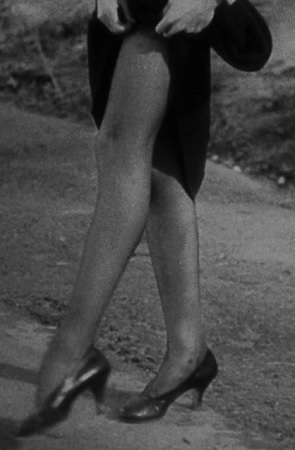
Like many of us out there, I knew Claudette Colbert’s legs first, as she starred in one of the most iconic scenes in American film, proving “once and for all” that when it comes to hitchhiking, “the limb is mightier than the thumb.”

ClaudetteColbertlegs
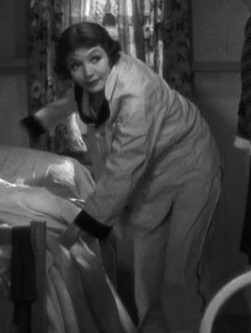
It took several years after seeing the image of her legs that I actually got around to It Happened One Night, which I’ve watched at least 30 times since. In her Academy-winning role as Ellen Andrews, she first perfects a chilly posture and refined voice as the stuck-up heiress. But slowly, Colbert reveals Ellen’s vulnerabilities and inexperience through expressions, gestures, stance, and tone. When Ellen and soon-to-be love interest Peter Warne (Clark Gable) stop at a motel en route to New York, she is ill at ease with the arrangement he makes to keep the room platonic–strapping a blanket between their beds. While she’s technically married, she has never been with a man. When she oversleeps the next morning, Peter threatens to come get her, and her clumsy, embarrassed fumbling to ensure he doesn’t makes me laugh every time I see it.

ClaudetteColbert-ItHappenedOneNight
That winning performance made me a fan. Without it, I never would have sought out The Palm Beach Story, Midnight, and so many other wonderful movies since. Although I appreciate Colbert’s dramatic abilities, her skill with romantic comedy is what wows me. Here are just a few of the megastars she managed to upstage, in spite of the camera’s deep love for them (and theirs for it): Miriam Hopkins in The Smiling Lieutenant (1931), Clark Gable in It Happened One Night (1934), John Barrymore in Midnight (1939) and John Wayne in Without Reservations (1946).

So on her birthday, I’d like to say thank you to the actress who has lightened my mood again, and again and again: the mesmerizing Claudette Colbert.

Share
Posted in: 1930s films, 1940s films, Feminism, Romantic Comedies (film), The Moment I Fell for Tagged: Claudette Colbert, Frank Capra, It Happened One Night

Mae West Schools the Teacher

09/06/2015 by leah@carygrantwonteatyou.com 4 Comments

WestandtheTeacherNightafterNight
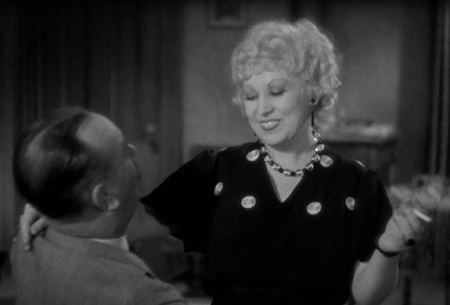
A prim school teacher & Mae West. Almost a century later, this coupling seems inspired. But in 1932, nobody knew that. West was a vaudevillian, not a movie star. Her role as Maudie, an ex of the lead, Joe Anton (George Raft), was a minor part in her first film, Night after Night. She didn’t even enter the picture until a half hour in.

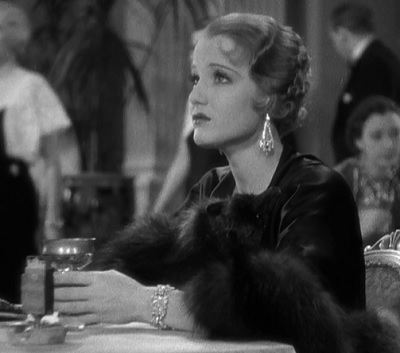
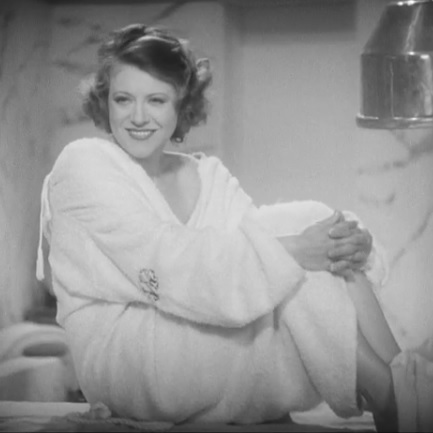
The script of the movie is bland, the story plodding. Joe, the owner of a mansion-turned-speakeasy, is fascinated by Jerry Healy (Constance Cummings), the mysterious beauty who shows up at his place every night unattended. He discovers that her family owned his mansion before the market crash.

ConstanceCummings-NightafterNight
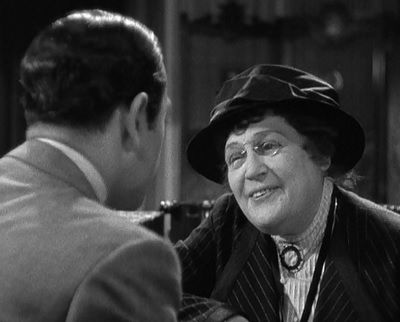
Joe has been dissatisfied lately, aspiring to a classier existence. He’s even hired a tutor, Miss Mabel Jellyman (Alison Skipworth), to improve his elocution, grammar and knowledge of current events–the type of lady who gets prissy when he uses words such as “got.”

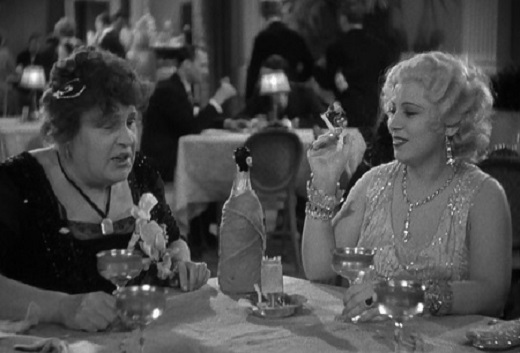
Speakeasy owner & tutor
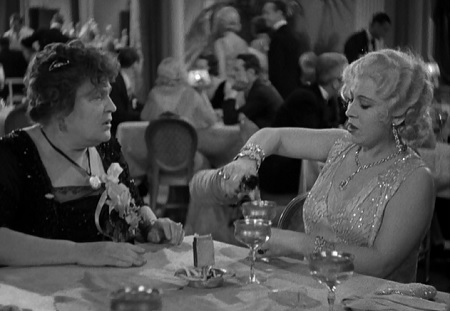
He thinks Jerry will lead him to a better life, but he needs the tutor’s help to win her. He invites Jerry for dinner at the speakeasy, and begs Jellyman to come along. The tutor is thrilled at the chance to hang out in a speakeasy and have some fun, but what a drag to be on such a date! Joe’s attempts at sophistication are painful, the conversation stilted. Everyone at the table is bored and uncomfortable.

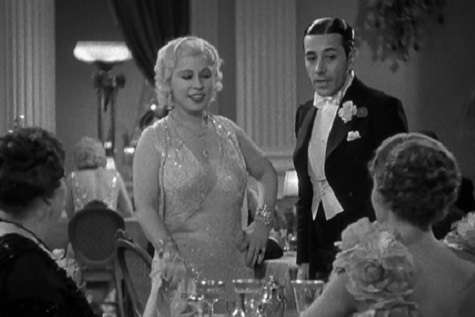
Then Maudie (West) enters the room.

MaudiesarrivalNightafterNight-WestRaft
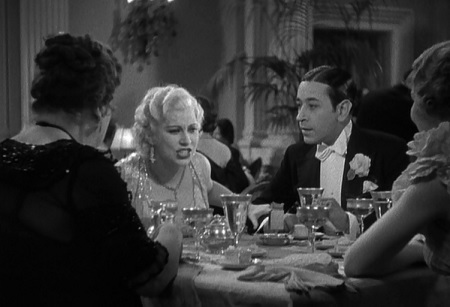
Within five minutes, she has decimated Joe’s fragile rep, having laughed about his love for the ladies, drunkenness, and a jail visit in quick succession.

WestasMaudieNightafterNight
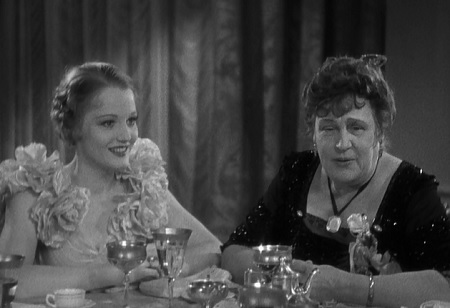
“Oh Joe,” she concludes, “it’s just life to see you,” echoing our impressions of her arrival. She has completely redeemed his date (and the existence of the film). Finally, Jerry is enjoying herself.

JerryandJellyman-NightafterNight
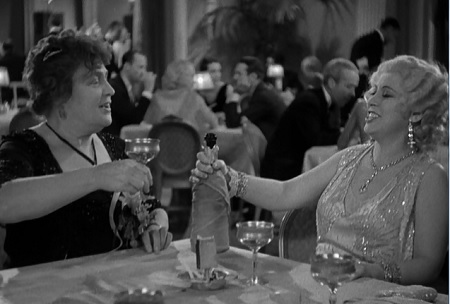
But clueless Joe urges Jerry to leave with him to tour the house. Jellyman, soon drunk thanks to Maudie’s generosity with the bottle, protests when Joe offers a cab before leaving them. “I don’t want to go home,” she complains. She turns to Maudie, “He said I didn’t have to.”

“Yeah, we’re gonna make a night of it,” Maudie agrees. “You go ahead,” she tells Joe, “we gotta talk it over.”

“Maudie and I have a great deal in common,” Jellyman explains to Joe.

“You said it, baby,” agrees the partying blonde, without a trace of irony.

Once they’re alone, Jellyman asks anxiously, “Maudie, do you believe in love at first sight?”

“I don’t know, but it saves an awful lot of time,” she quips.

Jellyman protests when Maudie refills her class, to which our heroine responds, “Now listen, Mabel, if you’re gonna be Broadway, you gotta learn to take it, and you may as well break in the act right now.”

MaudieandJellyman-MaeWest
“I say, this night will read great in your diary,” she adds.

“You said it, baby,” Jellyman agrees, her education from Maudie having advanced dramatically in minutes.

WestenjoyingteacherNightafterNight
“Maudie, do you really think I could get rid of my inhibitions?” Jellyman asks.

“Why sure,” Maudie tells her, “I’ve got an old trunk you can put them in.”

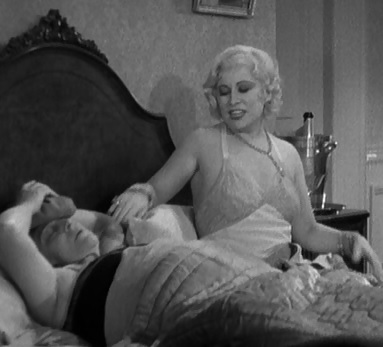
The next time we see the two of them, they’re in bed together at Joe’s after a bender. It does the heart good to witness them:

WestandSkipman
West only agreed to play the part of Maudie if she could write her own scenes. Thank goodness she did. Supposedly, Raft later claimed West “stole everything but the cameras.” What he didn’t say is that none of us would have wanted to see the film at all, had she not.

For more of my monthly West posts, click here.

Share
Posted in: 1930s films, Comedies (film), Feminism, Mae West Moments, Romantic Comedies (film) Tagged: Mae West, Night after Night

Female’s Heroine: 1933’s Amy (of Trainwreck), Samantha Jones, or Don Draper?

08/27/2015 by leah@carygrantwonteatyou.com 4 Comments

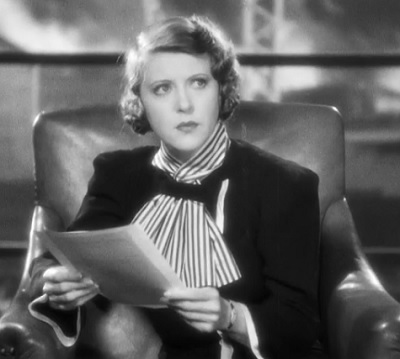
RuthChattertonFemalefilm
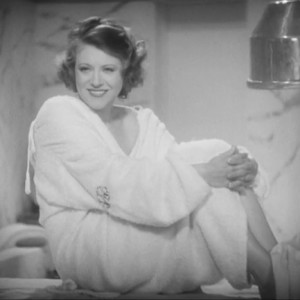
Given its plot synopsis, I expected Female to be shocking: a promiscuous executive casually sleeps with men until she finds the right guy. But I didn’t expect to gasp at its daring. A few of the heroine’s typical comments:

Falling in love: “To me, a woman in love is a pathetic spectacle. She’s either so miserable that she wants to die, or she’s so happy you want to die.”

Marriage: “No thanks, not me. You know a long time ago I decided to travel the same open road that men travel, so I treat men exactly the way they’ve always treated women.”

Husbands: “Of course, I know for some women, men are a household necessity. Myself, I’d rather have a canary.”

Then there’s a typical night. She…

1. Spots a handsome employee, feigns interest in his ideas, and asks him to come over to her house that night to discuss them.

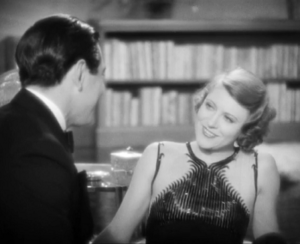
2. Discourages business talk with flirtation, as when she says, “Are you naturally enthusiastic?” to a new hire, throwing a pillow onto a plush rug with a suggestive look.
RuthChattertonflirting2
3. Orders vodka from her butler, who informs the rest of the staff of the Catherine the Great custom: serving it to soldiers “to fortify their courage.”

4. Exercises with vigor the next morning, clearly energized by the tryst, and comes up with new ideas for the business.

5. Rejects the romantic overtures of her one-night stand, annoyed by his flowers, then offers him a bonus as a kiss-off. She doesn’t want to deal with the moodiness of emotional men at work. (Women, how many times have films suggested this about us?)

At first, I thought the movie would be like Trainwreck, as Alison (Ruth Chatterton) certainly displays the same level of disinterest in building a romance with her one-night stands and blows off a guy after he calls her “ethereal” and otherwise indicates their lack of sexual heat:
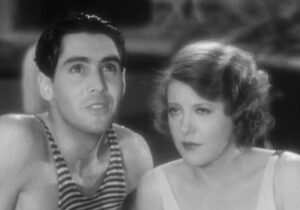
Annoyed by his flowery (nonsexual) language
Amy and Alison have an impressive list of conquests, and not only express disinterest in matrimony and kids for themselves, but for others, as when Alison can’t be bothered to remember her friend’s husband’s name, or how many kids she has–much like Amy’s (Amy Schumer’s) scene at her sister’s shower. Both heroines are funny and mostly likable, as when Alison worries about her chauffeur, who has taken a punch in her honor: “Now listen, Puggy, things people say about me don’t bother me,” she says with a lovely smile. “Thanks just the same.”

But in terms of power–and what they do with it–there’s no comparison. After one-night stands fueled by liquor, Amy, hungover, struggles to get through the day.

AmySchumerTrainwreck
Alison, in contrast, looks alert, pretty, and pleased with herself, and does a brilliant job at work afterward. The word “trainwreck” is about as far from Alison Drake as a term can be.

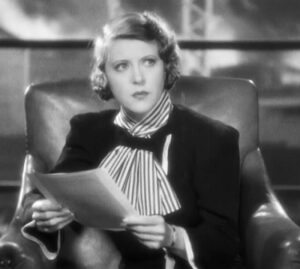
Like her more direct heir, Samantha Jones, Alison practically bristles with authority and confidence, but unlike Samantha, she has a whole auto factory full of employees.
RuthChatterton-businessFemale
One criticism of Sex & the City was that it never took the work as seriously as the characters’ personal lives, which made it less feminist than it could have been. Here, the heroine has no chance for tight friendships, but finds her work thrilling: “Oh, but I love it: the battling, the excitement; I don’t think I could do without it now.” I soon found myself as interested in the business–such as her decision to go with automatic transmission–as in the flings, not something I expected to experience with a romantic comedy.

Like Samantha, Alison wants to sleeps with her hot employees–only in Alison’s case, she does. (Samantha waits to fires hers first).

SamanthaJonesandrudeassistant
In fact, Alison has sex with so many of them that there are a flood of bonuses on the company payroll, like some kind of stud fee. Her leer at a new designer is as hilarious to witness as Samantha’s undressing looks. And as with Samantha, her vulnerabilities are evident–in her case, a fear that men are angling for her money rather than her personality or body (either would be fine).

While it’s easy to admire Alison’s moxie, she’s guilty of sexual harassment throughout the story, as when her secretary shows her too much affection after their affair, and she transfers him to Montreal. Promptly afterward, this lovesick conquest watches the latest one-night stand leave her office and calls, “I’ll see you in Montreal.” When Alison falls for Jim (George Brent), mainly because he’s hard to get, his anger at her regular nightly ploy earns our admiration; he won’t sleep with her to keep his job, he retorts.
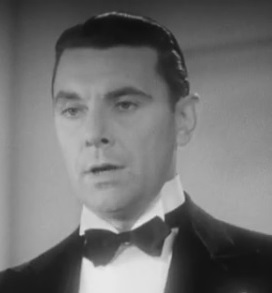
GeorgeBrentFemale
While she initially decides to fire Jim’s secretary, assuming the two are involved, and then plans to overload her with work, she quickly reconsiders, deciding not to be petty. While she’s still in murky moral territory due to her liaisons with subordinates, she doesn’t reach full anti-villain status, since she won’t fire someone for turning her down or stealing her guy. Still, it’s hard to forget that shady transfer…and how much she reminds us of Don Draper with his secretaries on Mad Men.

I stopped the film multiple times as the end neared, fearful about whatever sexist cliché it was headed for. This character was simply too complex, and Chatterton too wonderful in the role, for me to watch some reductive conclusion.

RuthChattertoninFemale
I was right to be scared (though I feared it would be worse). Oddly, Jim, till then annoying in spite of his rebellion, demonstrated unexpected feminist leanings near the close. Too bad the screenwriters and director chickened out and tacked on totally unbelievable concluding lines.

Despite its shock value and fascinating lead, the film hasn’t reached the popularity or accessibility today it deserves. I could only locate it in DVD form on Netflix, and went for the free month trial of streaming with Warner Archive instead. Go to the effort; it’s worth it.
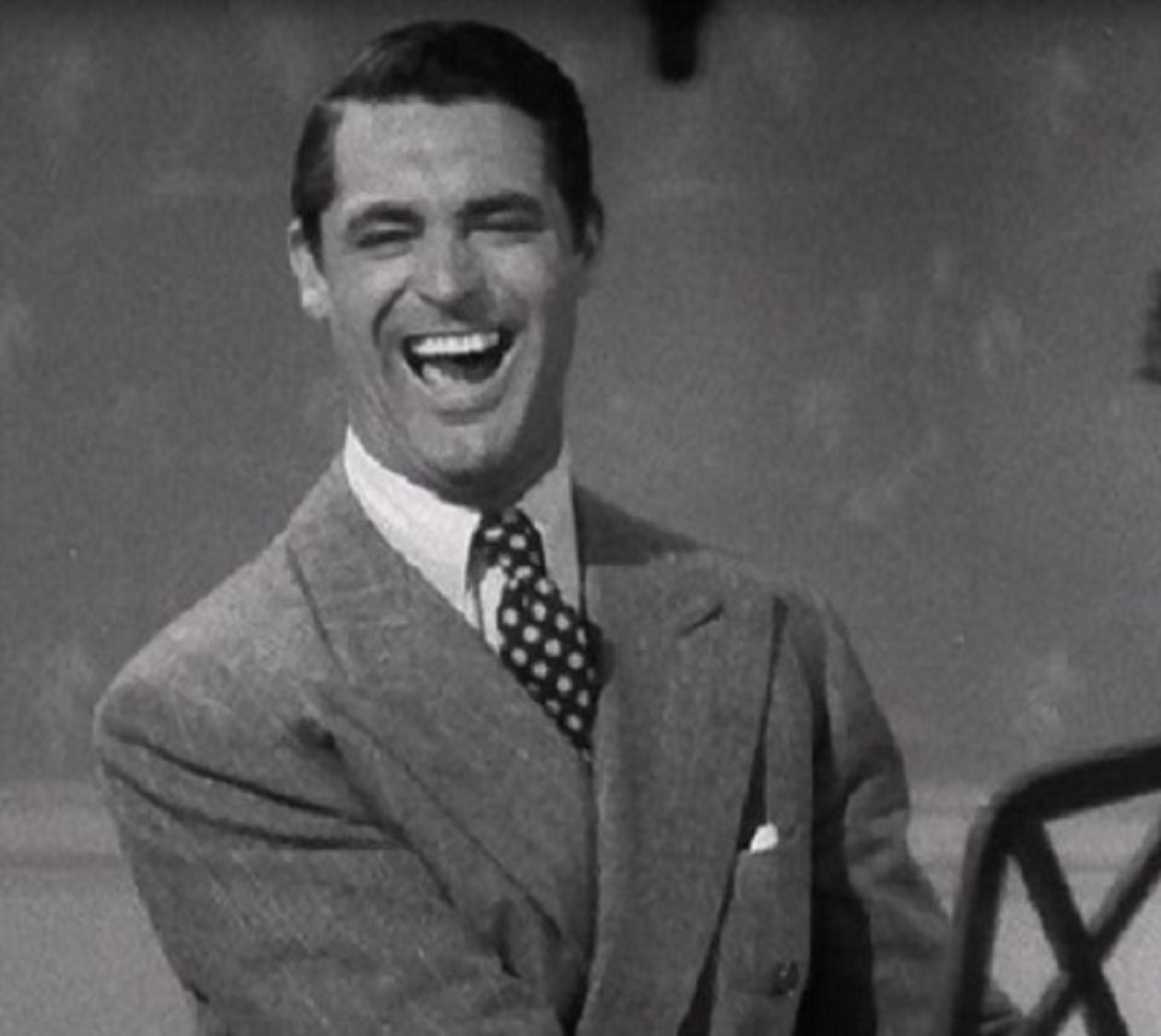
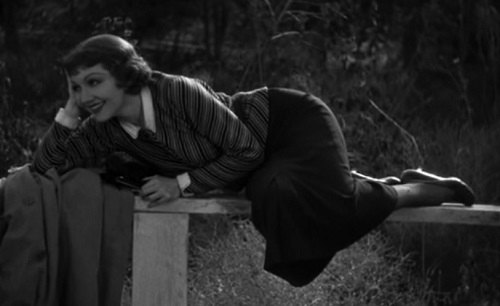
Share
Posted in: 1930s films, 1990-current films, Anti-Romance films, Comedies (film), Feminism, Romantic Comedies (film), TV & Pop Culture Tagged: ahead of its time, Amy Schumer, Female (1933), Mad Men sexism, promiscuous women, Ruth Chatterton, Samantha Jones, Trainwreck

Mae West Quote of the Month: No Evidence

07/23/2015 by leah@carygrantwonteatyou.com 2 Comments

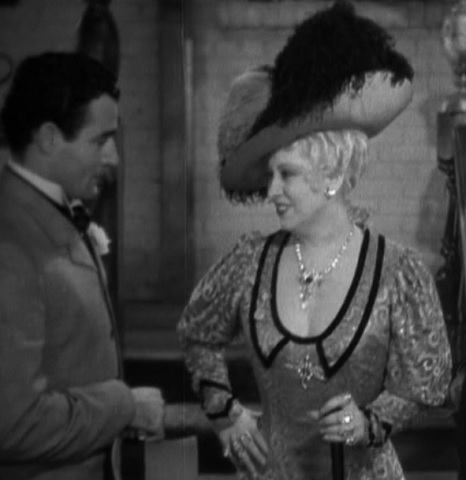
MaeWestSheDoneHimWrong
Lady Lou (Mae West) is the heroine of She Done Him Wrong (1933), the hilarious Oscar-nominated, pre-Code movie based on West’s play, Diamond Lil. The film opens in a Bowery bar in the Gay Nineties. Many of the customers are discussing Lou’s attractions, thanks to a new nude portrait of her on the wall.

Lou rides up in a carriage, with women staring at her disapprovingly, and men staring at her very approvingly.

She enters the bar with the customary West strut, and is quickly introduced to Serge (Gilbert Roland) by her boyfriend, Gus. She reflects on Serge’s good manners in kissing her hand and smiles at him alluringly, as West is wont to do.

“I’m delighted,” Serge (Gilbert Roland) says. “I have heard so much about you.”

“Yeah,” Lou quips, “but you can’t prove it.”

If that line can’t get you through the day smiling, no worries. Just watch five minutes more of the film.

Share
Posted in: 1930s films, Comedies (film), Feminism, Mae West Moments, Romantic Comedies (film) Tagged: Diamond Lil, Lady Lou, Mae West, Pre-Code

The Anti-Disney Marital Treatment: Funny Girl

07/12/2015 by leah@carygrantwonteatyou.com 2 Comments

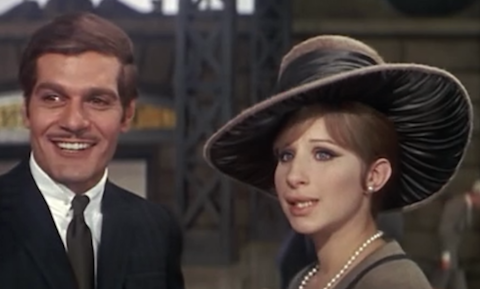
StreisandandSharif
“Oh he was SO handsome,” said my mother-in-law when I mentioned Omar Sharif’s death. My mother did the same when she introduced him to me: his eyes, his style, his tall-dark-handsome persona.

Despite his undeniable looks, that wasn’t the impression he left on me, not exactly. He was handsome, yes. He was charismatic, yes. But the word I’d use if thinking of him was disquieting. Why?  Because of his performance of Nick Arnstein in Funny Girl, a performance so suave, so  heartbreaking, and so believable I could never fully imagine him apart from that role afterward.

Up to then, I think I must have seen only Disney marriages onscreen: You love each other; therefore, happily ever after is guaranteed, as long as you’re not a fool enough to fall for a jerk. But here was a marriage torn apart by pride, by a man’s reluctance to see his wife out-earn him, by a love for a profession–gambling–which wasn’t exactly reputable, but was all he had to bolster his confidence. (Part of Sharif’s believability might have resulted from his well-known skill at it.) Could a woman’s success poison her relationships? Could separate passions so totally separate such an affectionate couple?

My reason and sympathy might have been with Fanny Brice (Barbra Streisand), but I had an uneasy feeling that marriage wasn’t quite as simple as I’d been led to believe. That this story, in spite of the Hollywood gloss on real events, was saying something I wasn’t old enough to accept about what it took for a union to make it, whether romantic or platonic. I comforted myself that it wasn’t EXACTLY true, but there was an authenticity to the portrayal I couldn’t deny.

I’ve thought of Sharif’s role in the years since, when I witnessed in so many friendships and unwise romances* how much charm can mask incompatibility, and selfishness too. Perhaps the film should be required viewing for women on the cusp of adulthood: It might not be the kind of heartwarming story you want to watch before you curl off to sleep, but you might pass fewer sleepless nights if you do.

*luckily for me, few of my own

Share
Posted in: 1960s films, Anti-Romance films, Feminism, Romance (films) Tagged: Barbra Streisand, Fanny Brice, Funny Girl, Omar Sharif

Mad Men Meets Sex and the City: The Best of Everything

06/28/2015 by leah@carygrantwonteatyou.com 16 Comments

Baker-BestofEverything
This post is part of the Modern Era portion of the Classic Movie History Project Blogathon, sponsored by Aurora of Once Upon A Screen, Ruth of Silver Screenings and Fritzi of Movies, Silently. Previous days are covered here: Silent Era and Golden Age. Thanks to Flicker Alley for sponsoring and promoting this event.

Ever since Mad Men ended, I’ve been wondering about Peggy’s real-life equivalents, from the woman who coined “A Diamond Is Forever,” to those who paid a far greater cost for their romantic missteps than Peggy did. I’ve been curious about ’50s and ’60s movie versions of the career girl as well. Films covered single women in the city from the silent era on, but naturally, I viewed the movie based on the book Don Draper was reading at the start of the show, Rona Jaffe’s The Best of Everything.

Jaffe is an interesting figure in herself; her characters are based on her own experience in publishing, and her friends within it. She earnestly explained to Hugh Hefner (what a choice!) that her goal in writing the book was to normalize and destigmatize the experience of those girls who felt ashamed and alone in their mistakes: their dalliances with married men, the children they bore (or didn’t) as a result.
The controversial film version (1959) quickly lands us in the center of the action in a publishing company, and I was instantly hooked by the drama: the boss (Brian Aherne) who casually pinches his workers’ rears, the secretaries trying to balance social lives and unreasonable work demands, the crowded shared apartments and crammed lunch spots. (The film is given props for fashion, and deserves it. It’s a visual feast throughout.) Right away, we get a sense of what women had to put up with just to get paid, and not well.
First day on the job

First day on the job

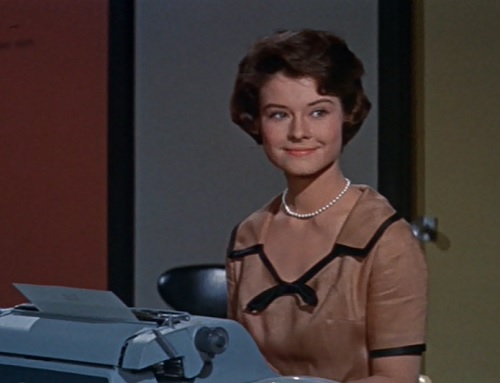
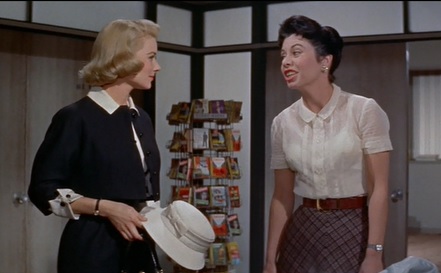
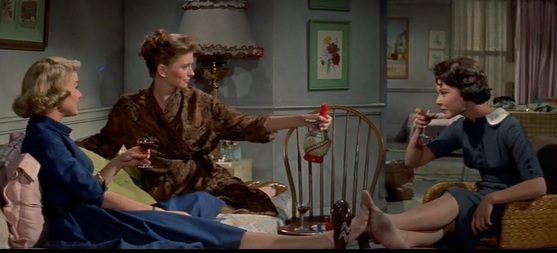
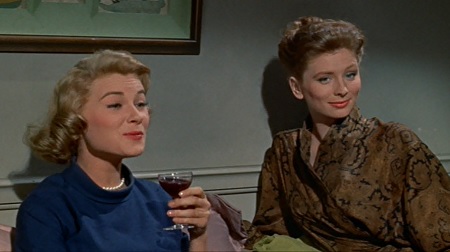
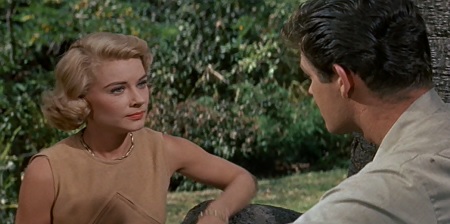
Newcomer to  the city Caroline (Hope Lange) rooms with coworkers Gregg (supermodel Suzy Parker) and April (Diane Baker) in a miniscule apartment, and the three instantly become tight friends despite having little in common: Gregg is the adventurous bombshell/aspiring actress, April the innocent, and Caroline, the sophisticate who is trying out work until her fiancé returns to the U.S. and marries her.

Single roommates in the city

Single roommates celebrating

Caroline and Gregg talk about lovers with April

Caroline and Gregg talk about lovers with April

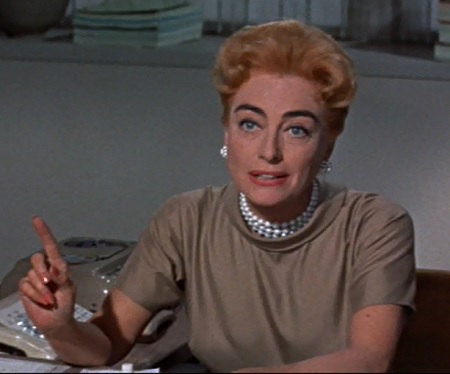
The three unite in hatred of Amanda Farrow, the harsh editor who has chosen success over marriage, and scorns the secretaries who didn’t have to go through as much as she did to advance.

JoanCrawford-Farrow
She has a smidgen of Miranda Priestly of The Devil Wears Prada in her, but there’s pathos and empathy to Farrow too. She may fail to support her many secretaries’ ambitions, but she tries to save them from her romantic fate, from awful men. And The Best of Everything is full of them.

The Sex and the City ladies might have faced a lot of freaks, but at least they had some personality; the men of The Best of Everything are as interchangeable as the vice presidents in American Psycho. A recent play of the book even used cardboard cutouts of men to emphasize the point.
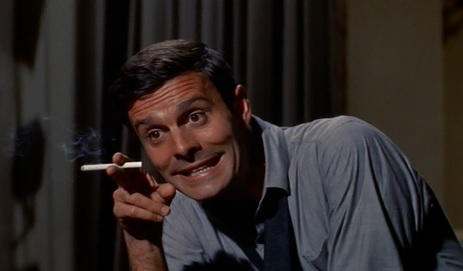
What’s puzzling is what these interesting women see in these duds. Effervescent April (Baker) falls for a guy who is so obviously a sleaze he might as well be wearing a signboard to announce it. Hope’s fiancé announces he’s married a rich girl instead of her—over the phone—and then expects her to sleep with him afterward. And get this: dazzling Gregg (Parker) falls so hard for a director (Louis Jourdan) that she goes into a crazy, stalking tailspin when he dumps her. (Yes, nothing inspires sexual obsession so much as heartthrob Gigi‘s Gaston. What??)
JourdanBestofEverything
Since the men are so patently lacking in any redeeming qualities but sleep inducement, the film’s attention to them rather than the workplace and roommate dynamics is disappointing, as the latter, when they’re the focus, are well developed and fascinating. Caroline advances quickly to the rung above secretary (a reader), but is accused by an alcoholic friend, Mike (Stephen Boyd), of faux ambition, just to avoid her romantic life (by the way, this is the love interest we’re rooting for).

Ambitions attacked

Ambitions attacked

Yet between the romantic interludes (and their sad repercussions) are intriguing signs of the second wave of feminism to come: Farrow (Crawford) leaves the marriage she impulsively makes with an old flame, returning to work, and we have the sense that she’s better for it. Caroline is promoted again. Abortion is presented as the fault of men who are careless with the hearts (and bodies) of naïve women—not the deserved end for loose ones. Female solidarity* prevails throughout, as when one of our heroines slaps a faithless boyfriend of the other. (*In one brief, funny exception, the secretaries all try to pass off work on one another.) The workplace even has moments of startling modernity, as with the hilariously painful bonding “picnic,” with its forced fun and workers getting drunk in self-defense. There’s enough worth watching in the film, in short, to get viewers through the unearned suds of these worthless romances.

Single women have fled to New York for all kinds of reasons, in all kinds of ages: post-Civil War belles, without men or funds; rural women leaving farms for factories; aspiring starlets, hoping for a berth at the glamour-girl dorm, The Barbizon Hotel (an upscale Footlights Club, a la Stage Door). These women certainly didn’t find the “best of everything.” But they still managed to live out enough of the excitement of the big city to keep other women coming, to keep dreamers hankering for if not the best of everything, the thrill of aspiring for it.

Share
Posted in: 1950s films, Blogathons, Drama (film), Feminism, Romance (films) Tagged: city, Joan Crawford, Mad Men, Sex and the City, single girls

Love It, Love It Not?: Waffling over Lubitsch’s Design for Living

06/13/2015 by leah@carygrantwonteatyou.com 2 Comments

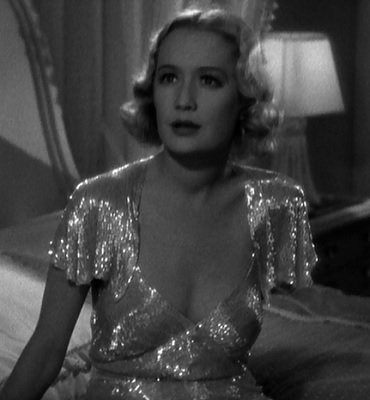
DesignforLiving
I hoped to love Design for Living. After all, the director was Ernst Lubitsch, who had helmed such witty, cynical comedies about relationships, movies that usually feel as insightful and controversial now as they probably did back in the 20s and 30s. And many reviewers I respect had praised its humor and star.

But….

I found myself teetering back and forth throughout the film—This is wonderful! This is bad!—so, like a gal tearing apart a flower over a crush, I’m going to explain its effects the best way I can:

Love It #1: Subject Matter & Morality

Gildasthreesome-DesignforLiving
Design for Living features a threesome—surely interesting coverage for a film of our time, much less in 1933. (An underrated film I watched in college, Threesome, got a lot of heat back in 1994 for its coverage, even though it was far less flip about the results of the tripling than Lubitsch’s.) I find stories about unusual relationships intriguing, and this is certainly one of them.

Knowing two roommates want her, Gilda tries to remain platonic with them. She attempts to preserve their friendship and guide their artistic successes (one is a playwright, the other a painter). Her catch phrase is “No sex.” Of course, she gives in to her own desire and theirs, repeatedly.

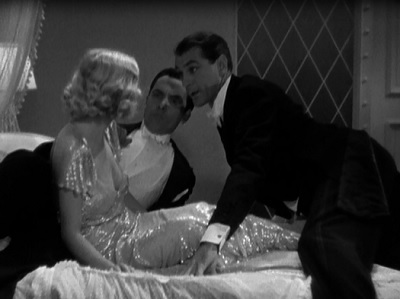
What’s interesting about the film is the utter lack of judgment about the heroine having sex with both men (in turn, rather than together), or later, wanting to leave her husband to resume the romance. Lubitsch’s touch is so incredibly light that we never blame Gilda (Miriam Hopkins) or her lovers, even though it would be easy to think of her actions, and theirs, as betrayal. Instead, we root for Gilda to stay with both men, as their happiness and hers seems most assured when their playful, sexually charged unit is intact.

Love It # 2: Its Opening
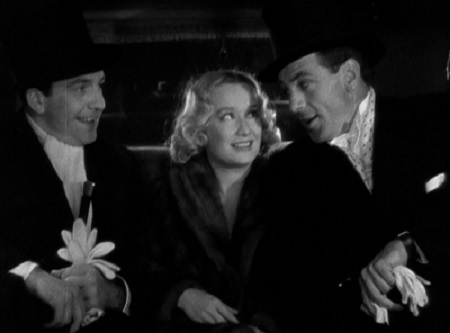
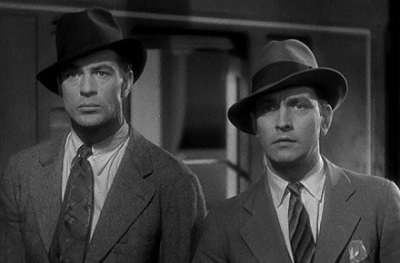
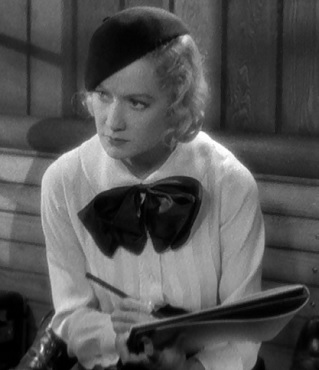
The plot begins with Gilda drawing a rather merciless caricature of two strangers in her train car, Tom (Fredric March) and George (Gary Cooper). Her humor and confidence are breathtaking. Her casual decision to put her legs up on their seat, her amused reaction to their annoyance at her picture, and their own exuberant attraction to her are a pleasure to watch. Although the development is almost too quick, their move from prickly insecurity to joy in each other’s company is funny, and such a convincing depiction of youthful spirits that it made me laugh.

Love It #3: Its Heroine
The film stars Miriam Hopkins, whom I’ve always thought I should like more than I do, which was confirmed by persuasive defenses of her work in a recent blogathon.

MiriamHopkinsDesignforLiving-2
Although she can be dramatic in the film, my usual objection to her, that theatricality suits Gilda’s personality. After all, Gilda imagines herself the driving force behind multiple men’s artistic successes—not to mention their sexual satisfaction. I love that Gilda has utter confidence in her own role as a lover and commercial artist, but quickly sets about fixing the two men’s wobbly self-esteem. Her defense of a woman’s need to try out men like hats is hilarious, and amazingly ahead of its time. Her assurance and energy made me a fan of hers throughout, and always curious what she’d do next.

But….here’s the thing: Despite my enjoyment of these aspects of the film, I didn’t laugh that much, and had to wonder why, which brings me to…

Love It Not #1: Gary Cooper
Oh Gary. He just wasn’t formed for comedy. While his gawky, unnatural goofiness in Ball of Fire seemed to capture his academic persona, the same portrayal here rings very false. He is not convincing as a painter, as a lover, or as a spirited friend. I just wanted to hide my eyes or send him to acting class every time he was on the screen.

Love It Not #2: Edward Everett Horton as Deus Ex Machina
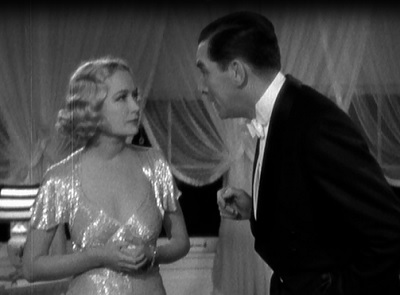
Whereas Cooper pains me in comedy, Horton delights me. But here, his role as Gilda’s boss and competing love interest was laughable—at best. The chemistry between Hopkins and Horton was so nonexistent that I felt like one of them was green screened in every time they were together.

HortonandHopkins

Threatened by...Horton?

Threatened by…Horton?

In addition, the mood between the three lovers is so light and Gilda’s own personality so ebullient that her desperate decision to throw herself at her boss to avoid Tom and George felt like the plot twist of a first-time playwright (which Noël Coward, the story’s creator, was not; apparently, the film barely resembled the play).

Speaking of poor playwrights….

Love It Not #3: These Three—Artists?
I can’t say I’m expecting realism in my comedies, but Hopkins’ drawing in the first few minutes of the story was so patently fake that it took my attention away from the film. (Why not an actress? Gilda definitely has that temperament.)

MiriamHopkins-DesignforLiving
But she’s Degas compared to Cooper, who may be the most unlikely painter ever to grace the screen, and Fredric March is not much more convincing as an author.

I get that a threesome seems Bohemian, and failed artistic aspirations are glamorous in the way poverty only can be in Hollywood portrayals, but come on. Making them artists felt like a cheap way for the writers and director to avoid the audience’s questioning of the characters’ behavior. (Those artists with their loose morals!) And the script is so thin that some truly adept performances were required. Unfortunately, not one of these casting choices fit the material fully. March reminded me so much of Gene Kelly that I could have believed in a little tap dancing. But he looked about as uncomfortable with that typewriter as Cooper did just being there.

In Conclusion….
So some loves, some nots. In the end, I’m glad I saw the film. The unabashed approval of this very untraditional relationship is breathtaking. There are some marvelous lines (my favorite, the “gentlemen’s agreement” to not hook up). The conclusion is a blast to watch. And Hopkins is riveting throughout. Just don’t expect that usual Lubitsch magic, and you’ll enjoy it.

Share
Posted in: 1930s films, Feminism, Romantic Comedies (film) Tagged: Design for Living, Ernst Lubitsch, Fredric March, Gary Cooper, Miriam Hopkins, Pre-Code, review, threesome

My Own “Awakener”: Mae West’s Writing

06/04/2015 by leah@carygrantwonteatyou.com 2 Comments

MaeWest-Awakener
As I was reading the bios of Kate Bolick’s awakeners in Spinster, writers whose independence had inspired her own, I inevitably began to consider my own awakeners. Which literary women had encouraged me to live by my own definition of womanhood?

I came up with many answers, but soon one figure nudged the others out: No costar could ever prevent being upstaged by Mae West. My brain was no different: what other woman could share my consciousness once the shimmying, voluptuous, smart-talking, smart-writing dame arrived?

Others might think of her as an actress first, but for me, it’s the writing that dominates. I grew up worshipping one-liners from Dave Barry and Jane Austen. How I love a quip that’s not only hilarious, but timeless, that captures something of human nature that’s real and honest. And West, well, we all know she had a way with the lines.

And what a pioneer she was! Her play, brazenly titled Sex, produced in 1926. Her arrival on the screen at 38, with an insistence on writing her own dialogue that ensured her place in movie history. And most of all, a sense of humor so unmatched that her words have become part of the American vernacular—whether all of us realize it or not.

I suspect Bolick never fell for West’s language, for if she had, she would have had no need for five writers to inspire her; one would have been more than sufficient. So in honor of Bolick, whose book celebrating singlehood I enjoyed, I will share two of my favorite West comments on matrimony for my monthly Mae West celebration:

First, the famous quip:

“Marriage is a fine institution, but I’m not ready for an institution.”

And second, that marvelous rejoinder from I’m No Angel:

Man: “I don’t suppose you believe in marriage, do you?”
Tira (West) “Only as a last resort.”

What I love is that a male character saying these words onscreen now would get big laughs—not to mention a female. (Of course, no one else could say them with the kind of oomph West did; she ignites the screen while current bombshells play with matches.)

And West not only says the words, she means them; she was every bit as unconventional as they imply. Of course, I know not to confuse fictional characters with their authors. Luckily, West gave me permission, stating about her racy creation, Diamond Lil, who bears a strong resemblance to Tira: “I’m her and she’s me and we’re each other.”

Like Bolick’s awakeners, West did have an encounter with matrimony, but since she was underage, denied cohabiting with the guy, and didn’t even admit to the union until it was discovered, I think we can agree that its impact on her was as negligible as she claims. (And of course, there’s also the accordion player from her vaudeville days some claim she married; she left him too.)

Which leaves us with her writing.

It would be easy to interpret West as simply of her time, as the pre-Code era certainly had some loose moral guidelines. But she acted the same AFTER the Code. Some might also suggest she was provocative for the sake of being rebellious. Or—perhaps even more dangerously—that she was condemning others’ choices in favor of her own. I’ve never thought of her that way, perhaps since her heroines are friendly with other women in her films, and only snarky when they oppose or judge her. And with a delivery that friendly and relaxed, who could take offense?

What West demands for each of her heroines is simply what we all should: the right to be who she is without regard to others’ morals and traditions. To be an individual, with all that implies.

As for West herself? Well, she never got to that last resort, instead cozying up with Paul Novak, a muscle-bound (and decades younger) man from her Vegas act. But it wasn’t a fling. The romance lasted until her death 26 years later; he’d never let her change her will in his favor, not wanting to think about her death. Early in their relationship, when Jayne Mansfield suggested she’d rescued Mickey Hargitay, another of West’s Chippendale-like chorus, from her employer, Novak responded by punching Mr. Universe.

West’s reaction was perfect: she implied they were at war over her affections. Kind of like her films–all the men longing just for her, she casually dating them all. Leave it to West to joke about her famous lack of monogamy while other women were pining for it. Leave it to her to confront a scandal with laughter, as she confronted everything.

I haven’t lived or loved like West. Who could? But oh, how her moxie inspires me.

Share
Posted in: 1930s films, 1940s films, Comedies (film), Feminism, Mae West Moments, Romantic Comedies (film) Tagged: awakener, Kate Bolick, Mae West, marriage, single, Spinster

A Beauty After All: Katharine Hepburn

05/10/2015 by leah@carygrantwonteatyou.com 17 Comments

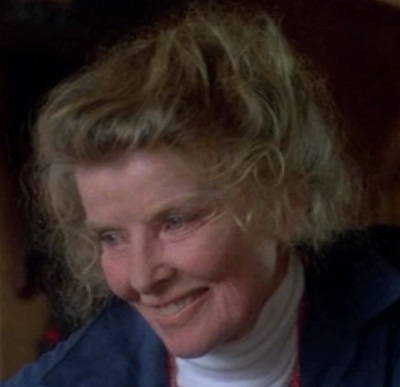
KatharineHepburn-beautyGoldenPond
This is an entry in the Great Katharine Hepburn blogathon. Check out the marvelous posts on her work.

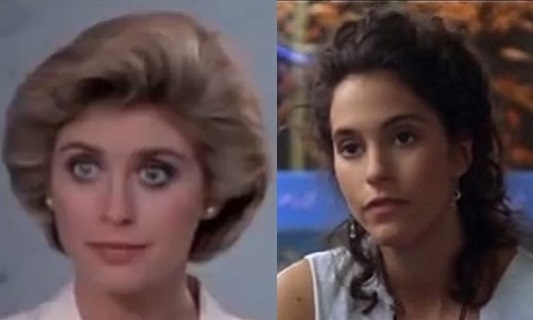
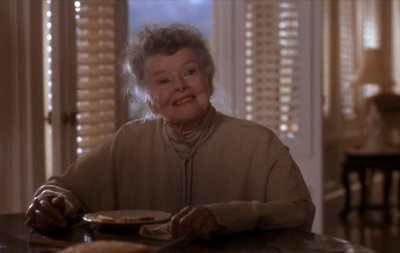
“I’d rather look like Katharine Hepburn at 80,” Aunt Betty said, looking at the screen, “than myself at 30.” I looked at the old lady on the TV, then back at my aunt, confused. Maybe Betty was ripping on her own looks, as she often did. She couldn’t possibly be serious. As a fourteen-year-old who longed to resemble Helen Slater or Jamie Gertz, I found wanting to look thirty incomprehensible. Eighty?

My teenage definition of beauty

My teenage definition of beauty

My aunt smiled at my bafflement. “Just look at that bone structure,” she explained, pointing at Hepburn. “She’s beautiful.”

Bone structure? That wasn’t on my list of attractive characteristics. I examined Hepburn’s face closely to discover what my aunt saw in it, but those wrinkles distracted me. I felt uneasy, as I always did when adults said something I couldn’t understand. I changed the subject.

I didn’t forget it though. Every time I saw Hepburn, the comment returned. She had always looked old to me. Having seen her first in Guess Who’s Coming to Dinner? I could never view her earlier films without seeing the imprint of her older self. Besides, Hepburn was angular, not soft and feminine, like Helen Slater or my earlier womanly ideal, Lynda Carter.

I wasn’t alone, of course, in devaluing Hepburn’s looks. Her employer David O. Selznick had been famous for it. Others, of course, appreciated that bone structure, hence that line about her cheekbones: “The greatest calcium deposits since the White Cliffs of Dover.”

I think I was past thirty myself before I started to understand Betty’s words. Of course, my definition of beauty had expanded by then, but my changing assessment of the actress’s looks was always more complicated than answering pretty or not? First, I noticed Hepburn’s breathless confidence of movement.

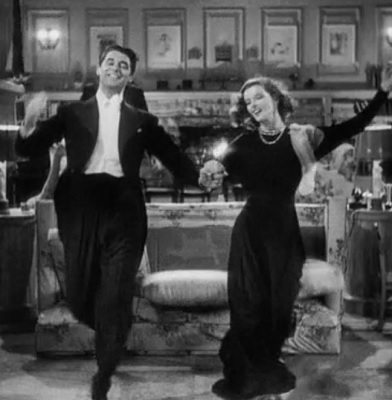
GrantandHepburn-Holiday-a
Then there were the clothes that suited her, rather than following any passing fashions. And the parts she chose, roles that could inspire women like me, and like my aunt: athletes, business leaders, pioneers, advocates for women.

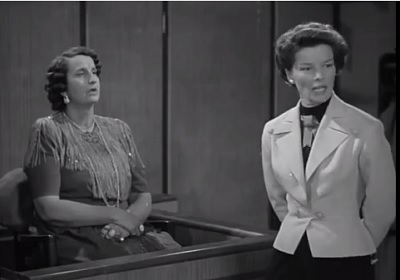
HepburnAdamsRib
She always imbued these characters with vulnerability as well as strength, helping viewers see powerful females as fully rounded human beings.

Hepburn’s real-life actions demonstrated the same moxie she expressed in film: fighting back after the box office poison label, establishing her own terms with The Philadelphia Story, and then using her new power to ensure good salaries for her Woman of the Year screenwriters.

In her private life, Hepburn managed to say what she wanted, avoid whom she wished, have a long-time affair with a married man without compromising her career. With her spirit, it’s not surprising that she continued to star as a romantic lead even in her forties.

Now I see in that erect posture of hers in her final years, those fierce expressions, her pride in a life well lived.

KatharineHepburn-LoveAffair
How many of us can follow our own standards consistently, passionately, for as many years as she did? No wonder my aunt found Katharine Hepburn so breathtaking at 80. I look at her later performances now, and see the same. Imprinted on Katharine’s Hepburn’s face, her carriage, and even her voice is the caliber of life she lived.

Look at her. Isn’t she beautiful?

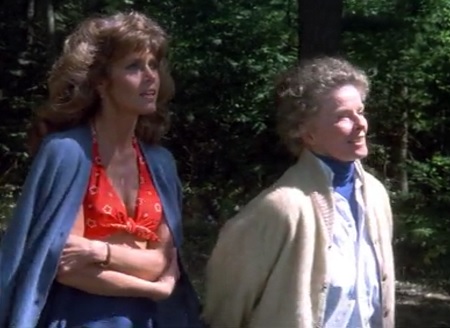
KatharineHepburn-posturewFonda

Share
Posted in: 1930s films, 1940s films, 1950s films, 1980s films, Blogathons, Feminism, Humor, TV & Pop Culture Tagged: beautiful actresses, Katharine Hepburn, spirit

The Hottest Woman around in Her 40s: Mae West’s Age-Defying Career

05/06/2015 by leah@carygrantwonteatyou.com Leave a Comment

SchumerFeyArquetteDreyfus
Amy Schumer’s hilarious skit about discrimination against middle-aged women in Hollywood has me wondering about Mae West. It’s true that modern films imply that women aren’t attractive enough past their 40s to be worthy of sex onscreen. But Mae West starred in Sextette in 1978; the film cast her as the object of all men’s desires in her eighties. While the movie was a box office failure, the simple fact is that no such film would be made today.

West’s role was hardly surprising, given that she was in her late 30s when her film career as a seductress began. She was, in addition, penning all of her own lines, and usually the whole screenplay. While many (Schumer among them) question why women haven’t made more progress in entertainment, few express the more disturbing possibility:  Have we backtracked?

Mae West was a pioneer, it’s true. But pioneers are usually followed by those who accomplish more. The frontrunner’s courageous example and more hospitable times and environments usually lead to at least some progress. Maybe we all should be examining West, to figure out what this extraordinary writer/actress got right, what she still has to teach us. And why not? Who doesn’t want a regular dose of West?

Since her host of brilliant one liners overpowers me, I’ll highlight just one each month to savor it properly, starting with this bit from My Little Chickadee, co-written by West and W.C. Fields (the following scene is obviously of her creation).

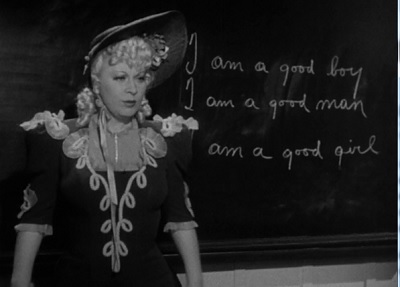
MaeWestchalkboardMyLittleChickadee
The town’s school teacher has fainted after dealing with a class of “unruly” boys. Newcomer Flower Belle (West) has taken over the class for the day, and is attracting all of the hormonal adolescents (in her late 40s, I might add). She checks out the teacher’s lessons on the chalkboard. “I am a good boy,” she reads slowly. “I am a good man. I am a good girl.” She turns to the students: “What is this?” she asks. “Propaganda?”

Share
Posted in: 1930s films, 1940s films, Feminism, Humor, Mae West Moments, Romantic Comedies (film), TV & Pop Culture Tagged: ageism, Amy Schumer, Hollywood, Julia Louis-Dreyfus, Mae West, Patricia Arquette, sexism, Tina Fey
« Previous 1 2 3 4 5 6 7 Next »

Recent Posts

  • 100 Years Later, Still Scary: Dr. Caligari
  • Escaping Out of the Past (1947)
  • A Weeper for Those Who Love Jerks
  • Thank You, Academy, for Not Infuriating Me
  • Challengers (2024) Is a Bad Movie

Subscribe to Blog via Email

Enter your email address to subscribe to this blog and receive notifications of new posts by email.

Categories

  • 1920s films
  • 1930s films
  • 1940s films
  • 1950s films
  • 1960s films
  • 1970s films
  • 1980s films
  • 1990-current films
  • 2020s films
  • Action & Sports Films
  • Anti-Romance films
  • Blogathons
  • Childfree
  • Comedies (film)
  • Drama (film)
  • Feminism
  • Femme fatales
  • Film Noir/Crime/Thriller & Mystery
  • Gloriously Silly Scenes
  • Horror
  • Humor
  • Mae West Moments
  • Musicals and dancing films
  • Oscars
  • Random
  • Romance (films)
  • Romantic Comedies (film)
  • The Moment I Fell for
  • Turn My Sister into Classic Movie Fan
  • TV & Pop Culture
  • Uncategorized
Share
Classic Movie Blog Hub Member

Recent Comments

  • leah@carygrantwonteatyou.com on Meg Ryan’s Fate Foretold in Joe Versus the Volcano
  • Ryan on Meg Ryan’s Fate Foretold in Joe Versus the Volcano
  • leah@carygrantwonteatyou.com on 100 Years Later, Still Scary: Dr. Caligari
  • The Classic Movie Muse on 100 Years Later, Still Scary: Dr. Caligari
  • leah@carygrantwonteatyou.com on 100 Years Later, Still Scary: Dr. Caligari

Archives

  • November 2025
  • September 2025
  • May 2025
  • March 2025
  • January 2025
  • November 2024
  • August 2024
  • July 2024
  • May 2024
  • March 2024
  • February 2024
  • December 2023
  • November 2023
  • October 2023
  • September 2023
  • August 2023
  • July 2023
  • May 2023
  • April 2023
  • March 2023
  • January 2023
  • December 2022
  • November 2022
  • September 2022
  • July 2022
  • May 2022
  • April 2022
  • March 2022
  • February 2022
  • October 2021
  • September 2021
  • April 2021
  • March 2021
  • February 2021
  • December 2020
  • October 2020
  • September 2020
  • July 2020
  • May 2020
  • April 2020
  • March 2020
  • February 2020
  • December 2019
  • October 2019
  • September 2019
  • June 2019
  • May 2019
  • April 2019
  • February 2019
  • January 2019
  • November 2018
  • September 2018
  • July 2018
  • June 2018
  • May 2018
  • April 2018
  • March 2018
  • February 2018
  • January 2018
  • November 2017
  • September 2017
  • August 2017
  • July 2017
  • June 2017
  • May 2017
  • April 2017
  • March 2017
  • February 2017
  • January 2017
  • December 2016
  • November 2016
  • October 2016
  • August 2016
  • July 2016
  • June 2016
  • May 2016
  • April 2016
  • March 2016
  • February 2016
  • January 2016
  • December 2015
  • November 2015
  • October 2015
  • September 2015
  • August 2015
  • July 2015
  • June 2015
  • May 2015
  • April 2015
  • March 2015
  • February 2015
  • January 2015
  • December 2014
  • November 2014
  • October 2014
  • September 2014
  • August 2014
  • July 2014
  • June 2014
  • May 2014
  • April 2014
  • March 2014
  • February 2014
  • January 2014

Meta

  • Log in
  • Entries feed
  • Comments feed
  • WordPress.org

Copyright © 2025 Cary Grant Won't Eat You.

Church WordPress Theme by themehall.com