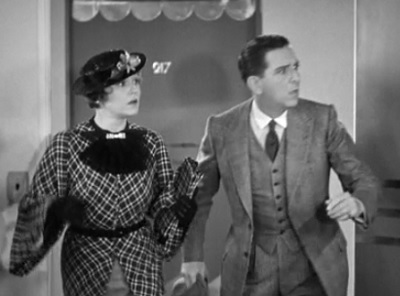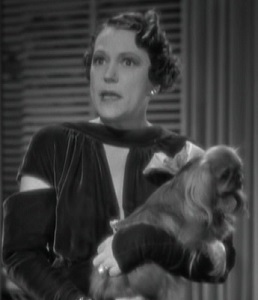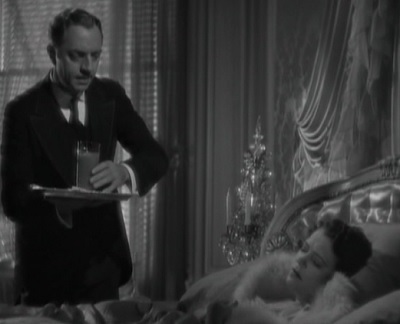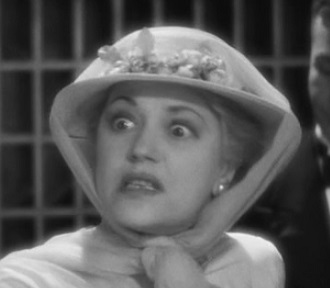
Cary Grant Won't Eat You

Classic movies for phobics

  • About
  • eBooks
  • Previous Blogathons
Classic movies for phobics

Comedies (film)

The Depression Satire, Gold Diggers of 1933

01/11/2015 by leah@carygrantwonteatyou.com 6 Comments

GoldDiggersof1933
What does the term gold digger really mean, in the context of the Depression? Today we think of Kanye’s gold digger; buying gold and liposuction, maybe holding a lap dog and wearing furs; not a showgirl escaping destitution. For a musical, Gold Diggers of 1933 is surprisingly earnest, managing to both entertain and make us empathize with the plight of its subjects—and by extension, its audience. As a producer in the movie assures his performers, “I’ll make ’em laugh at you starving to death….”

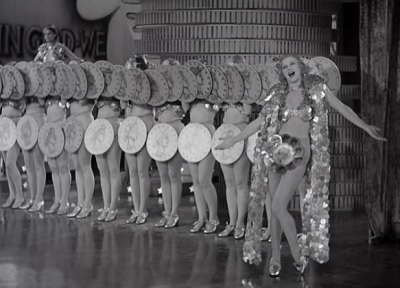
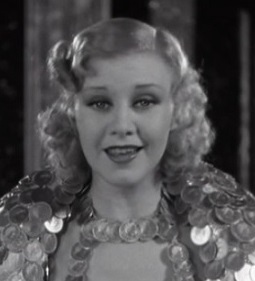
The film begins with showgirls performing in gold-coin bedecked, barely-there costumes. They’re singing the famous, “We’re in the Money,” led by Fay (Ginger Rogers).

WereintheMoney
We suspect there’s irony at play; after all, Fay sings a verse of it in Pig Latin.

Rogers's language play

Rogers’s language play

And of course, we’re right to be skeptical about those claims: before the song ends, the creditors bust in, close the show, and guarantee not a soul singing will be anything but broke.

Clearly, this isn’t the slight film the title, or its greatly inferior sequel, might lead a modern viewer to expect. I was just reading about Girls, wondering if I could handle another season of Lena Dunham’s show about over-privileged, under-motivated friends in the city. I kept thinking of that show when the camera panned from the closed show to a small posting illustrating these singers’ (dissimilar) lack of options:

TheaterSign-GoldDiggers
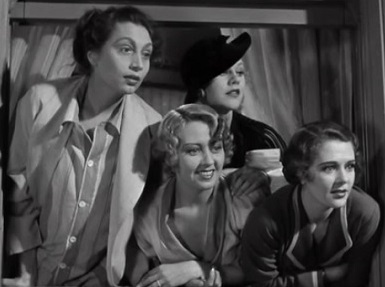
The camera then turned to a letter beneath the flat door of three of the performers, a rent demand from their landlady.

All three are sharing a bed. They wake up late, with nowhere to go. “Come on, let’s get up and look for work. I hate starving in bed,” gripes Polly (Ruby Keeler).

“Name me a better place to starve,” replies Trixie (Aline MacMahon). The famished roommates steal milk from the neighbors. Trixie reassures the others it’s okay because the milk company “stole it from a cow.”

I know that there’s a place for anyone’s woes; that life (and the films and shows depicting it) is not a comparison game. But the scene reminded me of why Girls so often, despite its cleverness, has left me flat. I’m just not very engaged by women without ambition or integrity. But women who can manage wit when they’re living on bread and snatched milk? Yes, please. Give me more.

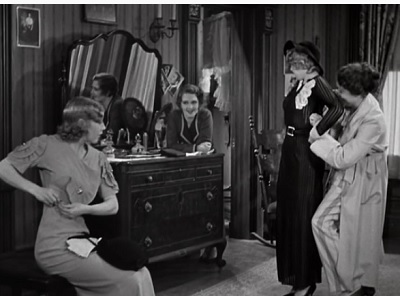
When Fay arrives to announce a new show, the women band together to give one of them—Carol (Joan Blondell)—a complete outfit to impress the producer. They’ve hocked too many stockings and dresses to do anything else.

DressingCarol-GoldDiggers
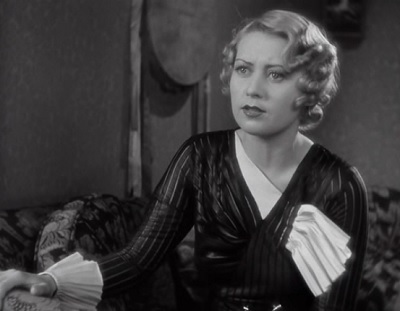
A tearful Carol calls to tell them it’s true that there’s work and that the producer, Barney (Ned Sparks), is on his way; however, he soon confesses he has no funds to start the musical. As eloquent as Carol’s response is to his trickery, her expression is even more so:

JoanBlondell-GoldDiggers
Luckily, the women’s singer-and-composer neighbor, Brad (Dick Powell) is available. He impresses Barney with his music, especially the tune which best fits the producer’s Depression theme. More importantly, Brad offers the money to put on the show.

(Just an early spoiler) Brad is secretly a member of a wealthy family, and his proud brother, Lawrence, is not pleased to see his sibling in a musical, and even less pleased the boy is in love with Polly (Keeler). Lawrence’s (Warren William’s) banker, Faneuil H. Peabody (Guy Kibbee), convinces his client all showgirls are gold diggers, and Lawrence therefore rushes to quash the romance.

The two men go to the girls’ apartment to pay off Polly, but mistake Carol for her. Enraged by their condescension, Trixie and Carol decide to pretend Carol is Polly and take the two haughty men for all they’re worth to teach them better manners (and teach us that the title of this film is as ironic as its opening song).

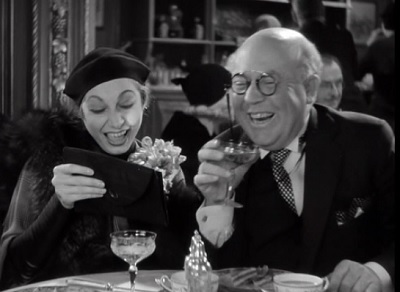
MacMahon as Trixie can occasionally grate, but Guy Kibbee is wonderful as the elderly, lascivious lawyer, the man whom Trixie feels is “the kind of man I’ve been looking for. Lots of money and no resistance.”

BankerandTrixie-Aline MacMahon
Trixie plans to marry the banker in spite of her lack of attraction for him (“You’re as light as a heifer,” she says when she dances with him). She just needs to fend off Kay (Rogers), who wants a meal ticket too.

Carol has no such plans. She’s just angry. The film wants us to understand that Kay and Trixie are just desperate—but understandable—exceptions to the rule. Most of the showgirls, far from being the “parasites” Lawrence assumes, are as ethical and proud as Carol and Polly are. Slowly, though, Carol, in spite of herself, begins to fall for the handsome snob.

The women’s antics are entertaining, especially when they fool the men into buying them pricey hats. But the men’s conviction they’re hanging out with these lovelies just to do Brad good is even funnier. Since this is a pre-Code film, there’s no dearth of skimpy clothing and sexual references. Lawrence soon passes out drunk after confessing love for Carol, and she and Trixie move him to their bed, knowing he’ll assume he’s had sex with faux-Polly and will be too compromised to object to Brad marrying the real one.

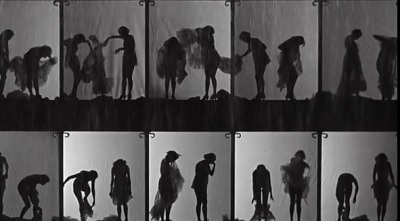
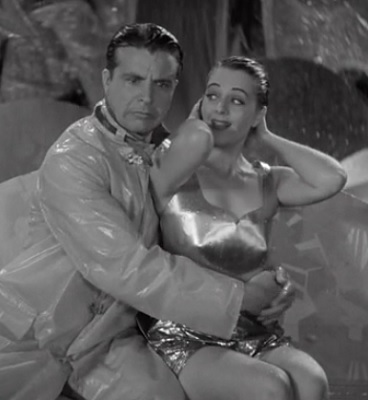
Sexual innuendo is evident throughout the musical numbers in the show, especially since this is a Busby Berkeley film. One of my favorite acts is about couples “Pettin’ in the Park.” When it rains, the women retreat to change, returning to their men in metal dresses.

Berkeleynumber-parkdressing
The men are frustrated and outraged they can’t access their partners’ bodies.

PowellandKeeler-PettinginthePark
Luckily for them, a peeping toddler (yes, you read that right) gives the star (Powell) a tool to break through his love’s (Keeler’s) metal, which he’ll presumably pass to the others.

But Berkeley doesn’t keep with this light tone for all of his numbers. The film ends with the Depression tune that Barney promised, with Carol singing, “Remember My Forgotten Man.”

Alone on a street in seductive attire, she first talks, then sings, “Remember my forgotten man?/You put a rifle in his hand./You sent him far away./ You shouted, ‘Hip hooray,’ but look at him today.”

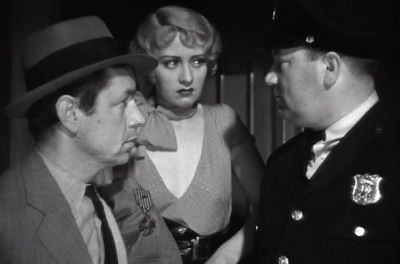
Showing the cop the homeless man a veteran

Carol defending a forgotten man

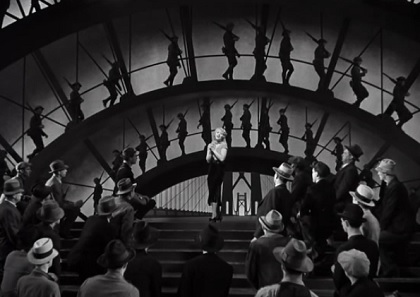
The song moves from one woman, to another, then builds into an anthem of men and women attacking the government for not doing more to help the veterans and farmers who’ve worked hard for their country, only to end homeless in breadlines, unable to support the women who love them.

ForgottenMan-GoldDiggers1933
Their women are left not only witnessing their men’s suffering, but with children to support as well as themselves–alone. Carol’s provocative attire and presence on the street are no accident, of course. There is one type of work she can get without her man.

The song is heartbreaking. How rare to find a movie, a musical, that captures the national plight like this, especially after such light fare. But of course, the song is also a reminder that there was nothing truly light about the whole film. Is Trixie a greedy gold digger for wanting a rich husband rather than starving as she waits for a show not to be canceled? The oldest and least attractive of the bunch, she knows she must beat Fay to the lawyer’s libido, or she’s probably headed for the streets. The relatively happy unions of these women don’t blind the audience to the fact that there are a lot of girls in that show, a lot of women without secretly-rich neighbor-lovers, without pliable elderly bankers, but with landlady’s notes waiting for them under the door.

Share
Posted in: 1930s films, Comedies (film), Romantic Comedies (film), TV & Pop Culture, Uncategorized Tagged: Busby Berkeley musical, Depression, Dick Powell, Ginger Rogers, Girls, Gold Diggers of 1933, Joan Blondell, Lena Dunham

The Moment I Fell for Eve Arden

12/18/2014 by leah@carygrantwonteatyou.com 4 Comments

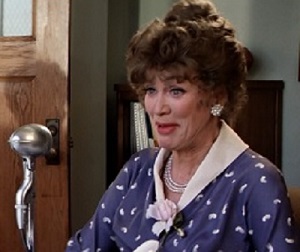
McGee Announcements Grease
In the early eighties, all the girls I knew pined for large hoop earrings, curly hair, and tight pants just like the changed Sandy in Grease. We piped “You’re the One that I Want,” with its requisite “oooh, oooh, ooohs,” imagining we could lure Danny into the sky with us.

Grease
Grease had a staying power thanks to the number of times it was replayed on TV. Although my attention was drawn to all of the figures who rocked leather, one of the administrators made an impression too. Something about those ringing tones of Principal McGee’s (Eve Arden’s) reached me. Her combination of idealism, exasperation, and cynicism echoed adults I knew as she alternately disciplined and inspired Rydell High’s seniors. In a throwaway part, this actress had developed a fully realized character, one for whom I could imagine a history of victories and frustrations with students. She made an impact even on the beauty-enthralled kid that I was.

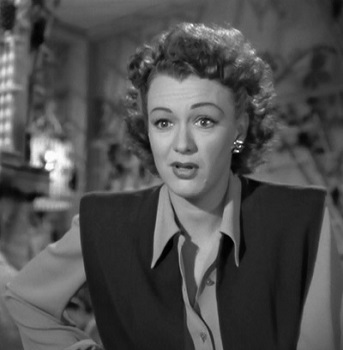
I didn’t make the connection years later when I listened to Eve Arden’s verbal wizardry in Mildred Pierce (1945). But I looked her up on IMDB, hoping to find her elsewhere, and knew then why Principal McGee had affected me. This was Eve Arden, people, the master of the one liner, the woman who could annihilate a victim with one breath of her scathing tongue. Of course she could match wits with teenagers. Of course they couldn’t fool her and thus convert her into another of the anonymous adults in teen flicks. She was humoring them. She was holding back. She was—dare I say it—so much cooler than they were.

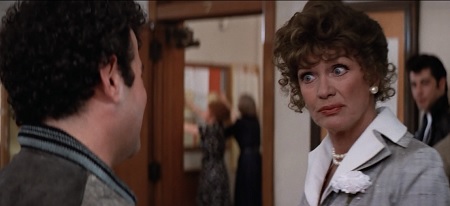
Take the scene when Sonny (Michael Tucci) decides he’s going to stand up to her when he inevitably lands back in her office. “This year she’s gonna wish she’s never seen me,” he tells his buddy. “I just ain’t gonna take any of her crap, that’s all, I don’t take no crap from nobody.”

“Sonny?” she interrupts.

“Hello, ma’am,” he says, all bluster gone.

“Aren’t you supposed to be in homeroom right now?”

“I was just going for a walk.”

“You were just dawdling, weren’t you?”

“Yes, ma’am.”

EveArden-PrincipalMcGee
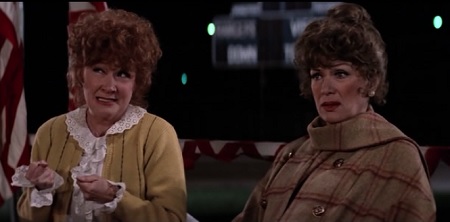
Even funnier are her remarks and reactions to her incompetent and slightly insane assistant, Blanche (Dody Goodman). Her resignation when Blanche overreacts to the coach’s pre-game enthusiasm is just one example of her understated genius.

BlancheandMcGee
Like any good comedian, Arden knows just how to give words emphasis, just how to raise that eyebrow, just how to make what could have been a passing moment snap. Oh, how I love the woman.

I think I fell for her from the start of Mildred Pierce, but I didn’t realize I had until near the end of the film.

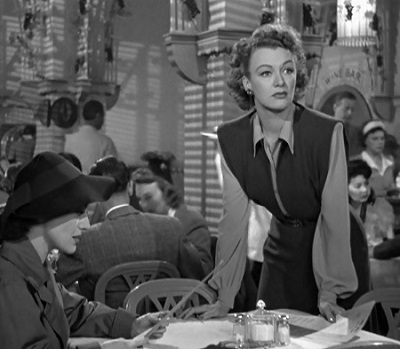
IdaMeetsMildred
She plays Ida, the business manager for the restaurant owner (Joan Crawford) who repeatedly sacrifices all of her money, time, and hope for her spawn-of-Satan daughter, Veda (Ann Blyth).

Ida’s humor is evident from the start, as when she agrees to give Mildred a job as a waitress just after she separates from her husband. “Kind of a nervous gal, aren’t you?” Ida observes. “Well, you wanna watch that, it’s tough on dishes.”

Ida is the ultimate sarcastic sidekick; her dry delivery is a great foil to Crawford’s sentimental, feminine performance. “When men get around me, they get allergic to wedding rings,” Ida explains when asked about her single status. “You know, big sister type. Good old Ida, you can talk it over with her man to man.”

EveArdenMildredPierce
“I hate all women,” Mildred’s business partner, Wally (Jack Carson), says to Ida after Mildred rejects his romantic overtures. “Thank goodness you’re not one of them.”

Ida smirks. “Laughing boy seems slightly burned at the edges,” she observes to Mildred. “What’s eating him?” In fact, every scene between Carson and Arden makes me wish for more, as when Ida gives Wally orchids to put away, saying, “Here, muscle.”

Ida’s critiques of Mildred’s boyfriend, Monty, are always amusing too, even though the man (and actor) is no match for her. When the aristocratic Monty says, “Oh, I wish I could get that interested in work,” Ida drawls, “You were probably frightened by a callus at an early age.” Later, after he’s been milking Mildred and expresses surprise that she might have business problems, Ida retorts, “Don’t look now, but you’ve got canary feathers all over your face.”

MontyIdaVeda
But she reserves her greatest slam for Mildred’s parasitic daughter. “Why don’t you forget about her?” she asks Mildred after watching the abusive pattern between the two for years.

IdaMildred-EveArden
Mildred babbles about what a daughter means to a mother, leading Ida to this classic response: “Personally, Veda’s convinced me that alligators have the right idea. They eat their young.”

I’m not sure why it took me that long, but that’s when I knew for sure I’d found an actress I’d never tire of watching—and more importantly, hearing. I think we can all be thankful Arden was never a huge star, as it meant she would wring everything she could from each line, each expression, and never stop making us laugh.

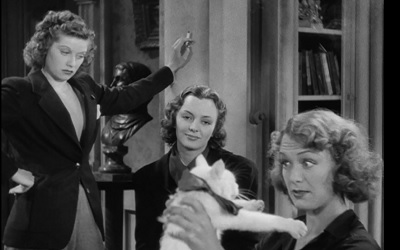
Arden and Ball wow in Stage Door

Lucille Ball and Arden hilarious in Stage Door

Share
Posted in: 1940s films, 1970s films, Comedies (film), Drama (film), Feminism, The Moment I Fell for Tagged: comedic sidekicks, Eve Arden, Grease, Ida, Mildred Pierce, Principal McGee

Please Keep the Hair: Keri Russell, Rita Hayworth, and Veronica Lake

12/07/2014 by leah@carygrantwonteatyou.com 4 Comments

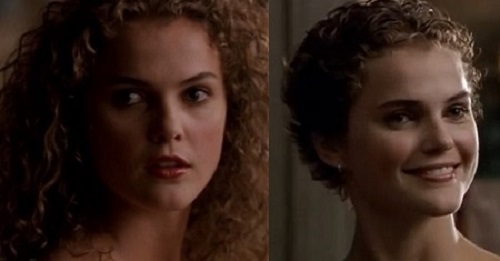
All the wig-switching in the KGB thriller The Americans has me thinking about hair. Of course, my musings must be rooted in the show’s star, Keri Russell, she of the infamous haircut that made Felicity stars everywhere wish her beautician Sweeney Todd.

FelicityShortandLongHair
But Russell was not the only star blamed for tanking a production with her shorn tresses. I’m thinking, of course, of The Love Goddess herself, Rita Hayworth, who made not one, but two hairy decisions in that barber chair. After all, her fans had fallen for her after this famous hair-flip in Gilda (1946), later celebrated in The Shawshank Redemption (1994):

RitaHayworthHairFlip
Audiences liked their WWII pinup just the way she was. But given that Hayworth’s former experiments at a stylist’s hands—a hairline move and a red dye job—had led to her fame to begin with, it’s not surprising she was willing to make a change to help her soon-to-be-ex Orson Welles with his noir, The Lady from Shanghai (1947). She changed the hue of her beloved hair, as seen in its usual glory in Cover Girl (1944):

RitaHayworthCoverGirl
And she also, like Russell after her, chopped it off. The bizarre results: a platinum dye job was blamed for low ticket sales. (Brunettes everywhere, take note: it did happen once.)

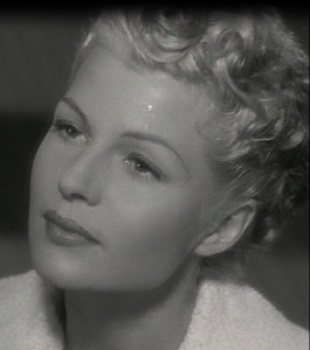
RitaHayworthBlonde
It’s true that Hayworth looks better as a redhead, but the film still features one of her sexiest performances. Admittedly, this woman could probably have pulled off a mullet.

Of course, of all the hair-disaster stories, my favorite is Veronica Lake’s. She was known for that peek-a-boo, hair-in-front-of-eye sexy look models have been attempting since.

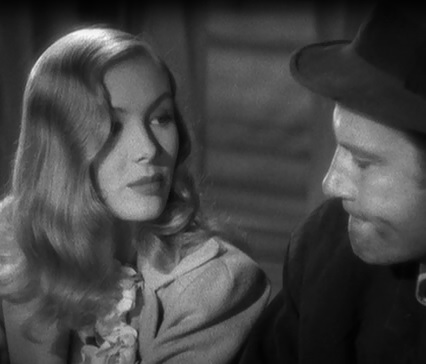
VeronicaLakeSullivan'sTravels
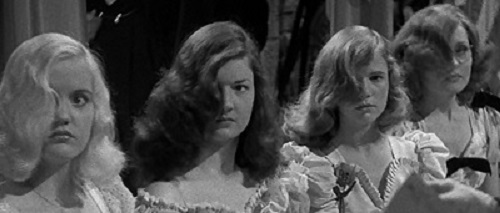
This hairstyle was so popular that it even reached spoof status. One of my favorite moments in The Major and the Minor (1942) is when a cadet mocks the girls at a nearby school: “May as well warn you, there’s an epidemic at Mrs. Shackleford’s school…[T]hey all think they’re Veronica Lake.” The film’s heroine (Ginger Rogers) tries to repress her smile when she sees what he means:

VeronicaLakeLookalikes
In a bizarre twist of fate, Lake undid the do in the interest of national public safety during WWII—all of those fool imitators getting their hair stuck in factories’ machinery. (Check out this staged photo warning her wannabes.). And—not surprisingly—Lake lost her star status soon after the change (though there were other, perhaps more likely reasons for her decline, as there were for the poor box office receipts of Hayworth’s film and lower ratings of Russell’s show).

I know more rational folks would claim that these outcries over hair are outrageous and silly, but having suffered the pains of fine, limp hair all my life, I do get a bit annoyed when a woman with a thick, luscious mane doesn’t appreciate what she has. Sure, if it’s too much for your delicate face, à la Audrey Hepburn, hack away. But if not, don’t pain all of us with wilted mops by throwing your riches away. Have a little pity. At least let us envy from afar.

Share
Posted in: 1940s films, Comedies (film), Drama (film), Film Noir/Crime/Thriller & Mystery, Humor, TV & Pop Culture Tagged: bad haircuts, Felicity, Keri Russell, Rita Hayworth, The Americans, The Lady from Shanghai, Veronica Lake hairdo

Disney’s Tangled: Better as a Silent Film?

11/11/2014 by leah@carygrantwonteatyou.com 8 Comments

MotherKnowsBest-Tangled
This post is part of the The Fairy Tale Blogathon hosted by Movies Silently. Check out the other entries!

I was hesitant to give Tangled a chance. I’ve always been bored by Rapunzel, who had little to recommend her but strong hair. Sure, she had beauty—yawn—and a pretty voice (What heroine doesn’t?) But she always seemed so idiotic to me. She had two tasks in her life—let down her hair, and conceal the prince’s visits, and she botched one of them, setting her love up for the witch’s wrath. And however her looks might have grown in all that tower time, isolation surely didn’t do much for the fair one’s people skills.

Disney’s 2010 version was much more entertaining than I thought it would be. Rapunzel is savvier and spunkier than in the original tale. And Tangled has some amusing theories on what she did all day, and how her upbringing by a witch might have affected her. Some wonderful side characters add to the energy, and the witch is a hoot. But there are some disappointments too.

First, the improvements on the fairy tale:

A Heroine Who Isn’t a Snooze
I’ve always pictured Rapunzel as a less interesting version of Lady Bertram, napping until the prince arrived and slowly making her way to the window, yawning as she helped him climb. Disney’s version (voiced by Mandy Moore) is full of projects: reading, painting murals, baking, doing papier-mâché and otherwise trying to fill the hours. She is obsessed with the lights unleashed on her birthday, actually lanterns from the queen and king to call her (their daughter) back from the witch, who stole Rapunzel to retain the Fountain-of-Youth properties of her magical long hair.

The unbelievable strength of Rapunzel’s hair in the fairy tale always puzzled me, so I was relieved to find the hair was magical, and Disney made it much more fun by turning it into an all-in-one lever-rope-weapon.

Rapunzel-Tangled
Rapunzel is also pretty handy with a frying pan, which she wields to defend herself against the thief (a prince replacement) who escapes into her tower. She bribes him to help her to the lighting ceremony, after which she plans to return meekly to her mother (aka, the witch). (I was concerned about the amount of head-pan contact though, convinced she’d kill/maim him sooner or later; the pan surely must have been made of weaker stuff than my iron skillet.)

An Equal Partnership
In most ways, the thief (Flynn Rider, voiced by Zachary Levi) is an everyday Disney hero, handsome and arrogant, proud of his “smolder” look. His backstory—an orphan craving riches—explains both his law-breaking ways and duplicitous behavior toward his partners. While he will obviously be reformed by the love of such a sweet, naïve girl, à la Lady and the Tramp, she will pick up his daring and inventiveness, needed qualities for a girl who is dangerously set in her ways thanks to eighteen years in a tower. Of course, she does have one advantage over him, with that magic, glowing hair.

FlynnandRapunzel-hair
I can’t say I was terribly interested, moved by, or invested in their union, but thought his altruism near the end was a nice touch. But no worries—I didn’t have to care much about them. Not with the mama witch to keep me interested.

A Worthy Villain
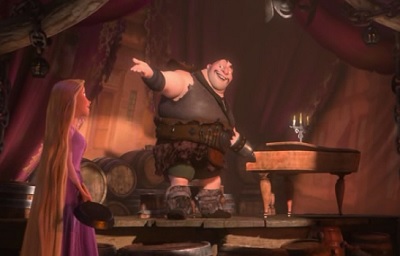
Now, I’m not going to claim this witch is as fearsome or powerful as Cruella de Vil. But it’s fascinating to watch Mother Gothel, perfectly voiced by Donna Murphy, manipulate her supposed daughter Rapunzel. This mother has Bette Davis flair as she pronounces the evils outside that Rapunzel must avoid. My favorite of the dangers she lists: men with pointy teeth.

MenwithPointyTeeth-MotherGothel
“Skip the drama,” she advises in song. “Stay with Mama.” Murphy’s performance is simultaneously disturbing and hilarious.

Mother Gothel transitions from worldly dangers to a litany of Rapunzel’s weaknesses: her clumsiness, her naïveté, etc., which will supposedly make her easily fall prey to others.

Of course, Mother Gothel pretends love, not fear of loss, is what prompts her tower hiding of Rapunzel.

LoveYou-MotherGothelandRapunzel
(And, of course, she does love her obsessively—at least, that magical hair.)

In terms of models, Mother Gothel is a twin of the monstrous parents in Like Water for Chocolate and Now, Voyager, mothers who think a daughter should exist solely to serve, and enjoy doing so.

NowVoyager-GladysCooper
Mother Gothel likes to point out her maternal virtues, such as providing such great paints and soup!

I’d always considered the father of the original tale weak for giving his child to the witch’s care (to avoid paying for stealing food for his pregnant wife with his life). But I’d never reflected on just how cruel it was to leave his child in such hands. The ill effects are briefly seen when Rapunzel escapes, as she veers between bursts of joy and energy…

Joyous-Tangled

…and periods of debilitating guilt:

Miserable-Tangled
While this back-and-forth moodiness is funny to watch due to Disney’s deft portrayal, I kept thinking of Davis’s twitchy, insecurity-infused performance in Now, Voyager, and just how much therapy it would cost Rapunzel before she attained the exuberance and lightheartedness she displayed in the very next scene. Truly, a witch who just threatens physical harm would be sweet by comparison.

Amazing Allies
I used to like the sidekicks in Disney flicks, but after one too many Sebastian types (of The Little Mermaid fame), I was relieved to find the most prominent sidekicks largely silent, including an Owl-like chameleon, Pascal, whose expressions and gestures provide sage advice (in tribute to his name, of course).

PascalTangled
And there’s the glorious Maximus, a horse with amazing hunting skills and loyalty, who provides 90 percent of the comic relief of the film. As part of the royal guard, he tracks Flynn with Inspector Javert-like persistence after Flynn steals a crown from the palace.

Maximus-Tangled

Maximus falls for Rapunzel and reluctantly aids her beau, a reluctance that’s a joy to witness.

In fact, I was so enthralled by these animated allies that I found myself wishing the whole movie were silent, not just because these allies were the primary reward of watching the movie, but for the following additional reasons:

Utterly Forgettable Songs
Murphy (Mother Gothel) gets one good tune, and she’s a talented enough actress and singer to almost make the other songs worth hearing—almost. But with bland song after bland song, and the highly generic focus on dreams (seriously?), I was ready to return to the silent antics of Maximus. (If you can’t beat Kermit piping the lovely “Rainbow Connection” or the 1001 less compelling dreaming songs since, lay off of ’em.)

Scenery More Interesting than the Plot
A girl spends a lifetime in a tower, much of it reading, and the height of her ambition on escaping is to……see some lights. Umm, what? Couldn’t Disney have made her an artist—a writer or a painter (the murals!)? Or maybe an intellectual even? Surely Mother Gothel would have loved to provide the kinds of books that would turn Rapunzel into a scholar, as those might make her content to live a life of the mind, happy with her retreat. Turn the tower ivory, Mother Gothel! Come on! I’m not exactly talking about creativity here; I’m pronouncing the biggest cliché about towers ever. I know I’m supposed to believe Rapunzel has some spiritual connection with the lights, somehow understanding they’re for her, but if that’s the case, why didn’t Mother Gothel change the date of her birthday? The woman seems far too intelligent to have made such a dumb mistake.

The first big moment after Rapunzel’s re-entry to the world involves turning a bunch of thugs to her side because she asks if they have dreams, and they proceed to share them.

DreamingThugs-Tangled
If I’d been in the theater, I’d have been tempted to throw popcorn at the screen. Even if this is a strange alternate universe where dreams aren’t discussed ad nauseam, neither this character, nor her own ambition, is at all inspiring. To see lights is not exactly the kind of dream to get criminals past their reluctance to open up. If the movie had played off her dream as comically stupid, what someone dozing in a tower would come up with, I’d have been all for it. But sigh. They played it as motivating.

In contrast to such clichéd scenes, all the details of the landscape sucked me in, especially the flood. In trying to get boys to watch the film, Disney really succeeded with the action shots.

Flood-TangledActionShot-Tangled
How interesting it would have been, in contrast to that silly song about grass when the heroine hits the ground and the unnecessary (if occasionally amusing) scene with the tough types, to just witness Rapunzel quietly taking in the wonders around her, jumping at everyday noises, stumbling a bit at the unaccustomed exercise. What humor and pathos would have been possible! Disney gets this for a second, as Rapunzel is paralyzed after her tower retreat, unable to make the 12-inch drop to the ground.

FootfromGround2-Tangled
That moment was worth the next hour.

In fact, the only truly moving scene in the film is the silent clip of the king and queen, hesitant to practice this lantern ritual yet again, to allow themselves to still hope.

KingandQueen-Tangled
I wish that Disney hadn’t been so cowed by Pixar successes into such a conventional retreat from what’s compelling about this movie. They give Rapunzel a Barbie-sized waist. They back off from the interesting mother-daughter dynamic.

MotherGothelandRapunzel-insecurity
They don’t realize Maximus is the star. They have this supposedly feminist heroine spend her time on indisputably female-associated crafts instead of developing some kind of true ambition. And at the end of the movie she’s—surprise! A bride.

Disney had the potential for some Fantasia creativity, with silence used to beautiful effect, and the glimpses of the story’s potential still make this a fun movie. But how great it could have been.

Don’t forget to check out the other entries in the blogathon!

Share
Posted in: 1920s films, 1990-current films, Blogathons, Comedies (film), Drama (film) Tagged: animated movies, Disney, Now Voyager, overbearing mothers, Rapunzel, Tangled

Confession: Four Great Movies I’ve Never Seen, with Excuses

11/07/2014 by leah@carygrantwonteatyou.com 8 Comments

I am unashamed of my pathetic store of musical knowledge. I actually listen to—and like–the radio. And not the satellite kind. Frankly, if I can’t sing or dance to a song, I’m not interested. Riffs, jamming, orchestras, Bonnaroo—not for me. A Pat Benatar singalong? Sign me up.

It’s also rare for me to confess any embarrassment about novels I haven’t read, probably because I’m enough of a bookworm that gaps in my education are just opportunities for more fun, not sources of embarrassment.

But movies? I feel squeamish when I’ve missed the greats, and tend to dodge discovery. I’m not sure why.

Today, therefore, I’m going to be brave and confess to four very big omissions from my film education. I may turn red as I write, but you won’t have to see it. Here we go….

Lawrence of Arabia (1962)

LawrenceofArabia-
My excuse is the obvious one—too long. Over 3 ½ hours? Who has the time?

Umm, I do. I managed to watch a season of The Wire in a weekend, all episodes of the new Arrested Development in a day. The BBC Pride and Prejudice miniseries I practically have memorized, and it’s almost 100 minutes longer than this apparent masterpiece. I even own the film in VHS format (still in cellophane). That’s how long I’ve been peddling this rationalization to myself.

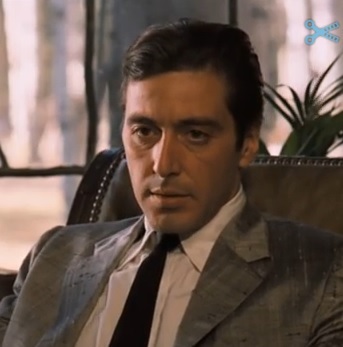
The Godfather: Part II (1974)

TheGodfatherPartII
I saw The Godfather at a movie party many years ago. It was in my early days at a new job, and I remember being embarrassed that I was the only one there watching it for the first time. I left before the second movie, shy about my older peers’ superior knowledge and my general lack of proficiency at small talk of any kind. (It really sucks sometimes to be twenty-three.) I kept feeling afterward like I’d somehow missed the window for seeing this movie, much as I still do about reading Jack Kerouac’s On the Road (who wants to read about youthful angst and self-importance past their early twenties?)

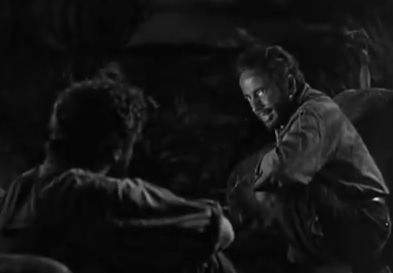
The Treasure of the Sierra Madre (1948)

Treasure-Bogart
I love Humphrey Bogart. I’m intrigued by gold mining, have read numerous novels about the Gold Rush. Films and novels about breakdowns due to avarice fascinate me. I have put this film into my VCR multiple times, and then not played it. Why? I guess it’s mood. I never seem to think to myself, “Yes, today, let’s watch a movie about people turning into monsters for money.”

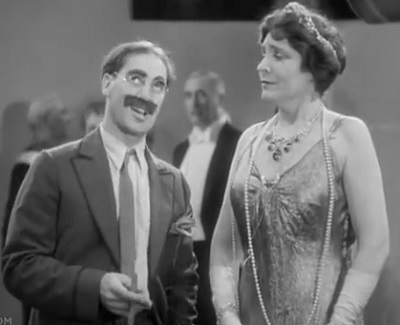
Duck Soup (1933)

DuckSoup
I taught a humor class last semester. I have read Irving Brecher’s account of writing for the Marx brothers in And Here’s the Kicker. I’ve seen—and liked—clips of these siblings in action. I have spotted this movie on Netflix streaming. Yet I have never hit play. My only explanation is that I’m saving it; it’s a big source of relief I’m anxious about spending prematurely. I am reserving the film for a particularly grim day, the day I screw up at work, wreck my car, and make my husband, friends, and family cry. Then, then I’ll need some Marx brothers. Why just waste the film on a day it’s raining?

Perhaps now that I’ve made my confession, I’ll finally view three of these films, but I think I will save the Marx brothers. A present like that shouldn’t be squandered, right?

Share
Posted in: Comedies (film), Drama (film), Random Tagged: Confession, Movies I've missed

The Moment I Fell For: Alice Brady

10/31/2014 by leah@carygrantwonteatyou.com 14 Comments

This is part of the Classic Movie Blog Association’s Forgotten Stars blogathon. Check out the other entries!

AliceBrady-top
When you type Alice Brady into a Google search, a flood of entries appear—but not for the talented actress who won over My Man Godfrey audiences in her role as the flighty head of the Bullock clan. Instead, the character of Alice (Ann B. Davis) from the Brady Bunch pops up. I enjoy my 70s kitsch as much as the next gal, but I find it troubling that the lasting fame of Brady, an actress who already was granted too few years (she died at 46), should be shortchanged as a result of everyone’s favorite cheesy housekeeper. Here are a few reasons why Alice Brady needs to be remembered:

She Could Outdazzle Ginger Rogers
In The Gay Divorcee Aunt Hortense (Alice Brady) hires her former fiancé Egbert (Edward Everett Horton) to help her niece (Ginger Rogers) attain a divorce. While I am amused by Mimi’s (Rogers’s) attempts to divorce her husband and her suitor’s (Fred Astaire) confusion over the hijinks that ensue, their romance is completely outdone by the duo of Horton and Brady, who vie each other for who can be the most foolish. Hortense interprets any of Egbert’s idiotic actions—agreeing with her that geometrists are synonymous with geologists, wearing a finger puppet while conducting business—as signs of his continued love for her. When leaving his office, Hortense becomes weepy, saying, “You know, divorces make me so sentimental. Don’t you wish it was ours?”

This exchange would have been funny with almost any actress. But this is Alice Brady. A few images should give you the idea of just how fun this moment—and their whole romance—is, and just why from that moment forward, I sought out Brady films. Just check out how expressive she can be in one short scene, and this without the delightfully funny trill of her amazing voice:

AliceBradyGayDivorceecom
As a fervent Astaire-Rogers fan, I’m usually annoyed by the subplots that take away from dance number time. But in this case, I was eager to see Hortense again, even becoming impatient with the dancing. Who wouldn’t smile to see the amazing Horton and Brady together?

Egbert andhortense-BradyandHorton
She Could Do Everything—Drama, Comedy; Film, Stage
Despite her producer dad’s strong objections, Brady, born in 1892, followed the family business by becoming a Broadway actress, and spent her youth alternating between screen and stage, mainly in dramatic roles, including as Lavinia in the first performance of Mourning Becomes Electra.

While I’ve only tracked down one of her many silents, Betsy Ross (1917), its absurd, overdramatic plot is worth viewing if only for this great line: “Thee is too spicy for a Quakeress, Betsy! I fear for thee.” Does any word suit this wonderful actress more?

Brady as Ross

Brady as Ross

Brady left the screen for a decade, focusing on the stage as Hollywood revolutionized its production. She returned in the sound era with perfect comic timing and delivery, no doubt honed in Broadway roles in such comedies as The Pirates of Penzance.

AliceBradyIndignant
In typical Oscar fashion, the Academy nominated her for the romantic comedy My Man Godfrey, but only granted her the award when she starred in a drama. She played an Irish mother (Molly O’Leary, owner of the famous arsonist cow) beset by her children’s squabbles in In Old Chicago. What’s fascinating about the film is how understated her performance is, even for the stereotypical tough Irish mom she’s playing. For a woman who verged toward the theatrical in her comic roles, it’s interesting to find her often going for a quiet harrumph rather than a shout.

She Could Spar with William Powell
She’s good in the O’Leary role, but it pales in comparison to her comic gems. I’m not even a fan of My Man Godfrey, which feels a bit preachy to me and relies on too many sets of Carole Lombard hysterics. But I could watch her hangover scene with William Powell all day long.

PowellandBrady
Her near-comatose presence is so funny given her later zaniness, as is her conviction that pixies are haunting her. When her new butler (Powell) tells her the tomato juice he’s serving is pixie remover, her flat delivery is priceless:

“Oh, then you see them too,” she drones.

“They’re old friends,” he responds.

“Yes, but you mustn’t step on them,” she explains calmly. “I don’t like them. But I don’t like to see them stepped on.”

She may not be remembered as much as she should be, but we classic film buffs would be the poorer without this “spicy” actress.

AliceBradyGoldDiggers
Random Facts:
A man claimed her Oscar at the Academy Awards when she was too sick to be present; apparently, no one ever had a clue who he was, including Brady.

Brady tried to get massages as a deduction on her income tax, claiming looks essential to her role as an actress, but, as her New York Times obituary writer wryly noted, “The government remained unmoved.”

Share
Posted in: 1930s films, Blogathons, Comedies (film), The Moment I Fell for Tagged: Alice Brady, Classic Film Blog Association, In Old Chicago, My Man Godfrey, The Gay Divorcee

Say Anything Fan? Holiday (1938) Is the Classic Film for You

09/06/2014 by leah@carygrantwonteatyou.com 2 Comments

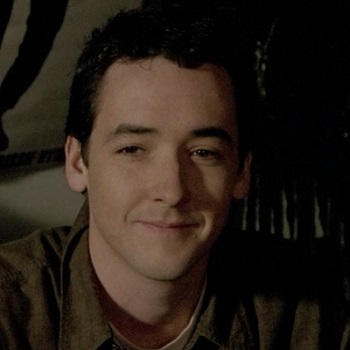
A hero who reveals his vulnerability, yet retains his pride; the kind of man devoted enough to lift a jukebox above his head blaring Peter Gabriel’s “In Your Eyes” to woo the girl who dumped him, yet still grounded enough to enjoy relaxing with his friends; a boy with few prospects who is seeking a “dare-to-be-great” situation.

Lloyd-Cusack
There’s a reason Say Anything (1989) and its hero, Lloyd Dobler (John Cusack), were nearly universally worshipped by every middle and high school girl I knew. Cusack quickly became the heartthrob of my generation, just as Cary Grant was to his. In Holiday, Grant played a role much like Cusack’s in Say Anything. That’s why if you’re a diehard lover of Lloyd Dobler, I think you should check out this 1938 film and see for yourself the many similarities:

Lightheartedness
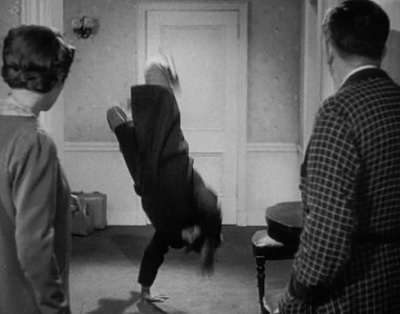
Those accustomed to seeing Grant’s suave persona on display in clips and photos might not realize how fun it is to witness him being the opposite—silly, playful, with that same uneasily expressed, coltish confidence in himself that makes Lloyd Dobler so appealing. In Holiday, Johnny (Grant) likes to do flips to cheer himself out of tough times or worries, just as Lloyd chides his sister for not being able to pull out of hers.

SolutiontoWorry-CaryGrant
Romancing the Daddy’s Girl—and Daddy Ain’t So Great
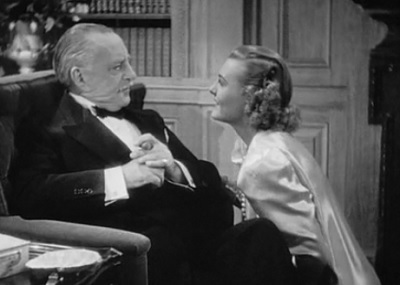
Both films feature heroines who are too close to fathers who don’t deserve such adulation. In Say Anything, Diane’s dad (John Mahoney) winds up being a crook; in Holiday, Julia’s (Henry Kolker) is so obsessed with money and status that he verges on caricature.

Johnny's fiancée and her father

Johnny’s fiancée and her father

Much of Holiday focuses on Johnny’s discovery that Julia (Doris Nolan) is much closer to her father’s character than he realized, just as Say Anything shows Diane (Ione Skye) slowly recognizing that her father is not the moral center of her universe. Luckily, we have both of Julia’s siblings, Linda (Katharine Hepburn) and Ned (Lew Ayres), mocking their dad the whole time in Holiday, which is way funnier than the whole Diane-Dad snooze fest.

Unconventional Ambitions
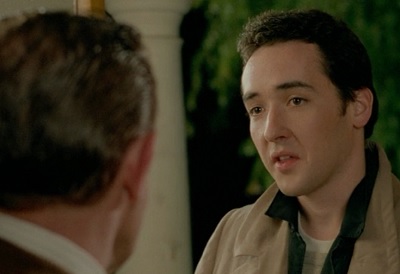
Both heroes have unpopular dreams. Lloyd’s is beautifully expressed when Diane’s dad opens the door and he tries to sell himself as a trustworthy date: “I’m an athlete, so I rarely drink. You heard of kickboxing, sport of the future?”*

DoblerSportoftheFuture
Lloyd responds to a question about his career plans with “Spend as much time as possible with Diane before she leaves” and proceeds to give an amusing description of his hopes: “Considering what’s waiting out there for me, I don’t want to sell anything, buy anything, or process anything as a career….So what I’ve been doing lately is kickboxing….”

Grant’s plan, captured in the film’s title, is to take a vacation from employment. He’s worked since the age of ten, and isn’t sure what he’s doing it for: “I want to know how I stand, where I fit in the picture, what it’s all gonna mean to me. I can’t find that out sitting behind some desk in an office, so as soon as I get enough money together, I’m going to knock off for a while….I want to save part of my life for myself….You know, retire young, work old, come back and work when I know what I’m working for, does that make sense to you?”

Johnny, like Lloyd, makes fun of the idea of needing familial or professional connections: “When I find myself in a position like this, I ask myself what would General Motors do? And then I do the opposite.”

And like Lloyd, Johnny thinks his love should be enough for Julia’s father: After offering a character reference, he adds, “I’m quite decent and fairly civilized. I love your daughter very much, which isn’t a bit hard. She seems to like me a lot too. And uh, well, that’s about all that can be said for me, except that I think we have a grand chance of being awfully happy.”

A Marvelous Support Network
Both men are backed by funny friends who provide much of the comic relief of their films. Edward Everett Horton plays a professor and Jean Dixon his wife, Susan; they are friends of Johnny’s who gravitate toward Linda rather than Johnny’s fiancée. When they arrive at the fussy engagement party for the couple, Susan says, “Don’t tell anyone, but I’ve got a run in my stocking.” “Good heavens, we’re ruined,” answers her husband. “Not a word of this to a soul,” he warns the butler.

GrantandHorton
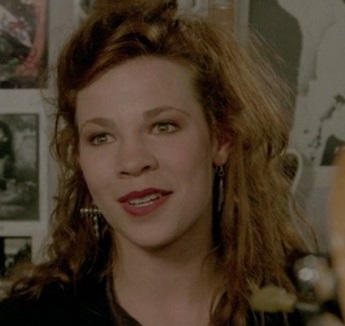
Among Lloyd’s many entertaining friends, Corey (Lili Taylor) is the obvious standout, with her 63 songs about her ex and classic line in response to Lloyd’s “…I’m a guy. I have pride”: “You’re not a guy…The world is full of guys. Be a man.”

LiliTaylor
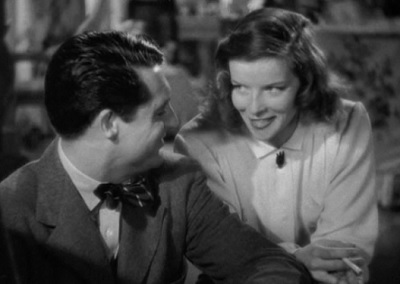
In Johnny’s case, Julia proves to be remarkably dull, and soon is outshone by her supportive sister, Linda (Hepburn). Linda can be quite amusing, though at times she’s a bit melodramatic about the family woes.

GrantandHepburn-Holiday
In Say Anything, we’re stuck with Ione Skye as the romantic interest the whole film, with that terrible acting doing nothing for any of us. When Diane dumps Cusack, all the viewers may protest, but it was a relief not to hear Skye talk for a bit and listen to Lloyd’s friends instead.

Rising Above…
Both Johnny and Lloyd display a remarkable level of emotional maturity—Lloyd, in his continued efforts to unite Diane and her father once they become estranged in spite of the latter’s hostility toward him.

CusackandMahoney
And Johnny, in his attention to his fiancée’s needs and sensitivity to her family despite her father’s rudeness toward him.

GrantandKolker
After asking many not-so-subtle questions about Johnny’s connections, Julia’s father expresses zero interest in her suitor’s obvious resourcefulness, the loss of his mother, and his pride in who he is. Johnny freely discusses his background: his dad’s grocery ownership and debts, an alcoholic uncle, and his own work as a steel mill worker, garbage truck driver, and laundry worker while earning his degree at Harvard. While he isn’t exactly trying to provoke the father’s snobbery, he clearly is amused by it.

“Admirable,” the father says after hearing Johnny’s answers about his life, with no sincerity whatsoever.

“Anything else, sir?” Johnny finally asks.

“I beg your pardon?” the father replies.

“I should think you would,” snaps Linda.

Luckily, fun-loving Linda is the one Johnny will eventually be falling for. If my description doesn’t win you, hopefully this image of the former acrobat (Grant) in action will.

acrobatCaryGrantKatharineHepburn
*When I mentioned this quote on kickboxing, my husband pointed out that Lloyd was one prescient guy given the success of UFC….

Share
Posted in: 1930s films, 1980s films, Comedies (film), Romantic Comedies (film), TV & Pop Culture Tagged: Cary Grant, Holiday, John Cusack, Lloyd Dobler, Say Anything

The Moment I Fell for Robin Williams

08/20/2014 by leah@carygrantwonteatyou.com 4 Comments

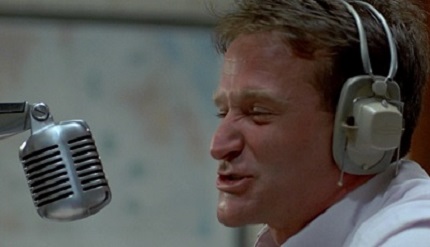
Last week, while I was seeking Lauren Bacall tributes online, I avoided my TV because I didn’t want to see any Robin Williams ones. The loss was simply too raw, too big for me to watch some summary of a man who slipped through any easy definitions. After all, it was this breathtaking versatility; best demonstrated in Good Morning, Vietnam; that I couldn’t face losing.

GoodMorningVietnam-RobinWilliams
While I’m usually quick to attack the Academy for their humorlessness, I agreed with them that dramas displayed Williams’s most remarkable work. Who else could be so manic in humor, and then so quiet in pathos? So riveting in his energy, and even more so (perhaps because of it) in his stillness?

The actor’s sad scenes were the more so because you could feel the good humor bubbling beneath, the fact that this man was capable of very great joy. The first word that comes to mind with Williams is not funny, but empathetic. This man understood human nature like no comic I’ve ever witnessed, and any humor writer will tell you that truth is at the root of all good comedy.

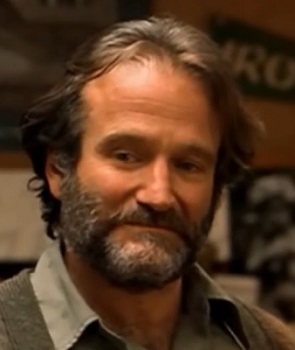
RobinWilliams-GoodWillHunting
The surprise of finally seeing the actor win an Oscar for Good Will Hunting was not at the Academy having snored through Good Morning, Vietnam (how else to explain Michael Douglas winning instead for his one-dimensional performance in Wall Street?). The shock was in recognizing that this guy should have been playing therapists all along.

My favorite Williams performance was probably in Awakenings. But I fell for him much, much earlier. It wasn’t in Mork & Mindy, in which his fevered  acting was exhausting to watch, even for a little kid. I couldn’t take the show very often, even though I always did laugh. No. I fell for Williams in Popeye, the first film he starred in.

Popeye-Williams
Now hear me out. I am not going to argue that this flop is a good film, that it’s under-appreciated or even tolerable. Oh no. It’s so much worse than you remember.

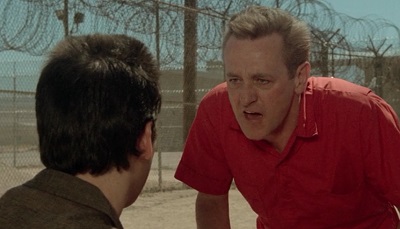
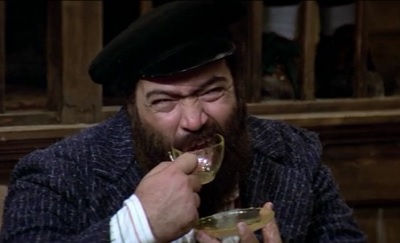
Paul L. Smith as villain Bluto

Paul L. Smith as villain Bluto

Williams is not very good in it either. But I fell hard for him for agreeing to take the role at all, and for having so much fun with it once he did. This spinach-eating cartoon character was always my favorite, and though I’ll admit to a vague horror on first hearing a human would be playing it, and in a musical, I was impressed with how completely Williams embraced the role. Such an unsuccessful campy movie I could easily dismiss, but for Williams as Popeye, even in a shaky performance, I felt a kind of awe.

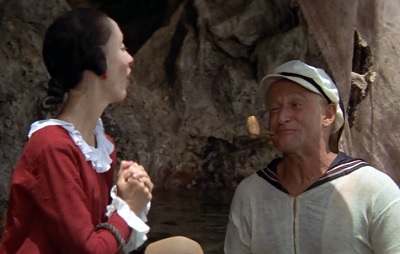
Olive Oyl (Shelley Duvall) with Popeye

Olive Oyl (Shelley Duvall) with Popeye

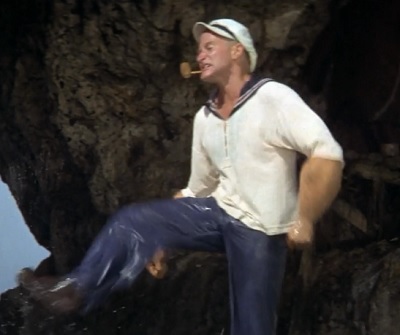
One could argue that the actor was just beginning, that this was a role he could get. But that wouldn’t explain all of Williams’s baffling choices over the years, that sense that he sometimes took parts simply to avoid taking his career, or himself, too seriously. How else can anyone explain Hook? And as I mourn Williams, I don’t want to see his best work; it’s too easy to imagine in his depiction of every emotion the darkness that would take him from us. So instead, I’m gonna stick with his silliness for a while. I’ll rewatch The World according to Garp, perhaps The Birdcage, maybe even the batshit-crazy Shakes the Clown. And yes, I’m going to spend some time with the ever-mumbling, ever-smiling, greens-loving sailor man.

Popeye-kicking-RobinWilliams

Share
Posted in: 1980s films, Comedies (film), Drama (film), Humor, The Moment I Fell for Tagged: Popeye, Robin Williams

A Strange Mess: Mister Roberts

07/10/2014 by leah@carygrantwonteatyou.com 15 Comments

This is a contribution to the John Ford blogathon sponsored by Christianne Benedict at Krell Laboratories and Bemused and Nonplussed. Check out all the marvelous entries!

Punching his leading man. Drinking on the set. Quitting the production after being hospitalized. The tales of John Ford’s behavior on Mister Roberts aren’t pretty, and neither is the film. While some of its flaws can be blamed on its having multiple directors, the failures of Mister Roberts are largely a result of Ford’s decisions. The film is a bizarre mishmash of styles, moods, and genres, full of pointless shots and ludicrous acting. The fact that it was a success rather than a flop is likely due to the stellar performances of three of its stars, Henry Fonda, William Powell, and Jack Lemmon; if you love these three actors, as I do, watch the movie. The scenes between the three of them are compelling. If you don’t, avoid it, for the film is not quite bad enough to be camp, but comes awfully close.

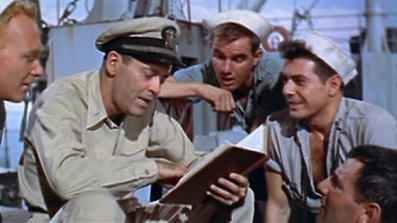
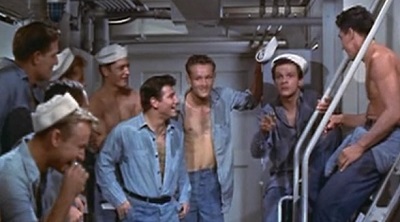
Robertsandcrew
The film is about Roberts’ (Henry Fonda’s) efforts to get into combat in WWII, efforts that are squashed by his cargo ship captain, played by James Cagney. The crew love Roberts for his rebelliousness and his sympathy for their needs. The story is meant to be both moving and comic, but succeeds at neither thanks to Ford’s odd direction. Had I not known that this legend was at the helm, I would have guessed a newbie was having trouble distinguishing between stage and screen. Yes, Mister Roberts was a play, but that doesn’t explain why the crew in the film are practically shouting, or why their hamming reaches such preposterous levels that you have the feeling they’re always gathering to sing a song.

crew2
When they don’t, you feel vaguely uncomfortable, like when a stand-up comedian’s punchline falls flat. What’s even more puzzling is that you can almost see “exit left” printed on the screen because when figures leave the group, the others act as if they’re no longer in earshot. The transitions throughout the film feel forced, with odd shots of ocean and ship that neither advance the narrative, nor contribute to the mood, and the score seems slightly off the entire time.

The choice to have James Cagney, who plays the villain of the film, act as if he’s starring in a camp masterpiece was also ill advised. Look, I love my camp. Brainsmasher: A Love Story is one of my favorite movies. But a film doesn’t work when half your cast is taking themselves seriously, and the other acting as if they’re auditioning for a Mystery Science Theater special. Cagney has talent, but you wouldn’t know it from this film. I kept wishing he’d disappear from the screen so that I could stop being embarrassed for him. A character can be ludicrous but still menacing, but Cagney’s bluster in Mister Roberts is merely a caricature of his earlier, meatier roles.

James Cagney as the cruel captain

James Cagney as the cruel captain

And try to forget the depiction of the islanders as soon as you see it. For a moment when I watched them approach the cargo ship in canoes, I thought, Battle!!!

Fordsislanders
I have the feeling that’s what Ford thought too, as it’s one of the few shots that worked in spite of its genre confusion and absurdity. Unfortunately, he moves from there to regular stereotypes:

islanderscloseupFord
Unfortunately, these scenes didn’t have the charms of camp portrayals, such as one of my favorites, the underappreciated parody Joe vs. the Volcano, in which the islanders are all obsessed with orange soda.

Joevsvolcano
But when Fonda is on the screen, you forget how bad Mister Roberts is. Ford made many mistakes, but his stubbornness in demanding Fonda over the studio’s preferences, Marlon Brando and William Holden, almost outweighs all of his poor choices. In a better movie, this performance could have won Fonda the Oscar, just as he won the Tony for it on the stage.

Fonda
He plays Roberts with such understated dignity, humor, and pathos. Watch his easy leadership of the crew, his posture demonstrating how naturally he takes charge. Witness his subtle deflation once he sacrifices his own ambitions for the sake of that crew. I have never seen Fonda so good in anything. How hard it must have been for him, to have the role that meant so much to him undermined by his own director.

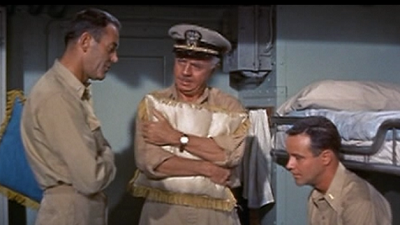
Luckily, there are multiple scenes with Fonda, Lemmon, and Powell.

Henry Fonda, William Powell, and Jack Lemmon

A perfect combination: Henry Fonda, William Powell, and Jack Lemmon

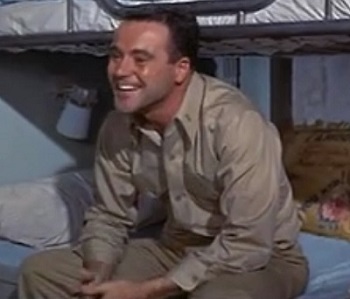
With the crew absent and only a room as background, the three show you what a film this could have been. Lemmon’s performance won him the Oscar. He’s riveting as a cowardly, lazy, sex-crazed ensign who has the potential to be so much more.

Lemmon
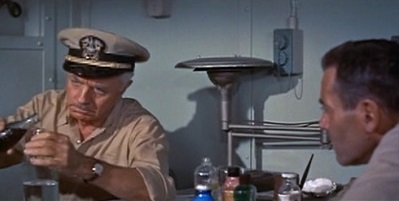
And how do you beat the joy of watching Powell create fake whiskey with utter seriousness, or recount the fake injuries of his crew when they’re avoiding work?

powellandfondawhiskey
As Doc, Powell plays the wise older man with utter perfection. While the film might not have deserved him, it’s truly a wonderful last Hollywood role, and the three have amazing chemistry.

To what extent Ford is to blame for the film’s flaws and not his co-director, Mervyn LeRoy (who was also assisted by Joshua Logan, the play’s cowriter and director), is impossible to exactly determine. But unless he ONLY directed the scenes with Powell, Lemmon, and Fonda, Ford was right to be embarrassed by it.

It’s a good thing he followed it up with one of his masterpieces.

Don’t forget to check out the other John Ford entries in the blogathon!  

Share
Posted in: 1950s films, Action & Sports Films, Blogathons, Comedies (film), Drama (film) Tagged: Henry Fonda, Jack Lemmon, Joe vs. the Volcano, John Ford, Mister Roberts, William Powell

The Moment I Fell for Thelma Ritter

06/12/2014 by leah@carygrantwonteatyou.com 6 Comments

I feel comfortable with those who are generous with sarcasm. My dad is a smartass, my sisters, my aunts, my best friend, my husband. Not surprisingly, most of my favorite female performers share this trait in their films, including flawless character actress Thelma Ritter.

ThelmaRitter-Eve
Ritter was nominated for six supporting actress Oscars, four of which were in succession; she elevated the quality of any film she was in with her seemingly effortless realism and deadpan humor. She reminds me, in fact, of an old favorite of mine, Rhea Perlman, aka Carla in Cheers, who shares Ritter’s understated style and tendency of deflating the egos and pretensions of the characters around her.

Perlman as Carla

Perlman as Carla

Once I fell for Ritter, I picked out films just because she was in them, including Pickup on South Street, in which she plays the finest of the roles I’ve managed to catch: a haunting turn as lovable police informant Moe Williams.

Moe Williams (Ritter)

Moe Williams (Ritter)

But it’s Ritter’s more lighthearted role as Birdie in All about Eve that first captivated me. Stage star Margo Channing (Bette Davis) has just met her biggest fan, Eve Harrington (Anne Baxter). Asked to share her story, Eve gives a litany of sad, intimate details about her life. Baxter’s delivery is stagey, and I find myself flinching every time I see the scene. The actress’s melodramatic style throughout the film is what my sisters always accuse classic film stars of practicing, and while theatrics make sense for her character, that doesn’t mean they’re easy to witness.

But it’s not just Baxter’s acting that makes me uncomfortable. While I know not everyone would find Eve’s hard-luck tale emotionally manipulative, I tend to believe one’s biggest traumas should not be shared on first acquaintance. (Don’t believe me? How much did you enjoy that oversharer on your first date with him/her?)

The usually cynical Margo (Davis) feels differently. She’s moved in spite of herself by Eve’s narrative, and pulls out a handkerchief to wipe tears away. Her assistant, Birdie (Ritter) looks pensive, seemingly ready to utter sympathy as well. “What a story,” she says. “Everything but the bloodhounds snapping at her rear end.”

ThelmaRiver-hounds
Ritter draws out the line rather than expressing it as a quick rejoinder, as other comedians/comediennes would have. The result is that Birdie seems to be thinking through her slam as she says it. Hysterical. This unexpected but natural delivery is typical of every performance of Ritter’s I’ve seen.

Her character’s no-nonsense approach to life in the film makes viewers suspect that her instincts are the ones to trust. Everyone else loves Eve. Everyone else trusts Eve. But we audience members have already seen that the other characters are taken in by flattery, and thus are more gullible than they initially seem.

But Birdie? Birdie we can trust.

And that’s how I feel about Ritter, why I fell so hard for her after this line delivery, and in every movie I’ve seen her in since. I don’t know in advance how other actors/actresses will perform in films with her. I can’t be certain whether they’ll impress or disappoint. But Ritter’s is the kind of excellence I can always expect.

(This is part of my series on moments that led me to fall for a performer. I hope you’ll share some of yours!)

Share
Posted in: 1950s films, Comedies (film), Drama (film), The Moment I Fell for, TV & Pop Culture Tagged: All about Eve, Carla, Cheers, sarcasm, Thelma Ritter
« Previous 1 2 3 4 5 6 7 8 9 10 Next »

Recent Posts

  • 100 Years Later, Still Scary: Dr. Caligari
  • Escaping Out of the Past (1947)
  • A Weeper for Those Who Love Jerks
  • Thank You, Academy, for Not Infuriating Me
  • Challengers (2024) Is a Bad Movie

Subscribe to Blog via Email

Enter your email address to subscribe to this blog and receive notifications of new posts by email.

Categories

  • 1920s films
  • 1930s films
  • 1940s films
  • 1950s films
  • 1960s films
  • 1970s films
  • 1980s films
  • 1990-current films
  • 2020s films
  • Action & Sports Films
  • Anti-Romance films
  • Blogathons
  • Childfree
  • Comedies (film)
  • Drama (film)
  • Feminism
  • Femme fatales
  • Film Noir/Crime/Thriller & Mystery
  • Gloriously Silly Scenes
  • Horror
  • Humor
  • Mae West Moments
  • Musicals and dancing films
  • Oscars
  • Random
  • Romance (films)
  • Romantic Comedies (film)
  • The Moment I Fell for
  • Turn My Sister into Classic Movie Fan
  • TV & Pop Culture
  • Uncategorized
Share
Classic Movie Blog Hub Member

Recent Comments

  • leah@carygrantwonteatyou.com on Meg Ryan’s Fate Foretold in Joe Versus the Volcano
  • Ryan on Meg Ryan’s Fate Foretold in Joe Versus the Volcano
  • leah@carygrantwonteatyou.com on 100 Years Later, Still Scary: Dr. Caligari
  • The Classic Movie Muse on 100 Years Later, Still Scary: Dr. Caligari
  • leah@carygrantwonteatyou.com on 100 Years Later, Still Scary: Dr. Caligari

Archives

  • November 2025
  • September 2025
  • May 2025
  • March 2025
  • January 2025
  • November 2024
  • August 2024
  • July 2024
  • May 2024
  • March 2024
  • February 2024
  • December 2023
  • November 2023
  • October 2023
  • September 2023
  • August 2023
  • July 2023
  • May 2023
  • April 2023
  • March 2023
  • January 2023
  • December 2022
  • November 2022
  • September 2022
  • July 2022
  • May 2022
  • April 2022
  • March 2022
  • February 2022
  • October 2021
  • September 2021
  • April 2021
  • March 2021
  • February 2021
  • December 2020
  • October 2020
  • September 2020
  • July 2020
  • May 2020
  • April 2020
  • March 2020
  • February 2020
  • December 2019
  • October 2019
  • September 2019
  • June 2019
  • May 2019
  • April 2019
  • February 2019
  • January 2019
  • November 2018
  • September 2018
  • July 2018
  • June 2018
  • May 2018
  • April 2018
  • March 2018
  • February 2018
  • January 2018
  • November 2017
  • September 2017
  • August 2017
  • July 2017
  • June 2017
  • May 2017
  • April 2017
  • March 2017
  • February 2017
  • January 2017
  • December 2016
  • November 2016
  • October 2016
  • August 2016
  • July 2016
  • June 2016
  • May 2016
  • April 2016
  • March 2016
  • February 2016
  • January 2016
  • December 2015
  • November 2015
  • October 2015
  • September 2015
  • August 2015
  • July 2015
  • June 2015
  • May 2015
  • April 2015
  • March 2015
  • February 2015
  • January 2015
  • December 2014
  • November 2014
  • October 2014
  • September 2014
  • August 2014
  • July 2014
  • June 2014
  • May 2014
  • April 2014
  • March 2014
  • February 2014
  • January 2014

Meta

  • Log in
  • Entries feed
  • Comments feed
  • WordPress.org

Copyright © 2025 Cary Grant Won't Eat You.

Church WordPress Theme by themehall.com