Cary Grant Won't Eat You

Classic movies for phobics

  • About
  • eBooks
  • Previous Blogathons
Classic movies for phobics

Comedies (film)

The Man Who Knew Too Little: an Underrated Bill Murray Gem

05/28/2015 by leah@carygrantwonteatyou.com 2 Comments

ManWhoKnewTooLittleMurray
The Man Who Knew Too Little (1997) received a 41% on Rotten Tomatoes. It was panned by critics as only moderately funny. Experts claimed it was undeserving of the talents of Bill Murray, relied on broad stereotypes, and centered around only one gag.

Most of these critiques are true. But the film is also hilarious.

To describe the movie as a parody of The Man Who Knew Too Much (the 1934 or ’56 version) would be a stretch. Call it instead a Hitchcockian parody, and you’ll have it. Hitchcock asked us all what becomes of a civilian when mistaken for a spy (North by Northwest), or thrown into a conspiracy once in contact with one (The Man Who Knew Too Much/The 39 Steps)? Director Jon Amiel and writer Robert Farrar extend the question: “and he is totally oblivious to what’s going on?”

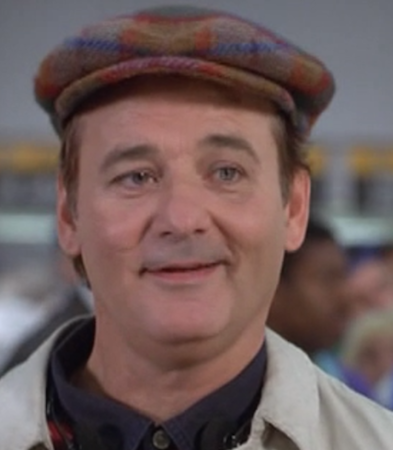
A suspected spy arrives in London

A suspected spy arrives in London

Here’s the tissue-thin plot: Blockbuster employee Wallace Ritchie (Murray) shows up for a surprise visit to London. His brother (Peter Gallagher) sends him to a participant theater act called the Theatre of Life until after his business dinner. Ritchie answers the pay phone call that’s supposed to begin the show. But the call that comes in (a few minutes early) isn’t from the theater, but from the employers of Spencer, a hit man tasked with killing the defense minister’s mistress, Lori (Joanne Whalley). She knows too much about a conspiracy plot to reignite the Cold War and is blackmailing the minister with incriminating letters. Thus begins Ritchie’s confusion: he thinks he’s acting; the bad guys–and Lori–suspect he’s a spy undermining their plans.

Because there is essentially no storyline, Murray is let loose to be the playful, odd guy he seems to be in real life, at least according to encounters with strangers in clubs and in cabs. In fact, I’d argue that in some ways this film is more typical of Murray’s personality than any other: the man knows how to improv his way through life.

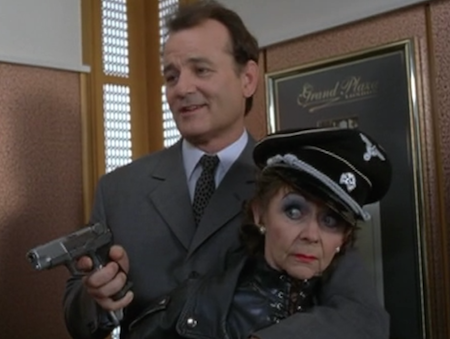
As Ritchie, Murray has a blast ripping on a number of tough guy acts–most notably, Clint Eastwood’s. Of course, he mimics “Here’s Johnny” from The Shining. He pauses before saving Lori to put on his sunglasses. He asks for retakes, explains his life of espionage to cops, applauds a corpse for the realism of his acting.

Impressed with a corpse's acting

Impressed with a dead killer’s supposed acting

In a favorite moment, Ritchie creeps out some muggers by sobbing, “I got a couple of kids,” and then, embarrassed by his poor performance, abruptly trying another approach: “You know it’s getting so that decent people can’t even go out on the street anymore without scum like you trying to step on whatever’s decent in this world. Well you know something? Your type are just gonna be the kind of crap that sticks to the bottom of a good man’s loafer.”

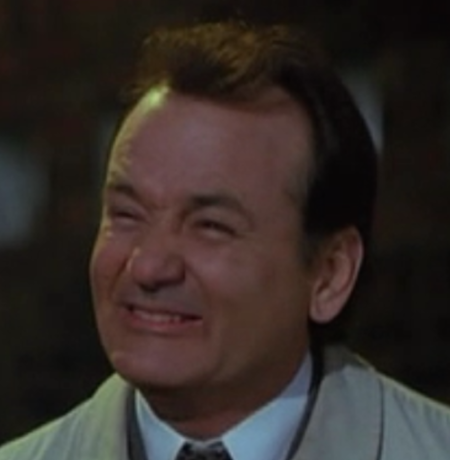
Murray faux-beseeching

Murray faux-beseeching

Imagine Murray’s fake crying (pictured above) and his enunciation of “a good man’s loafer,” and you’ll have a hint of just how hysterical this film can be.

The extent to which Ritchie remains deluded stretches belief, of course: he never catches on. But who is looking for realism in an unapologetically silly comedy? And, if we’re being honest, how plausible are Hitchcock spy stories and their ilk (Foul Play, Gotcha!, Frantic, The Tuxedo, etc.)? I think we can agree that all of us would live approximately 5 seconds if mistaken for a spy or harboring the secrets of one, a likelihood this parody clearly asks us to consider.

And truthfully, the film could be about anything. What matters is this: Murray is in almost every scene, and an hour and a half of Murray goofing off is about the best mood elevator I can imagine. I watch this ludicrous flick when I’m blue, scared, angry–and I never stop enjoying it. The critics gave it a 41 percent on Rotten Tomatoes; the audience gave it a 70. As usual, the critics are missing out on the fun to be had here; don’t make the same mistake.

Share
Posted in: 1990-current films, Comedies (film), Film Noir/Crime/Thriller & Mystery, Humor, TV & Pop Culture Tagged: Bill Murray, The Man Who Knew Too Little

The Nicholas Cage Syndrome: Is Taste More Crucial than Talent?

04/24/2015 by leah@carygrantwonteatyou.com 6 Comments

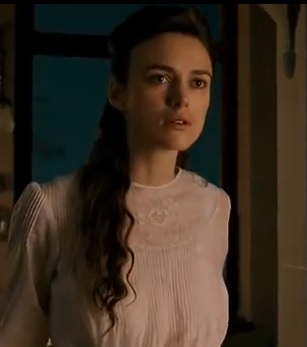
KeiraKnightleyADangerous
I was outraged by the choice of Keira Knightley to play Elizabeth Bennett in Pride and Prejudice. “That woman,” I complained to my sister Rachel, “is known for her toned midriff, not her acting talent.” Although Knightley did a passable job in a decent film adaptation, I considered her subsequent Oscar nod an affront.

Rachel agreed with my assessment of the actress’s mediocrity, even if I couldn’t follow through with my plan to avoid her films. The problem was, Knightley kept selecting intriguing feminist roles, not the cheesy romantic leads her looks surely could have garnered her. The groundbreaking historical women she brought to life on the screen in The Duchess and A Dangerous Method led me to hours of fascinating research.

And then this year, an Oscar nod again, this time for an interesting biopic, The Imitation Game. When I grumbled about her second nomination, my sister disagreed. “I’ve changed my mind about her. Watch Begin Again. Two great films in one year. She has such good taste.”

And there it was, the trait so often ignored when we talk about acting: taste. Sometimes; as with Meryl Streep, Philip Seymour Hoffman, and Cary Grant; we get both: good films and incredible talent. But so often, we can’t select a movie based on the cast and assume we’ll enjoy it. Why? Because so many skilled performers have Nicholas Cage judgment.

Cage Syndrome: Good actor who stars only in trash

The Cage Syndrome: A good actor who repeatedly stars in trash.

Recall Halle Berry, still gilded from her Oscar win, choosing a bad Bond flick and Catwoman to cement her legacy. Or the previously reliable Morgan Freeman. His films since The Shawshank Redemption make me feel like a comet has crashed into my brain.

Is it possible that taste is more important than talent? I’m not saying that judgment trumps skill if the acting is bad enough to spoil the film. (I’m looking at you, Andie MacDowell.) But if the actor or actress is decent, might good taste matter more?

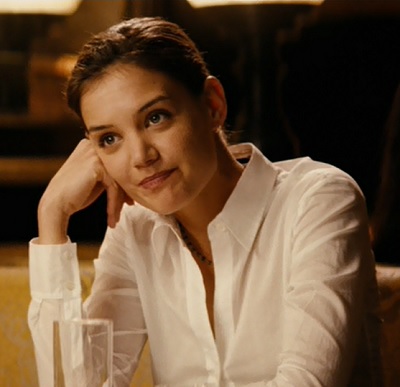
Let’s take another example: an actress even less versatile and skilled than Keira Knightley (who is admittedly rising in my estimation). Katie Holmes is better known for being the ex of Tom Cruise than for her acting. Her performances are largely forgettable, but her films are not. Even during her Dawson’s Creek years, Holmes displayed remarkable discrimination in her choices. The following are my favorites of her credits (the first and fifth I rewatch often):

  • Thank You for Smoking
  • Batman Begins
  • Pieces of April
  • The Gift
  • Wonder Boys
  • Go

KatieHolmes-ThankYouSmoking
By rarely starring and choosing movies that feature fine performers, Holmes has ensured I don’t need to rely on her skill to enjoy her films. Her mere presence in Woman in Gold is making me reconsider it despite lukewarm reviews. I trust her taste to impress as much as I trust Cage’s to disappoint. (I vowed during Snake Eyes never to watch his films again. Alas, I caved, remembering Raising Arizona, and even let my husband bring home Drive Angry, which did, in fact, make me angry.)

Of course, it’s hard to place the same kind of trust in the taste of classic film performers. Since studios held such tight reign over their stars, performers’ ability to select was limited. But now and then, you can, as in the interesting case of Norma Shearer.

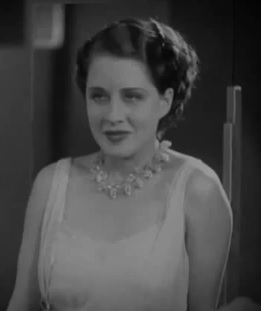
NormaShearerDivorcee1
She (conveniently) married the production head of MGM, therefore ensuring her pick of roles (to the envy of Joan Crawford, who must have enjoyed taking her husband away in The Women).

I’m not a big fan of Shearer’s acting, which I usually find too theatrical. That said, I always enjoy her films, even staid period dramas such as Marie Antoinette and antifeminist flicks such as The Women. But it’s her fight to play liberated women in the pre-Code era that makes me trust her judgment. A woman who would go to a photographer for sexy shots just so she’d be considered for parts like that of Jerry in The Divorcee? That’s an actress I can trust. And in pre-Code films, she relaxes the affectations and easy tears that occasionally mar her pictures. Shearer is never on my list of favorite film actresses, but just writing these words has made me long to see The Divorcee again.

Are there stars whose films you go to see in spite of the mediocrity of their acting? Which talented stars’ movies do you avoid due to the Cage syndrome? And what is up with Sandra Bullock’s love for Razzie-caliber roles?

Share
Posted in: 1980s films, 1990-current films, Comedies (film), Drama (film), Feminism, Humor, TV & Pop Culture Tagged: bad acting, good taste, Katie Holmes, Keira Knightley, Nicholas Cage, Norma Shearer, Sandra Bullock, syndrome

The Epitome Of Teen Queen Cruelty: The Heathers Of Heathers (1989)*

04/16/2015 by leah@carygrantwonteatyou.com 23 Comments

This post is part of the second annual Great Villain Blogathon, sponsored by Ruth of Silver Screenings, Karen of Shadows & Satin and Kristina of Speakeasy. Click here to read about other fascinating villains!

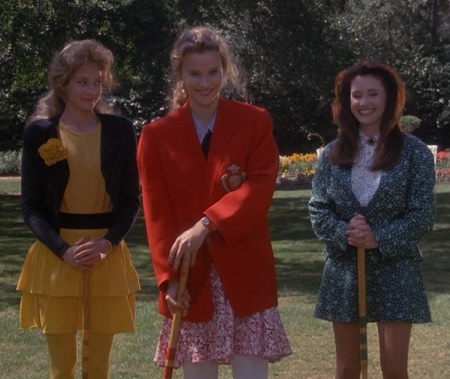
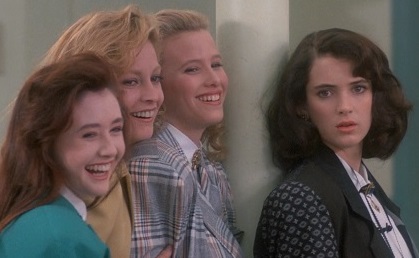
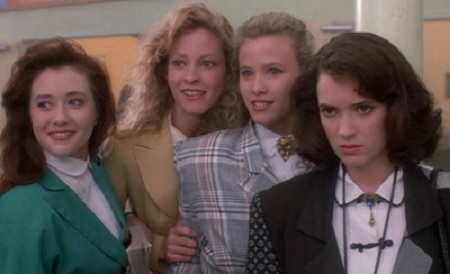
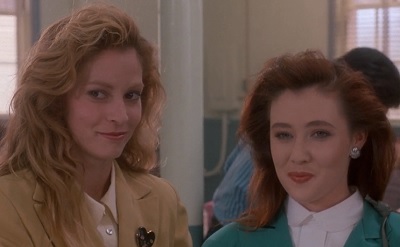
The Three Heathers: McNamara, Chandler (queen), and Duke

The Three Heathers: McNamara, Chandler (queen), and Duke

Before there were Mean Girls, there were Heathers, the heroines of the late-80s teen flick. If you haven’t seen it since high school, watch it again immediately on Netflix. It’s so much funnier than you remember, one of the sharpest satires about group behavior you will ever see. Mean Girls (2004), entertaining though it may be, is just a pale copy of it.

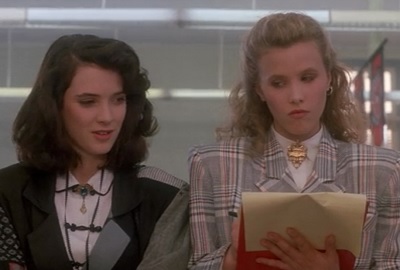
There are multiple villains in this black comedy, but the wicked trio are my favorites, a group of snotty popular girls, all named Heather. One outsider, Veronica (Winona Ryder), is allowed to share their company. She narrates their cruelty (and her own) in angsty teen fashion until J.D., a new crush (Christian Slater), urges her into revenge.

Heathers-movie2
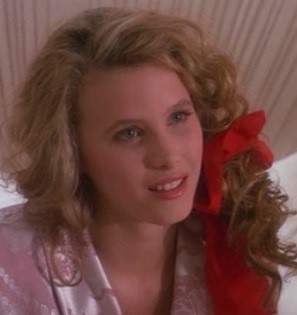
Cliché as this group might be, the Heathers are so extreme in their behavior that they’re mesmerizing, with their lead, Heather Chandler (Kim Walker), the most interesting of the bunch.

HeatherChandler-1
To capture her fascination, I’m categorizing the queen Heather’s words, preferences, and actions below.

(Note: Some of the best lines are so profanity laced that I decided not to include them; the line ending in Mother Theresa is a favorite.)

Power Accessory
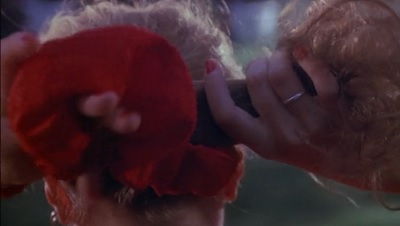
Heather’s red scrunchie is clearly one of the symbols of her dominance. It’s the first thing we see in the film.

RedScrunchie-Heathers

Her School Armor
These shoulder pads speak for themselves:

ShoulderPads-Heathers

Lunch-Time Polls & Other Bits of Wisdom

Lunchtimepoll-Heathers
Heather creates a regular poll** for her fellow popular kids. One of Veronica’s pathetic minor rebellions is to insist they seek answers from those Heather considers “the scum of the school” as well, those who in the queen’s estimation won’t help them brush up on their “conversational skills” before a college party.

Representative Poll: “Now check this out. You win five million dollars from Publisher’s Sweepstakes, and the same day that that big Ed guy gives you the check, aliens land on the earth and say they’re going to blow up the world in two days. What do you do?”

I just love the level of importance attached to this idiocy in the movie.

Signature Aphorism: “Real life sucks losers dry.”

Idea of Fun—and Urgency
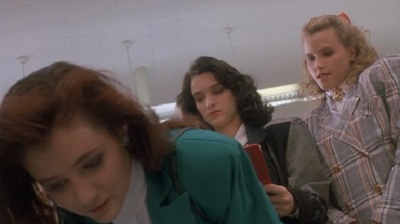
The two Heather minions (Duke and McNamara) tell Veronica she’s needed right away in the café. When she arrives, their queen huffs, “Veronica, finally…I need you to forge a hot and horny, but realistically low-key note in Kurt’s handwriting and slip it onto Martha Dumptruck’s (Carrie Lynn’s) lunch tray.”

When Veronica protests that she doesn’t have anything against the poor target, Heather responds, “You don’t have anything for her either,” then suggests (with typical color) that this will give the girl fantasy material for when she’s alone. The Heathers’ excitement in anticipating the results of this cruel plot is evident:

Anticipating the results of their cruelty

Sense of Furniture
“Veronica needs something to write on. Heather (Duke), bend over.”

DohertyasDesk
Favorite Game
There’s really nothing like croquet for sociopaths; Heather Chandler has a loving ritual with her ball.

CroquetKissHeathers
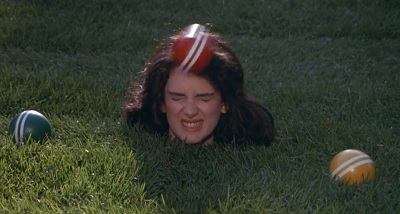
Just after it, she hits Veronica’s head with it in a dream sequence.

Rydersheadcroquet
Her real-life game isn’t much more cordial. When her red ball knocks into Heather Duke’s green one, the latter asks, “So what are you going to do, Heather? Take the two shots or send me out?”

“Did you have a brain tumor for breakfast?” the queen snaps. “First, you ask if you can be red, knowing that I’m always red.” She then proceeds to knock the ball out of play.

After Heather Duke miraculously manages to rebound, Heather Chandler gets a chance to ruin her chances again, and does.

“Why?” says Heather Duke.

“Why not?” her frenemy responds.

Self-Reflection
“Does it bother you,” Veronica asks Heather #1, “that everyone thinks you’re a piranha?”

The queen scoffs in response that of course she doesn’t, desired as she is. “I’m worshipped at Westerburg,” she explains, “and I’m only a junior.”

“You wanted to be a member of the most powerful clique in school,” Heather reminds Veronica when the latter protests bullying. “If I wasn’t already the head of it, I’d want the same thing. Come on, Veronica. You used to have a sense of humor.”

Insults & Threats

HeatherChandler
Her entire demeanor belittles those around her, but Heather Chandler really has some classic lines. Here are a few examples of this sweetheart’s empathy at work:

“Grow up, Heather (Duke),” she says as her friend is puking. “Bulimia is so ’87.”

“You blow it tonight, girl,” Heather warns Veronica before their party at Remington University, “and it’s keggers with kids all next year.”

“What’s your damage?” (when Veronica refuses to sleep with an annoying college guy)

TheHeathers-brushoff
“You were nothing before you met me,” Heather snaps after Veronica embarrasses her by not putting out and getting sick at the university party. “You were playing Barbies with Betty Finn. You were a Bluebird. You were a Brownie. You were a Girl Scout cookie. I got you into a Remington party. What’s my thanks? It’s on the hallway carpet. I got paid in puke…Transfer to Washington. Transfer to Jefferson. No one at Westerburg’s going to let you play their reindeer games.”

“Is this turnout weak or what?” (response to a friend’s funeral in a dream appearance)

Other Heathers’ Honorable Mentions

TheHeathers-Minions
**Spoilers ahead***

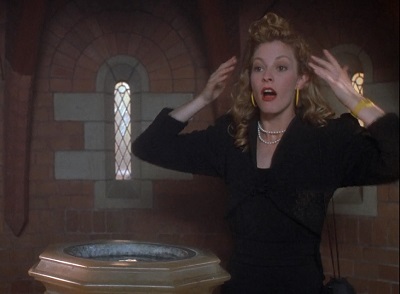
The minions have their moments as well. Here’s Heather McNamara (Lisanne Falk), fixing her hair with holy water after her friend’s funeral:

Heathers-funeralhairdo
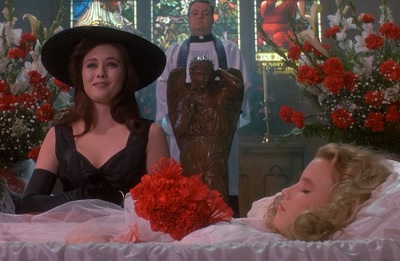
And Heather Duke (Shannen Doherty), celebrating Heather Chandler’s death:

Heathers-funeralofHeathers
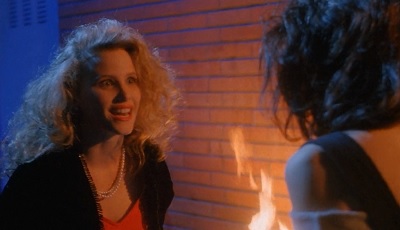
If you’ve seen the movie, you’ll remember that Veronica accidentally kills the queen, which leads to the latter becoming a martyr in the school, more popular than ever. Afterward, J.D. exploits the school’s fever for suicide, killing two football players and passing the deaths off as self-inflicted with Veronica’s unwilling assistance. And that’s just the beginning.

Much of the humor of the story comes from others’ reactions to the bloodshed, including Heather Duke’s. She dons her predecessor’s queenly mantle, even wearing her power scrunchie. Here’s her response after hearing her clique’s bullying victim attempted to kill herself: “I mean, Heather and Kurt were a shock, but Martha Dumptruck? Get crucial. She dialed suicide hotlines in her diapers.”

Why, Veronica asks, must Heather Duke be such a jerk?

The replacement queen smirks, “Because I can be.”

The film suggests with the interchangeability of the Heathers that the death of a clique queen just leads to another who may be worse. As Veronica says of her friend’s newly acquired status, “I’ve cut off Heather Chandler’s head, and Heather Duke’s head is sprouting back in its place….”

In terms of filmmaking, this movie spawned creatures such as Mean Girls’ Regina George, queen of the Plastics. We might no longer call the teens in them “Swatch dogs and Diet Coke heads,” but clique comedies are alive and well in the Heathers’ wake, which will probably be true as long as high schools continue breeding ugly class structures. As J.D. says about geography, but could just as easily apply to time, “Seven schools in seven states, and the only thing different is my locker combination.”

*1988 international release
**Mean Girls
gave a nod to the film with a poll of its own. Did you catch it?

Share
Posted in: 1980s films, Blogathons, Comedies (film), Film Noir/Crime/Thriller & Mystery, TV & Pop Culture, Uncategorized Tagged: 80s, black comedy, Heathers, Mean Girls, Regina George, satire, Winona Ryder

3 Characters I’d Like to Celebrate St. Patrick’s with

03/12/2015 by leah@carygrantwonteatyou.com 2 Comments

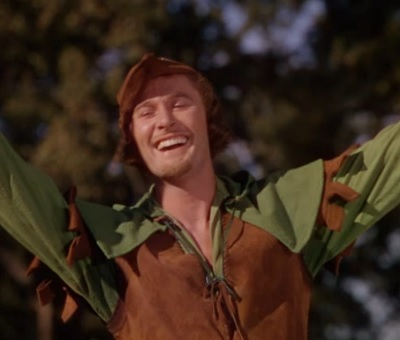
The Hero of The Adventures of Robin Hood (1938)

ErrolFlynn-RobinHood
While watching Errol Flynn play Robin Hood, you get the feeling he knows how ridiculous he looks in those green tights. But instead of embarrassing, his outfit energizes him. You can almost hear him thinking, “Well, the manliness contest is lost. Let’s party!” The whole cast seems to share his giddiness, making this one of the most entertaining movies I’ve seen in some time. Who wouldn’t want to spend the green holiday with someone this easygoing and gorgeous?

(It’s easy to trace the film’s influence on an early favorite of mine, The Princess Bride, not to mention the parody Robin Hood: Men in Tights. Neither movie captures Flynn’s delirious enthusiasm, but that same sly humor is on full display in both, with Cary Elwes a worthy heir to his predecessor’s effortless style.)

The Heroine of Sadie Thompson (1928)

SadieThompson-Swansongroup
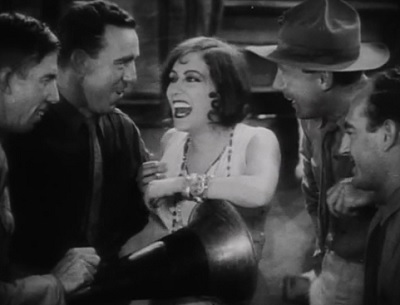
Sadie (Gloria Swanson) likes to pull pranks, tell dirty jokes, sing, dance, and most of all, laugh. The rarity of female attention partially explains the marines’ enthusiasm for her company in the story, but that’s not the only reason she attracts them. This woman is just so much fun. Like many supposedly “fallen women” in film, she has an easy camaraderie with others, is just as good a pal as a lover. And her confidence (until it’s shaken by the film’s villain) is breathtaking.

Nick & Nora Charles

NickandNoraCharles-Partying
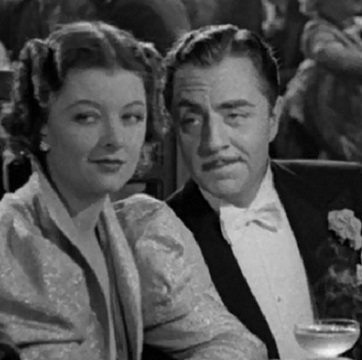
Nick Charles (William Powell) of The Thin Man series is the life of the party, without making any effort to be so.  He is cool, debonair, sarcastic, with just the right smidgen of childish to never take anything seriously but his partying. His wife Nora (Myrna Loy) is the perfect hostess. Obnoxious visitors entertain rather than annoy her. Party crashers are welcome. She calls room service to deliver “a flock of sandwiches” for her intoxicated guests, hands newcomers a drink before they’ve even gotten into the room. When asked if Nick is working a case, Nora responds, “Yes…A case of scotch. Pitch in and help him.”  Could any line sound more like St. Paddy’s Day than that?

Share
Posted in: 1920s films, 1930s films, 1940s films, Comedies (film), Drama (film), Humor, TV & Pop Culture Tagged: Carl Elwes, Errol Flynn, Nora Charles, Robin Hood, Sadie Thompson, St. Patrick's Day movies

The Artist at Play: Man with a Movie Camera (1929)

03/09/2015 by leah@carygrantwonteatyou.com 14 Comments

This post is part of the blogathon hosted by Movies Silently and sponsored by Flicker Alley. Thanks to both for such a great event! Click here to see the wonderful entries of the other participants:

Camera-Man2
Wizardry. It’s the word that jumps at you while viewing Man with a Movie Camera, the celebrated documentary depicting 24 hours in a Russian city. Unlike the famous magician of Oz, director Dziga Vertov invites his viewers to experience all that his camera—and by extension, all that film—can do. Announcing at the start of his movie that there will be no scenarios, intertitles, or actors, Vertov set out to separate the genre from its roots in theater. The result could have been a movie so meta it became unwatchable to any but film scholars; after all, the director even demonstrates how he obtains shots, even exhibits the film editing process. But this masterpiece is not only revolutionary; it’s also engrossing. Here are just a few reasons why:

It’s a Bird…It’s a Plane…It’s Vertov Behind the Camera
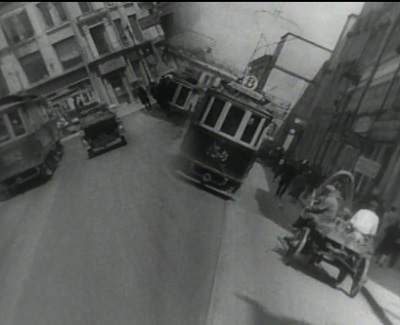
There’s a dizzying speed to the film, images flashing by at such a clip that some contemporary viewers and critics protested. Predictably, some of this speed captures industry, as when the director hurries an assembly line production to Tasmanian Devil haste to capture its unremitting flow. The director thrills at images of transportation, with clips of trains, buses, motorcycles, often with himself in dangerous positions to capture the motion. The thrilling score—I watched the Alloy version—underscores the frantic mood.

Vertov occasionally slows his pace, even stopping to profile still shots, the film editing process, and those same shots in action in a particularly lovely tribute to the power of moving images.

StillShots
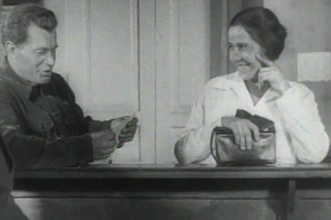
But it’s in rapidity that Vertov reveals his mastery of form and meaning. He even underscores the brevity of life in a short sequence. We see a couple getting a marriage license.

MarriageCertificate
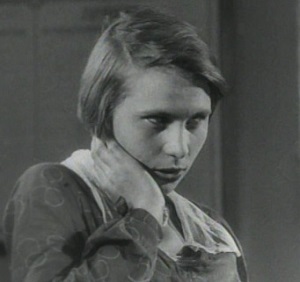
Directly after, another couple is signing divorce papers; the director zooms in on the estranged wife’s grim expression.

Divorce
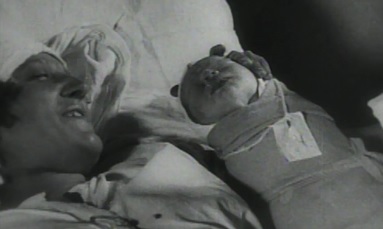
A mourner appears in a cemetery. A funeral passes our eyes. A baby is being born.

Baby
The director moves back and forth between the scenes to reinforce the connections. This circle of life takes a total of three minutes.

Loss
Realism…with Mannequins

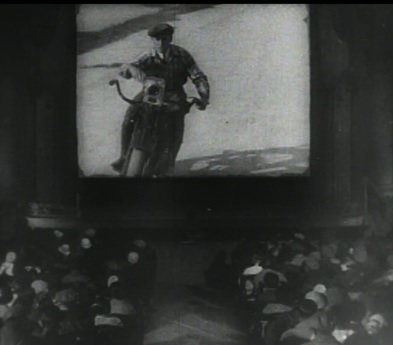
The film begins in a movie theater, priming the audience for a show. We see a Russian city, morning beginning. A woman sleeps in her room; a child does the same on a bench where he’s spent the night. There are scenes you expect next: the bustle of a city beginning, the drudgery of work. And some of those scenes, you get, and each is powerful, particularly portrayals of the mines. But it’s the surprises that keep you watching. Why does the director dwell on creepy shots like this one?

CreepyMannequin2
What’s the obsession with washing scenes? (What number of shaving, tooth brushing, and hair cleansing rituals were shot over the years he made this movie to end up with so many in the final product?)

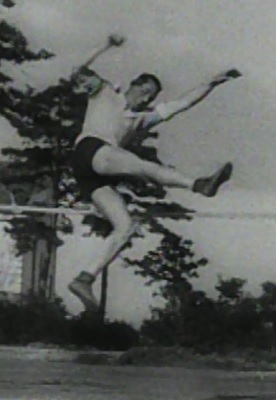
Documentaries can be gloomy, and for a director who attacked fiction and took so seriously his aims to capture truth, Vertov has a surprisingly light touch. You’re struck by the artist’s obsession with grace, revealed through a montage of pole vaulters, high jumpers, dancers, and basketball players.

HighJumper
He revels in a kid’s magic show, in women’s bodies at the beach. He attempted an international art form through his completely novel take on a documentary, achieving the realeast of real. And he delivers: You can’t help but feel fascinated by similarities evident between Russian culture and ours, between 1929 and today.

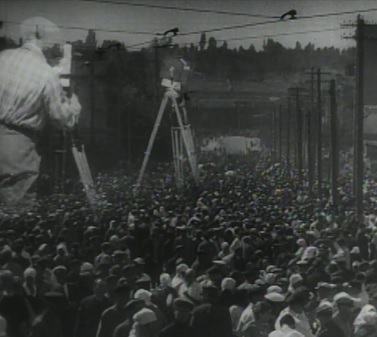
But like this pioneer’s artistic descendants, practitioners of cinéma vérité and literary journalism, Vertov believed revealing subjectivity was part of delivering truth. He not only affects his subjects by the intrusion of his camera, but our perception of them by which shots he includes, and which he doesn’t. As essayist Joan Didion would explain many decades later, “However dutifully we record what we see around us, the common denominator of all we see is always, transparently, shamelessly, the implacable ‘I.’”

CameraManAbove
Part of the delight of Man with a Movie Camera is watching subjects’ reactions to his (then novel) camera: the woman who blocks her face with a purse to avoid it, the tiny girl who can’t keep her eyes away.

But the director’s vision is so unique and his quirkiness so evident throughout that you never forget that another artist would have chosen other faces, other moments, would have startled his subjects in other ways, and for other reasons.

Look, Mom! No Hands!
The highly touted innovations with camera work in the film are remarkable in and of themselves. (Who knew so many of these techniques were used so early?) They also serve a purpose, not only illustrating Vertov’s sense of time dissolving, but recapturing for modern audiences the thrill of being at the beginning of a new art form.

Camera-Man
They made me think of the Impressionists, freed from the tyranny of having to capture exactly what they saw. The scenes featuring the filmmaker at work are so amusing. Here’s the photographer riding on a moving car! Watch him risk his life to portray that train! I kept thinking of a little kid showing off on his bike, holding his hands aloft for the first time. And just as I thought it, I saw this image:

Motorcycle
Because the director’s having fun, so are we.

CreepyMannequin
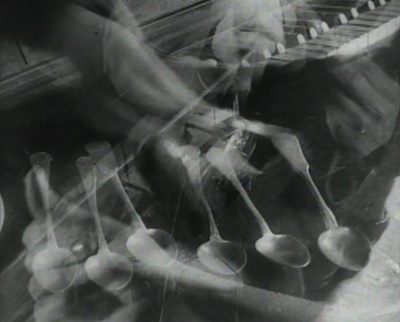
Because the action is exhilarating, we are giddy. Who but a kid-like grown up could have come up with an animated movie camera in action, or with this delightfully silly image?

Camera-Man4
Surely, Vertov would be leading the creative team at Pixar today.

Sight and Sound rated this movie eighth, and gave it the honor of best documentary of all time. I am not surprised by either ranking given the vision and experimentation of this film. But that’s not why I’m glad that I’ve seen it. What an experience, to witness so much of life covered, in so little time, and so beautifully. What a joy it is, to a witness the work of a genius with a sense of fun.

Thanks to Kimberly Bastin at Flicker Alley for a screener of the film!

Share
Posted in: 1920s films, Blogathons, Comedies (film), Drama (film), Uncategorized Tagged: Man with a Movie Camera, Sight and Sound bests, silent film, Vertov

The Debt Actresses Owe William Somerset Maugham: from Gloria Swanson to Annette Bening

02/19/2015 by leah@carygrantwonteatyou.com 8 Comments

SomersetMaughamActresses
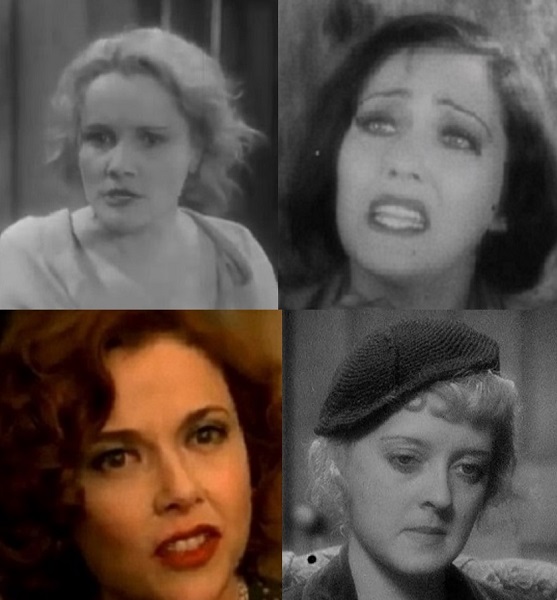
I’ve read many glowing tributes to the stars of The Letter, Being Julia, Of Human Bondage, and Sadie Thompson over the years. While I’ve never questioned the talents of these actresses, I have always credited much of their brilliance in these parts to William Somerset Maugham. Their strengths are on display largely because of the characters he created in his stories, plays, and novels: women so complex, morally conflicted, modern, and real that 130 years after his birth, Annette Bening was Oscar nominated for playing one of them.

And she’s not alone. Before I get into the reasons, let’s start with the data. Here’s a list of Oscar nods to women in his films; if I’ve missed any, please let me know. It’s quite possible. The number of his film credits, and of stars listed in those movies, is astonishing. Here we go:

Academy Award Nominations for Actress in a Leading Role:

  • Gloria Swanson: Sadie Thompson (1928), based on the short story, “Rain”
  • Jeanne Eagels (first posthumous nomination), The Letter (1929), based on the short story and play. (She also made her name in the play version of “Rain.”)
  • Bette Davis, two nods: Of Human Bondage (1934; by write-in vote), based on the novel, and The Letter (1940)
  • Annette Bening, Being Julia (2004), based on the novel Theatre.

Other notable female roles include Gene Tierney’s in the Oscar-nominated The Razor’s Edge (a novel), Greta Garbo’s and Naomi Watts’s in The Painted Veil (a novel), and Madeleine Carroll’s in Alfred Hitchcock’s Secret Agent, based on Ashenden, a collection of stories.

Even fine actresses need a vehicle, and in the last fifteen years, one of the few amazing leading roles I’ve seen for a woman over the age of 30—Bening’s—was written by Maugham in 1937. I wasn’t surprised. He specialized in complex characters making immoral decisions: They cheat on and leave spouses and children, prostitute themselves, admit to irreligious or cruel behavior without guilt, contribute to or directly cause the death of others. Since Maugham resists moral judgments, his women are free to react to the traumas they’ve created rather than simply being punished for them. No wonder they’re so fascinating to watch on the screen.

In fact, Maugham is as likely to admire as condemn. As his (seemingly autobiographical) narrator in The Razor’s Edge explains, “My dear, I’m a very immoral person….When I’m really fond of anyone, though I deplore his wrongdoing it doesn’t make me less fond of him.” Thus the attention given to selfish characters such as Mildred in Of Human Bondage. Certainly, her character would have been less nuanced—giving Davis less to work with—had Maugham not empathized with Mildred and therefore made her traits and actions so interesting and believable.

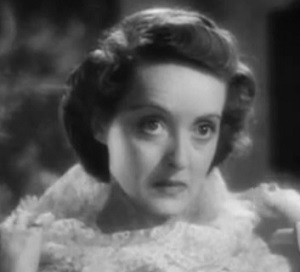
DavisOfHumanBondage
Davis is Davis, but it took a number of roles before she reached this breakout one.

Maugham frequently explored the contrasts between how men and women seek to appear and who they are. While he may be gentle on others’ immoral actions, he can be scathing about their hypocritical ones. Sadie Thompson is a prostitute, but it’s the reformer trying to condemn her, unwilling to admit his own sexual appetite, whom we are led to despise. Sadie, gradually moved by the reformer, ultimately learns to appreciate her own values over his—an unexpected ending for the type of character who is usually just a one-note in a film. Swanson, not surprisingly, captures the flair, passion, and contradictions of this woman.

SwansonSadieThomson
In Being Julia, we root for the heroine in spite of (or even because of) her extramarital affair with a younger man because we enjoy her confidence. Despite her vanity and delusions, she owns and even enjoys most of her flaws. The surprises in her behavior are quite funny, and Bening takes full advantage of the humor.

Bening-BeingJulia
How wonderful is it, how gloriously human, that in the midst of her midlife crisis, Julia is obsessed with breaking her diet? How much do we love that she wants to savor her victory over a younger wannabe actress in solitude, since it’s a private triumph? What a feminist scene it is when she does, and how interesting that a man created it so very long ago. Curious to see how much the film differed from the source material, I reread Theatre, only to find it was even closer to the movie than I’d remembered: the dialogue, the focus, the character, the morality, even the final scene—all the same.

And Leslie in The Letter? Most authors would have focused on the murder and the passion leading up to it. It would have been a fairly typical noir, with an unremarkable femme fatale. But Maugham again proved to have a deeper interest in human nature than his peers, wondering not just about the crime itself, but Leslie’s efforts to conceal it, to retain that image she wants to present to the world. She is an interesting character because of her willingness to reside in her own lies, a trait that Maugham, with his typical regard for truth, seems to find more blameworthy than the murder. Thanks to his interest in motives, Davis and Eagels were granted a woman of enormous complexity to work with, which contributed to each’s stunning performance.

Eagels-TheLetter

Davis-TheLetter
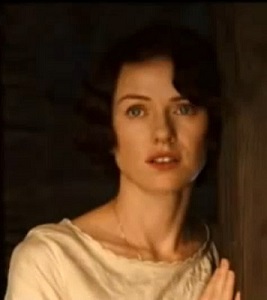
Of his roles that have yet to win actresses Oscar nods, I find Kitty in The Painted Veil the most intriguing. Kitty’s husband Walter catches her cheating, and forces her to travel with him to a cholera-infested region of China as punishment. He offers her an out if her lover will marry her, knowing it won’t happen. Rejected by the man she loves and facing a death sentence from the one she doesn’t, Kitty spends much of her time alone, reflecting on her actions as Walter heals patients—quite a departure from her youth as a superficial beauty. She learns to admire Walter’s generosity, even as she pities the love for her that has turned to hatred. She wants to forgive him, and for him to do the same for her, but she can’t bring herself to love him.

Watts-PaintedVeil
What did Hollywood do with this story (Garbo’s and Watts’s versions)? Turned it into a love story. We’re meant to root for a reconciliation between the two, whether they both survive cholera or not. I don’t know about you, but once a guy tried to kill me via a deadly epidemic, I can’t imagine thinking, “Yeah, but I cheated on him; we’re cool now.” These plot alterations might have helped with commercial viability, but the result was to diminish realism and a powerful female part.

Kitty’s disappointment in herself for continuing to desire her vain, worthless lover is an essential part of the story. In the book we see enough of her life beyond the epidemic to discover that her enhanced self-awareness doesn’t lead to moral behavior. The self-deprecation and compassion she develops as a result of her failures are intriguing to witness. While Watts captured Kitty’s vulnerability beautifully, I suspect had the screenwriter more faithfully rendered the character’s complexity, he would have netted Watts the Oscar nomination, as with so many women in Maugham’s roles before her.

Maugham’s skill with character development is often attributed to his history: he stuttered in his childhood and struggled with his homosexuality. Did feeling like an outsider and being morally out of favor in his time contribute to his empathy for others? Probably. He gives another possibility, crediting his early medical training for giving him access to “life in the raw,” saying the work enabled him to see “pretty well every emotion of which man is capable.” While I suspect both of these reasons are relevant, I’ve always preferred to take as autobiographical his narrator’s confession in The Moon and Sixpence: “the fear of not being able to carry it through effectively has always made me shy of assuming the moral attitude.” Ultimately, perhaps in spite of himself, Maugham is amused by human behavior, in all of its foolish and ugly iterations, and therefore captivated by it. No wonder, with an author who claims he is “more likely to shrug his shoulders than to condemn,” that four of the women in his films have been nominated for Oscars, one twice. Let’s hope other gifted actresses take note, and give his excellent stories another run.

Share
Posted in: 1920s films, 1930s films, 1940s films, 1990-current films, Comedies (film), Drama (film), Feminism, Oscars Tagged: Being Julia, Bette Davis, great roles for women, Oscar nods, Sadie Thompson, The Letter, The Painted Veil, William Somerset Maugham

Why the John Goodman Oscar Snubs?

02/09/2015 by leah@carygrantwonteatyou.com 16 Comments

BigLebowski-Walter-Goodman
This post is part of the 31 Days of Oscar blogathon. I’m taking part in the Oscar Snubs segment, hosted by Once Upon a Screen! There are so many amazing posts. Check them out here. Also see Paula’s Cinema Club & Outspoken & Freckled for the other great Oscar topics.

I’m rarely puzzled by an actor failing to win an Oscar. The competition is steep, the Academy biases evident, and the campaigning too embarrassing for some well-respected professionals to attempt. But for an actor not to be nominated when he regularly appears in critically acclaimed movies (and presumably played a role in their success) is surprising. With over two decades of fine performances to his name, John Goodman has yet to receive a single Oscar nod.

He is a regular in Coen brothers’ films, and thus would presumably take on the shimmer of those critical darlings. How’s this for a partial list of acting credits?: Inside Llewyn Davis (2013), O Brother, Where Art Thou? (2000), The Big Lebowski (1998), The Hudsucker Proxy (1994) (voice only), Barton Fink (1991), and Raising Arizona (1987).

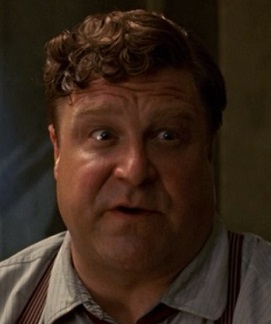
For two years in a row, Goodman acted in the Oscar-winning film: Argo (2012) and The Artist (2011). In 2011, in fact, he performed in two Oscar-nominated films, playing the doorman in Extremely Loud & Incredibly Close as well as the executive in The Artist. While his roles in the other two might not have been significant enough for Academy Award consideration, his performance in Argo certainly was.

John Goodman-Argo
Goodman won a Golden Globe for playing Dan Conner on Roseanne (1988-97) and an Emmy for his guest performance in Studio 60 on the Sunset Strip. He’s won other honors, including, of course, for comedy, but the most prestigious have been ensemble awards. His only Golden Globe-nominated film performance was for Barton Fink.

I have to ask: Why?

Is His Acting Not Good Enough?
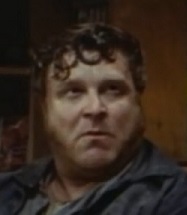
The easiest answer is that he’s simply not skilled enough to win. I guess that’s possible, even though I find it tough to believe any other actor could have so memorably captured Walter Sobchak in The Big Lebowski, or the oddest hotel guest ever in Barton Fink. Even in small roles his impact is felt. I can’t stop laughing when I think about his performance as an escaped convict in Raising Arizona, especially when he gets into his never-leave-a-man-behind diatribe.

RaisingArizona-Goodman-1
And with all of Hollywood to choose from, why would the gifted Coen brothers continue to cast Goodman if they didn’t find him talented? While the directing duo features the same actors in many of their films, I think only Joel Coen’s wife makes more showings than Goodman. (John Turturro, also beloved by the brothers, has been in four of their movies to Goodman’s six.)

Are His Roles Not Sufficiently Challenging?
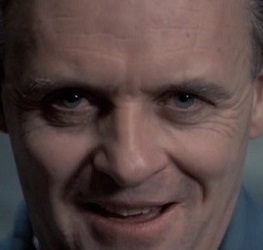
Goodman fits well into a number of stereotypical roles, especially the kind of good ol’ boy he plays in Alpha House. He clearly plays these with ease. But he enjoys eccentric characters too, as so many of his Coen brothers movies prove. The Academy seems to love larger-than-life characters. Anthony Hopkins and Daniel Day-Lewis have been honored for roles that bear no resemblance to actual human beings. Does anyone believe there was ever a man like those Day-Lewis played in Gangs of New York or There Will Be Blood? In what world is Hannibal Lecter anything but a caricature?

Lecter
Goodman’s oddball and sometimes sinister characters, in contrast, are typically very believable, especially Walter in The Big Lebowski. Is it easy to make a person who is comically bizarre come off as realistic?

RaisingArizona
I don’t think it is, nor do I believe the much-loved Day-Lewis has pulled off this feat nearly as often as Goodman has (admittedly, the latter’s role in O Brother also never gets beyond myth).

In terms of understated performances, which I typically think more deserving of honors, Goodman isn’t always given enough play time for the kind of nuanced and subtle acting we saw in Roseanne, and he doesn’t seem to demand meatier roles when he could. I’d like to see him attempt these types of parts more than he does. If only such understated roles were honored, Goodman being bypassed by the Academy would make sense given the number of his quirky parts. But that’s not the case. Oscars would otherwise never have been given to Day-Lewis for There Will Be Blood or Hopkins for The Silence of the Lambs.

Is It the Usual Reason—No Love for Comedians?
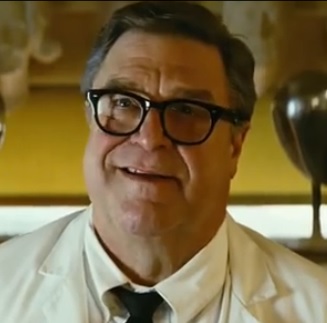
Those of you who’ve read my blog for a while know that I regularly take the Academy to task for their lack of appreciation for comedic performances and scripts (Harold Ramis, Steve Martin, Ralph Fiennes). While Goodman has often starred in dramas, even his more serious roles are usually punctuated with humor. And with a face as expressive as this one, why would he neglect the opportunity to make us laugh?

BartonFink-Goodman
The Academy’s dismissal of comedy could explain how often Goodman is never even discussed—much less chosen—when it comes to nominations.

Could It Be the TV Curse?
In the new golden age of TV, actors can move from big screen to television and back again without losing their star status—as long as that show is on cable. Network television still retains its low status. (Doubt me? Check out which shows win most Emmys for drama.) Whatever his other accomplishments, Goodman will always be known as Roseanne’s Dan Conner. He starred too long on a hit show—and performed too well—for it to be otherwise. While we see the rare exception—J.K. Simmons’s Oscar nomination this year, for example—most network television stars never get much credit once they turn to film. I can’t explain this trend nearly as fluently as Jack Donaghy (Alec Baldwin) does in 30 Rock.

Jackexplains30Rock
Jack is advising Tracy Jordan (Tracy Morgan) on how to tank his acting career. In the NBC TV show’s typical self-referential fashion, Baldwin is actually describing his own life:

“Do TV. No one will ever take you seriously again. Doesn’t matter how big a movie star you are, even if you have the kind of career where you walked away from a blockbuster franchise or worked with Meryl Streep or Anthony Hopkins. Made important movies about things like civil rights or Pearl Harbor. Stole films with supporting roles and then turned around and blew them away on Broadway. None of that will matter once you do television. You can win every award in sight, be the biggest thing on the small screen, and you’ll still get laughed out of the Vanity Fair Oscar party by Greg Kinnear….You wanted to hit rock bottom again? Go on network television.”

Could this trend explain Goodman’s snubs?

Is He Discounted Due to His Choices—and Costars?
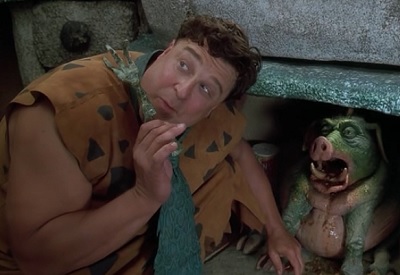
Perhaps no number of outstanding performances can make the Academy forget this role:

JohnGoodman-Flintstones
Or the fact that he starred with Roseanne Barr, who never has gained any traction outside of TV and unfortunately earned even a presidential slam thanks to this performance:

RoseanneBarr
That the show they shared was remarkably ahead of its time, wise and real in a way few sitcoms then or since have been, doesn’t seem to make any difference.

Of course, there’s no way to know for sure why the Academy passes on this lovable character actor. My belief? The omission maybe has a bit to do with the TV curse or his former costar. But mainly, he’s ignored for the same reason Jeff Bridges was for The Big Lebowski and for many other roles that preceded it: Goodman simply makes it look too easy.

Please check out the other 31 Days of Oscar entries! (I will, by the way, return to classic movie fare on Thursday:))

Share
Posted in: 1980s films, 1990-current films, Blogathons, Comedies (film), Drama (film), Oscars, TV & Pop Culture, Uncategorized Tagged: Argo, John Goodman, Oscars, Roseanne, snubs, The BIg Lebowski

Fabulous Fights: Ginger Rogers & Gail Patrick in Stage Door (1937)

01/31/2015 by leah@carygrantwonteatyou.com 19 Comments

PatrickRogers-shove
This post is part of Backlots’ 4th Annual Dueling Divas Blogathon. Check out the other entries!

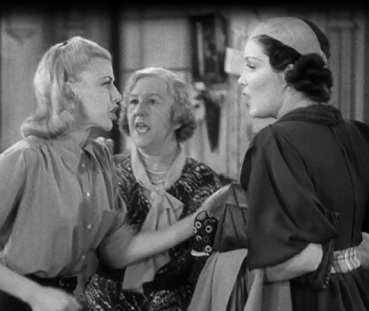
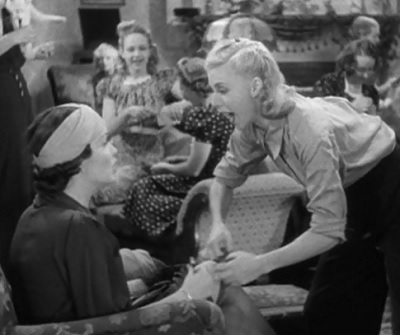
If you haven’t seen Jean (Ginger Rogers) squabble with Linda (Gail Patrick) in Stage Door, I envy you. It’s just such a pleasure. Three minutes into the movie, they are already at it: Jean thinks Linda has stolen her stockings—again—and she’ll forcibly remove them if she has to.

PatrickRogers-stockings-2
The two are roommates in the Footlights Club, a residence for aspiring stage performers, and their uncomfortably close quarters obviously are doing nothing for either’s temper. Linda denies the theft, calling Jean a “hoyden” and “guttersnipe.” Jean, sensitive to cracks about her class, says she’ll “slap [Linda’s] ears flat against the back of her head.” It takes the manager to prevent blows.

It’s the end of their relationship as roommates, but just the beginning of our enjoyment of their rivalry.

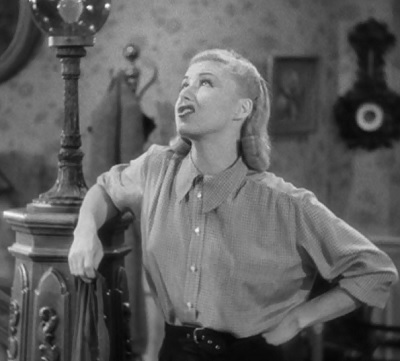
GingersRogersyellingupstairs
Jean particularly enjoys mocking Linda about her age and her lover, Anthony Powell (Adolphe Menjou).

“If you were a little more considerate of your elders,” Linda smirks to Jean, “maybe Mr. Powell would send his car for you someday….Course he would probably take one look at you and send you right back again. But then you’d have to expect that.”

“Oh, is that so?” Jean answers, imitating Linda’s superior tone.

“Do you know I think I could fix you up with Mr. Powell’s chauffeur?” Linda adds. “The chauffeur has a very nice car too.”

“Yes, but I understand that Mr. Powell’s chauffeur doesn’t go as far in his car as Mr. Powell does.”

“Even a chauffeur has to have an incentive,” says Linda.

“Well, you should know,” Jean snaps.

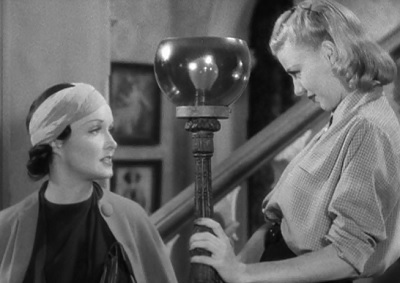
StageDoor-PatrickandRogers
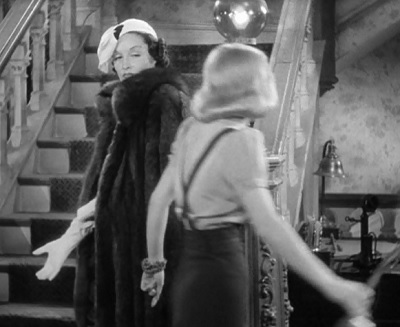
Although she judges Linda for sleeping with Powell, Jean still envies her for the rich food and garb her actions afford her. “Say, I think it’s very unselfish for those little animals to give up their lives to keep other animals warm,” she says, admiring Linda’s furs.

GingerRogersGailPatrickcoat
“You know they’re very smart little animals,” Linda answers. “They never give up their lives for the wrong people.”

“Well,” says Jean, “you understand the rodent family much better than I do.”

Unfortunately for Linda, Mr. Powell takes a liking to Jean, and hires her for a gig at his nightclub. Sitting next to her boyfriend, Linda realizes just whom he’s hired…

LindaSeesJean-GailPatrick
And Jean isn’t much happier to see her former roommate…

JeanseesLinda-GingerRogers
A few minutes later, Jean jabs at Linda with her cane, and the latter calls her “riffraff.”

Powell is curious about—but not put off by—Jean’s disinterest in him. “You don’t like me, do you?” he asks her.

“Oh, how could I help but like a man who takes his mother out to a nightclub,” coos Jean. “That was your mother you were sitting with?”

Jean decides to date him, even though he initially made her want to “run home and put on a tin overcoat.” How could she resist such revenge while getting a taste of the finer things in life?

AdviceGailPatrickGingerRogers
Linda tries to be philosophical about her lover’s betrayal, warning Jean it just better be temporary. “It’s one thing to borrow a friend’s friend,” she explains. “It’s another thing to hold him….”

Linda even gives her former roommate some advice, which, of course, is intended to poison their first date. “May I come in?” she begins, entering her room.

“Oh sure, I guess you’ll be safe,” Jean says, “the exterminators won’t be here till tomorrow.”

“How did they miss you on their last visit?” Linda quips.

StageDoor-GailPatrickGingerRogers
“Must be galling to you older women to lose your meal ticket to younger riffraff,” gloats Jean.

“Just a leave of absence, dearie,” explains Linda, “and in the meantime, I have my lovely sable coat and my star sapphire to keep me company.”

“It’s lovely, but I’m afraid you paid too much for it.”

The dialogue gives you a taste of these two together, but I can’t capture the chemistry, or the sparkling delivery—Ginger Rogers, with her snappy sarcasm, at her tough-gal best. Gail Patrick, with the flawless cool customer routine she perfected the year before in My Man Godfrey. The two together are magnetic.

The best part? There’s another rivalry in the film too—between Rogers and Katharine Hepburn, which is almost as fun.

For more dueling divas, check out the other entries in the blogathon!

Share
Posted in: 1930s films, Blogathons, Comedies (film), Feminism, Humor Tagged: Divas, fights, Gail Patrick, Ginger Rogers, Stage Door, women

The Oscar Snub No One Is Talking about: Ralph Fiennes in The Grand Budapest Hotel

01/22/2015 by leah@carygrantwonteatyou.com 4 Comments

MGustave-GrandBudapest-Fiennes
I know everyone is busy discussing the Selma Oscar snubs and Jennifer Aniston’s supposed one. The former film I haven’t seen yet, and Cake I won’t. Only when I scrolled through long lists of snubs would I find Ralph Fiennes, as if the omission of his name were insignificant, perhaps expected. Sigh. Of course it was. He’s in a comedy.

Ralph Fiennes is best known for his dramas; he was nominated for The English Patient and Schindler’s List. Harry Potter fans know him as Lord Voldemort. He can alternate between a terrifying serial killer (The Red Dragon, Schindler’s List, In Bruges), and a fragile intellectual (Quiz Show). That’s just the beginning of his impressive range. And in The Grand Budapest Hotel, he proves that he can be hilarious.

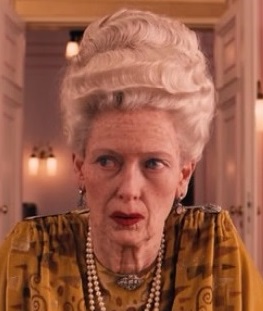
Well-respected comedic actors are honored by the Academy when they turn to drama: Bill Murray, Bette Midler, Cary Grant. But with few exceptions (Tommy Lee Jones in The Fugitive, for example), the process doesn’t go the other way. Where are Christopher Walken’s nominations for becoming one of the funniest men in film? How is it possible Gene Hackman didn’t get a nod for The Royal Tenenbaums? And if the Academy is considering nominating actresses merely for being willing to appear unattractive, what of Tilda Swinton’s hysterical showing in The Grand Budapest Hotel, surely the least vain performance I’ve seen in years?

TildaSwintonGrandBudapest
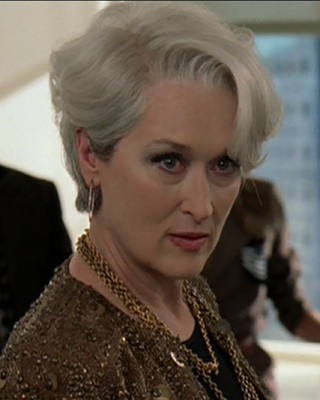
If it were so easy to switch from drama to comedy, I doubt one of—if not the—finest actresses of her generation, Meryl Streep (19 Oscar nominations and counting), would have struggled so much with it. Everyone may now recall when she had mastered comedy in The Devil Wears Prada, but it took her years.

The Devil Wears Prada

The Devil Wears Prada

Anyone remember She-Devil? Death Becomes Her? In Postcards from the Edge Streep was so bad I couldn’t even make it through the film. Her bravery is one of the things I value most about her: she let herself stink up the screen in order to improve her craft, not something many women with her dramatic chops would have braved. I suspect she pairs those two devil movies in her mind, appreciating how far she’s come.

She-Devil

She-Devil

And yet I’m to think Fiennes’s laugh-out-loud funny performance was easy?

Fiennes was getting early buzz for The Grand Budapest Hotel. Back in the spring, I thought he was a lock for a nomination. He could have been considered for Best Supporting Actor, given his role; technically, he wasn’t the star. Ethan Hawke was nominated; Ralph Fiennes wasn’t. Repeat that to yourself without laughing—or crying.

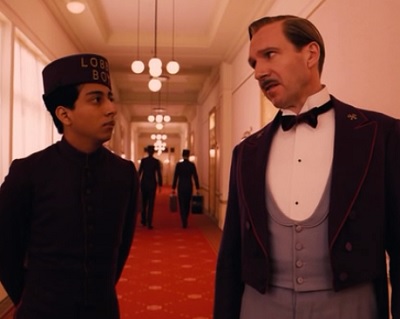
TheGrandBudapest-GustaveandZero
I admit that this is a tough year in the Best Actor category, but The Grand Budapest Hotel is tied for Birdman with nine nominations, and Fiennes carried his film from start to finish. Could I imagine another star in the others I’ve seen so far (4/8)? Yes. In The Grand Budapest Hotel? Absolutely not.

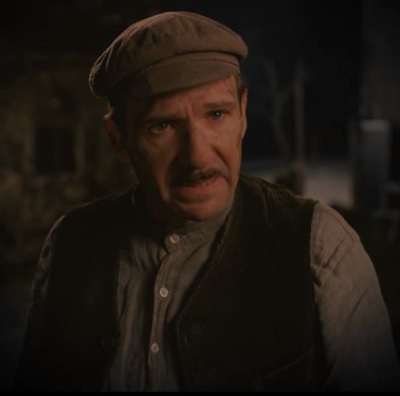
As M. Gustave, Fiennes is funny, original, moving. I have seen no other film this year that drew me in like this one, no other actor or actress who affected me more. Watch Fiennes’s quick transitions from elegance to crassness and see if you can stop yourself from laughing. Observe those nuances in his gestures, voice, and expressions that make Gustave’s mood changes from rage to tenderness convincing—and all in mere seconds (that’s all you get in a Wes Anderson film). When else have you seen a character simultaneously this funny and this heartbreaking, thanks to the actor playing him?

MGustave-GrandBudapest-Fiennes-1
If you haven’t watched the movie yet, do yourself a favor and rent it now. And if The Grand Budapest Hotel wins, tell me, in a movie riddled with big names, which actor helped the gifted Wes Anderson finally pull it off.

Share
Posted in: 1990-current films, Comedies (film), Oscars Tagged: Christopher Walken, Gene Hackman, Oscar snubs, Ralph Fiennes, The Grand Budapest Hotel, Wes Anderson

Some Like It Hot: Only for Men?

01/18/2015 by leah@carygrantwonteatyou.com 19 Comments

I know that the field of comedy has always been dominated by men. It’s no surprise that when humorous films are ranked, those most amusing to men lead the pack. But I still find it disturbing that the film the AFI considers the funniest of all time is one that gives me just a few laughs in its two hours of running time.

I’m willing to admit that I might be missing something in Some Like It Hot; after all, many women whose judgment I respect are fans of it, and I am an enthusiastic viewer of most of Billy Wilder’s work. But for what it’s worth, I’d like to vent a bit about why (for mainly gender-related reasons) I find this film that sounds so promising—two male musicians acting like women in order to travel with an all-female band—so annoying.

Daphne/Jerry (Jack Lemmon’s character): By Turns Annoying & Creepy
The script doesn’t help, but Lemmon is largely to blame for a very unfunny portrayal of a man turned on by his fellow female band members. His suggestive comments range from grating to disturbing, and his hyena laugh is Jim Carrey-annoying.

Take this scene: Jerry is in bed in his cross-dressing gear (i.e., as Daphne), when Sugar Kane (Marilyn Monroe) visits his train berth to thank him for a favor.

After the two get some drinks, Jerry says, “This may even turn out to be a surprise party.”
“What’s a surprise?” she answers.
“Not yet.”
“When?”
“Better have a drink first.”
“That’ll put hair on your chest.”
“No fair guessing.”

He then protests other women crashing his party, as it’ll ruin his surprise. I tried not to examine the logic of this scene too closely, but unfortunately, Lemmon’s delivery added to my initial reaction. Does this face look like seduction to you?

LemmonandMonroe-trainberth
If there were any hint of self-deprecation here, any understatement, the scene might have played as lighthearted, with a hint of, I don’t know, possible participation from Monroe. But with Lemmon’s high-pitched, broad delivery and leer, I felt uncomfortable, not amused. Look, this isn’t It’s Always Sunny in Philadelphia, in which the humor is based on the immorality of its leads. We’re supposed to empathize with this man, not wish to warn Sugar Kane there’s a pervert on the loose.

Once Lemmon is being courted by a man and his energy dissipates into snarly comments and stiff movements, he’s quite amusing. I particularly enjoyed when he starts to really get into his gender ambiguity as he dances.

LemmontangoingSomeLikeItHot
I just wish we could have had more of that and less of his flirtatious mood with Sugar and the other band members.

Joe/Josephine (Tony Curtis) a Bore—Until He Becomes a Pseudo-Millionaire
I’m not a fan of Tony Curtis’s. With the exception of Sweet Smell of Success, I tend to dislike his films, finding him too smugly pleased with himself, too much the “Matthew McConaughey of his generation,” as my sister puts it. While his low-key portrayal in Some Like It Hot is a welcome break from Lemmon’s energy, he takes his lethargy too far. It seems watching Lemmon’s hypercaffeinated performance caused Curtis to nap his way through the script.

But once Curtis (as Joe) ditches the dress and takes on a different costume, he is quite amusing. He has dressed himself in what he deems sophisticated clothing, complete with a cap and metal buttons. He wants to convince Sugar he’s from old money.

CurtisandMonroe
When he speaks, it’s with Cary Grant’s accent. I like the layers of jokes here, even if they’re anachronistic given the movie’s 1929 timeline: Joe is so unfamiliar with well-born men that he mimics a movie star’s imitation of one. (Admittedly, this wasn’t a bad choice: Grant was so convincing in his own portrayal of a blue blood that he probably convinced 90 percent of us.)

As the Shell millionaire he’s aping, Joe can be quite funny. I like when he mistakes a stuffed swordfish for a member of the “herring family.” Curtis is far more animated in these scenes, and the script so much stronger than in the rest of the movie. Joe’s description of his love’s death is funny, and his details about his family’s attempts at a cure for his heartache—a French maid, a troupe of Balinese dancers—are hilarious.

Male Fantasy Scenes Played as Realistic
I don’t know about you, but when I’m traveling with a bunch of female friends, I tend to relax in lingerie like this:

Marilynlingerie
I prefer to cuddle up to my companions, especially ones I’ve just met, to get as much skin-on-skin contact as possible.

MarilyncuddlingwithLemmon
And on the beach, I like to spend my time tossing a ball to my pals in a provocative fashion.

If this kind of scenario is played as fantasy, I find it funny. But when I’m supposed to take it as a given, with the humor to be found elsewhere, I’m so busy rolling my eyes that I miss the action. Look, I understand that Hollywood wants to show some skin, especially in a film featuring Marilyn Monroe. And I’ll admit I’m jaded from one too many sorority house/girls’ locker room scenes of a similar nature. Admittedly, I have seen much worse in other movies; at least all of the women in the band aren’t dressed like this (just the most attractive ones, as they always eschew comfort for sexiness, right?)

If they’re played as campy, how funny scenes like these can be! But if they aren’t, I tend to look up the screenwriters and confirm my suspicion—yep, written by men, probably ones who’ve spent too much time on adult-only channels/sites. Am I the only one who thinks humor works best when it’s based on actual human behavior, not teen boys’ daydreams?

Missed Opportunities in the Script
Cross dressing is almost always funny in film, and Curtis and Lemmon are so unattractive as women, and so obviously male, that it makes the gullibility of those around them funny in itself. Initially, their disgust at the casual chauvinism of the other hotel guests is entertaining too, as when Daphne gets pinched and Josephine is propositioned by the bellboy. Pity that there’s no accompanying recognition of their own chauvinism, as without it, we’re left mainly with tired gags about breasts, high heels, etc. While occasionally both of the men (and the script) give a fun twist to their adoption of female clothing and mannerisms, in most scenes, I didn’t see anything new.

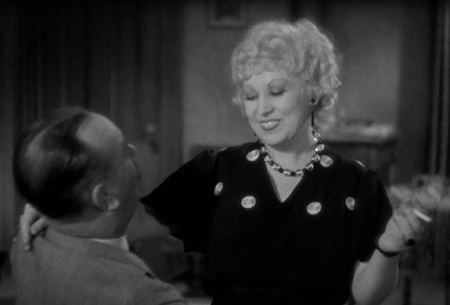
Of course, I know that this territory is much better canvassed today than in 1959, when it would have been far more scandalous. Still, the stars’ parents would have found the film tame; it’s impossible to be shocked by men in tights and Marilyn’s walk when earlier (pre-Code) movies portrayed women sleeping to the top and cheating on their husbands to get even—without judgment. Let’s not forget that Mae West had drag queens in her 1927 play, and planned to feature them in her next before the censors stepped in.

I know there are times when repetition of references, as we often see in Some Like It Hot, is funny. I still laugh every time I hear the name Mr. Bigglesworth. But those references only continue to be amusing if they were particularly funny—and ideally fresh—to begin with. I was disappointed to find that a writer/director who in an earlier film (with Charles Brackett) defined craziness as giving an engagement gift of a “roller skate…covered with Thousand Island dressing” would (with I.A.L. Diamond) resort to lines as flat as these: “I’ve got a funny sensation in my toes, like someone was barbequing them over a slow flame.”/ “Let’s throw another log on the fire.”

One Reason to Watch: Sugar Kane
Monroe is mesmerizing as Sugar Kane. She is, of course, unbelievably attractive in the movie.

Marilynsinging
And she manages to turn what could have been a brainless blonde stereotype into something believable, even touching. I particularly enjoyed her effort to convince Joe-as-Shell-millionaire that she has a sophisticated background. While he comes across as conniving and silly in his con, her performance is moving and honest and funny in spite of her lies. While she fabricates a Bryn Mawr education, she conceals nothing else, and her openness makes her deceptions so obvious they might as well not be deceptions at all.

It might seem that I hated this movie. I didn’t. In fact, I enjoyed the first 25 minutes or so, after which I just kept hoping it would improve in the interludes between Monroe’s perfect delivery of her lines. But the film’s undeserved reputation infuriates me. I can’t help wondering if I were a woman new to classic comedies and started with this one, would I have kept watching?
This post is part of the Contrary to Popular Opinion Blogathon, where we set the consensus on its head by defending a maligned film, performer or director or toppling a beloved one! Check out the other entries.
contrary-blogathon-7

Share
Posted in: 1950s films, Blogathons, Comedies (film), Feminism Tagged: Billy Wilder, It's Always Sunny, Mae West, Marilyn Monroe, Matthew McConaughey, Mr. Bigglesworth, Some Like It Hot, Tony Curtis
« Previous 1 2 3 4 5 6 7 8 9 10 Next »

Recent Posts

  • 100 Years Later, Still Scary: Dr. Caligari
  • Escaping Out of the Past (1947)
  • A Weeper for Those Who Love Jerks
  • Thank You, Academy, for Not Infuriating Me
  • Challengers (2024) Is a Bad Movie

Subscribe to Blog via Email

Enter your email address to subscribe to this blog and receive notifications of new posts by email.

Categories

  • 1920s films
  • 1930s films
  • 1940s films
  • 1950s films
  • 1960s films
  • 1970s films
  • 1980s films
  • 1990-current films
  • 2020s films
  • Action & Sports Films
  • Anti-Romance films
  • Blogathons
  • Childfree
  • Comedies (film)
  • Drama (film)
  • Feminism
  • Femme fatales
  • Film Noir/Crime/Thriller & Mystery
  • Gloriously Silly Scenes
  • Horror
  • Humor
  • Mae West Moments
  • Musicals and dancing films
  • Oscars
  • Random
  • Romance (films)
  • Romantic Comedies (film)
  • The Moment I Fell for
  • Turn My Sister into Classic Movie Fan
  • TV & Pop Culture
  • Uncategorized
Share
Classic Movie Blog Hub Member

Recent Comments

  • leah@carygrantwonteatyou.com on Meg Ryan’s Fate Foretold in Joe Versus the Volcano
  • Ryan on Meg Ryan’s Fate Foretold in Joe Versus the Volcano
  • leah@carygrantwonteatyou.com on 100 Years Later, Still Scary: Dr. Caligari
  • The Classic Movie Muse on 100 Years Later, Still Scary: Dr. Caligari
  • leah@carygrantwonteatyou.com on 100 Years Later, Still Scary: Dr. Caligari

Archives

  • November 2025
  • September 2025
  • May 2025
  • March 2025
  • January 2025
  • November 2024
  • August 2024
  • July 2024
  • May 2024
  • March 2024
  • February 2024
  • December 2023
  • November 2023
  • October 2023
  • September 2023
  • August 2023
  • July 2023
  • May 2023
  • April 2023
  • March 2023
  • January 2023
  • December 2022
  • November 2022
  • September 2022
  • July 2022
  • May 2022
  • April 2022
  • March 2022
  • February 2022
  • October 2021
  • September 2021
  • April 2021
  • March 2021
  • February 2021
  • December 2020
  • October 2020
  • September 2020
  • July 2020
  • May 2020
  • April 2020
  • March 2020
  • February 2020
  • December 2019
  • October 2019
  • September 2019
  • June 2019
  • May 2019
  • April 2019
  • February 2019
  • January 2019
  • November 2018
  • September 2018
  • July 2018
  • June 2018
  • May 2018
  • April 2018
  • March 2018
  • February 2018
  • January 2018
  • November 2017
  • September 2017
  • August 2017
  • July 2017
  • June 2017
  • May 2017
  • April 2017
  • March 2017
  • February 2017
  • January 2017
  • December 2016
  • November 2016
  • October 2016
  • August 2016
  • July 2016
  • June 2016
  • May 2016
  • April 2016
  • March 2016
  • February 2016
  • January 2016
  • December 2015
  • November 2015
  • October 2015
  • September 2015
  • August 2015
  • July 2015
  • June 2015
  • May 2015
  • April 2015
  • March 2015
  • February 2015
  • January 2015
  • December 2014
  • November 2014
  • October 2014
  • September 2014
  • August 2014
  • July 2014
  • June 2014
  • May 2014
  • April 2014
  • March 2014
  • February 2014
  • January 2014

Meta

  • Log in
  • Entries feed
  • Comments feed
  • WordPress.org

Copyright © 2025 Cary Grant Won't Eat You.

Church WordPress Theme by themehall.com