Cary Grant Won't Eat You

Classic movies for phobics

  • About
  • eBooks
  • Previous Blogathons
Classic movies for phobics

Comedies (film)

5 Classic Film Costume Ideas–& What They’ll Be Mistaken for

10/27/2015 by leah@carygrantwonteatyou.com 2 Comments

Inspired a fashion blogger’s posts on Halloween options, I started thinking about potential costumes from classic film. I have recs for those of you stuck for ideas. Sure, your peers who don’t know the classics will mistake the character you’re playing, but if the costume is sharp, fun, or clever, who cares? Here are five suggestions:

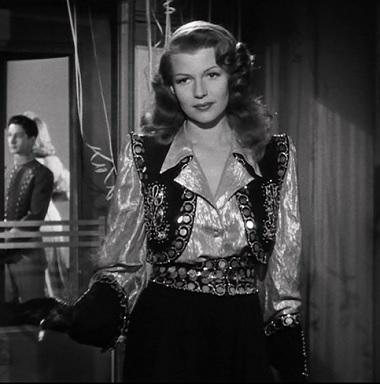
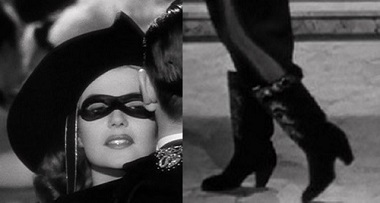
Gilda‘s Carnivàle Outfit

RitaCarnivaleoutfit-Gilda
The heroine’s (Rita Hayworth’s) stylish get-up has two major advantages:

  1. It’s fabulous.
  2. It has wonderful accessories:

GildaCarnivaleaccessories
You’ll Likely Be Mistaken for:
Zorro’s love interest

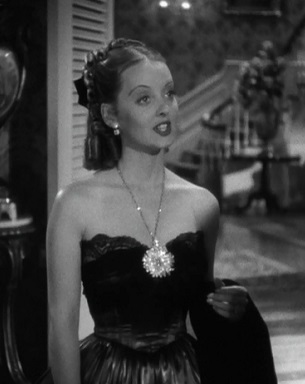
Jezebel‘s Red Dress

Jezebel-BetteDavis
Who hasn’t wanted to wear the dress that stops everyone short? And what gown in film had more impact than the one that branded Julie (Bette Davis) a fallen woman in front of her whole society? Plus, the dress is gorgeous.

You’ll Likely Be Mistaken for: A devil without her pitchfork, a bad angel sans wings, or just a gal who wants an excuse to wear an Oscars dress

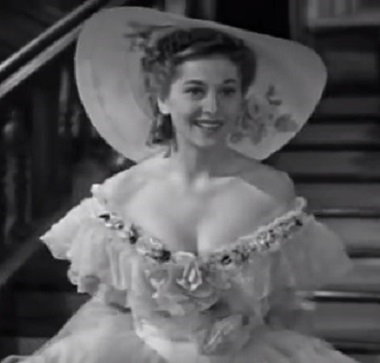
The Disastrous Dress from Rebecca

RebeccaJoanFontaine
The gown is a bit frilly, but putting on Rebecca’s character for the creepiest night of the year? Yeah, you could get into that. Of course, you could play it meek too, acting as the narrator, since both pick the same dress for the masquerade. Up to you. Some crinoline, a hat, some flowery details–you’ll have it.

You’ll Likely Be Mistaken for: Scarlett O’Hara (It’s a poofy dress. Who else could you be?)

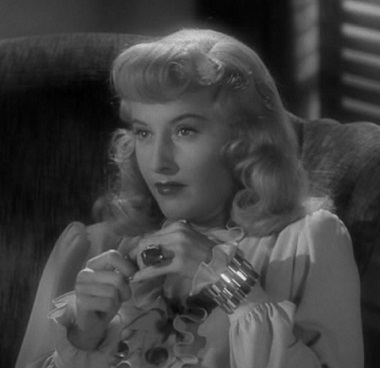
Phyllis Dietrichson from Double Indemnity

PhyllisDoubleIndemnity-Stanywck1
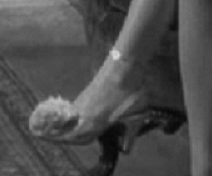
This is the budget option. As any smart Halloween shopper will tell you, you should skip the all-in-one packages in the costume store, and take a tour down the accessory aisle. Anyone can discover a sweater set or fussy dress at home or in the vintage shop. And it isn’t hard to find a wretchedly, embarrassingly bad blonde wig for less than twenty bucks, or some gloriously tacky jewelry. You might even have some from last year’s festivities. Just don’t forget those crazy feminine shoes–and, of course, the anklet:

PhyllisankletDoubleIndemnity
The best part? If you wear a wig–any wig–on Halloween, you really can’t go wrong.

You’ll Likely Be Mistaken for: George Washington or his wife Martha in modern gear (as was Barbara Stanwyck).

Shanghai Lily

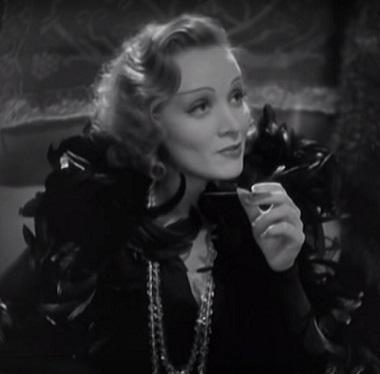
ShanghaiExpress
If you don’t gush over the fashions in Shanghai Express, head straight to the optometrist. Prostitutes in ’30s Shanghai had quite the budget, if Lily (Marlene Dietrich) is any indication. She’s costumed to the hilt in boas, feathered caps, furs, long gloves, and silk. For any woman who wants glamour in her life, Lily’s style is salivation material.

You’ll Likely Be Mistaken for: A generic femme fatale (close!)

There you have it. Five options for those seeking Halloween inspiration. What are favorites of yours?

Share
Posted in: 1930s films, 1940s films, Comedies (film), Drama (film), Humor, Random Tagged: classic film, costume ideas, Halloween

Falling for Charles Coburn, Matchmaker Extraordinaire

09/27/2015 by leah@carygrantwonteatyou.com 6 Comments

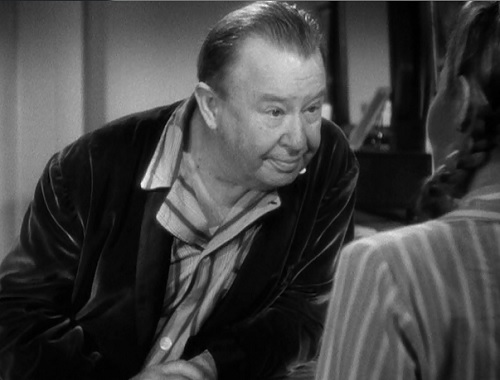
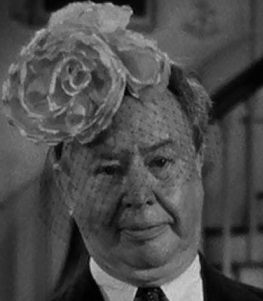
Coburnadvice
Has there ever been a Cupid more charming than Charles Coburn?

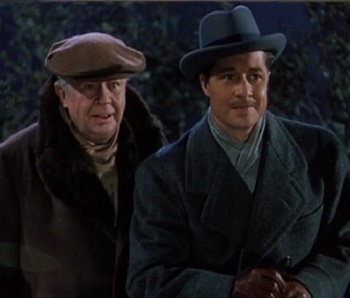
He smartens up the debonair Henry Van Cleve (Don Ameche), ensuring he doesn’t lose his lovely wife, Martha (Gene Tierney) in Heaven Can Wait (1943).

CharlesCoburnwithDonAmeche
He pushes his widowed daughter-in-law (Irene Dunne) into frivolity and a new chance at love with sculptor George Corday (Charles Boyer) in Together Again (1944).


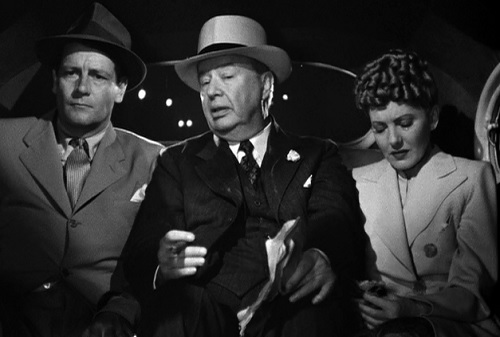
And in The More the Merrier (1943) he unites conservative Connie (Jean Arthur) and Joe (Joel McCrea), with machinations so wonderful and so amusing that they almost distract from his costars’ considerable chemistry.

McCreaCoburnArthur
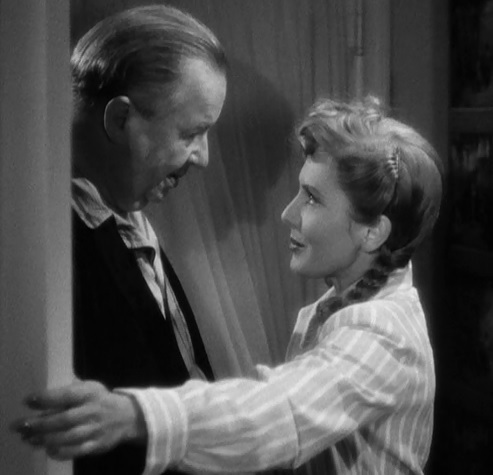
There was a moment when I was watching him bustle around, trying to follow Connie’s morning schedule, that I realized I truly loved this man, was terribly envious of everyone encountering him. Connie may ultimately fall for Joe, but I think we all can see that those arrows have hit more than one target.

ArthurandCoburn
I defy anyone to spend time with someone this wise, this funny, this blunt–every time, in every film–and be able to resist him. No wonder he matches up so many couples, so many times. They fall for him first, and then even those most resistant to love begin to listen….

Share
Posted in: 1940s films, Comedies (film), Romantic Comedies (film), The Moment I Fell for Tagged: Charles Coburn, Heaven Can Wait (1943), The More the Merrier (1943), Together Again (1944)

The Sexy Men of the Highlands: The Three Stooges?

09/20/2015 by leah@carygrantwonteatyou.com 2 Comments

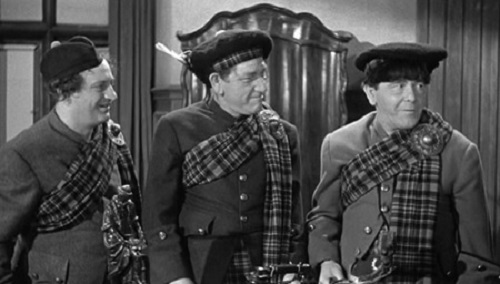
ThreeStoogesHotScots
Having spent Saturday at the New Hampshire Highland Games & Festival, I’ve got bagpipe music still ringing in my ears, and tartan on the brain. I witnessed feats of strength that included FLIPPING an 130-pound log. Some star from Game of Thrones (aka the Mountain) even set a world record throwing a weight over a high bar, apparently a repeat performance. It looked about as effortless as the rest of us tossing a ping pong ball.

Naturally, I’ve been scanning for Scottish movies in hopes of extending my memories of men in kilts, especially since I don’t have time just now to be swept into Volume 2 of Outlander (whose Jamie, naturally, had a cardboard statue at the Fraser clan tent). Encountering an entry called “Hot Scots” on Wikipedia, I assumed some early Chippendalish, Magic Mike embarrassment was to be found, only to discover that the entry was referencing an episode of The Three Stooges.

Now I don’t think “hot” when I hear the names Moe, Larry, and Shemp. I don’t think I’m alone in that. But, like Tom Petty and the Heartbreakers after them, the three sure did excel at making fun of themselves, and that made the episode worth a look.

The plot of the episode is about as flimsy as you’d guess: the stooges decide they want a job at Scotland Yard, and have mistaken a garden cleanup employment ad for an investigative one. After fouling up that simple task, they discover a posting calling for detectives in Scotland, and equip themselves with kilts and Mcs in front of their names for the job. After hearing their accents, their new client inquires what part of Scotland Shemp is from. Moe explains that Shemp is from the south, “below the McMason-McDixon line.”

Their client wants his possessions protected as he’s off at a clan meeting, and of course, the stooges utterly fail to notice his entire staff taking everything he owns. There’s even a Scooby Doo moment when Shemp fails to notice a masked robber isn’t Larry.

ShempasScooby
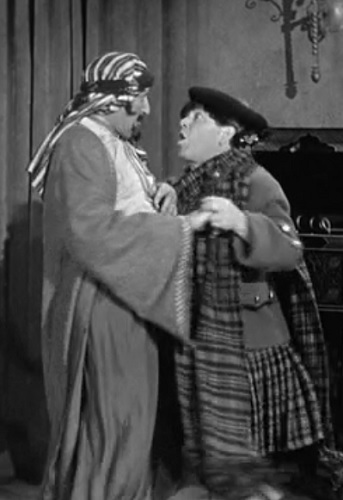
And another when Moe thinks he’s still dancing with the client’s comely assistant, and is actually doing a reel with her scary accomplice.

MoeandThief
The episode, of course, is saturated with silly sound effects and the stooges whacking each other with sticks and clubs. I’m not a huge stooges fan–their humor is a little too exclusively physical for me–but somehow, the style is so suitable for the weird way we celebrate the Scottish, and the many spills reminded me of my favorite scene from Mike Myers’ comedies: The infamous “We have a piper down!”  wedding clip from So I Married an Axe Murder.

Give “Hot Scots” a try if you want a break from work or the news this week. You can find it on Amazon Instant, The Three Stooges Collection, 1946-48, Episode 15, and of course, YouTube. I think we can all use some silliness about now…

Share
Posted in: 1940s films, Comedies (film), Humor, Random Tagged: Hot Scots, Mike Myers, Outlander, Scooby Doo moment, The Highland Games, The Mountain Game of Thrones, The Three Stooges, We have a piper down

Mae West Schools the Teacher

09/06/2015 by leah@carygrantwonteatyou.com 4 Comments

WestandtheTeacherNightafterNight
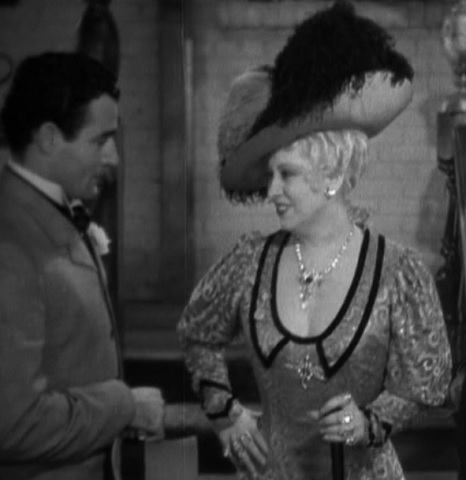
A prim school teacher & Mae West. Almost a century later, this coupling seems inspired. But in 1932, nobody knew that. West was a vaudevillian, not a movie star. Her role as Maudie, an ex of the lead, Joe Anton (George Raft), was a minor part in her first film, Night after Night. She didn’t even enter the picture until a half hour in.

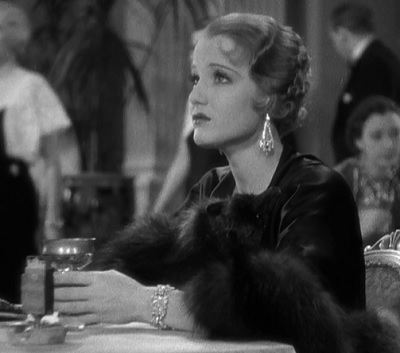
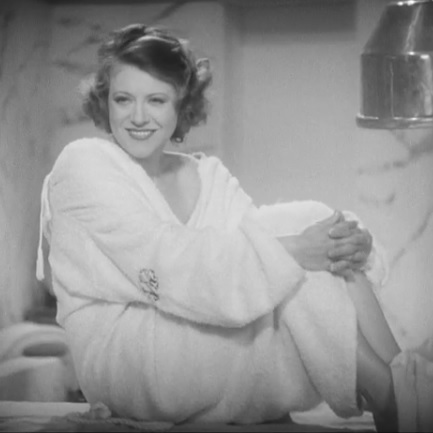
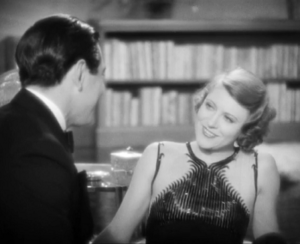
The script of the movie is bland, the story plodding. Joe, the owner of a mansion-turned-speakeasy, is fascinated by Jerry Healy (Constance Cummings), the mysterious beauty who shows up at his place every night unattended. He discovers that her family owned his mansion before the market crash.

ConstanceCummings-NightafterNight
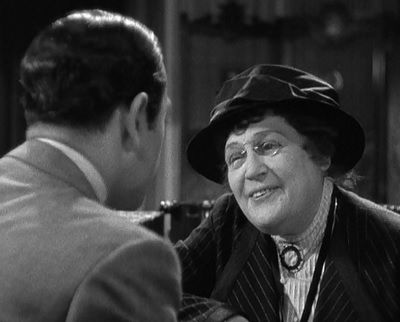
Joe has been dissatisfied lately, aspiring to a classier existence. He’s even hired a tutor, Miss Mabel Jellyman (Alison Skipworth), to improve his elocution, grammar and knowledge of current events–the type of lady who gets prissy when he uses words such as “got.”

Speakeasy owner & tutor
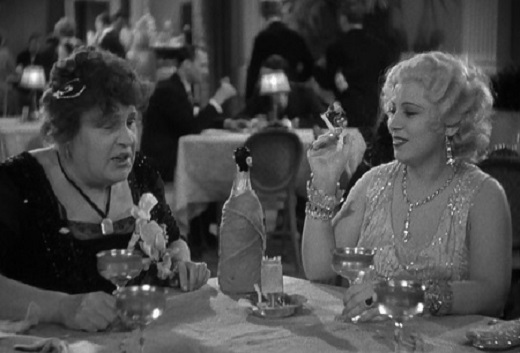
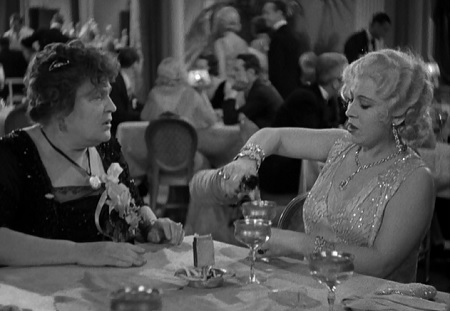
He thinks Jerry will lead him to a better life, but he needs the tutor’s help to win her. He invites Jerry for dinner at the speakeasy, and begs Jellyman to come along. The tutor is thrilled at the chance to hang out in a speakeasy and have some fun, but what a drag to be on such a date! Joe’s attempts at sophistication are painful, the conversation stilted. Everyone at the table is bored and uncomfortable.

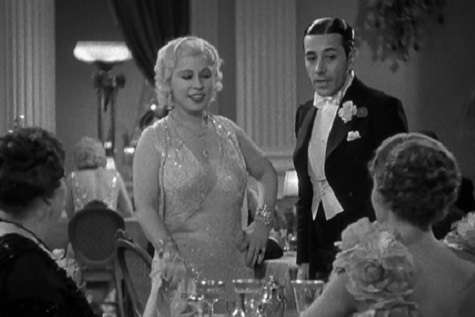
Then Maudie (West) enters the room.

MaudiesarrivalNightafterNight-WestRaft
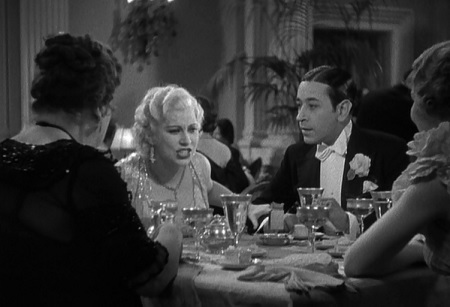
Within five minutes, she has decimated Joe’s fragile rep, having laughed about his love for the ladies, drunkenness, and a jail visit in quick succession.

WestasMaudieNightafterNight
“Oh Joe,” she concludes, “it’s just life to see you,” echoing our impressions of her arrival. She has completely redeemed his date (and the existence of the film). Finally, Jerry is enjoying herself.

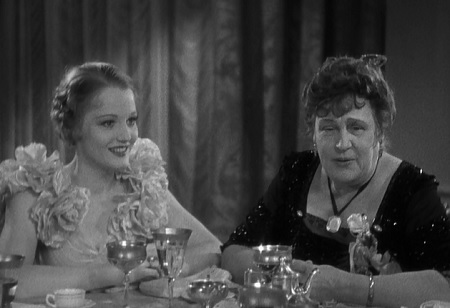
JerryandJellyman-NightafterNight
But clueless Joe urges Jerry to leave with him to tour the house. Jellyman, soon drunk thanks to Maudie’s generosity with the bottle, protests when Joe offers a cab before leaving them. “I don’t want to go home,” she complains. She turns to Maudie, “He said I didn’t have to.”

“Yeah, we’re gonna make a night of it,” Maudie agrees. “You go ahead,” she tells Joe, “we gotta talk it over.”

“Maudie and I have a great deal in common,” Jellyman explains to Joe.

“You said it, baby,” agrees the partying blonde, without a trace of irony.

Once they’re alone, Jellyman asks anxiously, “Maudie, do you believe in love at first sight?”

“I don’t know, but it saves an awful lot of time,” she quips.

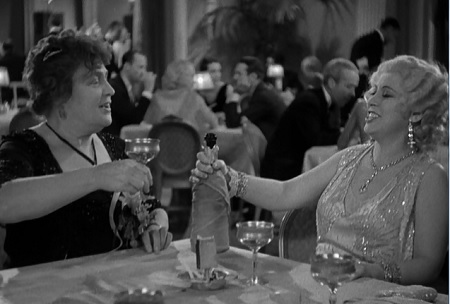
Jellyman protests when Maudie refills her class, to which our heroine responds, “Now listen, Mabel, if you’re gonna be Broadway, you gotta learn to take it, and you may as well break in the act right now.”

MaudieandJellyman-MaeWest
“I say, this night will read great in your diary,” she adds.

“You said it, baby,” Jellyman agrees, her education from Maudie having advanced dramatically in minutes.

WestenjoyingteacherNightafterNight
“Maudie, do you really think I could get rid of my inhibitions?” Jellyman asks.

“Why sure,” Maudie tells her, “I’ve got an old trunk you can put them in.”

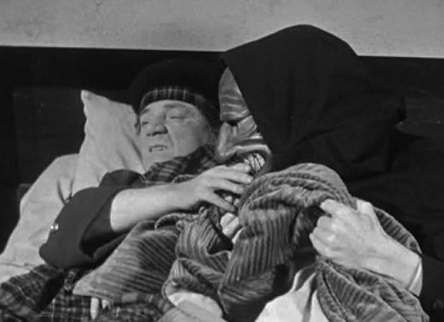
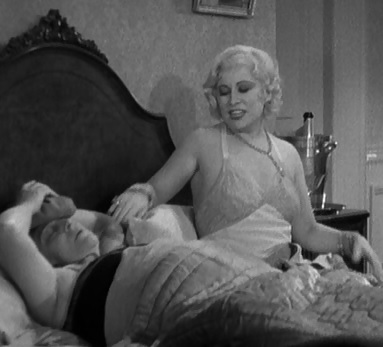
The next time we see the two of them, they’re in bed together at Joe’s after a bender. It does the heart good to witness them:

WestandSkipman
West only agreed to play the part of Maudie if she could write her own scenes. Thank goodness she did. Supposedly, Raft later claimed West “stole everything but the cameras.” What he didn’t say is that none of us would have wanted to see the film at all, had she not.

For more of my monthly West posts, click here.

Share
Posted in: 1930s films, Comedies (film), Feminism, Mae West Moments, Romantic Comedies (film) Tagged: Mae West, Night after Night

Female’s Heroine: 1933’s Amy (of Trainwreck), Samantha Jones, or Don Draper?

08/27/2015 by leah@carygrantwonteatyou.com 4 Comments

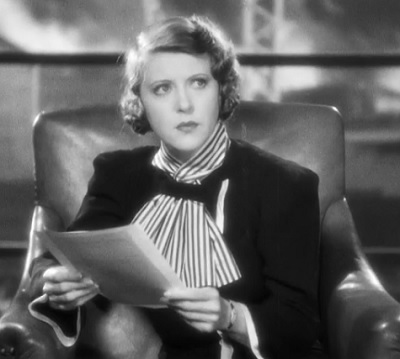
RuthChattertonFemalefilm
Given its plot synopsis, I expected Female to be shocking: a promiscuous executive casually sleeps with men until she finds the right guy. But I didn’t expect to gasp at its daring. A few of the heroine’s typical comments:

Falling in love: “To me, a woman in love is a pathetic spectacle. She’s either so miserable that she wants to die, or she’s so happy you want to die.”

Marriage: “No thanks, not me. You know a long time ago I decided to travel the same open road that men travel, so I treat men exactly the way they’ve always treated women.”

Husbands: “Of course, I know for some women, men are a household necessity. Myself, I’d rather have a canary.”

Then there’s a typical night. She…

1. Spots a handsome employee, feigns interest in his ideas, and asks him to come over to her house that night to discuss them.

2. Discourages business talk with flirtation, as when she says, “Are you naturally enthusiastic?” to a new hire, throwing a pillow onto a plush rug with a suggestive look.

RuthChattertonflirting2
3. Orders vodka from her butler, who informs the rest of the staff of the Catherine the Great custom: serving it to soldiers “to fortify their courage.”

4. Exercises with vigor the next morning, clearly energized by the tryst, and comes up with new ideas for the business.

5. Rejects the romantic overtures of her one-night stand, annoyed by his flowers, then offers him a bonus as a kiss-off. She doesn’t want to deal with the moodiness of emotional men at work. (Women, how many times have films suggested this about us?)

At first, I thought the movie would be like Trainwreck, as Alison (Ruth Chatterton) certainly displays the same level of disinterest in building a romance with her one-night stands and blows off a guy after he calls her “ethereal” and otherwise indicates their lack of sexual heat:

Annoyed by his flowery (nonsexual) language
Amy and Alison have an impressive list of conquests, and not only express disinterest in matrimony and kids for themselves, but for others, as when Alison can’t be bothered to remember her friend’s husband’s name, or how many kids she has–much like Amy’s (Amy Schumer’s) scene at her sister’s shower. Both heroines are funny and mostly likable, as when Alison worries about her chauffeur, who has taken a punch in her honor: “Now listen, Puggy, things people say about me don’t bother me,” she says with a lovely smile. “Thanks just the same.”

But in terms of power–and what they do with it–there’s no comparison. After one-night stands fueled by liquor, Amy, hungover, struggles to get through the day.

AmySchumerTrainwreck
Alison, in contrast, looks alert, pretty, and pleased with herself, and does a brilliant job at work afterward. The word “trainwreck” is about as far from Alison Drake as a term can be.

Like her more direct heir, Samantha Jones, Alison practically bristles with authority and confidence, but unlike Samantha, she has a whole auto factory full of employees.

RuthChatterton-businessFemale
One criticism of Sex & the City was that it never took the work as seriously as the characters’ personal lives, which made it less feminist than it could have been. Here, the heroine has no chance for tight friendships, but finds her work thrilling: “Oh, but I love it: the battling, the excitement; I don’t think I could do without it now.” I soon found myself as interested in the business–such as her decision to go with automatic transmission–as in the flings, not something I expected to experience with a romantic comedy.

Like Samantha, Alison wants to sleeps with her hot employees–only in Alison’s case, she does. (Samantha waits to fires hers first).

SamanthaJonesandrudeassistant
In fact, Alison has sex with so many of them that there are a flood of bonuses on the company payroll, like some kind of stud fee. Her leer at a new designer is as hilarious to witness as Samantha’s undressing looks. And as with Samantha, her vulnerabilities are evident–in her case, a fear that men are angling for her money rather than her personality or body (either would be fine).

While it’s easy to admire Alison’s moxie, she’s guilty of sexual harassment throughout the story, as when her secretary shows her too much affection after their affair, and she transfers him to Montreal. Promptly afterward, this lovesick conquest watches the latest one-night stand leave her office and calls, “I’ll see you in Montreal.” When Alison falls for Jim (George Brent), mainly because he’s hard to get, his anger at her regular nightly ploy earns our admiration; he won’t sleep with her to keep his job, he retorts.

GeorgeBrentFemale
While she initially decides to fire Jim’s secretary, assuming the two are involved, and then plans to overload her with work, she quickly reconsiders, deciding not to be petty. While she’s still in murky moral territory due to her liaisons with subordinates, she doesn’t reach full anti-villain status, since she won’t fire someone for turning her down or stealing her guy. Still, it’s hard to forget that shady transfer…and how much she reminds us of Don Draper with his secretaries on Mad Men.

I stopped the film multiple times as the end neared, fearful about whatever sexist cliché it was headed for. This character was simply too complex, and Chatterton too wonderful in the role, for me to watch some reductive conclusion.

RuthChattertoninFemale
I was right to be scared (though I feared it would be worse). Oddly, Jim, till then annoying in spite of his rebellion, demonstrated unexpected feminist leanings near the close. Too bad the screenwriters and director chickened out and tacked on totally unbelievable concluding lines.

Despite its shock value and fascinating lead, the film hasn’t reached the popularity or accessibility today it deserves. I could only locate it in DVD form on Netflix, and went for the free month trial of streaming with Warner Archive instead. Go to the effort; it’s worth it.

Share
Posted in: 1930s films, 1990-current films, Anti-Romance films, Comedies (film), Feminism, Romantic Comedies (film), TV & Pop Culture Tagged: ahead of its time, Amy Schumer, Female (1933), Mad Men sexism, promiscuous women, Ruth Chatterton, Samantha Jones, Trainwreck

Top 10 Characters in Teaching Films & Shows

08/20/2015 by leah@carygrantwonteatyou.com 2 Comments

As the school year begins, I’ll be returning again to my favorite educational films–some inspiring, some hilarious. Here are the characters and performances I consider award worthy.

THE TEACHERS: 5 BEST CHARACTERS

5. Mr. Shoop in Summer School (1987)

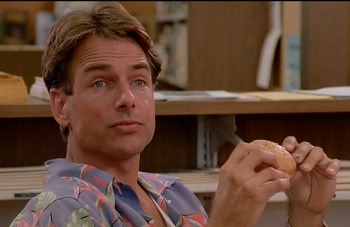
HarmonSummerSchool
Gym teacher Mr. Shoop (Mark Harmon) plans to vacation in Hawaii with his girlfriend for the summer, but when the English teacher wins the lottery and immediately quits, Shoop’s forced to teach remedial English. He is the most likable of the teachers I’ve chosen, easygoing and even tempered, good natured even when tried. Ultimately, his slacker ways convert into effort in the classroom, and because he relates to and has no illusions about his students’ disinterest, he’s able to reach them. Most importantly, he has rational expectations of them, and celebrates progress rather than any specific target, as any good teacher should (and would be able to, would the system allow it). Plus, the film is hilarious, and Harmon is so attractive in it.

4. Elizabeth Halsey in Bad Teacher (2011)

Halsey-Diaz-BadTeacher
Cameron Diaz doesn’t always reach her comic potential, but when she does, as with Elizabeth Halsey (Cameron Diaz) in Bad Teacher, she’s something to watch. The montage of her avoidance of crying students and celebrating teachers makes me laugh every time, as does her unabashedly sexy school car wash and cruel honesty in speaking with her class and grading their work. She is a terrible teacher, but her narcissism and bluntness make her a very, very funny one.

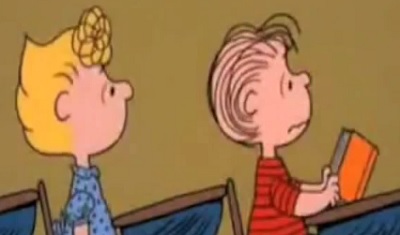
3. Teachers in Ferris Bueller’s Day Off (1986) & Peanuts

BenSteinFerrisBueller
If pressed, I’d prefer Peanuts‘ gibberish teacher to Ben Stein’s gloriously boring one, but the two are closely tied. Obviously, both types are accurate portrayals of how instructors come across to students. I love how Stein has given upon class participation, simply saying, “anyone, anyone?” then answering himself. But Peanuts’ teacher may get the edge because I have this same reaction ANY time I encounter something I don’t understand. My car is being fixed, I’m listening to explanations of the U.S. debt, and I hear that waa-waa-waa of Peanuts’ comically confusing instructor.

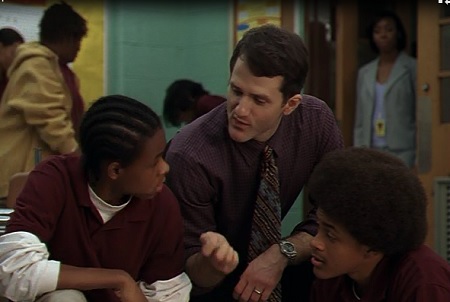
2. Prez in The Wire (2006)
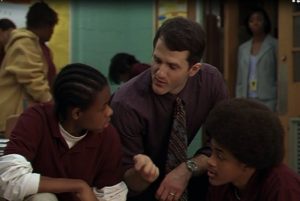
PrezandStudentsTheWire
Season 4 of The Wire features the Baltimore school system, with former cop Roland Pryzbylewski, known as Prez (Jim True-Frost), teaching the students from neighborhoods he formerly policed. As a result, he knows what his students are up against, though he isn’t prepared for the challenge of teaching them. I’ve never seen a more accurate depiction of teaching in a difficult district. Prez’s use of gambling odds as an example to finally reach some of his students in the episode “Unto Others” is remarkably telling about their priorities–and squandered potential. We can only wish that those who had more influence in the system were as wise and compassionate as Prez.

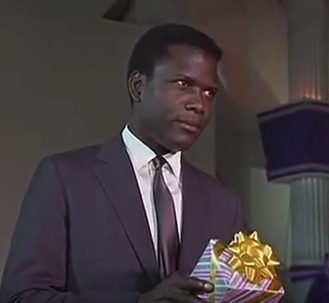
1. Sir in To Sir, with Love (1967)
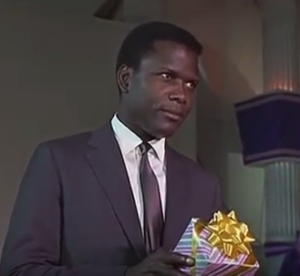
SidneyPoitierToSirwithLove
Sir’s (Sidney Poitier) school district in England is characterized as very challenging, even if it looks less so to us in 2015. We see him constantly thwarted, and frequently angry. His race becomes one more thing students have against him. His decision to throw out the lesson plan and begin anew is what any good teacher would do if it were allowed–the problem, of course, is that you only want good teachers doing so.

What I love about Sir is that he’s a reluctant instructor, only there because he can’t get a job in his field, and slowly, these rebellious kids win him over. He is a very flawed character, even socially awkward, and thus very real. Poitier deserved an Oscar for the performance. The theme song makes me tear up every time. And the film has such a lovely, perfect, subtle ending. The movie is inspiring without ever losing track of reality (as most teacher-centric films do).

THE STUDENTS: TOP 5 PORTRAYALS

5. Spicoli in Fast Times at Ridgemont High (1982)
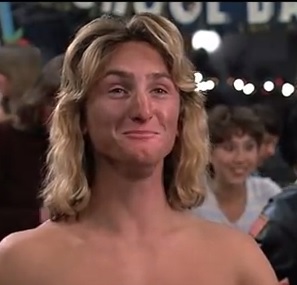
Spicoli
Spicoli (Sean Penn), the ultimate surfer dude. I don’t think this character requires any explanation (most would expect to see him as #1). While there is a shadow of this stoner in Amy Heckerling’s Clueless (1995), it’s in her earlier film, Fast Times, that she captured an iconic form of the type, mainly due to Cameron Crowe’s script. Spicoli’s (Sean Penn’s) battles with his teacher, Mr. Hand (who deserves an honorable mention in the list above), are perfect.

Bagel tucked in jeans, shirtless, Spicoli makes us laugh before he says a word. Penn gives him an awkward gait; a spacey expression; long, wordless pauses; and an inability to detect sarcasm. As a result, he is as lovable as he is annoying. Penn turned the surfer dude into comedy gold, and actors have been imitating him ever since.

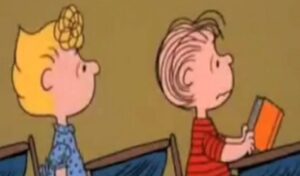
4. The Frustrated/Bored of Ferris Bueller’s Day Off & Peanuts

There’s really no need to pinpoint an individual in the mass of disinterested students who are ignoring Ben Stein’s flat delivery of “Bueller?” as he calls the roll. The Peanuts characters’ confusion at their instructors’ seeming gibberish are similarly funny, though Charlie Brown’s panic is particularly funny. What’s unavoidably true is just how typical both the boredom and confusion are in any classroom, though hopefully with occasional relief! Beautifully rendered in both cases through the facial expressions of the students as the teacher drones on.

Peanutsstudents

Buellerstudent1

Buellerstudent2

Buellerstudent3

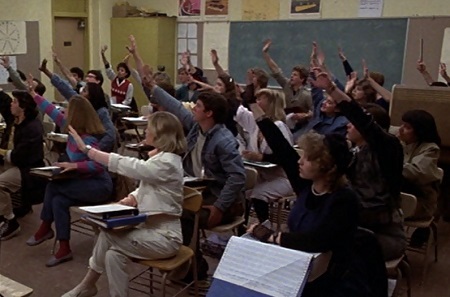
3. The Intellectuals of Better Off Dead (1985)

BetterOffDeadClass
Most films portray the majority of students as inattentive and uninterested. This film subverts our expectations, with a class enthralled by comically difficult subject matter. They’re so enthusiastic that they groan when they have to leave the classroom, comforted only when their math teacher reassures them: “I’ll see you all tomorrow. Just remember to memorize pages 39 to 110 for tomorrow’s lesson.” It’s so obviously a teacher’s dream of what students would be like after watching too many inspiring education films that it always cracks me up. Lane (John Cusack), in contrast with his peers’ binders of work, takes out one sheet of paper with “Do homework” stuck together with gum. In this case, the slacker is the unpopular one. It’s a mistake not to watch the whole film, but at least catch this scene.

2. The Kids of The Wire, Season 4
I find it hard to write about the students in this season, as they’re far too real: Dukie (Jermaine Crawford), Randy (Maestro Harrell), Namond (Julito McCullum) and Michael (Tristan Wilds) struggle with the lure of selling drugs on the corner in Baltimore, with authority figures often encouraging or passively accepting their abandonment of education.
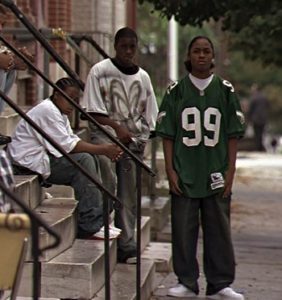
Watching Michael's confrontation with a drug dealer.

Watching Michael’s confrontation with a drug dealer.

It’s the most vivid and compelling portrayal I’ve ever seen of the weight so many students bear with them when they enter the classroom. The Wire, unlike 90 percent of cinematic portrayals of teaching, sees that the wider culture and systemic problems of the educational system are far greater forces than one teacher with a great idea (which Prez does have) can combat. Haunting.

1. Chainsaw & Dave of Summer School

ChainsawDave-SummerSchool
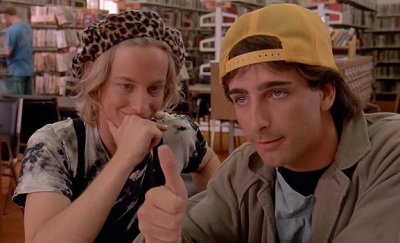
All the students in Mr. Shoop’s (Harmon’s) class are distinctive. Their plan–to exchange bribes for trying in school–is diabolical and hilarious in itself. And with characters like these–the awful driver Mr. Shoop has to train, the kid who spent the summer in the bathroom, etc.–who can stop laughing? The most memorable students are obviously Dave (Gary Riley) and Chainsaw (Dean Cameron), the wannabee special-effects guys. Who comes up with such unique characters for a silly film like this one? The tension breaker of and “I don’t know anything” dream of Chainsaw’s before the big test are my favorite depictions of academic stress in any film, book, or story. (I should, though, give an honorable mention to John Travolta’s Barbarino in Welcome Back, Kotter.) Inspired by Chainsaw, I used to suggest to friends a university-wide tension breaker when I was an undergrad.

As the school year begins, I’ll be returning to these favorites to combat moments of frustration and refresh my love for teaching. I hope some of you will do the same.
Share
Posted in: 1960s films, 1980s films, 1990-current films, Comedies (film), Drama (film), TV & Pop Culture Tagged: Bad Teacher, best, Better Off Dead, Cameron Diaz, Ferris Bueller, Mark Harmon early films, Mr. Hand, Sidney Poitier, Summer School, Teaching films, The Wire, To Sir with Love

A Legacy of Self-Amusement: Drew & John Barrymore

08/13/2015 by leah@carygrantwonteatyou.com 19 Comments

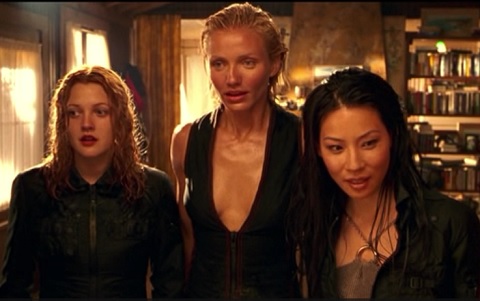
DrewBarrymoreCharliesAngels-main
Charlie’s Angels
(2000) is the epitome of how seriously Drew Barrymore takes herself: the hair flips, the silly punk rock past of her character, action sequences so absurdly, self-consciously over-the-top that they make you smile.

Playfulness seems to be Barrymore ‘s signature, what distinguishes her from her lesser rom-com peers. So it wasn’t surprising that this was a film she chose to produce, an ode to a dumb TV show celebrating sexism/female empowerment/both (depending on your point of view).

The show (1976-81)– for those younger folks out there–featured a wealthy but reserved guy (Charlie), who hired three beautiful detectives (the angels) for his agency. All we ever got of Charlie was his voice, as he never appeared in person and let all arrangements be managed by his assistant, Bosley. The term ‘angel,’ use of possessive, Charlie’s condescending voice, the quick rotations of actresses for the roles (suggesting they were interchangeable)—any of the four could make a feminist cringe. But the women were tough and smart, using their looks to blindside unwary men, much as Columbo used his folksiness.

The film is both a parody and tribute, using the TV show’s theme music, graphics, and basic concept, but mocking the silliness of it too. Cameron Diaz plays the supposed airhead (Natalie) to perfection. Lucy Liu takes on the kind of tough role she always plays, even imitating a dominatrix/efficiency expert in one ploy as detective Alex. As Dylan, Barrymore mocks the over-the-top femininity of her predecessors by embracing a badass, punk rock aesthetic. The strange connection the women have to Charlie is brought to the forefront when their client (Sam Rockwell) suggests that Dylan has daddy issues.

Thinking they get to meet Charlie in person...

Hopeful to meet Charlie in person…

Whatever part she’s in, Barrymore always seems to be playing herself, and part of what keeps us watching her is just how likeable she is, this woman who went through a painful past of abandonment and substance abuse as a kid, and emerged as a woman with empathy for those who contributed to the conditions that put her there. She is both the most tender of the three actresses onscreen—Barrymore always captures vulnerability effectively—and the most sarcastic. Perhaps hers is an earned playfulness, but Barrymore wears it lightly. (How else could you repeatedly perform with Adam Sandler, and more bafflingly, not only star with, but marry Tom Green? Tom Green!) While her acting never wows me, she does.

In Drew’s performances, I don’t see much of her forebears, that famous acting dynasty whose members mesmerize audiences still today. Only in her youthful roles did I ever see traces of the Barrymore family’s skill with drama. I would argue that Irreconcilable Differences (1984); an underrated film about a girl who wants to separate from her narcissistic, divorced parents (in an eerie foreshadowing of Barrymore’s own decision years later); was her strongest dramatic role. Perhaps it just was a part she knew really, really well.

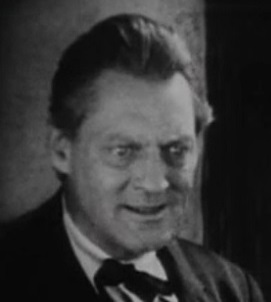
But usually, the actress just prefers, and does better, at comedies. Certainly, Drew lacks the intimidation or gravitas of her great-uncle Lionel…

LionelBarrymore
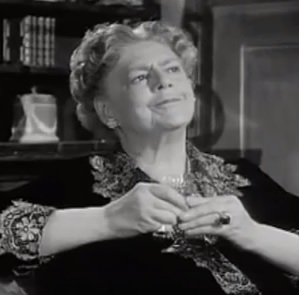
the nuance of her great-aunt Ethel…

EthelBarrymore
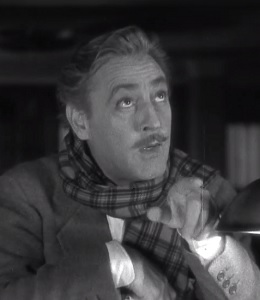
or the presence of her grandfather John…

JohnBarrymore
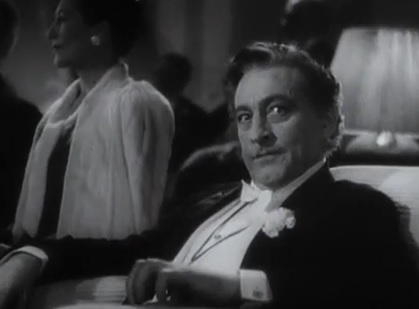
Of course, her troubled past brings to mind her grandfather’s. But it’s in her self-deprecating goofiness that I see the clearest link to the Barrymore dynasty. While it’s certainly not present in all of the Barrymores’ roles, I see it in John’s charming turn in Grand Hotel, and, of course, in his hilarious supporting character in the glorious Midnight (1939). There’s such a lightheartedness to his approach to the role of Georges Flammarion, and though he was already at the cue card stage of his decline, his humor, at least, had not reached the self-parody stage.

John Barrymore in Midnight

John Barrymore in Midnight

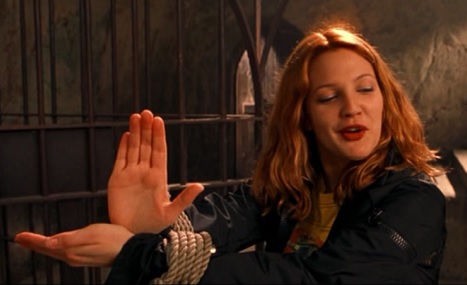
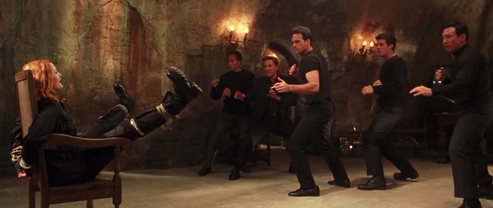
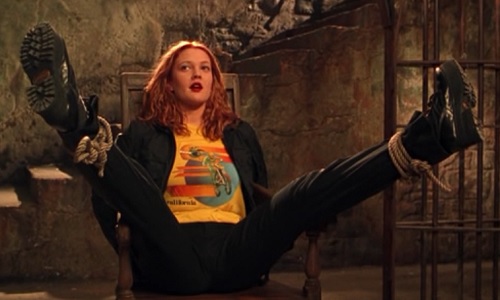
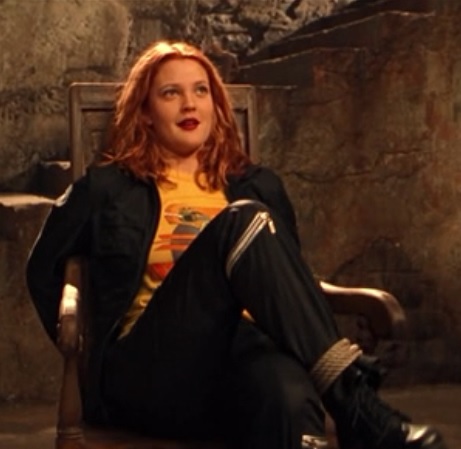
Such lightheartedness is key to Dylan’s (Drew Barrymore’s) character, even when she’s in the direst straights. In the best action sequence in Charlie’s Angels, Dylan has been tied up by her sleazy client, Eric Knox (Sam Rockwell), who has betrayed her after sleeping with her, and tried to kill her already. Knox departs to perform his nefarious schemes, leaving her to his five henchmen. After managing to get her lighter back, she spells out what she will do to escape, buying time but also revealing her confidence.

DylanCharliesAngels
As she sits in her chair, she calmly explains, smiling at her adversaries all the while, “By the time this is over, every one of you is gonna be face down on the floor, and I’m gonna moonwalk out of here.”

DrewBarrymoreCharliesAngels
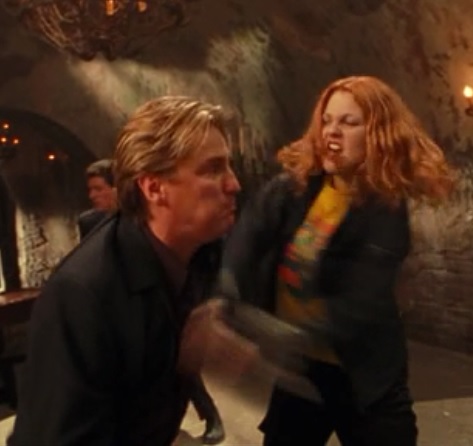
As they rush toward her, she interrupts, looking at each man in turn, “You’re not listening to me. See first, you’re gonna help me out of my chair, and then I’m gonna leapfrog over you, before I break his nose…I’m gonna do all of this with my hands tied behind my back.”

DrewBarrymoreCharliesAngels2
She does exactly what she says:

DrewBarrymorefighting
And her moonwalk is a joy:

DrewBarrymoremoonwalking
You can see the full clip here.
Any actress could have had fun with such a sequence, but there’s so much self-amusement in Drew Barrymore’s portrayal that I kept thinking of her grandfather in Midnight. Sure, he had much more range and talent than she does, but in self-amusement, the two are matched.

This post is part of the Barrymore Trilogy blogathon, hosted by Crystal of In the Good Old Days of Classic Hollywood. See the fantastic entries here!

Share
Posted in: 1980s films, 1990-current films, Action & Sports Films, Blogathons, Comedies (film), Film Noir/Crime/Thriller & Mystery, Humor, TV & Pop Culture Tagged: Charlie's Angels, Drew Barrymore, John Barrymore, Midnight (1939), movie, satire, spoof

Mae West Quote of the Month: No Evidence

07/23/2015 by leah@carygrantwonteatyou.com 2 Comments

MaeWestSheDoneHimWrong
Lady Lou (Mae West) is the heroine of She Done Him Wrong (1933), the hilarious Oscar-nominated, pre-Code movie based on West’s play, Diamond Lil. The film opens in a Bowery bar in the Gay Nineties. Many of the customers are discussing Lou’s attractions, thanks to a new nude portrait of her on the wall.

Lou rides up in a carriage, with women staring at her disapprovingly, and men staring at her very approvingly.

She enters the bar with the customary West strut, and is quickly introduced to Serge (Gilbert Roland) by her boyfriend, Gus. She reflects on Serge’s good manners in kissing her hand and smiles at him alluringly, as West is wont to do.

“I’m delighted,” Serge (Gilbert Roland) says. “I have heard so much about you.”

“Yeah,” Lou quips, “but you can’t prove it.”

If that line can’t get you through the day smiling, no worries. Just watch five minutes more of the film.

Share
Posted in: 1930s films, Comedies (film), Feminism, Mae West Moments, Romantic Comedies (film) Tagged: Diamond Lil, Lady Lou, Mae West, Pre-Code

A Cinematic Argument for Gun Control: The Ale & Quail Club

07/05/2015 by leah@carygrantwonteatyou.com Leave a Comment

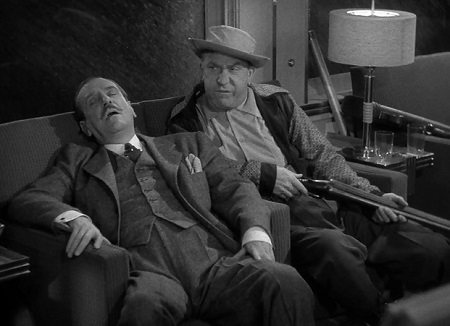
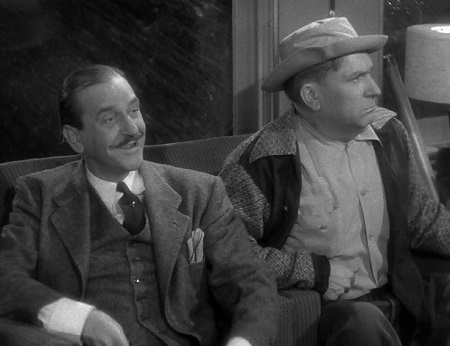
Ale&QuailClub-PalmBeachStory
The Palm Beach Story (1942), Preston Sturges’ rom-com about love & money, features many screwball moments. But few would deny that the screwiest are with the trigger-happy Ale & Quail Club. I have heard many arguments over the years claiming we need tighter governance over gun ownership. But none have been more compelling than simply watching this hunting club in action.

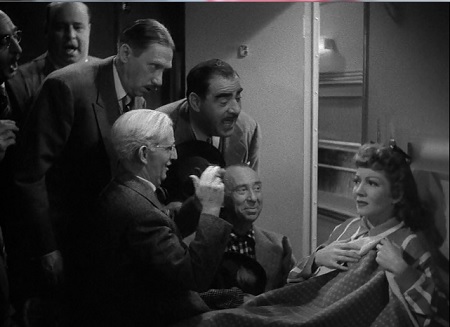
Near the start of the film, Gerry (Claudette Colbert) is leaving her husband, Tom (Joel McCrea). Believing her extravagance is holding him back, she seeks a rich lover to–wait for it–help his business. She dodges Tom at the train station, and convinces a group of millionaires (the Ale & Quail Club) to buy her a ticket to Palm Beach. What she doesn’t know is just what kind of group she’s joined.

They dance with her; they sing to her, their intoxication becoming more evident by the moment. They serenade her with “Sweet Adeline,” to her evident annoyance:

ReactiontoSerenadeClaudetteColbert
But not just hers. Two of the hunting club’s members haven’t joined the singing–one (William Demarest) because he detests such unmanly behavior, the other (Jack Norton) because his drunkenness has reached the pass-out point.

SweetAdelinereactionDemarestGordon
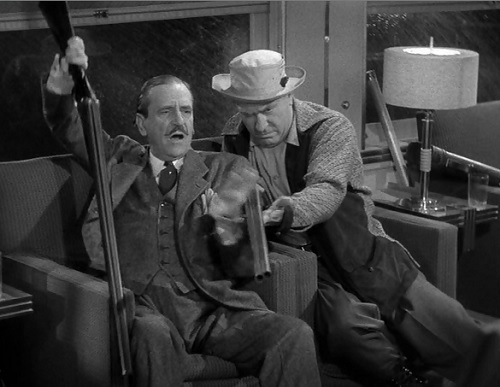
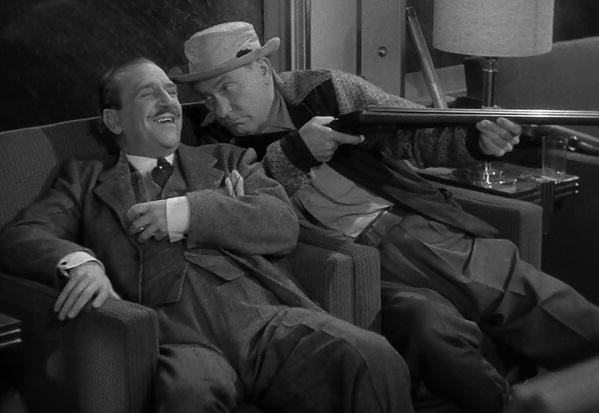
Demarest asks their private car’s steward, George (Ernest Anderson), to throw up crackers, and pretends to shoot them, saying, “Bang bang.”

BangBangDemarestGordon
Naturally, his companion (Gordon) claims he’s missed, and the two make a $50 bet about who can make the best shot. Gordon, too drunk to be handling weapons, shatters the window.

firstcasualtywindow
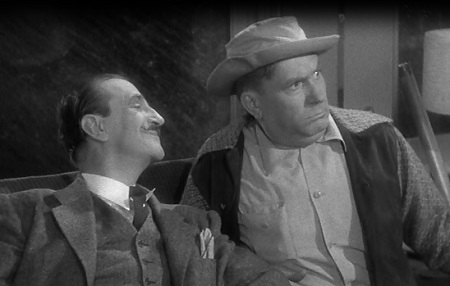
Demarest is shocked, and Gordon proud of his accomplishment.

ShockatSuccessDemarestandGordon
He claims the win.

JackGordonproudofwindowshot
“Wait a minute,” says Demarest. “you’re using real shells.”

“Well, what did you think I was using,” Gordon answers, “bird seed?”

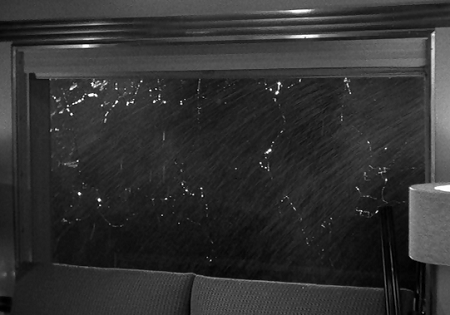
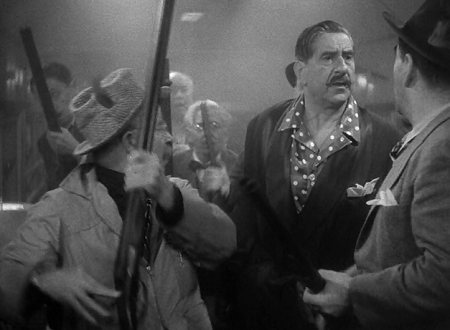
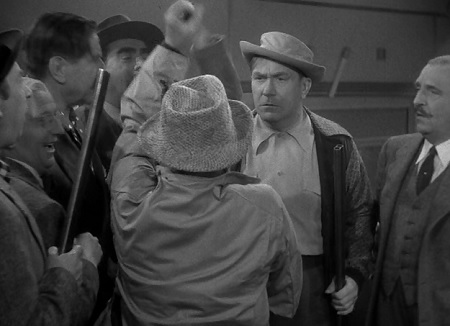
At this point, we might expect Demarest to cry foul. Instead, he loads his own weapon, and chaos ensues as they shoot up the car, with George ducking for safety. The singers in the other room, instead of trying to stop their friends, rush to join the party, calling, “Crap shooting.”

After they’ve completely busted up the car, one member realizes that Gerry, who was almost taken out when she checked to see what was happening, has disappeared.

she'sgone
Demarest suggests a posse.

PoseeledbyDemarest
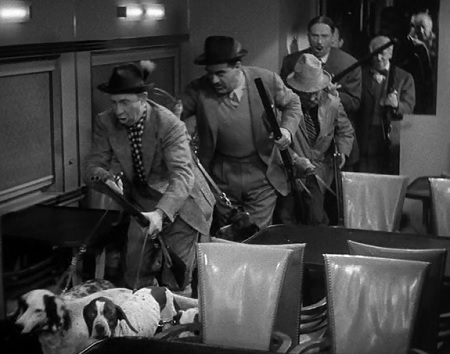
Gordon says they need their dogs, so the club gathers the canines from the other car, singing, “A Hunting We Will Go” as they stalk Gerry.

HuntingPartyAle&Quail
After they terrify multiple guests, the club is forced to return to their car. Naturally, they sing some more before the conductors discover what’s become of the car–and George.

George-PalmBeachStory
In our last view of the group, they try to protest their private car being disconnected from the train–with their weapons still in hand.

AleandQuailLastScene
If you haven’t seen it, this ridiculous scenario is, as you can imagine, hilarious. You’ll quickly remember all those Dick Cheney hunting jokes, perhaps the funny Parks and Recreation hunting trip.

But it’s also a terrifying scenario if you shift the light a little: a posse of men chasing after a woman, one black man hiding from the white men threatening him, loaded guns everywhere, a train full of potential victims, and not one person among the group sober. You will laugh–as I did–to see these goofy men, and their strange notion of partying. But you may also find yourself thinking, “You know, some of these guys would have failed a good background check….”

Share
Posted in: 1940s films, Comedies (film), Romantic Comedies (film) Tagged: Dick Cheney hunting jokes, Jack Gordon, Parks and Recreation hunting trip, Preston Sturges, Second Amendment, The Palm Beach Story, William Demarest

My Own “Awakener”: Mae West’s Writing

06/04/2015 by leah@carygrantwonteatyou.com 2 Comments

MaeWest-Awakener
As I was reading the bios of Kate Bolick’s awakeners in Spinster, writers whose independence had inspired her own, I inevitably began to consider my own awakeners. Which literary women had encouraged me to live by my own definition of womanhood?

I came up with many answers, but soon one figure nudged the others out: No costar could ever prevent being upstaged by Mae West. My brain was no different: what other woman could share my consciousness once the shimmying, voluptuous, smart-talking, smart-writing dame arrived?

Others might think of her as an actress first, but for me, it’s the writing that dominates. I grew up worshipping one-liners from Dave Barry and Jane Austen. How I love a quip that’s not only hilarious, but timeless, that captures something of human nature that’s real and honest. And West, well, we all know she had a way with the lines.

And what a pioneer she was! Her play, brazenly titled Sex, produced in 1926. Her arrival on the screen at 38, with an insistence on writing her own dialogue that ensured her place in movie history. And most of all, a sense of humor so unmatched that her words have become part of the American vernacular—whether all of us realize it or not.

I suspect Bolick never fell for West’s language, for if she had, she would have had no need for five writers to inspire her; one would have been more than sufficient. So in honor of Bolick, whose book celebrating singlehood I enjoyed, I will share two of my favorite West comments on matrimony for my monthly Mae West celebration:

First, the famous quip:

“Marriage is a fine institution, but I’m not ready for an institution.”

And second, that marvelous rejoinder from I’m No Angel:

Man: “I don’t suppose you believe in marriage, do you?”
Tira (West) “Only as a last resort.”

What I love is that a male character saying these words onscreen now would get big laughs—not to mention a female. (Of course, no one else could say them with the kind of oomph West did; she ignites the screen while current bombshells play with matches.)

And West not only says the words, she means them; she was every bit as unconventional as they imply. Of course, I know not to confuse fictional characters with their authors. Luckily, West gave me permission, stating about her racy creation, Diamond Lil, who bears a strong resemblance to Tira: “I’m her and she’s me and we’re each other.”

Like Bolick’s awakeners, West did have an encounter with matrimony, but since she was underage, denied cohabiting with the guy, and didn’t even admit to the union until it was discovered, I think we can agree that its impact on her was as negligible as she claims. (And of course, there’s also the accordion player from her vaudeville days some claim she married; she left him too.)

Which leaves us with her writing.

It would be easy to interpret West as simply of her time, as the pre-Code era certainly had some loose moral guidelines. But she acted the same AFTER the Code. Some might also suggest she was provocative for the sake of being rebellious. Or—perhaps even more dangerously—that she was condemning others’ choices in favor of her own. I’ve never thought of her that way, perhaps since her heroines are friendly with other women in her films, and only snarky when they oppose or judge her. And with a delivery that friendly and relaxed, who could take offense?

What West demands for each of her heroines is simply what we all should: the right to be who she is without regard to others’ morals and traditions. To be an individual, with all that implies.

As for West herself? Well, she never got to that last resort, instead cozying up with Paul Novak, a muscle-bound (and decades younger) man from her Vegas act. But it wasn’t a fling. The romance lasted until her death 26 years later; he’d never let her change her will in his favor, not wanting to think about her death. Early in their relationship, when Jayne Mansfield suggested she’d rescued Mickey Hargitay, another of West’s Chippendale-like chorus, from her employer, Novak responded by punching Mr. Universe.

West’s reaction was perfect: she implied they were at war over her affections. Kind of like her films–all the men longing just for her, she casually dating them all. Leave it to West to joke about her famous lack of monogamy while other women were pining for it. Leave it to her to confront a scandal with laughter, as she confronted everything.

I haven’t lived or loved like West. Who could? But oh, how her moxie inspires me.

Share
Posted in: 1930s films, 1940s films, Comedies (film), Feminism, Mae West Moments, Romantic Comedies (film) Tagged: awakener, Kate Bolick, Mae West, marriage, single, Spinster
« Previous 1 2 3 4 5 6 7 8 9 10 Next »

Recent Posts

  • 100 Years Later, Still Scary: Dr. Caligari
  • Escaping Out of the Past (1947)
  • A Weeper for Those Who Love Jerks
  • Thank You, Academy, for Not Infuriating Me
  • Challengers (2024) Is a Bad Movie

Subscribe to Blog via Email

Enter your email address to subscribe to this blog and receive notifications of new posts by email.

Categories

  • 1920s films
  • 1930s films
  • 1940s films
  • 1950s films
  • 1960s films
  • 1970s films
  • 1980s films
  • 1990-current films
  • 2020s films
  • Action & Sports Films
  • Anti-Romance films
  • Blogathons
  • Childfree
  • Comedies (film)
  • Drama (film)
  • Feminism
  • Femme fatales
  • Film Noir/Crime/Thriller & Mystery
  • Gloriously Silly Scenes
  • Horror
  • Humor
  • Mae West Moments
  • Musicals and dancing films
  • Oscars
  • Random
  • Romance (films)
  • Romantic Comedies (film)
  • The Moment I Fell for
  • Turn My Sister into Classic Movie Fan
  • TV & Pop Culture
  • Uncategorized
Share
Classic Movie Blog Hub Member

Recent Comments

  • leah@carygrantwonteatyou.com on Meg Ryan’s Fate Foretold in Joe Versus the Volcano
  • Ryan on Meg Ryan’s Fate Foretold in Joe Versus the Volcano
  • leah@carygrantwonteatyou.com on 100 Years Later, Still Scary: Dr. Caligari
  • The Classic Movie Muse on 100 Years Later, Still Scary: Dr. Caligari
  • leah@carygrantwonteatyou.com on 100 Years Later, Still Scary: Dr. Caligari

Archives

  • November 2025
  • September 2025
  • May 2025
  • March 2025
  • January 2025
  • November 2024
  • August 2024
  • July 2024
  • May 2024
  • March 2024
  • February 2024
  • December 2023
  • November 2023
  • October 2023
  • September 2023
  • August 2023
  • July 2023
  • May 2023
  • April 2023
  • March 2023
  • January 2023
  • December 2022
  • November 2022
  • September 2022
  • July 2022
  • May 2022
  • April 2022
  • March 2022
  • February 2022
  • October 2021
  • September 2021
  • April 2021
  • March 2021
  • February 2021
  • December 2020
  • October 2020
  • September 2020
  • July 2020
  • May 2020
  • April 2020
  • March 2020
  • February 2020
  • December 2019
  • October 2019
  • September 2019
  • June 2019
  • May 2019
  • April 2019
  • February 2019
  • January 2019
  • November 2018
  • September 2018
  • July 2018
  • June 2018
  • May 2018
  • April 2018
  • March 2018
  • February 2018
  • January 2018
  • November 2017
  • September 2017
  • August 2017
  • July 2017
  • June 2017
  • May 2017
  • April 2017
  • March 2017
  • February 2017
  • January 2017
  • December 2016
  • November 2016
  • October 2016
  • August 2016
  • July 2016
  • June 2016
  • May 2016
  • April 2016
  • March 2016
  • February 2016
  • January 2016
  • December 2015
  • November 2015
  • October 2015
  • September 2015
  • August 2015
  • July 2015
  • June 2015
  • May 2015
  • April 2015
  • March 2015
  • February 2015
  • January 2015
  • December 2014
  • November 2014
  • October 2014
  • September 2014
  • August 2014
  • July 2014
  • June 2014
  • May 2014
  • April 2014
  • March 2014
  • February 2014
  • January 2014

Meta

  • Log in
  • Entries feed
  • Comments feed
  • WordPress.org

Copyright © 2025 Cary Grant Won't Eat You.

Church WordPress Theme by themehall.com