Cary Grant Won't Eat You

Classic movies for phobics

  • About
  • eBooks
  • Previous Blogathons
Classic movies for phobics

Comedies (film)

Gut Reactions to the Oscar Noms: The Good, the Bad, and the Ugly

01/24/2017 by leah@carygrantwonteatyou.com 2 Comments

Oscar nominations are out, and as usual, my first reaction is outrage. But there are some good choices in the supporting category, so I’ll tone down some initial snark, and try to give credit where it’s due. So far, I’ve seen only four of the nominated films, so I’ll wait till I’ve seen more for additional commentary. Here we go:

Best Picture (of those I’ve seen):

The Good

Hell or High Water: Deserves the nomination, and the win (of the nominees I’ve seen). Understated, nuanced, beautifully written and acted.

La La Land: Deserves the nomination, not the win. Charming, creative, fun. A blast for those of us who love the classics. I’m glad it’s getting so much credit. But ultimately, no musical deserves the top prize with such forgettable songs. Crazy Ex-Girlfriend has more memorable tunes in each episode than this film in its whole running time.

Moonlight: Deserves the nomination, possibly the win. Focused, touching story of one boy and his struggles with his sexuality and family. Points for subtlety. An unexpectedly nuanced depiction of a sensitive, quiet kid. Great acting too.

Thank you, Academy, for passing on the execrable Jackie, which was so wretched I almost left the theater 20 minutes in. Aside from jarring music, awful plotting, and a cruel portrayal of its heroine, its sum insight was this: Jackie O liked history, and losing her husband so tragically really sucked. Yeah, I kinda got that.

The Ugly

GLARING OMISSION: Where is Nocturnal Animals? Tightly edited, riveting, meaningful, beautifully acted, memorable, each frame relevant. Best film I’ve seen in years, and not even a nod.

Fences: I challenge a first-year film student to do a worse job converting a play to a film than Denzel in this unwatchable turkey. Gabriel and a literal horn? Are you kidding me? Clichés writ large, full earnestness, awkward closeups, dialogue that translates poorly to film, and histrionic acting almost all round. Larry McMurty, in a funny, humble essay, wrote that Hud would have been better if the filmmakers had diverged more from his original story. Denzel needed that lesson.

Lead Actor

The Good
Ryan Gosling anchors La La Land, which wouldn’t have been nominated without him. The man has comic skills; it’s good to see a role requiring both drama and comedy chops get some credit.

The Bad
Where is Jake? Jake Gyllenhaal, who gets (unlike Denzel did in this year’s film) that sadness can be about weighty limbs and haunted eyes, not screeching?

Where is Joel Edgerton? I’m wondering if the Academy hadn’t seen enough of his work to know what a departure this role was for him. Watching his restraint, the pain he shows in every limb at being unable to protect his wife, is powerful.

The Ugly
Instead, we get one of the best actors of our generation in his hammiest performance ever. Worst I’ve seen since The Book of Eli. You’re not in a theater, Denzel! Stop shouting down the house, making unfunny jokes, and smirking. It’s not the role. It’s you. You’re so, so much better than this.

Lead Actress

The Good and Bad
I suspect Annette Bening deserved the award this year, but I haven’t seen her film yet, and The Academy would probably just have passed her over for inferior performances, as they usually do. Emma Stone was very good, not great, and Ruth Negga just solid in Loving. But where is Amy Adams? She was memorable in Nocturnal Animals, and apparently even better in Arrival. But she’s a subtle actress, and the Academy likes to wait until the mid-golden years to award that quality (I’m looking at you, Jeff Bridges). Bring it on, Natalie. Shouts and painful closeups win.

The Ugly
Oh, Natalie. It’s funny that comics get no nominations for mimicry, and the Academy falls over itself to nominate dramatic performances for the same skill. Portman does imitate Jackie’s voice well, but in a distracting way (especially when she slips), and her histrionic, Black Swanish take on the first lady was disturbing, one-note and insulting. Weirdest of all was her awkward, hands stiffly held penguin walk. I guess when she was observing footage of her subject she missed the poise and grace. Cause you know, those don’t come up that often when we’re talking about Jackie….

Supporting Actor and Actress:

The Good
Very happy about Mahershala Ali for Moonlight. A magnetic, yet still understated performance. Likewise Jeff Bridges deserves the nod, though I wish he’d mumbled a bit less in the role. Had to watch it twice to catch all of his great dialogue. I think I was one of the few who preferred Michael Shannon’s performance in Nocturnal Animals to Aaron Taylor-Johnson’s.

Naomie Harris was very convincing in a small, but pivotal role. I hate to give credit to anything in Fences, but Viola Davis was tremendous, and unlike her costar, modulated her performance to suit the film. Give this woman an Oscar already, even if it should have been for best actress.

The Bad
I’m upset about the lack of love for Ben Foster in Hell or High Water. Even the reviews credit Chris Pine more, but Foster enlivens and gives depth to a role that in lesser hands could have been cartoonish. He sells the bond between the brothers, which keeps us hooked on this rather slowly spooling story. And he adds comedy as well as pathos.

OK, that’s it for now. When I’ve seen more, I’m sure I’ll gripe some more…:) (I’m posting more fully about Jake later this month for an Oscar blogathon, and will, of course, want to discuss the screenplays soon….)

Share
Posted in: 1990-current films, Comedies (film), Drama (film), Oscars Tagged: #OscarsSoWrong, Amy Adams snub, Ben Foster snub, Denzel undeserved nomination, Fences sucked, Jake Gyllenhaal snub, Joel Edgerton snub, Nocturnal Animals snub, Oscar snubs

Fred and Ginger Fans, Watch La La Land

01/12/2017 by leah@carygrantwonteatyou.com 6 Comments

Sometimes when I’m watching Gene Kelly, I’ve had to resist my urge to reach through the screen and push him into one of the puddles he’s leaping around.  I want to enjoy his joyful movements, his talent, but for me, the acting just kills it. His characters seem so smug, so sentimental, so cheesy, as if they were born to and continue to expect a cheering section. (Forgive me, Kelly fans. I can’t help it.)

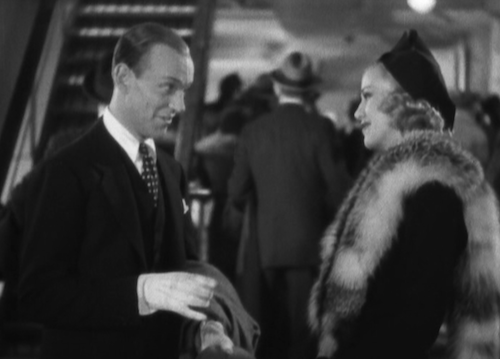
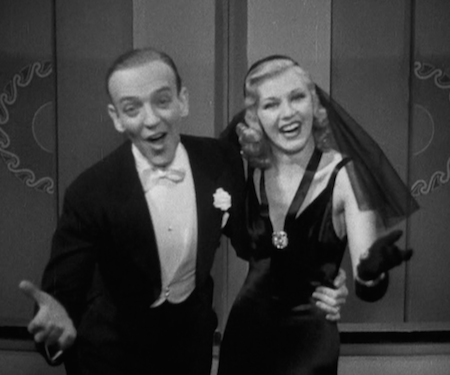
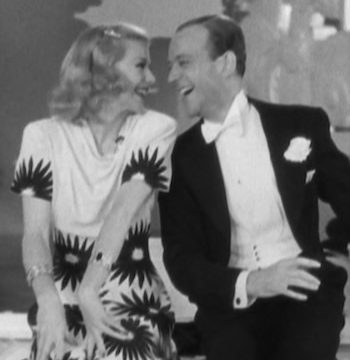
Fred Astaire’s characters, in contrast, are cynical, world-weary, and as a result, often quite funny. Ginger Rogers, his most frequent sparring partner, is at her best when she’s delivering the snark too.


I’m willing to surrender to some sentimentality, but only if it’s tempered with some sarcasm; that’s why La La Land was an unexpectedly welcome surprise. Writer-director Damien Chazelle clearly gets that need for bite, and his own musician past is as evident here as it was in Whiplash. Thanks to him, my Ginger-and-Fred-loving peers will discover a bit of that magic they’ve missed in films since. Here’s how Chazelle pulls it off:

Witty Conversations
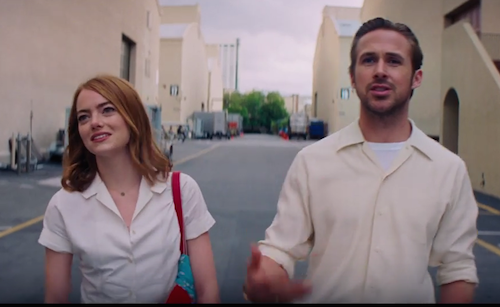
The plot is pretty simple: an aspiring jazz club owner and pianist, Sebastian (Gosling), and actress (Stone) fall in love and wrestle with the conflicts in their dreams and relationship. The previews are heavy on the cheesy side, but I should have trusted the actors, especially Gosling, whose  flight to indies after The Notebook revealed the level of his aversion to saccharine.


Emma Stone and Ryan Gosling excel at sarcastic banter. Their expressions are hilarious to witness. When Mia mocks Sebastian’s embarrassing keyboard gig by requesting an 80s abomination, I fell for the film, and for them. Astaire-Rogers films similarly begin with hostility: his character’s making a racket, tearing the heroine’s (Rogers’) dress, pretending to be Russian. Her characters’ (Rogers’) icy responses only begin to melt when the dancing brings the two together, and the self-protection their characters have constructed for themselves collapse.

Singing by Nonexpert Actors


Astaire and Rogers weren’t gifted in the choral department, but they sang their own tunes anyway, and as a result, there’s an authenticity to the chemistry between them, and the move from (relative) realism to song is less jarring. If I were watching a Broadway musical, I’d expect some serious pipes. But in a film, amateurism can work. As with Astaire and Rogers, Stone’s and Gosling’s lack of expertise works to highlight their characters’ insecurities and the fragility of their new bond. Their lack of professional music cred also helps give the impression that this singing is natural, just a way to express something that regular conversation can’t quite capture.

Dancing as Foreplay
Stone and Gosling are far better dancers than singers, and as with Astaire-Rogers, the dancing numbers are when their defenses dissolve, and they begin to fall in love.

My favorite moment is actually when the uber handsome Gosling approaches an older couple and starts dancing with the wife. The husband’s outraged response is so funny, but what’s lovely is the moment after: when we see the couple in the background, dancing with one another.

Characters Inspiring Each Other
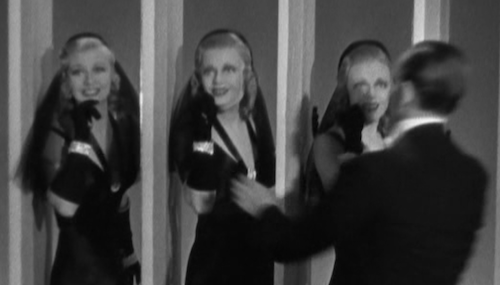
I love in Shall We Dance (1937) that Petrov (Astaire) feels his dancing is so inspired by Linda (Rogers) that he must have actresses in his musical all don images of her face.


Petrov begins not with love, but professional admiration. And it’s fun to watch Mia (Stone) and Sebastian (Gosling) do the same: respect and promote one another’s art. As in Once, one of my favorite films of the past decade, the romance (or in Once‘s case, almost-romance) matters less than the impact the characters have on one another, the way they force one another to be honest about the decisions they’re making, the repercussions, and the inevitable conflicts an artistic life creates.

Talent
Astaire and Rogers are obviously finer dancers than their 2016 imitators. But Stone and Gosling are both fine actors, which Astaire was not.* Stone brings that effervescent charm she does to everything. She excels at mocking, as she has since Easy A. Her auditions for various terrible acting gigs are hilarious.

But it’s Gosling I couldn’t stop watching (and not just because of that ridiculously handsome face). Gosling’s timing, expressions, and posture deliver the humor, and the pathos of Sebastian’s unbending personality, his devotion to something others don’t love (jazz), is beautifully conveyed. Sebastian’s efforts to conceal his vulnerability are heartbreaking. A conversation late in the film when Mia calls him out on being a sellout is particularly tough to witness, as for Sebastian, giving in to some need for practicality demonstrates growth. Mia’s simply not been forced into the kind of compromises he has, and she doesn’t get what those decisions have cost him. I could see why Gosling–who has taken a long time to come around to big-budget films–was drawn to the role, and why the writer-director, a musician himself, knew just how to capture it. I don’t think it’s an accident that Sebastian is a far more developed character than is Mia.

Whimsy & Joy
What a pleasure it is, to watch actors with chemistry having fun with one another. It was always true for Astaire and Rogers, and is true for Stone and Gosling as well.


I didn’t find the music in La La Land that memorable, certainly not as strong as any of Astaire’s or Rogers’s outings. (Admittedly, that would be a bit unfair to expect, with Irving Berlin and the Gershwins at the helm.) Still, the enjoyment of singing, of dancing, of just playing around is there. At one point, in a surreal, An American in Paris kind of way, realism just leaves, and Mia and Sebastian act as if a departure from the rules of gravity is a natural result of their connection. In a way, it is. The moment conveys how art can transport a person away from reality, just as love can. That a director just over 30 can convey that sentiment so beautifully and lovingly–and with such humor–gives me excitement about whatever he’s cooking up next.

*Rogers, it could be argued, bests Stone in certain roles, but Gosling is a stronger actor than all of them.

Share
Posted in: 1930s films, 1940s films, 1990-current films, Comedies (film), Musicals and dancing films, Romantic Comedies (film) Tagged: Damien Chazelle, dancing films, Emma Stone, Fred Astaire, Ginger Rogers, happy films, La La Land, musicals for nonmusical fans, Ryan Gosling

The Odd Stew of Designing Woman

12/16/2016 by leah@carygrantwonteatyou.com 14 Comments


It’s surprising the screenplay for Designing Woman (1957) won George Wells an Oscar, given its strange stew of marital conflict, mob threats, brain damage, fashion, and acrobatic fight moves. But there is a cleverness to it, and some insights about marriage one doesn’t usually get in a comedy. So while not exactly an amazingly tasty stew, it’s curious enough in flavor to keep you watching, and the fourth-wall-breaking format leads to moments of humor throughout, especially through the thoughts of the ex-girlfriend.

Of course, being a fan of complex heroines, I hoped Designing Woman would have a double meaning, that Lauren Bacall’s fashion designer bride had sneaky moves up her perfectly tailored sleeves. Alas, no such luck. Marilla (Bacall) is a sophisticated businesswoman, but traditional when it comes to her sports reporter husband, Mike (Gregory Peck). The two have married after a very short affair, and much of the story hinges around his utterly unnecessary concealment of a former flame, Lori (Dolores Gray), and Marilla’s anxiety about it. The couple is so prickly over this conflict that they endanger Mike’s life as he hides from the mob. (Mike, it seems, is more truthful in reporting than in life, and has ticked off a boxing fixer with mob ties.)

So here are my thoughts on the memorable moments of this Vincente Minnelli-helmed comedy: the flavorful additions, the questionable spices, the discordant ingredient that nearly destroys the whole, and a wonderful final pinch of flavor.

The Flavorful Moments
Confession to the Ex
Mike’s former girlfriend, Lori (Dolores Gray), adds wonderful comedy to the plot, which has gotten a little too sweet in the opening meet-cute aftermath. Mike keeps not getting around to breaking his marriage to her, and she, sharing her reflections with us, reveals, “He was so pathetic I had to help him out.” She generously delivers the breakup news, and then adds a jab he completely misses: “I’d have probably done the same thing myself if I’d found the right man.”

After she relieves him from hurting her feelings, she observes him to be as “grateful as a Saint Bernard.” Her initial euphoria over her own maturity and strength soon dissolves: “But then I made a mistake. I asked him to tell me about her, and he made a bigger mistake, he told me.”


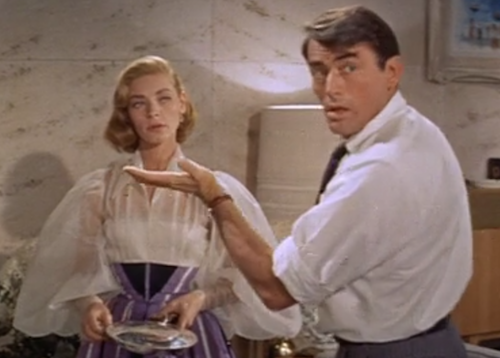
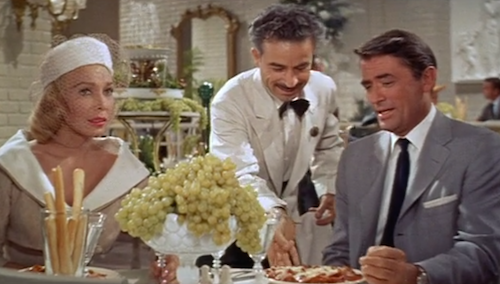
Rolling her eyes, she listens: “I heard all about her eyes, and her hair and her figure….I heard all about her fine sense of humor, and her clothes, and the cute way she had of tilting her head when she laughed….After a while I knew her like a sister.” And of course, she gets a thoroughly justified revenge with a strategic placement of his ravioli plate.

Party Scenes
The movie highlights the divisions between this high-class business leader and her working-class husband in various ways, most successfully with their apartments: his small and messy; hers refined, large, and including what he calls an “outside flunky.” Before he’s had time to look around his new place, all her friends arrive and rush her, barely registering his presence as he tries to excuse the embarrassingly short pants he’s wearing (his own being smeared with ravioli). Even when he leaves the room to change and returns, her distracted friends ignore him. And she is oblivious to his annoyance and embarrassment as she dons and then leaves behind his handsome form. The scene is perfectly orchestrated to reveal his disconnection and loneliness, and the way she’s suddenly made him feel alienated and extraneous in his own home and marriage.

In the aftermath, she’s dismissive of her career to soothe his ego, the embodiment of a bride worried about losing her new man. Luckily, she’s humbled herself enough to ease his insecurity (sigh, at least she doesn’t give up the career). The later party scene, with her rehearsal and his poker game colliding, is so cacophonous it’s actually hard to watch, but perfectly captures just how unalike their work lives are. Both of them are occasionally petty and jealous as they try to navigate in one another’s worlds, and yet come back together through their feelings for one another. The movie never suggests this union will be easy, and there’s something refreshing about that, and–unlike many romantic comedies–very honest.

The Fight Scene
The hilarious antics of the final fight scene make for good comedy. It’s well orchestrated, especially a brilliant final touch (see below). In a favorite moment, Mike observes that his wife doesn’t know how to help, as she can’t identify who is on Mike’s side, and who is not. I loved this reflection, as it echoes my reaction to every bad action sequence I’ve seen in the past decade. I so often can’t tell characters apart once the fists or legs start flying.

The Rotten
I don’t expect PC treatment of subject matter in my 50s films, but usually, I can cringe a bit at unfortunate touches and move on. Unfortunately, much of the comedy of Designing Woman hinges around making fun of a former boxer’s brain damage. Yes, you read that correctly. Maxie (Mickey Shaughnessy) is tasked with protecting Mike from the mob, but can never quite figure out what town he’s in, or what it is he’s supposed to do. Mike is by turns exasperated with him and condescending toward him. Marilla’s not much better, and sometimes worse. Mickey Shaughnessy’s performance is, unfortunately, often convincing, making his character’s brain damage poignant when the actor’s going for funny. The only way to enjoy this comedy is to block out whenever he’s on the screen, which is often.

The Brilliant Final Touch
Early in the film, in a typical bro kind of way, Mike objects to the effeminate dancing style of Marilla’s friend and colleague, musical director Randy (Jack Cole). You can just hear the homophobic chains in Mike’s mind churning as he watches those fluid, flamboyant movements, even before he imitates him to Marilla. But when the mob is beating up Mike and his friends, Randy appears and starts taking out half of them with his dance moves. I haven’t seen dance fighting this fun since Kevin Bacon’s in Footloose.

https://carygrantwonteatyou.com/wp-content/uploads/2016/12/DesigningWomanClips.mp4

It’s in this moment of brilliance that you know Minnelli’s at the helm, and you’re so glad. I only wish we’d  seen more such flourishes of his style because I could watch that clip over and over again. There, as elsewhere, I was more interested in the musical Marilla was designing for, than the marriage she was trying to save. The problem is, I think Minnelli was too. Luckily, there’s enough of the lovely costumes (and how Bacall wears them), enough of the self-absorption of those running the musical (who find the mob fight merely distracting) to intrigue and entertain. And of course, you can always rewatch Randy….

Hope you’ll enjoy the many other contributions to this Minnelli blogathon hosted by the marvelous Michaela of Love Letters to Old Hollywood.

Share
Posted in: 1950s films, Comedies (film), Musicals and dancing films, Romantic Comedies (film) Tagged: Designing Woman, Gregory Peck, Lauren Bacall, review, Vincente Minnelli films

Goin’ to Town: Feel-Good Classic

12/10/2016 by leah@carygrantwonteatyou.com Leave a Comment


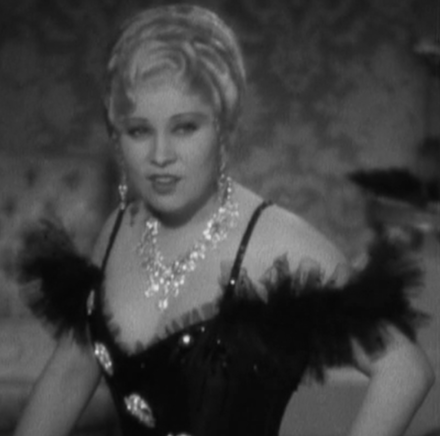
How do you explain the joy of Mae West after a long hiatus? I’ve saved Goin’ to Town for a rough day, and it had the hoped-for effect. I may not get everything in my life right, but I have an instinct for good medicine: Mae had me grinning within seconds.

Cleo (West) first appears in an embrace with a guy we know isn’t the boyfriend obsessed with her. She’s, of course, some kind of dance hall singer. We see the boyfriend asking for her, and then the film cuts to the guy she’s kissing:

Lover: “Now I’d like to take you away from all this.”

Cleo: “All this? Oh, I get you. Yeah, for a long time I was ashamed of the way I live.”

Lover: “You mean to say you reformed?”

Cleo: “No, I got over bein’ ashamed.”

(Spoilers) West wasn’t exactly a fan of realistic plots, but this one is a doozy: Cleo’s boyfriend has promised her an oil ranch after they marry, and seemingly within minutes is dead, and the ranch hers. (“Well, that’ll help pay for my feelings.”) She falls for a British high-class type who runs her oil fields, and shoots off his hat and lassoes him to express her attraction (her definition of “coaxing”). He doesn’t think she’s classy enough, so she heads to Buenos Aires to buy her way into society and impress this snob.

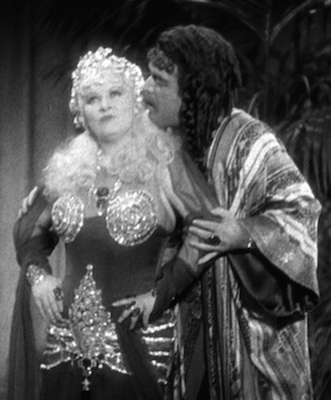
Entrée into society, in West’s world, includes winning a horse race and performing as an unlikely soprano in a Samson and Delilah opera. Her outfit in the latter, with sequins highlighting breasts and hips, is hilariously provocative, seeming to confirm her scandalous background rather than winning respect from the elite.


The elite, of course, are so worthless in this film—including her boring object of desire, Edward Carrington (Paul Cavanagh)—that Cleo’s fight for status, even going so far as a marriage of convenience to well-born Fletcher Colton (Monroe Owsley), makes little sense. Of course, even in this conventional, post-Code desire to set aside a colorful past, West subverts the screenplay formula: Cleo’s utterly unashamed of hers:

Socialite: “Speaking of relatives, Mrs. Colton, have your ancestors ever been traced?

Cleo: “Well, yes, but they were too smart, they couldn’t catch ’em.”

Critics, both West’s contemporaries and ours, attack the film’s silliness, her toned-down innuendos, the reduced number of her beaus. It’s not West at her peak, they say. Low on the list of West films, they report. Something’s lost, they carp. You know what? Get over it. The film’s fun, and her victorious final song a riot. While West’s magic in She Done Him Wrong might be enough to fuel a steam engine, I’ll take enough to fuel a car. It’s still West. It’s still entertaining. The plot moves at a crazy clip, so just when you fear a sad/dramatic plot twist is going to overtake the action, poof! It’s gone. And in the meantime, you get enough of her slow stroll, enough hilarious comments, and enough silliness to break through a day’s doldrums, and make  you smile again.

Share
Posted in: 1930s films, Comedies (film), Feminism, Mae West Moments Tagged: comedies, feel-good movie, Goin' to Town, Mae West, review

Defeat Future Trumps: Teach Humor

11/16/2016 by leah@carygrantwonteatyou.com 4 Comments

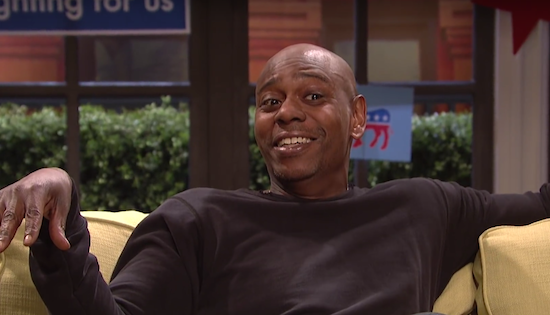
davechappelle-electionparody
“The human race has one really effective weapon, and that is laughter.” —Mark Twain

When Trump clinched the nomination in Indiana, I felt betrayed not by my fellow citizens, but by my art. I teach humor, write humor, believe in humor. And I couldn’t deny it: Trump’s skill with a joke was exactly what had enabled everyone to dismiss his threat, to not take (or pretend not to) his words about minorities and women as genuine. Humor had concealed the truth of Trump, like some fearsome Larry “Lonesome” Rhodes without Patricia Neal.

Of course I have always known there’s a brand of humor that’s not about empathy, but divisiveness: Tina Fey’s evil stepbrother. It’s the kind we learn the first time a bully mocks an outsider on the playground, and we laugh along. But I’ve always believed the most effective humor stems from the truths of being human: our common insecurities, foolishness, fears, and faults. In American, of course, humor is also about optimism, the kind of self-delusion that fills gyms January 1st with those who actually believe they’re going to change—this time.

What I’d never recognized was the danger of the appalling lack of empathetic humorists in the conservative camp. I’d gloried, in fact, that I could claim all the Jon Stewarts and Stephen Colberts and Chris Rocks and Tina Feys. And conservatives had only the worthless, sniping, sexist Bill O’Reillys and Rush Limbaughs, the ones who enjoyed belittling others.

The Daily Show got me through the horror of November 2004, gave me release in laughter and hope. It’s a power humorists have always provided: enabling us to cope, cutting the anger, making us believe again. The show gave me exactly what it was clear Trump supporters have not gotten: relief—and power.

As Twain recognized, laughter is a weapon, whether it’s used for bonding or separating. Give a man or woman who feels hopeless a way to laugh, and triumph comes with it. But when there’s no unifying humor, and a cruel substitute takes its place, what weapon is there to smash it out?

For many years colleagues have told me humor is “tricky” to teach, that only certain students “have it,” and I’ve grumbled under my breath, and kept teaching it on my own. But it’s exactly this kind of thinking that has led us to where we are now, with humor represented by the few, and so many feeling voiceless. No wonder Trump felt so fresh and empowering to so many.

I regret all the years I didn’t push humor, didn’t at least teach it to my own graduate students. Because what we need now are empathetic conservative humorists—not only to fight those bullies out there, but because let’s face it, liberals: we need to be mocked too. And it’s only in seeing what we have in common—especially our flaws and fellow suffering—that we can unify again. (In fact, Trump’s lack of ability to laugh at himself was what scared me most.)

So teachers, let me assure you: Humor is EASY to teach. And talk about making students like writing! I once taught a section of creative nonfiction focused on humor. Several students realized they’d signed up for it by mistake; some, who stared at me in horror, dropped it immediately; others took a chance. Very few actually thought they’d be any good at it. But by semester’s end, every one of those self-proclaimed unfunny people was writing humor with confidence and pride. Students LOVE writing comedy if you give them just a little encouragement; for many students, you have to do little more than give them permission. My students reflected that being funny was just being honest about what they felt and observed: their thoughts when stuck in a class or on a date they didn’t enjoy, the horrors of parking etiquette.

Most of all, my students had discovered that humor is about owning your own vulnerability, or as Carol Burnett puts it, “Comedy is tragedy plus time.” Instructors, if you can teach drama, why can’t you teach humor?

In most courses, I just teach humor for one class period. I screen a table on the board, showing that most humor is about contrast: inflated expectations versus realty, hopes for the self versus how things turned out, lessons you should have learned versus ones you did, how you hoped others would act versus how they did. This subject matter can be tragic or comic. Those of us reeling from last Tuesday are focused on the tragedy. But Chris Rock and Dave Chappelle took the same subject matter and spun it into humor. They used contrasts; they used truth. I know they made me laugh, really laugh, for the first time since I woke up to Trump’s win. Would you really want to deny your students that kind of relief? Consider carefully before you do: Comedy is power. And dismissing it—as we all have so painfully learned—can be anything but funny.

Share
Posted in: Comedies (film), Drama (film), Humor Tagged: comedy, empathy, humor, recovery from election, relief in humor, teaching humor, Trump

Meg Ryan’s Fate Foretold in Joe Versus the Volcano

10/01/2016 by leah@carygrantwonteatyou.com 17 Comments

megryanjoevsvolcano
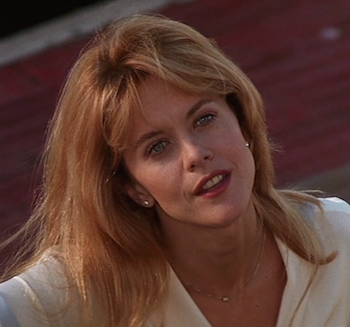
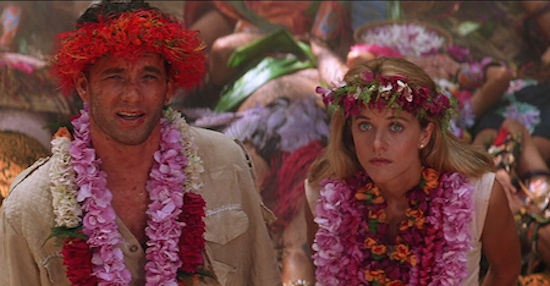
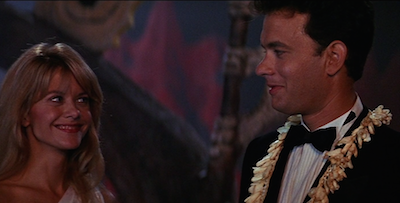
Meg Ryan has had a peculiar career: America’s darling after When Harry Met Sally (1989), she has struggled to avoid typecasting as the perky cute girl ever since, and largely failed, settling for a saccharine portrayal in Sleepless in Seattle (1993), and veering into downright parody of her persona in the remakes You’ve Got Mail (1998) and The Women (2008), with brief moments of authenticity (When a Man Loves a Woman) in between. While some of the blame must rest with Ryan, it’s clear that Hollywood producers failed to recognize (or thought audiences would) the depth in When Harry Met Sally, instead plying the poor actress with cane sugar ever since. That’s why it’s so fascinating to peer earlier into Ryan’s career, when the exploration of character was (at least partially) her own to make. Joe Versus the Volcano (1990) is particularly fascinating since she plays three roles, which curiously foretell her fate.

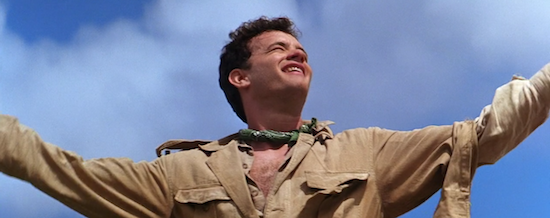
The plot is strange, so I’ll just begin with the basics: Joe’s (Tom Hanks’) fears–especially for his health–keep him mired in a dreadful job, until a dire prognosis unexpectedly snaps him out of depression and leads him on a journey to an island where an odd fate awaits him. He goes on a date with coworker DeDe (Ryan) before he departs, then meets half-sisters Angelica (Ryan) and Patricia (Ryan) on his journey. Attracted to all three (he keeps saying they look familiar), Hanks falls for only one, Patricia, who captains the boat to his destination, and plays a part in what awaits him there.

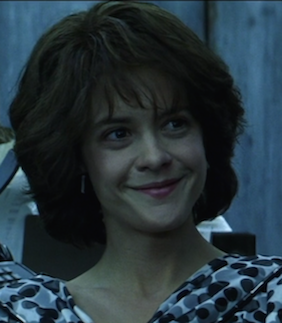
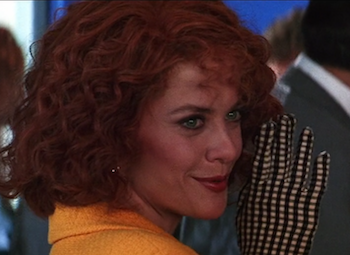
In DeDe, Ryan channels Easy Living‘s (1937) Mary Smith (Jean Arthur). Naïve and sweet and just a little lost, DeDe disperses–at least a little–the heavy gloom of the office, where she and Joe suffocate under fluorescent lighting and the repetitive yelling of their boss (Dan Hedaya, in a darkly funny turn).

megryan-dede-joevsvolcano
When Joe quits the job and asks DeDe out, it’s an act of salvation, and you can’t help but laugh at her startled, perky response to finding the dead weight in her office come to vivid life. Like Arthur, Ryan performs this role with relish and charm, with a chirpy voice that doesn’t quite grate in the small time we’re listening to it. Much more time spent with this character would start to wear audiences thin (as Arthur does for me–uncharacteristically–in Easy Living).

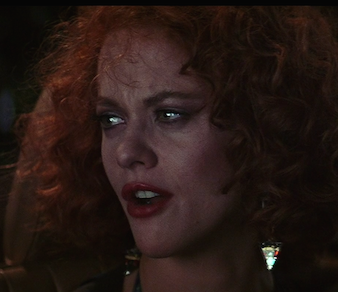
Next Joe encounters oddball Angelica (Ryan), who calls herself a flibbertigibbet.

megryanangelica-joevsvolcano
We viewers soon question her characterization, realizing that this woman has no idea who she is. She’s donned a pretentious, flat delivery and tired expressions culled from movies in her LA home. Her clothes likewise seem costumish, as does her carefully stylish smoking. She’s a combination of affectations she’s adopted, none of which can delay for long the depression and fragility just beyond her careful poise. If DeDe recalls the cute head bobbing and springy step Ryan deployed too consciously by the point of You’ve Got Mail, Angelica conveys her pain at the impersonation, her relief at capturing her fuller self in movies such as When a Man Loves a Woman.

megryanangelicajoevsvolcano-crying
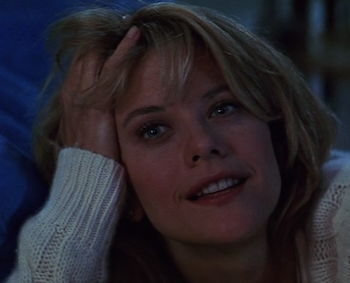
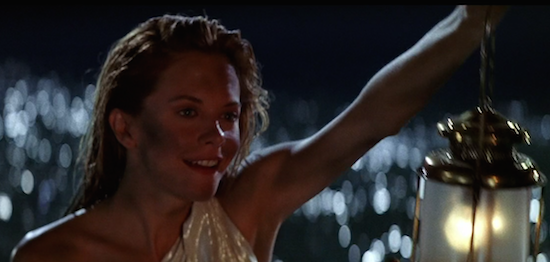
And of course, in Patricia, Joe’s last Ryan encounter, we find our heroine. Healthy besides being “soul sick” for taking her father’s money, Patricia is smart and strong and brave, our Jean (Barbara Stanwyck) of The Lady Eve (1941). Like Jean, she’s an “adventuress on the high seas” and wise enough to guide Joe on the final steps of his self-discovery.

megryan-patricia-joevsvolcano
This is the Ryan we love: cute, yes, but only in moments of glee; she’s bold and womanly and fun, yet vulnerable and flawed. It’s the type of role Ryan excelled at. While the two other parts feel like conscious acts (and should be, as the roles are archetypes rather than fully sketched-out characters), this last she fully embodies. And we see the Stanwyck type of performer she could have consistently been, had When Harry not doomed her to full-on cuteness.

As for the film itself, what to say? It’s about redemption and faith, journeys physical and spiritual, but is most remembered for orange soda and hypochondria jokes.

tomhanksjoevsvolcano
The fact is, Joe versus the Volcano (1990) is an odd duck of a film. Its uneven tone and quirky storytelling won it both mockery and box office failure, and a trail of cult devotees ever since. Frank Capra and Preston Sturges fans will adore it, especially those who admire those directors’ darker-tinged fare, Sullivan’s Travels (1941) and Meet John Doe (1941) and The Miracle Woman (1931). But snooty film types will scoff (tellingly, Roger Ebert loved it); they’ll say it’s silly. And they’re right–it is silly. Fundamentally so.

joevsvolcanoisland
But, as one devotee pointed out, you need to remember that the writer/director is John Patrick Shanley, who also helmed and wrote Doubt (2008) and penned Moonstruck (1987); this guy may be consumed with issues of faith and hope, but he also loves distracting diatribes about fake hands voiced by Nicholas Cage. If you’re not open to that kind of genre blending, you’ll hate the movie. But if you agree with me that Shanley’s work has a peculiar beauty and insight, you’ll find yourself riveted and laughing, admiring Tom Hanks’ finest performance, and one of the funniest portrayals of both fashion (thanks to Ossie Davis) and workplace culture in any medium. It’s even romantic, with the two leads’ chemistry revealing what a better script and direction could have made of You’ve Got Mail.

megryantomhanksjoevsvolcano|
And the soundtrack is so unbelievably fun and fitting that you won’t ever hear one of those songs again without picturing the story.

For me, this movie was life altering. I watched it first in the theater, and couldn’t stop laughing at the opening scene of work drudgery. But no one else was laughing. Surprised, I turned to my buddy, Carrie, and saw that she was enjoying it too. We called our sicknesses after that “brain clouds” (you have to see the film), and the movie represented for me that wonderful thing between friends: a joke you get that others don’t, a bond you share that others don’t understand. Something that in snobby moments makes you feel special, and in more enlightened ones makes you appreciative. I was in high school then, still finding my way, and it was lovely to find through Joe a compatriot in Carrie, to realize that quirkiness need not be isolating, that it can be, in fact, a source of joy. My loud laughter in silent theaters has been a constant ever since.

I’ve been watching the film again today for my entry in the wonderful Dual Roles blogathon, hosted by Christina Wehner and Silver Screenings. (Check out great entries here!) And as I view the movie, I find myself hoping, like Joe: I hope Ryan stops stalling on DeDe and Angelica, and instead gets her Patricia back, gives us in future performances that authenticity that was so wholly hers at the start. She should watch the film again, remember that Joe, like her, lost his way for years, and found it again. Maybe if she watches it she’ll rediscover that energy and spirit and realness that charmed us all, and are still hers to reclaim.

megryan-wonderfuljoevsvolcano

Share
Posted in: 1980s films, 1990-current films, Blogathons, Comedies (film), Feminism, Romantic Comedies (film) Tagged: America's sweetheart, Film, flops, Hollywood typecasting, Joe versus the Volcano, Meg Ryan, roles

Mae West’s Lessons for Groundbreakers

08/07/2016 by leah@carygrantwonteatyou.com 20 Comments

MaeWest-SheDoneHimWrongx
A woman approaches a building, greets men outside, enters. A common occurrence. But when that walk is Mae West’s, the arrival of Maudie into Night after Night is transgressive. West’s entrance into film guaranteed the influence she’d already built on the stage would reverberate far beyond the audiences lucky enough to catch her plays, and shockingly, her actions in front of and behind the camera are STILL groundbreaking. Here’s why:

  1. She Wrote Her Own Material

It’s no accident that the successful comic performers we see on film and TV now were frequently stand-up comedians. Interestingly, it would take the break-thru performances of these stand-up stars to start seeing funny, powerful women in film more frequently, women writing for themselves and other women. (Face it: Tina Fey would just be an anonymous character actress without that pen.)

Like the vaudevillian, Mae West, before them, these women honed their comedy chops through painful competitions with others. They found their voices through observing and picking up on others’ ideas as well as their own. West honed her persona in vaudeville, then began to write and frequently star in famous, scandalous plays (Sex, The Drag, Diamond Lil), even got thrown in jail on obscenity charges (an occasion she milked).

Men weren’t going to write parts for women like the one West crafted for herself. And we’re still talking about the need for more women to write for women. West could have told us that almost 100 years ago, if we’d only listened.

  1. She Busted through Sexual Stereotypes

Newspaper reporters describing West often make a key error, their own opinion of her attractiveness determining how they characterize her influence. If they consider her sexy, they emphasize her sensuality; if they don’t, they call her actions camp. Of course, her performances were both at once (seriously, have they never seen female impersonators—who, of course, adored her?) Either way, they are dismissive because, sigh, they still are just thinking of her as bombshell or not, rather than looking at her tremendous impact. The point is her sexual aggressiveness, despite being a woman; the point is that her plots didn’t end with her lost and alone for pursuing and being hounded by conquests. The point is that a woman could be sexy even if she wasn’t skinny, even if she was older than 35. Amy Schumer is trying to tell us that now.

  1. She Built Her Own Brand

The role of Maudie in Night after Night was initially a dull one, a sad ex-lover type, according to biographer Jill Watts. But Mae West wasn’t about to take on the part of a sad sack moping about her lost man. She didn’t have to. Paramount was hungry for her play, Diamond Lil, which would become the smash studio-saving hit She Done Him Wrong. So when she said nah, they listened. They threw more money at her AND gave her the script. And what she made of that little part changed movie history. West was in her late thirties by then, had spent a career in vaudeville honing her persona as a sexually powerful, wisecracking woman coveted by men. Part of that persona was costuming. Edith Head, wowed by West’s understanding of design, apparently thanked her for “all I know about sex, clotheswise” (153). Even the walk had been long established. According to Watts, “The infamous Westian gait…was a slow, strolling shimmy” (53). Guess what dance move West was advertised as perfecting?

Like the stand-up stars after her, she kept honing her favorite character, one who didn’t pay or suffer for her sexual transgressions, but relished them. West’s devotion to this role of hers was so consistent that it was hard to penetrate it enough to see the actress and writer behind it. But such consistency explains her success. Today we can see Martha Stewart, Madonna, and Beyoncé learning from this lesson of brand control. Beyoncé is now using that well-established female-power persona of hers to take on race. Without that persona in place, would “Formation” have had such impact?

  1. She Asserted Her Power

The old Hollywood studios made other women take the parts given to them. A good actress would have to agree to terrible parts if the studio needed to sell junk her name might help. And few women had the power to resist. West’s refusal to give into this system, or to the censors some argue that the movie studios actually courted, helped set the stage for Bette Davis’s and Olivia de Havilland’s later film-changing battles. Was West the first to balk at the studios? No. But she began to chip away at their power. And, of course, demanded high salaries too.

Few would argue that the censors diminished her post-Production Code films. But her fascinating efforts to subvert their influence, even within the films themselves, helped her defy the whole idea of artistic censorship. As she famously said, “It’s not what I do, but the way I do it. It’s not what I say, but the way I say it.”

  1. She Wrote Fantastic Lines—and Knew She Needed to State Them

When we talk about West, her film presence dominates the conversation. Of course. Few women then or since have been so riveting onscreen. But she would never have made it where she did without that gift for writing and the hard work she put into finessing her every line. We often say comedy doesn’t wear well with time. Too many films once considered funny can feel dated, their appeal no longer clear. Yet look on a list of famous quotes, and West’s name is one of the most frequent female appearances. Watch a West film and try not to laugh. West did what only the best comedy does: captured the truth of human nature. She got people, and had the wisdom to know what a difference that made.

I often think about Sylvester Stallone’s script for Rocky, how he refused—despite the risks—to let another, better-known actor take the now-famous role. He knew what he had, what it could mean. West knew not to cede control over her lines; she knew she would have the impact if she pronounced them—and she would get them right. We often celebrate writers-directors now, who have the same impulse to protect and own their material. But too few of us know the women who penned some of the best early material (including writer-directors). West must have known this too, and acted accordingly. Her larger-than-life performances guaranteed her writing legacy.

I wish West’s name were more frequently cited as an early example of script ownership. While her rebuke to censorship is justly famous (seriously, in how many ways was she a pioneer?), her talent–and embracing of that talent–should be just as well known, just as valued. She was many, many things, but personally, what I value her most for is her writing. Who, then or since, could write a killer line like Mae West’s? To celebrate West and not end with one of her lines is a mistake, so let’s go back to that entrance, to the hatcheck girl complimenting Maudie in Night after Night: “Goodness, what beautiful diamonds!” And Maudie’s (aka West’s) beautiful retort: “Goodness had nothing to do with it, dearie.”

This post is part of the Classic Movie Project blogathon. Aurora is featuring groundbreakers on her wonderful site, Once Upon a Screen. Check out posts on her site and on the sites of the other marvelous hosts, Movies Silently and Silver Screenings. Flicker Alley has been kind enough to sponsor the event.

For more of my Mae West love, see my Mae West Moments series.

Share
Posted in: 1930s films, 1940s films, Blogathons, Comedies (film), Feminism, Humor, Mae West Moments Tagged: Amy Schumer, Beyonce, building a brand, comedy writers, Film, Madonna, Mae West, Maudie, Night after Night

Sympathetic Liars: The Book of Mormon & Beat the Devil

06/26/2016 by leah@carygrantwonteatyou.com 2 Comments

BeattheDevil-JenniferJones
Kooky. Bizarre. Silly. Odd. Original. It’s difficult to sum up the strange charm of Beat the Devil (1953), that Truman Capote-penned film* that fits no genre and makes no sense. You have the feeling as you watch that Capote must have been tripping, but his quirky personality, not to mention the strange antics that took place on the set–arm wrestling competitions between him and Humphrey Bogart, celebrity drop-ins who dictated costuming, etc.–may do something to explain its odd mishmash of mystery, comedy, and social commentary. I’ve never been a fan of Jennifer Jones, but she won me here as Mrs. Gwendolen Chelm, a seemingly ordinary wife who has the imagination of Capote, and no compunction about confusing her fantasies with reality. She is truly the director of the show. Just ask this question: “What would a film be like if a compulsive, whimsical fantasist got to rule the plot?” Your answer is Beat the Devil.

The film’s heroine reminds me of Arnold from the hilarious musical The Book of Mormon, and his twisting of the Mormon faith to convert Ugandans. (Minor spoiler: If you haven’t seen it, Elder Arnold Cunningham adds Boba Fett and some unfortunate AIDS-curing frogs to his faith’s origin story.) While an everyday liar provides little narrative interest, Chelm’s degree of imagination, as with Wes Anderson’s many heroes, seems to color the world with such an enormous brush that it’s hard not to become enthralled by her, as Bogart’s character is throughout Beat the Devil.

I dare not attempt to explain the plot to you, what little there is of one. It’s better if you simply start watching and see where it takes you. That’s clearly what Capote intended, and as any casual reader of his life knows, hanging out with Capote on a boring, rainy Sunday was probably thrilling. Watch the film. It’s as close to experiencing the mind of that fascinating socializer and entertainer, that creator of world-famous parties and disastrous scandals, as any of us are now likely to get.

*According to Gerald Clarke, Truman’s biographer, John Huston’s screenplay contribution was probably negligible.

Share
Posted in: 1950s films, Comedies (film), Film Noir/Crime/Thriller & Mystery, Humor, TV & Pop Culture Tagged: Arnold Cunningham, Beat the Devil, compulsive liars on film, Film, Jennifer Jones, review, The Book of Mormon, Truman Capote

Mae West’s Theme Show: Miss Fisher’s Murder Mysteries

05/30/2016 by leah@carygrantwonteatyou.com 2 Comments

EssieDavisasFisher
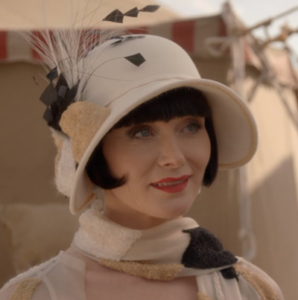
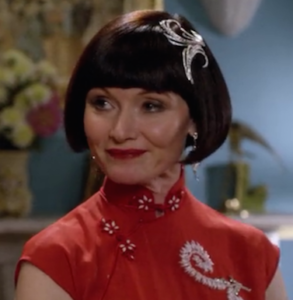
Sexually adventurous, unapologetic, averse to marriage, in control, attractive to all men–and in her 40s. Phryne Fisher (Essie Davis) is the kind of character feminists have despaired of seeing onscreen, and yet there she is, captivating her Australian viewers, and now American ones, who have binge watched her on Netflix as quickly as I have. She’s a 1920s heiress who solves crimes, and the rather dainty title of the show–Miss Fisher’s Murder Mysteries–doesn’t capture the boldness of its heroine at all.

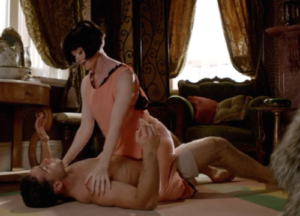
Of course, being an appreciator of all things Mae West would love, I claim this would be her current TV show of choice, just as Elle King’s “Ex’s & Oh’s” would be her theme song. Essie Davis has just the right attitude for her role, and while she isn’t Mae West (who is?), the two would clearly get along. Not that the characters the two actresses play are doubles. The slow strut of West’s characters contrasts with Fisher’s quick energy, and while West’s characters clearly take pride in their sexual conquests, Fisher simply relishes them, as if so many lovers are simply a matter of course.

EssieDavisasPhryne Fisher
This is what you do when you’ve survived WWI, Fisher suggests: you have FUN. And yet, like West’s heroines, she never belittles her more demure fellow females; her closest companion (and employee), Dot (Ashleigh Cummings), is a devout, chaste Catholic (in more modern terms, Charlotte York to Fisher’s Samantha Jones).

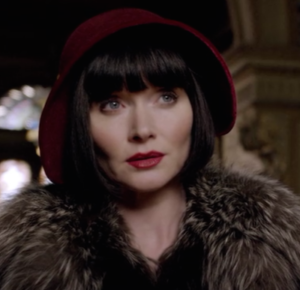
The show is also praised for its female writers, its attention to historical detail, and, of course, its fashion. I can’t begin to describe those glorious costumes, but others have here and here. Like West’s characters, Fisher likes silk and feathers and furs and jewels, and wears them with panache.

MissFisherfashion2 MissFisherFashion
There are many other reasons to watch the show. The mysteries are fun, but in the end, I don’t care about them any more than I do in The Thin Man or Psych. Just gimme some more of Fisher’s chemistry with the detective (Nathan Page), more of her lascivious looks, more of her joyful dancing, more of her comments on singlehood, more of her liberality toward those mistreated by her time period, and in many cases, still by ours (gay friends, communists, anarchists, pacifists, prostitutes, working women, etc.) Give me more of the clothes. And most of all, give me more of that lust for life that has made me fall for Mae West. Please, please, you wonderful writers and you very busy star, give us a Season 4.

This post is part of my monthly West moment series.

Share
Posted in: 1930s films, 1940s films, Comedies (film), Feminism, Mae West Moments, TV & Pop Culture Tagged: Essie Davis, feminists, Miss Fisher's Murder Mysteries, older women as sex objects, Phryne Fisher, Samantha Jones, TV

Happy Films: You Were Never Lovelier (1942)

05/22/2016 by leah@carygrantwonteatyou.com 12 Comments

YouWereNeverLovelier
When asked to pick a film that I’d equate with ice cream for a sweet-inspired blogathon, I recalled the Rita Hayworth-Fred Astaire confection, You Were Never Lovelier. The plot is so silly: a sexist father, Eduardo Acuña (Adolphe Menjou), creates an imaginary secret admirer for his daughter, Maria (Rita Hayworth). He thinks he can handpick her suitor and pretend the boy is writing the love notes he himself is penning. But Maria mistakes a dancer, Robert (Fred Astaire), for her admirer, and much confusion ensues. It’s hard to explain why a story like this could win over its audience, especially since Maria is ridiculously susceptible, Robert directionless, and the film’s portrayal of Argentinians fantastical. And yet….What’s the primary feeling while watching? Utter delight. Try to watch it without grinning, rewinding, and pressing play again.

Why, you might ask?

Well, here’s our hero, Robert (Fred Astaire), dancing on a desk to protest Acuña’s refusal to consider him for his nightclub:

https://carygrantwonteatyou.com/wp-content/uploads/2016/05/AstaireYouWereNeverLovelier-sc.mp4

There’s the very funny meet cute between Robert and Maria, an encounter that doesn’t go well thanks to some snarky remarks by the former, who doesn’t know who she is.

MeetCute-YouWereNeverLovelier
And there’s the heavenly dancing. Within one scene Rita Hayworth and Fred Astaire make you forget the implausibility of the story because these are two of the most expressive dancers ever. From their first dance in, you’re entranced by their characters’ romance. How could you not be convinced, after watching them together?

https://carygrantwonteatyou.com/wp-content/uploads/2016/05/RitaandFred.mp4

The sweet, Oscar-nominated score is lovely, and the songs are catchy. “I’m Old-Fashioned” always makes me smile. Listen to Ella Fitzgerald’s version, or even better, watch a much longer clip than I’ve posted here at TCM, with Hayworth lip syncing it (sung by Nan Wynn) to Astaire’s Robert.

And that’s just one scene. I envy all of you who haven’t seen this film. You’re in for a treat.

This post is part of the Classic Movie Ice Cream Social, hosted by Fritzi of Movies Silently: a celebration of those movies and recipes that make us smile.

Share
Posted in: 1940s films, Blogathons, Comedies (film), Musicals and dancing films, Romantic Comedies (film) Tagged: best dancing movies, classic film, feel-good film, Fred Astaire, musicals, Rita Hayworth, You Were Never Lovelier
« Previous 1 2 3 4 5 6 7 8 9 10 Next »

Recent Posts

  • 100 Years Later, Still Scary: Dr. Caligari
  • Escaping Out of the Past (1947)
  • A Weeper for Those Who Love Jerks
  • Thank You, Academy, for Not Infuriating Me
  • Challengers (2024) Is a Bad Movie

Subscribe to Blog via Email

Enter your email address to subscribe to this blog and receive notifications of new posts by email.

Categories

  • 1920s films
  • 1930s films
  • 1940s films
  • 1950s films
  • 1960s films
  • 1970s films
  • 1980s films
  • 1990-current films
  • 2020s films
  • Action & Sports Films
  • Anti-Romance films
  • Blogathons
  • Childfree
  • Comedies (film)
  • Drama (film)
  • Feminism
  • Femme fatales
  • Film Noir/Crime/Thriller & Mystery
  • Gloriously Silly Scenes
  • Horror
  • Humor
  • Mae West Moments
  • Musicals and dancing films
  • Oscars
  • Random
  • Romance (films)
  • Romantic Comedies (film)
  • The Moment I Fell for
  • Turn My Sister into Classic Movie Fan
  • TV & Pop Culture
  • Uncategorized
Share
Classic Movie Blog Hub Member

Recent Comments

  • leah@carygrantwonteatyou.com on Meg Ryan’s Fate Foretold in Joe Versus the Volcano
  • Ryan on Meg Ryan’s Fate Foretold in Joe Versus the Volcano
  • leah@carygrantwonteatyou.com on 100 Years Later, Still Scary: Dr. Caligari
  • The Classic Movie Muse on 100 Years Later, Still Scary: Dr. Caligari
  • leah@carygrantwonteatyou.com on 100 Years Later, Still Scary: Dr. Caligari

Archives

  • November 2025
  • September 2025
  • May 2025
  • March 2025
  • January 2025
  • November 2024
  • August 2024
  • July 2024
  • May 2024
  • March 2024
  • February 2024
  • December 2023
  • November 2023
  • October 2023
  • September 2023
  • August 2023
  • July 2023
  • May 2023
  • April 2023
  • March 2023
  • January 2023
  • December 2022
  • November 2022
  • September 2022
  • July 2022
  • May 2022
  • April 2022
  • March 2022
  • February 2022
  • October 2021
  • September 2021
  • April 2021
  • March 2021
  • February 2021
  • December 2020
  • October 2020
  • September 2020
  • July 2020
  • May 2020
  • April 2020
  • March 2020
  • February 2020
  • December 2019
  • October 2019
  • September 2019
  • June 2019
  • May 2019
  • April 2019
  • February 2019
  • January 2019
  • November 2018
  • September 2018
  • July 2018
  • June 2018
  • May 2018
  • April 2018
  • March 2018
  • February 2018
  • January 2018
  • November 2017
  • September 2017
  • August 2017
  • July 2017
  • June 2017
  • May 2017
  • April 2017
  • March 2017
  • February 2017
  • January 2017
  • December 2016
  • November 2016
  • October 2016
  • August 2016
  • July 2016
  • June 2016
  • May 2016
  • April 2016
  • March 2016
  • February 2016
  • January 2016
  • December 2015
  • November 2015
  • October 2015
  • September 2015
  • August 2015
  • July 2015
  • June 2015
  • May 2015
  • April 2015
  • March 2015
  • February 2015
  • January 2015
  • December 2014
  • November 2014
  • October 2014
  • September 2014
  • August 2014
  • July 2014
  • June 2014
  • May 2014
  • April 2014
  • March 2014
  • February 2014
  • January 2014

Meta

  • Log in
  • Entries feed
  • Comments feed
  • WordPress.org

Copyright © 2025 Cary Grant Won't Eat You.

Church WordPress Theme by themehall.com