Cary Grant Won't Eat You

Classic movies for phobics

  • About
  • eBooks
  • Previous Blogathons
Classic movies for phobics

Comedies (film)

She Got It Wrong: How Jennifer Jason Leigh Almost Ruined The Hudsucker Proxy

05/28/2014 by leah@carygrantwonteatyou.com 2 Comments

As a fan of classic 30s and 40s films, I delight in the movies that pay tribute to them, and no directors have been more glowing in their homages than the Coen brothers, with their nods to predecessors Preston Sturges, Howard Hawks, Frank Capra, and even Stuart Heisler. Their gloriously fun The Hudsucker Proxy was attacked for lacking “heart,” for being no more than a stylish imitation of favorite classic films.

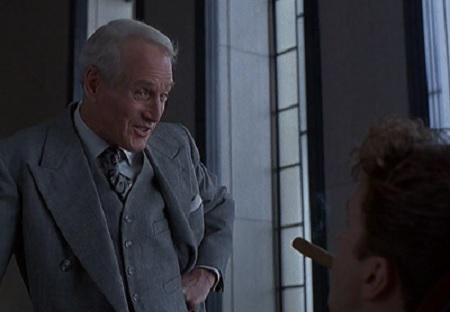
Sidney Mussburger conning Barnes (Robbins)

Sidney Mussburger (Paul Newman) conning Barnes (Robbins)

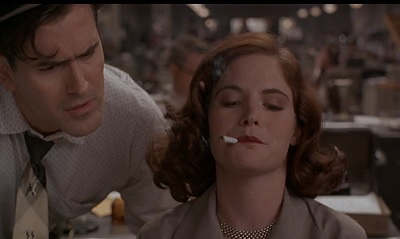
But critics praised Jennifer Jason Leigh’s performance as the typical classic film reporter, noting, as did Todd McCarthy in Variety, that she plays the role “with a Katharine Hepburn accent, Rosalind Russell’s rat-a-tat-tat speed in ‘His Girl Friday’ and Stanwyck attitude….” Occasionally, reviewers admitted that Leigh’s character, Amy Archer, wasn’t “quite right,” as McCarthy did, but they never attributed the film’s failure to the actress.

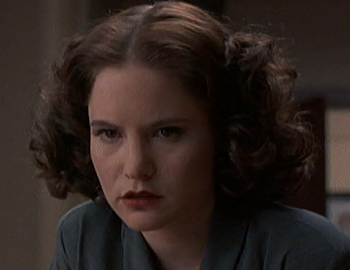
Leigh in full-on caricature mode

Leigh in full-on caricature mode

Yet to me, Leigh’s performance is the one thing that takes away from my enjoyment of this exuberant movie. Paul Newman is marvelous as the bad guy (Sidney Mussburger). Tim Robbins is terrific as the naïve Hoosier (Norville Barnes) who comes to work in the big city. His supposed stupidity makes those trying to lower Hudsucker’s stock prices quickly usher him into the presidency, yet his creativity manages to foil their plot. Archer (Leigh) plans to expose him as an idiot, much like Saunders (Jean Arthur) before her in Mr. Smith Goes to Washington.

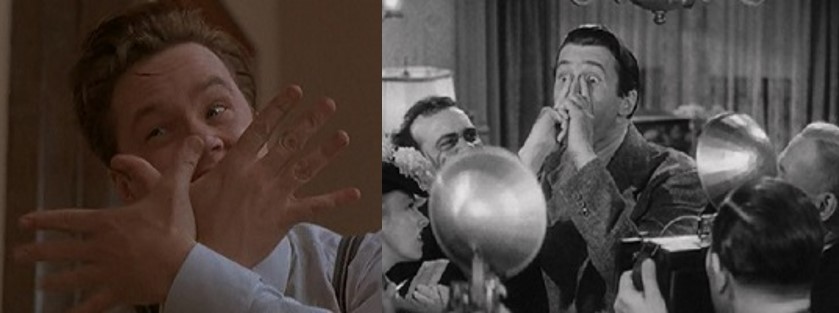
Barnes singing school song; Stewart showing a bird call

Barnes’ school song; Smith’s (Jimmy Stewart’s) bird call

But Archer’s later guilt at this character assassination and developing feelings for Barnes are utterly unconvincing, largely because her whole performance is.

One gets the feeling that Leigh only watched the films in which Stanwyck, Hepburn, and Russell were speaking at that “rat-a-tat-tat” clip and therefore missed the obvious: these actresses didn’t talk at such speeds in most of their films. They simply imagined themselves the kind of women who would be thrilled by breaking stories. Their words nearly run together not just due to the scripts, but because their characters are excited.

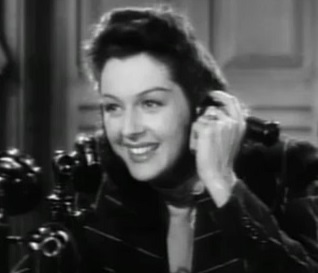
Russell sharing a great lead with editor and ex Walter Burns (Cary Grant)

Russell sharing a great lead

Leigh takes on the inflections and even some of the gestures of these actresses, but she becomes a mimicry of them rather than a believable character because the passion that infused the others’ performances is entirely absent in Leigh’s.

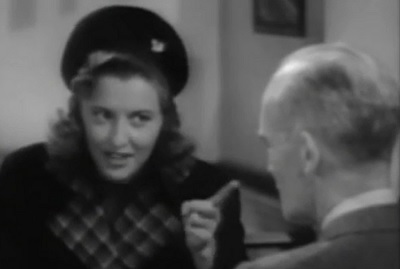
Stanwyck mid pitch

Stanwyck mid pitch

Hepburn, Russell, and Stanwyck come across as born reporters; their confidence makes them thrilling to watch: Hepburn’s assurance in mixing with dignitaries in Woman of the Year, Stanwyck’s daring plan to manipulate her employer in Meet John Doe, Russell’s masterful interview in His Girl Friday.

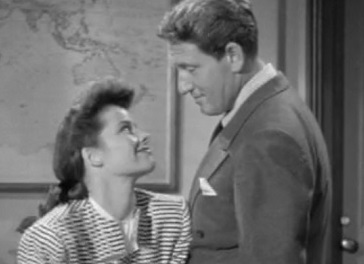
Hepburn flirting in her office after her male secretary ushers in her crush (Spencer Tracy)

Hepburn in control in her office

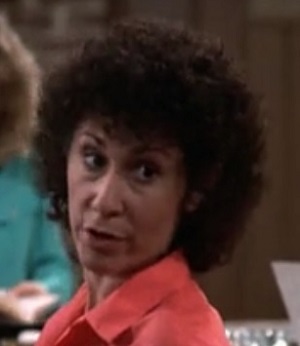
Archer, in contrast, is clearly aping rather than feeling confidence, and because Leigh plays her as shrewish rather than cynical, her quick transition into affection for Barnes merely looks like bad acting, which is surprising given the caliber of most of her work.

Archer falling for Barnes

Archer falling for Barnes

Admittedly, the Coens made Archer terribly insecure, a woman whose sole joy is one upping others with her Pulitzer. This was a serious mistake. How could the Coens, Hawks enthusiasts, have missed that the overlapping dialogue they’ve borrowed from His Girl Friday was not meant to be an affectation, as Archer’s is, but a reflection of the characters’ energy and enthusiasm? The film centers around Cary Grant’s excitement about being a newspaperman, and his various ploys to prevent Russell from leaving the business stem from his knowledge that she can’t resist it any more than he can.

The two films, in fact, have much in common: they’re all about the joy of the con—Barnes, in convincing the company he’s a fool (unwittingly), Walter Burns (Grant), in keeping others so occupied they miss his hilarious ruses. Both movies are a blast to watch. But The Hudsucker Proxy bombed at the box office, and I can’t help but blame Leigh, whose Archer is a drag to watch, and whose union with Barnes I rooted against. What does it matter if an actress nails the shell, if she loses the soul?

Share
Posted in: 1940s films, 1990-current films, Comedies (film), Romantic Comedies (film) Tagged: Barbara Stanwyck, Coen brothers, His Girl Friday, Jennifer Jason Leigh, Katharine Hepburn, Rosalind Russell, The Hudsucker Proxy

Veep & Together Again: Hollywood & Female Leadership

05/08/2014 by leah@carygrantwonteatyou.com 10 Comments

Sometimes the stars align, and you can convert hours of procrastination into productivity. At least, that’s what I’m telling myself about this week’s blog post, which is the result of a Veep marathon and viewing of two Irene Dunne films in a row. Call it a stretch or serendipity, but I keep observing similarities between the Julia Louis-Dreyfus-helmed TV show about a vice president and Together Again (1944), a film about a small-town mayor. Both keep returning to some of the same themes for humor, and both succeed.

Fairy Tale Romance? Not for Them
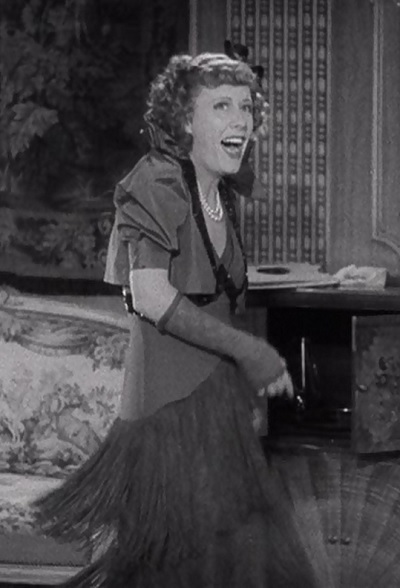
In Together Again, Irene Dunne (as Anne Crandall) plays a widow who takes over as mayor after her husband dies. The film begins with a shot of a statue created in her husband Jonathan’s honor. The unlikely Cupid of the film, Crandall’s father-in-law (Charles Coburn), is disgusted by this hero worship, which he considers against his son’s wishes. He tries to convince his daughter-in-law to find a man.

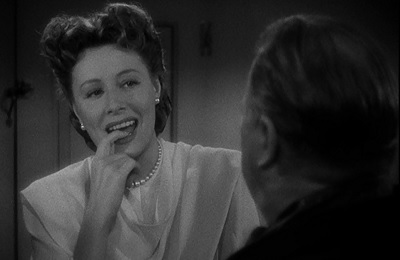
I can’t decide what’s more delightful: Crandall’s response, or her amusement in expressing it: “You can’t bear to see a woman living alone and liking it. No man can. Instinctively, it terrifies them. You’re a vanishing race and you know it. And the minute you lose your hold over us emotionally, wow. So naturally, your platform must be husbands are necessary. And they’re not really.”
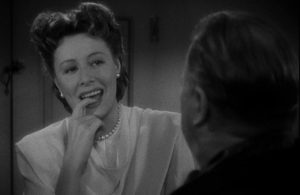
Crandall mocking her father-in-law

His rebuttal, refreshingly, is not that singlehood is wrong; he just believes the state is not for her: “You talk like a free soul, but you’re the most manacled creature I’ve ever seen…Everything you do, everything you say, everything you breathe is the way Jonathan did it, said it, and breathed it. Why don’t you stop living his life and live your own?”

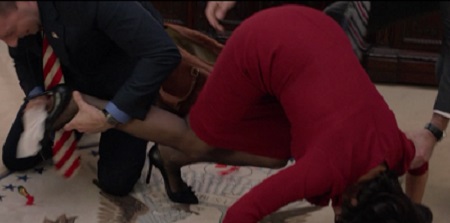
Veep’s heroine too is annoyed by others’ desire to fit her into a typical female role–in her case, as a happy wife and mother. At the start of Season 2, Julia Louis-Dreyfus attacks her former strategist (Gary Cole) for trying to force an image of the perfect family on her, which led to an uncomfortable river rafting trip with her daughter, her estranged husband, and his mistress. Their spat takes place in the Oval Office, and hilarity ensues when her lipstick marks up the sacred carpet.

Lipstick stain recovery effort

The Nonsense of Politics
Since Together Again is a romantic comedy, its primary interest, unlike Veep‘s, is not politics, but it has its moments, as in this great exchange between Randall and Mr. Witherspoon, who is in charge of the town’s sanitation and keeps leaving the south side blanketed in “a lot of old potato peelings.” His sorry excuses echo those that flood Veep:

Mr. Witherspoon: “It’s the manpower, your honor.”

Crandall: “Manpower, my eye. Use womanpower then.”

Mr. Witherspoon: “Women? To collect garbage?”

Crandall: “Why not? Women see more garbage in their lives than men do, don’t they? They might as well get paid for it.”

The scene highlights Randall’s power in the town. The joy of Veep, in contrast, is witnessing Meyer’s pathetic attempts to muster up the illusion of power she doesn’t have. And since we’re talking about D.C., the whole city is doing the same. After watching the jockeying for position among staffers, Congress members, and the administration, one wonders whether anything but ego is at stake for them. My favorite moment in the first season may be when the president’s lackey forbids the VP to adopt a dog because it’ll distract from the White House’s new pup: “Ma’am, you need to kill the dog. Not literally, but yeah, if it comes to it, yeah literally.”

Female Power: Is It All about the Hat?
Much of the plot of Together Again hinges on Crandall’s choice of a flirtatious hat over her usual professional attire when she goes to meet Corday (Charles Boyer), a sculptor in New York. The hat acts as a stand-in for the sexuality she’s been repressing as a widow. She’s bought it upon her father-in-law’s recommendation; he advised her when she departed their town to replace her functional one.

“When women starting wearing hats that look like hats,” he says, “they’re on the way out. At your age, you ought to be on the way in.”

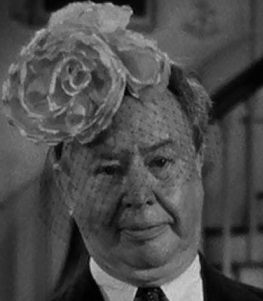
When Corday sees her in it, he assumes her a model rather than the mayor. Of course, no powerful woman could wear something so becoming, right? She hides the hat—and the nightclub raid she later gets involved in because of it—as soon as she returns home. But the hat keeps turning up again. My favorite moment is when her father-in-law walks in wearing it.
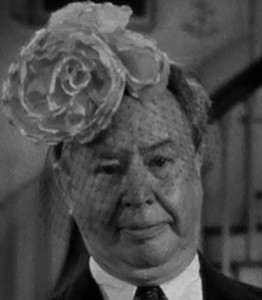
The father-in-law steals the show

Written seven decades later, HBO’s Veep focuses on a woman who is next in line to the president; it seems, on television at least, women have come a long way. But have they? Yes, the mayor of a tiny town is a far cry from the vice president of the United States, but perhaps not as far of a cry as we might wish. When Meyer asks why her presidential bid failed, her press secretary, Mike (Matt Walsh), responds, “You looked tired a lot and the hat….The hat hurt us. Your head looked weird in the hat; that’s all I’m gonna say.”

Convictions? What Convictions?
In Veep, it’s clear where Meyer’s convictions lie: she doesn’t have any. She puts an oil lobbyist on her clean jobs task force without hesitation. She tries to repress delight when a shipyard accident takes away her bad press. “Well, I think that worked out pretty good,” she says to her staff with a big smile.
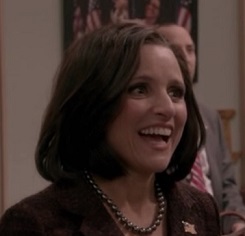
Meyer-repressingjoy
(Of course, she tries to take it back when she discovers there were fatalities.) Self-interest trumps her idealism every time, which makes her a blast to watch.

**Spoiler ahead**

While Crandall’s political beliefs are only briefly sketched, her devotion to her dead husband and to the town he once led clearly dictates her behavior. She seems to be a very moral woman, bound by duty. Curiously, though, she seems content to leave the town she’s worked so hard to serve in the hands of her unscrupulous rival once she decides (as we know she will) to go after Corday.

The More, the Merrier
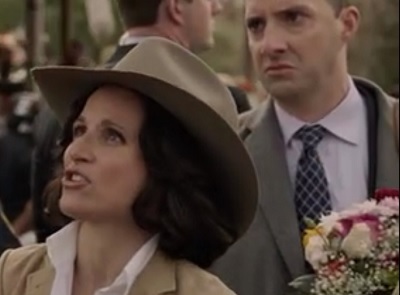
It’s refreshing to find in Veep a female led-show so entirely unconcerned with romance. But while her romantic interludes are brief and mildly funny, Meyer’s interactions with her staffers are fantastic. As a long-time Arrested Development fan, I was pleased to see Tony Hale (aka Buster) in another meaty role, treating Meyer’s various failures with compliments and tea and going to ridiculous lengths to satisfy her needs, as when he draws her chief of staff from her father’s bedside: “Something has happened to the vice president. I know your dad is dying and I’m really, really sorry, Amy, but I think Dana took Selina’s lipstick. It’s the one thing Selina asked for, and I don’t have it, and it’s ruining her night.”

I’ve left out much of the plot of Together Again in this review. The romance is fine, and Boyer a convincing lead. But it’s the Coburn-Dunne chemistry that kept me watching, especially when late in the film the two start riffing on youths’ views of aging. Coburn makes such a perfect Cupid that I can’t wait to see him play it in The More the Merrier.

Of course, there are other films and shows that tackle this same political ground. Parks and Recreation takes on the small-town concerns Crandall struggles with and makes them fresh and hilarious. But I could see little of Leslie Knope in Crandall or Meyer. Knope worships her town; Crandall belittles hers. And Meyer looks like a Knope foe: world-weary, cynical, and always out for herself.

Crandall and Meyer are alike, even if Meyer is looser ethically than her predecessor: both are hyper-aware of their public images and frustrated with the bureaucracy politics brings, but nevertheless, they manage to survive politics’ worst ravages, and in Crandall’s case, even find love along the way. And neither can resist a good hat.
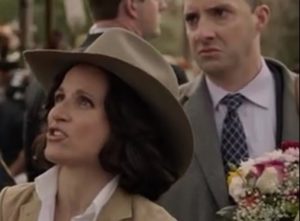
Meyer and her assistant (played by Tony Hale)


Share
Posted in: 1940s films, Comedies (film), Feminism, Romantic Comedies (film), TV & Pop Culture Tagged: Charles Coburn, female leaders, female vice president, Irene Dunne, Julia Louis-Dreyfus, Veep

Nazis and Humor: The Shock of Lubitsch’s To Be or Not to Be (1942)

04/17/2014 by leah@carygrantwonteatyou.com 2 Comments

ToBeorNot2
Wrap your head around this fact: Two decades before Quentin Tarantino was born, Ernst Lubitsch directed a comedy about Nazis. Unlike Tarantino, whose own Nazi film was typically bloodthirsty, Lubitsch was best known for light fare, especially sophisticated sex farces so insightful and lacking in prudery that they remain startlingly modern and funny still today. Not surprisingly, Wes Anderson recently cited To Be or Not to Be, Lubitsch’s anti-Nazi comedy, as influential. Lubitsch and Anderson share a joy in puncturing human vanity and hypocrisy, a gift for efficiency in their visual symbolism, and an appreciation for moments of pathos within otherwise humorous films. They also are in love with silliness, and this film is full of it.

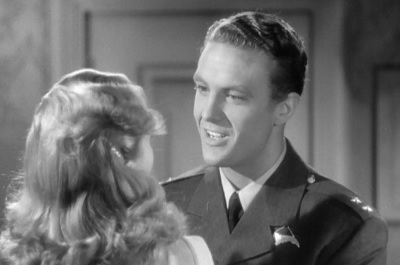
To Be or Not to Be is almost as frantic in pace as Anderson’s The Grand Budapest Hotel, so I’ll just explain the basics: An acting troupe in Warsaw pretends to be Nazis to undermine a plot against the Resistance. The troupe is led by Joseph Tura (Jack Benny), a man arrogant about his acting but insecure about his wife Maria’s (Carole Lombard’s) fidelity—and rightly so: She invites an aviator (a very young Robert Stack of Unsolved Mysteries fame) to her dressing room every time her husband begins the famous speech in Hamlet that gives the movie its name. (Joseph’s not initially aware of her flirtation, though he becomes obsessed with the flier’s rudeness in leaving during his soliloquy.)

Who knew Robert Stack could be funny?

Who knew Robert Stack could be funny?

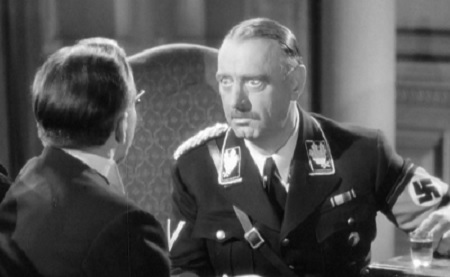
Like Joseph, the Nazis in the film are obsessed with the reactions of others to their words. When they joke about their leader’s vegetarianism or reputation, they fear their peers’ reprisals, and quickly state “Heil Hitler” to appear patriotic. The implication throughout the film is that the Nazis are much like the actors imitating them: full of insecurity and quick to express pronouncements they utter rather than feel.

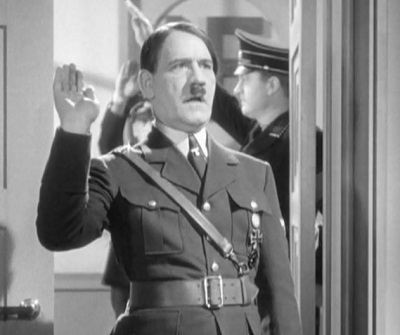
The movie begins with an actor from the troupe who is playing Hitler in a play that’s about to fold. He’s anxious to prove his plausibility in the role due to a blistering attack by his director. “I don’t know. It’s not convincing,” the director says, looking at the clothes and makeup meant to imitate the Führer. “To me, he’s just a man with a little mustache.”

“But so is Hitler,” the actor responds defensively.

An actor (Tom Dugan) saying "Heil myself" as Hitler in a doomed production.

An actor (Tom Dugan) saying “Heil myself” as Hitler in a doomed production.

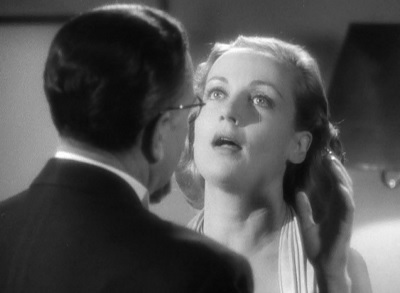
As in most of Lubitsch’s films, the marital sexual farce is highly entertaining. In a typical moment, Maria’s assistant quips, “What a husband doesn’t know won’t hurt his wife.” But this farce goes beyond the main couple. The Nazis are not only fooled by these actors’ poor performances as Gestapo, but are also easily convinced that the beautiful Maria will be captivated by their power. They repeat “Heil Hitler” not only as a defense or conversation filler, but as a pickup line. Clearly, Lubitsch feels these Nazis are using their lethal reputation as a substitute for manhood. “And before the evening is over,” a Nazi spy says suggestively to Maria, “I’m sure you’ll say ‘Heil, Hitler.’” (I gasped when I heard this—Did I just hear a racy use of Hitler?) Sure enough, after he kisses her, Maria replies, “Heil Hitler” in a loaded, sexy tone in imitation of the man she’s duping.

Maria (Lombard) feigning attraction to a Nazi spy.

Maria (Lombard) feigning attraction to a Nazi spy.

Maria’s faux seduction mimics her earlier comforting of her needy spouse, though this time it’s for a worthier cause. But just as with Joseph, Maria’s cooing words mean little. She proves that it’s a man of action, not the Nazis or her narcissistic husband, who will likely win her bed in the end. When the RAF flier (Stack) gushes about the thrill of meeting an actress, Maria breathily replies, “Lieutenant, this is the first time I’ve ever met a man who could drop three tons of dynamite in two minutes.”

As for the Nazis, the actors do occasionally falter against them, mainly due to their inability to get over their egos. But there’s something gallant about these blundering Warsaw patriots, and one in particular, just as with M. Gustave of The Grand Budapest Hotel. This troupe of actors is goofy and flawed and outrageously vain. But as Lubitsch implies in the film, what act isn’t noble, against such enemies as these?

Share
Posted in: 1940s films, Comedies (film), Humor Tagged: Carole Lombard, Lubitsch, Nazis, satire, Wes Anderson

The Gatsbys of Wes Anderson Films: Climbing above Archie Leach

04/10/2014 by leah@carygrantwonteatyou.com Leave a Comment

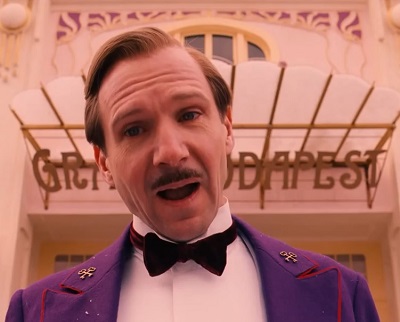
M. Gustave (Ralph Fiennes); the impeccable, refined, and deeply sketchy hero of The Grand Budapest Hotel; is the kind of character who made me fall for Wes Anderson films: men with a flair for self-creation so extreme that I can’t help rooting for them because my own imagination, by comparison, seems embryonic.

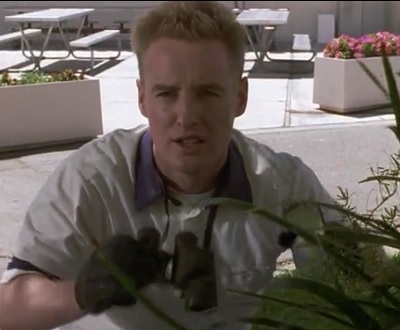
In my favorite of Anderson’s films, Bottle Rocket, the hero is Dignan (Owen Wilson), whose first steps in a 50-year plan of becoming a criminal mastermind involve stealing from friends’ houses for practice, moving on to a bookstore heist wearing nose tape, and then promptly going on the lam. No unimportant detail escapes Dignan’s dedication to this persona: note the binoculars he uses when springing his friend Anthony (Luke Wilson) from a voluntary stay at a mental health facility.

Owen Wilson

“Look how excited he is,” says Anthony when his doctor protests the sheets hanging from the window. “I gotta do it this way…I have to climb out. It’s so important to him.” Dignan’s enthusiasm is so contagious that Anthony continues to go along with his buddy’s increasingly ill-conceived plans just because he can’t bear to deflate him. And when you hear Dignan’s prattle and see that grin, you can’t blame him. (Admittedly, I think Owen Wilson, who co-wrote the film, largely responsible for the success of this character; his considerable charm made even the overrated Midnight in Paris palatable.)

And, of course, there’s Max Fischer (Jason Schwartzman) in Rushmore, who puts more energy into his school activities than the rest of the student body combined. As Anthony Lane put it, “To say [Max] attends Rushmore is like saying the Holy Father hangs out at the Vatican: Rushmore could exist without Max, but there would be no point to the place.”

Rushmore

In the newest Anderson installment, M. Gustave’s considers the care of his establishment, guests, and the new bell boy of paramount importance. He is the platonic version of a hotel concierge, a fussy perfectionist so accommodating he knows guests’ wishes in advance, and he’ll go to absurd (and disturbing) lengths to satisfy them. But unlike with most of Anderson’s heroes, M. Gustave’s refined veneer slips regularly in The Grand Budapest Hotel. In difficult situations, coarse language breaks through the stylized version of himself he’s created, and these curious, funny instances cause viewers to wonder just who this guy is.

Fiennes

That’s probably why the film reminded me of Cary Grant’s classic comment about the style and sophistication that became synonymous with his name: “Everyone wants to be Cary Grant. Even I want to be Cary Grant.” Because of course, he wasn’t. Born Archibald Leach in Bristol, England, Cary Grant was poor, largely abandoned by his family, and making a living as a juggler/acrobat by his early teens. Not exactly the pedigree we all might expect given his dashing presence on the screen.

I think what I love so much about Anderson’s heroes—his Gustaves, Maxes, and Dignans—is also what I admire most about Grant: not only do these heroes envision an impossibly large, glorious version of themselves, but they also manage, despite the many obstacles Anderson—and life—stacks up against them, to pull it off.

Share
Posted in: Comedies (film), Humor Tagged: Cary Grant, Gatsby, Owen Wilson, The Grand Budapest Hotel, Wes Anderson

Like Liz Lemon’s Sugarbaker Meltdown? See Bette Davis in All about Eve

03/20/2014 by leah@carygrantwonteatyou.com Leave a Comment

I always love a comedic meltdown, and 30 Rock‘s Liz Lemon (Tina Fey) is brilliant at them. In one of my favorite episodes, The C Word (Season 1, Episode 14), Lemon tries to earn a reputation as a nice boss by spoiling her staff. Of course, her subordinates quickly exploit her kindness, resulting in an all-nighter to finish their work and one of my favorite breakdowns of all time: Lemon forces her employees to watch a Designing Women episode she taped at 5:30 a.m., hoping to channel Julia Sugarbaker’s (Dixie Carter’s)  strong-willed feminism, but succeeding only in destroying the tape and breaking into hysterics.

LizLemonenraged

Like in a later episode’s meltdown (Season 1, Episode 17), when Jack Donaghy (Alec Baldwin) says Lemon has “gone chicken killer” on him, Fey plays the moment perfectly. I am a Designing Women fan as well, but if Lemon really wanted to see histrionics for the ages, she should have put All about Eve into her VCR instead.

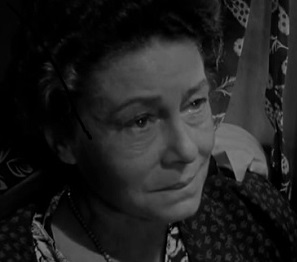
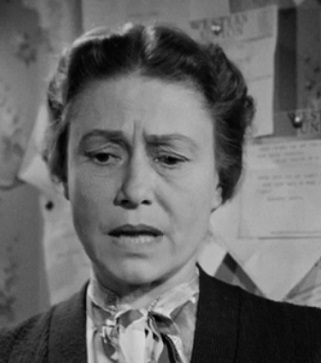
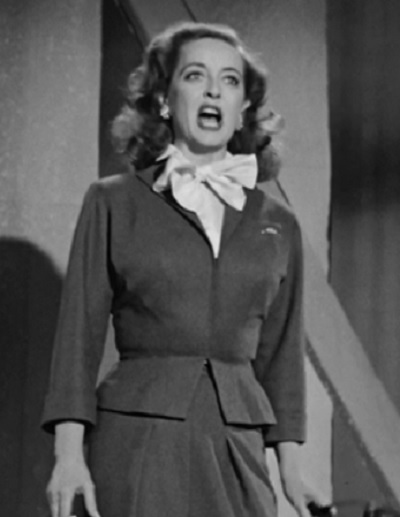
In the film, theater star Margo Channing (Davis) has been generous to her one-time fan, now employee, Eve (Anne Baxter), whom she finds destitute at the start of the story. But slowly, Margo begins to question Eve’s loyalty. Once she suspects Eve of flirting with her boyfriend, Bill (Gary Merrill), Margo begins insulting everyone, essentially sabotaging her own party for him, and it’s hilarious to watch. Early in the night, her friend (the gifted Thelma Ritter) asks, “And there’s a message from the bartender. Does Miss Channing know that she ordered domestic gin by mistake?”

“The only thing I ordered by mistake is the guests,” answers Margo.

And the party’s just the beginning.

BetteDavisenraged

If you want to see rage done right, you can’t do better than Bette Davis, and with a script this perfect, there’s no holding her back. As Addison DeWitt (George Sanders), the drama critic, says about Margo’s increasingly bad behavior as the party progresses, but could just as easily have characterized Davis’s entire performance in the film, “You’re maudlin and full of self-pity. You’re magnificent!”

Share
Posted in: 1950s films, Comedies (film), TV & Pop Culture Tagged: 30 Rock, Bette Davis, humor, Liz Lemon, Tina Fey

The Death of the Marital Rom-Com: Where Have All the Toppers Gone?

03/10/2014 by leah@carygrantwonteatyou.com 6 Comments

When is the last time you watched a rom-com about a married couple? Aside from the occasional indie and rare mainstream flick, Hollywood seems to have retired this subject matter, despite the success of TV shows such as Mad about You, Everybody Loves Raymond, and The King of Queens.

Yet I came up with this list of famous 30s and 40s rom-coms about married couples in just two minutes:

Married: Topper, Mr. Blandings Builds His Dream House, My Favorite Wife, and I Was a Male War Bride
Separated/Divorced: The Awful Truth, The Philadelphia Story, and His Girl Friday.

Those familiar with these titles might notice that these are just some of the marital rom-coms starring Cary Grant. In comparison, I came up with three mainstream marital rom-coms in the past three decades altogether—with help.

Even if married couples in 2014 are more likely to attend animated flicks with their kids, as my husband theorized, that doesn’t explain what Hollywood is producing for those without kids. And I’m not buying that we’re all boring enough to only like films about ourselves. We don’t all cook meth in our basements or fight to the death in dystopian universes. We don’t watch The Walking Dead or Game of Thrones because they remind us of barbeques with our buddies. I discovered most of my favorite marital rom-coms when single. Is it possible that Hollywood thinks singles’ imaginations fertile enough to envision shooting webs out of their wrists or being born in Middle Earth, but not to conceive of being married?

Whatever the reasoning for the endangerment of the marital rom-com, the result is unfortunate: there’s a sameness to romantic comedies now that simply didn’t exist in the 30s or 40s. While there are only so many ways we can meet and fall in love, there is an infinite variety of methods for teasing, imitating, and torturing those we know well.

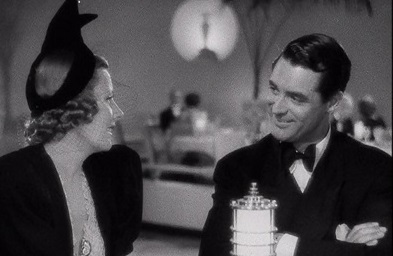
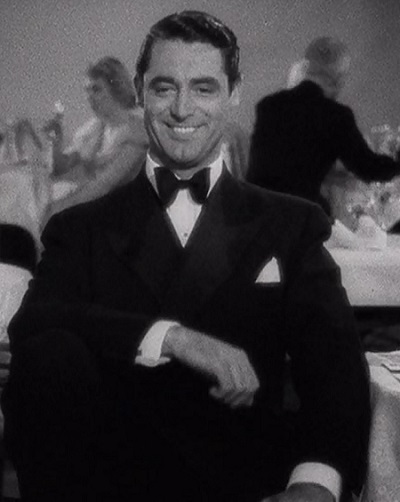
One of Cary Grant’s best marital rom-coms is The Awful Truth (1937), a film my friend Tonya introduced me to many years ago that I’ve been recommending ever since.  Grant’s and costar Irene Dunne’s impeccable timing and believable performances make this one of the funniest screwball comedies I’ve ever seen.

Dunne and Grant dazzling in The Awful Truth

Dunne and Grant dazzling in The Awful Truth

In the film, Jerry (Grant) and Lucy (Dunne) suspect one another of infidelity. Lucy decides to trust Jerry, anticipating Elvis’s famous song about suspicion in explaining her reasoning. Jerry, however, can’t trust her, and the two divorce. But since they’re both still in love, they can’t help sabotaging one another’s new relationships.

I have so many favorite moments from this film. One is when Jerry plays a song for his dog (during his custodial pet visit) to annoy Lucy as she’s meeting her new fiancé’s mom. In another Jerry pays the orchestra conductor to re-play a song just to watch his wife trip as her fiancé tries to lead her in a rambunctious dance.

Jerry appreciating the dance moves of Lucy's fiancé

Jerry appreciating the dance moves of Lucy’s fiancé

And there’s the scene when Lucy, aware of Jerry’s pride, shows up at his fiancée’s house pretending to be his wasted sister.

Lucy humiliating Jerry

Lucy humiliating Jerry

She begins the visit by demanding a drink and ends by performing a Marilyn Monroe-over-grate move for Jerry’s soon-to-be in-laws (years before that famous siren’s).

But perhaps the scene I enjoy most is when Jerry gushes about how much his hard-partying wife will appreciate Oklahoma, where her fiancé lives:

“Lucy, you lucky girl,” Jerry says. “No more running around the night spots. No more prowling around in New York shops. I shall think of you every time a new show opens and say to myself, she’s well out of it….”

“I know I’ll enjoy Oklahoma City,” Lucy replies stiffly.

“But of course,” he answers, “and if it should get dull, you can always go over to Tulsa for the weekend.”

Contrast these scenes with those in 1997 rom-com My Best Friend’s Wedding, technically a film of the single-gal variety, but adopting some situations from the marital rom-com. Yes, Rupert Everett is glorious in it, and Cameron Diaz and Julia Roberts are effective rivals.

Diaz confronting Roberts in My Best Friend's Wedding

Diaz confronting Roberts in My Best Friend’s Wedding

But the message is appalling: you’ll lose the guy if you’re dedicated to your profession and unwilling to ditch your education/career for his. No matter, therefore, how funny some of Roberts’ antics seem, I can’t laugh at the antiquated, offensive cliché of the desperate single woman, as the film asks me to do. But I do laugh at the partners in The Awful Truth, both so anxious to get each other back that they’re willing to forgo pride to do so. Due to his unreasonable suspicions, Jerry looks like more of a buffoon than Lucy, but neither comes out of the experience unscathed. (Of course, since Lucy trusts Jerry, we don’t know whether he just likes his space, or has cheated and the filmmakers have given him a pass for sexist reasons.)

The Awful Truth is just one of many delightful 30s marital rom-coms. There are so many more. Until current Hollywood producers come to their senses and resuscitate the subgenre, you’ll be stuck with the half-attempts at marital rom-coms like My Best Friend’s Wedding, in which the humor is only at the woman’s expense. (Forget viewing films about long-term relationships between unmarried couples–an even rarer subgenre.) So give some classic marital comedies a try. You’ll be glad you did.

Incidentally, next Sunday and Monday (March 16 and 17th), I’ll be participating in a classic detective blogathon hosted by Movies Silently. Please check out my entry in this Sleuthathon at my blog next week. I’ll be reviewing The Mad Miss Manton (1938), featuring Barbara Stanwyck as a Sherlock Holmes-Paris Hilton hybrid. And be sure to view the entries of my much more knowledgeable blogging peers!

detective-blogathon-thin-man-small

Share
Posted in: 1930s films, 1990-current films, Comedies (film), Humor, Romantic Comedies (film) Tagged: Cary Grant, Irene Dunne, Julia Roberts, My Best Friend's Wedding

No Oscar Love for Harold Ramis: The Academy, as Humorless as Ever

02/27/2014 by leah@carygrantwonteatyou.com 6 Comments

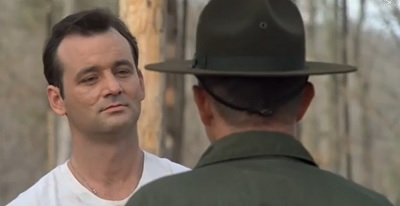
Harold Ramis, whom President Obama labeled “one of America’s greatest satirists,” died this week shortly before this Sunday’s Oscars. His list of co-writing credits is astonishing: Animal House, Stripes, Caddyshack, Ghostbusters, Groundhog Day. He also directed the latter, Caddyshack, and Vacation. I’m sure the Academy will clap enthusiastically this weekend when his face appears in the “In Memoriam” tribute, but they won’t express what they should: regret. Ramis never won an Oscar; in fact, he was never even nominated.

Harold Ramis: won A BAFTA, but no Oscar

Harold Ramis: won A BAFTA, but no Oscar

In the years the Academy snubbed Ramis, comedies did make appearances in the original screenplay category, including Private Benjamin, Splash, Beverly Hills Cop, Sleepless in Seattle, and Dave.  But many of the nominations were of grim films you didn’t know then, much less now. The following were the original screenplay winners the years Ramis could have been nominated:

Coming Home (Animal House), Melvin and Howard (Caddyshack), Places in the Heart (Ghostbusters), and The Piano (Groundhog Day).

Most Oscar nominees for original screenplay are not bad movies; the Academy saves their embarrassing choices for the best film category (Crash, anyone?) But have these screenplay winners stood the test of time? Have they influenced you—or anyone you know—in any way?

Here’s a test for you:

  • Can you quote from it?

Belushitoga

  • Do you adopt cultural affectations from it (perhaps Roman)?
  • Have you sung along with it?
  • Does it give you more understanding for the weak kid or the outsider, perhaps make you feel more comfortable challenging authority? (See this great Ramis bio.)

Stripes

  • Does it bring back childhood memories that make you grin, maybe your best Halloween costume ever?

Ghostbusters

  • Have you lost count of how many times you’ve seen it?
  • Do you (be honest) feel tempted to dance with a certain character’s nemesis during the closing scene?

gopherCaddyshack

Of course, the Academy—and critics in general—have long shown more appreciation for drama than comedy, failing to see in it the far subtler, and often more trenchant and artful cultural critique it can provide. In 1941, Preston Sturges, a writer/director who, like Ramis, was fond of what’s often dismissed as “adolescent” humor, wrote an entire film addressing the greater appreciation given to drama, Sullivan’s Travels. But unlike with the usual Oscar winners, this time, the case for comedies is much more persuasive.

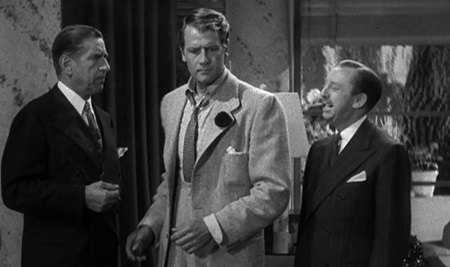
It begins with a scene between a director (Sullivan, played by Joel McCrea) and his bosses (Mr. LeBrand and Mr. Hadrian). Sullivan has decided to write a serious film, which his bosses fear will be less profitable than his usual comedies. Why not do a sequel to your Ants in Your Plants of 1939 instead? they ask him. His movies are inspiring, they tell him. They don’t, as Hadrian puts it, “stink with messages.”

Sullivan (Joel McCrea in the middle) with his bosses

Mr. LeBland, Sullivan (Joel McCrea) and Mr. Hadrian

Sullivan tries to argue them into supporting his new effort, showing them a scene from his O Brother, Where Art Thou? (yes, Coen fans, that’s where they got it)

Sullivan: “You see the symbolism of it?….It teaches a lesson, a moral lesson, it has social significance.”

Hadrian: “Who wants to see that kind of stuff? It gives me the creeps.”

….

Sullivan:  “I want this picture to be a commentary on modern conditions, stark realism, the problems that confront the average man.”

LeBrand: “But with a little sex.”

….

Hadrian: “How about a nice musical?”

Sullivan: “How can you talk about musicals in a time like this, with the world committing suicide, with corpses piling up in the streets?…..”

Hadrian: “Maybe they’d like to forget that.”

After Hadrian convinces Sullivan he’s too inexperienced with suffering to direct movies about it, the latter decides to go on a quest to learn about poverty firsthand. A despondent LeBrand barks at his assistant, “Get me a copy of that O Brother, Where Art Thou? I guess I’ll have to read it now. Make that two copies.  Why should I suffer alone?”

By the end of the movie, Sullivan agrees with his bosses that he should keep directing comedies. He discovers that his movies, silly as they may be, have something to offer that dramas never will: “There’s a lot to be said for making people laugh. Did you know that’s all some people have?”

In fact, Sturges begins the movie with a dedication that could have been written for Ramis: “To the memory of those who made us laugh….in all times and in all nations, whose efforts have lightened our burden a little….” Not a bad epitaph, from one comedic genius to another.

Incidentally, Sullivan’s Travels (1941) ranked on the AFI’s top 100. But you guessed it: Not a single Oscar nomination.

Share
Posted in: 1980s films, 1990-current films, Comedies (film), Humor, Oscars, Romantic Comedies (film), TV & Pop Culture Tagged: Academy Awards, Animal House, Bill Murray, Caddyshack, Ghostbusters, Groundhog Day, Harold Ramis, Preston Sturges, Sullivan's Travels, The Oscars

3 Classic Anti-Valentine’s Films for Sex and the City Fans

02/13/2014 by leah@carygrantwonteatyou.com 6 Comments

Single or attached, I’ve always loathed Valentine’s Day. When single, I’ve wondered why our couples-obsessed culture needs a day devoted to twosomes. When attached, I’ve pondered why I should celebrate en masse what’s supposed to be intimate. Therefore, my three recs today are for those who share my distaste for the day:

Female Bonding: Stage Door
For those who’d rather split a few bottles of wine with pals than brave pink-and-red-bedecked nightclubs this Friday, I recommend Stage Door, a film centered on women who live in an all-female boarding house as they try to make their big breaks on the stage.

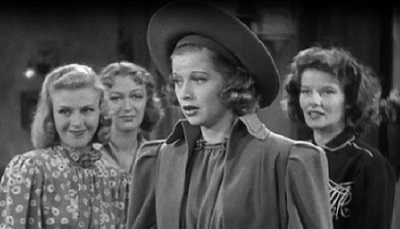
The heroines’ choice to remain single (and have casual boyfriends only) is celebrated rather than reviled by the film. If anything, the film mocks marriage. But don’t just view Stage Door (1937) for its politics; watch it to see the phenomenal cast interact: Ginger Rogers, Katharine Hepburn, Lucille Ball, Eve Arden. (The latter you may recognize as the principal in Grease; in her youth, she was always the smart-talking sidekick.)

Rogers, Arden, Ball, and Hepburn

Rogers, Arden, Ball, and Hepburn

The dialogue is so slick and cynical and quick that you’ll have a hard time keeping up with the one-liners, as when wealthy Terry’s (Katharine Hepburn’s) haughty tone annoys her impoverished fellow residents. Jean (Ginger Rogers) is not one to let an insult slide. When Terry snootily states, “Unfortunately, I learned to speak English correctly,” Jean fires back, “That won’t be of much use to you here. We all talk pig Latin.”

While the more famous classic movie about female friendships, The Women (1939), favors marriage with unfaithful partners over relationships with backbiting friends, this feminist flick celebrates the humor and loyalty between single women. In fact, I would argue that Stage Door’s women are in some ways more liberated than those in Sex and the City. Watch and see if you agree.

More of a feminist: Jean Maitland or Carrie Bradshaw? (Ginger Rogers & Sarah Jessica Parker)

More of a feminist: Jean or Carrie?


Revenge as Art:  Gilda
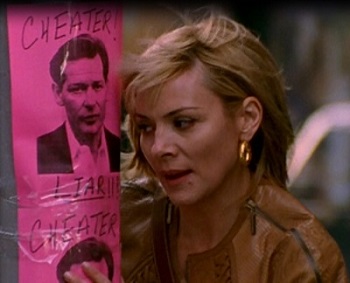
I enjoyed Samantha Jones’s (Kim Cattrall’s) revenge on boyfriend Richard Wright for his infidelity in Sex and the City: the dirty martini in his face, the papering of the city with posters describing his behavior.

Samantha in revenge mode

Samantha in revenge mode

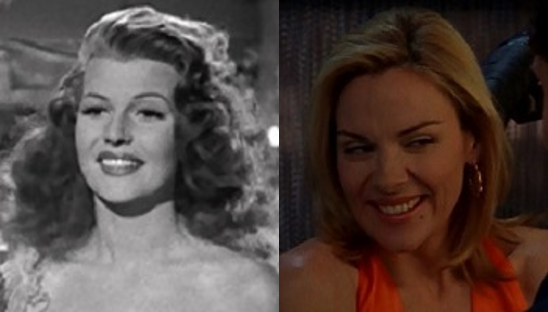
But this kind of takedown is kitten play compared to the work of Rita Hayworth in Gilda.

Gilda, who calls herself the "Bar Nothing," and her spiritual descendant, Samantha Jones

Gilda, the “Bar Nothing,” and her spiritual descendant, Sam

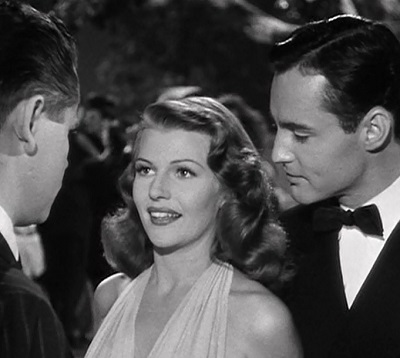
Like Samantha, Gilda (Hayworth) is in full command of her sexuality; it’s not difficult to discover why this WW II pinup was dubbed “The Love Goddess.” But her treatment of her ex, Johnny, is far more ruthless than her modern counterpart’s. First, she marries Johnny’s boss; then, she flaunts her affairs with other men to torment him further.

Gilda (Hayworth) torturing her ex

Gilda (Hayworth) torturing her ex

Gilda is so skillful a manipulator that you root for her to get what she wants, even if the ex she desires is no prize (and no mean manipulator himself).

Here’s an anti-Valentine’s Day conversation if ever there were one:

Gilda: “Would it interest you to know how much I hate you, Johnny?”
Johnny: “Very much.”
Gilda: “I hate you so much I would destroy myself to take you down with me.”

I think Samantha would be impressed.

Exploiting Men: Baby Face
In an early episode of Sex and the City, “The Power of Female Sex,” Carrie’s fling has left a tip on her bedside table and she’s feeling ill at ease with the implications. The four friends discuss whether it’s ever acceptable to use your sexuality to get ahead. Barbara Stanwyck’s character in Baby Face (1933) has no such qualms: She leaves her hometown for NYC with the aim of doing just that.

The shocks accumulate quickly as you watch Baby Face: Lily’s (Stanwyck’s) father has been prostituting her since she was fourteen. A grandfatherly figure in her dad’s speakeasy recommends she leave home to sexually exploit men for personal gain, quoting Nietzsche to back his case.  Once in New York, Lily takes quick steps to follow his advice, seducing the HR assistant in a bank to get a job, and then sleeping her way floor by floor to the top. (The camera helpfully pans up to highlight each floor as she ascends.)

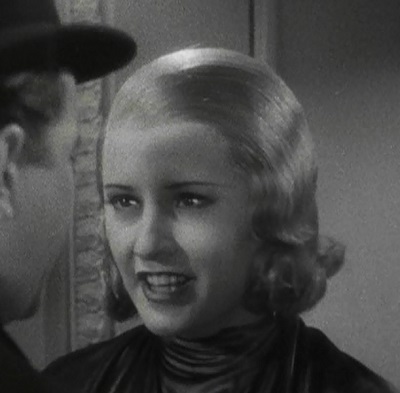
Lily (Stanwyck) on the make

Lily (Stanwyck) on the make

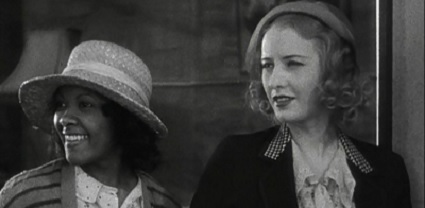
You might expect the movie to make the heroine suffer for her behavior, given the date of this film, but she is unmoved by the heartbreak and eventual tragedy she leaves in her wake (among her victims is a smitten John Wayne). Men have used her all her life. Lily figures it’s her turn, and the film clearly sympathizes with her reasoning. She calmly goes about her business of seducing men, accumulating jewels and bonds, and sharing her successes with her best friend, Chico (Theresa Harris).

Chico and Lily admiring another woman’s wealth before Lily starts to advance

Chico and Lily scheming

Here’s a typical exchange with a discarded lover who stops by Lily’s apartment:

Ex-Lover: “It’s been brutal not seeing you.”
Lily: “Yeah, well you better get used to it.”

When he returns and offers marriage, Lily answers, “So you want to marry me, huh? Isn’t that beautiful. Get out of here….”

Lily's reaction to a marriage proposal from a discarded lover

Lily’s reaction to a marriage proposal from a discarded lover

This is a strange film with a number of flaws, but you won’t care; it’s too much fun to watch this predator in action. (Be sure to watch the pre-release version; it’s much better.)

What are your favorite anti-Valentine’s films?

Share
Posted in: 1930s films, 1940s films, Anti-Romance films, Comedies (film), Drama (film), Feminism, Film Noir/Crime/Thriller & Mystery, Humor, TV & Pop Culture Tagged: Carrie Bradshaw, Gilda, Samantha Jones, Sarah Jessica Parker, Sex and the City, Stage Door

Slacker Detectives: Psych and The Thin Man

01/30/2014 by leah@carygrantwonteatyou.com 1 Comment

Years ago, I tried without success to get my sisters into the TV show Psych.

“The mysteries are stupid,” they said.

“The mysteries aren’t the point,” I replied.

“You can’t ignore them!” they claimed.

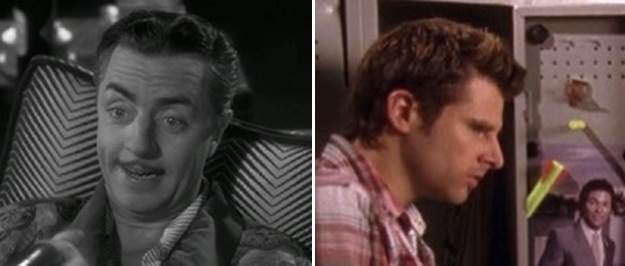
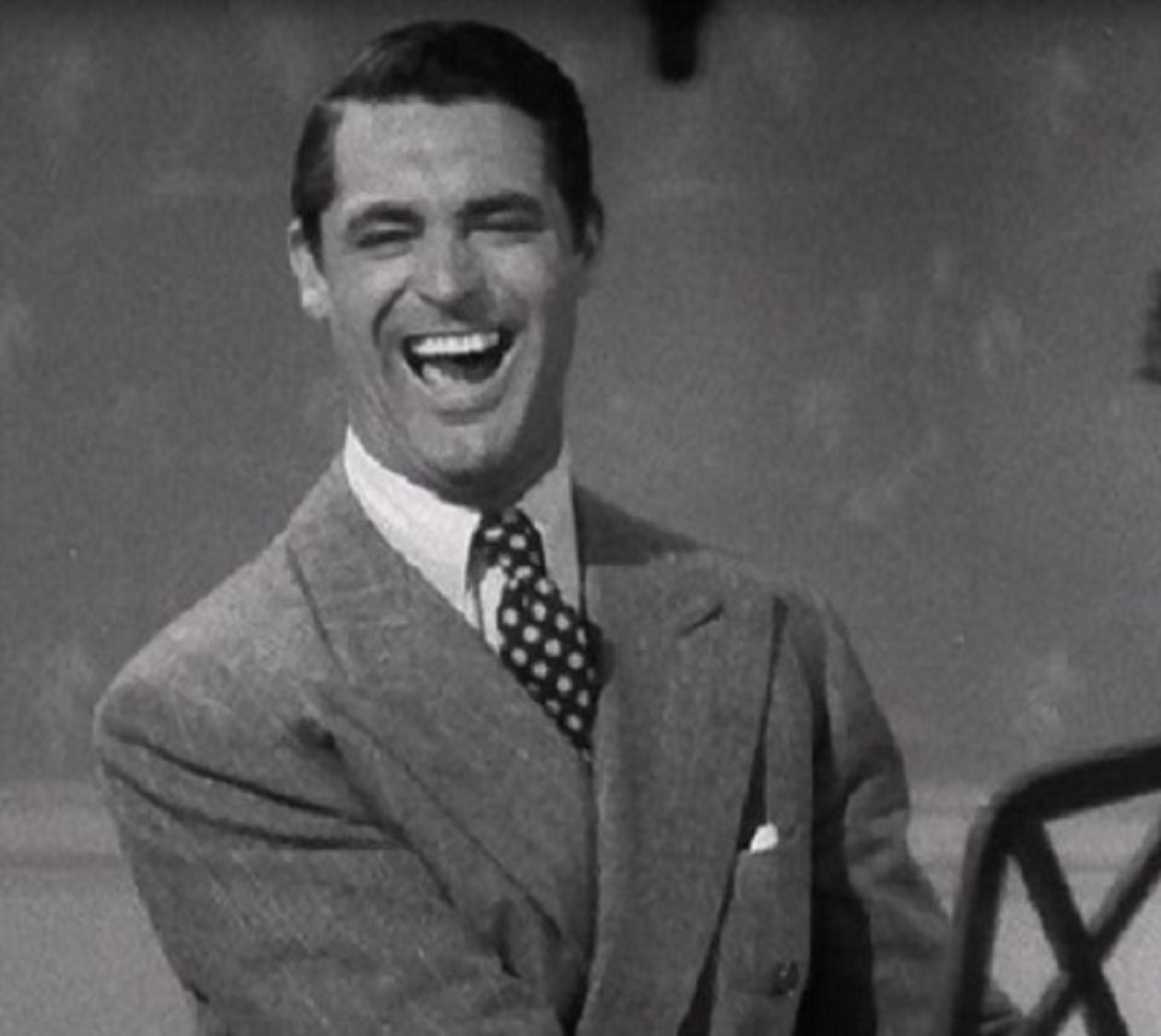
But I have, and I do, and so did the viewers of The Thin Man series starring William Powell and Myrna Loy, in which the detective always has to be forced onto a case because he’d rather be partying or vegging out. Sound familiar, Psych fans?
The witty repartee between the starring couple, Nick and Nora Charles, is what so many writers have tried to imitate since—not the mysteries’ quality, or the sometimes painfully melodramatic performances of the minor characters. Likewise, the interaction between the detective pair on Psych is so much the focus that commercials give no hint about the actual content of the episodes, as in the characters’ classic Hall & Oates  spoof.
Compare:

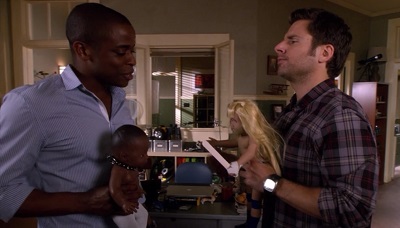
Psych episode (“Let’s Get Hairy,” Season 4, Episode 8): Partners Shawn and Gus are dressing dolls up as their favorite 1980s WWF wrestlers before a match rather than drumming up detecting business.

Gus and Shawn (Dulé Hill and James Roday) playing before the rumble.

Gus and Shawn (Dulé Hill and James Roday) playing before the rumble

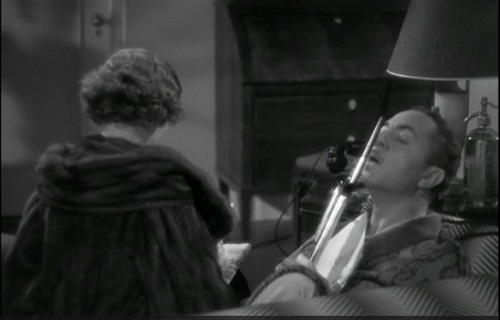
The first Thin Man:  Nora is trying to convince Nick into taking a case as he shoots balloons (and eventually a window) with a play gun she gave him for Christmas.

“Aw Nicky, take the case,” she says.

“You take it,” he answers. “I’m too busy.”

Nick and Nora (Powell and Loy) bantering in The Thin Man

Nick and Nora (Powell and Loy) bantering in The Thin Man

Pleasure before business? Check.
Adults acting like kids? Check.
Clever references? Check.
Perfect repartee? Check.

Nick proud of a bull’s eye; Shawn feeling suave thanks to his Miami Vice poster.

Nick proud of a bull’s eye; Shawn feeling suave thanks to his Miami Vice poster

I know some classic movie fans will find my comparison insulting to the more sophisticated films and the brilliant book that inspired them.  But such critics should give more credit to Psych’s dialogue, such as this exchange, which captures the show’s attitude toward the mysteries:

Shawn: “We came to investigate, catch bad guys and eat pie.”

Gus: “Not necessarily in that order.”

Shawn: “And it hasn’t been.”

Gus: “No.”

Shawn: “We started with the pie.”

Gus: “Always.” (Season 5, Episode 12, “Dual Spires”)

Even if you dislike Psych, don’t miss out on Nick and Nora.  Eighty years of fans. Five sequels (the last over a decade after the first). Scores of imitators. Observe the publication date on this NPR story discussing upcoming novellas of The Thin Man sequels. Sequels, mind you, which most of us try to forget, not commemorate decades later.

What are your thoughts on Psych and The Thin Man? Would you rather party with Nick and Nora, or Shawn and Gus? Did you like the first Thin Man best, or did the scene with Nick and the snoozers in the second make it your favorite? What other Nick and Shawn similarities have you noticed?


Share
Posted in: 1930s films, 1940s films, Comedies (film), Film Noir/Crime/Thriller & Mystery, Humor, TV & Pop Culture Tagged: Burton Guster, Nick & Nora Charles, Psych, Shawn and Gus, Shawn Spencer
« Previous 1 2 3 4 5 6 7 8 9 10

Recent Posts

  • 100 Years Later, Still Scary: Dr. Caligari
  • Escaping Out of the Past (1947)
  • A Weeper for Those Who Love Jerks
  • Thank You, Academy, for Not Infuriating Me
  • Challengers (2024) Is a Bad Movie

Subscribe to Blog via Email

Enter your email address to subscribe to this blog and receive notifications of new posts by email.

Categories

  • 1920s films
  • 1930s films
  • 1940s films
  • 1950s films
  • 1960s films
  • 1970s films
  • 1980s films
  • 1990-current films
  • 2020s films
  • Action & Sports Films
  • Anti-Romance films
  • Blogathons
  • Childfree
  • Comedies (film)
  • Drama (film)
  • Feminism
  • Femme fatales
  • Film Noir/Crime/Thriller & Mystery
  • Gloriously Silly Scenes
  • Horror
  • Humor
  • Mae West Moments
  • Musicals and dancing films
  • Oscars
  • Random
  • Romance (films)
  • Romantic Comedies (film)
  • The Moment I Fell for
  • Turn My Sister into Classic Movie Fan
  • TV & Pop Culture
  • Uncategorized
Share
Classic Movie Blog Hub Member

Recent Comments

  • leah@carygrantwonteatyou.com on Meg Ryan’s Fate Foretold in Joe Versus the Volcano
  • Ryan on Meg Ryan’s Fate Foretold in Joe Versus the Volcano
  • leah@carygrantwonteatyou.com on 100 Years Later, Still Scary: Dr. Caligari
  • The Classic Movie Muse on 100 Years Later, Still Scary: Dr. Caligari
  • leah@carygrantwonteatyou.com on 100 Years Later, Still Scary: Dr. Caligari

Archives

  • November 2025
  • September 2025
  • May 2025
  • March 2025
  • January 2025
  • November 2024
  • August 2024
  • July 2024
  • May 2024
  • March 2024
  • February 2024
  • December 2023
  • November 2023
  • October 2023
  • September 2023
  • August 2023
  • July 2023
  • May 2023
  • April 2023
  • March 2023
  • January 2023
  • December 2022
  • November 2022
  • September 2022
  • July 2022
  • May 2022
  • April 2022
  • March 2022
  • February 2022
  • October 2021
  • September 2021
  • April 2021
  • March 2021
  • February 2021
  • December 2020
  • October 2020
  • September 2020
  • July 2020
  • May 2020
  • April 2020
  • March 2020
  • February 2020
  • December 2019
  • October 2019
  • September 2019
  • June 2019
  • May 2019
  • April 2019
  • February 2019
  • January 2019
  • November 2018
  • September 2018
  • July 2018
  • June 2018
  • May 2018
  • April 2018
  • March 2018
  • February 2018
  • January 2018
  • November 2017
  • September 2017
  • August 2017
  • July 2017
  • June 2017
  • May 2017
  • April 2017
  • March 2017
  • February 2017
  • January 2017
  • December 2016
  • November 2016
  • October 2016
  • August 2016
  • July 2016
  • June 2016
  • May 2016
  • April 2016
  • March 2016
  • February 2016
  • January 2016
  • December 2015
  • November 2015
  • October 2015
  • September 2015
  • August 2015
  • July 2015
  • June 2015
  • May 2015
  • April 2015
  • March 2015
  • February 2015
  • January 2015
  • December 2014
  • November 2014
  • October 2014
  • September 2014
  • August 2014
  • July 2014
  • June 2014
  • May 2014
  • April 2014
  • March 2014
  • February 2014
  • January 2014

Meta

  • Log in
  • Entries feed
  • Comments feed
  • WordPress.org

Copyright © 2025 Cary Grant Won't Eat You.

Church WordPress Theme by themehall.com