Cary Grant Won't Eat You

Classic movies for phobics

  • About
  • eBooks
  • Previous Blogathons
Classic movies for phobics

Blogathons

Sexy Con Man: John Garfield

03/05/2017 by leah@carygrantwonteatyou.com 14 Comments


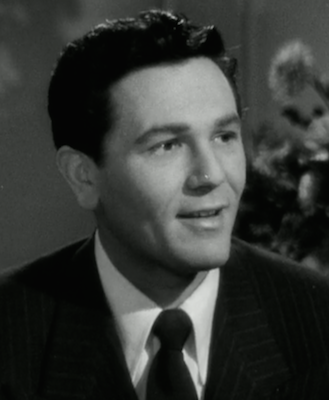
Even my classic-movie-hating sister, who is seldom willing to admit ANYTHING positive about my beloved black and whites, had to admit, there’s just something about John Garfield. Some sensuality, magnetism that escalates him far beyond his seemingly average looks. I mean, if the guy were standing still, I’d maybe compare him to Matt Damon: ordinary enough to slip from notice (as a man playing a superspy should be). But Garfield rarely stays still. And once he moves, his look intensifies, his fluid athleticism kicks into gear, and all that ordinariness is gone: this guy is crazy hot.

I realize his looks are far from the best thing about Garfield. This superb actor is among my favorites, can make me root even for the often disreputable characters he so thoroughly inhabits and humanizes. But it’s undeniable that if a guy plays a con man who can get any woman, he needs to either have Cary Grant’s looks, or be a guy like John Garfield, whose intensity and confidence make you ignore every other man, woman, dog, cat, and chair in the room.

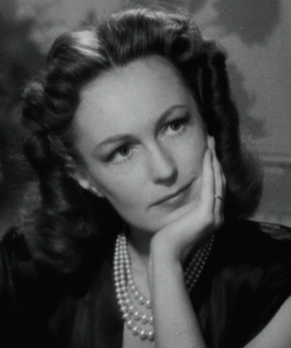
Take Nobody Lives Forever (1946). When Nick approaches his mark, Gladys (Geraldine Fitzgerald), you feel a kind of pity, even though Nick is the hero: she doesn’t stand a chance. We know from the script she’s a lonely and bored widow. Her financial manager is giving her an unutterably boring description of his golf game. Here’s her expression before Nick arrives:


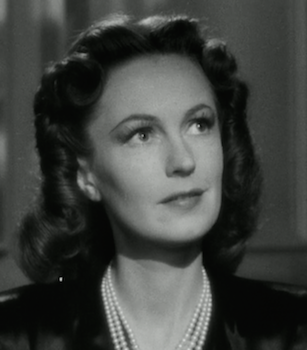
Nick approaches, and the effort not to swoon–how does she manage it? Notice the intensity of this expression:


And here’s how she looks after five minutes with him:


He walks away, and the formerly abstaining Gladys orders a brandy.

**some spoilers–but not how it all ends**

In most films, it’s hard not to despise the mark. Even if he/she is sweet, the level of stupidity is so pronounced you root for the con artist, as the screenwriter wants you to do. The fact that you’d never feel that way in real life is irrelevant: for the space of an hour or two, you’re all for cleverness over heart. Nobody Lives Forever is that rare film that makes you respect both con artist and mark because there’s a kind of maturity and world-weariness to Gladys, despite her blindness to Nick’s motives; clearly, her former husband’s long illness has taken away some of her illusions.

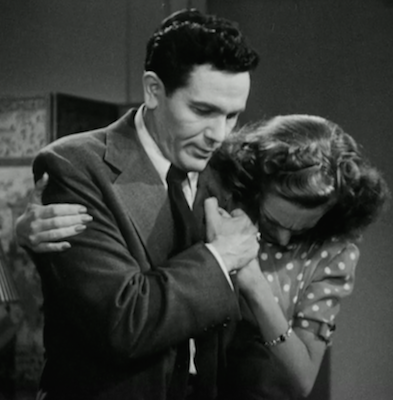
Nick’s recent war experience makes his change of heart believable, and her desire for him, even when she discovers his true character, seems not the reaction of a sap but of a woman who has had enough experience not to expect perfection in her man. Part of that is the role; part of that is Fitzgerald’s convincing performance. But most of it is Garfield. I mean, how the hell do you say goodbye to that man? Clearly, Gladys is not ready to; just check out that grip:


Since this is noir, of course, we don’t know how it’s all going to end. Nick has two frightening foes in his ex and a shaky co-conspirator. The ending is suspenseful, and involves large doses of Nick’s friend, Pop (the wonderful Walter Brennan), so I obviously won’t spoil it for you.

I will say as a huge fan of con artist movies that any cleverness is utterly absent. Nick makes up a career that would be so easy to disprove, with little effort to give it substance. There’s no satisfaction for my Ocean 11’s-, The Sting-loving gene, no big reveal or sleight of hand. But there is some of that sweetness I’ve come to love in Leverage, and like that highly satisfying TV show, the film gives us the toll such a life takes on its players (especially since these grifters aren’t the do-gooders of that small-screen team). Overall, I had a mixed reaction to the film as a story. But as a vehicle for Garfield, it’s wonderful. He’s so believable in the role, so intense and mesmerizing. And as always, so sexy.

This post is part of Phyllis Love’s Classic Movies’s John Garfield: The Original Rebel blogathon. Check out the wonderful entries!

Share
Posted in: 1940s films, Blogathons, Film Noir/Crime/Thriller & Mystery, Uncategorized Tagged: classic con movies, con artist films, Geraldine Fitzgerald, grifter falls for mark film, John Garfield, Leverage TV, Nobody Lives Forever, Ocean's 11, sexy leading men

Never Considered: Jake Gyllenhaal’s Repeated Oscar Snubs

02/18/2017 by leah@carygrantwonteatyou.com 6 Comments

I’m tired of the assumption that there must be buzz about a star before he/she can be considered “snubbed” by the Academy. Let’s look at the term, shall we?

Oxford Dictionary: snub: ” rebuff, ignore, or spurn disdainfully.”

“Ignore disdainfully” includes not noticing one’s performance at all, doesn’t it? In fact, wouldn’t that be a more insulting snub? As in, we don’t even consider you worthy of DISCUSSION?

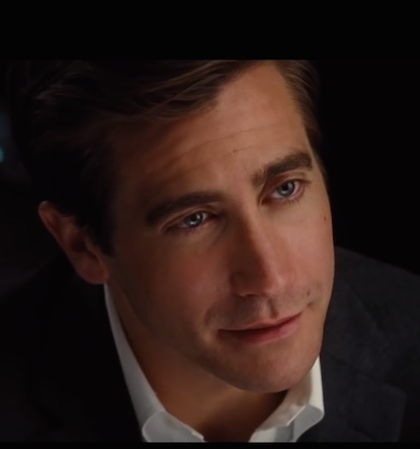
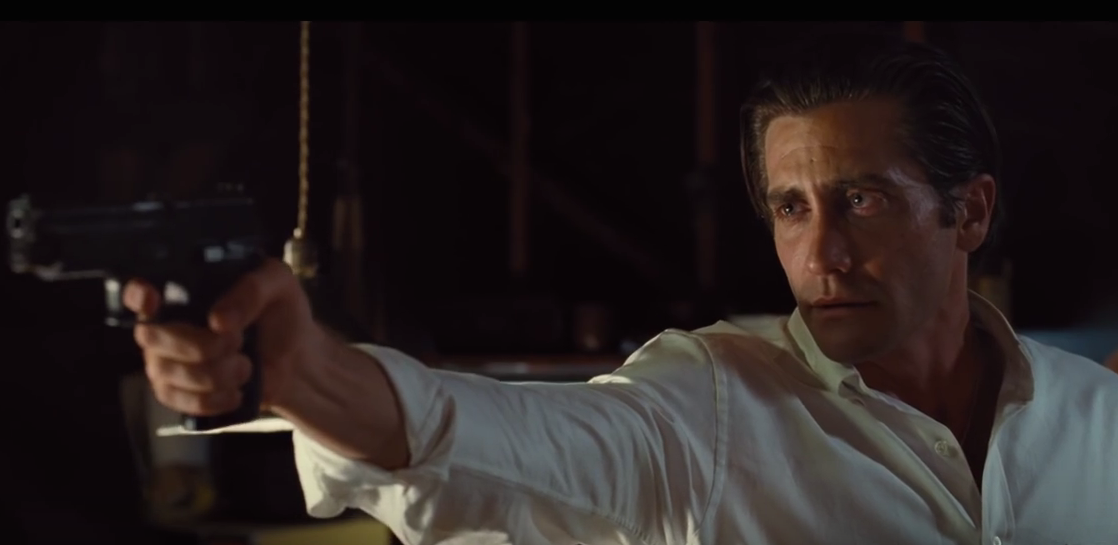
Take Jake Gyllenhaal, whom The Verge describes as the “best actor alive.” His performance in Nocturnal Animals was riveting. He played two vastly different characters in one film. The one is a study in innocence and naiveté.


The other is a subtle take on suffering, the weight apparent in limbs, gesture, look—a role that most others would play with histrionics. In every frame, you can feel the way the character’s combating his own weakness in trying to be strong.

Both of these parts required versatility, and does Gyllenhaal have that skill down: In End of Watch, a headstrong young cop; in Nightcrawler, an animalistic creep; in Zodiac, an obsessive; in Brokeback Mountain, a romantic. (Uproxx‘s Steven Hyden called his Nightcrawler snub the worst of the decade; I know I’ve seen few performances to compete with it). Each time, Gyllenhaal moves beyond the stereotype, managing to imbue each character with such a singular, unique presence that you can’t look away, even when (as so often with Gyllenhaal’s choices) you want to.

I haven’t seen all the nominated performances this year, but I know Ryan Gosling’s part demanded a fraction of the skills of Gyllenhaal’s this year (much as I love the guy), and this is Denzel Washington’s worst performance since The Book of Eli. 

Of course, I could offer the usual bromide–that the best actors are so seldom recognized. Take my beloved Cary Grant, and all of those perfect, Oscarless performances. (And yet if I asked 100 people who know nothing of classic films to name one classic film star, which name do you think they know?)

My sister suspects a possible family bias, as neither Gyllenhaal’s sister, nor brother-in-law (Peter Sarsgaard) ever get their due either. Yet BAFTA values him. Catch up, Academy. Listen to the way Jake talks about his work–and how modest, funny, fascinating he can be. Pay attention to the complex vulnerability in his characters, the intensity, the quietness and the strength. Each of the men he plays are fully human, weird and disturbing as they so often are. Watch him pushing himself, over and over again, in roles other actors with his looks would avoid. Risk taking, funny, odd, so talented, Jake Gyllenhaal deserves some Oscar love. (The man himself, with typical modesty, actually claimed it was Ryan Reynolds who shouldn’t have been overlooked this year.)

But all you commentators out there, even if the Academy does keep snubbing him, let’s call it what it is. We have enough folks trying to deny reality this year, and change the definitions of basic words. Let’s all try some honesty instead: A snub by any other name still sucks.

This post is part of the 31 Days of Oscar blogathon, hosted by Aurora of Once Upon a Screen, Kellee of Outspoken & Freckled and Paula of Paula’s Cinema Club. Check out the first day of entries here.

Share
Posted in: 1990-current films, Blogathons, Drama (film), Oscars Tagged: Jake Gyllenhaal, Nightcrawler, Nocturnal Animals, Oscars, snubs

The Lure of the Selfish Genius

10/19/2016 by leah@carygrantwonteatyou.com 10 Comments

kirkdouglasbadandbeautiful
The Bad and the Beautiful
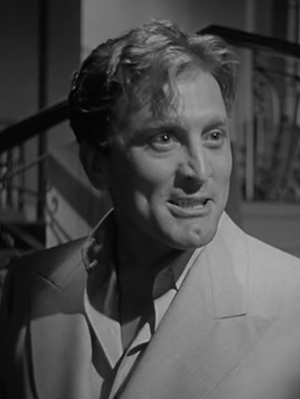
(1952) presents that classic question: what are you willing to put up with, to be under the direction of a genius? Whiplash (2014) did the same just a couple years ago, conductor Fletcher (J.K. Simmons) compelling his protégé drummer to dangerous extremes for his art. The question has obviously lost none of its potency in the last 60 years. But this classic Hollywood version begins with the victims of brilliant producer Jonathan Shields’ (Kirk Douglas’). You see the damage first, and it colors how you view the rest of the film.

And yet….It’s the start of the film, and while you’re soon treated to flashbacks of what treatment led Shields to get such cold shoulders from former pals, you can’t help wondering how they’ll answer the question—and how you would too.

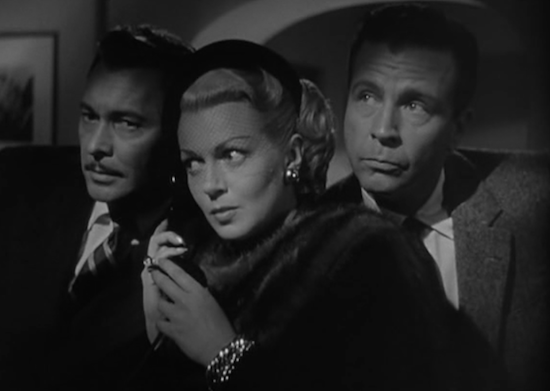
Shields, it appears, is destitute in Paris. But he has an idea for a film, and three victims of his ruthless ambition would be perfect for it: Georgia (Lana Turner), the actress he romanced to improve her performance, then dumped; Fred Amiel (Barry Sullivan), the director/best friend whose work he stole; and screenwriter James Lee Bartlow (Dick Powell), whose life he destroyed. Shields sends proxy Harry Pebbel (Walter Pidgeon) to lure them. And Pebbel, who has forgiven Shields for his own wrongs, gathers them together, hoping they’ll stick around long enough for Shields’ call about the film. And so the flashbacks of each betrayal begin, ranging from egregious to abominable.

Douglas is predictably mesmerizing in the role, which was supposedly loosely based on producer and studio exec David O. Selznick, best known now for Gone with the Wind. In fact, Douglas is so good in such roles that I found myself actually expecting worse behavior from Shields, bad as it was (Ace in the Hole being the last film of his I viewed).

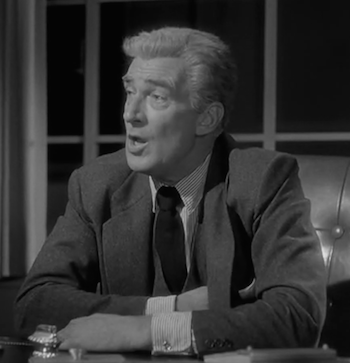
What I found fascinating about the film this time around is the horrifying cruelty of Pebbel.

walterpidgeonthebadandthebeautiful
He actually pooh-poohs the three victims over their healthy desire to avoid the psychological damage Shields excels at inflicting, as if their heartbreaks are merely scraped knees. Pebbel’s argument—that human losses are inconsequential in comparison to accolades—is terrifying, and his calmness in expressing these views chilling. Shields may have a monstrous side, but he’s nothing compared to his Machiavellian helper.

But it is a question, whether for some the pursuit of greatness is worth human costs (though it would be hard to argue James’ was). Certainly, many artists we celebrate today have said yes to such a question. Many do now. The kindhearted instincts within you may urge such artists, “Leave!! Leave!” But the part of you who cherishes excellence secretly whispers, “Stay….”

The call from Shields comes, of course. And of course, they all refuse to remain. But then Georgia picks up the phone connection in another room, and the others lean in to hear, and we see them listening, lured back.

thebadandthebeautiful
Will they, won’t they?

This post is part of the Hollywood on Hollywood fall blogathon hosted by the Classic Movie Blog Association. Check out the wonderful entries here.

Share
Posted in: 1950s films, 1990-current films, Anti-Romance films, Blogathons, Drama (film), Uncategorized Tagged: genius in film, The Bad and the Beautiful, Whiplash

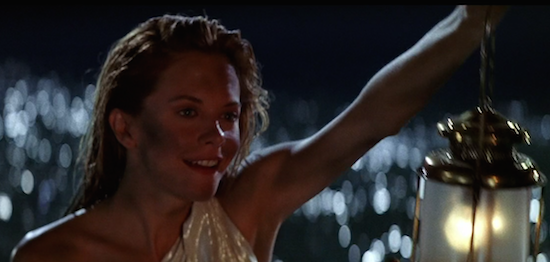
Meg Ryan’s Fate Foretold in Joe Versus the Volcano

10/01/2016 by leah@carygrantwonteatyou.com 17 Comments

megryanjoevsvolcano
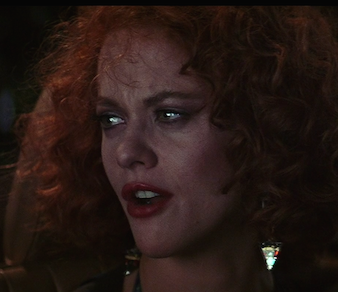
Meg Ryan has had a peculiar career: America’s darling after When Harry Met Sally (1989), she has struggled to avoid typecasting as the perky cute girl ever since, and largely failed, settling for a saccharine portrayal in Sleepless in Seattle (1993), and veering into downright parody of her persona in the remakes You’ve Got Mail (1998) and The Women (2008), with brief moments of authenticity (When a Man Loves a Woman) in between. While some of the blame must rest with Ryan, it’s clear that Hollywood producers failed to recognize (or thought audiences would) the depth in When Harry Met Sally, instead plying the poor actress with cane sugar ever since. That’s why it’s so fascinating to peer earlier into Ryan’s career, when the exploration of character was (at least partially) her own to make. Joe Versus the Volcano (1990) is particularly fascinating since she plays three roles, which curiously foretell her fate.

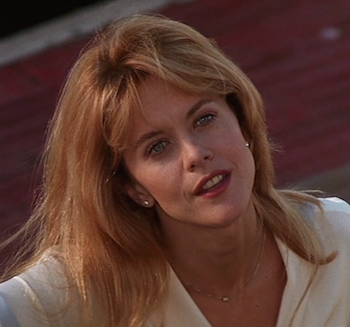
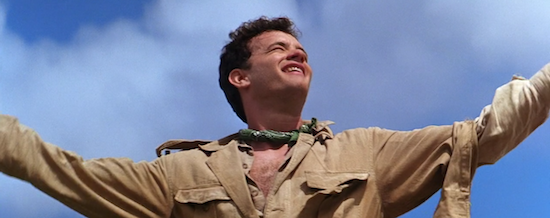
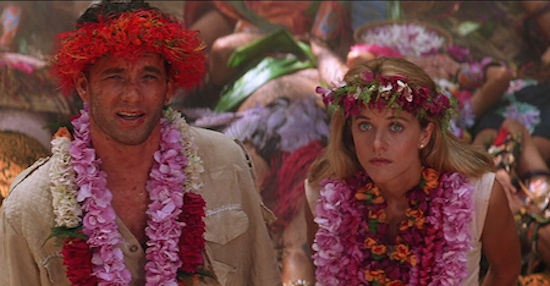
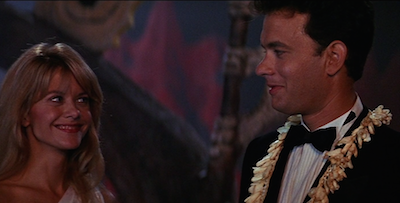
The plot is strange, so I’ll just begin with the basics: Joe’s (Tom Hanks’) fears–especially for his health–keep him mired in a dreadful job, until a dire prognosis unexpectedly snaps him out of depression and leads him on a journey to an island where an odd fate awaits him. He goes on a date with coworker DeDe (Ryan) before he departs, then meets half-sisters Angelica (Ryan) and Patricia (Ryan) on his journey. Attracted to all three (he keeps saying they look familiar), Hanks falls for only one, Patricia, who captains the boat to his destination, and plays a part in what awaits him there.

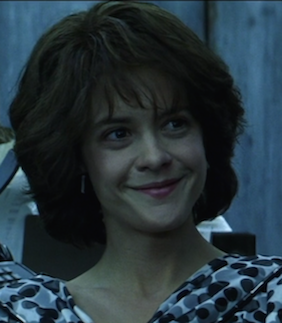
In DeDe, Ryan channels Easy Living‘s (1937) Mary Smith (Jean Arthur). Naïve and sweet and just a little lost, DeDe disperses–at least a little–the heavy gloom of the office, where she and Joe suffocate under fluorescent lighting and the repetitive yelling of their boss (Dan Hedaya, in a darkly funny turn).

megryan-dede-joevsvolcano
When Joe quits the job and asks DeDe out, it’s an act of salvation, and you can’t help but laugh at her startled, perky response to finding the dead weight in her office come to vivid life. Like Arthur, Ryan performs this role with relish and charm, with a chirpy voice that doesn’t quite grate in the small time we’re listening to it. Much more time spent with this character would start to wear audiences thin (as Arthur does for me–uncharacteristically–in Easy Living).

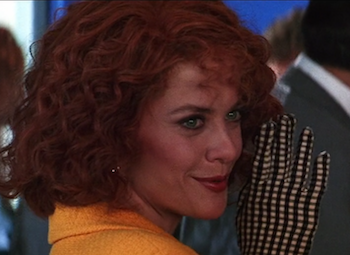
Next Joe encounters oddball Angelica (Ryan), who calls herself a flibbertigibbet.

megryanangelica-joevsvolcano
We viewers soon question her characterization, realizing that this woman has no idea who she is. She’s donned a pretentious, flat delivery and tired expressions culled from movies in her LA home. Her clothes likewise seem costumish, as does her carefully stylish smoking. She’s a combination of affectations she’s adopted, none of which can delay for long the depression and fragility just beyond her careful poise. If DeDe recalls the cute head bobbing and springy step Ryan deployed too consciously by the point of You’ve Got Mail, Angelica conveys her pain at the impersonation, her relief at capturing her fuller self in movies such as When a Man Loves a Woman.

megryanangelicajoevsvolcano-crying
And of course, in Patricia, Joe’s last Ryan encounter, we find our heroine. Healthy besides being “soul sick” for taking her father’s money, Patricia is smart and strong and brave, our Jean (Barbara Stanwyck) of The Lady Eve (1941). Like Jean, she’s an “adventuress on the high seas” and wise enough to guide Joe on the final steps of his self-discovery.

megryan-patricia-joevsvolcano
This is the Ryan we love: cute, yes, but only in moments of glee; she’s bold and womanly and fun, yet vulnerable and flawed. It’s the type of role Ryan excelled at. While the two other parts feel like conscious acts (and should be, as the roles are archetypes rather than fully sketched-out characters), this last she fully embodies. And we see the Stanwyck type of performer she could have consistently been, had When Harry not doomed her to full-on cuteness.

As for the film itself, what to say? It’s about redemption and faith, journeys physical and spiritual, but is most remembered for orange soda and hypochondria jokes.

tomhanksjoevsvolcano
The fact is, Joe versus the Volcano (1990) is an odd duck of a film. Its uneven tone and quirky storytelling won it both mockery and box office failure, and a trail of cult devotees ever since. Frank Capra and Preston Sturges fans will adore it, especially those who admire those directors’ darker-tinged fare, Sullivan’s Travels (1941) and Meet John Doe (1941) and The Miracle Woman (1931). But snooty film types will scoff (tellingly, Roger Ebert loved it); they’ll say it’s silly. And they’re right–it is silly. Fundamentally so.

joevsvolcanoisland
But, as one devotee pointed out, you need to remember that the writer/director is John Patrick Shanley, who also helmed and wrote Doubt (2008) and penned Moonstruck (1987); this guy may be consumed with issues of faith and hope, but he also loves distracting diatribes about fake hands voiced by Nicholas Cage. If you’re not open to that kind of genre blending, you’ll hate the movie. But if you agree with me that Shanley’s work has a peculiar beauty and insight, you’ll find yourself riveted and laughing, admiring Tom Hanks’ finest performance, and one of the funniest portrayals of both fashion (thanks to Ossie Davis) and workplace culture in any medium. It’s even romantic, with the two leads’ chemistry revealing what a better script and direction could have made of You’ve Got Mail.

megryantomhanksjoevsvolcano|
And the soundtrack is so unbelievably fun and fitting that you won’t ever hear one of those songs again without picturing the story.

For me, this movie was life altering. I watched it first in the theater, and couldn’t stop laughing at the opening scene of work drudgery. But no one else was laughing. Surprised, I turned to my buddy, Carrie, and saw that she was enjoying it too. We called our sicknesses after that “brain clouds” (you have to see the film), and the movie represented for me that wonderful thing between friends: a joke you get that others don’t, a bond you share that others don’t understand. Something that in snobby moments makes you feel special, and in more enlightened ones makes you appreciative. I was in high school then, still finding my way, and it was lovely to find through Joe a compatriot in Carrie, to realize that quirkiness need not be isolating, that it can be, in fact, a source of joy. My loud laughter in silent theaters has been a constant ever since.

I’ve been watching the film again today for my entry in the wonderful Dual Roles blogathon, hosted by Christina Wehner and Silver Screenings. (Check out great entries here!) And as I view the movie, I find myself hoping, like Joe: I hope Ryan stops stalling on DeDe and Angelica, and instead gets her Patricia back, gives us in future performances that authenticity that was so wholly hers at the start. She should watch the film again, remember that Joe, like her, lost his way for years, and found it again. Maybe if she watches it she’ll rediscover that energy and spirit and realness that charmed us all, and are still hers to reclaim.

megryan-wonderfuljoevsvolcano

Share
Posted in: 1980s films, 1990-current films, Blogathons, Comedies (film), Feminism, Romantic Comedies (film) Tagged: America's sweetheart, Film, flops, Hollywood typecasting, Joe versus the Volcano, Meg Ryan, roles

Mae West’s Lessons for Groundbreakers

08/07/2016 by leah@carygrantwonteatyou.com 20 Comments

MaeWest-SheDoneHimWrongx
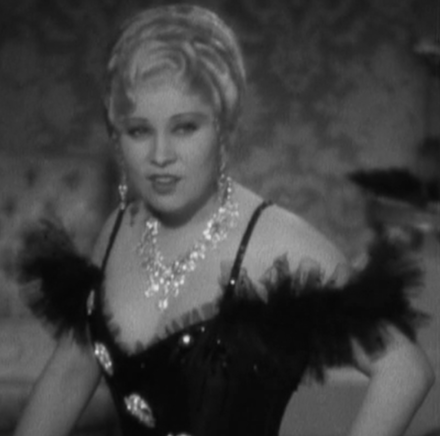
A woman approaches a building, greets men outside, enters. A common occurrence. But when that walk is Mae West’s, the arrival of Maudie into Night after Night is transgressive. West’s entrance into film guaranteed the influence she’d already built on the stage would reverberate far beyond the audiences lucky enough to catch her plays, and shockingly, her actions in front of and behind the camera are STILL groundbreaking. Here’s why:

  1. She Wrote Her Own Material

It’s no accident that the successful comic performers we see on film and TV now were frequently stand-up comedians. Interestingly, it would take the break-thru performances of these stand-up stars to start seeing funny, powerful women in film more frequently, women writing for themselves and other women. (Face it: Tina Fey would just be an anonymous character actress without that pen.)

Like the vaudevillian, Mae West, before them, these women honed their comedy chops through painful competitions with others. They found their voices through observing and picking up on others’ ideas as well as their own. West honed her persona in vaudeville, then began to write and frequently star in famous, scandalous plays (Sex, The Drag, Diamond Lil), even got thrown in jail on obscenity charges (an occasion she milked).

Men weren’t going to write parts for women like the one West crafted for herself. And we’re still talking about the need for more women to write for women. West could have told us that almost 100 years ago, if we’d only listened.

  1. She Busted through Sexual Stereotypes

Newspaper reporters describing West often make a key error, their own opinion of her attractiveness determining how they characterize her influence. If they consider her sexy, they emphasize her sensuality; if they don’t, they call her actions camp. Of course, her performances were both at once (seriously, have they never seen female impersonators—who, of course, adored her?) Either way, they are dismissive because, sigh, they still are just thinking of her as bombshell or not, rather than looking at her tremendous impact. The point is her sexual aggressiveness, despite being a woman; the point is that her plots didn’t end with her lost and alone for pursuing and being hounded by conquests. The point is that a woman could be sexy even if she wasn’t skinny, even if she was older than 35. Amy Schumer is trying to tell us that now.

  1. She Built Her Own Brand

The role of Maudie in Night after Night was initially a dull one, a sad ex-lover type, according to biographer Jill Watts. But Mae West wasn’t about to take on the part of a sad sack moping about her lost man. She didn’t have to. Paramount was hungry for her play, Diamond Lil, which would become the smash studio-saving hit She Done Him Wrong. So when she said nah, they listened. They threw more money at her AND gave her the script. And what she made of that little part changed movie history. West was in her late thirties by then, had spent a career in vaudeville honing her persona as a sexually powerful, wisecracking woman coveted by men. Part of that persona was costuming. Edith Head, wowed by West’s understanding of design, apparently thanked her for “all I know about sex, clotheswise” (153). Even the walk had been long established. According to Watts, “The infamous Westian gait…was a slow, strolling shimmy” (53). Guess what dance move West was advertised as perfecting?

Like the stand-up stars after her, she kept honing her favorite character, one who didn’t pay or suffer for her sexual transgressions, but relished them. West’s devotion to this role of hers was so consistent that it was hard to penetrate it enough to see the actress and writer behind it. But such consistency explains her success. Today we can see Martha Stewart, Madonna, and Beyoncé learning from this lesson of brand control. Beyoncé is now using that well-established female-power persona of hers to take on race. Without that persona in place, would “Formation” have had such impact?

  1. She Asserted Her Power

The old Hollywood studios made other women take the parts given to them. A good actress would have to agree to terrible parts if the studio needed to sell junk her name might help. And few women had the power to resist. West’s refusal to give into this system, or to the censors some argue that the movie studios actually courted, helped set the stage for Bette Davis’s and Olivia de Havilland’s later film-changing battles. Was West the first to balk at the studios? No. But she began to chip away at their power. And, of course, demanded high salaries too.

Few would argue that the censors diminished her post-Production Code films. But her fascinating efforts to subvert their influence, even within the films themselves, helped her defy the whole idea of artistic censorship. As she famously said, “It’s not what I do, but the way I do it. It’s not what I say, but the way I say it.”

  1. She Wrote Fantastic Lines—and Knew She Needed to State Them

When we talk about West, her film presence dominates the conversation. Of course. Few women then or since have been so riveting onscreen. But she would never have made it where she did without that gift for writing and the hard work she put into finessing her every line. We often say comedy doesn’t wear well with time. Too many films once considered funny can feel dated, their appeal no longer clear. Yet look on a list of famous quotes, and West’s name is one of the most frequent female appearances. Watch a West film and try not to laugh. West did what only the best comedy does: captured the truth of human nature. She got people, and had the wisdom to know what a difference that made.

I often think about Sylvester Stallone’s script for Rocky, how he refused—despite the risks—to let another, better-known actor take the now-famous role. He knew what he had, what it could mean. West knew not to cede control over her lines; she knew she would have the impact if she pronounced them—and she would get them right. We often celebrate writers-directors now, who have the same impulse to protect and own their material. But too few of us know the women who penned some of the best early material (including writer-directors). West must have known this too, and acted accordingly. Her larger-than-life performances guaranteed her writing legacy.

I wish West’s name were more frequently cited as an early example of script ownership. While her rebuke to censorship is justly famous (seriously, in how many ways was she a pioneer?), her talent–and embracing of that talent–should be just as well known, just as valued. She was many, many things, but personally, what I value her most for is her writing. Who, then or since, could write a killer line like Mae West’s? To celebrate West and not end with one of her lines is a mistake, so let’s go back to that entrance, to the hatcheck girl complimenting Maudie in Night after Night: “Goodness, what beautiful diamonds!” And Maudie’s (aka West’s) beautiful retort: “Goodness had nothing to do with it, dearie.”

This post is part of the Classic Movie Project blogathon. Aurora is featuring groundbreakers on her wonderful site, Once Upon a Screen. Check out posts on her site and on the sites of the other marvelous hosts, Movies Silently and Silver Screenings. Flicker Alley has been kind enough to sponsor the event.

For more of my Mae West love, see my Mae West Moments series.

Share
Posted in: 1930s films, 1940s films, Blogathons, Comedies (film), Feminism, Humor, Mae West Moments Tagged: Amy Schumer, Beyonce, building a brand, comedy writers, Film, Madonna, Mae West, Maudie, Night after Night

The Good Stuff: What’s to Love about Fights in Film

07/08/2016 by leah@carygrantwonteatyou.com 9 Comments

Spartacus-fightscene
Talented poet and screenwriter, martial artist, and classics enthusiast Brian Wilkins agreed to guest post for me as part of The Sword and Sandal blogathon, hosted by Moon in Gemini. Check out his wonderful tribute to fight scenes below.

Sometime in 1998, I sit on the floor in my living room watching John “Kickboxing is the sport of the future” Cusack eject Benny “the Jet” Urquidez into a wall of lockers. He then proceeds to tattoo those locker numbers into Benny’s back several times with his foot. After some athletic grappling, the two fumble at each other’s skinny ties and Cusack jams his pen into Benny’s throat. I am overjoyed: Grosse Pointe Blank is everything a boy could wish for.

“Mom,” I say to the horrified woman behind me folding laundry who thought “light action comedy” would be a great choice for family movie night, “I think I want to do that. “

“I would pray you out of it,” she snaps. Mothers in the south can definitely snap and mention prayer in the same breath.

“What? Why?”

“You tell me you want to be an assassin because of a movie and you think…”

“Not an assassin, Mom! Geez. A fight choreographer.”

This comeback mollifies — but not much: “As long as you finish college.”

***
I finished a lot of college and never became a choreographer for anything beyond amateur productions of Shakespeare, but it’s hard to say who I would be without fight scenes in movies. I fenced because of The Princess Bride. I fell in love with Karate after watching Daniel-san wade through a series of talented black belts who inexplicably led with their faces. I even tried to land a crane kick at a tournament: once. I studied epic poetry in grad school because of 13th Warrior.

So when my friend Leah asked me if I’d like to contribute something for this blogathon, I jumped at the chance to look at the fights in gladiator movies. And not just any fights, but material from before Bruce Lee one inch punched his way into America’s heart and everybody was kung fu fighting. What did fighting look like in classic sword and sandal flicks?

Awful. It looks awful. It looks like America (except for James Cagney) couldn’t take a cardboard cutout prior to 1968. Honestly, watching films like The 300 Spartans must have given comfort to our enemies. I don’t know why the Russians didn’t invade.

And while I think even Alexander the Great couldn’t drink Spartans into being entertaining, it actually provides a solid rubric for what makes a good fight scene. It just doesn’t know that’s what it’s doing. Seriously, folks, I don’t think the director had ever heard the word phalanx. The best fight scene in the movie is when Diane Baker judo flips an overly amorous Greek shepherd.

***
Early in Spartans, Persian King Xerxes (David Farrar) argues with traitorous Spartan king Demaratus (Ivan Triesault) over Spartan valor. When Demaratus defends it, Xerxes suggests a fight to the death between Demaratus and a Persian swordsman. I suppose this is because Demaratus is so tiresome Xerxes would rather have him killed and be lost in Greece than listen to him flap his cheeks anymore about Spartan values. I felt that way. The two champions draw their blades in what seems an interminable fight with bowie knives. Xerxes demands, along with the audience, that they hurry it up. Quickly, death comes for the Persian, and Xerxes concedes, much to his boredom, that Spartans can fight.

Let me check my notes for this scene…oh, I just wrote, “WHAT?” about 15 times.

Two guys in tunics rolling around on dinner tables with plus-size steak knives isn’t an epic scene. There’s nothing to distinguish their fighting styles from each other, no real costuming, nothing resembling martial talent — if a fight scene looks like your kindergartner was filming themselves after raiding your closet for costumes, something has gone awry.

Don’t get me wrong: I’m not advocating for historical accuracy, but just the exotic fantasy of history. I don’t care, nerds, that Russell Crowe stepped into a stirrup in Gladiator, so long as his wolf skin cloak looks really fabulous while he does it.

But just as important to style, there must be stakes for the viewer. Demaratus is a cowardly traitor: why do we care if he dies? Even this dude’s Spartan mother would spit on his corpse rather than shed a tear over not hearing more of his mind numbing dialog. Nameless Persian Thug #1 is no better. If I can’t feel passion or fear or even a soupcon of lust, why am I watching?

The plot must motivate the action as well. We have to learn something about character in this scene and the logic of the movie must give impetus to the conflict. It’s a bit like a song in a musical: the truth that can’t be said must be expressed and it must change the world we’re seeing. The correct ending in this fight scene was to have the Persian kill Demaratus. Instead, we’re now convinced the Spartans are being underestimated by Xerxes and that they’re nearly invincible. I found myself rooting for the Persians, underdogs that they were.

***
Demetrius and the Gladiators (1954) is like all of the strange pseudo-christian elements of Ben Hur wrapped up in one hell of a bogged down film.

This sequel to The Robe continues in that proud tradition, peppering in a few action scenes with Victor Mature to prod the viewer awake. It made the studios a lot of money, but I can only hope that was due to a paucity of action films…what’s that? Seven Samurai came out the same year? Well, screw it, 1950s America just loves misogynistic Christianity. Shame on you, 1950s. Shame.

Still there are elements in the fights in Demetrius that have potential. Take this clip, where Victor Mature’s Demetrius is throwing away his Christian values to avenge his girlfriend who was accidentally killed (but not really, there’s a magic robe that brings people back to life) by knuckle dragging gladiators at a party. Now that those “turn the other cheek” gloves are off, we can get some real fighting! Good thing her (apparent) death paved the way for some real entertainment! Or something like that.

You may have noticed that Mature uses his shield like a kid with a trash can lid storming the kitchen. I put that down to the vices of the choreographer, Jean Heremans, a fencing champ most noted for choreographing Scaramouche (not just a line from Bohemian Rhapsody, folks). His refined modern fencing style makes perfect sense in that 18th century setting, but it fails the style of the sword and sandal motif. Treating fighting as if it is fencing is the real dereliction of this period of choreography. I can only assume it comes from the same instinct that yearned to put a steak dinner into a pill: progress knows best.

Notice also the curious way of holding the sword with the palm down and the sword to the side, almost a foil fencer’s seconde parry. It feels out of place as a guard with short stabbing weapon and will likely get it smacked out of your hand — just in case you have to fight someone with a trident who knows what they’re doing. Despite a nice moment of dual wielding, the style doesn’t offer much excitement or novelty.

However, in terms of stakes and spirit this fight actually picks up the pace a bit. While I would have preferred any other reason for Demetrius to throw away his values and dig into fighting, his existential crisis adds a tangy zip to the clashing shields. This fight will change his destiny as a character, adding a thrill to what we’re watching. Revenge giving permission to the viewer to sanction violence, while also showing a character’s descent after the fact, and redeeming the character with a deus ex machina (almost literally) reeks of cliché, but that doesn’t mean it’s toothless. And when Demetrius actually gets clobbering a guy like Ty Cobb on opening day, we feel relief because the action initiates the structure of the story. And we like it because the choreography matches the moment and the weapons a bit more: freer and more direct.

But if you’re looking for a more nuanced examination of violence, watch Seven Samurai. Actually, if there’s one lesson you should take from this review, it should be “watch Seven Samurai.”

***
For a taste of a film that lets style guide the way, there’s always Jason and the Argonauts (1963). Ray Harryhausen’s special effects are legendary, precisely for their ability to create a world that, despite having a giant bronze statue really need a hair pin, feels real. In fact, unlike much modern CGI, it’s the actors that feel less real than the animations: a testament to the quality of both.

This clip is so iconic it really needs no introduction.

There are a lot of things to love about this scene, but there are certain moments that stand out for me.

  • The war cry the skeletons give just before charging after Jason and his compatriots: it immediately moves the bony little bastards out of the realm of slouching zombie and into something else entirely.
  • The skeletons get into fighting stances and even seem to relish stabbing the heroes. Their stances are better than anyone else on screen: hunched, menacing, preparing to do ill to the enemy. Jason looks like he just discovered swords over breakfast.
  • The skeletons seem to know how to use their shields. One even hooks a shield into the sea.

But most of all, this scene understands the equipment being used. You can’t stab a skeleton risen from the sown teeth of a hydra! Everyone knows that! Except Jason, who tries it at 3:36 in the clip. And that’s the core of why this scene is great: the heroes have to improvise and start using dodges, feints, throws, and even clubbing the skeletons with the shields (although why no one can seem to stab and block simultaneously is beyond me. I guess we’ll have to wait for Troy).

Though we learn little about the spirit of the characters beyond the fact that Jason is quite content to flee and let his friends die, the stakes in this scene feel high. Perhaps it’s just that as humans we must root for those of us still covered in skin. Perhaps it’s that this idea was fished out from the Hieronymous Bosch corner of the unconscious. But either way, Ray Harryhausen was a genius I wouldn’t have wanted to fight in any place with a sandy floor.

***
There’s no mystery in my mind about the best of the sword and sandal genre. It’s Spartacus, hands down. Ignoring the politics, history, and its place in film for a moment, though, it’s a damn fine fight film. It even has a great training montage! Look, a spinning practice dummy with a mace on it! And there, a spinning blade of death machine! Even face painting!

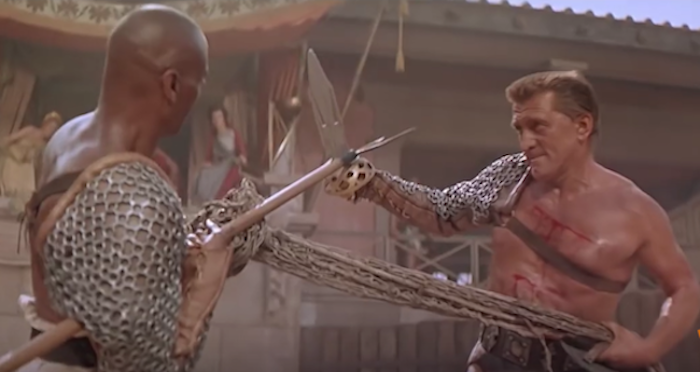
To set up the scene: Spartacus (Kirk Douglas) has been paired with the more experienced gladiator Draba (Woody Strode), to fight to the death for the amusement of visiting nobles, particularly Crassus (Laurence Olivier).

Good movies work as fractals: little gems of the overall message replayed again and again to make one larger, faceted meaning. This fight tells you all you need to know about the movie, and the tragic but worthwhile attempt of compassion and brotherhood to fight back against a rigged system. It teaches you to ask who the enemy really is. This is a fight between Drapa and Crassus, first and foremost. And the mild annoyance with which Olivier kills Strode, with his distaste for the blood spatter rather than the action of murdering a human being, drives the nature of that character home.

But that moment is preceded and earned by some rather decent fighting. Strode was far too athletic to not take advantage of his size and is a perfect pairing with the trident. Douglas is a little too lightly armored, actually. He should have at least a helmet. The lack here is better than just artistic license and wanting to see the actor’s face: it shows even more how dangerous this fight is for Spartacus, making the act of compassion even greater.

Though he does hold his own. He’s always driving forward, trying to cover the distance and his lack of technique with enthusiasm. And while it ends with a rather spectacular boot to the ribs, Spartacus fights with just enough skill to lose well, which helps momentarily suspend our belief that just because the movie is called, “Spartacus”, he’s unlikely to die at the first real fight.

Though you could wonder if the Romans care at all. The audience talks over the two men fighting to the death at first, allowing us to condemn the Romans for being that annoying couple at the movies who explain the plot as the movie progresses. The inclusion of the audience into the scene makes the points of the movie so well, and asks us to question our own participation. It calls us to act with mercy and courage.

***
The complaint you’ll hear most often about these fight scenes is that they aren’t realistic, by which most people mean gritty or brutal. Fights in real life aren’t as spectacular, they argue, or as technical, and they don’t tell us much about the nobler parts of our role to play as humans. This lack of realism somehow damages the truth a fight may offer. Sometimes they’re right: the samurai master is killed by a punk with a knife at dinner, people windmill at each other over bar stool rights, and most fights are just attacks by predators or drunks.

But that’s why we come to the screen in the first place: to dream our better selves into being. A fight, even a silly one against skeletons, can show us how to be brave, to stand against impossible odds. When asked to surrender by the Nazis during the Battle of the Bulge, Gen. Anthony McAuliffe sent back a telegram with a one word reply: “Nuts!” You can’t write better dialog than that. And that’s what I say to folks who can’t see the beauty in the ringing steel, the athletic achievement, and most importantly, the spirit of laying it all on the line. Except I want to add “you,” and “are.”

by Brian Wilkins

This post is part of the Sword and Sandal blogathon. Check out the other entries here.
Share
Posted in: 1950s films, 1960s films, Action & Sports Films, Blogathons, Humor Tagged: classic fight scenes, Demetrius, fencing, Film, Jason and the Argonauts, martial arts films, movie, Spartacus, sword fighting

Happy Films: You Were Never Lovelier (1942)

05/22/2016 by leah@carygrantwonteatyou.com 12 Comments

YouWereNeverLovelier
When asked to pick a film that I’d equate with ice cream for a sweet-inspired blogathon, I recalled the Rita Hayworth-Fred Astaire confection, You Were Never Lovelier. The plot is so silly: a sexist father, Eduardo Acuña (Adolphe Menjou), creates an imaginary secret admirer for his daughter, Maria (Rita Hayworth). He thinks he can handpick her suitor and pretend the boy is writing the love notes he himself is penning. But Maria mistakes a dancer, Robert (Fred Astaire), for her admirer, and much confusion ensues. It’s hard to explain why a story like this could win over its audience, especially since Maria is ridiculously susceptible, Robert directionless, and the film’s portrayal of Argentinians fantastical. And yet….What’s the primary feeling while watching? Utter delight. Try to watch it without grinning, rewinding, and pressing play again.

Why, you might ask?

Well, here’s our hero, Robert (Fred Astaire), dancing on a desk to protest Acuña’s refusal to consider him for his nightclub:

https://carygrantwonteatyou.com/wp-content/uploads/2016/05/AstaireYouWereNeverLovelier-sc.mp4

There’s the very funny meet cute between Robert and Maria, an encounter that doesn’t go well thanks to some snarky remarks by the former, who doesn’t know who she is.

MeetCute-YouWereNeverLovelier
And there’s the heavenly dancing. Within one scene Rita Hayworth and Fred Astaire make you forget the implausibility of the story because these are two of the most expressive dancers ever. From their first dance in, you’re entranced by their characters’ romance. How could you not be convinced, after watching them together?

https://carygrantwonteatyou.com/wp-content/uploads/2016/05/RitaandFred.mp4

The sweet, Oscar-nominated score is lovely, and the songs are catchy. “I’m Old-Fashioned” always makes me smile. Listen to Ella Fitzgerald’s version, or even better, watch a much longer clip than I’ve posted here at TCM, with Hayworth lip syncing it (sung by Nan Wynn) to Astaire’s Robert.

And that’s just one scene. I envy all of you who haven’t seen this film. You’re in for a treat.

This post is part of the Classic Movie Ice Cream Social, hosted by Fritzi of Movies Silently: a celebration of those movies and recipes that make us smile.

Share
Posted in: 1940s films, Blogathons, Comedies (film), Musicals and dancing films, Romantic Comedies (film) Tagged: best dancing movies, classic film, feel-good film, Fred Astaire, musicals, Rita Hayworth, You Were Never Lovelier

Gary Cole’s Brilliant Lumbergh

05/15/2016 by leah@carygrantwonteatyou.com 12 Comments

It says something about me–the fact that I have a red Swingline stapler. I was a proselytizer where Office Space (1999) was concerned: My rec of the film was one of the ways I earned credibility with roommates and dates (the stapler itself was a parting gift from a convert). I even held viewing parties of the movie in grad school to remind peers that life could be worse: we could be in cubicles writing TPS reports.

So when asked to pick a favorite bad guy for this year’s villainathon, Gary Cole’s Bill Lumbergh seemed an obvious choice. The only surprise is that I needed someone (in this case, my sister, whose coworker gave her suspenders covered in flair) to remind me.

GaryCole-BillLumbergh
What I find so compelling about Cole’s performance is that he uses his attractiveness to add to the sleazy quality of his character. That sexy bedroom voice; that graceful, lounging pose are hilarious when employed to deliver directives rather than pick-up lines. Note how his arm rests on Peter’s cubicle, his slow, almost sensual movements with the coffee. Cole knows he’s sexy, and just how to use that sensuality to make us laugh.

Of course, Cole has always been a comedic gem, as Veep fans can attest. I fell for him in The Brady Bunch Movie (1995) and A Very Brady Sequel (1996), but others have been following him much longer. Despite the longevity and versatility of his career, he has little name recognition. Yet I would guess most comedy fans out there know the name Bill Lumbergh. Of what could have been a throwaway villainous role, Cole created THE example of corporate villainy–obsessed with minutiae, valuing bottom line above all, utterly impervious to human responses to his actions. When watching him, you have the feeling that the feds could be busting down the office doors in a raid, and Lumbergh would still calmly walk over to his employees’ desks, and ask about memos.

Consider his approach to Peter (Ron Livingston) at the start of the film. Lumbergh (Cole) greets him by asking what’s happening, with so little affect that Cole illustrates in two words how little management cares. His slow drawl of “yeah” is one of the most memorable lines in a quotable movie, largely because it means nothing at all. It’s simply a transition into the corporate speak he’s about to utter. (It is also such a favorite word of his that he even says it before “hi” on answering machine messages.) What I find hysterical about Lumbergh is the distance between the exaggerated words he uses (“special,” “terrific,” “great”) and Cole’s flat delivery. Even in Peter’s nightmares about Lumbergh sleeping with his girlfriend, his arch enemy is still uttering his favorite banalities in a near-monotone (“mmmkay?” is another favorite).

Lumbergh’s facial expressions are as funny as his words. Observe his gaze at the birthday cake prepared for him, as if he can’t wait for this attempt at office civility to end. His thanks, especially how “special” this celebration for him is, demonstrates the degree of his insincerity.

Cole relishes exaggerating just how awful this man is. (I think he particularly enjoyed that line about pesticide to Milton.) But why I find Lumbergh such a compelling villain is just how real he is, how perfectly he embodies the ugly side of American capitalism. Other villains are more theatrical, exciting, but they don’t scare me; they are so clearly fictional. But as we viewers watch Lumbergh, we think, I know this guy. He’s someone we’ve met. He’s someone we’ve worked with (but hopefully not under). He represents, as Peter claims, “all that is soulless and wrong.” And he’s not going away anytime soon.

This post is part of the Great Villain blogathon sponsored by Speakeasy, Shadows and Satin, and Silver Screenings. Go see some brilliant entries here.

Share
Posted in: 1990-current films, Blogathons, Comedies (film), TV & Pop Culture Tagged: Bill Lumbergh, Gary Cole, Office Space

1946’s The Razor’s Edge: The Good, the Bad, and the Ugly

04/13/2016 by leah@carygrantwonteatyou.com 12 Comments

RazorsEdge
This is my contribution to the Classic Movie Blog Association‘s Words! Words! Words! blogathon. Some of the entries have been collected into an eBook, which is free on Smashwords or .99 on Amazon, with all proceeds going to the National Film Preservation Fund. I hope you’ll get the book or go here to read the words of my talented peers.

When I learned that CMBA’s spring blogathon would be devoted to writing and film, I decided to tackle one of my oldest literary phobias (of twenty years duration): watching The Razor’s Edge, an adaptation of one of my favorite novels. W. Somerset Maugham’s cynicism and lack of judgment about human behavior have always won me, and his Larry is a fascinating hero: elusive and religious, known for his evasions, gentle but of strong will, a scholar without pretension.

I’ve always loved how the story is told. The narrator, an unveiled W. Somerset Maugham, simply ties together a series of Larry encounters (both his own and others’), trying to explain why someone he barely knew had such an impact. Many believe Larry was someone the author actually knew, and have speculated on his identity.

Larry is an unusual character.

Larry-RazorsEdge
He is disillusioned after his time in WWI, looking for something to believe in, and wanders around Paris, through Europe, and eventually to India to find it, a quest he calls “loafing,” which actually means intense intellectual pursuits. He decides to let go of his love, Isabel, when she won’t join in his journey, and she never gets over him. While he finds what he needs (faith), Isabel pines for him even after her marriage to a millionaire (Gray Maturin). I shuddered at what Hollywood would do with such a religious quest–probably turn it into a romance.

PowerandTierneyromance-RazorsEdge
Alternatively, the movie could focus on Isabel’s uncle, Elliott, and his high society ambitions–a better option, given how delightful that character is, but still not the story I knew.

I wanted to give the screenwriter some slack, since creating a good movie from such a story was a pretty tough aim. Lamar Trotti managed better than I would have thought, and has moments of real mastery. But alas, much of the film tips toward tedium. I’ll start with what works, and lead into the atrocious.

The Good.

Elliott (Clifton Webb).

CliftonWebb-RazorsEdge
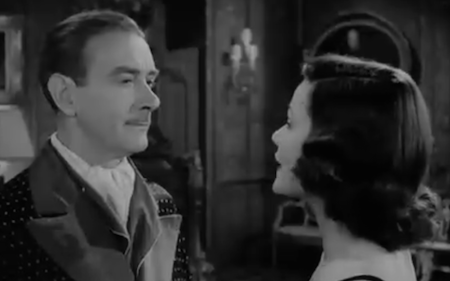
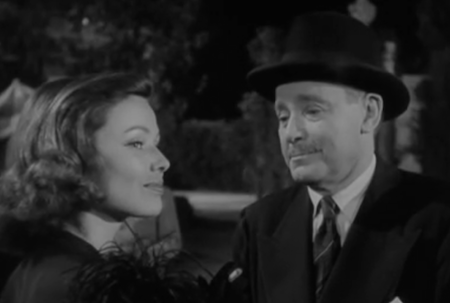
A lot of the credit for the characterization of literature’s most endearing snob goes to the actor. (After all, he excelled at this role in Laura and Titanic.) But much goes to Trotti too: he retains great lines from the novel, which capture the snobbery and yet the sweetness of the man. I like how occasionally Trotti uses him as a stand-in for the narrator, as when Isabel (Gene Tierney) thinks of luring Larry (Tyrone Power) to bed to trap him with a pregnancy, and her uncle rips on her for it.

WebbandTierney-RazorsEdge
This moment was much livelier than the narrator’s conversation with her in the novel. Maugham and Elliott share a sardonic humor and lack of pretense about human behavior; it’s not at all surprising that they’re friends (in Elliott’s case, of course, he is quite blind about his own). This switch works much better than (oh horror!) when the writer exchanges the narrator and Larry later (see “The Ugly.”)

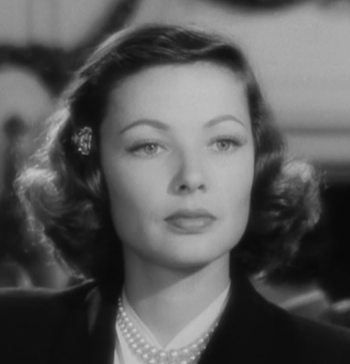
Isabel’s Selfishness. I was afraid the writer would take the cruelty out of Isabel, soften her up to earn sympathy. High marks to Lamar Trotti for letting her be who she is; her self-centered behavior is one of the highlights of the novel and the film.

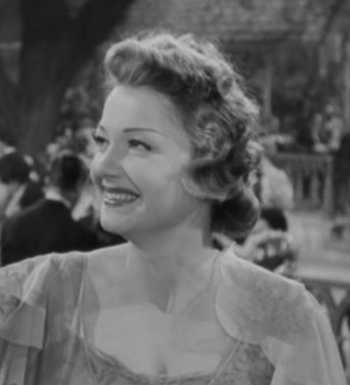
GeneTierney-RazorsEdge
She comes across as real, like Maugham’s other fascinating heroines: charming and fun, but judgmental, conniving, and occasionally ruthless. As the narrator says of her, “You only lack one thing to make you completely enchanting…tenderness.”

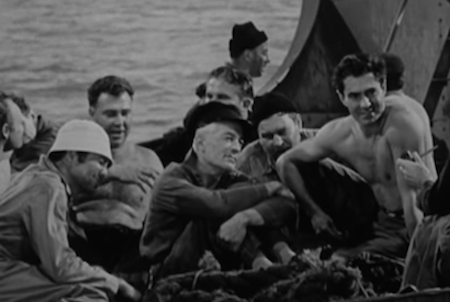
Montages of Larry’s Actions. What a stroke of brilliance to pair Elliott’s guesses about Larry’s likely debauchery and high-class life in Paris with scenes of his real actions (hanging out on a steamer with a bunch of guys rather than the glamorous voyage Elliott would have booked, reading books rather than finding a mistress).

Powermontage-RazorsEdge
The juxtaposition made me laugh aloud. Beautifully done.

The Narrator. While his absence in much of the first half makes little sense, when he appears, Maugham is quite similar to his character in the book, though (thanks to the casting of Herbert Marshall) less animated.

MarshallandTierney-RazorsEdge

The Bad

The Strange Opening about Larry. The writer falters with his introduction. Instead of trusting his scenes to show Larry’s originality and holiness, he preaches it to us by lifting a whole passage from the book. Since we don’t see the many encounters between Larry and the narrator or the narrator and Isabel that appear in the novel, this knowledge of and admiration for Larry are puzzling, as is Maugham’s later intimacy with the Maturin family.

Sophie (Anne Baxter).

Baxter-RazorsEdge
True, the girl had her romantic side, but what happened to the dry cynic we saw in those early scenes in the book? The cool-headed observer of her peers? She was passionate about her husband, yes, but theirs was a kind of exclusive love; they weren’t exactly the social butterflies we get in the film. Nor was she ever a fan of Isabel’s. She was an outsider from the start, which made her tragedy all the more acute. Baxter does a good job (though her Oscar was a stretch), but she’s given a far less interesting character to work with than in the novel; the character’s lack of boldness in the film also took away the dark humor of her reactions to Isabel’s superficiality.

The Absence of Suzanne Rouvier. What this film really needs is some comic relief, and the sensual artist offered a trove of it in the novel. A one-time lover of Larry, she is an unapologetic, sensual woman who made a career of being an artist’s model/mistress. Her frankness about her life is hilarious, and her insights about Larry’s kindness (he only took her in because she was sick and destitute) fascinating. True, the majority of her words and actions wouldn’t make it through the censors. But surely a toned-down version could have been attempted?

The Ugly

When Larry Talks about His Faith. Those ponderous religious speeches!

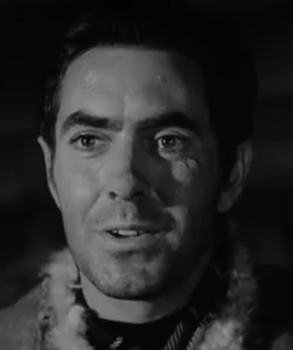
TyronePower-faithRazorsEdge
So much more could have been accomplished with wit, with expressions, and with Larry’s dodges when asked direct questions (which we see frequently in the book). In fact, his mystery was one of Larry’s biggest appeals, and is utterly absent from this characterization. He also took himself far less seriously than we see here, and only rarely talked about his beliefs.

Instead, the camera freezes on Power’s intense expressions; we hear his words about doubts and faith. The melodramatic music and shots of clouds don’t help, but I doubt those are the fault of the screenwriter. I know some will blame the boredom of these speeches on Power, but honestly, he does seem like the joyful Larry when in motion. Just when he’s still do I roll my eyes and try to avoid drifting off to sleep.

Larry’s Sanctimony. What happened to his “aloof” quality, which is mentioned in the movie? His lack of judgment? His desire not to have a hold on others–or to let them have a hold on him? Now he’s lecturing Isabel about Sophie? What? By taking the narrator’s scenes and putting Larry in his place, the writer has turned Larry into a stuffy character I’ve no interest in knowing. And this is one of my favorite characters in literature.

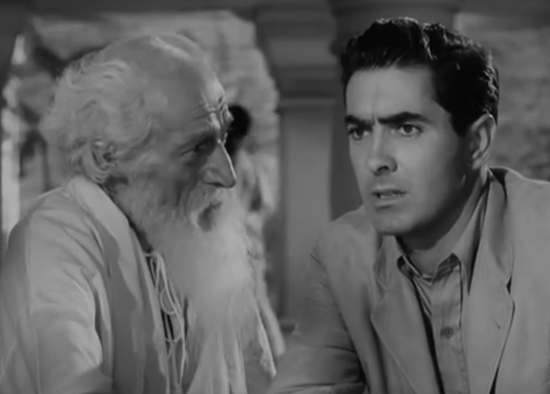
The Holy Man. Until this man said, “We Indians,” I wasn’t sure if this was the Benedictine monk from earlier in the book, or the Hindu who helps Larry find his faith. After all, the latter was described in the book as someone who “didn’t talk very much” and mainly meditated.

PowerandYogi-RazorsEdge
This strange bearded guy is the chattiest of yogis ever seen on film and perhaps the most European looking. He also is guilty of some serious close talking. Come on. I know this wasn’t exactly a racially/ethnically enlightened time in American film, but surely some understanding of the faith being displayed was required? In a film about faith?

I can’t decide if I’m happy I saw the film or not. It certainly didn’t ruin the book for me, and I enjoyed the scenes with Isabel when Larry wasn’t present, and Elliott with everyone. I’m curious what others think who haven’t read the novel. Did you just fast forward through Larry’s religious scenes to get to the juicy ones, as I wished I had?  Now that I’ve gotten over my phobia, maybe I can give Bill Murray’s version a chance; he’s a softer presence than Power, and supposedly really fought for the role. Maybe it’s a bit closer to the novel, and at the very least, it’s more time with Murray….

Share
Posted in: 1940s films, Blogathons, Drama (film), Romance (films) Tagged: Clifton Webb, Gene Tierney, religion and film, screenwriter, The Razor's Edge, Tyrone Power, W. Somerset Maugham

Big Fish: A Kettle of Oscar Snubs

02/13/2016 by leah@carygrantwonteatyou.com 4 Comments

EdwardandgiantBigFish
Director Tim Burton’s beautiful Big Fish was shut out of all Oscar nominations in 2004 but for original score (which it didn’t win). The director’s work is often dismissed as creative, but too weird, or lovely, but lacking in feeling. The same critiques, by the way, the Coen brothers and Wes Anderson hear often. Yet in Big Fish, Burton vividly renders the elusive, big-hearted whimsy of Daniel Wallace’s book, telling a father-son story that is sad, wise, and funny all at once.

Let’s discuss the many nominations it should have received, starting with the most egregious omission:

Best Actor in a Supporting Role

AlbertFinneyBigFish
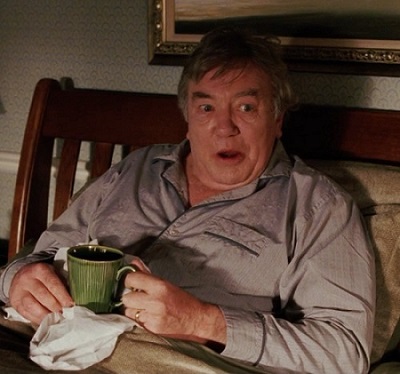
Billy Crudup, not Albert Finney, is the star of the film. Will (Crudup) resents his father, Edward (Finney), for always traveling away from home while he was a kid, even suspects he had a second family. The yarn-telling skills that endear others to Edward annoy his son, who considers his father a liar. “You’re like Santa Claus and the Easter bunny combined,” Will says, “just as charming and just as fake.” The two haven’t spoken in several years, until Edward’s final illness draws his son home to resolve their issues. Edward prickles at his son’s anger: “I’ve been nothing but myself since the day I was born, and if you can’t see that, it’s your failing, not mine.”

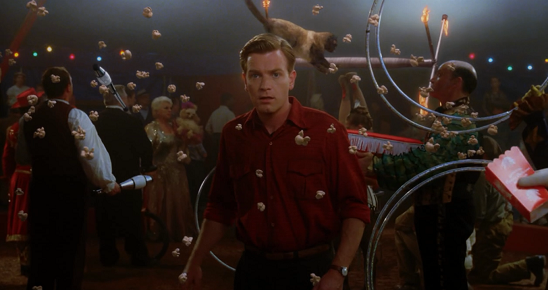
Finney’s performance is magical. There’s no other word for it. How much personality and spirit he’s able to convey, even though he spends most of the film in bed! And Ewan McGregor exudes his usual charm, as he captures Edward as a youth, full of outsized ambition and enthusiasm. Burton lets us see Edward’s young adulthood not through the actual events, but through the imaginative way he recounts them: the boy spits out of his mother’s body like a cannonball when born, he sees his death in a witch’s eye, saves his town from a giant. When Edward leaves home and travels down a forsaken road, he spots a sign: Warning: Jumping Spiders. Edward’s description of this obstacle illustrates both the amusing cadence of his language, and his indomitable spirit: “Now there comes a point when a reasonable man will swallow his pride and admit that he’s made a terrible mistake,” narrates McGregor. “The truth is, I was never a reasonable man.”

In 2004’s Academy Awards, the supporting actors were Benicio Del Toro (21 Grams), Alec Baldwin (The Cooler), Djimon Hounsou (In America), Ken Watanabe (The Last Samurai), and Tim Robbins (Mystic River). I admire all of these actors, and have seen all but 21 Grams. I’d put Finney over them all, and Ewan McGregor (also supporting) over most. Baldwin was very good, but it’s not his most nuanced performance. Hounsou played a very one-dimensional role (as he typically does despite his skills), and I barely recall either Ken Watanabe’s or Tim Robbins’ performances.

But Finney’s? I’ve never been able to get it out of my head. As Edward, he is haunting and lovable, resentful and stubborn and inexpressibly sweet.

Had he been mistakenly chosen for a Best Actor nomination, Finney still should have been in the list, which included Sean Penn (Mystic River), Jude Law (Cold Mountain), Ben Kingsley (House of Sand and Fog), Bill Murray (Lost in Translation), and Johnny Depp (Pirates of the Caribbean). I would have been torn between him and Murray as deserving of the win.

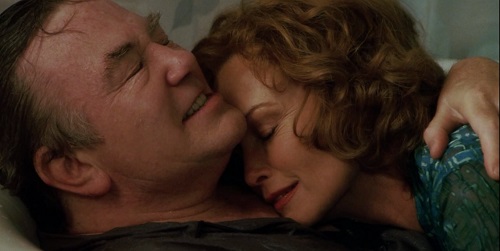
By the way, Jessica Lange plays Edward’s wife. She wasn’t in the film enough to earn a nomination, I suspect, but what an impact she makes in her few lovely moments, capturing the endurance of the love affair that is at the root of 90 percent of his stories. (No wonder she doesn’t share her son’s anger.) Here are the sweethearts in a tub together, fully clothed:

LangeandFinney

Best Director, Best Picture
Nominees, Best Picture: The Lord of the Rings: The Return of the King (winner), Lost in Translation, Master and Commander: The Far Side of the World, Mystic River, and Seabiscuit.

Nominees, Best Director: Winner Peter Jackson (The Lord of the Rings: The Return of the King), Fernando Meirelles (City of God), Sofia Coppola (Lost in Translation), Peter Weir (Master and Commander), and Clint Eastwood (Mystic River)

Jackson and his film probably deserved the win among those nominees, as the weight of translating Tolkien to film was so daunting that the man deserved a medal simply for attempting it, much less succeeding. And Meirelles created one of the most riveting and best edited films I’ve ever seen. It must be the foreign language that knocked it out of best-pic contention, to the Academy’s shame (as it definitely deserved the win).

But I do quibble with the other best picture and director nominees. Lost in Translation was a creative film, but without Bill Murray at the helm, would have been forgettable. The unspeakably dull Master and Commander proved to me once and for all that male voters dominate the Academy. If “chick flicks” can’t be nominated, why do I have to put up with something that’s one step up from a video game? Seabiscuit was a winning story, but a bit too saccharine, and Mystic River, like everything Eastwood does, was overwrought and completely lacking in subtlety.

It’s hard to imagine many of the voters bothered to watch Big Fish, as surely it outranks Seabiscuit in sentiment, and manages to say something meaningful about the power of story, its capacity to help us not only overcome obstacles, but survive loss. Surely storytellers—i.e., those involved in film—would have gravitated to such a theme?

Best Writing, Adapted Screenplay
Nominees: The Lord of the Rings: The Return of the King (Fran Walsh, Philippa Boyens, Peter Jackson, winners), American Splendor (Shari Springer Berman, Robert Pulcini), City of God (Bráulio Mantovani), Mystic River (Brian Helgeland), and Seabiscuit (Gary Ross)

This category was tough in 2004, but it’s clear that few voters read the novel, understood the challenge of translating it to film. Unlike Seabiscuit, for example, this was not a traditional narrative. It’s a recursive, poetic recounting of moments. It’s even divided into fragments rather than chapters. The book intentionally circles, the author explaining in interviews that myth does as well. And in truth, so do our lives: so many moments in our existence recall others. Our bodies may decline in a chronological fashion, but our minds, our experiences, don’t work that way at all. As the film’s script explains, “Fate has a way of circling back on a man, and taking him by surprise.”

The scene of Edward’s death, for example, is repeated multiple times throughout the book, each version telling readers something different. John August distilled the story, threaded enough of the moments together to form a comprehensible narrative, and yet retained the recursive, fanciful spirit of the original. His achievement, quite simply, is a triumph. And though I would leave those first three films on the list, I think Mystic River or Seabiscuit should have been bumped to include August’s work.

Best Art Direction-Set Decoration; Best Cinematography
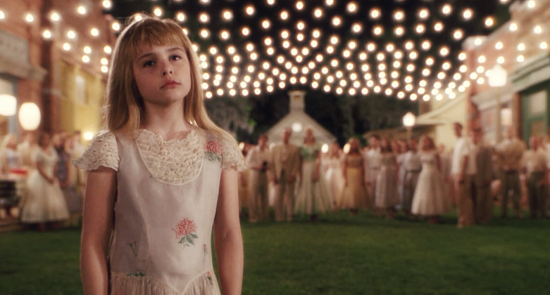
I’ll confess that I feel in deepest water when I discuss the visuals of a film. I don’t think, however, that many would dispute that the enchantment of Big Fish is largely a result of its execution of Burton’s vision; it’s rare that I am so enthralled by what I see that I long to take a snapshot of every moment. I’m curious why this film wasn’t considered worthy of awards based on artistic merit, if nothing else for the images’ perfect cohesiveness with the storytelling. Edward complains that his son doesn’t tell stories well, that he gives “all of the facts, none of the flavor.” That certainly cannot be said of the art direction of this film. In parting, I’ll just leave you with a few of my favorite visuals:

JennycrushBigFish

Timestandingstill-BigFish

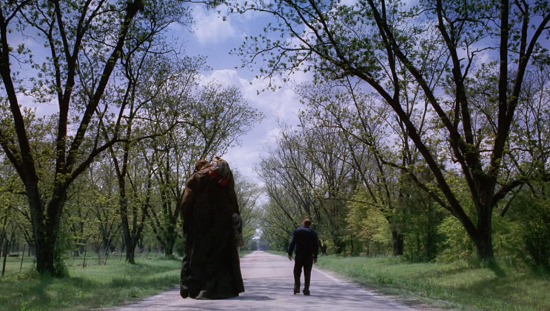
carintreeBigFish

daffodilsBigFish
This post is part of The 31 Days of Oscar blogathon, hosted by Aurora of Once Upon a Screen (@CitizenScreen), Kellee (@IrishJayHawk66) of Outspoken & Freckled, and Paula (@Paula_Guthat) of Paula’s Cinema Club. Visit their sites for all of the wonderful entries. Kellee is hosting the snubs.

Share
Posted in: 1990-current films, Blogathons, Comedies (film), Drama (film), Humor, Oscars, Romance (films), Romantic Comedies (film) Tagged: Albert Finney, Big Fish, Daniel Wallace, Ewan McGregor, John August, Oscar snubs, Tim Burton
« Previous 1 2 3 4 5 6 Next »

Recent Posts

  • 100 Years Later, Still Scary: Dr. Caligari
  • Escaping Out of the Past (1947)
  • A Weeper for Those Who Love Jerks
  • Thank You, Academy, for Not Infuriating Me
  • Challengers (2024) Is a Bad Movie

Subscribe to Blog via Email

Enter your email address to subscribe to this blog and receive notifications of new posts by email.

Categories

  • 1920s films
  • 1930s films
  • 1940s films
  • 1950s films
  • 1960s films
  • 1970s films
  • 1980s films
  • 1990-current films
  • 2020s films
  • Action & Sports Films
  • Anti-Romance films
  • Blogathons
  • Childfree
  • Comedies (film)
  • Drama (film)
  • Feminism
  • Femme fatales
  • Film Noir/Crime/Thriller & Mystery
  • Gloriously Silly Scenes
  • Horror
  • Humor
  • Mae West Moments
  • Musicals and dancing films
  • Oscars
  • Random
  • Romance (films)
  • Romantic Comedies (film)
  • The Moment I Fell for
  • Turn My Sister into Classic Movie Fan
  • TV & Pop Culture
  • Uncategorized
Share
Classic Movie Blog Hub Member

Recent Comments

  • leah@carygrantwonteatyou.com on Meg Ryan’s Fate Foretold in Joe Versus the Volcano
  • Ryan on Meg Ryan’s Fate Foretold in Joe Versus the Volcano
  • leah@carygrantwonteatyou.com on 100 Years Later, Still Scary: Dr. Caligari
  • The Classic Movie Muse on 100 Years Later, Still Scary: Dr. Caligari
  • leah@carygrantwonteatyou.com on 100 Years Later, Still Scary: Dr. Caligari

Archives

  • November 2025
  • September 2025
  • May 2025
  • March 2025
  • January 2025
  • November 2024
  • August 2024
  • July 2024
  • May 2024
  • March 2024
  • February 2024
  • December 2023
  • November 2023
  • October 2023
  • September 2023
  • August 2023
  • July 2023
  • May 2023
  • April 2023
  • March 2023
  • January 2023
  • December 2022
  • November 2022
  • September 2022
  • July 2022
  • May 2022
  • April 2022
  • March 2022
  • February 2022
  • October 2021
  • September 2021
  • April 2021
  • March 2021
  • February 2021
  • December 2020
  • October 2020
  • September 2020
  • July 2020
  • May 2020
  • April 2020
  • March 2020
  • February 2020
  • December 2019
  • October 2019
  • September 2019
  • June 2019
  • May 2019
  • April 2019
  • February 2019
  • January 2019
  • November 2018
  • September 2018
  • July 2018
  • June 2018
  • May 2018
  • April 2018
  • March 2018
  • February 2018
  • January 2018
  • November 2017
  • September 2017
  • August 2017
  • July 2017
  • June 2017
  • May 2017
  • April 2017
  • March 2017
  • February 2017
  • January 2017
  • December 2016
  • November 2016
  • October 2016
  • August 2016
  • July 2016
  • June 2016
  • May 2016
  • April 2016
  • March 2016
  • February 2016
  • January 2016
  • December 2015
  • November 2015
  • October 2015
  • September 2015
  • August 2015
  • July 2015
  • June 2015
  • May 2015
  • April 2015
  • March 2015
  • February 2015
  • January 2015
  • December 2014
  • November 2014
  • October 2014
  • September 2014
  • August 2014
  • July 2014
  • June 2014
  • May 2014
  • April 2014
  • March 2014
  • February 2014
  • January 2014

Meta

  • Log in
  • Entries feed
  • Comments feed
  • WordPress.org

Copyright © 2025 Cary Grant Won't Eat You.

Church WordPress Theme by themehall.com