A friend and I both have this habit of picking up other people’s stray books, starting to read, and then forgetting where we are. One day, that friend picked up mine, Don DeLillo’s White Noise. I waited for her reaction, wondering if she’d be as overcome by it as I had been. After a pause in reading, she looked up at me and said, “This is literature.”
I always think of that moment when I’m reading or watching something and am stunned by its brilliance. That stirring of excitement is what I felt just a few minutes into The Cabinet of Dr. Caligari (1920).
I wasn’t even sure beforehand I’d like the movie. Horror is not my usual. I’d heard of the film and was curious. But I will admit to some fear that whatever special effects it managed in 1920s terms would be too silly for the story to frighten a 2020s audience.
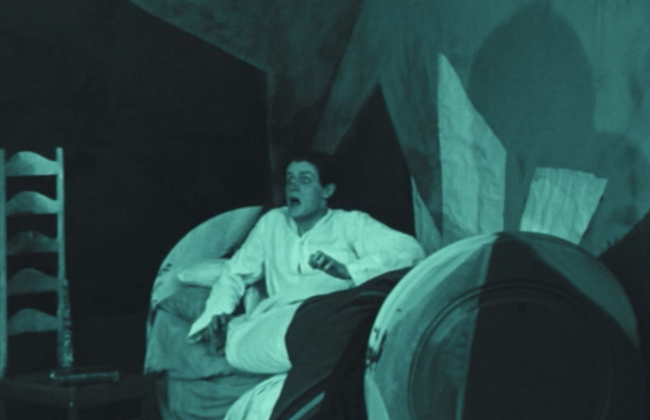
What I didn’t count on, of course, were the joys of German Expressionism. I didn’t even know the intriguing Nosferatu was part of the same movement. The exaggerated, fanciful staging, set design, lighting, camera angles, use of shadows and makeup of The Cabinet of Dr. Caligari take the film into the world of fairy tale. Because there is no attempt to make anything look “real,” the film quickly joins the terrain of nightmare. (One hundred years don’t really make a difference when it comes to nightmares.) Most say the film is either influenced by or a direct commentary on WWI, which explains much of the plot and the traumatized state of its leads.
I’ll share just the basics so that I don’t spoil its considerable suspense. (Side note: What is that AMAZING font on the title cards throughout? I want to use it for everything!!)
The acting begins with an older man sharing his ghostly encounters with a young man, Franzis (Friedrich Feher), who says he and his fiancée (Jane Olsen). have their own terrifying tale to tell. She walks by trancelike in white, like she’s straight of casting for Ophelia.
Franzis then brings up a mysterious “him” from his past, who appears in his own little shot, looking extremely creepy (with his hair dyed black and white on top, skunk style). This “him” navigates a gorgeous setting of crooked street drawings. Him, of course, is Dr. Caligari (Werner Krauss).
The frame quickly dissolves into a scene of a new character, whom we’ll soon learn is Alan (Hans Heinrich von Twardowski), overjoyed about his town’s fair. He goes to Franzis’s place to convince him to join. Franzis is clearly a pre-traumatized, lighter, and happier version of the man we met in the opening scene. Meanwhile, Dr. Caligari is trying to get a permit for the same event.
We soon discover Dr. Caligari’s act will involve a somnambulist named Cesare (Conrad Veidt). As Act II begins, we learn there’s been a murder in the town. I won’t share any more of the plot.
The film is beautiful. Whether the story is using a painted set or a constructed one — and this film uses both — each set is a haunting piece of artwork. The framing of every shot is striking. (I wouldn’t recommend anyone experiencing vertigo watch this film. The oddly angled everything can make you feel a bit off even on the most balanced of days.) Surely, every haunted house created in every town since owes a debt to this film.
Dr. Caligari makes you wonder what you’re seeing and not, explores the nature of sanity and authority and otherwise makes you feel ill at ease and worried for its characters. It also keeps you reflecting on its messaging and incredible artistry long afterward. I enjoyed the acting, especially Veidt’s as Cesare and, of course, Krauss, who just owns this role. But EVERYTHING is good about this film. Never with any other scary movie have I wanted to freeze every frame, just to examine how each touch builds toward this symphony of mood building.
If you haven’t seen it yet, I envy your first encounter.
Back Street (1932), directed by John Stahl, announces itself early on as belonging in the wronged illicit woman tearjerker canon. Charming Ray (Irene Dunne) enjoys befriending traveling salesmen at a beer hall in Cincinnati before the turn of the twentieth century, but all they do in return is try to bed her. Ray laughs at their efforts, expecting little else, but never giving in.
Spoilers ahead.
That is, until she meets Walter (John Boles), a flirt who steals her heart despite neon red flags, including:
Dispensing cheesy pickup lines during their meet-cute.
Suggesting she meet him at 10 pm on a random street for a date.
Announcing he’s a mama’s boy.
Admitting he’s engaged.
Ray sleeps with this worthless banker anyway, making the audience wonder just how little game those traveling salesmen had. Walter suggests she meet his mommy at the park one day. He’s hoping that said mommy will agree he should drop his fiancée if exposed to Ray’s considerable charm. (Apparently, he can’t break up without mama’s say-so.)
Unfortunately, Ray gets waylaid because her lovesick half-sister needs her help (because of course she does). Ray then wonders for the rest of her days what would have happened had she had made it to the park on time.
Walter’s response to her no-show is a red flag of its own: angry petulance. Instead of considering herself well rid of him, Ray is again smitten when she runs into him five years later in New York. She’s now a success at her firm, and he’s married to that fiancée and a father. He’s still obsessed with Ray, so they begin an affair. Without her permission, he gets her an apartment for their rendezvous.
As a kept woman, our bar-hopping extrovert resigns herself to solitaire and phone watching. We witness Ray helping her worthless lover with speeches and bank matters. Since he doesn’t want her considerable intelligence occupied with anything but him, she’s unemployed. He also doesn’t want her going out with friends; then she’d be unavailable for his stop-bys. In return, he misses their engagements and forgets to call her, mail her, or put any money in her bank for weeks on end.
We see Ray bemoaning her life to a neighbor in similar straits. Still, back she keeps going to this selfish jerk whose most discernible quality is neediness. She even turns down a chance to marry a sweet, successful former neighbor who loves her. What Ray needs, of course, is a good therapist. Too bad that isn’t really an option for her in this time.
Instead, we see her decades later, still lovely (it’s Irene Dunne, after all), still a mistress. She’s still beloved by Walter, but scorned by his adult children. When he has a stroke, she can only hear his voice on the phone. She can’t be by his side. When the stroke ends in death, his chastened son, finally realizing her true love for his father, offers to financially care for her.
Irene Dunne, who is amazing in this role, can make you weepy despite the unworthiness of her lover. We feel for her pain, even if we are mystified by its source. She looks at Walter’s photo at the end of the film, tells him she’s on her way, and dies. In her last moments, she wonders again if she would have had a better life if she’d shown up at the park.
Which leads me to wonder this: Would being the cheated-on wife (with kids) of this dolt be better? I mean, sure, it was a grim time for kept women. At least she wouldn’t be destitute or outcast if wedded to him. She’d also have the children she wanted.
Still, she’d be married to Walter, which means much more of her time with Walter. Why that doesn’t sound like a penance, I have no idea. Also, why wasn’t Ray regretting turning down her kindly neighbor in her last moments?
There are several curious things about this film. It’s pre-code, so it’s more sympathetic about her choices than the remakes (and there are several) probably are. There are moments (as at the end) the director, John Stahl, seems to give in to the soapy, romantic Romeo and Juliet of it all. But the director also gets the true tragedy: not only did Ray sacrifice a much happier fate to live in the “back streets” of a wealthy man’s life, but she did so for a singularly uninspiring man-boy played by John Boles.
If you’re gonna sacrifice everything, honey, at least let your lover be sexy. Who’d have guessed that Adolphe Menjou (in unacknowledged remake Forbidden) would come out the more attractive of the two leading men?
This is how Ray feels about her life:
Oh, Ray. Imagine if you’d never slept with Walter. Maybe you’d have still turned down your neighbor. Maybe you’d have never married. Still, you’d be hanging out in the beer hall with salesmen, which means you’d at least have had some fun. If there’s a moral lesson in here, it seems to be not to avoid premarital sex, but to avoid letting your first lover be a Walter. That’s the kind of judgment-clouding decision that can topple the worthiest women.
Interestingly, the novelist who wrote the story (and Imitation of Life), Fannie Hurst, had her own illicit thing going: a secret marriage, with she and her spouse living in separate homes, and she too (seemingly) mourned him desperately after his death.
Let’s hope he was more worth it than the character she created.
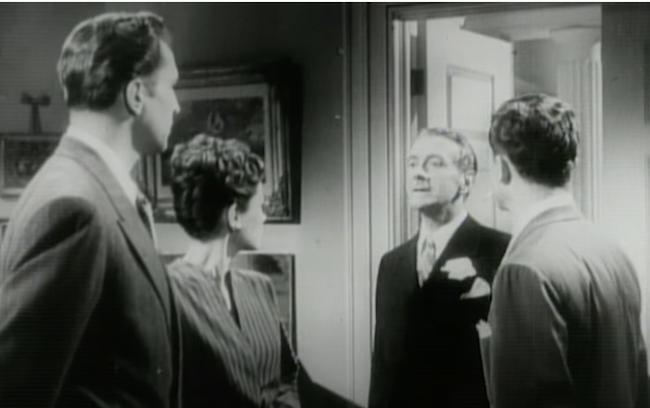
Laura is a curious film. I always think of it as the male gaze on steroids, as we know so little of the heroine apart from the versions we get from the men who surround her: the portrait artist, the boyfriend, the best friend and the cop. All are obsessed with her, and all want their version of the murdered heroine to supersede the others.’
That’s why I chose the film for A Haunting Blogathon: In the Afterlife, hosted by the Classic Movie Blog Association. Crime writer James Ellroy once said something about Laura being the ultimate film for cops, and I think he’s right: the victim you only learn of from diaries, from photos, from others’ words. You never quite know who she was.
Surely, it would be easy for those driven to solve a homicide (especially one that remains out of reach) to become possessive about what they know and haunted by what they don’t. (Ellroy, whose mother was murdered, explores his own haunting in My Dark Places, a fascinating read, as is the book that inspired him: Joseph Wambaugh’s true-crime masterpiece, TheOnion Field.)
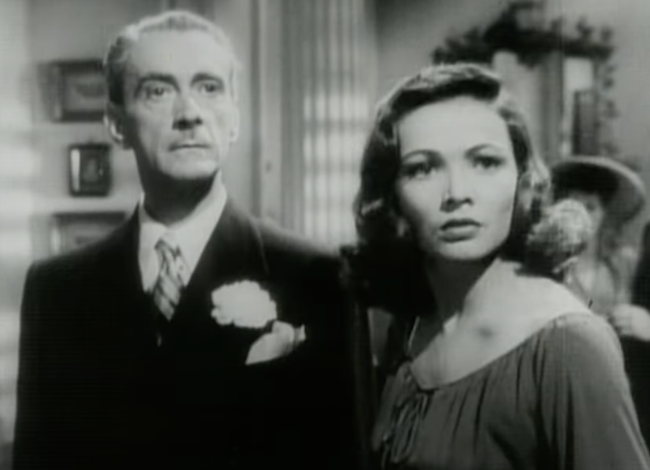
It’s not hard to imagine becoming enamored with and fascinated by a victim who looks like Gene Tierney. In this particular story, however, the hauntings turn from reasonable to pathological.
What I love about the film is that the versions of Laura these men (and one woman) tell don’t quite add up. Her housekeeper, Bessie (Dorothy Adams), describes Laura as the sweetest lady on earth, and certainly Gene Tierney’s perfect face and that sentimental theme song seem to confirm those impressions.
But would such an angel be best friends with Waldo Lydecker, enjoying his poisonous remarks about her admirer and fellow party guests, as we see her do (in his version of her story, of course)?
Is she really a woman who, as fiancé Shelby Carpenter (Vincent Price) claims, will indulge any visitor, day or night? He has treated his bride-to-be like a doormat. Since he wants to continue to do so, this tenderhearted version of Laura is convenient for him. But Laura does, in fact, dump him, and despite occasional remarks seems little affected by the poor woman (cheater or not) who got killed in her doorway. Not exactly the heart-on-her-sleeve, always-forgiving softie he takes her for.
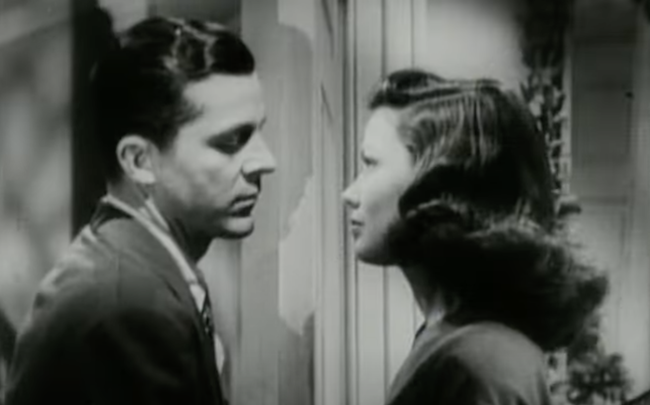
Of course, Lydecker isn’t wrong in accusing Det. Lt. Mark McPherson (Dana Andrews), Laura’s most recent admirer, of being a creep. McPherson wants to buy a portrait of her when she’s dead and becomes instantly possessive of her after she returns to life.
Who instantly hits on a stranger (worse than that, assumes she’s already his) while she’s still in shock?
Even if she is vulnerable enough to think she’s in love too, it would be wise and kind to wait–I dunno–48 hours? He also chooses for the moment of his wooing a party during which the following things are happening to his new love:
Her fiancé has basically just said to her, “Yeah, I know you killed my lover, and that’s cool,” after inviting said lover into Laura’s home and into her clothes during the latter’s wedding week.
Someone has just been murdered in Laura’s home, and this cop/admirer has invited people over to it for a gathering before she’d had time to sage it, obsessively clean it, or call a real estate agent to put it on the market.
Her aunt, Ann Treadwell (Judith Anderson), has confessed–casually, I might add–that she’s toyed with murdering Laura herself.
And oh yeah, our heroine is still in grave danger from the best friend who tried to off her.
Our infatuated cop follows up this uproariously fun party by pretending he’s arresting her, ruining her reputation in front of her friends, because he can’t control his feelings without taking her into the police station. Ummm, what?
McPherson is right that Laura has surrounded herself by “dopes”–if by dopes he means a heartless group of friends and lovers, with some sociopathy in the mix. He’s just wrong not to include himself in the description. Andrews is quite handsome and feigns calm (with his trusty toy), so it’s easy to think of this detective as the hero in the beginning, but that impression soon wanes.
Right after returning home and shocking Bessie, Laura says gently, “I’m not a ghost, really,” and then jokes, “Have you ever heard a ghost ask for eggs?” But her claims ring hollow. Though she’s physically in the room, I would argue Laura still is a ghost through no fault of her own. Real/imagined impressions of her haunt her admirers and herself.
Actual men are also looming in her life, refusing to let her be who she wants to be, love whom she wants to love, or take five minutes to recover from life-altering trauma. And then there’s the method her best friend chose to kill her with: buckshot (interesting that Waldo doesn’t even reconsider that method during his second attempt). It’s not bad enough he wants to kill her. He wants to obliterate her.
If I were Laura’s true friend (or her therapist), I’d say, “Hey, honey. It time to hightail it out of town. A transfer overseas would be ideal. Also, you may want to keep that phone number unlisted.”
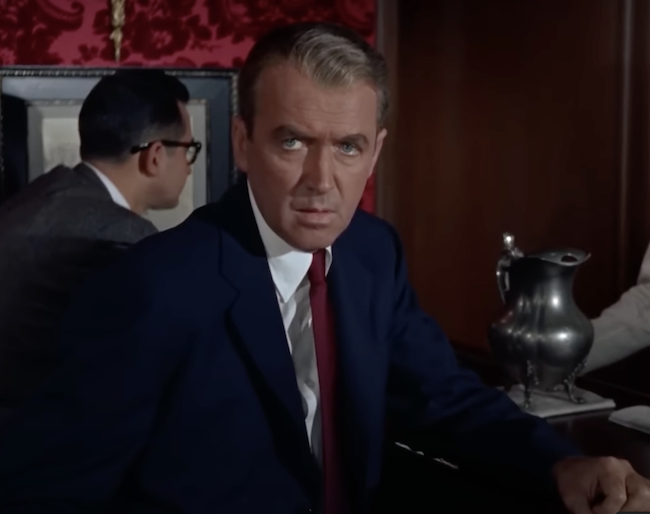
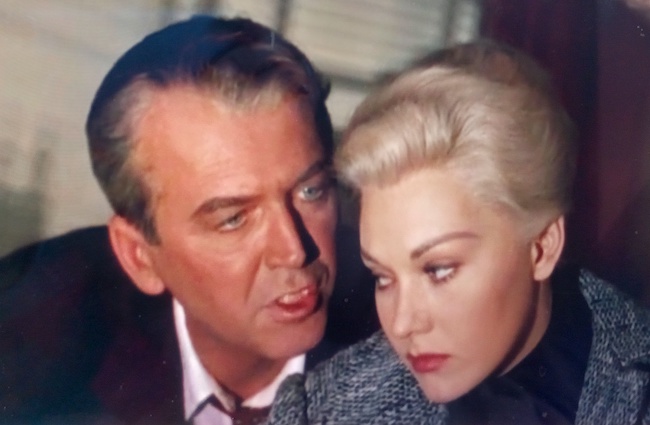
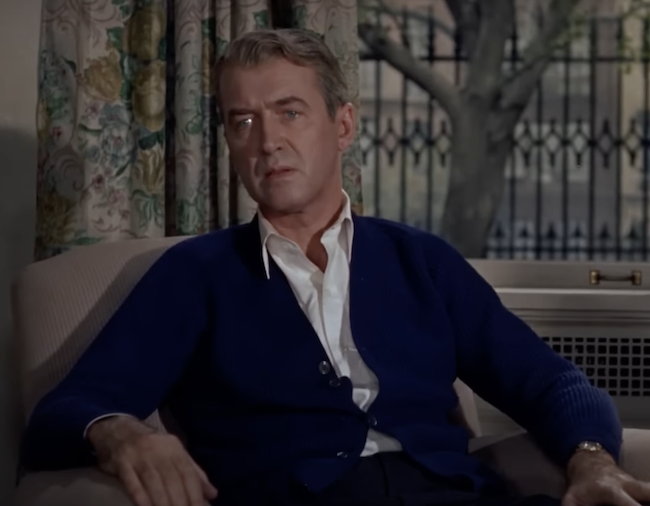
I love a good casting against type. That’s why Scottie in Vertigo is so disarming: It’s creepy to find America’s aw-shucks sweetheart, Jimmy Stewart, playing a villain.
Of course, not all of Stewart’s parts are sugary; he was a murderer in The Thin Man series. He was a professor with disturbing philosophical beliefs in Rope. But Stewart plays innocence beautifully and so memorably—as in his iconic performance in Mr. Smith Goes to Washington, or in his role opposite an imagined rabbit in Harvey. It’s in these parts—and as the lovely George Bailey in It’s a Wonderful Life—that Stewart makes the most enduring impression on viewers.
That’s why when Scottie begins to act unhinged in Vertigo, the audience gives him the benefit of the doubt, and can understand why his loves do too.
He’s just in grief, we think. It must be awful to blame yourself for your coworker’s death.
He’s just experiencing PTSD.
I know he must be a good guy…He’s George Bailey!
Scottie seems to be a good guy at first. He’s a charming, funny friend to Midge (Barbara Bel Geddes), who secretly loves him. He’s willing to help desperate college friend, Gavin (Tom Helmore). Gavin claims his wife, Madeleine, is possessed by a sad ghost and employs Scottie to trail and protect her from self-harm.
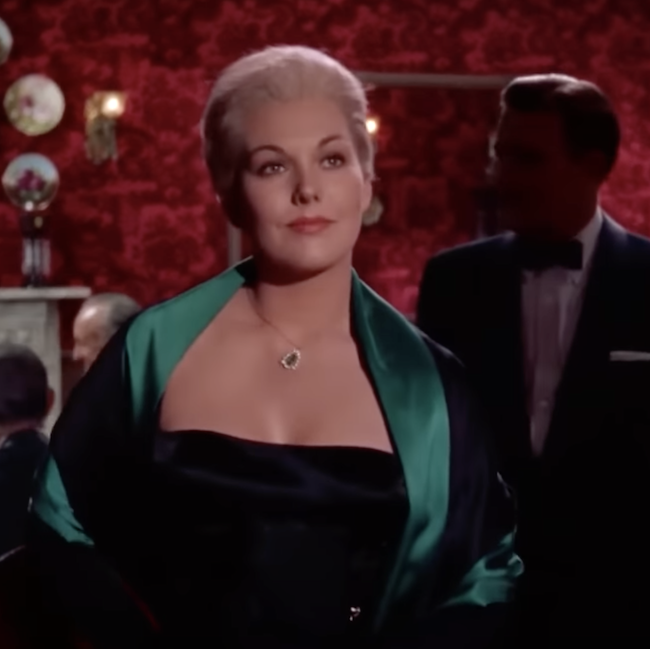
But right away, Scottie’s actions are suspect. He falls for Gavin’s wife. I mean, it’s hard to blame him. Look at her entrance:
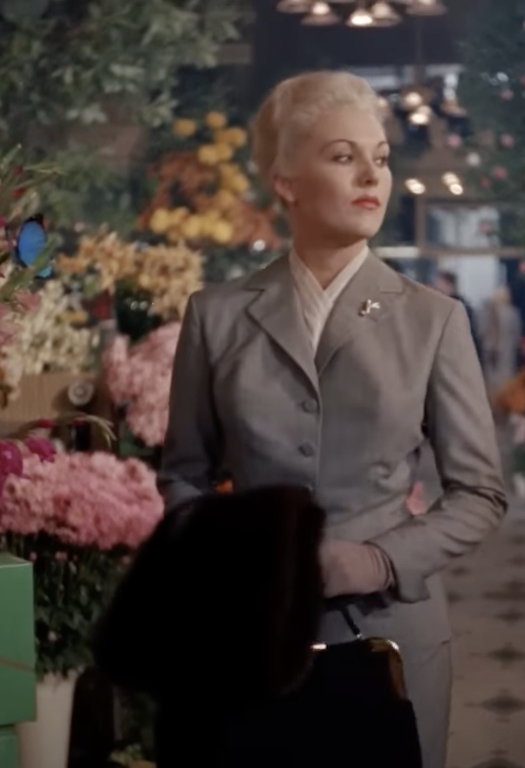
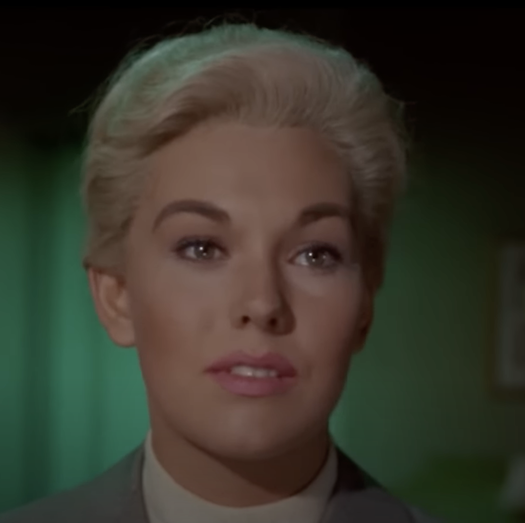
She somehow looks even better in a rather drab grey suit:
Still, Scottie didn’t have to act on his attraction. He breaches friendship and professional ethics by hitting on Madeleine. Knowing—as we viewers do by the end—that Gavin planned it that way doesn’t change anything.
For a brief moment, Scottie and Madeleine seem to enjoy each other’s company, but the happiness is short lived.
Soon, things go terribly wrong for Scottie. Madeleine leads Scottie to a tower. His vertigo prevents him from following her, and he thinks he sees her leap to her death. What he really sees is the real Madeleine (whom he never met) thrown from a tower, while fake Madeleine, whom he’s been trailing (Novak), hides until he leaves.
Once Scottie loses fake-Madeleine to supposed suicide, we’ve forgiven him for any bad behavior. After all, look at his despair!
It’s what he does with that despair that makes Scottie a villain.
First, he follows a strange woman, Judy, to her apartment door.
Let’s start there. Stalking a woman because she looks like your lost love is deranged. Her hostile response to his knock is valid—even if she weren’t the fake Madeleine we know her to be.
Of course, Judy is hardly innocent. She was involved in a murder plot that ruined Scottie’s life. Despite her complicity, we feel for her. She’s so remorseful and almost as self-destructive as pretend Madeleine: who after such a perfect crime falls for her own mark? (Gavin would have killed her had he thought her capable of it.)
And Scottie? Had Scottie believed Judy guilty, his cruel behavior toward her would be somewhat justified. But Scottie believes her innocent. He’s an emotionally abusive boyfriend who feels ZERO guilt for expecting irrational sacrifices from his lover.
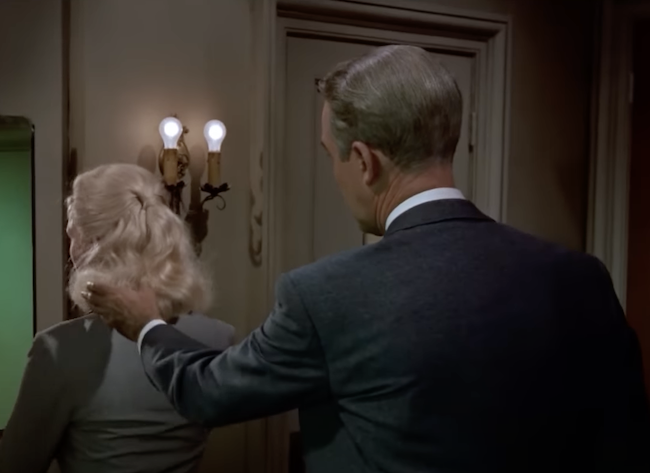
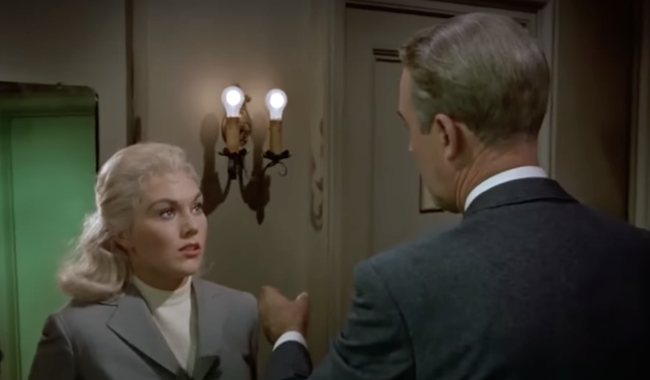
His next disturbing act post-stalking is to force Judy to wear the same grey suit as his dead love. When Judy realizes what he’s doing, she protests.
His justification for distressing her is jaw-droppingly awful: “Judy, Judy, it can’t make that much difference to you…. Judy, do this for me.”
I admit. I laughed aloud when I heard these words this time around. Can’t make any difference to YOU, what you wear? Yeah, nothing personal there.
“I don’t like it,” she says of the suit he offers her.
“We’ll take it,” he responds to the saleswoman.
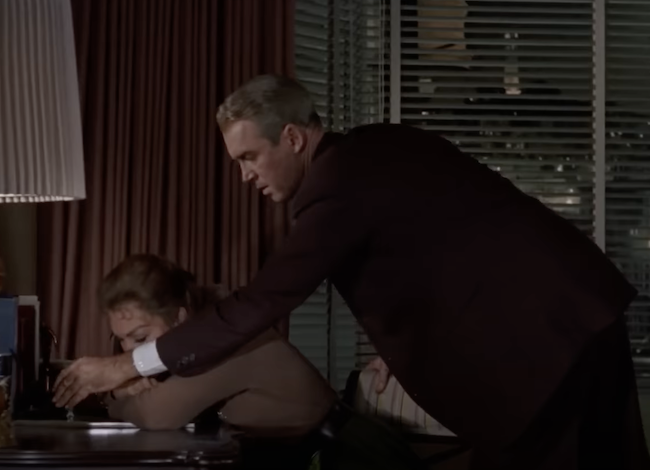
Judy responds by laying her head on a desk in misery. Scottie’s answer? Ply her with liquor.
She asks why he’s terrorizing her and threatens to leave but fears he wouldn’t let her. Sadly, she wouldn’t leave anyway: she wants to remain with her abuser.
This is when we wish Judy’s friends from an earlier scene would return.
RUN, HONEY. RUN!!!!!!
Scottie then says his last few days with her (and yes, he starts on this nonsense just DAYS after they get together) are the first happy ones in a year.
She says that’s only because she reminds him of his dead love. What, besides that, does he like about her?
He replies, “It’s you too. There’s something in you that…” He starts to touch her, then WALKS AWAY without finishing the thought. Because she’s right: he only likes her for her resemblance to Madeleine.
“You don’t even want to touch me,” she says.
“Yes, yes I do.”
Let it be said that there’s no evidence to back his words.
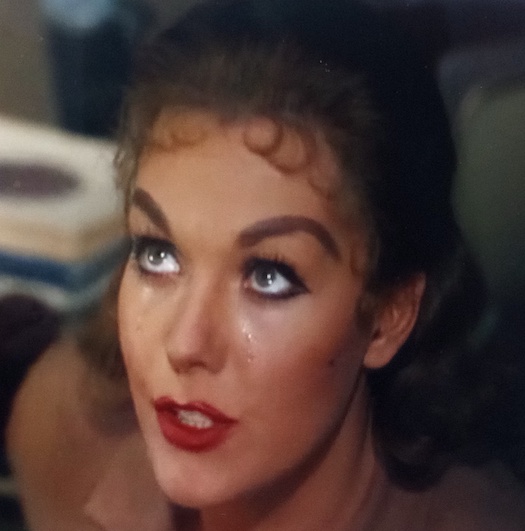
“Couldn’t you like me, just me, the way I am?” Judy cries.
Now this is some heartbreaking stuff. But it gets worse:
“When we first started out,” Judy says, “it was so good, w-we had fun. And then you started in on the clothes, well, I’ll wear the darn clothes, if you want me too, if, if you’ll just, just like me.”
What is his response to this pathetic concession?
“The color of your hair.”
Because of course, he wants to change her brown hair into Madeleine’s blonde locks too.
“Oh no!” she says and walks away.
“Judy, please, it can’t matter to you.”
Again, as a woman, I must say, the color of one’s hair is QUITE PERSONAL.
But Judy is now ignoring red flags as tall as the sequoias she visited with him (while acting as Madeleine): “If…If I let you change me, will that do it? If I do what you tell me, will you love me?”
“Yes, yes,” he says.
“Then I’ll do it. I don’t care anymore about me.”
Her sad words don’t worry him, or even make him feel remorse. Because she caved to his senseless demands, he is finally affectionate, nuzzling her, “Here, go on, let’s sit by the fire,” and he takes out a cushion for her.
And so Judy makes the full transformation into his lost love for him.
We hear the elevator after the full makeover, watch her move toward him. She enters the room without a word, hesitant. She’s afraid. She puts her purse down.
“Well?” she says, turning toward him.
It’s clear that Judy is expressing one tiny rebellion, one last trace of self-respect. She comes back with her hair down, not up, like Madeleine’s. In every other way, she’s the dead woman’s twin.
“It should be back from your face and pinned at the neck,” says Scottie, “I told her [the beautician] that, I told you that.”
Wow.
“We tried it. It just didn’t seem to suit me,” she says, combing her hair nervously.
He grabs her hair.
She turns to face him.
“Please, Judy,” he begs.
She walks in other room, fixes it for him.
He sees her in fog as she somnolently walks toward him. She half-smiles, then smiles fully as she sees his tears.
Being the toxic man he is, he gives her a REAL kiss. After all, she’s now actually BECOME his dead love for him. Because that’s healthy.
In the next scene, we see them playful and flirty with each other—an echo of the earlier conversation with Midge, but with heat.
“Hello, my love. Like me?” She smiles and then spins for him in a pretty dress, her air and voice confident, easygoing—the tone of a well-loved woman. This is the first genuine smile we’ve seen from Kim Novak in the film. (Scary, right?)
“Mmmm,” he responds.
“Is that the best you can do?”
“Come here.”
“Oh no, you’ll muss me.”
“Well, that’s what I had in mind. Now come here.”
He then spots Madeleine’s necklace on her neck and knows Judy’s guilt. He says cryptically, “One final thing I have to do, and then I’ll be free of the past.”
Scottie drives Judy to Madeleine’s supposed suicide tower. He forces her up the stairs and through the trap door.
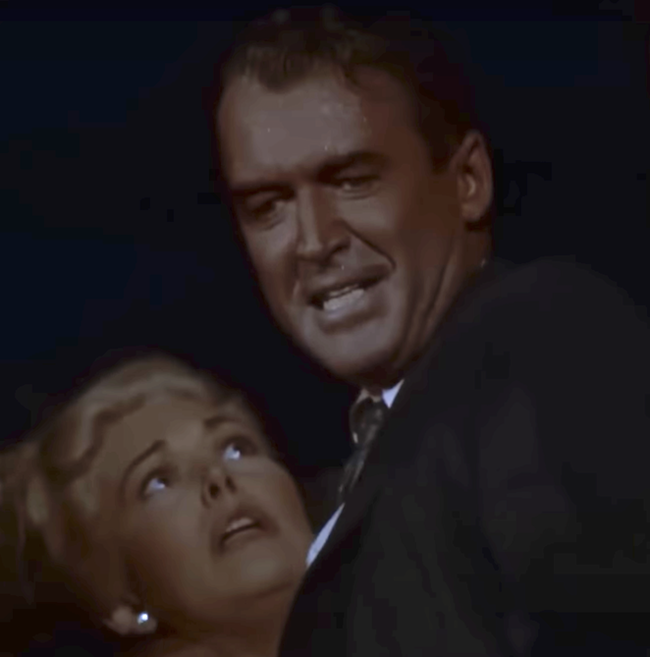
Then he attacks and half-strangles her, saying, “He [Gavin] made you over, didn’t he? He made you over just like I made you over, only better. Not only the clothes and the hair, but the looks and the manner and the words and those beautiful, phony trances….Did he train you, did he rehearse you, did he tell you exactly what to do, what to say? You were a very apt pupil too, weren’t you?”
It’s easy to read these words on multiple levels. Yes, he’s angry she deceived him and furious she’s taken advantage of his affliction. But he’s also angry that she’s had a former lover, Gavin. And he’s angry that Gavin was a better Geppetto than he was.
Scottie’s physical actions are brutal now that he knows what Judy’s done, but those actions are just an escalation of earlier ones.
Note how many times he pins Judy’s arms throughout this story, how many times he forces her from behind—whether it is to wear the clothes he wants, or to go up to a tower where her death awaits. Observe how many times she looks fearful, hesitant, unsure of herself. She is a victim of his cruelty, just as he has been a victim of the murderous plot.
Jimmy Stewart’s Scottie is the definition of a boyfriend who should make a woman run. If he doesn’t give you the heebie-jeebies in Vertigo, you’re just not paying attention.
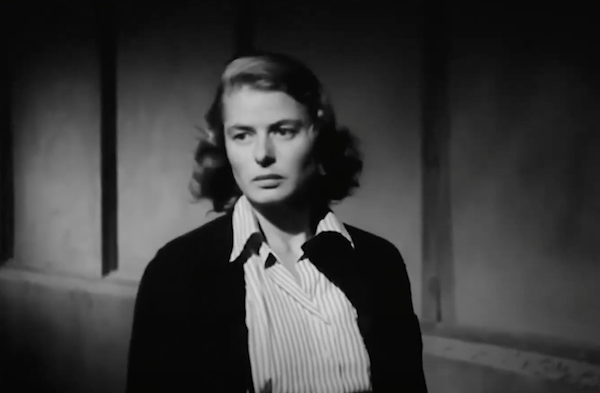
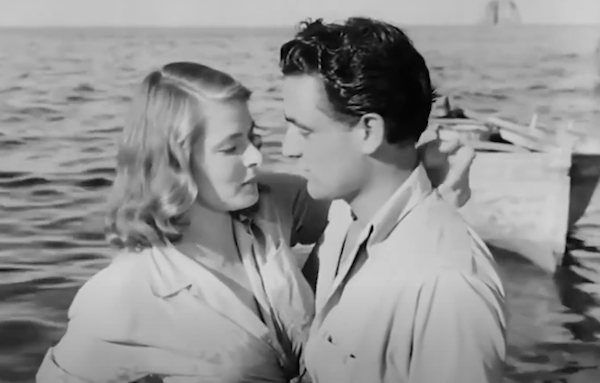
I’ve always been curious about the film that united director Roberto Rossellini and actress Ingrid Bergman in their illicit romance. How red-hot would an affair have to be to lead to a public censure in the US Senate and a six-year ostracism from Hollywood?
I was prepared for something akin to Mr. and Mrs. Smith (2005), where the chemistry of actors (and new lovers) Angelina Jolie and Brad Pitt inflamed the screen.
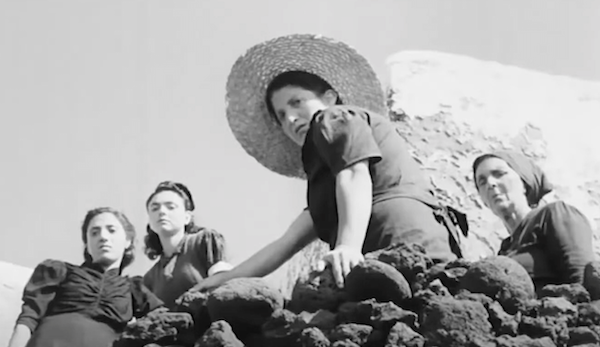
Of course, I neglected to consider a few things before viewing: 1) the absence of the director as an actor in the film, 2) the film’s very un-Hollywood use of everyday people as actors–in this case, fishermen in Stromboli, a small island off of Sicily, 3) the plot.
The Keystone Cops would have been just as likely to show up as a red-hot romance.
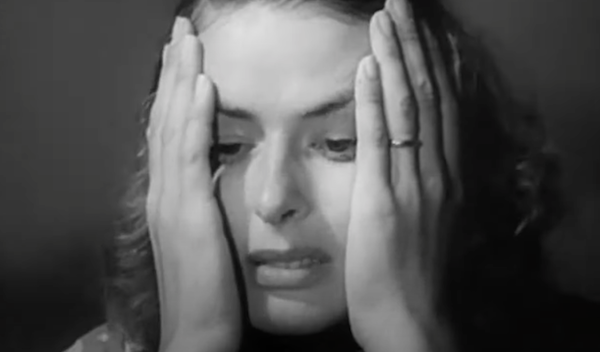
But in one way, I was still on the right track about Stromboli (1950): you can’t keep your eyes off of Bergman, and she IS unbelievably sexy in the film.
The nature of that sexiness is curious because this is a very, very odd movie. I found myself siding with early American critics, who called it dull. I agreed; it was dull. But it was also haunting, with a grim take on marriage quite unusual for its time.
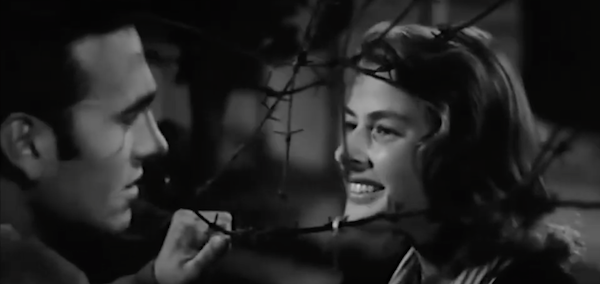
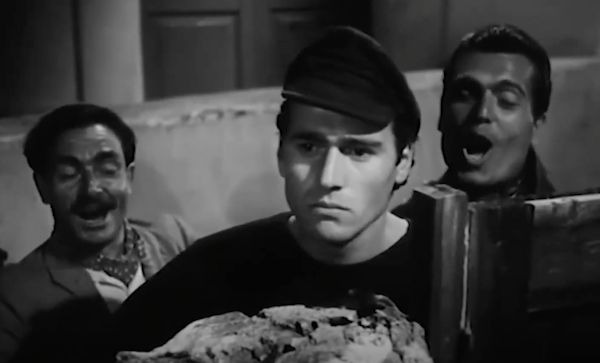
Bergman’s character, Karen, is fascinating because she is one of the least sympathetic, most selfish brides I’ve ever witnessed onscreen. She marries a poor but handsome ex-POW, Antonio (Mario Vitale), to get out of a displaced persons camp.
When he brings her home to his fishing village, she doesn’t even try to be civil–to anyone. She attacks her new groom for taking her there. She tells him this place is terrible, that she’s too refined for it and can’t stay. Kind of harsh right after his release from a camp, huh?
In fairness, the village does suck, at least for Karen. There’s an active volcano that can erupt at any moment. Their house is a shack. There’s little to do or see. The townspeople are super judgy and foreigner-averse, which doesn’t make Karen, a Lithuanian, feel very welcome.
But it’s hard not to pity (at first) the poor husband who just takes Karen’s verbal abuse and hostile glances–especially when he quietly accepts an underpaid fishing job to buy her a better life.
She starts filling the home with the worst decor I’ve ever seen–and hides away her husband’s family photos and religious icons, which she despises. Apparently, this process gives her some pleasure. She’s appalled when he doesn’t love what’s she done, including the weird flowers she’s painted on the walls, kindergartener style. (I told you this film was bizarre, right?) She decides to use a sewing machine in the home of an apparent madam, despite warnings. Then she’s mad at others for thinking she’s loose.
But just when I’m ready to care only about him, her husband proves he’s brutish, like she’s claimed: he beats her for making him look like a cuckold. Now, we audience members don’t have anyone to like in the film.
As for Karen, it’s not long after the house decorating that she begins to plot her escape. Her method is to throw herself at every man who might get her out of there, including–wait for it–the village priest. And the seduction act Bergman pulls is something to witness. I’m not sure how anyone resists it, transparent as her motives are, because this is Ingrid Bergman throwing herself at you, men!! And she has moves. (Narratively, it would have made sense to choose a less attractive actress, but I fully enjoyed full-seduction Bergman. It’s easy to understand how Rossellini fell for her while filming.)
But it’s not just her sensuality that has the audience enthralled by Karen. Her breathless confidence in herself in the face of hostility and discomfort and abuse and foreignness is something to witness. You can’t help but root for her even as you question her decisions. Bergman displays confidence not just through her voice and expressions, but through a kind of ease with her body typical of athletes and dancers. In another world and in another time, you think, what couldn’t this single-minded woman do!? No wonder she’s so angry about her lot!
Unfortunately, Karen soon proves that her poor judgment is not limited to her words and decor. On a lark, she stops by her husband’s job while he’s fishing for tuna with his crew in a ploy to earn his affection. WHO DOES THIS???
This choice is one of the plot devices that seems to be an excuse for Rossellini to include a beautiful neo-realistic scene. It’s easy to understand Rossellini’s reputation as a director when it comes to cinematography. It was fascinating to watch the brutal and dangerous process of catching these huge, gorgeous fish and killing them as the refined wife looks on, horrified.
Later gorgeous scenes include when the volcano erupts, and the town flees for the sea. The escape is fascinating and frightening to watch, and beautifully rendered. (In typical fashion, Karen is only concerned about her own rescue when she sees motorboats.)
**Spoilers coming**
Stromboli is most famous for its ending. Fresh from volcano PTSD, Karen takes off, despite being pregnant. She heads over the still-active volcano alone to get to the side of the island where she plans her escape. She dumps her suitcase in exhaustion after breathing in copious amounts of smoke. She passes out after admitting defeat.
But when she wakes, she calls aloud to God, asking for strength, proclaiming that her experience has been too awful to endure and that she must depart. Whether she really means awful for her or for her unborn child (or for both) is unclear despite her words. Hollywood later added a voiceover suggesting she returned to her husband, a disturbing “happily ever after,” given his violence and decision to forbid her exit by nailing the front door shut while she was inside.
But I don’t buy Hollywood’s interpretation. Karen seems more intent on the birds above her, on the flight still possible with God’s help. The end is ambiguous, it’s true–I can’t be sure I’m right. What ISN’T ambiguous is how miserable Rossellini makes marriage look–which is interesting as he’s breaking up Bergman’s and his own.
Regardless of what anyone makes of the film, Bergman’s performance is unforgettable, and not to be missed by her fans. The extended final scene of her climb and pleas is breathtaking: her resignation, her desperation, her anguish, her hope. This woman deserved all of her three Oscars and then some, and it’s a pleasure to watch her commanding the screen in this stunning finish. If nothing else, watch that.
This post is part of The Wonderful World of Cinema‘s 6th Wonderful Ingrid Bergman Blogathon. Check out the other celebrations of Bergman here!
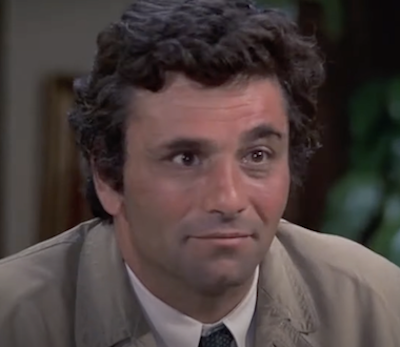
I adore that Columbo is experiencing a renaissance with younger audiences. Gabrielle Sanchez attributes it to youth’s “clamor for more murder mysteries that skewer the rich.” Not hard to believe given the dominance of The White Lotus and Succession.
Columbo’s viewership had already been climbing steadily during quarantine, thanks to its soothing appeal. Then Rian Johnson embraced his own Columbo fandom with the Natasha-Lyonne helmed tribute series, Poker Face, this year, guaranteeing that his many young Knives Out fans would follow his wake back to the short man in the long raincoat the rest of us have been loving for decades. (I knew anyone who created Brick would be a classics fan.)
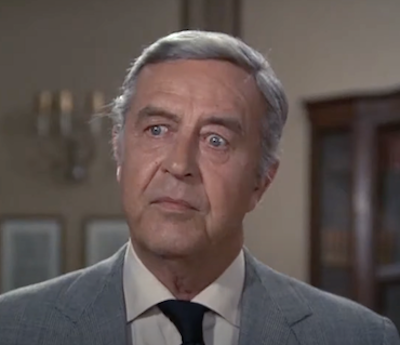
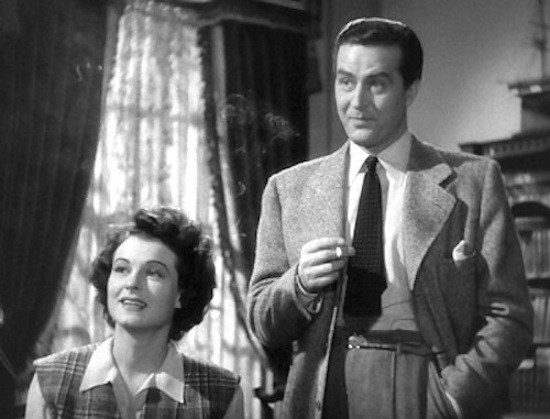
All of this fervor in turn brings new audiences to the classic movie stars we bloggers love, from Janet Leigh to Faye Dunaway to Myrna Loy to Celeste Holm. Even Don frickin Ameche (I’m a big fan of 1939’s Midnight). And of course, this fervor brings us to the suave, compelling Ray Milland, who appeared in two Columbo episodes—both early in the show’s run, when it was at its best.
I’ve often been curious about Milland. “The poor man’s Cary Grant” I read once in reference to him (though it might have been Melvyn Douglas). The dig was especially unfair since Milland was sometimes preferred to Grant: in the casting of Bringing Up Baby, for example. He was chosen over Grant for Dial M for Murder, due to salary or villain-casting worries. But the dig is fair in one sense: Grant was an icon everyone knows still today, and Milland?
“Who is that?” said my mother (echoing every other person I asked).
And yet, even those who don’t know Milland will catch a whiff of Grant. Close your eyes when watching a Ray Milland film, and for a minute, you’ll mistake the Welsh actor’s Mid-Atlantic accent for my favorite Bristol-born actor’s. Watch, for a moment, Milland move, and his easy grace and debonair expressions will trick your eyes too—as will his sharp wit and self-amusement.
And his slim build, height, dark hair, and air of confidence and wealth will throw you. As a Matinee and Mustache tumblr poster brilliantly put it, “Ray Milland looks like if Cary Grant and Jimmy Stewart had a son together after the Philadelphia Story.”
No wonder when The Awful Truth was remade as a musical in 1953, Milland was chosen to play Grant’s role.
But the Oscar-winning star of The Lost Weekend deserves to be remembered for more than just a Grant resemblance. I’ve never thought he ought to be appreciated as much for the good, but miserable-to-watch film that won him his greatest honor as for the comedies and dramas to which he leant such a light comic touch or thrilling suspense. I loved him in The Major and the Minor (1942) with Ginger Rogers, despite the issues with that subject matter. I loved him in The Uninvited, where he’s a charming, funny companion to sister Pamela (Ruth Hussey), grounding a gothic tale that otherwise would have gone too far off the rails.
And of course, I love him as the coldblooded plotter in Dial M for Murder. In fact, that film is one of my least favorite Hitchcocks but for his performance. The superiority and cool assurance he displays in that story make him an especially riveting villain. I particularly admire his character’s appraisal of the hitman’s situation, and how coolly he explains to the poor man that he simply has no choice but to kill his wife.
So it fits then, that in his Columbo appearances, Milland tries his hand at two different kinds of roles: in the second episode of season 1, he plays the beloved husband of the victim, displaying the charm and intelligence that made him such a draw to women in his movies.
And in the second episode of season 2, “The Greenhouse Jungle,” he’s a version of his scheming Dial M for Murder villain, killing his nephew after an audacious kidnapping plot.
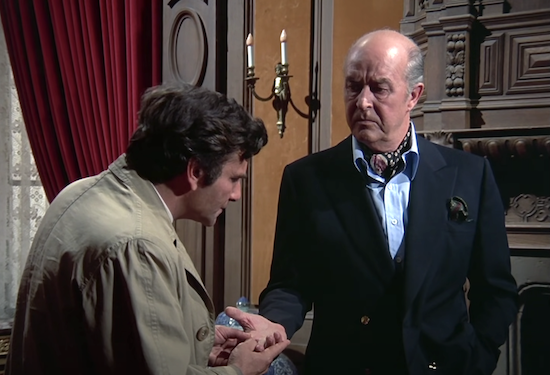
These episodes are such fun to watch. The first, “Death Lends a Hand,” features Robert Culp as the blackmailing private detective who accidentally kills the cheating wife of an influential newspaper owner, Arthur Kennicutt (Milland), after she refuses to give into his schemes. Columbo is a DELIGHT in this episode, playing his usual, I’m-harmless game in some of my favorite scenes. In an early moment, he not only walks into a closet instead of out a front door, but pretends to be a big believer in palmistry with a straight face. Wonderful. We get hints of Columbo’s rapscallion past. And throughout, Milland plays the grieving widower with a dignity that makes us feel for his loss. His growing appreciation for Columbo is subtly shown. The quick, almost impressionistic shots of the killing and cleanup are cleverly done. And Culp is at his irascible best.
“The Greenhouse Jungle” is a bit lengthy for me, with too many shots of cars driving, but the plot is fun to watch and the humor intense throughout thanks to an ambitious young police officer who thinks he’s outsmarting Columbo. In a wonderful scene, the young officer shows off expensive tech equipment he’s bought himself, and our favorite lieutenant quips that he must be a bachelor. I also enjoyed Columbo’s hilarious ploy of disarming Milland, an orchid aficionado, by asking that he repair his wife’s 90-percent-dead African violet. Milland has a blast playing a supercilious, judgmental, superior snob who thinks he’s come up with a genius plot. He is not as clever as the Dial M for Murder schemer, but thinks he is. Milland approaches, but doesn’t quite veer into, hamminess in the role, which makes him riveting. But my favorite aspect of both episodes is–not shockingly–Columbo’s insight and empathy.
In “Death Lends a Hand,” he shows such understanding for the man who had an affair with Kennicutt’s wife. He is surprisingly blunt with him, admitting his suspicions about the relationship right away, but also assuring him he’s not a suspect (and this time, he means it). The golf pro seems like such a nice guy, and it warms us to see Columbo treat him with so much understanding. The lieutenant is also adorably kind to the villain’s minion, right after fooling him to expose his boss.
In “The Greenhouse Jungle,” the wife of the victim is in an open relationship–which makes Milland’s character despise her and his nephew. But Columbo says he admires her for her honesty about who she is, and we believe him. It’s this lack of judgment and lack of the kind of he-man attitude toward women so familiar in other cop shows (then and now) that make Columbo always feel so modern and fresh and lovable.
And how lovely it is to see Ray Milland, an underrated actor in this day (if not in his), playing on a show that is all about the dangers of underestimating others.
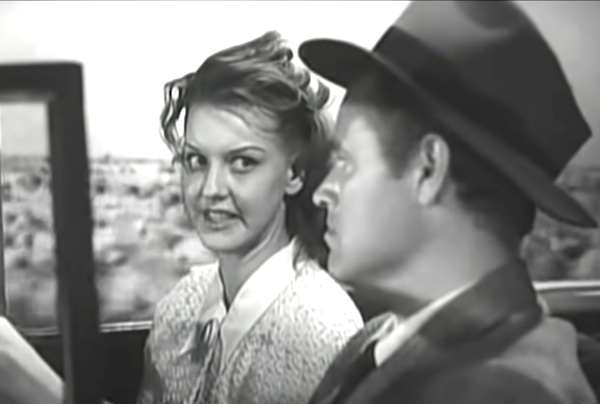
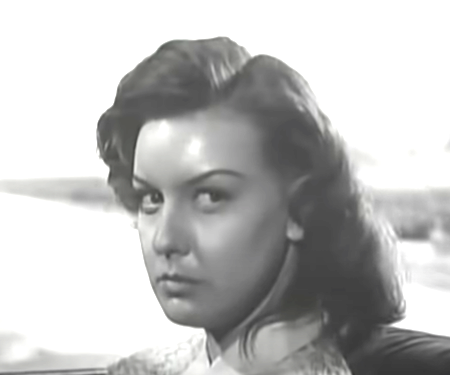
The common line on Detour (1945) is that it features one of the nastiest of femme fatales—a fascinating, feral creature. It’s true that Ann Savage as Vera is a powerhouse, and I can’t stop watching her. But is she really all that bad?
**Some plot reveals.***
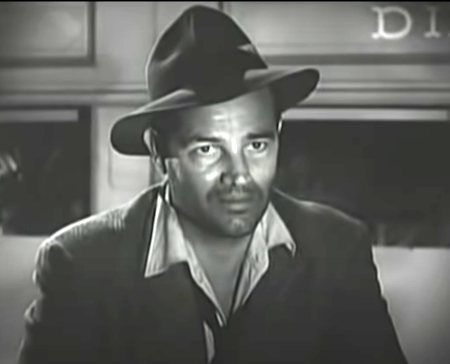
So many reviewers skim over the incident that made Vera so raw in the first place. Yet to me, her reaction to that incident is what makes this B film worth watching. Can anyone honestly say they root for the sad-sack, self-pitying musician, Al Roberts (Tom Neal)?
What a dud this hero is. The movie is nothing until Vera enters the screen, and it’s nothing after she’s gone.
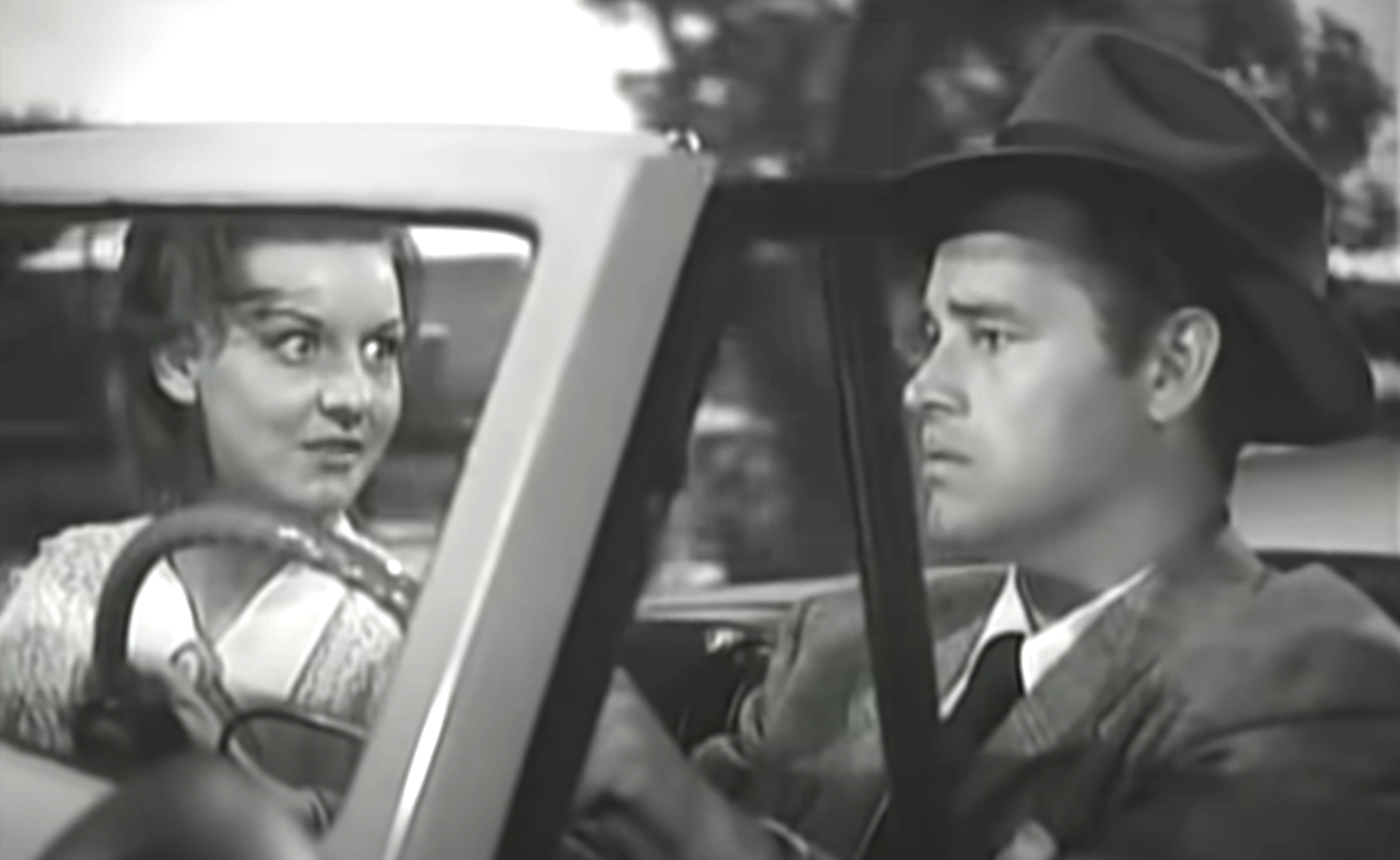
As far as her dangerousness, let’s review, shall we? Vera is a hitchhiker picked up by Charles Haskell Jr (Edmund MacDonald). We learn about her secondhand from Charles, who is complaining to his current passenger, Al, about the deep scratches on his hand. Charles says an “animal” inflicted the wounds on his body. “You know there ought to be a law against dames with claws,” he complains.
The reason for their disagreement is soon clear: “Give a lift to a tomato, you expect her to be nice, don’t you?….After all, what kind of dames thumb rides, Sunday school teachers?”
In other words, he thought she should be forced into sex with him because she must be that kind of girl. This dude felt entitled to rape her because she’s a hitchhiker. He assumes all men will agree with him (as Al does) that she’s nasty because she hurt him defending herself.
What’s intriguing—and unusual—about Detour for its time is that it gives voice to this assaulted woman. As soon as we meet Vera, we know she’s suffering from PTSD and doesn’t know how to manage her pain. Even Al, hardly an empath, says, “Man, she looked as if she’d just been thrown off the crummiest freight train in the world.”
Her angry words soon reveal that Charles is hardly the first man who has felt entitled to mistreat her: “I’ve been around,” she tells Al, looking at him intently, “and I know a wrong guy when I see one.”
That she lashes out at Al might be because of what she thinks he’s done—but it’s not the only reason.
Now Al is not the smartest dude, as Vera quickly realizes: “…You don’t have any brains.” He picks up a stranger right after he accidentally killed Charles and exchanged identities with him. If he were a smooth-talking liar, you could see him getting away with this move. If he were quick, you could see it too. But Al is not smooth. He is not quick. He is not smart. And he lies with all the skill of a toddler. He’s also unlucky because whom should he invite for a ride, but the only one who knows his identity is false? While many of his grievances are self imposed, it’s hard to argue with him that when it comes to encounters like his with Vera, fate was putting “out a foot to trip you.”
Vera’s instantly brutal to Al, whom she thinks killed her attacker. But she feels kinship with him too. She’s aiming for connection, an us-against-the-rich plan. She’s Bonnie and this idiot won’t be her Clyde. It pisses her off.
She wants him to recognize that they’re both presumed bad, that they don’t have a chance, so why not go for a con? Why not enjoy the advantages they have before everything goes to hell, as it certainly will, for people the deck is stacked against, like themselves? And when he won’t give in, she tries blackmail.
Her plan is not nice. She’s not nice. But I don’t find her nasty—even if some of her actions (and plans) are cruel. I find her tragic. She believes Charles’s wealth is part of what made him feel entitled to rape a poor girl, like her. She’s met a lot of men who act that way. Unfortunately, she didn’t find a man who could empathize with her suffering, or even enjoy a drink with her. She looked for something approximating an ally, and all she got was Al.
Oh Al. What a worthless character. He is a homme fatale BY ACCIDENT. He falls to pieces when a woman yells at him. He breaks into hives when he tries to sell a stolen car. Some theorize that he’s an unreliable narrator, deluding himself that he didn’t kill. Personally, I think he’s just deluded himself that his girlfriend wants him back. I don’t find Al’s psychology complex enough for any more sophisticated delusions.
But Vera? We lose her far too soon. If this film were the revenge fantasy this character deserves, she’d be living it up in Charles’s family mansion, smiling archly at the family as they bemoaned the loss of their heir.
“Oh yes,” she’d say, holding up champagne and affecting a snooty tone, “Wasn’t it a shame for Charles, all those women who did him wrong?”
This post is part of the Movies are Murder! blogathon hosted by the Classic Movie Blog Association (CMBA). Go check out all of thegreat entries.
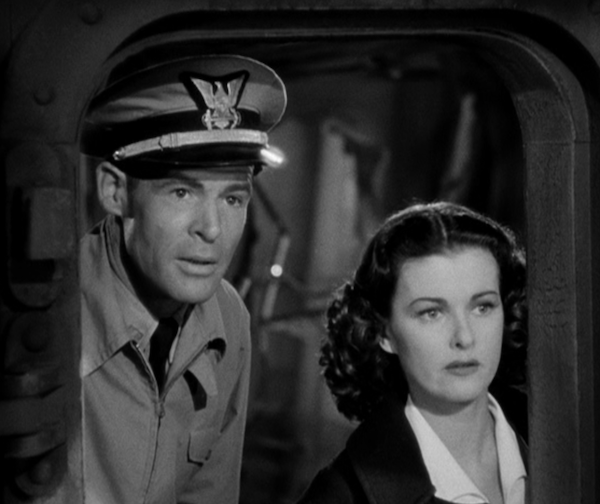
Yes, this movie is a mess: confusing dialogue, incomprehensible character development, choppy plot development, and some truly unfortunate music choices. But there are three good reasons to still watch Jean Renoir’s curious noir, my choice for the Classic Movie Blog Association Fun in the Sun! blogathon
Robert Ryan’s performance as Scott. Can any man in noir perform intensity as well as Robert Ryan? I never feel any attraction or liking for Ryan’s characters in any film, but he certainly gets under my skin. Who better to play a Coast Guardsman with PTSD than Ryan? Scott is also impulsive, erratic, and passionate—and fully realized thanks to Ryan.
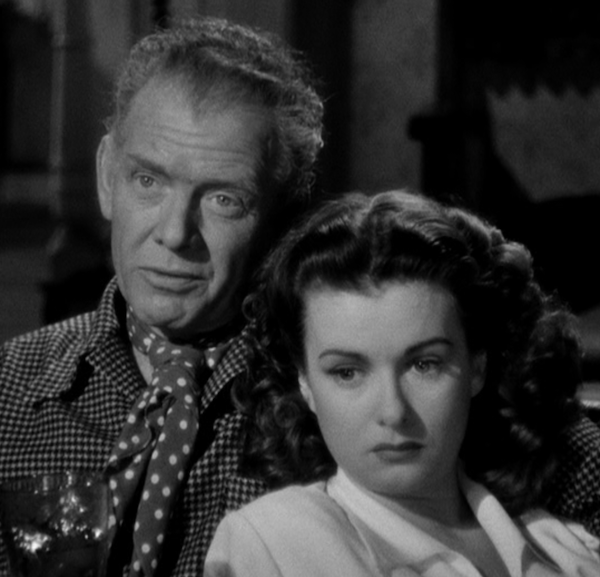
The complexity–and unpredictability–of the “love” triangle. Scott falls for Peggy (Joan Bennett), a woman collecting firewood next to an old shipwreck, because she’s haunted, like he is. It doesn’t hurt that Peggy looks like Joan Bennett. Unfortunately for Scott, Peggy is married to an artist, Tod (Charles Bickford), who is, if possible, even more intense than Scott. We learn soon that Peggy accidentally blinded Tod in a drunken squabble. Her husband is so awful–abusive and violent and creepy–that we understand her fling with Scott and desire to escape with him. But things aren’t quite what they seem. There is something still between Peggy and Tod, mysterious as that connection might be to viewers. It’s not exactly love; it’s not exactly hate. It may just be toxicity–but there’s something there all the same. How will it all turn out? The film keeps us guessing.
Jean Renoir. It’s odd to watch a film by such a famed director that is such an odd misfire. The story is that an advance viewing was a disaster for Renoir, and he was forced to make cuts and edits that didn’t serve the story. While that butchering IS clear, his original goal isn’t. But that’s what makes the film so intriguing. What did he want to say about these three tortured people, especially the original couple? What are we to make of how it starts, and how it ends? Why did he feel traditional noir tropes wouldn’t serve him, and yet set out to write (with Frank Davis) a noir anyway? And why choose this story to adapt? It’s hard to say, but the guesswork will keep you watching.
This review is part of the blogathon held by the Classic Movie Blog association, Fun in the Sun! Check out the excellent entries there, which are also mainly much happier viewings than this grim tale!
I grew up resenting a lot of the rom-com fare on television and film. Always, it felt, the woman had to change to find love. Sandy in Grease was just the start: Learn to strut. Show that cleavage. Pull your hair out of the bun! Relax! Be feminine! Learn to bake or something.
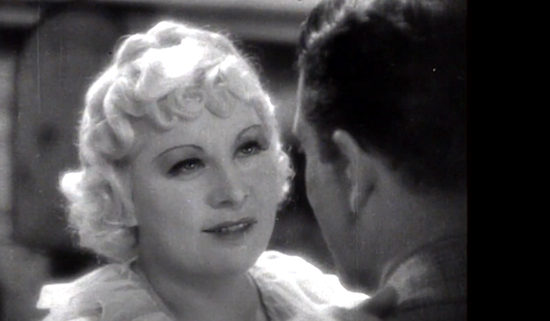
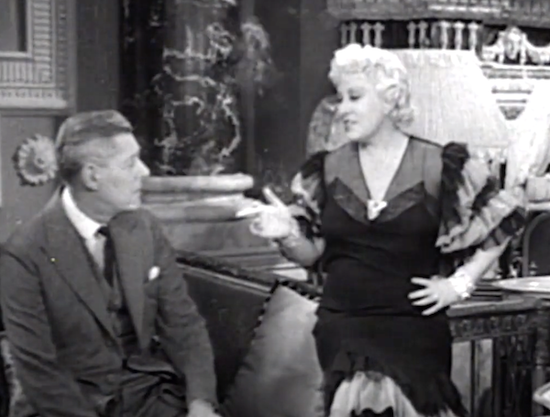
Maybe that’s why I love Mae West so much: In her films, she’s the only one who never has to change. Anyone who doesn’t get her? They better start, if they want Mae’s company. (And they ALWAYS want Mae’s company.)
Mae’s unrepentant, very human, hilarious heroines are perfect, just as they are. Cleo from Goin’ to Town (1935) is just one example.
Cleo decides she wants a particular upper-crust guy. After her (literal) lassoing of him doesn’t win him, she decides to change herself over into a classy lady. Which pretty much means she convinces everyone she already is one.
**Some spoilers**
Oh sure, Cleo picks up some new hobbies: horse betting, husband collecting, and opera performances. But Cleo is Cleo. When she plots her rise, we all know she’s going to get there.
Favorite Moments
The fashionable ladies visit her after her fashionable marriage. Trying to insult her, they press her about her lineage:
Socialite: “Speaking of relatives, Mrs. Colton, have your ancestors ever been traced?”
Cleo: “Well, yes, but they were too smart, they couldn’t catch ’em.”
She says this, mind you, while intent on cracking nuts.
And, of course, who can forget the scene when Cleo plays Delilah? (Her description of Delilah is “one lady barber who made good.”)
While she sings in a high register (therefore, I assume, proving she has the pedigree to pull off opera), she does her va-voom hip shimmies between notes, proving that she’ll always be a dance hall girl.
And in a Mae West movie? There’s nothing better to be.
I’ve written before about how Mae can always pull me out of a bad mood. That’s why I chose to re-watch one of her films for the Classic Movie Blog Association’s fall blogathon, Laughter Is the Best Medicine. Don’t miss the other entries from my talented peers!
I read Of Human Bondage as a preteen/teen and was moved by the story of a would-be artist who eventually discovered that a simpler life of helping others was his route to happiness. As a wannabe artist myself, Philip’s journey was meaningful, even enlightening. His time practicing medicine for a poor community won the respect of his patients and his gruff superior—even crushed the snootiness that had marred the rest of his life. While Philip’s extreme sensitivity (related to his club foot) was what drew me as an angsty young girl, it wasn’t his only trait. He was funny, self-aware, compassionate—a fully rounded character.
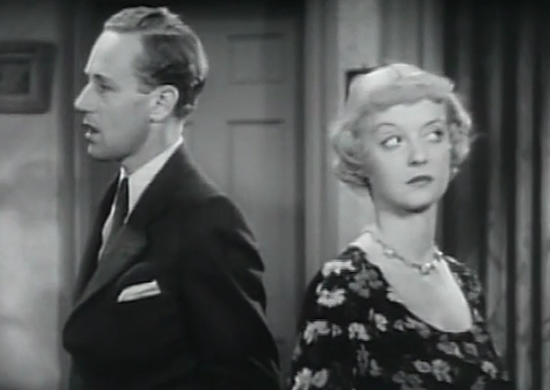
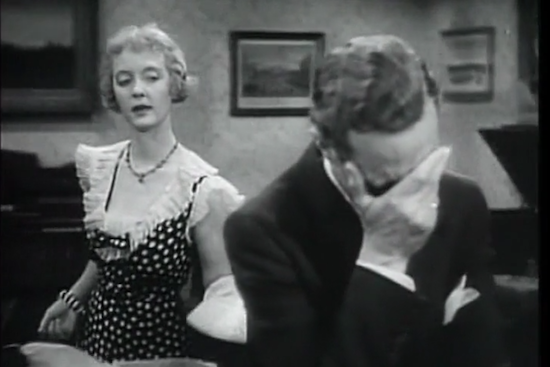
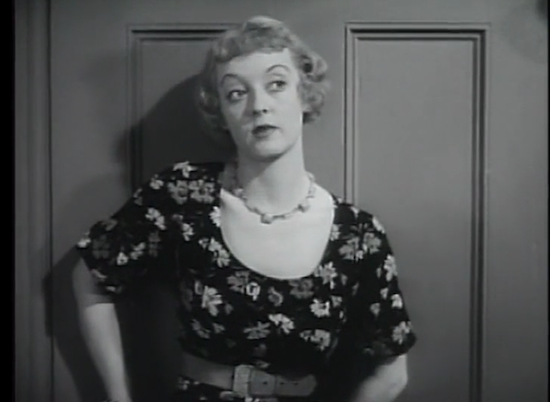
What Hollywood would do to William Somerset Maugham’s reflective character I had a right to fear, especially since the 1934 version was known as Bette Davis’s breakout role. She played the extremely unlikable Mildred, a mean-spirited waitress who detours Philip on his journey. Mildred traps him in his lust for her, but never pretends to like or be faithful to him. She sucks away his time, energy, and money, and he’s too weak to resist.
She is, in short, one of Maugham’s complex female characters: fascinating, headstrong, real—the kind of role actresses are craving now, almost a hundred years later. And with an ambitious young Davis at the helm, sick of her milksop roles and ready for something meaty, what chance did Leslie Howard have for any attention (his starring role notwithstanding)?
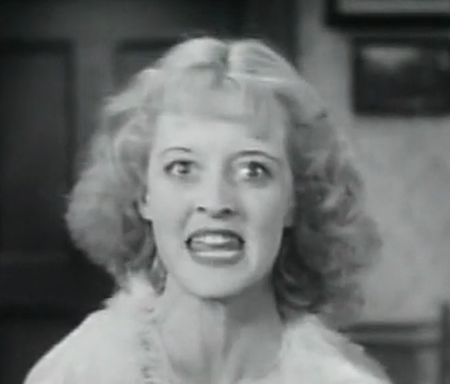
No one can stand up to Davis in full chewing-the-scenery mode.
She doesn’t nail the accent, but Davis does fully personify this selfish woman, particularly her flirtatious nature and prickly pride. She shows how Mildred’s self-interest–her primary trait–can’t stand up to her destructive passions. Except for her trademark burning magnetism, Davis is nearly unrecognizable in the role: she BECOMES Mildred.
She famously only got a write-in nomination that year, but won the Oscar the next, most say in compensation for the MIldred loss. Bette’s (Cockney?) accent is regrettable, but everything else about her characterization is perfect.
I’m not sure if writer Lester Cohen decided the movie would be the Philip-Mildred show, given that part of the book’s high drama, or if director John Cromwell saw what he had in Davis and switched it accordingly. But poor Philip’s spiritual journey is reduced to a few scenes, with conversations with Mildred and his later love Sally (Frances Dee) meant to explain his transformation.
Basically, fans of the book can enjoy the fine sensitivity of Philip on screen, which Howard carries off. But Philip’s growing devotion to his career is off the screen. Somerset Maugham was a genius at empathy, and his semi-autobiographical masterpiece shows how Philip’s extreme sensitivity, such a burden as a child, led to his success and happiness as a humble doctor (just as Maugham’s sensitivity to his stutter may have made him a great writer). That theme is totally lost in the don’t-date-women-like-Mildred messaging of the film.
So as far as capturing the book, this film fails. But the movie does nail William Somerset Maugham’s trend of giving female characters their due. I’ve written before about how frequently actresses in his stories are nominated for (and often win) Oscars once his films are screened—including Annette Bening, who should have won for Being Julia.
Look at Davis: wins her Oscar for Dangerous because of her performance as Mildred, then gets nominated for The Letter, another of Maugham’s most famous stories, just six years later.
If that isn’t an advertisement for the continual reading of William Somerset Maugham’s body of work, I don’t know what is. And that–in my eyes–is what makes for a successful film adaptation.