Cary Grant Won't Eat You

Classic movies for phobics

  • About
  • eBooks
  • Previous Blogathons
Classic movies for phobics

Action & Sports Films

Oscar Noms 2025: Gems & Duds

03/14/2026 by leah@carygrantwonteatyou.com 6 Comments
Photo of Rose Byrne from If I Had Legs I'd Kick You


Hamnet. Can I say a performance like Jessie Buckley’s is good if it’s just one misery scene after another? I don’t know these characters enough to feel invested in them. The pacing is all wrong. I looked at my watch countless times. What were the slow-mo shots of trees and berries for? I didn’t cry. If I hadn’t known these were depictions of real people, I would have rooted for the plague. This is not the sign of a good movie.

Song Song Blue feels a bit like a Lifetime movie despite the great performances (especially Hugh Jackman’s). The timeline is very misleading. But I thought it affecting, which is more than I can say for Hamnet.

One Battle After Another. It’s an action movie. It’s a satire. It’s a comedy. And it all works. Fantastic acting, biting commentary about the current moment (not easy to pull off), an actually original car chase. the star-making turn of Teyana Taylor. It’s a movie I instantly wanted to rewatch despite its length. I don’t always like Paul Thomas Anderson. But he nailed this one.

Sinners. This is a daring movie. It’s inventive and thoughtful and metaphorical and just new. I don’t think it all works, especially the end. I might give the Oscar to Ryan Coogler anyway because this is a deeply creative film, and I believe directors who pull off something less polished but interesting deserve the accolades. The main reason I wouldn’t give this film the Oscar is my biggest surprise: I don’t think Michael B. Jordan is good in it.

This discovery has been a shock for me, someone who has loved him since his stunning performance in The Wire, who adored him even his small roles (Lie to Me). Who watched a superhero movie for him, loved Creed because of him. But here’s the thing: If you’re playing twins, I should be able to tell them apart. And I was so far from being able to do so that I nearly wrote down which person was wearing what so that I’d stop confusing the characters. Consider this: Tatiana Maslany played so many clones in Orphan Black that I couldn’t count them, and when acting as the main four clones, I could tell when one of them was pretending to be another. Jordan is nearly always good, but I found his performance dull here, even if he hadn’t muddled the storyline by not building enough distinctions between the two men. All the other performances — especially those of Wunmi Mosaku and Delroy Lindo — are memorable.

Sentimental Value. I really loved this film. Affecting, understated and simple, with characters so believable to me — especially the relationship between the two sisters — that I instantly felt invested. Stellan Skarsgård is great in it, even better than Sean Penn with his brilliant portrayal of the villain in One Battle After Another. Renate Reinsve is moving and subtle in it, but I liked the performance of Inga Ibsdotter Lilleaas even better. She plays the more grounded sister who is trying to keep the family together. She’s lovely in it.

Marty Supreme. I don’t know how to feel about this film. Timothée Chalamet is mesmerizing in the role, but as a movie, I don’t know. It gets boring in the middle, and I’m not sure what we come to in the end. The very end is terribly cliché. There’s sadly little ping pong. All the character’s hustles flow together and aren’t really hustles at all. The real person the film is based on seems far more interesting than the character drawn here. I enjoyed most of it, but I’m not sure I can call this a good film.

Blue Moon. I enjoyed this little character study. It’s more of a play than a film, but Ethan Hawke — who has never been my favorite star — is quite good in the role. As far as character studies, this is far more interesting than Marty Supreme.

If I Had Legs I’d Kick You. I’m a big fan of this little fever dream of a film, and Rose Byrne’s was the most stunning performance of all of those I saw this year. More nuanced than Buckley’s and Reinsve’s. Better than any of the men’s performances. By turns funny and heartbreaking and deadpan, Byrne’s acting is something to watch. She won’t win. But she should.

So there you have it: my views on the nominees I’ve seen so far. I’d love to hear others’ thoughts!

Share
Posted in: 2020s films, Action & Sports Films, Comedies (film), Drama (film), Oscars, Uncategorized Tagged: Hamnet sucks, Oscar picks, Rose Byrne deserves the Oscar

Challengers (2024) Is a Bad Movie

01/23/2025 by leah@carygrantwonteatyou.com 2 Comments
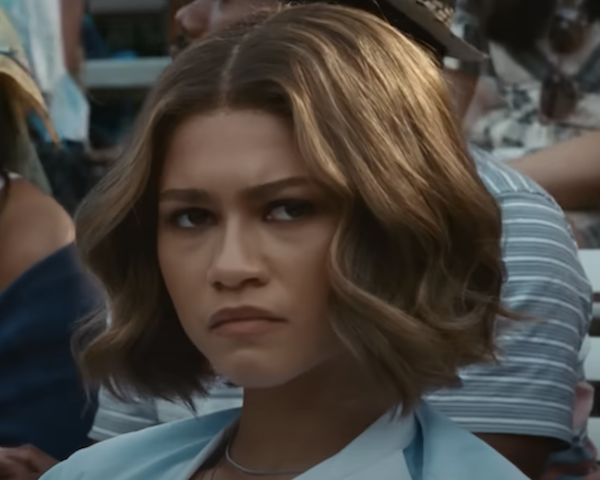
Zendaya in Challengers (2024)

Sometimes you see an Oscars list, and you’re happy to see not what IS on it, but what isn’t. Some idealistic prognosticators theorized that this buzzy little tennis film called Challengers (2024) would get a bid. After all, its music had won a Golden Globe.

The only thing more annoying than the film, I can safely say, is that music.

I watched the movie out of lethargy. Anora (2024) had just completed, and Challengers started playing. I watched for a bit, idly thinking, “This has to get more interesting.”

Forty-five minutes in, I thought, “No, it really doesn’t” and turned it off.

I turned the movie on again a week later, committed to discovering what others saw in it, and can now say I liked it–the last five minutes, that is. I yawned through every minute of the rest.

So here’s what I saw:

There are some scenes of tennis, in which I had no stake.

There were some characters, so thinly developed I felt nothing for them–not even dislike. They reminded me of the fly that got into my home the other day after surviving the cold. It buzzed here. It buzzed there. No one could say why. I did watch it. I watched Zendaya too. She’s pretty. I liked her clothes. She flitted here; she flitted there. She frowned a lot, sometimes in sunglasses.

There are two other characters. There’s some implication they all want to have sex. The preview suggests that, as does the brief scene it captures. Actually, they don’t. They don’t seem to like anything, including sex. A sandwich is eaten with more relish than they gaze at each other. The sandwich was my second favorite part.

The tennis was at least more active than the characters’ faces. Right when I would wonder, “What is the point of this?” some loud, abrupt, terrible music would come in, but only after a very awkward pause, kind of like an angry teenager turning on speakers full blast to drown out parents, but a teenager unaccustomed to how speakers work. Then the music would go away for no reason, and then come back. Much like my fly. EDM is bad enough at any time, but I’ve never experienced a less artful use of music in any film, at any time. Apparently, this is what wins an original score award at the Golden Globes these days.

And besides the last five minutes, which I did enjoy?

I preferred my fly.

Share
Posted in: 2020s films, Action & Sports Films, Anti-Romance films, Drama (film), Oscars, Romance (films) Tagged: bad films, Challengers, Overrated films, Razzie potential, tennis films, Zendaya

Bergman’s Weird Wife in Stromboli

08/28/2023 by leah@carygrantwonteatyou.com 14 Comments


I’ve always been curious about the film that united director Roberto Rossellini and actress Ingrid Bergman in their illicit romance. How red-hot would an affair have to be to lead to a public censure in the US Senate and a six-year ostracism from Hollywood?

I was prepared for something akin to Mr. and Mrs. Smith (2005), where the chemistry of actors (and new lovers) Angelina Jolie and Brad Pitt inflamed the screen.

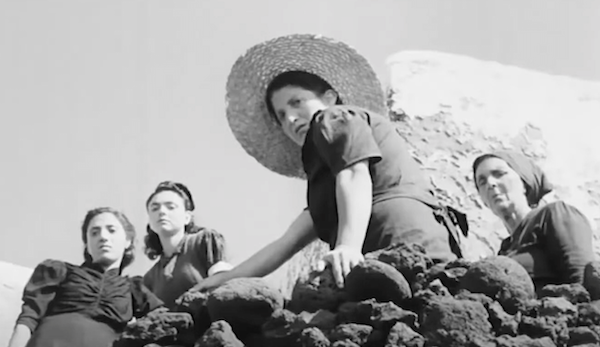
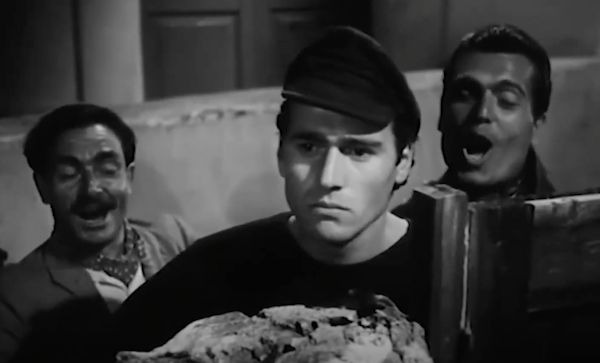
Of course, I neglected to consider a few things before viewing: 1) the absence of the director as an actor in the film, 2) the film’s very un-Hollywood use of everyday people as actors–in this case, fishermen in Stromboli, a small island off of Sicily, 3) the plot.

The Keystone Cops would have been just as likely to show up as a red-hot romance.

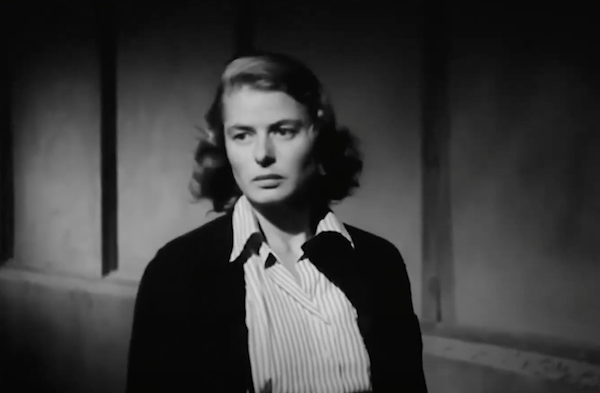
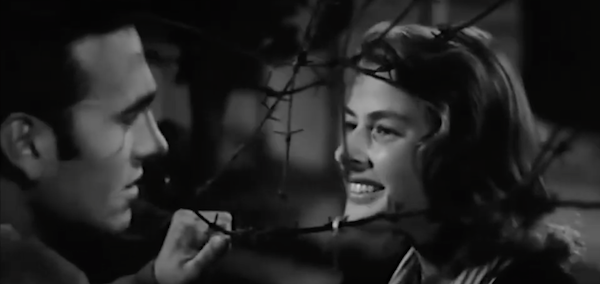
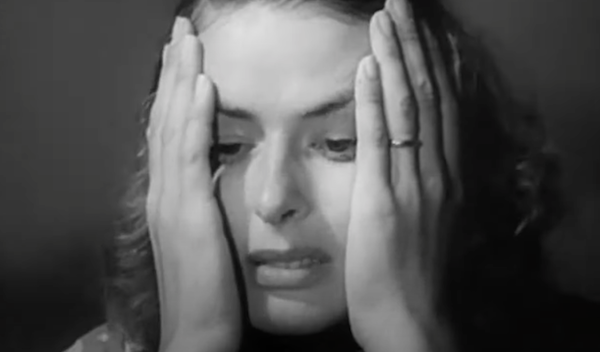
But in one way, I was still on the right track about Stromboli (1950): you can’t keep your eyes off of Bergman, and she IS unbelievably sexy in the film.


The nature of that sexiness is curious because this is a very, very odd movie. I found myself siding with early American critics, who called it dull. I agreed; it was dull. But it was also haunting, with a grim take on marriage quite unusual for its time.

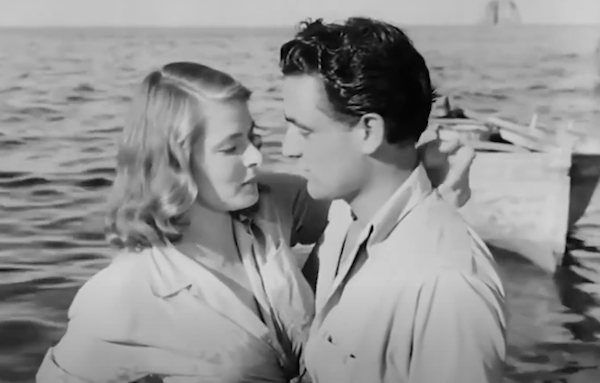
Bergman’s character, Karen, is fascinating because she is one of the least sympathetic, most selfish brides I’ve ever witnessed onscreen. She marries a poor but handsome ex-POW, Antonio (Mario Vitale), to get out of a displaced persons camp.


When he brings her home to his fishing village, she doesn’t even try to be civil–to anyone. She attacks her new groom for taking her there. She tells him this place is terrible, that she’s too refined for it and can’t stay. Kind of harsh right after his release from a camp, huh?

In fairness, the village does suck, at least for Karen. There’s an active volcano that can erupt at any moment. Their house is a shack. There’s little to do or see. The townspeople are super judgy and foreigner-averse, which doesn’t make Karen, a Lithuanian, feel very welcome.


But it’s hard not to pity (at first) the poor husband who just takes Karen’s verbal abuse and hostile glances–especially when he quietly accepts an underpaid fishing job to buy her a better life.


She starts filling the home with the worst decor I’ve ever seen–and hides away her husband’s family photos and religious icons, which she despises. Apparently, this process gives her some pleasure. She’s appalled when he doesn’t love what’s she done, including the weird flowers she’s painted on the walls, kindergartener style. (I told you this film was bizarre, right?) She decides to use a sewing machine in the home of an apparent madam, despite warnings. Then she’s mad at others for thinking she’s loose.

But just when I’m ready to care only about him, her husband proves he’s brutish, like she’s claimed: he beats her for making him look like a cuckold. Now, we audience members don’t have anyone to like in the film.

As for Karen, it’s not long after the house decorating that she begins to plot her escape. Her method is to throw herself at every man who might get her out of there, including–wait for it–the village priest. And the seduction act Bergman pulls is something to witness. I’m not sure how anyone resists it, transparent as her motives are, because this is Ingrid Bergman throwing herself at you, men!! And she has moves. (Narratively, it would have made sense to choose a less attractive actress, but I fully enjoyed full-seduction Bergman. It’s easy to understand how Rossellini fell for her while filming.)

But it’s not just her sensuality that has the audience enthralled by Karen. Her breathless confidence in herself in the face of hostility and discomfort and abuse and foreignness is something to witness. You can’t help but root for her even as you question her decisions. Bergman displays confidence not just through her voice and expressions, but through a kind of ease with her body typical of athletes and dancers. In another world and in another time, you think, what couldn’t this single-minded woman do!? No wonder she’s so angry about her lot!

Unfortunately, Karen soon proves that her poor judgment is not limited to her words and decor. On a lark, she stops by her husband’s job while he’s fishing for tuna with his crew in a ploy to earn his affection. WHO DOES THIS???

This choice is one of the plot devices that seems to be an excuse for Rossellini to include a beautiful neo-realistic scene. It’s easy to understand Rossellini’s reputation as a director when it comes to cinematography. It was fascinating to watch the brutal and dangerous process of catching these huge, gorgeous fish and killing them as the refined wife looks on, horrified.

Later gorgeous scenes include when the volcano erupts, and the town flees for the sea. The escape is fascinating and frightening to watch, and beautifully rendered. (In typical fashion, Karen is only concerned about her own rescue when she sees motorboats.)

**Spoilers coming**

Stromboli is most famous for its ending. Fresh from volcano PTSD, Karen takes off, despite being pregnant. She heads over the still-active volcano alone to get to the side of the island where she plans her escape. She dumps her suitcase in exhaustion after breathing in copious amounts of smoke. She passes out after admitting defeat.


But when she wakes, she calls aloud to God, asking for strength, proclaiming that her experience has been too awful to endure and that she must depart. Whether she really means awful for her or for her unborn child (or for both) is unclear despite her words. Hollywood later added a voiceover suggesting she returned to her husband, a disturbing “happily ever after,” given his violence and decision to forbid her exit by nailing the front door shut while she was inside.

But I don’t buy Hollywood’s interpretation. Karen seems more intent on the birds above her, on the flight still possible with God’s help. The end is ambiguous, it’s true–I can’t be sure I’m right. What ISN’T ambiguous is how miserable Rossellini makes marriage look–which is interesting as he’s breaking up Bergman’s and his own.

Regardless of what anyone makes of the film, Bergman’s performance is unforgettable, and not to be missed by her fans. The extended final scene of her climb and pleas is breathtaking: her resignation, her desperation, her anguish, her hope. This woman deserved all of her three Oscars and then some, and it’s a pleasure to watch her commanding the screen in this stunning finish. If nothing else, watch that.

This post is part of The Wonderful World of Cinema‘s 6th Wonderful Ingrid Bergman Blogathon. Check out the other celebrations of Bergman here!

Share
Posted in: 1950s films, Action & Sports Films, Anti-Romance films, Blogathons, Drama (film), Feminism Tagged: Ingrid Bergman, Ingrid Bergman's best performances, neo-realism, Roberto Rossellini, Stromboli (1950)

The (Strange, Silly) Guest (2014)

09/17/2022 by leah@carygrantwonteatyou.com 4 Comments

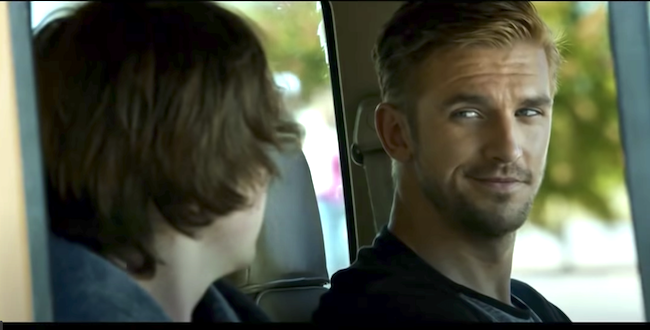
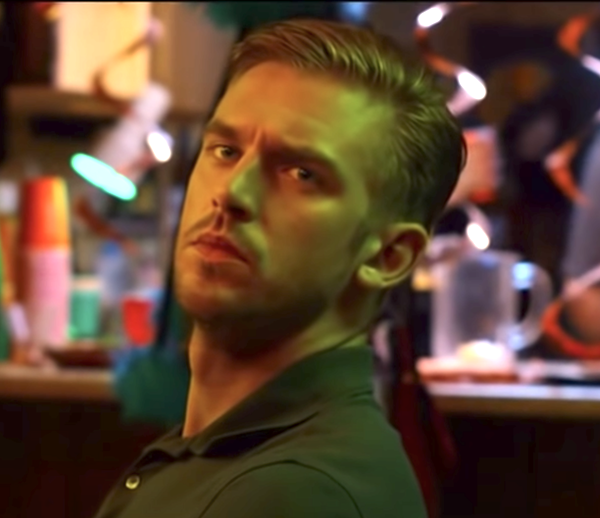
You have to hand it to Dan Stevens. Two years after his dramatic Downton Abbey exit, he starred in the camp treasure, The Guest, putting behind him one type of ponderous silliness for a decidedly lighter-weight version.

The Guest bears all the hallmarks of Lifetime fare in the first half: a mysterious, ridiculously attractive stranger. Hints that his motives—and past—might not be as innocent as his southern charm and “ma’am” courtesy would suggest.

A young woman who suspects him despite her parents’ trust (and her dad’s overeagerness to have a drinking buddy). And a young brother too pleased by the stranger’s help with his bullying problem to fear the degree of the man’s violence. Had that been all that The Guest was, I would have been happy enough.

But oh no, The Guest is much more. Because halfway through, it takes an abrupt 90 degree turn into campish horror/slapstick, without bothering to clarify basic character motives or anything else. In so doing, it gave me the best burst of unquenchable laughter I’ve experienced in some time.

Dan Stevens just OWNS this film, reveling in his goofy role as only an actor with a deep-seated love for black humor could do. His tiniest gesture is hilarious. The film even pays tribute to a famous scene in one of my favorite noirs from the 40s—which I’ll link to, but won’t reveal. Because to give anything away in the second half would be a mistake. Instead, I’ll just give you the basic premise:

David (Stevens) visits the parents of his dead army buddy. They ask him to stay. Because of course they do. The mother (Sheila Kelley) plays Debbie Hunt in Singles, and she has always expected the best.

Soon, David’s actions become suspicious, and then the plot turns downright bonkers. Because of course it does. The actor playing the father, Leland Jones Orser, starred in the (deeply dark) black comedy Very Bad Things, which should have foretold it for me.

The viewing pleasure isn’t hurt by just how sexy Dan Stevens is in the role. He has clearly spent a lot of gym time in preparation, and his lean, beautiful body is a nice complement to those riveting blue eyes. One can hardly blame the daughter/heroine (Maika Monroe) for waiting until his behavior goes truly off the rails to seek help.

And one can hardly blame you for enjoying every minute of this eye-candy-filled, ridiculous romp of a film.

Share
Posted in: 1990-current films, Action & Sports Films, Anti-Romance films, Comedies (film), Film Noir/Crime/Thriller & Mystery, Humor Tagged: black comedy, camp, Dan Stevens films, Downton star, The Guest

They Live: Best Conspiracy Film?

03/31/2021 by leah@carygrantwonteatyou.com Leave a Comment

Join my friends’ and my new podcast! Tomorrow we feature the gum-chewing, sunglass-wearing Roddy Piper as he breaks through all the conventions of conspiracy films we’ve discussed so far. Don’t miss it.

Share
Posted in: 1980s films, Action & Sports Films, Anti-Romance films, Comedies (film), Drama (film), Humor, Random Tagged: best conspiracy films, John Carpenter, Nobody Knows Anything, podcast, Roddy Piper, They Live

Crushing on The Cutting Edge’s Doug

06/25/2017 by leah@carygrantwonteatyou.com 10 Comments


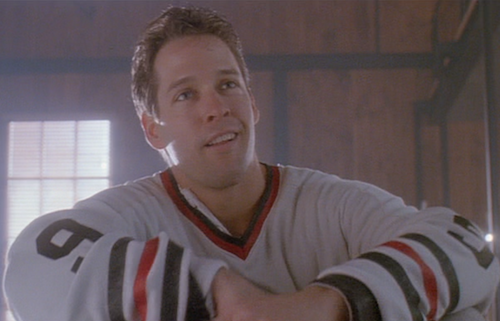
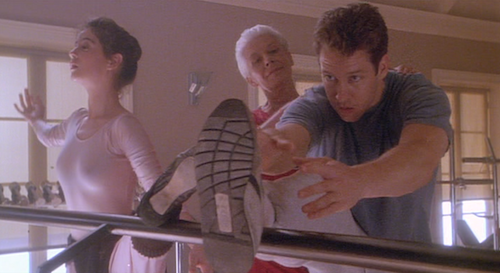
There’s a certain generation of women who still laugh when they hear “toe pick.”  Then they begin dreaming about a certain swoon-worthy character in the memorable scene when that line was first employed, and wonder why aren’t romantic leads like that now? Why can’t they all be like D.B. Sweeney’s Doug Dorsey: athletic, virile, funny, easygoing, ambitious, and more emotionally open than those traits might suggest?

The Cutting Edge (1992) never received the credit it deserved, but I hear the occasional reference to it in films and TV episodes, echoing the devoted following it obtained then and still now for its engaging sports narrative, its funny tone, and the sizzling chemistry between Sweeney and Moira Kelly.

In the story, Doug’s dreams of hockey stardom have been destroyed by an injury to his eye at the Olympics. Kate Moseley’s (Kelly’s) Olympic dreams have been dashed by a particularly ugly drop by her figure skating partner. The next Olympics is coming up, and no one wants to partner with the notoriously chilly Kate. Meanwhile, Doug has lost his scholarship and any chance at even a minor league hockey career. Then one day, Kate’s coach approaches Doug with some figure skates, and despite his (and her) hilariously expressed doubts, an unlikely professional pairing begins to form. Before long, Doug starts to realize he has feelings for her, and she, in spite of her engagement to another, begins to realize she is attracted to him too.

There are many differences between the two characters: he’s a stereotypical guy in many ways, and she’s a reserved, uptight, very wealthy and very feminine woman.


But you see the attraction too, especially their hyper-competitiveness and dedication. What I love so much about their union is that BOTH of them grow due to the influence of the other. It’s not just the punishment of the type A personality woman we so often see (though Kate is definitely–and deservedly–taken down a peg or two). (Actually, their dynamic is so similar to the one in It Happened One Night that I wrote about it in one of my earliest blog posts.)

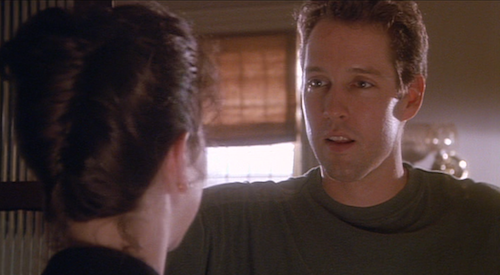
My own love for Doug Dorsey was quite fervent. He was EVERYTHING I wanted in a partner in my late teens: Smart, relaxed, charismatic with an incredibly sexy smile. Confident but open, willing to admit mistakes. Promiscuous when he wasn’t in love, but when he was, not willing to go for Kate if she was still engaged or had too much to drink. Proud but mature enough to leave the pride behind when he had to. Ultimately willing to prioritize her even above his dreams. And, of course, there was his tolerance of her heinous (but enthusiastic) dance skills, which bore a strong resemblance to mine. His ability to throw a paper wad into a trashcan and make it. His skill with the cutting line, and reluctance to read Great Expectations (close to my least favorite book at the time).

My love for Doug Dorsey led me to seek D.B. Sweeney’s other work over the years, and believe me, it hasn’t been easy: Eight Men Out, a Leverage episode. Why his fully embodied, sensual, funny performance didn’t lead to stardom, I don’t know. But although he and I have aged, my opinion of Sweeney’s character hasn’t. What I realize now is that he was also what a teen’s heartthrob character so rarely is: an adult (with, admittedly, some rough edges). That’s why I can still enjoy the film now, when other teen loves have lost their allure. And besides all that? The Cutting Edge is such a fun sports film (another favorite genre of mine), and it’s full of comedy, especially when Doug confesses he’s become a figure skater to his working class, uber-masculine brother (and hometown).

When I heard Font and Frock & Silver Screenings were hosting a Reel Infatuation blogathon celebrating character crushes, I thought of others: obviously Nick of The Thin Man, Cary Grant’s hilarious The Awful Truth husband. But suddenly, D. B. Sweeney popped in my head, reminding me of Doug and the long-ago, but never-dead crush, and I figured some of the rest of you hadn’t had the joy of encountering him yet, and others would love the reminder. Hope if you haven’t seen the film yet, you’ll soon enjoy toe picks as much as I do.


For others’ wonderful posts on their film crushes, click here.

Share
Posted in: 1990-current films, Action & Sports Films, Comedies (film), Romantic Comedies (film), TV & Pop Culture, Uncategorized Tagged: best 90s romcoms, best chemistry romantic comedies, D.B. Sweeney, figure skating movies, Moira Kelly, The Cutting Edge

Why I Was Happy to See So Many Teen Boys at Wonder Woman

06/12/2017 by leah@carygrantwonteatyou.com 6 Comments


When I was a kid, boys fantasized about Carrie Fisher as Princess Leia, half-naked and chained to Jabba the Hutt. While I might flinch at the fact that the slave scene was the peak of adolescent fantasy, I was always happy that my male peers were lusting after a woman who was tough, a warrior, a hero in her own right, someone who ultimately triumphed over her attacker.


It’s been disappointing in the years since, to not only have so few such women in film to idolize myself, but that the objects of male fantasy have so rarely been strong: too many female heroines, even in DC Comics and Marvel franchises, have assisted rather than truly partnered with or exceeded male peers. And for every strong woman, there have been so many Mary Janes and Lois Lanes waiting for heroes to save them, their strengths always inferior to those of their men.

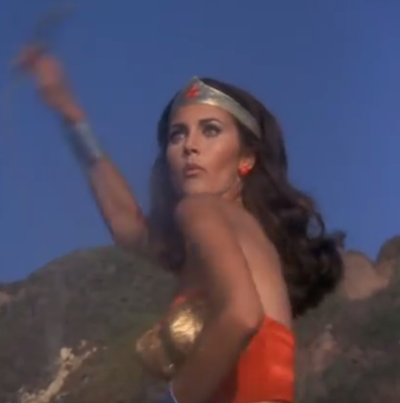
And then there was Wonder Woman. How I admired Lynda Carter as a kid: her stunning beauty, her awesome metal accessories, her spin, that cheesy music that accompanied her. But most of all, I loved that Wonder Woman stood on her own, was stronger than men, and that her power never subtracted from her sensuality. In fact, her superhuman skills ADDED to her sexiness. She didn’t even seem like much of an athlete till the special effects kicked in. (That running style, my friends, for all their similar fashion sense, was not Flo Jo’s.) For the feminine, klutzy girl I was, that was an important message: you can be strong AND girly.


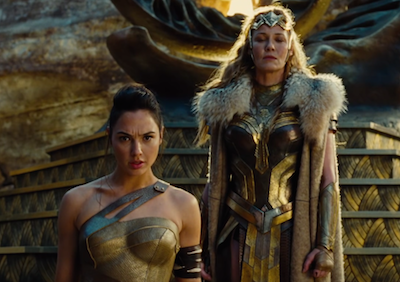
When I read Slate author Christina Cauterucci’s objections to the seductive clothing of new Wonder Woman Gal Gadot, my first reaction was to defend: What about the need for sales, how essential it was for this film to succeed to set the stage for other female leading-franchises? But I think director Patty Jenkins was doing more than bowing to necessity; she was building her own feminist messages: Hey, young men. Strong women are hot. And if they’re stronger than you, charging down the battlefield without you, that’s EVEN HOTTER. Hey, young women, your strengths will make you desirable. Fight to retain and build them.

My friend and I at the movie theater, both born in the 70s, began by enjoying the funny, entertaining, empowering film, and ended it by laughing about the groups of young men we spotted in the rows behind us when the lights went up. “A whole island of hot women?” my friend said. “No wonder they’re here.”

But that’s just it: Gadot’s and her fellow Amazons’ sexiness got male teens through the door.


It’s hard to imagine that our country would be quite where it is today, so backward with women’s rights, if more adolescent boys had fantasized about such powerful women. It’s hard to believe we’d be where we are had more women grown up believing that power and desirability don’t have to compete.

At least we have her our heroine now. Thank you, Patty Jenkins. Keep ’em coming.

Share
Posted in: 1990-current films, Action & Sports Films, Drama (film), Feminism, TV & Pop Culture Tagged: Gal Gadot, Lynda Carter, Princess Leia, sex appeal and feminism, teen boys attending Wonder Woman, teen boys fantasies, Wonder Woman

Airplane!: The Joy of Recognizing Classic Movie References

03/11/2017 by leah@carygrantwonteatyou.com 2 Comments

**Spoilers about George Gipp ahead**

The other day I was watching Airplane! with some friends. For the first time, I caught that the film includes a hilarious spoof of Knute Rockne’s “Win One for the Gipper” speech, that speech leaders of underdogs everywhere like to imitate. Popularized by Knute Rockne-All American (1940), the speech was given by the famous Notre Dame football coach when his team was losing against Army in 1928. In the speech he references his former player, George Gipp, the National Football Hall of Famer who died tragically in his mid-twenties. Pat O’Brien plays Rockne beautifully in the movie, capturing some of the cadence of his words, and using understated sadness where another would have gone for drama. Eight years after his famous player’s death, Rockne discusses Gipp’s last words with his losing team (in real life, and in the film):

“I’m going to tell you something I’ve kept to myself for years,” says Rockne (O’Brien). “None of you ever knew George Gipp (Ronald Reagan). It was long before your time. But you know what a tradition he is at Notre Dame… And the last thing he said to me: ‘Rock,’ he said ‘sometime, when the team is up against it — and the breaks are beating the boys — tell them to go out there with all they got and win just one for the Gipper…’ I don’t know where I’ll be then, Rock,’ he said – ‘but I’ll know about it – and I’ll be happy.'”

Of course, the team wins, and history is made.

Ronald Reagan’s deathbed scene in the film, of course, meant he was associated with the name George Gipp, as different as they were. Gipp, phenomenally talented as a football player, was very modest about his accomplishments. He was an interesting man, too: actually preferred another sport, spent time gambling with out-of-towners who thought South Bend hicks could never beat them (afterward secretly giving his winnings to charity). Always, Gipp displayed an allergy to limelight.

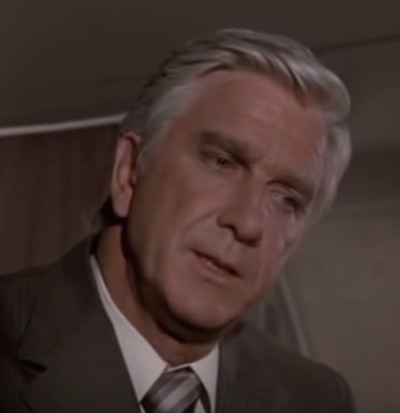
Once I learned Gipp’s true story, I became horrified that Reagan’s presidency had turned Gipp’s legacy into a promotion campaign. Of course, Airplane! (1980) would capitalize on the humor of this discrepancy. The movie came out before Ronald Reagan’s first White House term, but the politician had made two runs for the Republican nomination before getting it in 1980; there are digs on his acting in the film. And then the perfect parody: In a moment when Ted Striker (Robert Hays) is despairing about his poor chances of landing the plane, with death certain for all if he doesn’t, in comes Dr. Rumack-Don’t-Call-Me-Shirley (Leslie Nielsen) to give Striker a hilarious pep talk. Almost word for word, it’s Rockne’s speech. Nielsen even captures the coach’s understated style. To give a football speech in such a moment is very tacky–in even more ways that most viewers might suspect: Rockne died in a plane crash. Screenwriters Jim Abrahams, David Zucker, and Jerry Zucker capture inappropriate uses of Gipp’s name and of his coach’s tribute by using both inappropriately in their own film.

But I wasn’t thinking of any of those details as I watched. What I felt was a thrill, that delightful shock of recognition every classic film fan feels when she sees or hears a reference to an old favorite. And I didn’t think it was possible, but Airplane! is even funnier than I thought. How marvelous.

Share
Posted in: 1940s films, 1980s films, Action & Sports Films, Comedies (film), Drama (film), Humor, TV & Pop Culture Tagged: Airplane!, Film, George Gipp, Knute Rockne, Knute Rockne: All American, Leslie Nielsen, review, Ronald Reagan, Win One for the Gipper

The Good Stuff: What’s to Love about Fights in Film

07/08/2016 by leah@carygrantwonteatyou.com 9 Comments

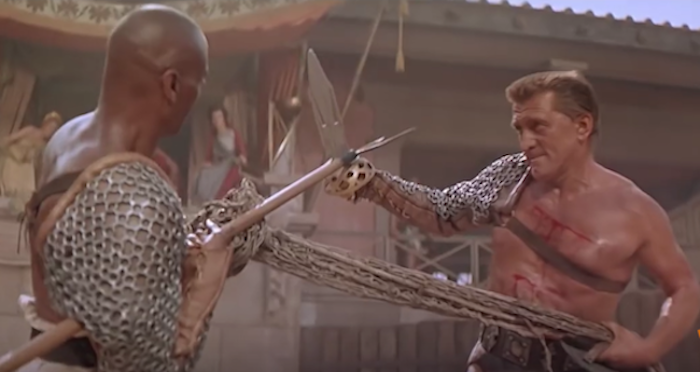
Spartacus-fightscene
Talented poet and screenwriter, martial artist, and classics enthusiast Brian Wilkins agreed to guest post for me as part of The Sword and Sandal blogathon, hosted by Moon in Gemini. Check out his wonderful tribute to fight scenes below.

Sometime in 1998, I sit on the floor in my living room watching John “Kickboxing is the sport of the future” Cusack eject Benny “the Jet” Urquidez into a wall of lockers. He then proceeds to tattoo those locker numbers into Benny’s back several times with his foot. After some athletic grappling, the two fumble at each other’s skinny ties and Cusack jams his pen into Benny’s throat. I am overjoyed: Grosse Pointe Blank is everything a boy could wish for.

“Mom,” I say to the horrified woman behind me folding laundry who thought “light action comedy” would be a great choice for family movie night, “I think I want to do that. “

“I would pray you out of it,” she snaps. Mothers in the south can definitely snap and mention prayer in the same breath.

“What? Why?”

“You tell me you want to be an assassin because of a movie and you think…”

“Not an assassin, Mom! Geez. A fight choreographer.”

This comeback mollifies — but not much: “As long as you finish college.”

***
I finished a lot of college and never became a choreographer for anything beyond amateur productions of Shakespeare, but it’s hard to say who I would be without fight scenes in movies. I fenced because of The Princess Bride. I fell in love with Karate after watching Daniel-san wade through a series of talented black belts who inexplicably led with their faces. I even tried to land a crane kick at a tournament: once. I studied epic poetry in grad school because of 13th Warrior.

So when my friend Leah asked me if I’d like to contribute something for this blogathon, I jumped at the chance to look at the fights in gladiator movies. And not just any fights, but material from before Bruce Lee one inch punched his way into America’s heart and everybody was kung fu fighting. What did fighting look like in classic sword and sandal flicks?

Awful. It looks awful. It looks like America (except for James Cagney) couldn’t take a cardboard cutout prior to 1968. Honestly, watching films like The 300 Spartans must have given comfort to our enemies. I don’t know why the Russians didn’t invade.

And while I think even Alexander the Great couldn’t drink Spartans into being entertaining, it actually provides a solid rubric for what makes a good fight scene. It just doesn’t know that’s what it’s doing. Seriously, folks, I don’t think the director had ever heard the word phalanx. The best fight scene in the movie is when Diane Baker judo flips an overly amorous Greek shepherd.

***
Early in Spartans, Persian King Xerxes (David Farrar) argues with traitorous Spartan king Demaratus (Ivan Triesault) over Spartan valor. When Demaratus defends it, Xerxes suggests a fight to the death between Demaratus and a Persian swordsman. I suppose this is because Demaratus is so tiresome Xerxes would rather have him killed and be lost in Greece than listen to him flap his cheeks anymore about Spartan values. I felt that way. The two champions draw their blades in what seems an interminable fight with bowie knives. Xerxes demands, along with the audience, that they hurry it up. Quickly, death comes for the Persian, and Xerxes concedes, much to his boredom, that Spartans can fight.

Let me check my notes for this scene…oh, I just wrote, “WHAT?” about 15 times.

Two guys in tunics rolling around on dinner tables with plus-size steak knives isn’t an epic scene. There’s nothing to distinguish their fighting styles from each other, no real costuming, nothing resembling martial talent — if a fight scene looks like your kindergartner was filming themselves after raiding your closet for costumes, something has gone awry.

Don’t get me wrong: I’m not advocating for historical accuracy, but just the exotic fantasy of history. I don’t care, nerds, that Russell Crowe stepped into a stirrup in Gladiator, so long as his wolf skin cloak looks really fabulous while he does it.

But just as important to style, there must be stakes for the viewer. Demaratus is a cowardly traitor: why do we care if he dies? Even this dude’s Spartan mother would spit on his corpse rather than shed a tear over not hearing more of his mind numbing dialog. Nameless Persian Thug #1 is no better. If I can’t feel passion or fear or even a soupcon of lust, why am I watching?

The plot must motivate the action as well. We have to learn something about character in this scene and the logic of the movie must give impetus to the conflict. It’s a bit like a song in a musical: the truth that can’t be said must be expressed and it must change the world we’re seeing. The correct ending in this fight scene was to have the Persian kill Demaratus. Instead, we’re now convinced the Spartans are being underestimated by Xerxes and that they’re nearly invincible. I found myself rooting for the Persians, underdogs that they were.

***
Demetrius and the Gladiators (1954) is like all of the strange pseudo-christian elements of Ben Hur wrapped up in one hell of a bogged down film.

This sequel to The Robe continues in that proud tradition, peppering in a few action scenes with Victor Mature to prod the viewer awake. It made the studios a lot of money, but I can only hope that was due to a paucity of action films…what’s that? Seven Samurai came out the same year? Well, screw it, 1950s America just loves misogynistic Christianity. Shame on you, 1950s. Shame.

Still there are elements in the fights in Demetrius that have potential. Take this clip, where Victor Mature’s Demetrius is throwing away his Christian values to avenge his girlfriend who was accidentally killed (but not really, there’s a magic robe that brings people back to life) by knuckle dragging gladiators at a party. Now that those “turn the other cheek” gloves are off, we can get some real fighting! Good thing her (apparent) death paved the way for some real entertainment! Or something like that.

You may have noticed that Mature uses his shield like a kid with a trash can lid storming the kitchen. I put that down to the vices of the choreographer, Jean Heremans, a fencing champ most noted for choreographing Scaramouche (not just a line from Bohemian Rhapsody, folks). His refined modern fencing style makes perfect sense in that 18th century setting, but it fails the style of the sword and sandal motif. Treating fighting as if it is fencing is the real dereliction of this period of choreography. I can only assume it comes from the same instinct that yearned to put a steak dinner into a pill: progress knows best.

Notice also the curious way of holding the sword with the palm down and the sword to the side, almost a foil fencer’s seconde parry. It feels out of place as a guard with short stabbing weapon and will likely get it smacked out of your hand — just in case you have to fight someone with a trident who knows what they’re doing. Despite a nice moment of dual wielding, the style doesn’t offer much excitement or novelty.

However, in terms of stakes and spirit this fight actually picks up the pace a bit. While I would have preferred any other reason for Demetrius to throw away his values and dig into fighting, his existential crisis adds a tangy zip to the clashing shields. This fight will change his destiny as a character, adding a thrill to what we’re watching. Revenge giving permission to the viewer to sanction violence, while also showing a character’s descent after the fact, and redeeming the character with a deus ex machina (almost literally) reeks of cliché, but that doesn’t mean it’s toothless. And when Demetrius actually gets clobbering a guy like Ty Cobb on opening day, we feel relief because the action initiates the structure of the story. And we like it because the choreography matches the moment and the weapons a bit more: freer and more direct.

But if you’re looking for a more nuanced examination of violence, watch Seven Samurai. Actually, if there’s one lesson you should take from this review, it should be “watch Seven Samurai.”

***
For a taste of a film that lets style guide the way, there’s always Jason and the Argonauts (1963). Ray Harryhausen’s special effects are legendary, precisely for their ability to create a world that, despite having a giant bronze statue really need a hair pin, feels real. In fact, unlike much modern CGI, it’s the actors that feel less real than the animations: a testament to the quality of both.

This clip is so iconic it really needs no introduction.

There are a lot of things to love about this scene, but there are certain moments that stand out for me.

  • The war cry the skeletons give just before charging after Jason and his compatriots: it immediately moves the bony little bastards out of the realm of slouching zombie and into something else entirely.
  • The skeletons get into fighting stances and even seem to relish stabbing the heroes. Their stances are better than anyone else on screen: hunched, menacing, preparing to do ill to the enemy. Jason looks like he just discovered swords over breakfast.
  • The skeletons seem to know how to use their shields. One even hooks a shield into the sea.

But most of all, this scene understands the equipment being used. You can’t stab a skeleton risen from the sown teeth of a hydra! Everyone knows that! Except Jason, who tries it at 3:36 in the clip. And that’s the core of why this scene is great: the heroes have to improvise and start using dodges, feints, throws, and even clubbing the skeletons with the shields (although why no one can seem to stab and block simultaneously is beyond me. I guess we’ll have to wait for Troy).

Though we learn little about the spirit of the characters beyond the fact that Jason is quite content to flee and let his friends die, the stakes in this scene feel high. Perhaps it’s just that as humans we must root for those of us still covered in skin. Perhaps it’s that this idea was fished out from the Hieronymous Bosch corner of the unconscious. But either way, Ray Harryhausen was a genius I wouldn’t have wanted to fight in any place with a sandy floor.

***
There’s no mystery in my mind about the best of the sword and sandal genre. It’s Spartacus, hands down. Ignoring the politics, history, and its place in film for a moment, though, it’s a damn fine fight film. It even has a great training montage! Look, a spinning practice dummy with a mace on it! And there, a spinning blade of death machine! Even face painting!

To set up the scene: Spartacus (Kirk Douglas) has been paired with the more experienced gladiator Draba (Woody Strode), to fight to the death for the amusement of visiting nobles, particularly Crassus (Laurence Olivier).

Good movies work as fractals: little gems of the overall message replayed again and again to make one larger, faceted meaning. This fight tells you all you need to know about the movie, and the tragic but worthwhile attempt of compassion and brotherhood to fight back against a rigged system. It teaches you to ask who the enemy really is. This is a fight between Drapa and Crassus, first and foremost. And the mild annoyance with which Olivier kills Strode, with his distaste for the blood spatter rather than the action of murdering a human being, drives the nature of that character home.

But that moment is preceded and earned by some rather decent fighting. Strode was far too athletic to not take advantage of his size and is a perfect pairing with the trident. Douglas is a little too lightly armored, actually. He should have at least a helmet. The lack here is better than just artistic license and wanting to see the actor’s face: it shows even more how dangerous this fight is for Spartacus, making the act of compassion even greater.

Though he does hold his own. He’s always driving forward, trying to cover the distance and his lack of technique with enthusiasm. And while it ends with a rather spectacular boot to the ribs, Spartacus fights with just enough skill to lose well, which helps momentarily suspend our belief that just because the movie is called, “Spartacus”, he’s unlikely to die at the first real fight.

Though you could wonder if the Romans care at all. The audience talks over the two men fighting to the death at first, allowing us to condemn the Romans for being that annoying couple at the movies who explain the plot as the movie progresses. The inclusion of the audience into the scene makes the points of the movie so well, and asks us to question our own participation. It calls us to act with mercy and courage.

***
The complaint you’ll hear most often about these fight scenes is that they aren’t realistic, by which most people mean gritty or brutal. Fights in real life aren’t as spectacular, they argue, or as technical, and they don’t tell us much about the nobler parts of our role to play as humans. This lack of realism somehow damages the truth a fight may offer. Sometimes they’re right: the samurai master is killed by a punk with a knife at dinner, people windmill at each other over bar stool rights, and most fights are just attacks by predators or drunks.

But that’s why we come to the screen in the first place: to dream our better selves into being. A fight, even a silly one against skeletons, can show us how to be brave, to stand against impossible odds. When asked to surrender by the Nazis during the Battle of the Bulge, Gen. Anthony McAuliffe sent back a telegram with a one word reply: “Nuts!” You can’t write better dialog than that. And that’s what I say to folks who can’t see the beauty in the ringing steel, the athletic achievement, and most importantly, the spirit of laying it all on the line. Except I want to add “you,” and “are.”

by Brian Wilkins

This post is part of the Sword and Sandal blogathon. Check out the other entries here.
Share
Posted in: 1950s films, 1960s films, Action & Sports Films, Blogathons, Humor Tagged: classic fight scenes, Demetrius, fencing, Film, Jason and the Argonauts, martial arts films, movie, Spartacus, sword fighting

The Dark Humor of High Noon (1952)

06/12/2016 by leah@carygrantwonteatyou.com 6 Comments

HighNoon
**Contains spoilers**

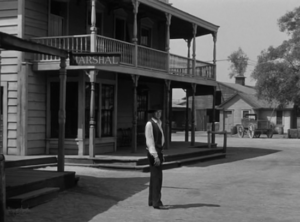
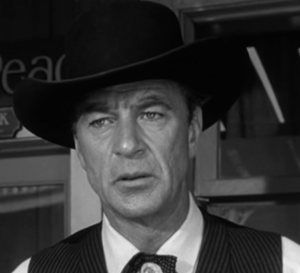
When I watched High Noon many years ago, I was struck by its pacing, its intensity, its seriousness. This time, I kept laughing. There’s something comic about watching Marshal Will Kane (Gary Cooper) aimlessly tread around the town, waiting for someone, anyone to assist him. I found myself curious (having forgotten most of the details) not whether he’d find aid, but just what methods of bailing on responsibility his fellow townspeople would employ.

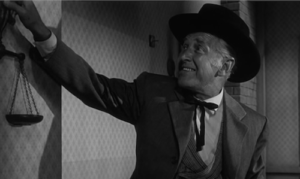
The judge (Otto Kruger) is, of course, is my favorite. Having passed sentence on Frank Miller (Ian MacDonald), a killer who has now been freed and is headed to town for revenge, the judge opts for exiting pronto. He tells Kane, the marshal who caught Miller, to do the same. His advice is a cynical history lesson about how little one can rely on civilian ethics when danger is afoot–an account of Athenians who welcomed a tyrant they’d once banished, and watched as he executed their government; an incident much like one that recently occurred in a nearby town. The judge shares these accounts as he casually packs away his flag and scales of justice.

ScalesofJusticeOttoKruger
His assessment about the value of the people he’s leaving to the mercy of an outlaw is almost as breathtakingly cold as the clock speech in The Third Man: “This is just a dirty little village in the middle of nowhere. Nothing that happens here is really important. Now get out.” The former marshal (Lon Chaney, Jr.), Kane’s mentor, is likewise a ray of light: “People got to talk themselves into law and order..down deep, they don’t care. They just don’t care.” Poor Kane is asking for just a bit of support before he takes on a posse, and these are his cheerleaders.

Of course, it’s hard not to love Kane, even as you wonder whether there’s a better way to overcome Miller than the one he’s devised (i.e., shoot it out).

Cooper-HighNoon
“I’ve got lots to do,” Kane keeps saying as the minutes creep by. But really, he doesn’t. He has to warn Helen Ramirez (former lover to both him and Miller), ask for volunteer deputies, and write a brief will. But this is a small town, easily navigated, and these tasks are quickly accomplished. What he really has to do is busy himself to avoid dwelling on the cowardice of his companions and his own slim chances for survival if he stays in town until noon, when Miller is arriving.

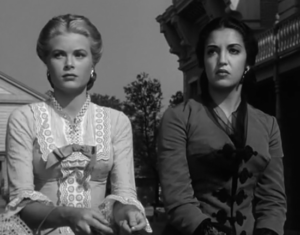
While Ramirez (Katy Jurado) is the most interesting character, it’s clearly Kane’s new bride, Amy (Grace Kelly), who brings on the dark humor.

JuradoandKelly
First, there’s the fact that she’s just had the biggest bummer of a wedding day ever. Then there’s the small detail that she’s a Quaker who has married a marshal. I don’t think I have to tell you that she may not be the wisest of women. Sure, he’s retiring; the new marshal is arriving the next day, and the newlyweds are planning to leave town and to run a store elsewhere before they hear about Miller. But surely five minutes of Kane’s obdurate behavior during courtship would have enlightened Amy that this whole conversion business–of both faith and career–wasn’t going to work so well. (Admittedly, given the pickings we see of the townspeople during the film, she may still have made the best choice of a mate she could.) And of course, it’s quite amusing that a woman who has to overcome her beliefs–not dodge them–is the only helper Kane receives. No wonder Kane throws his star on the ground after besting Miller.

That the film would include such darkness isn’t surprising from a screenwriter (Carl Foreman) who had been blacklisted before High Noon even came out. What he was witnessing of former friends and those he must have once respected couldn’t have led to idealism. Apparently, John Wayne scorned the film as anti-American, and Rio Bravo is a reinterpretation, with more admirable townspeople. While I agree with the movie’s distance from Wayne’s optimism, I think Foreman’s (and the original story’s) cynicism goes much deeper than any individual country, any specific belief system. It’s a simple, sadly humorous morality tale about human nature: while there may be rare moments of heroism (like Kane’s), typically, when the going gets tough, the “tough” scatter.

Share
Posted in: 1950s films, Action & Sports Films, Drama (film), Humor Tagged: best Westerns, dark humor, Gary Cooper, Grace Kelly, High Noon, movie, review
1 2 3 Next »

Recent Posts

  • Say Anything Is The Sure Thing’s Lame Younger Brother
  • Wallace Got an Oscar
  • Oscar Noms 2025: Gems & Duds
  • 100 Years Later, Still Scary: Dr. Caligari
  • Escaping Out of the Past (1947)

Subscribe to Blog via Email

Enter your email address to subscribe to this blog and receive notifications of new posts by email.

Categories

  • 1920s films
  • 1930s films
  • 1940s films
  • 1950s films
  • 1960s films
  • 1970s films
  • 1980s films
  • 1990-current films
  • 2020s films
  • Action & Sports Films
  • Anti-Romance films
  • Blogathons
  • Childfree
  • Comedies (film)
  • Drama (film)
  • Feminism
  • Femme fatales
  • Film Noir/Crime/Thriller & Mystery
  • Gloriously Silly Scenes
  • Horror
  • Humor
  • Mae West Moments
  • Musicals and dancing films
  • Oscars
  • Random
  • Romance (films)
  • Romantic Comedies (film)
  • The Moment I Fell for
  • Turn My Sister into Classic Movie Fan
  • TV & Pop Culture
  • Uncategorized
Share
Classic Movie Blog Hub Member

Recent Comments

  • leah@carygrantwonteatyou.com on Say Anything Is The Sure Thing’s Lame Younger Brother
  • Dominique Revue on Say Anything Is The Sure Thing’s Lame Younger Brother
  • leah@carygrantwonteatyou.com on Oscar Noms 2025: Gems & Duds
  • leah@carygrantwonteatyou.com on Oscar Noms 2025: Gems & Duds
  • willkaiser on Oscar Noms 2025: Gems & Duds

Archives

  • March 2026
  • November 2025
  • September 2025
  • May 2025
  • March 2025
  • January 2025
  • November 2024
  • August 2024
  • July 2024
  • May 2024
  • March 2024
  • February 2024
  • December 2023
  • November 2023
  • October 2023
  • September 2023
  • August 2023
  • July 2023
  • May 2023
  • April 2023
  • March 2023
  • January 2023
  • December 2022
  • November 2022
  • September 2022
  • July 2022
  • May 2022
  • April 2022
  • March 2022
  • February 2022
  • October 2021
  • September 2021
  • April 2021
  • March 2021
  • February 2021
  • December 2020
  • October 2020
  • September 2020
  • July 2020
  • May 2020
  • April 2020
  • March 2020
  • February 2020
  • December 2019
  • October 2019
  • September 2019
  • June 2019
  • May 2019
  • April 2019
  • February 2019
  • January 2019
  • November 2018
  • September 2018
  • July 2018
  • June 2018
  • May 2018
  • April 2018
  • March 2018
  • February 2018
  • January 2018
  • November 2017
  • September 2017
  • August 2017
  • July 2017
  • June 2017
  • May 2017
  • April 2017
  • March 2017
  • February 2017
  • January 2017
  • December 2016
  • November 2016
  • October 2016
  • August 2016
  • July 2016
  • June 2016
  • May 2016
  • April 2016
  • March 2016
  • February 2016
  • January 2016
  • December 2015
  • November 2015
  • October 2015
  • September 2015
  • August 2015
  • July 2015
  • June 2015
  • May 2015
  • April 2015
  • March 2015
  • February 2015
  • January 2015
  • December 2014
  • November 2014
  • October 2014
  • September 2014
  • August 2014
  • July 2014
  • June 2014
  • May 2014
  • April 2014
  • March 2014
  • February 2014
  • January 2014

Meta

  • Log in
  • Entries feed
  • Comments feed
  • WordPress.org

Copyright © 2026 Cary Grant Won't Eat You.

Church WordPress Theme by themehall.com