Cary Grant Won't Eat You

Classic movies for phobics

  • About
  • eBooks
  • Previous Blogathons
Classic movies for phobics

1990-current films

Silly Scenes: Joe vs. the Volcano
11/04/2024 by leah@carygrantwonteatyou.com 4 Comments


Today I’m starting a new series for this blog for all of us who haven’t slept in months and fear we won’t for some time: Gloriously Silly Scenes. We all need some sweetness and light right now, and luckily for all of you, I have been self-medicating on fluffy joy in movie form since two of my aunts, Betty and Ellen, introduced me to Teddy in Arsenic and Old Lace as a child. My two sisters and I would run around my aunt’s room, shouting “Charge!!” with one arm aloft as we watched the film, giggling hysterically.

My effort to seek silly films became a fully deliberate act due to two life-changing events in my teens: 1. My discovery of USA Up All Night. 2. The moment my good friend Carrie and I went to see Joe Versus the Volcano (1990) in the theater. To all of you who love cry-laughing in silent rooms, to all of you amused by what was never intended to be funny at all, and to all of you who embrace deeply weird and/or unabashedly ridiculous humor, you will understand that the impossibly grim opening credits of Joe versus the Volcano were a revelation to me. The choice of “Sixteen Tons.” The mud. The one flower. The evocation of old labor folklore (I kept thinking of John Henry). It wasn’t just silly. It was thrillingly so.

The whole film is a treasure. I could write a poem about the suitcase shopping sequence alone. But for this moment, I’d like to pause on comic gem Dan Hedaya, who would crack up an entirely different generation as the affectionate father/terrifying litigator/threatener of potential dates in Clueless. In Joe vs. the Volcano, he is the boss of three employees: one dour, but expressive silent man; the despondent Joe (Tom Hanks); and the almost deflated but somehow still chipper-while-sniffling assistant (Meg Ryan).

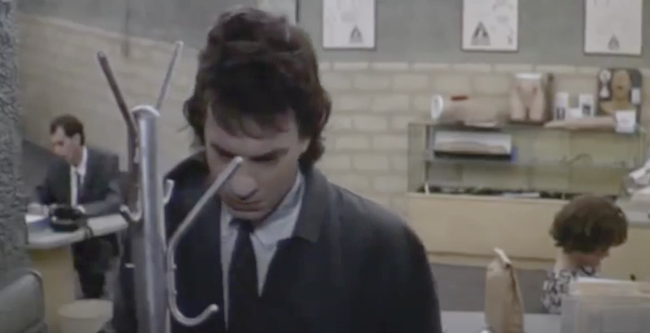
The office scene opens with the clatter of a typewriter and the buzz of failing overhead lights. The whole scene is bathed in sickening shades of yellow and blue. As you take in the comically awful office, with decor that brings back my impressions of “break rooms” in fast food restaurants in the 80s or those airport smoking lounges when the bans started taking effect, you hear the boss (Hedaya) in the background, talking on the phone:

“I know he can get the job, but can he do the job? Harry. Yeah, Harry, but can he do the job? I know he can get the job, but can he do the job? I’m not arguing that with you. I’m not arguing that with you. I’m not arguing that with you. I’m not arguing that with you, Harry! Harry, Harry, yeah Harry, but can he do the job? I know he can get the job, but can he do the job? I’m not arguing that with you….Who said that? I didn’t say that. If I said that, I would have been wrong….I’m not arguing that with you. Yeah, Harry. I know he can get the job….”

As his boss talks, Joe walks in and tries to hang his hat on the coat rack, but it breaks. He attempts to make coffee with that awful chalky powdered creamer, empty cups everywhere.

The boss’s infuriating refrain (awesomely comic, thanks to Hedaya’s delivery) couples perfectly with Joe’s return from his lunch break, where he received dire news about his health. We aren’t surprised that Joe finds his workplace repellant afterward (he describes it as a “sink”). What’s ridiculous is that it took him four and half years to recognize it.

After he quits and the boss belittles him in response, Joe says, “I should say something,” the catalyst for the film. The fact that Joe says this aloud, the fact that anyone who spent five minutes in that room would need a moment of insight to leave, the boss’s and assistant’s befuddlement that anyone would quit–any one of these things would be hilarious. In concert, they are genius.

There really is nothing like Tom Hanks in breakdown mode, as anyone who has seen The Money Pit knows. And after Joe decides to quit, he begins a funny rant about his job, claiming that the fluorescent “zombie” lights are “sucking the juice” out of his eyeballs and that the coffee “tastes like arsenic.” His transition from lethargy to energy is exhilarating, as is his combination of giddy physical comedy and dry, understated truth-telling.

In case you don’t have time for the whole film and need the laughs, here’s the start of the scene and the moment Joe quits. This was my pre-Office Space bad job film, and it has never been supplanted in my affections.

If you can, watch the whole film. It’s an oddly philosophical story (written by the man who penned Doubt). The Ossie Davis cameo is amazing. It’s that rare film that lets Ryan flex her full comic muscles instead of making her ride on charm. And the film reveals Hanks at his comic best.

As for the rest of the film, airtight suitcases, orange soda, and brain clouds. What’s not to love?

(If you have any gloriously silly scene requests, let me know!)

Share
Posted in: 1990-current films, Comedies (film), Drama (film), Gloriously Silly Scenes, Humor Tagged: Dan Hedaya, Joe versus the Volcano, Meg Ryan, Tom Hanks, work movies, workplace comedies

Oscar Tribute: The Noms They Got Right

03/10/2024 by leah@carygrantwonteatyou.com 2 Comments

I’ve ranted about the films I didn’t watch–and didn’t want to–but three of the films nominated for Oscars this year are great films.

NO spoilers.


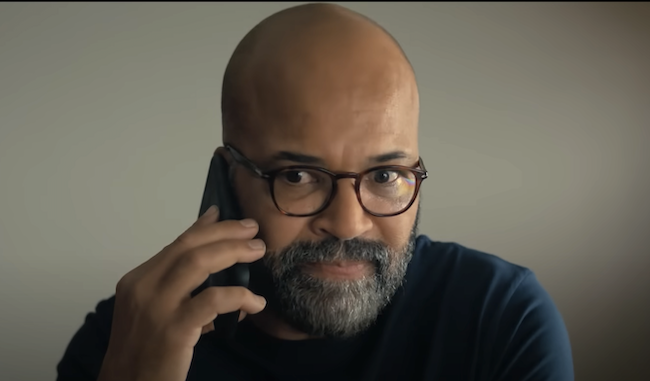
American Fiction. Clever, funny, and original, this satire/dramedy delivers genuine laughs while also addressing heartbreak. We also experience a mature commentary on race we so rarely see on film. Great performances: Jeffery Wright is dead on, nuanced and believable; Issa Rae is fun; and Sterling Brown is compelling. I particularly loved that scene when he dances with his mom. Great acting all through. I still haven’t seen Rustin and suspect Colman Domingo definitely deserves the Oscar. But of those I have seen who are nominated, I wish Wright would get it for his subtle, winning performance. Of course, it won’t happen.

As someone who has been in higher ed, writing, and publishing, I loved the way the film skewered these professions. Clearly, Cord Jefferson knows what he is talking about. I kept wondering how the film would end–there’s no real way to tie this one in a bow without trivializing the problems with racism that are aired, so I liked that Jefferson didn’t take the easy way out. This one is likely to be a film I watch over and over. Obviously, Jefferson should have been up for best director. I suspect of all the films up for Oscars this year, this one will endure the longest.


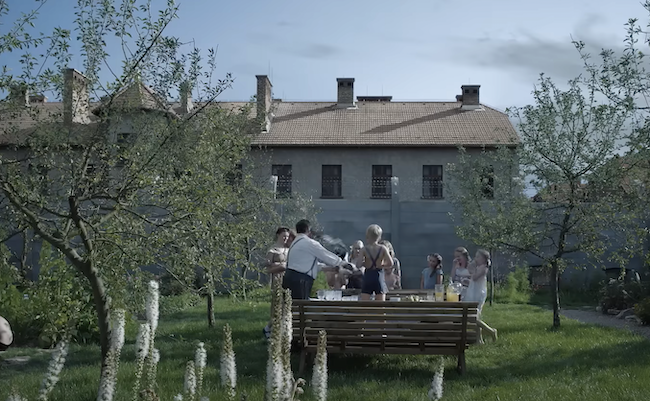
The Zone of Interest. How clever to focus a Holocaust film not on the evil doers’ atrocities, but on the simpler, more everyday trait of turning a blind eye to others’ tragedies. There’s an uneasy feeling as you watch, of how many times you shut off the news, how many times you try not to think about others’ suffering throughout the world. This film, unlike the bloated movies that are nominated for best editing, is VERY well edited, with perfect, often unexpected choices. It’s relentless in its focus and powerful in its impact. It has a documentary feel to it, and I love how true director Jonathan Glazer, made the choice to fictionalize less than the source material, relying on actual letters and histories to authentically capture this horrifying family.


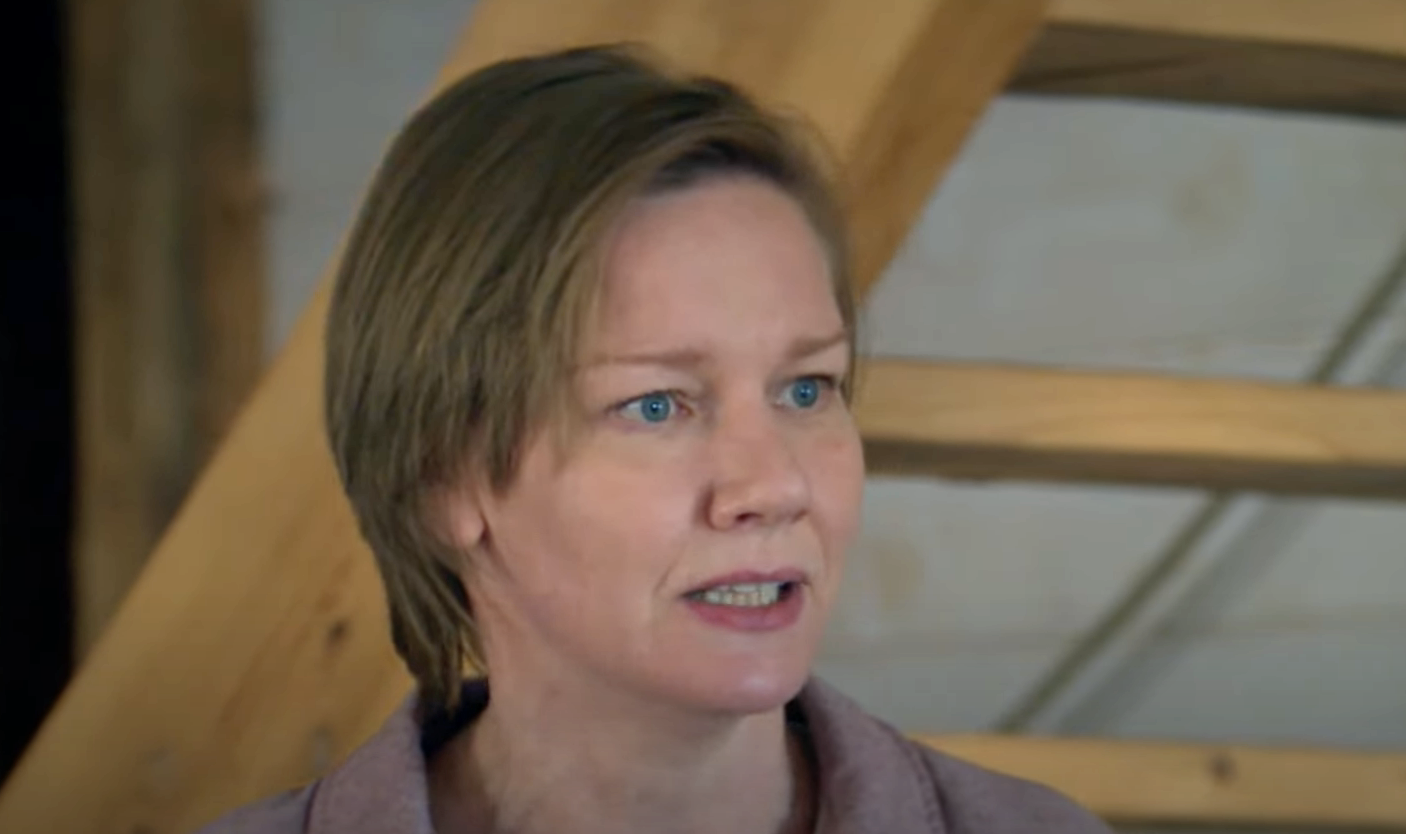
Anatomy of a Fall. First of all, Sandra Hüller deserves an Oscar for this role. What a performance! Many people have said that this film is really about a marriage. And it is–a very complicated, intensely believable marriage. If that were all that this movie did, it would deserve an Oscar nomination. But it does something more. This film is truly about a child and what he lives with, not knowing if his mother might be guilty of killing his father. This is a perspective we too rarely see on film (or even on documentary coverages of crime), and it’s devastatingly captured here. Wow. Also, this kid is something. The director, Justine Triet, definitely deserves this nomination.

And, while I’m here, one final wish denied: Andrew Scott gave a stunning performance in All of Us Strangers. Actually, Claire Foy deserved a nod for that film too. Definitely worth the watch if you can take a little weirdness.

Share
Posted in: 1990-current films, Comedies (film), Drama (film), Oscars Tagged: American Fiction, Anatomy of a Fall, Oscar nominations, Zone of Interest

Oscar Rant, Part 3: Flower Moon’s Many Missteps

03/04/2024 by leah@carygrantwonteatyou.com 4 Comments

Spoilers–but not as many as Scorsese’s


I knew I would struggle to warm to Martin Scorsese’s interpretation of a well-loved book. Killers of the Flower Moon is a heartbreaking, fascinating page turner. And it is a history book. I stayed up till 4 am to finish it. What I didn’t expect to do in watching Scorsese’s film of the same name was flinch. In trying to stay authentic and true to the Osage people, Scorsese walked into one of the oldest stereotypes. And the Academy is about to give his starring actress an Oscar for it.

The dignified, long-suffering man or woman of color is one of those stereotypes Hollywood has struggled to shake. There’s also a smug, self-satisfied attempt to award such films and performances with honors (Green Book, Driving Miss Daisy, The Help). When it comes to a group of people our country systematically oppressed, robbed, and killed–like the Osage and so many other American Indian tribes–granting the characters dignity can feel like a kind of reparation, minor as it may be. But it’s also dehumanizing to reduce a person to such a narrow set of traits.

I understand that Scorsese’s task was not easy. The American historical record is simply more complete when it comes to white men than for anyone else. Author/historian David Grann likely made FBI agent Thomas Bruce White Sr. his central character in part because he had so much information on him. Grann even includes a fascinating later history of his mercy toward prisoners who injured him in a prison break, which helps us understand the kind of man who would risk his life for others. And White was, indeed, a hero, and a fascinating one at that.

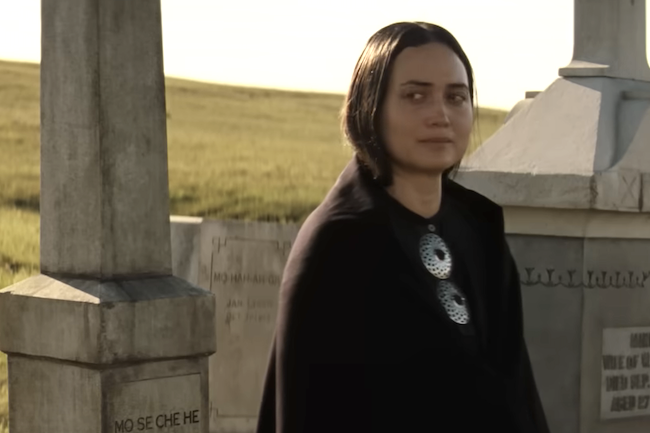
I get Scorsese’s attempt to avoid the white savior story he risked writing if White were his lead. But he had a dilemma: What do we know about Mollie Burkhart (Lily Gladstone)? We know she was rich. We know she lost many relatives to murder. That she believed in her husband, Ernest Burkhart (Leonard DiCaprio), far longer than she should have. We know that she was very sick. That’s not enough detail, if she’s your central figure. It was up to Scorsese to breathe life and complexity into her characterization, to make her wholly human in the way our 1920s racist, sexist historical record would not grant her–or lean on the descendants or family members who could tell him more.

Alas, Scorsese’s never been very good at female characters. This is no exception. Besides brief glimpses of a more complex woman during the courtship, he has her either sitting or in a sickbed looking resigned, sad, and stoic for 90% of the film. We don’t even feel the menace or experience her fear as she’s poisoned, as we would for a Alfred Hitchcock heroine, because we have little sense of her inner life.

We don’t get to see a sense of humor or any unique, humanizing quirks–we only know that she suffered. And with Eric Roth as his cowriter, whose credits include Forrest Gump (another film with underdeveloped female characters), what hope did he have of getting it right? Why, oh why, can’t this brilliant man recognize his limitations? There’s nothing wrong with specializing in dark white men as a genre. But this was not the subject matter for that focus. Why not let someone else write the screenplay? An Osage female writer would have been amazing; at the least, Scorsese could have chosen a woman.

Mollie’s is not the only half-baked characterization of the Osage in the film. The subtitles only occasionally translate the Osage language, which is used extensively. Instead, the subtitles spell out something like “speaking in Osage,” which was 1. evident 2. useless 3. distancing. Why not help us know the characters better by having them speak in English if you’re not going to bother to translate? (I kept hoping this was an issue with my streaming service, but I doubt it.) The occasional group scenes with Osage leaders stating the obvious didn’t help.
There was a fascinating real-life federal agent, John Wren (Tatanka Means), the only Native American who’d worked for the bureau by then. He assisted with the investigation and appears briefly in the film, and I kept thinking that Scorsese should have focused the narrative on him. What a fascinating angle that would have been! He was still an outsider to the Osage, but had more of an insider’s angle than the rest of the agents.

Instead, Scorsese doubles down on Leonardo DiCaprio’s Ernest, even minimizing the degree of his crimes by not covering his whole plan (or at least, tacit acceptance of the plan) to include his son and wife in the blow-up-the-house plot. Did he love Mollie? He seemed to in the book–and in how he handled the trial. But many dangerously abusive men have loved the women they attempt to murder. I’m not really interested in getting inside of their heads. Are you?

Also, where’s the excitement? We believe Ernest is pretty innocent for a long while in the book. We don’t know his uncle is a monster. The reveal is breathtaking in the book. Leaving out the suspense is a baffling choice.

It’s a shame to see all the wasted potential here: Robert De Niro is good in it and DiCaprio great (even if they are miscast; De Niro is no cowboy and both are at least two decades too old for their parts). Gladstone is very good with what she had to work with, and captures what we know of Mollie well. I enjoyed her subtlety.

There are so many beautifully shot scenes. That moment right before the bomb was especially powerful, as was the federal agents’ gathering scene. Scorsese shares the history and legal status of the Osage’s rights (or rather, lack of rights) without bogging down the narrative–not an easy thing to do. I thought the best part of the film was the start of the investigation by the private eyes: Whenever Scorsese feels comfortable, he does such great work. I loved how the movie helped me keep the characters straight, something I struggled with in an overpopulated book.

A lesser-known director might not have gotten this important story made into a film; I wanted so much to like it. Scorsese’s earnest attempt in that ending to finally give Mollie her due made me sad; I don’t think he succeeded. But maybe he’ll draw people back to the book, which does. I guess I’ll have to take some satisfaction in that.

Share
Posted in: 1930s films, 1940s films, 1950s films, 1990-current films, Drama (film), Oscars, Uncategorized Tagged: Alfred Hitchcock, Killers of the Flower Moon, movies not as good as books, Oscar nomination, overrated

Oscar Rant, Part II: Barbie

02/26/2024 by leah@carygrantwonteatyou.com 2 Comments


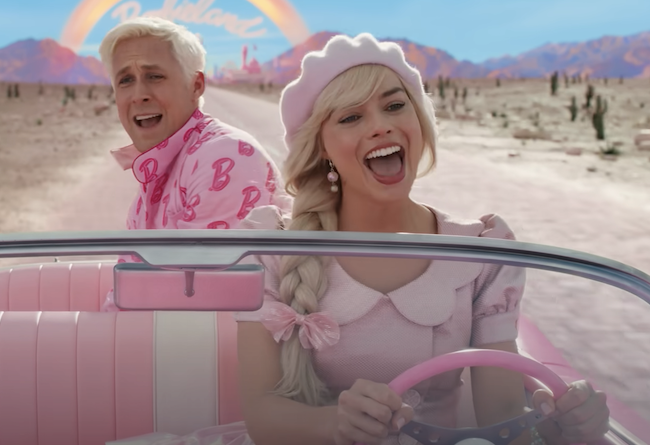
I walked into Barbie with sky-high expectations. I had been tracking the career of its co-screenwriter (and Greta Gerwig’s spouse) Noah Baumbach since 1995’s Kicking and Screaming played on my VCR in college. My roommates and I–and my sister–had fallen deeply and completely into lifelong loyalty with him the moment we pressed play. Baumbach GOT us.

Far more than Reality Bites or other Gen X standards, Kicking and Screaming captured my life and my friends’ and siblings’–not in a literal sense, of course, most of us being female and at large state schools. We were certainly not young, privileged men at a small New England college. But in spirit. He got our reluctance to move on with our lives, our fear of door-to-door salespeople, our reluctance to complain to servers, our laziness (putting a sign stating “broken glass” on the floor instead of cleaning a mess up), all our ridiculous rituals we couldn’t break.

I remember the year I paid roommates for their time if I told a bad story or joke, thanks to the film’s influence. I recall my excitement when The Squid and the Whale (2005) finally showed me others had recognized the writer-director’s brilliance. (Though I don’t think he’s equaled either of those films since; I’m not a huge fan of Marriage Story, for example, and thought Margot at the Wedding cold and half-baked.)

Gerwig won my admiration–though to a lesser extent–with Ladybird and by capturing Little Women‘s Jo so well. She pictured the heroine’s future as Louisa May Alcott would have, had the times she’d lived in been less sexist than they were.

To have THESE TWO creating a funny Barbie movie? I was in–especially with Ryan Gosling starring. I admit I had some apprehension, given Baumbach’s caving to Wes Anderson in The Life Aquatic with Steve Zissou. (Where WAS he in that?)

There is A LOT to like about Barbie: The opening scene is brilliant–& the first half is so funny. “Beach” as Ken’s theme for life and his joy at realizing he’s the beneficiary of the patriarchy are so amazing. The costumes and production design are so well done, and Kate McKinnon’s Weird Barbie is an inspiration.

But then, there’s that by-the-book speech delivered by America Ferrara and the muddled second half. Until the ending, which I loved, the film lost its focus.

I don’t question the lack of an Oscar nomination for Margot Robbie. Best actor/actress awards rarely go to men or women in comedies. (It’s all about supporting with comedy nods; this year’s two best actor comedy nods are the exception, not the rule, and both men are starring in dramedies, not comedies, like Barbie.) In addition, the male characters in this film are better written and thus the men have better roles, which is hardly surprising, since Noah Baumbach, the better writer of the pair, has been perfecting this kind of arrested-development male (aka, Ken) since Skippy of Kicking and Screaming. (Actually, arrested-development male describes nearly every character in that film.)

I do think–given its innovative spirit and how much it had to offer–Barbie deserved to be in the best picture mix, especially with undeserving films like The Holdovers, Past Lives, and Oppenheimer on the roster.

Did Gerwig deserve an Oscar nomination for director? It depends on how you look at it. If I ask, “Do I think this film, with its muddled second half, deserves a directing Oscar nomination?” I would answer no. But does she deserve it MORE than Christopher Nolan for his poorly developed, uninspiring borefest? You better believe it.

In the end, I realize Gerwig just tried to please too many audiences with Barbie. And given that, I’m grateful for what I got, and for the joy I felt in wearing pink with Barbie-loving peers at the theater (my first theater return post-COVID). But I hope she and her spouse streamline their styles a bit more because what amazing potential that duo has. We’ve seen what they can do (in Barbie) if they get it half-right. Can you imagine what they can accomplish, once they get it right?

Share
Posted in: 1990-current films, Anti-Romance films, Comedies (film), Oscars, Romance (films), Romantic Comedies (film) Tagged: Barbie, Greta Gerwig, Kicking and Screaming (1995), Little Women, Margot Robbie, Noah Baumbach, Oscar snubs, Ryan Gosling, The Squid and The Whale

The 10 Funniest Xmas Movies

12/22/2023 by leah@carygrantwonteatyou.com 4 Comments

In no particular order except for #1, my favorite to rewatch:


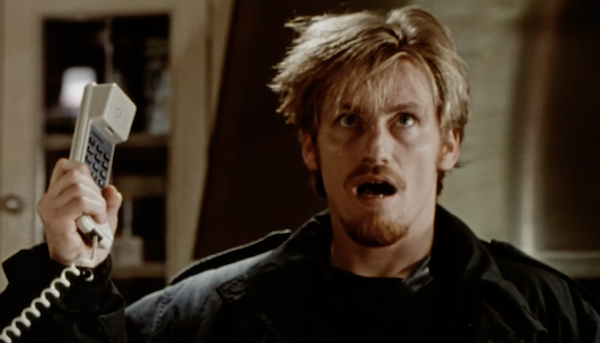
1. The Ref (1994). The non-sentimental xmas movie I love most. The real question is who is the funniest here: Denis Leary, who has taken a family hostage? Judy Davis and Kevin Spacey, as The War-of-the-Roses-worthy combatants who make us feel sorry for the criminal? Christine Baranski as the outrageously funny sister-in-law? Or Glynis Johns, the mother-in-law from hell?


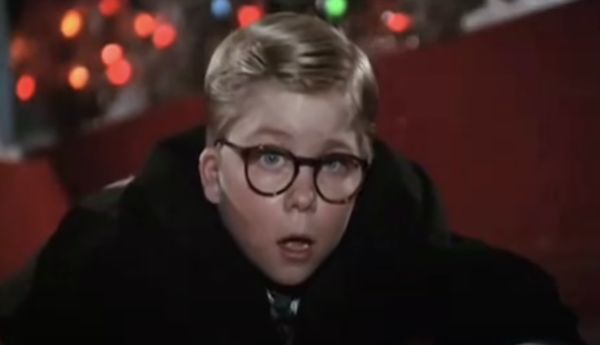
2. A Christmas Story (1983). It’s brilliant. It’s beloved. And it’s a great translation of a witty author’s style (Jean Shepherd) with excellent performances all round.


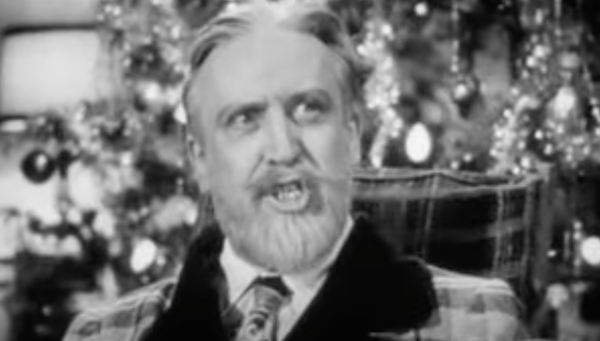
3. The Man Who Came to Dinner (1942). A grumpy, hilarious, ba-humbug house guest (Monty Woolley) treating his host family like serfs. Shenanigans with Ann Sheridan. Bette Davis playing a normal woman and still enjoying herself. Get this set of writers: Julius and Philip Epstein (yes, of Casablanca fame) adapting a play by George Kaufman and Moss Hart. What’s not to love?


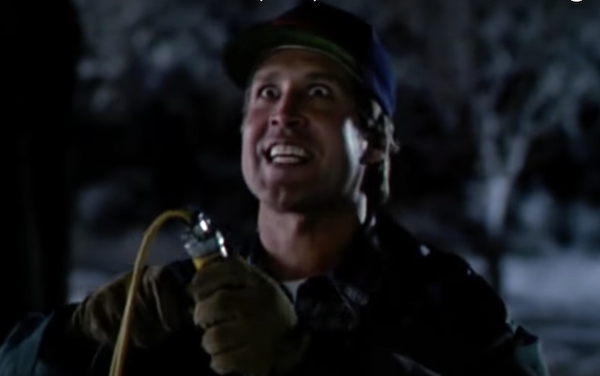
4. National Lampoon’s Christmas Vacation (1989). I’m a huge fan of the Griswalds. Clark’s (Chevy Chase’s) xmas lights alone keep me in stitches.


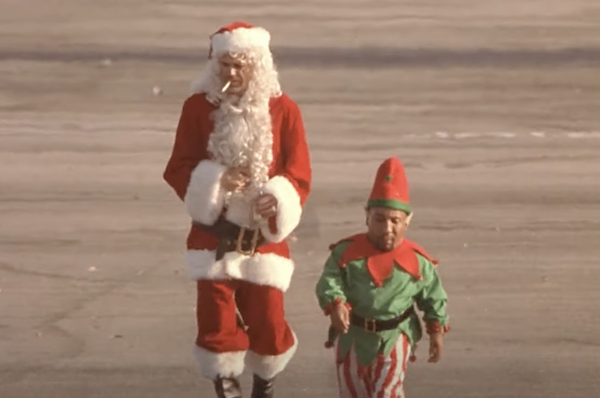
5. Bad Santa (2003). Because Billy Bob Thornton does surly so very well.


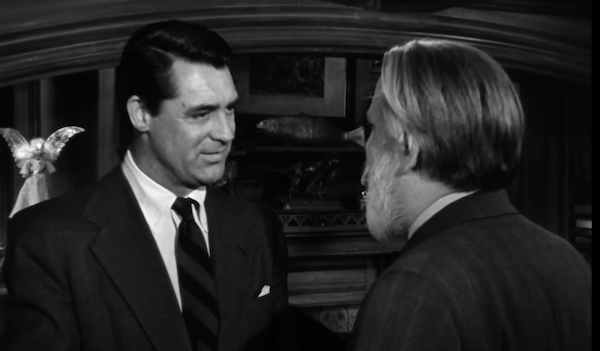
6. The Bishop’s Wife (1947). Cary Grant plays an angel as well as Thornton plays a grump. The angel’s methods are so charming and funny. My favorite scenes include watching everyone (realistically) falling over themselves in Grant’s presence, and his magic liquor-filling skills with Monty Woolley.


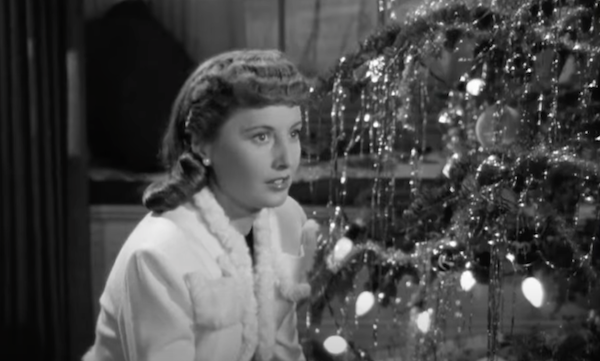
7. Christmas in Connecticut (1945). We have a double-charm offensive in Barbara Stanwyck and S. Z. Sakall (aka Cuddles). And Sydney Greenstreet adds some nice bluster. I could lose the smarmy love interest (Dennis Morgan), but who cares? Give me Stanwyck tossing pancakes with her eyes shut every time.

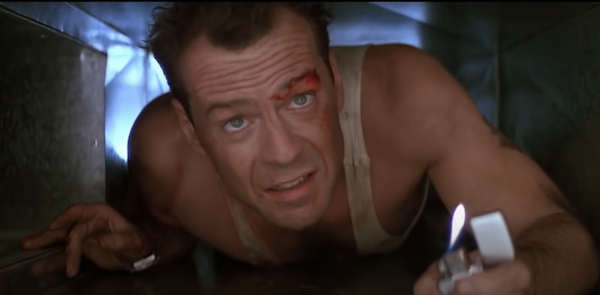
8. Die Hard (1988). As a Gen Xer, I couldn’t leave this out. Also, I adore Bruce Willis’s humor.


9. It’s a Wonderful Life (1946). Nearly a perfect film. As many heartrending as comedic scenes, but funny all the same.


10. Remember the Night (1940). Another dramedy with an empathetic heart that doesn’t sell out. Plus, Preston Sturges’s writing and dynamic duo Barbara Stanwyck and Fred MacMurray without a corpse.

Almost Made the Cut: Elf (2003). Cute, but not an annual viewing for me.
Bonus: Home for the Holidays (1995). A Christmas-vibey Thanksgiving movie, so it counts. Hilarious and true family dynamics, and Holly Hunter at her most adorable.

Share
Posted in: 1940s films, 1980s films, 1990-current films, Comedies (film), Humor Tagged: A Christmas Story, Bad Santa, best xmas movies, Christmas in Connecticut, Die Hard, funniest xmas movies, Home for the Holidays, It's a Wonderful Life, National Lampoon's Christmas Vacation, Remember the Night, The Bishop's Wife, The Man Who Came to Dinner, The Ref

The Charming Shop Around the Corner

12/14/2023 by leah@carygrantwonteatyou.com 6 Comments


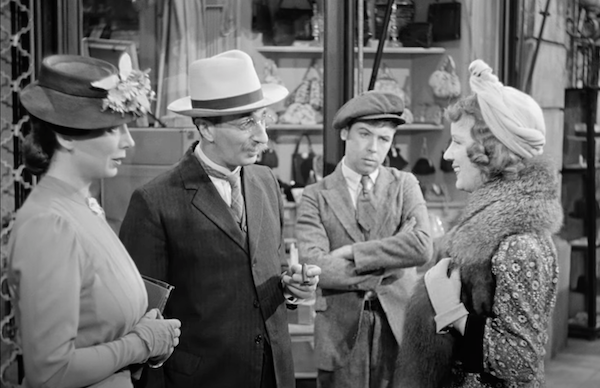
Last month, I wrote about Jimmy Stewart playing a monster in Vertigo. It seems only fair that I cover one of his gentlest roles next, that of lovelorn salesman Alfred Kralik in holiday favorite The Shop Around the Corner (1940). For those unfamiliar with the film, it was later remade as the horrible You’ve Got Mail (1998), which I despised only slightly less than the man behind me in the theater, who complained, “You’ve got to be kidding me” to his girlfriend after it ended.

The Shop Around the Corner is superior to its remake for many reasons. Since this is a Ernst Lubitsch film, there’s a sophisticated touch to the little dramedy throughout; the plot is nuanced, funny, heartwarming, and occasionally heartbreaking.

The hardworking salespeople of the little Hungarian gift store are likable and driven and funny and loyal to one another.


They’re also struggling to get by, as in the moment when Alfred asks his colleague Pirovitch (Felix Bressart) if he’s ever gotten a bonus and gets a wistful “…once…” in response. The film often reminds me of workplace comedies, especially Brooklyn 99 and The Office, because the little family of coworkers commit to their work and vie for status with their boss. Shop experiences take up far more time than the romance.

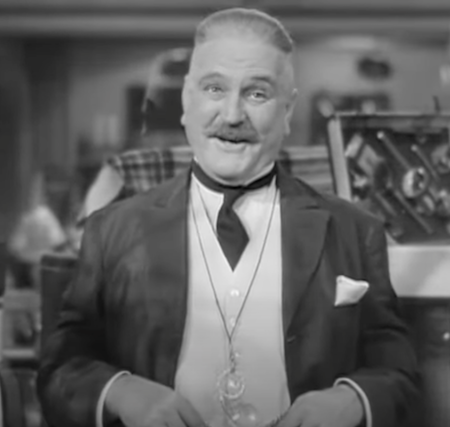
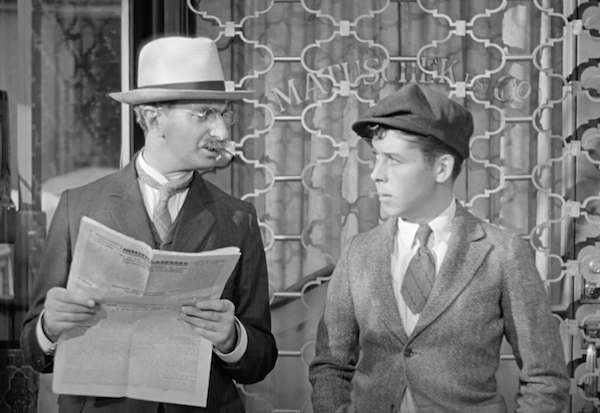
The irascible, sensitive owner, Hugo Matuschek (Frank Morgan), is entertaining.


One of my favorite moments is watching Pirovitch dart out of sight when Hugo, trying to explain a specialty cigarette box, says to Felix’s colleagues, “All I want is your honest opinion.” We soon find out just how unwise it is to express your feelings to this particular boss.

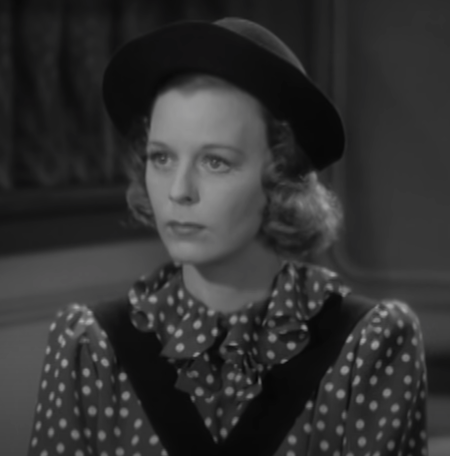
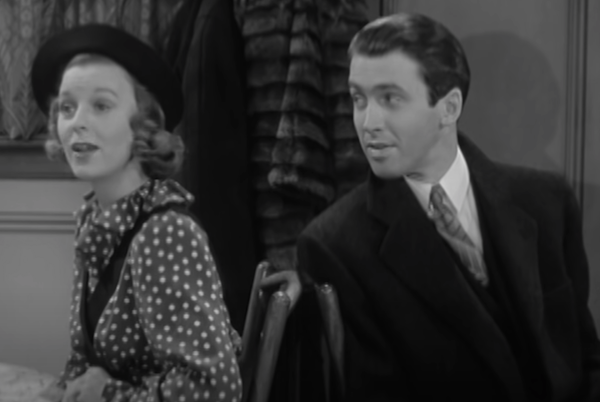
Meanwhile, Alfred, the hero (Stewart), is writing love letters to an unknown respondent, who happens to be Klara (Margaret Sullavan), the prickly salesgirl the shop just hired.


She, unaware he’s her pen pal, treats Alfred with disdain. Her attitude is partially the result of misunderstandings, but also because she’s a snob who sneers at him for his job. Even though she can be conniving and even cruel, there’s something so sad about the little airs she puts on, and about how fragile her thin veneer of confidence is.

And what a savvy salesgirl! She actually convinces a customer the cigarette box the owner loves, with its terrible music, is actually a candy box that is intentionally annoying so that it prevents overindulgence. Brilliant. I can’t help but root for her even if I think Alfred is too good for her. And their dialogue is so funny, clever, and entertaining.


What a doll Alfred is. He’s so tender toward Klara once he knows who she is and is sympathetic toward the owner, who wrongs him. He bears with both of their treatment with a warmth and understanding that reveal he’s made of much finer stuff than either of them. He’s also so modest despite being the most admired worker in the shop. I love the moment he fears his pen pal will be beautiful. “Well not too beautiful, no . . . what chance does a fellow like me..?….just a lovely average girl, that’s all I want.”

Comic relief Pepi Katona (William Tracy), the confident delivery boy, doesn’t appear much until the second half, but what a joy he is every time he shows up. I particularly enjoy him teasing a doctor and the new delivery boy. He and Pirovitch are both by turns funny and warm–an unusual combination for a comedy:

You’ve Got Mail, in contrast, dials up the time spent on the romance, eliminates any humor, makes the modest hero (Tom Hanks) a big box store magnate and forces the heroine (Meg Ryan) to be bop-her-head cutesy and snarky at the same time. I’d tell you more, but I’ve blocked the rest from my memory.

Do yourself a favor, and watch The Shop Around the Corner instead.

Share
Posted in: 1940s films, 1990-current films, Comedies (film), Drama (film), Romantic Comedies (film), Uncategorized Tagged: Ernst Lubitsch, Frank Morgan, Jimmy Stewart, Margaret Sullavan, Meg Ryan, Pirovitch, remake, The Shop Around the Corner, Tom Hanks, William Tracy, You've Got Mail

The 8 Movie Characters I’d Bring to See Barbie

08/06/2023 by leah@carygrantwonteatyou.com 6 Comments

If I could bring any film characters with me to the Barbie movie, this crew would come along. We would shout, complain, and advise (quite loudly), and so an empty theater–and an earlier viewing by me–would be critical. But just try to imagine with me, how perfect this party would be….(Mild spoilers ahead.)

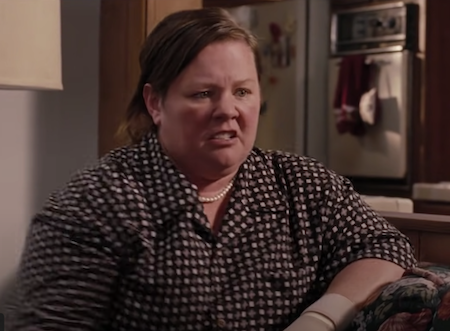
1: Megan (Melissa McCarthy) from Bridesmaids (2011)


This confident, hilarious, non-nonsense woman needs to give Barbie a pep talk. I did love Gloria (America Ferrera)’s speech, but Megan’s would be one for the ages.

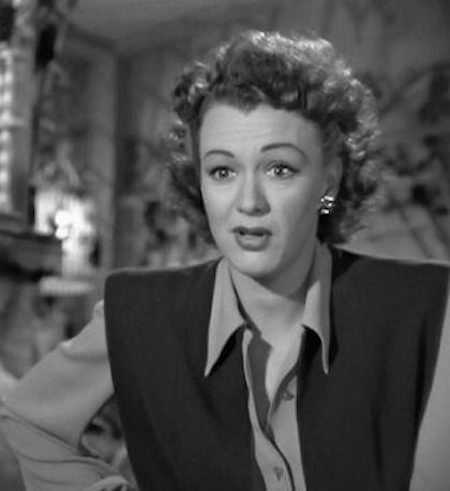
2: Ida (Eve Arden) from Mildred Pierce (1945)


What Megan can do with yelling and pounding, Ida can do with an eyebrow. Ida’s dry, blistering one liners about Ken’s power grab would be epic.

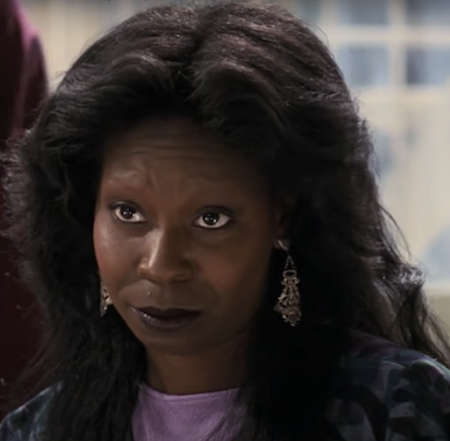
3: Oda Mae Brown (Whoopi Goldberg) from Ghost (1990)


I’ll be honest–this may be just because I want her to say, “Barbie, you in danger, girl,” when the doll puts on fluorescent rollerblading gear.

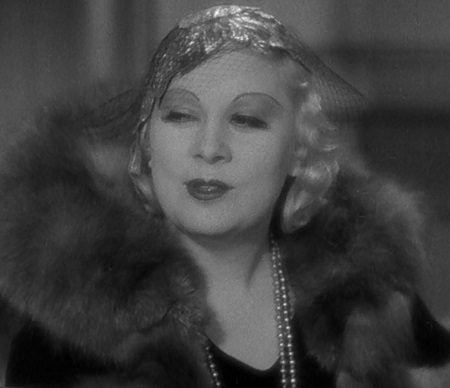
4: Tira (Mae West) from I’m No Angel (1933)


Tira’s running commentary on Ryan Gosling’s abs and what she’d do to his character on the beach would have everyone in the theater howling with laughter. I’d love to hear her tell Barbie to keep relishing that many Kens in her life. And how much I’d anticipate her reaction to the ending!

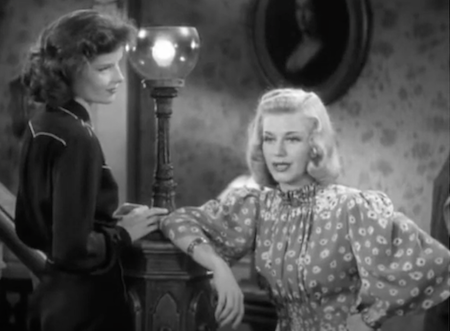
5 & 6: Stage Door (1937) Roommates Terry (Katharine Hepburn) & Jean (Ginger Rogers)


Obviously, I’d want the ENTIRE Footlights Club to accompany me, since there simply is no wittier all-female repartee on film (the famously catty The Women ensemble can’t compare). Don’t believe me? Lucille Ball is in the supporting cast. These sexual-harassment-fighting, badass feminists would be FABULOUS commentators, and I’m so sad I can’t follow their pop culture podcast right now.

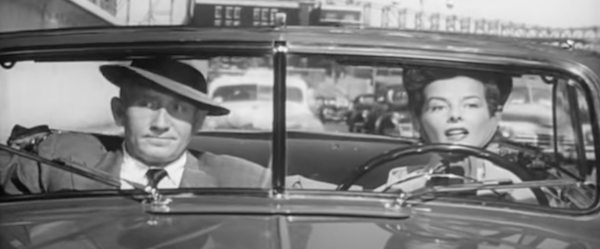
7 & 8: Adam (Spencer Tracy) and Amanda (Katharine Hepburn) from Adam’s Rib (1949)


What could be better than to hear a brilliant couple with perfect dialogue critique the work of screenwriting couple Greta Gerwig and Noah Baumbach? And with the way Amanda just slays in arguing women’s rights in the courtroom, I long to hear what she’d say to those fools in the Mattel boardroom.

There you have it. My eight favorite Barbie movie companions. Who would yours be?

Share
Posted in: 1990-current films, Childfree, Comedies (film), Feminism, Humor, Uncategorized Tagged: Adam's Rib, Barbie movie, Eve Arden, feminism, Ginger Rogers, Katharine Hepburn, Mae West, Melissa McCarthy, Whoopi Goldberg

Better as a Remake? The Thomas Crown Affair

04/06/2023 by leah@carygrantwonteatyou.com 14 Comments

For those of you who love both versions of The Thomas Crown Affair (and why wouldn’t you?), it can be tough to determine which of these slick, funny, seductive films is superior. But today I’ll make an attempt. I’d love to hear your opinions in the comments–1999, or 1968?

The crime. This may be an unfair one, as there have been too many good bank robbery movies between 1968 and 1999 for me to give 1968’s crime its due. Still, I preferred the 1999 one–the heaters were such a nifty trick. But both films’ clever capers hold up.

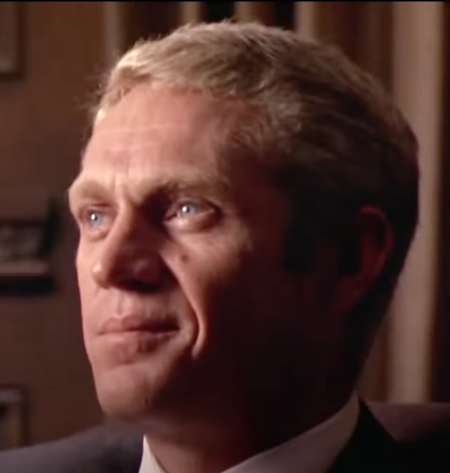
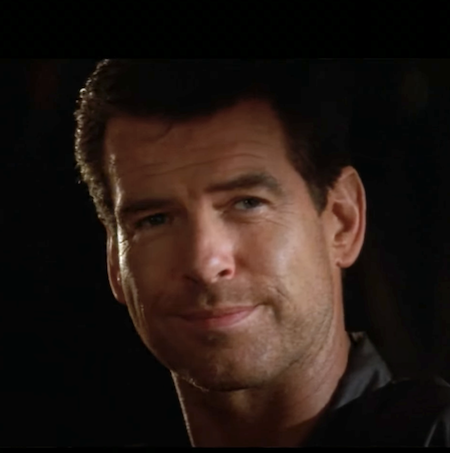
Male leads: Pierce Brosnan is not as attractive as Steve McQueen (who is?). But Brosnan is more convincing as a rich dude who pulls a crime because he’s bored. Also, McQueen’s lack of affect starts to grate after a while. Brosnan oozes charm. That said, McQueen’s laugh when he pulls off his caper is phenomenal.

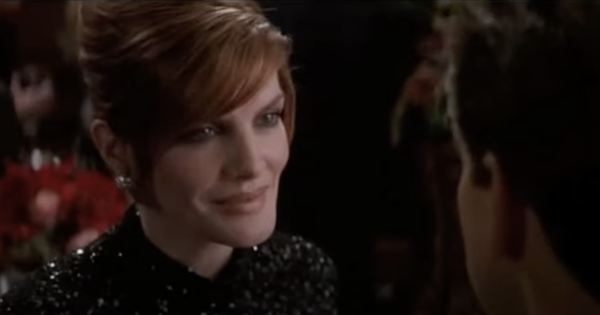
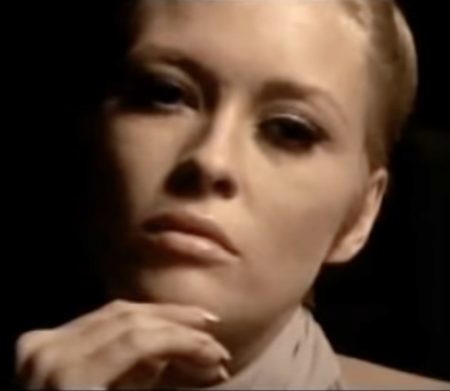
Female leads: I am a lukewarm Dunaway fan. I like her style, confidence, charisma. I found her mesmerizing in Network and Bonnie and Clyde. I loved her in Columbo. But I disliked her performance in Three Days of the Condor and thought her histrionics in Mommy Dearest insufferable. She fits this role, but Rene Russo just owns her film, and her range is fantastic in it. Russo is also really, really funny. Dunaway has a hard time pulling off humor that isn’t smug.

Music? Love “The Windmills of your Mind” song In both. 10/10.

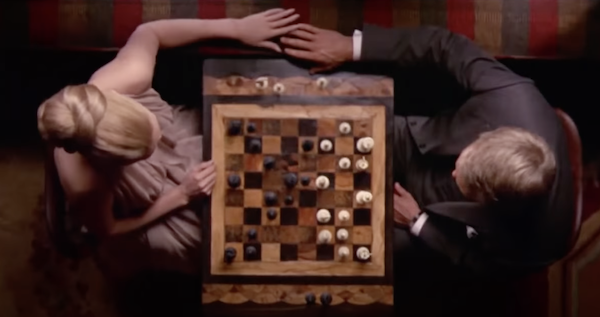
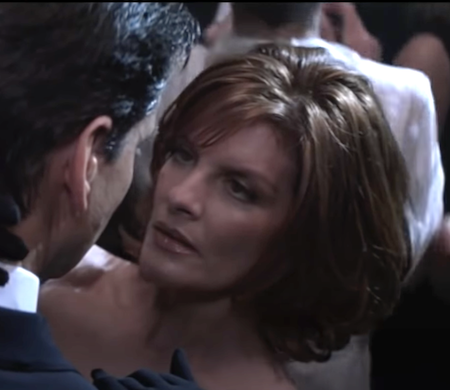
Sexiest scene: Dance scene (1999) vs. chess scene (1968).

It’s a close one. Generally, I think Russo is sexier than Dunaway–plus thrilling music–and that dress!

That said, I’m not exactly on solid ground saying Russo is sexier in hers.

In terms of male leads, though, I know I’m right: McQueen out-cools Brosnan in every way, and is smoking hot in every scene.

However, I would still argue it’s Brosnan’s sexiest performance.

All told, I have to give it to 1968’s version for sexiest scene. First, because it deserves extra points for making chess seductive. Second, because Brosnan’s delivery of “Do you wanna dance, or do you wanna dance?” hurts me.

Other Characters. No one in the 1968 version is as fun as Dennis Leary or Frankie Faison. But Jack Weston is great at playing a sap.

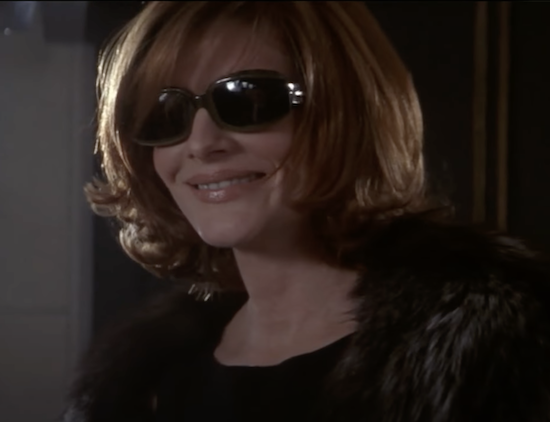
The Fashion. A tie, I’d say. I prefer Russo’s impossibly luxe wardrobe and killer sunglasses.

I’m not a fan of fur, but that leather outfit in her break-in scene kills me.

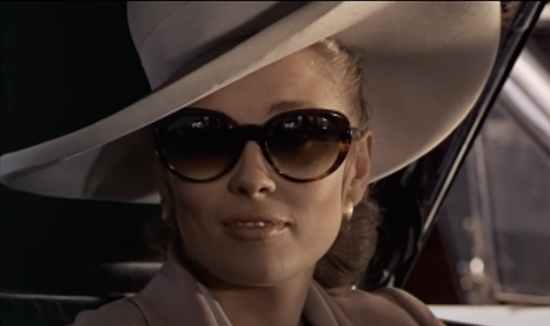
Dunaway’s fashion is fantastic in The Thomas Crown Affair too, and those hats are amazing. Plus, the actress always looks like she was born in whatever she wears.

The Script. The writing is better in the 1999 film–though I will admit that many of the best lines are pulled straight from the original. But the characters are more likable and nuanced in the 1999 version. The inclusion of the sailboat crash scene nails Crown’s excesses. The 1999 film is funnier (which I prefer). And Russo’s Catherine is a more powerful feminist (with her smarts and savvy and outplaying everyone) than Dunaway’s Vicki is, though I think they make Catherine too vulnerable in the end.

Editing. I love the clever transitions and cuts in the 1999 remake, but the 1968 version is more streamlined. The 1999 one could use some trimming in the second half.

In-Jokes. Loved Dunaway as the snarky psychiatrist for Brosnan’s Crown. We assume her commentary on porcupines to be from her own experience (from her 1968 caper), right? That’s SUCH a fun twist.

The Ending. 1968 does it for me. It’s poignant, and far more probable than 1999’s.

Because of the script and Russo’s performance, I’d give it to 1999, but it’s a tight one! How about you?

Share
Posted in: 1960s films, 1990-current films, Film Noir/Crime/Thriller & Mystery, Romance (films) Tagged: The Thomas Crown Affair (1968); The Thomas Crown Affair (1999); Rene Russo; Pierce Brosnan; Faye Dunaway; Steve McQueen; good remakes

The Comic Magic of Confess, Fletch

03/16/2023 by leah@carygrantwonteatyou.com 4 Comments

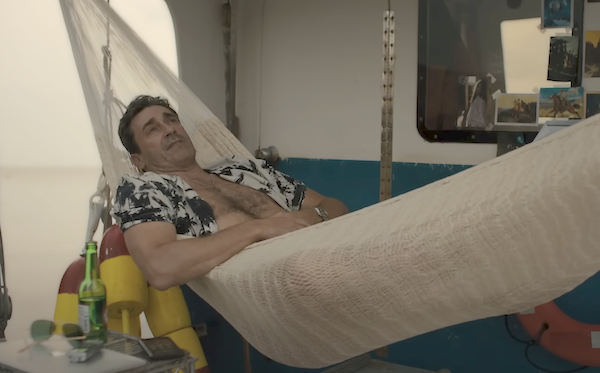
I’ve now watched the Jon Hamm-helmed remake of Fletch three times. This may surprise those of you who adored the original Fletch series–and Chevy Chase’s performance in it–as much as I did. But the film is a different animal and defies comparison; it also contains enough quirky humor to create nostalgia for those earlier films while making you eager for a new franchise with Hamm in the lead–one that would resemble the original novels more than Chase’s version did.

Jon Hamm is BRILLIANT in this new version of Fletch, and I will watch the film again. And again. And again. The opening–which begins with a shocking discovery of a dead body–is magic thanks to Hamm’s deadpan delivery. But it’s the scene with Annie Mumolo that I find myself watching on repeat.

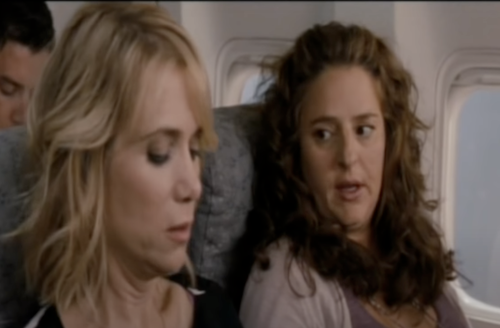
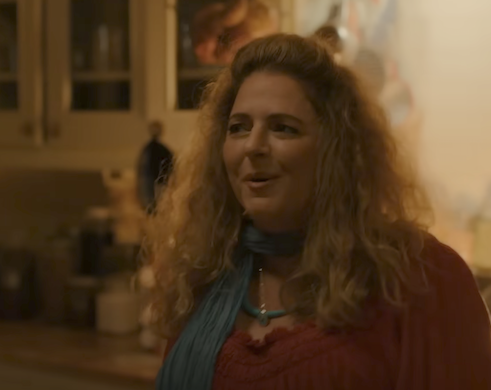
You may not recall Mumolo’s name, but you’ll know you’ve seen her somewhere. You have. She’s the nervous plane passenger from Bridesmaids.

She’s also the co-screenwriter of that film with Kristin Wiig, and has a host of other credits. And as in that short but indelible plane scene, this woman cannot say an unfunny line.

In my favorite Confess, Fletch scene, former investigative reporter, now art-journalist Fletch is asking his neighbor, Eve (Mumolo), about her relationship with his landlord/a murder suspect. Standing in her kitchen, Eve proceeds to create a blizzard of poor hygiene, kitchen appliance hazards, and ill-advised confessions, all with zero awareness of the consequences of her actions. Fletch looks on and responds to Eve with various levels of repugnance, politeness, and shock.

The scene is a master class on comic delivery from both actors, and if you don’t watch it, you’re missing out.

That’s just one scene in SUCH a fun film, one that didn’t receive enough fanfare from its studio, and therefore escaped everyone’s notice. Cameos abound, including an appearance from Hamm’s former Mad Men buddy, John Slattery; Marcia Gay Harden in an unexpectedly daffy role; and the always game Lucy Punch as an influencer who could use a dictionary.

Spoil yourself; we could all use a little Confess, Fletch time right now.

Share
Posted in: 1990-current films, Comedies (film), Film Noir/Crime/Thriller & Mystery, Humor Tagged: Annie Mumolo, best comedies of 2022, Bridesmaids screenwriter, Confess Fletch, Fletch, Jon Hamm, nervous passenger scene

Aftersun: Too Intimate for the Oscars, Rant Part II

01/29/2023 by leah@carygrantwonteatyou.com 4 Comments

Aftersun deserved best picture & directing Oscars this year, but it had no shot. The Academy doesn’t like to award intimate little stories about relationships. They like loud message films, and loud action films, and stories about men being men. And when they (rarely) pivot their patterns (Moonlight), it’s never for a woman helmer: It’s no accident that the only females who’ve won directing Oscars did so for stories about war, community job loss, and cowboys.

Academy voters like to throw a screenplay bone at the original, lovely intimate stories–though they occasionally alter that with acting (as with Aftersun) or song nominations/wins (as with Once). Even when a quiet, intimate little film like Il Postino is nominated for best picture, it wins for something else (in its case, score). That’s why when I’m searching for good films I don’t know from past Oscars, I go straight to the screenplay category. There I can find films that weren’t about the Academy trying to prove something, or the fact that many of them are too lazy to view all but blockbusters and movies with their friends in them.

What strikes me most about Academy voters is their fear. They’re afraid of being seen as racist, as they should be (#OscarsSoWhite), but they actually prove they are with nominations for movies like The Blind Side and Crash and Green Book. The pernicious roots of racism don’t lie in big headlines or loud messages or overt acts, but in the everyday moment, and the everyday moment is where all of us make mistakes of every kind. We are vulnerable there. Academy voters don’t like that space.

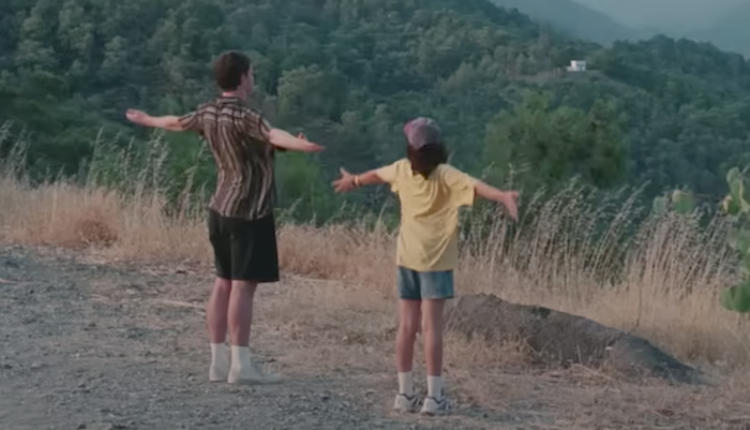
To nominate Aftersun for best picture or its writer-director Charlotte Wells would take guts. It’s not Oscar bait, and at first appears far less skillfully managed than it is. It fools you, posing as a student film, or just a kid’s camcorder records of her vacation with her dad. It’s slow. If you’re inattentive, you might find it boring. You don’t know at first the reasons for pauses; for impressionist shots; for quick flashes. You must be patient. But if you let the film in, you are caught up in the relationship between a charming young girl, Sophie (Frankie Corio), and her sweet dad, Calum (Paul Mescal). You soon sense, as when reading a book by Marilynne Robinson, that every little choice by the writer-director counts, that each choice has layers of meaning that build upon one another, and that the very everyday nature of the story is the point of the film. That’s what our relationships are about, our love, our pain, our loss, our joy. It’s missing the details of moments that haunt us later if the relationship is lost or even if it alters over time.

Aftersun is poignant because it’s about that, but more. About looking back and examining what you were too young or focused on understanding your own growing-up moments to understand, to see your father as human, with needs, pain, and insecurities. And Paul Mescal’s understated performance is much of what makes the film unforgettable.

This movie will stay with me a long time, will remind me to cherish the loved ones in my life, to try to be a more understanding person. I wonder how many people could say that about Avatar: The Way of Water.

Share
Posted in: 1990-current films, Drama (film), Feminism, Oscars Tagged: Aftersun, female director snubs, Frankie Corio, Oscar snubs, Paul Mescal, sexist Oscars
1 2 3 4 5 6 7 8 Next »

Recent Posts

  • 100 Years Later, Still Scary: Dr. Caligari
  • Escaping Out of the Past (1947)
  • A Weeper for Those Who Love Jerks
  • Thank You, Academy, for Not Infuriating Me
  • Challengers (2024) Is a Bad Movie

Subscribe to Blog via Email

Enter your email address to subscribe to this blog and receive notifications of new posts by email.

Categories

  • 1920s films
  • 1930s films
  • 1940s films
  • 1950s films
  • 1960s films
  • 1970s films
  • 1980s films
  • 1990-current films
  • 2020s films
  • Action & Sports Films
  • Anti-Romance films
  • Blogathons
  • Childfree
  • Comedies (film)
  • Drama (film)
  • Feminism
  • Femme fatales
  • Film Noir/Crime/Thriller & Mystery
  • Gloriously Silly Scenes
  • Horror
  • Humor
  • Mae West Moments
  • Musicals and dancing films
  • Oscars
  • Random
  • Romance (films)
  • Romantic Comedies (film)
  • The Moment I Fell for
  • Turn My Sister into Classic Movie Fan
  • TV & Pop Culture
  • Uncategorized
Share
Classic Movie Blog Hub Member

Recent Comments

  • leah@carygrantwonteatyou.com on Meg Ryan’s Fate Foretold in Joe Versus the Volcano
  • Ryan on Meg Ryan’s Fate Foretold in Joe Versus the Volcano
  • leah@carygrantwonteatyou.com on 100 Years Later, Still Scary: Dr. Caligari
  • The Classic Movie Muse on 100 Years Later, Still Scary: Dr. Caligari
  • leah@carygrantwonteatyou.com on 100 Years Later, Still Scary: Dr. Caligari

Archives

  • November 2025
  • September 2025
  • May 2025
  • March 2025
  • January 2025
  • November 2024
  • August 2024
  • July 2024
  • May 2024
  • March 2024
  • February 2024
  • December 2023
  • November 2023
  • October 2023
  • September 2023
  • August 2023
  • July 2023
  • May 2023
  • April 2023
  • March 2023
  • January 2023
  • December 2022
  • November 2022
  • September 2022
  • July 2022
  • May 2022
  • April 2022
  • March 2022
  • February 2022
  • October 2021
  • September 2021
  • April 2021
  • March 2021
  • February 2021
  • December 2020
  • October 2020
  • September 2020
  • July 2020
  • May 2020
  • April 2020
  • March 2020
  • February 2020
  • December 2019
  • October 2019
  • September 2019
  • June 2019
  • May 2019
  • April 2019
  • February 2019
  • January 2019
  • November 2018
  • September 2018
  • July 2018
  • June 2018
  • May 2018
  • April 2018
  • March 2018
  • February 2018
  • January 2018
  • November 2017
  • September 2017
  • August 2017
  • July 2017
  • June 2017
  • May 2017
  • April 2017
  • March 2017
  • February 2017
  • January 2017
  • December 2016
  • November 2016
  • October 2016
  • August 2016
  • July 2016
  • June 2016
  • May 2016
  • April 2016
  • March 2016
  • February 2016
  • January 2016
  • December 2015
  • November 2015
  • October 2015
  • September 2015
  • August 2015
  • July 2015
  • June 2015
  • May 2015
  • April 2015
  • March 2015
  • February 2015
  • January 2015
  • December 2014
  • November 2014
  • October 2014
  • September 2014
  • August 2014
  • July 2014
  • June 2014
  • May 2014
  • April 2014
  • March 2014
  • February 2014
  • January 2014

Meta

  • Log in
  • Entries feed
  • Comments feed
  • WordPress.org

Copyright © 2025 Cary Grant Won't Eat You.

Church WordPress Theme by themehall.com