Cary Grant Won't Eat You

Classic movies for phobics

  • About
  • eBooks
  • Previous Blogathons
Classic movies for phobics

1970s films

My Cat, Mae West, and Sextette

05/25/2023 by leah@carygrantwonteatyou.com Leave a Comment

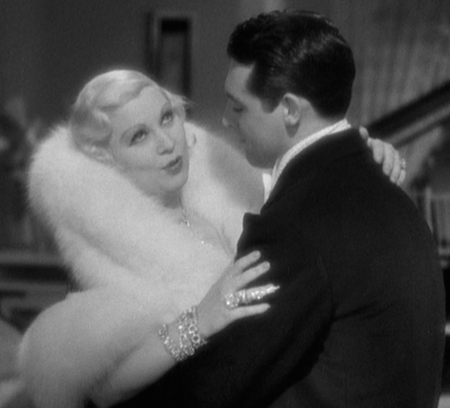
Perhaps you’re choosing to honor your cat by naming her after Mae West. (And can there be a greater honor?) You can’t go with Mae. It’s too delicate.

And you can’t go with Mae West. Too hard to say when your cat is jumping on the counter.

But you have to name her for Mae West: your feline is feisty, unrepentant, the center of her universe. So you scroll IMDB for Mae’s movie character names and land on Marlo from Sextette (1978). It has a ring to it, doesn’t it? You haven’t seen the film and don’t have time for it, so you watch a clip. Mae being Mae. It tracks. You name your little palm-sized kitty, and every time she flashes those bold eyes at her prey, you know you chose well.

Then, shortly after her third birthday, you watch Sextette, and think, “What have you done?”

Seriously, WHAT HAVE YOU DONE?

This is the hot mess to end all hot messes. When Ringo Star gives one of the best performances in the film, you know something is terribly, terribly wrong.

Who sees Mae West act and thinks, “You know a good person to cast in her picture? Dom DeLuise”? It’s so hard to watch a madcap, hijinks story with Mae performing her signature slow delivery like she’s in a different film. Then there are sudden, unnecessary musical sequences–and not unnecessary in a fun way, but in a do-we-have-to-do-this? way. And is Tony Curtis playing a Russian? And what the hell is Alice Cooper doing in this mix? The whole film is jarring and weird and utterly wrong.

The strange thing is, the critiques are wrong too. Sure, you heard it was bad–that’s true. But you also heard some sexist junk about how could this older woman be attractive to this young man (Timothy Dalton)? (As if 70-and 80-year-old men will ever stop presenting themselves as attractive to young women.) The age difference is extreme, and thinking of Mae West’s character as a global sex object in her mid-eighties might be a stretch, but here’s the delightful surprise: she is the ONLY sexy person in the film. She’s so confident and brash that you can’t take her eyes off of her, same as ever. And she’s the only one who looks like she’d know what she was doing in that bed.

The single male character who has ANY sex appeal in the film is one of Marlo’s ex-husbands, played by George Hamilton. Hamilton is acting as a—wait for it—gangster. (Because when you think gangster, you think, Where the Boys Are.) But unlike the virginal character played by Dalton, the histrionic Russian played by Tony Curtis, or the flashy director played by Ringo Star, George Hamilton seems like he might pause his movements long enough to actually have sex, which puts him a long stretch ahead of his competitors, sex appeal wise.

Mae manages to share several very funny one liners along the way, especially in a scene full of athletes who look like the hunks in her former shows. Too bad there’s so much noise and chaos around her that you can barely absorb them.

Sure, you despised the film. You really did. And yet….There was something poetic in it all. That George Raft was in the cast. That she didn’t take herself seriously in the film. That the plot–like all of her plots–was really no plot at all. That she refused to change one iota to the last.

She just kept on being Mae. 70s film fashions? Why bother? She’s going to wear that full-length gown if she feels like it. She’s amusing and charming and delightful and so much fun. And just as sassy and unwilling to change as that cat peering at you from atop the shelf on your wall.
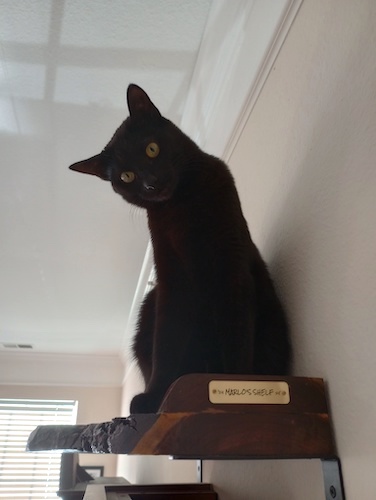
So maybe you made the right decision after all.

Share
Posted in: 1970s films, Feminism, Mae West Moments, Random, TV & Pop Culture Tagged: cats named for movie characters, George Hamilton, Mae West, Marlo, Ringo Star, sex symbols, Sextette, Timothy Dalton

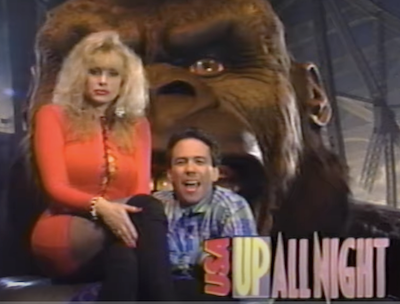
In Praise of USA Up All Night

04/12/2022 by leah@carygrantwonteatyou.com 10 Comments

Today I felt a pang on hearing about Gilbert Gottfried’s death. Of course I found him annoying, but I also loved him. He–and Rhonda Shear–gave me USA Up All Night just when I needed it, a show that taught me valuable lessons that have stayed with me ever since. Here’s what I learned from that weekend stalwart, which, for the uninitiated, basically consisted of terrible, terrible movies playing from 11 pm /12 am till the wee hours on Fridays and Saturdays, with interludes of jokes, skits, and commentaries from the hosts.

  1. You Can Find Amusement in So Many Things. Camp was always appreciated in my family: my Uncle Ed’s running commentary on Slugs was a family reunion highlight. But in between those beloved family visits, I had Gottfried and Rhonda, poking fun of absurdly terrible B movies that no other channel would even play. Even Rhonda’s ridiculously perky enunciation of UP could make me laugh. To this day, I find enjoyment in so much pop culture that others don’t, and that’s partly thanks to USA Up All Night.
  2. Don’t Take Your Job Too Seriously. True, it’s hard to not laugh about your job when you’re commenting on Cheerleaders Beach Party. But Gottfried’s constant amusement (you could definitely see “This is my job?” in his expression) reminded me that every job doesn’t have to be a forever-career or vocation. Sometimes, you pay the bills doing something silly, and that’s OK. (And most of us do have absurd tasks even in the most serious of jobs.)
  3. Binging Movies Is Fun. Oh, you poor souls who didn’t learn this fact until Netflix. Gottfried and Rhonda (and the earlier host I never watched, Caroline Schlitt) taught us Gen Xers this back in the early 90s. Think of all the years of joy you missed!
  4. Embrace Your Awkward Self. Gottfried and Rhonda were never cool. They were goofy and absurd and nerdy and silly. But because they clearly didn’t care WHAT they were, they reminded me, an awkward teenage girl, that I didn’t have to be cool to have fun.
  5. Make Solitary Friday Nights an Occasion. In my twenties and early thirties, I moved states several times, each time alone. I was always either single or dating someone long distance, so Friday nights were rough on me. I hated the time it took to be moved from new friends’ weekday to their weekend rituals. To stave off the loneliness, I’d splurge on Fridays: wine, chocolate, good bread, and cheese. Maybe even takeout. I’d grab that remote and begin my movies, and all was right with the world. Sometimes, my preparations led to unhelpful comments by store clerks. (“Oooh-hoooh, honey, you’re having a romantic night tonight, huh?”) But in time, these Fridays became so peaceful and cathartic that I missed them when I had plans. (A bit of a foretaste of middle age, huh?) Would I have known to make an occasion of movie binging each Friday, without Gottfried and Rhonda’s example?
  6. You Never Know What Your Impact Will Be. I don’t think Gottfried could have anticipated that he’d be celebrated by a writer for USA Up All Night when he died thirty years later, do you? You just never know.

Share
Posted in: 1970s films, 1980s films, 1990-current films, Comedies (film), Humor, Random, TV & Pop Culture, Uncategorized Tagged: camp movies, Gilbert Gottfried, in memoriam, Rhonda Shear, USA Up All Night

New Podcast on Conspiracy Films!

03/18/2021 by leah@carygrantwonteatyou.com Leave a Comment

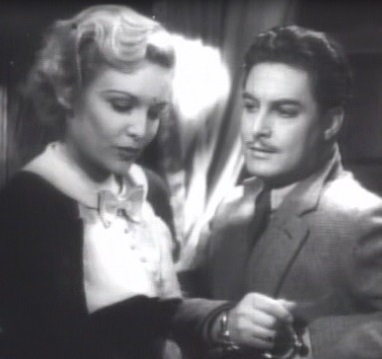
Join my friends and me as we talk about conspiracy films in this conspiracy-laden moment in history! It’s such fun talking film with my witty partners, Michael Keenan Gutierrez and Brian Wilkins. And I think you’ll enjoy our strange journey–from an early Hitchcock to the present moment. The 39 Steps and Dr. Strangelove start us off. Check out our podcast, Nobody Knows Anything, or go directly to Spotify or Apple Podcasts to find us. We’ll be posting more in the coming days on our Twitter and Instagram accounts. We begin by thinking about the important things, like how attractive you have to be in order to seduce an international spy with haddock. (Answer: Robert-Donat-with-a-mustache attractive.) For excerpts from our conversation, click below!

Here’s a clip of our 39 Steps talk!
And here’s a clip of our Dr. Strangelove chat.
Share
Posted in: 1930s films, 1960s films, 1970s films, 1980s films, 1990-current films, Uncategorized Tagged: Bourne Identity, Captain America: The Winter Soldier, conspiracy movies, Dr. Strangelove, film reviews, films, podcast, The 39 Steps, They Live, Three Days of the Condor

New Mae West Documentary!

05/29/2020 by leah@carygrantwonteatyou.com 4 Comments

PBS produced a new documentary on my favorite movie wordsmith and feminist rebel, Mae West. Dirty Blonde is coming. Check out the preview to see the subjects talking about her (some welcome surprises), and to hear some of your favorite Mae West quips.

Mae West Documentary and Trailer

I can’t wait! Check it out on June 16 at 8/7c on PBS and on their site.

Share
Posted in: 1930s films, 1940s films, 1970s films, Childfree, Feminism, Humor, Mae West Moments, Uncategorized Tagged: Mae West documentaries

The Gender Gap in Film

02/05/2020 by leah@carygrantwonteatyou.com Leave a Comment

Check out these two articles, both of which show the gap between awards for women and men in the Oscars over time in visual format.

“The Oscars’ 92-year gender gap, visualised”

“Maybe Those Are Just the Best Movies This Year”: #WhiteMan’s Oscar in Context.”

The Guardian‘s statistic about the lack of awards for female cinematographers was particularly illuminating.

In addition to showing what female-driven films could have been honored but weren’t over the years, Relatively Entertaining covers the diversity of voices in film, how we’ve regressed since a high point in the 40s in honoring women’s stories–even if told by men. The post also highlights how seldom black actresses are repeatedly honored for their work: “For that matter, it’s a strange quirk of Oscar that of the 35 times a black woman has received acting Oscar nomination, only three (Whoopi Goldberg, Viola Davis and Octavia Spencer) have been nominated more than once, and only Spencer has been nominated after winning her award.”

I wonder how long Academy voters could sustain the fiction that women’s films just haven’t been good enough yet to get awards after viewing the articles’ startling graphics. I wonder if the lack of repeat nominations for women (and women of color in particular) will finally bring home just how much has to change.

Share
Posted in: 1920s films, 1930s films, 1940s films, 1950s films, 1960s films, 1970s films, Feminism, Oscars, Uncategorized Tagged: black women and the Oscars, gender gap, representation in film

Getting Nosy about Mae & Cary

06/06/2019 by leah@carygrantwonteatyou.com Leave a Comment

Grace Collins of True Stories of Tinseltown and I chat about two stars who created the personas that made them stars, and never let those personas slip. We’re not nosy about ALL Hollywood stars’ lives, but that kind of inventive commitment is worth talking about! As usual, the two of us had a lot of fun, and Grace is a great host. (I might get a bit too enthusiastic, but in my defense, I was then reading Goodness Had Nothing to Do with It.)

Check out the podcast here or here or here.

Enjoy Grace’s other wonderful posts and podcasts on her sites or check out her Facebook page for more.

Share
Posted in: 1930s films, 1940s films, 1950s films, 1960s films, 1970s films, Mae West Moments, Uncategorized Tagged: bios, Cary Grant, fan tributes, life stories, Mae West

The Long Goodbye Film: It’s All about the Cat

01/20/2019 by leah@carygrantwonteatyou.com 2 Comments

**spoilers***

I was afraid to watch The Long Goodbye. It’s a favorite book, so much so that I starting drinking gimlets for a couple years, even though I hate gin*. It was an odd affectation. Even I knew drinking a grandpa concoction wouldn’t impress anyone, and would only mystify bartenders. But it gave me some secret romantic joy to drink one, even on non-memorable nights (and many nights in my late 20s were just that). With its appreciation for short-lived and missed connections, Raymond Chandler’s masterpiece is great stuff for those in transition, those who are watching peers’ lives move on without them. And what could the film do, but ruin my book? Who could make sense of such a meandering, mood-based affair, with more characters and tangents than any two-hour film could master? And The Long Goodbye (1973) wasn’t exactly produced in my favorite film era.

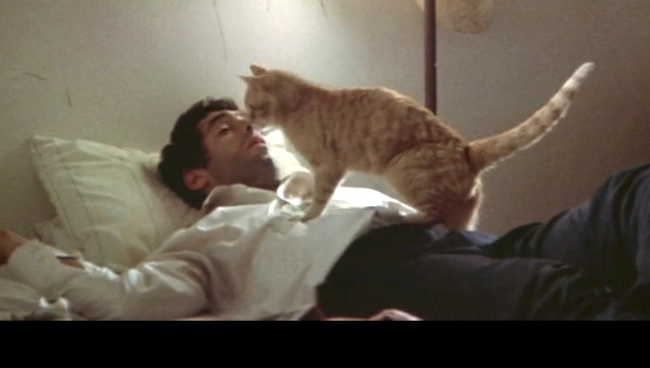
But I’d heard there was a cool cat scene in the opening of the film, and since Chandler loved cats (which of course, I knew), I thought there might be something there. And with Leigh Brackett listed as a screenwriter, I had hope. For the first half hour, I was grinning. Any cat owner has to love Marlowe’s (Elliott Gould’s) demanding animal, and any cat owner will sympathize with the the way Marlowe tries to fake the cat out with a different brand of cat food than he/she expects with a can switch.

Marlowe’s scene with the cops when he’s refusing to give his friend Terry up is so funny (those fingerprint ink antics!), and the way the story is updated for current viewers wowed me. Something about the dreamy landscape and shots, the way Marlowe doesn’t fit in with the crooks and the hippies (including his gratuitously topless neighbors) around him really captures the loneliness of Chandler’s famous character and the “mean streets” he inhabits. His loyalty to his cat captures his sweetness, his romanticism, and his befuddlement with the world around him. That’s why at first I bought into the film’s characterization, as Marlowe mutters to himself and treats most people around him well in spite of poor treatment. There’s always something sad and noble about him. As Chandler wrote, his PI “must be the best man in his world and a good enough man for any world.”

In terms of acting, Gould is lovable in this movie. He doesn’t embody Marlowe’s pain, as Humphrey Bogart did. But unlike Dick Powell’s annoyingly slick Marlowe in Murder, My Sweet, he’s believable and much more compelling than I expected (even if his toughness in the face of violence isn’t quite convincing).

But my mood toward the movie began to change about a third of the way in. Part of seeing the world through Marlowe’s eyes is finding something redeemable in those others have dismissed–Wade’s honesty, Eileen’s idealism, Mendy’s loyalty, Terry’s quaint good manners. Yet none of these characters are anything but one-notes in the film; none of them are even remotely redeemable. Altman’s violent take on The Big Heat‘s (1955) girlfriend treatment felt like a rip-off rather than a homage, and Marlowe’s lack of sympathy for her was baffling. I understood dispensing with the Linda character, but why not that sweet, yet hopeless tribute to Terry in the bar? Marlowe could have just had a conversation with the bartender. It would have SET UP that ending. Just knowing he was friends with Terry for a long time (a change from the book) wasn’t enough.

As for the plot, well, Chandler was famous for admitting to the convoluted nature of his plotting (though as anyone who reads The Big Sleep knows, censorship is a far greater reason for the plot’s confusing nature in the film.) Perhaps Chandler’s alleged plot aversion is what attracted Altman. As far as I was concerned, Altman could play with the plot all he wanted if he made it interesting. But he didn’t. And turning Mendy into such a loathsome bad guy made the story feel derivative in a boring way.

The ending was undoubtedly shocking and clever, and I liked that the cat became a symbol of Marlowe’s treatment and expectations, but look, if you want Marlowe this resentful about others’ treatment of him, you’re going to have to do more to foreshadow it. Marlowe is pretty much ALWAYS treated poorly in Chandler’s books–by nearly everyone. That isn’t enough to make him crack. And Gould doesn’t seem resentful as Marlowe; he seems naïve and stupid instead.

For Marlowe to betray his knight errant traits (what makes him admirable), and instead focus only on his own resentments, to have him flat out MURDER a former friend, you have to do more to make that betrayal convincing. What’s so lovable about him in the book is that he knows Terry’s pretty worthless, but cares about and defends him anyway, just as the crooks do. Terry’s war record (completely absent here) also makes him more sympathetic. Marlowe is not–as in the movie–shocked to discover Terry’s even more worthless as a friend than he thought–even if he’s not (in the book) a murderer. Marlowe is RESIGNED, expects little of others. In the film, Marlowe is anything but.

There is, of course, something fascinating in Altman essentially killing off the former PI character Chandler (and his peers) made famous. To take away his ethics is truly to murder the man. But I’m not going to believe (as Altman argues in this film) that such a character is unrealistic in today’s world without a better cinematic argument than the character floundering around (as Marlowe always did for a bit). The same year as this film came out, Robert Parker introduced Spenser to the world, a clear homage to Marlowe (so much so that Parker would later complete Chandler’s unfinished novel). And the 80s TV show of the Spenser character was still a decade after Altman’s film. Parker made a Marlowe type a modern man quite successfully (though Spenser was a significantly happier character than his predecessors).

Is it worth it to watch the film? Yes. But how I wish Altman had used that cat like he should have. The cat’s addition was, after all, brilliant. What if Marlowe had shown more love for the cat throughout? Shouldn’t the cat have come up more than a couple times after the beginning, given how crucial Marlowe’s devotion becomes at the end? I felt like Billy Madison as I watched Marlowe in the film. (In that dopey movie, Adam Sandler is outraged that a dog owner would wait for a lost dog’s return rather than making even a cursory effort to find it.)

What if the cat had starved while Marlowe was in jail for Terry, and the detective found out? Then that ending would be not about himself, but about the cat, the only connection he really had—just as Marlowe (in the book) is so lonely that Terry’s chance connection with him means more than anyone understands. Throughout the book and movie, Marlowe insists that Terry could have murdered his wife, but not as brutally as she’d been killed. Like him, I contend that Marlowe wasn’t the type to kill someone over his own hurts. But over his cat’s? Maybe.

*Gimlets symbolize Marlowe’s relationship with Terry.

Share
Posted in: 1970s films, Anti-Romance films, Drama (film), Film Noir/Crime/Thriller & Mystery, Uncategorized Tagged: cats in film, Elliott Gould, Marlowe, Raymond Chandler, Robert Altman, Robert Parker, The Long Goodbye

The Moment I Fell for Eve Arden

12/18/2014 by leah@carygrantwonteatyou.com 4 Comments

McGee Announcements Grease
In the early eighties, all the girls I knew pined for large hoop earrings, curly hair, and tight pants just like the changed Sandy in Grease. We piped “You’re the One that I Want,” with its requisite “oooh, oooh, ooohs,” imagining we could lure Danny into the sky with us.

Grease
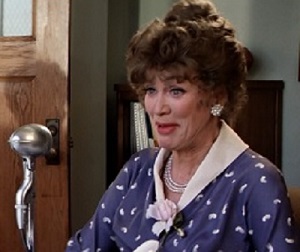
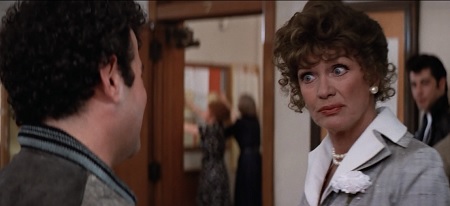
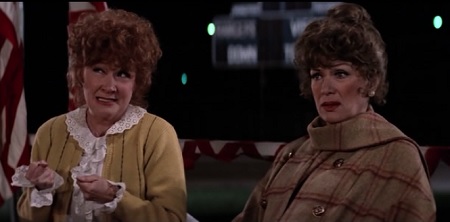
Grease had a staying power thanks to the number of times it was replayed on TV. Although my attention was drawn to all of the figures who rocked leather, one of the administrators made an impression too. Something about those ringing tones of Principal McGee’s (Eve Arden’s) reached me. Her combination of idealism, exasperation, and cynicism echoed adults I knew as she alternately disciplined and inspired Rydell High’s seniors. In a throwaway part, this actress had developed a fully realized character, one for whom I could imagine a history of victories and frustrations with students. She made an impact even on the beauty-enthralled kid that I was.

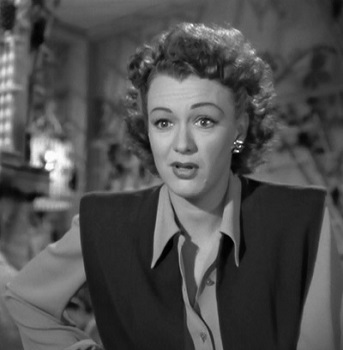
I didn’t make the connection years later when I listened to Eve Arden’s verbal wizardry in Mildred Pierce (1945). But I looked her up on IMDB, hoping to find her elsewhere, and knew then why Principal McGee had affected me. This was Eve Arden, people, the master of the one liner, the woman who could annihilate a victim with one breath of her scathing tongue. Of course she could match wits with teenagers. Of course they couldn’t fool her and thus convert her into another of the anonymous adults in teen flicks. She was humoring them. She was holding back. She was—dare I say it—so much cooler than they were.

Take the scene when Sonny (Michael Tucci) decides he’s going to stand up to her when he inevitably lands back in her office. “This year she’s gonna wish she’s never seen me,” he tells his buddy. “I just ain’t gonna take any of her crap, that’s all, I don’t take no crap from nobody.”

“Sonny?” she interrupts.

“Hello, ma’am,” he says, all bluster gone.

“Aren’t you supposed to be in homeroom right now?”

“I was just going for a walk.”

“You were just dawdling, weren’t you?”

“Yes, ma’am.”

EveArden-PrincipalMcGee
Even funnier are her remarks and reactions to her incompetent and slightly insane assistant, Blanche (Dody Goodman). Her resignation when Blanche overreacts to the coach’s pre-game enthusiasm is just one example of her understated genius.

BlancheandMcGee
Like any good comedian, Arden knows just how to give words emphasis, just how to raise that eyebrow, just how to make what could have been a passing moment snap. Oh, how I love the woman.

I think I fell for her from the start of Mildred Pierce, but I didn’t realize I had until near the end of the film.

IdaMeetsMildred
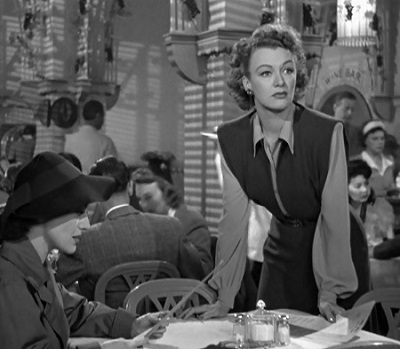
She plays Ida, the business manager for the restaurant owner (Joan Crawford) who repeatedly sacrifices all of her money, time, and hope for her spawn-of-Satan daughter, Veda (Ann Blyth).

Ida’s humor is evident from the start, as when she agrees to give Mildred a job as a waitress just after she separates from her husband. “Kind of a nervous gal, aren’t you?” Ida observes. “Well, you wanna watch that, it’s tough on dishes.”

Ida is the ultimate sarcastic sidekick; her dry delivery is a great foil to Crawford’s sentimental, feminine performance. “When men get around me, they get allergic to wedding rings,” Ida explains when asked about her single status. “You know, big sister type. Good old Ida, you can talk it over with her man to man.”

EveArdenMildredPierce
“I hate all women,” Mildred’s business partner, Wally (Jack Carson), says to Ida after Mildred rejects his romantic overtures. “Thank goodness you’re not one of them.”

Ida smirks. “Laughing boy seems slightly burned at the edges,” she observes to Mildred. “What’s eating him?” In fact, every scene between Carson and Arden makes me wish for more, as when Ida gives Wally orchids to put away, saying, “Here, muscle.”

Ida’s critiques of Mildred’s boyfriend, Monty, are always amusing too, even though the man (and actor) is no match for her. When the aristocratic Monty says, “Oh, I wish I could get that interested in work,” Ida drawls, “You were probably frightened by a callus at an early age.” Later, after he’s been milking Mildred and expresses surprise that she might have business problems, Ida retorts, “Don’t look now, but you’ve got canary feathers all over your face.”

MontyIdaVeda
But she reserves her greatest slam for Mildred’s parasitic daughter. “Why don’t you forget about her?” she asks Mildred after watching the abusive pattern between the two for years.

IdaMildred-EveArden
Mildred babbles about what a daughter means to a mother, leading Ida to this classic response: “Personally, Veda’s convinced me that alligators have the right idea. They eat their young.”

I’m not sure why it took me that long, but that’s when I knew for sure I’d found an actress I’d never tire of watching—and more importantly, hearing. I think we can all be thankful Arden was never a huge star, as it meant she would wring everything she could from each line, each expression, and never stop making us laugh.

Arden and Ball wow in Stage Door

Lucille Ball and Arden hilarious in Stage Door

Share
Posted in: 1940s films, 1970s films, Comedies (film), Drama (film), Feminism, The Moment I Fell for Tagged: comedic sidekicks, Eve Arden, Grease, Ida, Mildred Pierce, Principal McGee

Recent Posts

  • 100 Years Later, Still Scary: Dr. Caligari
  • Escaping Out of the Past (1947)
  • A Weeper for Those Who Love Jerks
  • Thank You, Academy, for Not Infuriating Me
  • Challengers (2024) Is a Bad Movie

Subscribe to Blog via Email

Enter your email address to subscribe to this blog and receive notifications of new posts by email.

Categories

  • 1920s films
  • 1930s films
  • 1940s films
  • 1950s films
  • 1960s films
  • 1970s films
  • 1980s films
  • 1990-current films
  • 2020s films
  • Action & Sports Films
  • Anti-Romance films
  • Blogathons
  • Childfree
  • Comedies (film)
  • Drama (film)
  • Feminism
  • Femme fatales
  • Film Noir/Crime/Thriller & Mystery
  • Gloriously Silly Scenes
  • Horror
  • Humor
  • Mae West Moments
  • Musicals and dancing films
  • Oscars
  • Random
  • Romance (films)
  • Romantic Comedies (film)
  • The Moment I Fell for
  • Turn My Sister into Classic Movie Fan
  • TV & Pop Culture
  • Uncategorized
Share
Classic Movie Blog Hub Member

Recent Comments

  • leah@carygrantwonteatyou.com on Meg Ryan’s Fate Foretold in Joe Versus the Volcano
  • Ryan on Meg Ryan’s Fate Foretold in Joe Versus the Volcano
  • leah@carygrantwonteatyou.com on 100 Years Later, Still Scary: Dr. Caligari
  • The Classic Movie Muse on 100 Years Later, Still Scary: Dr. Caligari
  • leah@carygrantwonteatyou.com on 100 Years Later, Still Scary: Dr. Caligari

Archives

  • November 2025
  • September 2025
  • May 2025
  • March 2025
  • January 2025
  • November 2024
  • August 2024
  • July 2024
  • May 2024
  • March 2024
  • February 2024
  • December 2023
  • November 2023
  • October 2023
  • September 2023
  • August 2023
  • July 2023
  • May 2023
  • April 2023
  • March 2023
  • January 2023
  • December 2022
  • November 2022
  • September 2022
  • July 2022
  • May 2022
  • April 2022
  • March 2022
  • February 2022
  • October 2021
  • September 2021
  • April 2021
  • March 2021
  • February 2021
  • December 2020
  • October 2020
  • September 2020
  • July 2020
  • May 2020
  • April 2020
  • March 2020
  • February 2020
  • December 2019
  • October 2019
  • September 2019
  • June 2019
  • May 2019
  • April 2019
  • February 2019
  • January 2019
  • November 2018
  • September 2018
  • July 2018
  • June 2018
  • May 2018
  • April 2018
  • March 2018
  • February 2018
  • January 2018
  • November 2017
  • September 2017
  • August 2017
  • July 2017
  • June 2017
  • May 2017
  • April 2017
  • March 2017
  • February 2017
  • January 2017
  • December 2016
  • November 2016
  • October 2016
  • August 2016
  • July 2016
  • June 2016
  • May 2016
  • April 2016
  • March 2016
  • February 2016
  • January 2016
  • December 2015
  • November 2015
  • October 2015
  • September 2015
  • August 2015
  • July 2015
  • June 2015
  • May 2015
  • April 2015
  • March 2015
  • February 2015
  • January 2015
  • December 2014
  • November 2014
  • October 2014
  • September 2014
  • August 2014
  • July 2014
  • June 2014
  • May 2014
  • April 2014
  • March 2014
  • February 2014
  • January 2014

Meta

  • Log in
  • Entries feed
  • Comments feed
  • WordPress.org

Copyright © 2025 Cary Grant Won't Eat You.

Church WordPress Theme by themehall.com