Cary Grant Won't Eat You

Classic movies for phobics

  • About
  • eBooks
  • Previous Blogathons
Classic movies for phobics

Author: leah@carygrantwonteatyou.com

Mae West as the Outlaw: My Little Chickadee

11/17/2018 by leah@carygrantwonteatyou.com 11 Comments


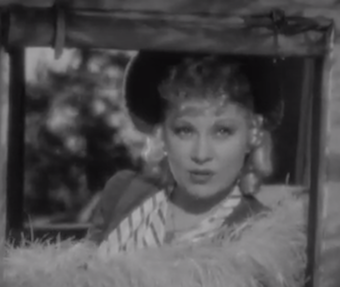
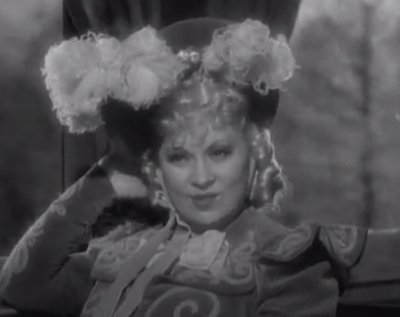
When asked what outlaw I wanted to feature for the Classic Movie Blog Association’s Outlaws blogathon, I immediately thought of Mae West’s character in My LIttle Chickadee. I know Mae West’s siren ways and bumpy pairing with W.C. Fields are more frequently associated with the film, but it’s hard to miss how West’s Flower Bell Lee flouts the law–not to mention convention–in this 1940s flick. And of course, being co-written by West, the film includes plenty of hilarious one liners and shimmying.

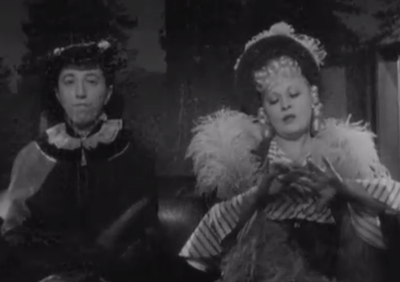
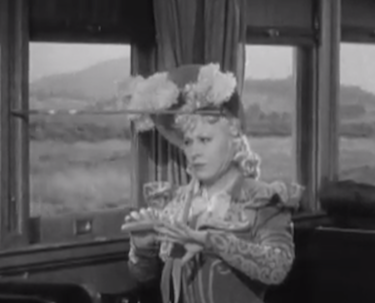
The story begins with Flower Bell (West) traveling by stagecoach to visit (and presumably settle with) her aunt and uncle in a Western town. She’s buffing her nails as the male passengers gawk and an accompanying woman, Mrs. Gideon (played by Margaret Hamilton, of witchy Wizard of Oz Fame), looks on disapprovingly.


Suddenly, a masked robber stops the coach to rob it of its gold. The rest of the passengers race out of the coach with their arms up. Flower Bell just sits there, sure it has nothing to do with her, and more interested in her nails.


The “Masked Bandit” (as he’ll later be called) threatens to kill the others if she doesn’t budge, so she reluctantly does. She doesn’t mind being “held up” she informs the masked bandit, but doesn’t like to be inconvenienced. And thus the delightful double entendres begin.

Of course the bandit notices Flower Bell’s beauty and abducts her. He returns her to her new town outskirts soon after, but clearly, she enjoyed her time away. He comes to visit her in her room at night, Romeo style, and kisses her while still hiding his identity. Unfortunately, her former stagecoach companion, Mrs. Gideon, spies the two in Flower Bell’s bedroom, and informs the town. Flower Bell is forced to defend her actions in court and identify the marauder. She refuses to tell anyone a thing, and gets kicked out of her new town, told she has to stay away till she’s married and respectable. The inflamed Mrs. Gideon also spreads the word to the ladies of the nearby town where Flower Bell is going, Greasewood City, saying Flower Bell won’t even be allowed to get off the train. But Flower Bell doesn’t care, as she makes clear with her parting words to the judge, when he asks if she’s trying to show contempt for his court: “I was doin’ my best to hide it.”

Since this is West, we audience members know she will not only get off the train, but have all of the townsmen in her thrall as well. And that happens. But first she has to fight off Indians attacking the train. Again, she’s buffing her nails, and when arrows almost hit her, she slowly pulls them out of the side of the rail car, rolling her eyes as she does so. Why must these pesky outlaws get in the way of her manicure?


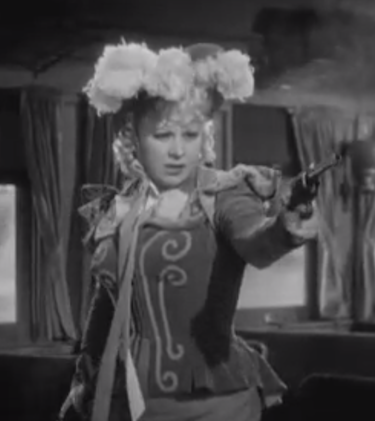
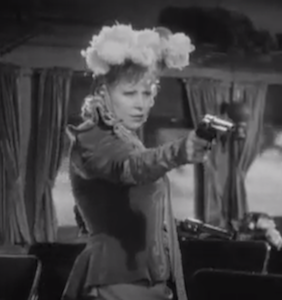
But when a fellow passenger dies, she takes up his two guns, shoots a bunch of Indians with obvious relish, saying she’s dispensed them in a “shower of feathers.” She’s angry because they’ve dared to “intimidate” her (sounds like a typical outlaw response, huh?) Flower Bell’s nonchalance and bravery are hilarious to witness in this strange scene. Even as we viewers flinch at the Indian stereotyping, we know that Flower Bell doesn’t care about race (more on that later). She just doesn’t like any bother, and agrees to be a hero–but only if she must.


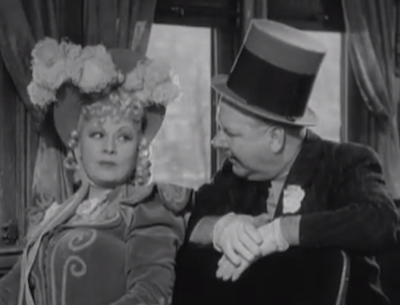
Meanwhile, a flirtatious passenger, Twillie (W.C. Fields), has been cozying up to her, and since she sees he has a bag of money, she doesn’t mind, and flirts right back.


He too plays his part in fending off the Indians, but mainly that part is yelling at them for assaulting a private car and bumbling in Fields’s typical physical-comedy way. Twillie has no problem with Indians; his best friend/servant/gambling partner is one (their strange interaction, and the film’s odd combination of racist terms and stereotypes and yet ahead-of-its-time treatment deserves a post of its own).

But even though Twillie doesn’t mind Indians attacking OTHER trains, he does object to being annoyed, much like Flower Bell, though he’s far less accomplished than she in fighting back. Once the danger has passed, the two get closer, as his marriage proposal gives Flower Bell a way to exit the train in peace. She soon ropes another gambling friend on the train into acting as minister. That friend uneasily performs the marital vows. Flower Bell has no intention of sleeping with Twillie, only using him to get a free room and the blameless rep she needs to keep seeing her outlaw and whomever else she pleases. Even Mrs. Gideon, again a fellow passenger, smiles her approval.

Once in Greasewood’s best shady saloon/hotel, a number of antics ensue as Flower Bell keeps Twillie out of her room while helping him with his gambling and lies. When he brags that he saved the train, she lets him take the credit. The town makes him the sheriff, but as the last few have died within months, this honor has more to do with Badger (Joe Calleia), the unscrupulous bar/hotel owner, wanting Flower Bell widowed than any conviction that Twillie has guts. Flower Bell then proceeds to flirt with the muckraking local reporter, even acting as a teacher to help him out in a classic West scene.

Flower Bell enjoys the reporter’s idealism and Badger’s dangerousness, and it’s very unclear which man (if either) will get her in the end. Meanwhile, the Masked Bandit continues his courting, and Twillie, finding out his “wife” likes a man in costume, pretends he’s the bandit himself. Naturally, she discovers the fraud, but can’t save him from the town posse, who is now convinced he’s the villain. Well, she can’t save him at first. Just as she defended him when he lied and cheated gambling, Flower Bell comes to his aid again. She claims he’s no bandit, and after getting put in jail for defending him and her own shady associations, she busts out and saves the day, without giving away her lover.

Of course, we find out who the bandit is, and there are no surprises there. The fact that the bandit’s accent makes it clear he’s Latino (even if the actor isn’t) doesn’t bother West’s Flower Bell. She may be portraying a woman from the last century, but West doesn’t even bother to defend interracial romance in the film, which clearly condones it. The fact that Flower Bell repeatedly breaks the law—in harboring the bandit, in escaping from jail, etc.–never gives the heroine (or her creator) a moment’s worry. In fact, Flower Bell takes the bandit’s gold with pleasure as a reward for her kisses, and encourages the town (when he leaves a bundle of goodies for them) to do the same.

But the transgressive nature of this film goes so much further. The female lead is the hero, the brave town leader and both defender against and abettor of outlaws. W.C. Fields at points seems to be in his own movie (and from what we know of how little the two got along, and how much they wrote their own parts, he basically was). But in all of their interactions, she bests him with no more effort than pushing back a cuticle. Her character’s name highlights her extreme femininity, which clearly doesn’t stop her from having mad skills with guns or enough bravery to face TWO towns full of people eager to attack her. Flower Bell does everything without a trace of fear; in fact, she performs dangerous acts with BOREDOM, proving, lest any males doubt it, that Mae West will always be the biggest, baddest outlaw of them all.


Check out all the fun outlaw entries at the Classic Movie Blog Association’s site.

Share
Posted in: 1940s films, Childfree, Comedies (film), Feminism, Mae West Moments, Romantic Comedies (film) Tagged: feminist films, Mae West, My Little Chickadee (1940), W.C. Fields

Comic Relief: A Simple Favor & Can You Ever Forgive Me?

09/29/2018 by leah@carygrantwonteatyou.com Leave a Comment

Need comic respite? I’m happy to report that two new dramedies featuring strong women are even better than you’ve heard.

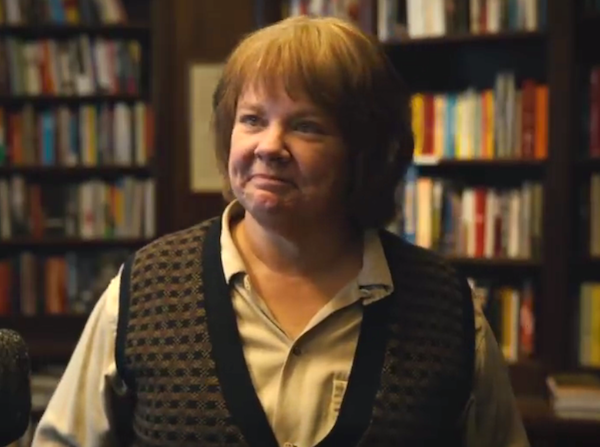
Can You Ever Forgive Me?, starring national treasure Melissa McCarthy, is based on the memoir of real-life writer Lee Israel, who became a con artist to pay the vet bills (out in wide release on Oct. 19th). Unable to get anyone to care about the subject of her new biography, Fanny Brice, much less her dwindling finances, Israel turns to stealing letters of famous movie stars and writers, and soon begins penning fake ones herself. Classic movie lovers and bibliophiles will sympathize with her alienation from those who don’t spend their days reading Noël Coward and Dorothy Parker. (And you’ll enjoy a line about Louise Brooks, a nod to classic movie fans.)
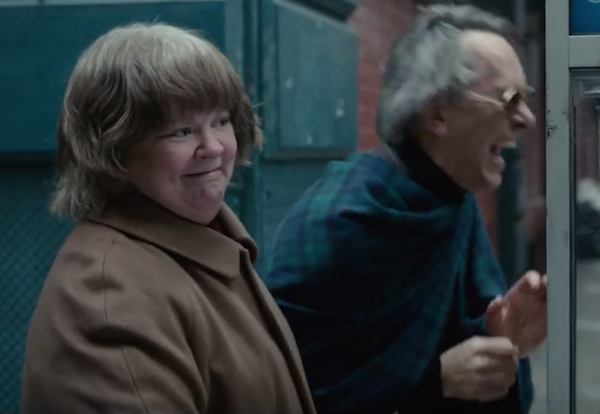

Appreciators of one-liners will ask themselves why they haven’t bought Israel’s memoir yet: this woman could WRITE. There’s a reason she was successful at mimicking Parker and Coward. Brought to caustic life by Melissa McCarthy, Israel is sympathetic even at her darkest and lowest. Despite the depth of her despair and loneliness, she is relentlessly funny in the film. Israel and her similarly lost companion (and later conspirator), Jack Hock (Richard Grant), engage in so much snarky, on-point banter that you wish the two could have had an Algonquin Round Table of their own.


These two boozy companions are simply joyful company for anyone who doesn’t mind a bit of darkness in their humor. And McCarthy deserves the awards buzz she’s getting for a riveting performance.

McCarthy’s frequent director Paul Feig has a film of his own out this month. Feig, who has a George Cukor flair for creating great vehicles for female stars, is at it again. The only question is whether Blake Lively or Anna Kendrick gets a meatier, more complex part in A Simple Favor, a story that is tonally closer to the light cynicism of Young Adult (2011) or the campiness of Serial Mom (1994) than to the darkness of Gillian Flynn’s Gone Girl (2014), to which it’s being compared. I’m hearing references to Double Indemnity from classic movie fans due to the film’s humor. Beat the Devil (1953) is more like it. Though A Simple Favor is a bit more controlled than that messy Truman Capote delight, there’s a bit of Mrs. Gwendolen Chelm (Jennifer Jones) in both of these heroines.

Feig; the director of Bridesmaids, The Heat, Spy, and Ghostbusters (the reboot); is so open about preferring female leads and so appreciative of their comedic skills that it’s unsurprising to see both stars so funny and magnetic in his film. Their profane banter is hilarious, and the casual cruelty, self-interest, and denial of these particular frenemies are a blast to watch. I won’t spoil the surprise of what becomes of Emily (Lively), whose disappearance spurs mommy blogger Stephanie (Kendrick) into amateur detective/life-stalker mode.
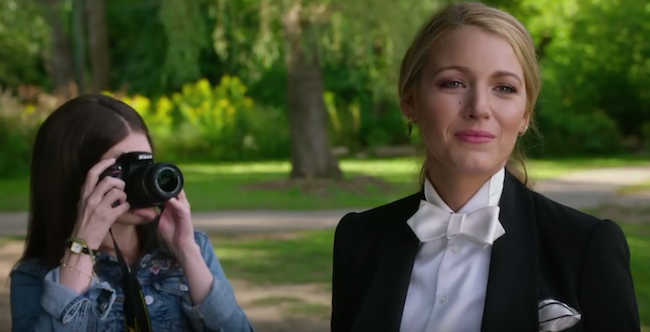
There are some seriously batty plot developments that seem more like old-school soap operas than big screen fare (again, like Beat the Devil). But anyone paying attention knows plausibility is not the point. Just sit back and enjoy this dark comedy fun. (And don’t miss the recent titles and commentary on Stephanie’s bizarrely eclectic blog.) Those of us who have been following Feig since his brilliant creation, Freaks and Geeks, will be glad to see his first female lead, Linda Cardellini, in a scene-chewing, funny bit part. Let’s hope the films to follow these two this fall are half as fun.
Share
Posted in: 1940s films, 1950s films, 1990-current films, Anti-Romance films, Drama (film), Film Noir/Crime/Thriller & Mystery, Humor Tagged: A Simple Favor, Anna Kendrick, Blake Lively, Can You Ever Forgive Me?, film review, for Beat the Devil fans, George Cukor, Louise Brooks, Melissa McCarthy, noir, Paul Feig, strong female leads

Women Who Love Too Much in Film

09/09/2018 by leah@carygrantwonteatyou.com 2 Comments

I had another fun talk with Grace Collins of True Stories of Tinseltown! We chatted about women who love too much–from Tierney’s character in Leave Her to Heaven to Irene Dunne’s in Back Street (1932 version). Grace is a wonderful host and we had so much to say, especially about the dreadful narcissists John Boles liked to play, and how Bette Davis could really be a post of her own on this topic.

Clearly, this is a subject that needs much, much more discussion! Check it out here:

And definitely check out Grace’s other posts and other podcasts. She’s so witty and so knowledgeable about so many things!

https://www.inyourfacewithdonnieandgrace.com/news

http://www.truestoriesoftinseltown.com/

Share
Posted in: 1930s films, Anti-Romance films, Comedies (film), Drama (film), Romance (films) Tagged: Back Street (1932), bad romances in film, Bette Davis, Gene Tierney, Gilda, Grace, Irene Dunne, John Boles, Leave Her to Heaven, Mildred Pierce, Now Voyager, Rita Hayworth, rom-coms, The Women, True Stories of Tinseltown podcast

Two Critics Pan Hitchcock’s Torn Curtain

07/06/2018 by leah@carygrantwonteatyou.com 16 Comments


Friends and fellow film buffs: Brian Wilkins and Mike Gutierrez have written wonderful guest posts here at Cary Grant Won’t Eat You—Brian, on fighting in Sword and Sandals films, and Mike, on his ideal casting for Hitchcock remakes. Today they’re joining the second annual Alfred Hitchcock blogathon to consider what the famous director could have been thinking with Torn Curtain (1966).

B: This all started because I had a memory of a movie where a drunken Paul Newman, at the Nobel Ceremony in Stockholm, chats up beautiful blondes and a physicist who may or may not be trying to defect to East Germany. So when Torn Curtain was still available, I texted Mike and said we should grab it.

There’s only one problem.

Torn Curtain is a Paul Newman and Julie Andrews vehicle, about a conference in Copenhagen that ends in a physicist possibly defecting to East Germany. And it’s not the movie I remembered. That movie is The Prize directed by Mark Robson. This was Torn Curtain, and as Mike put it…

M: Torn Curtain is a deeply stupid movie.

And it shouldn’t be.

It’s 1966.  Newman and Andrews are two of the biggest stars in the world. It’s true that Hitchcock was winding down by then, but he’d only done The Birds three years earlier. The three of them coming together for some Cold War intrigue sounds like a sure-fire hit, or at least a fun two hours. But that’s not what happened. And, frankly, I’m not sure what happened during the film.

Newman is “defecting,” but no one believes that for a minute. Andrews is his doting girlfriend who follows him to East Germany and decides to stay with him–betraying her country for a guy who has been lying to her. The East German secret police announce themselves as the “secret police,” which doesn’t seem like something the secret police should do. It’s not clear if Newman is working with the US government or is going completely rogue, but somehow he has ties to the resistance even though he’s just a scientist.

I could keep going–the plot is inane, the characters inconsistent, and Newman and Andrews seemed to have lost their charms on the flight to Berlin–but you get the point. So, Brian, what do you see as the reason this movie went off the rails?

B: They squeezed all the fun out of the movie. In every single case where you could find a joke or a bit of dash, they threw a lead blanket on it. I’m mostly blaming the writer.

But here’s the thing: I didn’t think it was humanly possible to have zero chemistry with Paul Newman. I’m pretty sure even inanimate objects have chemistry with Paul Newman. Even his crutch in Cat on a Hot Tin Roof looks into being leaned on. Julie Andrews looks like he started every take by mansplaining parliamentary procedure.

M: Do you think they took out the fun or had no intention of making a fun movie? I’m thinking the writer considered this his grand epic about a deadly serious topic and wanted to make a bold statement about love and patriotism and the threat of the Soviets; that he believed it was high art, Oscar-bait.

And tonally, it keeps shifting from a romance to faux-intrigue to, well, we should probably talk about how Paul Newman and some farmer’s wife re-imagined Sylvia Plath’s death on the Stasi officer. That scene manages the incredible trick of being both disturbing and boring.

B: Let me do some research <looks at Wikipedia for 2 minutes>…oh, shit, this was a hot mess. Hitchcock shopped the idea to Nabokov, who turned it down (genius) then gave the script to Brian Moore (shortlisted 3 three times for the Booker prize) who really should have known better. Moore complained Hitch had no sense of characters. Hitchcock complained Moore wasn’t funny. So Hitchcock thought he was making North by Northwest and Moore thought he was writing…a boring version of The Spy Who Came in From the Cold?

But to the murder. Listen, I hate to get all professional about this, but there are a million things to murder someone with in a kitchen other than a gas stove. It’s almost like the house frau in question was like, “Do you know how hard it is to get Stasi brains out of a cast iron pan? I just seasoned it!”

M: I just spent five minutes re-imagining this film as if Nabokov wrote it. Then I started imagining if he’d written The Sound of Music. “No, you cannot sing the Nazi’s away, Julie Andrews. No.” I digress.

B: Rolling pin. Cleaning chemicals. Towel garrote. Meat hammer. Fork.

M: Ice pick?

B: Only if he’s a real Communist (yes, that’s a Trotsky joke, David Ives fans).

M: This was one of the big set pieces, the one that shows us that Newman isn’t just a dainty scientist but a badass with a Ph.D. Now, you’re married to a scientist–who I’m certain would have used a paring knife—

B: Correct. Or poison.

M: …and you’ve met scores of scientists in your life: is there anything about Newman’s character that seems the least bit authentic? Or, a better question, what do you think Newman thought he was supposed to be? He’s never been so charmless. He has that great, knowing smirk in everything he does. What movie did he think he was in?

B:  I think Newman read the character as a boring CIA agent the whole time. His character “starts in Washington” and ends with a “teaching position.” He’s just a physicist who couldn’t actually cut it, but as a bureaucrat briefing real spies on what to steal, he’s sort of useful. And I think Paul Newman would hate that man intensely. I’m guessing he needed to fund some sort of charity for kids with horrific cancer. Seriously, that man is a sexy, sexy saint.

M: I’m not sure the first Mrs. Paul Newman would agree. There is a voodoo doll of Joanne Woodward out there floating in the aether.

B: I started wondering if Joanne Woodward would be better casting than Julie Andrews, but, honestly, I don’t think anyone could have chewing gum and twined a performance from this script. Is there any trace of Hitchcock at all with the escape scene?

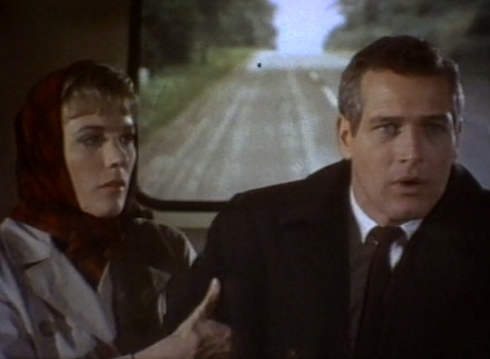
M: Sure. It’s an elaborate set piece–a bus chase before sneaking onto a ship–that’s supposed to be Hitchcock’s version of how he’d escape past the Berlin Wall. But it feels like a knock-off version of a Hitchcock climax, sort of like how 2 Days in the Valley ripped off Tarantino. The problem is that Andrews and Newman are passive characters in the escape. They’re sitting on a bus driven by someone else, and then shuffled onto a boat where they are shoved into baskets to sit in their own filth for days (weeks?) while someone else pilots the ship. Passive. It’s like Hitchcock forgot what made for great Hitchcock.

B: I never even thought of how this would be Hitchcock’s personal fantasy of how to get away: “Well, I’m certainly not going to run. And riding a motorcycle sounds sweaty. Perhaps I could just drift peacefully into freedom?”

M: Here’s the thing: Cary Grant kills a dude and saves the girl in North by Northwest.

Paul Newman sits in the back of the bus and hopes no one hurts him.

B: I think this film needs more dynamite, there, Butch. I tried to think of something I liked about this film but I’m coming up as empty as a housefrau looking for a murder weapon in a gun closet.

M: Yeah, I’ve got nothing. In the end, I found myself rooting for the Stasi.

B: Well, thank you for your patience, kind readers. I hope you’ve enjoyed being warned off what has to be in my top 5 worst movies of all time. See The Prize instead for all your Paul Newman Cold War-related hijinks. And …oh! Bear Island with Julie Andrews. It’s got the UN, it’s set off the coast of Norway, and there’s a possibly gold-filled U-Boat.

M: That sounds awesome. I’ve never seen it. Let me do some research <looks at Wikipedia for 2 minutes>…. You did it again: You got Julie Andrews confused with Vanessa Redgrave.

B: That’s more telling about my fantasy life than I would like. MEA CULPA!

Check out the other posts in Maddy Loves Her Classic Film‘s The Second Annual Alfred Hitchcock Blogathon, including her post on Rebecca!

Share
Posted in: 1960s films, Drama (film), Film Noir/Crime/Thriller & Mystery, Humor Tagged: Alfred Hitchcock, Paul Newman and Julie Andrews, Torn Curtain, What was he thinking films, worst films by good directors

My Podcast Talk on True Stories Of Tinseltown

07/05/2018 by leah@carygrantwonteatyou.com Leave a Comment

It was a riot talking with Grace Collins of True Stories of Tinseltown about Stella Dallas, William Powell, The Blue Gardenia, and Brief Encounter. We had fun comparing loves and gripes about classic films, particularly our united dislike for the husband in Stella Dallas and the supposedly romantic male lead of Brief Encounter. You can find the podcast here. I hope you will also check out her other podcasts. The one on Mary Astor’s diary is especially brilliant! Thanks to Grace for being such a great host and for taking the time to listen to me rant:)

Share
Posted in: 1930s films, 1940s films, 1950s films, Anti-Romance films, Mae West Moments Tagged: Barbara Stanwyck, Blue Gardenia, Brief Encounter, John Boles, Stella Dallas, terrible husbands in film, terrible lovers in film, William Powell

In Love with Nick Charles

06/10/2018 by leah@carygrantwonteatyou.com 21 Comments


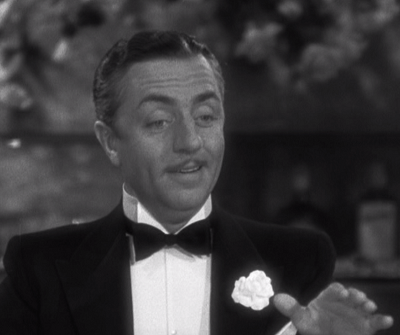
When asked to pick a swoon-worthy character for the Reel Infatuation blogathon, I assumed Nick Charles would already be taken. But this year, my fellow bloggers, you were too slow on the uptake. He’s all mine. How do I love thee, Nick? Let me count the ways. You are….

  1. Quick with a quip.
  2. The perfect mixture of man and kid.
  3. A generous host, especially to strange characters and party crashers.
  4. An excellent judge of canines.
  5. Averse to pretensions.
  6. Able to explain martini mixing via dance moves.
  7. Smarter than everyone, but without ever taking yourself seriously,
  8. Easygoing and relaxed when exposed to danger or annoying relatives.
  9. Supportive of the weaker types around you.
  10. Owner of a confident swagger and sexy voice.
  11. Appreciative of Nora’s charms, even enough to tolerate late-night breakfast requests.
  12. Entertaining–on every occasion, in every place, in every decade.

Sigh. Who could be better?

Thanks to Maedez of Font and Frock and A Small Press Life and Ruth of Silver Screenings for hosting! Check out other entries here.

Share
Posted in: 1930s films, 1940s films, Blogathons Tagged: films, Myrna Loy, Nick Charles, Nora Charles, The Thin Man, William Powell

Dancing Lady: A Film that Subsists on Chemistry Alone

05/27/2018 by leah@carygrantwonteatyou.com 4 Comments


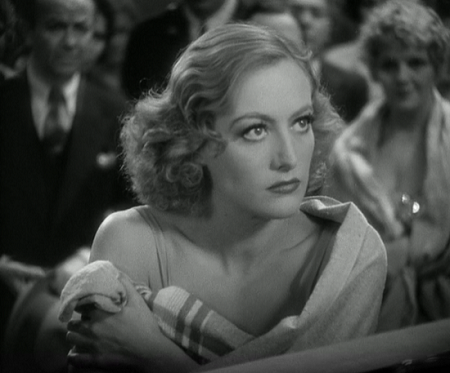
Let’s consider the reasons Joan Crawford is a terrible choice to star in Dancing Lady (1933), one of those films about an aspiring hoofer, Janie, who is willing to do anything but trade sexual favors to get on the stage, and who is so talented she actually makes it.

1. So talented at dancing? Look, I know about Crawford’s Charleston wins and what they did for her career. But Janie (Crawford) is supposed to be talented enough to impress a stage manager, Patch (Clark Gable), whose job is working with dancers. Any woman FRED ASTAIRE can’t make look talented ain’t anything special in the footwork department, my friends. Astaire looks flat-out bored in this film, and it’s not just because those wannabe Busby Berkeley numbers are unwatchable.

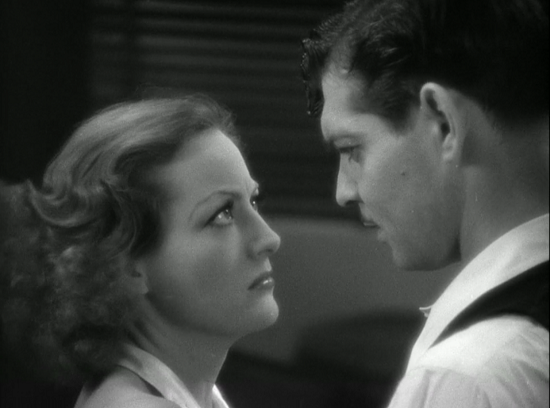
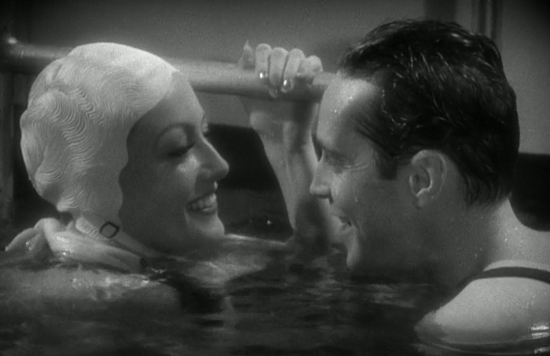
2. Torn between a man and her career? The film’s plot is pretty basic: Tod, a playboy (Franchot Tone), gives Janie an in with a show put on by Patch in hopes she’ll grant him sexual favors. Janie denies him because she wants to be a star. Check out those sexy glances when Crawford flirts with her future husband (Tone), and ask yourself: Wouldn’t this woman just go ahead and take both?


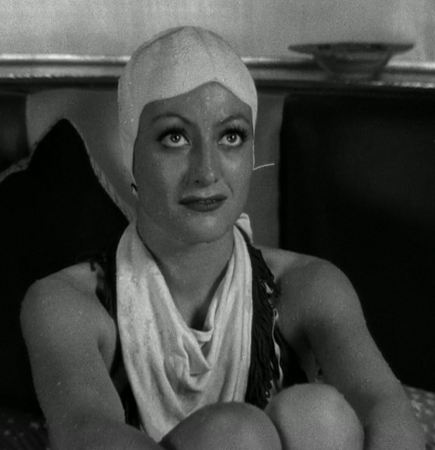
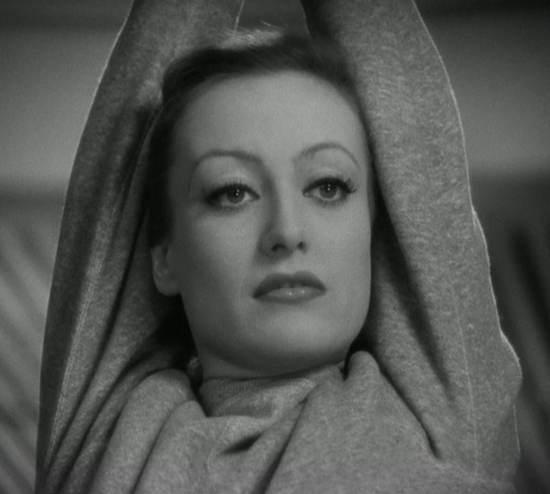
Aurora of Once Upon a Screen had it right when she wrote about a different dancing film, “Crawford had heat with most everybody it seems in the early 1930s. She seems to flirt with the typewriter in this movie….” Admittedly, with those looks, Crawford appears sexy all the time, especially when she’s angry. Check out her eyes when a judge demeans her ambitions:


Luckily, Crawford wasn’t cast as Janie because her role–or for that matter, the plot–makes sense. She was cast to make eyes at her frequent real-life lover, Clark Gable, the stage manager pining for her. MGM had already witnessed their chemistry in their three films together before this one (not to mention had to deal with their off-screen behavior), and knew the money was in exploiting it.

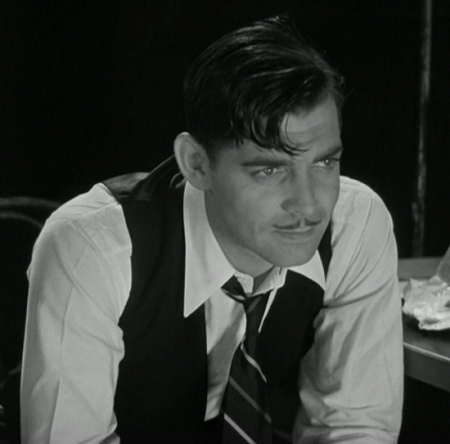
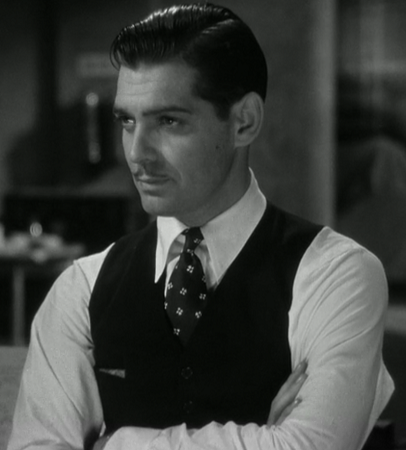
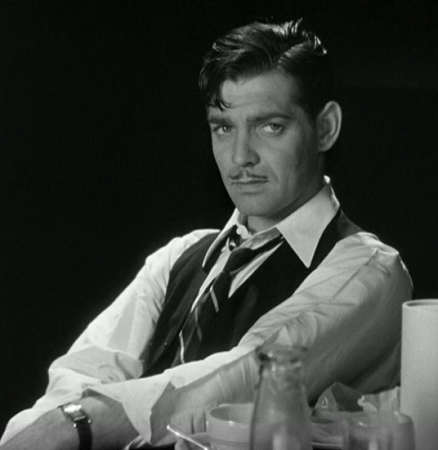
Because Patch (Gable) thinks Janie’s gonna take up the playboy’s offer, we get many scenes of him brooding. And seriously, who is a more sensual brooder than Clark Gable?


And like his co-star, Gable looks–if possible–even sexier when he’s angry.


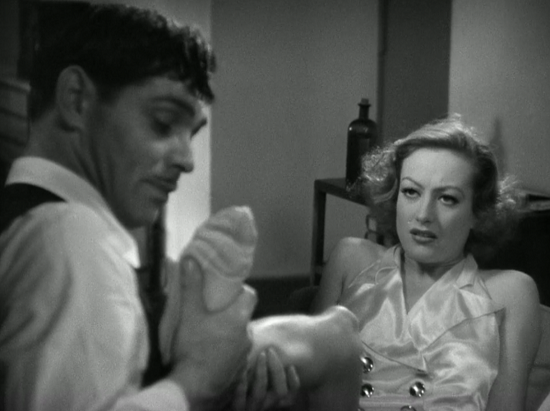
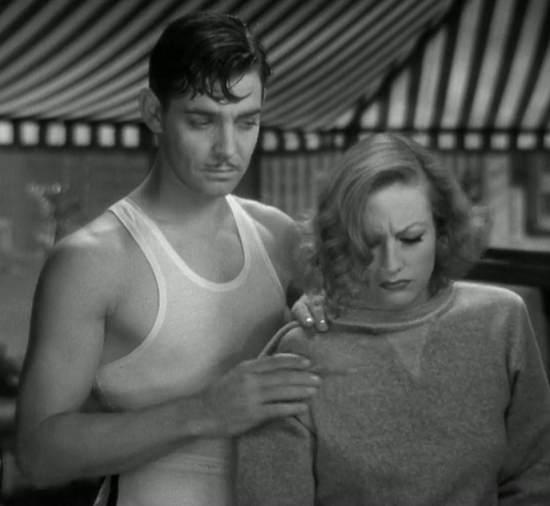
After fewer than 5 minutes of dancing practice, Janie usually has a cramp, twists her ankle, etc. Of course this kind of injury-prone behavior would make her too big of a risk to helm a musical, but the screenwriters know where their bread is buttered: not with logic, that’s for sure. Instead, with scenes of Gable massaging Crawford’s muscles.


And then you get these stares of Crawford’s at Gable, and you realize those swimming scenes with Tone are kid stuff compared to the smoke she’s emitting at Gable. Makes you wonder why Tone even bothered to show up for the film.


If you’re looking for a good dancing movie, do yourself a favor and look elsewhere, or do what I do: walk away during the numbers. But if you want to see two ridiculously hot actors burning the screen into cinders, enjoy. And just for your viewing enjoyment, I’m going to give you a final shot of Gable brooding.


You’re welcome.

Share
Posted in: 1930s films, Musicals and dancing films, Romance (films) Tagged: best onscreen chemistry, Clark Gable, dancing films, early Fred Astaire films, Franchot Tone, Gable and Crawford films, Joan Crawford, onscreen chemistry

Advice to a Fritz Lang Heroine, after Too Much Crime TV

04/13/2018 by leah@carygrantwonteatyou.com 2 Comments

Oh honey. The reporters are telling you the police are closing in. Every black and white outfit has you jumping. You’re burning your dress in an incinerator in the backyard.

Let’s refresh why. The date is 1953. You, our heroine of The Blue Gardenia, are played by Anne Baxter. The actress, having shredded every scheming expression from three years before, is now you, the dewy fiancee of a soldier abroad who works at the phone company. As you celebrate your birthday on your own with his (absent) and hers (present) champagne, you take out your soldier’s glorious, cherished letter to find, SURPRISE: He’s fallen for a nurse.

What to do? Well, get drunk with the local cad who has just called to invite your roommate to a place called The Blue Gardenia.


Go to his place after he gets you drunk. After all, you’re too intoxicated to realize “blue gardenia” is a cheap pseudonym for “black dahlia” and therefore a sign of danger;  you’re too intoxicated to even realize there will be no “party” at his pad. (Have you seen no films? Raymond Burr is playing the cad! Run!) So of course, you get in a mess, have to fight off his  attempts to rape you by grabbing a poker, and then you black out to find him dead.

(Before we get to the rest of the plot, there’s a haunting moment in the bar when you had a chance to walk away. There’s handsome Nat King Cole singing “Blue Gardenia,” and somehow his soulful sincerity doesn’t start you sobbing OR walking away from the lying playboy before the mess starts? King’s notes sear through me, more than half a century later. How is it possible they leave you unmoved? But I digress.)


The question of the film–Did you murder the guy?–isn’t that interesting to me, as I’m not sure how anyone in this circumstance could be called a “murderess” anyway. It’s an accident IF it happened, and the need for self-defense evident. But the local crime beat reporter has you convinced your only salvation is to seek refuge in the protection of his newspaper’s arms. And he—the surely not self-interested sleaze reporter—will save you from the big bad police about to knock on your door.

What’s strange to the modern viewer, accustomed to far too much crime TV, true crime books, and novels galore, is that they have NOTHING on you, my friend. A dress. A shoe size. A hair color. Some thoughts about your mannerisms from a flower seller and waiter. All that they really have on you—besides a call to your house that wasn’t even for you (and won’t hurt your friend since she has an alibi)—is that you are a MESS. Calm down, friend. Call over your wisecracking friend, Crystal (Ann Southern); ask for help. Keep that reporter out of your thoughts; honey, heaven help you, he’s almost as gullible as you are proving to be. Instead, put on your Nancy Drew heels. This case is something even that black-and-white thinker could manage. Heck, Encyclopedia Brown would have it down in two minutes.

And then you won’t be dependent on sad sack double crossers who treat your friend like a whore because she was once married, who only like you IF you’re not someone who would defend yourself from an abusive attacker. Then you can solve the crime, put on Nat King Cole’s record, sing along as you mourn your lost love, and then dance your way back to happiness with your hilarious roommates.

Alas, it’s still 1953 for you, my friend. And so the final thoughts in the film are the new cad’s, who is soon to be your love. And all we can do is watch, and pity.

Share
Posted in: 1950s films, Anti-Romance films, TV & Pop Culture Tagged: Anne Baxter, film review, Fritz Lang, Nat King Cole, Raymond Burr, The Blue Gardenia

Happy Accidents: an Underrated Rom-Com

03/11/2018 by leah@carygrantwonteatyou.com 11 Comments


Few rom-coms actually manage to be both romantic AND funny. For some movies, the romance wins, but the laughs are tepid; for others, you’re laughing so hard, but not feeling any chemistry. Happy Accidents (2000) is that rare film that manages both, maybe because, like most great romances, it’s not strictly about these two people at all. It asks larger questions we heterosexual women ask of ourselves every day: Is it possible to change where we’re headed? Can we trust a man’s words when we can’t verify them? And is it worth staying with a great guy if he runs from miniature dogs and claims he’s from a future version of Dubuque, Iowa?

The film keeps us guessing whether the great guy, Sam (Vincent D’Onofrio), really IS from the future, or just hiding his mental illness and/or compulsive lying. The comedy mainly comes from Ruby’s (Marisa Tomei’s) efforts to wish away/rationalize all of his (seemingly) nonsensical statements and actions. Her past relationships make her desperate to hold onto the nicest guy she’s ever been with, someone even her parents like. Her past is summed up beautifully when Sam asks if she likes music, and Ruby answers with despairing resignation, “You’re not a drummer, are you?”

Tomei’s delivery here and throughout is so on point that you may wonder why we have so few comedies of hers to savor. I have always thought the critical consensus that she was unjustifiably given an Oscar for My Cousin Vinny (an opinion I don’t share) has tainted all of her work since. How easily she could have had Julia Roberts’s or Meg Ryan’s career otherwise! She is adorable and hilarious in this film. And D’Onofrio, who irritates me in Law and Order: Criminal Intent, reminds me in this movie of why I used to like him: he’s awkward, charming, and (seemingly) achingly sincere.


The two have a meet-cute and rush headlong into moving in together, a development that worries Ruby’s therapist, who reminds Ruby she’s falling into her usual destructive romantic pattern. That the therapist is played by this woman ensures that you’ll wish each of their sessions longer:


Sam tells Ruby various stories of why he’s here, why his backstory is so flimsy, and why the worry should be not about him, but her. It seems he’s here to protect her, though he’s cagey about why. Maybe he’s playing a funny romantic game, as her friend suggests. Maybe he really believes his stories, but is otherwise sane. Maybe he’s blocking/compensating for his sister’s death (whenever it occurred). And maybe, just maybe, he’s telling the truth.

I won’t reveal where the story goes, as you (unlike he, perhaps) cannot go back and erase the memory of my spoilers. But trust me: it’s worth it to spend some time with Sam and Ruby. Watch him calmly explaining to bystanders that he didn’t need a college education due to information being inserted into his brain as the strained Ruby tries not to hear it. Relish his attempts to seduce her with polka music. And watch Ruby’s growing love for him, and his infatuation with her. Like Ruby, you’ll start to wonder, “How bad can a fantasy about being a time traveler be anyway?”

**

This post is part of The Time Travel Blogathon, co-hosted by Ruth of Silver Screenings and Rich of Wide Screen World. Check out all the fun travels here.

Share
Posted in: 1990-current films, Blogathons, Romantic Comedies (film) Tagged: like, Marisa Tomei, rom-com, Safety Not Guaranteed, Somewhere in Time, time travel films

2018 Best Pic Reaction

03/05/2018 by leah@carygrantwonteatyou.com 4 Comments

Seriously?

Share
Posted in: 1990-current films, Oscars Tagged: Embarrassing Oscar pics, Get Out and Three Billboards vs. hamfisted fairytale, headscratcher Oscar pics, The Shape of Water terrible
« Previous 1 2 3 4 5 6 7 8 9 10 11 12 13 … 23 24 25 26 27 Next »

Recent Posts

  • 100 Years Later, Still Scary: Dr. Caligari
  • Escaping Out of the Past (1947)
  • A Weeper for Those Who Love Jerks
  • Thank You, Academy, for Not Infuriating Me
  • Challengers (2024) Is a Bad Movie

Subscribe to Blog via Email

Enter your email address to subscribe to this blog and receive notifications of new posts by email.

Categories

  • 1920s films
  • 1930s films
  • 1940s films
  • 1950s films
  • 1960s films
  • 1970s films
  • 1980s films
  • 1990-current films
  • 2020s films
  • Action & Sports Films
  • Anti-Romance films
  • Blogathons
  • Childfree
  • Comedies (film)
  • Drama (film)
  • Feminism
  • Femme fatales
  • Film Noir/Crime/Thriller & Mystery
  • Gloriously Silly Scenes
  • Horror
  • Humor
  • Mae West Moments
  • Musicals and dancing films
  • Oscars
  • Random
  • Romance (films)
  • Romantic Comedies (film)
  • The Moment I Fell for
  • Turn My Sister into Classic Movie Fan
  • TV & Pop Culture
  • Uncategorized
Share
Classic Movie Blog Hub Member

Recent Comments

  • leah@carygrantwonteatyou.com on Meg Ryan’s Fate Foretold in Joe Versus the Volcano
  • Ryan on Meg Ryan’s Fate Foretold in Joe Versus the Volcano
  • leah@carygrantwonteatyou.com on 100 Years Later, Still Scary: Dr. Caligari
  • The Classic Movie Muse on 100 Years Later, Still Scary: Dr. Caligari
  • leah@carygrantwonteatyou.com on 100 Years Later, Still Scary: Dr. Caligari

Archives

  • November 2025
  • September 2025
  • May 2025
  • March 2025
  • January 2025
  • November 2024
  • August 2024
  • July 2024
  • May 2024
  • March 2024
  • February 2024
  • December 2023
  • November 2023
  • October 2023
  • September 2023
  • August 2023
  • July 2023
  • May 2023
  • April 2023
  • March 2023
  • January 2023
  • December 2022
  • November 2022
  • September 2022
  • July 2022
  • May 2022
  • April 2022
  • March 2022
  • February 2022
  • October 2021
  • September 2021
  • April 2021
  • March 2021
  • February 2021
  • December 2020
  • October 2020
  • September 2020
  • July 2020
  • May 2020
  • April 2020
  • March 2020
  • February 2020
  • December 2019
  • October 2019
  • September 2019
  • June 2019
  • May 2019
  • April 2019
  • February 2019
  • January 2019
  • November 2018
  • September 2018
  • July 2018
  • June 2018
  • May 2018
  • April 2018
  • March 2018
  • February 2018
  • January 2018
  • November 2017
  • September 2017
  • August 2017
  • July 2017
  • June 2017
  • May 2017
  • April 2017
  • March 2017
  • February 2017
  • January 2017
  • December 2016
  • November 2016
  • October 2016
  • August 2016
  • July 2016
  • June 2016
  • May 2016
  • April 2016
  • March 2016
  • February 2016
  • January 2016
  • December 2015
  • November 2015
  • October 2015
  • September 2015
  • August 2015
  • July 2015
  • June 2015
  • May 2015
  • April 2015
  • March 2015
  • February 2015
  • January 2015
  • December 2014
  • November 2014
  • October 2014
  • September 2014
  • August 2014
  • July 2014
  • June 2014
  • May 2014
  • April 2014
  • March 2014
  • February 2014
  • January 2014

Meta

  • Log in
  • Entries feed
  • Comments feed
  • WordPress.org

Copyright © 2025 Cary Grant Won't Eat You.

Church WordPress Theme by themehall.com