Cary Grant Won't Eat You

Classic movies for phobics

  • About
  • eBooks
  • Previous Blogathons
Classic movies for phobics

Author: leah@carygrantwonteatyou.com

The Lure of the Selfish Genius

10/19/2016 by leah@carygrantwonteatyou.com 10 Comments

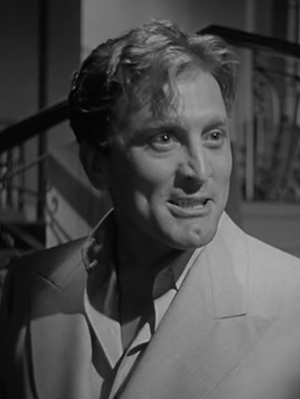
kirkdouglasbadandbeautiful
The Bad and the Beautiful
(1952) presents that classic question: what are you willing to put up with, to be under the direction of a genius? Whiplash (2014) did the same just a couple years ago, conductor Fletcher (J.K. Simmons) compelling his protégé drummer to dangerous extremes for his art. The question has obviously lost none of its potency in the last 60 years. But this classic Hollywood version begins with the victims of brilliant producer Jonathan Shields’ (Kirk Douglas’). You see the damage first, and it colors how you view the rest of the film.

And yet….It’s the start of the film, and while you’re soon treated to flashbacks of what treatment led Shields to get such cold shoulders from former pals, you can’t help wondering how they’ll answer the question—and how you would too.

Shields, it appears, is destitute in Paris. But he has an idea for a film, and three victims of his ruthless ambition would be perfect for it: Georgia (Lana Turner), the actress he romanced to improve her performance, then dumped; Fred Amiel (Barry Sullivan), the director/best friend whose work he stole; and screenwriter James Lee Bartlow (Dick Powell), whose life he destroyed. Shields sends proxy Harry Pebbel (Walter Pidgeon) to lure them. And Pebbel, who has forgiven Shields for his own wrongs, gathers them together, hoping they’ll stick around long enough for Shields’ call about the film. And so the flashbacks of each betrayal begin, ranging from egregious to abominable.

Douglas is predictably mesmerizing in the role, which was supposedly loosely based on producer and studio exec David O. Selznick, best known now for Gone with the Wind. In fact, Douglas is so good in such roles that I found myself actually expecting worse behavior from Shields, bad as it was (Ace in the Hole being the last film of his I viewed).

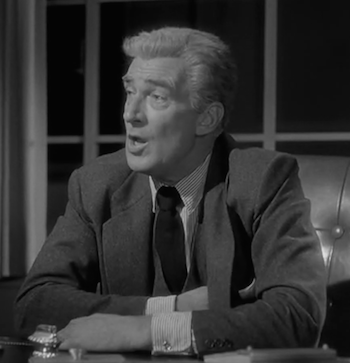
What I found fascinating about the film this time around is the horrifying cruelty of Pebbel.

walterpidgeonthebadandthebeautiful
He actually pooh-poohs the three victims over their healthy desire to avoid the psychological damage Shields excels at inflicting, as if their heartbreaks are merely scraped knees. Pebbel’s argument—that human losses are inconsequential in comparison to accolades—is terrifying, and his calmness in expressing these views chilling. Shields may have a monstrous side, but he’s nothing compared to his Machiavellian helper.

But it is a question, whether for some the pursuit of greatness is worth human costs (though it would be hard to argue James’ was). Certainly, many artists we celebrate today have said yes to such a question. Many do now. The kindhearted instincts within you may urge such artists, “Leave!! Leave!” But the part of you who cherishes excellence secretly whispers, “Stay….”

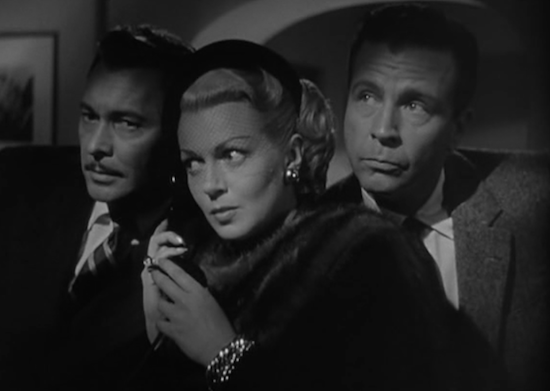
The call from Shields comes, of course. And of course, they all refuse to remain. But then Georgia picks up the phone connection in another room, and the others lean in to hear, and we see them listening, lured back.

thebadandthebeautiful
Will they, won’t they?

This post is part of the Hollywood on Hollywood fall blogathon hosted by the Classic Movie Blog Association. Check out the wonderful entries here.

Share
Posted in: 1950s films, 1990-current films, Anti-Romance films, Blogathons, Drama (film), Uncategorized Tagged: genius in film, The Bad and the Beautiful, Whiplash

Meg Ryan’s Fate Foretold in Joe Versus the Volcano

10/01/2016 by leah@carygrantwonteatyou.com 17 Comments

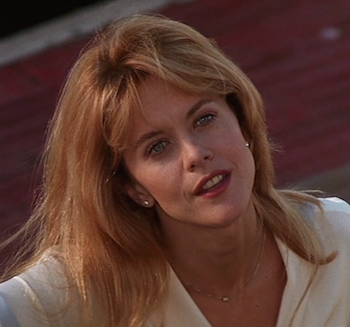
megryanjoevsvolcano
Meg Ryan has had a peculiar career: America’s darling after When Harry Met Sally (1989), she has struggled to avoid typecasting as the perky cute girl ever since, and largely failed, settling for a saccharine portrayal in Sleepless in Seattle (1993), and veering into downright parody of her persona in the remakes You’ve Got Mail (1998) and The Women (2008), with brief moments of authenticity (When a Man Loves a Woman) in between. While some of the blame must rest with Ryan, it’s clear that Hollywood producers failed to recognize (or thought audiences would) the depth in When Harry Met Sally, instead plying the poor actress with cane sugar ever since. That’s why it’s so fascinating to peer earlier into Ryan’s career, when the exploration of character was (at least partially) her own to make. Joe Versus the Volcano (1990) is particularly fascinating since she plays three roles, which curiously foretell her fate.

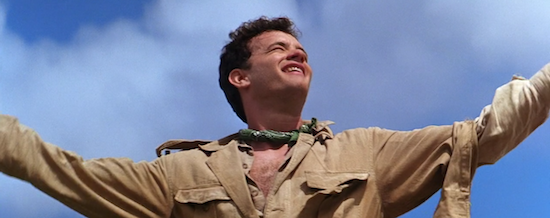
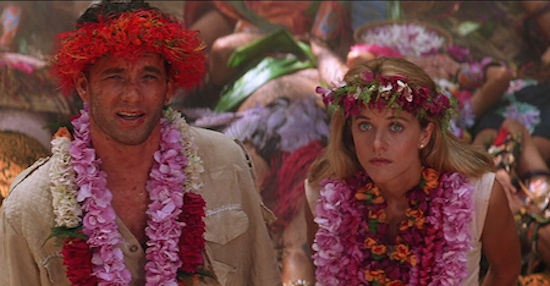
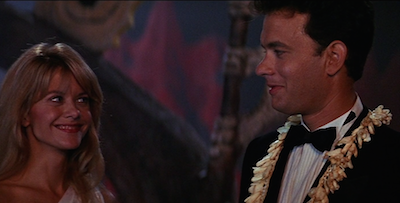
The plot is strange, so I’ll just begin with the basics: Joe’s (Tom Hanks’) fears–especially for his health–keep him mired in a dreadful job, until a dire prognosis unexpectedly snaps him out of depression and leads him on a journey to an island where an odd fate awaits him. He goes on a date with coworker DeDe (Ryan) before he departs, then meets half-sisters Angelica (Ryan) and Patricia (Ryan) on his journey. Attracted to all three (he keeps saying they look familiar), Hanks falls for only one, Patricia, who captains the boat to his destination, and plays a part in what awaits him there.

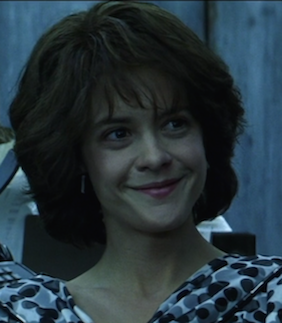
In DeDe, Ryan channels Easy Living‘s (1937) Mary Smith (Jean Arthur). Naïve and sweet and just a little lost, DeDe disperses–at least a little–the heavy gloom of the office, where she and Joe suffocate under fluorescent lighting and the repetitive yelling of their boss (Dan Hedaya, in a darkly funny turn).

megryan-dede-joevsvolcano
When Joe quits the job and asks DeDe out, it’s an act of salvation, and you can’t help but laugh at her startled, perky response to finding the dead weight in her office come to vivid life. Like Arthur, Ryan performs this role with relish and charm, with a chirpy voice that doesn’t quite grate in the small time we’re listening to it. Much more time spent with this character would start to wear audiences thin (as Arthur does for me–uncharacteristically–in Easy Living).

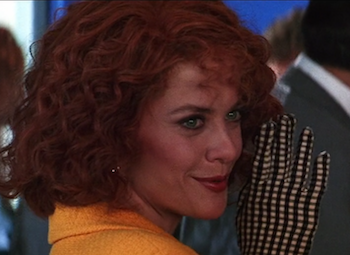
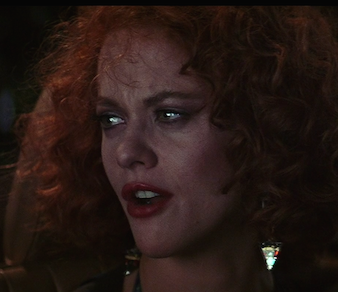
Next Joe encounters oddball Angelica (Ryan), who calls herself a flibbertigibbet.

megryanangelica-joevsvolcano
We viewers soon question her characterization, realizing that this woman has no idea who she is. She’s donned a pretentious, flat delivery and tired expressions culled from movies in her LA home. Her clothes likewise seem costumish, as does her carefully stylish smoking. She’s a combination of affectations she’s adopted, none of which can delay for long the depression and fragility just beyond her careful poise. If DeDe recalls the cute head bobbing and springy step Ryan deployed too consciously by the point of You’ve Got Mail, Angelica conveys her pain at the impersonation, her relief at capturing her fuller self in movies such as When a Man Loves a Woman.

megryanangelicajoevsvolcano-crying
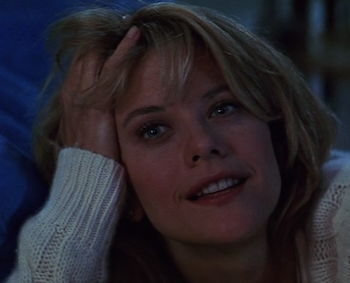
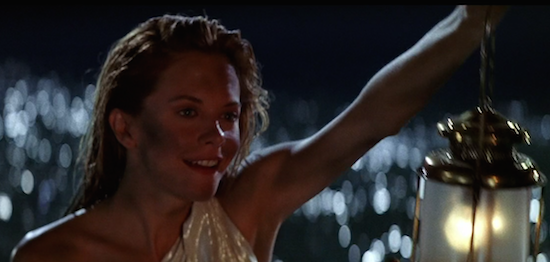
And of course, in Patricia, Joe’s last Ryan encounter, we find our heroine. Healthy besides being “soul sick” for taking her father’s money, Patricia is smart and strong and brave, our Jean (Barbara Stanwyck) of The Lady Eve (1941). Like Jean, she’s an “adventuress on the high seas” and wise enough to guide Joe on the final steps of his self-discovery.

megryan-patricia-joevsvolcano
This is the Ryan we love: cute, yes, but only in moments of glee; she’s bold and womanly and fun, yet vulnerable and flawed. It’s the type of role Ryan excelled at. While the two other parts feel like conscious acts (and should be, as the roles are archetypes rather than fully sketched-out characters), this last she fully embodies. And we see the Stanwyck type of performer she could have consistently been, had When Harry not doomed her to full-on cuteness.

As for the film itself, what to say? It’s about redemption and faith, journeys physical and spiritual, but is most remembered for orange soda and hypochondria jokes.

tomhanksjoevsvolcano
The fact is, Joe versus the Volcano (1990) is an odd duck of a film. Its uneven tone and quirky storytelling won it both mockery and box office failure, and a trail of cult devotees ever since. Frank Capra and Preston Sturges fans will adore it, especially those who admire those directors’ darker-tinged fare, Sullivan’s Travels (1941) and Meet John Doe (1941) and The Miracle Woman (1931). But snooty film types will scoff (tellingly, Roger Ebert loved it); they’ll say it’s silly. And they’re right–it is silly. Fundamentally so.

joevsvolcanoisland
But, as one devotee pointed out, you need to remember that the writer/director is John Patrick Shanley, who also helmed and wrote Doubt (2008) and penned Moonstruck (1987); this guy may be consumed with issues of faith and hope, but he also loves distracting diatribes about fake hands voiced by Nicholas Cage. If you’re not open to that kind of genre blending, you’ll hate the movie. But if you agree with me that Shanley’s work has a peculiar beauty and insight, you’ll find yourself riveted and laughing, admiring Tom Hanks’ finest performance, and one of the funniest portrayals of both fashion (thanks to Ossie Davis) and workplace culture in any medium. It’s even romantic, with the two leads’ chemistry revealing what a better script and direction could have made of You’ve Got Mail.

megryantomhanksjoevsvolcano|
And the soundtrack is so unbelievably fun and fitting that you won’t ever hear one of those songs again without picturing the story.

For me, this movie was life altering. I watched it first in the theater, and couldn’t stop laughing at the opening scene of work drudgery. But no one else was laughing. Surprised, I turned to my buddy, Carrie, and saw that she was enjoying it too. We called our sicknesses after that “brain clouds” (you have to see the film), and the movie represented for me that wonderful thing between friends: a joke you get that others don’t, a bond you share that others don’t understand. Something that in snobby moments makes you feel special, and in more enlightened ones makes you appreciative. I was in high school then, still finding my way, and it was lovely to find through Joe a compatriot in Carrie, to realize that quirkiness need not be isolating, that it can be, in fact, a source of joy. My loud laughter in silent theaters has been a constant ever since.

I’ve been watching the film again today for my entry in the wonderful Dual Roles blogathon, hosted by Christina Wehner and Silver Screenings. (Check out great entries here!) And as I view the movie, I find myself hoping, like Joe: I hope Ryan stops stalling on DeDe and Angelica, and instead gets her Patricia back, gives us in future performances that authenticity that was so wholly hers at the start. She should watch the film again, remember that Joe, like her, lost his way for years, and found it again. Maybe if she watches it she’ll rediscover that energy and spirit and realness that charmed us all, and are still hers to reclaim.

megryan-wonderfuljoevsvolcano

Share
Posted in: 1980s films, 1990-current films, Blogathons, Comedies (film), Feminism, Romantic Comedies (film) Tagged: America's sweetheart, Film, flops, Hollywood typecasting, Joe versus the Volcano, Meg Ryan, roles

In Defense of Netflix: Jessica Jones & OITNB

08/18/2016 by leah@carygrantwonteatyou.com 10 Comments

I’ve been flirting with dumping Netflix for some time: That terrible customer service debacle a few years back. The fact that despite their extensive classic movie DVD library, their classic movie streaming choices are tired, and frequently movie-of-the-week bad. The prices I have to pay to watch two of my favorite current shows–Veep and The Americans–elsewhere.

But Netflix retains me with the television fare they DO have. Many of my beloved comedies still play there, including Psych (yes, I embrace my juvenile side) and It’s Always Sunny (which I would argue had the best satires on both gun control arguments and our treatment of the mentally ill in recent seasons). And then there are its foreign TV shows, which are fascinating and frequently feminist, as with Miss Fisher’s Murder Mysteries.

So do I stay, or do I go?

My flirtation ended last night. My loyalty is secured. Orange Is the New Black‘s season 4 finale was not only brilliant, but important. The final images from that and the penultimate show are lingering, as riveting stories do, helping me recognize nuances I missed on the first pass. I’m not sure whether Netflix execs are enlightened, or its creators masters of spin, but either way, I don’t care: Marvel’s Jessica Jones and OITNB had more to say about rape culture and racism, respectively, than almost anything else I’ve read or watched in the last few years.

Marvel’s Jessica Jones

JessicaJones
Let’s start with Jessica. The weird thing is that I watched the show at all. I have never bought a comic book. My 80s nostalgia for the Hulk and Wonder Woman notwithstanding, I have little interest in comics, graphic novels, anime, video games, or superhero stories.

I’d never heard of Jessica Jones, and wasn’t impressed by her dull name (this from a Williams, but I digress). The ads and reviews, however, kept saying noir, catnip to the classic movie fan, so yes, I gave it a try.

How to explain it? More eloquent voices have already chimed in on its influence, so I’ll just say that its portrayal of the aftermath of rape was devastating. The show captures the heroine (and victim’s) trauma and the insidious reactions of others around her to it: The lack of belief in what happened to her. The ignorant assumptions that a domestic violence victim can easily leave his/her abuser. The belief of the monstrous villain that she could love him. The wider society’s privileging of his viewpoint over hers. The terrifying use of smiling, and all it implies about how women are treated.

The intensity and darkness of the show are lightened by Jessica’s (Krysten Ritter’s) snarky sarcasm and wit. She is, indeed, like the noir private investigators before her.

Fascinatingly, the show uses enough of its superhero trappings (and is so suspenseful) that you don’t realize how thoroughly it’s portraying its message until you mull on it afterward. And how moving that message is: that the victim who fights for others like her is as superheroic as they come.

Orange Is the New Black, Season 4

OITNB
The diverse cast alone is reason to watch: when else will you see women of so many shapes, sizes, colors, ethnicities in starring roles? Forget the main character, Piper. She’s just there as an introduction, and functions only to remind us that white privilege doesn’t die behind prison doors. By focusing on a minimum security prison, with inmates often there for foolish, momentary (and sadly frequently, bad romantic) choices, the show enables us to put ourselves in the women’s place. And once there, we are hooked on their stories, soon relating even to those who have committed grave crimes.

Previous seasons focus on other villains, but this season firmly placed the private prison system in its crosshairs, to devastating effect. People argue whether this show is a comedy or drama (when it’s of course both), but the drama definitely trumps this season, the comedy only there to relieve it. Jenji Kohan, the show’s creator, clearly wanted to indict the immorality of this privatization, and how it furthers the prejudice already inherent in the prison system. At first I thought the primary focus was on our criminalization of mental illness, and indeed, that is one of the saddest arcs of the season. But ultimately, the focus is on race: how it affects the corrections officers’ actions, how even well-meaning white prisoners (and by extension, the wider society) miss the significance of Black Lives Matter. I don’t think you can miss that significance after watching Season 4. Of course, you can’t fully feel the season’s impact if you haven’t fallen for the show and its characters over Seasons 1-3. But that just means you have more good material in front of you….

Are either of the shows perfect? No. But the flaws don’t take away from what they’re accomplishing in terms of messages and storytelling.

Of course, it’s possible Netflix will later lose its way. But while these are its choices for original programming, they’ve got me.


**Note: the Justice Dept. just said they’d end the use of private prisons.

Share
Posted in: Feminism, Film Noir/Crime/Thriller & Mystery, TV & Pop Culture, Uncategorized Tagged: Black Lives Matter, critiques, feminism, Jessica Jones, Marvel, Netflix original programming, OITNB, Orange Is the New Black, race, rape culture, review, Season 4, TV

Mae West’s Lessons for Groundbreakers

08/07/2016 by leah@carygrantwonteatyou.com 20 Comments

MaeWest-SheDoneHimWrongx
A woman approaches a building, greets men outside, enters. A common occurrence. But when that walk is Mae West’s, the arrival of Maudie into Night after Night is transgressive. West’s entrance into film guaranteed the influence she’d already built on the stage would reverberate far beyond the audiences lucky enough to catch her plays, and shockingly, her actions in front of and behind the camera are STILL groundbreaking. Here’s why:

  1. She Wrote Her Own Material

It’s no accident that the successful comic performers we see on film and TV now were frequently stand-up comedians. Interestingly, it would take the break-thru performances of these stand-up stars to start seeing funny, powerful women in film more frequently, women writing for themselves and other women. (Face it: Tina Fey would just be an anonymous character actress without that pen.)

Like the vaudevillian, Mae West, before them, these women honed their comedy chops through painful competitions with others. They found their voices through observing and picking up on others’ ideas as well as their own. West honed her persona in vaudeville, then began to write and frequently star in famous, scandalous plays (Sex, The Drag, Diamond Lil), even got thrown in jail on obscenity charges (an occasion she milked).

Men weren’t going to write parts for women like the one West crafted for herself. And we’re still talking about the need for more women to write for women. West could have told us that almost 100 years ago, if we’d only listened.

  1. She Busted through Sexual Stereotypes

Newspaper reporters describing West often make a key error, their own opinion of her attractiveness determining how they characterize her influence. If they consider her sexy, they emphasize her sensuality; if they don’t, they call her actions camp. Of course, her performances were both at once (seriously, have they never seen female impersonators—who, of course, adored her?) Either way, they are dismissive because, sigh, they still are just thinking of her as bombshell or not, rather than looking at her tremendous impact. The point is her sexual aggressiveness, despite being a woman; the point is that her plots didn’t end with her lost and alone for pursuing and being hounded by conquests. The point is that a woman could be sexy even if she wasn’t skinny, even if she was older than 35. Amy Schumer is trying to tell us that now.

  1. She Built Her Own Brand

The role of Maudie in Night after Night was initially a dull one, a sad ex-lover type, according to biographer Jill Watts. But Mae West wasn’t about to take on the part of a sad sack moping about her lost man. She didn’t have to. Paramount was hungry for her play, Diamond Lil, which would become the smash studio-saving hit She Done Him Wrong. So when she said nah, they listened. They threw more money at her AND gave her the script. And what she made of that little part changed movie history. West was in her late thirties by then, had spent a career in vaudeville honing her persona as a sexually powerful, wisecracking woman coveted by men. Part of that persona was costuming. Edith Head, wowed by West’s understanding of design, apparently thanked her for “all I know about sex, clotheswise” (153). Even the walk had been long established. According to Watts, “The infamous Westian gait…was a slow, strolling shimmy” (53). Guess what dance move West was advertised as perfecting?

Like the stand-up stars after her, she kept honing her favorite character, one who didn’t pay or suffer for her sexual transgressions, but relished them. West’s devotion to this role of hers was so consistent that it was hard to penetrate it enough to see the actress and writer behind it. But such consistency explains her success. Today we can see Martha Stewart, Madonna, and Beyoncé learning from this lesson of brand control. Beyoncé is now using that well-established female-power persona of hers to take on race. Without that persona in place, would “Formation” have had such impact?

  1. She Asserted Her Power

The old Hollywood studios made other women take the parts given to them. A good actress would have to agree to terrible parts if the studio needed to sell junk her name might help. And few women had the power to resist. West’s refusal to give into this system, or to the censors some argue that the movie studios actually courted, helped set the stage for Bette Davis’s and Olivia de Havilland’s later film-changing battles. Was West the first to balk at the studios? No. But she began to chip away at their power. And, of course, demanded high salaries too.

Few would argue that the censors diminished her post-Production Code films. But her fascinating efforts to subvert their influence, even within the films themselves, helped her defy the whole idea of artistic censorship. As she famously said, “It’s not what I do, but the way I do it. It’s not what I say, but the way I say it.”

  1. She Wrote Fantastic Lines—and Knew She Needed to State Them

When we talk about West, her film presence dominates the conversation. Of course. Few women then or since have been so riveting onscreen. But she would never have made it where she did without that gift for writing and the hard work she put into finessing her every line. We often say comedy doesn’t wear well with time. Too many films once considered funny can feel dated, their appeal no longer clear. Yet look on a list of famous quotes, and West’s name is one of the most frequent female appearances. Watch a West film and try not to laugh. West did what only the best comedy does: captured the truth of human nature. She got people, and had the wisdom to know what a difference that made.

I often think about Sylvester Stallone’s script for Rocky, how he refused—despite the risks—to let another, better-known actor take the now-famous role. He knew what he had, what it could mean. West knew not to cede control over her lines; she knew she would have the impact if she pronounced them—and she would get them right. We often celebrate writers-directors now, who have the same impulse to protect and own their material. But too few of us know the women who penned some of the best early material (including writer-directors). West must have known this too, and acted accordingly. Her larger-than-life performances guaranteed her writing legacy.

I wish West’s name were more frequently cited as an early example of script ownership. While her rebuke to censorship is justly famous (seriously, in how many ways was she a pioneer?), her talent–and embracing of that talent–should be just as well known, just as valued. She was many, many things, but personally, what I value her most for is her writing. Who, then or since, could write a killer line like Mae West’s? To celebrate West and not end with one of her lines is a mistake, so let’s go back to that entrance, to the hatcheck girl complimenting Maudie in Night after Night: “Goodness, what beautiful diamonds!” And Maudie’s (aka West’s) beautiful retort: “Goodness had nothing to do with it, dearie.”

This post is part of the Classic Movie Project blogathon. Aurora is featuring groundbreakers on her wonderful site, Once Upon a Screen. Check out posts on her site and on the sites of the other marvelous hosts, Movies Silently and Silver Screenings. Flicker Alley has been kind enough to sponsor the event.

For more of my Mae West love, see my Mae West Moments series.

Share
Posted in: 1930s films, 1940s films, Blogathons, Comedies (film), Feminism, Humor, Mae West Moments Tagged: Amy Schumer, Beyonce, building a brand, comedy writers, Film, Madonna, Mae West, Maudie, Night after Night

The Good Stuff: What’s to Love about Fights in Film

07/08/2016 by leah@carygrantwonteatyou.com 9 Comments

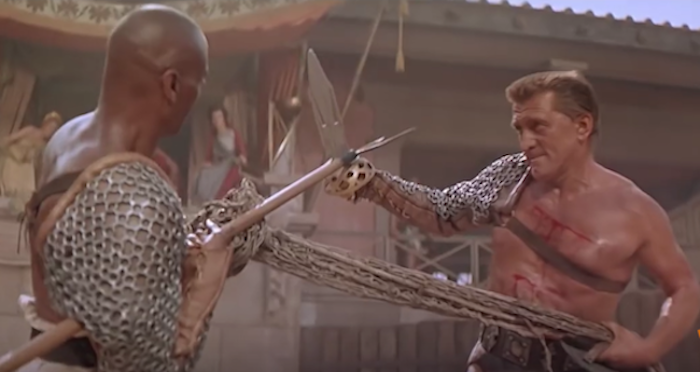
Spartacus-fightscene
Talented poet and screenwriter, martial artist, and classics enthusiast Brian Wilkins agreed to guest post for me as part of The Sword and Sandal blogathon, hosted by Moon in Gemini. Check out his wonderful tribute to fight scenes below.

Sometime in 1998, I sit on the floor in my living room watching John “Kickboxing is the sport of the future” Cusack eject Benny “the Jet” Urquidez into a wall of lockers. He then proceeds to tattoo those locker numbers into Benny’s back several times with his foot. After some athletic grappling, the two fumble at each other’s skinny ties and Cusack jams his pen into Benny’s throat. I am overjoyed: Grosse Pointe Blank is everything a boy could wish for.

“Mom,” I say to the horrified woman behind me folding laundry who thought “light action comedy” would be a great choice for family movie night, “I think I want to do that. “

“I would pray you out of it,” she snaps. Mothers in the south can definitely snap and mention prayer in the same breath.

“What? Why?”

“You tell me you want to be an assassin because of a movie and you think…”

“Not an assassin, Mom! Geez. A fight choreographer.”

This comeback mollifies — but not much: “As long as you finish college.”

***
I finished a lot of college and never became a choreographer for anything beyond amateur productions of Shakespeare, but it’s hard to say who I would be without fight scenes in movies. I fenced because of The Princess Bride. I fell in love with Karate after watching Daniel-san wade through a series of talented black belts who inexplicably led with their faces. I even tried to land a crane kick at a tournament: once. I studied epic poetry in grad school because of 13th Warrior.

So when my friend Leah asked me if I’d like to contribute something for this blogathon, I jumped at the chance to look at the fights in gladiator movies. And not just any fights, but material from before Bruce Lee one inch punched his way into America’s heart and everybody was kung fu fighting. What did fighting look like in classic sword and sandal flicks?

Awful. It looks awful. It looks like America (except for James Cagney) couldn’t take a cardboard cutout prior to 1968. Honestly, watching films like The 300 Spartans must have given comfort to our enemies. I don’t know why the Russians didn’t invade.

And while I think even Alexander the Great couldn’t drink Spartans into being entertaining, it actually provides a solid rubric for what makes a good fight scene. It just doesn’t know that’s what it’s doing. Seriously, folks, I don’t think the director had ever heard the word phalanx. The best fight scene in the movie is when Diane Baker judo flips an overly amorous Greek shepherd.

***
Early in Spartans, Persian King Xerxes (David Farrar) argues with traitorous Spartan king Demaratus (Ivan Triesault) over Spartan valor. When Demaratus defends it, Xerxes suggests a fight to the death between Demaratus and a Persian swordsman. I suppose this is because Demaratus is so tiresome Xerxes would rather have him killed and be lost in Greece than listen to him flap his cheeks anymore about Spartan values. I felt that way. The two champions draw their blades in what seems an interminable fight with bowie knives. Xerxes demands, along with the audience, that they hurry it up. Quickly, death comes for the Persian, and Xerxes concedes, much to his boredom, that Spartans can fight.

Let me check my notes for this scene…oh, I just wrote, “WHAT?” about 15 times.

Two guys in tunics rolling around on dinner tables with plus-size steak knives isn’t an epic scene. There’s nothing to distinguish their fighting styles from each other, no real costuming, nothing resembling martial talent — if a fight scene looks like your kindergartner was filming themselves after raiding your closet for costumes, something has gone awry.

Don’t get me wrong: I’m not advocating for historical accuracy, but just the exotic fantasy of history. I don’t care, nerds, that Russell Crowe stepped into a stirrup in Gladiator, so long as his wolf skin cloak looks really fabulous while he does it.

But just as important to style, there must be stakes for the viewer. Demaratus is a cowardly traitor: why do we care if he dies? Even this dude’s Spartan mother would spit on his corpse rather than shed a tear over not hearing more of his mind numbing dialog. Nameless Persian Thug #1 is no better. If I can’t feel passion or fear or even a soupcon of lust, why am I watching?

The plot must motivate the action as well. We have to learn something about character in this scene and the logic of the movie must give impetus to the conflict. It’s a bit like a song in a musical: the truth that can’t be said must be expressed and it must change the world we’re seeing. The correct ending in this fight scene was to have the Persian kill Demaratus. Instead, we’re now convinced the Spartans are being underestimated by Xerxes and that they’re nearly invincible. I found myself rooting for the Persians, underdogs that they were.

***
Demetrius and the Gladiators (1954) is like all of the strange pseudo-christian elements of Ben Hur wrapped up in one hell of a bogged down film.

This sequel to The Robe continues in that proud tradition, peppering in a few action scenes with Victor Mature to prod the viewer awake. It made the studios a lot of money, but I can only hope that was due to a paucity of action films…what’s that? Seven Samurai came out the same year? Well, screw it, 1950s America just loves misogynistic Christianity. Shame on you, 1950s. Shame.

Still there are elements in the fights in Demetrius that have potential. Take this clip, where Victor Mature’s Demetrius is throwing away his Christian values to avenge his girlfriend who was accidentally killed (but not really, there’s a magic robe that brings people back to life) by knuckle dragging gladiators at a party. Now that those “turn the other cheek” gloves are off, we can get some real fighting! Good thing her (apparent) death paved the way for some real entertainment! Or something like that.

You may have noticed that Mature uses his shield like a kid with a trash can lid storming the kitchen. I put that down to the vices of the choreographer, Jean Heremans, a fencing champ most noted for choreographing Scaramouche (not just a line from Bohemian Rhapsody, folks). His refined modern fencing style makes perfect sense in that 18th century setting, but it fails the style of the sword and sandal motif. Treating fighting as if it is fencing is the real dereliction of this period of choreography. I can only assume it comes from the same instinct that yearned to put a steak dinner into a pill: progress knows best.

Notice also the curious way of holding the sword with the palm down and the sword to the side, almost a foil fencer’s seconde parry. It feels out of place as a guard with short stabbing weapon and will likely get it smacked out of your hand — just in case you have to fight someone with a trident who knows what they’re doing. Despite a nice moment of dual wielding, the style doesn’t offer much excitement or novelty.

However, in terms of stakes and spirit this fight actually picks up the pace a bit. While I would have preferred any other reason for Demetrius to throw away his values and dig into fighting, his existential crisis adds a tangy zip to the clashing shields. This fight will change his destiny as a character, adding a thrill to what we’re watching. Revenge giving permission to the viewer to sanction violence, while also showing a character’s descent after the fact, and redeeming the character with a deus ex machina (almost literally) reeks of cliché, but that doesn’t mean it’s toothless. And when Demetrius actually gets clobbering a guy like Ty Cobb on opening day, we feel relief because the action initiates the structure of the story. And we like it because the choreography matches the moment and the weapons a bit more: freer and more direct.

But if you’re looking for a more nuanced examination of violence, watch Seven Samurai. Actually, if there’s one lesson you should take from this review, it should be “watch Seven Samurai.”

***
For a taste of a film that lets style guide the way, there’s always Jason and the Argonauts (1963). Ray Harryhausen’s special effects are legendary, precisely for their ability to create a world that, despite having a giant bronze statue really need a hair pin, feels real. In fact, unlike much modern CGI, it’s the actors that feel less real than the animations: a testament to the quality of both.

This clip is so iconic it really needs no introduction.

There are a lot of things to love about this scene, but there are certain moments that stand out for me.

  • The war cry the skeletons give just before charging after Jason and his compatriots: it immediately moves the bony little bastards out of the realm of slouching zombie and into something else entirely.
  • The skeletons get into fighting stances and even seem to relish stabbing the heroes. Their stances are better than anyone else on screen: hunched, menacing, preparing to do ill to the enemy. Jason looks like he just discovered swords over breakfast.
  • The skeletons seem to know how to use their shields. One even hooks a shield into the sea.

But most of all, this scene understands the equipment being used. You can’t stab a skeleton risen from the sown teeth of a hydra! Everyone knows that! Except Jason, who tries it at 3:36 in the clip. And that’s the core of why this scene is great: the heroes have to improvise and start using dodges, feints, throws, and even clubbing the skeletons with the shields (although why no one can seem to stab and block simultaneously is beyond me. I guess we’ll have to wait for Troy).

Though we learn little about the spirit of the characters beyond the fact that Jason is quite content to flee and let his friends die, the stakes in this scene feel high. Perhaps it’s just that as humans we must root for those of us still covered in skin. Perhaps it’s that this idea was fished out from the Hieronymous Bosch corner of the unconscious. But either way, Ray Harryhausen was a genius I wouldn’t have wanted to fight in any place with a sandy floor.

***
There’s no mystery in my mind about the best of the sword and sandal genre. It’s Spartacus, hands down. Ignoring the politics, history, and its place in film for a moment, though, it’s a damn fine fight film. It even has a great training montage! Look, a spinning practice dummy with a mace on it! And there, a spinning blade of death machine! Even face painting!

To set up the scene: Spartacus (Kirk Douglas) has been paired with the more experienced gladiator Draba (Woody Strode), to fight to the death for the amusement of visiting nobles, particularly Crassus (Laurence Olivier).

Good movies work as fractals: little gems of the overall message replayed again and again to make one larger, faceted meaning. This fight tells you all you need to know about the movie, and the tragic but worthwhile attempt of compassion and brotherhood to fight back against a rigged system. It teaches you to ask who the enemy really is. This is a fight between Drapa and Crassus, first and foremost. And the mild annoyance with which Olivier kills Strode, with his distaste for the blood spatter rather than the action of murdering a human being, drives the nature of that character home.

But that moment is preceded and earned by some rather decent fighting. Strode was far too athletic to not take advantage of his size and is a perfect pairing with the trident. Douglas is a little too lightly armored, actually. He should have at least a helmet. The lack here is better than just artistic license and wanting to see the actor’s face: it shows even more how dangerous this fight is for Spartacus, making the act of compassion even greater.

Though he does hold his own. He’s always driving forward, trying to cover the distance and his lack of technique with enthusiasm. And while it ends with a rather spectacular boot to the ribs, Spartacus fights with just enough skill to lose well, which helps momentarily suspend our belief that just because the movie is called, “Spartacus”, he’s unlikely to die at the first real fight.

Though you could wonder if the Romans care at all. The audience talks over the two men fighting to the death at first, allowing us to condemn the Romans for being that annoying couple at the movies who explain the plot as the movie progresses. The inclusion of the audience into the scene makes the points of the movie so well, and asks us to question our own participation. It calls us to act with mercy and courage.

***
The complaint you’ll hear most often about these fight scenes is that they aren’t realistic, by which most people mean gritty or brutal. Fights in real life aren’t as spectacular, they argue, or as technical, and they don’t tell us much about the nobler parts of our role to play as humans. This lack of realism somehow damages the truth a fight may offer. Sometimes they’re right: the samurai master is killed by a punk with a knife at dinner, people windmill at each other over bar stool rights, and most fights are just attacks by predators or drunks.

But that’s why we come to the screen in the first place: to dream our better selves into being. A fight, even a silly one against skeletons, can show us how to be brave, to stand against impossible odds. When asked to surrender by the Nazis during the Battle of the Bulge, Gen. Anthony McAuliffe sent back a telegram with a one word reply: “Nuts!” You can’t write better dialog than that. And that’s what I say to folks who can’t see the beauty in the ringing steel, the athletic achievement, and most importantly, the spirit of laying it all on the line. Except I want to add “you,” and “are.”

by Brian Wilkins

This post is part of the Sword and Sandal blogathon. Check out the other entries here.
Share
Posted in: 1950s films, 1960s films, Action & Sports Films, Blogathons, Humor Tagged: classic fight scenes, Demetrius, fencing, Film, Jason and the Argonauts, martial arts films, movie, Spartacus, sword fighting

Sympathetic Liars: The Book of Mormon & Beat the Devil

06/26/2016 by leah@carygrantwonteatyou.com 2 Comments

BeattheDevil-JenniferJones
Kooky. Bizarre. Silly. Odd. Original. It’s difficult to sum up the strange charm of Beat the Devil (1953), that Truman Capote-penned film* that fits no genre and makes no sense. You have the feeling as you watch that Capote must have been tripping, but his quirky personality, not to mention the strange antics that took place on the set–arm wrestling competitions between him and Humphrey Bogart, celebrity drop-ins who dictated costuming, etc.–may do something to explain its odd mishmash of mystery, comedy, and social commentary. I’ve never been a fan of Jennifer Jones, but she won me here as Mrs. Gwendolen Chelm, a seemingly ordinary wife who has the imagination of Capote, and no compunction about confusing her fantasies with reality. She is truly the director of the show. Just ask this question: “What would a film be like if a compulsive, whimsical fantasist got to rule the plot?” Your answer is Beat the Devil.

The film’s heroine reminds me of Arnold from the hilarious musical The Book of Mormon, and his twisting of the Mormon faith to convert Ugandans. (Minor spoiler: If you haven’t seen it, Elder Arnold Cunningham adds Boba Fett and some unfortunate AIDS-curing frogs to his faith’s origin story.) While an everyday liar provides little narrative interest, Chelm’s degree of imagination, as with Wes Anderson’s many heroes, seems to color the world with such an enormous brush that it’s hard not to become enthralled by her, as Bogart’s character is throughout Beat the Devil.

I dare not attempt to explain the plot to you, what little there is of one. It’s better if you simply start watching and see where it takes you. That’s clearly what Capote intended, and as any casual reader of his life knows, hanging out with Capote on a boring, rainy Sunday was probably thrilling. Watch the film. It’s as close to experiencing the mind of that fascinating socializer and entertainer, that creator of world-famous parties and disastrous scandals, as any of us are now likely to get.

*According to Gerald Clarke, Truman’s biographer, John Huston’s screenplay contribution was probably negligible.

Share
Posted in: 1950s films, Comedies (film), Film Noir/Crime/Thriller & Mystery, Humor, TV & Pop Culture Tagged: Arnold Cunningham, Beat the Devil, compulsive liars on film, Film, Jennifer Jones, review, The Book of Mormon, Truman Capote

The Dark Humor of High Noon (1952)

06/12/2016 by leah@carygrantwonteatyou.com 6 Comments

HighNoon
**Contains spoilers**

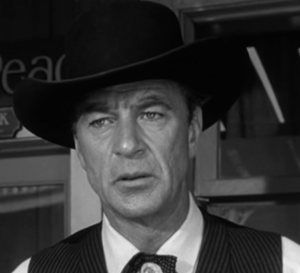
When I watched High Noon many years ago, I was struck by its pacing, its intensity, its seriousness. This time, I kept laughing. There’s something comic about watching Marshal Will Kane (Gary Cooper) aimlessly tread around the town, waiting for someone, anyone to assist him. I found myself curious (having forgotten most of the details) not whether he’d find aid, but just what methods of bailing on responsibility his fellow townspeople would employ.

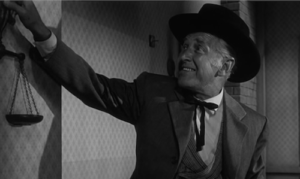
The judge (Otto Kruger) is, of course, is my favorite. Having passed sentence on Frank Miller (Ian MacDonald), a killer who has now been freed and is headed to town for revenge, the judge opts for exiting pronto. He tells Kane, the marshal who caught Miller, to do the same. His advice is a cynical history lesson about how little one can rely on civilian ethics when danger is afoot–an account of Athenians who welcomed a tyrant they’d once banished, and watched as he executed their government; an incident much like one that recently occurred in a nearby town. The judge shares these accounts as he casually packs away his flag and scales of justice.

ScalesofJusticeOttoKruger
His assessment about the value of the people he’s leaving to the mercy of an outlaw is almost as breathtakingly cold as the clock speech in The Third Man: “This is just a dirty little village in the middle of nowhere. Nothing that happens here is really important. Now get out.” The former marshal (Lon Chaney, Jr.), Kane’s mentor, is likewise a ray of light: “People got to talk themselves into law and order..down deep, they don’t care. They just don’t care.” Poor Kane is asking for just a bit of support before he takes on a posse, and these are his cheerleaders.

Of course, it’s hard not to love Kane, even as you wonder whether there’s a better way to overcome Miller than the one he’s devised (i.e., shoot it out).

Cooper-HighNoon
“I’ve got lots to do,” Kane keeps saying as the minutes creep by. But really, he doesn’t. He has to warn Helen Ramirez (former lover to both him and Miller), ask for volunteer deputies, and write a brief will. But this is a small town, easily navigated, and these tasks are quickly accomplished. What he really has to do is busy himself to avoid dwelling on the cowardice of his companions and his own slim chances for survival if he stays in town until noon, when Miller is arriving.

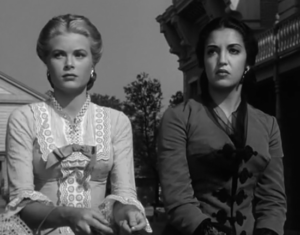
While Ramirez (Katy Jurado) is the most interesting character, it’s clearly Kane’s new bride, Amy (Grace Kelly), who brings on the dark humor.

JuradoandKelly
First, there’s the fact that she’s just had the biggest bummer of a wedding day ever. Then there’s the small detail that she’s a Quaker who has married a marshal. I don’t think I have to tell you that she may not be the wisest of women. Sure, he’s retiring; the new marshal is arriving the next day, and the newlyweds are planning to leave town and to run a store elsewhere before they hear about Miller. But surely five minutes of Kane’s obdurate behavior during courtship would have enlightened Amy that this whole conversion business–of both faith and career–wasn’t going to work so well. (Admittedly, given the pickings we see of the townspeople during the film, she may still have made the best choice of a mate she could.) And of course, it’s quite amusing that a woman who has to overcome her beliefs–not dodge them–is the only helper Kane receives. No wonder Kane throws his star on the ground after besting Miller.

That the film would include such darkness isn’t surprising from a screenwriter (Carl Foreman) who had been blacklisted before High Noon even came out. What he was witnessing of former friends and those he must have once respected couldn’t have led to idealism. Apparently, John Wayne scorned the film as anti-American, and Rio Bravo is a reinterpretation, with more admirable townspeople. While I agree with the movie’s distance from Wayne’s optimism, I think Foreman’s (and the original story’s) cynicism goes much deeper than any individual country, any specific belief system. It’s a simple, sadly humorous morality tale about human nature: while there may be rare moments of heroism (like Kane’s), typically, when the going gets tough, the “tough” scatter.

Share
Posted in: 1950s films, Action & Sports Films, Drama (film), Humor Tagged: best Westerns, dark humor, Gary Cooper, Grace Kelly, High Noon, movie, review

The Klutziest Bonnie & Clyde Ever: Gun Crazy (1950)

06/06/2016 by leah@carygrantwonteatyou.com Leave a Comment

GunCrazy
**Only very minor, preliminary spoilers here**

Gun Crazy begins with a boy getting caught for stealing a gun because he trips. The kid, Barton Tare, has a mysterious attraction to guns he can neither explain nor control. Others try to defend him, given that he has no desire to harm and isn’t a good thief. But he’s sent to reform school anyway, and after that and a bout in the army, the young man returns home and falls for a carnival sharpshooter, Annie Laurie Starr (Peggy Cummins). The two are both skilled in their expertise with weaponry and in their seduction of one another (clearly what brings them together), but their limbs just go haywire in all other contexts. When they turn to crime to satisfy Laurie’s lust for excitement and cash, the two can’t stop themselves from tripping, falling, and dropping the payroll.

The chief delight of this famous noir is Laurie’s ruthlessness; she’s one of the most fascinating femme fatales; the whole movie, you’re just waiting to see if her attraction to her now-husband, Bart (John Dall), will trump her self-interest.

LaurieGunCrazy
Bart’s a little screwy (as when he brings a gun to school as a kid and refuses to give it to teacher or superintendent). But there’s an aw-shucks, Jimmy-Stewartist innocence to his love for his wife, making her single-mindedness and easy manipulation of him both sinister and completely believable. When the going gets tough, you know Bart will save Laurie. What you don’t know is whether Laurie will lose a nail to save him.

Their gun skills, of course, make them a dangerous pair when they start to rob. But in peak moments, the pair keep FALLING, making you wonder how many capers they could have actually pulled off. Call me cynical, but I think some grace might help in a getaway. This lack of finesse might dissatisfy viewers looking for slick criminals in action, but being anything but nimble myself, I found their lack of coordination endearing–an unexpected trait that made me worry for their chances, and realize that I’ve seen this trait in cinematic bank robbers too seldom. Far too many action stars have amazing reflexes without Jason Bourne’s training; more of us stumble in real life, as the Darwin Awards and local news so often prove. I know I’m not alone in loving the pratfallers, even in a noir. (Usually, only minor characters make such silly mistakes.)

Of course, there’s a lot more to recommend the movie: its stylishness, the costumes of Cummins (clearly an inspiration for Faye Dunaway’s in Bonnie and Clyde), the many artfully composed shots. But its lack of predictability (thanks to screenwriters, blacklisted Dalton Trumbo and MacKinlay Kantor) is what kept me watching and wondering. I expected some hairy getaways, but not the twists I got. I expected a dastardly female, but couldn’t predict her moves. And I certainly didn’t expect–but loved–all the great moments like this, Bart’s first tripping incident, which led to all the rest:

Bartsfirstfall-GunCrazy

Share
Posted in: 1950s films, Anti-Romance films, Drama (film), Femme fatales, Film Noir/Crime/Thriller & Mystery, Romance (films) Tagged: best femme fatales, Claire Underwood, Dalton Trumbo blacklisted, film noir, films glorifying crime, Gun Crazy, John Dall, Peggy Cummins

Mae West’s Theme Show: Miss Fisher’s Murder Mysteries

05/30/2016 by leah@carygrantwonteatyou.com 2 Comments

EssieDavisasFisher
Sexually adventurous, unapologetic, averse to marriage, in control, attractive to all men–and in her 40s. Phryne Fisher (Essie Davis) is the kind of character feminists have despaired of seeing onscreen, and yet there she is, captivating her Australian viewers, and now American ones, who have binge watched her on Netflix as quickly as I have. She’s a 1920s heiress who solves crimes, and the rather dainty title of the show–Miss Fisher’s Murder Mysteries–doesn’t capture the boldness of its heroine at all.

Of course, being an appreciator of all things Mae West would love, I claim this would be her current TV show of choice, just as Elle King’s “Ex’s & Oh’s” would be her theme song. Essie Davis has just the right attitude for her role, and while she isn’t Mae West (who is?), the two would clearly get along. Not that the characters the two actresses play are doubles. The slow strut of West’s characters contrasts with Fisher’s quick energy, and while West’s characters clearly take pride in their sexual conquests, Fisher simply relishes them, as if so many lovers are simply a matter of course.

EssieDavisasPhryne Fisher
This is what you do when you’ve survived WWI, Fisher suggests: you have FUN. And yet, like West’s heroines, she never belittles her more demure fellow females; her closest companion (and employee), Dot (Ashleigh Cummings), is a devout, chaste Catholic (in more modern terms, Charlotte York to Fisher’s Samantha Jones).

The show is also praised for its female writers, its attention to historical detail, and, of course, its fashion. I can’t begin to describe those glorious costumes, but others have here and here. Like West’s characters, Fisher likes silk and feathers and furs and jewels, and wears them with panache.

MissFisherfashion2 MissFisherFashion
There are many other reasons to watch the show. The mysteries are fun, but in the end, I don’t care about them any more than I do in The Thin Man or Psych. Just gimme some more of Fisher’s chemistry with the detective (Nathan Page), more of her lascivious looks, more of her joyful dancing, more of her comments on singlehood, more of her liberality toward those mistreated by her time period, and in many cases, still by ours (gay friends, communists, anarchists, pacifists, prostitutes, working women, etc.) Give me more of the clothes. And most of all, give me more of that lust for life that has made me fall for Mae West. Please, please, you wonderful writers and you very busy star, give us a Season 4.

This post is part of my monthly West moment series.

Share
Posted in: 1930s films, 1940s films, Comedies (film), Feminism, Mae West Moments, TV & Pop Culture Tagged: Essie Davis, feminists, Miss Fisher's Murder Mysteries, older women as sex objects, Phryne Fisher, Samantha Jones, TV

Happy Films: You Were Never Lovelier (1942)

05/22/2016 by leah@carygrantwonteatyou.com 12 Comments

YouWereNeverLovelier
When asked to pick a film that I’d equate with ice cream for a sweet-inspired blogathon, I recalled the Rita Hayworth-Fred Astaire confection, You Were Never Lovelier. The plot is so silly: a sexist father, Eduardo Acuña (Adolphe Menjou), creates an imaginary secret admirer for his daughter, Maria (Rita Hayworth). He thinks he can handpick her suitor and pretend the boy is writing the love notes he himself is penning. But Maria mistakes a dancer, Robert (Fred Astaire), for her admirer, and much confusion ensues. It’s hard to explain why a story like this could win over its audience, especially since Maria is ridiculously susceptible, Robert directionless, and the film’s portrayal of Argentinians fantastical. And yet….What’s the primary feeling while watching? Utter delight. Try to watch it without grinning, rewinding, and pressing play again.

Why, you might ask?

Well, here’s our hero, Robert (Fred Astaire), dancing on a desk to protest Acuña’s refusal to consider him for his nightclub:

https://carygrantwonteatyou.com/wp-content/uploads/2016/05/AstaireYouWereNeverLovelier-sc.mp4

There’s the very funny meet cute between Robert and Maria, an encounter that doesn’t go well thanks to some snarky remarks by the former, who doesn’t know who she is.

MeetCute-YouWereNeverLovelier
And there’s the heavenly dancing. Within one scene Rita Hayworth and Fred Astaire make you forget the implausibility of the story because these are two of the most expressive dancers ever. From their first dance in, you’re entranced by their characters’ romance. How could you not be convinced, after watching them together?

https://carygrantwonteatyou.com/wp-content/uploads/2016/05/RitaandFred.mp4

The sweet, Oscar-nominated score is lovely, and the songs are catchy. “I’m Old-Fashioned” always makes me smile. Listen to Ella Fitzgerald’s version, or even better, watch a much longer clip than I’ve posted here at TCM, with Hayworth lip syncing it (sung by Nan Wynn) to Astaire’s Robert.

And that’s just one scene. I envy all of you who haven’t seen this film. You’re in for a treat.

This post is part of the Classic Movie Ice Cream Social, hosted by Fritzi of Movies Silently: a celebration of those movies and recipes that make us smile.

Share
Posted in: 1940s films, Blogathons, Comedies (film), Musicals and dancing films, Romantic Comedies (film) Tagged: best dancing movies, classic film, feel-good film, Fred Astaire, musicals, Rita Hayworth, You Were Never Lovelier
« Previous 1 2 3 4 5 … 9 10 11 12 13 14 15 16 17 … 23 24 25 26 27 Next »

Recent Posts

  • 100 Years Later, Still Scary: Dr. Caligari
  • Escaping Out of the Past (1947)
  • A Weeper for Those Who Love Jerks
  • Thank You, Academy, for Not Infuriating Me
  • Challengers (2024) Is a Bad Movie

Subscribe to Blog via Email

Enter your email address to subscribe to this blog and receive notifications of new posts by email.

Categories

  • 1920s films
  • 1930s films
  • 1940s films
  • 1950s films
  • 1960s films
  • 1970s films
  • 1980s films
  • 1990-current films
  • 2020s films
  • Action & Sports Films
  • Anti-Romance films
  • Blogathons
  • Childfree
  • Comedies (film)
  • Drama (film)
  • Feminism
  • Femme fatales
  • Film Noir/Crime/Thriller & Mystery
  • Gloriously Silly Scenes
  • Horror
  • Humor
  • Mae West Moments
  • Musicals and dancing films
  • Oscars
  • Random
  • Romance (films)
  • Romantic Comedies (film)
  • The Moment I Fell for
  • Turn My Sister into Classic Movie Fan
  • TV & Pop Culture
  • Uncategorized
Share
Classic Movie Blog Hub Member

Recent Comments

  • leah@carygrantwonteatyou.com on Meg Ryan’s Fate Foretold in Joe Versus the Volcano
  • Ryan on Meg Ryan’s Fate Foretold in Joe Versus the Volcano
  • leah@carygrantwonteatyou.com on 100 Years Later, Still Scary: Dr. Caligari
  • The Classic Movie Muse on 100 Years Later, Still Scary: Dr. Caligari
  • leah@carygrantwonteatyou.com on 100 Years Later, Still Scary: Dr. Caligari

Archives

  • November 2025
  • September 2025
  • May 2025
  • March 2025
  • January 2025
  • November 2024
  • August 2024
  • July 2024
  • May 2024
  • March 2024
  • February 2024
  • December 2023
  • November 2023
  • October 2023
  • September 2023
  • August 2023
  • July 2023
  • May 2023
  • April 2023
  • March 2023
  • January 2023
  • December 2022
  • November 2022
  • September 2022
  • July 2022
  • May 2022
  • April 2022
  • March 2022
  • February 2022
  • October 2021
  • September 2021
  • April 2021
  • March 2021
  • February 2021
  • December 2020
  • October 2020
  • September 2020
  • July 2020
  • May 2020
  • April 2020
  • March 2020
  • February 2020
  • December 2019
  • October 2019
  • September 2019
  • June 2019
  • May 2019
  • April 2019
  • February 2019
  • January 2019
  • November 2018
  • September 2018
  • July 2018
  • June 2018
  • May 2018
  • April 2018
  • March 2018
  • February 2018
  • January 2018
  • November 2017
  • September 2017
  • August 2017
  • July 2017
  • June 2017
  • May 2017
  • April 2017
  • March 2017
  • February 2017
  • January 2017
  • December 2016
  • November 2016
  • October 2016
  • August 2016
  • July 2016
  • June 2016
  • May 2016
  • April 2016
  • March 2016
  • February 2016
  • January 2016
  • December 2015
  • November 2015
  • October 2015
  • September 2015
  • August 2015
  • July 2015
  • June 2015
  • May 2015
  • April 2015
  • March 2015
  • February 2015
  • January 2015
  • December 2014
  • November 2014
  • October 2014
  • September 2014
  • August 2014
  • July 2014
  • June 2014
  • May 2014
  • April 2014
  • March 2014
  • February 2014
  • January 2014

Meta

  • Log in
  • Entries feed
  • Comments feed
  • WordPress.org

Copyright © 2025 Cary Grant Won't Eat You.

Church WordPress Theme by themehall.com