Cary Grant Won't Eat You

Classic movies for phobics

  • About
  • eBooks
  • Previous Blogathons
Classic movies for phobics

Truman Capote

Sympathetic Liars: The Book of Mormon & Beat the Devil

06/26/2016 by leah@carygrantwonteatyou.com 2 Comments

BeattheDevil-JenniferJones
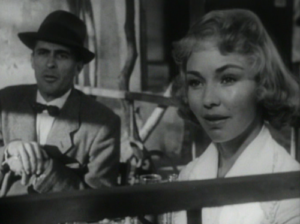
Kooky. Bizarre. Silly. Odd. Original. It’s difficult to sum up the strange charm of Beat the Devil (1953), that Truman Capote-penned film* that fits no genre and makes no sense. You have the feeling as you watch that Capote must have been tripping, but his quirky personality, not to mention the strange antics that took place on the set–arm wrestling competitions between him and Humphrey Bogart, celebrity drop-ins who dictated costuming, etc.–may do something to explain its odd mishmash of mystery, comedy, and social commentary. I’ve never been a fan of Jennifer Jones, but she won me here as Mrs. Gwendolen Chelm, a seemingly ordinary wife who has the imagination of Capote, and no compunction about confusing her fantasies with reality. She is truly the director of the show. Just ask this question: “What would a film be like if a compulsive, whimsical fantasist got to rule the plot?” Your answer is Beat the Devil.

The film’s heroine reminds me of Arnold from the hilarious musical The Book of Mormon, and his twisting of the Mormon faith to convert Ugandans. (Minor spoiler: If you haven’t seen it, Elder Arnold Cunningham adds Boba Fett and some unfortunate AIDS-curing frogs to his faith’s origin story.) While an everyday liar provides little narrative interest, Chelm’s degree of imagination, as with Wes Anderson’s many heroes, seems to color the world with such an enormous brush that it’s hard not to become enthralled by her, as Bogart’s character is throughout Beat the Devil.

I dare not attempt to explain the plot to you, what little there is of one. It’s better if you simply start watching and see where it takes you. That’s clearly what Capote intended, and as any casual reader of his life knows, hanging out with Capote on a boring, rainy Sunday was probably thrilling. Watch the film. It’s as close to experiencing the mind of that fascinating socializer and entertainer, that creator of world-famous parties and disastrous scandals, as any of us are now likely to get.

*According to Gerald Clarke, Truman’s biographer, John Huston’s screenplay contribution was probably negligible.

Share
Posted in: 1950s films, Comedies (film), Film Noir/Crime/Thriller & Mystery, Humor, TV & Pop Culture Tagged: Arnold Cunningham, Beat the Devil, compulsive liars on film, Film, Jennifer Jones, review, The Book of Mormon, Truman Capote

Breakfast at Tiffany’s: Why the Movie Blew It

10/23/2014 by leah@carygrantwonteatyou.com 2 Comments

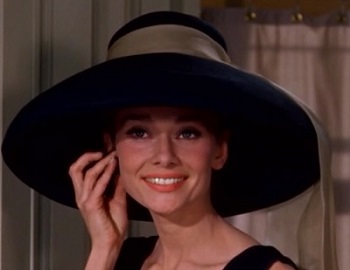
Let me be clear: Nothing is wrong with Audrey Hepburn’s sparkling portrayal of Holly Golightly. It’s the only reason to watch Breakfast at Tiffany’s, witnessing this character’s charms (besides the obvious joys of the fashion). And though certainly a tamer version than the book’s Holly, she is every bit as interesting.
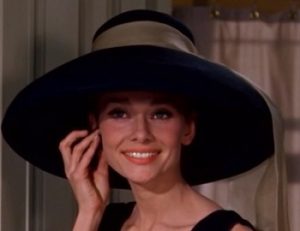
AudreyasHollyGolightly
That said, fans of Truman Capote’s book have many pains in store as well as pleasures. It is truly a masochistic act to watch what becomes of favorite novels on the big screen, much like our drive-bys of houses where we once lived, when we go to see what they’ve DONE to them: a purple paint job, a favorite Oak felled.

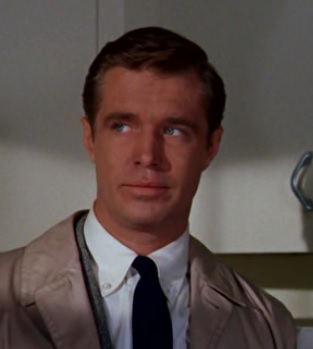
In the case of Breakfast at Tiffany’s, it isn’t the racist cameo that most strikes me, painful as it is. It’s the way the film took the sensitive, interesting, platonic-toward-Holly narrator, and chose this to portray him:
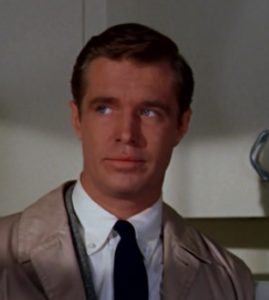
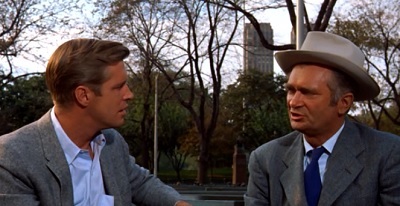
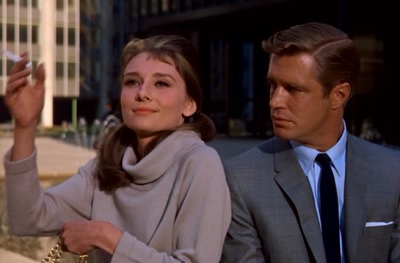
GeorgePeppard
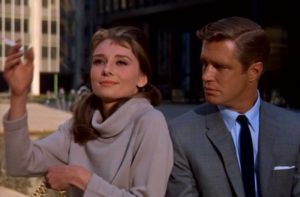
Now, I enjoyed Col. John “Hannibal” Smith and his band of A-Teamers as much as the next 10-year old. But in terms of personality, it’s difficult to imagine a bigger dud than George Peppard as Paul/Fred in Breakfast at Tiffany’s. I’m supposed to like this smug kept man who has memorized his book reviews and barks about his talent? To see in him the sensitive narrator from the novella, who is torn up by Holly’s critique of his writing? The man who is proud of the little apartment he’s obviously scraped together to afford?

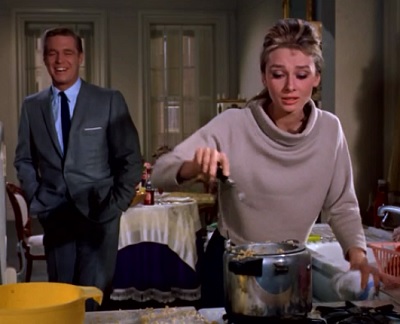
I shiver to think of Holly’s twinkling self reduced to trying to prepare this dud the right flavor of chicken wings. As I watch him interact with her, I imagine William H. Macy screaming, “Where’s my dinner?!” in Pleasantville and wonder why Hollywood thinks I should root for them as a couple, why I should somehow imagine this union as right for her, as I’m clearly intended to do. That flat voice and judgmental attitude would squash her spirit within six months. True, he does laugh when she screws up a dinner for him:
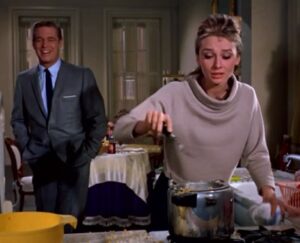
MealHollyGolightly
But it’s still courting time, and Holly knows him well enough to be concerned about her mistake. Paul/Fred is only likeable when he’s acting as a friend to her and others, not as a would-be lover. Romantically, he’s far too conventional to suit her.

Paul/Fred, aka Col. Smith, assists Doc, aka, the Man Named Jed

Paul/Fred, aka Col. Smith, assists Doc, aka, the Man Named Jed 

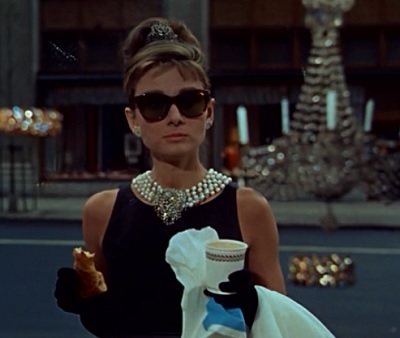
I know I shouldn’t be surprised at this dreadful botching of the story. Hollywood loves a romantic comedy (as long as it’s between young, single, heterosexual characters), and, just as now, they don’t trust us to storm the theaters to watch a friendship. Yet when people recall this film, it’s Holly at the window of Tiffany’s they remember.
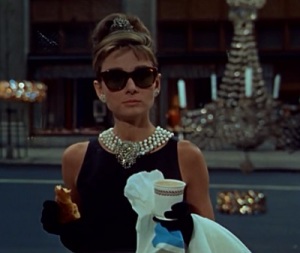
Breakfast-Holly
Why? Because this story was never meant to be about love—or really even friendship. It’s about the charms a big city represents to those of us from less thrilling hometowns, and how an insider—in this case, Holly—can show us how to make the most of the place, to be a part of it, to belong.

Here’s a favorite passage from the book: “Once a visiting relative took me to ’21,’ and there, at a superior table…was Miss Golightly, idly, publicly combing her hair; and her expression, an unrealized yawn, put, by example, a dampener on the excitement I felt over dining at so swanky a place.”

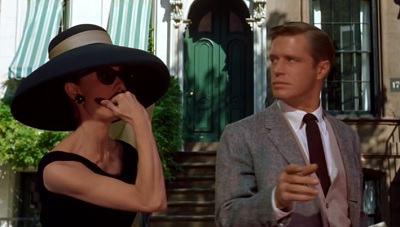
Holly has already arrived, while Paul/Fred is always seeking social acceptance. In the film, she upstages him from the start, with a powerful whistle for a cab, the kind he never could master.

UpstagingPaul-Holly
Near the start of the book, the narrator (Paul/Fred) spots Holly dancing in front of a saloon in a “happy group of whisky-eyed Australian army officers baritoning, ‘Waltzing Matilda.’ As they sang they took turns spin-dancing a girl over the cobbles under the El; and the girl, Miss Golightly, to be sure, floated round in their arms light as a scarf.”

What I felt reading both of these passages was recognition: that first heady gush of love that comes to so many of us even walking down the streets of a city we (unbelievably) can call home. For me that city was San Francisco; even the sad little shops of junk, the catcalling loafers, the dirty steps of the subway could give me a rush of joy. I actually lived here. I was sometimes even asked directions. I remember admiring those girls who had the city figured out: who knew the quickest subway routes, the quirky former-salon bars, the mystery to achieving urban-chic. Those girls who hosted and were invited to the best parties, gatherings held in wineries and with themes….Oh, what magical girls they were.
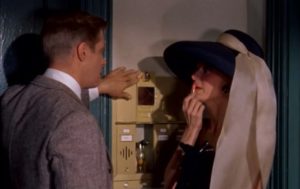
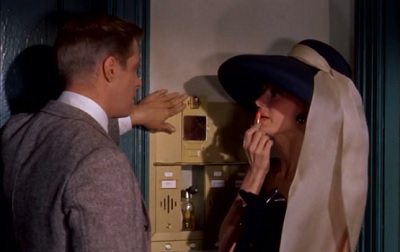
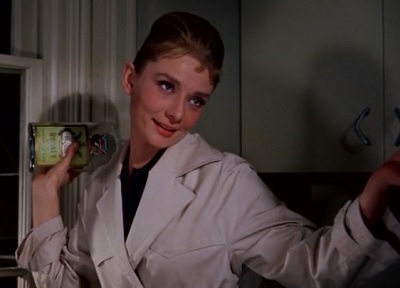
A city-ready girl: mailbox tricked up with a mirror and perfume…

A city-ready girl: mailbox tricked up with a mirror

For Holly, of course, the thrill of the city is represented by a beautiful jewelry shop. But for Paul/Fred—and for so many of the rest of us—it’s captured in Holly herself. She is that woman who actually does all the impulsive, New-Yorky things, who represents life in the city for the rest of us (much as Carrie Bradshaw still does for tourists today).
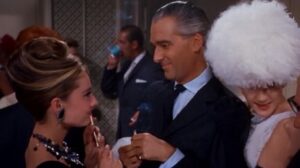
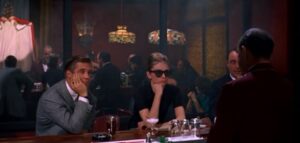
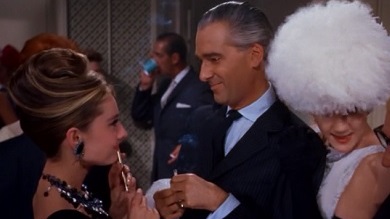
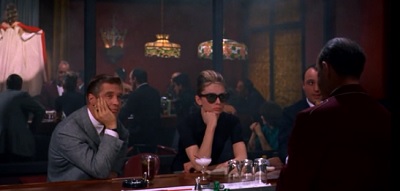
Hollysparty

Breakfast-Hollyinbar

MasksBreakfastatTiffanys
And by being initially an outsider herself, she gives everyone hope that they too could be like Holly one day. In the beginning of the book, she’s disappeared from the narrator’s life, but been maybe spotted by others, and to me, that opening, the desire to see her again (or maybe the time in his life she recalls), captures the allure of passing friendships.

An older, more mature Holly couldn’t possibly have the same impact. She’s charming in part because all of her affectations are intact, because she’s young enough to believe that tri-colored hair and a lack of furniture make her special, interesting. And those beliefs—not her traits or behaviors themselves—make her so.
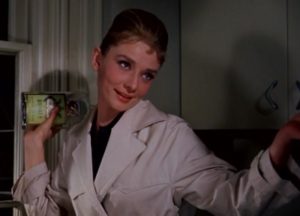
StylishHollyGolightly
She’s as much of an ideal creation as Gatsby ever was, and lovely, like him, because, as her former agent says, “She isn’t a phony because she’s a real phony. She believes all this crap she believes. You can’t talk her out of it.” If Paul/Fred married her or otherwise knew her for the rest of his life, many of those beautiful illusions would disappear, and everyday humdrum qualities and cynicism would surface. But he doesn’t (in the novella), so they don’t, and so forever Holly will represent to him—and to us—being young in the city.

Which is why you should skip over the first twenty-five minutes of the film to get to the party, and right when it’s starting to look like these two might actually get together, shut it off. It’s like Carrie Bradshaw moving to Connecticut and complaining to her husband about the kids’ laundry piling up. We don’t need it. We don’t want it. Let us keep remembering Holly taking in the city, as she knows so well how to do…
Hollytakingincity-Breakfast
And, of course, eating breakfast at Tiffany’s….
Share
Posted in: 1960s films, Romantic Comedies (film) Tagged: A-Team, Audrey Hepburn, Beverly Hillbillies, Breakfast at Tiffany's, Carrie Bradshaw, George Peppard, Truman Capote

Recent Posts

  • 100 Years Later, Still Scary: Dr. Caligari
  • Escaping Out of the Past (1947)
  • A Weeper for Those Who Love Jerks
  • Thank You, Academy, for Not Infuriating Me
  • Challengers (2024) Is a Bad Movie

Subscribe to Blog via Email

Enter your email address to subscribe to this blog and receive notifications of new posts by email.

Categories

  • 1920s films
  • 1930s films
  • 1940s films
  • 1950s films
  • 1960s films
  • 1970s films
  • 1980s films
  • 1990-current films
  • 2020s films
  • Action & Sports Films
  • Anti-Romance films
  • Blogathons
  • Childfree
  • Comedies (film)
  • Drama (film)
  • Feminism
  • Femme fatales
  • Film Noir/Crime/Thriller & Mystery
  • Gloriously Silly Scenes
  • Horror
  • Humor
  • Mae West Moments
  • Musicals and dancing films
  • Oscars
  • Random
  • Romance (films)
  • Romantic Comedies (film)
  • The Moment I Fell for
  • Turn My Sister into Classic Movie Fan
  • TV & Pop Culture
  • Uncategorized
Share
Classic Movie Blog Hub Member

Recent Comments

  • leah@carygrantwonteatyou.com on Meg Ryan’s Fate Foretold in Joe Versus the Volcano
  • Ryan on Meg Ryan’s Fate Foretold in Joe Versus the Volcano
  • leah@carygrantwonteatyou.com on 100 Years Later, Still Scary: Dr. Caligari
  • The Classic Movie Muse on 100 Years Later, Still Scary: Dr. Caligari
  • leah@carygrantwonteatyou.com on 100 Years Later, Still Scary: Dr. Caligari

Archives

  • November 2025
  • September 2025
  • May 2025
  • March 2025
  • January 2025
  • November 2024
  • August 2024
  • July 2024
  • May 2024
  • March 2024
  • February 2024
  • December 2023
  • November 2023
  • October 2023
  • September 2023
  • August 2023
  • July 2023
  • May 2023
  • April 2023
  • March 2023
  • January 2023
  • December 2022
  • November 2022
  • September 2022
  • July 2022
  • May 2022
  • April 2022
  • March 2022
  • February 2022
  • October 2021
  • September 2021
  • April 2021
  • March 2021
  • February 2021
  • December 2020
  • October 2020
  • September 2020
  • July 2020
  • May 2020
  • April 2020
  • March 2020
  • February 2020
  • December 2019
  • October 2019
  • September 2019
  • June 2019
  • May 2019
  • April 2019
  • February 2019
  • January 2019
  • November 2018
  • September 2018
  • July 2018
  • June 2018
  • May 2018
  • April 2018
  • March 2018
  • February 2018
  • January 2018
  • November 2017
  • September 2017
  • August 2017
  • July 2017
  • June 2017
  • May 2017
  • April 2017
  • March 2017
  • February 2017
  • January 2017
  • December 2016
  • November 2016
  • October 2016
  • August 2016
  • July 2016
  • June 2016
  • May 2016
  • April 2016
  • March 2016
  • February 2016
  • January 2016
  • December 2015
  • November 2015
  • October 2015
  • September 2015
  • August 2015
  • July 2015
  • June 2015
  • May 2015
  • April 2015
  • March 2015
  • February 2015
  • January 2015
  • December 2014
  • November 2014
  • October 2014
  • September 2014
  • August 2014
  • July 2014
  • June 2014
  • May 2014
  • April 2014
  • March 2014
  • February 2014
  • January 2014

Meta

  • Log in
  • Entries feed
  • Comments feed
  • WordPress.org

Copyright © 2025 Cary Grant Won't Eat You.

Church WordPress Theme by themehall.com