
The Little Foxes (1941): the Melodrama for Our Political Moment
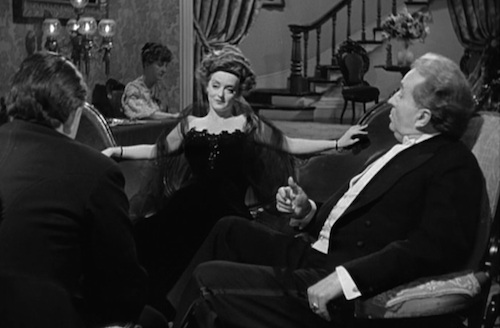
I found it eerie watching Regina (Bette Davis) plotting with her brothers in a story described by a contemporary reviewer as a “grim and malignant melodrama.” Certain themes kept surfacing that read like today’s headlines: mistreatment of minorities, disregard for others’ health, promoting an unlivable wage, business trumping decency to others. I was in the mood for a soapy melodrama, and naturally sought out a Davis flick. Usually, there’s no one I’d rather see in the role of a ruthless schemer. But she played the part too well; I didn’t expect to recognize so much. If it was escape I was after, The Little Foxes was a remarkably poor choice.
That isn’t to say I felt no sympathy for Regina Giddens (Davis). Anyone married to the sleep-inducing characters Herbert Marshall unfailingly plays; this time an ailing, upright man named Horace; deserves a bit of sympathy. Especially a character as vibrant and smart as Regina. It is fun to watch her messing with her brothers, in full control, before her husband enters the picture.
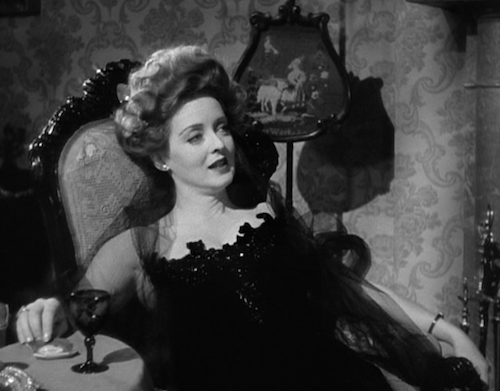
But he does, and her satisfaction is therefore short-lived: To watch her husband not only refusing to join a business venture so sure of success, but then condescendingly explaining her powerlessness to stop him, doesn’t sit well with Regina, but neither does it with those of us accustomed to more equitable romantic relationships.
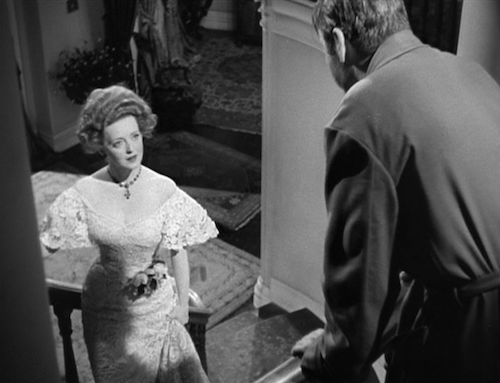
While her role as wife to Horace is hardly as pitiable as that of her sister-in-law, Birdie (Patricia Collinge), the victim of neglect and domestic abuse, Regina’s not exactly free. It’s 1900, after all. While a Southern state might have initiated women’s marital rights in the US, it’s clear from Regina’s and Horace’s behavior that she has no power over their money, which clearly originated with his family rather than hers. Her daughter (Theresa Wright) is right that berating her dying husband is wrong, but what other move (besides submission) does Regina have? We don’t like her, but it’s hard to watch her brothers (who control the venture if her husband is out) triumph over her, given their sexism and treatment of Birdie.
Of course, Regina doesn’t warrant much sympathy, and her self-destructiveness is hard to witness: it’s not exactly politic or wise to explain to your mortally ill spouse (who holds all the power) that you kinda hate his guts. Then there’s her desire to get more than her fair share of the spoils from the business. And of course, there’s the real crux of the matter: her utter lack of concern over the unlivable-wage-for-employees-thing, which is motivating her husband’s refusal to buy in. Regina takes rejection personally, unable to view any scruples about heartless business practices as anything but stupidity or pretension.
While viewing the ruthlessness of Regina and her brothers as they plot to build their cotton mill, I found myself thinking “realism” far more than “melodrama.” We know these people, their goals, their casual cruelties. We’ve seen them in action. That’s why you’re getting daily emails from political action groups urging you to call Congress members right now. Regina’s avarice may take her farther than we predict. But is it so hard to believe that in a moment of passion, greed would triumph over humanity?
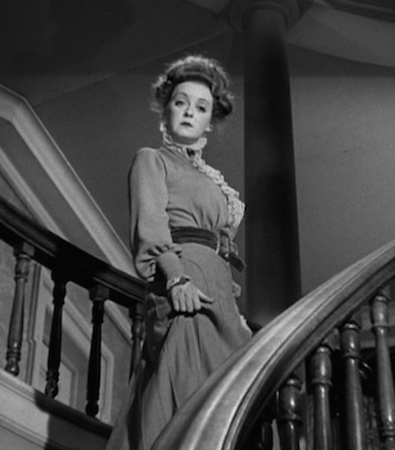
I kept remembering as I watched the film that Lillian Hellman, who penned the original play, didn’t have the sunniest view of her fellow beings (a viewpoint which couldn’t have improved when her Blacklist-targeted boyfriend went to jail for refusing to name names years later). But unfortunately, I can’t help but believe her cynicism justified. The hope we do get—the ethical love interest for the daughter showing some spunk—is muted, his victories offscreen. Regina may look a little scared in the big bad house as the story closes, but she still looks victorious.
Needless to say, I’m watching a comedy next week.
