Cary Grant Won't Eat You

Classic movies for phobics

  • About
  • eBooks
  • Previous Blogathons
Classic movies for phobics

Sullivan’s Travels

Joel McCrea: Stalling Director Preston Sturges

01/23/2016 by leah@carygrantwonteatyou.com 16 Comments

McCreaPalmBeachStory
This essay is part of Cinema Maven’s Symbiotic Collaborations blogathon, featuring wonderful director/star pairings. Click here for all the great entries.

When I was a kid, my sisters and I used to play with the record player. We loved to speed it up to make it sound like Mickey Mouse. I mention it because when I watch Preston Sturges’ films, I feel like the record player has become stuck on Mickey Mouse mode: everyone is running, shouting, falling, frantic. There are actors whose characteristics are uniquely suited to Sturges’ pace: Eddie Bracken’s exaggerated physicality, for example. Barbara Stanywck’s rapid speech.

Much of the humor of writer/director Sturges’ worlds is when someone slower enters the stage, and can’t keep up. Henry Fonda in The Lady Eve is so out of place that Sturges felt the need to underline it by having him reach the ship full of con artists and gold diggers in a small boat that’s been “up the Amazon.”

But certain actors do more than act as foils to Sturges’ frantic pace. They change the terms, slow things down, act as resistors to his electric current. They are part of the Sturges world, and wise about their companions, not naive, like Fonda’s Charles. We don’t laugh at them, but with them as they, like older siblings, view The Miracle of Morgan’s Creek-type mania around them, and urge everyone to settle down. Joel McCrea was the perfect Sturges resistor.

McCrea
In The Palm Beach Story, he arrives in Florida to discover his wife Gerry (Claudette Colbert) flirting with J.D. Hackensacker III (Rudy Valee), scheming to apply the millionaire’s funds to her husband’s projects. As he tries to reason with her, Tom (McCrea) finds the dizzy chatterbox The Princess Centimillia (Mary Astor) flitting about his handsome form, and his own competition so woefully naive that he serenades Gerry. On McCrea’s face you can see as well as hear the sigh, the “Now this,” the years of putting up with his wife’s silliness, and now these idiots, and you can’t help but laugh.
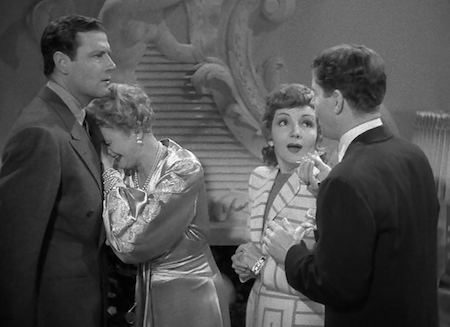
McCreaPalmBeachStory-scene
Without grandstanding, without chewing the scenery, McCrea has stolen our attention from the mesmerizing Colbert with a few perfect expressions and the solidity of his presence. Suddenly, we’re rooting for him, for them, not for her success. Given the amount of his screen time, it’s a remarkable achievement, and makes you realize why Sturges would nab him for three of his films.

McCrea was even more essential, of course, to Sullivan’s Travels, which came out the year before. Consider the challenge: The lead must act as a stand-in for Sturges, pronouncing the need for comedy in times of trouble. Sullivan (McCrea) is, like Sturges, a director, who thinks he should experience poverty so that he can direct meaningful dramas instead of his usual farces. If the star of Sullivan’s Travels preaches the final lines or overplays his insights (in the theater with the convicts) about the value of comedy, the film becomes hokey. If the character comes across as stupid in not realizing humor’s importance earlier, the ending will feel forced. The actor must, in short, act naive/be deluded at the start of the film, but not be naive. An intelligent, understated performance is essential to delivering Sturges’ message, which is really an endorsement of his entire career (and thus not something he could have taken lightly). And so Sturges chose McCrea.
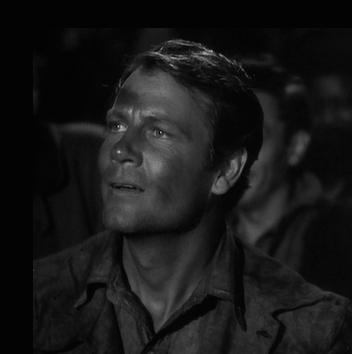
McCreaSullivansTravels
When we talk about comic timing, we often think of rapidity. But McCrea’s calming presence is part of what makes him so funny. While others around him continue their frantic scrambling, he walks and talks fairly slowly, his deliberation in sharp contrast to their quicker motions and thoughts. He underscores their rush, and makes us laugh. As Sullivan, he is very observant, as a comedic director should be, and gives us just enough of a pause to witness, to understand as he does. As in The More the Merrier, a brilliant comedy Sturges didn’t direct, McCrea gives us the space to recognize the layers of his personality, with Sturges’ regular troop (in this case, following their director in a motor home) left to be the screwball types who summon the simpler laughs.

Although I think most would call Sullivan’s Travels the perfect Sturges-McCrea pairing, I wish fewer people would dismiss The Great Moment. Because it’s not a comedy, of course, it flopped. (A drama? From Sturges?) But it’s truly a remarkable biopic. A dentist, Dr. W. T. Morgan (McCrea), publicly demonstrated the use of ether in an operation in 1846, and therefore helped make all of our surgeries since less painful. But it seems Morgan displayed less admirable behavior afterward, was more intent on getting credit than in the useful application of his discovery. Sturges highlights something beautiful about the man’s life by beginning after his death (after a short scene celebrating his biggest success), and ending the movie with Morgan’s decision to expose his discovery in this public demonstration (thus making unlikely his success in patenting).

The movie isn’t about the main character at all, but instead about an idea: Does an “incandescent” moment, a moment of self-sacrifice for others, make up for the pettiness of one’s life? It’s this rising above the history of events that I so rarely see in biopics, this understanding that recording events isn’t enough; you have to be saying something about them. McCrea’s measured timing lends a kind of gravity and dignity to the role, lets us see the heaviness and pain of Morgan’s decision to sacrifice for others.
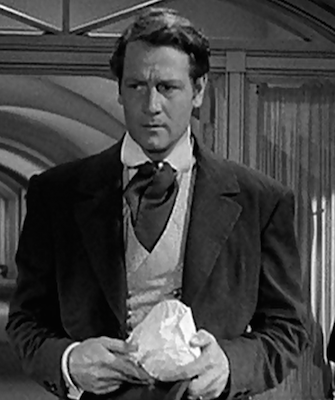
McCreaTheGreatMoment
And because McCrea is so likeable, we’re able to acknowledge the character’s usual selfishness (at least as Sturges saw it), and understand it too. I can’t say it’s my favorite film of Sturges’, but it has stuck with me; I find it haunting, which is surprising given Sturges’ light touch. I wish more aspiring directors would learn from it.

Joel McCrea was in three of Preston Sturges’ films, two of his most famous. I know I should be grateful to have that many, but oh! How I wish there were more.

Don’t forget to check out the other entries in the blogathon!

Share
Posted in: 1940s films, Blogathons, Comedies (film), Drama (film), Romantic Comedies (film) Tagged: biopics, Cinema Maven, Joel McCrea, Preston Sturges, Sullivan's Travels, The Great Moment, The Palm Beach Story

No Oscar Love for Harold Ramis: The Academy, as Humorless as Ever

02/27/2014 by leah@carygrantwonteatyou.com 6 Comments

Harold Ramis, whom President Obama labeled “one of America’s greatest satirists,” died this week shortly before this Sunday’s Oscars. His list of co-writing credits is astonishing: Animal House, Stripes, Caddyshack, Ghostbusters, Groundhog Day. He also directed the latter, Caddyshack, and Vacation. I’m sure the Academy will clap enthusiastically this weekend when his face appears in the “In Memoriam” tribute, but they won’t express what they should: regret. Ramis never won an Oscar; in fact, he was never even nominated.

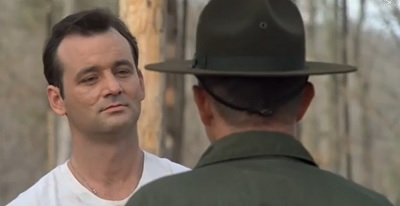
Harold Ramis: won A BAFTA, but no Oscar

Harold Ramis: won A BAFTA, but no Oscar

In the years the Academy snubbed Ramis, comedies did make appearances in the original screenplay category, including Private Benjamin, Splash, Beverly Hills Cop, Sleepless in Seattle, and Dave.  But many of the nominations were of grim films you didn’t know then, much less now. The following were the original screenplay winners the years Ramis could have been nominated:

Coming Home (Animal House), Melvin and Howard (Caddyshack), Places in the Heart (Ghostbusters), and The Piano (Groundhog Day).

Most Oscar nominees for original screenplay are not bad movies; the Academy saves their embarrassing choices for the best film category (Crash, anyone?) But have these screenplay winners stood the test of time? Have they influenced you—or anyone you know—in any way?

Here’s a test for you:

  • Can you quote from it?

Belushitoga

  • Do you adopt cultural affectations from it (perhaps Roman)?
  • Have you sung along with it?
  • Does it give you more understanding for the weak kid or the outsider, perhaps make you feel more comfortable challenging authority? (See this great Ramis bio.)

Stripes

  • Does it bring back childhood memories that make you grin, maybe your best Halloween costume ever?

Ghostbusters

  • Have you lost count of how many times you’ve seen it?
  • Do you (be honest) feel tempted to dance with a certain character’s nemesis during the closing scene?

gopherCaddyshack

Of course, the Academy—and critics in general—have long shown more appreciation for drama than comedy, failing to see in it the far subtler, and often more trenchant and artful cultural critique it can provide. In 1941, Preston Sturges, a writer/director who, like Ramis, was fond of what’s often dismissed as “adolescent” humor, wrote an entire film addressing the greater appreciation given to drama, Sullivan’s Travels. But unlike with the usual Oscar winners, this time, the case for comedies is much more persuasive.

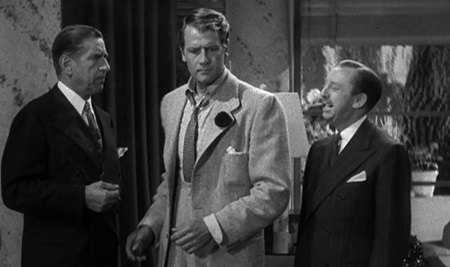
It begins with a scene between a director (Sullivan, played by Joel McCrea) and his bosses (Mr. LeBrand and Mr. Hadrian). Sullivan has decided to write a serious film, which his bosses fear will be less profitable than his usual comedies. Why not do a sequel to your Ants in Your Plants of 1939 instead? they ask him. His movies are inspiring, they tell him. They don’t, as Hadrian puts it, “stink with messages.”

Sullivan (Joel McCrea in the middle) with his bosses

Mr. LeBland, Sullivan (Joel McCrea) and Mr. Hadrian

Sullivan tries to argue them into supporting his new effort, showing them a scene from his O Brother, Where Art Thou? (yes, Coen fans, that’s where they got it)

Sullivan: “You see the symbolism of it?….It teaches a lesson, a moral lesson, it has social significance.”

Hadrian: “Who wants to see that kind of stuff? It gives me the creeps.”

….

Sullivan:  “I want this picture to be a commentary on modern conditions, stark realism, the problems that confront the average man.”

LeBrand: “But with a little sex.”

….

Hadrian: “How about a nice musical?”

Sullivan: “How can you talk about musicals in a time like this, with the world committing suicide, with corpses piling up in the streets?…..”

Hadrian: “Maybe they’d like to forget that.”

After Hadrian convinces Sullivan he’s too inexperienced with suffering to direct movies about it, the latter decides to go on a quest to learn about poverty firsthand. A despondent LeBrand barks at his assistant, “Get me a copy of that O Brother, Where Art Thou? I guess I’ll have to read it now. Make that two copies.  Why should I suffer alone?”

By the end of the movie, Sullivan agrees with his bosses that he should keep directing comedies. He discovers that his movies, silly as they may be, have something to offer that dramas never will: “There’s a lot to be said for making people laugh. Did you know that’s all some people have?”

In fact, Sturges begins the movie with a dedication that could have been written for Ramis: “To the memory of those who made us laugh….in all times and in all nations, whose efforts have lightened our burden a little….” Not a bad epitaph, from one comedic genius to another.

Incidentally, Sullivan’s Travels (1941) ranked on the AFI’s top 100. But you guessed it: Not a single Oscar nomination.

Share
Posted in: 1980s films, 1990-current films, Comedies (film), Humor, Oscars, Romantic Comedies (film), TV & Pop Culture Tagged: Academy Awards, Animal House, Bill Murray, Caddyshack, Ghostbusters, Groundhog Day, Harold Ramis, Preston Sturges, Sullivan's Travels, The Oscars

Recent Posts

  • 100 Years Later, Still Scary: Dr. Caligari
  • Escaping Out of the Past (1947)
  • A Weeper for Those Who Love Jerks
  • Thank You, Academy, for Not Infuriating Me
  • Challengers (2024) Is a Bad Movie

Subscribe to Blog via Email

Enter your email address to subscribe to this blog and receive notifications of new posts by email.

Categories

  • 1920s films
  • 1930s films
  • 1940s films
  • 1950s films
  • 1960s films
  • 1970s films
  • 1980s films
  • 1990-current films
  • 2020s films
  • Action & Sports Films
  • Anti-Romance films
  • Blogathons
  • Childfree
  • Comedies (film)
  • Drama (film)
  • Feminism
  • Femme fatales
  • Film Noir/Crime/Thriller & Mystery
  • Gloriously Silly Scenes
  • Horror
  • Humor
  • Mae West Moments
  • Musicals and dancing films
  • Oscars
  • Random
  • Romance (films)
  • Romantic Comedies (film)
  • The Moment I Fell for
  • Turn My Sister into Classic Movie Fan
  • TV & Pop Culture
  • Uncategorized
Share
Classic Movie Blog Hub Member

Recent Comments

  • leah@carygrantwonteatyou.com on Meg Ryan’s Fate Foretold in Joe Versus the Volcano
  • Ryan on Meg Ryan’s Fate Foretold in Joe Versus the Volcano
  • leah@carygrantwonteatyou.com on 100 Years Later, Still Scary: Dr. Caligari
  • The Classic Movie Muse on 100 Years Later, Still Scary: Dr. Caligari
  • leah@carygrantwonteatyou.com on 100 Years Later, Still Scary: Dr. Caligari

Archives

  • November 2025
  • September 2025
  • May 2025
  • March 2025
  • January 2025
  • November 2024
  • August 2024
  • July 2024
  • May 2024
  • March 2024
  • February 2024
  • December 2023
  • November 2023
  • October 2023
  • September 2023
  • August 2023
  • July 2023
  • May 2023
  • April 2023
  • March 2023
  • January 2023
  • December 2022
  • November 2022
  • September 2022
  • July 2022
  • May 2022
  • April 2022
  • March 2022
  • February 2022
  • October 2021
  • September 2021
  • April 2021
  • March 2021
  • February 2021
  • December 2020
  • October 2020
  • September 2020
  • July 2020
  • May 2020
  • April 2020
  • March 2020
  • February 2020
  • December 2019
  • October 2019
  • September 2019
  • June 2019
  • May 2019
  • April 2019
  • February 2019
  • January 2019
  • November 2018
  • September 2018
  • July 2018
  • June 2018
  • May 2018
  • April 2018
  • March 2018
  • February 2018
  • January 2018
  • November 2017
  • September 2017
  • August 2017
  • July 2017
  • June 2017
  • May 2017
  • April 2017
  • March 2017
  • February 2017
  • January 2017
  • December 2016
  • November 2016
  • October 2016
  • August 2016
  • July 2016
  • June 2016
  • May 2016
  • April 2016
  • March 2016
  • February 2016
  • January 2016
  • December 2015
  • November 2015
  • October 2015
  • September 2015
  • August 2015
  • July 2015
  • June 2015
  • May 2015
  • April 2015
  • March 2015
  • February 2015
  • January 2015
  • December 2014
  • November 2014
  • October 2014
  • September 2014
  • August 2014
  • July 2014
  • June 2014
  • May 2014
  • April 2014
  • March 2014
  • February 2014
  • January 2014

Meta

  • Log in
  • Entries feed
  • Comments feed
  • WordPress.org

Copyright © 2025 Cary Grant Won't Eat You.

Church WordPress Theme by themehall.com