Cary Grant Won't Eat You

Classic movies for phobics

  • About
  • eBooks
  • Previous Blogathons
Classic movies for phobics

Ronald Colman

Who Is the Biggest Charmer?
07/27/2022 by leah@carygrantwonteatyou.com 4 Comments

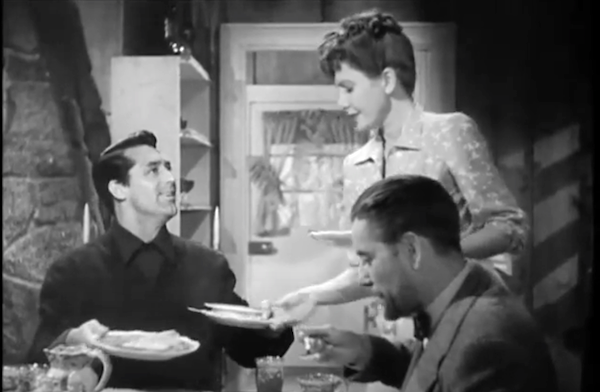
The Talk of the Town (1942) is a joyous experience. It features a romantic triangle between three actors who are absurdly charming: Jean Arthur, Cary Grant, and Ronald Colman. It’s a bit of an odd tale, but frankly, with these three people in the mix, who cares about plot?

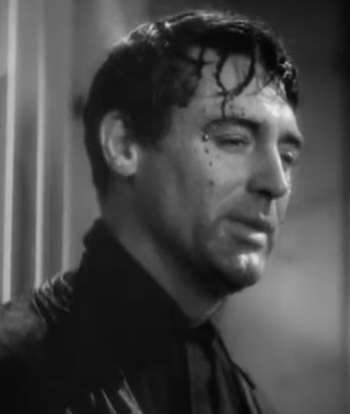
You can’t watch Cary Grant’s smirking, musing, or flirting….
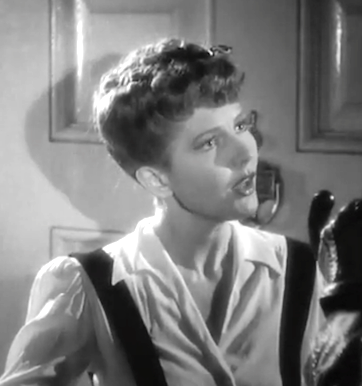
Hear Jean Arthur’s lovely tweety voice…
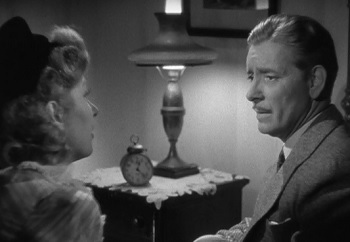
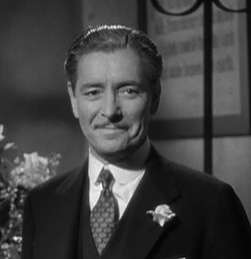
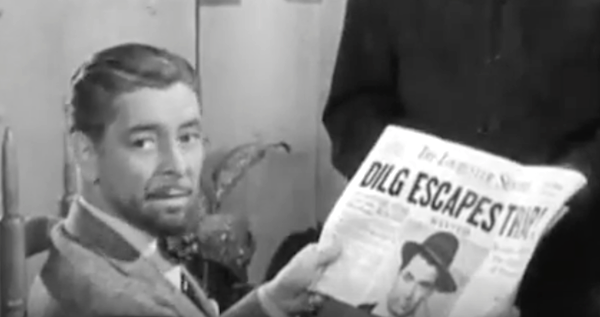
Or witness the sweetness of Colman’s subtle smile….
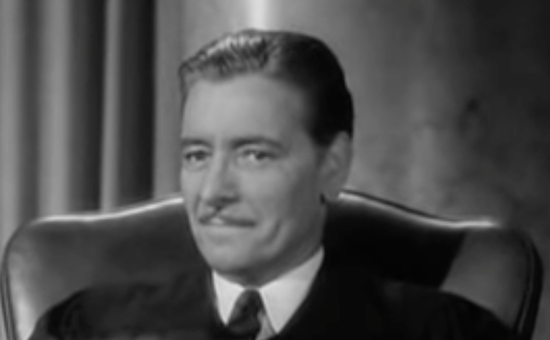
without giving into them, can you?

The only question is which of the three is the MOST charming.

Certain actors carry a patina of their roles with them. To me, Julia Roberts, Tom Hanks, Al Pacino, Robert De Niro, and Denzel Washington are all like this. Try to watch Tom Hanks without the echoing sweetness of Josh (Big) and his other early comedies winning you over; I can’t make it through half a minute of any of his movies without already loving the guy.

But it’s not often that THREE actors this charming share the screen, as they do in The Talk of the Town.
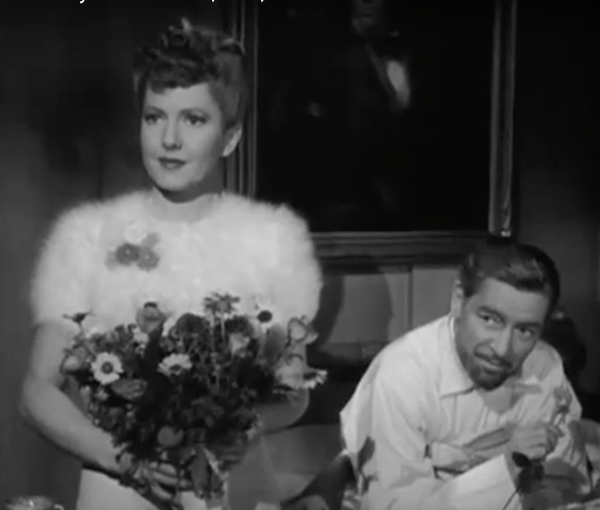
The story is a peculiar mishmash. Jean Arthur’s Nora, a teacher, is renting her house to a renowned legal scholar, Professor Michael Lightcap (Colman). Her old school chum, Leopold, is on the run from the law, accused of starting a fire in a mill that killed his foreman. He hides in her home right as Lightcap arrives and pretends to be her gardener to fool the new resident.

Lightcap may be the only person who can save Leopold’s life. The mill’s owner is egging on a mob to kill Leopold for his alleged crime. The fugitive, annoyed by Lightcap’s cold legal logic, moves Lightcap with his passion and firebrandy ways (couldn’t resist), which are what made the mill owner hate him to begin with. Nora finagles a job as a secretary to Lightcap to protect Leopold from being discovered by the mob–or by Lightcap.

A triangle really is the right word, as Nora is impressed by Lightcap’s prestige, intelligence, and ethics, and torn between these new feelings and her old affection for Leopold.
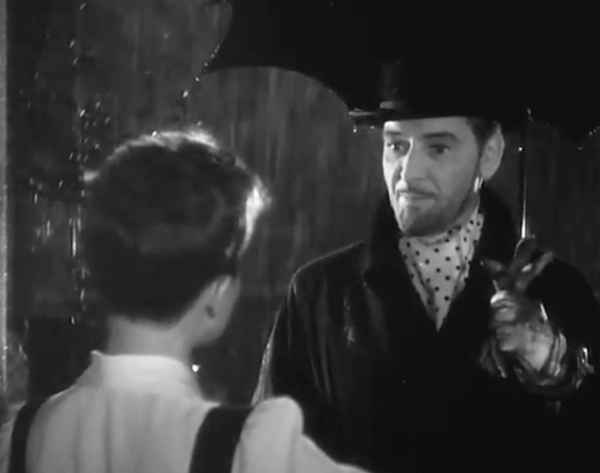
Yet it would be a mistake to leave Leopold and Lightcap out of the mix: the film is as much about intellectual as romantic affection. Whether Lightcap is most drawn to Leopold or Nora is a question that never gets answered.
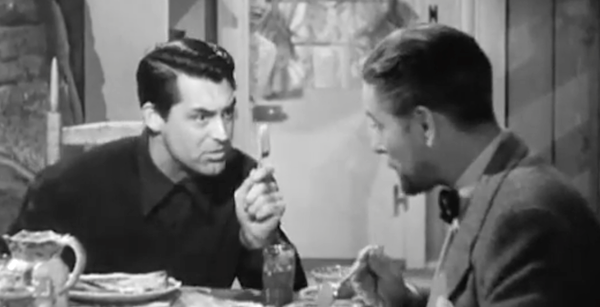
And who can blame him? This is a charm off, my friends, and in every corner of this Isosceles is an actor—and by extension, character–you can’t help watching. Let’s dig a little deeper:

Jean Arthur

Whether she’s wisecracking as Saunders (Mr. Smith Goes to Washington), flirting without realizing it (The More, the Merrier), baffled (Easy Living), or earnest (Shane), Jean Arthur is adorable. I love seeing her in oversized PJs.
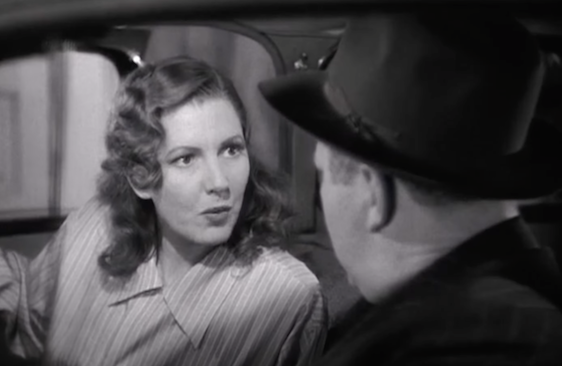
The look somehow captures her appeal–the way people underestimate her until that feisty, birdlike voice and the frustration she evokes so well (she should be annoying but somehow never is) draw you in and win you over.

Ronald Colman

I fell for Ronald Colman in Random Harvest, and woe betide the woman who ever watches that film: his “forgotten man” will haunt you. With a voice nearly as memorable as Arthur’s, the broken veteran in Random Harvest moves seamlessly from his shaken condition to the debonair man of consequence. He is equally convincing in both versions of himself. His gruffness in The Talk of the Town‘s start, therefore, never fools me for a second. This, my friends, is a sweetheart, make no mistake–and thus he proves to be. These two films came out in the same year, so perhaps others didn’t have this early love affair with him. But watch him in anything, and you fall for the man.
Cary Grant

Cary Grant, of course, is the most obvious charmer–playing, as he often admitted himself, the part of Cary Grant his whole life. He is never fully convincing as the local troublemaker driven by his ideals–until he questions his own judgment due to his admiration for Lightcap.

Cary Grant often seems to be in reflective mode, and his torn feelings about Lightcap play over that gorgeous face. But then, we are on his side as soon as we recognize that face. This is the slightly disreputable version of the actor you can’t help but adore, the rabble rouser with a naughty streak, with a pinch of The Awful Truth and Topper. You’re never convinced this is the Cary Grant of Suspicion, though he is accused of murder. Like with Arthur, you can’t ever count him out, even when he’s romantically (and ethically) paired against a potential Supreme Court justice, Lightcap.

So who do YOU think the winner of this charm-off would be, however it may end in the film? I leave it to you to decide.

Share
Posted in: 1940s films, Comedies (film), Romantic Comedies (film), Uncategorized Tagged: Cary Grant, Jean Arthur, Ronald Colman, The Talk of the Town

The Amnesia Romance Before Vows and Notebooks: Random Harvest (1942)

06/26/2014 by leah@carygrantwonteatyou.com 2 Comments

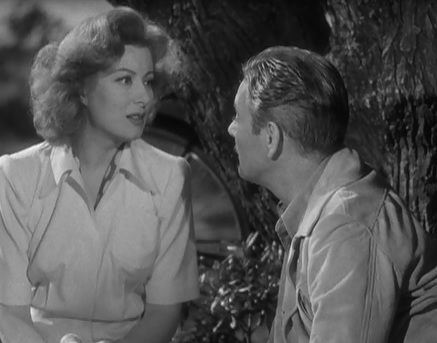
Greer Garson and Ronald Colman in Random Harvest

Greer Garson and Ronald Colman in Random Harvest

I wouldn’t usually confess to liking a romance—not the pure, unabashed kind, with brooding heroes; loyal, plucky heroines; and never-ending love. This is not, mind you, that I never watch or like them—it’s just rare for me to admit it. Did I swallow up every minute of North and South (2004 Gaskell version)? Oh yes I did. Did I, in fact, neglect to try out for cross country in high school because I was watching a bad period romance instead? Ummm. Maybe. (I’m luckily a little hazy on the details, even if my best friend claims she isn’t.)

I’m not sure then what it is about Random Harvest that makes me wiling to fess up to loving it. On the surface, this film is every bit as sentimental as the ones I supposedly (and sometimes actually) despise: I mean, it centers on AMNESIA. AMNESIA!! (Even Downton Abbey, which is about as soapy as it gets, knew to nix that Patrick Gordon/Crawley storyline.) But suspend your disbelief just briefly as I explain….

Charles Rainier (Ronald Colman), shell-shocked and without his memory after WWI, escapes from the asylum where he’s recovering when peace is declared. He happens into music hall performer Paula (Greer Garson), who pities and then falls for this man she dubs Smithy. She steals him away from his pursuers, giving up her job to help him.

Smithy at the thought of losing Paula

Smithy at the thought of losing Paula

They have years of a happy marriage together, but an accident brings back his long-term memory, while knocking out the time with Paula. All he has is a memory of a strong love that prevents him from moving on romantically.

Smithy catching sight of his bride

Smithy catching sight of his bride

Are you rolling your eyes yet? I know how it sounds, as cheesy and manipulative as romances often are. But somehow, it’s not. The film is sentimental. But it takes a good forty minutes even for these two to admit to loving one another, and along the way, Colman’s heartbreaking performance captures so well his fragility as this lost man striving for dignity, and Greer’s warmth and exuberance and naiveté make her such a good foil for him, that you’ve begun to root for them before you realize you’re in their thrall. Of course, you’re terribly frustrated by his inability to see this charmer in front of him as the love he’s been mourning, even as you admire the loyalty he doesn’t know is to her.

Paula

Paula

Given Smithy’s/Charles’ continued memory loss, you want Paula to move on, know she should, and yet….There’s something so simple and right about the relationship they shared, about the generosity of spirit that made her help him, and about his wholehearted affection for her. After all, their love has nothing to do with anything but chemistry and affection, a bond with no social trappings of any kind.

If you’re a romantic, obviously, this film is right in line with The Notebook and The Vow and other similar films about love surviving great odds. I would argue this is a much finer film than either, and its seven Oscar nominations back me up. But I have to admit that the Academy isn’t much kinder to romances than it is to comedies, and a so-called “women’s picture” like this one, focused on loyalty to one’s man, would be unlikely to do as well now as it did then in the rush of patriotism that would give Greer her Oscar for Mrs. Miniver (also 1942).

Still, it would take a film this whimsical, this sweet to make me admit—in public!—just how much a romance took me in.


Share
Posted in: 1940s films, 1990-current films, Romance (films) Tagged: amnesia, Greer Garson, Random Harvest, Ronald Colman, The Notebook, The Vow

Recent Posts

  • 100 Years Later, Still Scary: Dr. Caligari
  • Escaping Out of the Past (1947)
  • A Weeper for Those Who Love Jerks
  • Thank You, Academy, for Not Infuriating Me
  • Challengers (2024) Is a Bad Movie

Subscribe to Blog via Email

Enter your email address to subscribe to this blog and receive notifications of new posts by email.

Categories

  • 1920s films
  • 1930s films
  • 1940s films
  • 1950s films
  • 1960s films
  • 1970s films
  • 1980s films
  • 1990-current films
  • 2020s films
  • Action & Sports Films
  • Anti-Romance films
  • Blogathons
  • Childfree
  • Comedies (film)
  • Drama (film)
  • Feminism
  • Femme fatales
  • Film Noir/Crime/Thriller & Mystery
  • Gloriously Silly Scenes
  • Horror
  • Humor
  • Mae West Moments
  • Musicals and dancing films
  • Oscars
  • Random
  • Romance (films)
  • Romantic Comedies (film)
  • The Moment I Fell for
  • Turn My Sister into Classic Movie Fan
  • TV & Pop Culture
  • Uncategorized
Share
Classic Movie Blog Hub Member

Recent Comments

  • leah@carygrantwonteatyou.com on Meg Ryan’s Fate Foretold in Joe Versus the Volcano
  • Ryan on Meg Ryan’s Fate Foretold in Joe Versus the Volcano
  • leah@carygrantwonteatyou.com on 100 Years Later, Still Scary: Dr. Caligari
  • The Classic Movie Muse on 100 Years Later, Still Scary: Dr. Caligari
  • leah@carygrantwonteatyou.com on 100 Years Later, Still Scary: Dr. Caligari

Archives

  • November 2025
  • September 2025
  • May 2025
  • March 2025
  • January 2025
  • November 2024
  • August 2024
  • July 2024
  • May 2024
  • March 2024
  • February 2024
  • December 2023
  • November 2023
  • October 2023
  • September 2023
  • August 2023
  • July 2023
  • May 2023
  • April 2023
  • March 2023
  • January 2023
  • December 2022
  • November 2022
  • September 2022
  • July 2022
  • May 2022
  • April 2022
  • March 2022
  • February 2022
  • October 2021
  • September 2021
  • April 2021
  • March 2021
  • February 2021
  • December 2020
  • October 2020
  • September 2020
  • July 2020
  • May 2020
  • April 2020
  • March 2020
  • February 2020
  • December 2019
  • October 2019
  • September 2019
  • June 2019
  • May 2019
  • April 2019
  • February 2019
  • January 2019
  • November 2018
  • September 2018
  • July 2018
  • June 2018
  • May 2018
  • April 2018
  • March 2018
  • February 2018
  • January 2018
  • November 2017
  • September 2017
  • August 2017
  • July 2017
  • June 2017
  • May 2017
  • April 2017
  • March 2017
  • February 2017
  • January 2017
  • December 2016
  • November 2016
  • October 2016
  • August 2016
  • July 2016
  • June 2016
  • May 2016
  • April 2016
  • March 2016
  • February 2016
  • January 2016
  • December 2015
  • November 2015
  • October 2015
  • September 2015
  • August 2015
  • July 2015
  • June 2015
  • May 2015
  • April 2015
  • March 2015
  • February 2015
  • January 2015
  • December 2014
  • November 2014
  • October 2014
  • September 2014
  • August 2014
  • July 2014
  • June 2014
  • May 2014
  • April 2014
  • March 2014
  • February 2014
  • January 2014

Meta

  • Log in
  • Entries feed
  • Comments feed
  • WordPress.org

Copyright © 2025 Cary Grant Won't Eat You.

Church WordPress Theme by themehall.com