Books that Make Bad Films: My Cousin Rachel
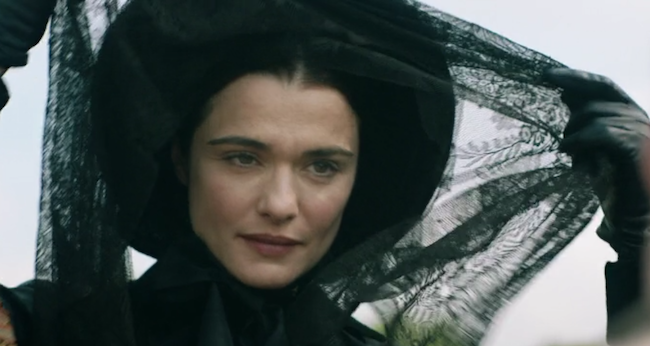
I had hopes for My Cousin Rachel (2017). I don’t know why. I’d already discovered–despite my enjoyment of the 50s version–that the book wouldn’t translate well to film without a big overhaul. I guess I hoped a director smart enough to cast Rachel Weisz in the key role would know to make such changes. (She had added complexity to Definitely, Maybe for crying out loud. Who better to take on the mysterious, unreadable Rachel?) But within minutes, it was evident this director of slight rom-coms lacked the imagination to even equal the previous film’s quality. The 2017 take is incomprehensible, just short of laughably bad. I had flashbacks of Season 3 of Bloodline. What the ksljfkjslkfj! is even going on?
***Mild spoilers–I won’t give away the end. Here’s the plot: a sheltered young man, Philip, is taught to hate women by his cousin/foster father Ambrose. He discovers his cousin has fallen in love with and married a woman while abroad in Italy. Philip’s jealous, angry, anxious. Then he receives strange letters indicating Ambrose is afraid of his wife and quite ill. On arriving in Italy to save his beloved cousin, Philip discovers him dead, with shady characters delivering the news.
Back home in England, he vows revenge on the widow, just on time for her arrival for a visit. The story takes off from there, as Philip falls for the widow and acts completely besotted right away.

Unfortunately, he can’t determine whether Ambrose died of a brain tumor (making his suspicions delusions) or by his wife’s hand. Is the widow just mercenary in this visit, trying to get her late husband’s estate by wooing Philip? Or is she an independent woman who means well but is reluctant to yoke herself to a silly boy who can’t distinguish between sex and marriage? And regardless of which she is, is that dreaded tea she’s making poisonous? And when he’s ill, will she help Philip get well, or attempt to slowly kill him off?
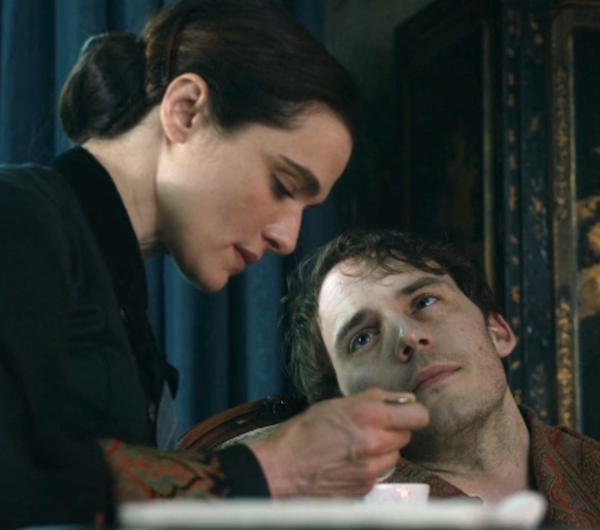
The lure of the book is the constant back and forth of the reader’s (and Philip’s) suspicions about whether she’s a killer. The did-she, didn’t she is brilliantly developed by Du Maurier. Philip, the narrator, is, by any definition, a dupe. Suspecting Rachel as he does, offering her all of his worldly possessions because she smiles at him isn’t exactly a bright move. What redeems the narrator for the reader is that he’s telling this story AFTER THE FACT, and we understand he’s not quite so foolhardy now. We also get inside his head, understanding why he trusts when he does. We also know more of the sheltered background that explains (as it turns out) his dangerous lack of experience with women. How else could we understand his dogged pursuit of a woman who is not attracted to him?
Without this context, the narrator comes across on film as not only unlikable, but unhinged. In the 1952 version, he acts like a dangerous stalker after Rachel stops allowing his seductions.
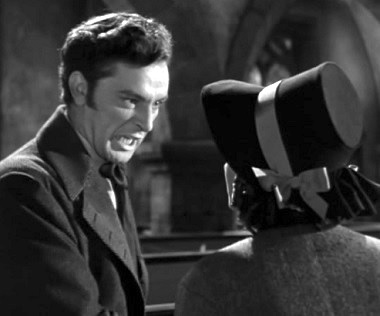
Luckily, the role is played with such relish by Richard Burton that you enjoy it even as you know the book’s intent has been completely overthrown. (Philip HAS to be the enemy, with behavior like this.) In the 2017 version, far less ably played by Sam Claflin, Philip is so pathological in his pursuit of Rachel that you see her possible poisoning of him as an act of self-defense. How else can she ensure he won’t kill her, he’s so obsessed? That attack on her throat is just the beginning!
With this upending of villain roles, the did-she, didn’t-she becomes, “Who cares what you did, lady. RUN!!” I don’t have a problem with changing a book’s focus, but as it turns out, that uncertainty about Rachel was also the narrative’s greatest appeal. Without it, we’re stuck watching an unlikable dupe turn into a psycho, which isn’t interesting viewing. I also don’t think voiceover from Philip would have worked; the story needs more nuance and he’s not intelligent enough to provide it.
As I see it, the only way of salvaging the story on film was to change the lead. What about his godfather’s daughter, who likes Philip for some unaccountable reason? We’d see Rachel’s behavior more clearly from her eyes; she may be biased, but she’s perceptive. Again, no need for voiceover, but she’d notice different details, like Rachel’s manipulative ways. (Though let’s stop the anachronisms, please, 2017 version; I can’t see this young lady frankly talking about homosexuality with Philip.) Or what about the godfather as the lead? He’s protective and smart.
Or you could go full-tilt into unreliable narrator mode, and make Rachel–the most interesting character–the lead. She could be like the riveting James Cain narrator in The Cocktail Waitress. With Rachel, I wouldn’t even mind a bit of voiceover.
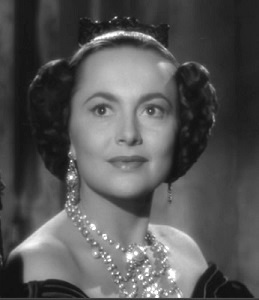
It’s funny that the 2017 version completely dropped the notion that Rachel was foreign in her ways—and yet that foreignness helps explain her greater independence, her unknowability to Philip, and her tenuous status in the community (who, like Philip, are a bit entrenched in their xenophobia and rigid biases).
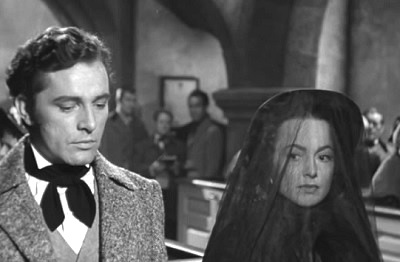
And it also helps show her confusion. She’s lived a cosmopolitan life in Italy, and Philip’s (and his community’s) rigid morals about sexuality don’t make sense to her. With more of her character unfiltered through Philip’s perspective, we viewers might come to understand her better.
As it is, the 1952 version is entertaining at least. The 2017 version, alas, is not, with Claflin making even histrionics dull to watch. Only some pretty cinematography redeems it at all. The 2017 version adds a dumb ending and strips away much of the questioning of Rachel’s motives. Rachel seems delicate rather than arch at all times and her character is so terribly underdeveloped that Weisz–for once–is tedious to watch. View the 1952 version for Burton’s high drama and Olivia de Havilland’s riveting confidence as Rachel. But if you love the book, be prepared for disappointment: your beloved psychological thriller is now a crush-gone-bad procedural.
This post is part of the Classic Literature On Film Blogathon, hosted by Silver Screen Classics. Check out all the great posts!
