Cary Grant Won't Eat You

Classic movies for phobics

  • About
  • eBooks
  • Previous Blogathons
Classic movies for phobics

Oscar snubs

Glenn Close’s Most Stunning Role

07/25/2024 by leah@carygrantwonteatyou.com Leave a Comment


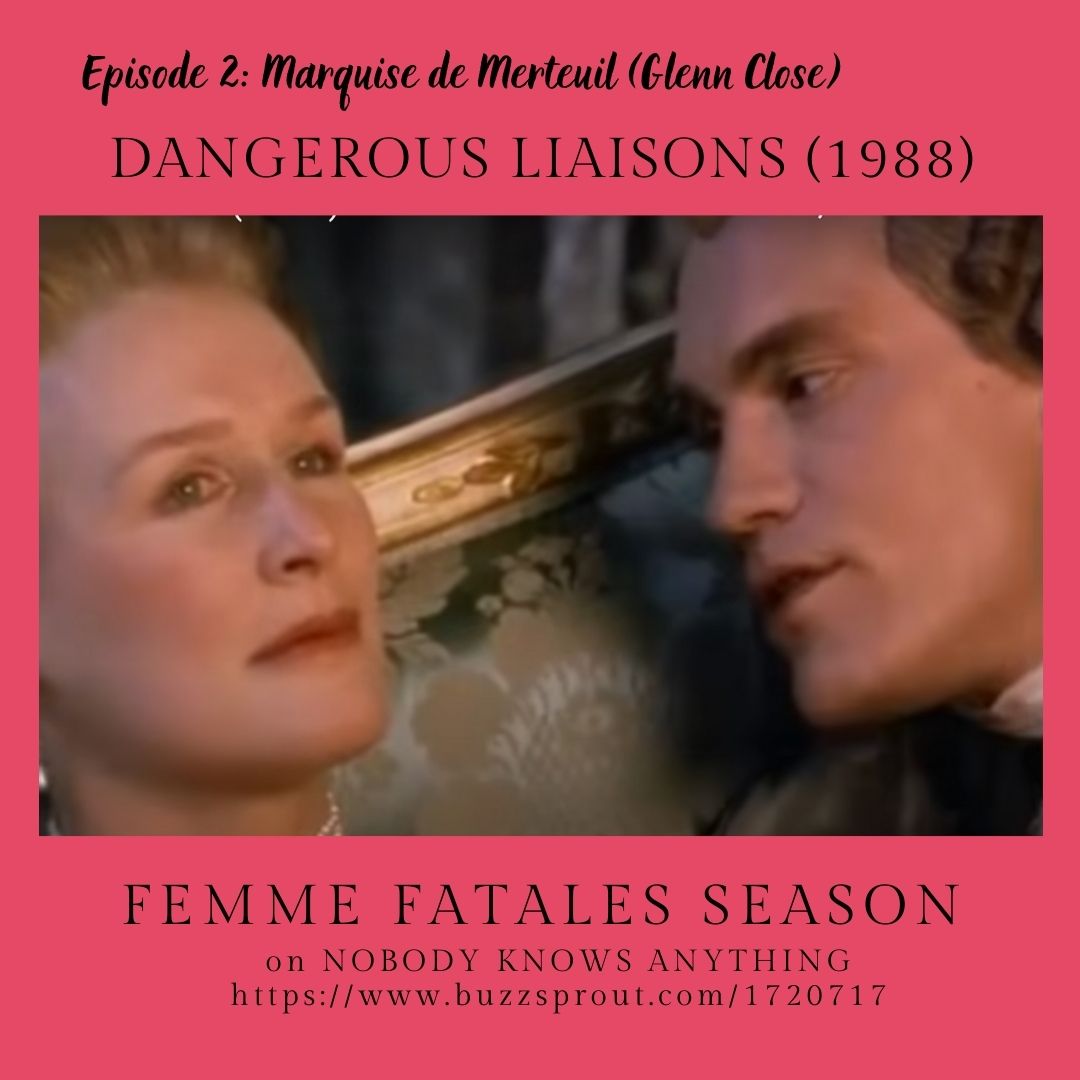
Episode 2 of the femme fatales season of Nobody Knows Anything is up!! Dangerous Liaisons, a film that pits the dueling wits of Glenn Close and John Malkovitch against each other in a fight over love and power . . . . and also, Keanu Reeves is there, being strangely perfect in eighteenth-century dress. We ask this critical question: Can the femme fatale ever win? (Just why Close didn’t get the Oscar for this is a big mystery.)

See the link in the image above!

Share
Posted in: 1980s films, Anti-Romance films, Drama (film), Feminism, Femme fatales, Film Noir/Crime/Thriller & Mystery, Humor, Romance (films), Romantic Comedies (film) Tagged: Dangerous Liaisons, Glenn Close, Glenn Close's best roles, great leading roles for women, John Malkovitch, Keanu Reeves, Michelle Pfeiffer, Oscar snubs

Oscar Rant, Part II: Barbie

02/26/2024 by leah@carygrantwonteatyou.com 2 Comments


I walked into Barbie with sky-high expectations. I had been tracking the career of its co-screenwriter (and Greta Gerwig’s spouse) Noah Baumbach since 1995’s Kicking and Screaming played on my VCR in college. My roommates and I–and my sister–had fallen deeply and completely into lifelong loyalty with him the moment we pressed play. Baumbach GOT us.

Far more than Reality Bites or other Gen X standards, Kicking and Screaming captured my life and my friends’ and siblings’–not in a literal sense, of course, most of us being female and at large state schools. We were certainly not young, privileged men at a small New England college. But in spirit. He got our reluctance to move on with our lives, our fear of door-to-door salespeople, our reluctance to complain to servers, our laziness (putting a sign stating “broken glass” on the floor instead of cleaning a mess up), all our ridiculous rituals we couldn’t break.

I remember the year I paid roommates for their time if I told a bad story or joke, thanks to the film’s influence. I recall my excitement when The Squid and the Whale (2005) finally showed me others had recognized the writer-director’s brilliance. (Though I don’t think he’s equaled either of those films since; I’m not a huge fan of Marriage Story, for example, and thought Margot at the Wedding cold and half-baked.)

Gerwig won my admiration–though to a lesser extent–with Ladybird and by capturing Little Women‘s Jo so well. She pictured the heroine’s future as Louisa May Alcott would have, had the times she’d lived in been less sexist than they were.

To have THESE TWO creating a funny Barbie movie? I was in–especially with Ryan Gosling starring. I admit I had some apprehension, given Baumbach’s caving to Wes Anderson in The Life Aquatic with Steve Zissou. (Where WAS he in that?)

There is A LOT to like about Barbie: The opening scene is brilliant–& the first half is so funny. “Beach” as Ken’s theme for life and his joy at realizing he’s the beneficiary of the patriarchy are so amazing. The costumes and production design are so well done, and Kate McKinnon’s Weird Barbie is an inspiration.

But then, there’s that by-the-book speech delivered by America Ferrara and the muddled second half. Until the ending, which I loved, the film lost its focus.

I don’t question the lack of an Oscar nomination for Margot Robbie. Best actor/actress awards rarely go to men or women in comedies. (It’s all about supporting with comedy nods; this year’s two best actor comedy nods are the exception, not the rule, and both men are starring in dramedies, not comedies, like Barbie.) In addition, the male characters in this film are better written and thus the men have better roles, which is hardly surprising, since Noah Baumbach, the better writer of the pair, has been perfecting this kind of arrested-development male (aka, Ken) since Skippy of Kicking and Screaming. (Actually, arrested-development male describes nearly every character in that film.)

I do think–given its innovative spirit and how much it had to offer–Barbie deserved to be in the best picture mix, especially with undeserving films like The Holdovers, Past Lives, and Oppenheimer on the roster.

Did Gerwig deserve an Oscar nomination for director? It depends on how you look at it. If I ask, “Do I think this film, with its muddled second half, deserves a directing Oscar nomination?” I would answer no. But does she deserve it MORE than Christopher Nolan for his poorly developed, uninspiring borefest? You better believe it.

In the end, I realize Gerwig just tried to please too many audiences with Barbie. And given that, I’m grateful for what I got, and for the joy I felt in wearing pink with Barbie-loving peers at the theater (my first theater return post-COVID). But I hope she and her spouse streamline their styles a bit more because what amazing potential that duo has. We’ve seen what they can do (in Barbie) if they get it half-right. Can you imagine what they can accomplish, once they get it right?

Share
Posted in: 1990-current films, Anti-Romance films, Comedies (film), Oscars, Romance (films), Romantic Comedies (film) Tagged: Barbie, Greta Gerwig, Kicking and Screaming (1995), Little Women, Margot Robbie, Noah Baumbach, Oscar snubs, Ryan Gosling, The Squid and The Whale

Aftersun: Too Intimate for the Oscars, Rant Part II

01/29/2023 by leah@carygrantwonteatyou.com 4 Comments

Aftersun deserved best picture & directing Oscars this year, but it had no shot. The Academy doesn’t like to award intimate little stories about relationships. They like loud message films, and loud action films, and stories about men being men. And when they (rarely) pivot their patterns (Moonlight), it’s never for a woman helmer: It’s no accident that the only females who’ve won directing Oscars did so for stories about war, community job loss, and cowboys.

Academy voters like to throw a screenplay bone at the original, lovely intimate stories–though they occasionally alter that with acting (as with Aftersun) or song nominations/wins (as with Once). Even when a quiet, intimate little film like Il Postino is nominated for best picture, it wins for something else (in its case, score). That’s why when I’m searching for good films I don’t know from past Oscars, I go straight to the screenplay category. There I can find films that weren’t about the Academy trying to prove something, or the fact that many of them are too lazy to view all but blockbusters and movies with their friends in them.

What strikes me most about Academy voters is their fear. They’re afraid of being seen as racist, as they should be (#OscarsSoWhite), but they actually prove they are with nominations for movies like The Blind Side and Crash and Green Book. The pernicious roots of racism don’t lie in big headlines or loud messages or overt acts, but in the everyday moment, and the everyday moment is where all of us make mistakes of every kind. We are vulnerable there. Academy voters don’t like that space.

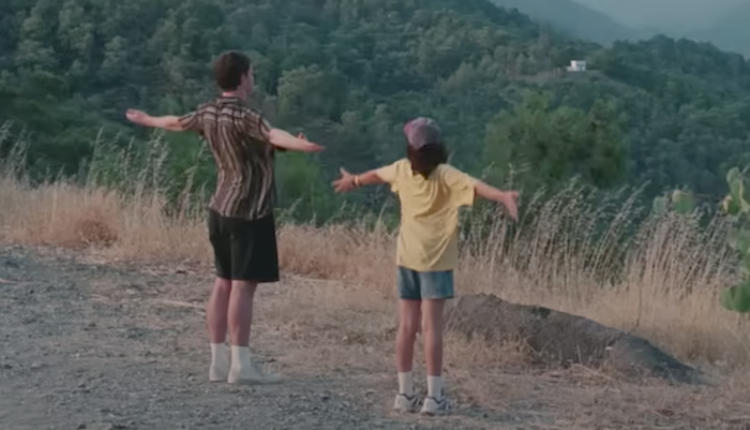
To nominate Aftersun for best picture or its writer-director Charlotte Wells would take guts. It’s not Oscar bait, and at first appears far less skillfully managed than it is. It fools you, posing as a student film, or just a kid’s camcorder records of her vacation with her dad. It’s slow. If you’re inattentive, you might find it boring. You don’t know at first the reasons for pauses; for impressionist shots; for quick flashes. You must be patient. But if you let the film in, you are caught up in the relationship between a charming young girl, Sophie (Frankie Corio), and her sweet dad, Calum (Paul Mescal). You soon sense, as when reading a book by Marilynne Robinson, that every little choice by the writer-director counts, that each choice has layers of meaning that build upon one another, and that the very everyday nature of the story is the point of the film. That’s what our relationships are about, our love, our pain, our loss, our joy. It’s missing the details of moments that haunt us later if the relationship is lost or even if it alters over time.

Aftersun is poignant because it’s about that, but more. About looking back and examining what you were too young or focused on understanding your own growing-up moments to understand, to see your father as human, with needs, pain, and insecurities. And Paul Mescal’s understated performance is much of what makes the film unforgettable.

This movie will stay with me a long time, will remind me to cherish the loved ones in my life, to try to be a more understanding person. I wonder how many people could say that about Avatar: The Way of Water.

Share
Posted in: 1990-current films, Drama (film), Feminism, Oscars Tagged: Aftersun, female director snubs, Frankie Corio, Oscar snubs, Paul Mescal, sexist Oscars

Gut Reactions to the Oscar Noms: The Good, the Bad, and the Ugly

01/24/2017 by leah@carygrantwonteatyou.com 2 Comments

Oscar nominations are out, and as usual, my first reaction is outrage. But there are some good choices in the supporting category, so I’ll tone down some initial snark, and try to give credit where it’s due. So far, I’ve seen only four of the nominated films, so I’ll wait till I’ve seen more for additional commentary. Here we go:

Best Picture (of those I’ve seen):

The Good

Hell or High Water: Deserves the nomination, and the win (of the nominees I’ve seen). Understated, nuanced, beautifully written and acted.

La La Land: Deserves the nomination, not the win. Charming, creative, fun. A blast for those of us who love the classics. I’m glad it’s getting so much credit. But ultimately, no musical deserves the top prize with such forgettable songs. Crazy Ex-Girlfriend has more memorable tunes in each episode than this film in its whole running time.

Moonlight: Deserves the nomination, possibly the win. Focused, touching story of one boy and his struggles with his sexuality and family. Points for subtlety. An unexpectedly nuanced depiction of a sensitive, quiet kid. Great acting too.

Thank you, Academy, for passing on the execrable Jackie, which was so wretched I almost left the theater 20 minutes in. Aside from jarring music, awful plotting, and a cruel portrayal of its heroine, its sum insight was this: Jackie O liked history, and losing her husband so tragically really sucked. Yeah, I kinda got that.

The Ugly

GLARING OMISSION: Where is Nocturnal Animals? Tightly edited, riveting, meaningful, beautifully acted, memorable, each frame relevant. Best film I’ve seen in years, and not even a nod.

Fences: I challenge a first-year film student to do a worse job converting a play to a film than Denzel in this unwatchable turkey. Gabriel and a literal horn? Are you kidding me? Clichés writ large, full earnestness, awkward closeups, dialogue that translates poorly to film, and histrionic acting almost all round. Larry McMurty, in a funny, humble essay, wrote that Hud would have been better if the filmmakers had diverged more from his original story. Denzel needed that lesson.

Lead Actor

The Good
Ryan Gosling anchors La La Land, which wouldn’t have been nominated without him. The man has comic skills; it’s good to see a role requiring both drama and comedy chops get some credit.

The Bad
Where is Jake? Jake Gyllenhaal, who gets (unlike Denzel did in this year’s film) that sadness can be about weighty limbs and haunted eyes, not screeching?

Where is Joel Edgerton? I’m wondering if the Academy hadn’t seen enough of his work to know what a departure this role was for him. Watching his restraint, the pain he shows in every limb at being unable to protect his wife, is powerful.

The Ugly
Instead, we get one of the best actors of our generation in his hammiest performance ever. Worst I’ve seen since The Book of Eli. You’re not in a theater, Denzel! Stop shouting down the house, making unfunny jokes, and smirking. It’s not the role. It’s you. You’re so, so much better than this.

Lead Actress

The Good and Bad
I suspect Annette Bening deserved the award this year, but I haven’t seen her film yet, and The Academy would probably just have passed her over for inferior performances, as they usually do. Emma Stone was very good, not great, and Ruth Negga just solid in Loving. But where is Amy Adams? She was memorable in Nocturnal Animals, and apparently even better in Arrival. But she’s a subtle actress, and the Academy likes to wait until the mid-golden years to award that quality (I’m looking at you, Jeff Bridges). Bring it on, Natalie. Shouts and painful closeups win.

The Ugly
Oh, Natalie. It’s funny that comics get no nominations for mimicry, and the Academy falls over itself to nominate dramatic performances for the same skill. Portman does imitate Jackie’s voice well, but in a distracting way (especially when she slips), and her histrionic, Black Swanish take on the first lady was disturbing, one-note and insulting. Weirdest of all was her awkward, hands stiffly held penguin walk. I guess when she was observing footage of her subject she missed the poise and grace. Cause you know, those don’t come up that often when we’re talking about Jackie….

Supporting Actor and Actress:

The Good
Very happy about Mahershala Ali for Moonlight. A magnetic, yet still understated performance. Likewise Jeff Bridges deserves the nod, though I wish he’d mumbled a bit less in the role. Had to watch it twice to catch all of his great dialogue. I think I was one of the few who preferred Michael Shannon’s performance in Nocturnal Animals to Aaron Taylor-Johnson’s.

Naomie Harris was very convincing in a small, but pivotal role. I hate to give credit to anything in Fences, but Viola Davis was tremendous, and unlike her costar, modulated her performance to suit the film. Give this woman an Oscar already, even if it should have been for best actress.

The Bad
I’m upset about the lack of love for Ben Foster in Hell or High Water. Even the reviews credit Chris Pine more, but Foster enlivens and gives depth to a role that in lesser hands could have been cartoonish. He sells the bond between the brothers, which keeps us hooked on this rather slowly spooling story. And he adds comedy as well as pathos.

OK, that’s it for now. When I’ve seen more, I’m sure I’ll gripe some more…:) (I’m posting more fully about Jake later this month for an Oscar blogathon, and will, of course, want to discuss the screenplays soon….)

Share
Posted in: 1990-current films, Comedies (film), Drama (film), Oscars Tagged: #OscarsSoWrong, Amy Adams snub, Ben Foster snub, Denzel undeserved nomination, Fences sucked, Jake Gyllenhaal snub, Joel Edgerton snub, Nocturnal Animals snub, Oscar snubs

Big Fish: A Kettle of Oscar Snubs

02/13/2016 by leah@carygrantwonteatyou.com 4 Comments

EdwardandgiantBigFish
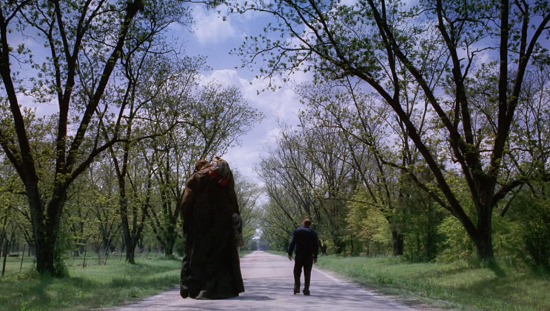
Director Tim Burton’s beautiful Big Fish was shut out of all Oscar nominations in 2004 but for original score (which it didn’t win). The director’s work is often dismissed as creative, but too weird, or lovely, but lacking in feeling. The same critiques, by the way, the Coen brothers and Wes Anderson hear often. Yet in Big Fish, Burton vividly renders the elusive, big-hearted whimsy of Daniel Wallace’s book, telling a father-son story that is sad, wise, and funny all at once.

Let’s discuss the many nominations it should have received, starting with the most egregious omission:

Best Actor in a Supporting Role
AlbertFinneyBigFish
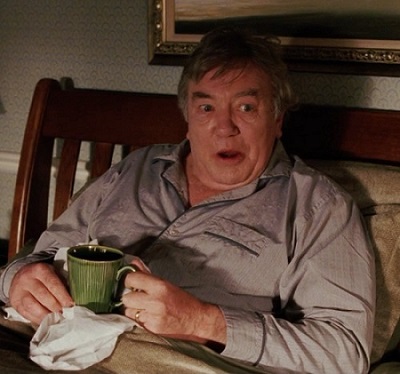
Billy Crudup, not Albert Finney, is the star of the film. Will (Crudup) resents his father, Edward (Finney), for always traveling away from home while he was a kid, even suspects he had a second family. The yarn-telling skills that endear others to Edward annoy his son, who considers his father a liar. “You’re like Santa Claus and the Easter bunny combined,” Will says, “just as charming and just as fake.” The two haven’t spoken in several years, until Edward’s final illness draws his son home to resolve their issues. Edward prickles at his son’s anger: “I’ve been nothing but myself since the day I was born, and if you can’t see that, it’s your failing, not mine.”

Finney’s performance is magical. There’s no other word for it. How much personality and spirit he’s able to convey, even though he spends most of the film in bed! And Ewan McGregor exudes his usual charm, as he captures Edward as a youth, full of outsized ambition and enthusiasm. Burton lets us see Edward’s young adulthood not through the actual events, but through the imaginative way he recounts them: the boy spits out of his mother’s body like a cannonball when born, he sees his death in a witch’s eye, saves his town from a giant. When Edward leaves home and travels down a forsaken road, he spots a sign: Warning: Jumping Spiders. Edward’s description of this obstacle illustrates both the amusing cadence of his language, and his indomitable spirit: “Now there comes a point when a reasonable man will swallow his pride and admit that he’s made a terrible mistake,” narrates McGregor. “The truth is, I was never a reasonable man.”

In 2004’s Academy Awards, the supporting actors were Benicio Del Toro (21 Grams), Alec Baldwin (The Cooler), Djimon Hounsou (In America), Ken Watanabe (The Last Samurai), and Tim Robbins (Mystic River). I admire all of these actors, and have seen all but 21 Grams. I’d put Finney over them all, and Ewan McGregor (also supporting) over most. Baldwin was very good, but it’s not his most nuanced performance. Hounsou played a very one-dimensional role (as he typically does despite his skills), and I barely recall either Ken Watanabe’s or Tim Robbins’ performances.

But Finney’s? I’ve never been able to get it out of my head. As Edward, he is haunting and lovable, resentful and stubborn and inexpressibly sweet.

Had he been mistakenly chosen for a Best Actor nomination, Finney still should have been in the list, which included Sean Penn (Mystic River), Jude Law (Cold Mountain), Ben Kingsley (House of Sand and Fog), Bill Murray (Lost in Translation), and Johnny Depp (Pirates of the Caribbean). I would have been torn between him and Murray as deserving of the win.

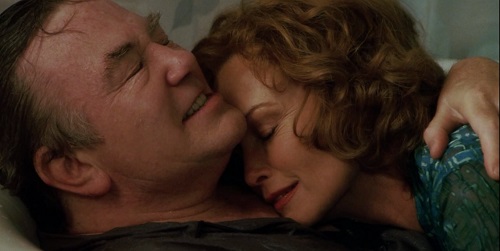
By the way, Jessica Lange plays Edward’s wife. She wasn’t in the film enough to earn a nomination, I suspect, but what an impact she makes in her few lovely moments, capturing the endurance of the love affair that is at the root of 90 percent of his stories. (No wonder she doesn’t share her son’s anger.) Here are the sweethearts in a tub together, fully clothed:
LangeandFinney

Best Director, Best Picture
Nominees, Best Picture: The Lord of the Rings: The Return of the King (winner), Lost in Translation, Master and Commander: The Far Side of the World, Mystic River, and Seabiscuit.

Nominees, Best Director: Winner Peter Jackson (The Lord of the Rings: The Return of the King), Fernando Meirelles (City of God), Sofia Coppola (Lost in Translation), Peter Weir (Master and Commander), and Clint Eastwood (Mystic River)

Jackson and his film probably deserved the win among those nominees, as the weight of translating Tolkien to film was so daunting that the man deserved a medal simply for attempting it, much less succeeding. And Meirelles created one of the most riveting and best edited films I’ve ever seen. It must be the foreign language that knocked it out of best-pic contention, to the Academy’s shame (as it definitely deserved the win).

But I do quibble with the other best picture and director nominees. Lost in Translation was a creative film, but without Bill Murray at the helm, would have been forgettable. The unspeakably dull Master and Commander proved to me once and for all that male voters dominate the Academy. If “chick flicks” can’t be nominated, why do I have to put up with something that’s one step up from a video game? Seabiscuit was a winning story, but a bit too saccharine, and Mystic River, like everything Eastwood does, was overwrought and completely lacking in subtlety.

It’s hard to imagine many of the voters bothered to watch Big Fish, as surely it outranks Seabiscuit in sentiment, and manages to say something meaningful about the power of story, its capacity to help us not only overcome obstacles, but survive loss. Surely storytellers—i.e., those involved in film—would have gravitated to such a theme?

Best Writing, Adapted Screenplay
Nominees: The Lord of the Rings: The Return of the King (Fran Walsh, Philippa Boyens, Peter Jackson, winners), American Splendor (Shari Springer Berman, Robert Pulcini), City of God (Bráulio Mantovani), Mystic River (Brian Helgeland), and Seabiscuit (Gary Ross)

This category was tough in 2004, but it’s clear that few voters read the novel, understood the challenge of translating it to film. Unlike Seabiscuit, for example, this was not a traditional narrative. It’s a recursive, poetic recounting of moments. It’s even divided into fragments rather than chapters. The book intentionally circles, the author explaining in interviews that myth does as well. And in truth, so do our lives: so many moments in our existence recall others. Our bodies may decline in a chronological fashion, but our minds, our experiences, don’t work that way at all. As the film’s script explains, “Fate has a way of circling back on a man, and taking him by surprise.”

The scene of Edward’s death, for example, is repeated multiple times throughout the book, each version telling readers something different. John August distilled the story, threaded enough of the moments together to form a comprehensible narrative, and yet retained the recursive, fanciful spirit of the original. His achievement, quite simply, is a triumph. And though I would leave those first three films on the list, I think Mystic River or Seabiscuit should have been bumped to include August’s work.

Best Art Direction-Set Decoration; Best Cinematography
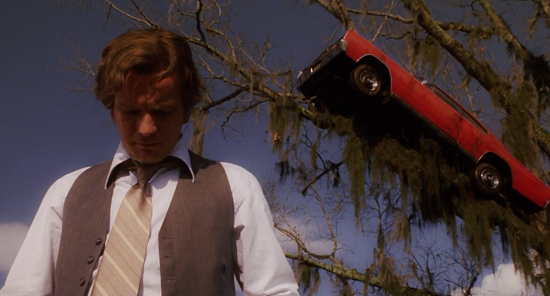
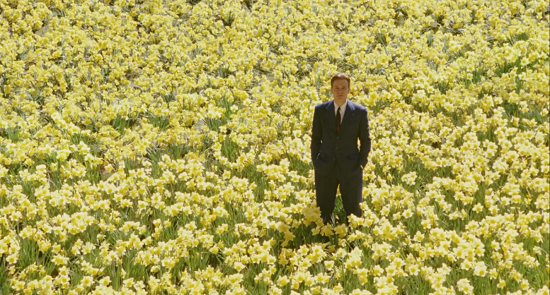
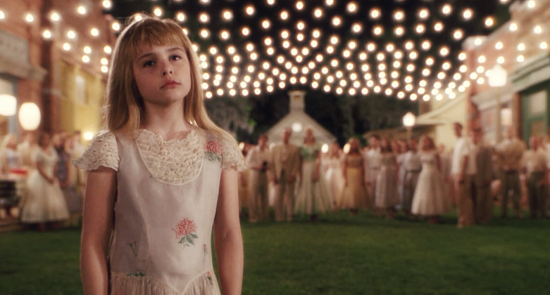
I’ll confess that I feel in deepest water when I discuss the visuals of a film. I don’t think, however, that many would dispute that the enchantment of Big Fish is largely a result of its execution of Burton’s vision; it’s rare that I am so enthralled by what I see that I long to take a snapshot of every moment. I’m curious why this film wasn’t considered worthy of awards based on artistic merit, if nothing else for the images’ perfect cohesiveness with the storytelling. Edward complains that his son doesn’t tell stories well, that he gives “all of the facts, none of the flavor.” That certainly cannot be said of the art direction of this film. In parting, I’ll just leave you with a few of my favorite visuals:
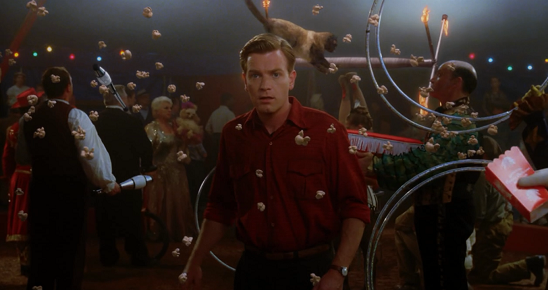
JennycrushBigFish

Timestandingstill-BigFish

carintreeBigFish

daffodilsBigFish
This post is part of The 31 Days of Oscar blogathon, hosted by Aurora of Once Upon a Screen (@CitizenScreen), Kellee (@IrishJayHawk66) of Outspoken & Freckled, and Paula (@Paula_Guthat) of Paula’s Cinema Club. Visit their sites for all of the wonderful entries. Kellee is hosting the snubs.
Share
Posted in: 1990-current films, Blogathons, Comedies (film), Drama (film), Humor, Oscars, Romance (films), Romantic Comedies (film) Tagged: Albert Finney, Big Fish, Daniel Wallace, Ewan McGregor, John August, Oscar snubs, Tim Burton

The Oscar Snub No One Is Talking about: Ralph Fiennes in The Grand Budapest Hotel

01/22/2015 by leah@carygrantwonteatyou.com 4 Comments

MGustave-GrandBudapest-Fiennes
I know everyone is busy discussing the Selma Oscar snubs and Jennifer Aniston’s supposed one. The former film I haven’t seen yet, and Cake I won’t. Only when I scrolled through long lists of snubs would I find Ralph Fiennes, as if the omission of his name were insignificant, perhaps expected. Sigh. Of course it was. He’s in a comedy.

Ralph Fiennes is best known for his dramas; he was nominated for The English Patient and Schindler’s List. Harry Potter fans know him as Lord Voldemort. He can alternate between a terrifying serial killer (The Red Dragon, Schindler’s List, In Bruges), and a fragile intellectual (Quiz Show). That’s just the beginning of his impressive range. And in The Grand Budapest Hotel, he proves that he can be hilarious.

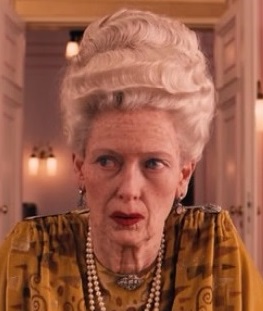
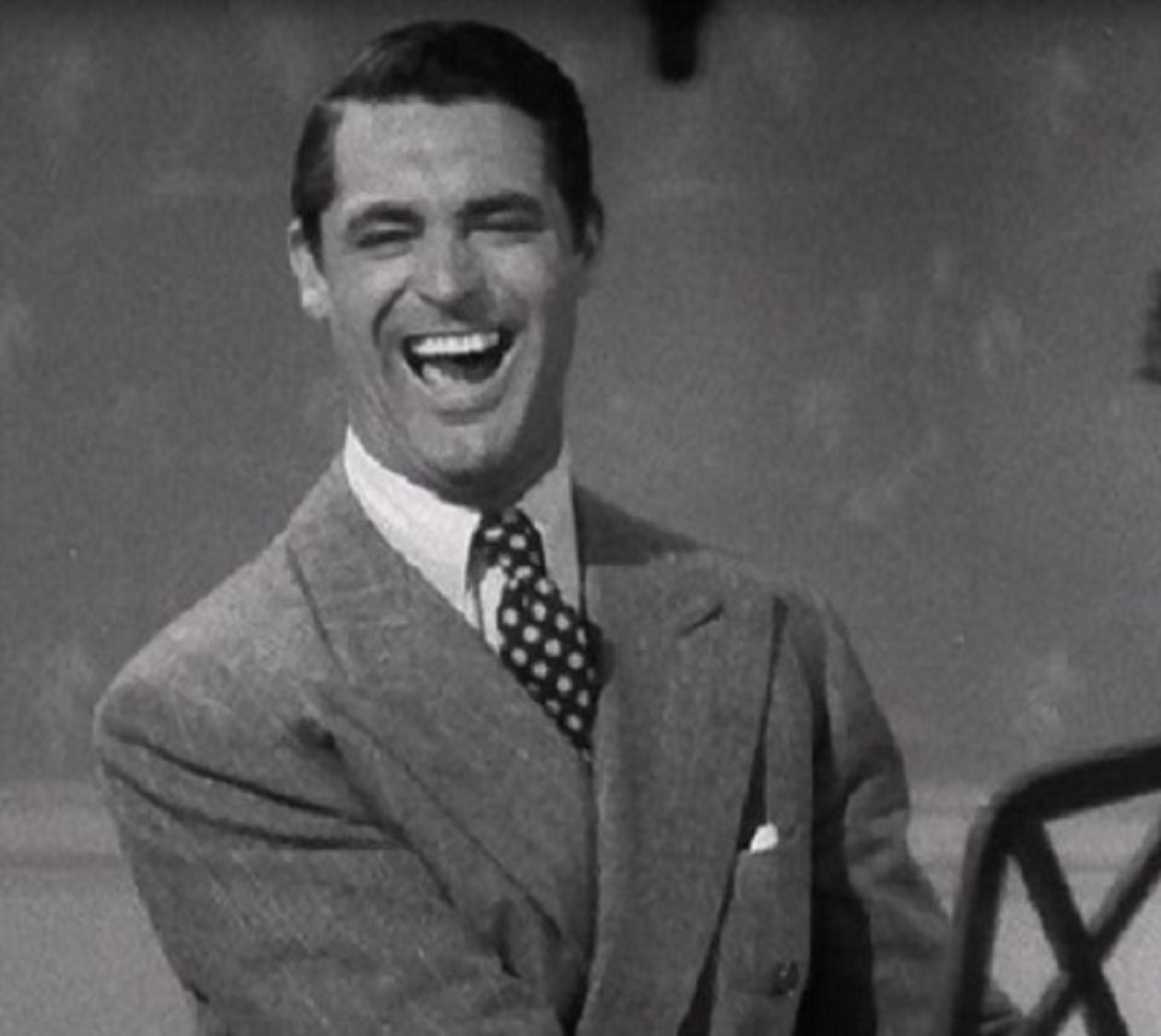
Well-respected comedic actors are honored by the Academy when they turn to drama: Bill Murray, Bette Midler, Cary Grant. But with few exceptions (Tommy Lee Jones in The Fugitive, for example), the process doesn’t go the other way. Where are Christopher Walken’s nominations for becoming one of the funniest men in film? How is it possible Gene Hackman didn’t get a nod for The Royal Tenenbaums? And if the Academy is considering nominating actresses merely for being willing to appear unattractive, what of Tilda Swinton’s hysterical showing in The Grand Budapest Hotel, surely the least vain performance I’ve seen in years?

TildaSwintonGrandBudapest
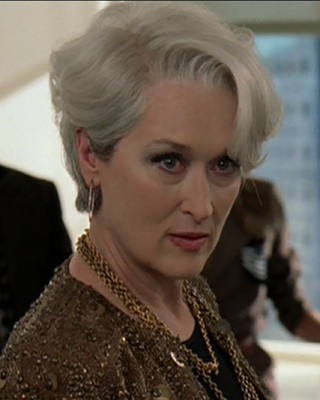
If it were so easy to switch from drama to comedy, I doubt one of—if not the—finest actresses of her generation, Meryl Streep (19 Oscar nominations and counting), would have struggled so much with it. Everyone may now recall when she had mastered comedy in The Devil Wears Prada, but it took her years.

The Devil Wears Prada

The Devil Wears Prada

Anyone remember She-Devil? Death Becomes Her? In Postcards from the Edge Streep was so bad I couldn’t even make it through the film. Her bravery is one of the things I value most about her: she let herself stink up the screen in order to improve her craft, not something many women with her dramatic chops would have braved. I suspect she pairs those two devil movies in her mind, appreciating how far she’s come.

She-Devil

She-Devil

And yet I’m to think Fiennes’s laugh-out-loud funny performance was easy?

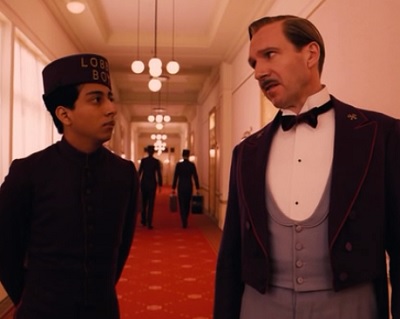
Fiennes was getting early buzz for The Grand Budapest Hotel. Back in the spring, I thought he was a lock for a nomination. He could have been considered for Best Supporting Actor, given his role; technically, he wasn’t the star. Ethan Hawke was nominated; Ralph Fiennes wasn’t. Repeat that to yourself without laughing—or crying.

TheGrandBudapest-GustaveandZero
I admit that this is a tough year in the Best Actor category, but The Grand Budapest Hotel is tied for Birdman with nine nominations, and Fiennes carried his film from start to finish. Could I imagine another star in the others I’ve seen so far (4/8)? Yes. In The Grand Budapest Hotel? Absolutely not.

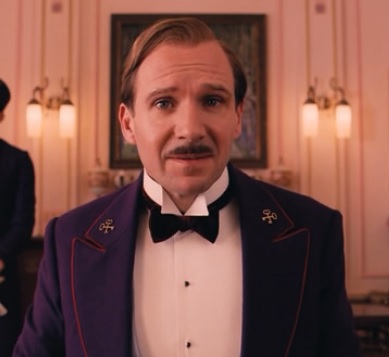
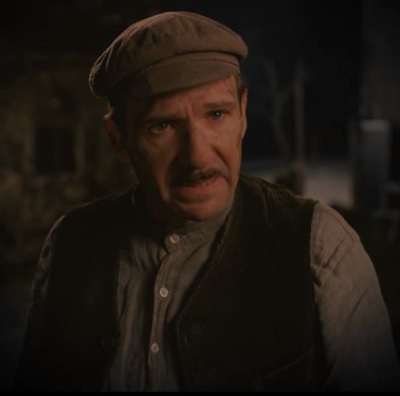
As M. Gustave, Fiennes is funny, original, moving. I have seen no other film this year that drew me in like this one, no other actor or actress who affected me more. Watch Fiennes’s quick transitions from elegance to crassness and see if you can stop yourself from laughing. Observe those nuances in his gestures, voice, and expressions that make Gustave’s mood changes from rage to tenderness convincing—and all in mere seconds (that’s all you get in a Wes Anderson film). When else have you seen a character simultaneously this funny and this heartbreaking, thanks to the actor playing him?

MGustave-GrandBudapest-Fiennes-1
If you haven’t watched the movie yet, do yourself a favor and rent it now. And if The Grand Budapest Hotel wins, tell me, in a movie riddled with big names, which actor helped the gifted Wes Anderson finally pull it off.

Share
Posted in: 1990-current films, Comedies (film), Oscars Tagged: Christopher Walken, Gene Hackman, Oscar snubs, Ralph Fiennes, The Grand Budapest Hotel, Wes Anderson

Recent Posts

  • 100 Years Later, Still Scary: Dr. Caligari
  • Escaping Out of the Past (1947)
  • A Weeper for Those Who Love Jerks
  • Thank You, Academy, for Not Infuriating Me
  • Challengers (2024) Is a Bad Movie

Subscribe to Blog via Email

Enter your email address to subscribe to this blog and receive notifications of new posts by email.

Categories

  • 1920s films
  • 1930s films
  • 1940s films
  • 1950s films
  • 1960s films
  • 1970s films
  • 1980s films
  • 1990-current films
  • 2020s films
  • Action & Sports Films
  • Anti-Romance films
  • Blogathons
  • Childfree
  • Comedies (film)
  • Drama (film)
  • Feminism
  • Femme fatales
  • Film Noir/Crime/Thriller & Mystery
  • Gloriously Silly Scenes
  • Horror
  • Humor
  • Mae West Moments
  • Musicals and dancing films
  • Oscars
  • Random
  • Romance (films)
  • Romantic Comedies (film)
  • The Moment I Fell for
  • Turn My Sister into Classic Movie Fan
  • TV & Pop Culture
  • Uncategorized
Share
Classic Movie Blog Hub Member

Recent Comments

  • leah@carygrantwonteatyou.com on Meg Ryan’s Fate Foretold in Joe Versus the Volcano
  • Ryan on Meg Ryan’s Fate Foretold in Joe Versus the Volcano
  • leah@carygrantwonteatyou.com on 100 Years Later, Still Scary: Dr. Caligari
  • The Classic Movie Muse on 100 Years Later, Still Scary: Dr. Caligari
  • leah@carygrantwonteatyou.com on 100 Years Later, Still Scary: Dr. Caligari

Archives

  • November 2025
  • September 2025
  • May 2025
  • March 2025
  • January 2025
  • November 2024
  • August 2024
  • July 2024
  • May 2024
  • March 2024
  • February 2024
  • December 2023
  • November 2023
  • October 2023
  • September 2023
  • August 2023
  • July 2023
  • May 2023
  • April 2023
  • March 2023
  • January 2023
  • December 2022
  • November 2022
  • September 2022
  • July 2022
  • May 2022
  • April 2022
  • March 2022
  • February 2022
  • October 2021
  • September 2021
  • April 2021
  • March 2021
  • February 2021
  • December 2020
  • October 2020
  • September 2020
  • July 2020
  • May 2020
  • April 2020
  • March 2020
  • February 2020
  • December 2019
  • October 2019
  • September 2019
  • June 2019
  • May 2019
  • April 2019
  • February 2019
  • January 2019
  • November 2018
  • September 2018
  • July 2018
  • June 2018
  • May 2018
  • April 2018
  • March 2018
  • February 2018
  • January 2018
  • November 2017
  • September 2017
  • August 2017
  • July 2017
  • June 2017
  • May 2017
  • April 2017
  • March 2017
  • February 2017
  • January 2017
  • December 2016
  • November 2016
  • October 2016
  • August 2016
  • July 2016
  • June 2016
  • May 2016
  • April 2016
  • March 2016
  • February 2016
  • January 2016
  • December 2015
  • November 2015
  • October 2015
  • September 2015
  • August 2015
  • July 2015
  • June 2015
  • May 2015
  • April 2015
  • March 2015
  • February 2015
  • January 2015
  • December 2014
  • November 2014
  • October 2014
  • September 2014
  • August 2014
  • July 2014
  • June 2014
  • May 2014
  • April 2014
  • March 2014
  • February 2014
  • January 2014

Meta

  • Log in
  • Entries feed
  • Comments feed
  • WordPress.org

Copyright © 2025 Cary Grant Won't Eat You.

Church WordPress Theme by themehall.com