Cary Grant Won't Eat You

Classic movies for phobics

  • About
  • eBooks
  • Previous Blogathons
Classic movies for phobics

My Cousin Rachel

Books that Make Bad Films: My Cousin Rachel

04/03/2020 by leah@carygrantwonteatyou.com 10 Comments

I had hopes for My Cousin Rachel (2017). I don’t know why. I’d already discovered–despite my enjoyment of the 50s version–that the book wouldn’t translate well to film without a big overhaul. I guess I hoped a director smart enough to cast Rachel Weisz in the key role would know to make such changes. (She had added complexity to Definitely, Maybe for crying out loud. Who better to take on the mysterious, unreadable Rachel?) But within minutes, it was evident this director of slight rom-coms lacked the imagination to even equal the previous film’s quality. The 2017 take is incomprehensible, just short of laughably bad. I had flashbacks of Season 3 of Bloodline. What the ksljfkjslkfj! is even going on?

***Mild spoilers–I won’t give away the end. Here’s the plot: a sheltered young man, Philip, is taught to hate women by his cousin/foster father Ambrose. He discovers his cousin has fallen in love with and married a woman while abroad in Italy. Philip’s jealous, angry, anxious. Then he receives strange letters indicating Ambrose is afraid of his wife and quite ill. On arriving in Italy to save his beloved cousin, Philip discovers him dead, with shady characters delivering the news.

Back home in England, he vows revenge on the widow, just on time for her arrival for a visit. The story takes off from there, as Philip falls for the widow and acts completely besotted right away.

Unfortunately, he can’t determine whether Ambrose died of a brain tumor (making his suspicions delusions) or by his wife’s hand. Is the widow just mercenary in this visit, trying to get her late husband’s estate by wooing Philip? Or is she an independent woman who means well but is reluctant to yoke herself to a silly boy who can’t distinguish between sex and marriage? And regardless of which she is, is that dreaded tea she’s making poisonous? And when he’s ill, will she help Philip get well, or attempt to slowly kill him off?
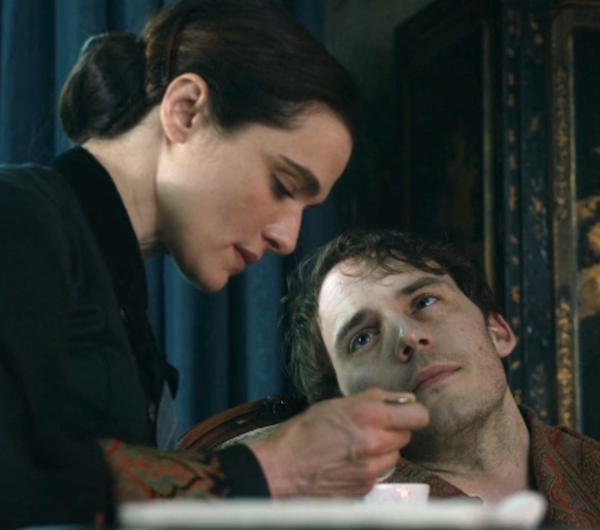
The lure of the book is the constant back and forth of the reader’s (and Philip’s) suspicions about whether she’s a killer. The did-she, didn’t she is brilliantly developed by Du Maurier. Philip, the narrator, is, by any definition, a dupe. Suspecting Rachel as he does, offering her all of his worldly possessions because she smiles at him isn’t exactly a bright move. What redeems the narrator for the reader is that he’s telling this story AFTER THE FACT, and we understand he’s not quite so foolhardy now. We also get inside his head, understanding why he trusts when he does. We also know more of the sheltered background that explains (as it turns out) his dangerous lack of experience with women. How else could we understand his dogged pursuit of a woman who is not attracted to him?

Without this context, the narrator comes across on film as not only unlikable, but unhinged. In the 1952 version, he acts like a dangerous stalker after Rachel stops allowing his seductions.
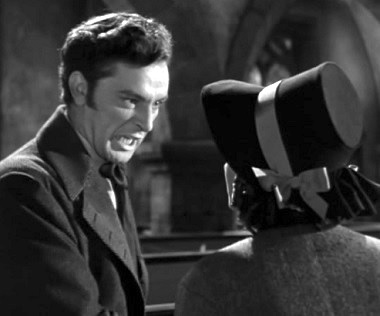
Luckily, the role is played with such relish by Richard Burton that you enjoy it even as you know the book’s intent has been completely overthrown. (Philip HAS to be the enemy, with behavior like this.) In the 2017 version, far less ably played by Sam Claflin, Philip is so pathological in his pursuit of Rachel that you see her possible poisoning of him as an act of self-defense. How else can she ensure he won’t kill her, he’s so obsessed? That attack on her throat is just the beginning!

With this upending of villain roles, the did-she, didn’t-she becomes, “Who cares what you did, lady. RUN!!” I don’t have a problem with changing a book’s focus, but as it turns out, that uncertainty about Rachel was also the narrative’s greatest appeal. Without it, we’re stuck watching an unlikable dupe turn into a psycho, which isn’t interesting viewing. I also don’t think voiceover from Philip would have worked; the story needs more nuance and he’s not intelligent enough to provide it.

As I see it, the only way of salvaging the story on film was to change the lead. What about his godfather’s daughter, who likes Philip for some unaccountable reason? We’d see Rachel’s behavior more clearly from her eyes; she may be biased, but she’s perceptive. Again, no need for voiceover, but she’d notice different details, like Rachel’s manipulative ways. (Though let’s stop the anachronisms, please, 2017 version; I can’t see this young lady frankly talking about homosexuality with Philip.) Or what about the godfather as the lead? He’s protective and smart.

Or you could go full-tilt into unreliable narrator mode, and make Rachel–the most interesting character–the lead. She could be like the riveting James Cain narrator in The Cocktail Waitress. With Rachel, I wouldn’t even mind a bit of voiceover.

It’s funny that the 2017 version completely dropped the notion that Rachel was foreign in her ways—and yet that foreignness helps explain her greater independence, her unknowability to Philip, and her tenuous status in the community (who, like Philip, are a bit entrenched in their xenophobia and rigid biases).
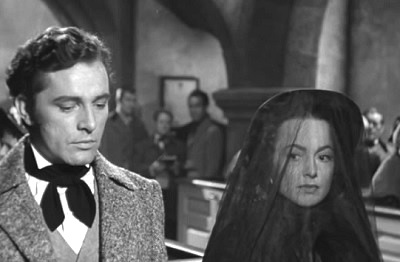
And it also helps show her confusion. She’s lived a cosmopolitan life in Italy, and Philip’s (and his community’s) rigid morals about sexuality don’t make sense to her. With more of her character unfiltered through Philip’s perspective, we viewers might come to understand her better.

As it is, the 1952 version is entertaining at least. The 2017 version, alas, is not, with Claflin making even histrionics dull to watch. Only some pretty cinematography redeems it at all. The 2017 version adds a dumb ending and strips away much of the questioning of Rachel’s motives. Rachel seems delicate rather than arch at all times and her character is so terribly underdeveloped that Weisz–for once–is tedious to watch. View the 1952 version for Burton’s high drama and Olivia de Havilland’s riveting confidence as Rachel. But if you love the book, be prepared for disappointment: your beloved psychological thriller is now a crush-gone-bad procedural.

This post is part of the Classic Literature On Film Blogathon, hosted by Silver Screen Classics. Check out all the great posts!


Share
Posted in: 1950s films, 1990-current films, Anti-Romance films, Blogathons, Femme fatales, Film Noir/Crime/Thriller & Mystery Tagged: My Cousin Rachel, Olivia de Havilland, Rachel Weisz, Richard Burton, Sam Claflin

For Gone Girl Fans, A Fascinating She-Did, She-Didn’t Thriller

10/06/2014 by leah@carygrantwonteatyou.com 2 Comments

I’ve been wanting to see Gone Girl, but the laryngitis-respiratory infection cocktail I’ve got right now means that I would be an object of fear and distraction to fellow film goers, so I had to settle for an alternative. What film, I wondered, might employ a similar ambiguity about whether or not a spouse is a murderer? What other film might tell a tale of an unhealthy romance that might or might not have sinister roots or results? The answer: Daphne Du Maurier’s My Cousin Rachel. The film, starring Olivia de Havilland and a very young Richard Burton, never reached the fame of The Birds or Rebecca, but has a similar eerie draw, and (for me at least) lingers longer than either.

Young Philip has been raised by his cousin, Ambrose (John Sutton), and the two are comfortable together in their picturesque Cornish town until Ambrose’s illness leads to their first separation—a trip to Italy. There, Ambrose discovers and falls for their distant cousin, Rachel. Before Philip can adjust to this change in his life, a more somber situation develops: Ambrose is nearing death, and blames his wife for it, claiming she’s trying to do him in. Is his condition the result of a brain tumor, or is it poison?

Femme fatale, yes, but is she a murderer?

Femme fatale, yes, but is she a murderer?

A heartbroken Philip (Burton) travels to Italy to uncover the mystery after his cousin’s death. Since all of the estate goes to him, not the wife, Philip might assume things are as innocent as those in Italy suggest, but the circumstances seem shady, and he’s ready to turn Rachel over to the hangman—that is, until he meets her.

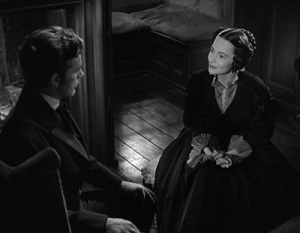
IntroMyCousinRachel
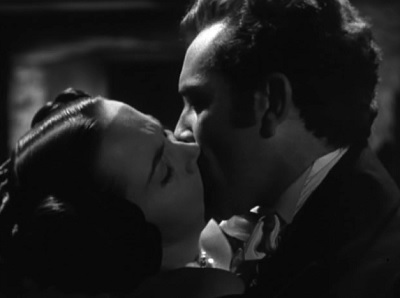
Of course, she’s charming, affectionate, worldly, and experienced, and within no time, is hosting gatherings at Philip’s place and then, well, what repressed English boy could resist this cougar?

KissingMyCousinRachel
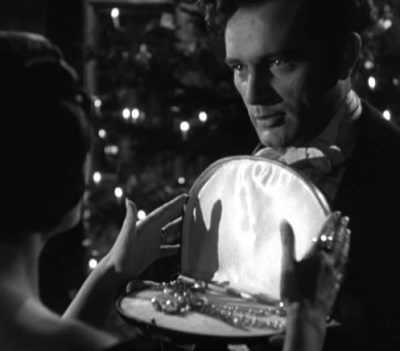
Before long, Philip’s giving her the family jewels from the vault—which aren’t his yet, as he doesn’t get the estate till he’s 25, his guardian reminds him.

GiftsMyCousinRachel
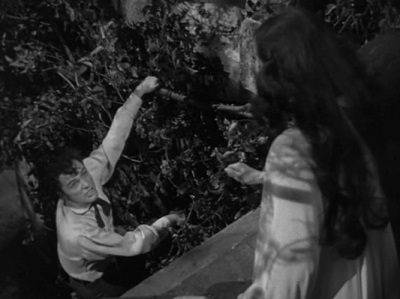
Also, a generous allowance he’s given Rachel? Yes, she’s overdrawing it—by a lot. Philip doesn’t worry. He’s in love! She deserves everything that’s his. He’ll just give his whole estate to her, announcing it Romeo-style on his birthday.

BalconyMyCousinRachel
She, in thanks, gives him more than kisses. In Philip’s world, this means she’s going to be his wife. In Rachel’s? Not so much. Philip, whose stupidity and naiveté know no bounds, doesn’t take this well, even starts strangling her. She ends their romance, whether because of his actions, or because with the money, she has no motive to seduce him any longer.

Soon after, Philip falls dangerously ill and finds some seeds that may have been the cause of his brother’s illness—and his.

What happens next I won’t reveal, but let’s just say that the evidence for and against Rachel’s guilt about even out, leaving the viewer to wonder the whole film (and book).

This was my first viewing of the film, and it stays quite true to what I remember of the novel. But viewing it as an adult, I noticed some details I’d missed before. Yes, she may be a murderer, or she may not be, but even if she didn’t try to kill either lover, exactly how wrong and/or inadvisable is Rachel’s behavior? I have some advice for Rachel, which, of course, comes a tad bit late:

Some spoilers ahead—though not the ending.

Never Seduce Crazy
It’s not hard to miss just how big of a dolt this Philip is, so even if she weren’t after his money, seriously, is this someone you seduce? I mean, he’s cute and all, but he’s obsessive. This is a textbook case of a stalker-in-the-making if ever I saw one. Surely a woman as confident and assured as this one knows a case of insane puppy love when she sees it. I’ll alter one of my favorite Arrested Development lines– “Never promise crazy a baby”—to Never seduce crazy. I kept wanting to warn Rachel away: Don’t kiss this fool. He’ll be sending out your wedding invitations next.

Remember: Virginal Boys Don’t Understand Samantha Jones Ways
If Rachel just kinda forgot that those in repressed English villages don’t act like her cosmopolitan friends, shouldn’t that church moment when she arrived late have given her a clue?

ChurchRepressionMyCousinRachel
She’s so shocked Philip thinks they’re going to marry after they have sex, but would anyone in this community think otherwise? Remember when Samantha Jones hooked up with the inexperienced college boy on Sex and the City who shared her name?

Didn’t turn out so well, right? Filled up her answering machine with love-yous. Arrived at her door screaming through the peep-hole.

OtherSamJonesSexandCity
That’s Philip for you.

Don’t Marry the Guy Whose Regular Expression Looks Like This:

RichardBurtonfreakingout
Whatever her motives or knowledge, Rachel is absolutely right not to marry this dude. I can just see it: She tries to hang out with her friends, and he’s there, watching. She leaves the house and he’s hiring private detectives. This woman has lived on her own, experienced an unusual degree of freedom for a woman of her time, and he doesn’t even want her to return to Italy—ever. She may make some dumb mistakes, but Rachel is not that foolish.

Don’t Live with the Stalker after You Ditch Him
Why does Rachel remain in the house? Yes, I can understand for appearance’s sake, she might stay a little after the inheritance is given to her. But this is one angry guy. And, of course, dangerous as he fears she is, he’s the one going for the throat when he doesn’t get his way.

Strangling-MyCousinRachel
But….

Did she do it? Did she poison her husband?

She has suspicious ways. Rachel’s spendthrift tendencies, of course, are undeniable. This woman loves the money. Whether it’s to help her pal-maybe-lover back in Italy or not, she takes whatever anyone will give her with no regrets. It’s not hard to believe her gold-digger impulses brought her to England in the first place, and those motives seem sinister enough that she may have just killed for them.

Of course, it’s possible that she did love Ambrose, and wanted to meet his cousin. I’m not sure I buy that the one precludes the other. I don’t have to admire her greed, but I don’t have to believe that’s all there is to her either.

It’s the ambiguity I love about the film. Hopefully, Gone Girl is just as good (no spoilers on that, please!)

Share
Posted in: 1950s films, 1990-current films, Anti-Romance films, Femme fatales, Film Noir/Crime/Thriller & Mystery, TV & Pop Culture Tagged: Daphne du Maurier, Gone Girl, My Cousin Rachel, Olivia de Havilland, Richard Burton, Samantha Jones

Recent Posts

  • 100 Years Later, Still Scary: Dr. Caligari
  • Escaping Out of the Past (1947)
  • A Weeper for Those Who Love Jerks
  • Thank You, Academy, for Not Infuriating Me
  • Challengers (2024) Is a Bad Movie

Subscribe to Blog via Email

Enter your email address to subscribe to this blog and receive notifications of new posts by email.

Categories

  • 1920s films
  • 1930s films
  • 1940s films
  • 1950s films
  • 1960s films
  • 1970s films
  • 1980s films
  • 1990-current films
  • 2020s films
  • Action & Sports Films
  • Anti-Romance films
  • Blogathons
  • Childfree
  • Comedies (film)
  • Drama (film)
  • Feminism
  • Femme fatales
  • Film Noir/Crime/Thriller & Mystery
  • Gloriously Silly Scenes
  • Horror
  • Humor
  • Mae West Moments
  • Musicals and dancing films
  • Oscars
  • Random
  • Romance (films)
  • Romantic Comedies (film)
  • The Moment I Fell for
  • Turn My Sister into Classic Movie Fan
  • TV & Pop Culture
  • Uncategorized
Share
Classic Movie Blog Hub Member

Recent Comments

  • leah@carygrantwonteatyou.com on Meg Ryan’s Fate Foretold in Joe Versus the Volcano
  • Ryan on Meg Ryan’s Fate Foretold in Joe Versus the Volcano
  • leah@carygrantwonteatyou.com on 100 Years Later, Still Scary: Dr. Caligari
  • The Classic Movie Muse on 100 Years Later, Still Scary: Dr. Caligari
  • leah@carygrantwonteatyou.com on 100 Years Later, Still Scary: Dr. Caligari

Archives

  • November 2025
  • September 2025
  • May 2025
  • March 2025
  • January 2025
  • November 2024
  • August 2024
  • July 2024
  • May 2024
  • March 2024
  • February 2024
  • December 2023
  • November 2023
  • October 2023
  • September 2023
  • August 2023
  • July 2023
  • May 2023
  • April 2023
  • March 2023
  • January 2023
  • December 2022
  • November 2022
  • September 2022
  • July 2022
  • May 2022
  • April 2022
  • March 2022
  • February 2022
  • October 2021
  • September 2021
  • April 2021
  • March 2021
  • February 2021
  • December 2020
  • October 2020
  • September 2020
  • July 2020
  • May 2020
  • April 2020
  • March 2020
  • February 2020
  • December 2019
  • October 2019
  • September 2019
  • June 2019
  • May 2019
  • April 2019
  • February 2019
  • January 2019
  • November 2018
  • September 2018
  • July 2018
  • June 2018
  • May 2018
  • April 2018
  • March 2018
  • February 2018
  • January 2018
  • November 2017
  • September 2017
  • August 2017
  • July 2017
  • June 2017
  • May 2017
  • April 2017
  • March 2017
  • February 2017
  • January 2017
  • December 2016
  • November 2016
  • October 2016
  • August 2016
  • July 2016
  • June 2016
  • May 2016
  • April 2016
  • March 2016
  • February 2016
  • January 2016
  • December 2015
  • November 2015
  • October 2015
  • September 2015
  • August 2015
  • July 2015
  • June 2015
  • May 2015
  • April 2015
  • March 2015
  • February 2015
  • January 2015
  • December 2014
  • November 2014
  • October 2014
  • September 2014
  • August 2014
  • July 2014
  • June 2014
  • May 2014
  • April 2014
  • March 2014
  • February 2014
  • January 2014

Meta

  • Log in
  • Entries feed
  • Comments feed
  • WordPress.org

Copyright © 2025 Cary Grant Won't Eat You.

Church WordPress Theme by themehall.com