Cary Grant Won't Eat You

Classic movies for phobics

  • About
  • eBooks
  • Previous Blogathons
Classic movies for phobics

movie

The Good Stuff: What’s to Love about Fights in Film
07/08/2016 by leah@carygrantwonteatyou.com 9 Comments

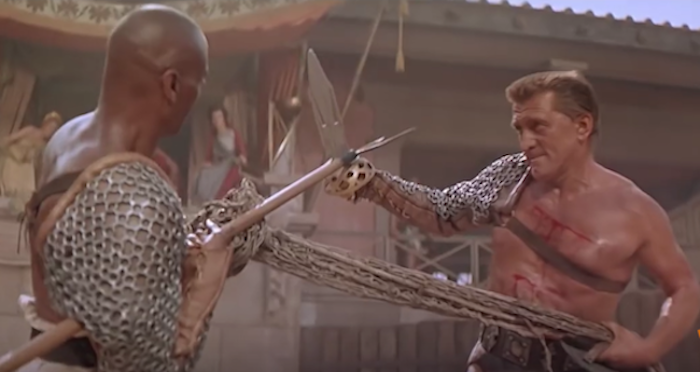
Spartacus-fightscene
Talented poet and screenwriter, martial artist, and classics enthusiast Brian Wilkins agreed to guest post for me as part of The Sword and Sandal blogathon, hosted by Moon in Gemini. Check out his wonderful tribute to fight scenes below.

Sometime in 1998, I sit on the floor in my living room watching John “Kickboxing is the sport of the future” Cusack eject Benny “the Jet” Urquidez into a wall of lockers. He then proceeds to tattoo those locker numbers into Benny’s back several times with his foot. After some athletic grappling, the two fumble at each other’s skinny ties and Cusack jams his pen into Benny’s throat. I am overjoyed: Grosse Pointe Blank is everything a boy could wish for.

“Mom,” I say to the horrified woman behind me folding laundry who thought “light action comedy” would be a great choice for family movie night, “I think I want to do that. “

“I would pray you out of it,” she snaps. Mothers in the south can definitely snap and mention prayer in the same breath.

“What? Why?”

“You tell me you want to be an assassin because of a movie and you think…”

“Not an assassin, Mom! Geez. A fight choreographer.”

This comeback mollifies — but not much: “As long as you finish college.”

***
I finished a lot of college and never became a choreographer for anything beyond amateur productions of Shakespeare, but it’s hard to say who I would be without fight scenes in movies. I fenced because of The Princess Bride. I fell in love with Karate after watching Daniel-san wade through a series of talented black belts who inexplicably led with their faces. I even tried to land a crane kick at a tournament: once. I studied epic poetry in grad school because of 13th Warrior.

So when my friend Leah asked me if I’d like to contribute something for this blogathon, I jumped at the chance to look at the fights in gladiator movies. And not just any fights, but material from before Bruce Lee one inch punched his way into America’s heart and everybody was kung fu fighting. What did fighting look like in classic sword and sandal flicks?

Awful. It looks awful. It looks like America (except for James Cagney) couldn’t take a cardboard cutout prior to 1968. Honestly, watching films like The 300 Spartans must have given comfort to our enemies. I don’t know why the Russians didn’t invade.

And while I think even Alexander the Great couldn’t drink Spartans into being entertaining, it actually provides a solid rubric for what makes a good fight scene. It just doesn’t know that’s what it’s doing. Seriously, folks, I don’t think the director had ever heard the word phalanx. The best fight scene in the movie is when Diane Baker judo flips an overly amorous Greek shepherd.

***
Early in Spartans, Persian King Xerxes (David Farrar) argues with traitorous Spartan king Demaratus (Ivan Triesault) over Spartan valor. When Demaratus defends it, Xerxes suggests a fight to the death between Demaratus and a Persian swordsman. I suppose this is because Demaratus is so tiresome Xerxes would rather have him killed and be lost in Greece than listen to him flap his cheeks anymore about Spartan values. I felt that way. The two champions draw their blades in what seems an interminable fight with bowie knives. Xerxes demands, along with the audience, that they hurry it up. Quickly, death comes for the Persian, and Xerxes concedes, much to his boredom, that Spartans can fight.

Let me check my notes for this scene…oh, I just wrote, “WHAT?” about 15 times.

Two guys in tunics rolling around on dinner tables with plus-size steak knives isn’t an epic scene. There’s nothing to distinguish their fighting styles from each other, no real costuming, nothing resembling martial talent — if a fight scene looks like your kindergartner was filming themselves after raiding your closet for costumes, something has gone awry.

Don’t get me wrong: I’m not advocating for historical accuracy, but just the exotic fantasy of history. I don’t care, nerds, that Russell Crowe stepped into a stirrup in Gladiator, so long as his wolf skin cloak looks really fabulous while he does it.

But just as important to style, there must be stakes for the viewer. Demaratus is a cowardly traitor: why do we care if he dies? Even this dude’s Spartan mother would spit on his corpse rather than shed a tear over not hearing more of his mind numbing dialog. Nameless Persian Thug #1 is no better. If I can’t feel passion or fear or even a soupcon of lust, why am I watching?

The plot must motivate the action as well. We have to learn something about character in this scene and the logic of the movie must give impetus to the conflict. It’s a bit like a song in a musical: the truth that can’t be said must be expressed and it must change the world we’re seeing. The correct ending in this fight scene was to have the Persian kill Demaratus. Instead, we’re now convinced the Spartans are being underestimated by Xerxes and that they’re nearly invincible. I found myself rooting for the Persians, underdogs that they were.

***
Demetrius and the Gladiators (1954) is like all of the strange pseudo-christian elements of Ben Hur wrapped up in one hell of a bogged down film.

This sequel to The Robe continues in that proud tradition, peppering in a few action scenes with Victor Mature to prod the viewer awake. It made the studios a lot of money, but I can only hope that was due to a paucity of action films…what’s that? Seven Samurai came out the same year? Well, screw it, 1950s America just loves misogynistic Christianity. Shame on you, 1950s. Shame.

Still there are elements in the fights in Demetrius that have potential. Take this clip, where Victor Mature’s Demetrius is throwing away his Christian values to avenge his girlfriend who was accidentally killed (but not really, there’s a magic robe that brings people back to life) by knuckle dragging gladiators at a party. Now that those “turn the other cheek” gloves are off, we can get some real fighting! Good thing her (apparent) death paved the way for some real entertainment! Or something like that.

You may have noticed that Mature uses his shield like a kid with a trash can lid storming the kitchen. I put that down to the vices of the choreographer, Jean Heremans, a fencing champ most noted for choreographing Scaramouche (not just a line from Bohemian Rhapsody, folks). His refined modern fencing style makes perfect sense in that 18th century setting, but it fails the style of the sword and sandal motif. Treating fighting as if it is fencing is the real dereliction of this period of choreography. I can only assume it comes from the same instinct that yearned to put a steak dinner into a pill: progress knows best.

Notice also the curious way of holding the sword with the palm down and the sword to the side, almost a foil fencer’s seconde parry. It feels out of place as a guard with short stabbing weapon and will likely get it smacked out of your hand — just in case you have to fight someone with a trident who knows what they’re doing. Despite a nice moment of dual wielding, the style doesn’t offer much excitement or novelty.

However, in terms of stakes and spirit this fight actually picks up the pace a bit. While I would have preferred any other reason for Demetrius to throw away his values and dig into fighting, his existential crisis adds a tangy zip to the clashing shields. This fight will change his destiny as a character, adding a thrill to what we’re watching. Revenge giving permission to the viewer to sanction violence, while also showing a character’s descent after the fact, and redeeming the character with a deus ex machina (almost literally) reeks of cliché, but that doesn’t mean it’s toothless. And when Demetrius actually gets clobbering a guy like Ty Cobb on opening day, we feel relief because the action initiates the structure of the story. And we like it because the choreography matches the moment and the weapons a bit more: freer and more direct.

But if you’re looking for a more nuanced examination of violence, watch Seven Samurai. Actually, if there’s one lesson you should take from this review, it should be “watch Seven Samurai.”

***
For a taste of a film that lets style guide the way, there’s always Jason and the Argonauts (1963). Ray Harryhausen’s special effects are legendary, precisely for their ability to create a world that, despite having a giant bronze statue really need a hair pin, feels real. In fact, unlike much modern CGI, it’s the actors that feel less real than the animations: a testament to the quality of both.

This clip is so iconic it really needs no introduction.

There are a lot of things to love about this scene, but there are certain moments that stand out for me.

  • The war cry the skeletons give just before charging after Jason and his compatriots: it immediately moves the bony little bastards out of the realm of slouching zombie and into something else entirely.
  • The skeletons get into fighting stances and even seem to relish stabbing the heroes. Their stances are better than anyone else on screen: hunched, menacing, preparing to do ill to the enemy. Jason looks like he just discovered swords over breakfast.
  • The skeletons seem to know how to use their shields. One even hooks a shield into the sea.

But most of all, this scene understands the equipment being used. You can’t stab a skeleton risen from the sown teeth of a hydra! Everyone knows that! Except Jason, who tries it at 3:36 in the clip. And that’s the core of why this scene is great: the heroes have to improvise and start using dodges, feints, throws, and even clubbing the skeletons with the shields (although why no one can seem to stab and block simultaneously is beyond me. I guess we’ll have to wait for Troy).

Though we learn little about the spirit of the characters beyond the fact that Jason is quite content to flee and let his friends die, the stakes in this scene feel high. Perhaps it’s just that as humans we must root for those of us still covered in skin. Perhaps it’s that this idea was fished out from the Hieronymous Bosch corner of the unconscious. But either way, Ray Harryhausen was a genius I wouldn’t have wanted to fight in any place with a sandy floor.

***
There’s no mystery in my mind about the best of the sword and sandal genre. It’s Spartacus, hands down. Ignoring the politics, history, and its place in film for a moment, though, it’s a damn fine fight film. It even has a great training montage! Look, a spinning practice dummy with a mace on it! And there, a spinning blade of death machine! Even face painting!

To set up the scene: Spartacus (Kirk Douglas) has been paired with the more experienced gladiator Draba (Woody Strode), to fight to the death for the amusement of visiting nobles, particularly Crassus (Laurence Olivier).

Good movies work as fractals: little gems of the overall message replayed again and again to make one larger, faceted meaning. This fight tells you all you need to know about the movie, and the tragic but worthwhile attempt of compassion and brotherhood to fight back against a rigged system. It teaches you to ask who the enemy really is. This is a fight between Drapa and Crassus, first and foremost. And the mild annoyance with which Olivier kills Strode, with his distaste for the blood spatter rather than the action of murdering a human being, drives the nature of that character home.

But that moment is preceded and earned by some rather decent fighting. Strode was far too athletic to not take advantage of his size and is a perfect pairing with the trident. Douglas is a little too lightly armored, actually. He should have at least a helmet. The lack here is better than just artistic license and wanting to see the actor’s face: it shows even more how dangerous this fight is for Spartacus, making the act of compassion even greater.

Though he does hold his own. He’s always driving forward, trying to cover the distance and his lack of technique with enthusiasm. And while it ends with a rather spectacular boot to the ribs, Spartacus fights with just enough skill to lose well, which helps momentarily suspend our belief that just because the movie is called, “Spartacus”, he’s unlikely to die at the first real fight.

Though you could wonder if the Romans care at all. The audience talks over the two men fighting to the death at first, allowing us to condemn the Romans for being that annoying couple at the movies who explain the plot as the movie progresses. The inclusion of the audience into the scene makes the points of the movie so well, and asks us to question our own participation. It calls us to act with mercy and courage.

***
The complaint you’ll hear most often about these fight scenes is that they aren’t realistic, by which most people mean gritty or brutal. Fights in real life aren’t as spectacular, they argue, or as technical, and they don’t tell us much about the nobler parts of our role to play as humans. This lack of realism somehow damages the truth a fight may offer. Sometimes they’re right: the samurai master is killed by a punk with a knife at dinner, people windmill at each other over bar stool rights, and most fights are just attacks by predators or drunks.

But that’s why we come to the screen in the first place: to dream our better selves into being. A fight, even a silly one against skeletons, can show us how to be brave, to stand against impossible odds. When asked to surrender by the Nazis during the Battle of the Bulge, Gen. Anthony McAuliffe sent back a telegram with a one word reply: “Nuts!” You can’t write better dialog than that. And that’s what I say to folks who can’t see the beauty in the ringing steel, the athletic achievement, and most importantly, the spirit of laying it all on the line. Except I want to add “you,” and “are.”

by Brian Wilkins

This post is part of the Sword and Sandal blogathon. Check out the other entries here.

Share
Posted in: 1950s films, 1960s films, Action & Sports Films, Blogathons, Humor Tagged: classic fight scenes, Demetrius, fencing, Film, Jason and the Argonauts, martial arts films, movie, Spartacus, sword fighting

The Dark Humor of High Noon (1952)

06/12/2016 by leah@carygrantwonteatyou.com 6 Comments

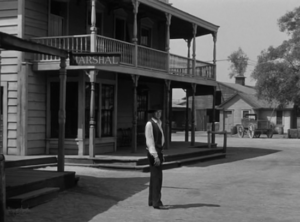
HighNoon
**Contains spoilers**

When I watched High Noon many years ago, I was struck by its pacing, its intensity, its seriousness. This time, I kept laughing. There’s something comic about watching Marshal Will Kane (Gary Cooper) aimlessly tread around the town, waiting for someone, anyone to assist him. I found myself curious (having forgotten most of the details) not whether he’d find aid, but just what methods of bailing on responsibility his fellow townspeople would employ.

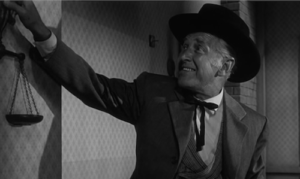
The judge (Otto Kruger) is, of course, is my favorite. Having passed sentence on Frank Miller (Ian MacDonald), a killer who has now been freed and is headed to town for revenge, the judge opts for exiting pronto. He tells Kane, the marshal who caught Miller, to do the same. His advice is a cynical history lesson about how little one can rely on civilian ethics when danger is afoot–an account of Athenians who welcomed a tyrant they’d once banished, and watched as he executed their government; an incident much like one that recently occurred in a nearby town. The judge shares these accounts as he casually packs away his flag and scales of justice.

ScalesofJusticeOttoKruger
His assessment about the value of the people he’s leaving to the mercy of an outlaw is almost as breathtakingly cold as the clock speech in The Third Man: “This is just a dirty little village in the middle of nowhere. Nothing that happens here is really important. Now get out.” The former marshal (Lon Chaney, Jr.), Kane’s mentor, is likewise a ray of light: “People got to talk themselves into law and order..down deep, they don’t care. They just don’t care.” Poor Kane is asking for just a bit of support before he takes on a posse, and these are his cheerleaders.

Of course, it’s hard not to love Kane, even as you wonder whether there’s a better way to overcome Miller than the one he’s devised (i.e., shoot it out).

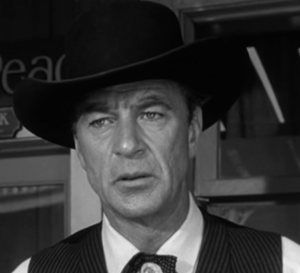
Cooper-HighNoon
“I’ve got lots to do,” Kane keeps saying as the minutes creep by. But really, he doesn’t. He has to warn Helen Ramirez (former lover to both him and Miller), ask for volunteer deputies, and write a brief will. But this is a small town, easily navigated, and these tasks are quickly accomplished. What he really has to do is busy himself to avoid dwelling on the cowardice of his companions and his own slim chances for survival if he stays in town until noon, when Miller is arriving.

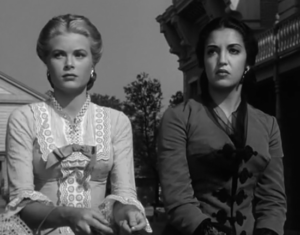
While Ramirez (Katy Jurado) is the most interesting character, it’s clearly Kane’s new bride, Amy (Grace Kelly), who brings on the dark humor.

JuradoandKelly
First, there’s the fact that she’s just had the biggest bummer of a wedding day ever. Then there’s the small detail that she’s a Quaker who has married a marshal. I don’t think I have to tell you that she may not be the wisest of women. Sure, he’s retiring; the new marshal is arriving the next day, and the newlyweds are planning to leave town and to run a store elsewhere before they hear about Miller. But surely five minutes of Kane’s obdurate behavior during courtship would have enlightened Amy that this whole conversion business–of both faith and career–wasn’t going to work so well. (Admittedly, given the pickings we see of the townspeople during the film, she may still have made the best choice of a mate she could.) And of course, it’s quite amusing that a woman who has to overcome her beliefs–not dodge them–is the only helper Kane receives. No wonder Kane throws his star on the ground after besting Miller.

That the film would include such darkness isn’t surprising from a screenwriter (Carl Foreman) who had been blacklisted before High Noon even came out. What he was witnessing of former friends and those he must have once respected couldn’t have led to idealism. Apparently, John Wayne scorned the film as anti-American, and Rio Bravo is a reinterpretation, with more admirable townspeople. While I agree with the movie’s distance from Wayne’s optimism, I think Foreman’s (and the original story’s) cynicism goes much deeper than any individual country, any specific belief system. It’s a simple, sadly humorous morality tale about human nature: while there may be rare moments of heroism (like Kane’s), typically, when the going gets tough, the “tough” scatter.

Share
Posted in: 1950s films, Action & Sports Films, Drama (film), Humor Tagged: best Westerns, dark humor, Gary Cooper, Grace Kelly, High Noon, movie, review

A Legacy of Self-Amusement: Drew & John Barrymore

08/13/2015 by leah@carygrantwonteatyou.com 19 Comments

DrewBarrymoreCharliesAngels-main
Charlie’s Angels
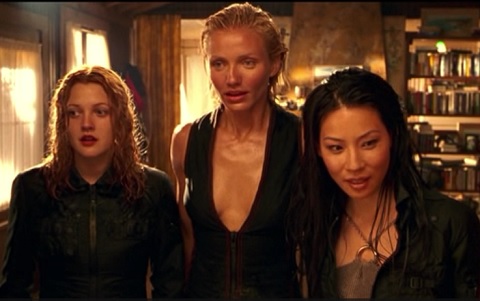
(2000) is the epitome of how seriously Drew Barrymore takes herself: the hair flips, the silly punk rock past of her character, action sequences so absurdly, self-consciously over-the-top that they make you smile.

Playfulness seems to be Barrymore ‘s signature, what distinguishes her from her lesser rom-com peers. So it wasn’t surprising that this was a film she chose to produce, an ode to a dumb TV show celebrating sexism/female empowerment/both (depending on your point of view).

The show (1976-81)– for those younger folks out there–featured a wealthy but reserved guy (Charlie), who hired three beautiful detectives (the angels) for his agency. All we ever got of Charlie was his voice, as he never appeared in person and let all arrangements be managed by his assistant, Bosley. The term ‘angel,’ use of possessive, Charlie’s condescending voice, the quick rotations of actresses for the roles (suggesting they were interchangeable)—any of the four could make a feminist cringe. But the women were tough and smart, using their looks to blindside unwary men, much as Columbo used his folksiness.

The film is both a parody and tribute, using the TV show’s theme music, graphics, and basic concept, but mocking the silliness of it too. Cameron Diaz plays the supposed airhead (Natalie) to perfection. Lucy Liu takes on the kind of tough role she always plays, even imitating a dominatrix/efficiency expert in one ploy as detective Alex. As Dylan, Barrymore mocks the over-the-top femininity of her predecessors by embracing a badass, punk rock aesthetic. The strange connection the women have to Charlie is brought to the forefront when their client (Sam Rockwell) suggests that Dylan has daddy issues.

Thinking they get to meet Charlie in person...

Hopeful to meet Charlie in person…

Whatever part she’s in, Barrymore always seems to be playing herself, and part of what keeps us watching her is just how likeable she is, this woman who went through a painful past of abandonment and substance abuse as a kid, and emerged as a woman with empathy for those who contributed to the conditions that put her there. She is both the most tender of the three actresses onscreen—Barrymore always captures vulnerability effectively—and the most sarcastic. Perhaps hers is an earned playfulness, but Barrymore wears it lightly. (How else could you repeatedly perform with Adam Sandler, and more bafflingly, not only star with, but marry Tom Green? Tom Green!) While her acting never wows me, she does.

In Drew’s performances, I don’t see much of her forebears, that famous acting dynasty whose members mesmerize audiences still today. Only in her youthful roles did I ever see traces of the Barrymore family’s skill with drama. I would argue that Irreconcilable Differences (1984); an underrated film about a girl who wants to separate from her narcissistic, divorced parents (in an eerie foreshadowing of Barrymore’s own decision years later); was her strongest dramatic role. Perhaps it just was a part she knew really, really well.

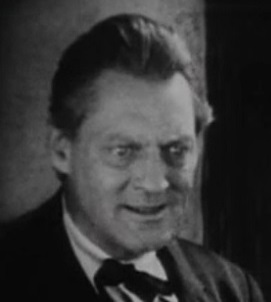
But usually, the actress just prefers, and does better, at comedies. Certainly, Drew lacks the intimidation or gravitas of her great-uncle Lionel…

LionelBarrymore
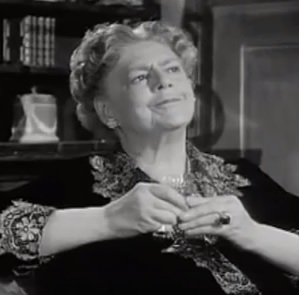
the nuance of her great-aunt Ethel…

EthelBarrymore
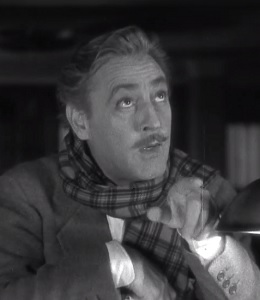
or the presence of her grandfather John…

JohnBarrymore
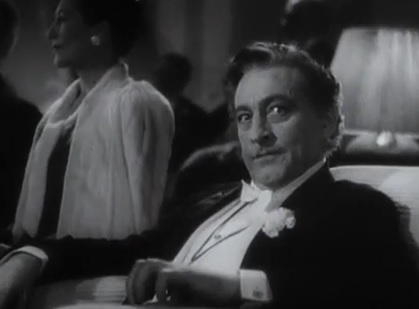
Of course, her troubled past brings to mind her grandfather’s. But it’s in her self-deprecating goofiness that I see the clearest link to the Barrymore dynasty. While it’s certainly not present in all of the Barrymores’ roles, I see it in John’s charming turn in Grand Hotel, and, of course, in his hilarious supporting character in the glorious Midnight (1939). There’s such a lightheartedness to his approach to the role of Georges Flammarion, and though he was already at the cue card stage of his decline, his humor, at least, had not reached the self-parody stage.

John Barrymore in Midnight

John Barrymore in Midnight

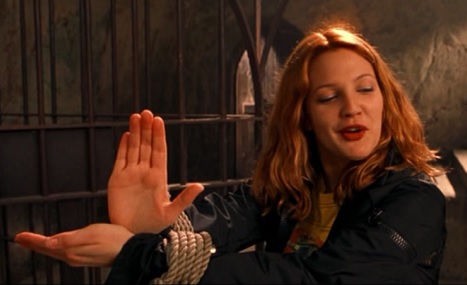
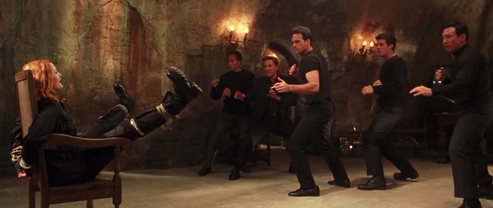
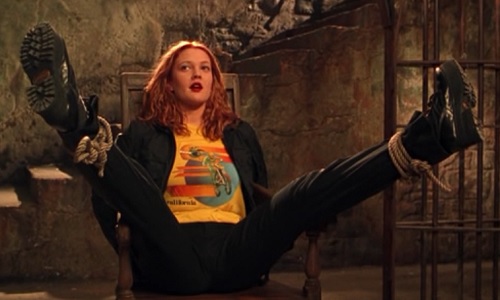
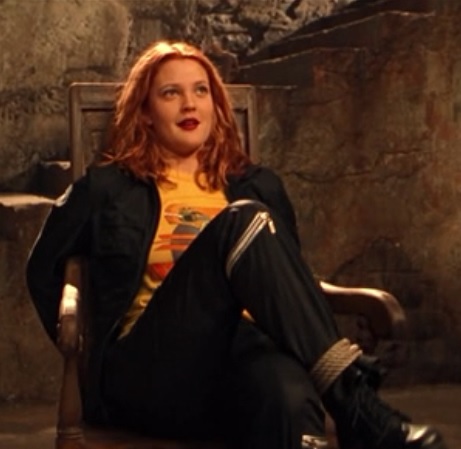
Such lightheartedness is key to Dylan’s (Drew Barrymore’s) character, even when she’s in the direst straights. In the best action sequence in Charlie’s Angels, Dylan has been tied up by her sleazy client, Eric Knox (Sam Rockwell), who has betrayed her after sleeping with her, and tried to kill her already. Knox departs to perform his nefarious schemes, leaving her to his five henchmen. After managing to get her lighter back, she spells out what she will do to escape, buying time but also revealing her confidence.

DylanCharliesAngels
As she sits in her chair, she calmly explains, smiling at her adversaries all the while, “By the time this is over, every one of you is gonna be face down on the floor, and I’m gonna moonwalk out of here.”

DrewBarrymoreCharliesAngels
As they rush toward her, she interrupts, looking at each man in turn, “You’re not listening to me. See first, you’re gonna help me out of my chair, and then I’m gonna leapfrog over you, before I break his nose…I’m gonna do all of this with my hands tied behind my back.”

DrewBarrymoreCharliesAngels2
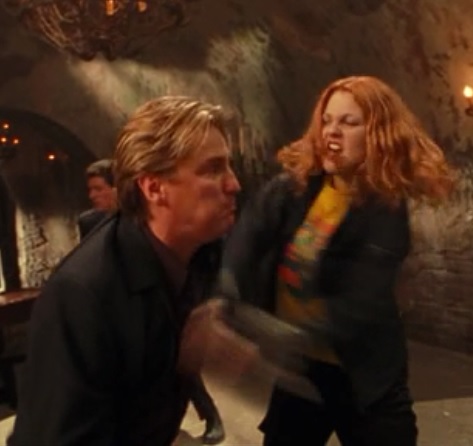
She does exactly what she says:

DrewBarrymorefighting
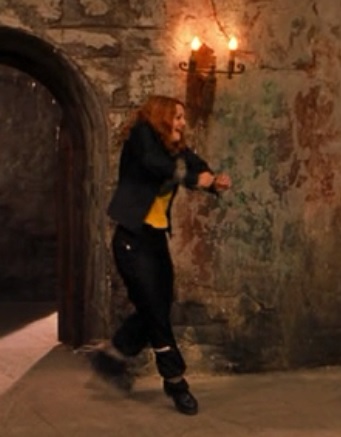
And her moonwalk is a joy:

DrewBarrymoremoonwalking
You can see the full clip here.

Any actress could have had fun with such a sequence, but there’s so much self-amusement in Drew Barrymore’s portrayal that I kept thinking of her grandfather in Midnight. Sure, he had much more range and talent than she does, but in self-amusement, the two are matched.

This post is part of the Barrymore Trilogy blogathon, hosted by Crystal of In the Good Old Days of Classic Hollywood. See the fantastic entries here!

Share
Posted in: 1980s films, 1990-current films, Action & Sports Films, Blogathons, Comedies (film), Film Noir/Crime/Thriller & Mystery, Humor, TV & Pop Culture Tagged: Charlie's Angels, Drew Barrymore, John Barrymore, Midnight (1939), movie, satire, spoof

Recent Posts

  • 100 Years Later, Still Scary: Dr. Caligari
  • Escaping Out of the Past (1947)
  • A Weeper for Those Who Love Jerks
  • Thank You, Academy, for Not Infuriating Me
  • Challengers (2024) Is a Bad Movie

Subscribe to Blog via Email

Enter your email address to subscribe to this blog and receive notifications of new posts by email.

Categories

  • 1920s films
  • 1930s films
  • 1940s films
  • 1950s films
  • 1960s films
  • 1970s films
  • 1980s films
  • 1990-current films
  • 2020s films
  • Action & Sports Films
  • Anti-Romance films
  • Blogathons
  • Childfree
  • Comedies (film)
  • Drama (film)
  • Feminism
  • Femme fatales
  • Film Noir/Crime/Thriller & Mystery
  • Gloriously Silly Scenes
  • Horror
  • Humor
  • Mae West Moments
  • Musicals and dancing films
  • Oscars
  • Random
  • Romance (films)
  • Romantic Comedies (film)
  • The Moment I Fell for
  • Turn My Sister into Classic Movie Fan
  • TV & Pop Culture
  • Uncategorized
Share
Classic Movie Blog Hub Member

Recent Comments

  • leah@carygrantwonteatyou.com on Meg Ryan’s Fate Foretold in Joe Versus the Volcano
  • Ryan on Meg Ryan’s Fate Foretold in Joe Versus the Volcano
  • leah@carygrantwonteatyou.com on 100 Years Later, Still Scary: Dr. Caligari
  • The Classic Movie Muse on 100 Years Later, Still Scary: Dr. Caligari
  • leah@carygrantwonteatyou.com on 100 Years Later, Still Scary: Dr. Caligari

Archives

  • November 2025
  • September 2025
  • May 2025
  • March 2025
  • January 2025
  • November 2024
  • August 2024
  • July 2024
  • May 2024
  • March 2024
  • February 2024
  • December 2023
  • November 2023
  • October 2023
  • September 2023
  • August 2023
  • July 2023
  • May 2023
  • April 2023
  • March 2023
  • January 2023
  • December 2022
  • November 2022
  • September 2022
  • July 2022
  • May 2022
  • April 2022
  • March 2022
  • February 2022
  • October 2021
  • September 2021
  • April 2021
  • March 2021
  • February 2021
  • December 2020
  • October 2020
  • September 2020
  • July 2020
  • May 2020
  • April 2020
  • March 2020
  • February 2020
  • December 2019
  • October 2019
  • September 2019
  • June 2019
  • May 2019
  • April 2019
  • February 2019
  • January 2019
  • November 2018
  • September 2018
  • July 2018
  • June 2018
  • May 2018
  • April 2018
  • March 2018
  • February 2018
  • January 2018
  • November 2017
  • September 2017
  • August 2017
  • July 2017
  • June 2017
  • May 2017
  • April 2017
  • March 2017
  • February 2017
  • January 2017
  • December 2016
  • November 2016
  • October 2016
  • August 2016
  • July 2016
  • June 2016
  • May 2016
  • April 2016
  • March 2016
  • February 2016
  • January 2016
  • December 2015
  • November 2015
  • October 2015
  • September 2015
  • August 2015
  • July 2015
  • June 2015
  • May 2015
  • April 2015
  • March 2015
  • February 2015
  • January 2015
  • December 2014
  • November 2014
  • October 2014
  • September 2014
  • August 2014
  • July 2014
  • June 2014
  • May 2014
  • April 2014
  • March 2014
  • February 2014
  • January 2014

Meta

  • Log in
  • Entries feed
  • Comments feed
  • WordPress.org

Copyright © 2025 Cary Grant Won't Eat You.

Church WordPress Theme by themehall.com