Cary Grant Won't Eat You

Classic movies for phobics

  • About
  • eBooks
  • Previous Blogathons
Classic movies for phobics

Mae West

My Own “Awakener”: Mae West’s Writing
06/04/2015 by leah@carygrantwonteatyou.com 2 Comments

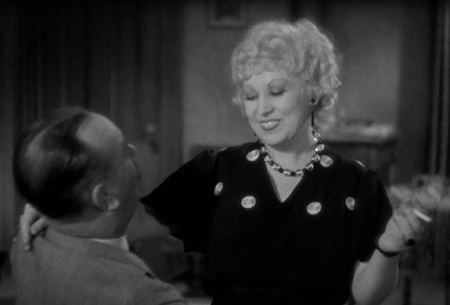
MaeWest-Awakener
As I was reading the bios of Kate Bolick’s awakeners in Spinster, writers whose independence had inspired her own, I inevitably began to consider my own awakeners. Which literary women had encouraged me to live by my own definition of womanhood?

I came up with many answers, but soon one figure nudged the others out: No costar could ever prevent being upstaged by Mae West. My brain was no different: what other woman could share my consciousness once the shimmying, voluptuous, smart-talking, smart-writing dame arrived?

Others might think of her as an actress first, but for me, it’s the writing that dominates. I grew up worshipping one-liners from Dave Barry and Jane Austen. How I love a quip that’s not only hilarious, but timeless, that captures something of human nature that’s real and honest. And West, well, we all know she had a way with the lines.

And what a pioneer she was! Her play, brazenly titled Sex, produced in 1926. Her arrival on the screen at 38, with an insistence on writing her own dialogue that ensured her place in movie history. And most of all, a sense of humor so unmatched that her words have become part of the American vernacular—whether all of us realize it or not.

I suspect Bolick never fell for West’s language, for if she had, she would have had no need for five writers to inspire her; one would have been more than sufficient. So in honor of Bolick, whose book celebrating singlehood I enjoyed, I will share two of my favorite West comments on matrimony for my monthly Mae West celebration:

First, the famous quip:

“Marriage is a fine institution, but I’m not ready for an institution.”

And second, that marvelous rejoinder from I’m No Angel:

Man: “I don’t suppose you believe in marriage, do you?”
Tira (West) “Only as a last resort.”

What I love is that a male character saying these words onscreen now would get big laughs—not to mention a female. (Of course, no one else could say them with the kind of oomph West did; she ignites the screen while current bombshells play with matches.)

And West not only says the words, she means them; she was every bit as unconventional as they imply. Of course, I know not to confuse fictional characters with their authors. Luckily, West gave me permission, stating about her racy creation, Diamond Lil, who bears a strong resemblance to Tira: “I’m her and she’s me and we’re each other.”

Like Bolick’s awakeners, West did have an encounter with matrimony, but since she was underage, denied cohabiting with the guy, and didn’t even admit to the union until it was discovered, I think we can agree that its impact on her was as negligible as she claims. (And of course, there’s also the accordion player from her vaudeville days some claim she married; she left him too.)

Which leaves us with her writing.

It would be easy to interpret West as simply of her time, as the pre-Code era certainly had some loose moral guidelines. But she acted the same AFTER the Code. Some might also suggest she was provocative for the sake of being rebellious. Or—perhaps even more dangerously—that she was condemning others’ choices in favor of her own. I’ve never thought of her that way, perhaps since her heroines are friendly with other women in her films, and only snarky when they oppose or judge her. And with a delivery that friendly and relaxed, who could take offense?

What West demands for each of her heroines is simply what we all should: the right to be who she is without regard to others’ morals and traditions. To be an individual, with all that implies.

As for West herself? Well, she never got to that last resort, instead cozying up with Paul Novak, a muscle-bound (and decades younger) man from her Vegas act. But it wasn’t a fling. The romance lasted until her death 26 years later; he’d never let her change her will in his favor, not wanting to think about her death. Early in their relationship, when Jayne Mansfield suggested she’d rescued Mickey Hargitay, another of West’s Chippendale-like chorus, from her employer, Novak responded by punching Mr. Universe.

West’s reaction was perfect: she implied they were at war over her affections. Kind of like her films–all the men longing just for her, she casually dating them all. Leave it to West to joke about her famous lack of monogamy while other women were pining for it. Leave it to her to confront a scandal with laughter, as she confronted everything.

I haven’t lived or loved like West. Who could? But oh, how her moxie inspires me.

Share
Posted in: 1930s films, 1940s films, Comedies (film), Feminism, Mae West Moments, Romantic Comedies (film) Tagged: awakener, Kate Bolick, Mae West, marriage, single, Spinster

The Hottest Woman around in Her 40s: Mae West’s Age-Defying Career

05/06/2015 by leah@carygrantwonteatyou.com Leave a Comment

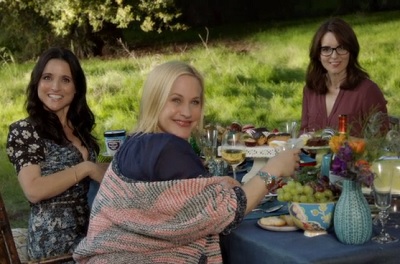
SchumerFeyArquetteDreyfus
Amy Schumer’s hilarious skit about discrimination against middle-aged women in Hollywood has me wondering about Mae West. It’s true that modern films imply that women aren’t attractive enough past their 40s to be worthy of sex onscreen. But Mae West starred in Sextette in 1978; the film cast her as the object of all men’s desires in her eighties. While the movie was a box office failure, the simple fact is that no such film would be made today.

West’s role was hardly surprising, given that she was in her late 30s when her film career as a seductress began. She was, in addition, penning all of her own lines, and usually the whole screenplay. While many (Schumer among them) question why women haven’t made more progress in entertainment, few express the more disturbing possibility:  Have we backtracked?

Mae West was a pioneer, it’s true. But pioneers are usually followed by those who accomplish more. The frontrunner’s courageous example and more hospitable times and environments usually lead to at least some progress. Maybe we all should be examining West, to figure out what this extraordinary writer/actress got right, what she still has to teach us. And why not? Who doesn’t want a regular dose of West?

Since her host of brilliant one liners overpowers me, I’ll highlight just one each month to savor it properly, starting with this bit from My Little Chickadee, co-written by West and W.C. Fields (the following scene is obviously of her creation).

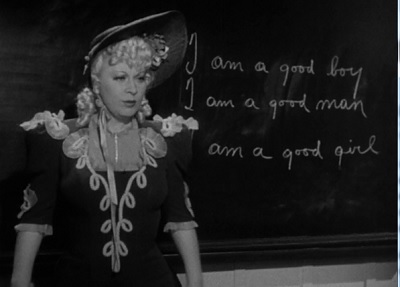
MaeWestchalkboardMyLittleChickadee
The town’s school teacher has fainted after dealing with a class of “unruly” boys. Newcomer Flower Belle (West) has taken over the class for the day, and is attracting all of the hormonal adolescents (in her late 40s, I might add). She checks out the teacher’s lessons on the chalkboard. “I am a good boy,” she reads slowly. “I am a good man. I am a good girl.” She turns to the students: “What is this?” she asks. “Propaganda?”

Share
Posted in: 1930s films, 1940s films, Feminism, Humor, Mae West Moments, Romantic Comedies (film), TV & Pop Culture Tagged: ageism, Amy Schumer, Hollywood, Julia Louis-Dreyfus, Mae West, Patricia Arquette, sexism, Tina Fey

Some Like It Hot: Only for Men?

01/18/2015 by leah@carygrantwonteatyou.com 19 Comments

I know that the field of comedy has always been dominated by men. It’s no surprise that when humorous films are ranked, those most amusing to men lead the pack. But I still find it disturbing that the film the AFI considers the funniest of all time is one that gives me just a few laughs in its two hours of running time.

I’m willing to admit that I might be missing something in Some Like It Hot; after all, many women whose judgment I respect are fans of it, and I am an enthusiastic viewer of most of Billy Wilder’s work. But for what it’s worth, I’d like to vent a bit about why (for mainly gender-related reasons) I find this film that sounds so promising—two male musicians acting like women in order to travel with an all-female band—so annoying.

Daphne/Jerry (Jack Lemmon’s character): By Turns Annoying & Creepy
The script doesn’t help, but Lemmon is largely to blame for a very unfunny portrayal of a man turned on by his fellow female band members. His suggestive comments range from grating to disturbing, and his hyena laugh is Jim Carrey-annoying.

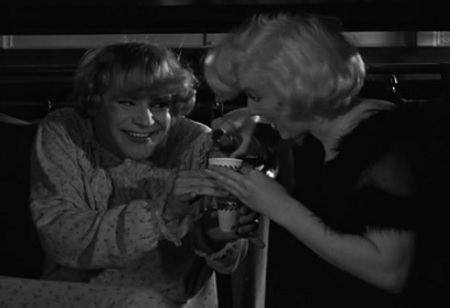
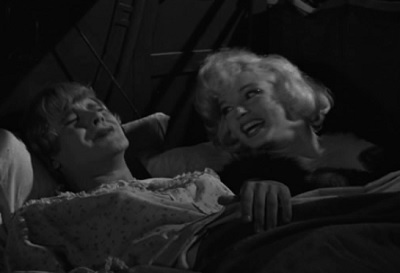
Take this scene: Jerry is in bed in his cross-dressing gear (i.e., as Daphne), when Sugar Kane (Marilyn Monroe) visits his train berth to thank him for a favor.

After the two get some drinks, Jerry says, “This may even turn out to be a surprise party.”
“What’s a surprise?” she answers.
“Not yet.”
“When?”
“Better have a drink first.”
“That’ll put hair on your chest.”
“No fair guessing.”

He then protests other women crashing his party, as it’ll ruin his surprise. I tried not to examine the logic of this scene too closely, but unfortunately, Lemmon’s delivery added to my initial reaction. Does this face look like seduction to you?

LemmonandMonroe-trainberth
If there were any hint of self-deprecation here, any understatement, the scene might have played as lighthearted, with a hint of, I don’t know, possible participation from Monroe. But with Lemmon’s high-pitched, broad delivery and leer, I felt uncomfortable, not amused. Look, this isn’t It’s Always Sunny in Philadelphia, in which the humor is based on the immorality of its leads. We’re supposed to empathize with this man, not wish to warn Sugar Kane there’s a pervert on the loose.

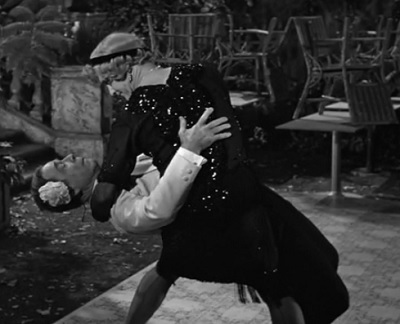
Once Lemmon is being courted by a man and his energy dissipates into snarly comments and stiff movements, he’s quite amusing. I particularly enjoyed when he starts to really get into his gender ambiguity as he dances.

LemmontangoingSomeLikeItHot
I just wish we could have had more of that and less of his flirtatious mood with Sugar and the other band members.

Joe/Josephine (Tony Curtis) a Bore—Until He Becomes a Pseudo-Millionaire
I’m not a fan of Tony Curtis’s. With the exception of Sweet Smell of Success, I tend to dislike his films, finding him too smugly pleased with himself, too much the “Matthew McConaughey of his generation,” as my sister puts it. While his low-key portrayal in Some Like It Hot is a welcome break from Lemmon’s energy, he takes his lethargy too far. It seems watching Lemmon’s hypercaffeinated performance caused Curtis to nap his way through the script.

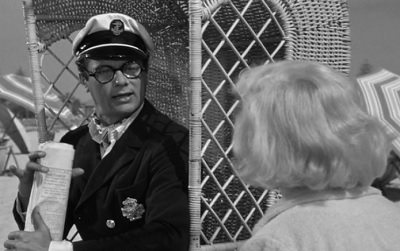
But once Curtis (as Joe) ditches the dress and takes on a different costume, he is quite amusing. He has dressed himself in what he deems sophisticated clothing, complete with a cap and metal buttons. He wants to convince Sugar he’s from old money.

CurtisandMonroe
When he speaks, it’s with Cary Grant’s accent. I like the layers of jokes here, even if they’re anachronistic given the movie’s 1929 timeline: Joe is so unfamiliar with well-born men that he mimics a movie star’s imitation of one. (Admittedly, this wasn’t a bad choice: Grant was so convincing in his own portrayal of a blue blood that he probably convinced 90 percent of us.)

As the Shell millionaire he’s aping, Joe can be quite funny. I like when he mistakes a stuffed swordfish for a member of the “herring family.” Curtis is far more animated in these scenes, and the script so much stronger than in the rest of the movie. Joe’s description of his love’s death is funny, and his details about his family’s attempts at a cure for his heartache—a French maid, a troupe of Balinese dancers—are hilarious.

Male Fantasy Scenes Played as Realistic
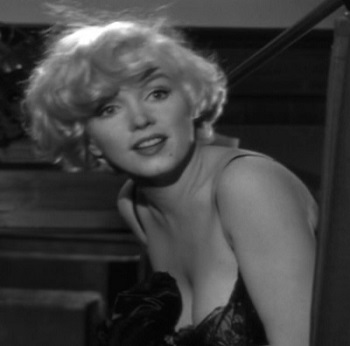
I don’t know about you, but when I’m traveling with a bunch of female friends, I tend to relax in lingerie like this:

Marilynlingerie
I prefer to cuddle up to my companions, especially ones I’ve just met, to get as much skin-on-skin contact as possible.

MarilyncuddlingwithLemmon
And on the beach, I like to spend my time tossing a ball to my pals in a provocative fashion.

If this kind of scenario is played as fantasy, I find it funny. But when I’m supposed to take it as a given, with the humor to be found elsewhere, I’m so busy rolling my eyes that I miss the action. Look, I understand that Hollywood wants to show some skin, especially in a film featuring Marilyn Monroe. And I’ll admit I’m jaded from one too many sorority house/girls’ locker room scenes of a similar nature. Admittedly, I have seen much worse in other movies; at least all of the women in the band aren’t dressed like this (just the most attractive ones, as they always eschew comfort for sexiness, right?)

If they’re played as campy, how funny scenes like these can be! But if they aren’t, I tend to look up the screenwriters and confirm my suspicion—yep, written by men, probably ones who’ve spent too much time on adult-only channels/sites. Am I the only one who thinks humor works best when it’s based on actual human behavior, not teen boys’ daydreams?

Missed Opportunities in the Script
Cross dressing is almost always funny in film, and Curtis and Lemmon are so unattractive as women, and so obviously male, that it makes the gullibility of those around them funny in itself. Initially, their disgust at the casual chauvinism of the other hotel guests is entertaining too, as when Daphne gets pinched and Josephine is propositioned by the bellboy. Pity that there’s no accompanying recognition of their own chauvinism, as without it, we’re left mainly with tired gags about breasts, high heels, etc. While occasionally both of the men (and the script) give a fun twist to their adoption of female clothing and mannerisms, in most scenes, I didn’t see anything new.

Of course, I know that this territory is much better canvassed today than in 1959, when it would have been far more scandalous. Still, the stars’ parents would have found the film tame; it’s impossible to be shocked by men in tights and Marilyn’s walk when earlier (pre-Code) movies portrayed women sleeping to the top and cheating on their husbands to get even—without judgment. Let’s not forget that Mae West had drag queens in her 1927 play, and planned to feature them in her next before the censors stepped in.

I know there are times when repetition of references, as we often see in Some Like It Hot, is funny. I still laugh every time I hear the name Mr. Bigglesworth. But those references only continue to be amusing if they were particularly funny—and ideally fresh—to begin with. I was disappointed to find that a writer/director who in an earlier film (with Charles Brackett) defined craziness as giving an engagement gift of a “roller skate…covered with Thousand Island dressing” would (with I.A.L. Diamond) resort to lines as flat as these: “I’ve got a funny sensation in my toes, like someone was barbequing them over a slow flame.”/ “Let’s throw another log on the fire.”

One Reason to Watch: Sugar Kane
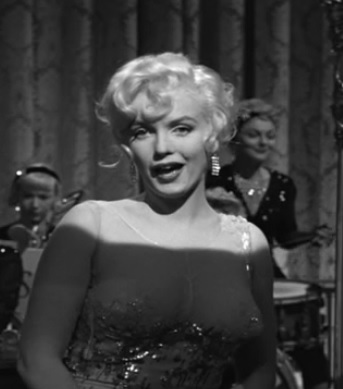
Monroe is mesmerizing as Sugar Kane. She is, of course, unbelievably attractive in the movie.

Marilynsinging
And she manages to turn what could have been a brainless blonde stereotype into something believable, even touching. I particularly enjoyed her effort to convince Joe-as-Shell-millionaire that she has a sophisticated background. While he comes across as conniving and silly in his con, her performance is moving and honest and funny in spite of her lies. While she fabricates a Bryn Mawr education, she conceals nothing else, and her openness makes her deceptions so obvious they might as well not be deceptions at all.

It might seem that I hated this movie. I didn’t. In fact, I enjoyed the first 25 minutes or so, after which I just kept hoping it would improve in the interludes between Monroe’s perfect delivery of her lines. But the film’s undeserved reputation infuriates me. I can’t help wondering if I were a woman new to classic comedies and started with this one, would I have kept watching?

This post is part of the Contrary to Popular Opinion Blogathon, where we set the consensus on its head by defending a maligned film, performer or director or toppling a beloved one! Check out the other entries.

contrary-blogathon-7

Share
Posted in: 1950s films, Blogathons, Comedies (film), Feminism Tagged: Billy Wilder, It's Always Sunny, Mae West, Marilyn Monroe, Matthew McConaughey, Mr. Bigglesworth, Some Like It Hot, Tony Curtis

The Delightful Raunchiness of Mae West

06/05/2014 by leah@carygrantwonteatyou.com Leave a Comment

MaeWestwveil
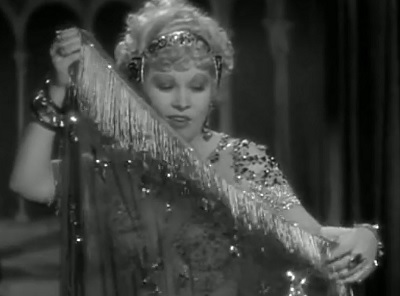
I knew from Complicated Women, TCM’s documentary on films before the production code, that early movies challenged men’s ownership of women’s bodies, minds, and souls. Many of these pre-code movies (1929-34) were so shockingly liberal in content that they make today’s look prudish by comparison (nudity in a Tarzan movie, anyone?) After the code, of course, sexuality and feminist portrayals of women were both toned down to please potential censors. But Mae West, who wrote and starred in her films, managed to sidestep this “sanitation” to an extent because she was so gifted at double entendres.

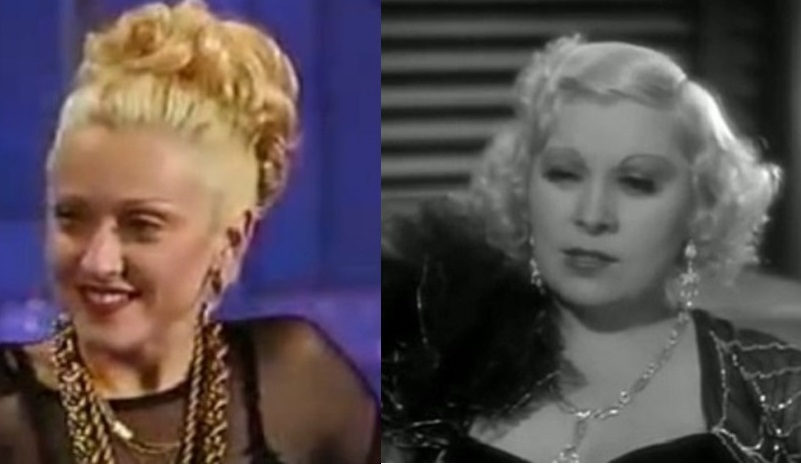
I’d heard of West, of course, knew a couple famous sayings, thought of her vaguely as ahead of her time. But to know of West and to watch her? Not the same. Mae West’s pre- and post-code films were in their own plane, and not only because of her undeniable sensuality and eagerness to express it. And “ahead of her time” is a gross understatement in West’s case. The play she wrote that got her thrown in jail on morals charges in 1927? Titled Sex. Madonna would be attacked for giving a book that title almost seventy years later.

Pioneers Madonna (in ‘92) and Mae West

Pioneers Madonna (in ‘92) and Mae West

And West’s next play? Drag (as in queen), which the vice folks managed to squash entirely. Luckily, we can still watch West on screen. Here are just four reasons why you will embrace this voluptuous rebel:

1. Half of the suggestive one liners you know originated with her.

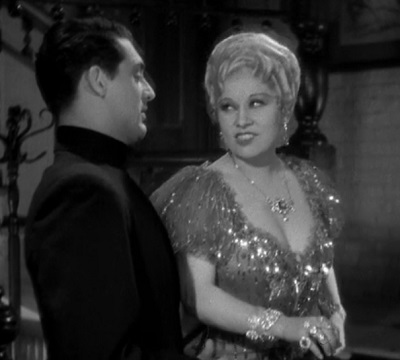
Her famous “Why don’t you come up sometime, see me?” seduction. (Note how overwhelmed Grant looks!)

Her famous “Why don’t you come up sometime, see me?” seduction. (Note how overwhelmed Cary Grant looks!)

This is just a small sampling of lines written and delivered by West (mostly from her films):

  • “When I’m good, I’m very good, but when I’m bad, I’m better.”
  • “It takes two to get one in trouble.”
  • “Is that a pistol in your pocket, or are you just happy to see me?”
  • “A hard man is good to find.”
  • “When I’m caught between two evils, I generally like to take the one I never tried.”
  • “When women go wrong, men go right after them.”

It’s not just the cleverness of West’s expressions that make her movies so entertaining; it’s the sheer number of them she manages to squeeze in. She Done Him Wrong (1933), which is just over an hour,has more funny lines in a few minutes than most current rom-coms in their bloated two-hour running times.

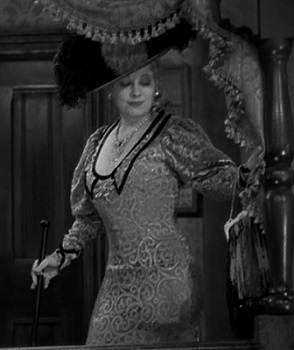
2. You need to see a woman born in the 1890s shimmying like West does.

West in I'm No Angel

West in I’m No Angel

She’s dancing, she’s walking—it doesn’t matter. You have never seen a woman strut like this one.

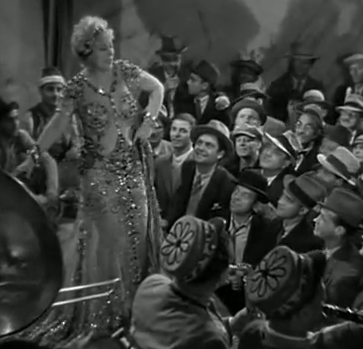
3. 1930s Hollywood actually portrayed young men smitten—in droves—by a 40ish woman

Mae West’s films are irrefutable proof that everything does not improve with time, including Hollywood’s treatment of women past the age of 30. Today we are delighted to see the occasional rom-com with a 40-year-old woman; that’s when West got started. And being who she was, West was never content with just one man in her thrall.

Men who've caught sight of Lou (West) in She Done Him Wrong

Men who’ve caught sight of Lou (West) in She Done Him Wrong

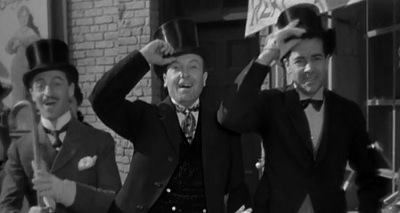
3Lou (West) eyeing a conquest, whom she refers to as “And you, Mr. Mmhmmm?”

Lou (West) eyeing a conquest, whom she refers to as “And you, Mr. Mmhmmm?”

4. Her films are wonderfully ludicrous.
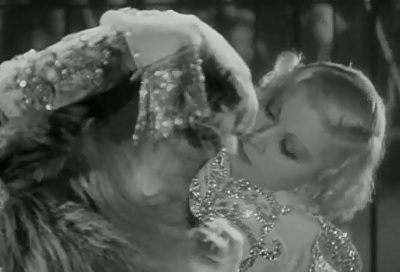
My favorite plot: A woman makes a living as a lion tamer, which men find so attractive they start sending her diamonds (I’m No Angel). The court scene near the close of the film is even more breathtaking. West annihilates the lawyers and slays the judge and jury with her smarts and that amazing walk. Is this whole film absurd? Absolutely. Is it hilarious? Oh yes.

The lion’s-mouth seduction

The lion’s-mouth seduction

Luckily, you can find a plot almost as ridiculous (and funny) in She Done Him Wrong, which is on Netflix streaming right now. What are you waiting for?

Share
Posted in: Feminism, Humor, Mae West Moments, Romantic Comedies (film) Tagged: Cary Grant, Madonna, Mae West, Pre-code films, sexuality
« Previous 1 2 3

Recent Posts

  • 100 Years Later, Still Scary: Dr. Caligari
  • Escaping Out of the Past (1947)
  • A Weeper for Those Who Love Jerks
  • Thank You, Academy, for Not Infuriating Me
  • Challengers (2024) Is a Bad Movie

Subscribe to Blog via Email

Enter your email address to subscribe to this blog and receive notifications of new posts by email.

Categories

  • 1920s films
  • 1930s films
  • 1940s films
  • 1950s films
  • 1960s films
  • 1970s films
  • 1980s films
  • 1990-current films
  • 2020s films
  • Action & Sports Films
  • Anti-Romance films
  • Blogathons
  • Childfree
  • Comedies (film)
  • Drama (film)
  • Feminism
  • Femme fatales
  • Film Noir/Crime/Thriller & Mystery
  • Gloriously Silly Scenes
  • Horror
  • Humor
  • Mae West Moments
  • Musicals and dancing films
  • Oscars
  • Random
  • Romance (films)
  • Romantic Comedies (film)
  • The Moment I Fell for
  • Turn My Sister into Classic Movie Fan
  • TV & Pop Culture
  • Uncategorized
Share
Classic Movie Blog Hub Member

Recent Comments

  • leah@carygrantwonteatyou.com on Meg Ryan’s Fate Foretold in Joe Versus the Volcano
  • Ryan on Meg Ryan’s Fate Foretold in Joe Versus the Volcano
  • leah@carygrantwonteatyou.com on 100 Years Later, Still Scary: Dr. Caligari
  • The Classic Movie Muse on 100 Years Later, Still Scary: Dr. Caligari
  • leah@carygrantwonteatyou.com on 100 Years Later, Still Scary: Dr. Caligari

Archives

  • November 2025
  • September 2025
  • May 2025
  • March 2025
  • January 2025
  • November 2024
  • August 2024
  • July 2024
  • May 2024
  • March 2024
  • February 2024
  • December 2023
  • November 2023
  • October 2023
  • September 2023
  • August 2023
  • July 2023
  • May 2023
  • April 2023
  • March 2023
  • January 2023
  • December 2022
  • November 2022
  • September 2022
  • July 2022
  • May 2022
  • April 2022
  • March 2022
  • February 2022
  • October 2021
  • September 2021
  • April 2021
  • March 2021
  • February 2021
  • December 2020
  • October 2020
  • September 2020
  • July 2020
  • May 2020
  • April 2020
  • March 2020
  • February 2020
  • December 2019
  • October 2019
  • September 2019
  • June 2019
  • May 2019
  • April 2019
  • February 2019
  • January 2019
  • November 2018
  • September 2018
  • July 2018
  • June 2018
  • May 2018
  • April 2018
  • March 2018
  • February 2018
  • January 2018
  • November 2017
  • September 2017
  • August 2017
  • July 2017
  • June 2017
  • May 2017
  • April 2017
  • March 2017
  • February 2017
  • January 2017
  • December 2016
  • November 2016
  • October 2016
  • August 2016
  • July 2016
  • June 2016
  • May 2016
  • April 2016
  • March 2016
  • February 2016
  • January 2016
  • December 2015
  • November 2015
  • October 2015
  • September 2015
  • August 2015
  • July 2015
  • June 2015
  • May 2015
  • April 2015
  • March 2015
  • February 2015
  • January 2015
  • December 2014
  • November 2014
  • October 2014
  • September 2014
  • August 2014
  • July 2014
  • June 2014
  • May 2014
  • April 2014
  • March 2014
  • February 2014
  • January 2014

Meta

  • Log in
  • Entries feed
  • Comments feed
  • WordPress.org

Copyright © 2025 Cary Grant Won't Eat You.

Church WordPress Theme by themehall.com