Cary Grant Won't Eat You

Classic movies for phobics

  • About
  • eBooks
  • Previous Blogathons
Classic movies for phobics

Mae West

Mae West’s Lessons for Groundbreakers
08/07/2016 by leah@carygrantwonteatyou.com 20 Comments

MaeWest-SheDoneHimWrongx
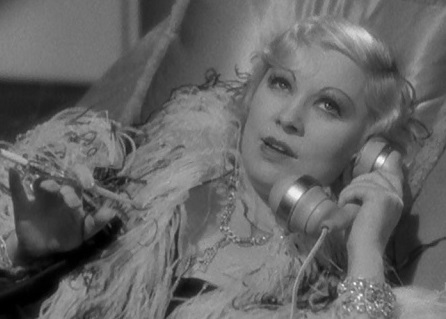
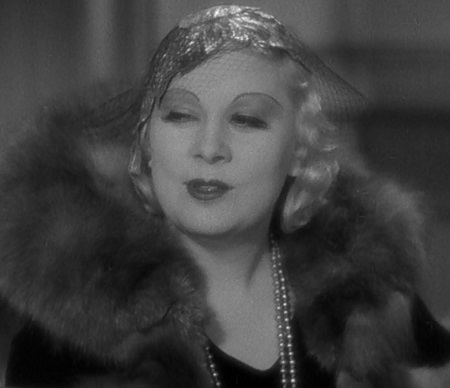
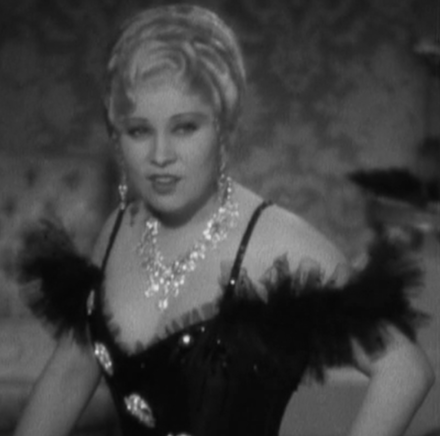
A woman approaches a building, greets men outside, enters. A common occurrence. But when that walk is Mae West’s, the arrival of Maudie into Night after Night is transgressive. West’s entrance into film guaranteed the influence she’d already built on the stage would reverberate far beyond the audiences lucky enough to catch her plays, and shockingly, her actions in front of and behind the camera are STILL groundbreaking. Here’s why:

  1. She Wrote Her Own Material

It’s no accident that the successful comic performers we see on film and TV now were frequently stand-up comedians. Interestingly, it would take the break-thru performances of these stand-up stars to start seeing funny, powerful women in film more frequently, women writing for themselves and other women. (Face it: Tina Fey would just be an anonymous character actress without that pen.)

Like the vaudevillian, Mae West, before them, these women honed their comedy chops through painful competitions with others. They found their voices through observing and picking up on others’ ideas as well as their own. West honed her persona in vaudeville, then began to write and frequently star in famous, scandalous plays (Sex, The Drag, Diamond Lil), even got thrown in jail on obscenity charges (an occasion she milked).

Men weren’t going to write parts for women like the one West crafted for herself. And we’re still talking about the need for more women to write for women. West could have told us that almost 100 years ago, if we’d only listened.

  1. She Busted through Sexual Stereotypes

Newspaper reporters describing West often make a key error, their own opinion of her attractiveness determining how they characterize her influence. If they consider her sexy, they emphasize her sensuality; if they don’t, they call her actions camp. Of course, her performances were both at once (seriously, have they never seen female impersonators—who, of course, adored her?) Either way, they are dismissive because, sigh, they still are just thinking of her as bombshell or not, rather than looking at her tremendous impact. The point is her sexual aggressiveness, despite being a woman; the point is that her plots didn’t end with her lost and alone for pursuing and being hounded by conquests. The point is that a woman could be sexy even if she wasn’t skinny, even if she was older than 35. Amy Schumer is trying to tell us that now.

  1. She Built Her Own Brand

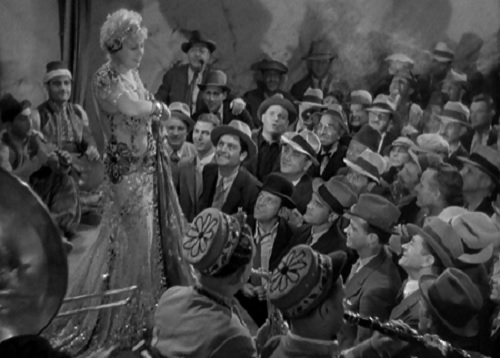
The role of Maudie in Night after Night was initially a dull one, a sad ex-lover type, according to biographer Jill Watts. But Mae West wasn’t about to take on the part of a sad sack moping about her lost man. She didn’t have to. Paramount was hungry for her play, Diamond Lil, which would become the smash studio-saving hit She Done Him Wrong. So when she said nah, they listened. They threw more money at her AND gave her the script. And what she made of that little part changed movie history. West was in her late thirties by then, had spent a career in vaudeville honing her persona as a sexually powerful, wisecracking woman coveted by men. Part of that persona was costuming. Edith Head, wowed by West’s understanding of design, apparently thanked her for “all I know about sex, clotheswise” (153). Even the walk had been long established. According to Watts, “The infamous Westian gait…was a slow, strolling shimmy” (53). Guess what dance move West was advertised as perfecting?

Like the stand-up stars after her, she kept honing her favorite character, one who didn’t pay or suffer for her sexual transgressions, but relished them. West’s devotion to this role of hers was so consistent that it was hard to penetrate it enough to see the actress and writer behind it. But such consistency explains her success. Today we can see Martha Stewart, Madonna, and Beyoncé learning from this lesson of brand control. Beyoncé is now using that well-established female-power persona of hers to take on race. Without that persona in place, would “Formation” have had such impact?

  1. She Asserted Her Power

The old Hollywood studios made other women take the parts given to them. A good actress would have to agree to terrible parts if the studio needed to sell junk her name might help. And few women had the power to resist. West’s refusal to give into this system, or to the censors some argue that the movie studios actually courted, helped set the stage for Bette Davis’s and Olivia de Havilland’s later film-changing battles. Was West the first to balk at the studios? No. But she began to chip away at their power. And, of course, demanded high salaries too.

Few would argue that the censors diminished her post-Production Code films. But her fascinating efforts to subvert their influence, even within the films themselves, helped her defy the whole idea of artistic censorship. As she famously said, “It’s not what I do, but the way I do it. It’s not what I say, but the way I say it.”

  1. She Wrote Fantastic Lines—and Knew She Needed to State Them

When we talk about West, her film presence dominates the conversation. Of course. Few women then or since have been so riveting onscreen. But she would never have made it where she did without that gift for writing and the hard work she put into finessing her every line. We often say comedy doesn’t wear well with time. Too many films once considered funny can feel dated, their appeal no longer clear. Yet look on a list of famous quotes, and West’s name is one of the most frequent female appearances. Watch a West film and try not to laugh. West did what only the best comedy does: captured the truth of human nature. She got people, and had the wisdom to know what a difference that made.

I often think about Sylvester Stallone’s script for Rocky, how he refused—despite the risks—to let another, better-known actor take the now-famous role. He knew what he had, what it could mean. West knew not to cede control over her lines; she knew she would have the impact if she pronounced them—and she would get them right. We often celebrate writers-directors now, who have the same impulse to protect and own their material. But too few of us know the women who penned some of the best early material (including writer-directors). West must have known this too, and acted accordingly. Her larger-than-life performances guaranteed her writing legacy.

I wish West’s name were more frequently cited as an early example of script ownership. While her rebuke to censorship is justly famous (seriously, in how many ways was she a pioneer?), her talent–and embracing of that talent–should be just as well known, just as valued. She was many, many things, but personally, what I value her most for is her writing. Who, then or since, could write a killer line like Mae West’s? To celebrate West and not end with one of her lines is a mistake, so let’s go back to that entrance, to the hatcheck girl complimenting Maudie in Night after Night: “Goodness, what beautiful diamonds!” And Maudie’s (aka West’s) beautiful retort: “Goodness had nothing to do with it, dearie.”

This post is part of the Classic Movie Project blogathon. Aurora is featuring groundbreakers on her wonderful site, Once Upon a Screen. Check out posts on her site and on the sites of the other marvelous hosts, Movies Silently and Silver Screenings. Flicker Alley has been kind enough to sponsor the event.

For more of my Mae West love, see my Mae West Moments series.

Share
Posted in: 1930s films, 1940s films, Blogathons, Comedies (film), Feminism, Humor, Mae West Moments Tagged: Amy Schumer, Beyonce, building a brand, comedy writers, Film, Madonna, Mae West, Maudie, Night after Night

Surreal Reproduction: When Bette Met Mae (2014)

04/17/2016 by leah@carygrantwonteatyou.com Leave a Comment

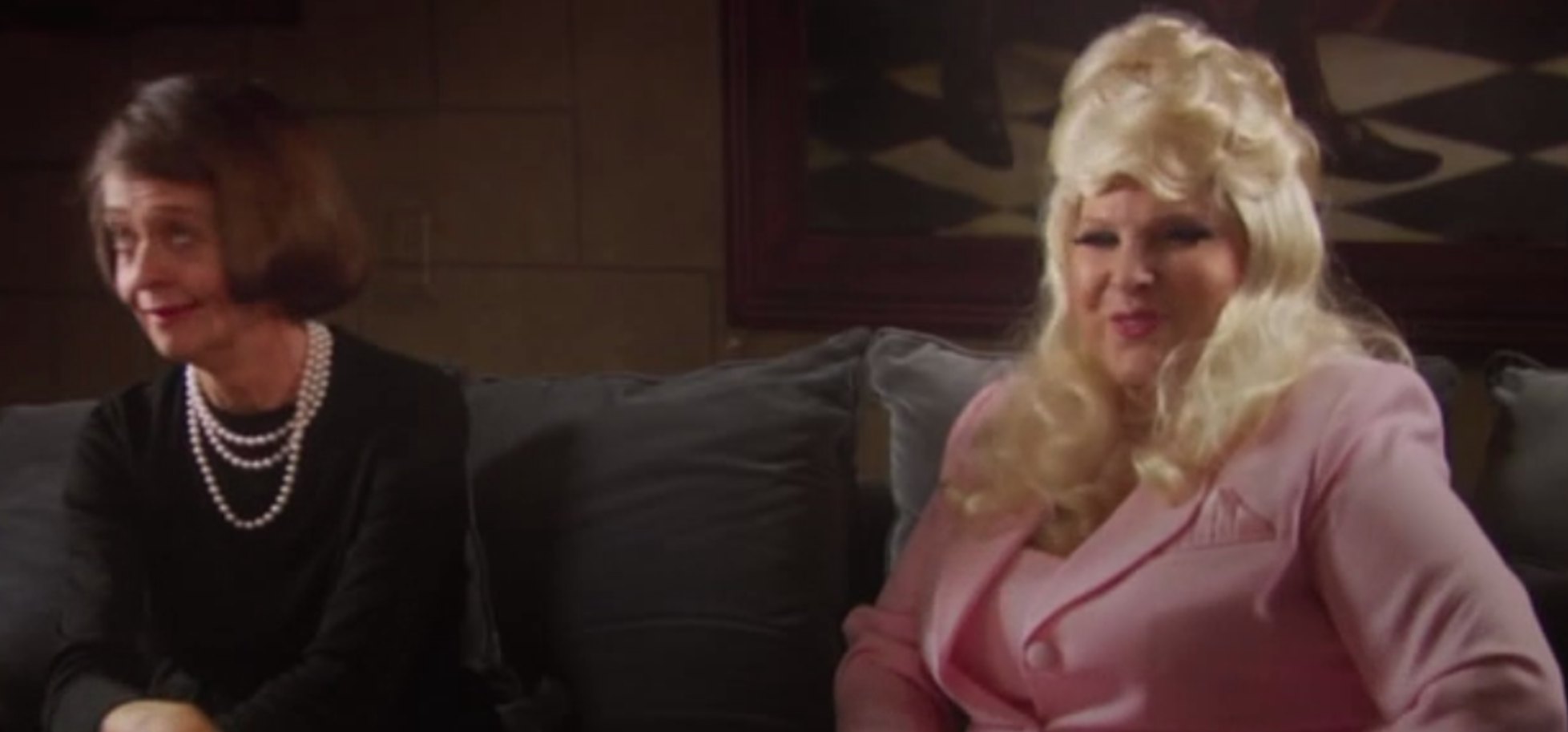
WhenBetteMetMaeOn November 13, 1973 Wes Wheadon was the bartender for a party that joined  superstars Mae West (Victoria Mills) and Bette Davis (Karen Teliha) for the first time. He captured their encounter on audio tape, and then reenacted the event with lip-syncing actors, producing it more than 40 years later.
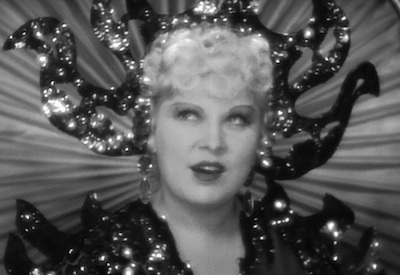
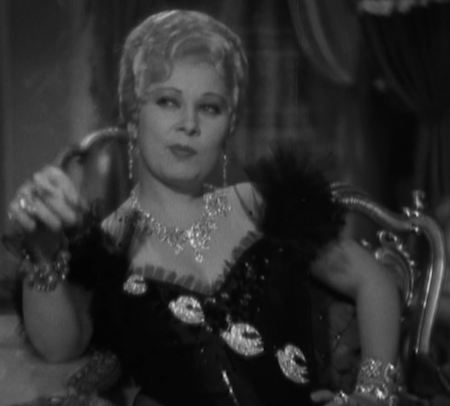
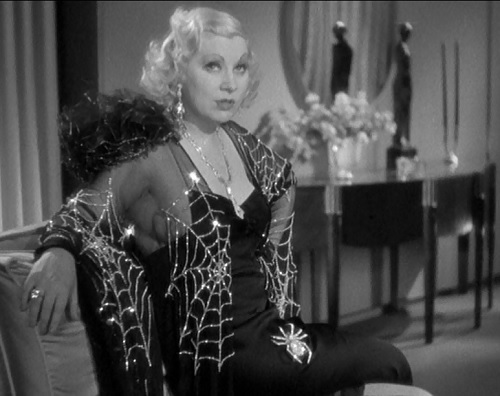
On the one hand, the film is fascinating–capturing the mutual admiration between these two strong female icons, particularly Davis’s for her hilarious predecessor. On the other, the poor quality of the audio gives me a skeezy feeling, like this recorder was hidden in a drawer and the actresses unaware, or the whole thing was faked or improperly edited for effect (not hard with such easily imitated voices). I know that the time period and recorder quality are likely responsible for the seeming sketchiness, but since both women are long dead and the event likely forgotten, it’s hard not to question even as you’re enjoying the interplay between these heroines of the screen.

I was fascinated by Davis’s descriptions of her battles for control and for actors’ rights, as with her recounting of Ronald Reagan’s tenure as SAG president. She suggests he sold out his fellow actors for the sake of his own future political gain.

Such blunt talk from Davis (who is drinking vodka and OJ throughout) is typical of the film. Her lines throughout are funny, and often outrageous:

“My enthusiasm is exhausting.”

“I tried to turn for years (into a lesbian). I thought it’d be so simple.”

(on the idea of marrying another man) “You kidding? End up supporting them?”

And some of West’s lines are equally fabulous, as in response to Davis’s question of whether she’d marry now (at 80):

“Well, I’d wanna see him first.”

But what I like best are West’s descriptions of the making of I’m No Angel, and her reflection that she’d always wanted to be a lion tamer (because of course she did). And her thoughts about her writing, as when she admits it could take her a day to come up with a great line. The studios besides Paramount, she claims, “were kicking against me too” during the Production Code years. She explains one of her methods to preserve her material. Originally, she says, the films would be shot and screened, and then the censors would shout out what they wanted eliminated. Instead, she had censors read and cut lines from her screenplays before they were filmed. She would add material before sharing the script that she knew they’d eliminate (“I start putting in stuff that I myself wouldn’t do”), hopefully preserving more of her actual lines in the process.

And, of course, one of the pleasures of the movie is when both women express their reactions to the male impersonators who’ve loved them so much over the years….

I can’t exactly recommend the film, as Wheadon’s narration is cheesy, and much of the interview is hard to hear, making its accuracy difficult to trust. But it IS a fun, remarkable conversation (true as experienced/not), and if you have Amazon Prime, it’s free.

This post is part of my monthly series on West.

Share
Posted in: 1990-current films, Feminism, Humor, Mae West Moments, Random Tagged: Bette Davis, Mae West, review, When Bette Met Mae (2014)

Mae West’s Klondike Rebellion

03/06/2016 by leah@carygrantwonteatyou.com Leave a Comment

MaeWest-KlondikeAnnie
There’s something terribly wrong and terribly right about Klondike Annie’s (1936) odd musical tribute to Asian sensuality. It’s one of the few moments of the film when Mae West seems somewhat genuine. Elsewhere, she can’t sell the censored treatment of her material, so she doesn’t try. She adopts an expression that looks more like indigestion than anything else, and makes us wonder what’s going on inside that canny mind of hers.

In the film, Rose (West) dislikes and fears her sugar daddy, Chan Lo (Harold Huber). She’s tired of his dangerous possessiveness and plans to escape, but before she does, she entertains her lover’s nightclub customers. She’s not in charge of her fate in the film–imagine that condition for West! (Of course, sex with an Asian man MUST be torture in those racist times. Sigh.)

Another actress would have teared up while singing this lusty song, trying to capture her character’s likely emotional state. West? She’s finally enjoying herself, expressing her love for romance, which they won’t let her do throughout the rest of the movie. (After all, a mistress is supposed to regret and hate sex, according to the Production Code.) In this strange musical interlude, however, West refuses to play Rose at all. Her expressions as she sings make no sense in terms of the character’s dilemma, but then, neither does the plot.

I wish I could know what West was really thinking while crooning, “I’m an Occidental Woman, in an Oriental mood for love.” Instead, I’ll take a few guesses:

“I could get used to an Asian lover, MmmmmHmmmm. But not this guy they stuck me with. Harold?”

“I’m slamming this headpiece on Breen’s head, first chance I get.”

“So this made it past the censors, and the knife scene didn’t? They’ve got a thing or two to learn about the power of suggestion.”

“That extra over there looks yummy. Look at those muscles on him. Better see what he’s doing after.”

“Movies now are for suckers. Next show I write: Gal makes it to Santa Fe. Starts a brothel. Has 50 men a day. Now, what’s my first line…”

This is part of my monthly tribute to West. Click here for more posts on this hilarious pioneer.

Share
Posted in: 1930s films, Comedies (film), Feminism, Mae West Moments Tagged: Klondike Annie, Mae West

Mae West Quote of the Week: Religion vs. Jewels

01/30/2016 by leah@carygrantwonteatyou.com Leave a Comment

She Done Him Wrong
“You know it was a toss-up whether I go in for diamonds or sing in the choir. The choir lost.”

The line would be funny regardless, but West does so much with it: She pauses in between the sentences for emphasis. She follows up the words with an arch look at her love interest of the hour (Cary Grant) and then smokes. She struts up and down the room an unnecessary amount of times in their short conversation. She makes a number of references to position and anatomy before and after the gems (which are clearly a stand-in for her sexual escapades).

Thought for the day: Ever wondered whether any woman in this world could be as suggestive in an hour as She Done Him Wrong‘s Lou (West) in five minutes?

This quote is part of my monthly tribute to West.

Share
Posted in: 1930s films, Comedies (film), Mae West Moments, Romantic Comedies (film) Tagged: Cary Grant, great quotes, innuendo, Mae West, She Done Him Wrong

Turning My Sister into a Classic Movie Fan, Bout 2: Abject Failure

01/15/2016 by leah@carygrantwonteatyou.com 10 Comments

For anyone who is interested, a long while ago, I made a bet with my sister: I would watch Breaking Bad, and she would watch ten classics. When I reminded her that she hadn’t honored our bet while I’d made it through four seasons, she said, “Yeah, but Breaking Bad is good. And you like it.”

Classic movie fans, please weep with me now.

A year after nagging my sister into watching the first classic film on my list, I forced her into a second just after Christmas. (I had to be present for her to watch, you see.) As before, she drifted off multiple times during the movie. For the first film, Body and Soul, I could understand. It was slow, and the hour was late. But this time, we watched a movie earlier, and this time, Rachel was watching this woman:

MaeWestImnoAngel
I mean, who can’t be entertained by MAE WEST?

My husband, who had urged I’m No Angel be the film I chose, watched Rachel in action and said, “Sorry, Leah, you need to give up. She’s not that tired.”

He was right. Until Rachel is more receptive to the possibility of liking classic film, I’m wasting my time. Naturally, I was feeling down, but shortly afterward, my friend watched the same film. She told me her husband said, “I give it 20 minutes,” and then was so amused that he was imitating West’s walk afterward. This is the kind of love I hope newbies to West will feel. So while I’m giving up on converting my sister to classic film, I am sharing her list for the hesitant watcher among your friends and family. But learn from my example: Make sure you choose someone who IS receptive. (You can, of course, check out this wonderful blogathon too). The list for Rachel has gone through many versions, and I’m cutting my first choice. But the other films are good starting movies for others; thanks to all of you who offered suggestions for Rachel in previous posts. Here the movies are (in no particular order):

  1. I’m No Angel
  2. The Third Man
  3. Smith Goes to Washington
  4. M
  5. The Awful Truth
  6. Scarface (1932)
  7. On the Waterfront
  8. The Manchurian Candidate (1962)
  9. The Man Who Knew Too Much (1934)
  10. Notorious

I wish you all greater luck than I had. Hopefully, at some point, my sister will change her incredibly stubborn mind all on her own, and give these wonderful films a try.

Share
Posted in: 1930s films, Random, Turn My Sister into Classic Movie Fan Tagged: Mae West

Elle King Wrote Mae West’s Theme Song

11/14/2015 by leah@carygrantwonteatyou.com Leave a Comment

voluptuousMaeWestImNoAngel
When my husband told me he’d heard Mae West’s theme song on the radio, I asked for an explanation; instead, he played me Elle King’s “Ex’s and Oh’s”:

“Ex’s and the oh, oh, oh’s they haunt me
Like ghosts they want me to make ’em all
They won’t let go
Ex’s and oh’s”*

And of course, I understood. Mae West could have written those very words. In every West film, and in her own descriptions of her life, all the men are after her…

MaeWestandhermenImnoAngel
And she’s not exactly clingy with them: “All discarded lovers should be given a second chance, but with somebody else.”

In “Ex’s and Oh’s”, all men want the singer because she’s “the best baby that they never gotta keep.” They “always wanna come, but they never wanna leave.” Sounds like West, huh?: “Men are like linoleum floors. Lay ’em right and you can walk all over them for years.”

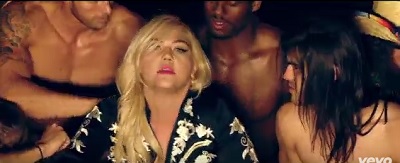
Of course, when I heard the song, I instantly pictured Mae West surrounded by a throng of half-naked men. Apparently, King had the same thought when planning her video:

ElleKingandhermen
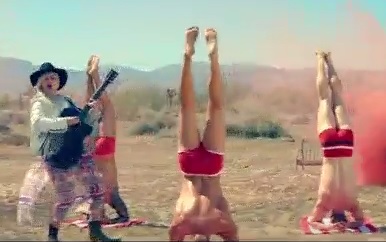
It’s hard to describe just how funny this video is: men wrestling over her, an obsessive climbing over rocks to get to her, two models on a see saw, Elle spraying nearly naked men with a hose, her kicking one out of a car because she’s done with him. I don’t think I’ve ever seen a video so blatantly objectifying men–even Madonna’s. My favorite? The underwear-clad headstanders she dances around as she plays guitar:

ElleKingandHeadstandmodels
The singer profiles certain affairs to illustrate her commitment phobia: “I had a summer lover down in New Orleans/Kept him warm in the winter, left him frozen in the spring.” The men longing for her are “climbing over mountains and a-sailing over seas.” Like West, who characterized marriage as a “last resort,” there’s no celebration of eternal love here–just of eternal lust.

King is more than just a performer. She co-wrote the song, just as West wrote her screenplays. The two temptresses even resemble each other: both voluptuous, blue-eyed blondes with lovely, pale skin:

ElleKingexes
I don’t know that West was one of King’s inspirations, but certainly, the two are united in spirit. I hope King’s enjoying West’s films right now, and that all of you West admirers check out this catchy, clever song, and the hilarious video that goes with it.

This post is part of my monthly West moment series.

*Yes, it bothers me too that a writer would think these apostrophes correct. Try to ignore them.

Share
Posted in: 1930s films, 1940s films, Feminism, Humor, Mae West Moments, Random, TV & Pop Culture Tagged: "Ex's and Oh's", Elle King, Film, Mae West, theme song, video

Mae West’s Dating Advice: the 3 Fs

10/11/2015 by leah@carygrantwonteatyou.com 2 Comments

MaeWestgivesadvice
When advising friends about men, Mae West’s characters, of course, never hold back. As Tira in I’m No Angel, West keeps her suggestions pithy: “Never let one man worry your mind. Find him, fool him, and forget him.”

For more monthly Mae West favorites, click here.

Share
Posted in: 1930s films, Mae West Moments, Romantic Comedies (film) Tagged: dating advice, Mae West

Mae West Schools the Teacher

09/06/2015 by leah@carygrantwonteatyou.com 4 Comments

WestandtheTeacherNightafterNight
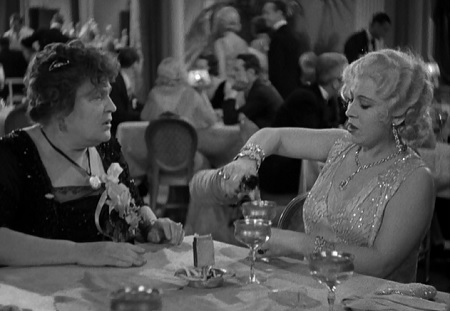
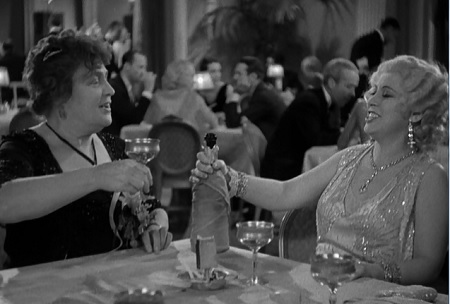
A prim school teacher & Mae West. Almost a century later, this coupling seems inspired. But in 1932, nobody knew that. West was a vaudevillian, not a movie star. Her role as Maudie, an ex of the lead, Joe Anton (George Raft), was a minor part in her first film, Night after Night. She didn’t even enter the picture until a half hour in.

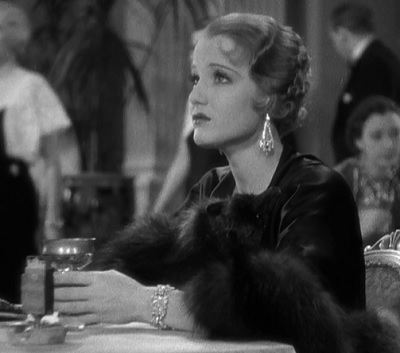
The script of the movie is bland, the story plodding. Joe, the owner of a mansion-turned-speakeasy, is fascinated by Jerry Healy (Constance Cummings), the mysterious beauty who shows up at his place every night unattended. He discovers that her family owned his mansion before the market crash.

ConstanceCummings-NightafterNight
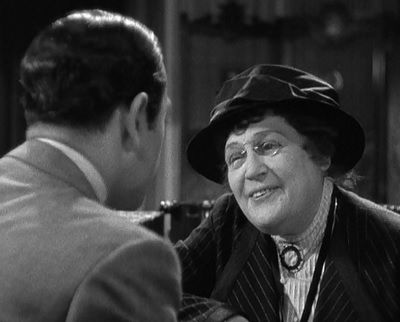
Joe has been dissatisfied lately, aspiring to a classier existence. He’s even hired a tutor, Miss Mabel Jellyman (Alison Skipworth), to improve his elocution, grammar and knowledge of current events–the type of lady who gets prissy when he uses words such as “got.”

Speakeasy owner & tutor
He thinks Jerry will lead him to a better life, but he needs the tutor’s help to win her. He invites Jerry for dinner at the speakeasy, and begs Jellyman to come along. The tutor is thrilled at the chance to hang out in a speakeasy and have some fun, but what a drag to be on such a date! Joe’s attempts at sophistication are painful, the conversation stilted. Everyone at the table is bored and uncomfortable.

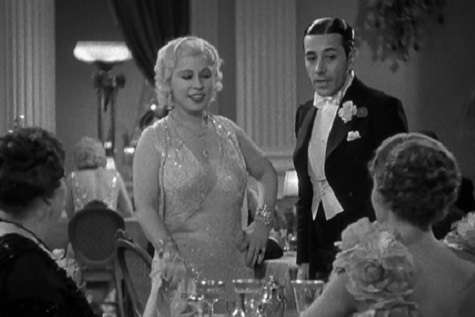
Then Maudie (West) enters the room.

MaudiesarrivalNightafterNight-WestRaft
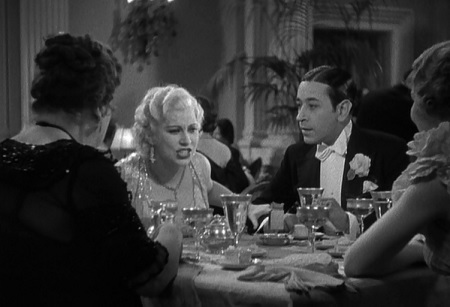
Within five minutes, she has decimated Joe’s fragile rep, having laughed about his love for the ladies, drunkenness, and a jail visit in quick succession.

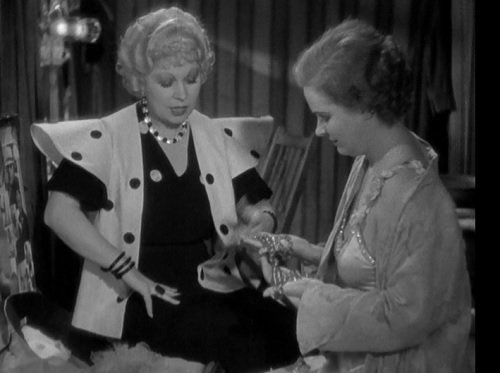
WestasMaudieNightafterNight
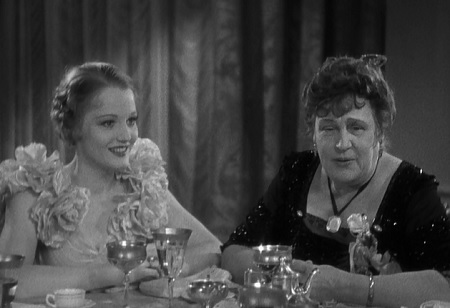
“Oh Joe,” she concludes, “it’s just life to see you,” echoing our impressions of her arrival. She has completely redeemed his date (and the existence of the film). Finally, Jerry is enjoying herself.

JerryandJellyman-NightafterNight
But clueless Joe urges Jerry to leave with him to tour the house. Jellyman, soon drunk thanks to Maudie’s generosity with the bottle, protests when Joe offers a cab before leaving them. “I don’t want to go home,” she complains. She turns to Maudie, “He said I didn’t have to.”

“Yeah, we’re gonna make a night of it,” Maudie agrees. “You go ahead,” she tells Joe, “we gotta talk it over.”

“Maudie and I have a great deal in common,” Jellyman explains to Joe.

“You said it, baby,” agrees the partying blonde, without a trace of irony.

Once they’re alone, Jellyman asks anxiously, “Maudie, do you believe in love at first sight?”

“I don’t know, but it saves an awful lot of time,” she quips.

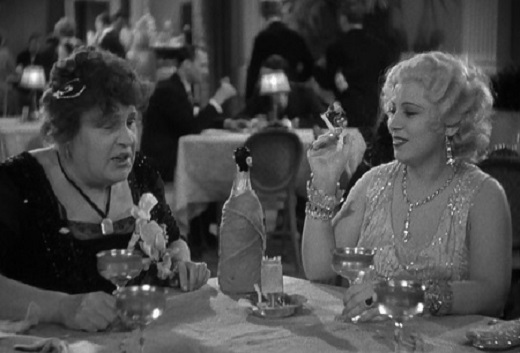
Jellyman protests when Maudie refills her class, to which our heroine responds, “Now listen, Mabel, if you’re gonna be Broadway, you gotta learn to take it, and you may as well break in the act right now.”

MaudieandJellyman-MaeWest
“I say, this night will read great in your diary,” she adds.

“You said it, baby,” Jellyman agrees, her education from Maudie having advanced dramatically in minutes.

WestenjoyingteacherNightafterNight
“Maudie, do you really think I could get rid of my inhibitions?” Jellyman asks.

“Why sure,” Maudie tells her, “I’ve got an old trunk you can put them in.”

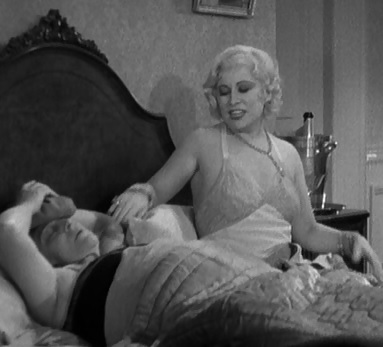
The next time we see the two of them, they’re in bed together at Joe’s after a bender. It does the heart good to witness them:

WestandSkipman
West only agreed to play the part of Maudie if she could write her own scenes. Thank goodness she did. Supposedly, Raft later claimed West “stole everything but the cameras.” What he didn’t say is that none of us would have wanted to see the film at all, had she not.

For more of my monthly West posts, click here.

Share
Posted in: 1930s films, Comedies (film), Feminism, Mae West Moments, Romantic Comedies (film) Tagged: Mae West, Night after Night

Mae West Quote of the Month: No Evidence

07/23/2015 by leah@carygrantwonteatyou.com 2 Comments

MaeWestSheDoneHimWrong
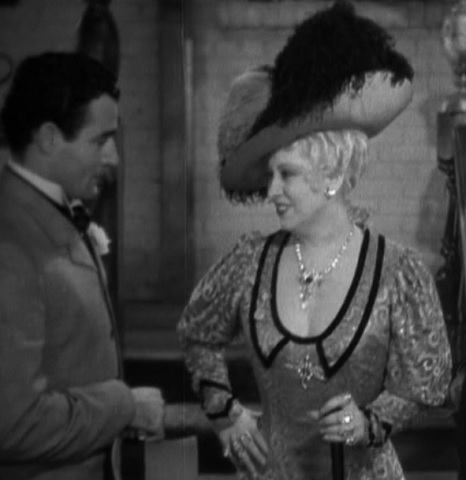
Lady Lou (Mae West) is the heroine of She Done Him Wrong (1933), the hilarious Oscar-nominated, pre-Code movie based on West’s play, Diamond Lil. The film opens in a Bowery bar in the Gay Nineties. Many of the customers are discussing Lou’s attractions, thanks to a new nude portrait of her on the wall.

Lou rides up in a carriage, with women staring at her disapprovingly, and men staring at her very approvingly.

She enters the bar with the customary West strut, and is quickly introduced to Serge (Gilbert Roland) by her boyfriend, Gus. She reflects on Serge’s good manners in kissing her hand and smiles at him alluringly, as West is wont to do.

“I’m delighted,” Serge (Gilbert Roland) says. “I have heard so much about you.”

“Yeah,” Lou quips, “but you can’t prove it.”

If that line can’t get you through the day smiling, no worries. Just watch five minutes more of the film.

Share
Posted in: 1930s films, Comedies (film), Feminism, Mae West Moments, Romantic Comedies (film) Tagged: Diamond Lil, Lady Lou, Mae West, Pre-Code

Mae West as a Deadpan Plaintiff in I’m No Angel

06/26/2015 by leah@carygrantwonteatyou.com 11 Comments

I'mNoAngel-CourtroomScene
This post is part of the The “…And Scene!” Blogathon. Check out the other entries here.

There are very few scenes in film as funny as when Mae West is talking about the number of men in her life, or, as she famously put it after the courtroom scene in I’m No Angel, the much more important amount of “life in your men.”

I’m a sucker for courtroom scenes in general, but most are thrilling, dramatic. I admit that a few are funny–From the Hip, Seems Like Old Times–but there’s nothing like Mae West on a roll, and every second of the courtroom scene of this glorious pre-Code wonder is the actress (and writer) at her best.

Tira, a circus performer, is suing her wealthy fiancé (Cary Grant) for breach of promise. He broke off their wedding because he saw another man in her place while she was out, not knowing it was a set-up by her boss, who didn’t want to lose her successful act to matrimony.

Unsurprisingly, the defense attorney immediately tries to besmirch Tira’s reputation, suggesting she gets around, that she has a “colorful past.”

In another movie, we might expect shame, embarrassment, hostility at such an attack. But this isn’t just any movie.

“Well, I gotta admit, I’ve been the love interest in more than one guy’s life,” Tira agrees. “I don’t see what my past has got to do with my present.”

“We shall show that to the satisfaction of the court, I believe,” the attorney primly responds. “Nevertheless, the fact remains that you’ve been on friendly terms with several men.”

“Alright, I’m the sweetheart of Sigma Psi. So what?”

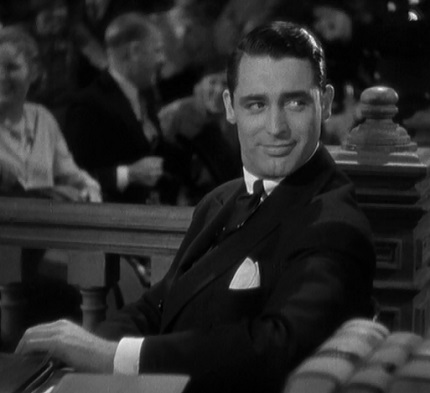
The audience in the courtroom aren’t the only ones laughing at her quip. Even the defendant can’t resist.

CaryGrantI'mNoAngel
When she’s scolded by the judge for not answering the question, she coos at him in response. (He will later take her on a date.)

MaeWest-judge
The attorney presses on, undeterred, referencing a bunch of (obviously married) men by name, asking if she knows them.

“I do recall their faces,” she answers, “but them ain’t the names they gave me.”

Appalled, her own lawyer asks for a recess and chides her for admitting to such an active dating life.

Tira is unrepentant: “Why shouldn’t I know guys? I’ve been around. I travel from coast to coast. A dame like me can’t make trips like that without meeting some of the male population.”

He explains that she can’t win the case. She considers her options.

MaeWest-court-strategy
And then asks if she can question witnesses herself.

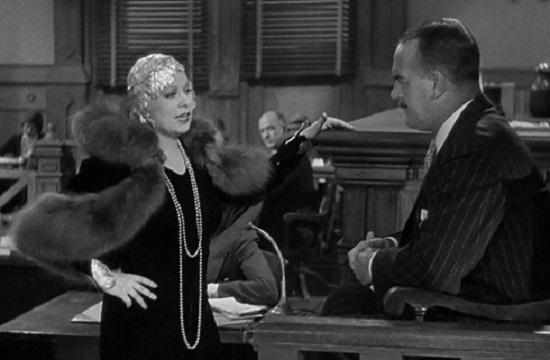
It’s at this point that West really hits her stride–literally. Because she gets to walk up and down past the jury box, practicing her famous strut repeatedly, flirting with everyone in the courtroom.

She treats her accusers with disdain, slamming their efforts to make her look bad, and saying, “OK, I’m through with you,” after she completes her questioning. Between witnesses, she asks the jury, “How ‘m I doin, hmmmmnnnn?”

For once, jury duty has proven to be a blessing. Just look at their reactions to her performance:

I'mNoAngel-jury
As Tira concludes, her lover (Cary Grant) can’t handle it anymore and admits defeat. He’s fallen more in love with her than ever, as we have. Who cares if she’s the sweetheart of Sigma Psi? She’s Mae West, idiot. Catch her while you can. Case closed.

Share
Posted in: 1930s films, Blogathons, Mae West Moments, Romantic Comedies (film), Uncategorized Tagged: best courtroom scenes, Cary Grant, I'm No Angel, Mae West, Pre-Code
« Previous 1 2 3 Next »

Recent Posts

  • 100 Years Later, Still Scary: Dr. Caligari
  • Escaping Out of the Past (1947)
  • A Weeper for Those Who Love Jerks
  • Thank You, Academy, for Not Infuriating Me
  • Challengers (2024) Is a Bad Movie

Subscribe to Blog via Email

Enter your email address to subscribe to this blog and receive notifications of new posts by email.

Categories

  • 1920s films
  • 1930s films
  • 1940s films
  • 1950s films
  • 1960s films
  • 1970s films
  • 1980s films
  • 1990-current films
  • 2020s films
  • Action & Sports Films
  • Anti-Romance films
  • Blogathons
  • Childfree
  • Comedies (film)
  • Drama (film)
  • Feminism
  • Femme fatales
  • Film Noir/Crime/Thriller & Mystery
  • Gloriously Silly Scenes
  • Horror
  • Humor
  • Mae West Moments
  • Musicals and dancing films
  • Oscars
  • Random
  • Romance (films)
  • Romantic Comedies (film)
  • The Moment I Fell for
  • Turn My Sister into Classic Movie Fan
  • TV & Pop Culture
  • Uncategorized
Share
Classic Movie Blog Hub Member

Recent Comments

  • leah@carygrantwonteatyou.com on Meg Ryan’s Fate Foretold in Joe Versus the Volcano
  • Ryan on Meg Ryan’s Fate Foretold in Joe Versus the Volcano
  • leah@carygrantwonteatyou.com on 100 Years Later, Still Scary: Dr. Caligari
  • The Classic Movie Muse on 100 Years Later, Still Scary: Dr. Caligari
  • leah@carygrantwonteatyou.com on 100 Years Later, Still Scary: Dr. Caligari

Archives

  • November 2025
  • September 2025
  • May 2025
  • March 2025
  • January 2025
  • November 2024
  • August 2024
  • July 2024
  • May 2024
  • March 2024
  • February 2024
  • December 2023
  • November 2023
  • October 2023
  • September 2023
  • August 2023
  • July 2023
  • May 2023
  • April 2023
  • March 2023
  • January 2023
  • December 2022
  • November 2022
  • September 2022
  • July 2022
  • May 2022
  • April 2022
  • March 2022
  • February 2022
  • October 2021
  • September 2021
  • April 2021
  • March 2021
  • February 2021
  • December 2020
  • October 2020
  • September 2020
  • July 2020
  • May 2020
  • April 2020
  • March 2020
  • February 2020
  • December 2019
  • October 2019
  • September 2019
  • June 2019
  • May 2019
  • April 2019
  • February 2019
  • January 2019
  • November 2018
  • September 2018
  • July 2018
  • June 2018
  • May 2018
  • April 2018
  • March 2018
  • February 2018
  • January 2018
  • November 2017
  • September 2017
  • August 2017
  • July 2017
  • June 2017
  • May 2017
  • April 2017
  • March 2017
  • February 2017
  • January 2017
  • December 2016
  • November 2016
  • October 2016
  • August 2016
  • July 2016
  • June 2016
  • May 2016
  • April 2016
  • March 2016
  • February 2016
  • January 2016
  • December 2015
  • November 2015
  • October 2015
  • September 2015
  • August 2015
  • July 2015
  • June 2015
  • May 2015
  • April 2015
  • March 2015
  • February 2015
  • January 2015
  • December 2014
  • November 2014
  • October 2014
  • September 2014
  • August 2014
  • July 2014
  • June 2014
  • May 2014
  • April 2014
  • March 2014
  • February 2014
  • January 2014

Meta

  • Log in
  • Entries feed
  • Comments feed
  • WordPress.org

Copyright © 2025 Cary Grant Won't Eat You.

Church WordPress Theme by themehall.com