Cary Grant Won't Eat You

Classic movies for phobics

  • About
  • eBooks
  • Previous Blogathons
Classic movies for phobics

Katharine Hepburn

The 8 Movie Characters I’d Bring to See Barbie

08/06/2023 by leah@carygrantwonteatyou.com 6 Comments

If I could bring any film characters with me to the Barbie movie, this crew would come along. We would shout, complain, and advise (quite loudly), and so an empty theater–and an earlier viewing by me–would be critical. But just try to imagine with me, how perfect this party would be….(Mild spoilers ahead.)

1: Megan (Melissa McCarthy) from Bridesmaids (2011)


This confident, hilarious, non-nonsense woman needs to give Barbie a pep talk. I did love Gloria (America Ferrera)’s speech, but Megan’s would be one for the ages.

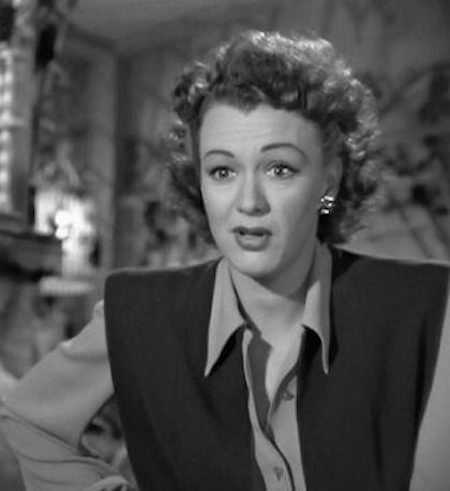
2: Ida (Eve Arden) from Mildred Pierce (1945)


What Megan can do with yelling and pounding, Ida can do with an eyebrow. Ida’s dry, blistering one liners about Ken’s power grab would be epic.

3: Oda Mae Brown (Whoopi Goldberg) from Ghost (1990)


I’ll be honest–this may be just because I want her to say, “Barbie, you in danger, girl,” when the doll puts on fluorescent rollerblading gear.

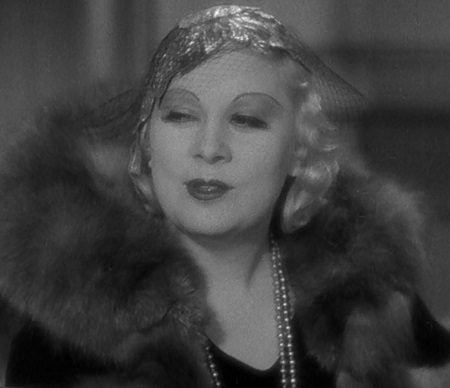
4: Tira (Mae West) from I’m No Angel (1933)


Tira’s running commentary on Ryan Gosling’s abs and what she’d do to his character on the beach would have everyone in the theater howling with laughter. I’d love to hear her tell Barbie to keep relishing that many Kens in her life. And how much I’d anticipate her reaction to the ending!

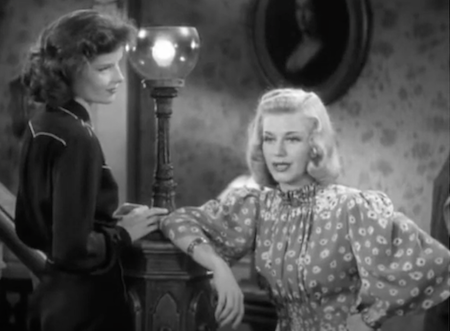
5 & 6: Stage Door (1937) Roommates Terry (Katharine Hepburn) & Jean (Ginger Rogers)


Obviously, I’d want the ENTIRE Footlights Club to accompany me, since there simply is no wittier all-female repartee on film (the famously catty The Women ensemble can’t compare). Don’t believe me? Lucille Ball is in the supporting cast. These sexual-harassment-fighting, badass feminists would be FABULOUS commentators, and I’m so sad I can’t follow their pop culture podcast right now.

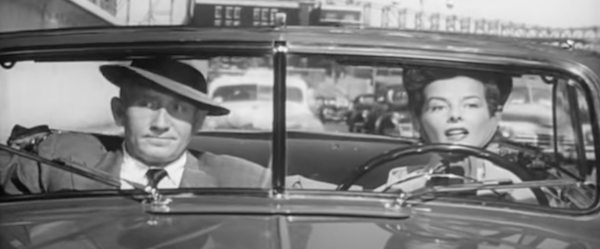
7 & 8: Adam (Spencer Tracy) and Amanda (Katharine Hepburn) from Adam’s Rib (1949)


What could be better than to hear a brilliant couple with perfect dialogue critique the work of screenwriting couple Greta Gerwig and Noah Baumbach? And with the way Amanda just slays in arguing women’s rights in the courtroom, I long to hear what she’d say to those fools in the Mattel boardroom.

There you have it. My eight favorite Barbie movie companions. Who would yours be?

Share
Posted in: 1990-current films, Childfree, Comedies (film), Feminism, Humor, Uncategorized Tagged: Adam's Rib, Barbie movie, Eve Arden, feminism, Ginger Rogers, Katharine Hepburn, Mae West, Melissa McCarthy, Whoopi Goldberg

Sexual Predators in Film: Weinstein, 1937

11/10/2017 by leah@carygrantwonteatyou.com 8 Comments


All this talk of Harvey Weinstein and now Louis C.K. has me thinking about Stage Door (1937), that fascinating film featuring a dormitory of smart-talking women clamoring for parts on the stage, and suffering the sexist overtures of a very slimy producer along the way. The film was produced the same year the words “casting couch” were first published in Variety, according to Matthew Dessem. How the film got made is clear: it’s a feminist anthem against sexual predation, yes, but it’s carefully camouflaged as one of the funniest comedies of its era. Critics praised the witty, fabulous dialogue, ignoring or underplaying the blatant warning directed at female aspirants to stage or screen.

The story begins with Jean Maitland (Ginger Rogers) trying to oust roommate Linda Shaw (Gail Patrick). Jean’s a sarcastic gal from the wrong side of the tracks, too proud and ethical to give into seductions in exchange for parts or furs. Her roommate, however, is an opportunist, and has given up her reputation in exchange for gifts from her wealthy keeper, sables and sapphires she rubs in Jean’s face.
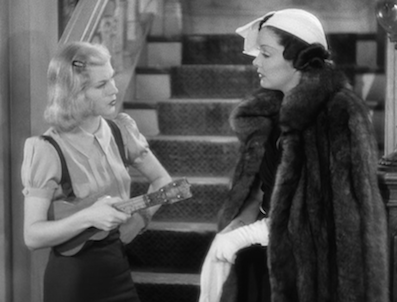

The two separate to achieve peace, but Jean isn’t long for a solitary room; enter her new roommate, heiress Terry (Katharine Hepburn), who wants to star on the stage too. She thinks her peers haven’t made it big yet because they lack ambition. Her slow recognition of her own privilege will become the axis around which the plot revolves. Initially mocked by the dorm residents who resent her for slumming, she does make one friend, Kay Hamilton (Andrea Leeds), the acknowledged talent of the bunch.
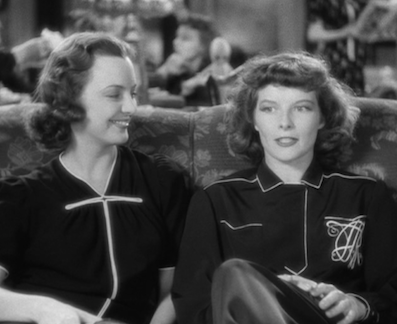

Sympathy and admiration for Kay will lead Terry to understand that her poverty-stricken companions aren’t slackers, but cynics battered by experience. They face obstacles she doesn’t, and have no safety net if they fall.

While Katharine Hepburn’s Terry is learning how the hungry half lives, Jean encounters Linda’s lover, Anthony Powell (Adolphe Menjou), who eyes her in an audition. The fact that finding prey is his goal in being a producer is clear, as when he says to a dancing school director, “I very likely won’t produce anything unless I can find an angel. You haven’t seen any flying around, have you?” After an uncomfortable amount of leering at a dancing pair, he asks about “the little blonde.” His pal obligingly offers the information, of course, and soon Jean has unwittingly taken a job given to her so that Powell has access to her charms. We can see in all of these moves a clear pattern: he’s after/has sex with the girl, she gets the role. Jean’s response when she sees Powell and Linda at the club where she’s been hired says everything:
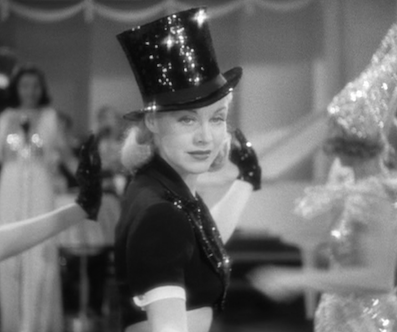

Jean’s barbs at Powell (and at his choice of a mistress) have no effect.
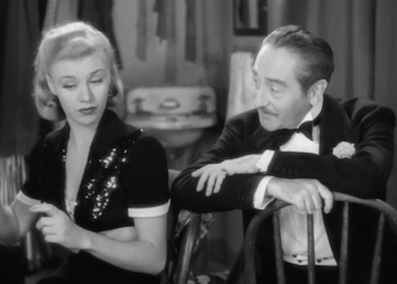

But then Jean decides it’s time to teach her former roommate Linda a lesson, steal her guy. Jean doesn’t plan to have sex with him, but what’ll it hurt her to drink a little champagne, have a meal or two that isn’t stew?

But the bigger reason for dating an undesirable man is evident: If Jean doesn’t play nice, what happens to her job? Her dancing partner, Annie, suggests as much multiple times. When Jean complains about his creepiness, saying she needs a “tin overcoat” as protection, her partner responds, “You should be glad he looked at you at all.”  Jean doesn’t need her partner’s pestering; she knows full well that “…if I don’t go out with him, I’ll probably lose my job, and so will Ann, and I’ll be right back where I started from.”

Of course, Powell has plans of his own: ply Jean with alcohol, tell her a sob story about his life, talk about her name in lights and himself as the reason, and get what he wants. If she isn’t exactly sober enough to consent, what does he care? Creepily, his butler knows just how to disappear. As Linda warns her (to protect her meal ticket), the butler is “deaf,” so she “really won’t have to bother to scream for help.”

Luckily, Jean gets too sad-drunk on the first trip to his penthouse to make his “seduction” fun. He decides she isn’t worth the trouble, but she (too buzzed to catch the drift of their last talk) thinks she’s beginning to like the guy. The next night, when Terry is having an actual business meeting with him in the penthouse (as Weinstein’s actresses thought), Jean charges in.
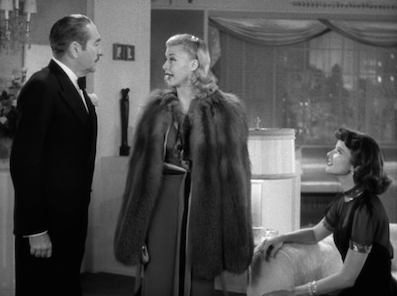

Terry fakes drunkenness and sexiness to keep Jean away from the predator, and it works.
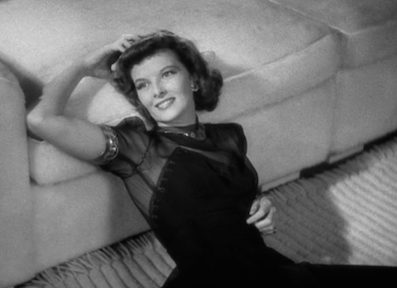

Jean realizes he’s as worthless, creepy, and unfaithful as she initially thought, and leaves. The audience is grateful for Jean’s escape, having seen the disaster Powell leaves in his wake: poor Linda has nothing but trinkets in exchange for sexual favors–gifts not even sizable enough to get her out of that dorm. (How thin is her arrogance!) We know how short Jean’s casting-couch career would be after her favors, given that roving eye. The actress in the story with true talent (Kay) who doesn’t succumb to (and apparently was never offered) the producer’s embraces is literally starving as he puts off her auditions for his dalliances, and will soon reach an even sadder fate.

I kept thinking of Terry when the Weinstein revelations came out, not just because she was brave in the story, but because she could be. Of course, Terry too is the object of male manipulation. The only reason she’s up for a part is her father’s secret meddling (He’s finagled her starring role so that she’ll fail and realize she should come home and marry a rich boy like a good little girl. Nice support, huh?) Although she does have a disgustingly condescending father, Terry is safe. That money gives her power of her own, and she can afford to confront the Anthony Powells of this world. It’s really the lesson of the Weinstein story, isn’t it? Predators go after those with no power, so those with it have to be the ones to stand up. And not just men, but female stars, the Meryl Streeps, who have status of their own and can be immune from predators’ hushing machinations. Several media outlets have justifiably called out the male actors and directors who did nothing about Weinstein, and the employees, like that pal in Stage Door, who abetted the behavior. But I’m disappointed too in the prominent women, those who weren’t personally affected, but could have done something…and didn’t. (Streep claims she didn’t know; even if she didn’t, others with star power did.)

At first I thought that the sexual predator storyline and feminist response to it were from Edna Ferber, a friend of Hepburn’s and the original play’s cowriter. Ferber may have been inspired by memories from childhood, I reasoned. According to Janet Burstein, Ferber learned about men’s less pleasant side in her youth, when everyday wants meant she “had to run a gauntlet of anti-Semitic abuse from adult male loungers, perched on the iron railing at the corner of Main Street, who spat, called her names, and mocked her in Yiddish accents.” That disgust on Jean’s face when she spots the way Powell looks at her? Yeah, that’s written by an author who knows. But the play Ferber cowrote was completely redone for the screen by Morrie Ryskind and Anthony Veiller. And according to some sources, the movie’s verisimilitude has less to do with the screenwriters than with Gregory La Cava, who sought the stories of and the funny dialogue of the women he directed, and encouraged improvisation. But then again, the stories of such men were everywhere, then and now, and needed no writer to reveal the behavior. Anyone watching and listening–as La Cava apparently did–could hear and expose them.

I hope one day this film–and La Cava–get more credit for the kind of heroic feminism we see so rarely on the screen or in life. Eighty years ago, this film exposed the terrible repercussions of sexual predation, and instead of suggesting that victims should be blamed for not standing up–as even current headlines do–put the responsibility squarely on the man at fault. More, it gave a path for correction, by showing who could do something to fight back, and revealing the privilege that might blind him/her to what was really going on. How many films in the decades since have done the same?

Share
Posted in: 1930s films, Comedies (film), Drama (film), Feminism Tagged: classic film, films about sexual predators, Ginger Rogers, Harvey Weinstein, Katharine Hepburn, Louis C.K., Stage Door, the casting couch

A Beauty After All: Katharine Hepburn

05/10/2015 by leah@carygrantwonteatyou.com 17 Comments

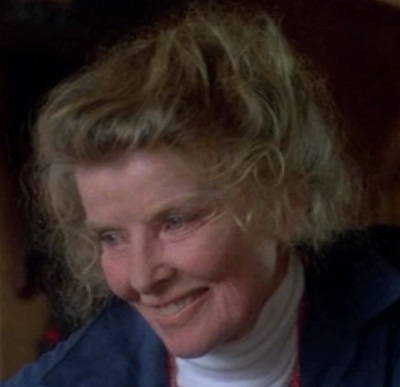
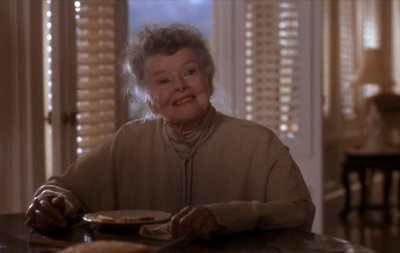
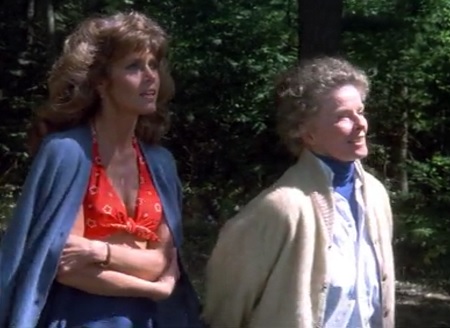
KatharineHepburn-beautyGoldenPond
This is an entry in the Great Katharine Hepburn blogathon. Check out the marvelous posts on her work.

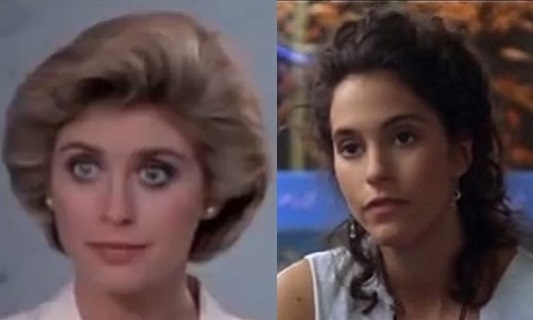
“I’d rather look like Katharine Hepburn at 80,” Aunt Betty said, looking at the screen, “than myself at 30.” I looked at the old lady on the TV, then back at my aunt, confused. Maybe Betty was ripping on her own looks, as she often did. She couldn’t possibly be serious. As a fourteen-year-old who longed to resemble Helen Slater or Jamie Gertz, I found wanting to look thirty incomprehensible. Eighty?

My teenage definition of beauty

My teenage definition of beauty

My aunt smiled at my bafflement. “Just look at that bone structure,” she explained, pointing at Hepburn. “She’s beautiful.”

Bone structure? That wasn’t on my list of attractive characteristics. I examined Hepburn’s face closely to discover what my aunt saw in it, but those wrinkles distracted me. I felt uneasy, as I always did when adults said something I couldn’t understand. I changed the subject.

I didn’t forget it though. Every time I saw Hepburn, the comment returned. She had always looked old to me. Having seen her first in Guess Who’s Coming to Dinner? I could never view her earlier films without seeing the imprint of her older self. Besides, Hepburn was angular, not soft and feminine, like Helen Slater or my earlier womanly ideal, Lynda Carter.

I wasn’t alone, of course, in devaluing Hepburn’s looks. Her employer David O. Selznick had been famous for it. Others, of course, appreciated that bone structure, hence that line about her cheekbones: “The greatest calcium deposits since the White Cliffs of Dover.”

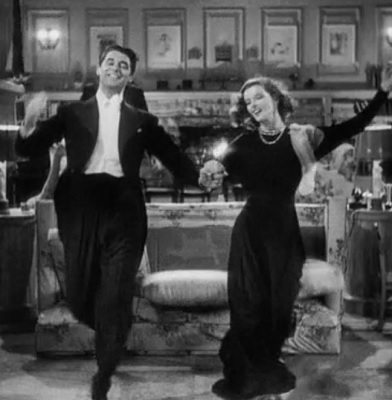
I think I was past thirty myself before I started to understand Betty’s words. Of course, my definition of beauty had expanded by then, but my changing assessment of the actress’s looks was always more complicated than answering pretty or not? First, I noticed Hepburn’s breathless confidence of movement.

GrantandHepburn-Holiday-a
Then there were the clothes that suited her, rather than following any passing fashions. And the parts she chose, roles that could inspire women like me, and like my aunt: athletes, business leaders, pioneers, advocates for women.

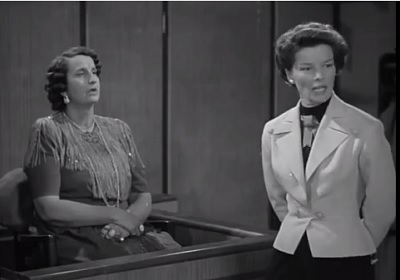
HepburnAdamsRib
She always imbued these characters with vulnerability as well as strength, helping viewers see powerful females as fully rounded human beings.

Hepburn’s real-life actions demonstrated the same moxie she expressed in film: fighting back after the box office poison label, establishing her own terms with The Philadelphia Story, and then using her new power to ensure good salaries for her Woman of the Year screenwriters.

In her private life, Hepburn managed to say what she wanted, avoid whom she wished, have a long-time affair with a married man without compromising her career. With her spirit, it’s not surprising that she continued to star as a romantic lead even in her forties.

Now I see in that erect posture of hers in her final years, those fierce expressions, her pride in a life well lived.

KatharineHepburn-LoveAffair
How many of us can follow our own standards consistently, passionately, for as many years as she did? No wonder my aunt found Katharine Hepburn so breathtaking at 80. I look at her later performances now, and see the same. Imprinted on Katharine’s Hepburn’s face, her carriage, and even her voice is the caliber of life she lived.

Look at her. Isn’t she beautiful?

KatharineHepburn-posturewFonda

Share
Posted in: 1930s films, 1940s films, 1950s films, 1980s films, Blogathons, Feminism, Humor, TV & Pop Culture Tagged: beautiful actresses, Katharine Hepburn, spirit

She Got It Wrong: How Jennifer Jason Leigh Almost Ruined The Hudsucker Proxy

05/28/2014 by leah@carygrantwonteatyou.com 2 Comments

As a fan of classic 30s and 40s films, I delight in the movies that pay tribute to them, and no directors have been more glowing in their homages than the Coen brothers, with their nods to predecessors Preston Sturges, Howard Hawks, Frank Capra, and even Stuart Heisler. Their gloriously fun The Hudsucker Proxy was attacked for lacking “heart,” for being no more than a stylish imitation of favorite classic films.

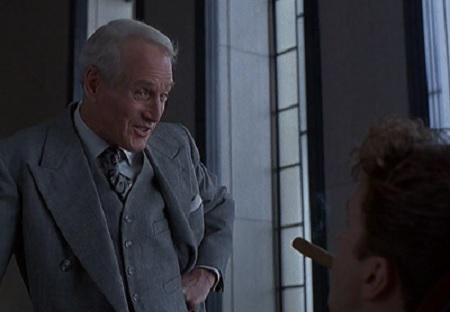
Sidney Mussburger conning Barnes (Robbins)

Sidney Mussburger (Paul Newman) conning Barnes (Robbins)

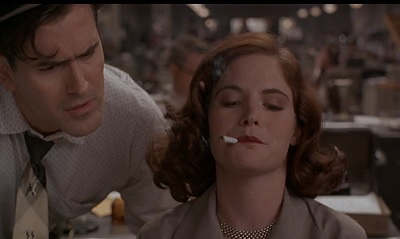
But critics praised Jennifer Jason Leigh’s performance as the typical classic film reporter, noting, as did Todd McCarthy in Variety, that she plays the role “with a Katharine Hepburn accent, Rosalind Russell’s rat-a-tat-tat speed in ‘His Girl Friday’ and Stanwyck attitude….” Occasionally, reviewers admitted that Leigh’s character, Amy Archer, wasn’t “quite right,” as McCarthy did, but they never attributed the film’s failure to the actress.

Leigh in full-on caricature mode

Leigh in full-on caricature mode

Yet to me, Leigh’s performance is the one thing that takes away from my enjoyment of this exuberant movie. Paul Newman is marvelous as the bad guy (Sidney Mussburger). Tim Robbins is terrific as the naïve Hoosier (Norville Barnes) who comes to work in the big city. His supposed stupidity makes those trying to lower Hudsucker’s stock prices quickly usher him into the presidency, yet his creativity manages to foil their plot. Archer (Leigh) plans to expose him as an idiot, much like Saunders (Jean Arthur) before her in Mr. Smith Goes to Washington.

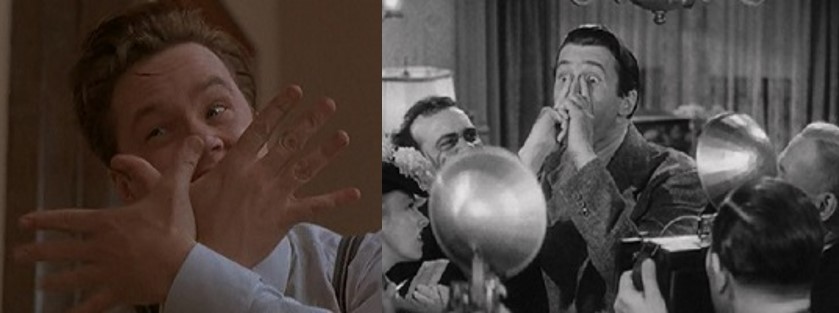
Barnes singing school song; Stewart showing a bird call

Barnes’ school song; Smith’s (Jimmy Stewart’s) bird call

But Archer’s later guilt at this character assassination and developing feelings for Barnes are utterly unconvincing, largely because her whole performance is.

One gets the feeling that Leigh only watched the films in which Stanwyck, Hepburn, and Russell were speaking at that “rat-a-tat-tat” clip and therefore missed the obvious: these actresses didn’t talk at such speeds in most of their films. They simply imagined themselves the kind of women who would be thrilled by breaking stories. Their words nearly run together not just due to the scripts, but because their characters are excited.

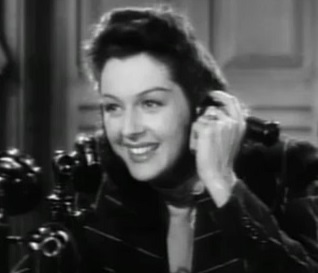
Russell sharing a great lead with editor and ex Walter Burns (Cary Grant)

Russell sharing a great lead

Leigh takes on the inflections and even some of the gestures of these actresses, but she becomes a mimicry of them rather than a believable character because the passion that infused the others’ performances is entirely absent in Leigh’s.

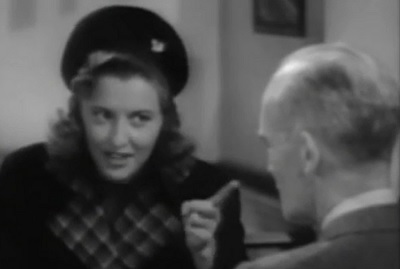
Stanwyck mid pitch

Stanwyck mid pitch

Hepburn, Russell, and Stanwyck come across as born reporters; their confidence makes them thrilling to watch: Hepburn’s assurance in mixing with dignitaries in Woman of the Year, Stanwyck’s daring plan to manipulate her employer in Meet John Doe, Russell’s masterful interview in His Girl Friday.

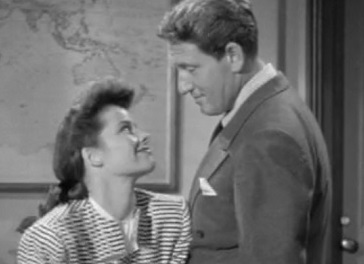
Hepburn flirting in her office after her male secretary ushers in her crush (Spencer Tracy)

Hepburn in control in her office

Archer, in contrast, is clearly aping rather than feeling confidence, and because Leigh plays her as shrewish rather than cynical, her quick transition into affection for Barnes merely looks like bad acting, which is surprising given the caliber of most of her work.

Archer falling for Barnes

Archer falling for Barnes

Admittedly, the Coens made Archer terribly insecure, a woman whose sole joy is one upping others with her Pulitzer. This was a serious mistake. How could the Coens, Hawks enthusiasts, have missed that the overlapping dialogue they’ve borrowed from His Girl Friday was not meant to be an affectation, as Archer’s is, but a reflection of the characters’ energy and enthusiasm? The film centers around Cary Grant’s excitement about being a newspaperman, and his various ploys to prevent Russell from leaving the business stem from his knowledge that she can’t resist it any more than he can.

The two films, in fact, have much in common: they’re all about the joy of the con—Barnes, in convincing the company he’s a fool (unwittingly), Walter Burns (Grant), in keeping others so occupied they miss his hilarious ruses. Both movies are a blast to watch. But The Hudsucker Proxy bombed at the box office, and I can’t help but blame Leigh, whose Archer is a drag to watch, and whose union with Barnes I rooted against. What does it matter if an actress nails the shell, if she loses the soul?

Share
Posted in: 1940s films, 1990-current films, Comedies (film), Romantic Comedies (film) Tagged: Barbara Stanwyck, Coen brothers, His Girl Friday, Jennifer Jason Leigh, Katharine Hepburn, Rosalind Russell, The Hudsucker Proxy

State of the Union: the Wish Fulfillment Edition

05/12/2014 by leah@carygrantwonteatyou.com 11 Comments

This post is part of The Great Katharine Hepburn blogathon. Be sure to check out the other entries!

The political satire in 1948’s State of the Union feels disturbingly fresh. Replace a phrase or two, and presidential nominee Grant Matthews’ (Spencer Tracy’s) speeches on the “working man” could fit into the Occupy Wall Street movement.

The film’s title, however, refers to not only what’s rotten in the state of the nation, but in the marriage between Grant (Tracy) and Mary Matthews (Katharine Hepburn).

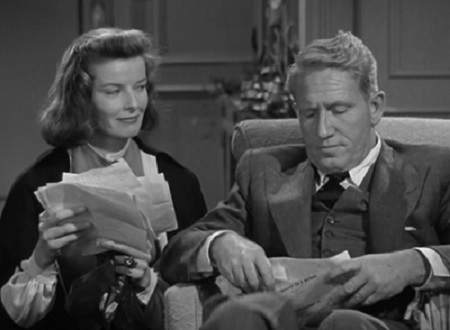
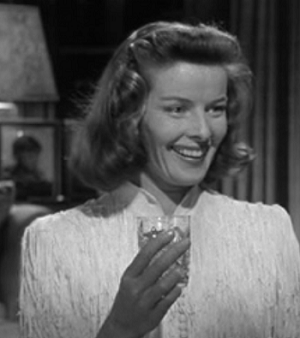
Mary and Grant Matthews

Mary and Grant Matthews

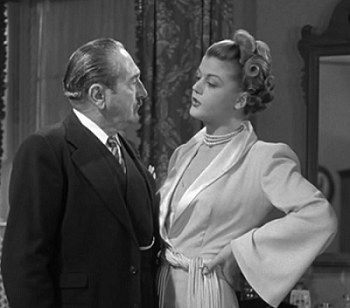
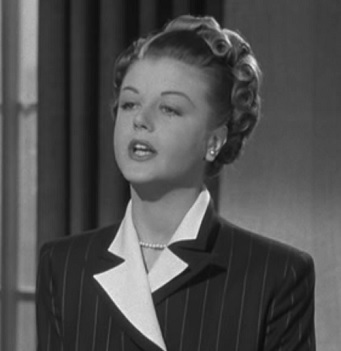
Sexy newspaper publisher Kay Thorndyke (Angela Lansbury) has seduced Grant with the aim of pitting him against her dead father’s political rivals.

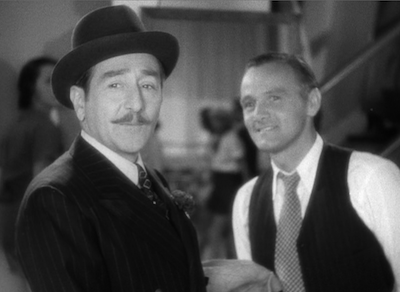
Kay and fellow schemer (Menjou)

Kay and fellow schemer (Adolphe Menjou)

Mary (Hepburn) agrees to pretend her marriage is strong for the sake of the campaign, as she believes her husband a “great man,” which, if he ever were, he ceases to be by the film’s close. The movie traces his idealism crumbling under the necessity of playing the political game, thanks, in no small part, to Kay’s machinations.

The dialogue is as sharp and cynical as you would expect in a Frank Capra film. My favorite comment is when Mary snaps that the slimy politician under Kay’s supervision (Adolphe Menjou) should be happy about what’s left of her own naiveté: “You politicians have remained professionals only because the voters have remained amateurs.”

The central problem of the film is how unsympathetic her husband Grant is. A self-made man with his “little guy” days far behind him, he pompously lectures businessmen and union leaders about how that little guy should be treated. Capra treats him as if he’s one of his innocents among the corrupt, like Mr. Deeds or Jefferson Smith, and it doesn’t work–Grant begins as a heel, and ends as a worse one.

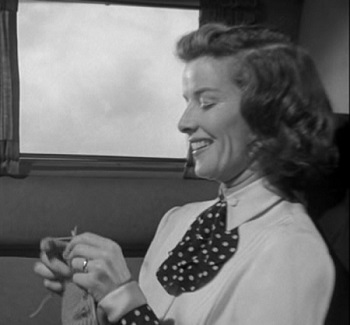
And it’s hard to forget he’s betrayed a wife so cool she calmly knits while he’s doing acrobatics with his plane, handing campaign manager (Van Johnson) her bag to puke in.

Mary during dangerous aerial acrobatics

Mary during dangerous aerial acrobatics

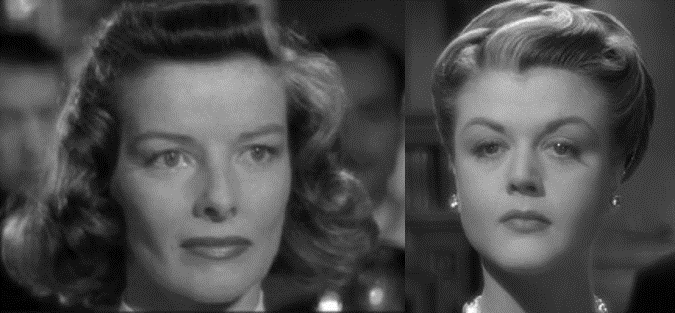
Luckily, we can ignore Grant and his speechifying and pay attention to the true delight of the film: Mary and Kay facing off against one another—Mary because she loves her husband, and Kay because she fears Grant will be swayed by his wife’s morals and thus lose the election.

The two real stars

The two real stars

Just listen to how they talk about each other:

Kay: “That woman’s got to [Grant]. She’s been feeding him that to-thine-own-self-be-true diet.”

Mary: “If this weren’t my house, I could tell her someplace she has to go to…” or “…I think Kay’d be more comfortable in a kennel.”

When Mary has to invite Kay to her house to cover up the affair, she tries to avoid doing what she apparently did once before: getting plastered and throwing Kay out. This is the moment in the film when I wanted to shake Capra. That’s the scene you left out???

We do get treated to seeing Mary drunk in defiance of orders from Kay and crew.

Mary rebeling

Mary rebelling

But I kept wishing for a The Women-style face off; the heroines are so powerful and interesting that in comparison, the men in the film (with the exception of Johnson and Mary’s butler) seem a waste of screen time. Luckily, the women are so fun to watch that they revive and redeem the film.

At one point Grant’s barber shares his wife’s conviction that a woman should be president. “That’s silly,” responds Mary. “No woman could ever run for president. She’d have to admit she was over 35.”

Though the quip is funny, no line coming out of Hepburn’s mouth was ever less convincing. Those who know anything about Hepburn realize she had confidence to spare, felt comfortable aging in front of the camera, and would have run for any office if she’d felt like it. Mary clearly has Hepburn’s spunk, and after all, a woman had run for president more than 70 years before this film, another woman with considerable moxie.

Would Mary have won? Of course not. But what speeches she would have written!

And for Capra not to give Kay more time in the film is criminal. Watch her command her editors to publish filth about all of the Republican candidates so that their united hatred for one another will make them choose her man (Grant) at the convention. That icy stare you recognize from The Manchurian Candidate (1962)? Yeah, this is a woman who could make it to the White House today for sure. She’s a predatory villain as thrilling to watch as Claire Underwood (Robin Wright) in House of Cards.

Kay commanding the troops

Kay commanding the troops

It’s probably enough that a film in 1948 starred such strong actresses playing powerful roles. I shouldn’t wish for what could have been, these two really facing off against each other, maybe even running against each other for office.

But what a film that would have been.

Share
Posted in: 1940s films, Blogathons, Drama (film), Feminism Tagged: Angela Lansbury, feminists, Katharine Hepburn, political satire, Spencer Tracy

Recent Posts

  • 100 Years Later, Still Scary: Dr. Caligari
  • Escaping Out of the Past (1947)
  • A Weeper for Those Who Love Jerks
  • Thank You, Academy, for Not Infuriating Me
  • Challengers (2024) Is a Bad Movie

Subscribe to Blog via Email

Enter your email address to subscribe to this blog and receive notifications of new posts by email.

Categories

  • 1920s films
  • 1930s films
  • 1940s films
  • 1950s films
  • 1960s films
  • 1970s films
  • 1980s films
  • 1990-current films
  • 2020s films
  • Action & Sports Films
  • Anti-Romance films
  • Blogathons
  • Childfree
  • Comedies (film)
  • Drama (film)
  • Feminism
  • Femme fatales
  • Film Noir/Crime/Thriller & Mystery
  • Gloriously Silly Scenes
  • Horror
  • Humor
  • Mae West Moments
  • Musicals and dancing films
  • Oscars
  • Random
  • Romance (films)
  • Romantic Comedies (film)
  • The Moment I Fell for
  • Turn My Sister into Classic Movie Fan
  • TV & Pop Culture
  • Uncategorized
Share
Classic Movie Blog Hub Member

Recent Comments

  • leah@carygrantwonteatyou.com on Meg Ryan’s Fate Foretold in Joe Versus the Volcano
  • Ryan on Meg Ryan’s Fate Foretold in Joe Versus the Volcano
  • leah@carygrantwonteatyou.com on 100 Years Later, Still Scary: Dr. Caligari
  • The Classic Movie Muse on 100 Years Later, Still Scary: Dr. Caligari
  • leah@carygrantwonteatyou.com on 100 Years Later, Still Scary: Dr. Caligari

Archives

  • November 2025
  • September 2025
  • May 2025
  • March 2025
  • January 2025
  • November 2024
  • August 2024
  • July 2024
  • May 2024
  • March 2024
  • February 2024
  • December 2023
  • November 2023
  • October 2023
  • September 2023
  • August 2023
  • July 2023
  • May 2023
  • April 2023
  • March 2023
  • January 2023
  • December 2022
  • November 2022
  • September 2022
  • July 2022
  • May 2022
  • April 2022
  • March 2022
  • February 2022
  • October 2021
  • September 2021
  • April 2021
  • March 2021
  • February 2021
  • December 2020
  • October 2020
  • September 2020
  • July 2020
  • May 2020
  • April 2020
  • March 2020
  • February 2020
  • December 2019
  • October 2019
  • September 2019
  • June 2019
  • May 2019
  • April 2019
  • February 2019
  • January 2019
  • November 2018
  • September 2018
  • July 2018
  • June 2018
  • May 2018
  • April 2018
  • March 2018
  • February 2018
  • January 2018
  • November 2017
  • September 2017
  • August 2017
  • July 2017
  • June 2017
  • May 2017
  • April 2017
  • March 2017
  • February 2017
  • January 2017
  • December 2016
  • November 2016
  • October 2016
  • August 2016
  • July 2016
  • June 2016
  • May 2016
  • April 2016
  • March 2016
  • February 2016
  • January 2016
  • December 2015
  • November 2015
  • October 2015
  • September 2015
  • August 2015
  • July 2015
  • June 2015
  • May 2015
  • April 2015
  • March 2015
  • February 2015
  • January 2015
  • December 2014
  • November 2014
  • October 2014
  • September 2014
  • August 2014
  • July 2014
  • June 2014
  • May 2014
  • April 2014
  • March 2014
  • February 2014
  • January 2014

Meta

  • Log in
  • Entries feed
  • Comments feed
  • WordPress.org

Copyright © 2025 Cary Grant Won't Eat You.

Church WordPress Theme by themehall.com