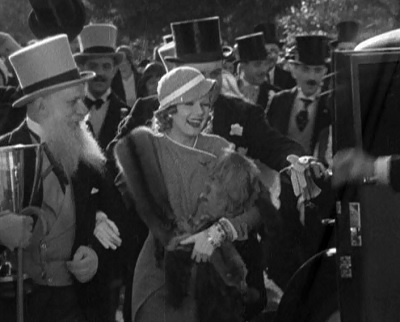
Cary Grant Won't Eat You

Classic movies for phobics

  • About
  • eBooks
  • Previous Blogathons
Classic movies for phobics

Jean Harlow

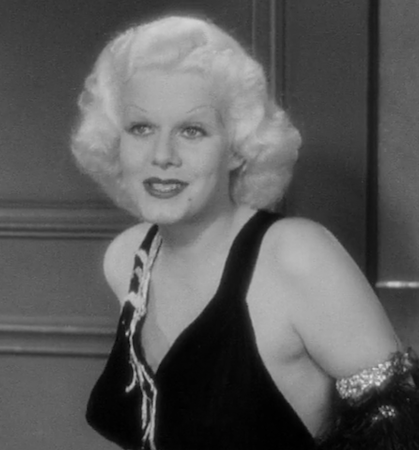
When Funny People Die: Jean Harlow
09/30/2019 by leah@carygrantwonteatyou.com 2 Comments

I’ve been thinking about how hard it is to grieve the loss of a funny person. The grim process of American funerals—the still church/mortuary, the solemn rituals, and the steady tears—can feel inappropriate when mourning the loss of someone who enjoyed breaking conventions, who made you bend over laughing when you were supposed to be acting with decorum.

I attended two parties recently to celebrate the lives of such funny individuals, complete with amusing anecdotes and the shared company of those who’d loved them. These memorials felt so fitting, so much better than typical funerals for such amusing personalities, that I returned to my home thinking of other lost comedians and comediennes, especially those whose lives are so often described with the “funny but died tragically” designation. And it struck me that Jean Harlow was someone who deserved the kind of festive send-off I’d just attended, a woman who relished breaking the rules of others on and off screen (especially prim others) in such a breathtakingly funny way.  So I watched The Girl from Missouri (1934), the lesser known of two entertaining gold digger tributes originally penned by Anita Loos, to celebrate her.
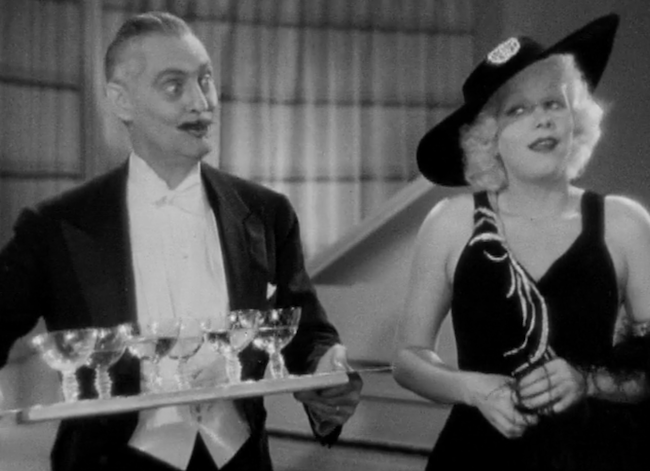
Harlow stars as Edith Chapman, a young woman eager to escape the clutches of the family entertainment/bar business, which is full of men trying to keep her from staying “straight.” Marriage to a millionaire in New York is her plan, and she won’t have sex until she gets her goal, which she brazenly sets about doing. Her very transparent efforts first amuse, then mildly annoy the wealthy self-made businessman, Thomas Paige (Lionel Barrymore)—that is, until her attention turns to his son, Thomas Paige, Jr. (Franchot Tone). Paige Sr. wants Junior to be courted by the upper-crust society he aspires to join, not for his progeny to be dismissed as the target of a silly gold digger. Predictably, Papa Paige is soon plotting against Edith. But she, like the actress who brought her to life, doesn’t take that kind of treatment passively….

Like many of Harlow’s characters, Edith is goofy and blatant and oblivious to any kind of etiquette or class mores. But there’s something about Harlow…you just can’t dismiss her characters. (And you can’t pay attention to anyone else—a Barrymore, Clark Gable, Spencer Tracy, even a Powell/Loy combo—when she’s onscreen.) Her characters usually dress in frilly, showy clothes, and their words and actions are designed for punch lines at their expense. Yet the deep humanity, sincerity, daring, and lovability of Harlow’s heroines make you adore them all the same, root for them even when they don’t deserve it (i.e., Red-Headed Woman). 

And Edith deserves fair treatment and compassion. She even manages to make a Franchot Tone playboy character palatable to me. Edith begs Paige, Jr. not to toy with her, confesses that he could make her sacrifice the virtue she’s worked so hard to protect, but pleads that he let her go instead.
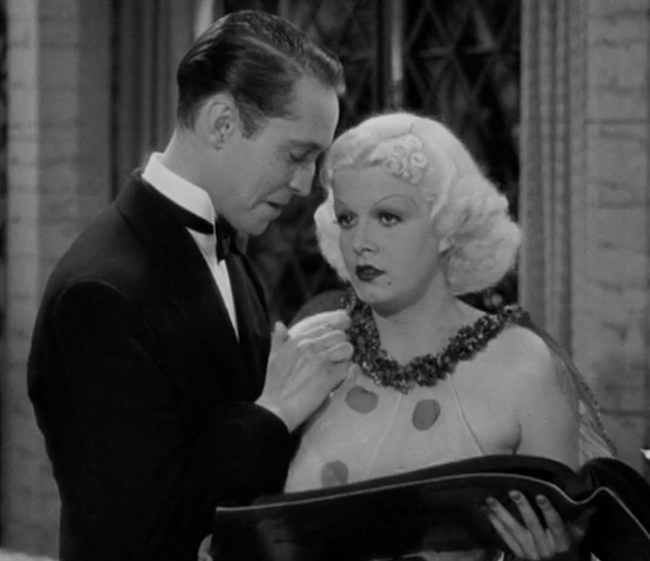
Paige, Jr.’s reversal of expression, his contrite response to her words is really all of us: Don’t take this awesome woman for granted. We won’t have her for very long.

I didn’t expect to catch my breath and feel for a Harlow character’s pain, but The Girl from Missouri caught me offguard, and that made me smile. Wow, Harlow can get to me. I did expect to laugh often as I watched, and of course I did. There are some cute turns by others–Paige Sr.’s teasing, Edith’s sex-obsessed sidekick’s (Patsy Kelly’s) flirtations. But why pay attention to anyone else? Harlow is MARVELOUS—with every preening smile, with every stomp/bustle, with every huff (and huffs there are a-plenty with Harlow), you can’t stop smiling. And you can’t stop thinking, What a joy it is to be in her company. I’ll take every second I can get.

And so I laughed. And expressed a silent thank you for the gifts she’d given me. And that, to me, was the perfect send-off.


Share
Posted in: 1930s films, Comedies (film), Humor, Romantic Comedies (film) Tagged: Franchot Tone, Jean Harlow, Lionel Barrymore, The Girl from Missouri

The Moment I Fell for Jean Harlow

07/16/2014 by leah@carygrantwonteatyou.com 8 Comments

Jean Harlow
I’ll admit that I didn’t get the appeal of Jean Harlow initially. I originally saw her in a portion of the film Bombshell, and thought it dull and her annoying. I couldn’t understand why she was a sex symbol, the Marilyn Monroe of the 30s.  It took a lackluster movie in which she was riveting to change my mind.

Red-Headed Woman (1932) is one of those pre-code films in which a loose woman doesn’t pay the penalty for her behavior. Harlow is Lil (also known as Red), a secretary who seduces her married boss, Bill Legendre Jr. (Chester Morris), to make her way up in the world. His wife, Irene (Leila Hyams), is given the tired you-should-have-forgiven-him-instead-of-leaving-him-the-prey-of-that-hussy argument when she divorces him. Usually, this argument infuriates me, but in this case, I had some sympathy for it: Bill is such a sucker that it’s hard not to pity him. How could he succeed in business when he falls so easily for a woman’s wiles? (In today’s corporate world, he’d be bankrupt in a week.)

After the divorce, Lil (Harlow) marries Bill and then trades him in for a richer model, just as she dropped her bootlegger boyfriend at the start of the film to pursue Bill. It’s this single-minded self-interest that makes Lil such a wonderful anti-heroine, and Harlow so good at playing her. The actress is just so hilarious when conveying a conniving mind in action.

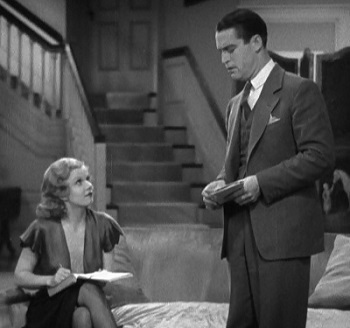
The story begins with Lil’s bold plan to go over to Bill’s house in a revealing outfit while his wife is away. She’s pretending to help with his dictation, but obviously planning on sex.

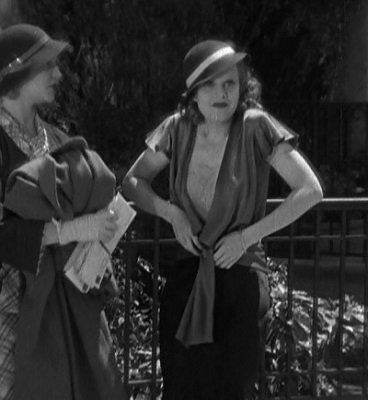
First, she gussies herself up in readiness for her scheme.

Harlowgettingready
Her pal, Sally (Una Merkel), is so convinced the plot will fail that she says she’ll wait outside Bill’s door for Lil; the first sign that Lil’s plans have succeeded is when we see Sally still outside in the dark, uncomfortably rising from her seat.

Lil has many seduction methods at her disposal, all of which she needs, since her boss is in love with his wife. Something about the transparency of her attempts, and lack of any hesitation, cracked me up so much that Harlow had won me just a minute into this routine, long before her Lil got to Bill.

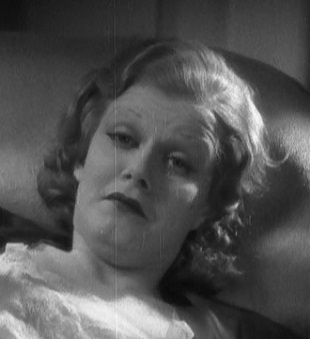
Lil tries some pouting…

Harlowpouting
Shows a little leg….

harlowshowingleg
Sobs a bit…

Harlowfakesobs
Pretends she will take his initial rebuffs in stride…

Harlowandhersap
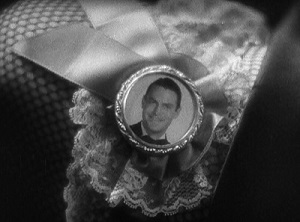
Feigns a longstanding affection for him, even going so far as to pin a photo of him to her garter (Her words when she was planning this ruse: “Well, it’ll get me more there than it will hanging on the wall”).

Harlowleg
Reveals her scheming ways when he’s not looking…

Harlowscheming
And finally, in just going for the direct approach, gets what she wants:

Harlowsuccess
Throughout the film, Harlow repeats a cycle of the techniques in Lil’s repertoire: baby talk, tears, denials, lies, threats, kisses. The character’s faux sweet veneer is so easily discarded for her brassy, true self; as in other Harlow roles; and it’s so much fun to watch the transition. Who wouldn’t want to see this shift again, and again, and again, especially in much finer films, with better-written parts? (My favorite may be the put-upon fiancée in Libeled Lady—I could watch Harlow marching toward jilter Spencer Tracy in that wedding dress all day long.)

As for the sex symbol status I didn’t understand? Ummm, I don’t know what to say for myself there. It’s about as hard to miss Harlow’s blazing sensuality as this predecessor’s. All you have to do is watch her posing, walking, or smiling for a few minutes, and you understand. There’s a reason Lil is confident she’ll win Bill and every other man she encounters. She just never seems to understand why her irresistibility doesn’t translate into success at the country club, a naiveté Harlow would repeat in other film roles as well–as if other wives would want her anywhere near their husbands.

As for Lil, once she decides Bill, the country club, and the town are too small for her, she moves on to richer grounds, ultimately hooking an old French sugar daddy.

Harolwclosefilm
She’s won a trophy for her thoroughbred, is flooded by admirers, and is still holding onto her young lover in full view of her meal ticket at the movie’s close. Of course. How else could this film possibly end?

This is the third in a monthly series of The Moment I Fell for posts…Hope you’ll share some of your favorites!

Share
Posted in: 1930s films, Feminism, Femme fatales, Romantic Comedies (film), The Moment I Fell for Tagged: Jean Harlow

Recent Posts

  • 100 Years Later, Still Scary: Dr. Caligari
  • Escaping Out of the Past (1947)
  • A Weeper for Those Who Love Jerks
  • Thank You, Academy, for Not Infuriating Me
  • Challengers (2024) Is a Bad Movie

Subscribe to Blog via Email

Enter your email address to subscribe to this blog and receive notifications of new posts by email.

Categories

  • 1920s films
  • 1930s films
  • 1940s films
  • 1950s films
  • 1960s films
  • 1970s films
  • 1980s films
  • 1990-current films
  • 2020s films
  • Action & Sports Films
  • Anti-Romance films
  • Blogathons
  • Childfree
  • Comedies (film)
  • Drama (film)
  • Feminism
  • Femme fatales
  • Film Noir/Crime/Thriller & Mystery
  • Gloriously Silly Scenes
  • Horror
  • Humor
  • Mae West Moments
  • Musicals and dancing films
  • Oscars
  • Random
  • Romance (films)
  • Romantic Comedies (film)
  • The Moment I Fell for
  • Turn My Sister into Classic Movie Fan
  • TV & Pop Culture
  • Uncategorized
Share
Classic Movie Blog Hub Member

Recent Comments

  • leah@carygrantwonteatyou.com on Meg Ryan’s Fate Foretold in Joe Versus the Volcano
  • Ryan on Meg Ryan’s Fate Foretold in Joe Versus the Volcano
  • leah@carygrantwonteatyou.com on 100 Years Later, Still Scary: Dr. Caligari
  • The Classic Movie Muse on 100 Years Later, Still Scary: Dr. Caligari
  • leah@carygrantwonteatyou.com on 100 Years Later, Still Scary: Dr. Caligari

Archives

  • November 2025
  • September 2025
  • May 2025
  • March 2025
  • January 2025
  • November 2024
  • August 2024
  • July 2024
  • May 2024
  • March 2024
  • February 2024
  • December 2023
  • November 2023
  • October 2023
  • September 2023
  • August 2023
  • July 2023
  • May 2023
  • April 2023
  • March 2023
  • January 2023
  • December 2022
  • November 2022
  • September 2022
  • July 2022
  • May 2022
  • April 2022
  • March 2022
  • February 2022
  • October 2021
  • September 2021
  • April 2021
  • March 2021
  • February 2021
  • December 2020
  • October 2020
  • September 2020
  • July 2020
  • May 2020
  • April 2020
  • March 2020
  • February 2020
  • December 2019
  • October 2019
  • September 2019
  • June 2019
  • May 2019
  • April 2019
  • February 2019
  • January 2019
  • November 2018
  • September 2018
  • July 2018
  • June 2018
  • May 2018
  • April 2018
  • March 2018
  • February 2018
  • January 2018
  • November 2017
  • September 2017
  • August 2017
  • July 2017
  • June 2017
  • May 2017
  • April 2017
  • March 2017
  • February 2017
  • January 2017
  • December 2016
  • November 2016
  • October 2016
  • August 2016
  • July 2016
  • June 2016
  • May 2016
  • April 2016
  • March 2016
  • February 2016
  • January 2016
  • December 2015
  • November 2015
  • October 2015
  • September 2015
  • August 2015
  • July 2015
  • June 2015
  • May 2015
  • April 2015
  • March 2015
  • February 2015
  • January 2015
  • December 2014
  • November 2014
  • October 2014
  • September 2014
  • August 2014
  • July 2014
  • June 2014
  • May 2014
  • April 2014
  • March 2014
  • February 2014
  • January 2014

Meta

  • Log in
  • Entries feed
  • Comments feed
  • WordPress.org

Copyright © 2025 Cary Grant Won't Eat You.

Church WordPress Theme by themehall.com