Cary Grant Won't Eat You

Classic movies for phobics

  • About
  • eBooks
  • Previous Blogathons
Classic movies for phobics

Jean Arthur

Who Is the Biggest Charmer?
07/27/2022 by leah@carygrantwonteatyou.com 4 Comments

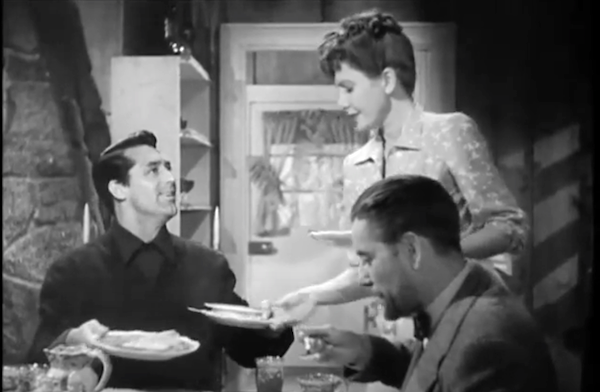
The Talk of the Town (1942) is a joyous experience. It features a romantic triangle between three actors who are absurdly charming: Jean Arthur, Cary Grant, and Ronald Colman. It’s a bit of an odd tale, but frankly, with these three people in the mix, who cares about plot?

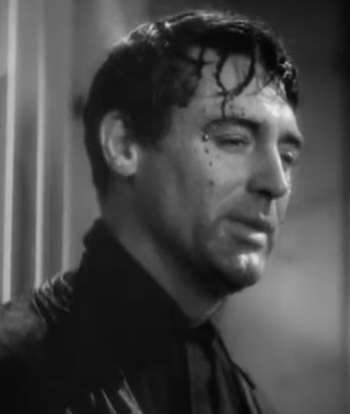
You can’t watch Cary Grant’s smirking, musing, or flirting….
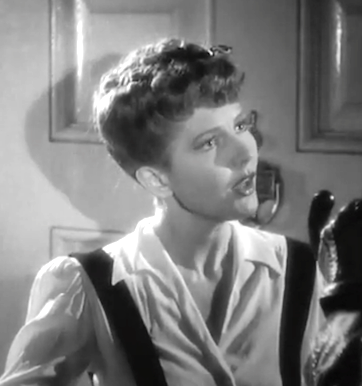
Hear Jean Arthur’s lovely tweety voice…
Or witness the sweetness of Colman’s subtle smile….

without giving into them, can you?

The only question is which of the three is the MOST charming.

Certain actors carry a patina of their roles with them. To me, Julia Roberts, Tom Hanks, Al Pacino, Robert De Niro, and Denzel Washington are all like this. Try to watch Tom Hanks without the echoing sweetness of Josh (Big) and his other early comedies winning you over; I can’t make it through half a minute of any of his movies without already loving the guy.

But it’s not often that THREE actors this charming share the screen, as they do in The Talk of the Town.
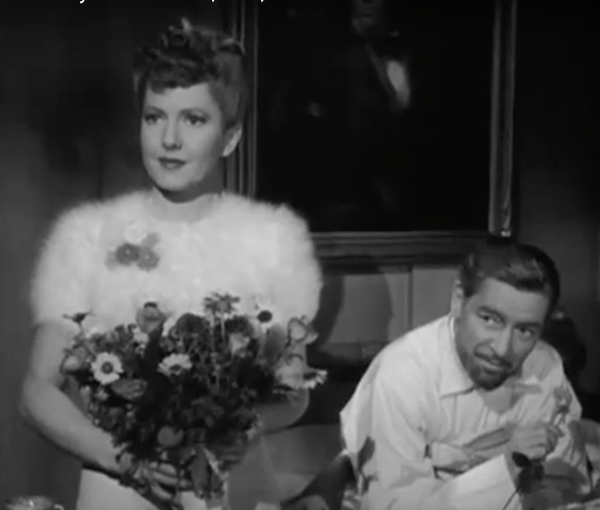
The story is a peculiar mishmash. Jean Arthur’s Nora, a teacher, is renting her house to a renowned legal scholar, Professor Michael Lightcap (Colman). Her old school chum, Leopold, is on the run from the law, accused of starting a fire in a mill that killed his foreman. He hides in her home right as Lightcap arrives and pretends to be her gardener to fool the new resident.

Lightcap may be the only person who can save Leopold’s life. The mill’s owner is egging on a mob to kill Leopold for his alleged crime. The fugitive, annoyed by Lightcap’s cold legal logic, moves Lightcap with his passion and firebrandy ways (couldn’t resist), which are what made the mill owner hate him to begin with. Nora finagles a job as a secretary to Lightcap to protect Leopold from being discovered by the mob–or by Lightcap.

A triangle really is the right word, as Nora is impressed by Lightcap’s prestige, intelligence, and ethics, and torn between these new feelings and her old affection for Leopold.
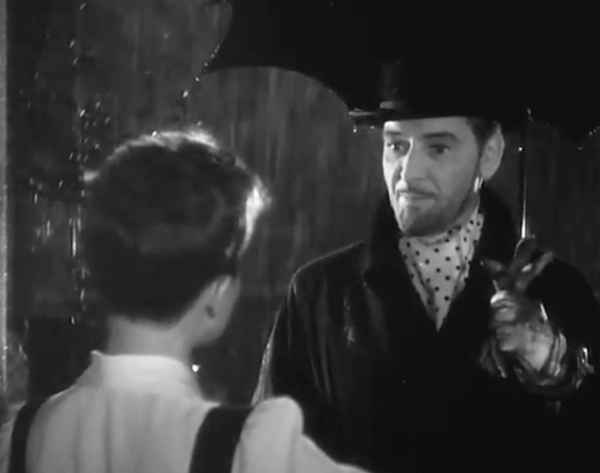
Yet it would be a mistake to leave Leopold and Lightcap out of the mix: the film is as much about intellectual as romantic affection. Whether Lightcap is most drawn to Leopold or Nora is a question that never gets answered.
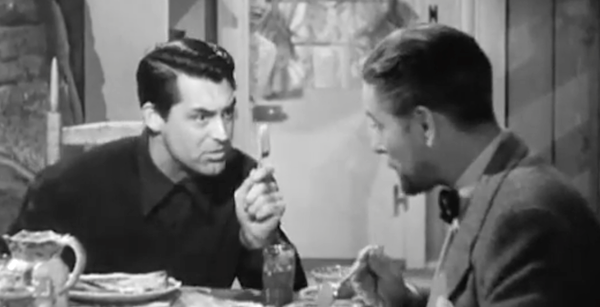
And who can blame him? This is a charm off, my friends, and in every corner of this Isosceles is an actor—and by extension, character–you can’t help watching. Let’s dig a little deeper:

Jean Arthur

Whether she’s wisecracking as Saunders (Mr. Smith Goes to Washington), flirting without realizing it (The More, the Merrier), baffled (Easy Living), or earnest (Shane), Jean Arthur is adorable. I love seeing her in oversized PJs.
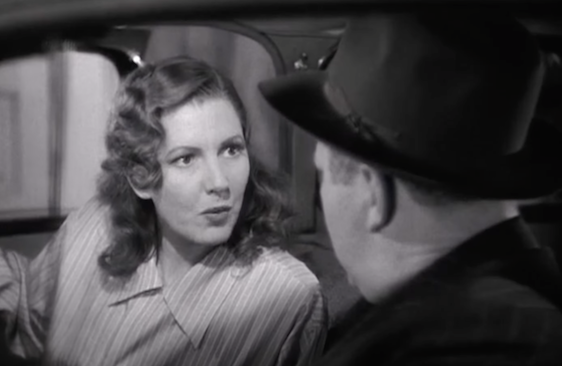
The look somehow captures her appeal–the way people underestimate her until that feisty, birdlike voice and the frustration she evokes so well (she should be annoying but somehow never is) draw you in and win you over.

Ronald Colman

I fell for Ronald Colman in Random Harvest, and woe betide the woman who ever watches that film: his “forgotten man” will haunt you. With a voice nearly as memorable as Arthur’s, the broken veteran in Random Harvest moves seamlessly from his shaken condition to the debonair man of consequence. He is equally convincing in both versions of himself. His gruffness in The Talk of the Town‘s start, therefore, never fools me for a second. This, my friends, is a sweetheart, make no mistake–and thus he proves to be. These two films came out in the same year, so perhaps others didn’t have this early love affair with him. But watch him in anything, and you fall for the man.
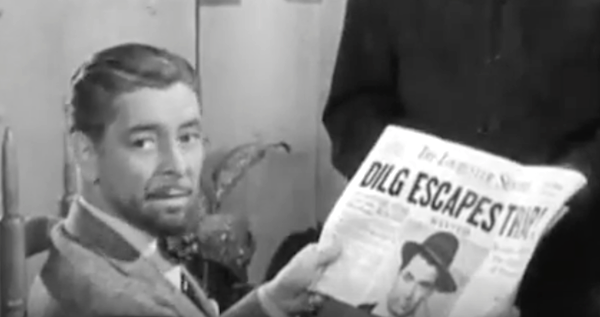
Cary Grant

Cary Grant, of course, is the most obvious charmer–playing, as he often admitted himself, the part of Cary Grant his whole life. He is never fully convincing as the local troublemaker driven by his ideals–until he questions his own judgment due to his admiration for Lightcap.

Cary Grant often seems to be in reflective mode, and his torn feelings about Lightcap play over that gorgeous face. But then, we are on his side as soon as we recognize that face. This is the slightly disreputable version of the actor you can’t help but adore, the rabble rouser with a naughty streak, with a pinch of The Awful Truth and Topper. You’re never convinced this is the Cary Grant of Suspicion, though he is accused of murder. Like with Arthur, you can’t ever count him out, even when he’s romantically (and ethically) paired against a potential Supreme Court justice, Lightcap.

So who do YOU think the winner of this charm-off would be, however it may end in the film? I leave it to you to decide.

Share
Posted in: 1940s films, Comedies (film), Romantic Comedies (film), Uncategorized Tagged: Cary Grant, Jean Arthur, Ronald Colman, The Talk of the Town

Classic Movies with Awesomely Silly Plots

05/25/2020 by leah@carygrantwonteatyou.com 16 Comments
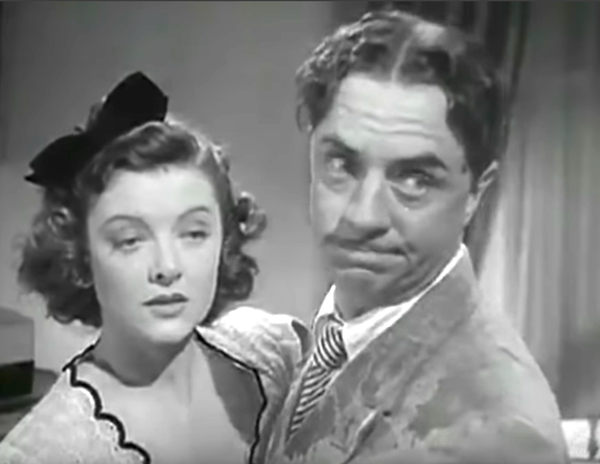
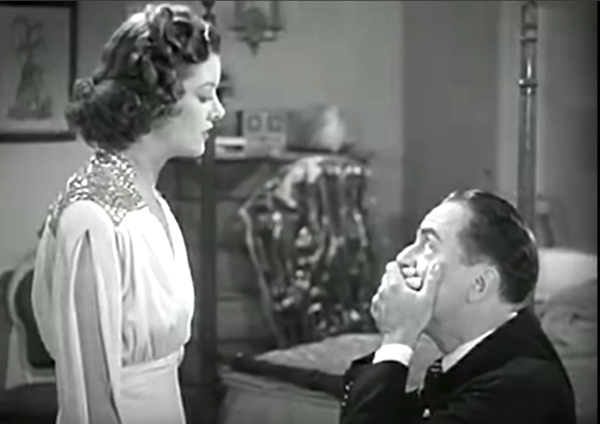
Picture of Myrna Loy and William Powell in I Love You Again

It’s not unusual to find a film with a strikingly ridiculous plot. I spent many Friday nights as a teen watching USA Up All Night (hosted by Gilbert Godfrey). How I loved taking in gloriously dumb films, hour after hour.

But to find movies with such plots that are genuinely good? That’s a whole other level of enjoyment. Now add 80 years or so, and the film is STILL GOOD, STILL FUNNY? That’s a comedic masterpiece.

Last Tuesday I wrote a post on feel-good silly films, and rated them according to their degree of silliness. (In a homage to Spinal Tap, I let the ratings go to eleven rather than ten.) So today, I’m going to list five films with plots so absurd they deserve that 11 silliness quotient fully. And not coincidentally, these films are a blast to watch. In no particular order:

The Palm Beach Story (1942)

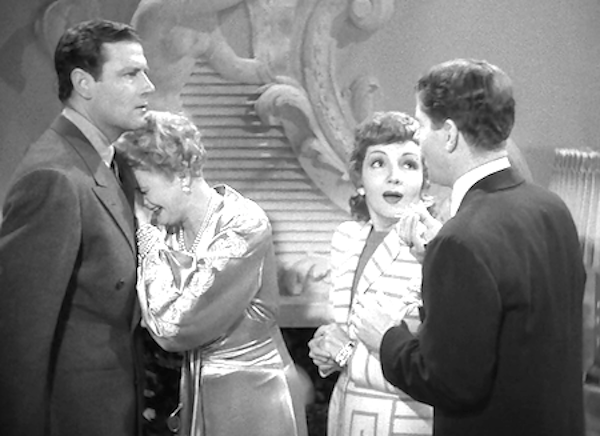
PIcture of Joel McCrea, Mary Astor, Claudette Colbert, and "Rudy" Vallée, The Palm Beach Story

A woman (Claudette Colbert) leaves her broke husband (Joel McCrea) so that she can marry a millionaire and use his money to fund her original husband’s brilliant project. She heads to Palm Beach to find such a millionaire, aided by a “wiener king ” and trigger-happy hunters. The writer/director is Preston Sturges, so you know you’re in for a treat.

Easy Living (1937)

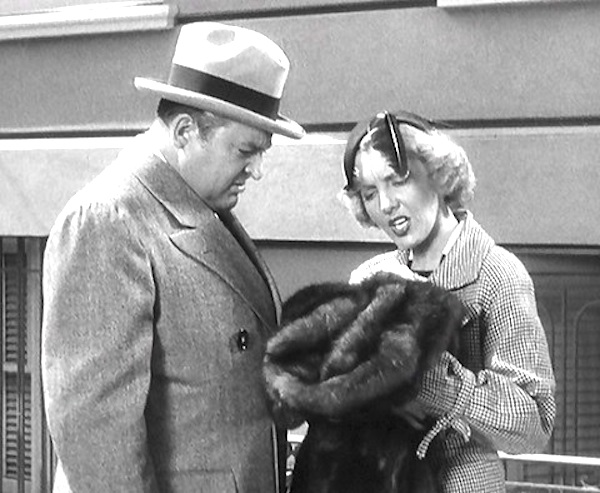
Edward Arnold and Jean Arthur in Easy Living

A banker (Edward Arnold) in a fight with his extravagant wife (Mary Nash) throws her fur coat off the roof of their home. The coat hits the hat of a bus passenger (Jean Arthur). The banker’s attempts to compensate the passenger destroy her reputation, but do aid her income. If you need a teaser to be convinced, check out the banker’s and passenger’s hilarious fight about loan interest.

Arsenic and Old Lace (1944)

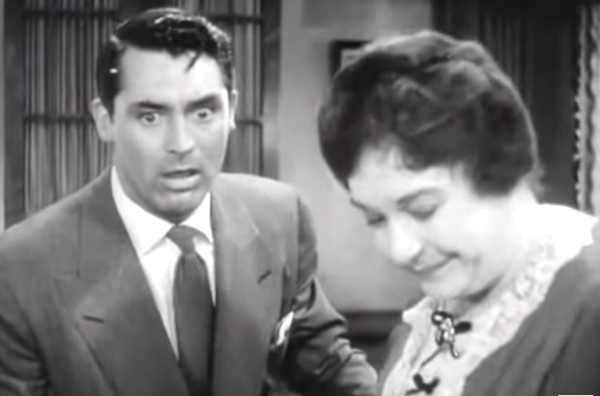
Cary Grant and Josephine Hull in Arsenic and Old Lace

Mortimer (Cary Grant) has always known his cousin (John Alexander) is a bit off. After all, his cousin thinks and acts like Teddy Roosevelt, building his canal. But in visiting his beloved aunts (Josephine Hull and Jean Adair), Mortimer discovers they have some issues as well: they’re serial killers murdering lonely old men. “Teddy” assumes the dead bodies are yellow fever victims and takes them in stride. But Mortimer begins to fear for his DNA. A screwball classic.

I’m No Angel (1933)

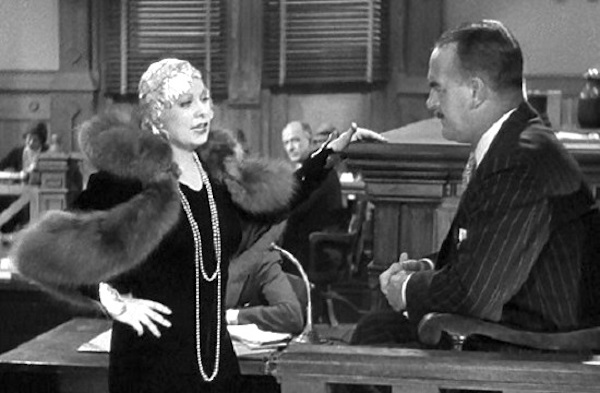
Mae West, courtroom scene, I'm No Angel

A lion tamer (Mae West) becomes the talk of high society, even winning a classy lover who plans to marry her (Cary Grant). The circus fears losing her income, so they convince the lover that their star is cheating on him. When her lover leaves her, the tamer sues him for breach of promise. She acts as her own lawyer, spending 90 percent of the trial strutting and seducing the jury in what may be the funniest courtroom scene ever.

I Love You Again (1940)

William Powell and Myrna Loy in I Love You Again

A man (William Powell) gets hit on the head and becomes an old self he’s forgotten, a swindler, instead of the upright prude he now is. He decides to live the prude’s life as he looks for a score and becomes intrigued by the uptight man’s wife (Myrna Loy), whom the swindler version of himself never met. She, sick of his stodgy ways and unaware of his change, wants to divorce him. The question is, will the man’s wife fall in love with his older self? I feel dizzy just explaining this amnesia plot, but it’s The Thin Man’s Loy and Powell team, so what’s not to love?

There you have it. Five ridiculous plots. Five ridiculously fun movies. And I haven’t even scratched the surface of this topic! Anyone who wants to share their favorite silly plot, please do so in the comments!

Share
Posted in: 1930s films, 1940s films, Comedies (film), Humor, Mae West Moments, Romantic Comedies (film) Tagged: Cary Grant, Claudette Colbert, Easy Living, I Love You Again, I'm No Angel, Jean Arthur, Mae West, Powell and Loy, Preston Sturges, screwball classics, silly classics, The Palm Beach Story

Satirizing Consumerism: Easy Living

07/19/2015 by leah@carygrantwonteatyou.com 4 Comments

I’ve never liked shows like Lifestyles of the Rich and Famous. I’m uninterested in what Paris Hilton spent on a dog palace, am only slightly amused by what Sony Bono paid to fly his hat. I’ve never understood the point. Am I to envy? To condemn? I’m as prone to consumerism as the next American, but it’s easy to watch The Queen of Versailles and think, I would never expect a rental car company to supply a driver. What entitlement! Now where is that amazing silver necklace on Etsy…

I know my part in America’s deploring—and dangerous—overconsumption is something I should ponder, but these stories so rarely implicate average Americans, or say anything interesting about the culture most of us rarely question.

That’s why I like Easy Living (1937), an airy comedy about a girl just scraping by who—due to a series of misadventures—is mistaken for a banker’s mistress, and flooded with offers of well, everything, in return for just a tip or two about whether steel is up or down this week. What this fictional movie supplies that other shows and documentaries lack is a perspective on capitalism run stupid I rarely see, but have experienced: befuddlement.

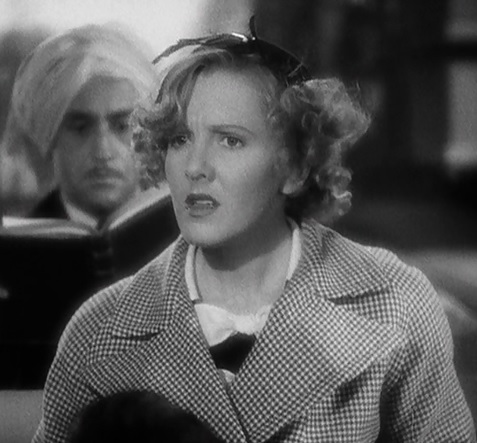
JeanArthurhitbycoat
Our heroine, Mary Smith (Jean Arthur), enters the film on a streetcar. A sable coat suddenly lands on her head. Does she try to discover its origins? Does she ponder the nature of serendipity, or “kismet,” as her religious fellow passenger does? No. It ruined her hat, she can’t afford to replace it, and now she has to be late for work to help the idiot who threw it.

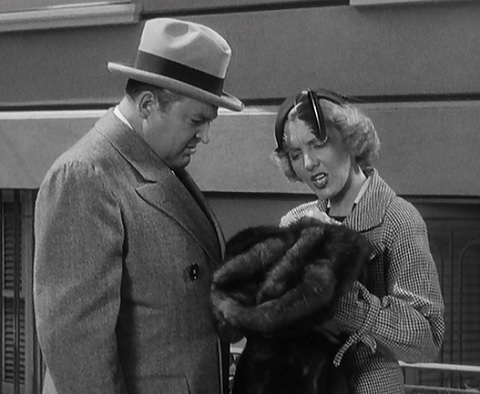
She approaches the banker (Edward Arnold) responsible for the coat’s airborne condition.

ArthurandArnold-EasyLiving
Moved by her innocence, he gives it to her, and a new hat besides. She takes the gifts as payback and benevolence, rather than as signs of sexual interest. Unfortunately, her stuffy employer doesn’t share this interpretation. He fires her for immorality.

Soon afterward, she befriends John Ball, Jr., the banker’s son (Ray Milland), after he steals a meal for her. Accompanied by her new knight-in-disguise, she starts getting offers from those who, like her employer, consider her a strumpet, but are glad she is. A hotel proprietor (Luis Alberni) offers her a room, hoping to extend his loan with her benefactor. She takes it, with no idea why it’s been offered. Her increasing confusion as questions and freebies fly her way is hilarious to witness.

The film is a pleasure for many reasons, Jean Arthur first among them. As a satire of consumerism, it’s incisive and often dark despite its frothiness, as these three scenes reveal:

1: The Coat
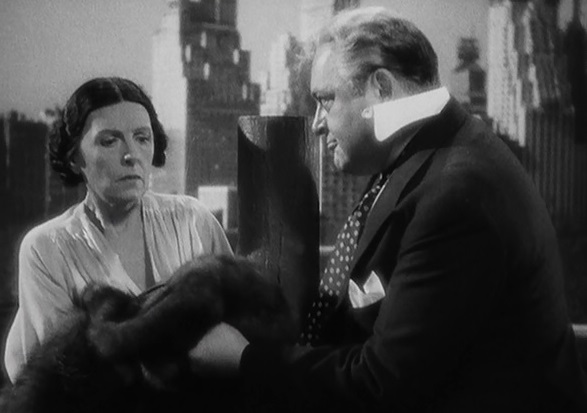
The banker, J.B. Ball (Arnold), begins the day disgruntled. He grumbles over his hearty breakfast, fights with his son (Ray Milland) over an expensive foreign car, then discovers this bill from his wife (Mary Nash):

bill-Sable
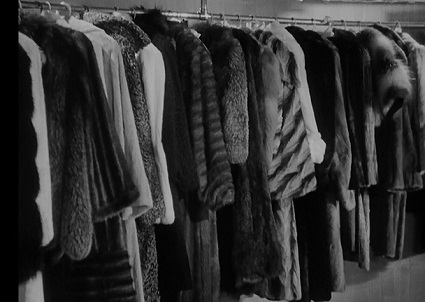
He storms into her room, demanding why she needs such a luxury, especially with a closet like this:
furcoats
She defends herself, claiming her other furs are out of fashion, that she doesn’t have so many, and then she runs away with the sable, impeding his race after her. The fight ends with some rooftop wrestling.

coatfightNashArnold
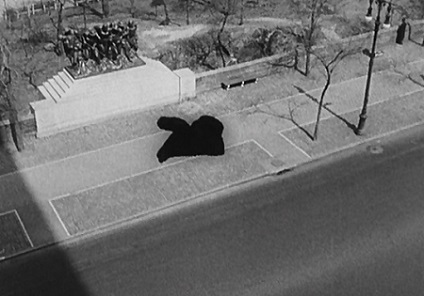
And one big toss:

flyingcoat
The rich banker, complaining of his family’s extravagance, tosses out a fortune like a tissue. (I wish I could claim the rest of us never show such hypocrisy, even if less flamboyantly/expensively expressed…)

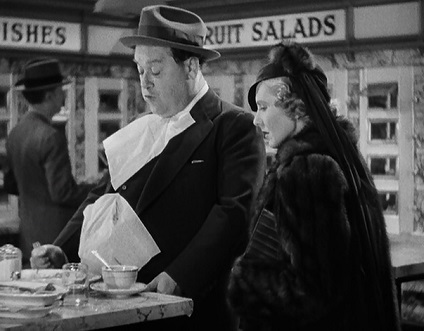
2: The Automat
Mary doesn’t have enough money for a decent dinner, but enough appetite to envy those who do:

ArthurasMarySmith-hungry
She’s at an automat, a kind of vending machine restaurant with windows of entries. When the banker’s son (Milland), who is working there, suggests in a misplaced effort at flirtation that she have the meat pie, she retorts, “If you can suggest where to get the nine nickels, I might take your suggestion; otherwise, don’t go around putting ideas in people’s mouths.”

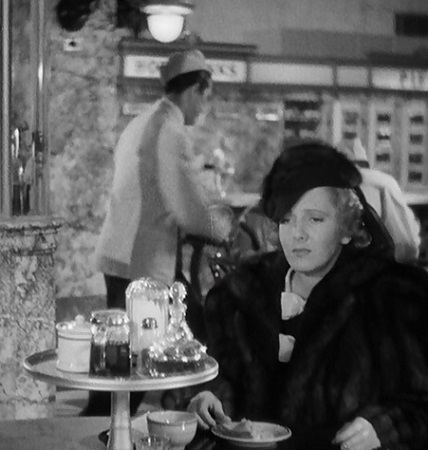
When he offers to spring a door so that she can steal one, she at first resists. But as she attempts to eat her humble meal, she reconsiders.

miserable
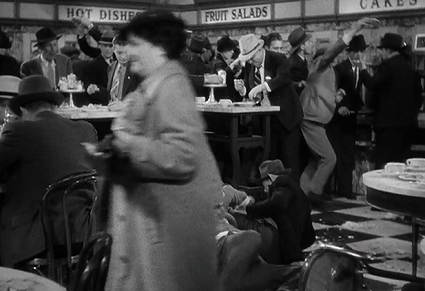
Of course, she breaks down, and of course, a security guard catches Junior, who promptly starts a fight that leads to a free-for-all at the automat the two barely escape.

automatgonewild-EasyLiving
This simple portrayal of the hunger an underfed woman feels as everyone around her overconsumes was a bit too on point to be funny. It did give me a fun flashback of when a vending machine in college went haywire, and I made out. But it also reminded me of when I returned from a visit to Ghana, and was overcome by the excessive options in my grocery store.

The Room
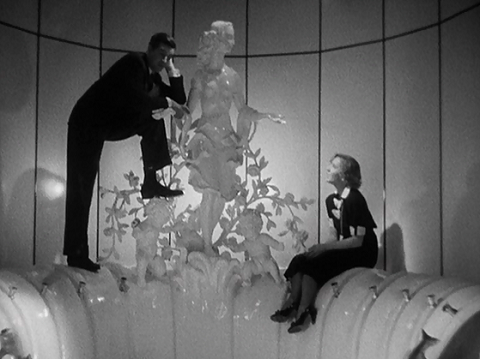
Lifestyles of the Rich and Famous couldn’t possibly capture the luxuriousness of a hotel run by Mr. Louis Louis (Alberni). When he displays a suite for Mary, he can’t even remember its layout, though he does remember to attack the competition’s inferior claims. What other Imperial Suite could boast 5 reception areas, and this monstrosity for a bathtub?

bathtubdisplayEasyLiving
Mary is not impressed by such affectations. She is–quite frankly–confused why anyone would want such nonsense.

JeanArthurconfused
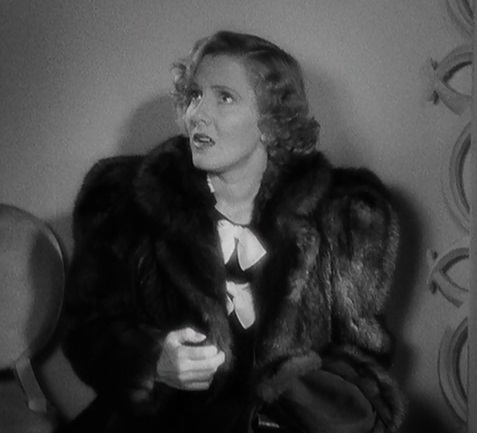
Once alone, she’s even a bit frightened.

scaredJeanArthur
She doesn’t know what to do with any of it, until she remembers one feature in this new suite of hers, and finally feels what Mr. Louis Louis wanted her to feel. She tears across the room, running past all the silk and marble and chandeliers to one thing that she considers worthy of attention: the fridge.

fridge
Only to find it empty.

As a satire of luxury, it’s hard to imagine any scene harsher than this one. Trust writer Vera Caspary (of Laura fame), who penned the story, and screenwriting genius Preston Sturges to lacerate us with their black humor. Even though the critique is cloaked in pratfalls and silliness, it’s still there for us to see. Maybe all these years later, the lesson will actually penetrate our own product-loving minds….at least until the holidays.

Share
Posted in: 1930s films, Romantic Comedies (film) Tagged: capitalism, consumerism, Easy Living, Jean Arthur, Lifestyles of the Rich and Famous, Preston Sturges, satire, The Queen of Versailles, Vera Caspary

The Anti-House of Cards: Mr. Smith Goes to Washington

02/20/2014 by leah@carygrantwonteatyou.com 1 Comment

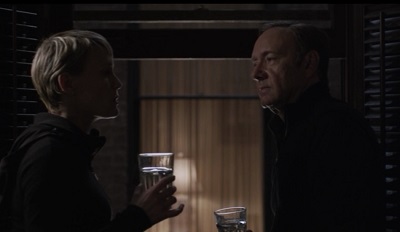
I had been looking forward to the return of House of Cards for months. Frank Underwood’s (Kevin Spacey’s) skewering of his opponents is almost as fascinating to watch as his wife Claire’s (Robin Wright’s) icy machinations.

Frank and Claire Underwood, the creepy power couple

The Underwoods, DC’s creepiest power couple

But something about the nonstop snow, ice, and wind this winter has made me too blue to compound my already too cynical view of Congress. In months like these, I need to let some spring-tasting idealism in the room. In other words, I’m craving some Capra.

Many have seen It’s a Wonderful Life, and if so, they already have a feel for director Frank Capra’s conviction that the little guy/gal can make a difference. Capra clearly relished films that breathed hope, like those optimists who would follow him, Ron Howard and Steven Spielberg.

When I stared at a pile of snow two feet high today and knew my shovel was buried somewhere within it, a dose of hope was required, and few films can refresh mine as thoroughly as Capra’s brilliant Mr. Smith Goes to Washington (1939).

Smith (Stewart) inspired by the Lincoln Memorial

Smith inspired by the Lincoln Memorial

The beauty of the movie is that it lets us see the world—and its hero—through the eyes of world-weary Saunders (Jean Arthur). Tasked to assist Jefferson Smith (Jimmy Stewart), she can’t decide if he’s full of it or dim-witted. This guy insists on going to see the Lincoln Memorial when he arrives for his senatorial post, for crying out loud. He claims his primary goal is creating a boys’ camp for his state. Could anything be more suspicious to a DC insider?

Saunders' reaction to Smith's tourist plans.

Saunders’ reaction to Smith’s tourist plans.

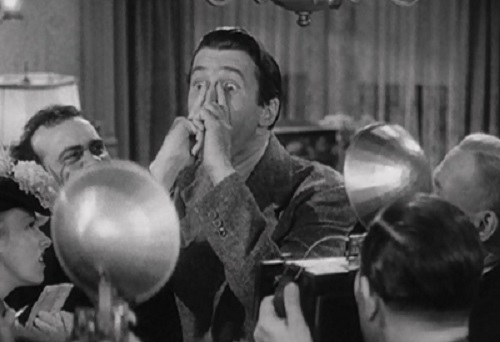
Saunders begins by undermining him, inviting a bunch of photographers to capture him at his most foolish.

Smith inadvisedly demonstrating a bird call

Smith inadvisedly demonstrating a bird call for the press

But as she slowly begins to reassess him, we find ourselves losing our cynicism about his dogged honesty and downhome goodness along with her. Of course, poor Smith encounters his share of Frank Underwoods, especially crafty Jim Taylor (Edward Arnold), who calls him a “drooling infant.” Interactions with Taylor and his cronies will lead Smith to lose a lot of his innocence but help him develop some much-needed spunk.

Underwood (Spacey) and Taylor (Arnold)

Underwood (Spacey) and Taylor (Arnold)

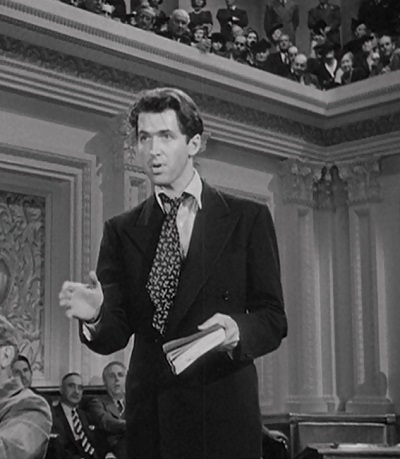
The powerful filibuster scene at the center of the movie is so moving that reporters still reference it today as justification for allowing that congressional maneuver. The film came up as recently as the Affordable Care Act battle last September, when writers claimed Ted Cruz’s was a “faux filibuster,” and last summer, when Wendy Davis pulled the famous Jimmy Stewart move at the Texas state house for eleven hours straight.

Smith (Stewart) in the midst of his filibuster

Smith (Stewart) in the midst of his filibuster

Most days, the news convinces me that idealists like Smith will always be crushed by the powerful jaws of the Frank Underwoods among us. But somehow, I don’t feel that way today: I’ve been watching Capra.

Share
Posted in: 1930s films, Drama (film), TV & Pop Culture Tagged: filibuster, Frank Underwood, House of Cards, Jean Arthur, Jimmy Stewart, Mr. Smith Goes to Washington

Recent Posts

  • 100 Years Later, Still Scary: Dr. Caligari
  • Escaping Out of the Past (1947)
  • A Weeper for Those Who Love Jerks
  • Thank You, Academy, for Not Infuriating Me
  • Challengers (2024) Is a Bad Movie

Subscribe to Blog via Email

Enter your email address to subscribe to this blog and receive notifications of new posts by email.

Categories

  • 1920s films
  • 1930s films
  • 1940s films
  • 1950s films
  • 1960s films
  • 1970s films
  • 1980s films
  • 1990-current films
  • 2020s films
  • Action & Sports Films
  • Anti-Romance films
  • Blogathons
  • Childfree
  • Comedies (film)
  • Drama (film)
  • Feminism
  • Femme fatales
  • Film Noir/Crime/Thriller & Mystery
  • Gloriously Silly Scenes
  • Horror
  • Humor
  • Mae West Moments
  • Musicals and dancing films
  • Oscars
  • Random
  • Romance (films)
  • Romantic Comedies (film)
  • The Moment I Fell for
  • Turn My Sister into Classic Movie Fan
  • TV & Pop Culture
  • Uncategorized
Share
Classic Movie Blog Hub Member

Recent Comments

  • leah@carygrantwonteatyou.com on Meg Ryan’s Fate Foretold in Joe Versus the Volcano
  • Ryan on Meg Ryan’s Fate Foretold in Joe Versus the Volcano
  • leah@carygrantwonteatyou.com on 100 Years Later, Still Scary: Dr. Caligari
  • The Classic Movie Muse on 100 Years Later, Still Scary: Dr. Caligari
  • leah@carygrantwonteatyou.com on 100 Years Later, Still Scary: Dr. Caligari

Archives

  • November 2025
  • September 2025
  • May 2025
  • March 2025
  • January 2025
  • November 2024
  • August 2024
  • July 2024
  • May 2024
  • March 2024
  • February 2024
  • December 2023
  • November 2023
  • October 2023
  • September 2023
  • August 2023
  • July 2023
  • May 2023
  • April 2023
  • March 2023
  • January 2023
  • December 2022
  • November 2022
  • September 2022
  • July 2022
  • May 2022
  • April 2022
  • March 2022
  • February 2022
  • October 2021
  • September 2021
  • April 2021
  • March 2021
  • February 2021
  • December 2020
  • October 2020
  • September 2020
  • July 2020
  • May 2020
  • April 2020
  • March 2020
  • February 2020
  • December 2019
  • October 2019
  • September 2019
  • June 2019
  • May 2019
  • April 2019
  • February 2019
  • January 2019
  • November 2018
  • September 2018
  • July 2018
  • June 2018
  • May 2018
  • April 2018
  • March 2018
  • February 2018
  • January 2018
  • November 2017
  • September 2017
  • August 2017
  • July 2017
  • June 2017
  • May 2017
  • April 2017
  • March 2017
  • February 2017
  • January 2017
  • December 2016
  • November 2016
  • October 2016
  • August 2016
  • July 2016
  • June 2016
  • May 2016
  • April 2016
  • March 2016
  • February 2016
  • January 2016
  • December 2015
  • November 2015
  • October 2015
  • September 2015
  • August 2015
  • July 2015
  • June 2015
  • May 2015
  • April 2015
  • March 2015
  • February 2015
  • January 2015
  • December 2014
  • November 2014
  • October 2014
  • September 2014
  • August 2014
  • July 2014
  • June 2014
  • May 2014
  • April 2014
  • March 2014
  • February 2014
  • January 2014

Meta

  • Log in
  • Entries feed
  • Comments feed
  • WordPress.org

Copyright © 2025 Cary Grant Won't Eat You.

Church WordPress Theme by themehall.com